MENU
Close





A quiet garden conversation has just made considerable noise in the Asian art scene.

A quiet garden conversation has just made considerable noise in the Asian art scene.
August 7, 2026


Vũ Cao Đàm’s US$3.69 million auction record signals a new moment for Vietnamese modernism and its position within the wider Asian art scene.
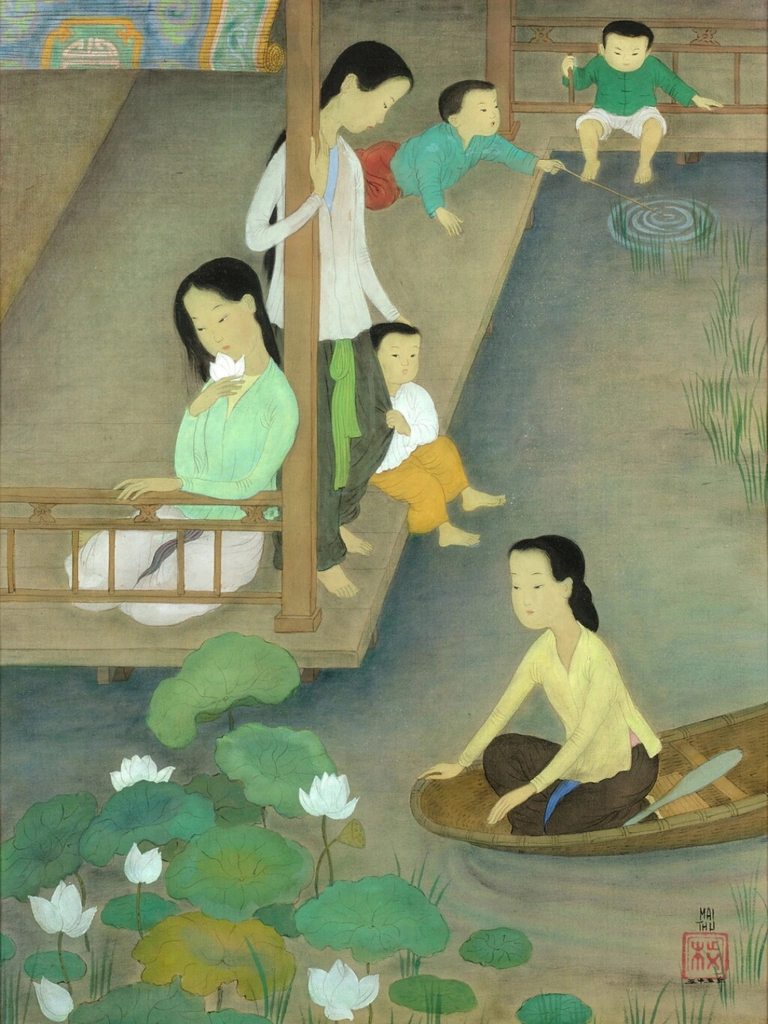
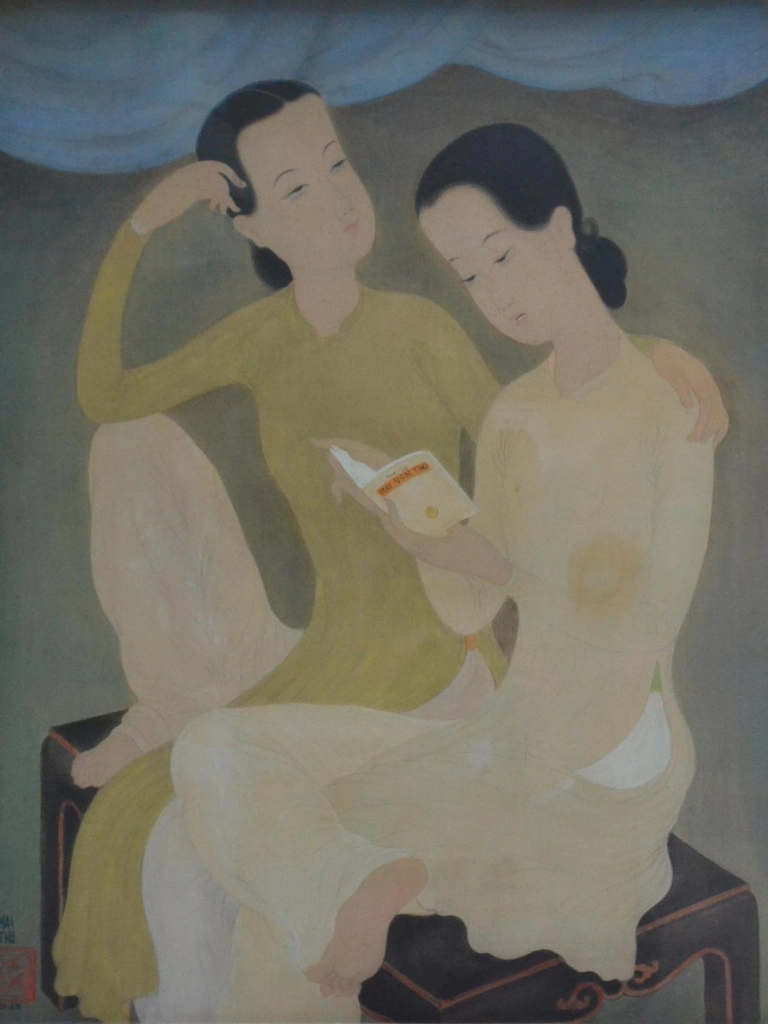
At first glance, remarkably little happens in Conversation d’élégantes au jardin.
Women gather in a garden. Their elongated figures settle into an atmosphere of measured quiet, surrounded by vegetation and rendered through the translucent softness of silk. There is no heroic event, dramatic gesture or obvious attempt to command the room.
Then came the bidding. On September 28, 2026, Vũ Cao Đàm's 1939 Conversation d’élégantes au jardin sold for HK$28.96 million, approximately US$3.69 million, including buyer's premium, during Sotheby's Modern & Contemporary Evening Auction in Hong Kong. The result represented a roughly 255 percent jump from the artist's previous auction record and exceeded the upper end of Sotheby's HK$8 million to HK$19.6 million estimate.
More significantly, the sale surpassed the HK$24.375 million achieved by Mai Trung Thứ's Portrait de Mademoiselle Phuong at Sotheby's Hong Kong in April 2021, which Sotheby's had described at the time as a world auction record for any Vietnamese artwork.
The headline is seductive: another record. The deeper story concerns what collectors decided was worthy of it.
Auction records become considerably more revealing when the same object has appeared before. Conversation d’élégantes au jardin did.

The large ink-and-gouache-on-silk composition measures 85.6 by 114.5 centimetres and dates to 1939. According to market records, it appeared at Sotheby's Hong Kong in April 2008, when it sold for approximately US$262,900. It returned to the same auction city eighteen years later and achieved US$3.69 million.
That journey provides an unusually clean illustration of how dramatically perceptions of Vietnamese modernism have changed.
In 2008, international discussion of the 20th-century Asian art scene was still heavily dominated by Chinese modern and contemporary names, alongside established Japanese movements and a narrower circle of Southeast Asian artists. Vietnamese modernism already had serious collectors, particularly across France and Asia, but its market infrastructure and international visibility remained comparatively modest.
By 2026, the painting arrived in a different Asian art scene.
Hong Kong auctions now routinely position Vietnamese modernists within broader narratives of Asian modernism. Scholarship has expanded. Provenance attracts greater scrutiny. Collectors increasingly distinguish between periods and mediums within individual careers instead of buying simply according to signature.
The twelvefold-plus increase between the painting's 2008 and 2026 prices is therefore more interesting as evidence of changing classification than as an investment anecdote. Vũ Cao Đàm is no longer being bought merely because he is Vũ Cao Đàm. Collectors are asking which Vũ Cao Đàm.
The date matters enormously. Born in Hanoi in 1908, Vũ Cao Đàm belonged to the formative generation associated with the École des Beaux-Arts de l'Indochine in Hanoi. Established under French colonial rule, the school brought European academic instruction into sustained contact with Asian techniques and materials, creating the conditions from which several foundational Vietnamese modernists emerged.
Vũ Cao Đàm later settled in France, and Conversation d’élégantes au jardin was painted there in 1939.
Europe was approaching war.
Sotheby's interpretation of the painting emphasises this tension: an image of extraordinary peace produced while the artist was living far from Vietnam as Europe moved toward conflict. The garden scene can consequently be read through memory and distance, with its serene gathering preserving an imagined emotional connection to home.
The year also places the work within the artist's scarce early silk production.
Later Vũ Cao Đàm paintings, particularly oils, have circulated with greater frequency on the secondary market. His recurring figures, literary subjects, lovers and women inhabit a recognisable visual universe, and decades of production mean collectors encounter considerable variation in date, medium and quality.

Early silk changes the equation.
Silk absorbs pigment differently from canvas. Colour settles into the fibres with a muted luminosity, encouraging thin tonal transitions and a softness particularly suited to Vũ Cao Đàm's elongated figures. Contemporary commentary on his work already recognised his sensitivity to the material; Musée Cernuschi scholar Jeanine Auboyer wrote in 1946 of the delicacy of silk's grain and the softness with which it absorbed colour.
At 114.5 centimetres wide, Conversation d’élégantes au jardin also has unusual physical presence for a fragile silk work from this period.
Rarity, scale, date and medium converge in the same object.
Auction markets tend to become sophisticated when collectors begin paying heavily for those distinctions.
Vietnamese modernism offers an especially interesting challenge to a Western-centred hierarchy of materials.
Oil painting traditionally carries enormous market authority. Canvas suggests permanence, monumentality and a medium deeply embedded within European art history. Silk occupies a different material tradition, one associated across East Asia with intimacy, delicacy and technical control.
The artists connected with the École des Beaux-Arts de l'Indochine complicated those categories.
Their modernism emerged through exchange. European approaches to composition, perspective and figuration encountered lacquer, silk and visual traditions rooted in Vietnam and the wider region. The result cannot be neatly described as European painting executed by Vietnamese artists, nor as traditional Vietnamese painting with imported stylistic additions.
The hybrid itself became the language.
This explains why the current market interest in early silk works carries cultural significance beyond price. Collectors are placing substantial financial value on precisely the works in which Vietnamese modernism's negotiations between material traditions are most visible.
Conversation d’élégantes au jardin makes that argument quietly.

The previous benchmark arrived five years earlier.
In April 2021, Mai Trung Thứ's 1930 Portrait de Mademoiselle Phuong sold at Sotheby's Hong Kong for HK$24.375 million, approximately US$3.1 million. Sotheby's called it a world auction record for any Vietnamese artwork.
That painting carried its own exceptional characteristics. It was a rare early oil on canvas, produced before Mai Trung Thứ left Vietnam for France, and at 135.5 centimetres high possessed unusual scale. Sotheby's had estimated it at only HK$7.5 million to HK$9.3 million.
The parallels with Vũ Cao Đàm's record are revealing. Both records were established by early works. Both came from artists educated at the École des Beaux-Arts de l'Indochine. Both were materially and historically exceptional within their creators' wider bodies of work. And both substantially exceeded their presale expectations.
The market appears to be constructing a hierarchy within Vietnamese modernism based increasingly on connoisseurship: early date, exceptional scale, important provenance, rarity of medium, condition and historical significance.
This is considerably healthier for the category than indiscriminate price inflation.
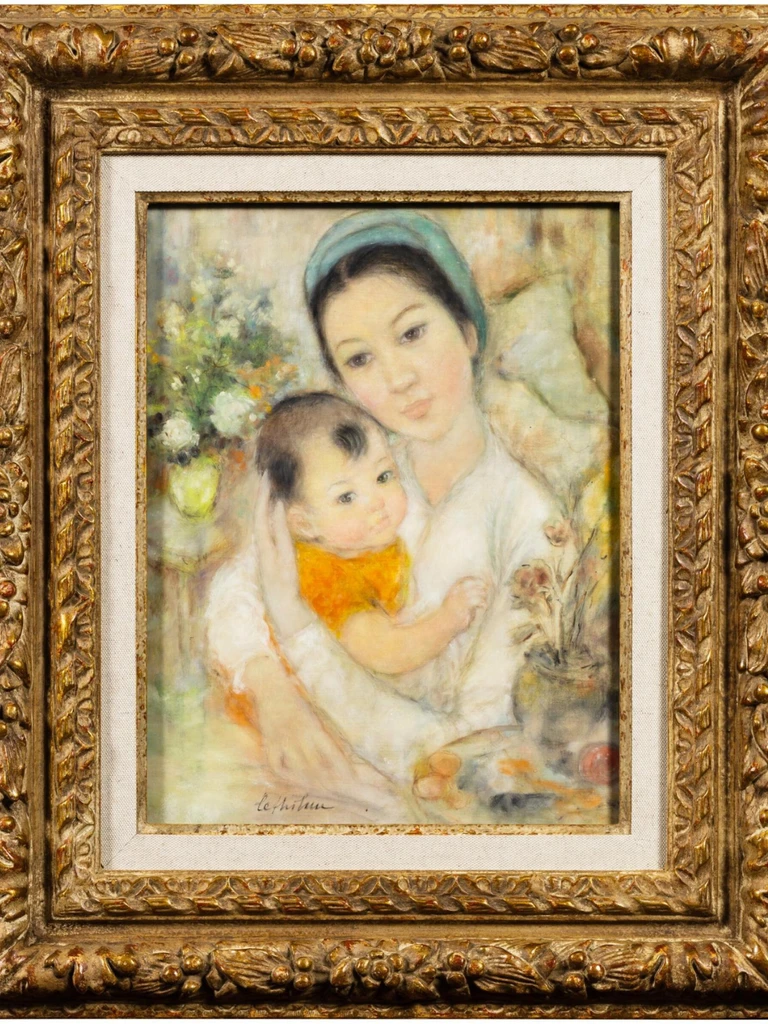
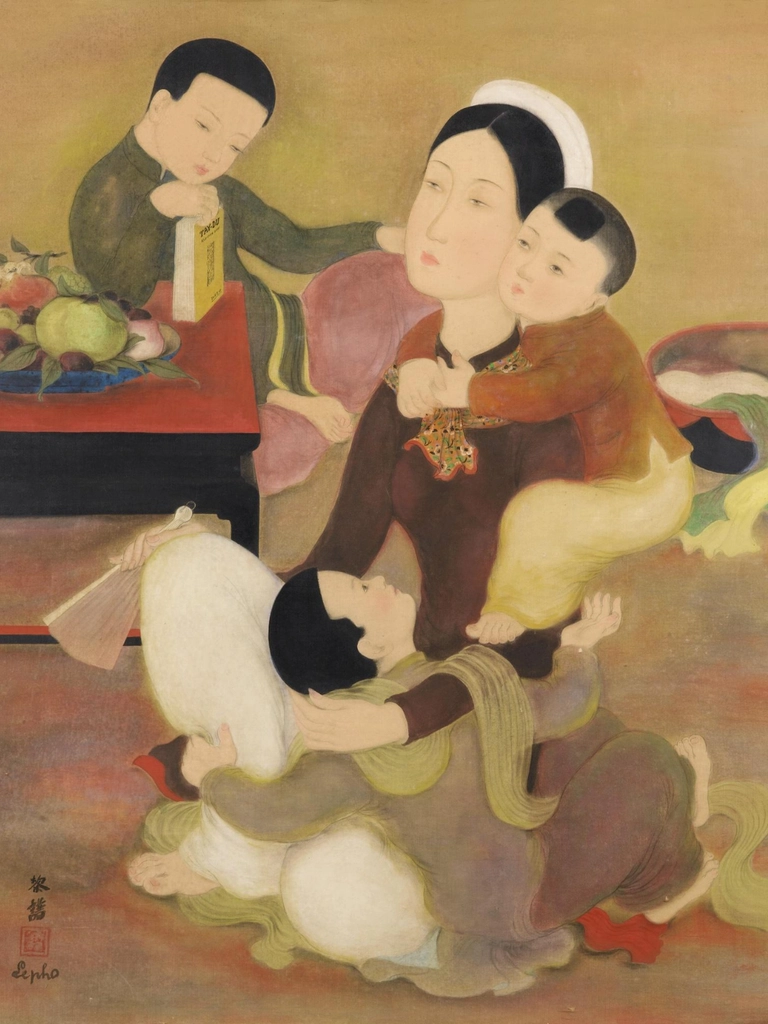
Vietnamese collectors know the quartet almost as shorthand: Phổ, Thứ, Lựu, Đàm.
Lê Phổ. Mai Trung Thứ. Lê Thị Lựu. Vũ Cao Đàm. Their careers overlap through education, migration and the negotiation between Vietnamese visual traditions and life in France, although treating them as a homogeneous group can obscure the differences that made each practice distinct.
For years, Lê Phổ enjoyed particularly strong international market recognition, while Mai Trung Thứ's 2021 record dramatically expanded expectations around the upper limits of Vietnamese modern art.
Vũ Cao Đàm's new result changes the internal balance again.
His previous auction record stood at roughly US$1.04 million for Femmes au bain from 1944. The new US$3.69 million result is therefore no incremental improvement. HENI calculates the record increase at approximately 255 percent.
One exceptional auction cannot reprice an artist's entire body of work, however.
A late oil with weaker provenance cannot simply inherit the valuation of a monumental 1939 silk because the signature is identical. If anything, this record makes discrimination more important. The premium belongs to a very specific combination of period, material, scale and quality.
That distinction may shape what happens next.
Auction records have a habit of simplifying art history into numbers.
Vũ Cao Đàm deserves better.
The importance of Conversation d’élégantes au jardin cannot be measured only by the distance between HK$1.1 million in 2008 and HK$28.96 million in 2026. Its return to auction reveals how the vocabulary surrounding Vietnamese modernism has matured during those eighteen years.
Collectors increasingly recognise that an early silk and a later oil occupy different positions within the same career. Provenance matters. Scale matters. Historical moment matters. The technical possibilities of silk matter. The intellectual world surrounding the École des Beaux-Arts de l'Indochine matters.
That change in attention may prove more consequential than the record itself.
For the wider Asian art scene, Conversation d’élégantes au jardin also complicates an old map in which a handful of Chinese and Japanese names carried much of the international definition of Asian modernism. Southeast Asia possesses its own intertwined histories of colonial education, indigenous materials, migration, cosmopolitanism and modernity, and Vietnamese artists are increasingly being examined through that larger historical frame.