MENU
Close





Before Parisian galleries and monumental commissions came dentistry, wartime resistance, paralysis and a doctorate devoted to the Vietnamese tradition of betel chewing. Then seven simple shapes changed the course of the extraordinary life of Điềm Phùng Thị. Repeated, inverted, enlarged and recombined, they became her private alphabet and one of the most distinctive languages in Vietnamese modern sculpture.

Before Parisian galleries and monumental commissions came dentistry, wartime resistance, paralysis and a doctorate devoted to the Vietnamese tradition of betel chewing. Then seven simple shapes changed the course of the extraordinary life of Điềm Phùng Thị. Repeated, inverted, enlarged and recombined, they became her private alphabet and one of the most distinctive languages in Vietnamese modern sculpture.
September 22, 2026


Many artists spend their twenties struggling toward a recognisable visual language. By the time Phùng Thị Cúc began seriously pursuing sculpture in Paris, she had already lived an entirely different professional life.
Born in 1920 near Huế, she studied dentistry in Hanoi, graduating in 1946 before working with the resistance during the First Indochina War. Illness abruptly altered that trajectory. After suffering paralysis in 1948, she travelled to France for treatment, recovered and remained there to continue her studies. She eventually earned a doctorate in dental surgery in 1954, with research connected to the Vietnamese custom of chewing betel.
Medicine could easily have remained her career. In 1959, approaching 40, she began making sculptures. She subsequently worked under Italian-born French sculptor Antoniucci Volti from 1961 to 1963, gradually moving from figurative studies of bodies, maternity and human relationships toward abstraction.
Within a decade, the former dentist had arrived at an extraordinary proposition: perhaps an artist did not need thousands of forms to describe the world. Perhaps seven would be enough.


Điềm Phùng Thị’s mature contribution to modern sculpture begins with scraps.
Accounts from her foundation describe her collecting leftover pieces of material in the sculpture workshop. From their accidental shapes, she initially selected ten signs, eventually reducing the group to seven modules. These became the foundation of an entire artistic language. French critic Raymond Cogniat compared them to an alphabet; musicologist Trần Văn Khê saw seven musical notes.
Both comparisons reveal the radical simplicity of the idea.
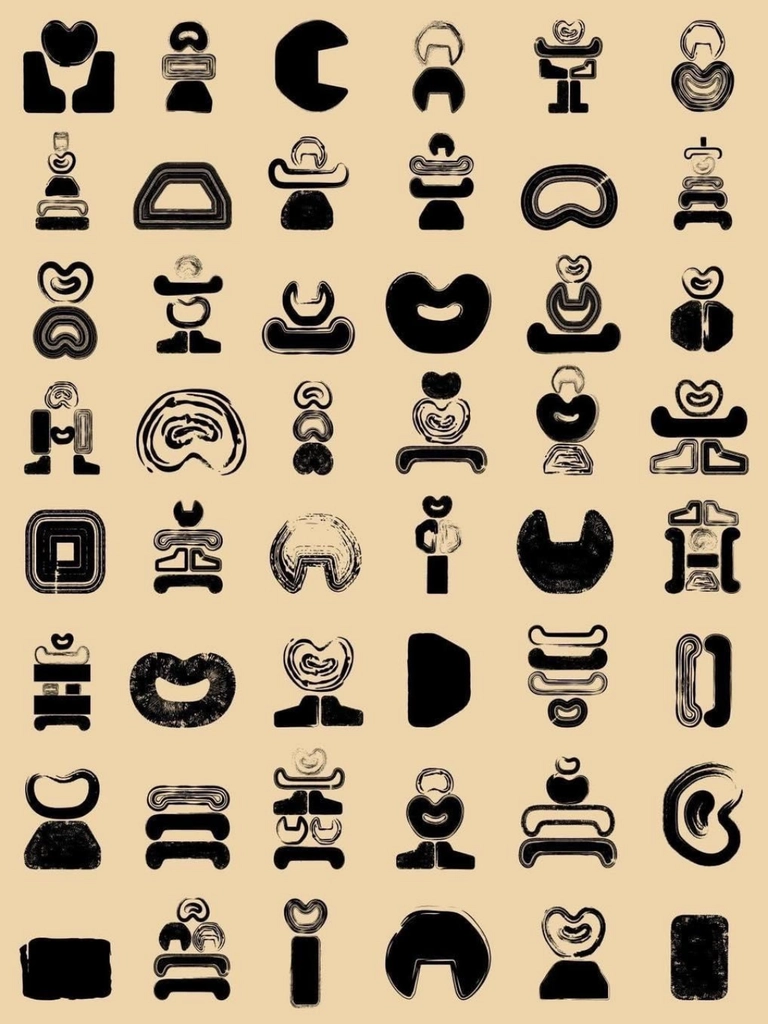

An alphabet contains a limited number of letters, yet those letters can produce novels, love letters, laws and poems. Seven notes can generate innumerable melodies. Điềm Phùng Thị applied similar logic to form.
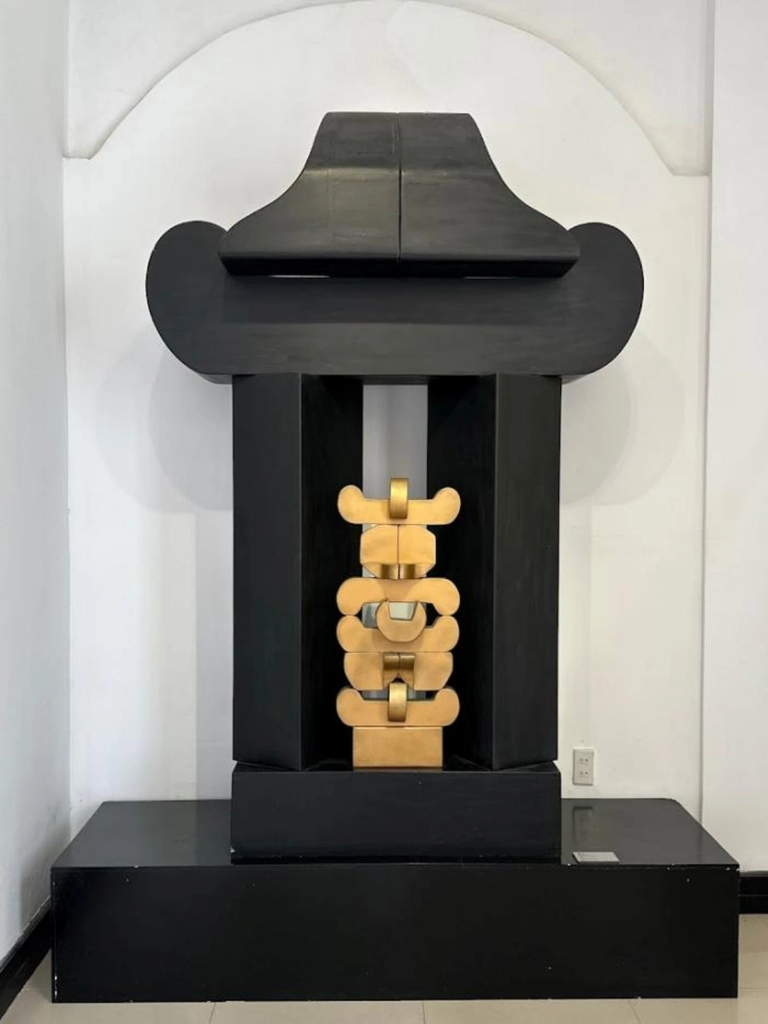

She could rotate a module, reverse it, stack it, enlarge it into a monument or shrink it into jewellery. One configuration might suggest a woman. Another became a child, bird, face, architectural structure or purely abstract presence. Materials changed from wood and terracotta to bronze, stone, lacquer and other media, while the underlying grammar remained recognisable.


The innovation placed variation above endless invention. Instead of designing a completely new vocabulary for every sculpture, Điềm Phùng Thị established a system capable of producing difference from repetition.
Her best works therefore deserve to be read together. Each demonstrates another possibility hidden inside the same visual language.


What distinguished Điềm Phùng Thị was her creation of a sculptural language based on the assembly and transformation of seven geometric modules. Art critic Raymond Cogniat described them as an alphabet, while Professor Trần Văn Khê compared them to seven musical notes.
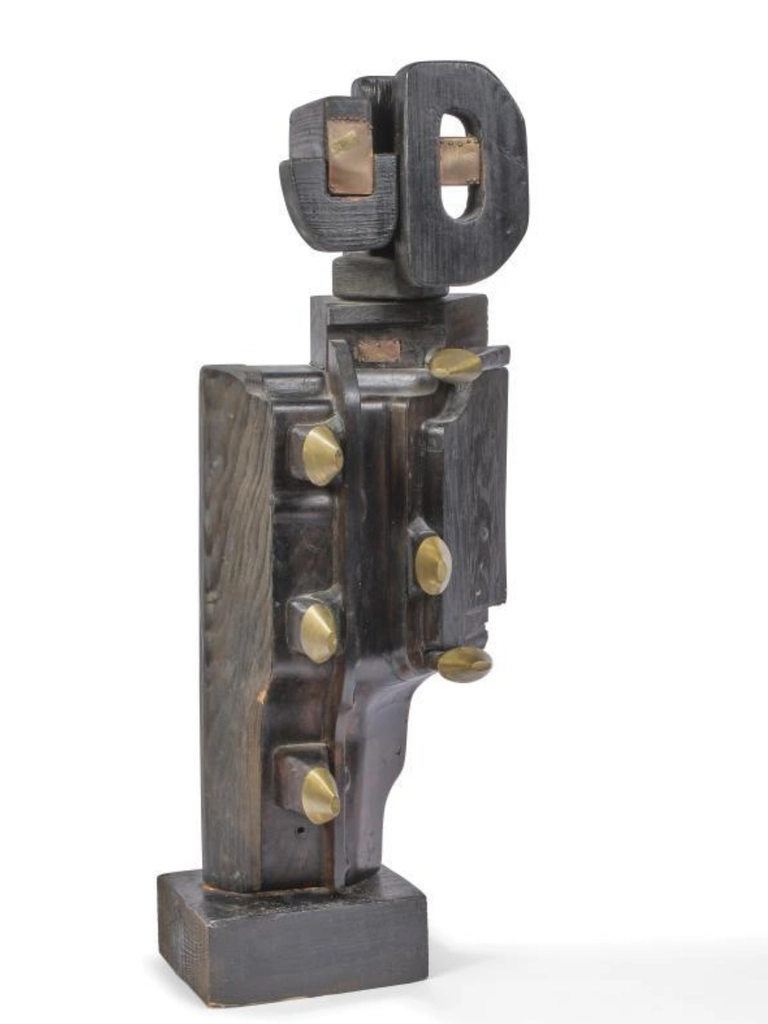

These seven letters originated from discarded scraps of wood that she collected in the workshop of a school of applied arts. From these fragments, she initially selected ten distinct forms, which gradually evolved under her skillful and imaginative hands into a refined vocabulary of seven modules. A figure with clasped hands could become a mandarin with the addition of a few elements; through rotation and rearrangement, the same forms could suggest a woman, while turning them upside down might reveal a flower. With this extraordinary alphabet, Điềm Phùng Thị created countless sculptural compositions through seemingly endless combinations.


An artistic universe with its own voice and alphabet emerged in the heart of twentieth-century Europe, deeply rooted in a Vietnamese sensibility. Capturing the full complexity of this universe through a handful of defining characteristics remains an extraordinary challenge. These observations offer only glimpses into Điềm Phùng Thị's elementary and intricate sculptural forms, particularly her alphabet-like modules, which viewers have often experienced intuitively more than they have examined analytically. Through these geometric explorations and arrangements of form, the artist constructed a distinctive world of expression.


During this period, dozens of major exhibitions of Điềm Phùng Thị's work were organized throughout France, Germany, Italy, Denmark, Switzerland, and other European countries. Thirty-six of her monuments were installed across France, establishing her reputation throughout Europe. Nevertheless, despite her donation of hundreds of sculptures to the city of Huế, her work remains relatively unfamiliar to the wider Vietnamese public. This limited recognition reflects a shortage of in-depth scholarship capable of situating her artistic practice within broader art-historical developments, particularly the evolution of Vietnamese sculpture during the same period.


In 1991, Điềm Phùng Thị and the renowned Chinese abstract painter Zao Wou-Ki were the two artists included among the major talents of twentieth-century art in the Larousse dictionary. In 1992, she was elected a corresponding member of the European Academy of Sciences, Arts and Letters.


Điềm Phùng Thị inevitably belongs within conversations about European postwar abstraction. She lived and trained in France, and her simplification of the body can invite comparison with artists such as Jean Arp, Constantin Brâncuși or Henry Moore.
Her subjects repeatedly returned to maternity, children, spirituality, homeland and human relationships. Even when recognisable figures disappeared, Vietnamese memory remained embedded within the structures.
A mother no longer required a realistically modelled face. A monk or nun could emerge from balance and emptiness. Home could survive as rhythm. Cultural memory became portable because it had been transformed into form.
Her return to Huế therefore seems almost like the final rearrangement of her modules. In 1992, Điềm Phùng Thị and her husband returned to live in the city. A substantial body of her work was subsequently given to Huế, where her legacy is now preserved through the Điềm Phùng Thị Art Center.
The sculptures came home, but their language had already travelled far beyond geography.


Điềm Phùng Thị died in 2002, leaving behind hundreds of works, public commissions and a formal system that remains immediately identifiable. Her international recognition included inclusion in Larousse’s reference work on 20th-century art in 1991, followed by her appointment as a corresponding member of the European Academy of Sciences, Arts and Letters in 1992.

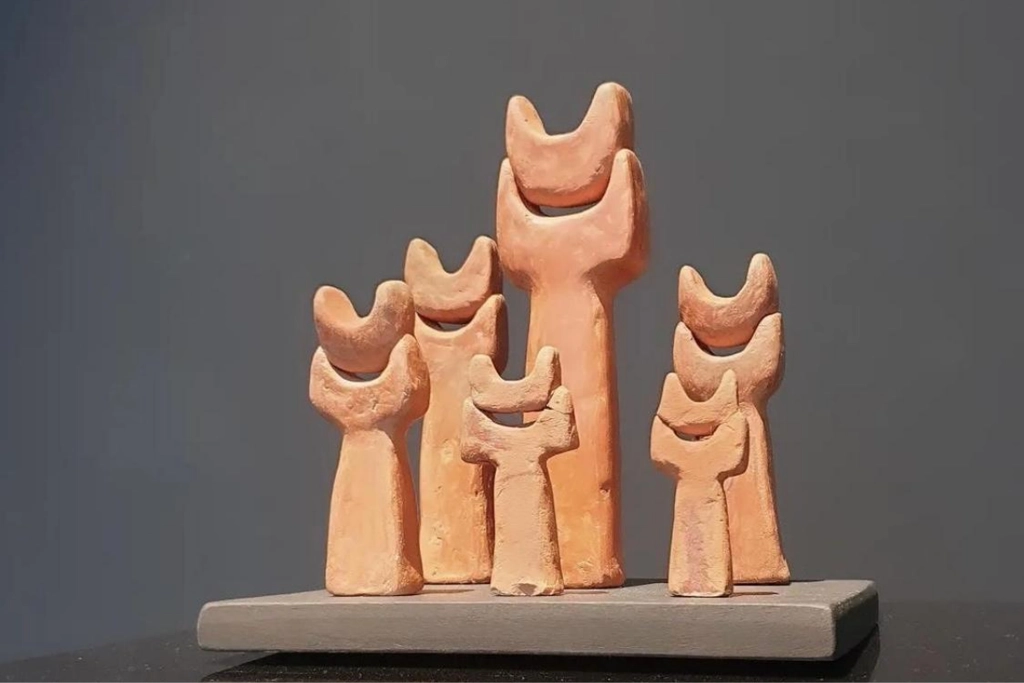
Yet statistics explain very little about why the work endures. Her deepest achievement was conceptual. She discovered that limitation could create abundance.
Seven modules were enough to speak about mothers, children, solitude, spirituality, displacement, architecture and home. They could become bronze, wood or stone; rise into public monuments or contract into jewellery. Solid matter could carry meaning, while the emptiness surrounding it could carry just as much.

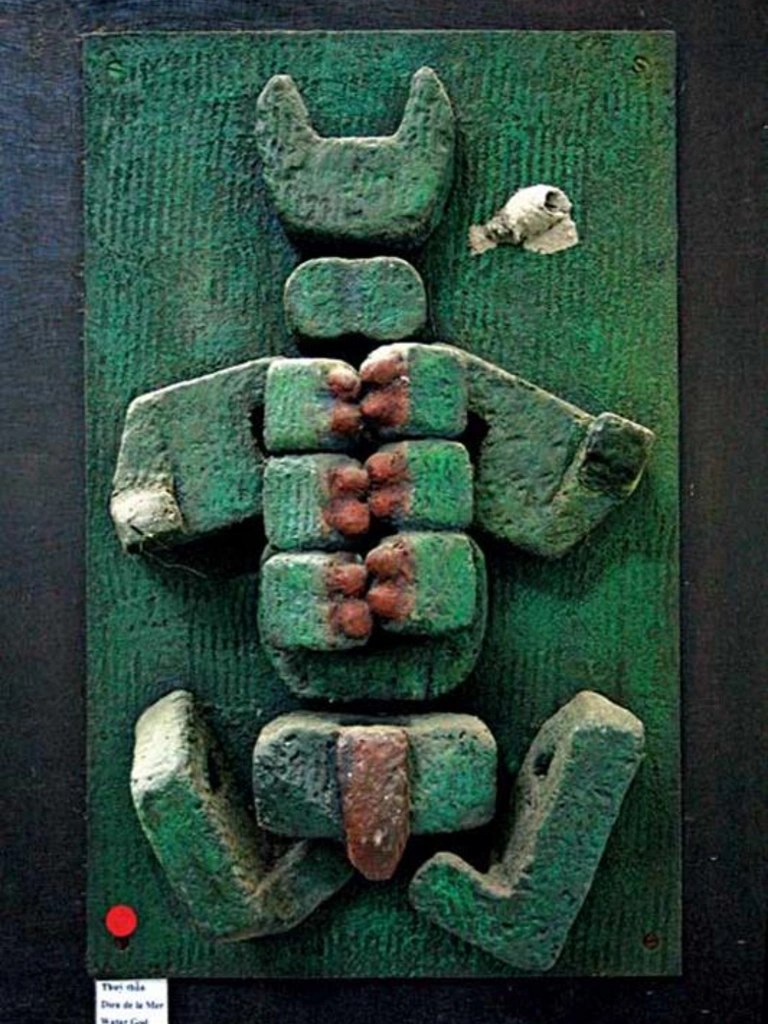
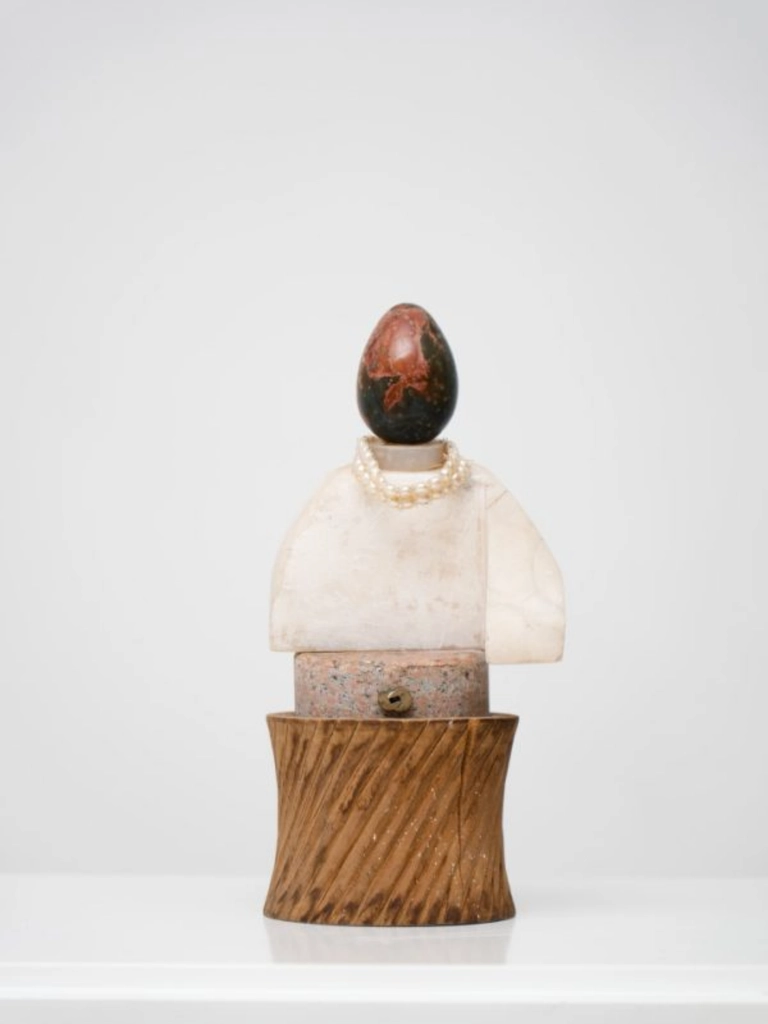


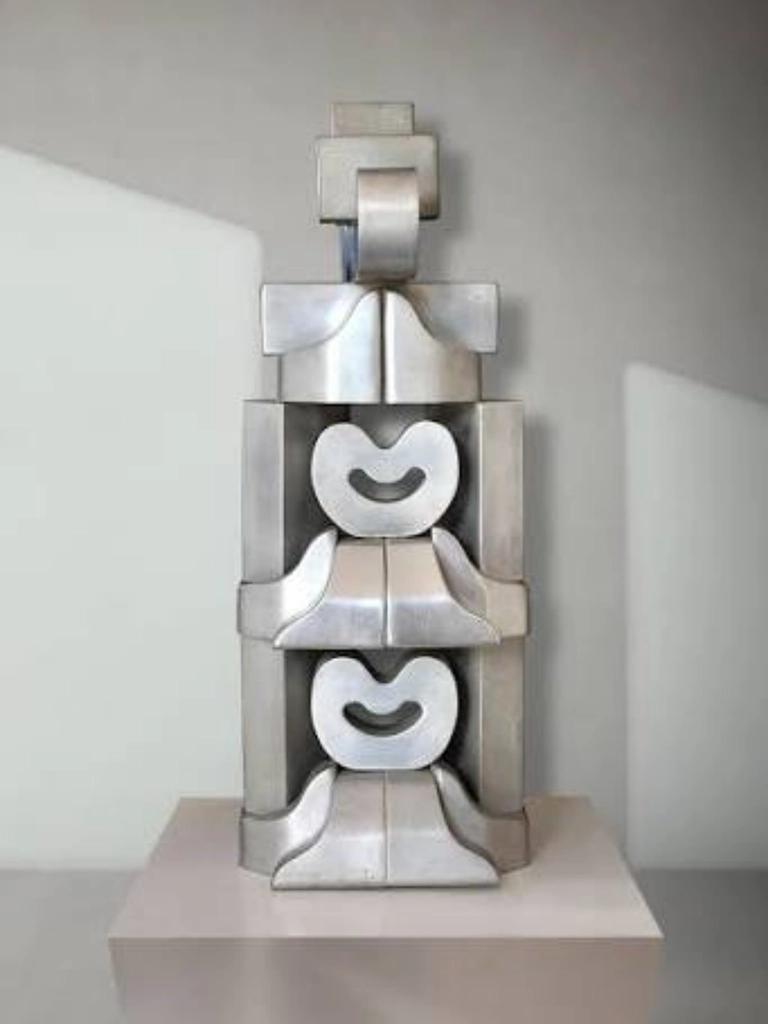
The story of Điềm Phùng Thị consequently occupies an unusual place in modern sculpture. Her great work is not necessarily a single statue waiting to be named her masterpiece. It is the grammar behind them all.