MENU
Close





Henry Moore turned the human body into something larger than anatomy: a hill, a cavern, a shelter, a bone weathered by time.
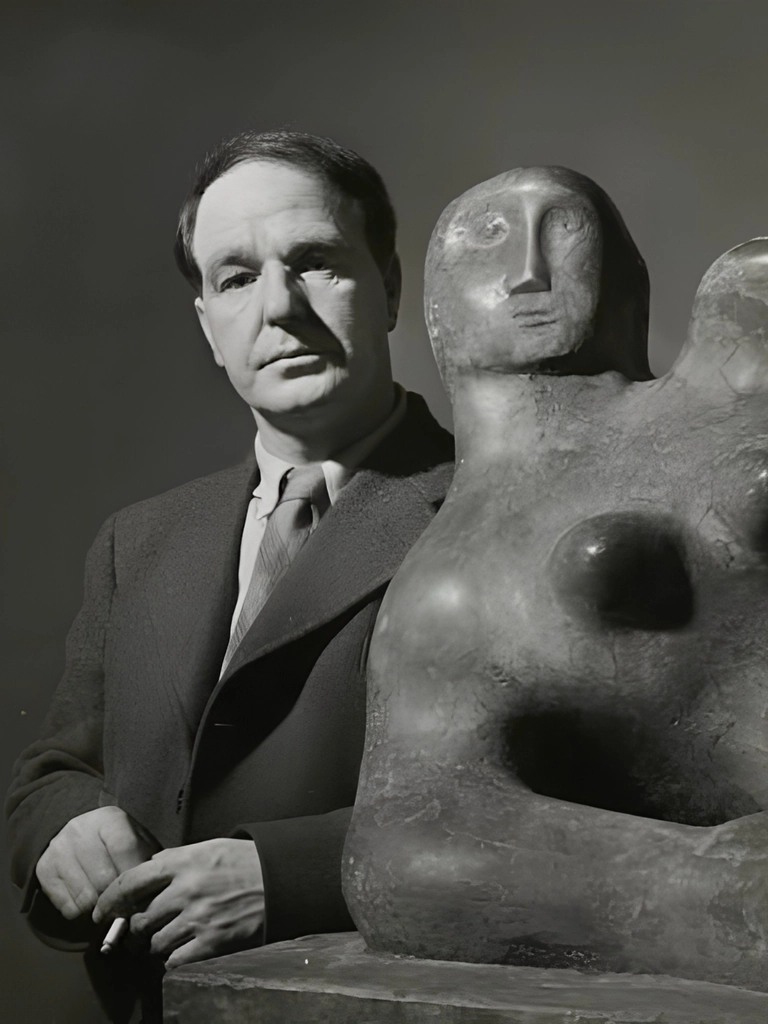
Henry Moore turned the human body into something larger than anatomy: a hill, a cavern, a shelter, a bone weathered by time.
August 7, 2026


Barbara Hepworth and Henry Moore are often placed side by side in British modern sculpture, yet their forms travel in subtly different directions. Hepworth increasingly pursued purified abstraction: taut relationships between circles, ovals, strings, polished surfaces and carefully controlled openings. Henry Moore retained a heavier bodily memory.
Even at his most abstract, a swollen bronze still hints at a shoulder, pelvis, skull, rib cage or reclining torso; his sculpture seems eroded from flesh into geology.
That distinction helps explain Moore's extraordinary place in twentieth-century art. His abstraction rarely abandoned the body. Instead, it enlarged the definition of what a body could become.
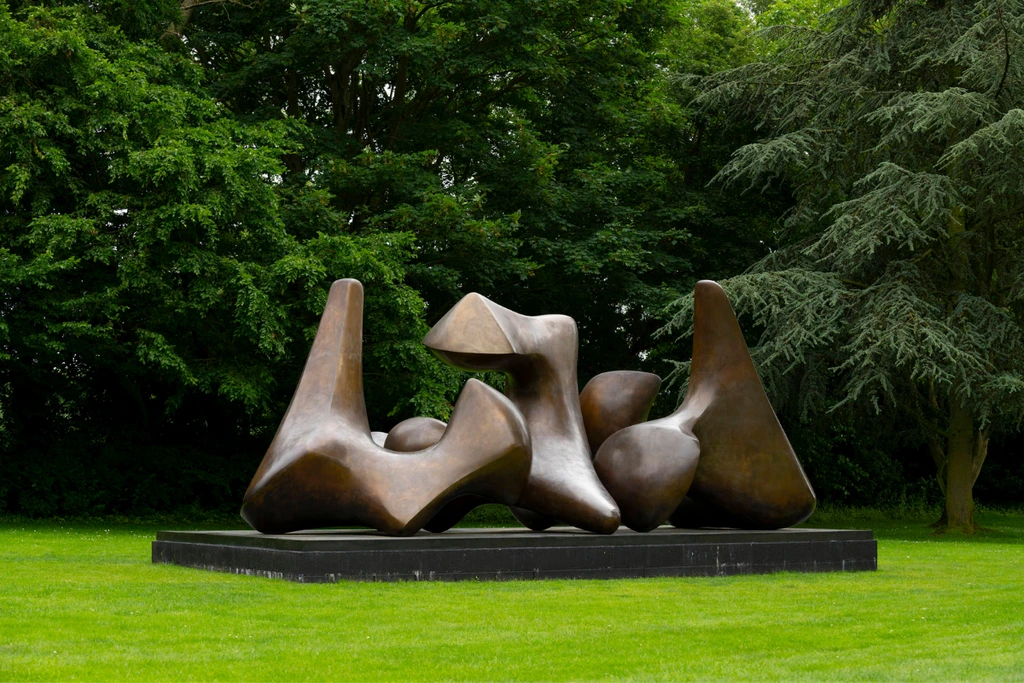
Few artists have taken one pose and extracted so much from it. Moore encountered the Pre-Columbian Chacmool type during his formative years and became fascinated by its reclining posture. His 1929 Reclining Figure in Hornton stone developed directly from that encounter, beginning a subject he would revisit for the rest of his career. The choice gave Moore enormous sculptural freedom. A standing figure naturally fights gravity vertically; a reclining figure spreads horizontally, allowing anatomy to stretch until it begins behaving like terrain. A bent knee can resemble a hill, a chest an escarpment, the gap beneath an arm a cave and a pelvic opening a window onto the sky.
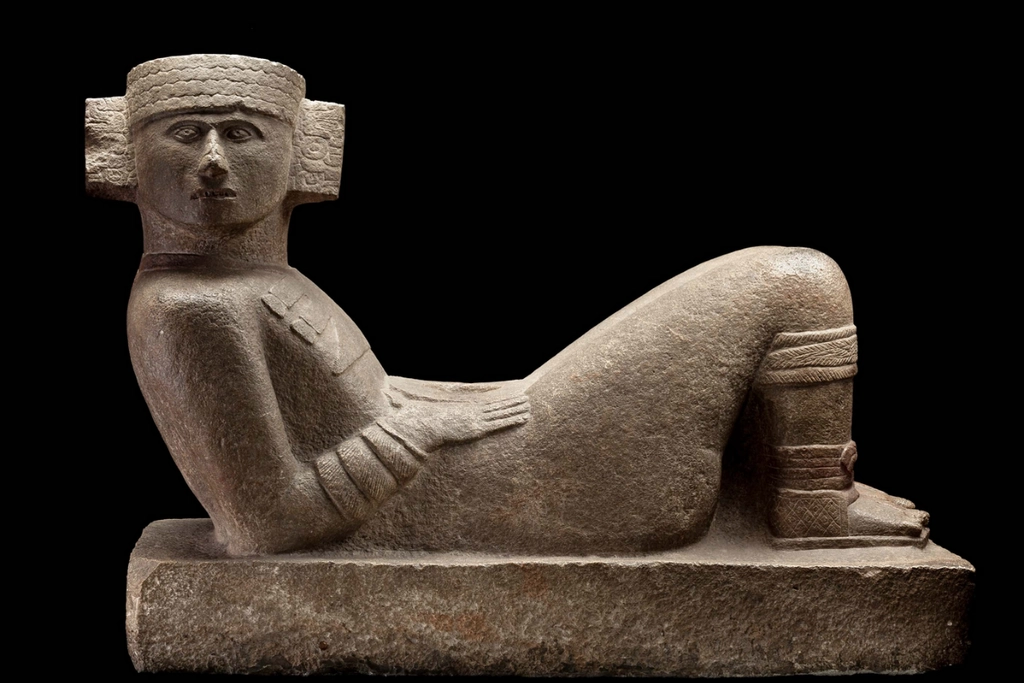
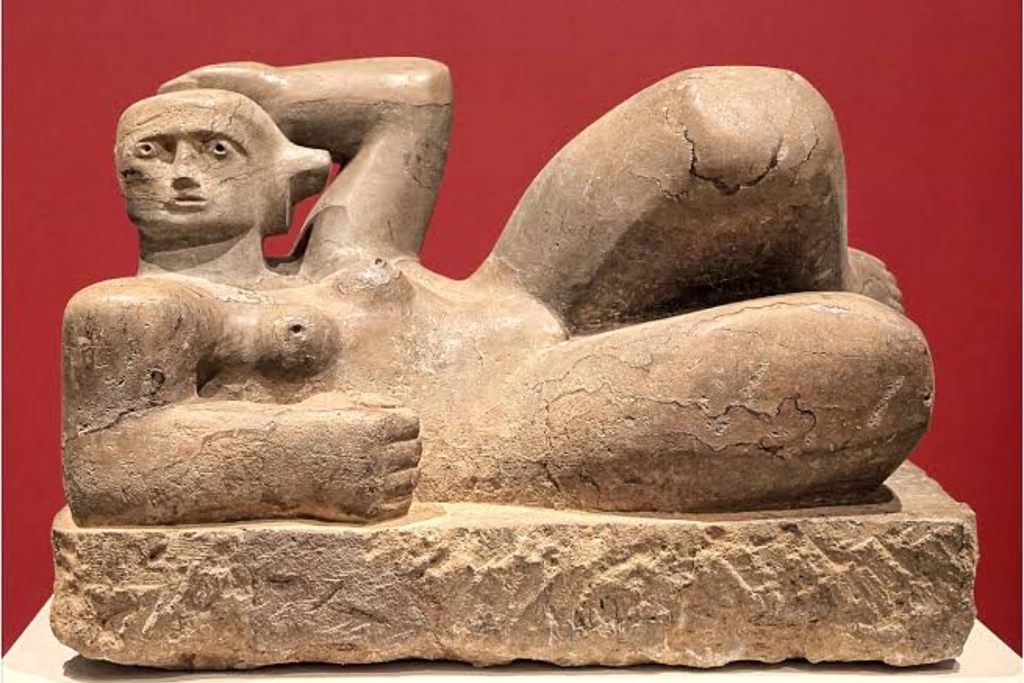
Moore could therefore distort the body aggressively while retaining an underlying human recognition. His figures expanded, fragmented and occasionally dissolved almost completely into abstract masses, yet viewers could continue sensing the ancient position of someone lying down. This became one of Moore’s defining contributions to modern sculpture: abstraction could move far from anatomical realism while maintaining a powerful human presence.
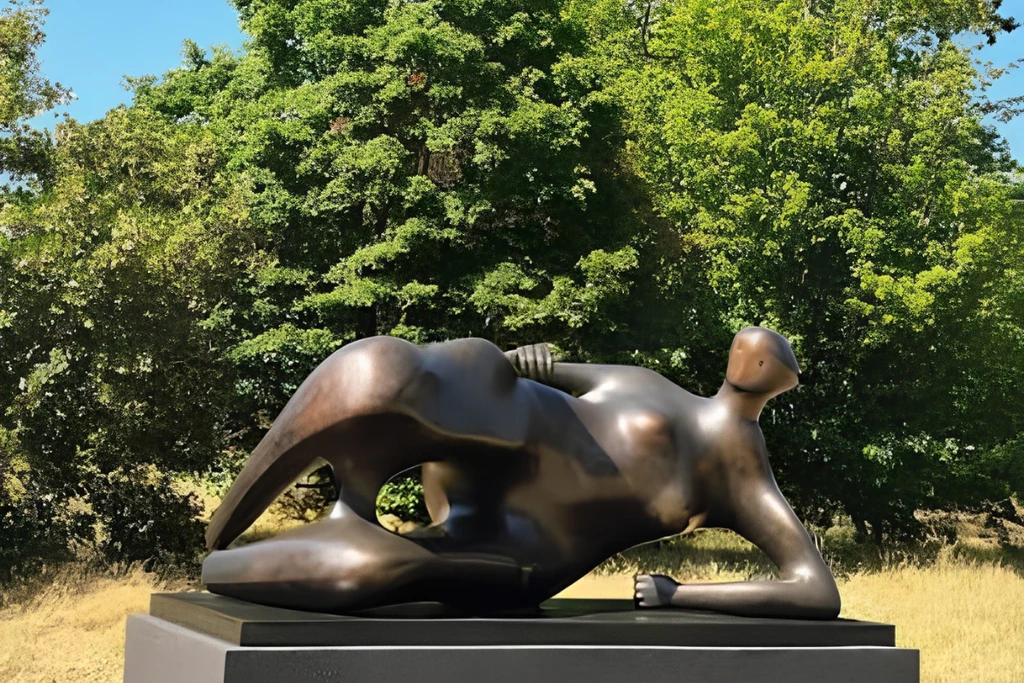
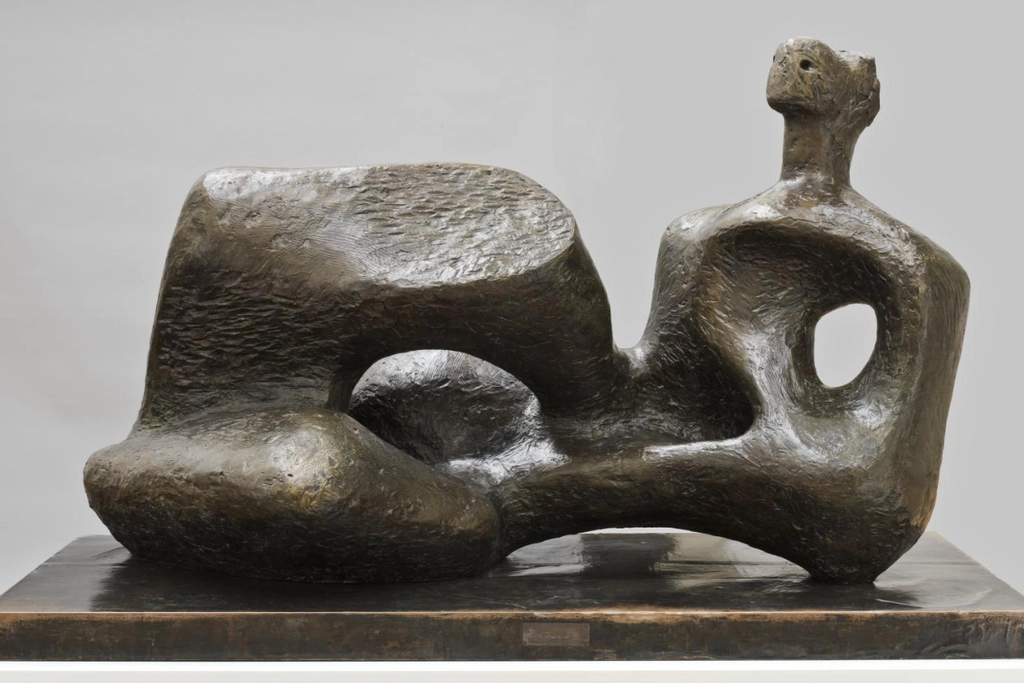
Nature supplied the vocabulary for this transformation. Moore filled his studios with bones, shells, pebbles, flints, stones and driftwood, studying them as structural propositions rather than decorative curiosities. He was fascinated by the way erosion produces tension, how bone remains strong while becoming hollow, how shells grow around cavities and how rock distributes mass. Human anatomy and geology gradually began sharing the same visual language. This is why a Moore sculpture can appear archaeological and futuristic at once, as though it had been excavated after millennia while simultaneously belonging to a radically modern world.
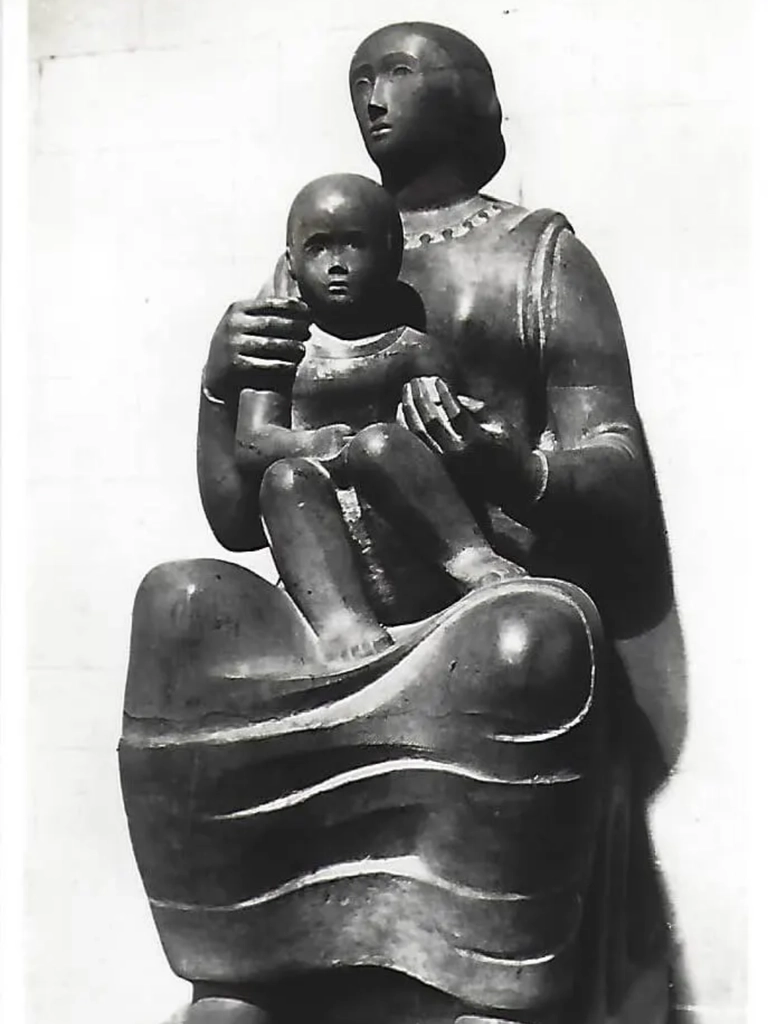
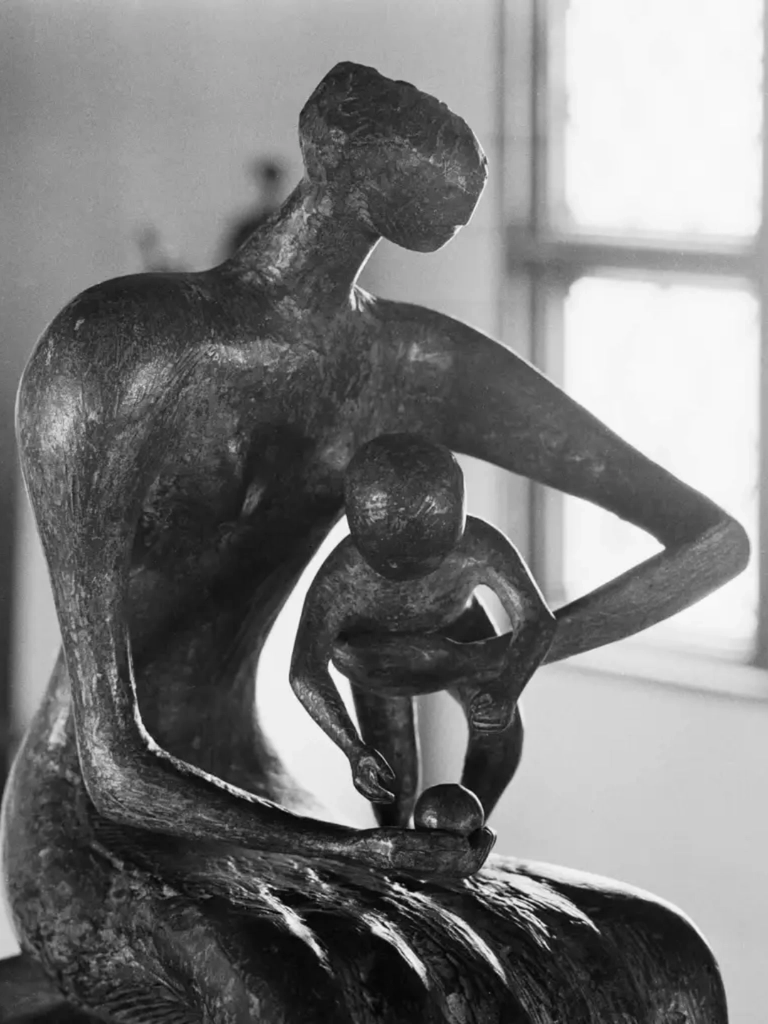
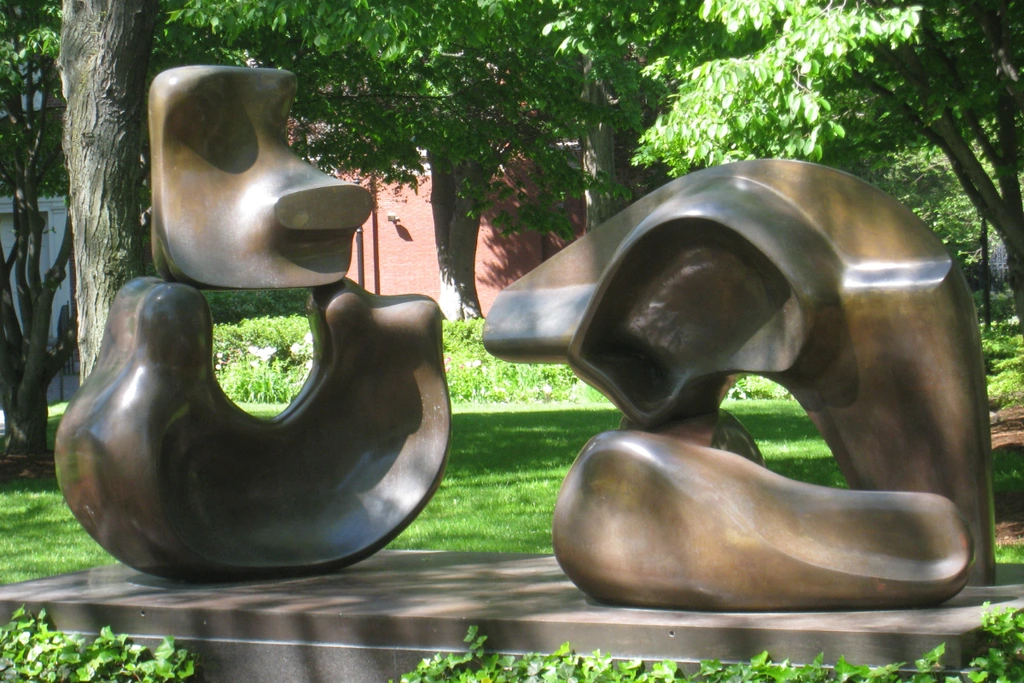
His other lifelong motif, Mother and Child, gave this investigation a more intimate emotional structure. Moore returned repeatedly to the subject through sculpture, drawing and religious commissions. Here mass became psychological: a larger figure surrounds, encloses or supports the smaller one; concavities resemble shelters; arms operate almost like architectural supports. The same fascination eventually extended into his Helmet Head series, where an internal form sits protected inside an external shell. Moore repeatedly turned human relationships into problems of structure, pressure and enclosure.
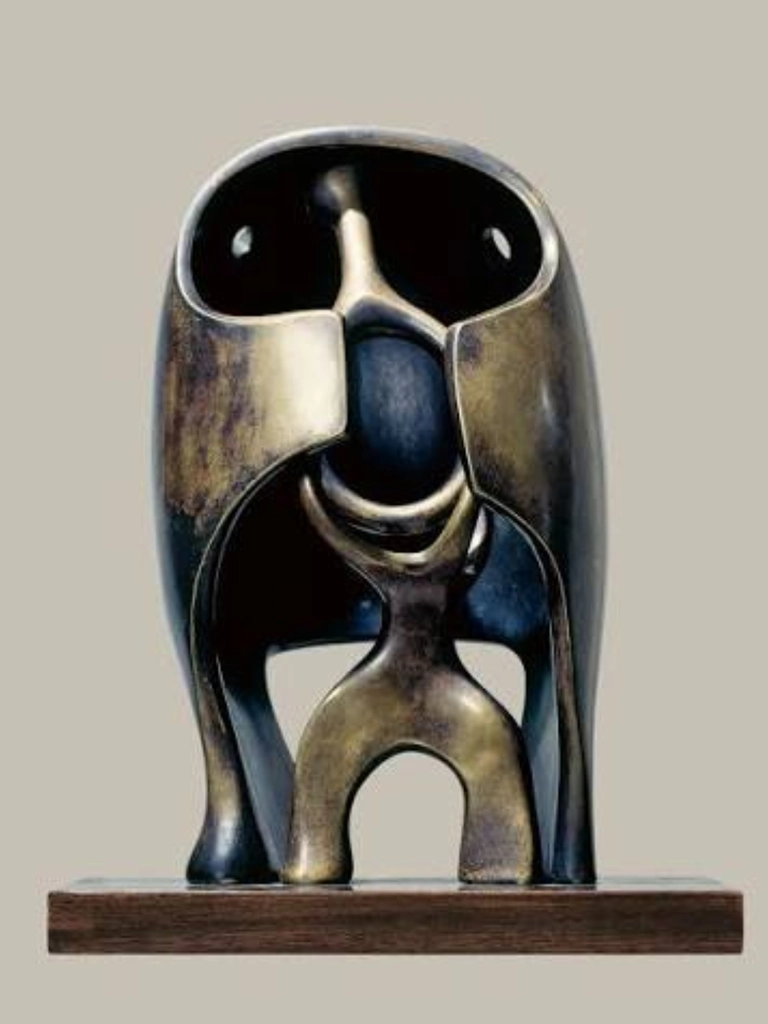
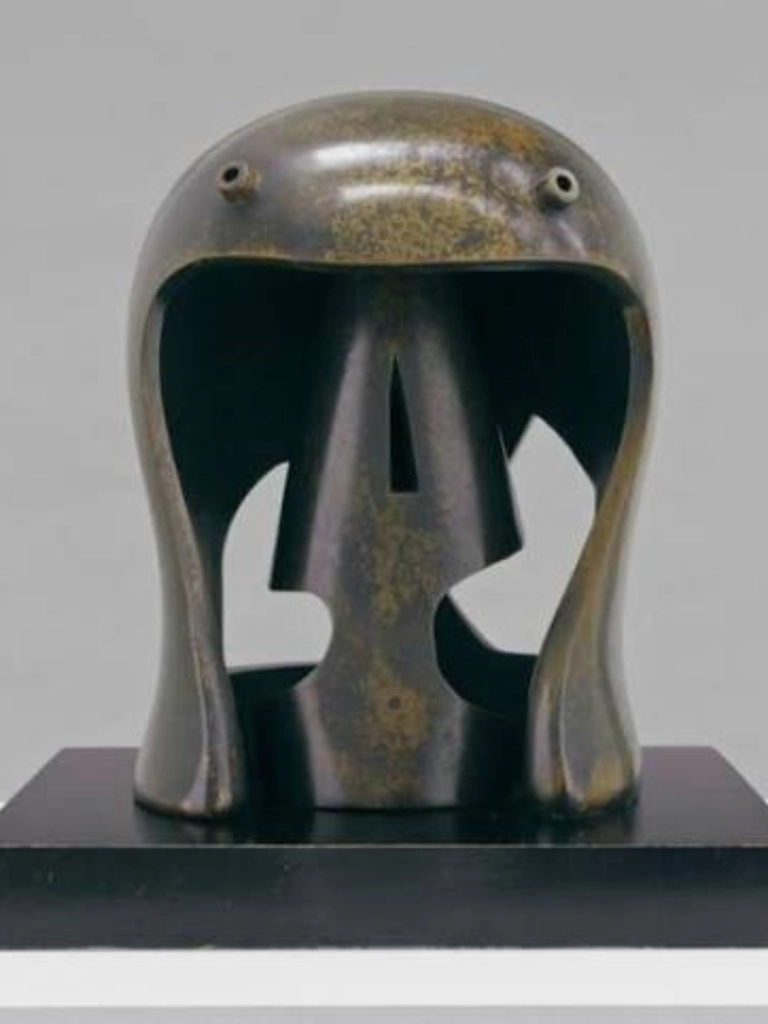
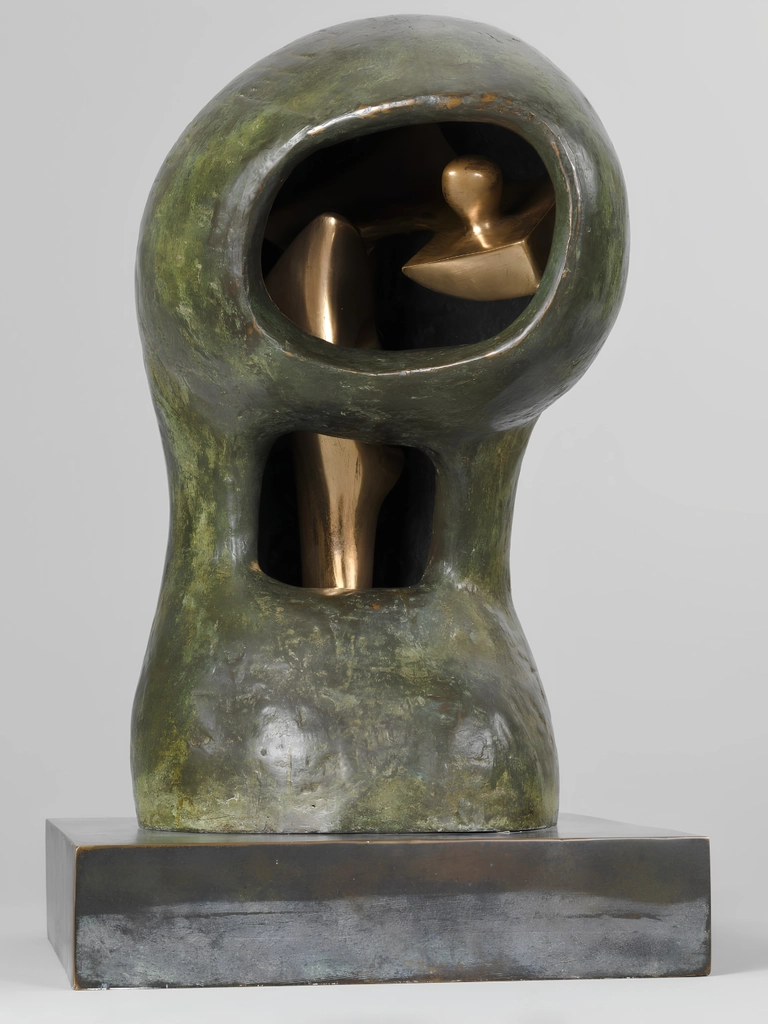
One of the most radical elements in Henry Moore’s sculpture was technically an absence. “The first hole made through a piece of stone is a revelation,” he once observed, capturing a crucial transformation in modern sculpture. The hole converted empty space from background into active material. Once a sculpture is pierced, the eye stops reading only its outer surface and starts looking through it. The outer contour, interior contour, surrounding mass and landscape visible through the opening all become part of a single composition.
Air acquires shape. In Henry Moore’s mature works, concave and convex surfaces create pressure against each other. A cavity can make the surrounding bronze appear heavier, while a narrow bridge of material seems muscular precisely because the empty space underneath threatens its stability. The sculpture gains energy through the relationship between what physically exists and what has been removed.
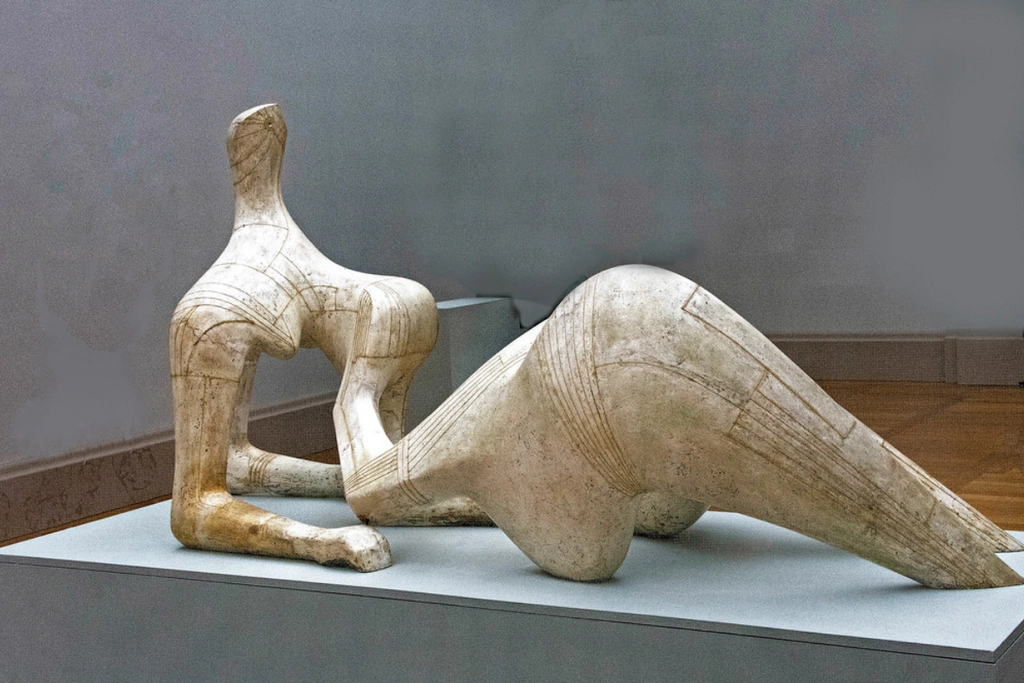
His Reclining Figure: Festival of 1951 marked an important stage in this thinking. Moore described it as a work in which form and space became sculpturally inseparable. The idea reaches the heart of his mature practice. Place a Henry Moore outdoors and the sculpture begins editing reality: grass enters a bronze aperture, clouds move through a torso, a distant tree becomes temporarily enclosed by metal. The landscape ceases to operate as passive background and becomes part of the sculpture itself.
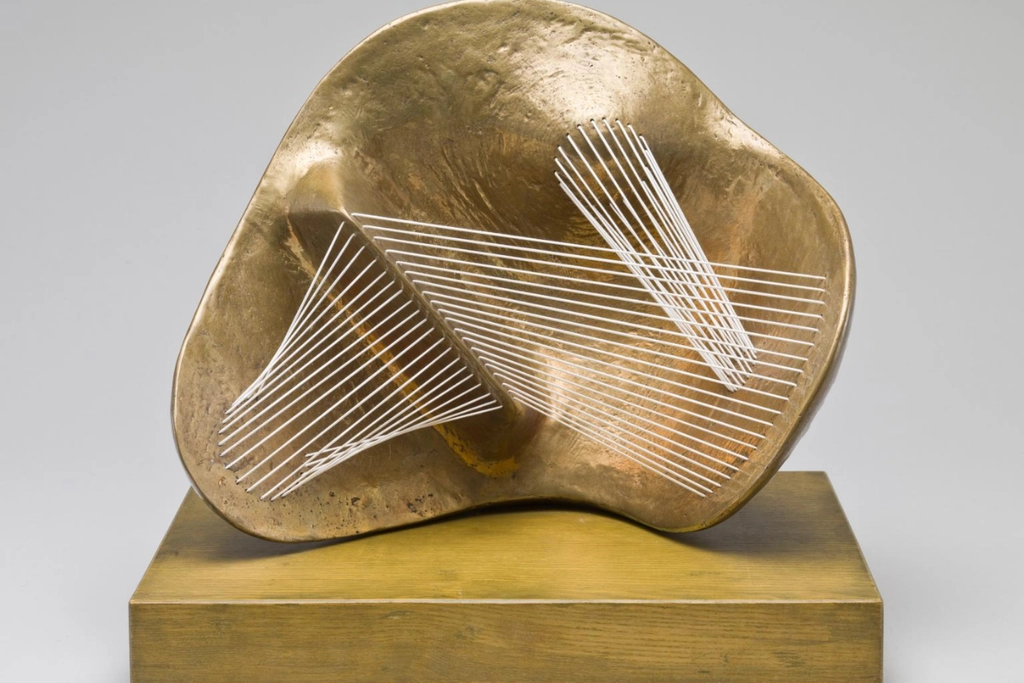
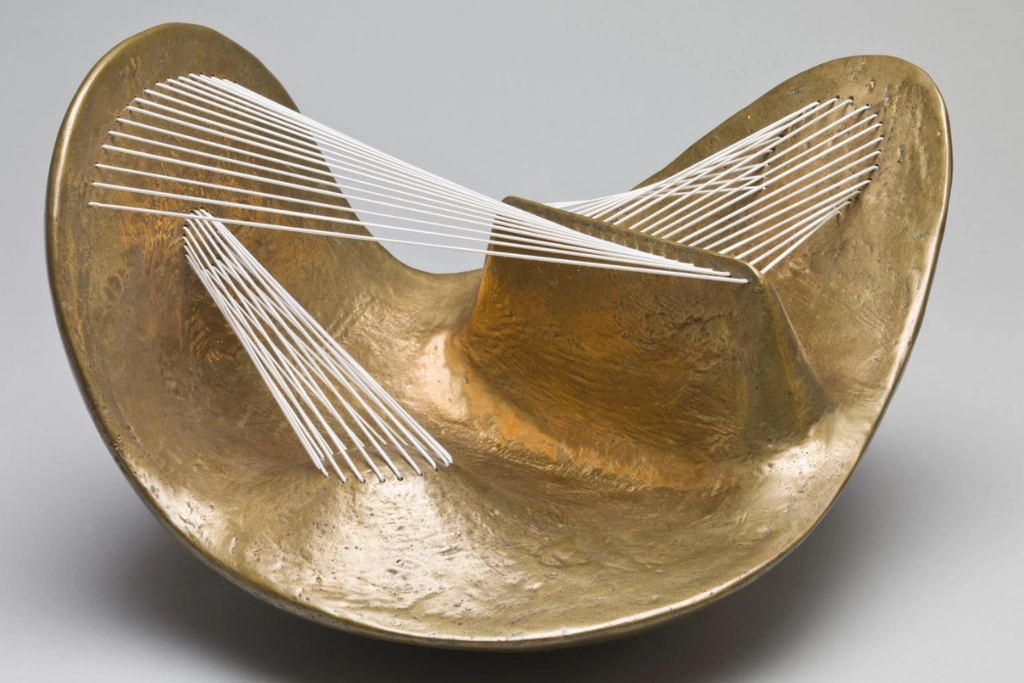
His stringed works of the late 1930s pushed the idea further. Taut linear elements stretched across hollow spaces introduced a mathematical tension into his organic vocabulary. Soft mass met straight line, bodily curvature met geometric order, and empty space suddenly became something that could be measured, crossed and activated. Moore repeatedly built his strongest work from this collision between physical languages.
Moore’s early career was deeply tied to direct carving and the modernist principle of “truth to materials.” Working directly into stone or wood meant treating the material as an active collaborator. Fossils, mineral veins, colour changes, fractures and grain could affect the direction of a sculpture. Stone brought geological history into the work before Moore ever touched it; wood carried its own directional tension. His early carvings retain this sense of resistance, as though the original block remains psychologically present inside the finished object.
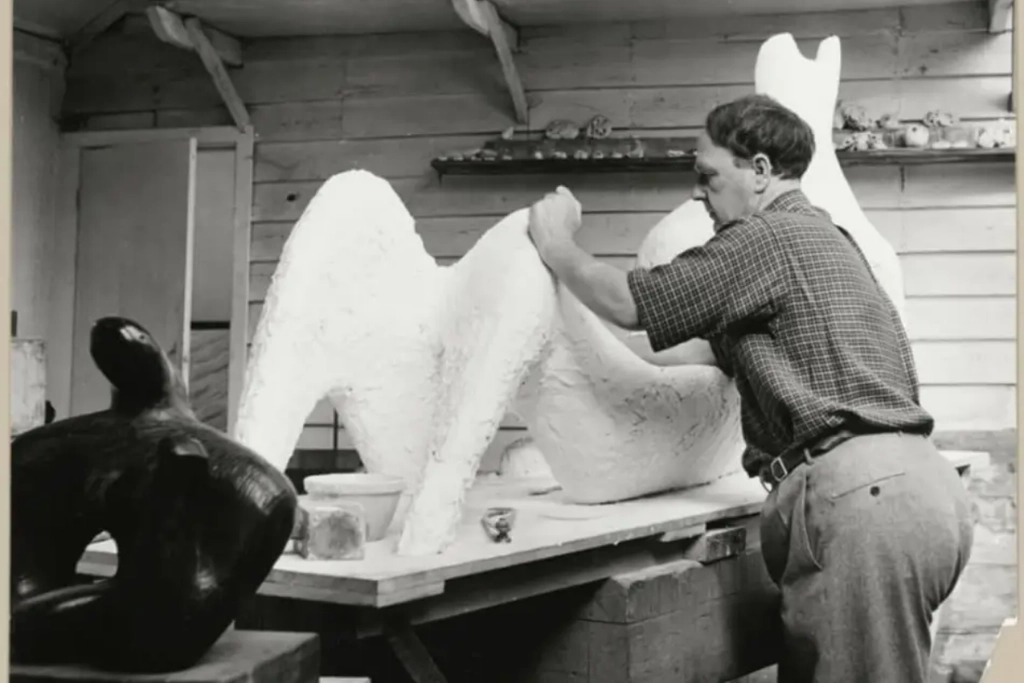
Later, however, Moore developed a process that allowed intimate gestures to become monumental. Small wax, plaster or clay maquettes could be manipulated rapidly in the hand, enlarged into full-scale models and eventually cast in bronze. The implications for modern sculpture were enormous. A thumb-sized hollow pressed into plaster could become an opening several metres high. A ridge shaped with a finger could grow into architecture. Moore effectively created an industrial pathway for touch.
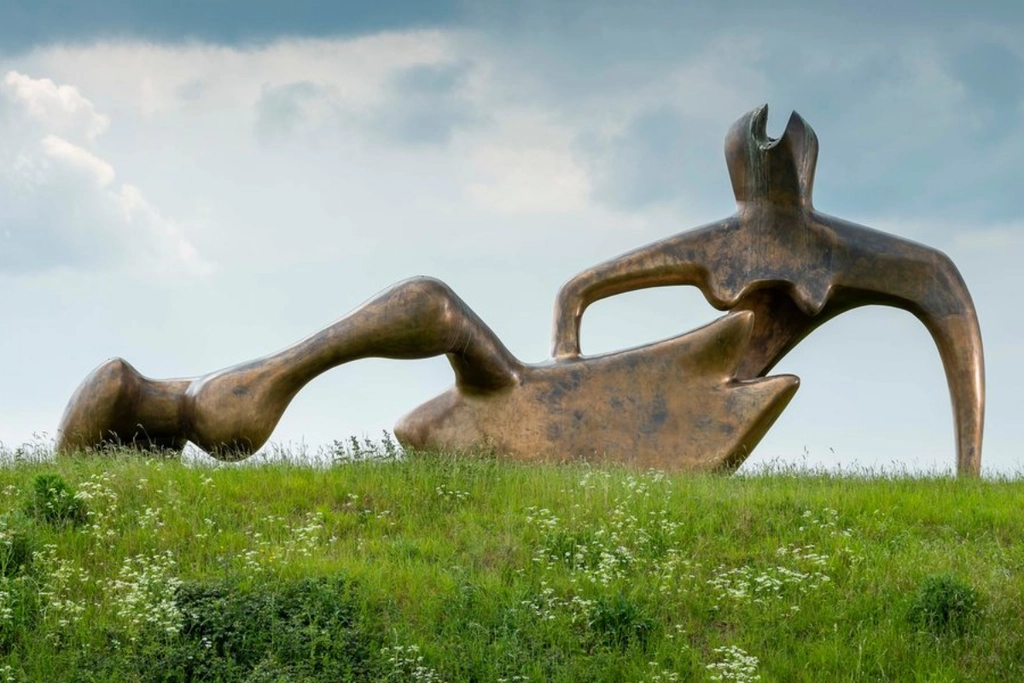
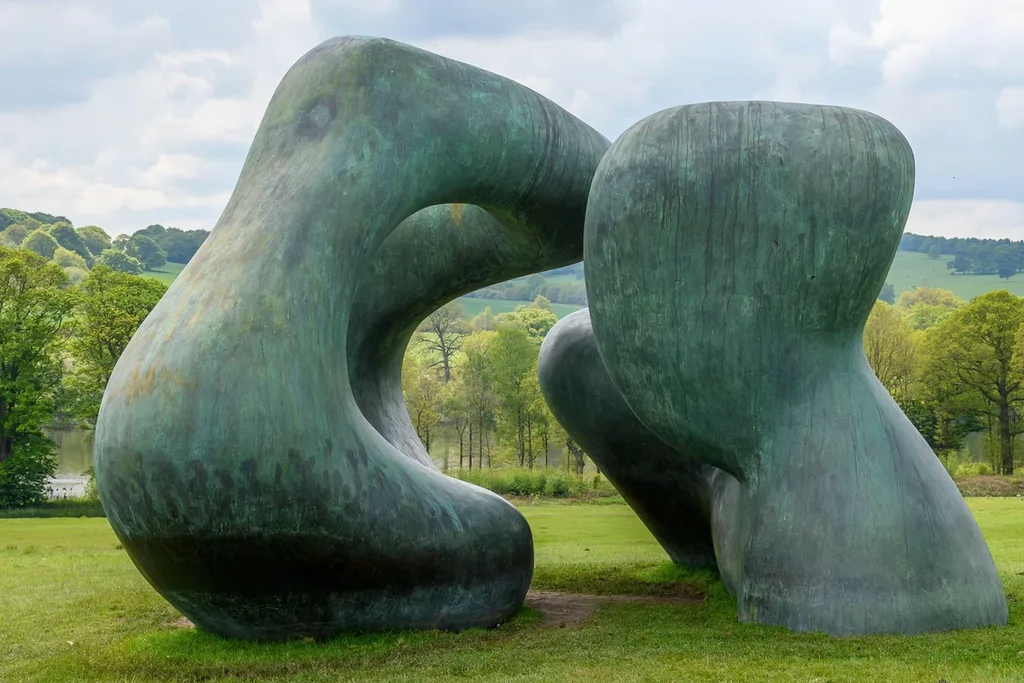
This apparent contradiction became one of his greatest strengths. His monumental bronzes rarely appear mechanically sterile. Their ridges, dents and irregular surfaces preserve evidence of modelling, simply enlarged until the movements of a hand begin to resemble geological formations. Scale turns touch into landscape.
Bronze also expanded Moore’s ability to work with the environment. Patinas ranging from greens and earthy browns to darker tones could weather alongside grass, trees, rain and architecture. His sculptures consequently feel designed to enter into long-term conversation with their sites. Monumentality in Henry Moore is never only a question of size; it depends on how mass, void and surrounding landscape negotiate with each other. A Moore needs space around it because that space participates in the work.
Moore’s relationship with the human figure became considerably darker during wartime. He had experienced war directly as a young soldier during the First World War, when he was exposed to gas during the Battle of Cambrai. Two decades later, the Blitz confronted him with another image of vulnerable bodies: Londoners sleeping along Underground platforms while seeking protection from bombing.
The scene eerily echoed the reclining figures Moore had already sculpted for years. In his famous Shelter Drawings, however, reclining ceased to suggest timeless repose and became an image of survival. Blankets resemble shrouds, tunnels become enormous protective shells and rows of sleeping bodies appear simultaneously alive and archaeological. The underground space transforms human beings into forms contained within architecture.
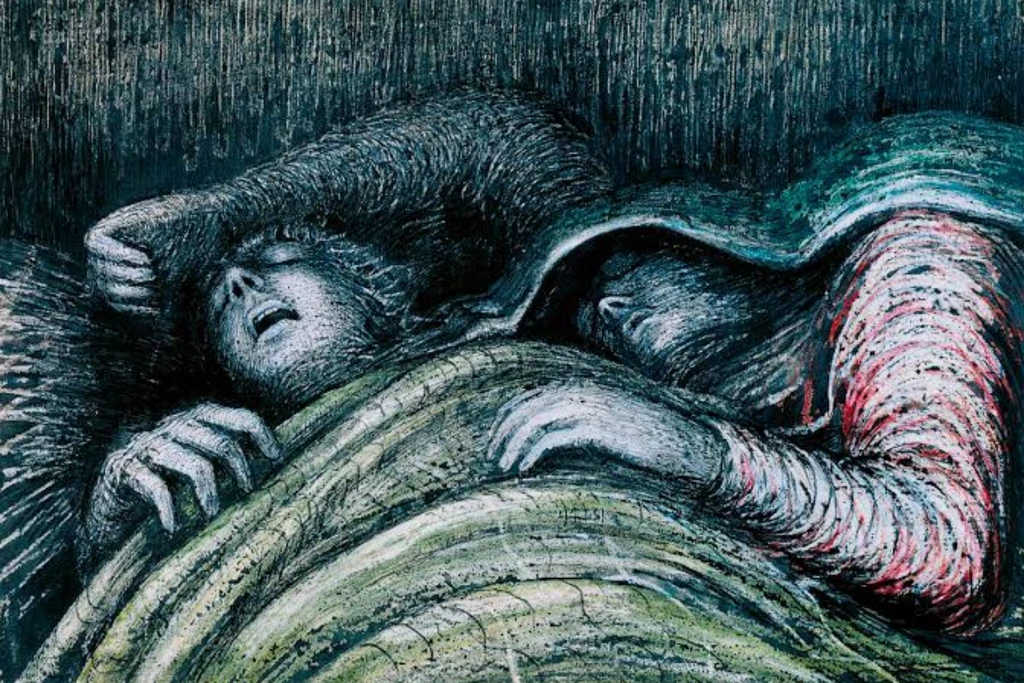
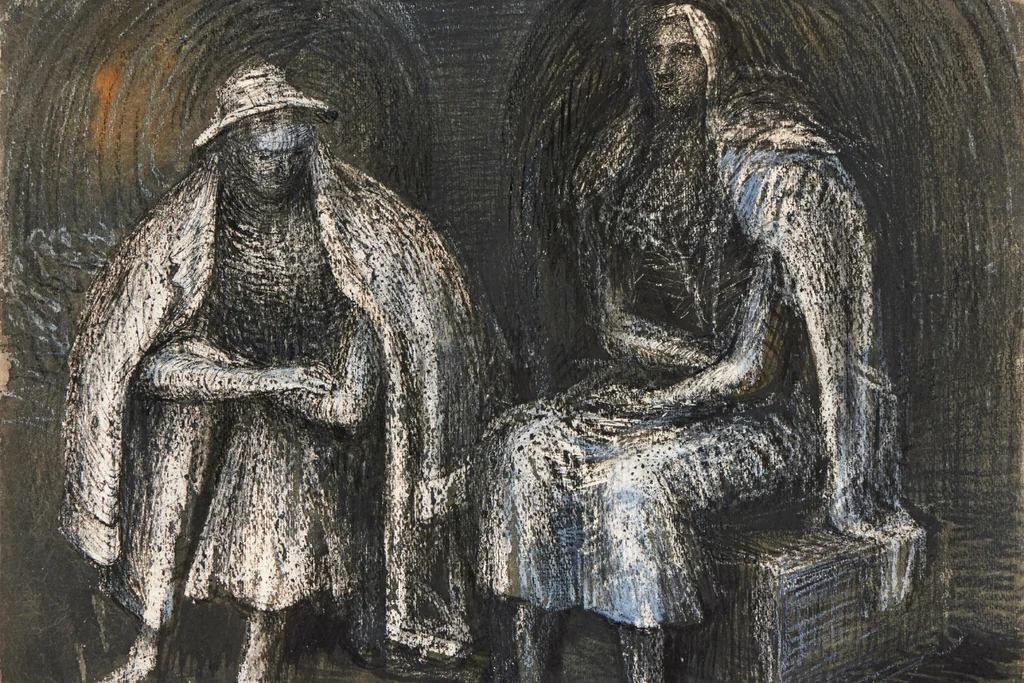
That experience deepened ideas already present throughout Henry Moore’s sculpture. Hollows, helmets, mother-and-child compositions and enclosing structures all revolve around protection, containment and vulnerability. The body in Moore is rarely isolated from its surrounding space; it is continually being held, pressured, exposed or sheltered by it.
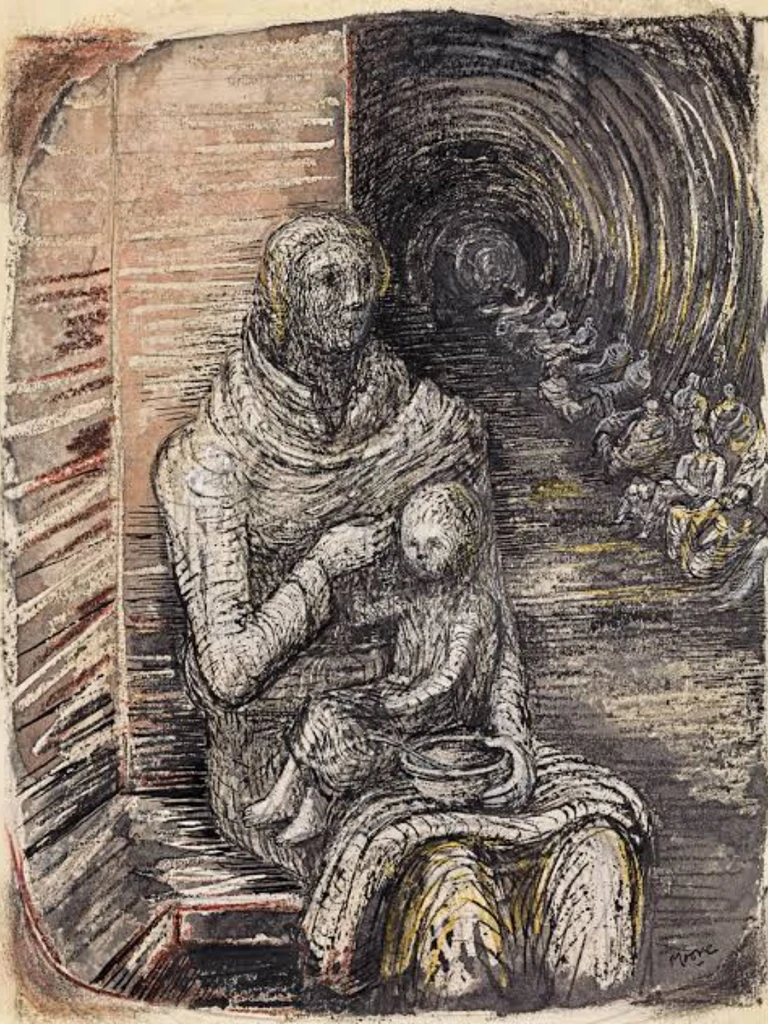
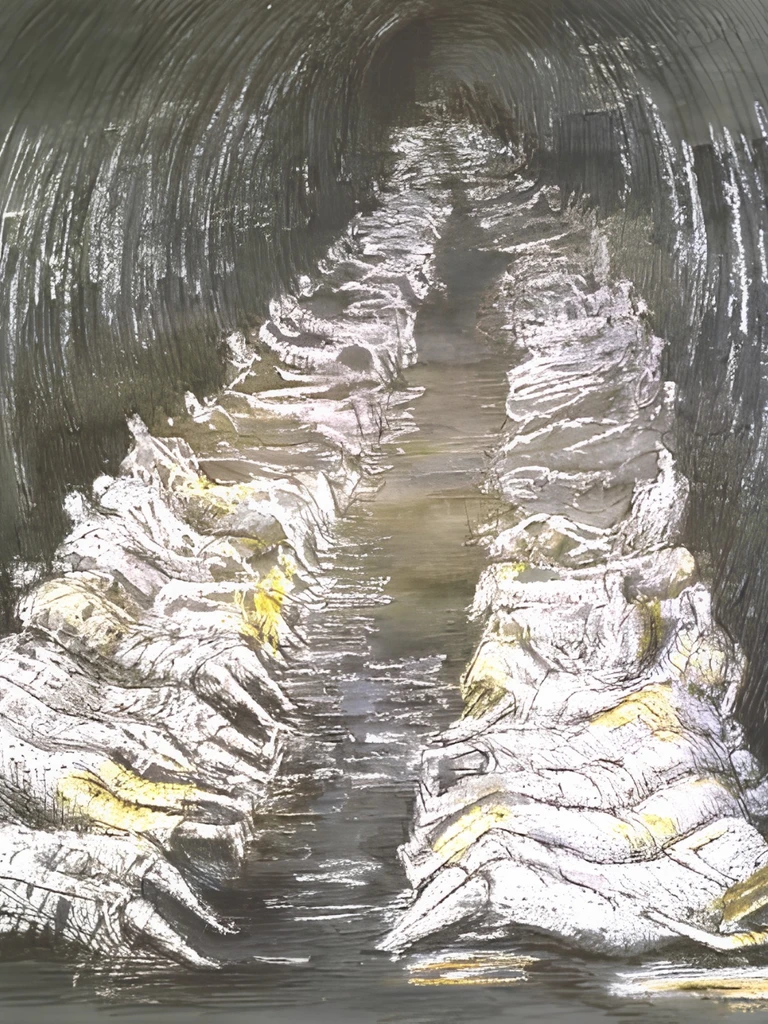
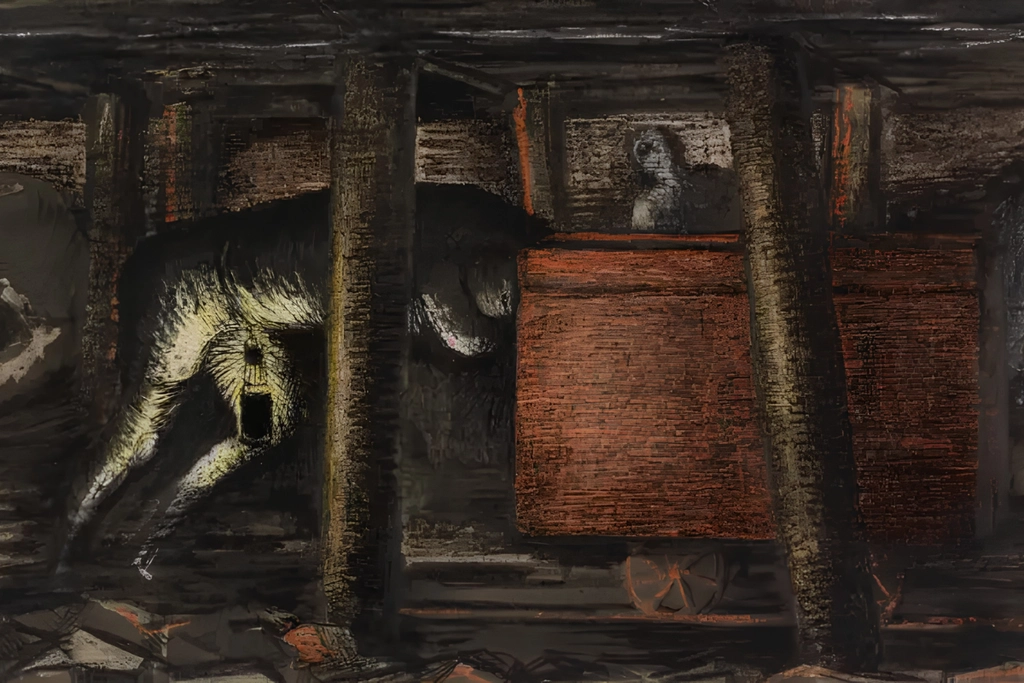
His wartime coal mine drawings added another intensely personal dimension. Henry Moore grew up as the son of a Yorkshire coal miner, and when he drew miners working underground during the Second World War, he returned visually to the labour that had shaped his childhood. In cramped tunnels, bodies bent themselves around architecture: backs curved, shoulders compressed, limbs became mechanisms. The shelter body waits underground for danger to pass; the miner’s body works underground to extract material; the sculptural body emerges from within stone. Across all three, Moore kept returning to the relationship between the human form and the space that contains it.
Henry Moore’s cultural monumentality now has a financial equivalent. On 5 March 2026, a cast of King and Queen from 1952–53 sold in London for £26.345 million, approximately $35.2 million, establishing a new auction record for the artist. The result surpassed Moore’s previous auction high and confirmed that his most important post-war bronzes remain among the most commercially powerful objects in twentieth-century British art.
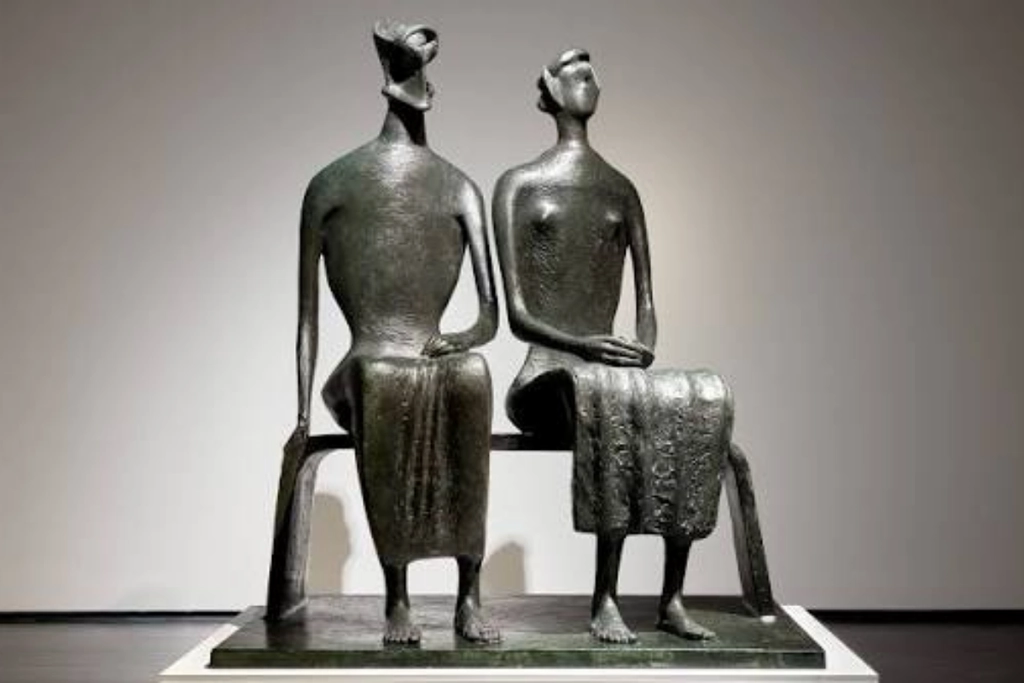
The record is particularly revealing because King and Queen compresses many of Moore’s strongest ideas into a single work. The two bodies remain recognisably human while abandoning conventional realism. Faces become mask-like, limbs stretch into thin architectural lines and broad planes give the figures a strange archaeological authority. They seem simultaneously ancient, ceremonial and futuristic.
Scarcity also matters. Major casts with strong provenance and institutional importance rarely enter private-market circulation, especially examples from Moore’s most celebrated post-war period. The market therefore rewards works that condense his artistic identity most clearly: human enough to remain iconic, abstract enough to represent the ambitions of modern sculpture, and large enough to turn ownership into something close to custodianship.
Henry Moore spent much of his career producing enormous physical objects, yet his most consequential contribution may have been the empty areas inside them. He taught viewers to see a hole as form, turned the reclining body into landscape, transformed hand-sized modelling into public architecture and allowed bronze to frame moving fragments of sky. Stone stopped behaving merely as a solid block, the human figure stopped ending at the skin and landscape stopped functioning as a passive background.
This is why Henry Moore remains central to modern sculpture. His work expanded sculpture while continuing to engage with some of its oldest subjects: the body, motherhood, nature, touch, gravity and material.