MENU
Close





Barbara Hepworth carved a hole inside a block of alabaster, and suddenly, stone feels light.
Barbara Hepworth carved a hole inside a block of alabaster, and suddenly, stone feels light.
August 7, 2026


Before the international exhibitions, monumental commissions and the title of Dame, Barbara Hepworth was watching Yorkshire unfold through a car window.
Born in Wakefield in 1903, she often accompanied her surveyor father on journeys across the West Riding. Roads cut through hills. Valleys shifted with perspective. Land appeared as a sequence of masses, depressions and horizons. Decades later, those childhood sensations would surface inside an abstract language with almost no literal landscape in sight.
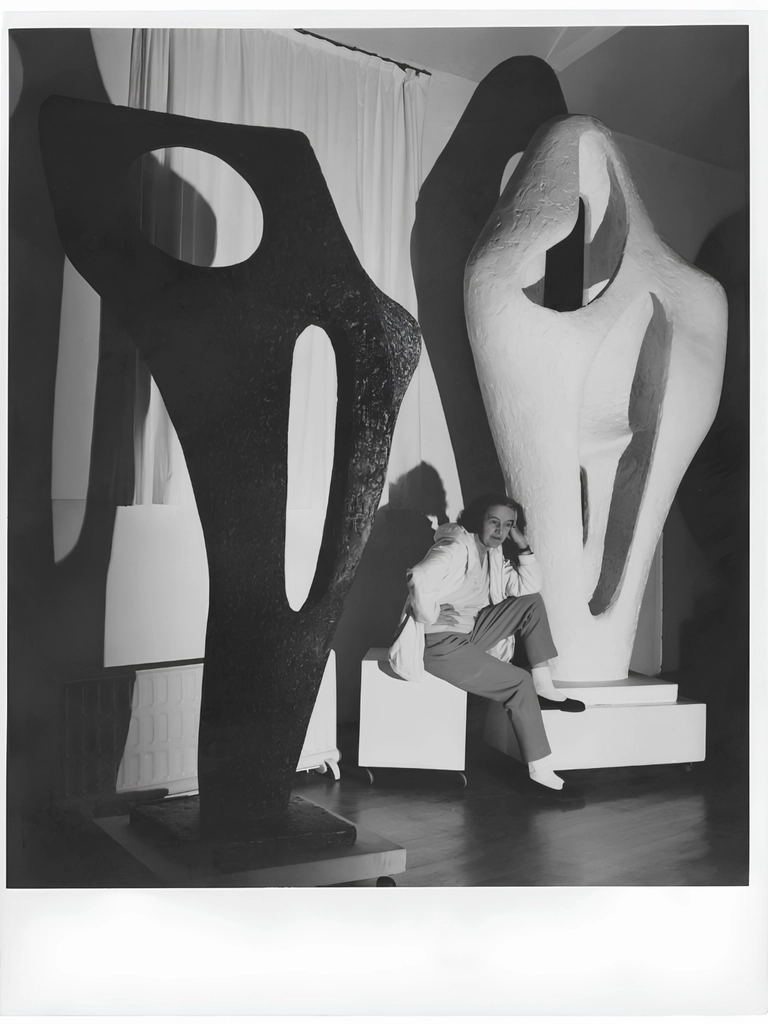
Hepworth studied at Leeds College of Art before entering the Royal College of Art in London in 1921, where Henry Moore was among her contemporaries. A scholarship later took her to Italy, where she developed her knowledge of stone carving while working alongside her first husband, sculptor John Skeaping.
The experience pushed her toward direct carving, or taille directe. A block of wood or stone became the starting point itself. Grain could alter a curve. Density could resist an intended cut. A fracture could redirect the entire form.
Her hand remained visible in the logic of the object.
This physical relationship with material became central to Barbara Hepworth’s contribution to modern sculpture. Abstraction under her tools never became purely intellectual geometry. Marble, alabaster and hardwood retained weight, temperature, grain and memory. The finished work carried the evidence of an encounter between an idea and something physically resistant.
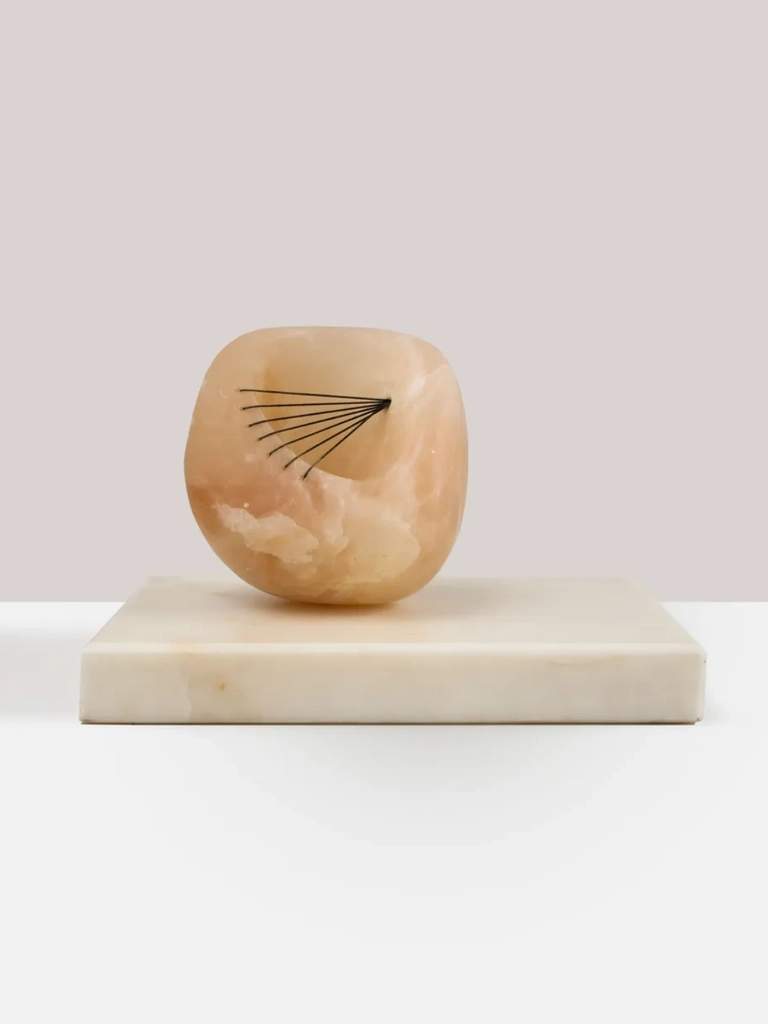
Around 1931, Barbara Hepworth made a small alabaster work known as Pierced Form.
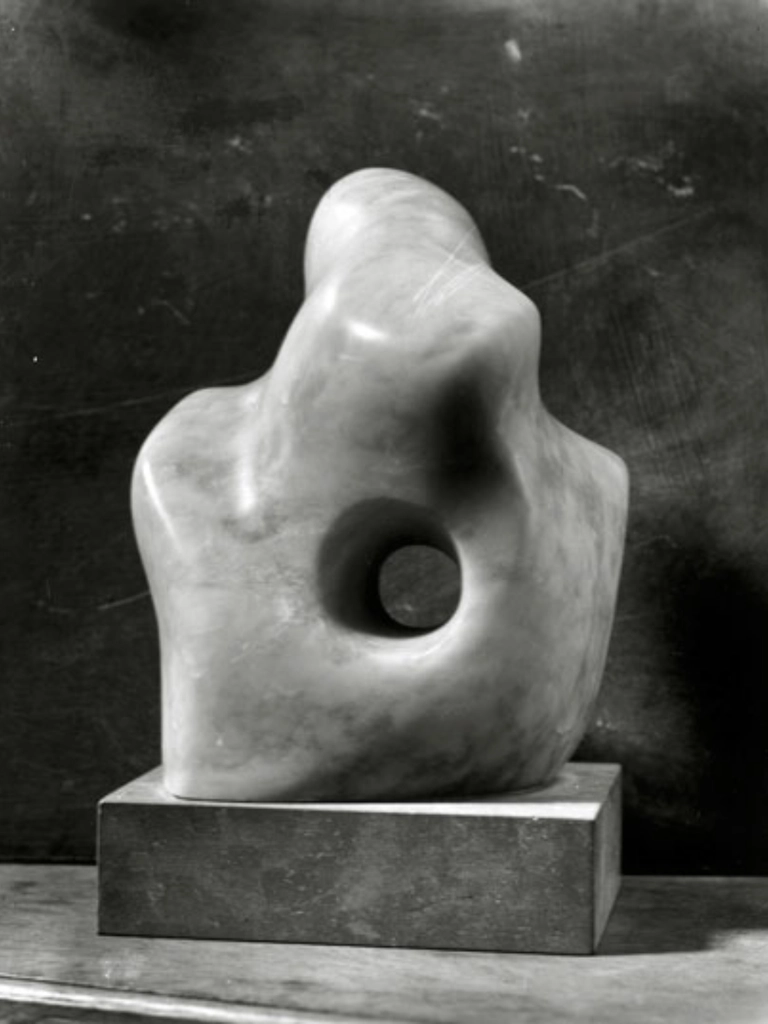
Its significance lay in an absence.
She carved an opening through the body of the sculpture, allowing the surrounding world to enter the object. The original work was later destroyed during the Second World War, yet that pierced centre became one of the defining gestures of her career.
A hole could suddenly possess structure.
Look through a conventional solid sculpture and the eye eventually encounters the surface. Look through a Hepworth and the eye might encounter a wall, another person, a cloud or an entire landscape.
Her openings therefore changed according to their surroundings. Sunlight could sharpen one edge. Shadow could deepen a cavity. A garden seen through the centre might temporarily become part of the composition.
Hepworth treated negative space as something almost tangible.
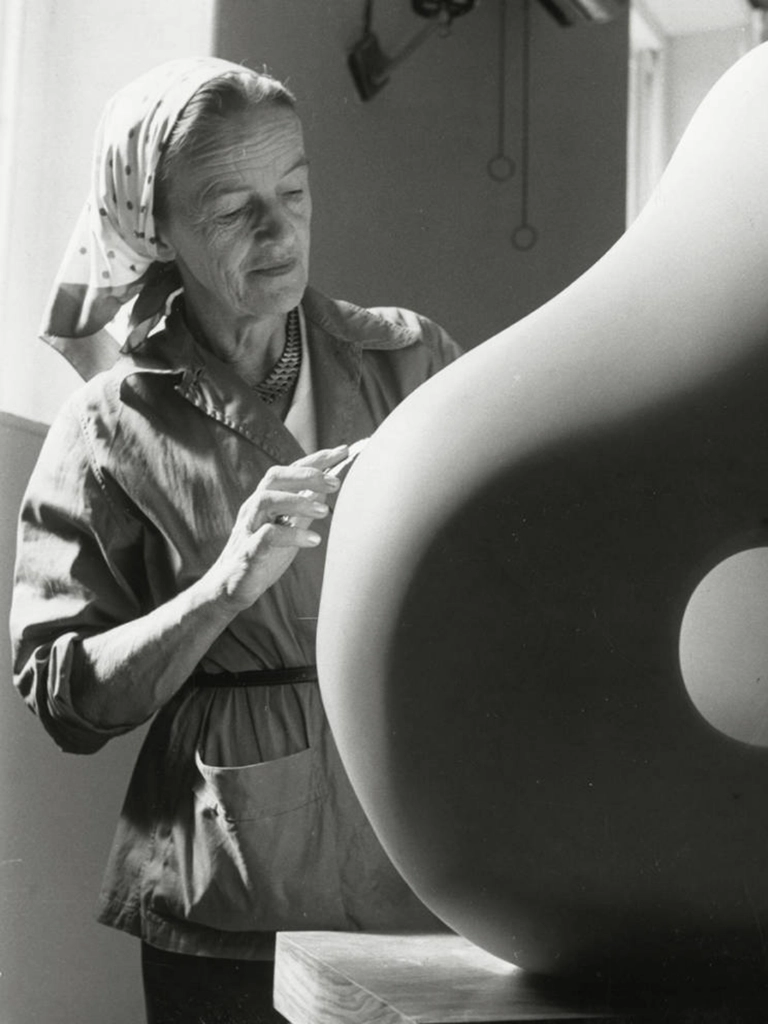
During the 1930s, this language became increasingly abstract. Ovals, spheres, upright masses and grouped forms replaced recognizable anatomy. Yet human relationships remained deeply embedded within them.
One shape might lean toward another. Two volumes could touch or remain separated by a deliberately measured interval. A cavity could appear protective, vulnerable or strangely intimate.
Abstraction allowed Hepworth to remove the body while preserving bodily relationships.
In 1934, Barbara Hepworth gave birth to triplets Rachel, Sarah and Simon with artist Ben Nicholson.
The experience entered her sculpture without becoming autobiography carved into stone.
Three-part arrangements gained particular intensity in her work. Forms appeared together as families of volumes, each possessing its own identity while depending upon the positions of the others.
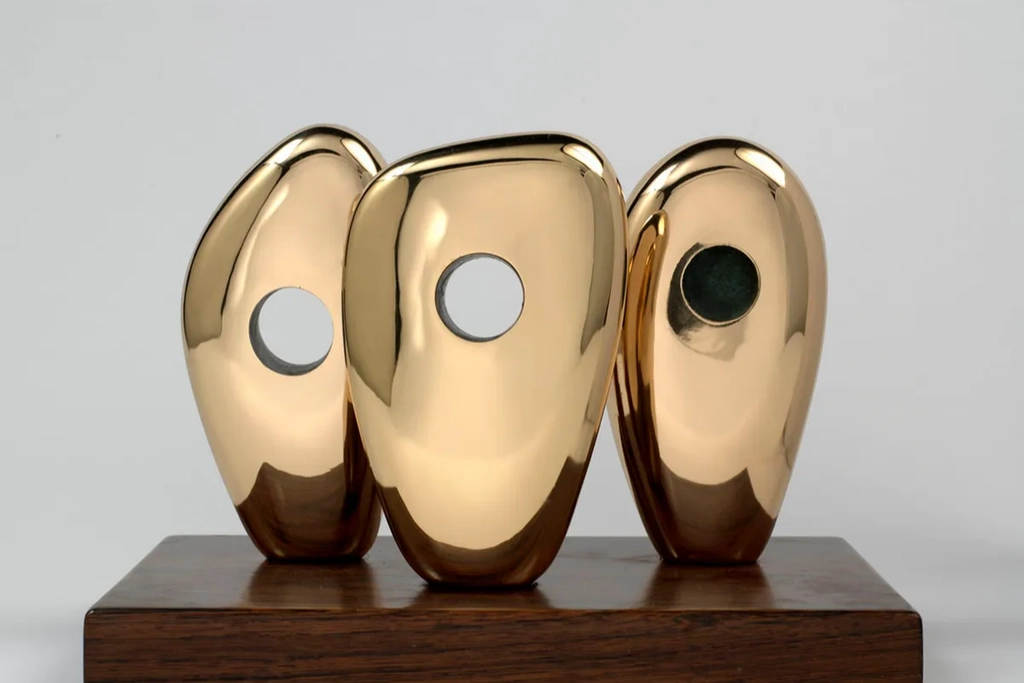
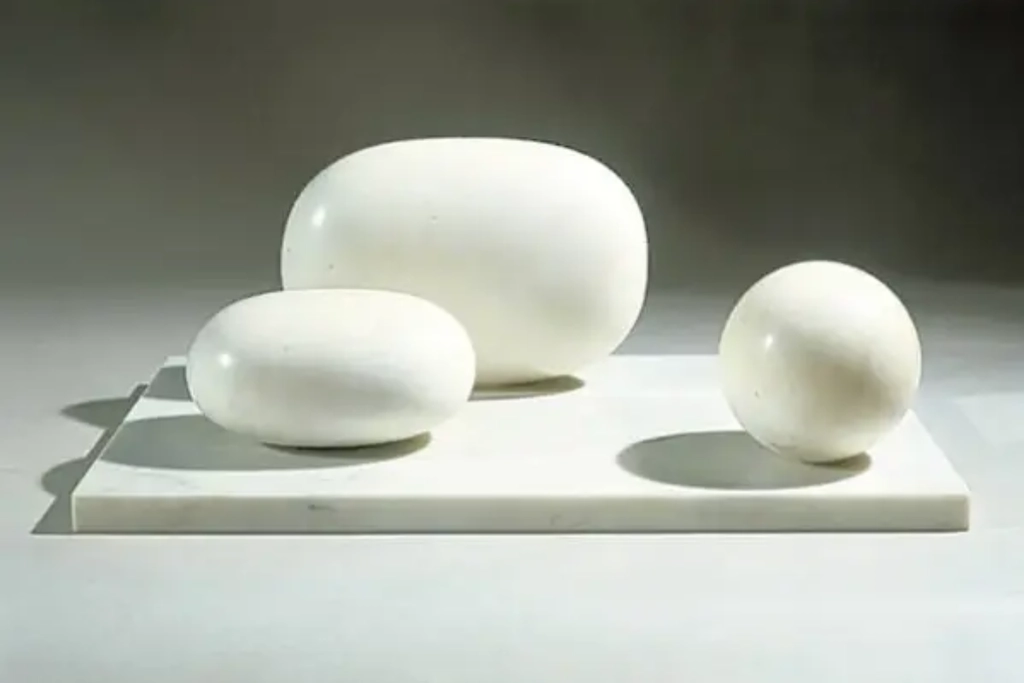
Motherhood offered Hepworth an entirely new spatial problem.
How can several individuals occupy one emotional structure while remaining distinct?
Her sculptures could answer without depicting a mother, child or face. A large form placed beside two smaller masses could contain the psychological suggestion of protection. Three stones might create tension through their distances alone.
This ability to convert human experience into pure spatial relationships gave Hepworth’s modern sculpture an unusual emotional charge.
Geometry became personal without becoming illustrative.
In 1939, war pushed Barbara Hepworth, Nicholson and their children from London to St Ives.
Cornwall transformed the scale of her visual world.
The landscape offered ancient standing stones, curved bays, cliff faces, polished pebbles and an endless negotiation between solid land and moving water. The horizon created another kind of line, one that seemed perfectly geometric while remaining entirely natural.
Hepworth absorbed these conditions into her work.
Her sculptures increasingly resemble objects shaped by forces larger than a studio. Curves suggest erosion. Hollow interiors recall shells or tidal pools. Vertical forms rise like standing stones, though they resist becoming direct replicas of anything in the landscape.
Pelagos from 1946 became one of the most concentrated expressions of this period.
Its wooden body curls inward around a painted concavity while strings stretch across the hollow. The form carries associations with a wave, shell, bay and human torso without settling comfortably into any single reading.
Those strings transformed space once again.
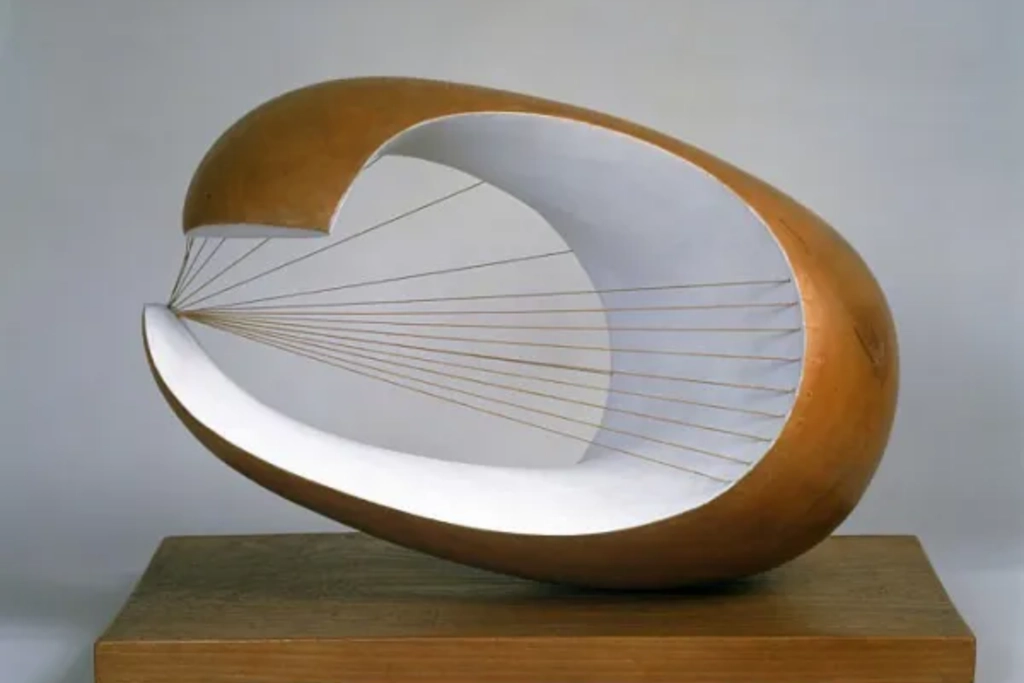
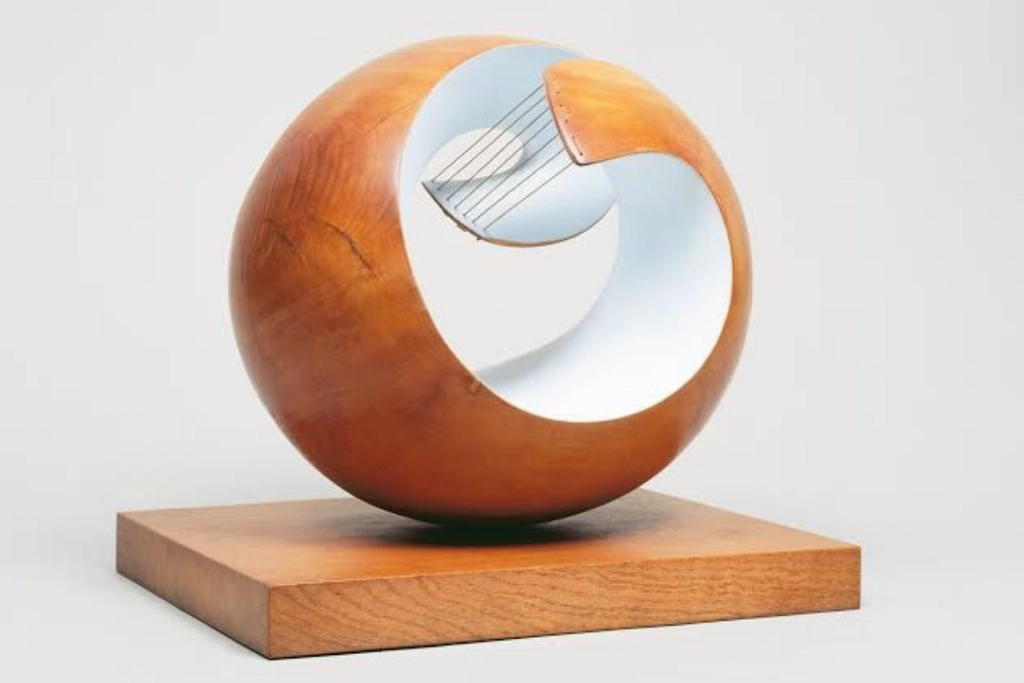
A cavity could now contain tension. Lines crossed emptiness and made its dimensions visible. The eye followed one string toward another, converting the interior into a field of force.
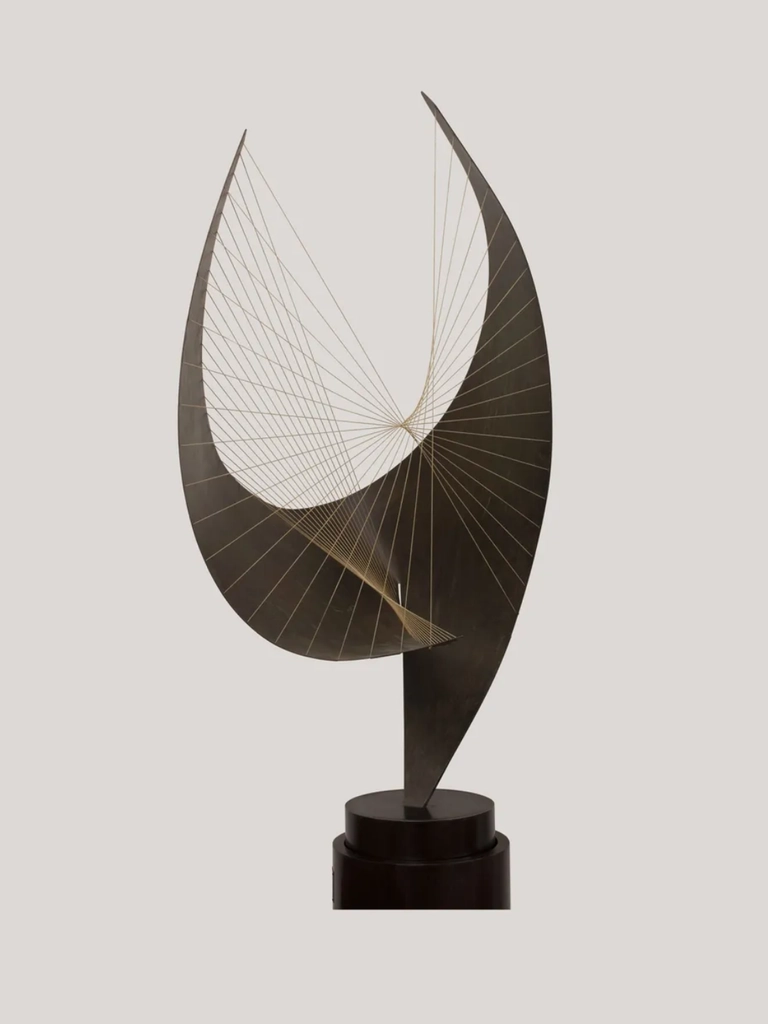
For Barbara Hepworth, modern sculpture could describe wind, balance and distance without representing any of them literally.
In 1953, Barbara Hepworth’s eldest son Paul died in an RAF plane crash in Thailand.
Grief entered a life already structured around relentless making.
Around this period, an extraordinary quantity of Nigerian guarea hardwood reached her through arrangements connected with her friend Margaret Gardiner. Approximately 17 tons of the timber eventually became available to Hepworth.
Some blocks were enormous.
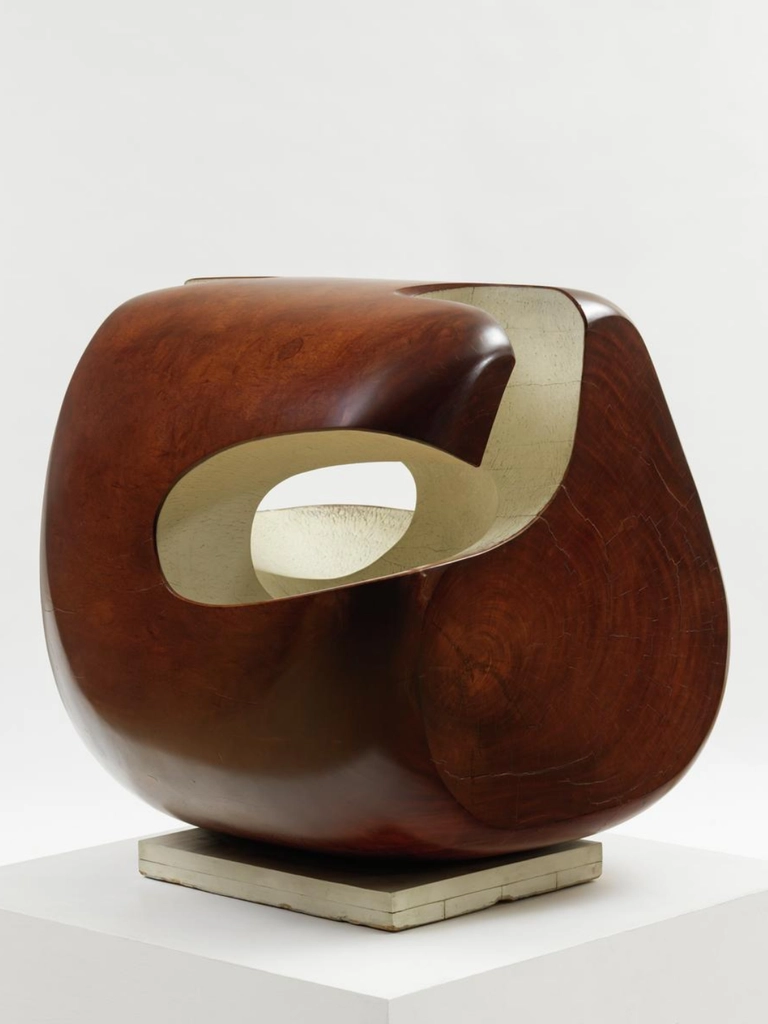
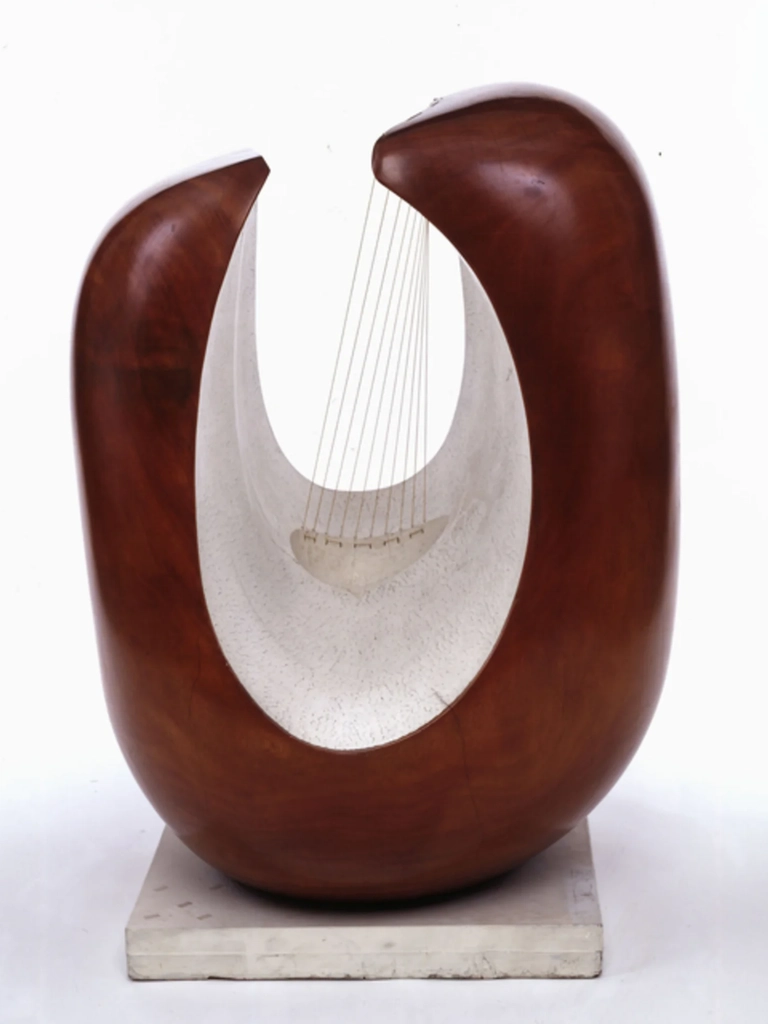
She transformed the wood into major sculptures including Corinthos, Curved Form (Delphi) and Oval Sculpture (Delos). The names evoke Mediterranean geography, connected partly to Hepworth’s travels through Greece, while the material carried its own weight, grain and botanical history.
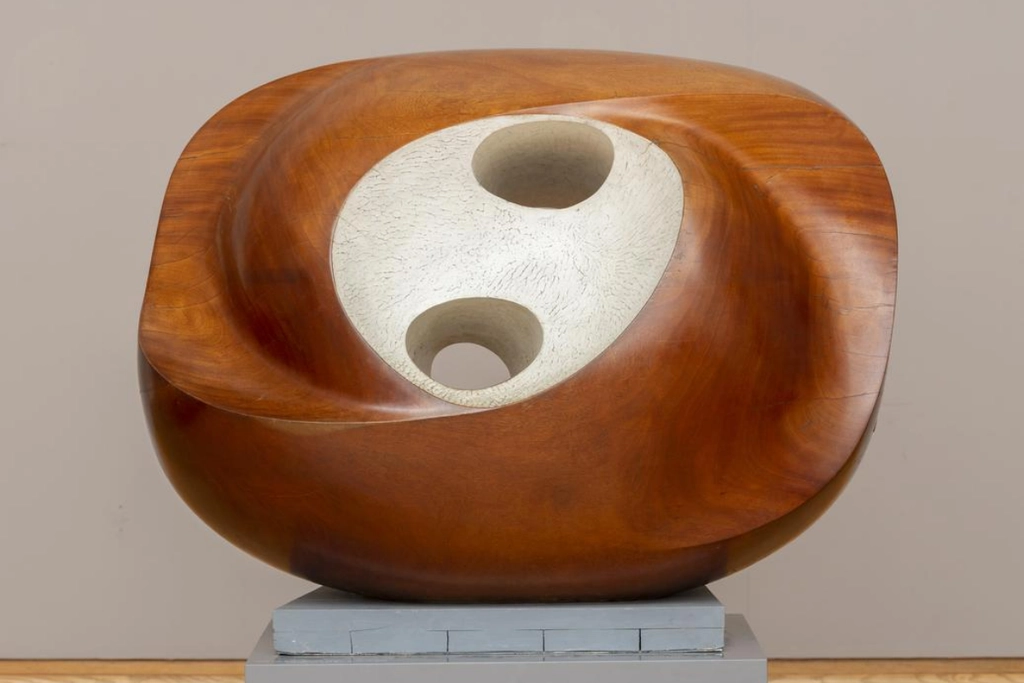
There is something almost mythic about the image.
A sculptor grieving her son stands before vast sections of tree and starts carving.
Hepworth rarely translated emotion into obvious narrative. Labour itself could absorb experience. Cutting, hollowing and polishing offered grief a physical rhythm.
By the 1950s and 1960s, Hepworth had moved far beyond the position of a British experimental sculptor working within a small avant-garde.
Public commissions grew. International recognition followed. Her work entered museums, civic spaces and architectural settings on a scale that would have been almost unimaginable when she first began cutting stone directly decades earlier.
She was appointed CBE in 1958.
In 1965, Barbara Hepworth was appointed Dame Commander of the Order of the British Empire, giving her the title by which she is formally remembered: Dame Barbara Hepworth.
The honour carried particular significance within a career built in an art world where monumental sculpture, large commissions and institutional authority had long been heavily male territories.
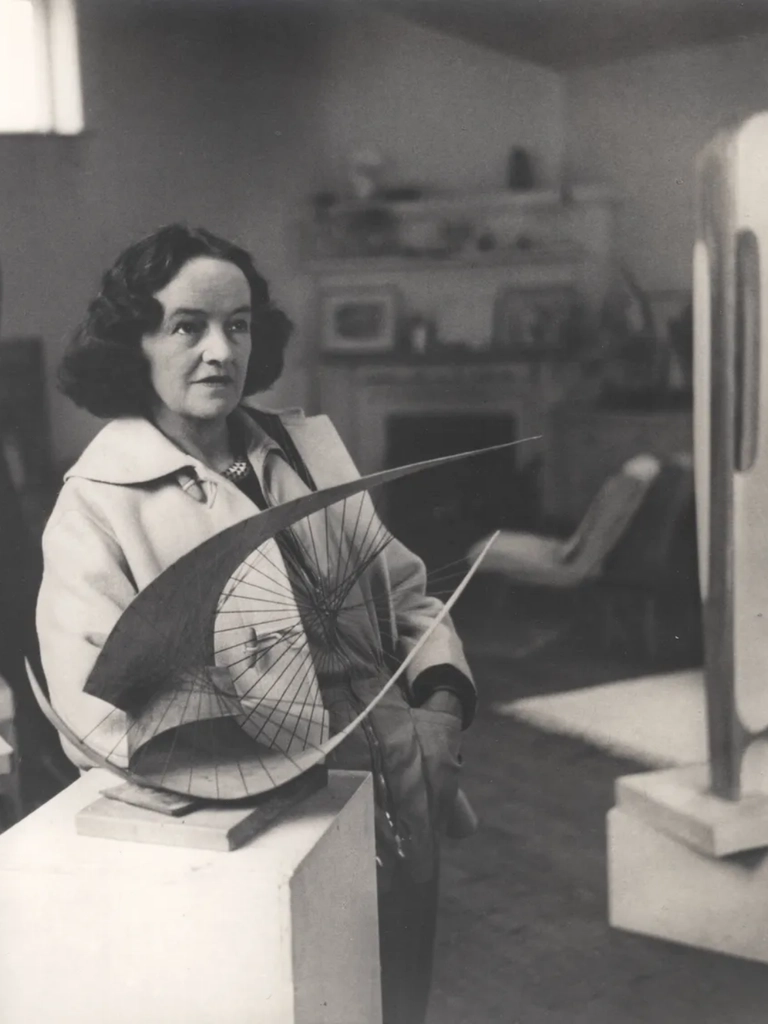
Yet the title did something curious when placed beside her work.
“Dame” suggests establishment recognition.
Barbara Hepworth’s sculpture still looks startlingly free.
The official honour arrived after she had already spent decades drilling holes through convention, carving abstraction directly into stone and insisting that empty space deserved the same attention as solid matter.
Institutional recognition eventually caught up with the radicalism.
Bronze allowed Hepworth to move into another dimension.
During the late 1950s and 1960s, she increasingly explored casting as a means of working on a monumental scale. Her relationship with carving survived the transition. She manipulated plaster surfaces physically, cutting and shaping them before casting so the final bronze retained tactile energy.
The pedestal could disappear altogether.
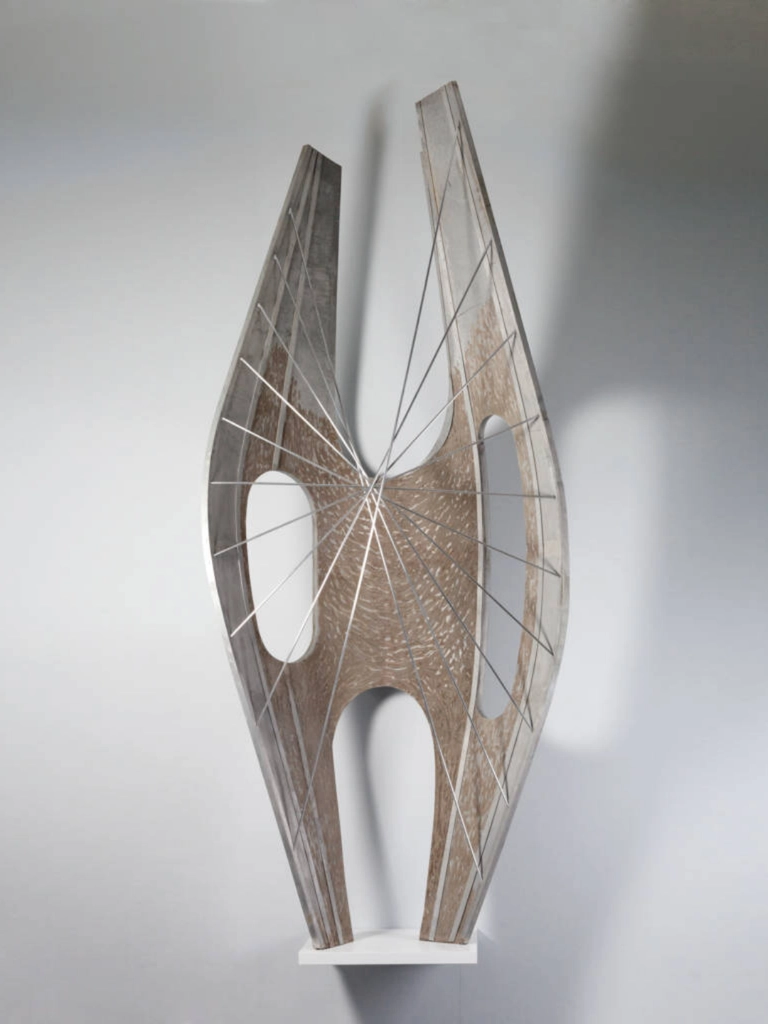
Winged Figure, created for the John Lewis building on Oxford Street, expanded Hepworth’s language across architecture. Aluminium surfaces and rods turned the familiar conversation between mass and tension into something enormous enough to confront the city.
Then came Single Form.
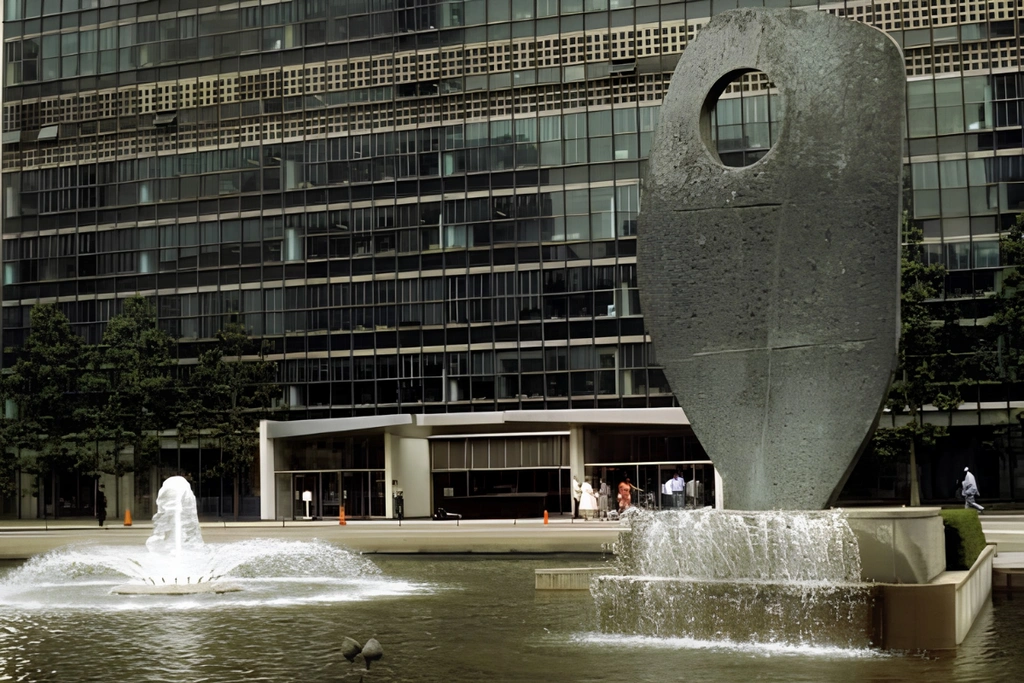
Created as a memorial to United Nations Secretary-General Dag Hammarskjöld, the monumental bronze was unveiled outside the United Nations headquarters in New York in 1964. It rises approximately 21 feet. Near its upper section sits an opening.
The visual idea that had appeared within a small carved alabaster sculpture more than three decades earlier had become monumental enough to frame Manhattan sky.
Few images explain Hepworth’s career more clearly.
The hole grew up with her.
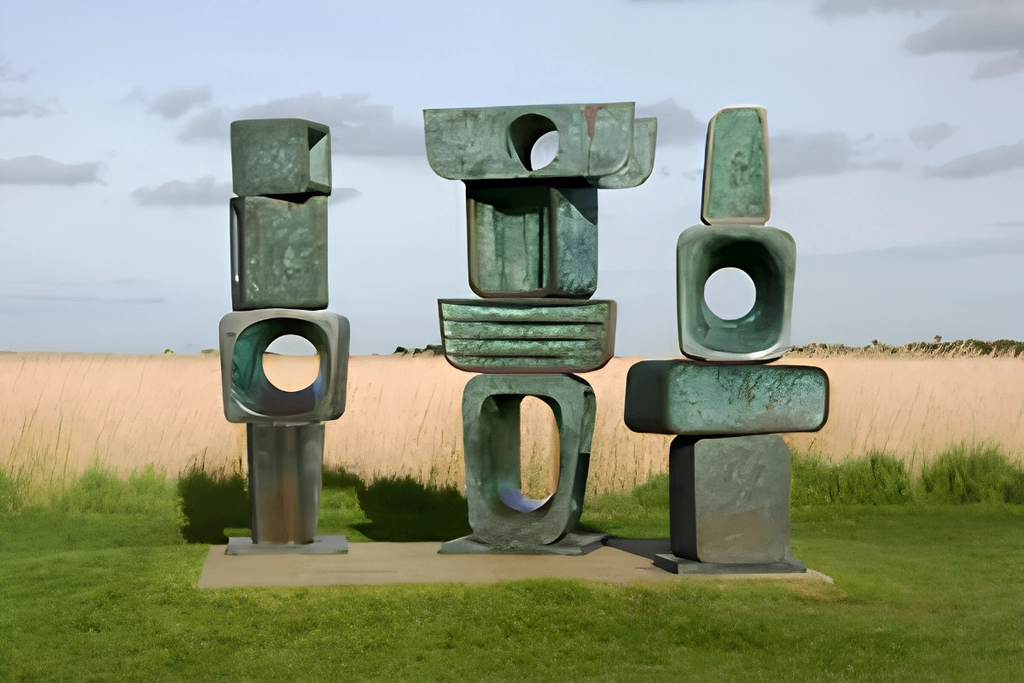
In 1970, Hepworth developed The Family of Man, a group of nine monumental bronzes constructed from stacked geometric sections.
The human figure had travelled an extraordinary distance.
Bodies had become architecture. Family members had become towers. Heads, torsos and relationships survived as rhythms between cylinders, blocks and openings.
The ensemble brings Barbara Hepworth’s lifelong concerns together: family, landscape, verticality, human presence and the mysterious emotional power of objects positioned beside one another.
The art market eventually translated that legacy into another form of scale.
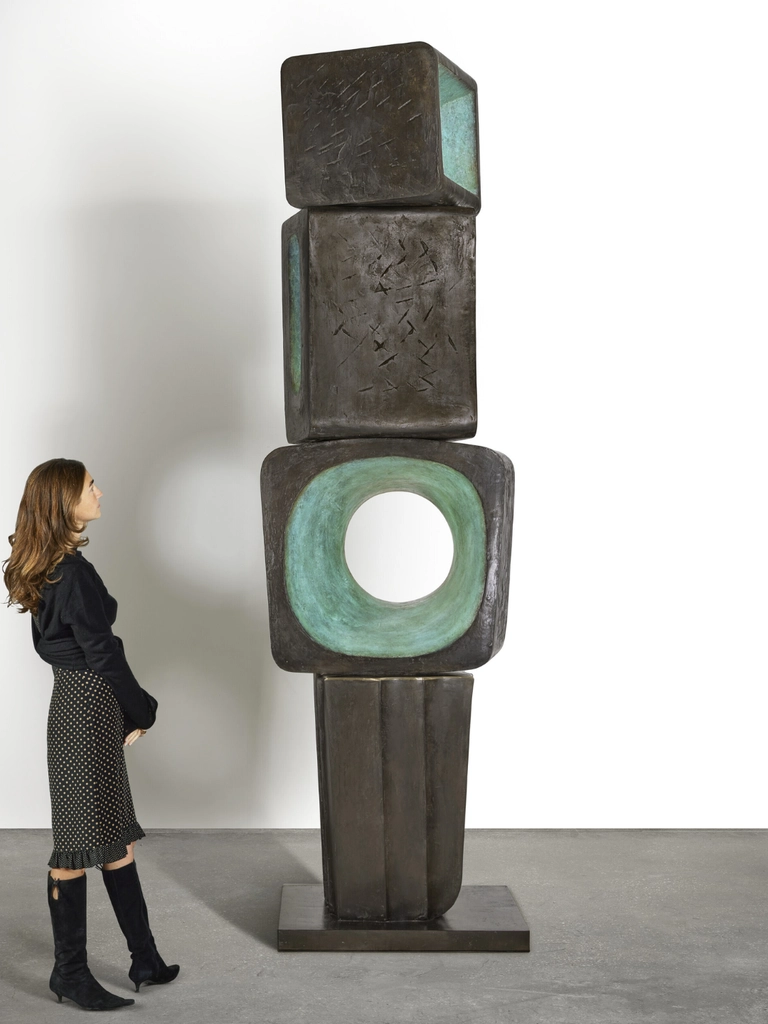
In November 2023, The Family of Man: Ancestor II, conceived in 1970 and cast in 1974, sold for $11.565 million, establishing an auction record for Barbara Hepworth. In 2022, Hollow Form with White Interior had reached £5.7855 million, demonstrating how strongly collectors value the carved wooden works alongside the monumental bronzes.
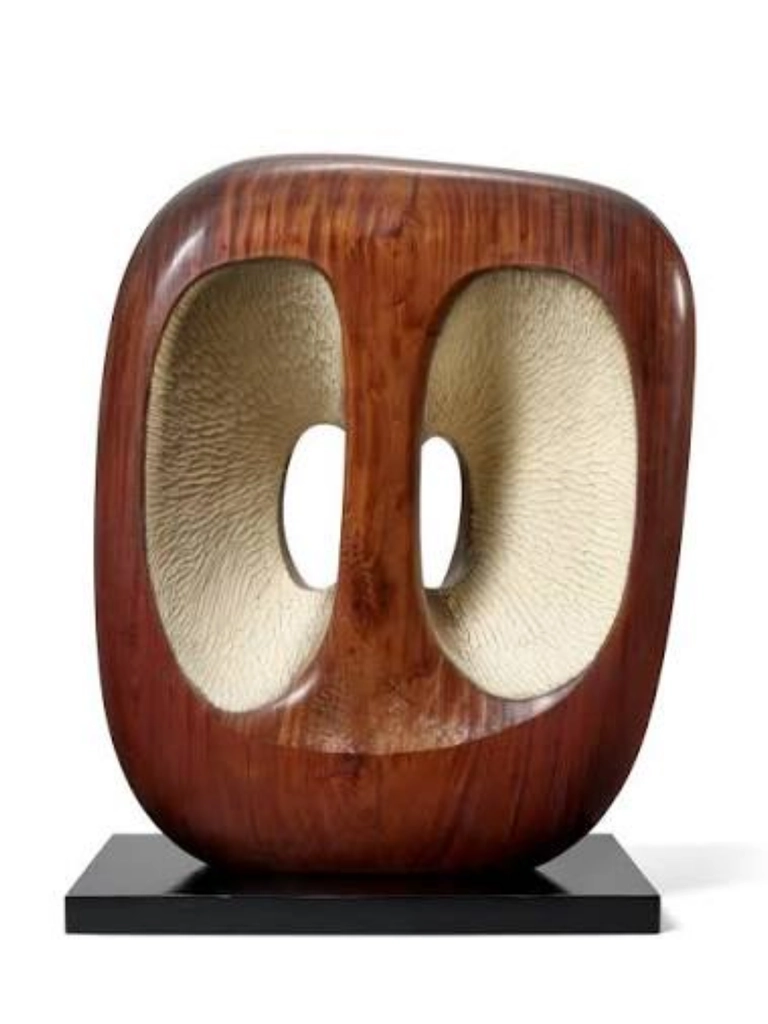
Yet price explains surprisingly little about Hepworth’s continuing hold on viewers.
Dame Barbara Hepworth died aged 72 in a fire at Trewyn Studio in St Ives on 20 May 1975. Her home, workplace and sculpture garden opened to the public the following year and remain one of the most intimate places to encounter her work.
Her modern sculpture continues to occupy space. And because of Dame Barbara Hepworth, emptiness occupies it too.