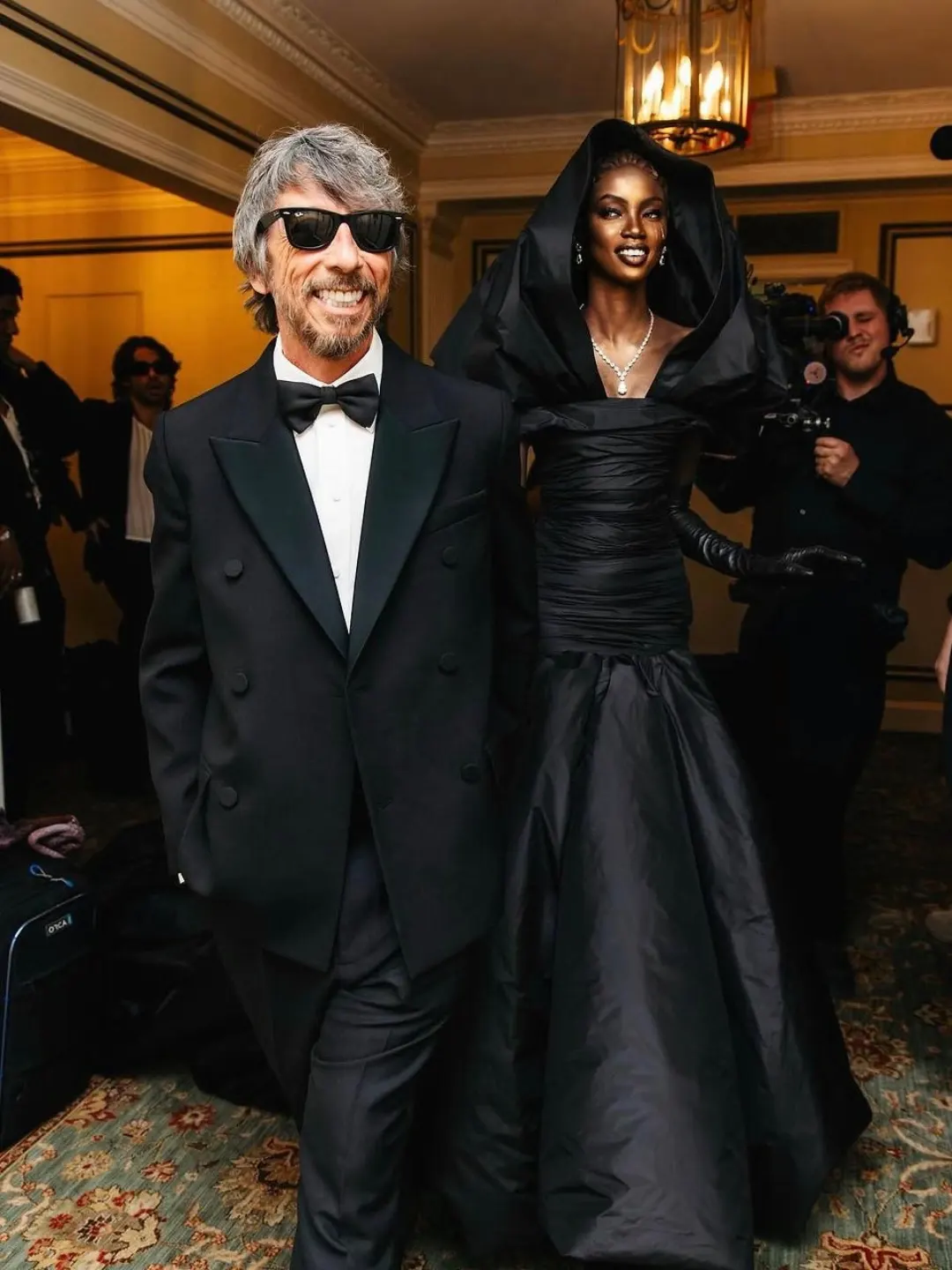





At 25, Stella McCartney walked into one of Paris fashion's most coveted jobs with a famous surname, a stubborn set of principles, and plenty left to prove.
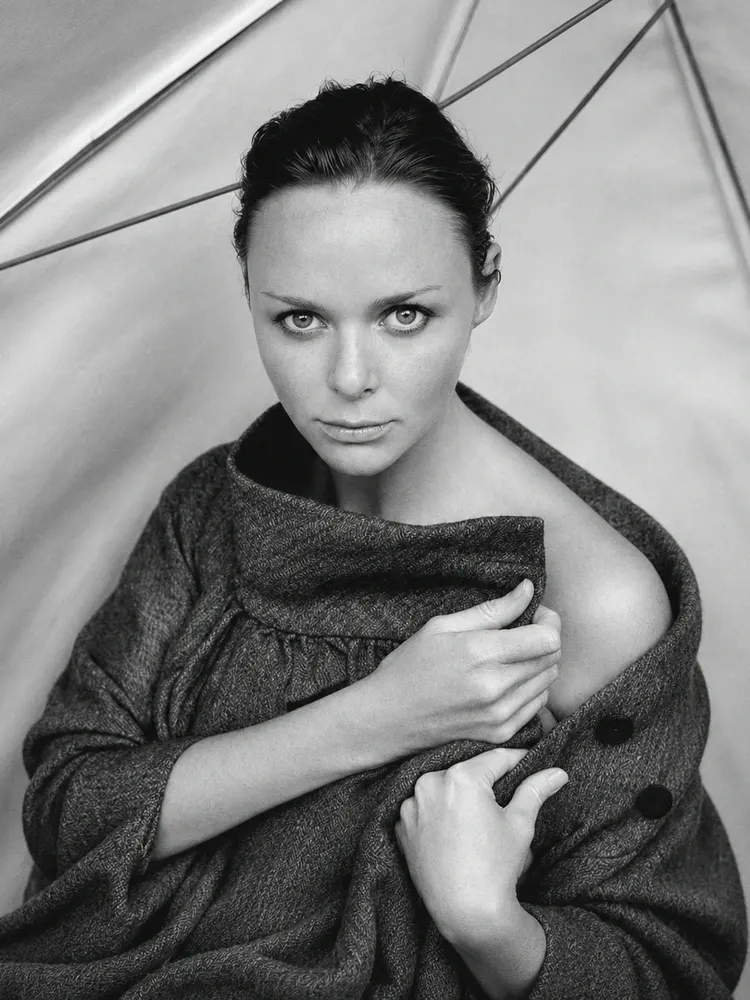
Stella McCartney Was Green Before Green Was Cool
At 25, Stella McCartney walked into one of Paris fashion's most coveted jobs with a famous surname, a stubborn set of principles, and plenty left to prove.
November 13, 2026


Fashion had already made a place for Stella McCartney in the public imagination long before her first major collection. As the daughter of Paul and Linda McCartney, she grew up surrounded by music, creativity and environmental activism.
Yet when she entered the luxury industry, her ambition extended beyond inheriting a celebrated cultural identity. Stella McCartney wanted to establish herself through clothing, while challenging the industry's dependence on animal-derived materials. Over the following decades, that conviction would influence her designs, business relationships and experiments with textile innovation.
1995–2001: From Central Saint Martins to Chloé
Born in London in 1971, Stella McCartney developed an early interest in fashion while growing up between the city and the English countryside. Her mother Linda's commitment to vegetarianism and animal welfare would later become central to her professional philosophy. Her design education began at Central Saint Martins, where she studied fashion under the influential Louise Wilson.
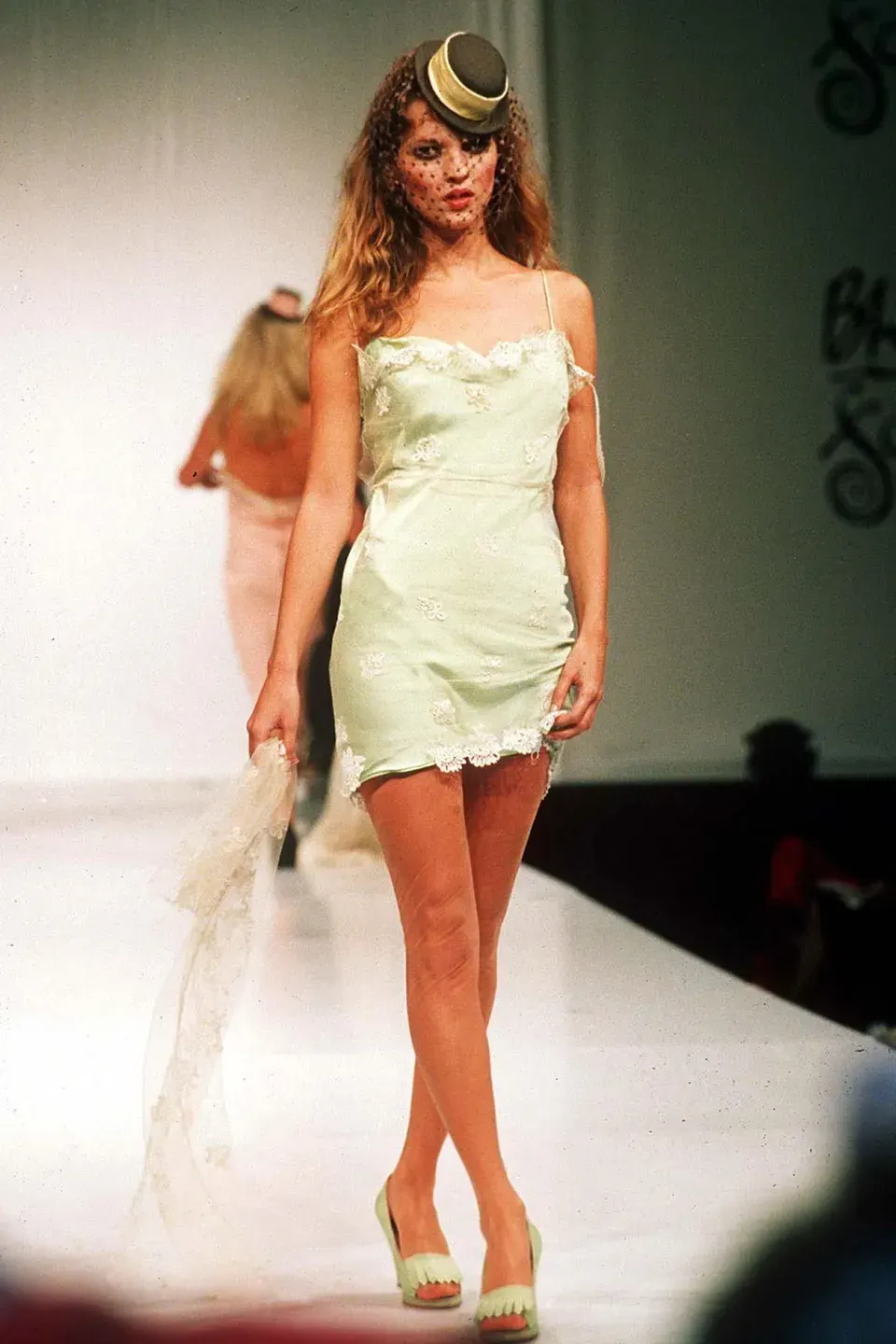
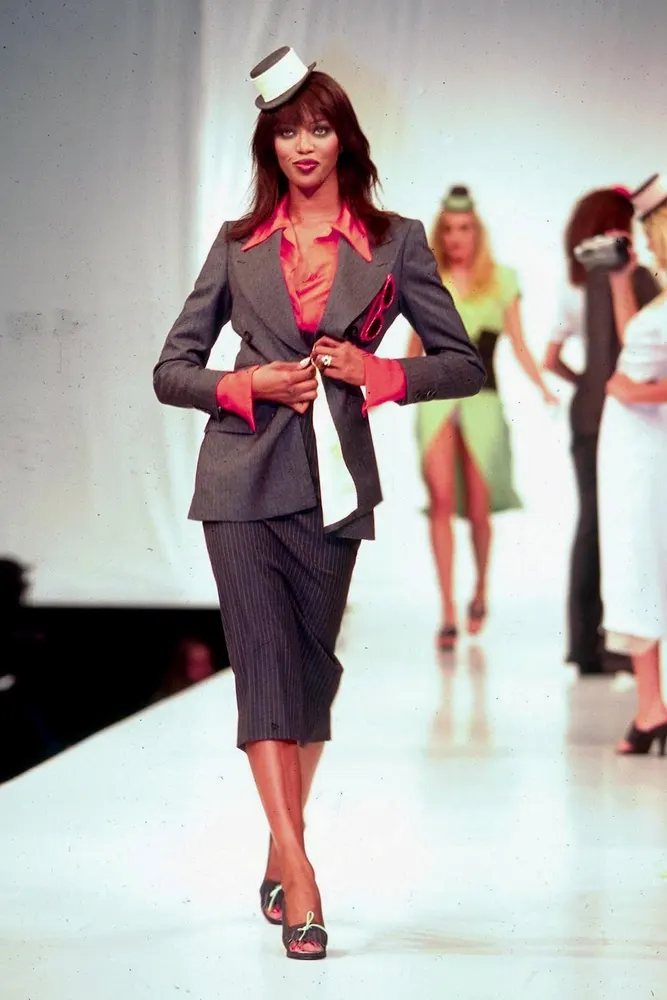
In 1995, her graduation collection attracted considerable publicity when Kate Moss and Naomi Campbell appeared on the runway. The presentation introduced McCartney's interest in feminine silhouettes, precise tailoring and sensual clothing, establishing the foundations of a distinctive design vocabulary.
Two years later, Stella McCartney received her first major appointment. At just 25, she succeeded Karl Lagerfeld as creative director of Chloé, a decision that generated skepticism surrounding her age, experience and famous family connections.
Her collections soon developed a youthful interpretation of the French house's romantic identity. Low-rise trousers, lingerie-inspired dresses, delicate lace, playful prints and sharply tailored jackets reflected the casual sensuality of late-1990s fashion. British influences gave Chloé a lively contemporary attitude, while the relationship between masculine tailoring and feminine clothing became one of McCartney's defining signatures.
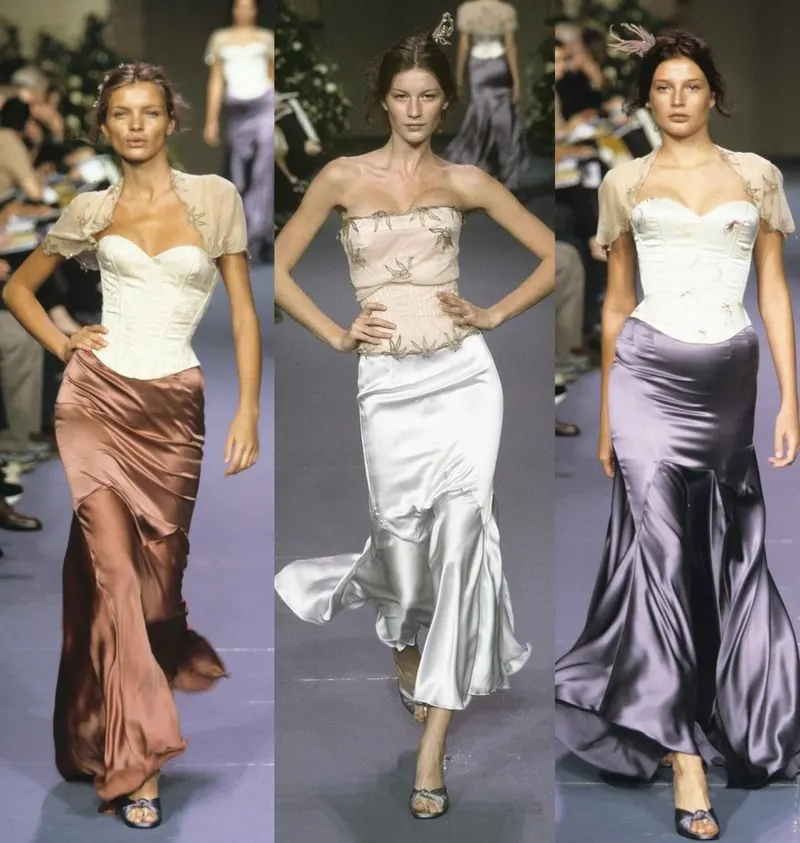
Working closely with Phoebe Philo, who eventually succeeded her in 2001, Stella McCartney helped shape a commercially appealing wardrobe that appealed to a younger generation of luxury customers. Her Chloé tenure established her credibility as a designer capable of translating contemporary cultural attitudes into desirable clothing.

2001–2008: Stella McCartney Builds Her Own House
In 2001, Stella McCartney established her namesake label through a partnership with Gucci Group, presenting her debut collection during Paris Fashion Week that October. The new house introduced a distinctive proposition to luxury fashion: contemporary designer clothing produced without animal leather or fur.
This commitment required McCartney to explore alternative materials while developing collections that met the aesthetic expectations of luxury customers. Her early designs continued the vocabulary established at Chloé, combining structured tailoring, relaxed trousers, feminine dresses and athletic influences.

The designer's understanding of everyday dressing became particularly important as the company expanded. Stella McCartney approached fashion through the practical requirements of women's wardrobes, creating garments that could move between professional settings, leisure and evening occasions.
In 2004, she announced a partnership with adidas, launching the first adidas by Stella McCartney collection in 2005. The collaboration brought designer-led silhouettes into technical sportswear, combining performance requirements with contemporary styling. It became an enduring part of her business and creative identity.
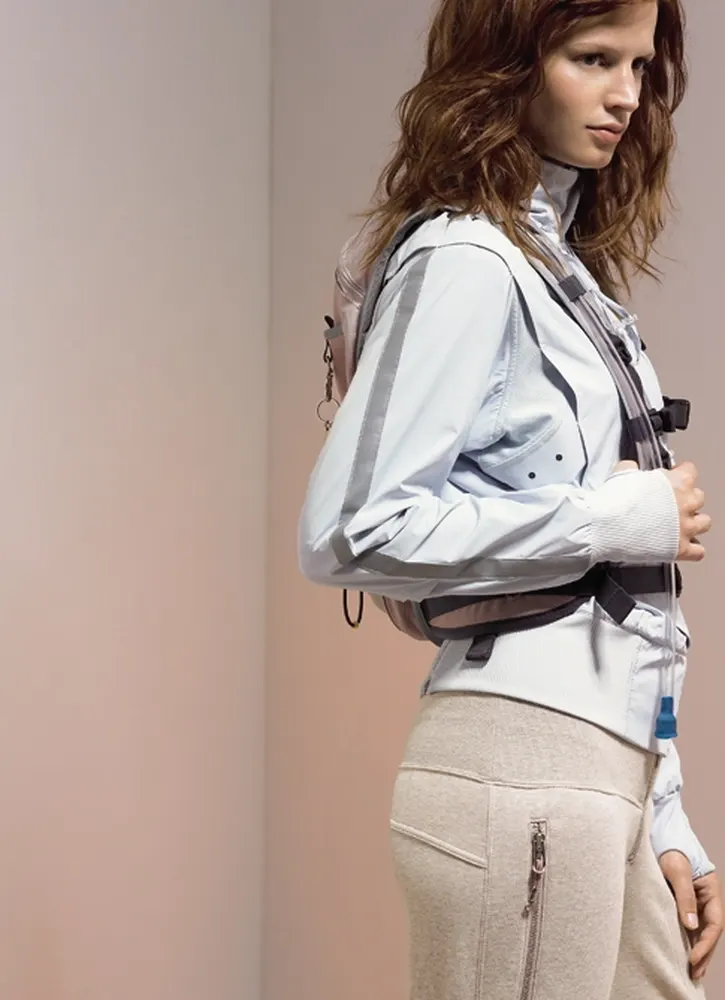
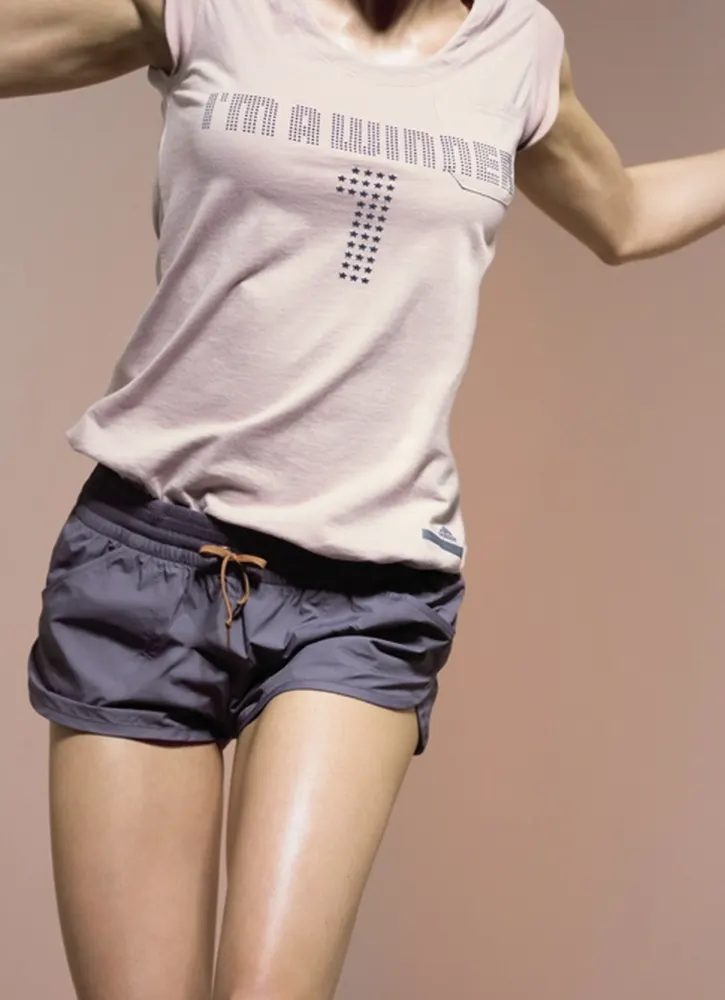
A collaboration with H&M followed in 2005, introducing Stella McCartney's designs to a broader audience. Fragrance, eyewear and accessories gradually expanded the company's commercial reach.
These developments established the house as a multidimensional fashion business, with animal-free design principles influencing its expanding product categories.
2009–2017: Stella McCartney Becomes a Global Name
The introduction of the Falabella handbag in 2009 marked a significant milestone for Stella McCartney. Constructed without animal leather, the bag featured a soft silhouette framed by distinctive chain detailing. Its recognizable design helped establish a permanent accessories identity for the label.
The Falabella demonstrated how material restrictions could encourage creative solutions. Its chain trim became an immediately identifiable signature, while the relaxed construction reflected the designer's preference for functional sophistication.

Meanwhile, her adidas partnership developed into one of fashion's most substantial relationships with performance sportswear.
In 2012, Stella McCartney designed Team Great Britain's uniforms for the London Olympic and Paralympic Games. The project required attention to athletic performance, national identity and visual consistency across different sporting disciplines. Her designs incorporated graphic interpretations of the Union Jack and a predominantly blue palette.
She returned to design uniforms for the Rio 2016 Olympics, reinforcing her position at the intersection of luxury fashion and technical apparel.
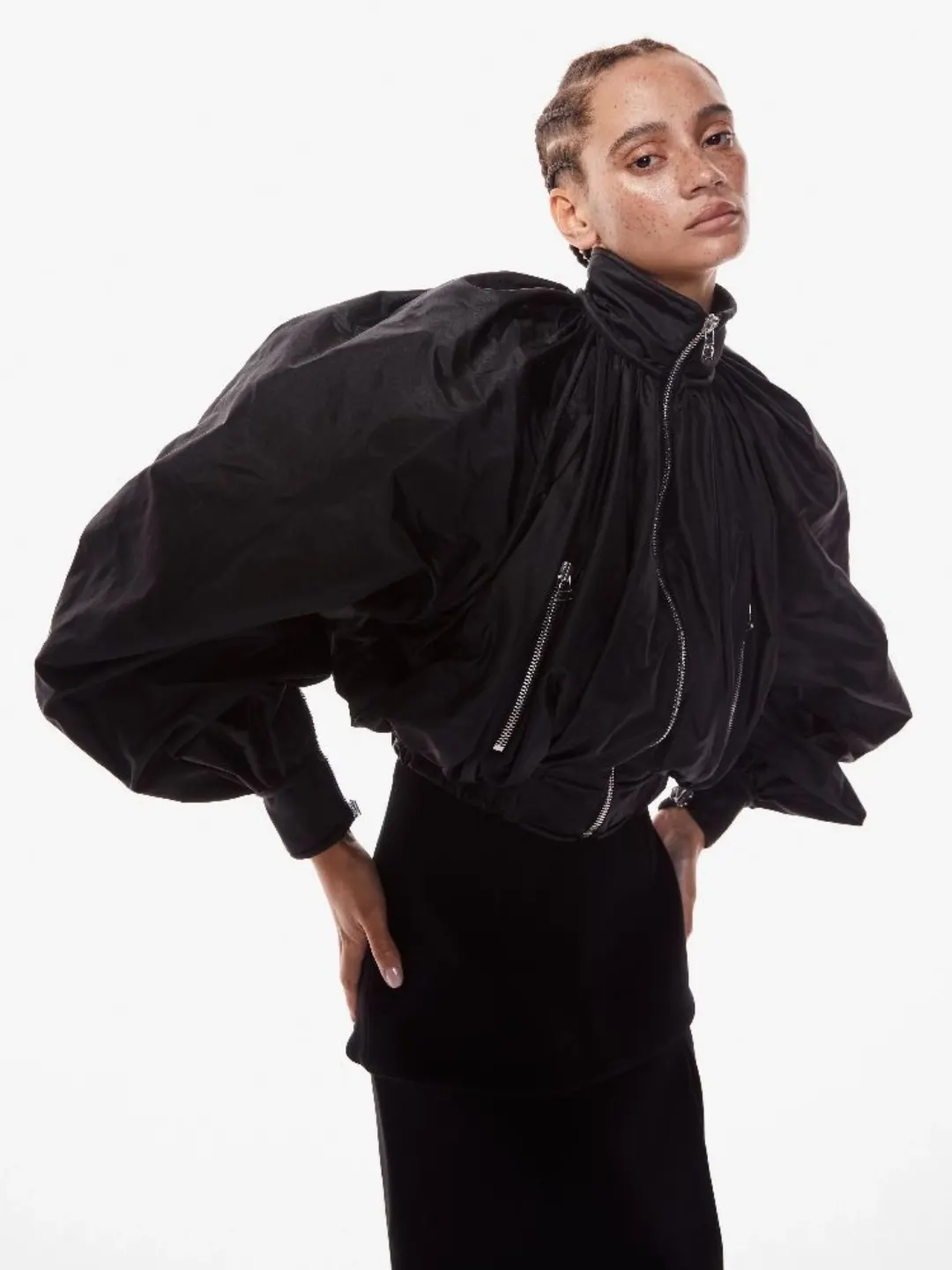
Throughout this period, her ready-to-wear collections continued developing through tailored jackets, fluid dresses, relaxed trousers and sportswear details. The relationship between masculine structure and feminine sensuality remained central, producing clothing characterized by comfort, movement and precise construction.

Professional recognition followed. At the 2012 British Fashion Awards, Stella McCartney received Designer of the Year and Designer Brand honors. In 2013, she was appointed an Officer of the Order of the British Empire for services to fashion.
The combination of recognizable products, international collaborations and industry recognition established McCartney as a major figure in contemporary British fashion.
2018–2021: Independence and Material Innovation
In 2018, Stella McCartney bought back Kering's 50% stake in her company, regaining full ownership after seventeen years. The decision represented an important business milestone, giving the designer greater control over the direction of her namesake house.
That same year, her white halterneck reception dress for Meghan Markle's wedding to Prince Harry became one of her most widely recognized creations. The understated gown reflected McCartney's established preference for elegant proportions, sensual simplicity and refined construction.

A new partnership followed in 2019, when LVMH acquired a minority stake in Stella McCartney's company. The designer also became a sustainability adviser to the luxury conglomerate, extending her influence into discussions about environmental practices across the industry.
Material research increasingly shaped the house's creative development. Stella McCartney collaborated with biotechnology companies investigating alternatives to animal leather, including Mylo, a mushroom-mycelium-based material developed by Bolt Threads.

These experiments introduced new possibilities for accessories and garment construction, while exposing the technical challenges associated with durability, manufacturing capacity and commercial scale.
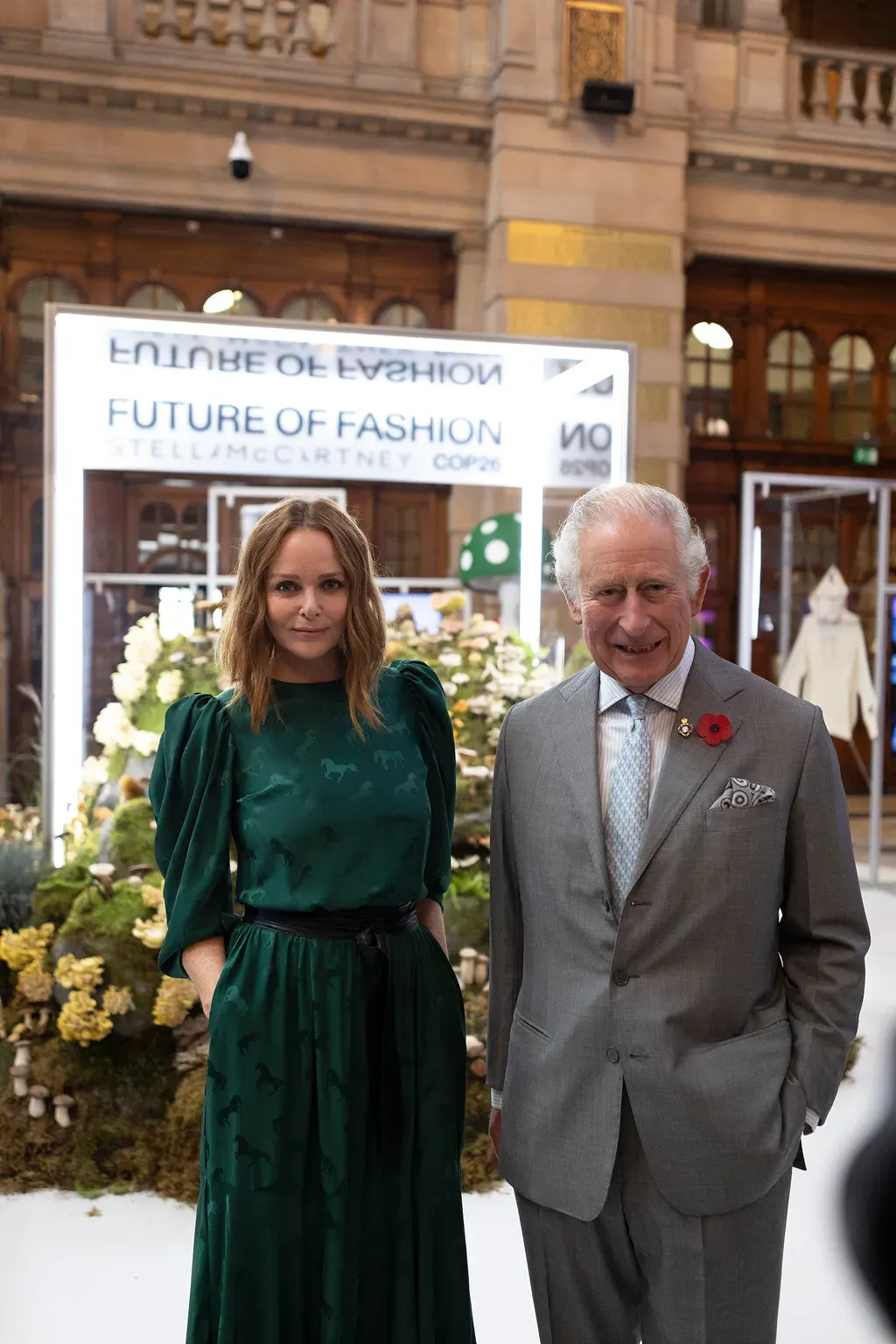
During the 2021 United Nations climate conference in Glasgow, McCartney presented material innovations intended to demonstrate alternative approaches to fashion production. Her growing involvement in environmental advocacy connected her work as a designer with broader conversations about industrial responsibility.
2022–2026: Stella McCartney Faces a New Challenge
In 2023, Stella McCartney was appointed a Commander of the Order of the British Empire for services to fashion and sustainability, recognizing decades of work across design and environmental advocacy.
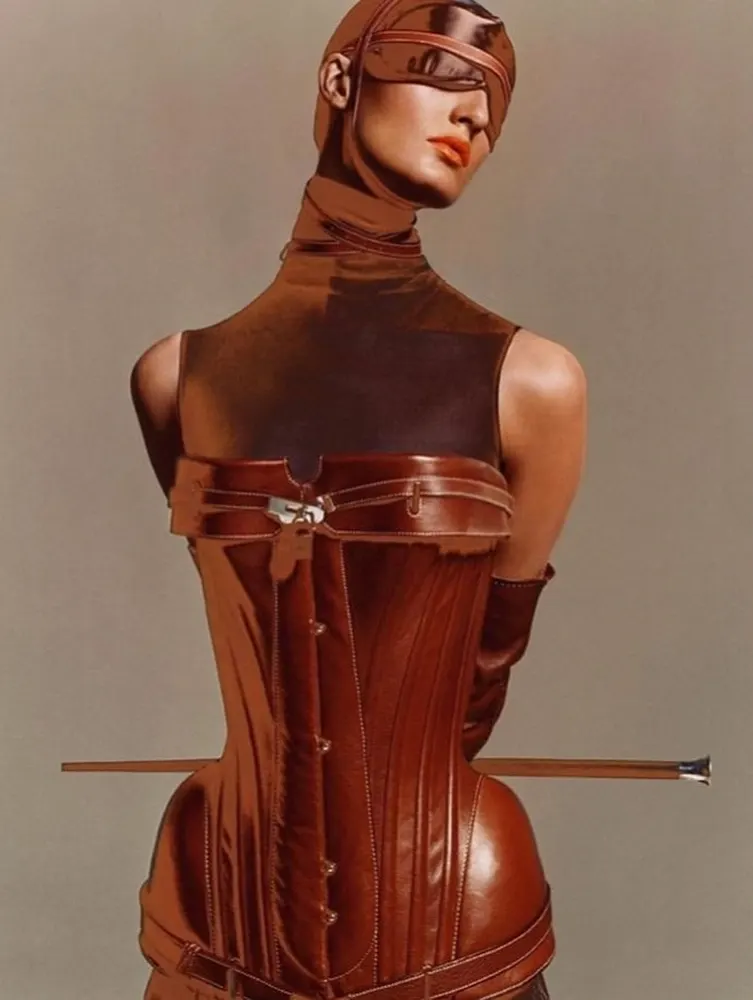
Her commitment to material innovation remained increasingly visible on the runway. For Spring/Summer 2026, Stella McCartney introduced FEVVERS, a plant-based feather alternative developed to reproduce the lightness and movement of traditional plumage. Applied to sculptural gowns and corseted silhouettes, the material demonstrated how textile innovation could become an expressive design element.

The collection also featured PURE.TECH, a technology developed to capture and neutralize certain atmospheric pollutants. These innovations expanded the technical possibilities of fashion, although their environmental performance and commercial scalability require assessment beyond runway demonstrations.
A significant ownership change had occurred in January 2025, when Stella McCartney repurchased LVMH's minority stake, once again gaining control of her company.
Financial difficulties nevertheless presented a substantial challenge. Accounts for Stella McCartney Ltd revealed approximately £16 million in revenue for 2024, alongside a pre-tax loss of £33.5 million. nsolidated global retail sales.
The losses highlighted the pressure facing an independent luxury business investing in expensive material development while navigating changing consumer demand and distribution costs.

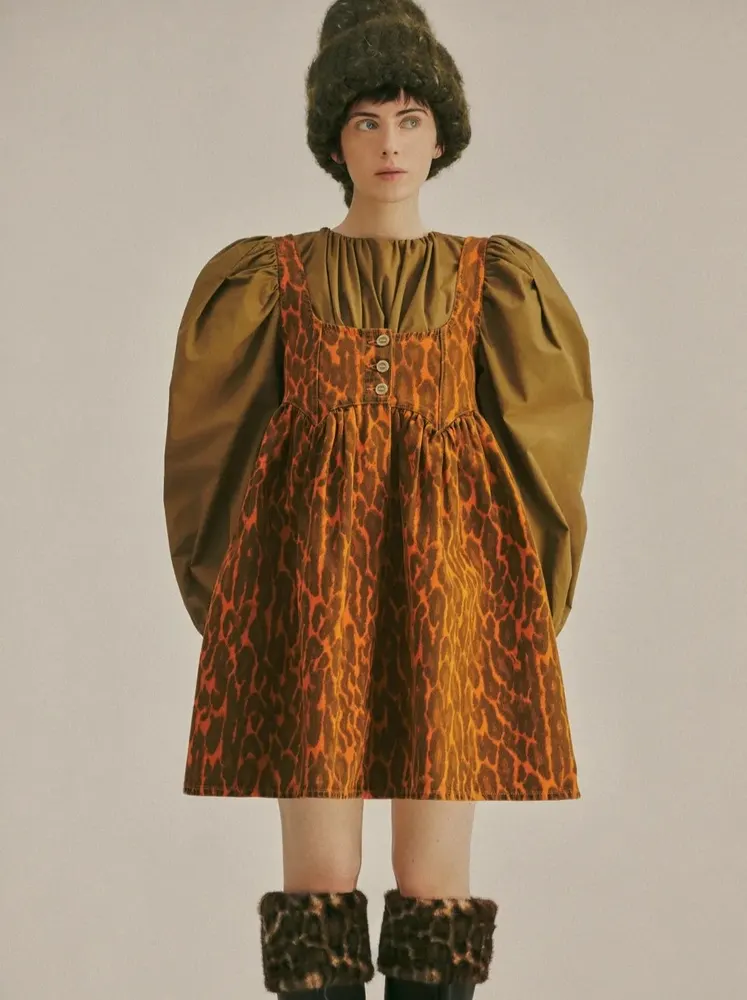
For Stella McCartney Spring 2027, she presented Beneath the Blue, exploring marine life through fluid dresses, sculptural knitwear, ocean-inspired motifs and relaxed tailoring. Recycled denim, transparent accessories and archival design references connected environmental concerns with her established fashion vocabulary.
Twenty-five years after founding her house, Stella McCartney has helped expand the industry's understanding of luxury materials while maintaining a recognizable approach to clothing. Her continuing challenge concerns the relationship between creative ambition and financial resilience. With ownership restored and operational restructuring underway, her next major milestone may be determined by how effectively pioneering material technologies can support an enduring, commercially viable fashion business.