MENU
Close





From tropical rubber plantations to Paris runways, latex fabric has stretched across centuries of invention, rebellion, and fashion experimentation.

From tropical rubber plantations to Paris runways, latex fabric has stretched across centuries of invention, rebellion, and fashion experimentation.
October 9, 2026
Advertisement

Advertisement



The production of latex fabric combines natural rubber processing, polymer chemistry, and specialized garment construction. Each stage influences the elasticity, thickness, durability, and appearance of the finished material.
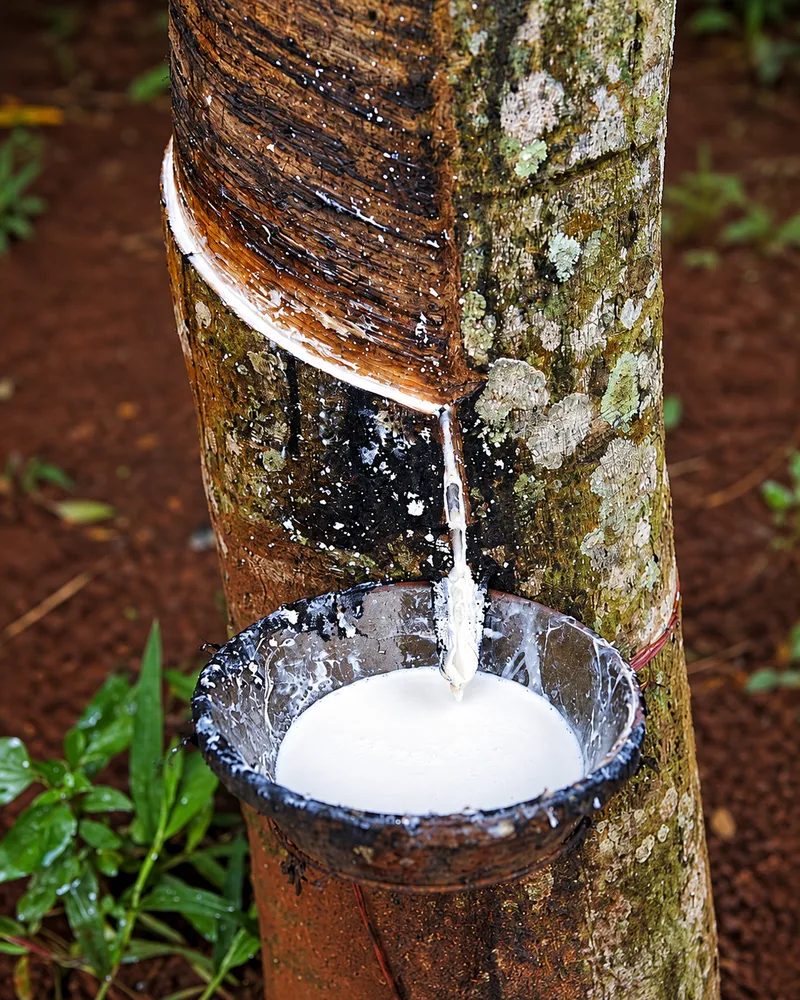
The process begins with harvesting natural rubber latex from Hevea brasiliensis, a tree native to the Amazon basin and cultivated commercially in tropical regions. Rubber tapping involves making a controlled incision in the bark, allowing the milky latex to flow into a collection vessel.
Freshly collected latex contains rubber particles suspended in water, alongside naturally occurring proteins, lipids, and other substances. Its composition requires careful handling to maintain stability during collection and transportation.
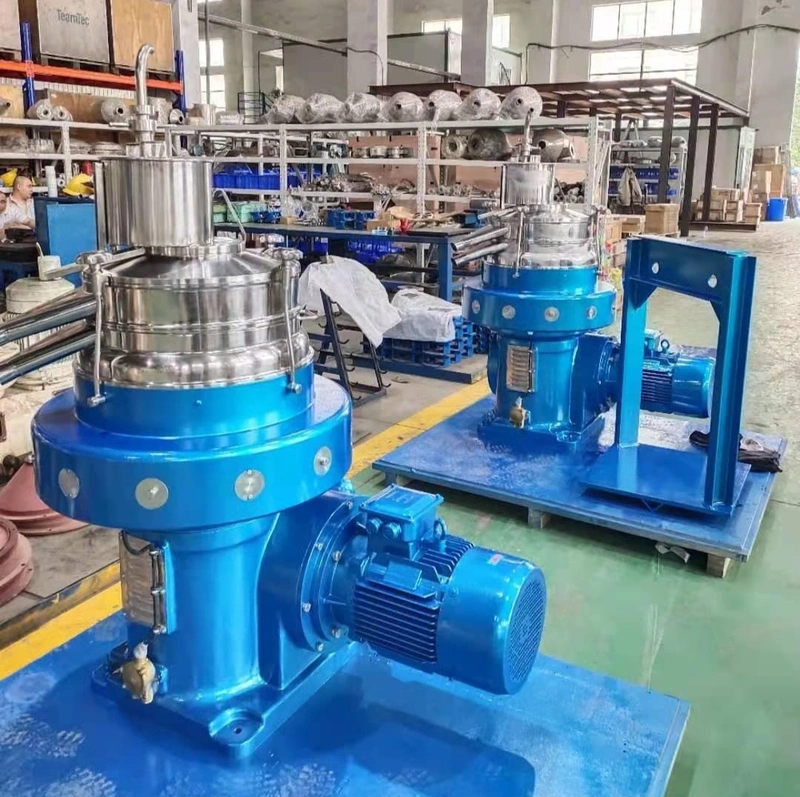
Processing facilities typically filter the liquid to remove impurities and may introduce stabilizing agents, including ammonia, to preserve the dispersion. Centrifugation can concentrate the latex by increasing the proportion of rubber solids, producing a raw material suitable for further manufacturing.
The next stage, rubber compounding, involves combining the latex with selected ingredients that influence the final material's performance. Manufacturers may incorporate vulcanizing agents, accelerators, antioxidants, stabilizers, and pigments. Each performs a specific function. Pigments determine color, antioxidants contribute to resistance against environmental degradation, and vulcanizing systems help establish a durable elastic structure.
The proportions of these ingredients influence tensile strength, flexibility, surface quality, and the material's response to repeated stretching.
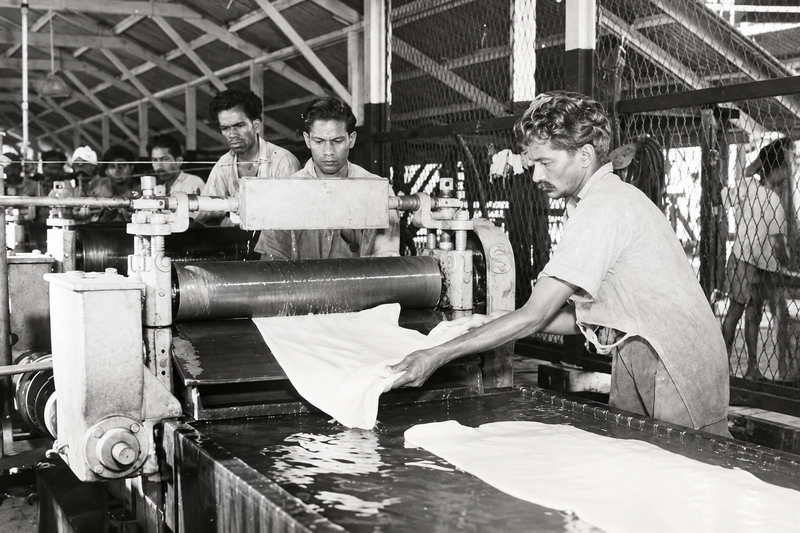
Once the compound has been prepared, manufacturers proceed to sheet formation. Depending on the production method, liquid latex can be distributed across a suitable surface to form a uniform film, followed by controlled drying and curing. Other manufacturing systems use prepared rubber compounds that are processed into sheets through specialized equipment.
Thickness control is essential because the dimensions of the rubber sheet determine its mechanical behavior. A fine sheet can follow intricate body contours and create softly gathered shapes, while substantial thickness provides structure and resistance to deformation.
Latex sheeting intended for clothing is available in a range of specifications, with approximately 0.25 to 0.80 millimeters covering many common garment applications. The precise thickness is selected according to the design, anticipated stress, and characteristics of the rubber formulation.
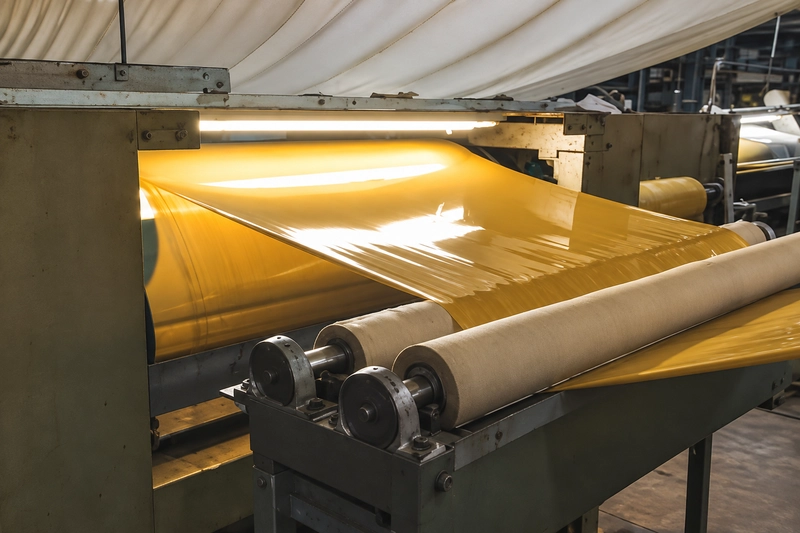
Vulcanization is a fundamental stage in establishing the physical properties of rubber. The process creates chemical crosslinks between polymer chains, commonly through sulfur-based curing systems. When the finished material stretches, its polymer chains change configuration. The crosslinked network helps the rubber recover toward its original dimensions while maintaining structural integrity. Appropriate curing also contributes to durability, resistance to permanent deformation, and mechanical stability.
Temperature, processing time, and the composition of the vulcanizing system influence the finished sheet's characteristics. Manufacturers control these conditions according to the formulation and dimensions of the material.
Designers begin by developing patterns that account for the stretch behavior of latex. A common technique is negative ease, in which the garment's measurements in its relaxed state are intentionally smaller than the corresponding body measurements. This creates the controlled tension required for a close fit.
The rubber sheets are cut into individual panels using carefully prepared patterns. These pieces are subsequently assembled with bonding agents formulated for latex, creating flexible seams that accommodate the garment's movement.
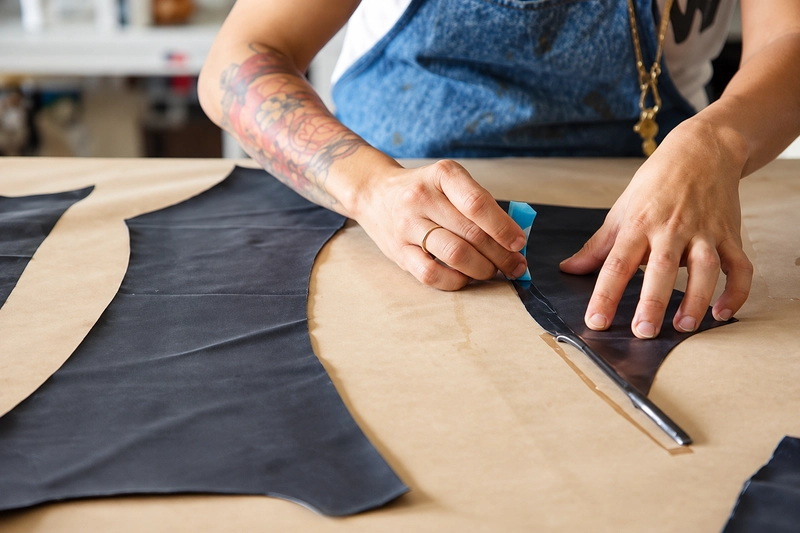
Bonded construction generally involves preparing the surfaces, applying an appropriate adhesive, aligning the panels, and pressing overlapping sections together. Bond strength depends on the selected adhesive, surface preparation, contact pressure, and curing conditions.
Additional components such as zippers, reinforcement panels, and structural supports can be incorporated according to the design. Areas around the shoulders, waist, and closures require particular attention because movement concentrates mechanical stress at these points.
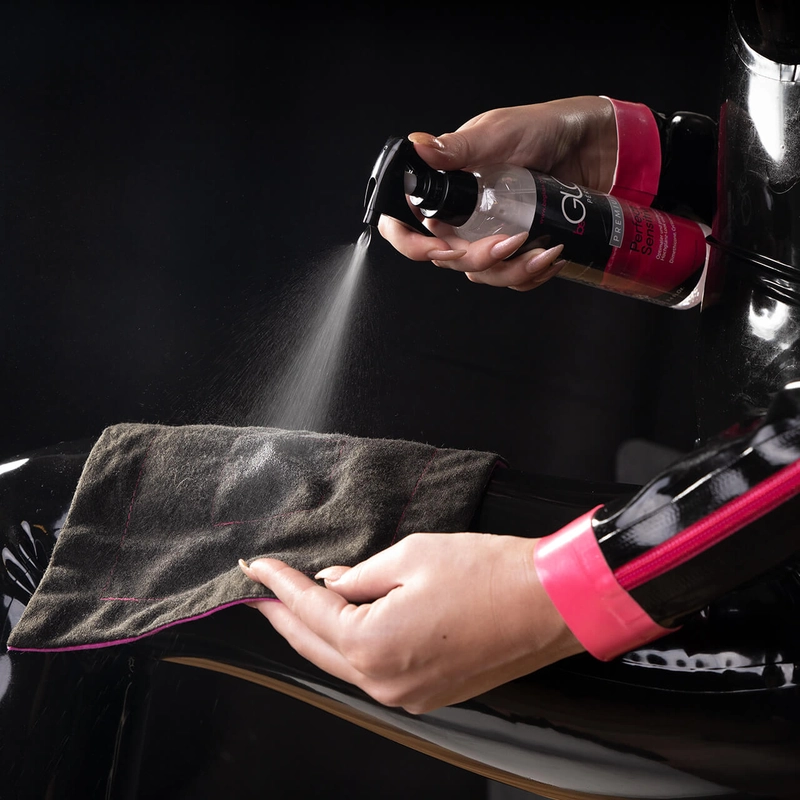
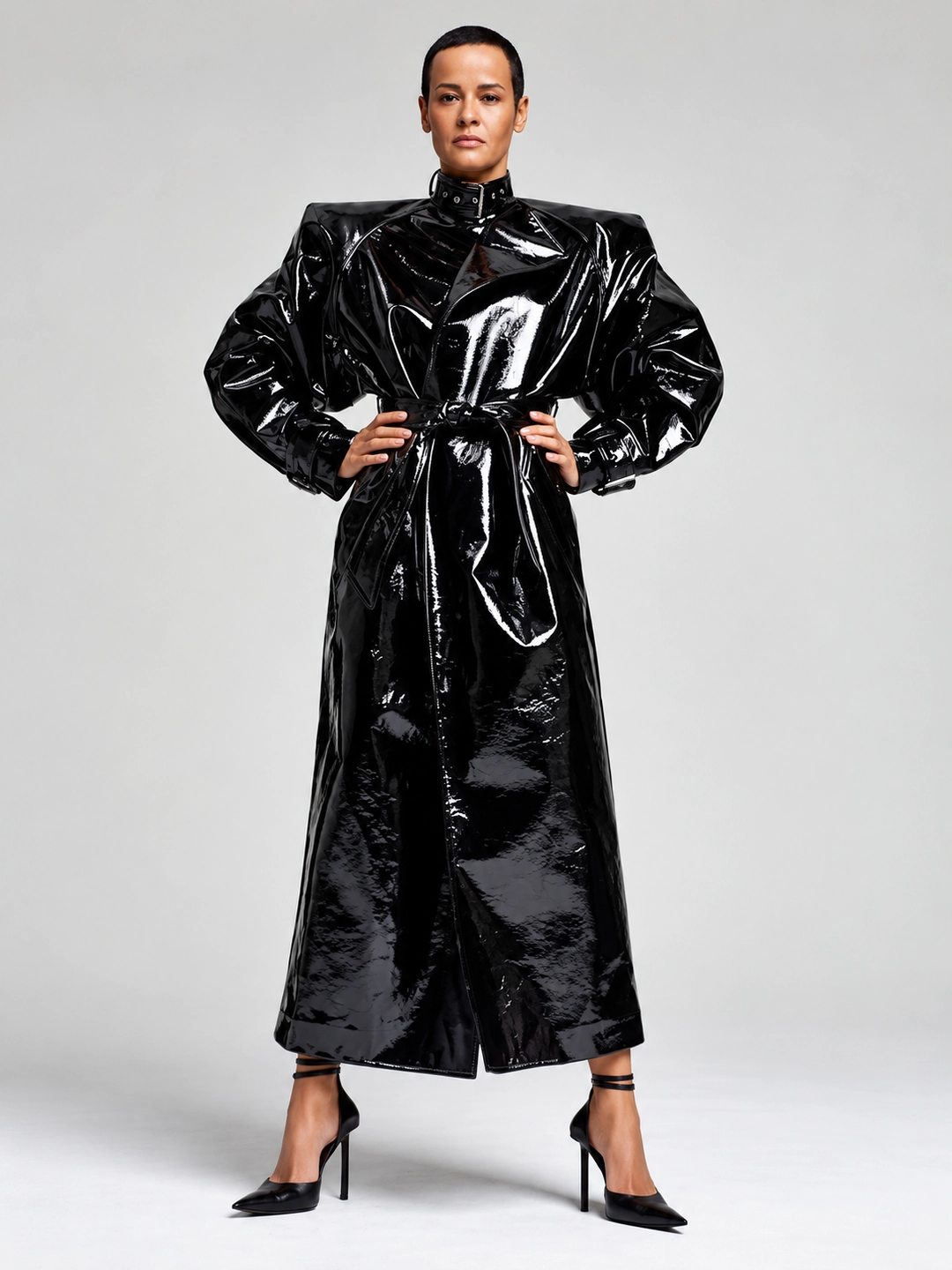
Final finishing includes inspecting the seams, checking material consistency, and cleaning the assembled garment. Specialized polishing products, frequently formulated with silicone, can create the high-gloss surface associated with latex fashion.
A major development in rubber clothing occurred in 1823, when Scottish chemist Charles Macintosh patented a method of creating waterproof cloth by incorporating rubber dissolved in a solvent between layers of fabric. His invention supported the production of protective outerwear, introducing rubber into commercial garment manufacturing.

The technology continued to develop during the nineteenth century. In 1839, American inventor Charles Goodyear discovered an important method of treating rubber with sulfur and heat. His work contributed to the development of vulcanization, which helped establish rubber as a practical industrial material.
British inventor Thomas Hancock subsequently made significant contributions to vulcanization and commercial rubber production during the 1840s. Advances in processing supported the manufacture of elastic rubber goods, protective clothing, and specialized products.
During the twentieth century, rubber garments acquired a distinctive identity within British underground fashion. In 1957, designer John Sutcliffe established AtomAge, a business initially associated with protective clothing for motorcyclists. His work expanded into fitted garments made from rubber and other specialist materials.
AtomAge subsequently became associated with fetish fashion, where close-fitting silhouettes, glossy surfaces, and unconventional garment construction contributed to a recognizable aesthetic. Sutcliffe's work played an important role in establishing rubber clothing within British subcultural fashion.


By the late twentieth century, specialist designers were developing the technical skills required to construct elaborate garments from latex sheeting.
In 1991, designer Robin Archer founded House of Harlot, a British label specializing in fitted latex clothing. The company developed expertise in patternmaking, bonding techniques, and custom garment production, later contributing to projects involving established fashion houses.


Another important figure was Japanese designer Atsuko Kudo, who moved to London in 1992 after studying fashion in Tokyo. Her subsequent career combined latex garment construction with precise fitting techniques and corsetry knowledge.
Kudo developed a distinctive approach to latex fashion through tailored silhouettes, polished surfaces, and made-to-measure design. Her work helped establish latex as a material suitable for specialized luxury clothing and elaborate stage costumes.
In 2003, House of Harlot contributed latex garments to Christian Dior's Autumn ready-to-wear collection under John Galliano. The collaboration demonstrated the importance of specialist workshops in producing technically demanding rubber garments for high-fashion presentations.
Its contemporary presence reflects decades of specialist manufacturing and design experimentation. Latex fabric has established a place within fashion through the technical knowledge of rubber processing, the creativity of independent workshops, and its distinctive relationship with the human body.
Advertisement