MENU
Close





With its remarkable flexibility and reflective surface, metal mesh fabric transforms the mechanical properties of metal into an entirely distinctive fashion language.

With its remarkable flexibility and reflective surface, metal mesh fabric transforms the mechanical properties of metal into an entirely distinctive fashion language.
October 10, 2026
Advertisement

Advertisement



Metal has long been associated with strength, solidity, and permanence. Yet fashion has found ways to transform it into something remarkably fluid. Through precision engineering and intricate craftsmanship, metal mesh fabric achieves the extraordinary illusion of liquid metal, following the contours of the body while retaining the unmistakable brilliance of its metallic origins.
Metal mesh fabric is a flexible textile-like material constructed from fine metallic wires or numerous small metallic elements arranged into an interconnected surface. Its defining characteristic is the ability to bend, fold, and drape through the controlled movement of metallic components, creating a material suitable for clothing and accessories.
The term encompasses several manufacturing techniques. Certain varieties are produced by weaving fine metal wires into a continuous sheet, while others are assembled from small metallic elements attached to a flexible foundation. These constructions share a fundamental principle: the arrangement of rigid components creates a surface capable of responding to movement.

Common materials include stainless steel, aluminium, copper, brass, and specialized alloys, selected according to their weight, ductility, durability, and surface appearance. Fine metallic constructions can display regular geometric openings, a continuous reflective surface, or intricate patterns created by individual components.
Metal mesh fabric occupies a distinctive position within textile classification. Woven varieties follow established fabric-making principles, while assembled versions involve specialized metalworking techniques. Both can achieve the flexibility required for wearable design.
The most recognizable characteristic of metal mesh fabric is its structural flexibility. Metallic wires and small components can form a surface that bends around curves and settles into folds. The degree of flexibility depends on component dimensions, material properties, and the design of the connecting structure.
Drape is particularly important in fashion applications. When suspended from the shoulders or waist, suitable metal mesh responds to gravity by forming elongated folds. The movement and arrangement of individual elements influence how those folds develop, allowing carefully engineered metallic surfaces to follow the body's silhouette.
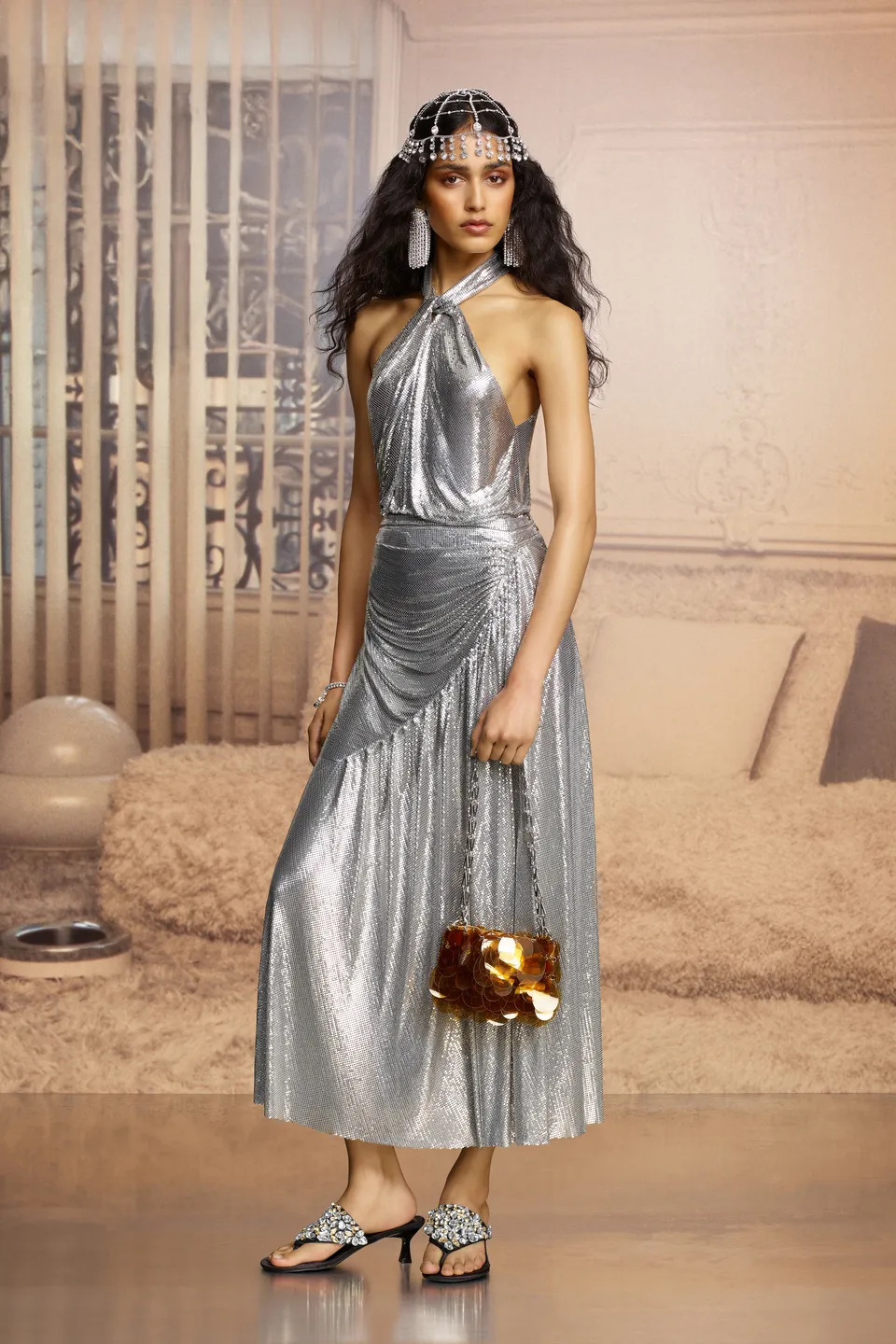
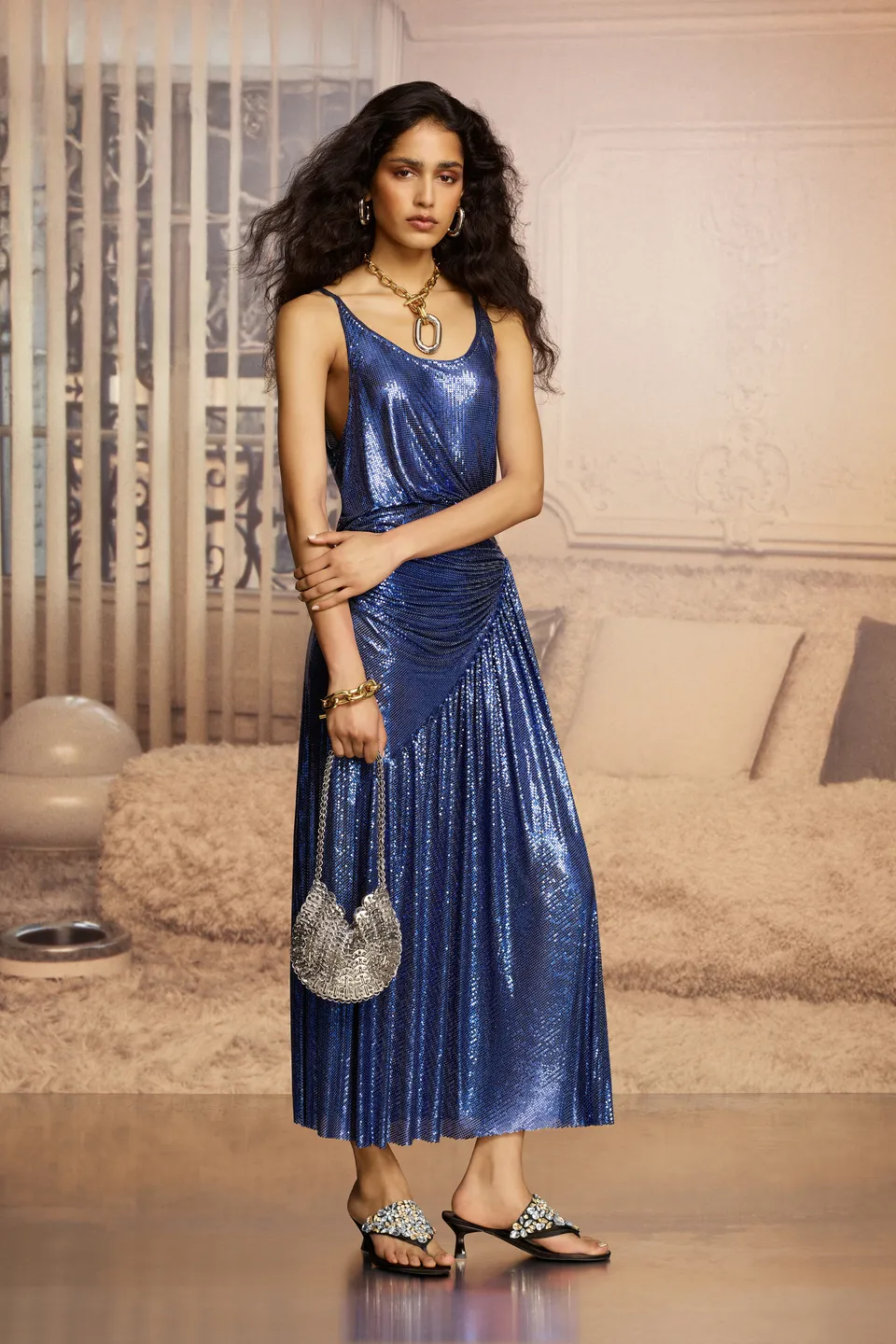
Reflectivity gives the material its striking visual identity. Metallic surfaces interact with light through reflection, creating concentrated highlights that shift as their orientation changes. Across a surface containing numerous small components, this interaction generates a constantly changing pattern of illumination.
Surface finishing influences the character of these reflections. Highly polished metal creates pronounced highlights, while brushed or matte treatments produce a subdued appearance. Colored coatings and plating introduce additional visual possibilities.
Weight is another essential consideration. The density of the selected metal and the amount used per unit area determine the material's overall mass. In clothing, that weight influences garment balance, movement, and the placement of structural support.
The material's tactile qualities depend on its construction. Fine metallic components may produce a relatively smooth surface, while pronounced intersections or exposed edges create a textured hand. Proper finishing contributes to comfortable contact with the skin.

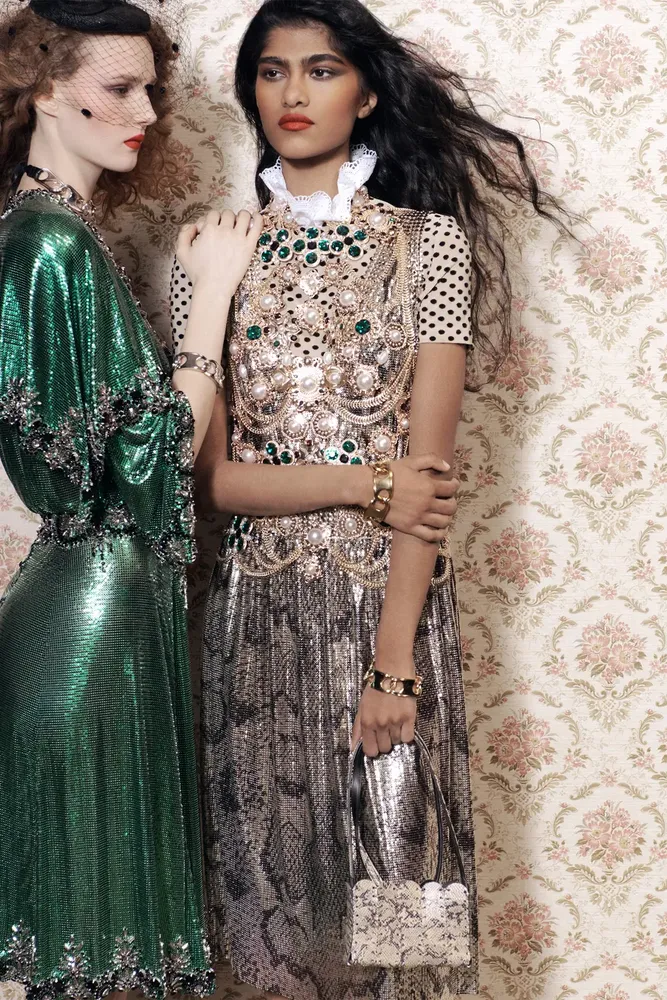
Durability involves several factors, including the strength of individual components, attachment quality, and resistance to surface damage. Metal mesh can experience scratches, bent wires, loosened connections, and deterioration of protective coatings through repeated use.
Its response to temperature also deserves consideration. Metals conduct heat, allowing their surfaces to exchange thermal energy with the surrounding environment and the wearer's body. This can create an immediate sensation of coolness or warmth when first worn.
Finally, geometric flexibility should be distinguished from elastic recovery. Metal mesh may accommodate movement through bending and rearrangement of its structure. The ability to return to its original shape depends on the particular construction and mechanical properties involved.
Metal mesh fabric can be classified into two principal construction-based groups for fashion reference: woven metal mesh and fine assembled metal mesh.
Woven metal mesh is produced through the interlacing of thin metallic wires. Its surface contains regular openings formed by the relationship between warp and weft. The dimensions of the wires, their spacing, and the selected weave determine the appearance and mechanical characteristics of the finished textile.
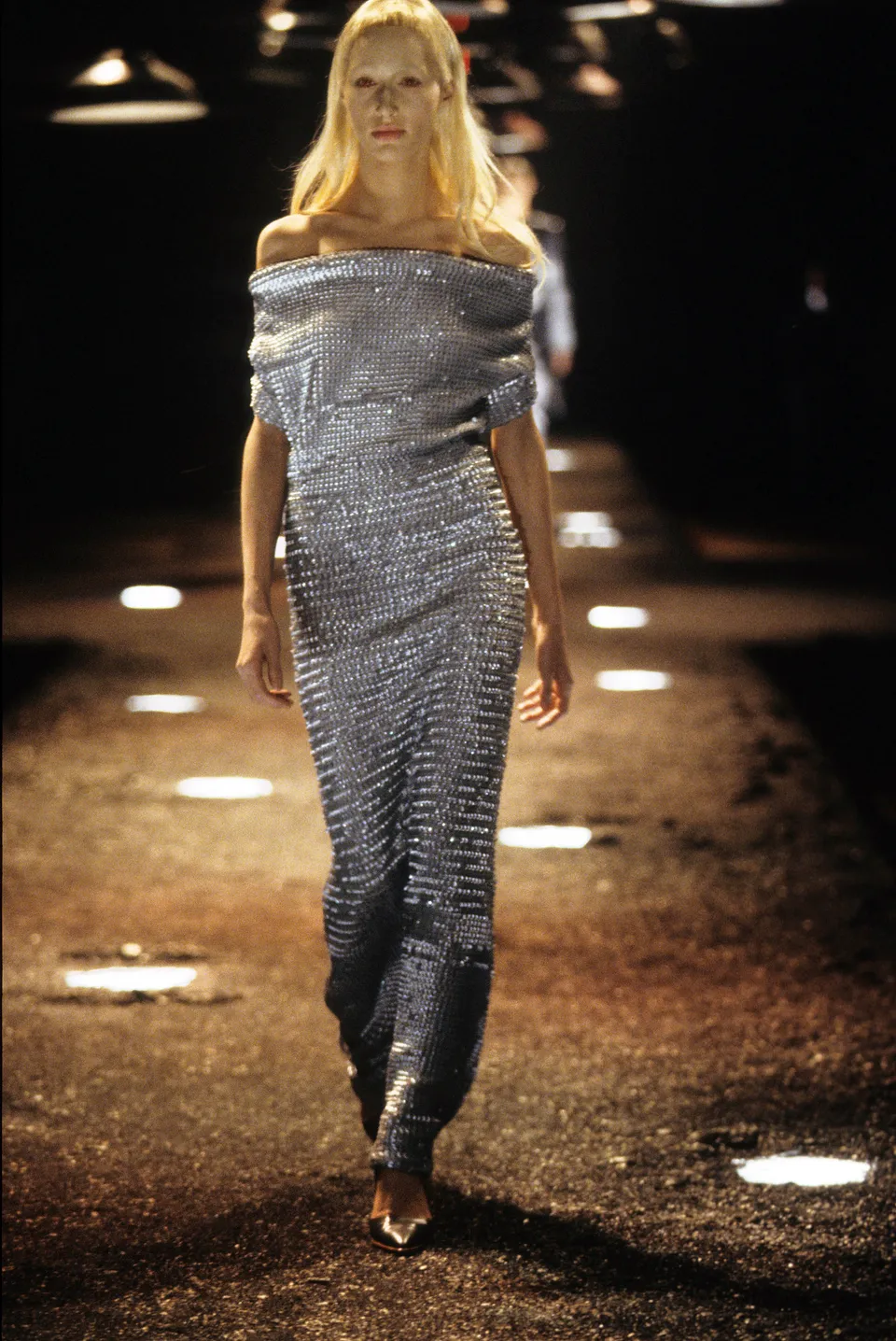
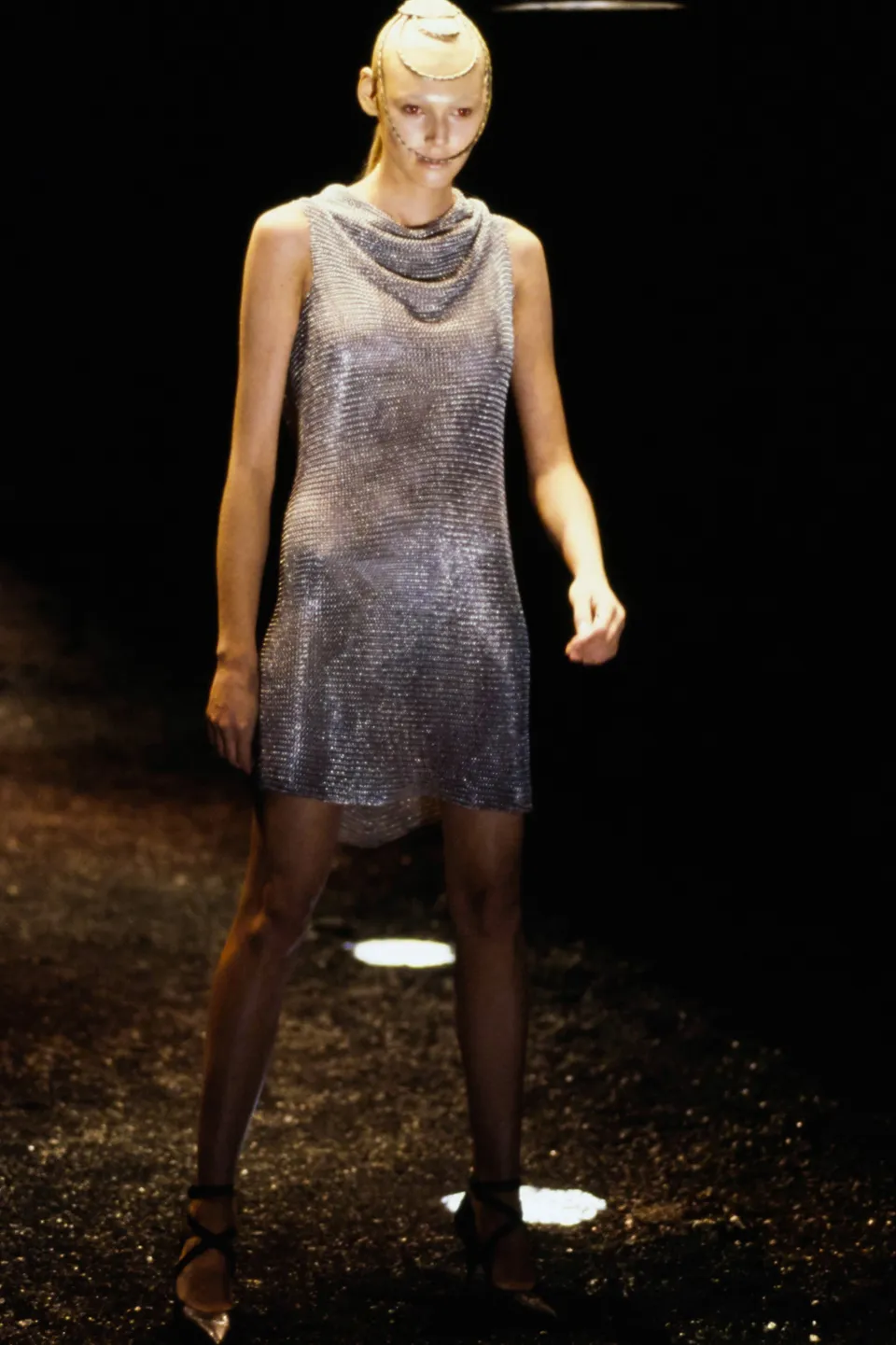

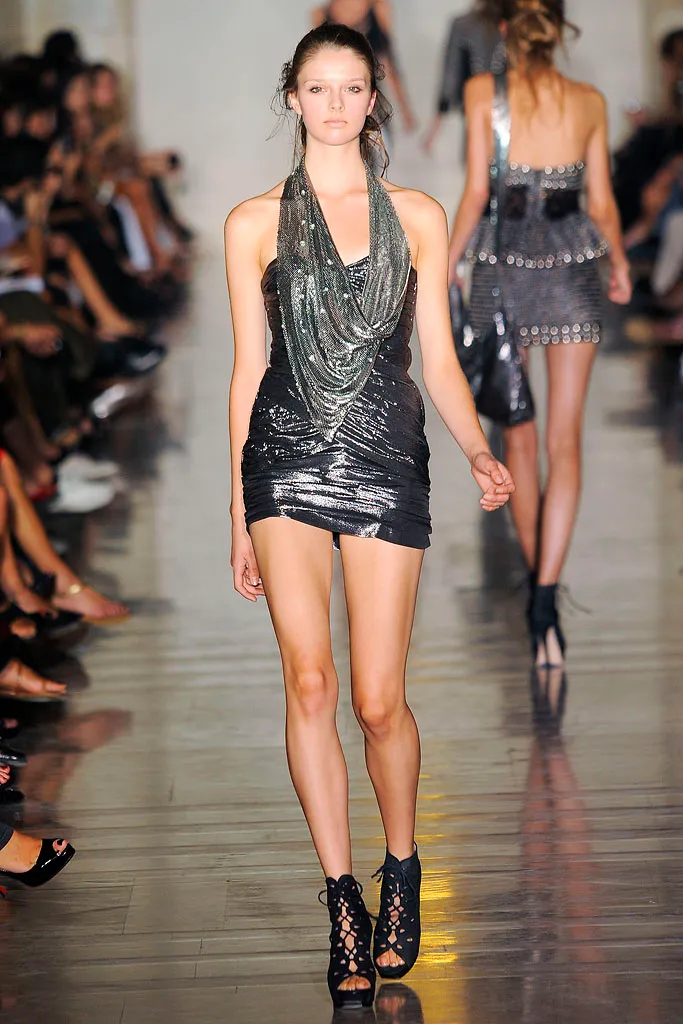
Plain-weave metal mesh creates an orderly grid, while twill constructions introduce diagonal patterns. Fine wire cloth can possess sufficient flexibility for selected garment components, accessories, and experimental fashion applications. The fabric's metallic construction gives it a distinctive response to light and movement.
Fine assembled metal mesh uses numerous small metallic elements arranged into a continuous flexible surface. Components may be secured to an underlying structure through carefully designed attachment points, permitting controlled movement throughout the material.
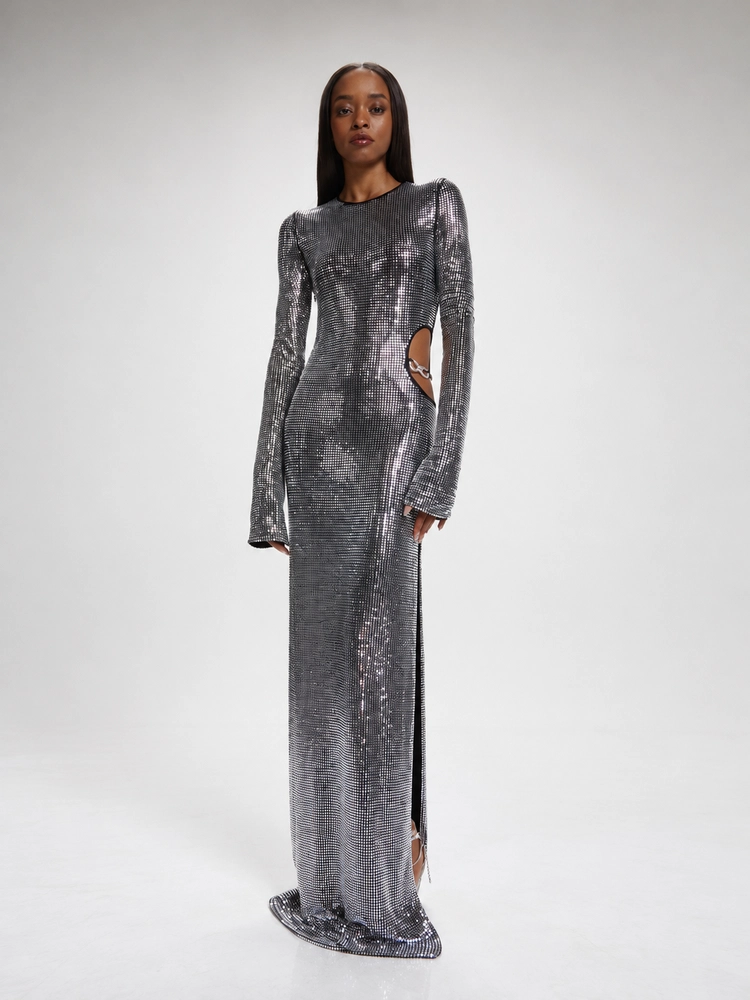
Oroton belongs to this family. Its small reflective discs create a relatively continuous metallic appearance while the supporting structure provides flexibility. The material is particularly suitable for draped eveningwear, where its weight and surface reflections contribute directly to the garment's appearance.




These two categories reflect distinct manufacturing principles. Their selection depends on the desired balance of surface geometry, flexibility, weight, and visual effect.
Metal mesh fabric is particularly valuable in fashion because its construction allows designers to explore the interaction between metallic surfaces and garment silhouettes.
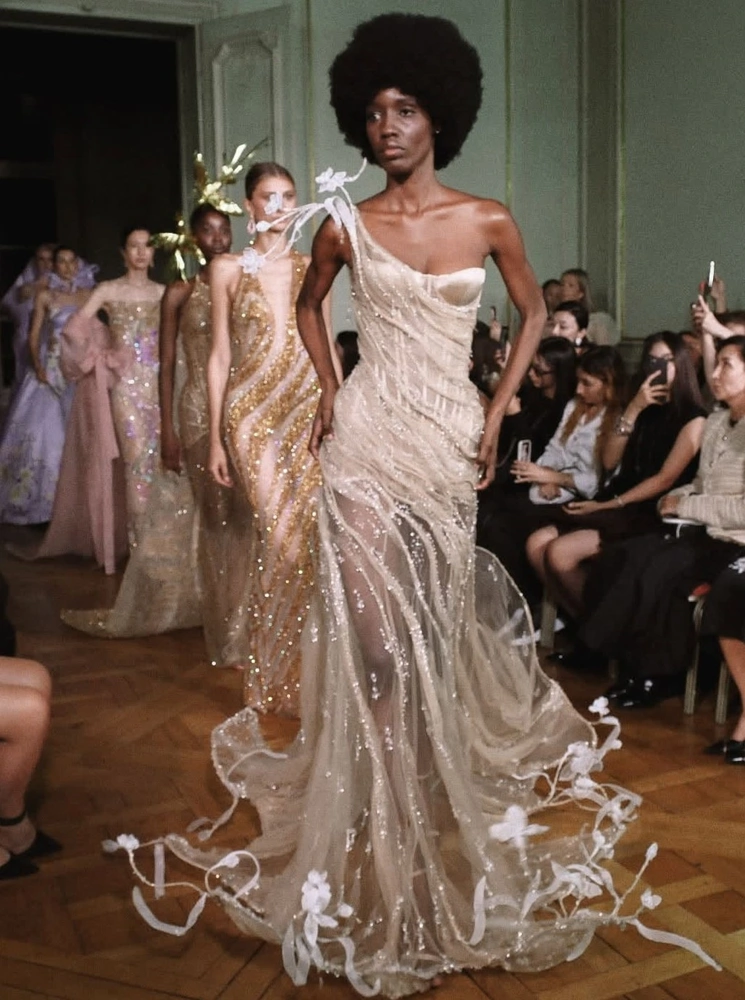
In eveningwear, fine metallic mesh can form long column gowns, draped necklines, and fitted dresses. The material responds to gravity and the body's movement, creating folds that reflect light in changing directions.
Gianni Versace established a recognizable approach to this application through Oroton gowns inspired by classical dress. The fabric's ability to settle around the body allowed metallic surfaces to participate directly in shaping the silhouette.
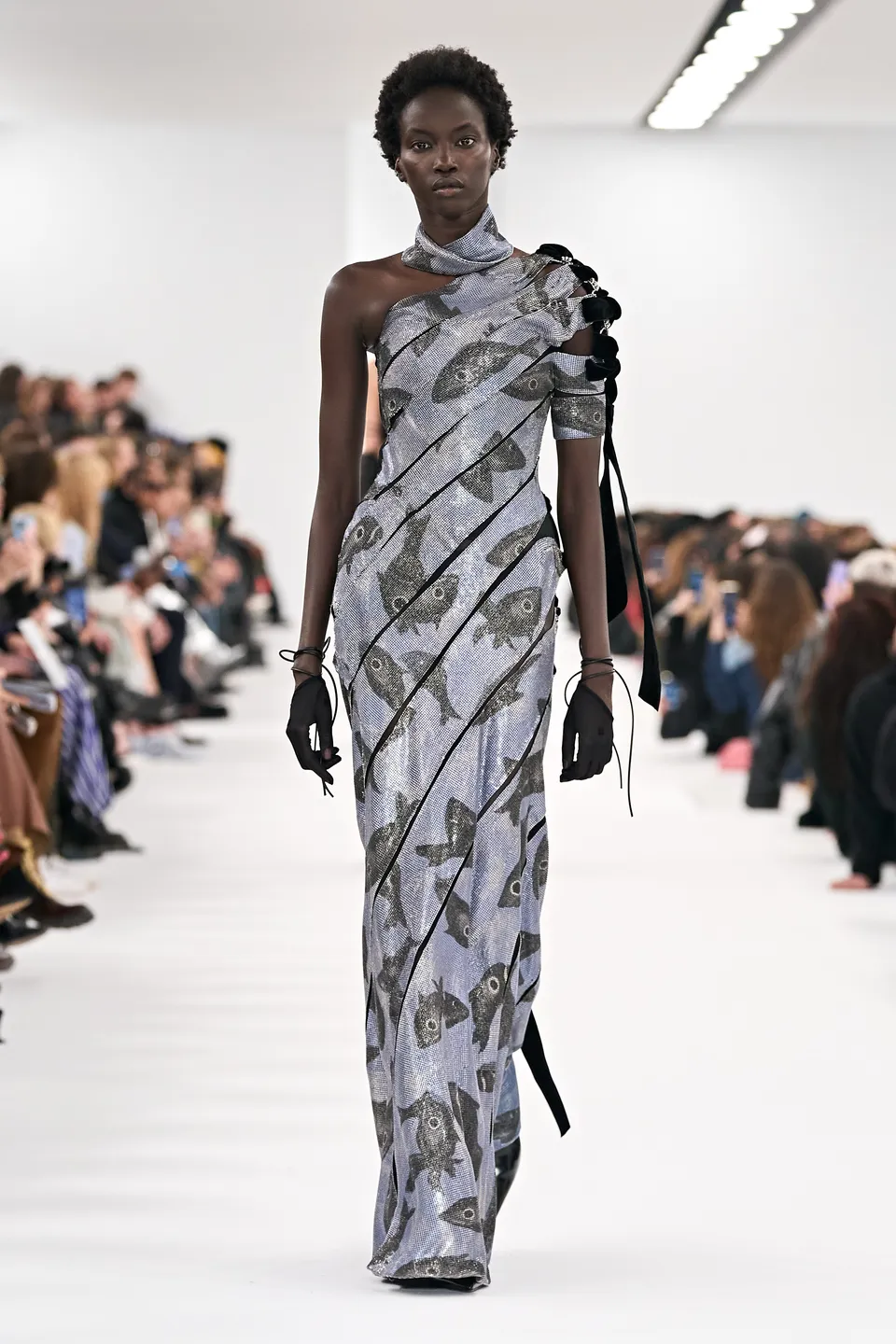
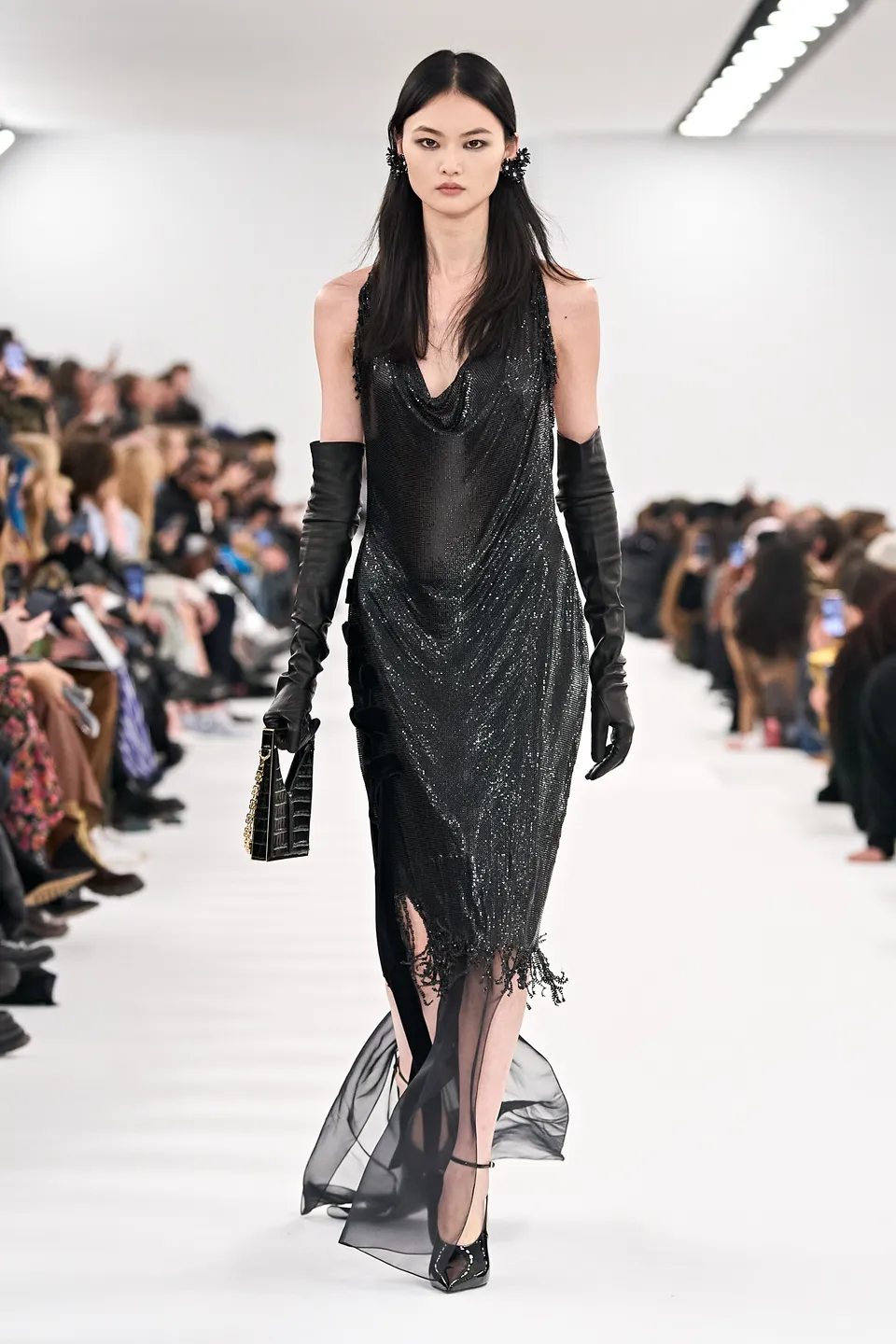
For body-conscious garments, precise pattern development is essential. Designers must accommodate the material's weight and the limits of its structural movement. Areas around the bust, waist, shoulders, and hips require careful fitting to distribute stress and preserve the intended appearance.
Lining and internal support can contribute to comfort, particularly in garments intended for extended wear. The decision to incorporate these components depends on the construction and the degree of direct contact between metal and skin.
Specialized craftsmanship also plays an important role in couture applications. Creating a garment from metal mesh can involve metalworking alongside conventional patternmaking and dress construction. Complex shapes may require individually prepared sections and carefully engineered connections.
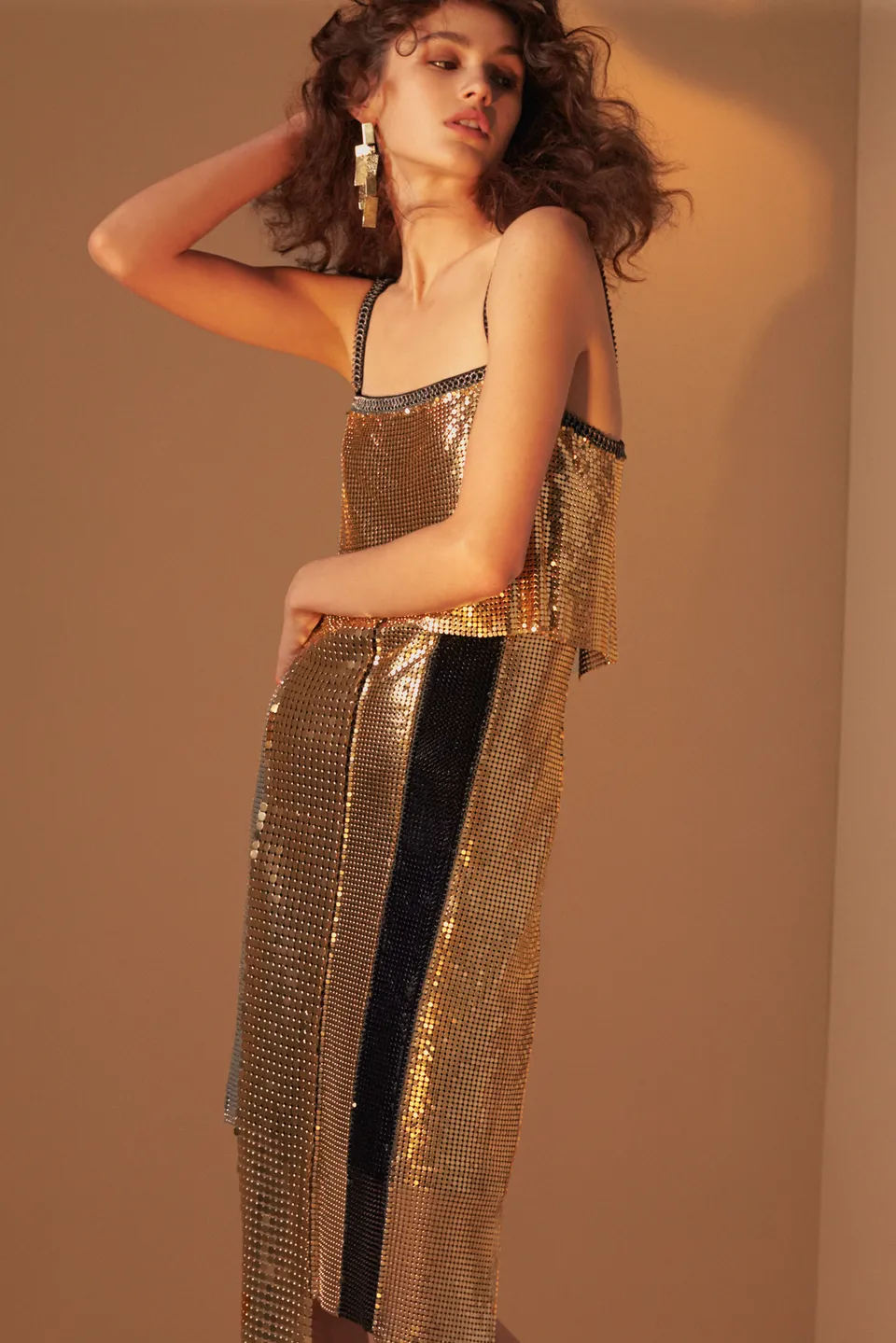

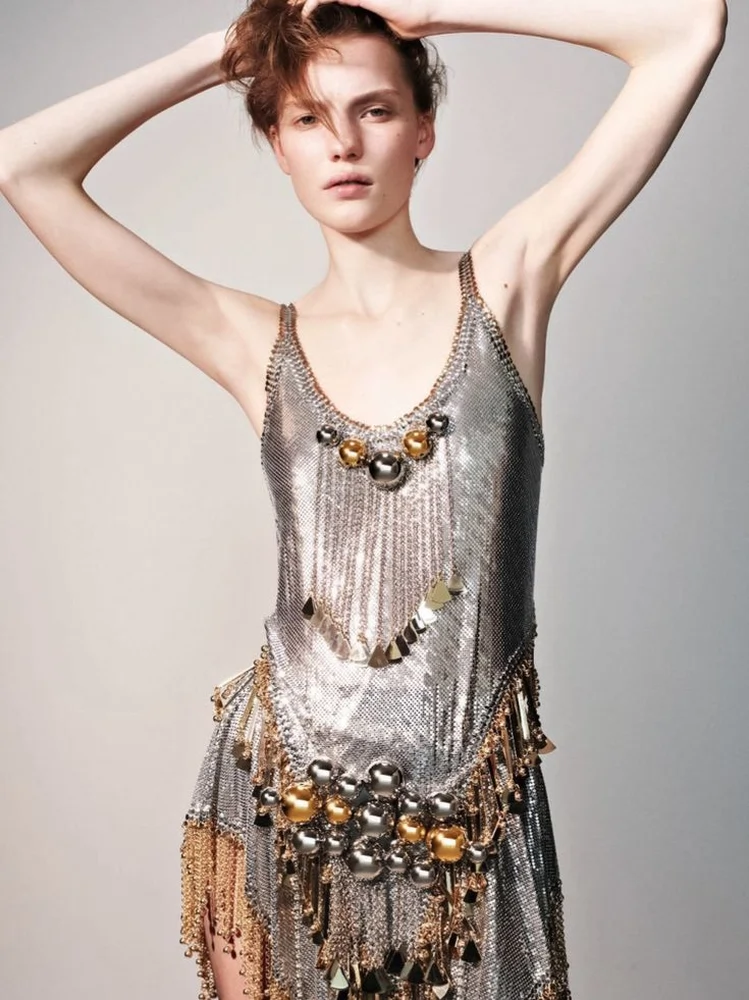
Metallic surfaces can also incorporate crystals, beadwork, and other embellishments. The decorative elements must be attached in ways that accommodate the movement and weight of the underlying material.
Accessories represent another enduring application. Fine metallic mesh can be fashioned into evening bags, clutches, belts, and small accessories, drawing upon a manufacturing tradition established during the nineteenth and twentieth centuries.
Identifying genuine metal mesh fabric begins with an examination of its physical construction. Woven varieties reveal metallic wires crossing through a regular structure, while assembled versions contain numerous small components connected to a flexible foundation.
Product specifications provide essential information about the metallic composition, surface finishing, and garment lining. A description identifying metal as the principal outer material helps establish the nature of the product.

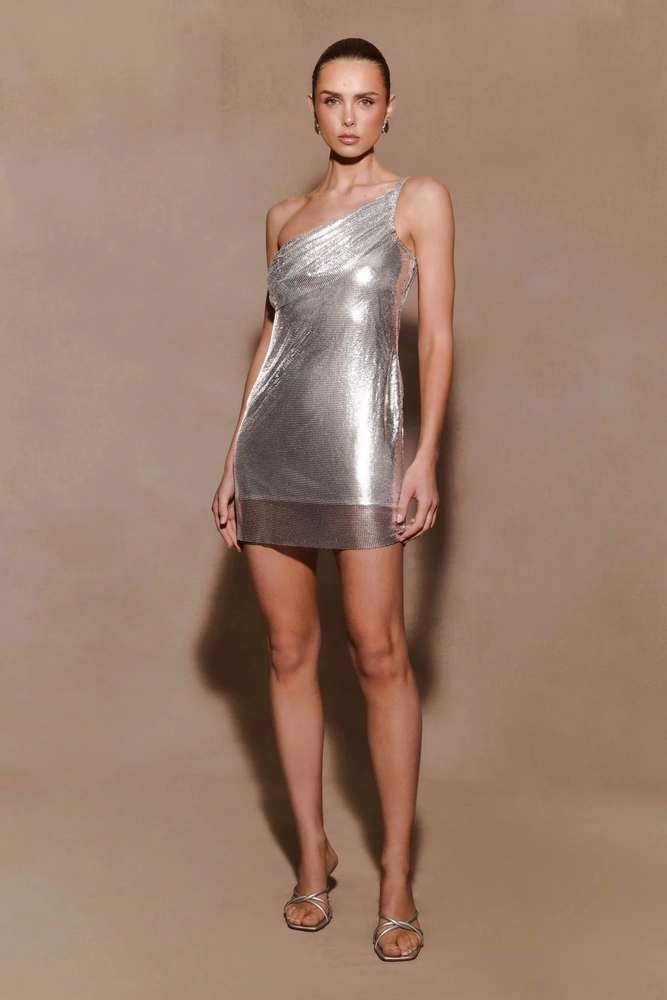
When purchasing metal mesh, examine the uniformity of the surface and the condition of the connecting structures. Consistent attachments, smooth edges, and securely positioned components contribute to durability and comfort.
Weight should be evaluated in relation to the intended application. A metal-mesh evening bag and a full-length metallic gown place very different demands on the material. Garment fit, support, and ease of movement deserve particular consideration.
Surface finishing is equally important. Gold-tone and silver-tone appearances may be produced through different metals, plating systems, or coatings, each with specific maintenance requirements.
Dry storage helps protect many metallic surfaces, while suitable padding reduces the risk of scratches and pressure marks. Heavy garments may benefit from flat storage with distributed support to limit prolonged stress on individual connections.
The continuing presence of metal mesh fabric in fashion reveals an enduring fascination with the possibilities of material engineering. The fluid metallic surfaces pioneered in luxury dressmaking have established a visual language that remains immediately recognizable. Their appeal reflects fashion's capacity to reshape the relationship between material, movement, and the body, turning carefully engineered metal into an expressive medium for contemporary design.
Advertisement