MENU
Close





Magda Butrym brought a very Polish idea of femininity to New York, and Spring 2027 turns nostalgia into something sensual, artistic, and distinctly alive.
Magda Butrym brought a very Polish idea of femininity to New York, and Spring 2027 turns nostalgia into something sensual, artistic, and distinctly alive.
September 14, 2026
Advertisement

Advertisement



Magda Butrym finally showed on the official New York Fashion Week calendar. The collection slowly unfolded into an intimate portrait of womanhood. Family memory met downtown polish. Domestic codes slipped into evening dressing. Slavic romance found itself under Manhattan lights.
During the same week, Magda Butrym opened her permanent New York boutique at 170 Mercer Street, giving the Polish house a physical address inside a market that has become central to its growth.
Yet the emotional baggage she carried across the Atlantic was surprisingly humble.
An apron. A grandmother. A Polish artist. A rose.
The collection, titled “Natalia,” takes inspiration from Natalia LL, the Polish conceptual artist whose work became radical during communist Poland through its exploration of female sexuality, consumer culture, and the body.
Natalia LL travelled to New York in the late 1970s, bringing an artistic language formed under a radically different political and social reality. Decades later, Magda Butrym found something emotionally familiar in that journey: a Polish woman entering New York with her own vision of femininity already intact.
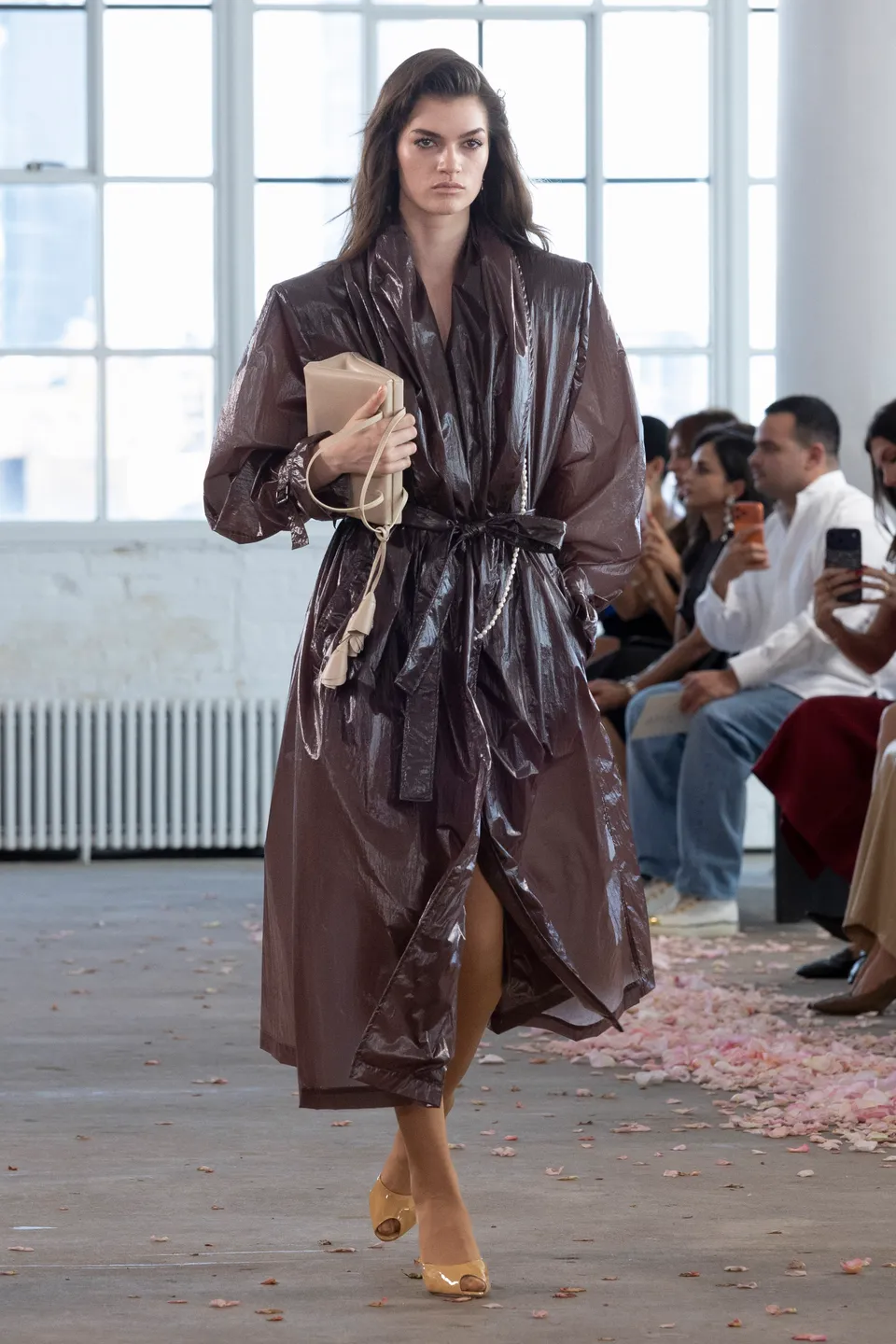
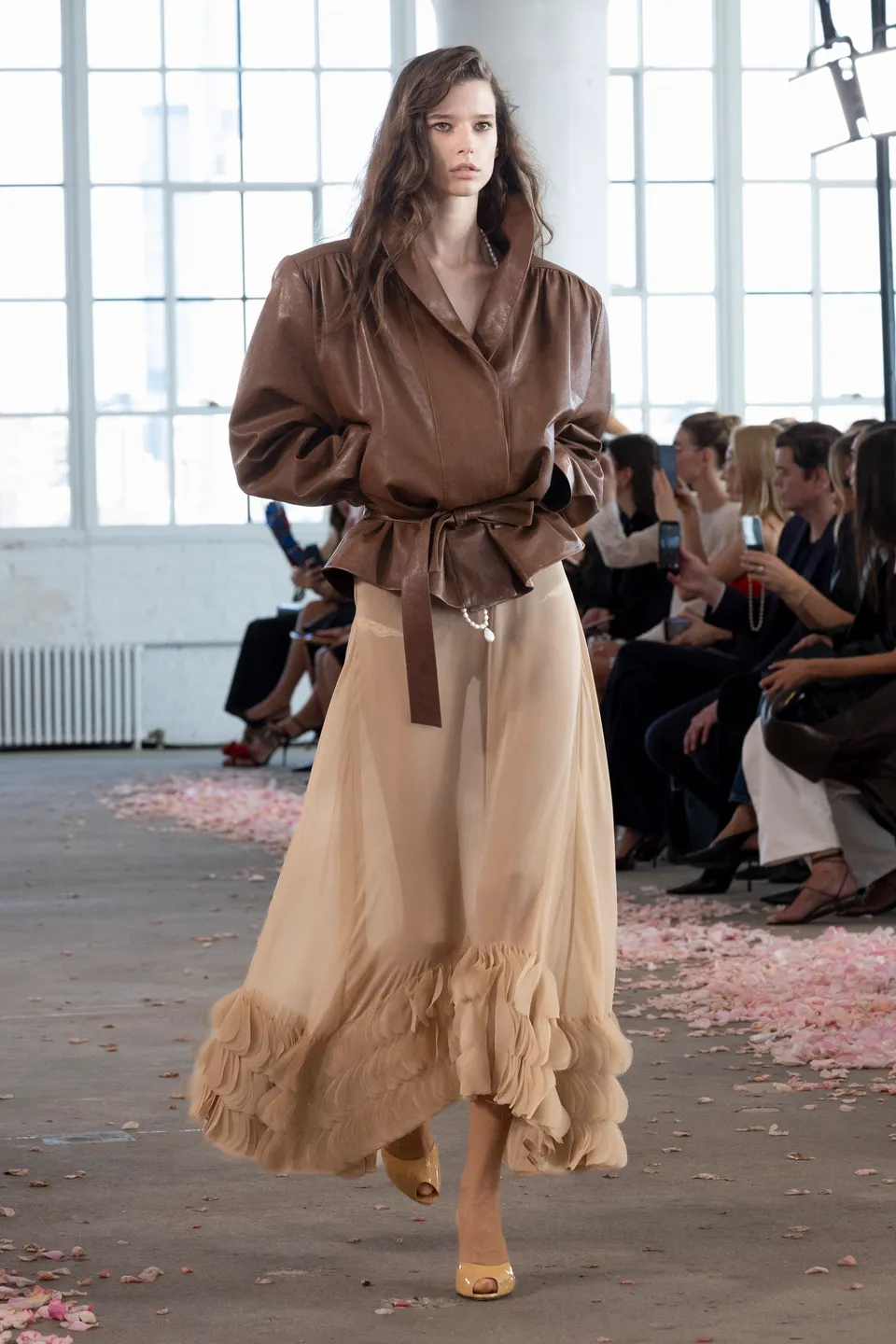
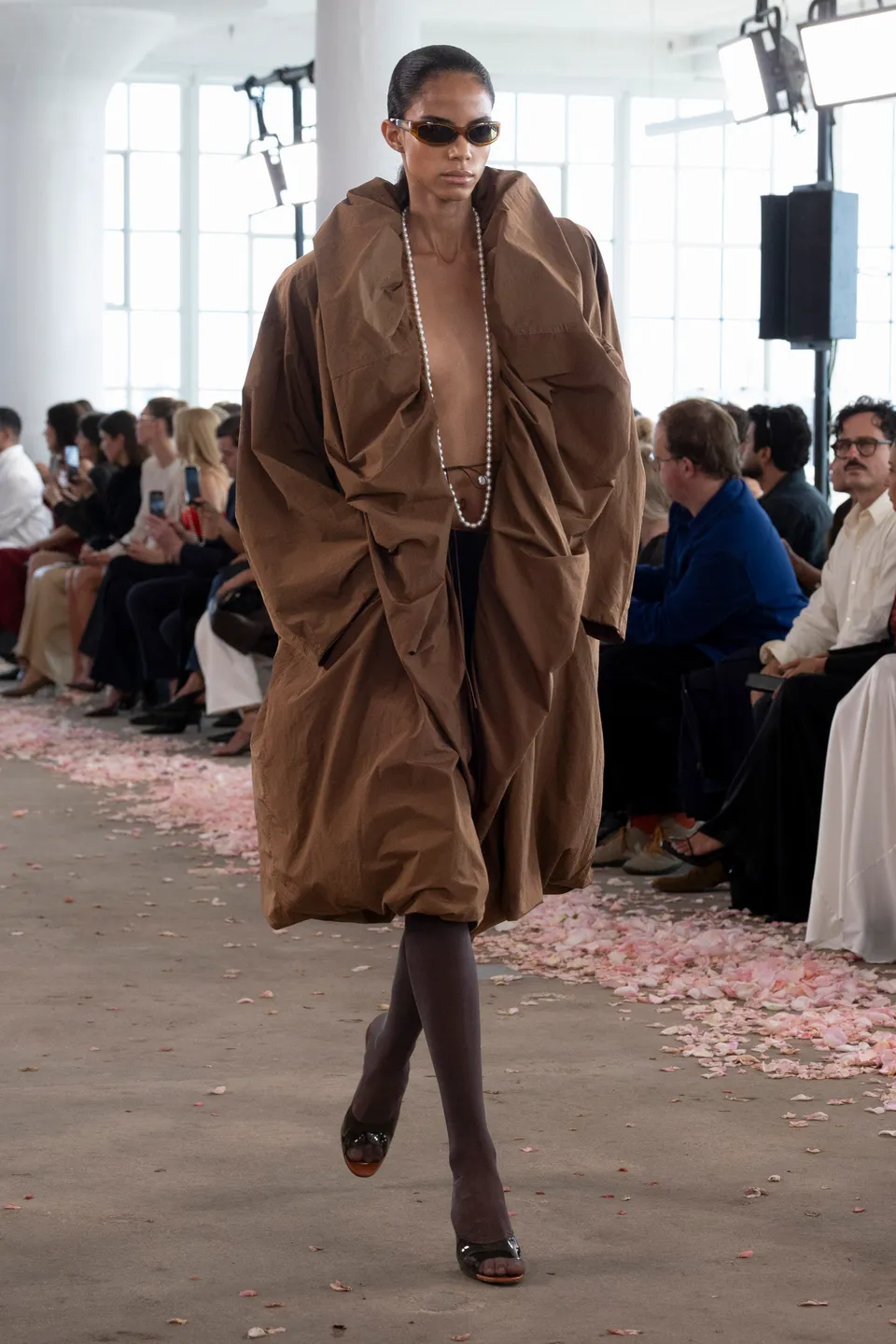
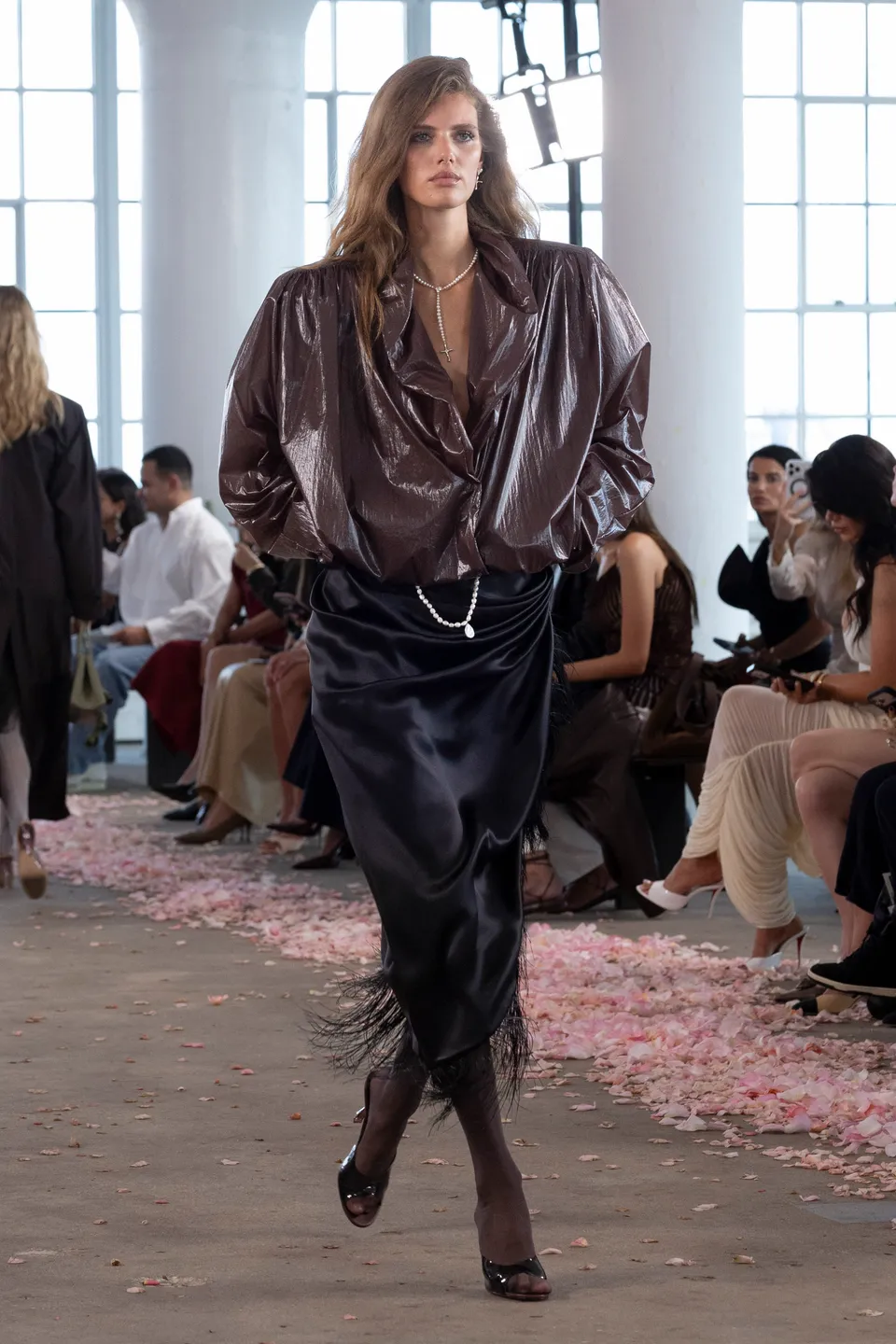
Butrym’s woman has always understood sensuality as authorship. Here, exposure belongs to her. Romance belongs to her. Traditional feminine symbols, flowers, pearls, lingerie, domestic dress, become tools she handles deliberately.
The reference also continues Butrym’s growing interest in Polish cultural history. Recent collections have drawn from Slavic cinema, domestic memory, and women whose lives carried friction between tradition and independence. Spring 2027 brings that conversation directly into New York.
One of the collection’s most intimate references comes from Butrym’s memories of her grandmother.
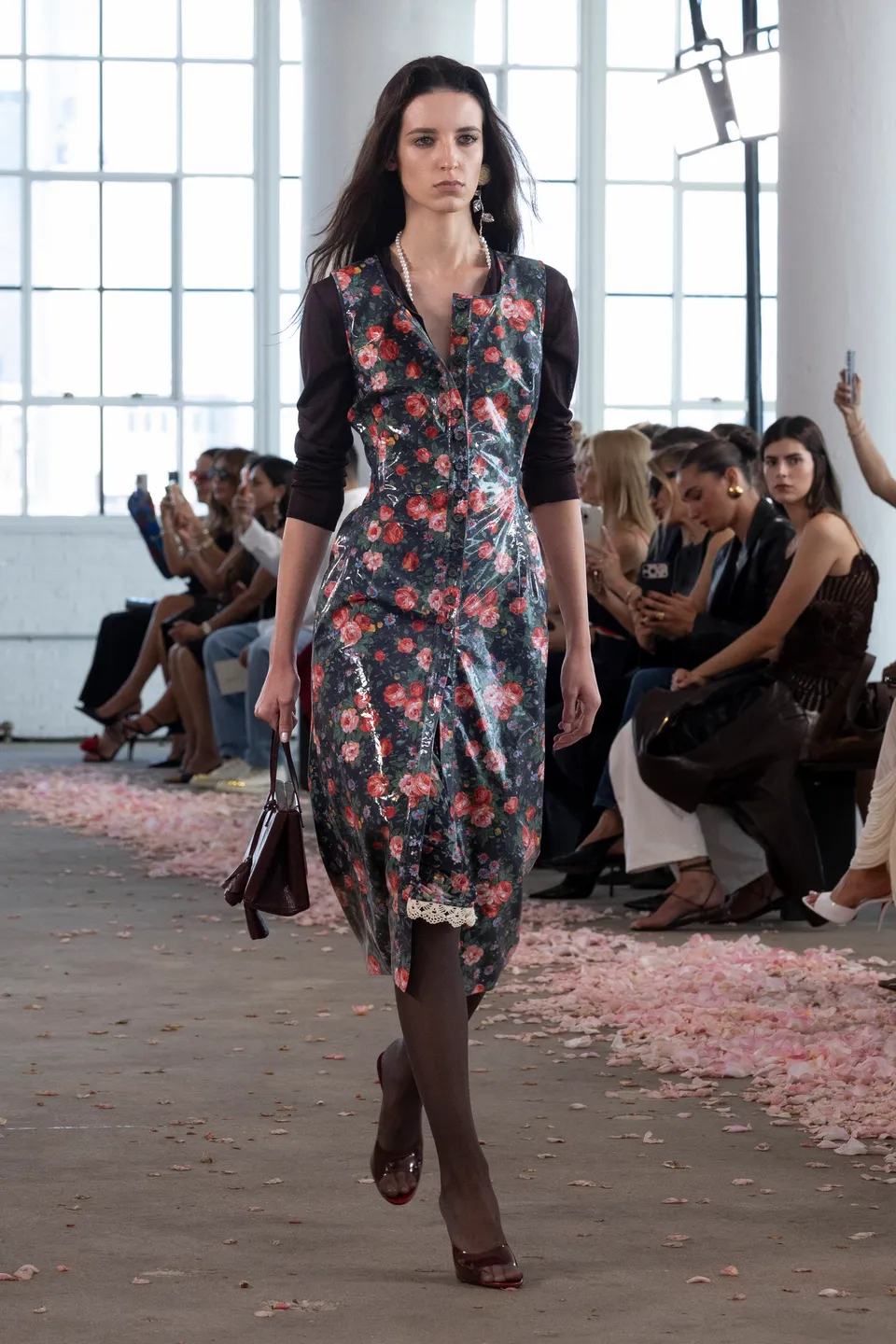
She remembers her in the kitchen, wearing an apron. That ordinary domestic image has stayed inside Butrym’s design vocabulary, gradually transforming across recent seasons into housedresses and apron-like constructions.
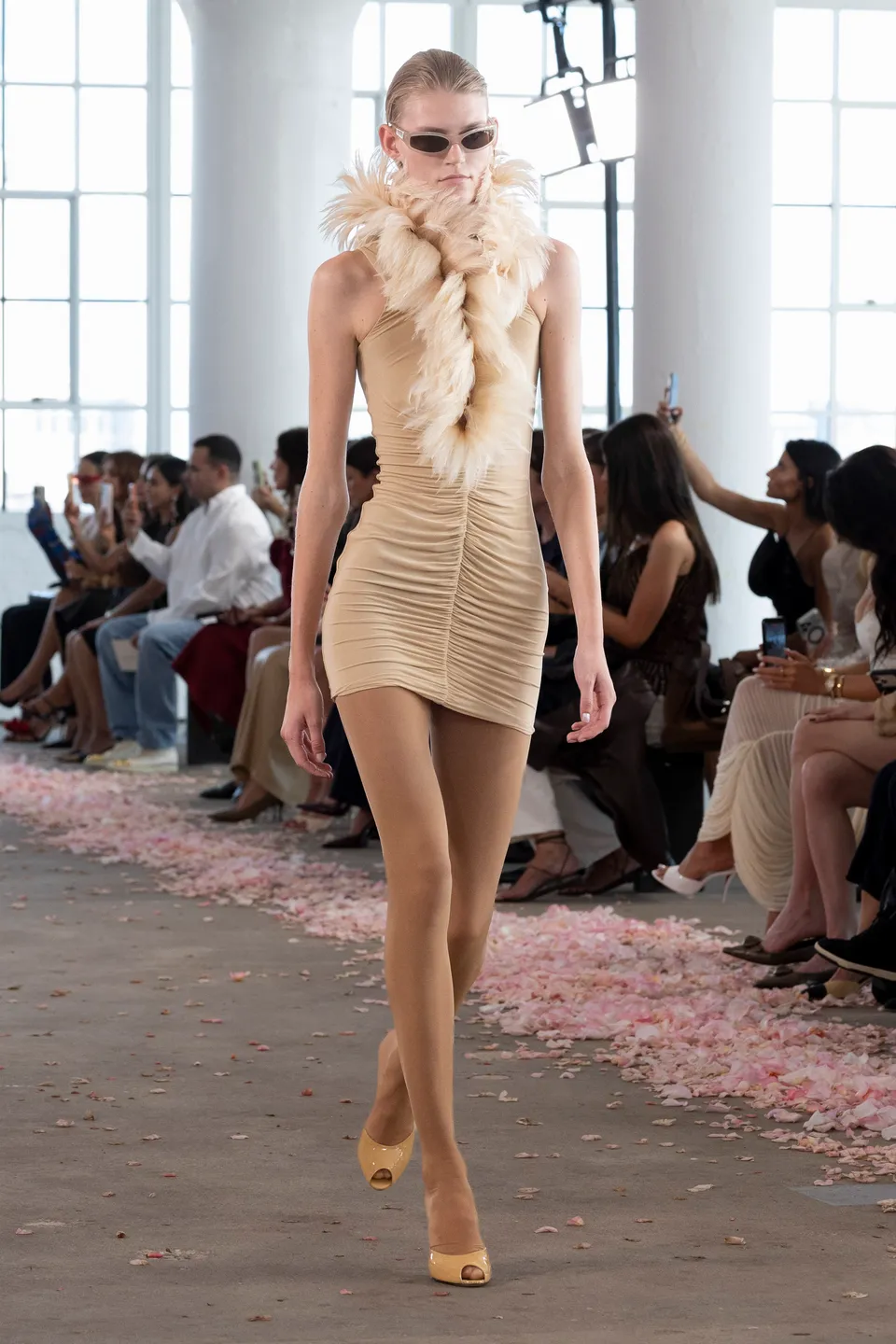
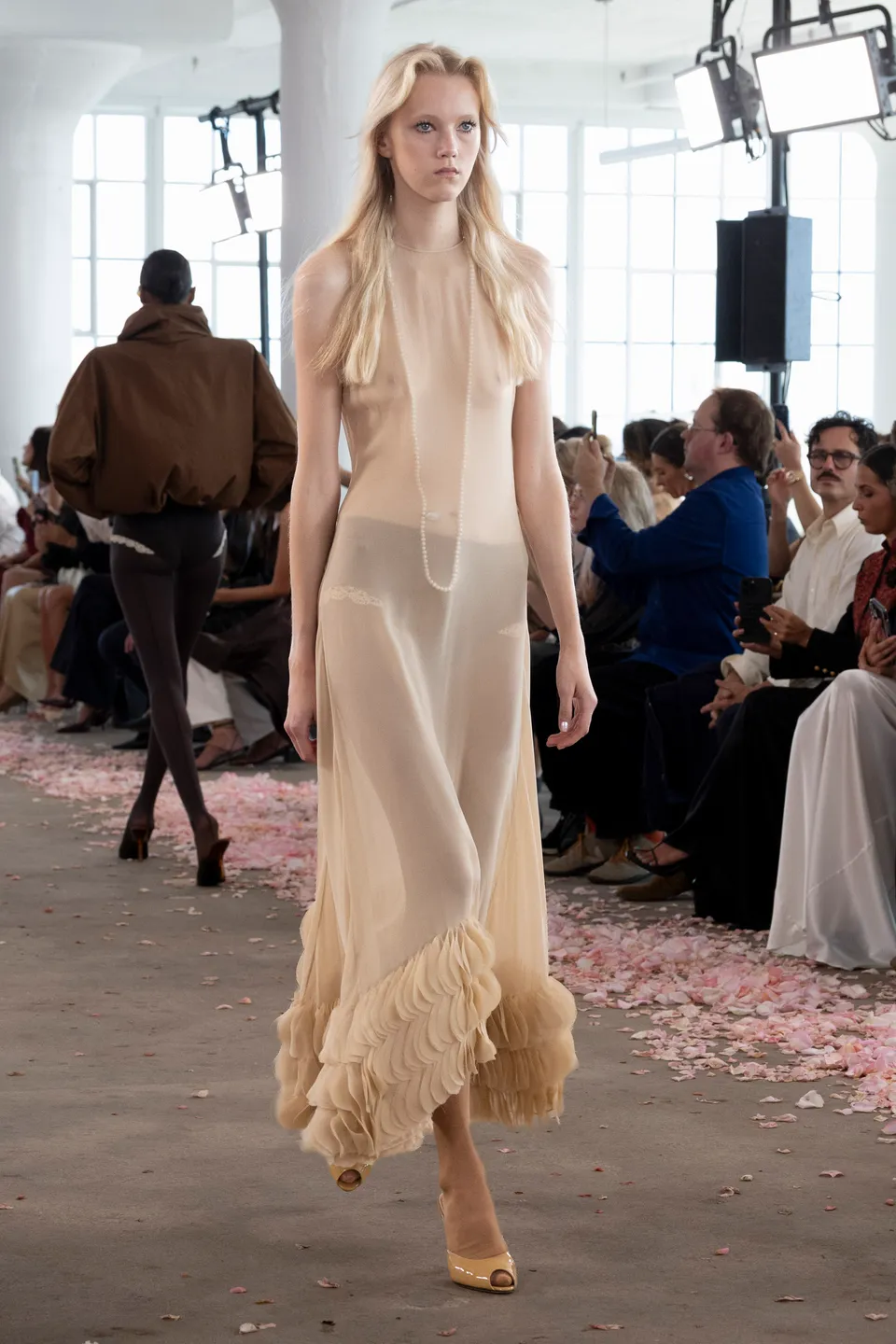
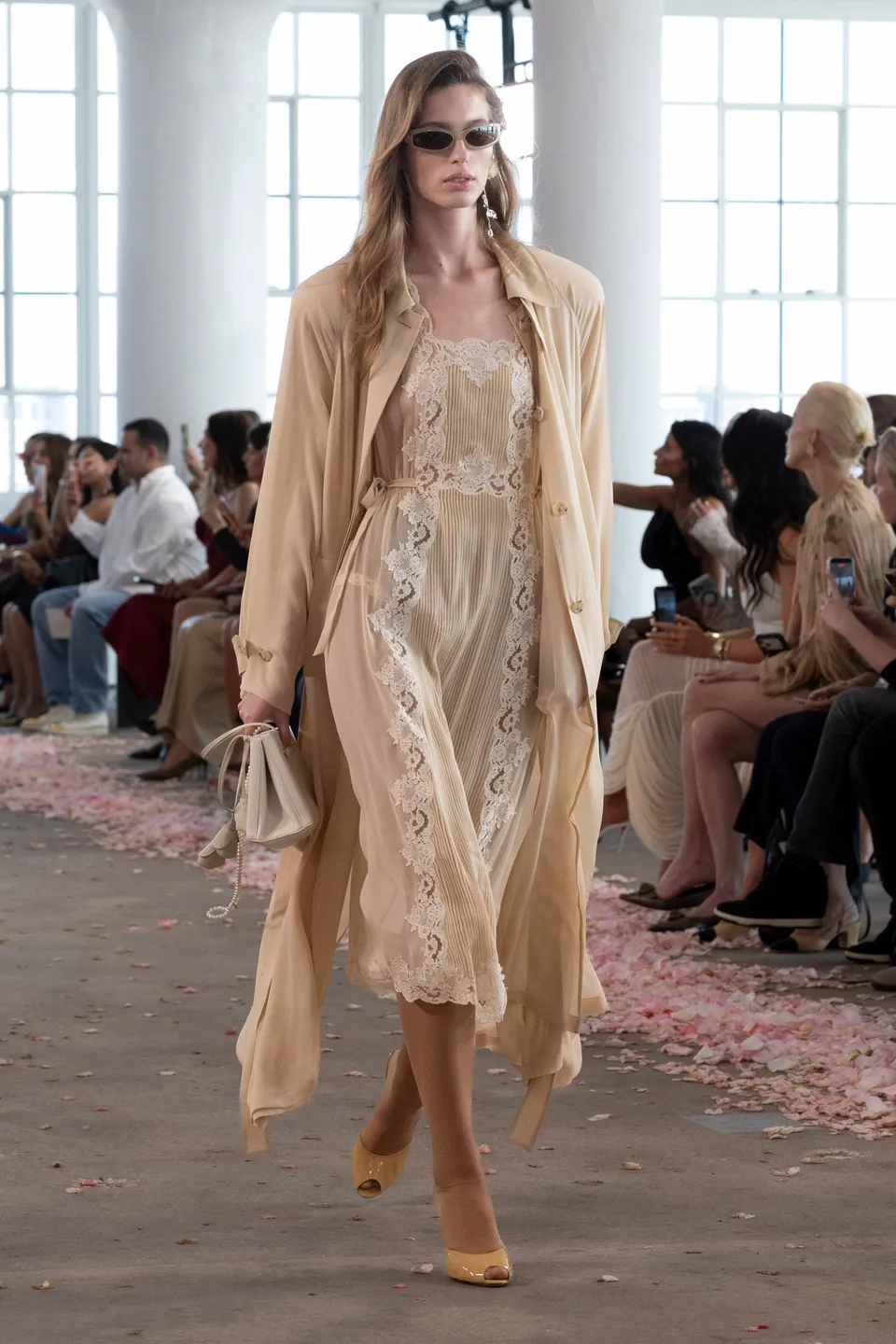
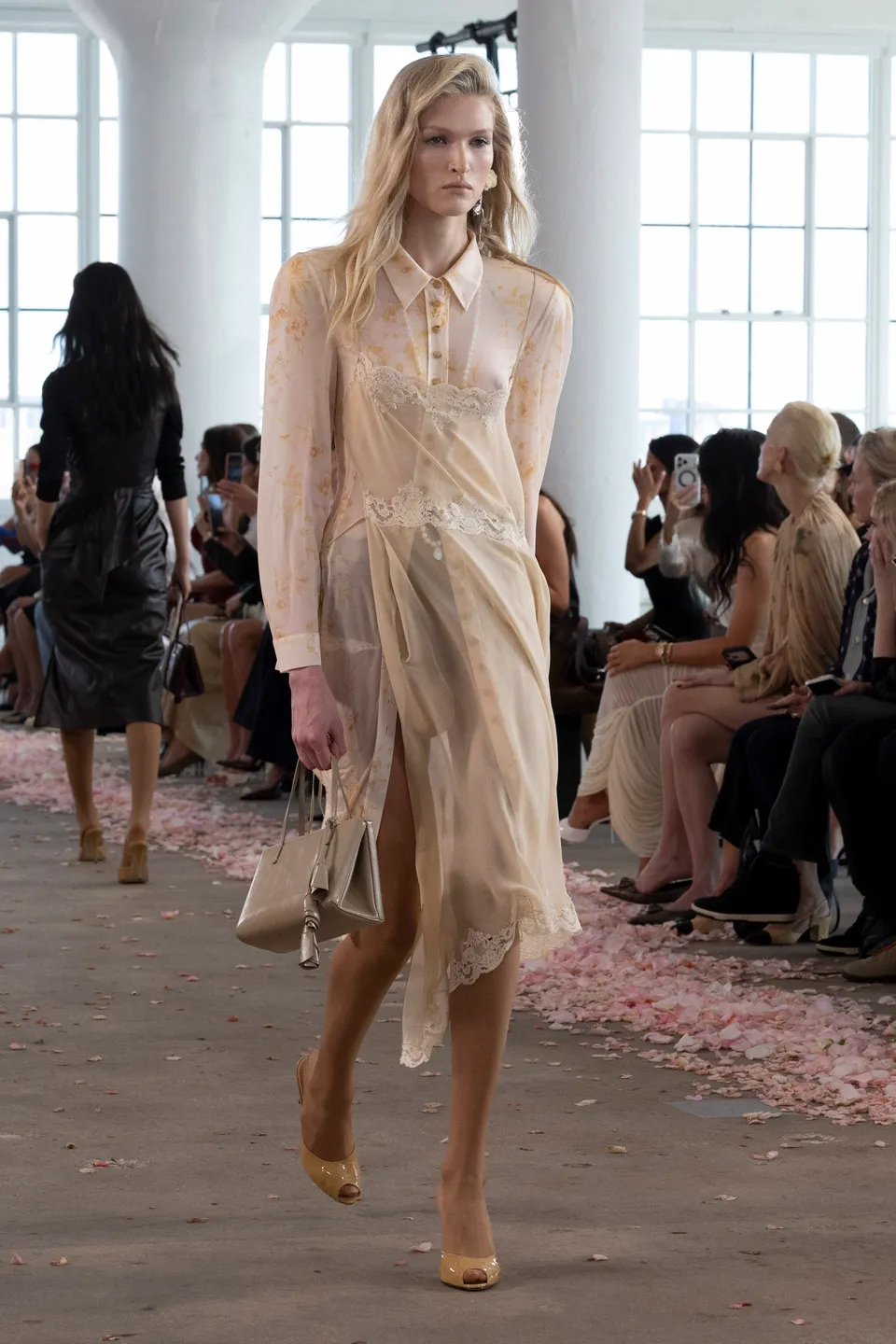
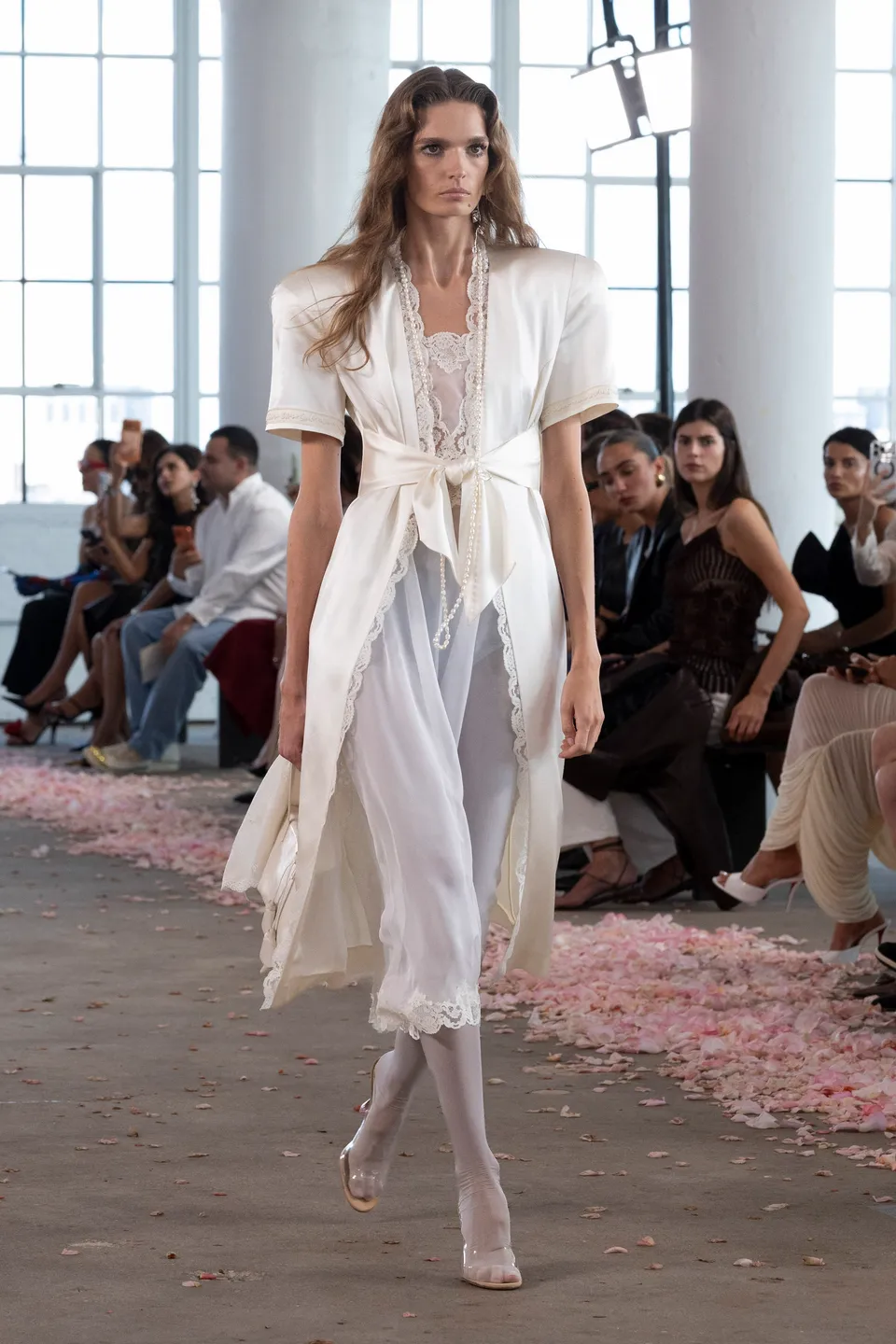
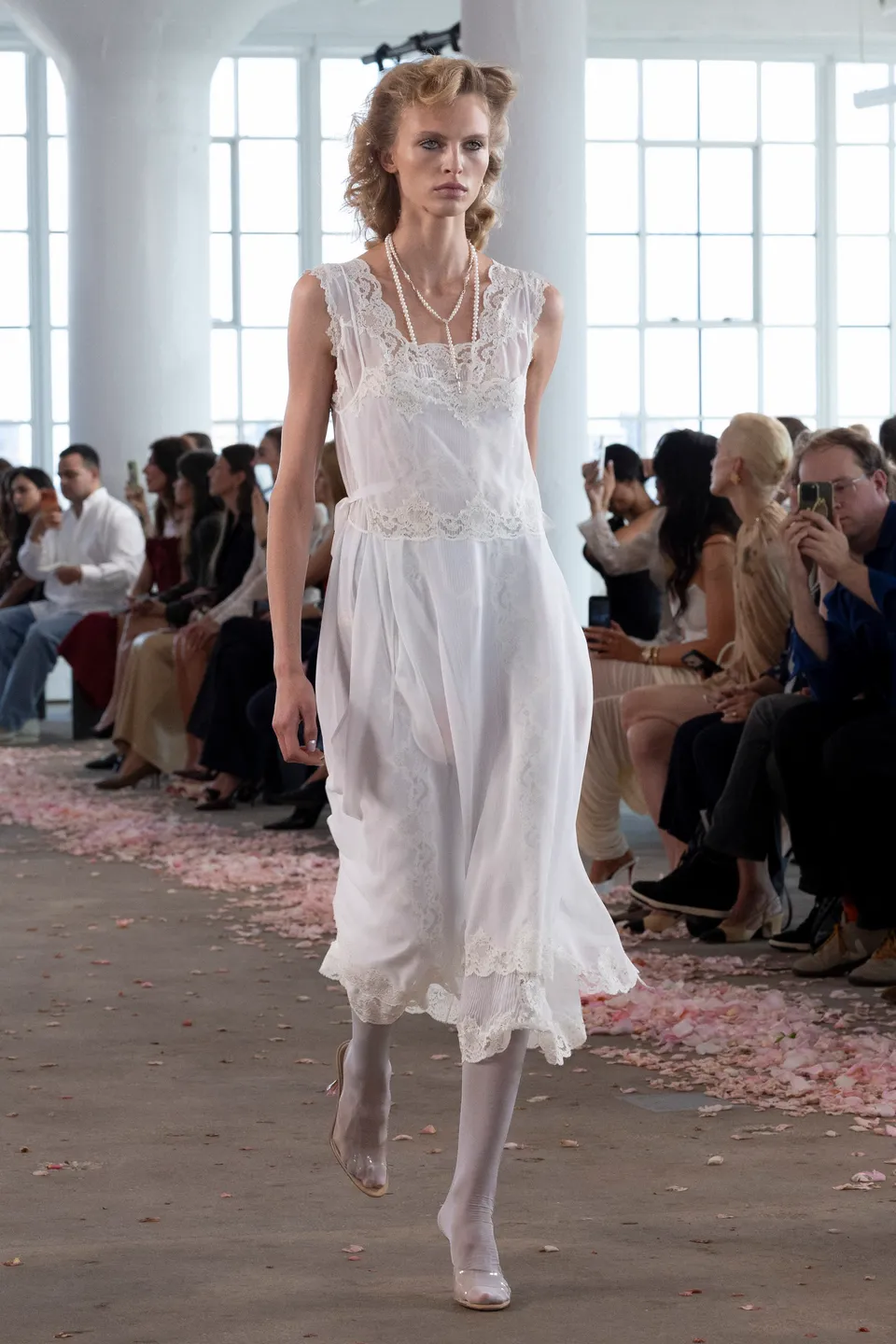
Its simplicity enters a wardrobe concerned with intimacy and self-possession. Button-front shapes and delicate layers evoke dressing at home, somewhere between morning ritual and private femininity. Lingerie details extend that feeling, giving the clothes a sense of being caught during the act of getting dressed.
There is nostalgia here, though it never freezes the woman in the past. She can carry her grandmother’s memory while living an entirely different life.
That is perhaps the most convincing version of Slavic romance in Magda Butrym: tradition worn close to the body, inherited emotionally and reshaped according to the woman wearing it now.
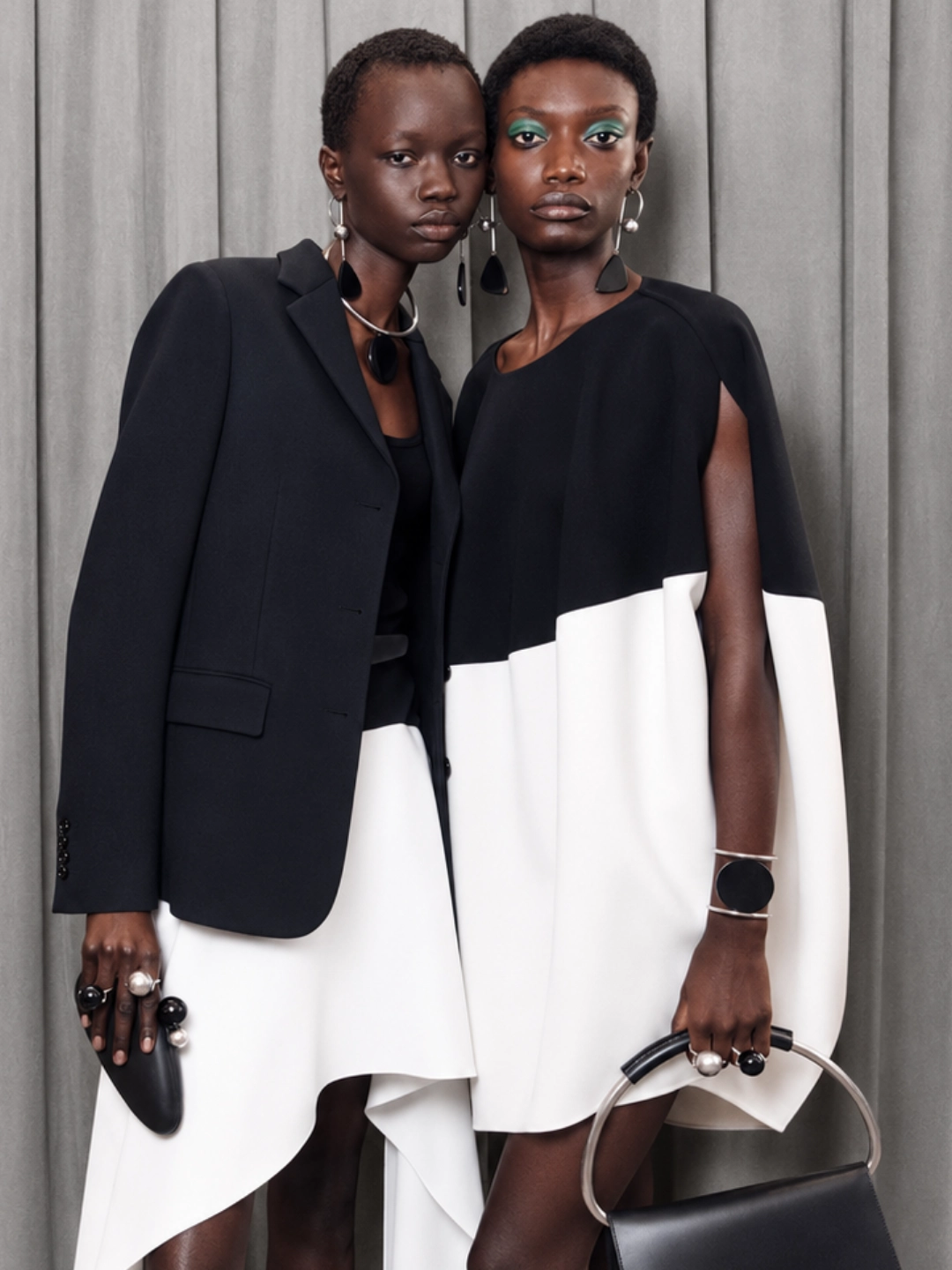
The shoulder creates presence. The waist draws inward. The body remains central to the composition. Spring 2027 then stretches that language into longer, airier lines.
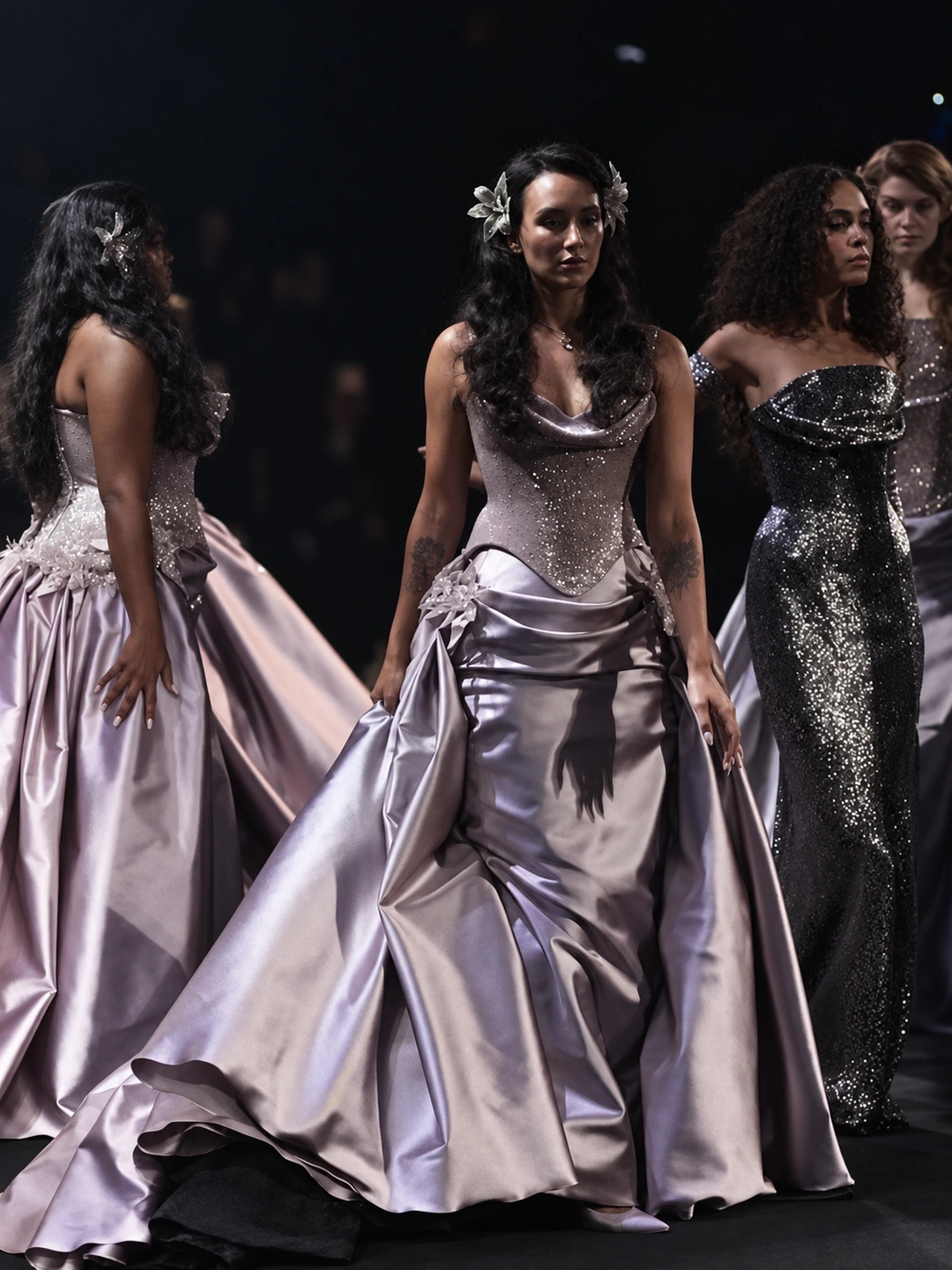
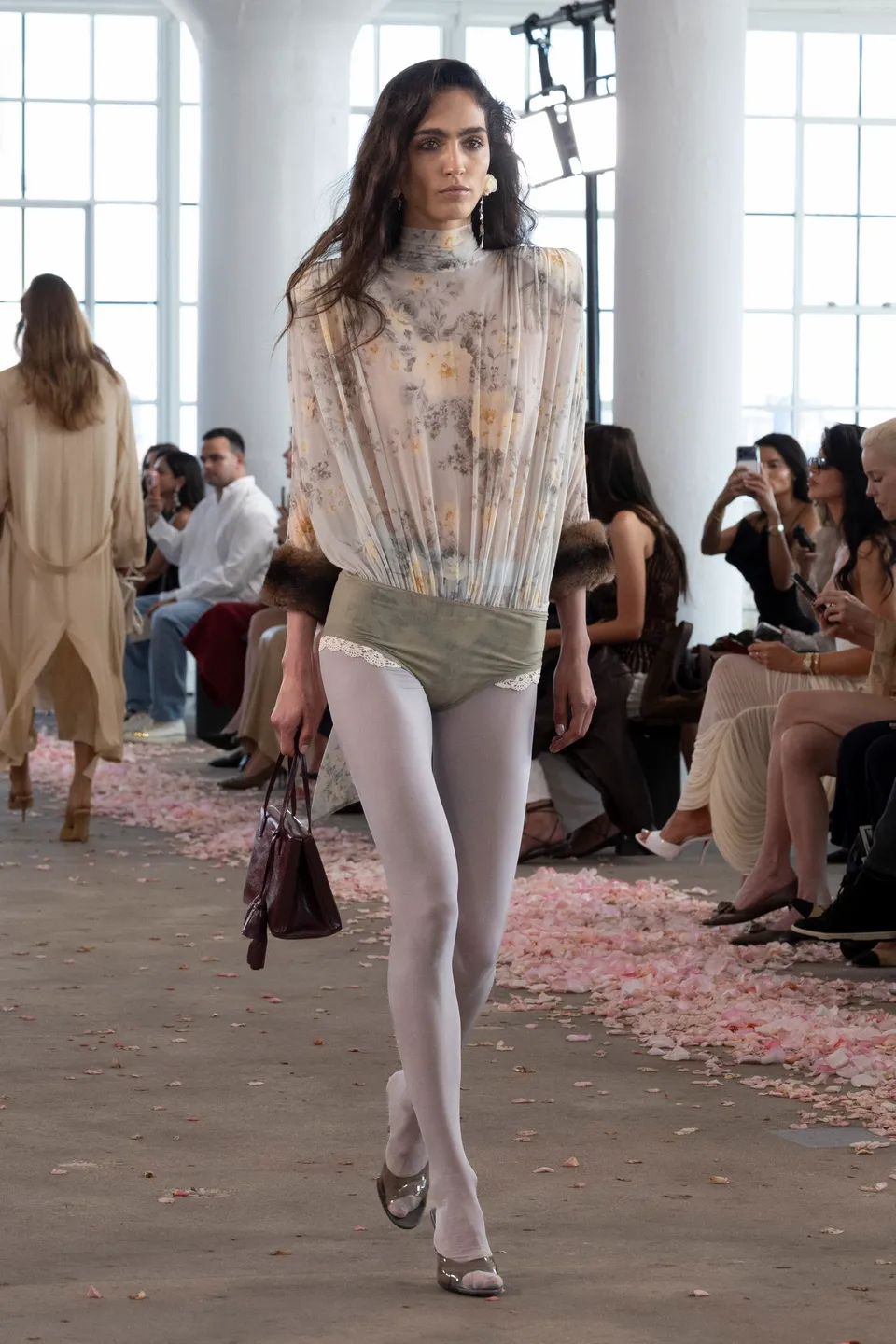
Tonal dressing extends the figure from waist to foot. Layers drift downward around the legs. Close-fitting areas release into movement lower on the body. The hourglass retains its authority while gaining an easier, almost dreamlike quality.
Spring 2027 becomes particularly rich once the eye moves from shape to surface.
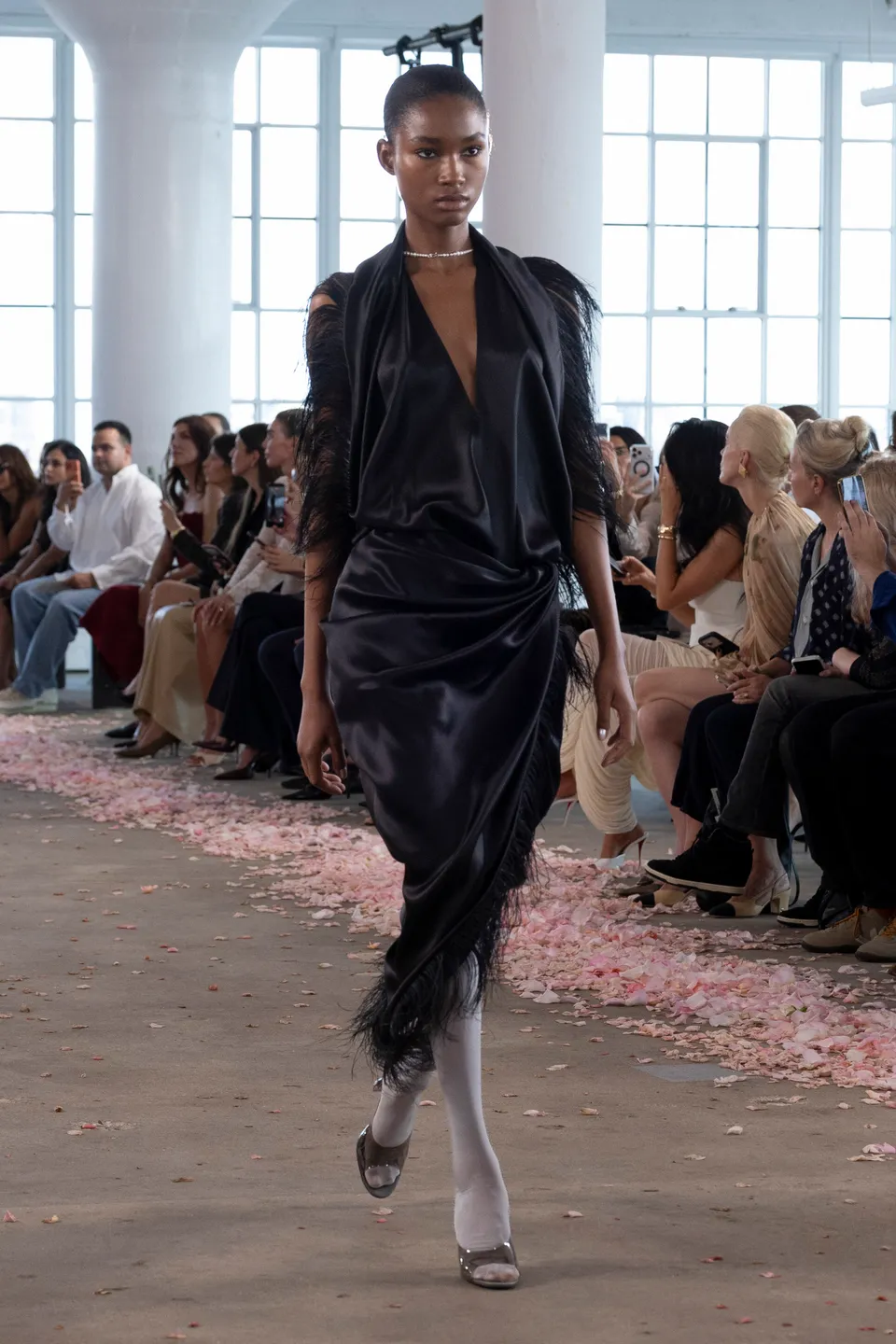
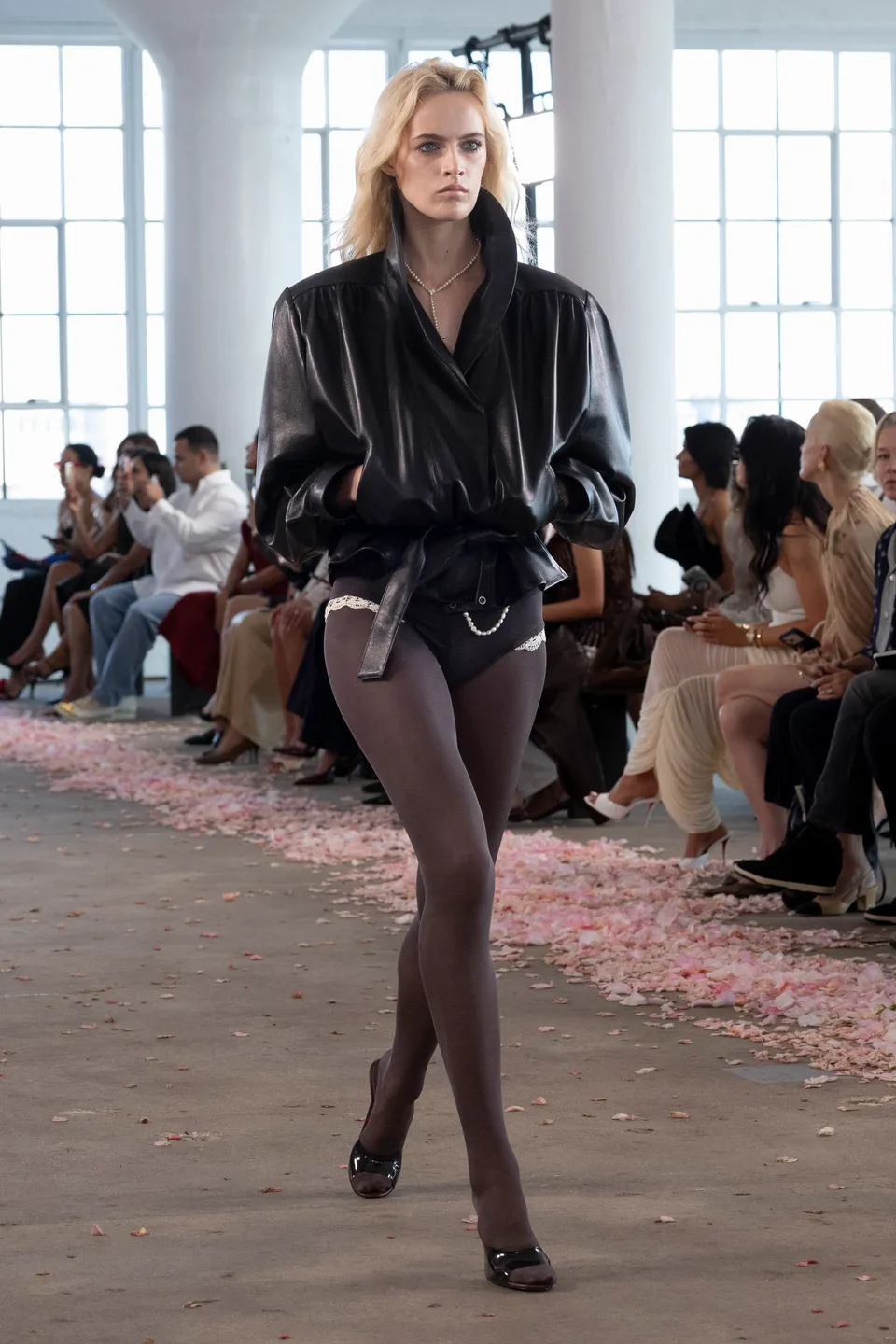
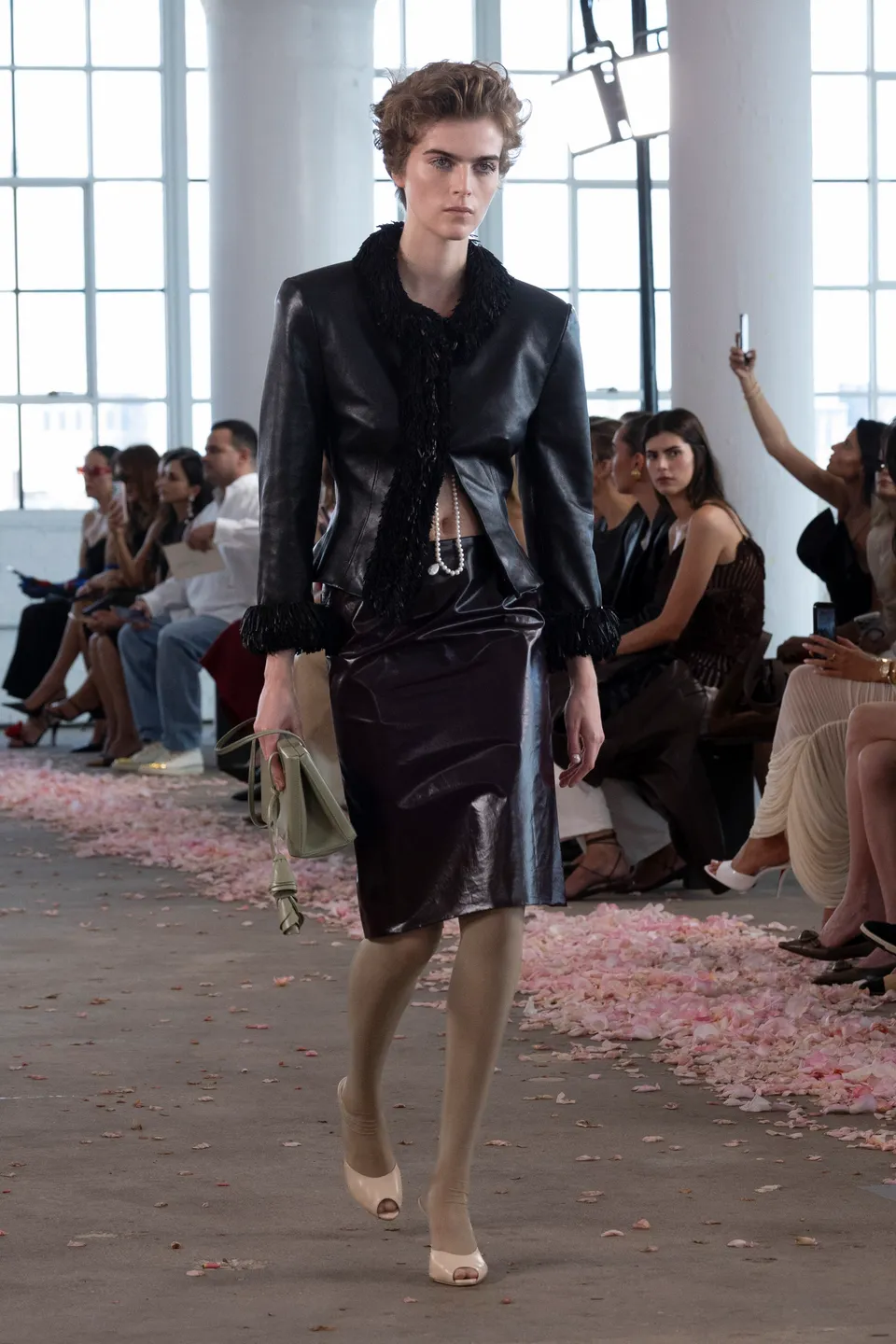
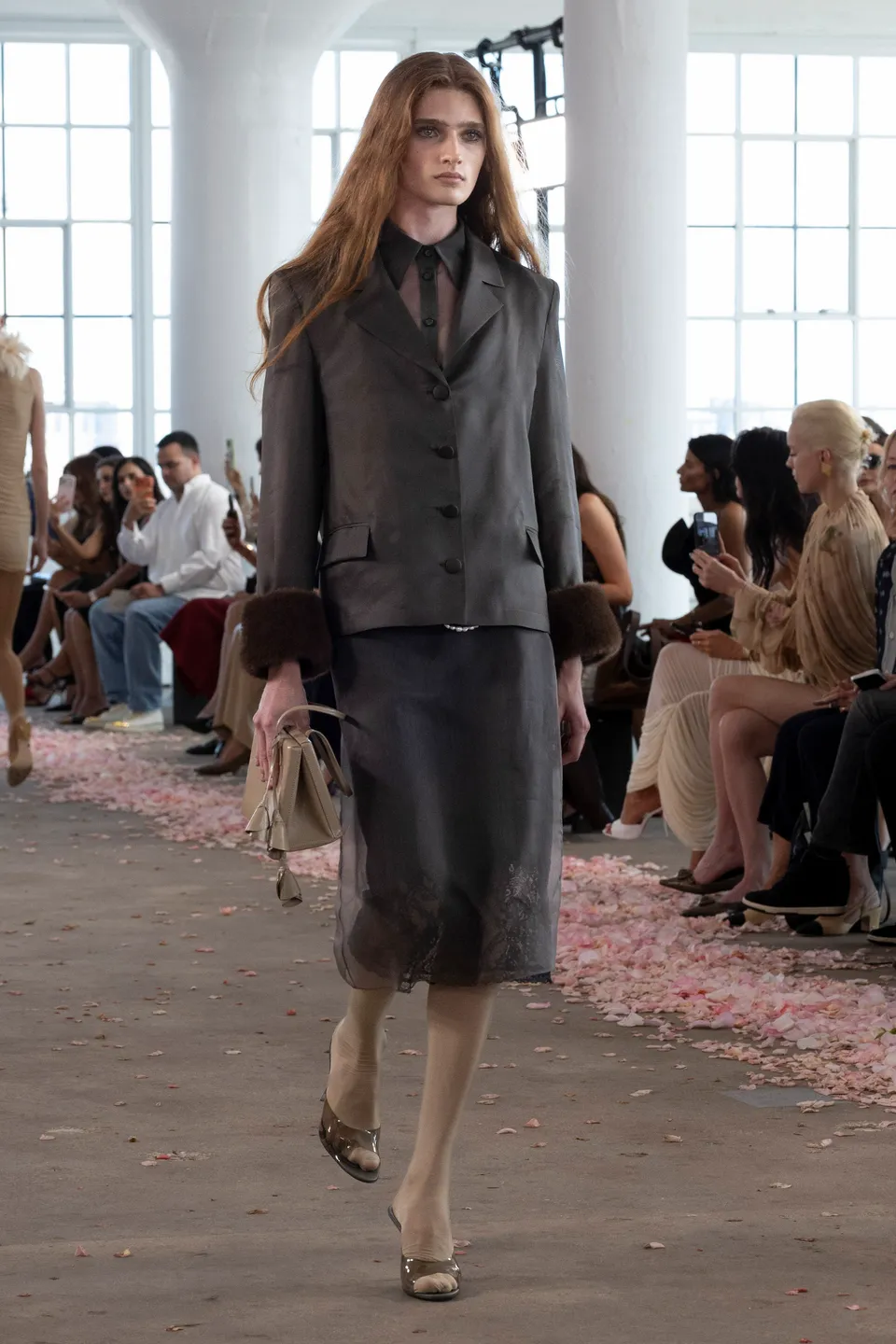
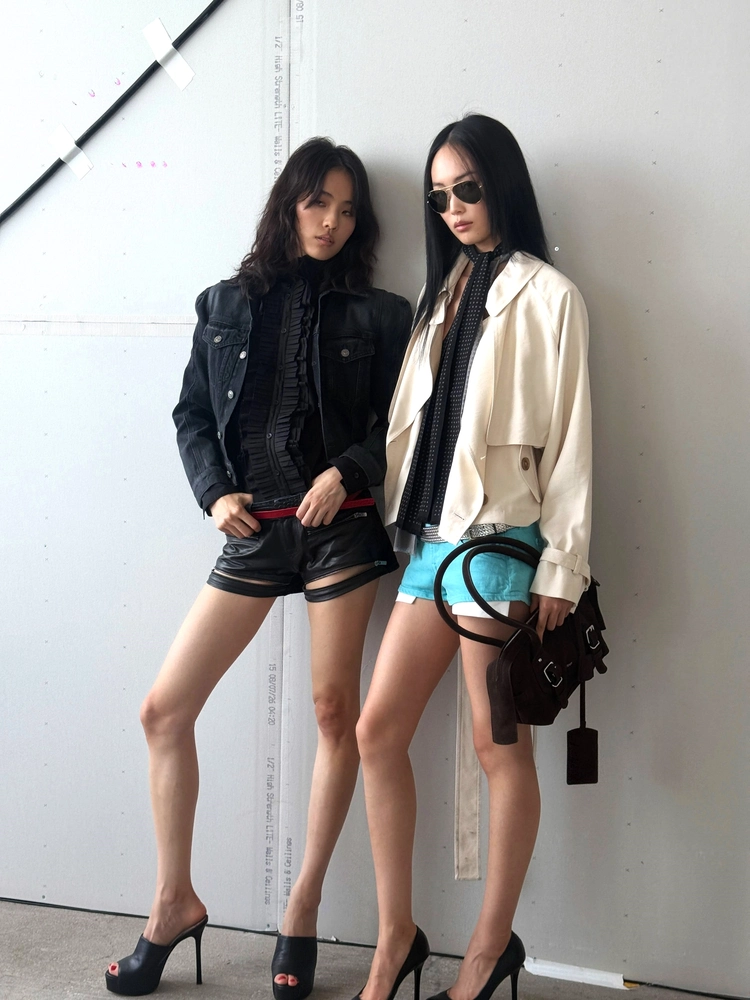
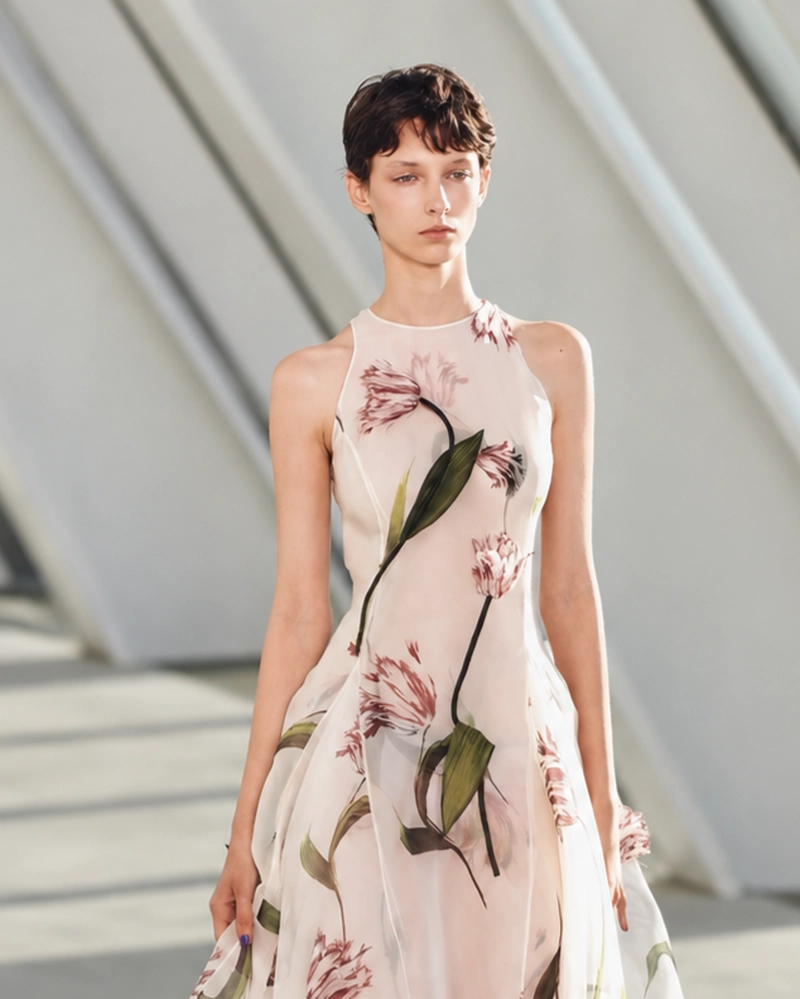
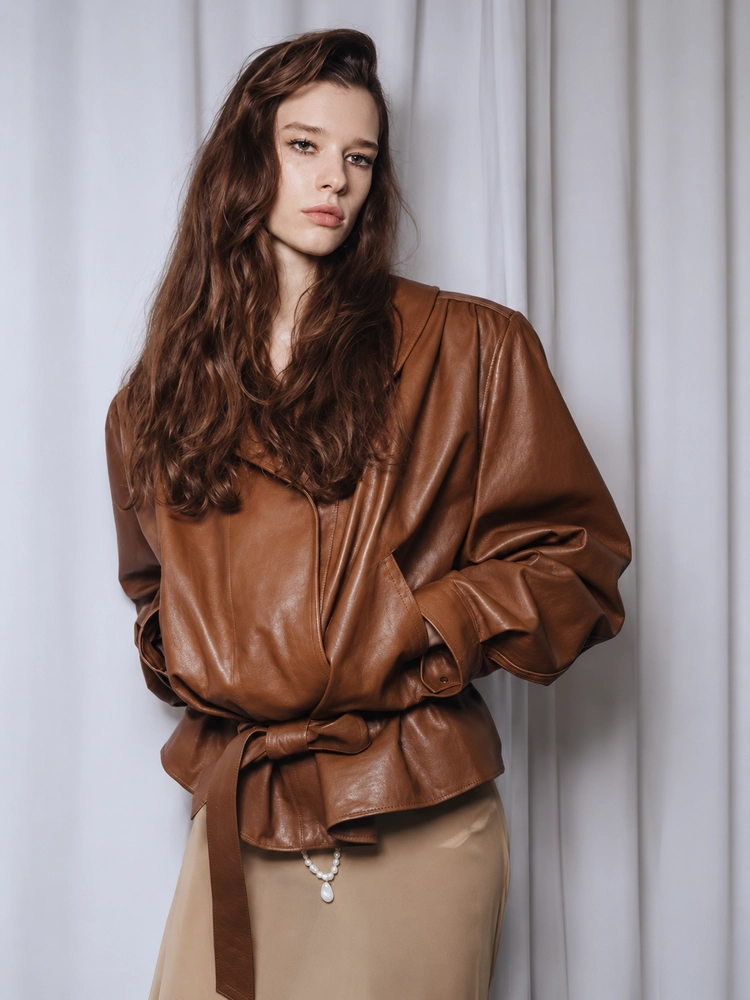
Translucent silk gives the collection its sense of air, allowing color and skin to appear through several layers at once. Leather carries a firmer physical presence, connecting the season to Butrym’s established language of sculptural power dressing. Crochet and lace bring the hand back into the picture, linking sensuality with craft and domestic tradition.
Elsewhere, feathers introduce movement around the body, fluttering with every step. A slick treated surface brings an entirely different tension, giving familiar motifs a sharper contemporary edge.
Each material seems to occupy its own emotional role.
Of all the runway images, one feels almost destined to become a Magda Butrym postcard: roses stuffed into the pockets of a translucent outer layer.
The rose has followed Magda Butrym for years. It appears as a three-dimensional motif, jewelry, ornament, and recurring emblem across the brand’s visual language. Here, the flower looks freshly gathered, carried close like something picked on the walk home.
That tiny gesture captures the collection beautifully.
Another memorable moment brought feathers into structured dressing, creating movement around an otherwise controlled form. The final passage leaned into a nostalgic polish through pearls, tights, and a 1960s-inflected beauty language, giving the ending the quality of an old family photograph with something quietly rebellious happening outside the frame.
These are the pieces that make Magda Butrym compelling beyond pure glamour. They contain stories.
Behind the poetry sits a highly intuitive business-minded designer. Magda Butrym has consistently spoken about watching women closely: what they wear, what they return to, what makes them feel powerful, and which pieces actually become part of their lives. Her collections grow from a compact group of ideas that can move between runway fantasy and commercial product.
The craft remains deeply connected to Poland. The brand has worked with local artisans across crochet, knitting, and embroidery, keeping traditional hand skills active inside a contemporary luxury system.
The first official NYFW runway came with real commercial weight. Magda Butrym remains an independent label, and the American market now plays a major role in the company’s growth. The permanent Mercer Street boutique followed a successful temporary SoHo presence, turning American demand into a long-term retail commitment.
Outerwear has developed into one of the brand’s important commercial categories, explaining the continued attention Magda Butrym gives to proportion, leather and sophisticated construction. Her H&M collaboration in 2025 generated another scale of visibility and was reported by the brand as nearly sold through by midday on launch day.
Now there is a New York store, an official NYFW runway, and an American customer already familiar with the rose, the shoulder, and the body-conscious glamour.
That may be the most beautiful thing about Magda Butrym right now. The bigger the world around the brand becomes, the more specific its woman appears: Slavic and cosmopolitan, nostalgic and provocative, wrapped in tradition while choosing every part of her own image.
Advertisement