Jacquemus has a peculiar talent for making fashion images feel instantly recognizable, even before the logo enters the frame. Through surrealism, wit and a sharp instinct for how pictures travel, Simon Porte Jacquemus has turned visual language into one of the house’s most effective marketing tools.
Fashion Marketing Became a Mirage at Jacquemus
Jacquemus has a peculiar talent for making fashion images feel instantly recognizable, even before the logo enters the frame. Through surrealism, wit and a sharp instinct for how pictures travel, Simon Porte Jacquemus has turned visual language into one of the house’s most effective marketing tools.
September 6, 2026
Advertisement
Advertisement


Before Jacquemus became exceptionally good at algorithms, it was exceptionally good at making a scene. In 2011, a 21-year-old Simon Porte Jacquemus and his friends arrived on Avenue Montaigne during Vogue’s Fashion’s Night Out wearing his clothes and staging a mock protest. There was little infrastructure behind the young label and even less access to the machinery of established luxury. What Simon could manufacture was an image: a group of unknown young people occupying one of Paris fashion’s most symbolic streets and loudly asking to be seen. Years later, he would describe those early days almost literally in those terms: “I needed to be seen and in this world.”
That instinct predates any marketing strategy. Jacquemus learned early that fashion communication begins with visual friction, a familiar environment interrupted by something that seems slightly out of place. The same principle had already helped his first collection circulate through Facebook and Tumblr before the French press came calling. Once the brand gained money, reached and increasingly sophisticated production, the scale of interruptions changed. The basic impulse did not. Jacquemus still tries to make the eye stop before asking the viewer to know anything about the product.
It is a useful distinction because much of the house’s later success is described through social media. Instagram certainly amplified Jacquemus, yet the platform alone cannot explain why its images proved so compatible with digital circulation. He was designing pictures that wanted to travel.
One Object, One Impossible Idea
Many of the most recognisable Jacquemus images can be reduced to an almost childishly simple proposition, whether it is an oversized hat, a microscopic handbag, a bag transformed into a vehicle or a bathroom expanded to architectural proportions. Each idea is visually immediate enough to register within seconds, while the distortion of scale or function gives the image just enough absurdity to stay in the mind.
La Bomba established that logic particularly well. For Spring 2018, Jacquemus enlarged a straw hat until it occupied almost as much visual space as the body beneath it. Le Chiquito then pushed in the opposite direction, shrinking a handbag until its questionable functionality became part of the joke. Both products turned proportion into conversation.
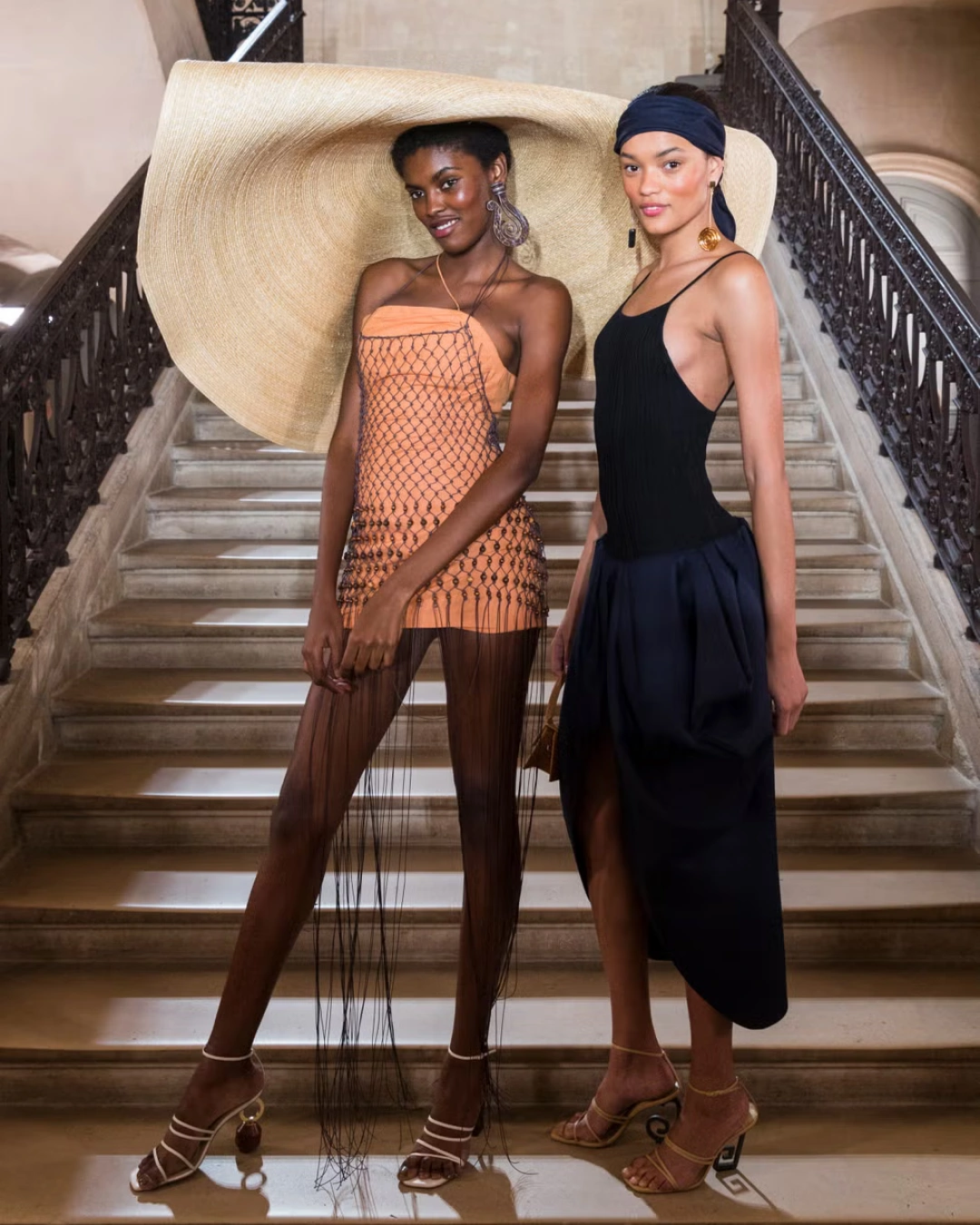
Fashion usually uses silhouette to organise the body; Jacquemus stretches the same principle into communication, pushing a familiar accessory toward an extreme until its outline becomes the message. At that point, the product begins to perform work traditionally assigned to a logo.
Simplicity also strengthens the marketing strategy. “Look at this tiny bag” travels easily. So does “look at this handbag driving through Paris.” Seeing and sharing sit unusually close together.
There is surrealism here, although Jacquemus keeps it accessible. The house rarely constructs a dense fantasy universe. A familiar object stays recognisable while one rule around it, its scale, function or setting, suddenly collapses.
Reality, Edited by One Impossible Detail
That formula reached its sharpest digital expression in April 2023, when gigantic Le Bambino bags appeared to move through Paris traffic. Orange, chocolate and pink versions had windows, wheels and apparent passengers, their familiar handbag silhouette transformed into something resembling public transport.
The footage looked convincing enough to provoke an immediate question: had Jacquemus actually built them? The sequence was digitally created by Ian Padgham of Origiful, yet its effectiveness depended less on CGI itself than on how little reality had been altered.
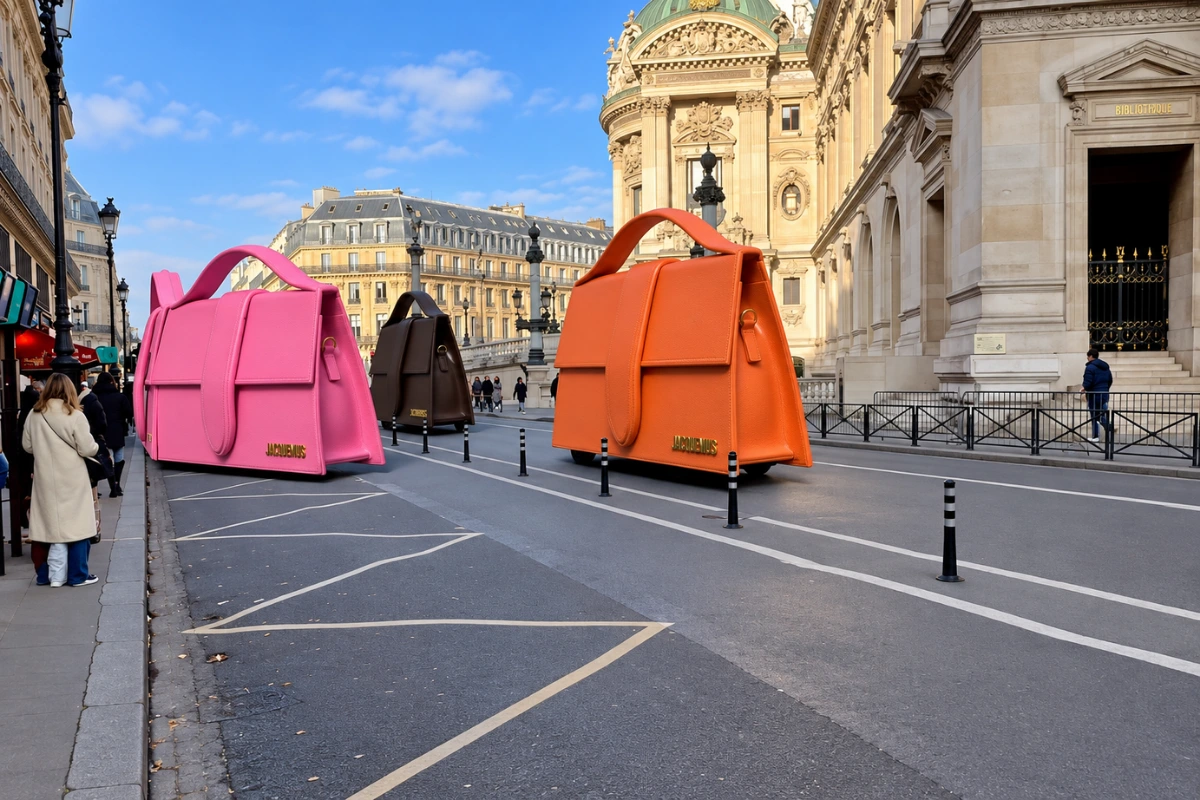
Paris remained Paris. Traffic behaved normally. Buildings retained their scale. Only the handbag had stopped obeying physics and started playing its own jungle rules.
Jacquemus rarely needs to invent another universe when editing ours with one impossible detail creates a stronger interruption. That slight hesitation between recognition and disbelief encourages the viewer to replay, zoom, read comments or send the image onwards. Curiosity becomes part of distribution.
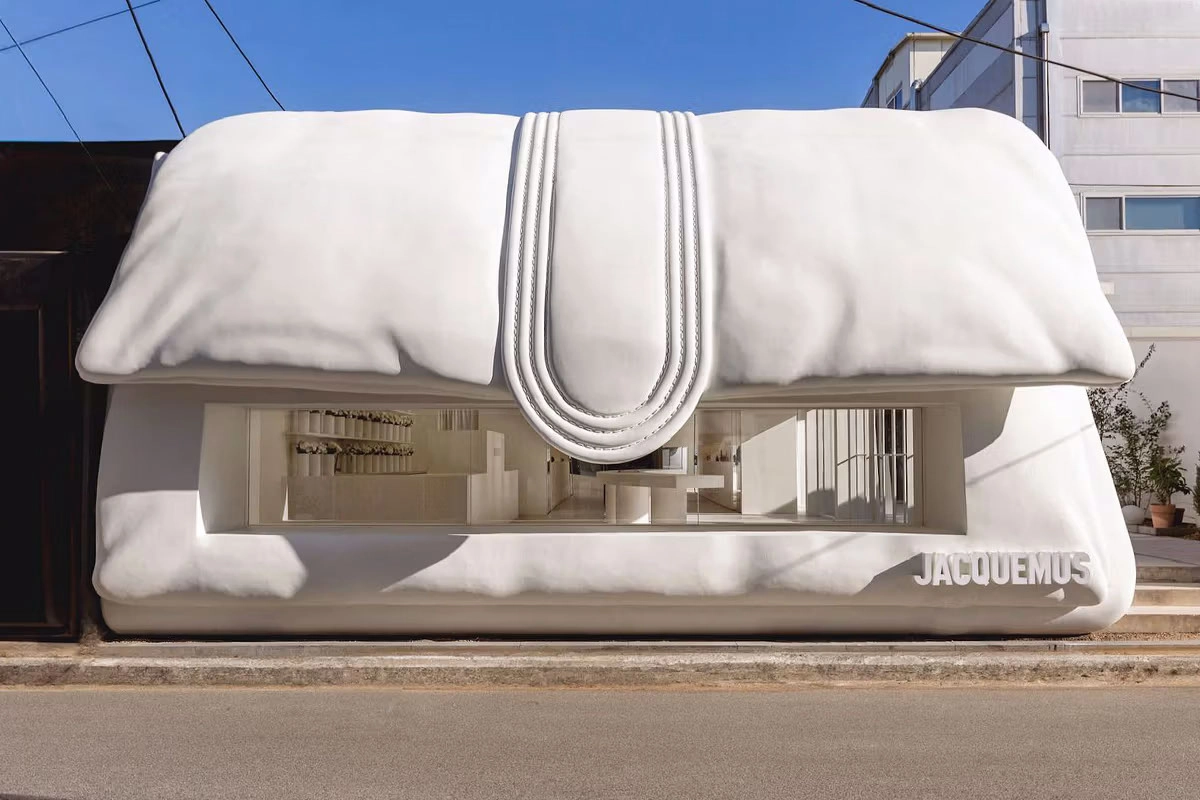
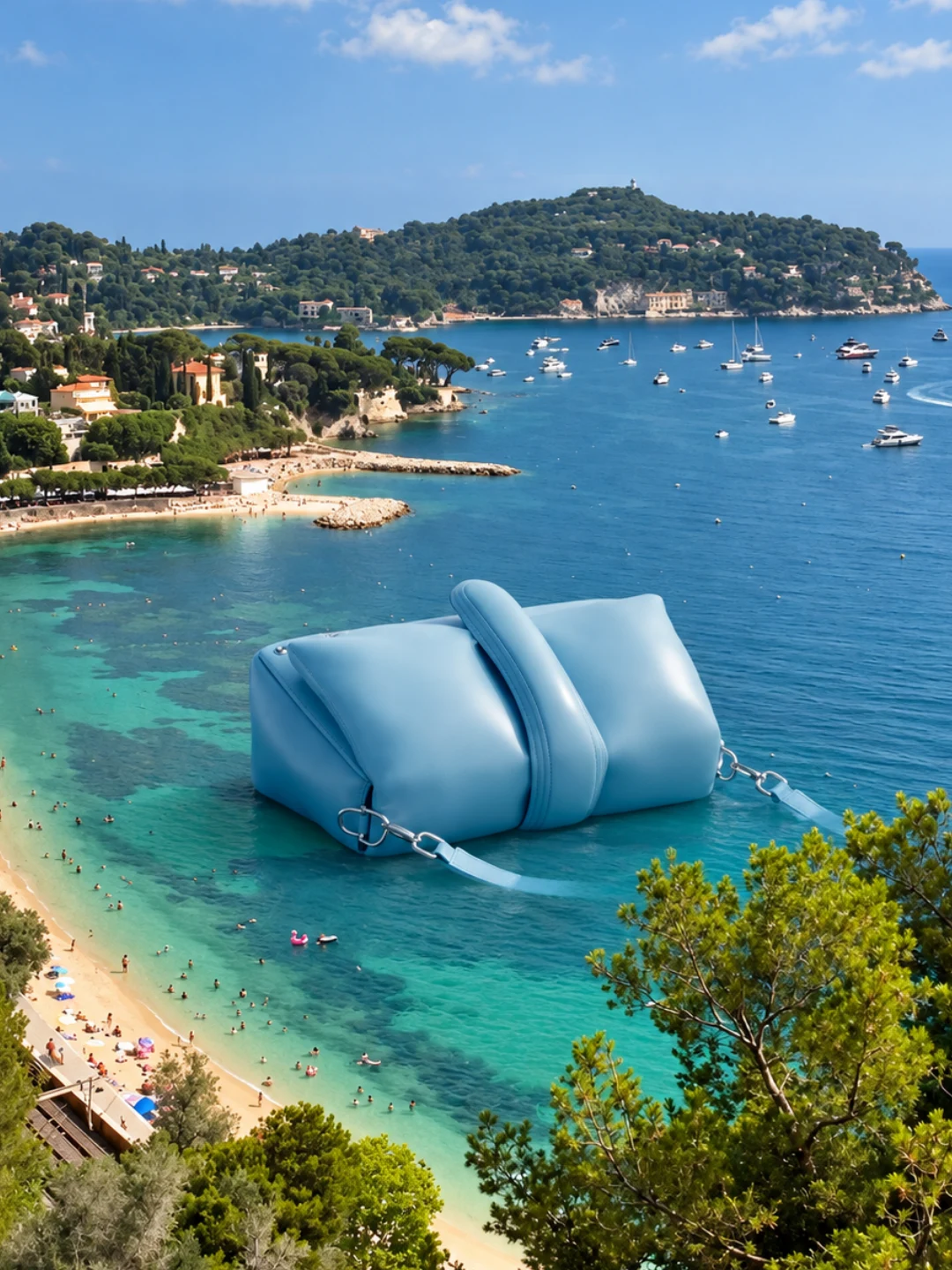
Later variations placed Le Bambino on water and inside other impossible everyday scenarios, but the underlying equation stayed primitive: recognisable object, recognisable world, one absurd event.
A Store That Photographs Before It Sells
Once that visual language entered physical retail, the same manipulation of scale and familiarity followed it. The Jacquemus 24/24 concept transformed luxury shopping into a wall of vending machines stocked with handbags, first in Paris and later in Milan and London.

At Selfridges in 2022, Le Bleu pushed the idea further. The Corner Shop became a monochromatic blue bathroom filled with oversized sinks, a giant toothpaste tube and an enormous glass of water, while another installation borrowed from the visual language of swimming-pool changing rooms.
Seen through a phone, Jacquemus stores and pop-ups reveal how closely the house treats interiors and fashion imagery. Temporary spaces such as Le Bleu or the 24/24 vending-machine concept are composed almost like campaign sets, with strong colour, clean geometry, repetition and oversized props making the architecture immediately readable inside a rectangular frame. The physical visitor experiences the installation once; Everyone else encounters their second life through photographs, reels, press coverage and reposts.
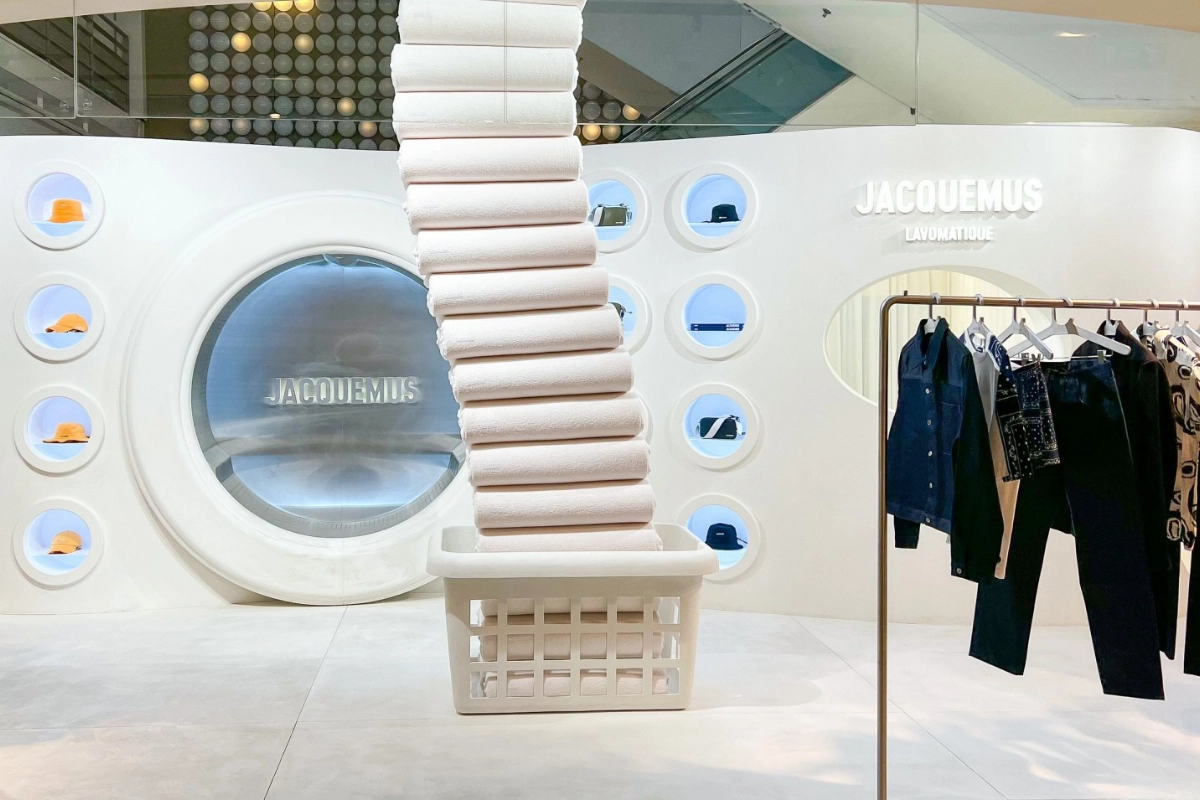
Retail consequently becomes a content-producing space. Even the giant toothpaste tube obeys the same visual grammar as Le Chiquito: proportion becomes elastic, and an ordinary object is pushed just far enough into absurdity.
Jacquemus Turned Landscape Into Brand Memory
The runway allowed Simon to stretch the same approach across an entire horizon. In 2019, a bright pink path cut through lavender fields in Provence. A year later came a wooden runway through wheat, followed over subsequent seasons by salt flats, Versailles and other landscapes where the setting became inseparable from the collection.
Hundreds of runway photographs emerge from every show, yet Jacquemus frequently leaves behind one dominant image. Models become a line crossing a field, clothes turn into fragments of colour and the runway itself reads almost as a graphic mark across the landscape.
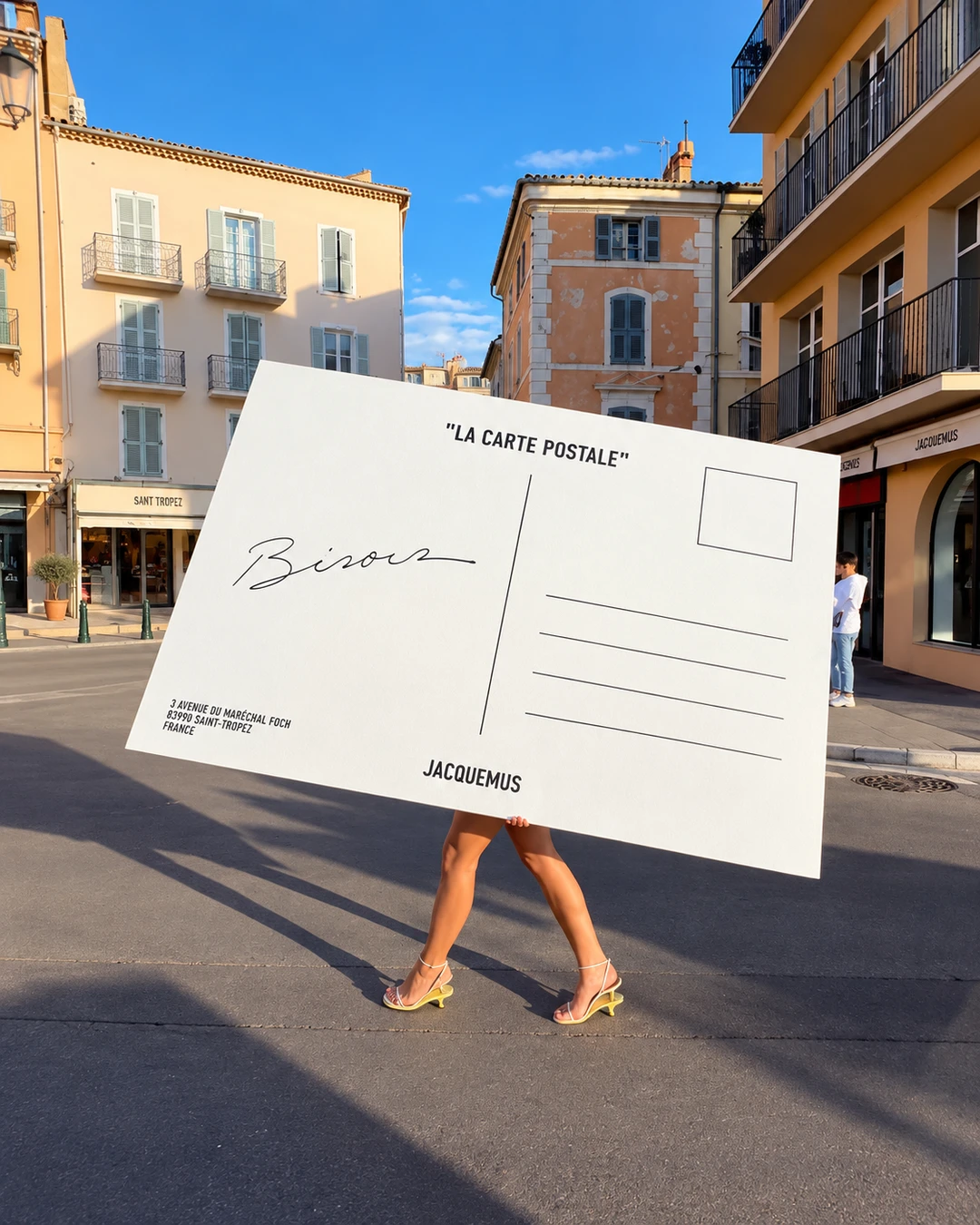
That image survives particularly well once the show leaves the runway calendar. It can become an editorial opener, thumbnail, Instagram post or archive reference, compressing an entire collection into one visual memory.
Repeated use of Provence, Mediterranean light, fields, blue water and southern French architecture makes those images accumulate meaning. These began as autobiographical references to Simon’s upbringing; Over time, they became Jacquemus codes.
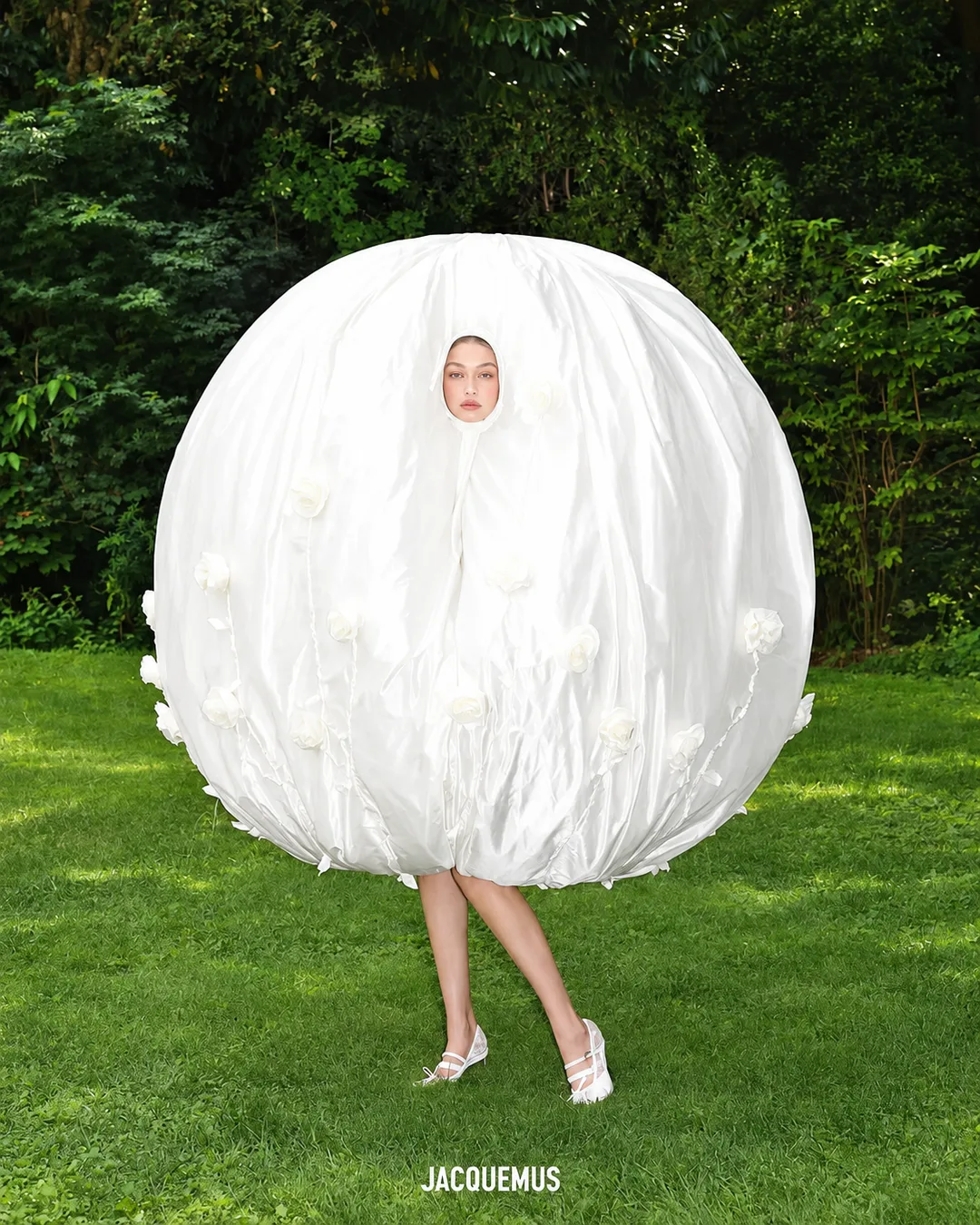
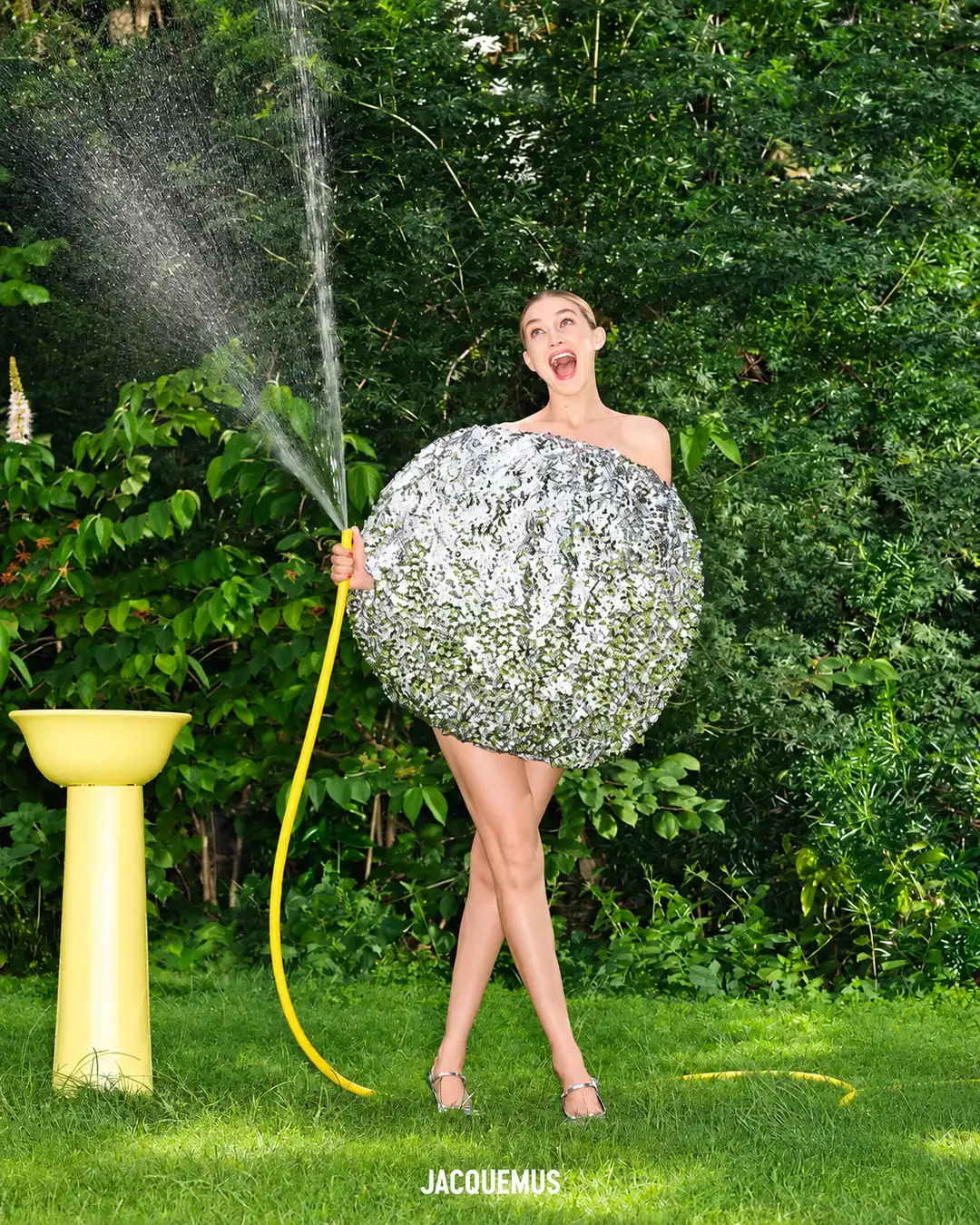
An aesthetic can be adopted for a season, while a visual code grows stronger through repetition. A field recalls earlier shows, Mediterranean light activates memories of previous campaigns, and each returning element allows a new Jacquemus image to inherit part of the emotional weight of those that came before.
Even when Jacquemus moved into the intimate Art Deco apartment of Auguste Perret for Spring 2025, the setting still carried the image. Spectacle had simply changed scale.
When Fame Entered the Family Album
By the time celebrities began orbiting Jacquemus in earnest, the brand had already built a world vivid enough to receive them without surrendering its own identity. A famous face could enter the frame, yet the sunlight, humour, proportion and slightly dreamy intimacy still belonged to Simon. Fame became another character inside the Jacquemus universe instead of replacing it.
That balance became especially poignant with the Le Valérie campaign, released in November 2025 for the handbag named after Simon’s late mother. Charlotte Le Bon appears as a mother moving through fragments of ordinary domestic life, from returning home with groceries to putting on lipstick or struggling with a bag caught on a door handle. The camera sits unusually low throughout, recreating the world from a child’s point of view, as though Simon were watching Valérie again from somewhere near the floor. '
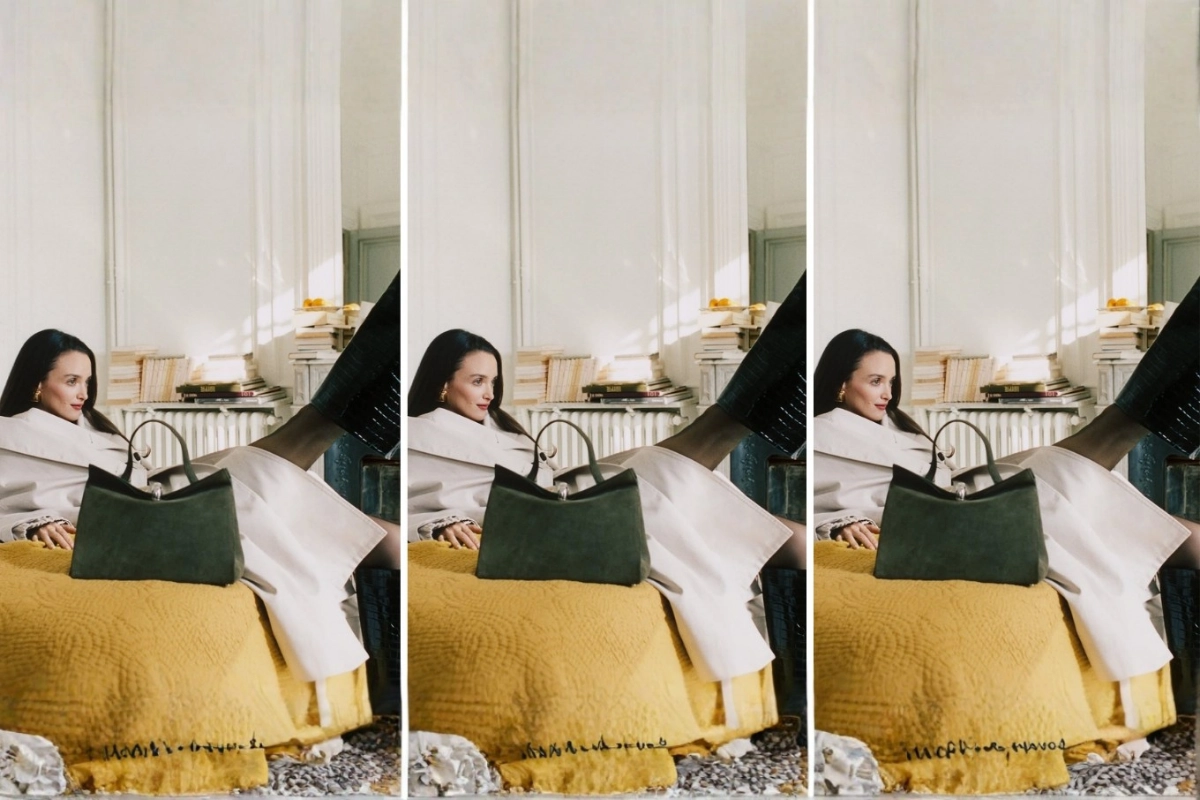
The choice turns a product film into something closer to recovered memory. The bag remains present, yet it slips naturally through gestures, furniture and little inconveniences instead of demanding the centre of every shot. More importantly, the child-height camera gives the woman a particular scale: she appears glamorous, funny, slightly mysterious and larger than life in exactly the way a mother can appear in childhood. Years earlier, Simon had already described seeing women through “a kid’s eyes”; here, that idea became the literal viewpoint of the campaign.
Then, in January 2026, the family album opened one page further when Jacquemus named Liline Jacquemus, Simon’s grandmother and Valérie’s mother, as the house’s first official brand ambassador. She was photographed holding Le Valérie, quietly connecting grandmother, daughter and grandson through a single object. What could have been a conventional ambassador announcement instead continued a story the audience had already been invited into.
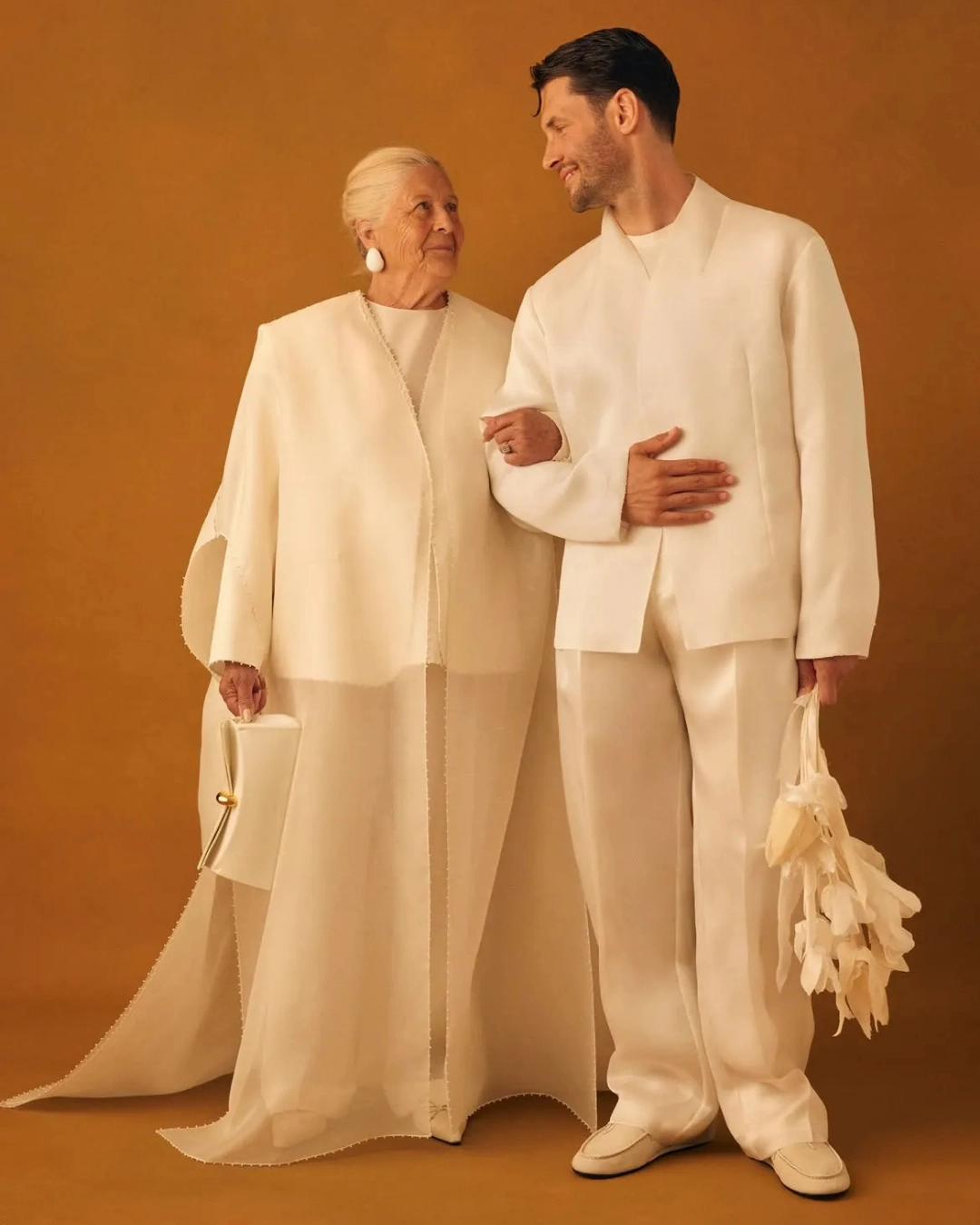
What could have been a conventional ambassador announcement suddenly read like a family photograph with a product placed inside it.
Jacquemus has worked with highly recognisable figures, but Simon’s strongest images tend to ask them to enter an existing emotional universe rather than replace it. Fame becomes another texture in the picture, alongside sunlight, memory, humour and place.
The marketing strategy becomes more persuasive precisely because family existed before branding, and personal history existed before content. Jacquemus simply learned how to frame both so convincingly that the commercial image could still carry the warmth of a private one.
The Jacquemus Marketing Strategy Is Visual Memory
Jacquemus has built its identity by making surprise feel consistent. The scale changes, the setting shifts, the technology evolves, yet the house keeps returning to the same instinct: take something familiar, disturb it just enough, then frame it so clearly that the image belongs to Jacquemus almost immediately. That balance between simplicity and absurdity has become one of Simon Porte Jacquemus’s sharpest signatures.
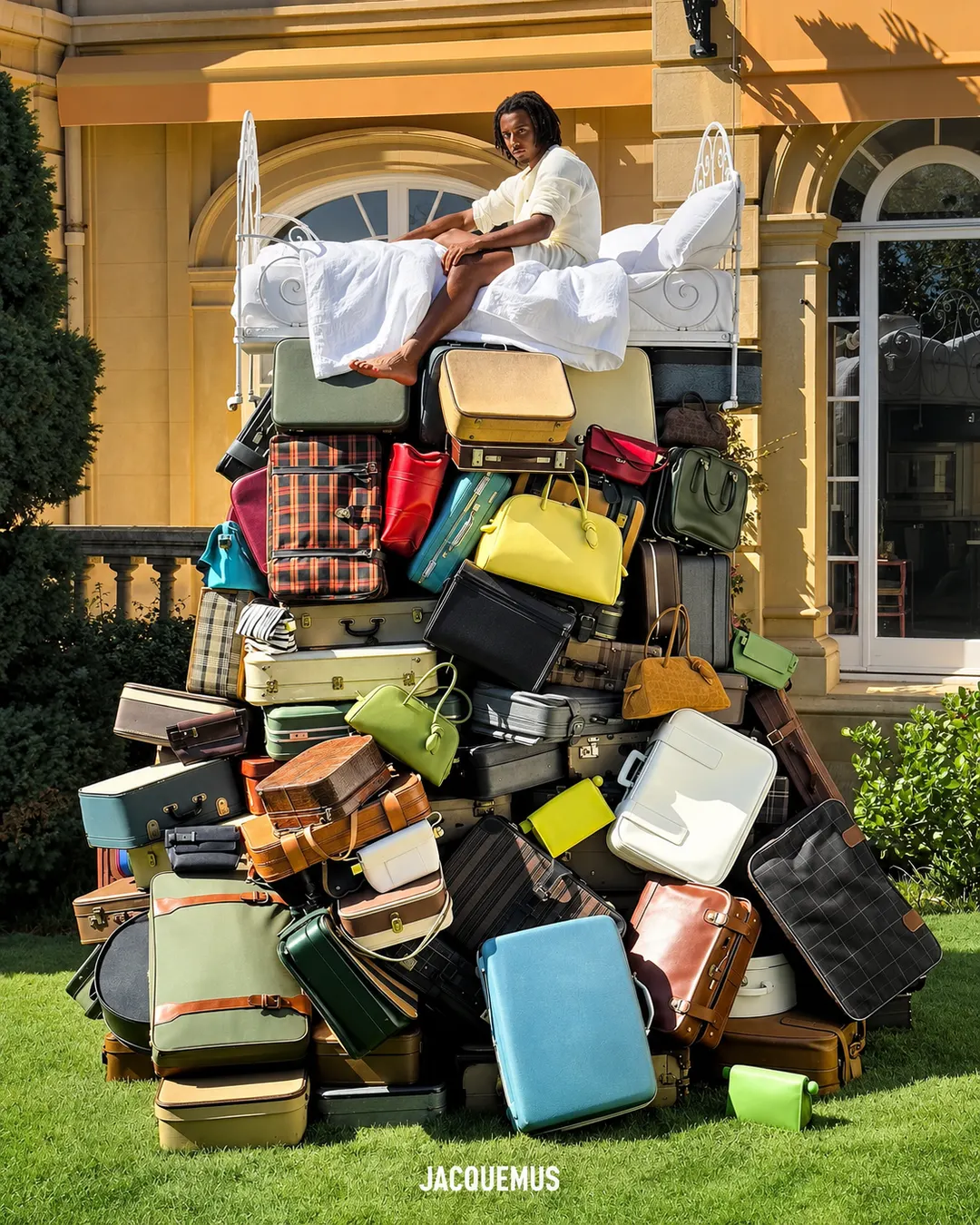
The more interesting question now is where that instinct goes next. After miniature bags, monumental accessories, surreal retail spaces, impossible vehicles and landscapes turned into brand memory, Jacquemus has already stretched its visual language across fashion, architecture, cinema and digital illusion. The house has made unpredictability part of its identity, which means repetition would be the one thing audiences would notice fastest.
So what happens when there is still more "yet to come" that Jacquemus has to surprise us all over again?
Advertisement