MENU
Close





Why does Jacquemus keep slipping beyond fashion’s established calendar, yet still manage to command the season’s attention? What does Simon Porte Jacquemus gain from arriving on a date that belongs entirely to him?
Why does Jacquemus keep slipping beyond fashion’s established calendar, yet still manage to command the season’s attention? What does Simon Porte Jacquemus gain from arriving on a date that belongs entirely to him?
August 5, 2026
Advertisement
Advertisement


During Fashion Week, attention moves quickly from one show to the next. A collection may dominate the conversation for an hour before another venue, another front row and another image take its place.
Yet Jacquemus interrupts that rhythm. A separate date gives the house room to build an occasion around the collection, instead of fitting the collection into an already crowded programme.
For several years, Jacquemus presented outside the official Paris Fashion Week schedule before returning to it in January 2025. That return did not signal a permanent commitment to the conventional calendar.
Some collections appear within Fashion Week, while others are shown just beyond it. The house stays close enough to benefit from the industry’s concentration in Paris, yet far enough to avoid competing for the same moment of attention.
Simon Porte Jacquemus treats the calendar as a flexible tool. He enters it when the timing serves the collection and steps outside it when another date gives him greater control over how the show is experienced.
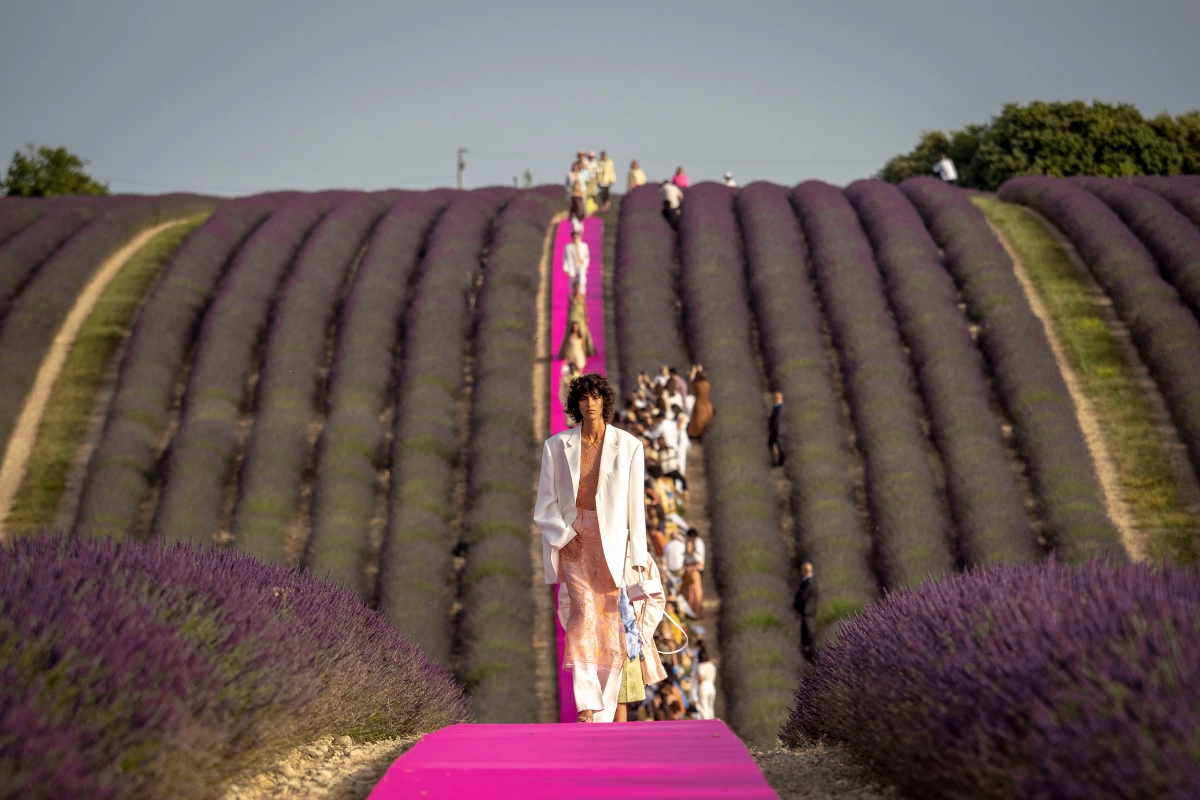
Before the first model crossed the pink runway at Valensole, the lavender field had already established the scale of Le Coup de Soleil. Its endless rows, saturated purple and Provençal heat expanded the collection’s bright colours and elongated proportions into one continuous image. The landscape gave Jacquemus a visual language that a neutral runway could never produce.
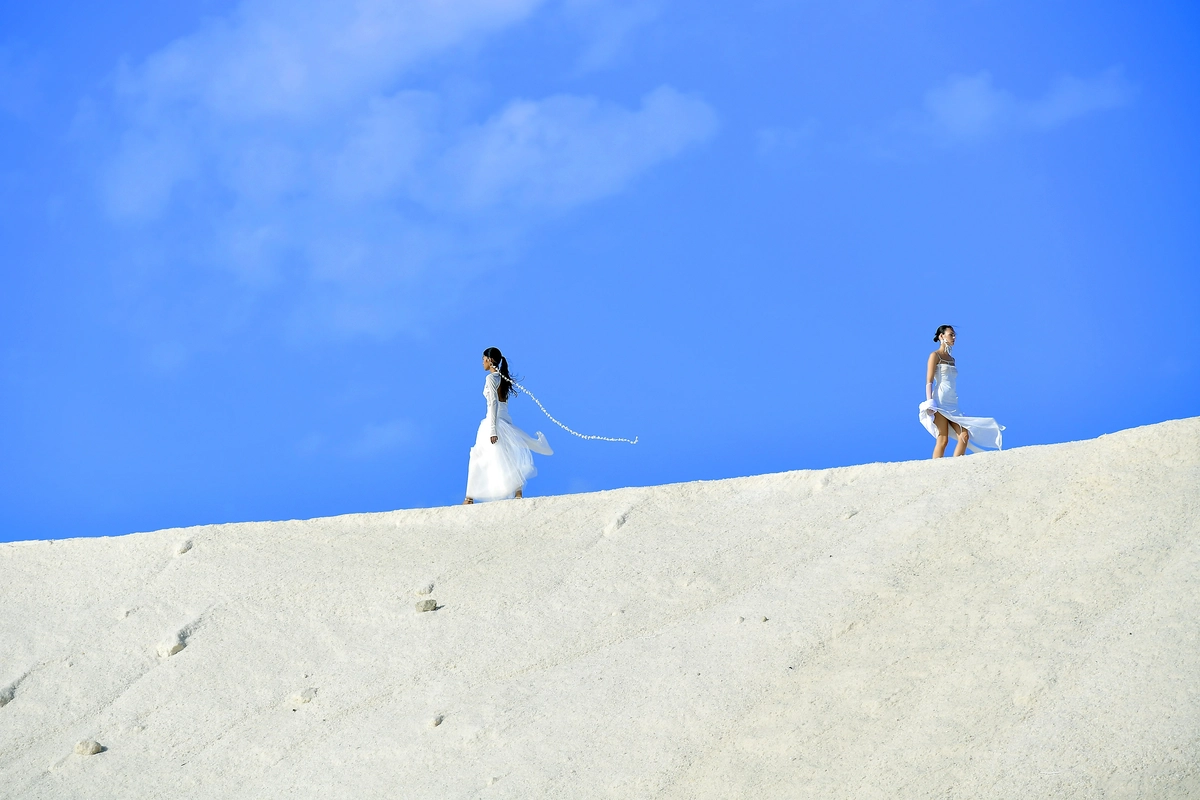
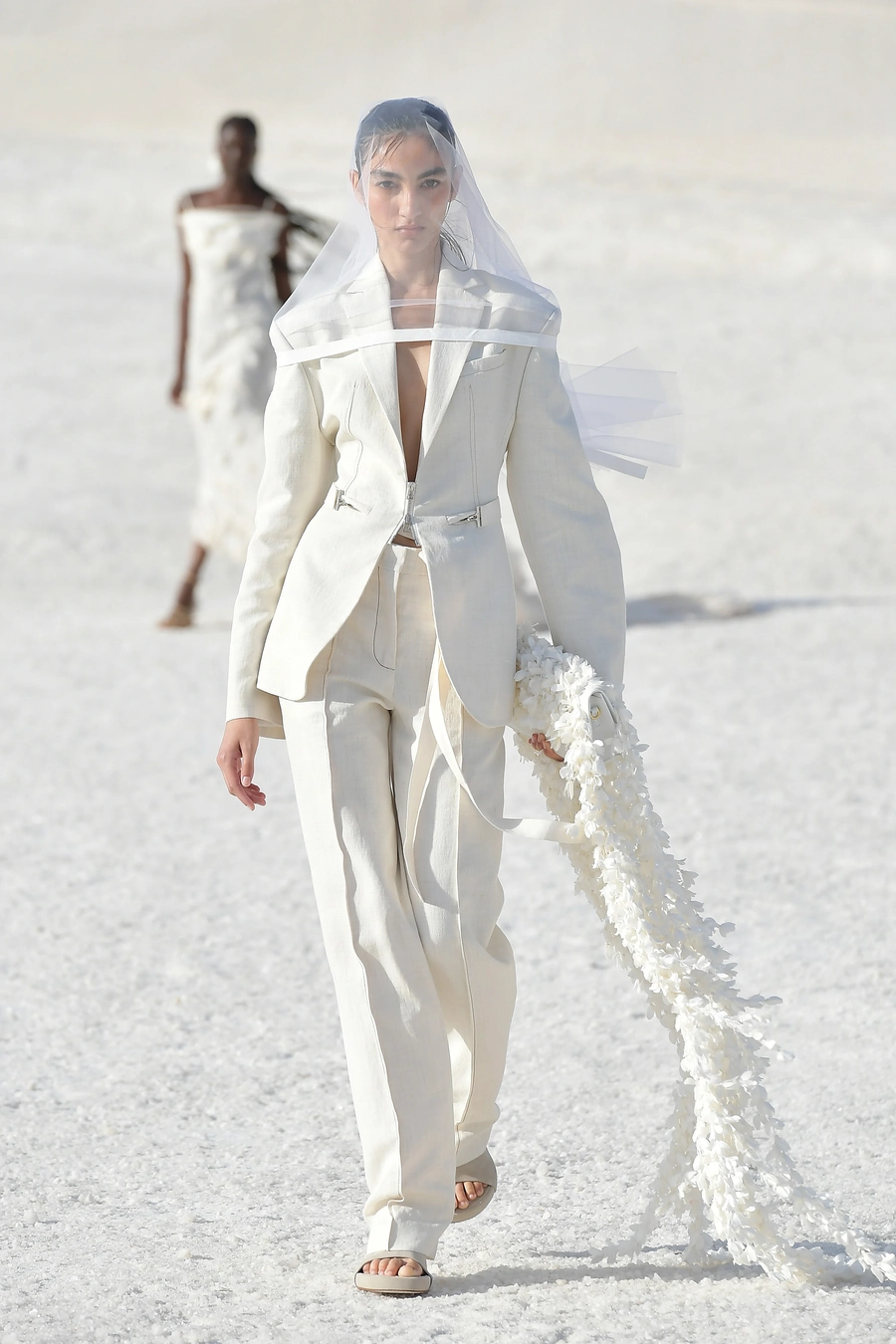
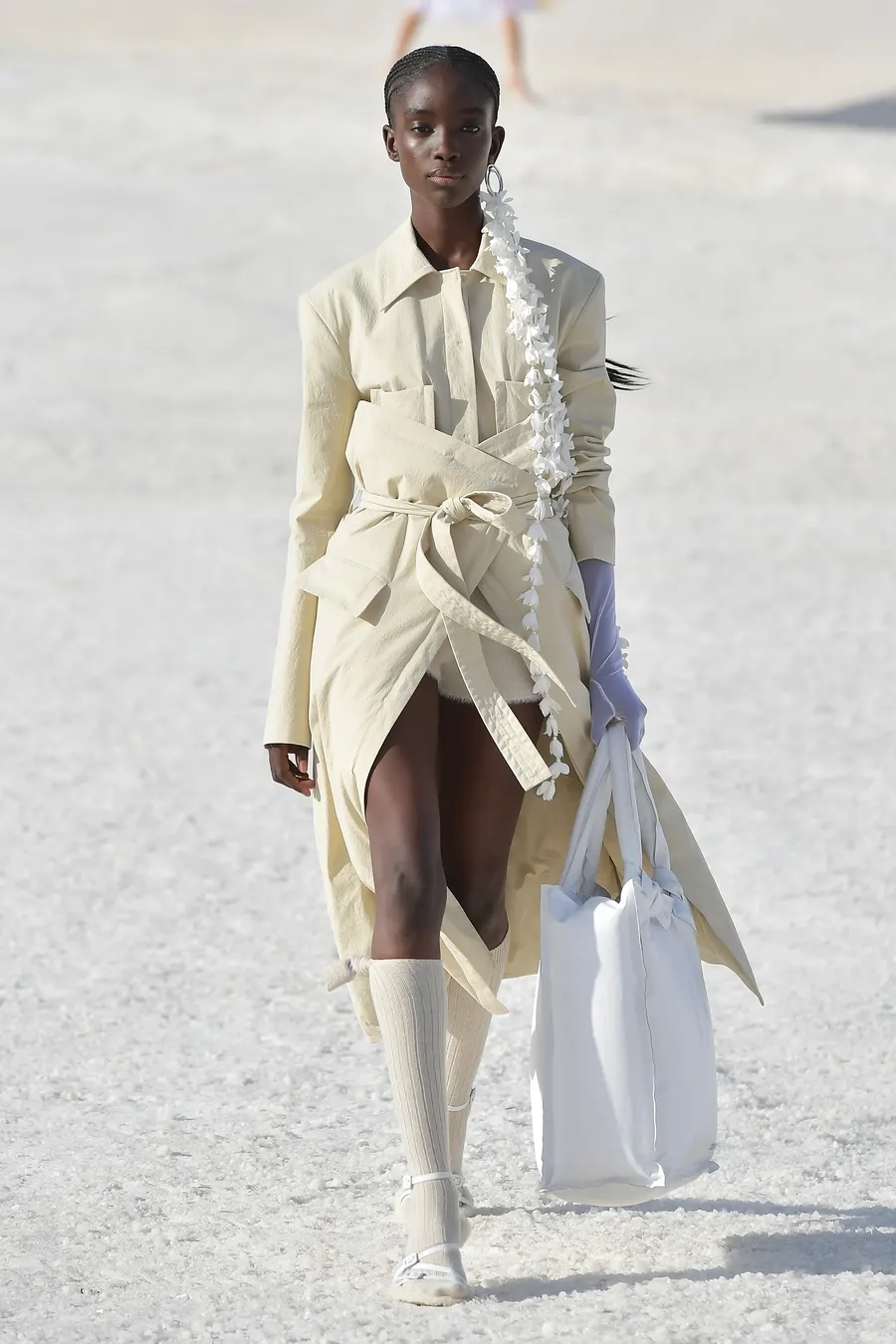
The salt mountains of Camargue imposed a colder kind of clarity on Le Papier. White tailoring, wrapped forms and pale neutrals emerged against a terrain that resembled the blank page behind the collection’s name. Each shape appeared sharper because so little competed with it.
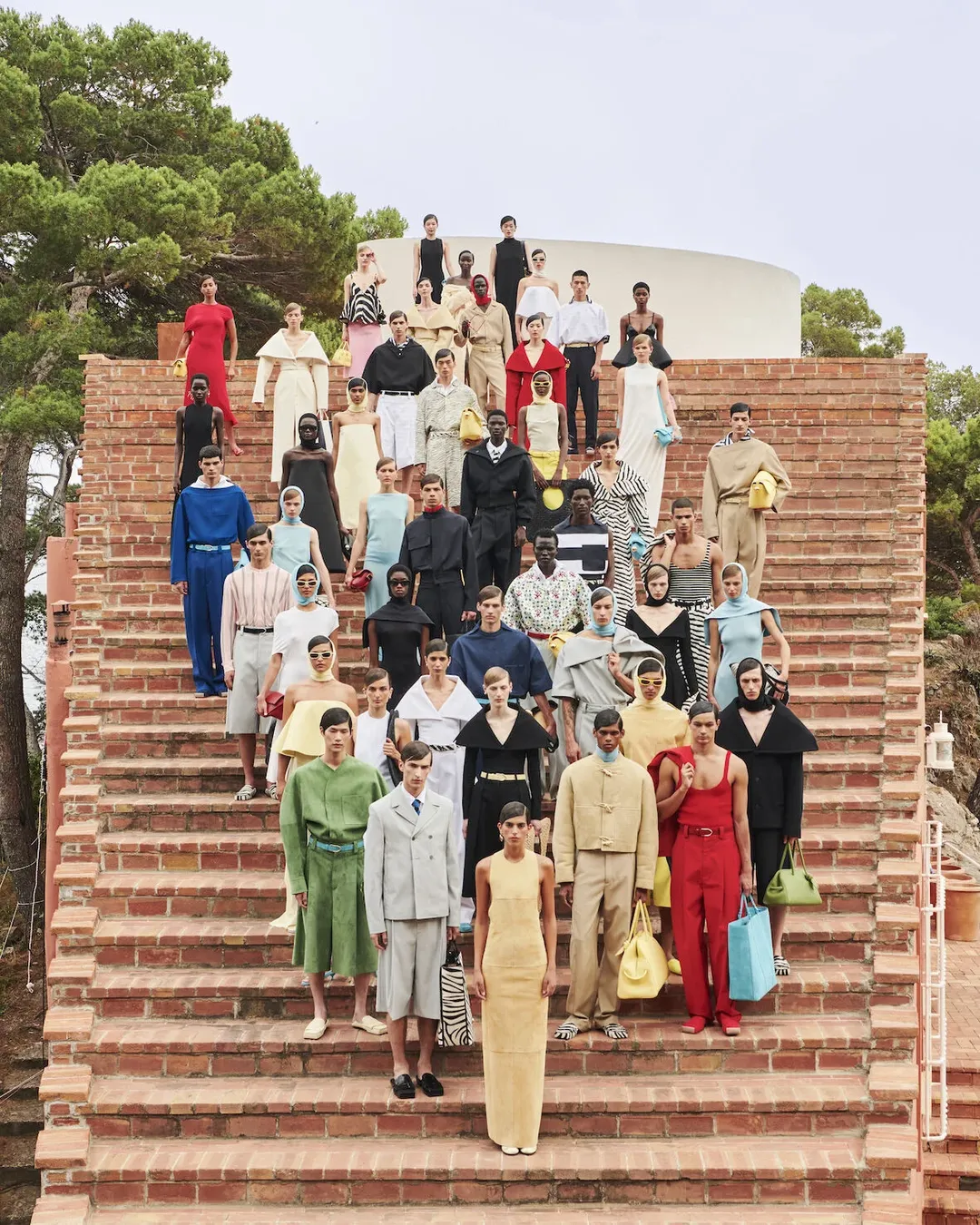
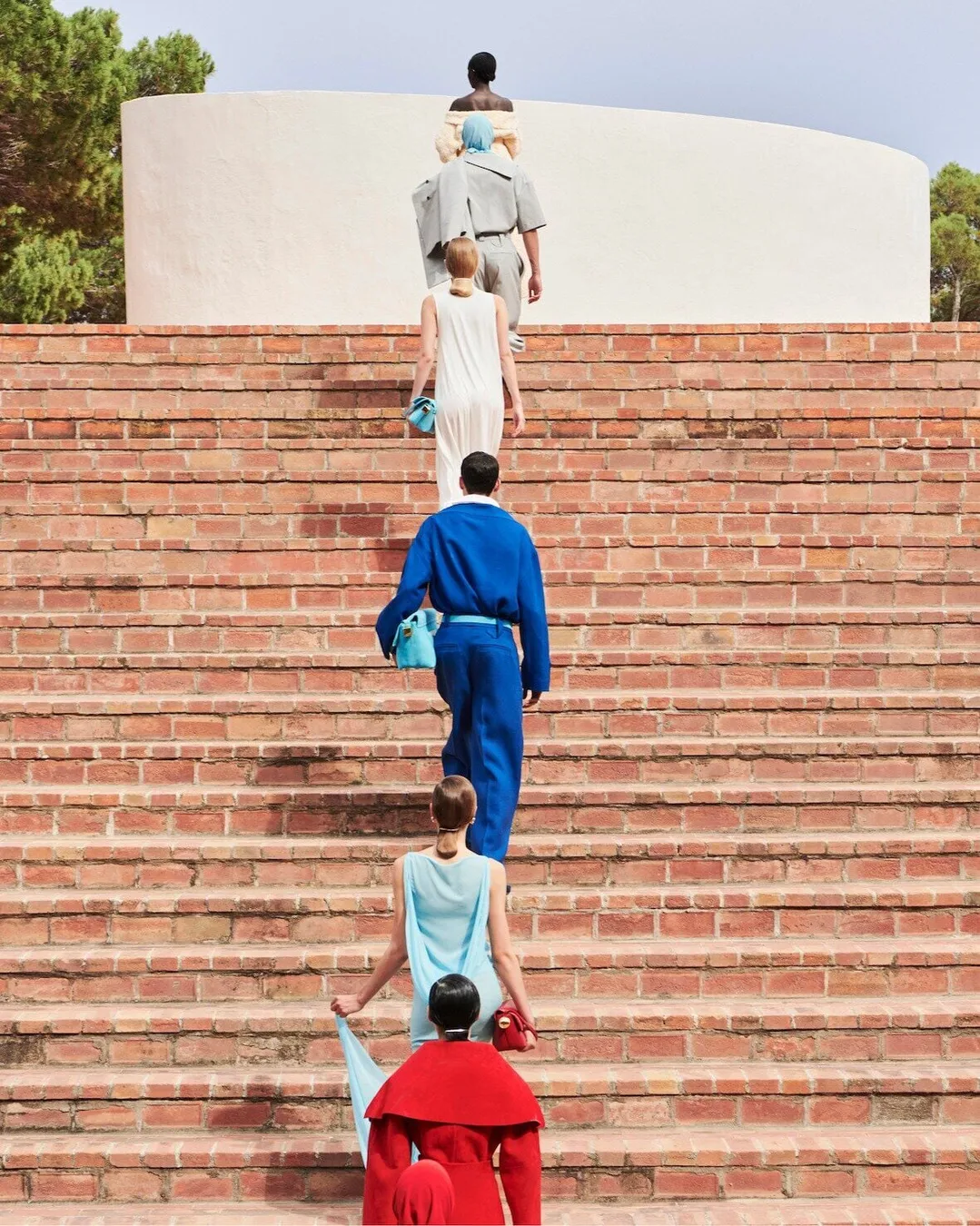
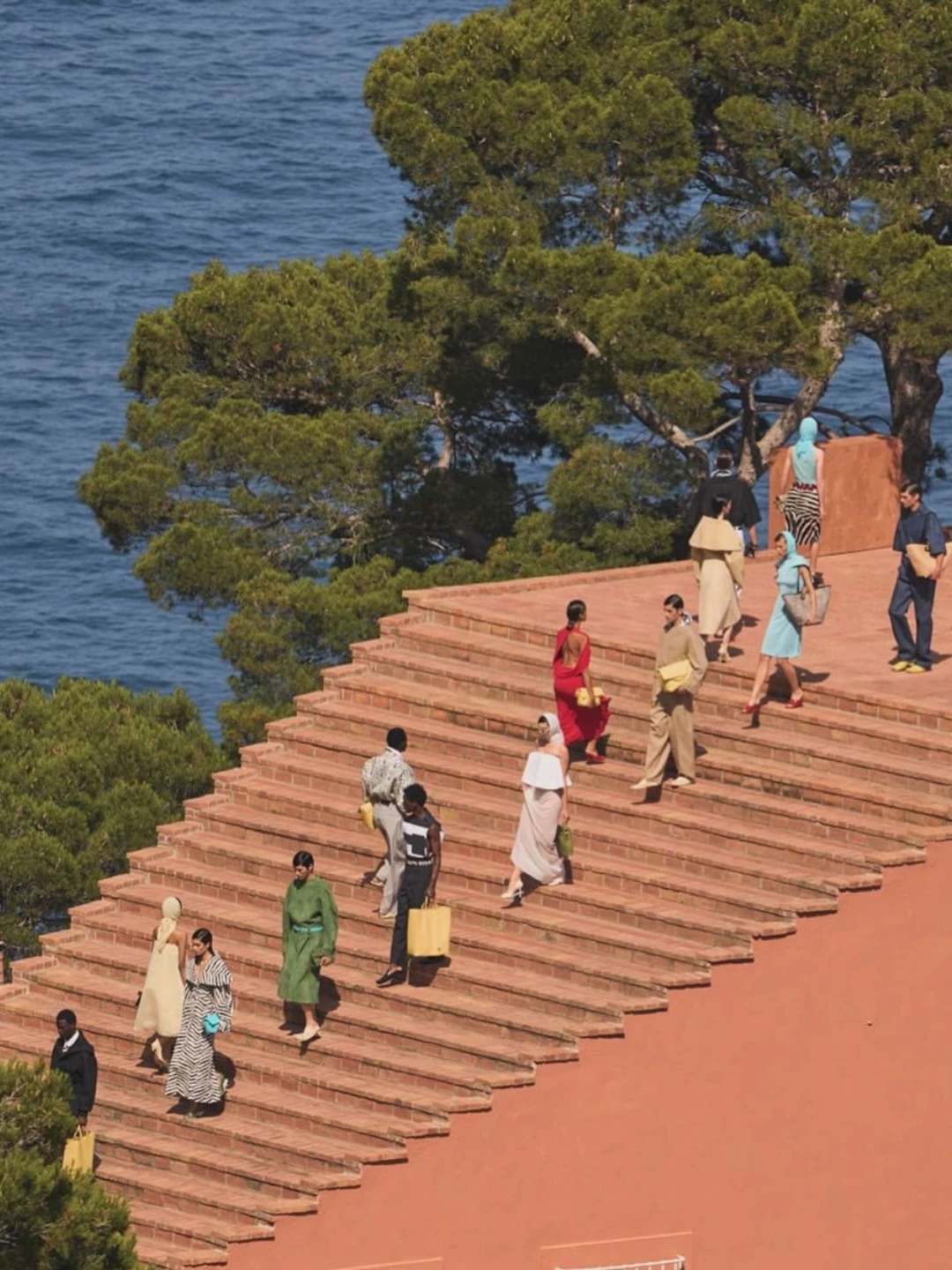
Casa Malaparte placed La Casa under different pressure. Its red geometry, steep rooftop steps and exposure to the Capri coastline made every entrance resemble a cinematic frame. The collection responded through sculpted proportions, precise blocks of colour and a Mediterranean sensuality contained within strict lines.
A conventional venue can be adapted to almost any collection. These locations arrive with their own light, architecture, climate and cultural memory. Simon Porte Jacquemus uses those conditions to define how clothes should be seen, photographed and remembered. By the time the opening look appears, the location has already introduced the collection.
Under the summer light of Valensole, the pink runway of Le Coup de Soleil cut through rows of lavender with almost unnatural precision. The image immediately entered Jacquemus’s visual mythology, yet its force came from something more personal than spectacle. Simon Porte Jacquemus grew up in the South of France, where landscape was part of everyday life long before it became a runway device. The heat, open fields and saturated colours belonged to his memory before they belonged to the brand.
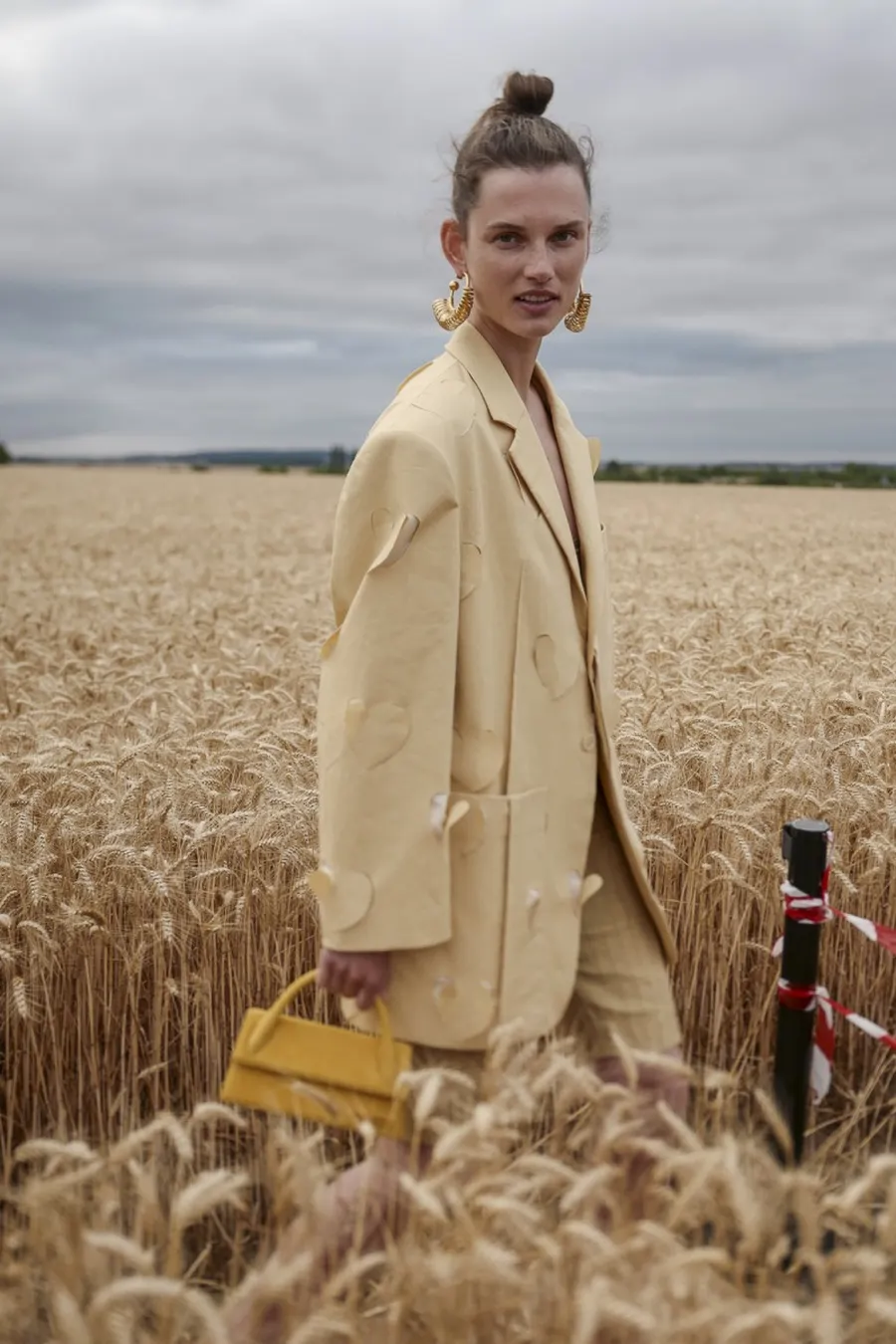
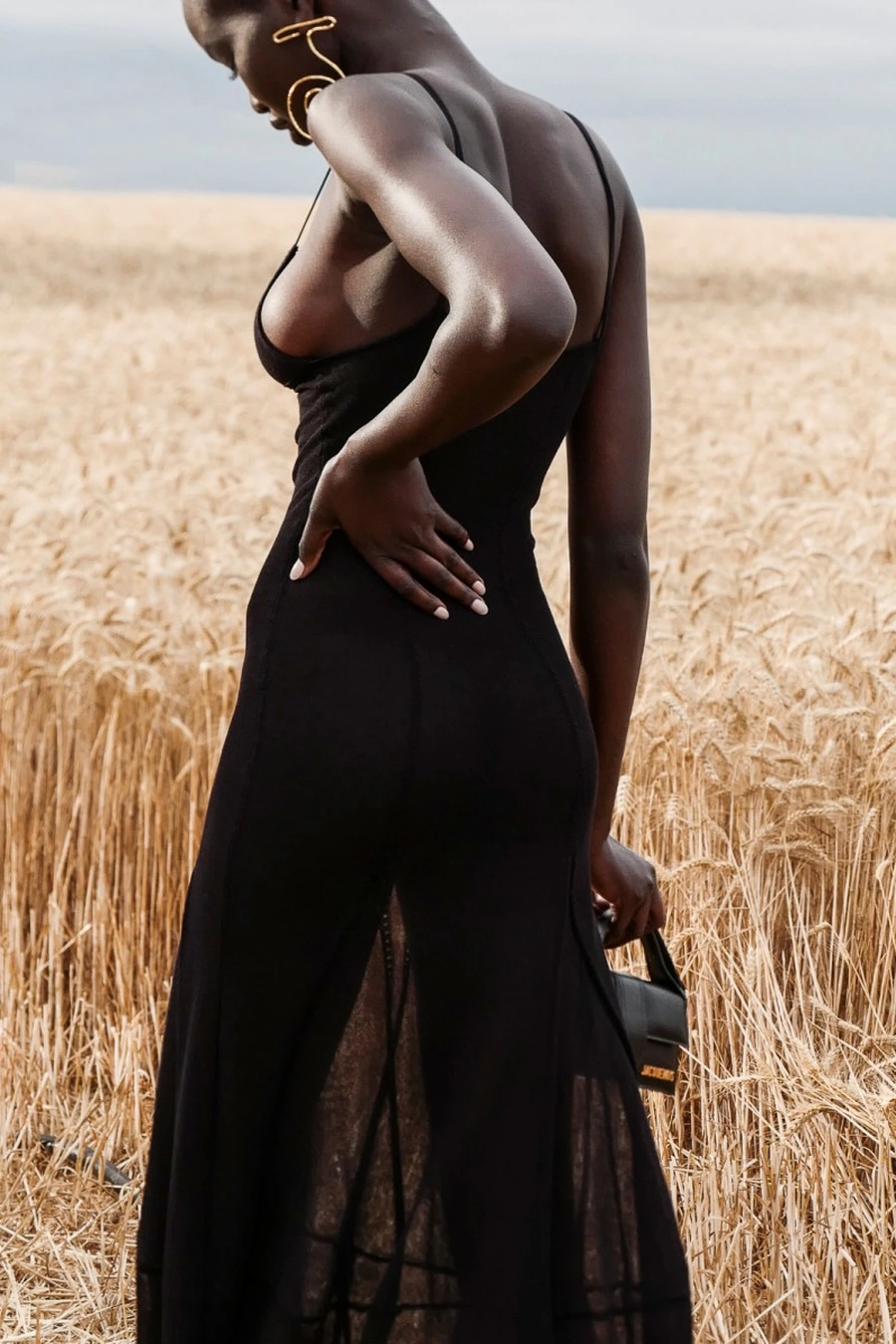
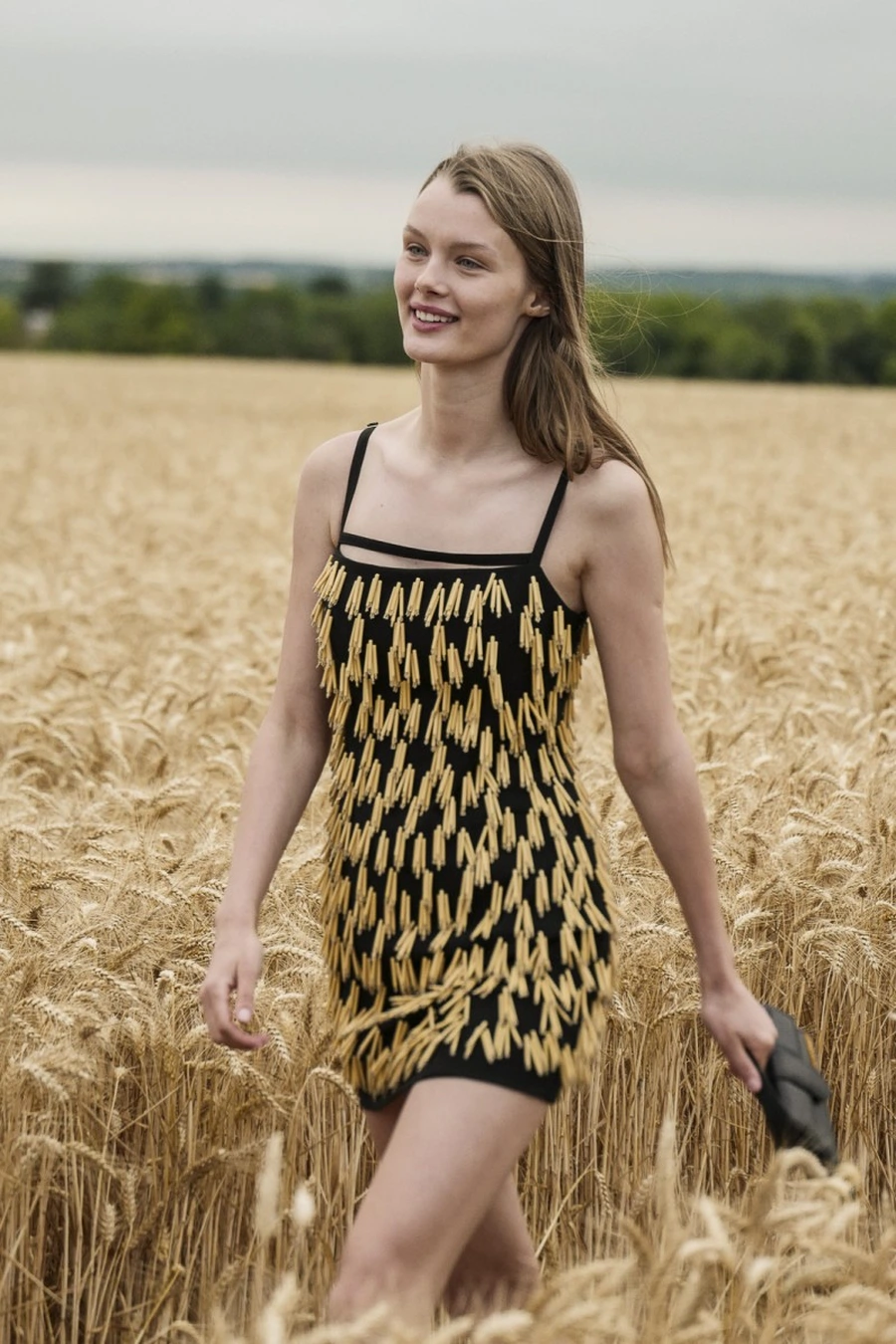
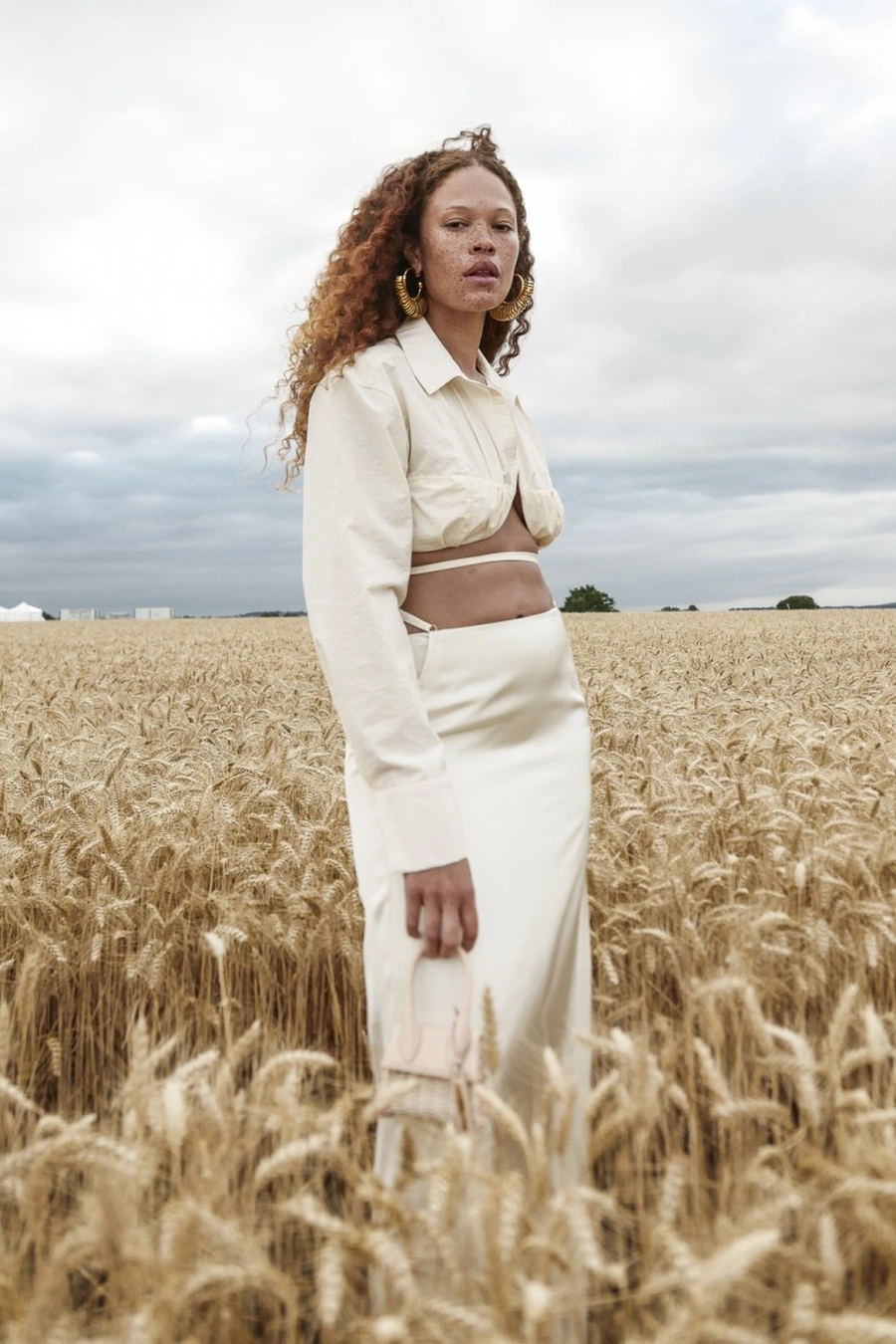
A year later, L’Amour moved through a wheat field near Paris, carrying the same rural intimacy into a softer register. Wooden chairs, linen-covered tables and models walking between tall crops made the show resemble a wedding, a family gathering and a harvest celebration at once. Jacquemus often returns to scenes that feel familiar enough to have been lived, then enlarges them until they acquire the scale of fashion imagery.
Across these shows, the countryside never remains fixed as nostalgia. Valensole offered brightness, sensuality and excess, while the Camargue salt flats gave Le Papier a severe and almost unreal emptiness. White tailoring and wrapped silhouettes appeared against pale mountains of salt, transforming the South into something cleaner, colder and more architectural. The same region could hold both abundance and restraint without losing its connection to the house.
Inside Paris, Jacquemus competes within a city already dense with fashion history. In Provence, he writes the terms of the image himself. The fields, coastline and rural architecture carry fewer associations with established couture institutions, leaving more room for his own biography to become part of the brand’s mythology. Each return strengthens the idea that Jacquemus has built a fashion capital outside the traditional capital.
Personal history gives these landscapes their emotional weight. Simon Porte Jacquemus has repeatedly drawn from family, childhood and the visual culture of southern France, allowing intimate references to coexist with the scale of an international house. Provence offers him a way to make autobiography visible without explaining it directly. A field, a table or a particular quality of sunlight can hold the memory before the clothes give it form.
Paris remains the operational centre of Jacquemus, but Provence has become its imaginative territory. The region gives the house a recognisable vocabulary while remaining open enough to be reinterpreted. Every return reveals a different South, shaped by the collection that enters it and by the part of Simon Porte Jacquemus’s past he chooses to bring forward.
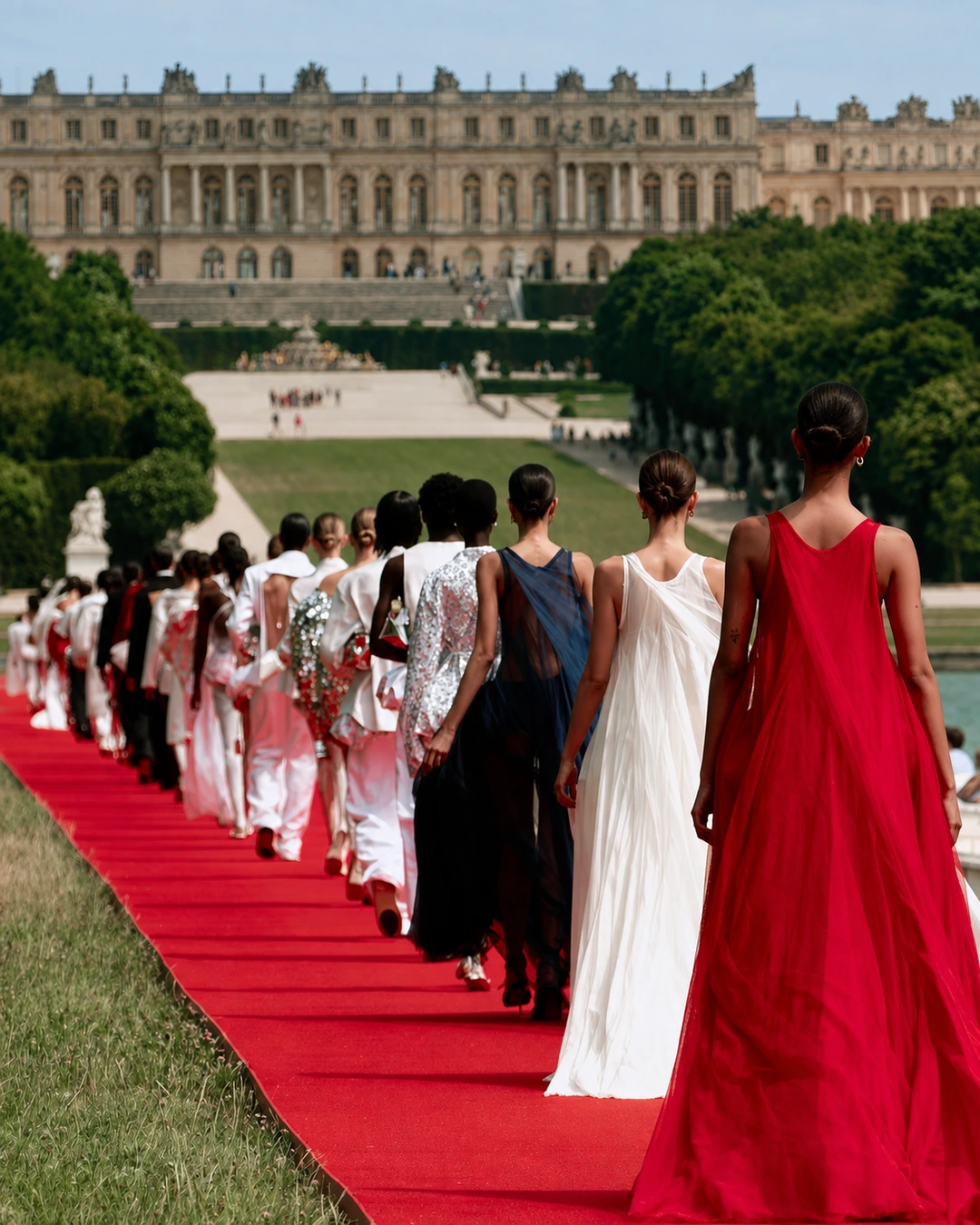
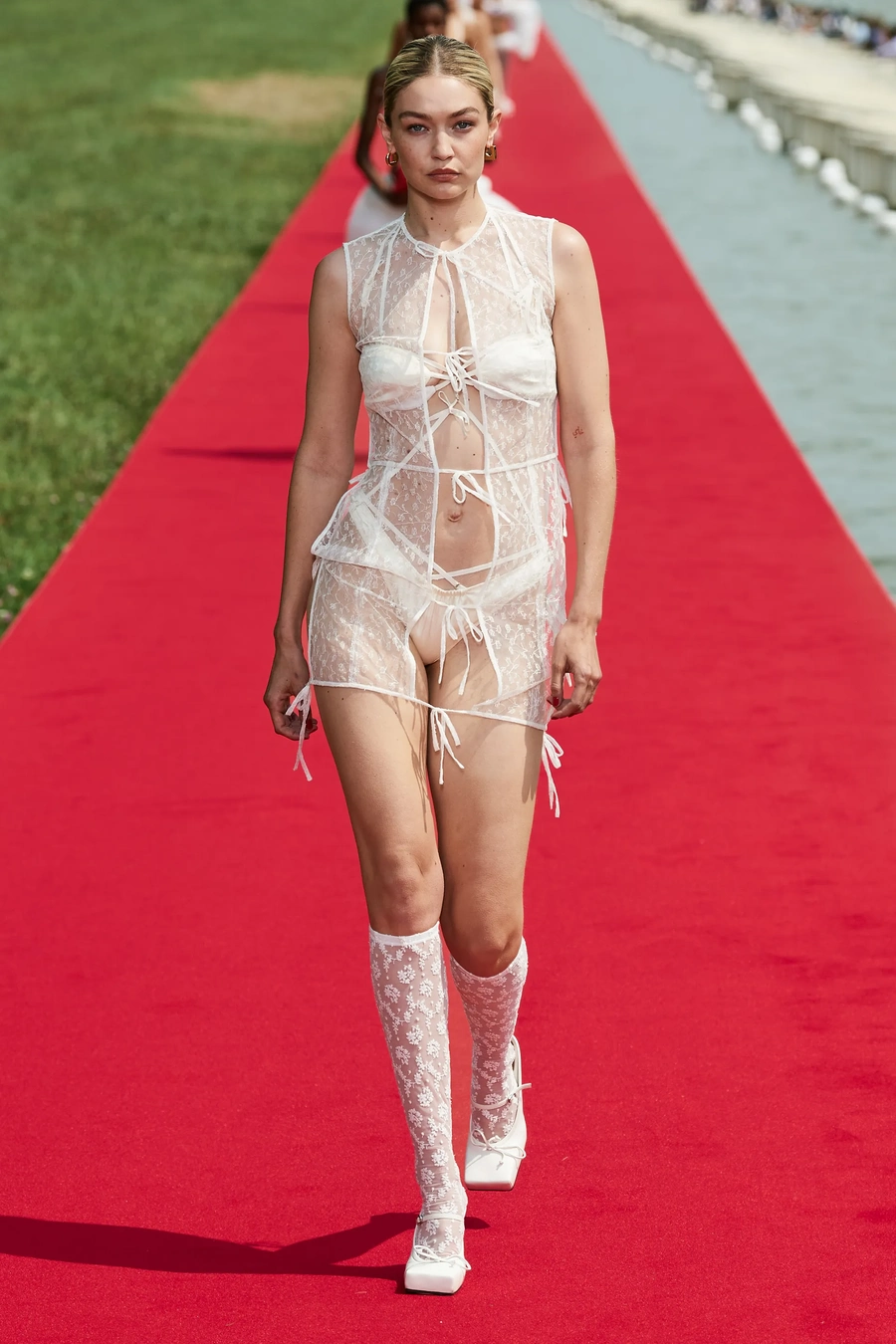
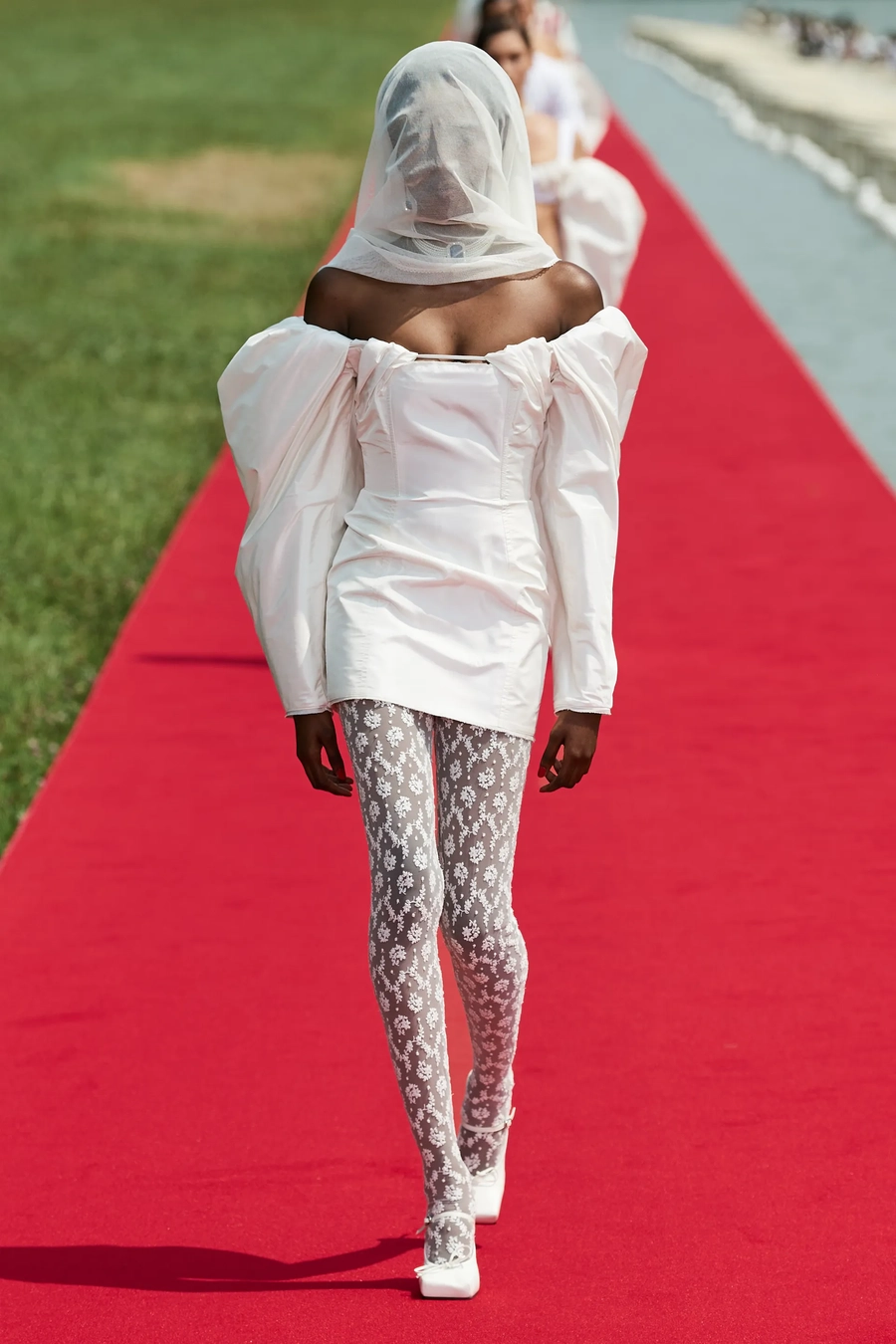
At Versailles, guests watched from white boats as models crossed a red runway beside the Grand Canal. The intimacy of Provence gave way to ceremony, authority and French grandeur. For an independent house founded only fourteen years earlier, Le Chouchou placed Jacquemus inside one of fashion’s most guarded symbolic spaces.
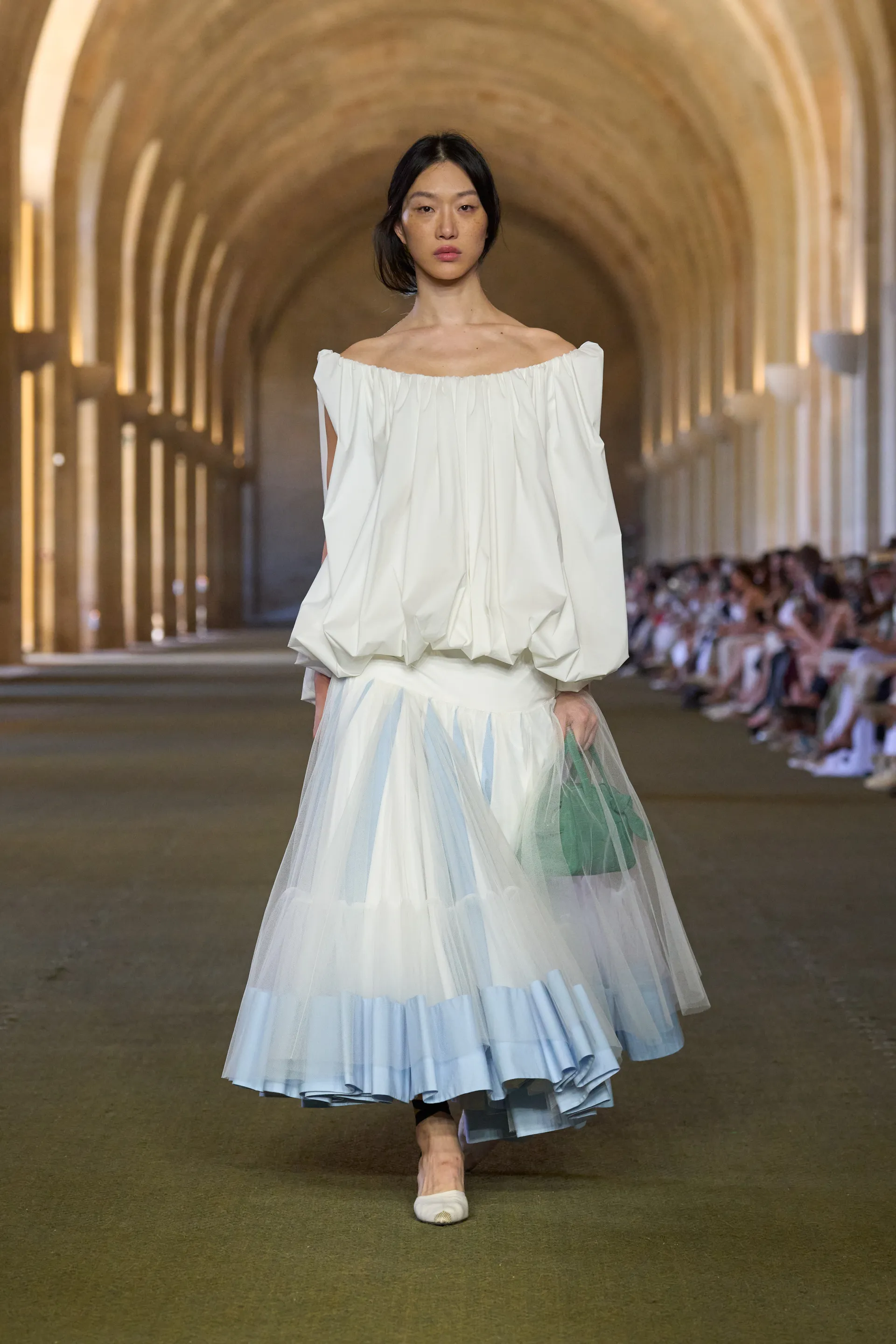
Marie Antoinette appeared through abbreviated panniers, translucent dresses and inflated proportions, while references to Princess Diana introduced a more contemporary form of royalty. Simon Porte Jacquemus entered Versailles through exaggeration, humour and exposed skin, allowing the palace to amplify the collection without imposing its formality upon it.
Mediterranean pines surrounded Les Sculptures at Fondation Maeght, where art, architecture and landscape already existed in close conversation. Bonded tailoring, curved surfaces and asymmetrical construction brought the focus closer to the body. After the theatrical scale of Versailles, this setting revealed a more controlled Jacquemus, increasingly concerned with precision and form.
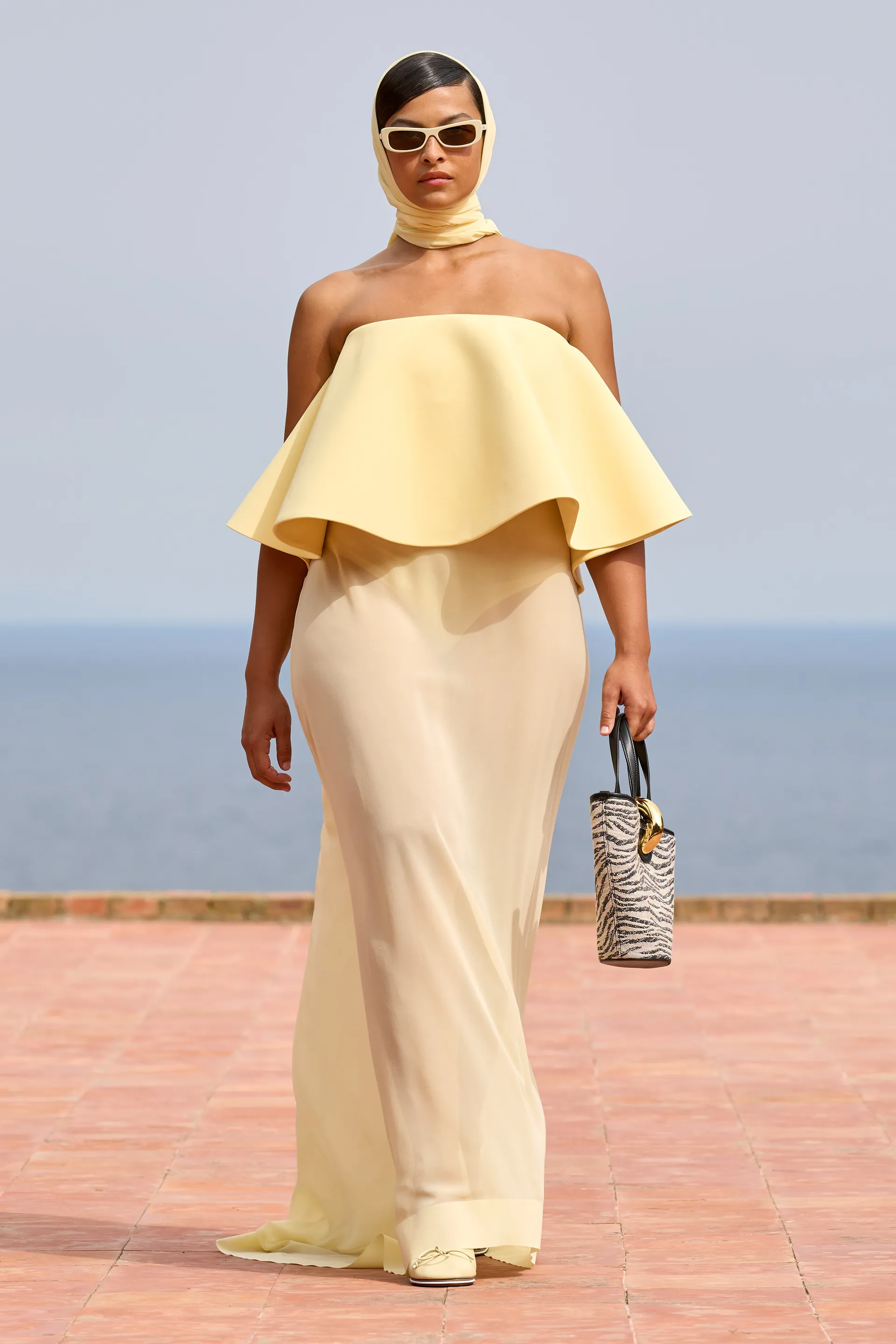
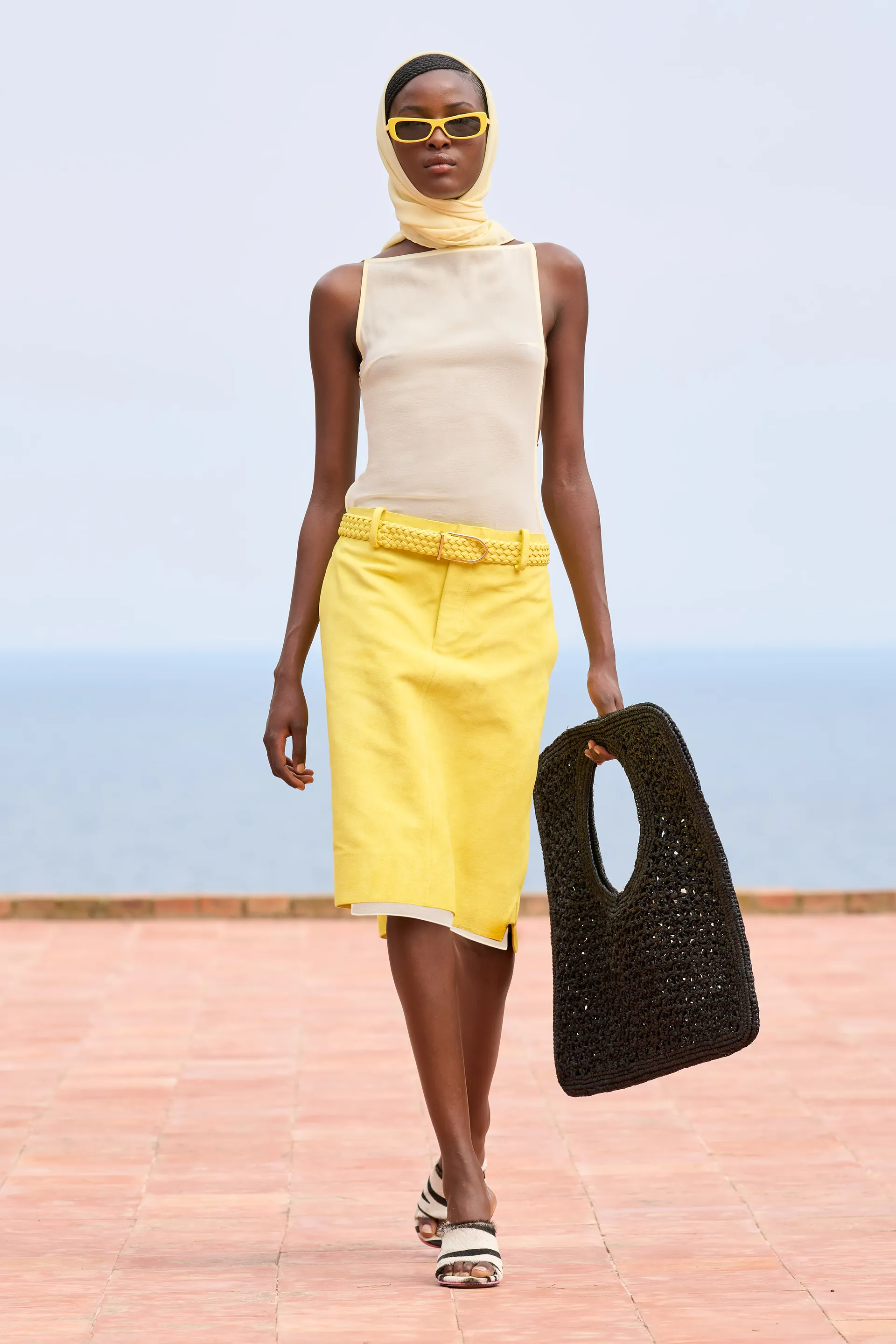
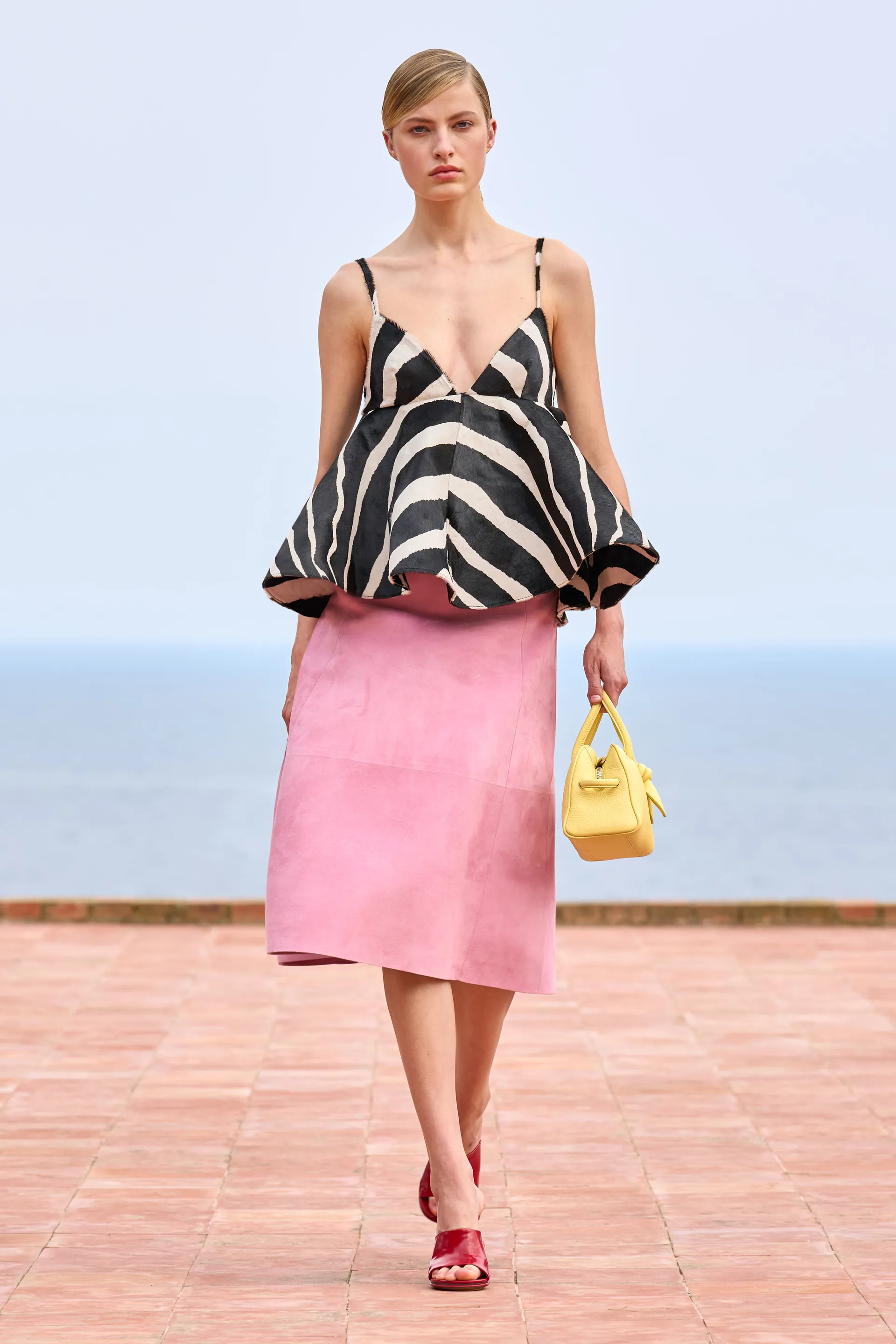
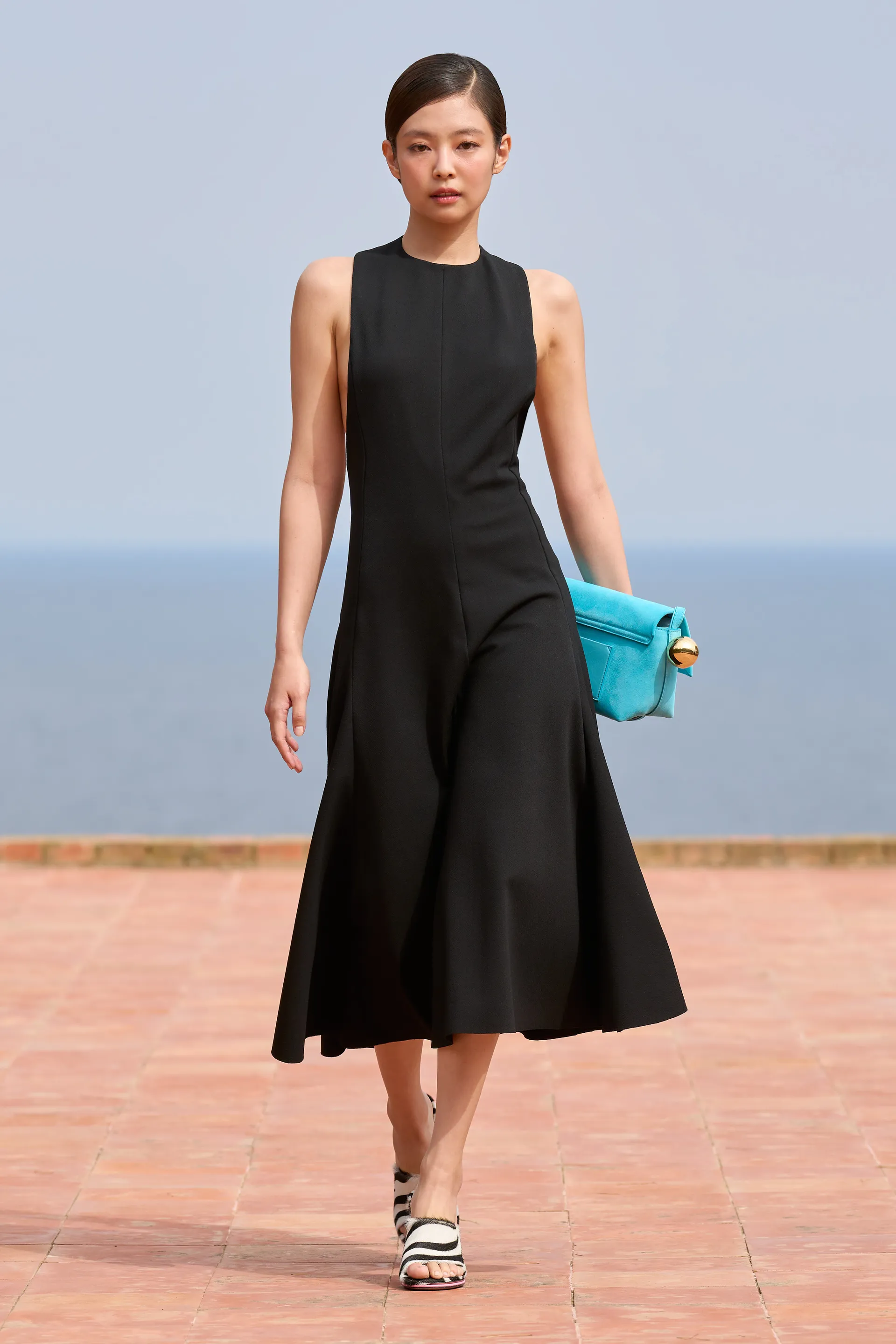
Casa Malaparte carried a more personal history. Simon Porte Jacquemus had been fascinated by its red geometry and its appearance in Jean-Luc Godard’s Le Mépris since his teenage years. Presenting La Casa there allowed an early visual obsession to enter the public mythology of the house.
Against the hard lines of the building, sculpted dresses curved tightly around the body and saturated colours appeared in deliberate blocks. The Mediterranean remained present, though architecture disciplined its familiar sensuality. Jacquemus used the place that had once shaped his imagination to measure how far his own design language had travelled.
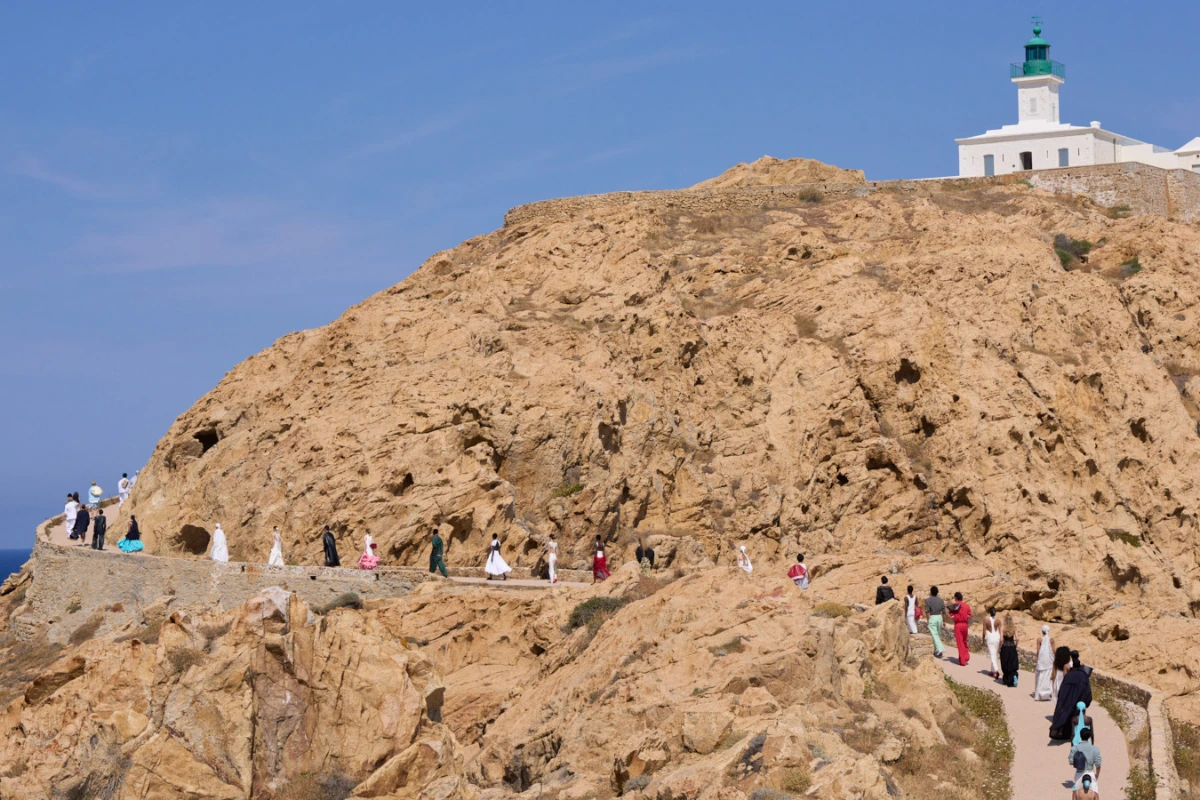
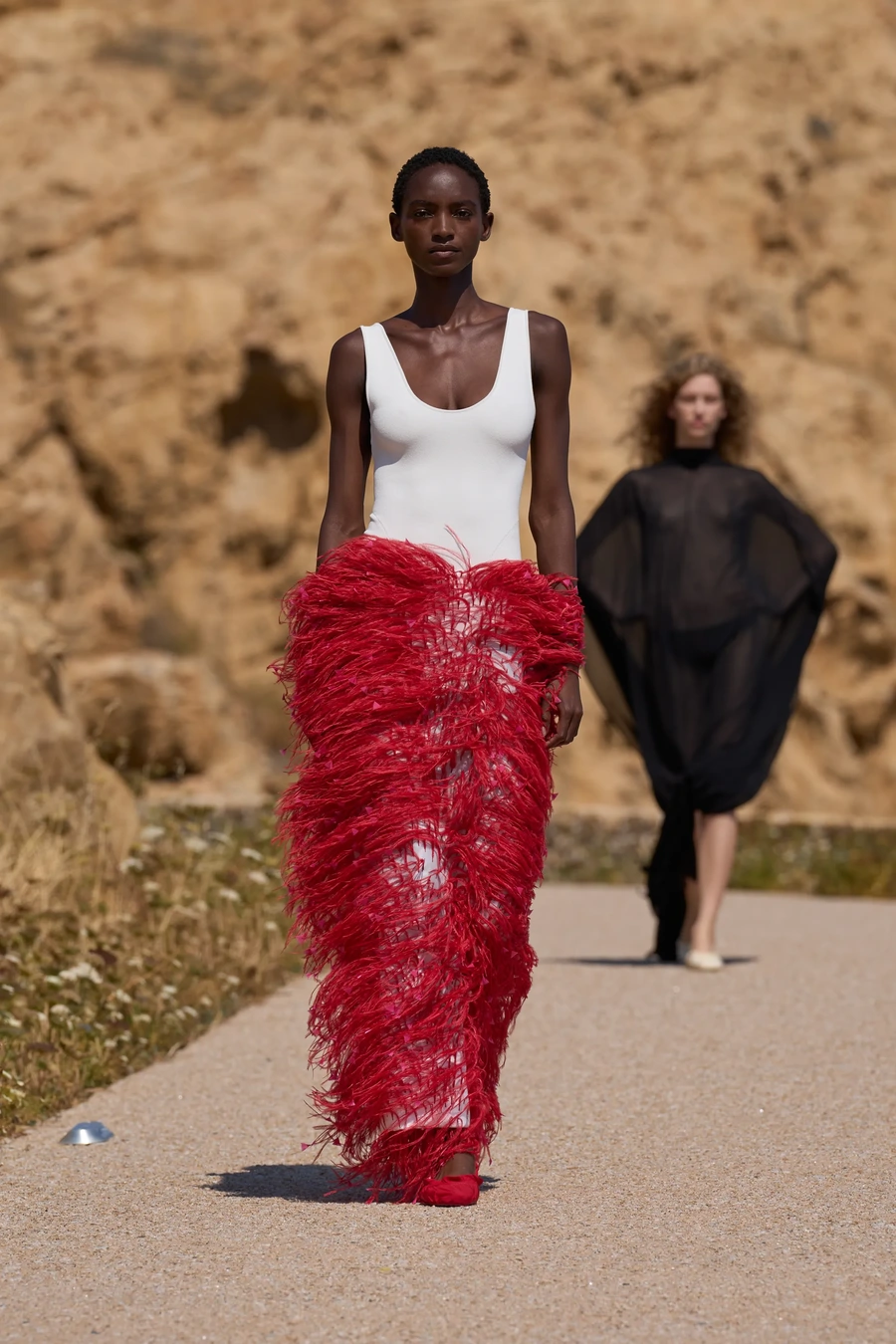
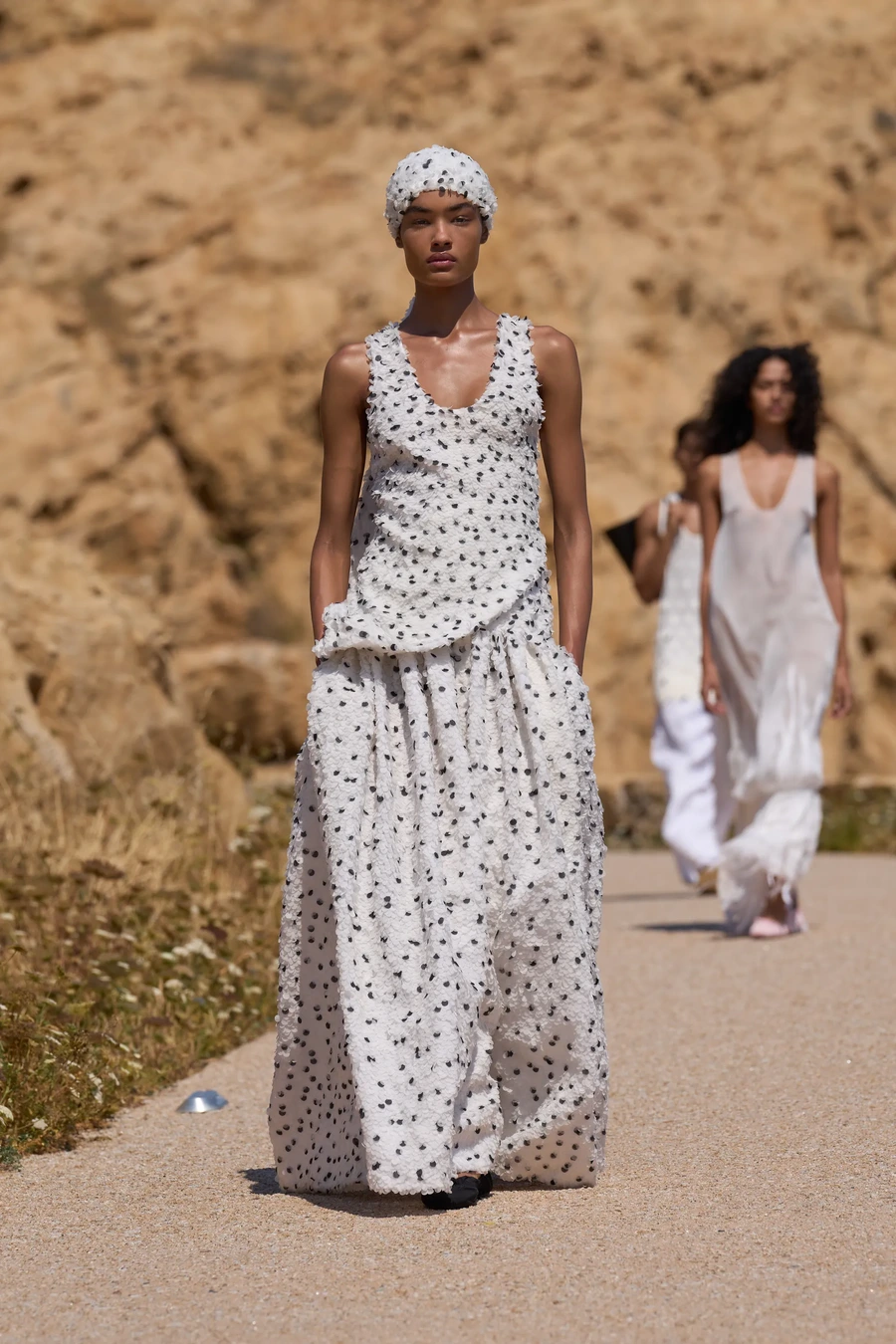
Along the exposed coastline of Corsica, Le Bonheur returned the house to wind, sunlight and physical ease. Lightweight fabrics responded to the air, while relaxed volumes and bright accents drew their energy from the landscape. After the cultural weight of Versailles and Casa Malaparte, Corsica showed that Jacquemus could create significance through sensation alone.
Each location changes what the house is able to express. Versailles speaks to recognition, Fondation Maeght to artistic ambition, Casa Malaparte to private memory and Corsica to uncomplicated pleasure. The destination gives those intentions a physical form before the collection is fully seen.
During Fashion Week, one show can replace another within minutes. A separate date allows Jacquemus to hold the industry’s attention without competing against the next venue, front row or collection already entering the feed.
Travelling to Valensole, Versailles or Corsica also changes the role of the audience. Guests enter the landscape before they encounter clothes, making the journey, setting and runway part of the same experience. Jacquemus no longer appears as one appointment within a crowded week. The house becomes the reason everyone has gathered.
For an independent brand, this concentration has practical value. Simon Porte Jacquemus cannot match the constant visibility produced by a luxury conglomerate, so he builds a single image capable of carrying the collection far beyond the show itself. The private calendar gives that image more space to circulate and more time to settle into public memory.
Yet the same strategy creates a difficult test. Lavender fields, salt mountains and Casa Malaparte can easily become more memorable than the garments passing through them. The location works best when it sharpens clothes through light, movement or architecture. Without that exchange, the collection risks becoming secondary to its own setting.
Jacquemus gains complete control over the moment by showing on his own terms. That control also leaves the house with nowhere to hide. Once the calendar, destination and audience all belong to him, clothes must justify the scale of the world built around them.
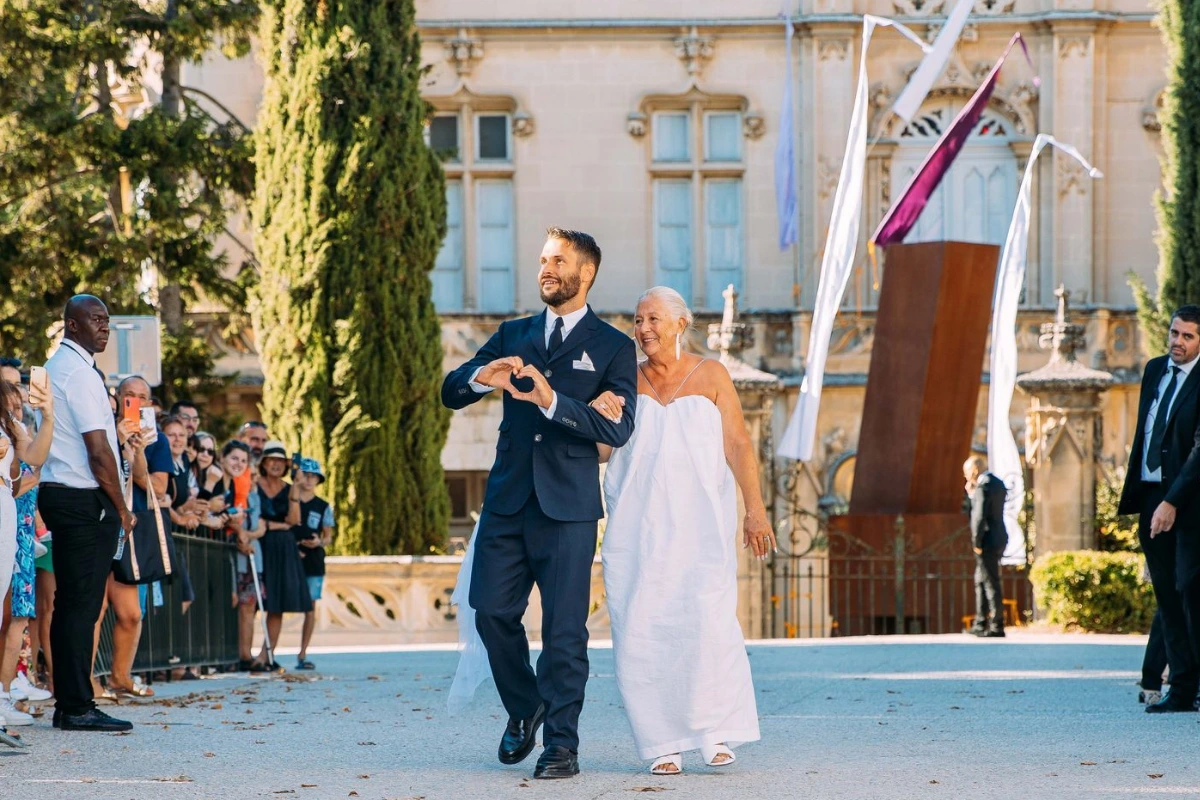
A Jacquemus show begins long before the first look appears. It begins when Simon Porte Jacquemus decides that a field, a palace or a coastline is ready to hold the collection.
Fashion Week can offer him an audience, but it cannot always offer the exact light, distance or atmosphere his work requires. That is why Jacquemus keeps moving beside the official calendar, close enough to use its energy and free enough to protect his own timing.
Perhaps the real question is no longer why Jacquemus refuses to follow Fashion Week. It is why a designer who has created such a complete world would ever let the calendar to speak first.
Advertisement