MENU
Close





What if luxury’s next desire is not status, but peace? Jacquemus Spring 2027 made that question feel deeply human, transforming Corsica into a place where clothes, skin, sea, and memory came together in a tender vision of happiness.
What if luxury’s next desire is not status, but peace? Jacquemus Spring 2027 made that question feel deeply human, transforming Corsica into a place where clothes, skin, sea, and memory came together in a tender vision of happiness.
July 5, 2026
Advertisement
Advertisement


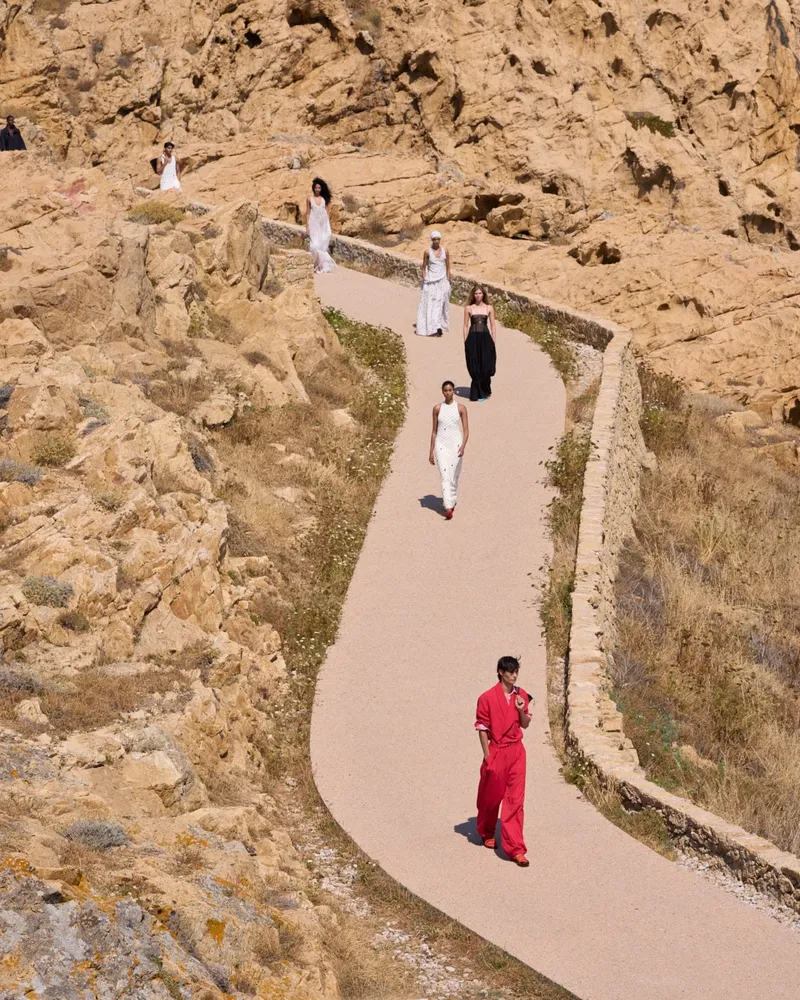
The emotional foundation of Jacquemus Spring 2027 was built through place before clothing. Simon Porte Jacquemus chose the Phare de la Pietra on Corsica’s Île-Rousse as more than a scenic runway; he turned the lighthouse, rocks, sea, wind, heat, mountains, and white parasols into part of the collection’s language. The Mediterranean setting did not decorate the show. It carried the story. Models descended along a cliffside path near the lighthouse while the coastline framed the clothes with a sense of memory, distance, and return.
Lavender fields, salt flats, Versailles, and now Corsica have helped him turn landscape into mythology. Yet Corsica felt more intimate than monumental. It connected the house back to the Mediterranean roots that first defined its emotional power. The title “Le Bonheur” became more than a soft French phrase. It suggested happiness as a serious creative thesis, one tied to family, childhood, southern light, maternal memory, and the physical sensation of summer.
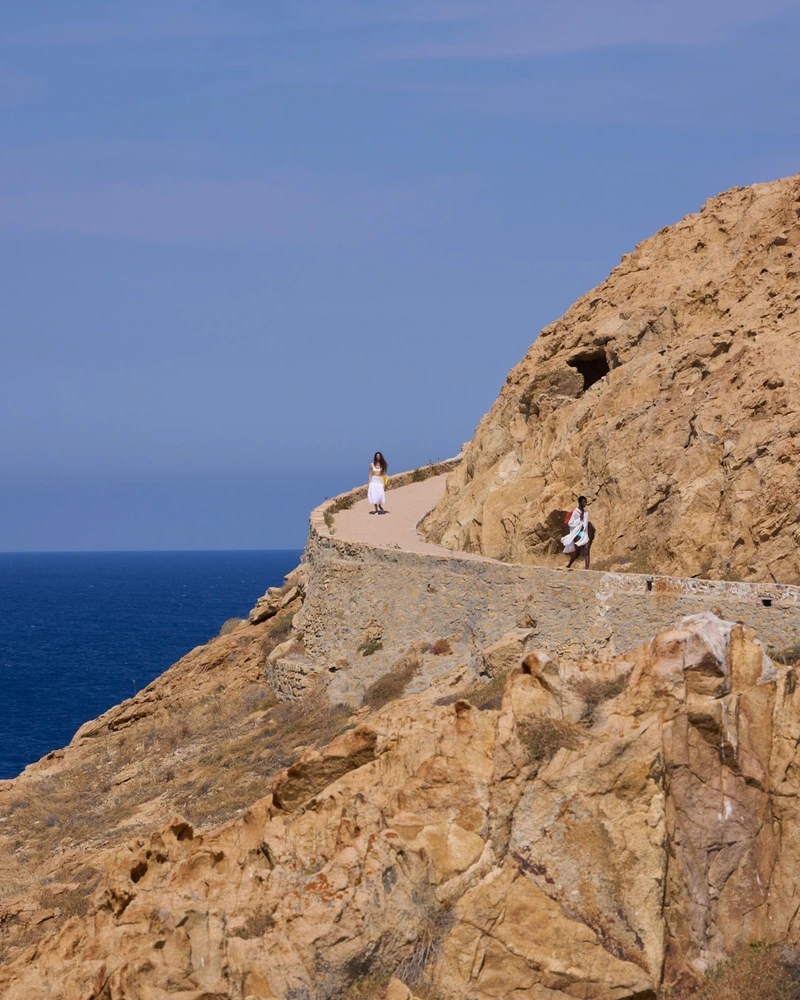
The lighthouse became the clearest symbol of Jacquemus Spring 2027. It suggested guidance, solitude, memory, safety, and the idea of coming home. A lighthouse looks outward, but it also helps one return. That duality shaped the show’s emotional atmosphere. The collection seemed to ask whether fashion can still produce sincerity without losing its commercial intelligence. The answer was found in the setting: sun-baked stone, wind, sea, and the almost cinematic feeling of a personal memory enlarged into a global runway image.
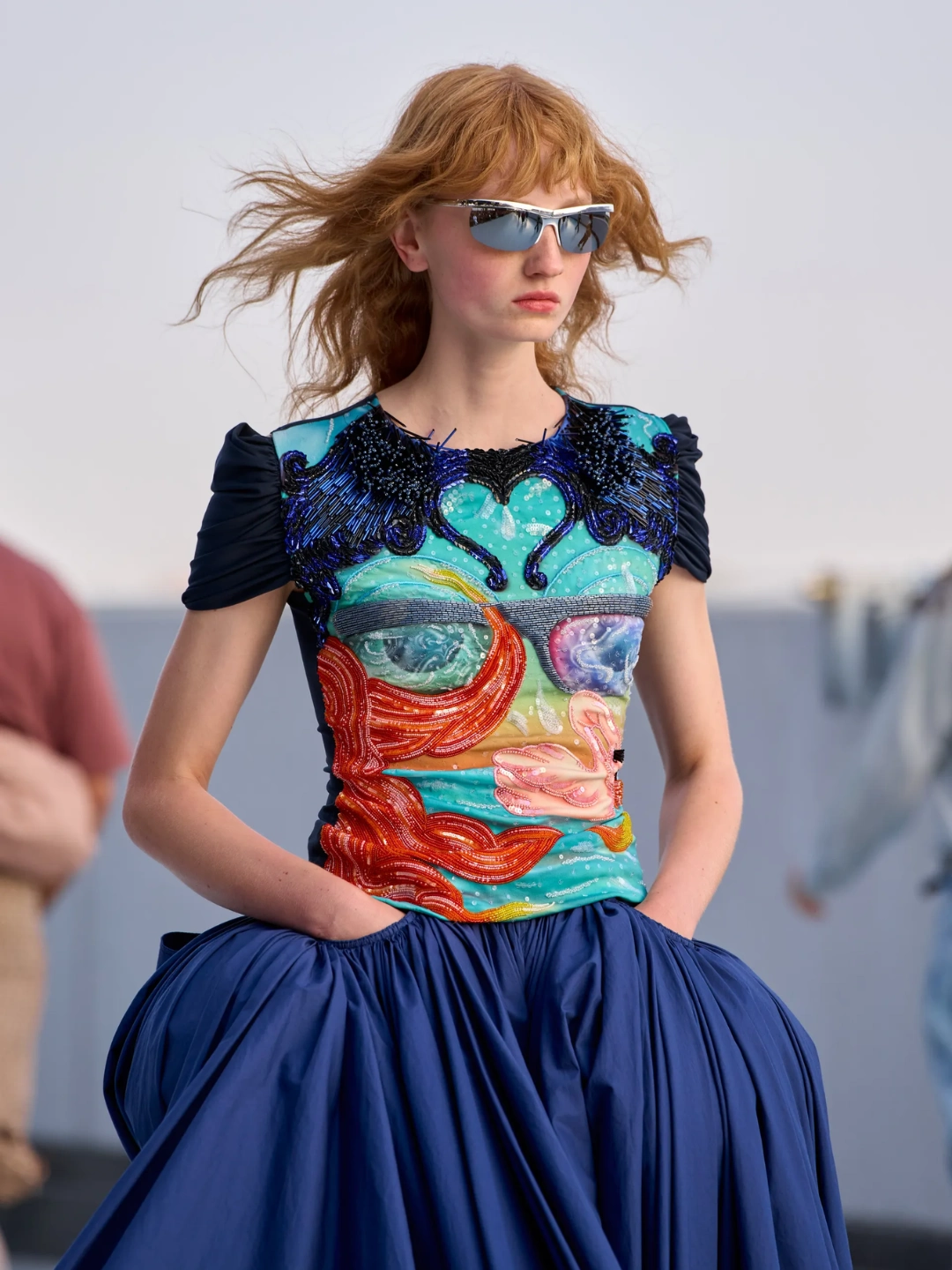
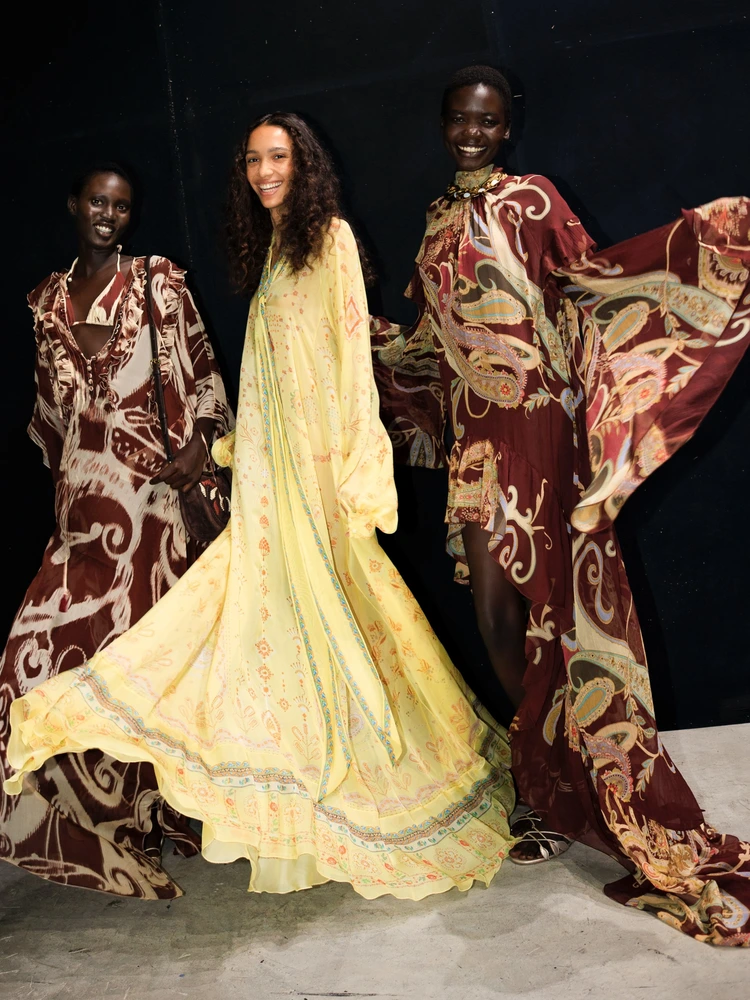
The wind was one of the show’s most important design collaborators. It lifted organza, opened robe coats, moved chiffon, expanded hems, and turned simple silhouettes into living forms. A garment that might have looked still on a showroom rack became animated on the cliff. This gave Jacquemus Spring 2027 its strongest emotional force: the clothes were designed not only to be seen, but to be affected by weather. The result was a runway where nature completed the collection.
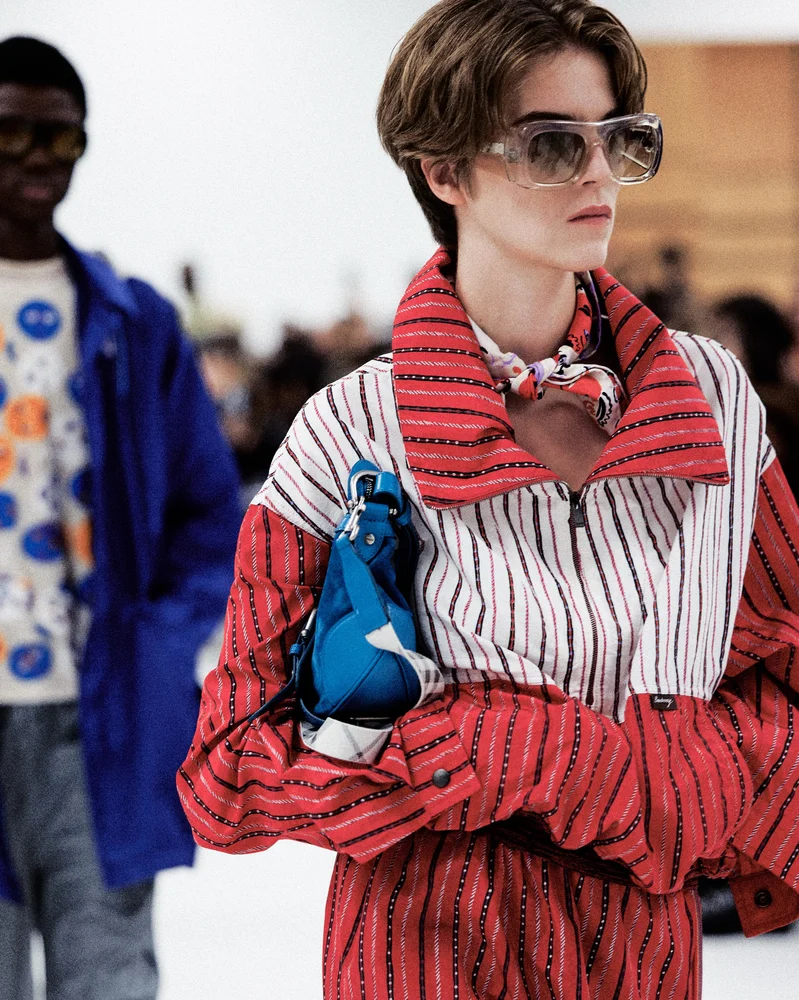
Jacquemus Spring 2027 marked a deliberate return to the house’s early visual vocabulary: sun, beach, crop tops, stripes, tanks, skirts, skin, and a sensuality that feels relaxed rather than forced. The collection revisited the youthful codes that made Jacquemus recognizable, but it did so with greater polish and technical discipline. The mood was not nostalgia for early Jacquemus. It was a grown-up correction of it.
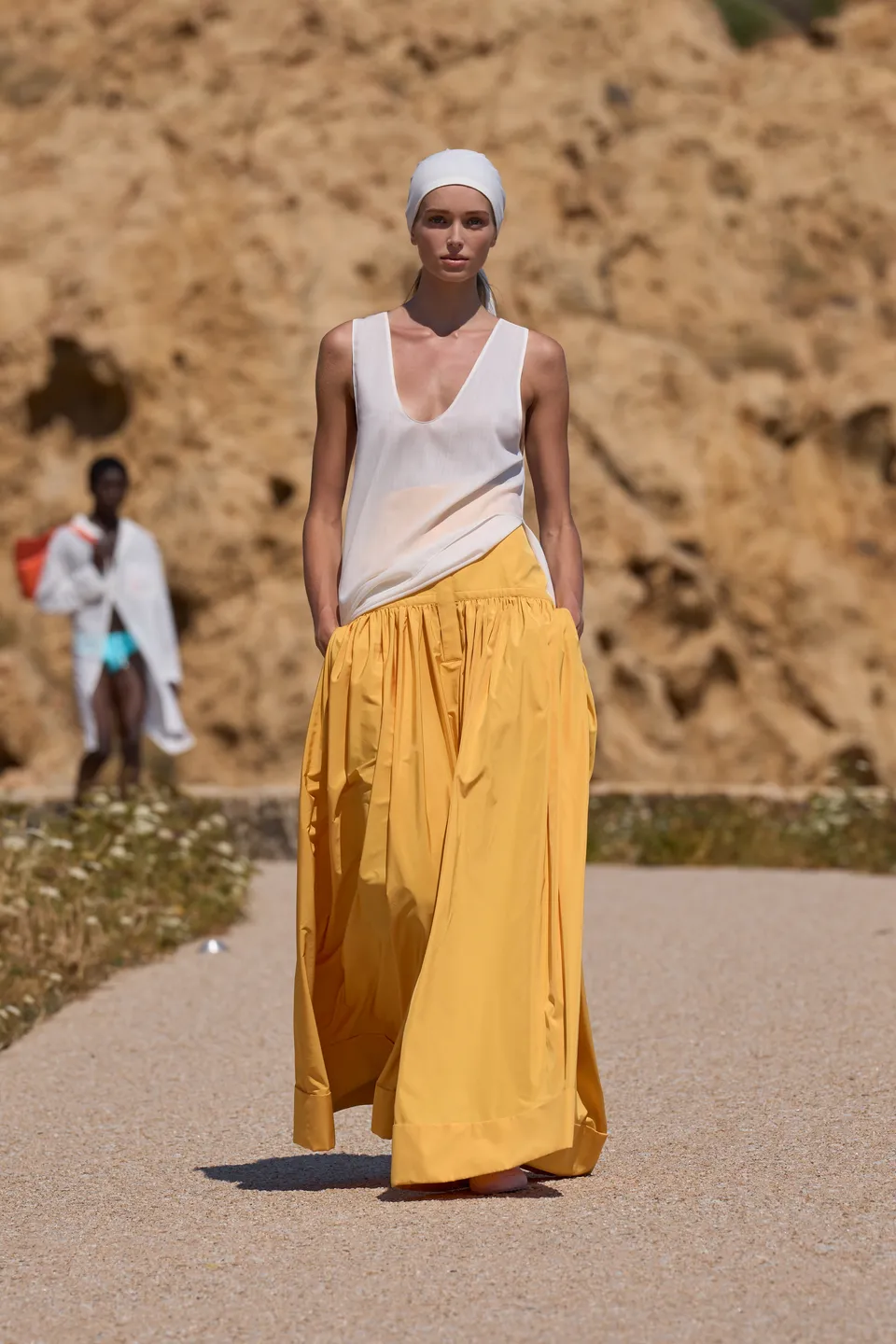
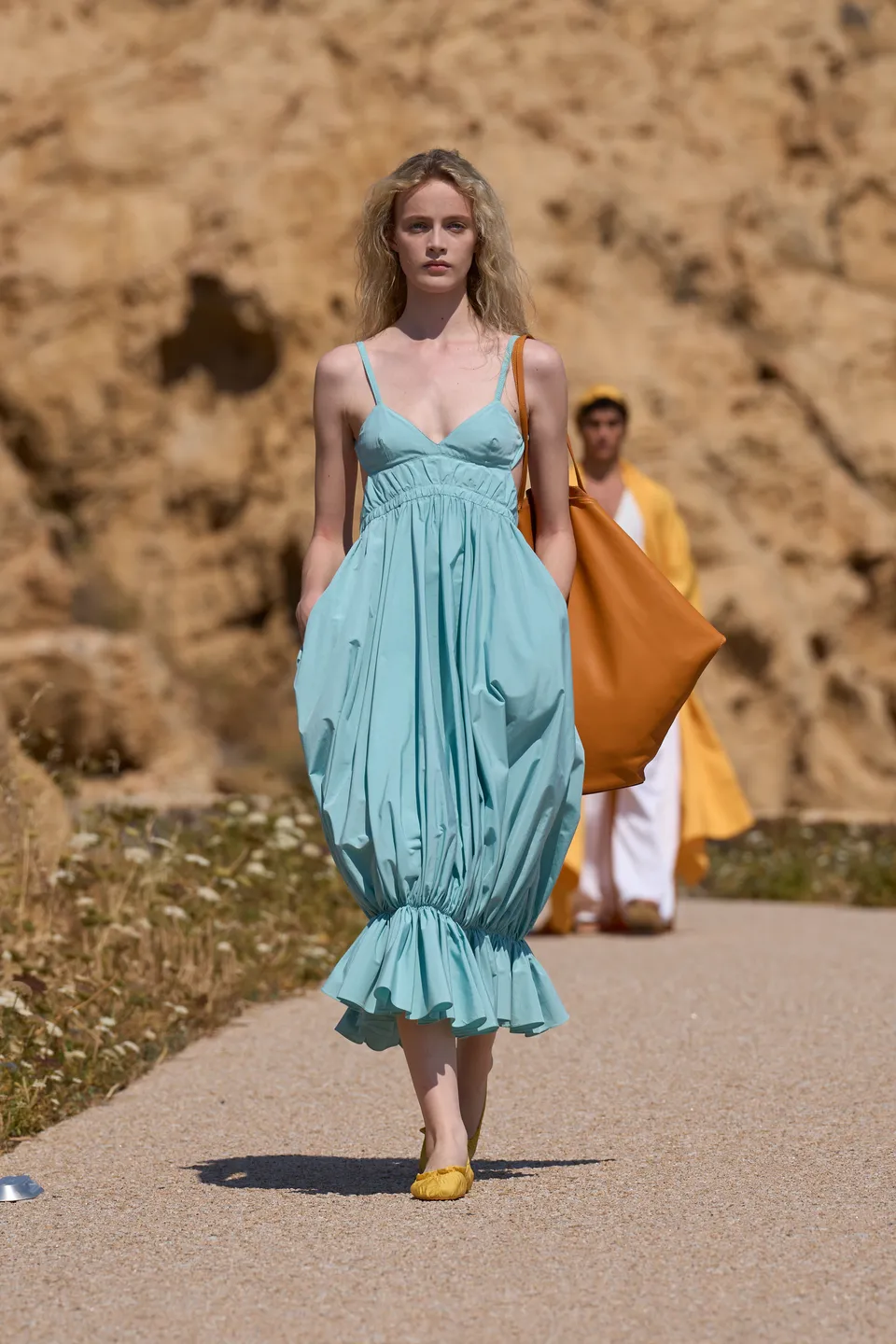
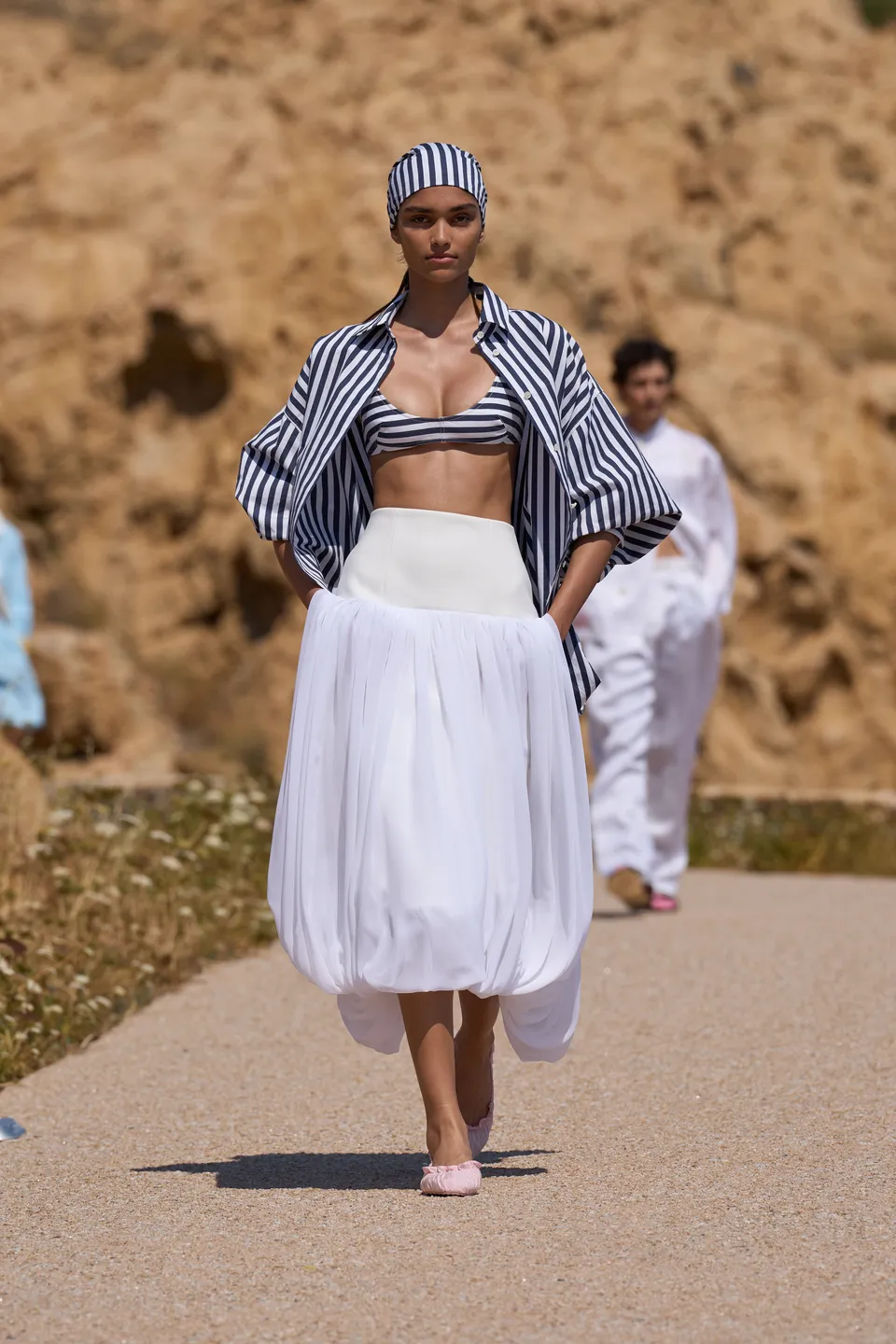
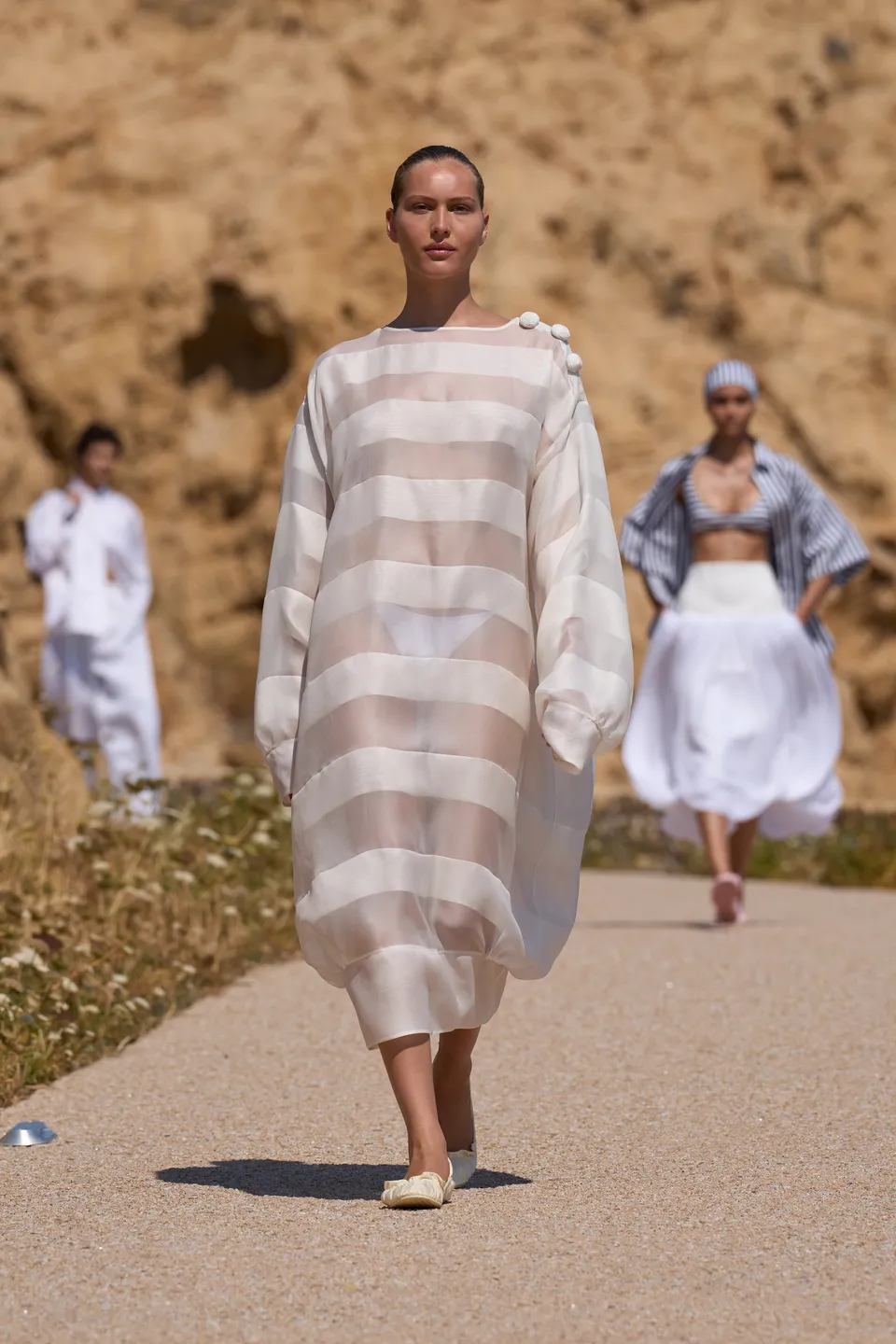
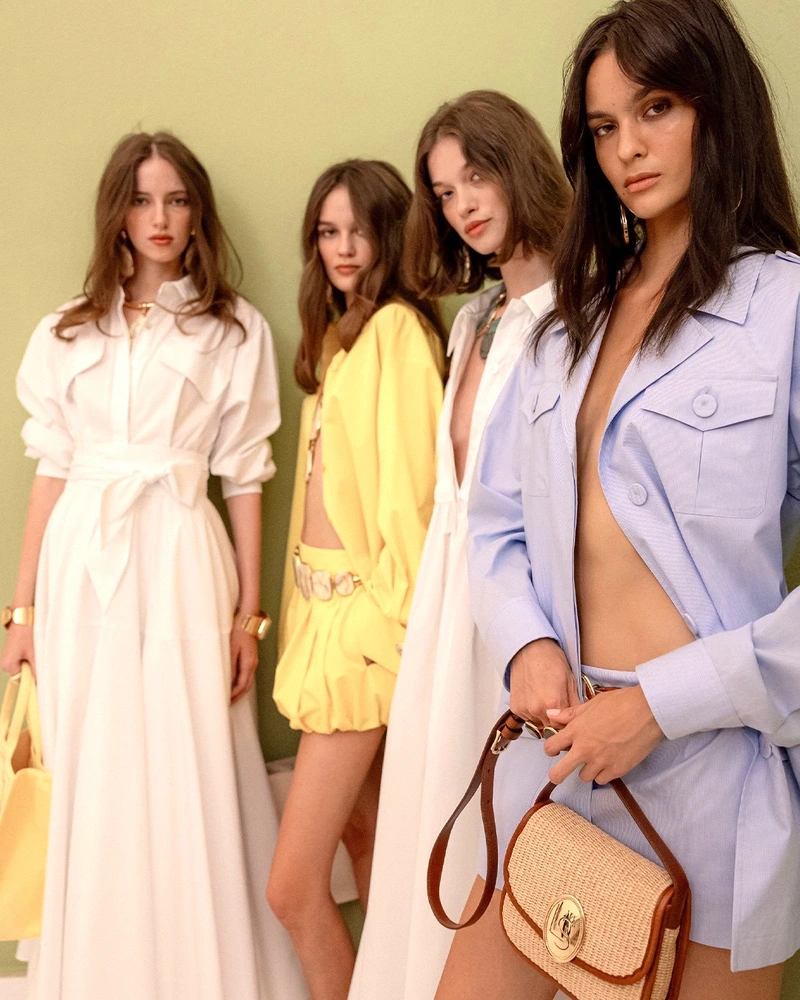
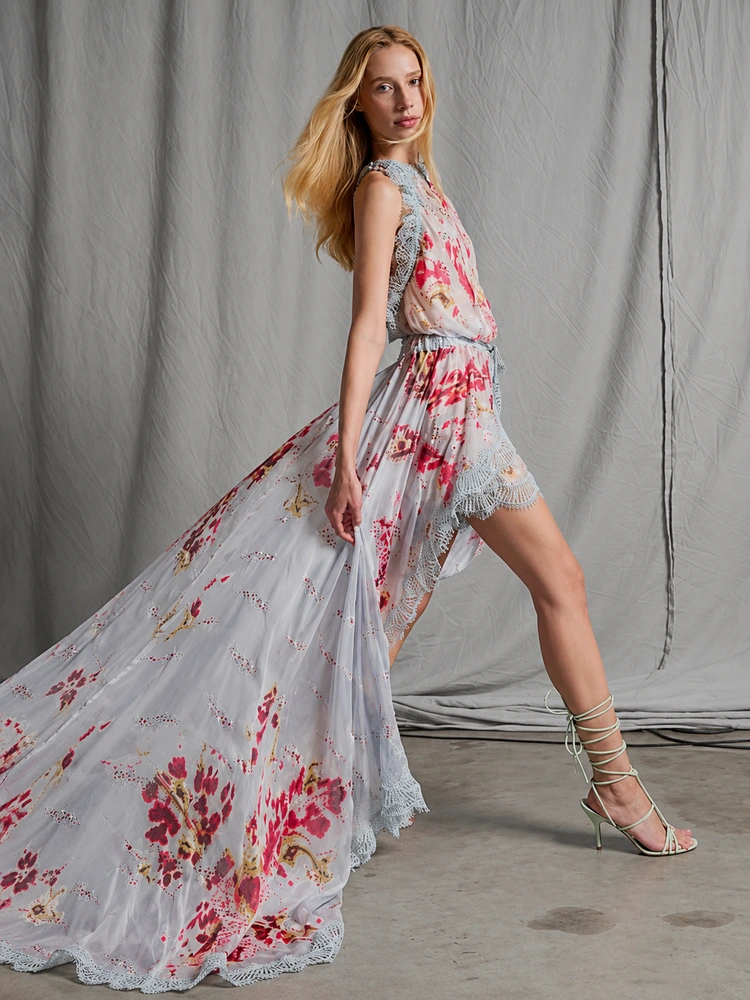
The silhouettes balanced innocence and exposure. Full skirts, drop-waist bubble shapes, striped organza gowns, white seersucker suiting, beach robe coats, bikini details, low-cut tanks, and languid dresses created a wardrobe that felt suspended between beachwear and formal dressing. This tension gave the collection its sensual intelligence. The body was visible, but rarely treated aggressively. Skin appeared as part of the Mediterranean environment: warmed by the sun, touched by air, framed by fabric.
The tank top became one of the most important pieces in Jacquemus Spring 2027. As a familiar, almost ordinary garment, it carried the democratic ease of summer. Yet Jacquemus elevated it through proportion, material, and styling. It became intimate, athletic, and luxurious at once. This is one of the designer’s sharpest instincts: taking a basic object and making it feel emotionally charged without overcomplicating it.
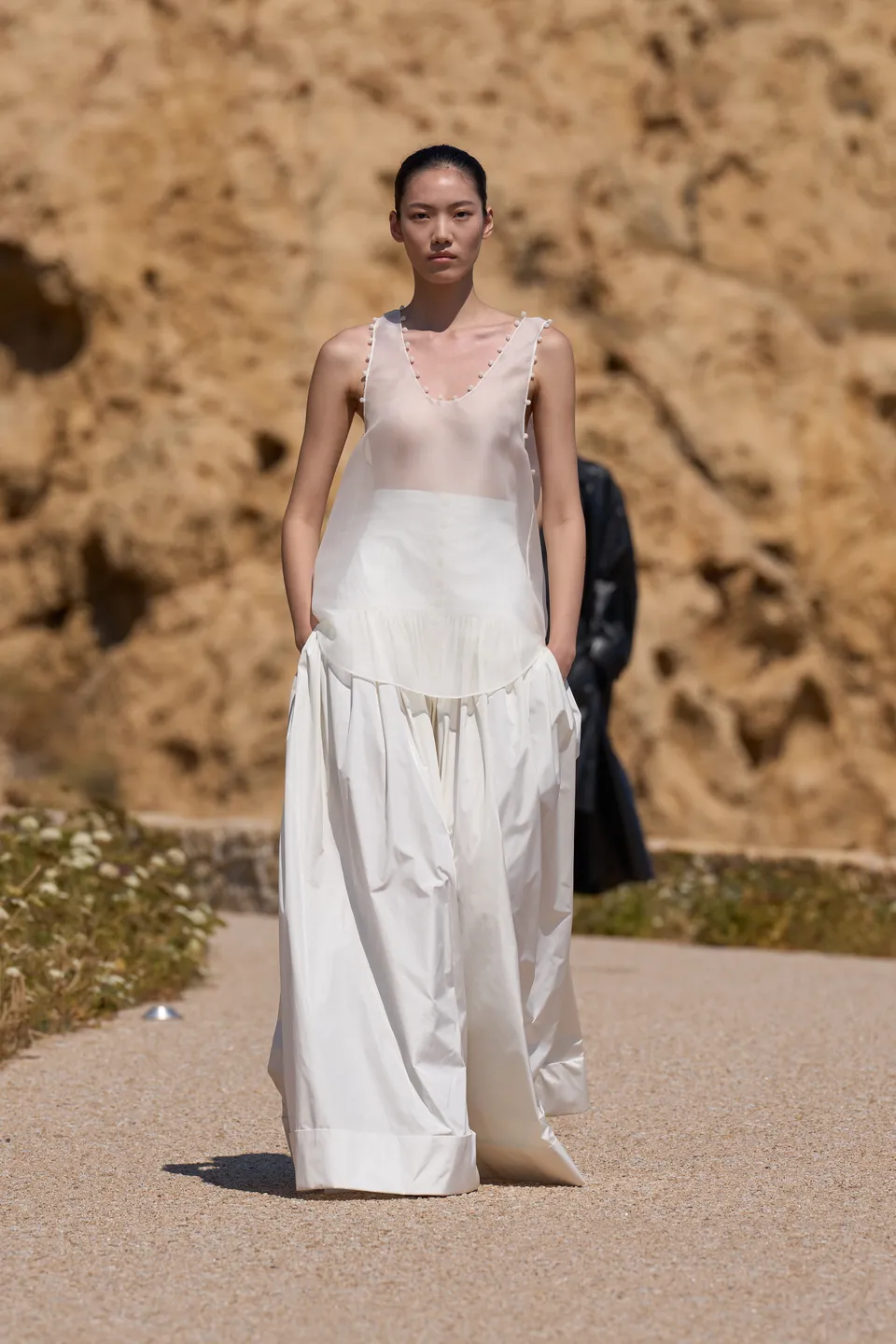
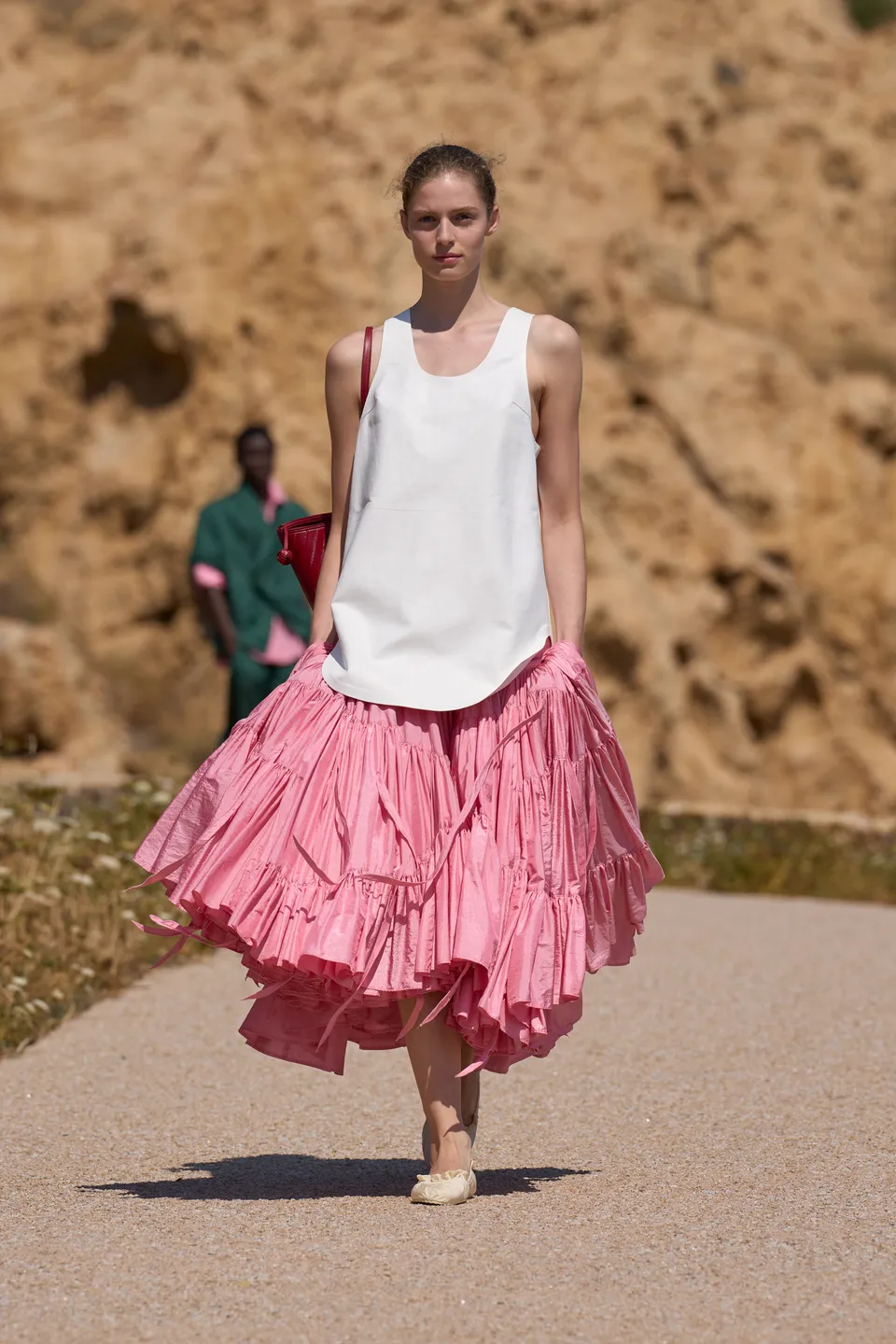
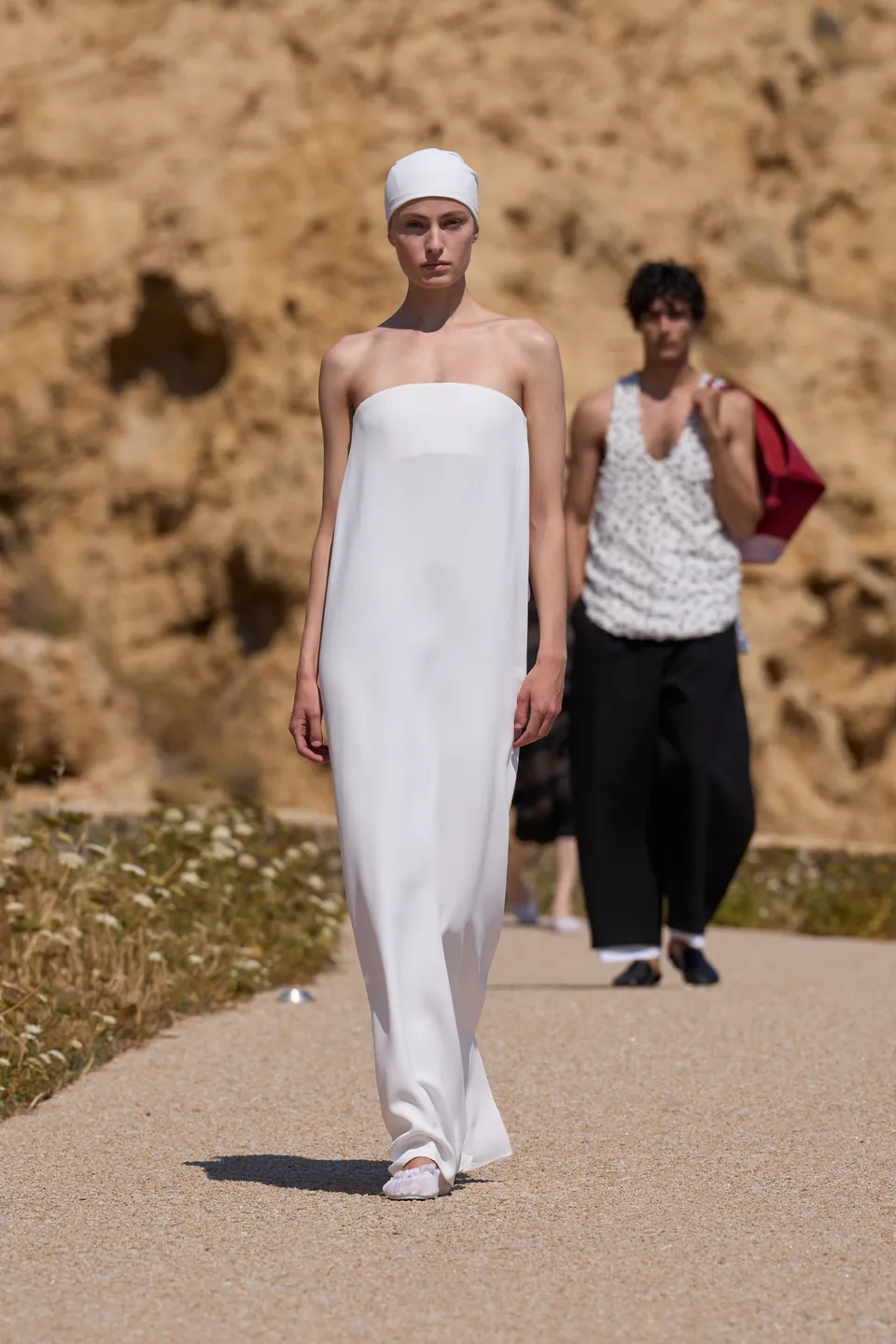
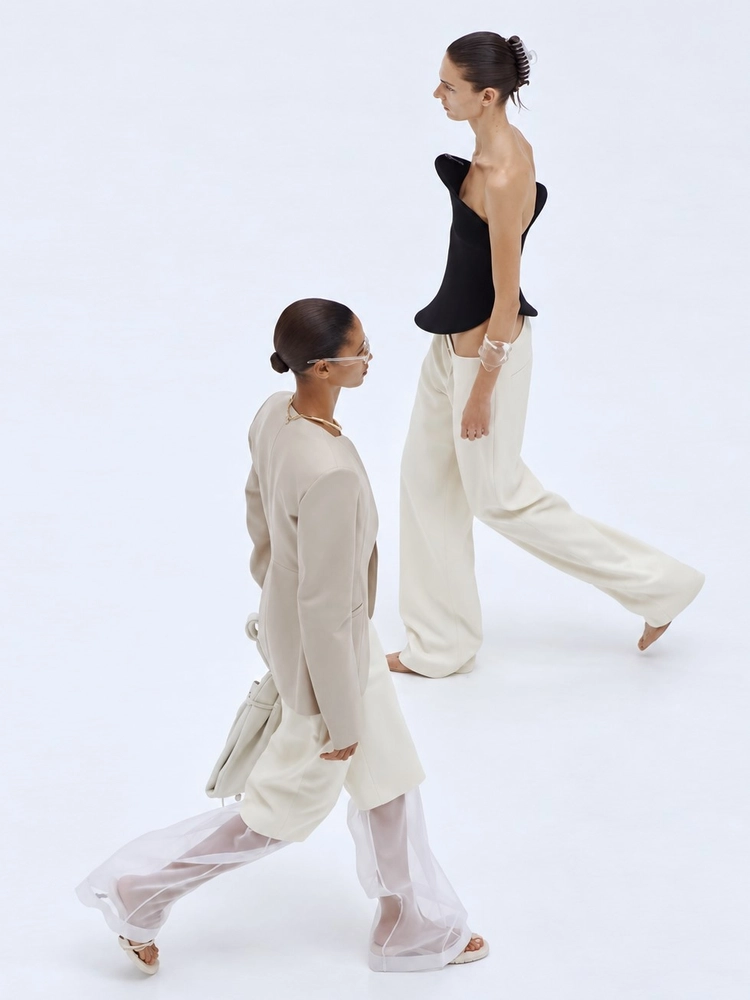
The skirts were equally important. Smocking, ruching, drop waists, soft pleats, and bubble volumes focused attention on the hips and lower body. Beneath sheer or gathered layers, flashes of bikini shapes suggested a life where the beach remains present even inside a high-fashion silhouette. The classic stripe was also reworked beyond nautical cliché. Rendered in sheer organza, it floated over the body and became a study in transparency, movement, and Mediterranean memory.
Menswear followed the same softened logic. Cinched waists, belted trousers, relaxed tailoring, technical taffeta, and sun-bleached tones created a masculine wardrobe that felt light, secure, and sensual. Nothing looked armored. Everything seemed open to heat and air. That is where Jacquemus Spring 2027 felt most mature: it returned to the designer’s earliest codes, but the construction was sharper, the emotion calmer, and the sensuality more controlled.
The greatest strength of Jacquemus Spring 2027 was that its ease was engineered. The clothes looked effortless, but that effortlessness came from precise material manipulation. Lightness in fashion is difficult because garments must move freely while still holding shape. Jacquemus approached this through sheer triple organza, technical taffeta, paper-thin leather, molded textures, chiffon, feathers, and bias-cut strips that responded beautifully to the coastal wind.
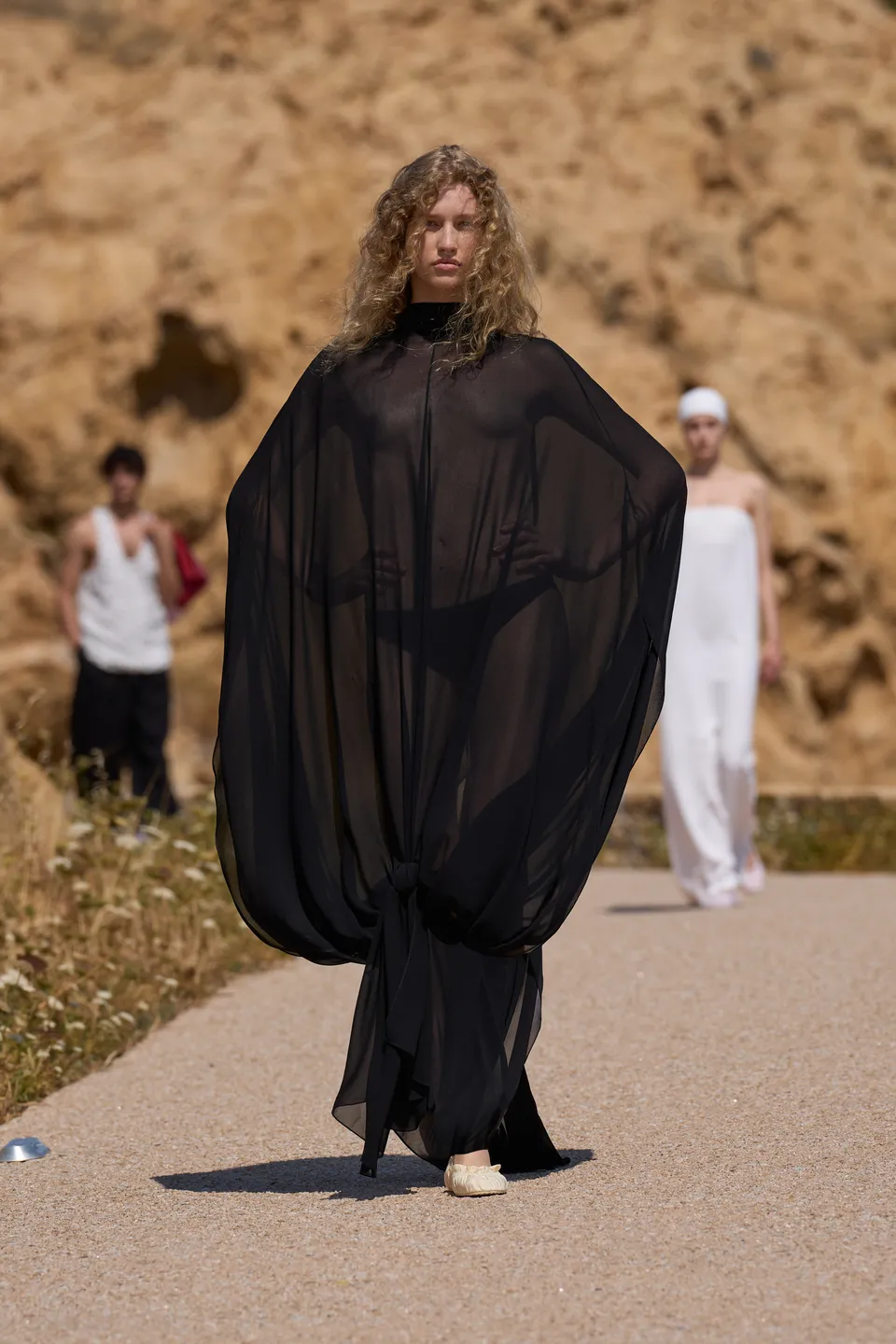
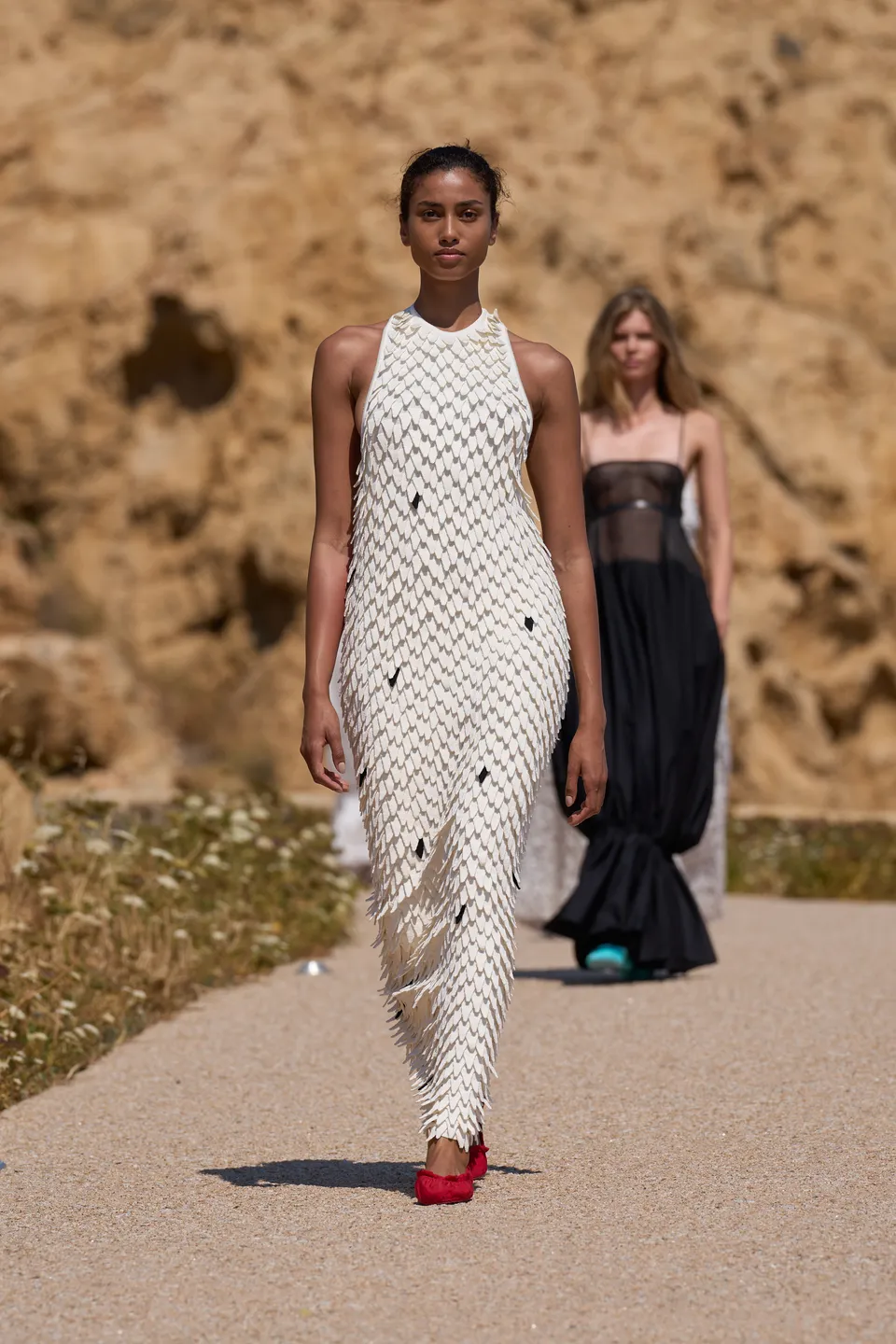
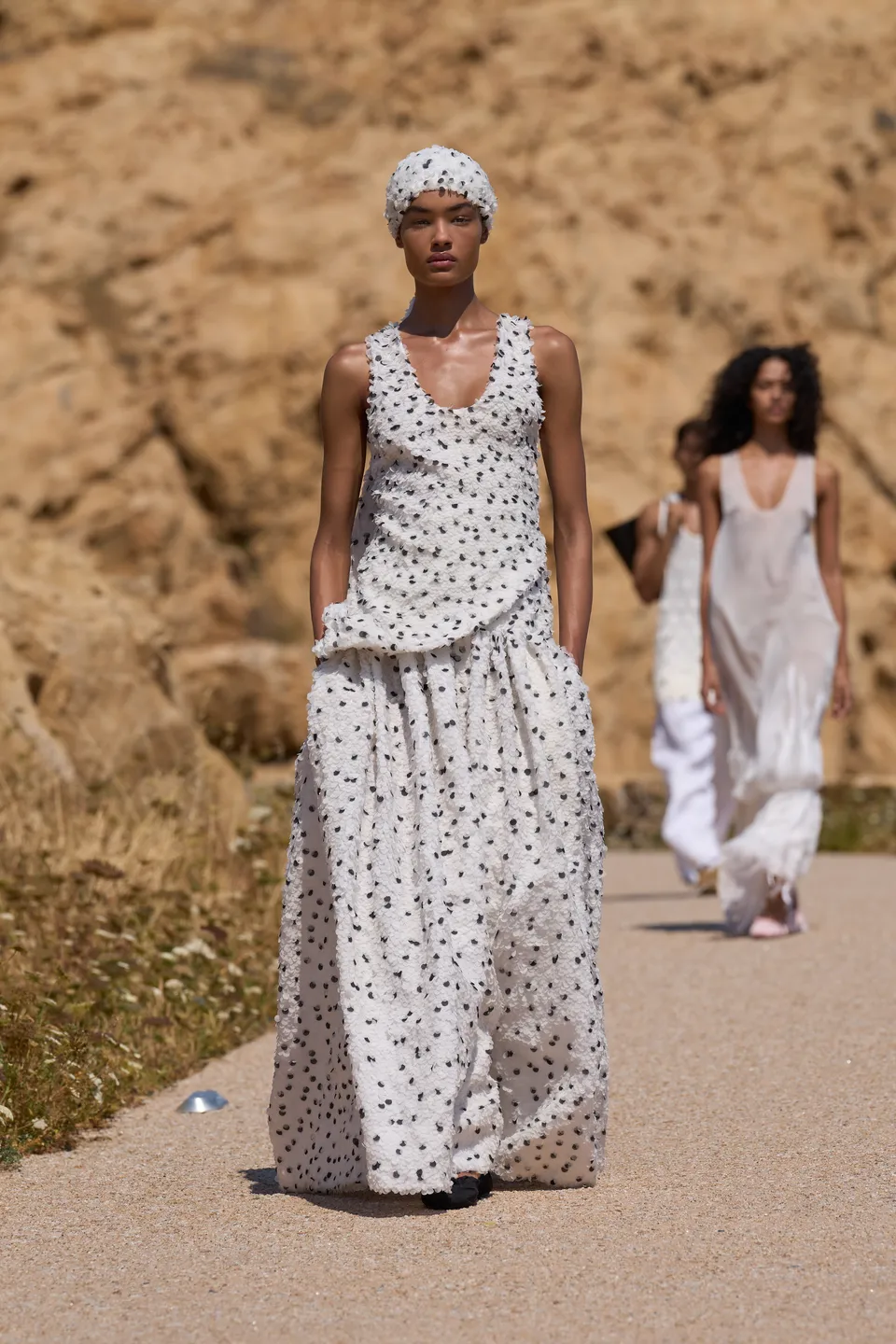
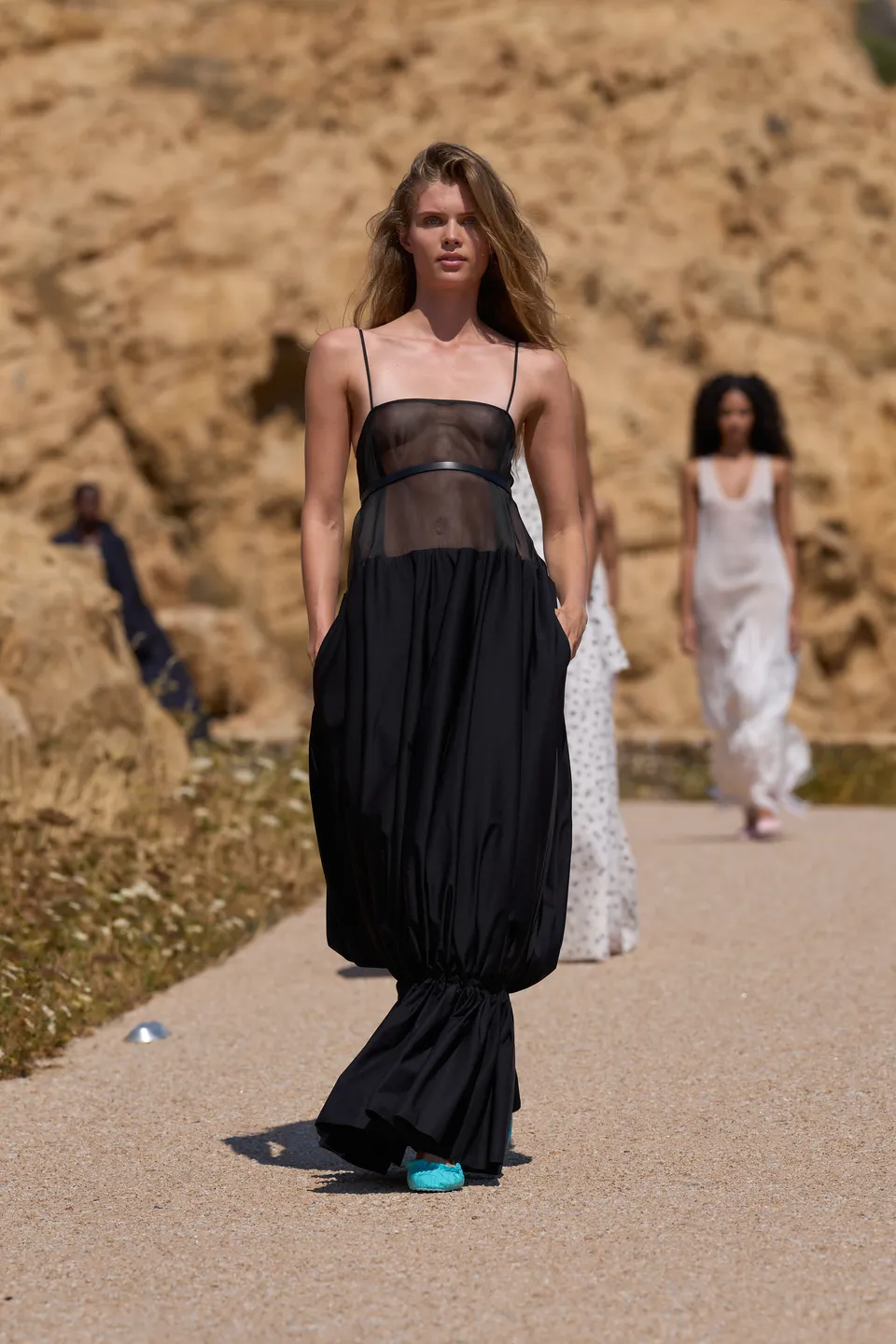
Triple organza became a key material because it allowed transparency and volume to coexist. It created full skirts and dramatic sleeves that looked fragile but maintained structure. Robe coats worked differently. They relied on air instead of stiffness, swelling in the wind before falling back against the body. These garments made the setting necessary. Without the wind, their drama would have been incomplete.
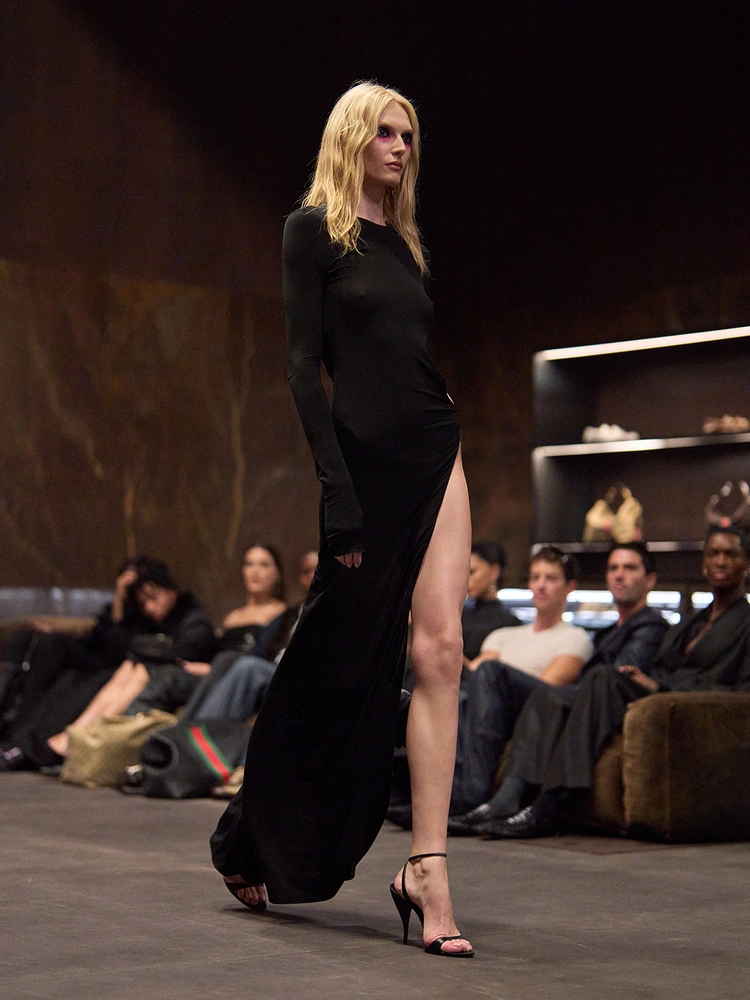
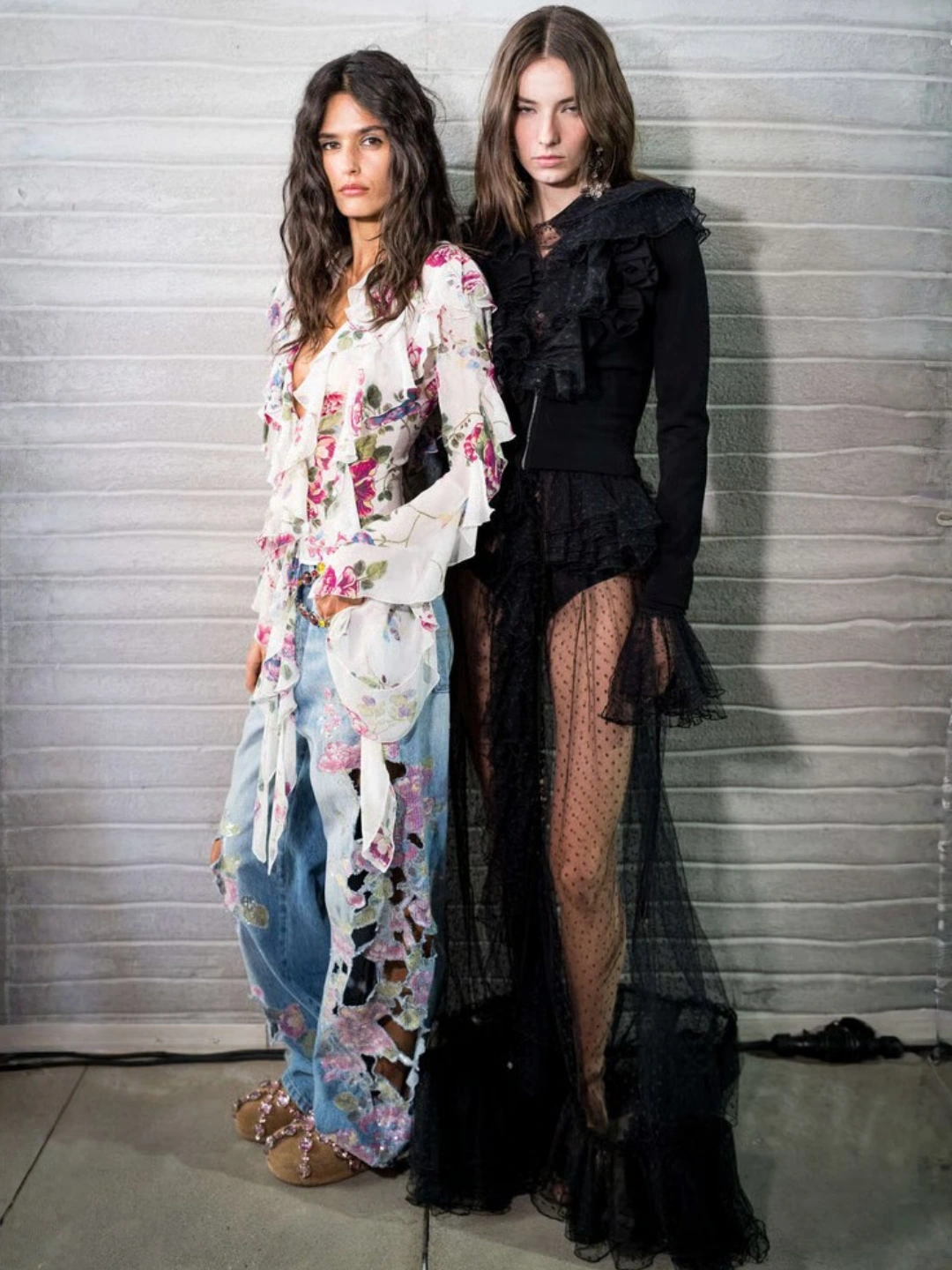
The black chiffon dresses gave Jacquemus Spring 2027 an important note of tension. Against the bright Corsican coastline, their darkness introduced depth and melancholy. Happiness did not become one-dimensional. It carried shadow, quietness, and emotional restraint. That contrast saved the collection from becoming simply pretty.
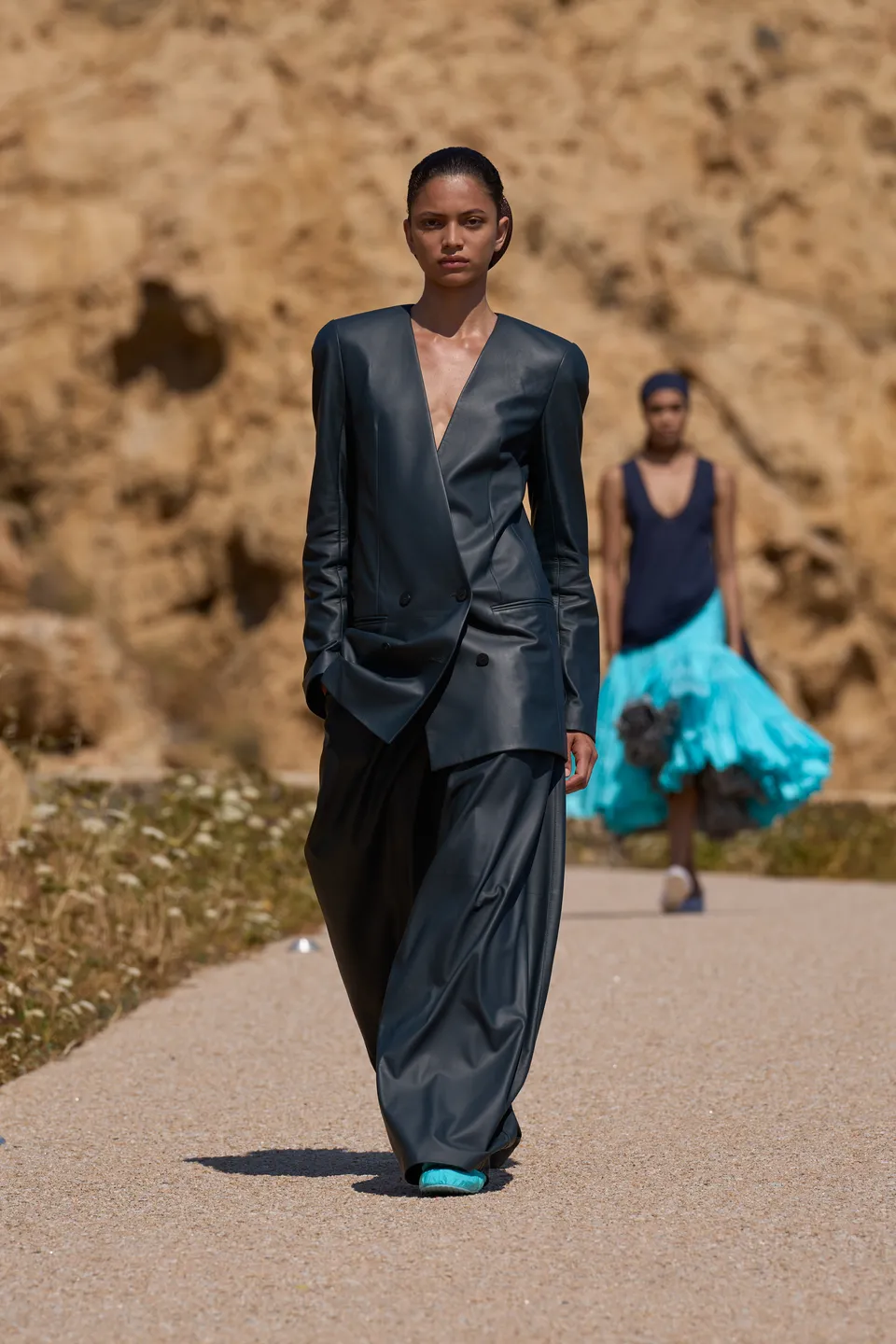
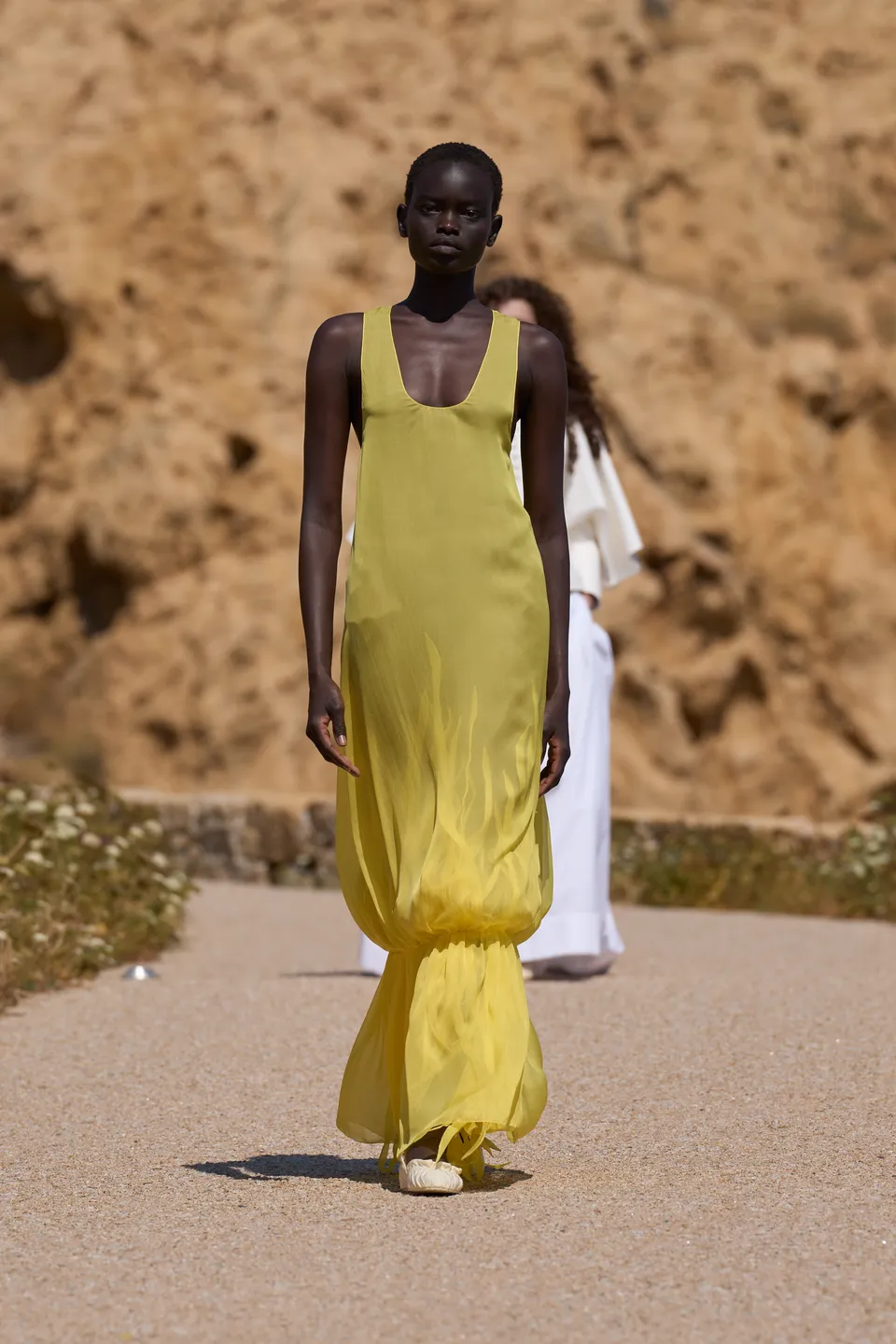
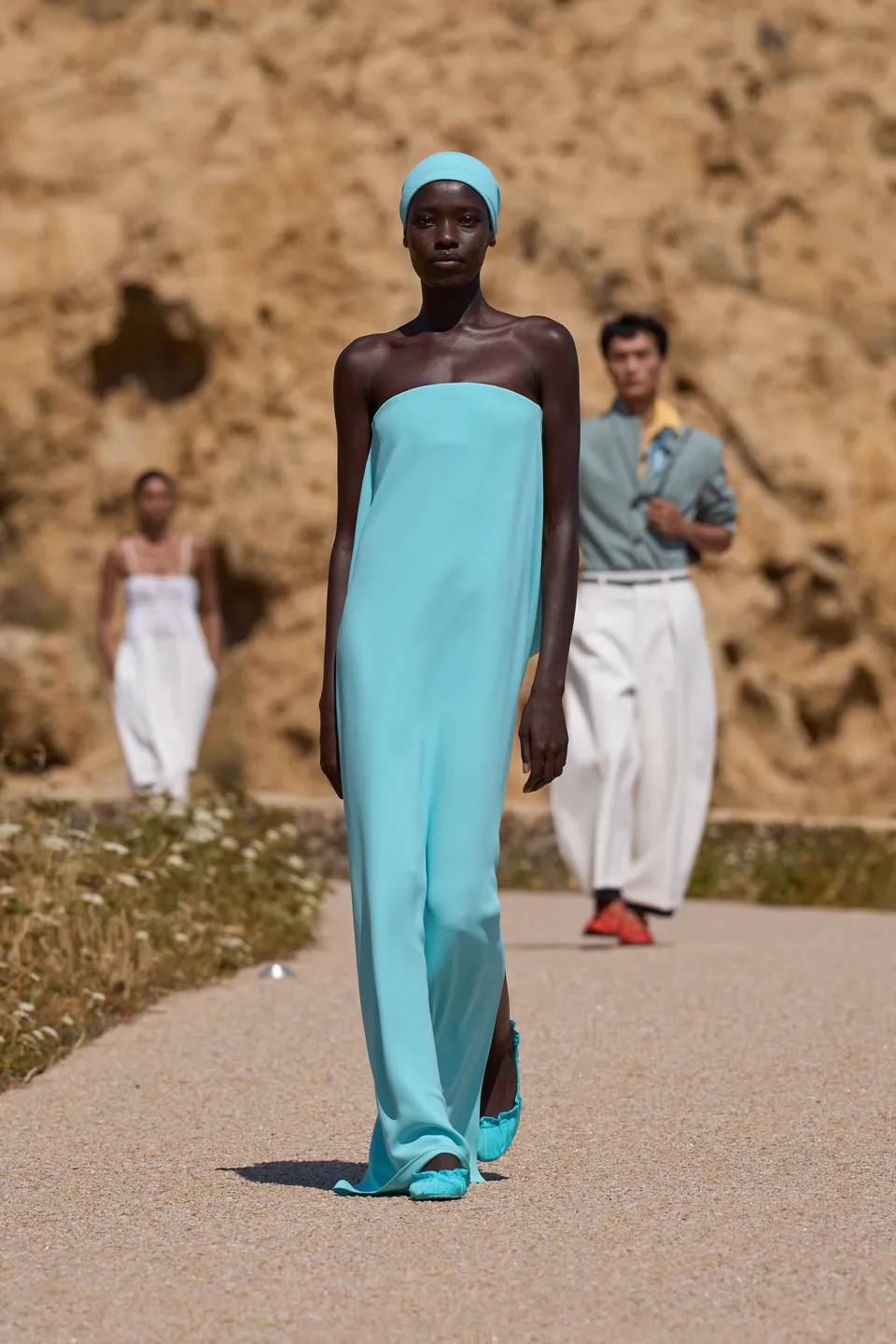
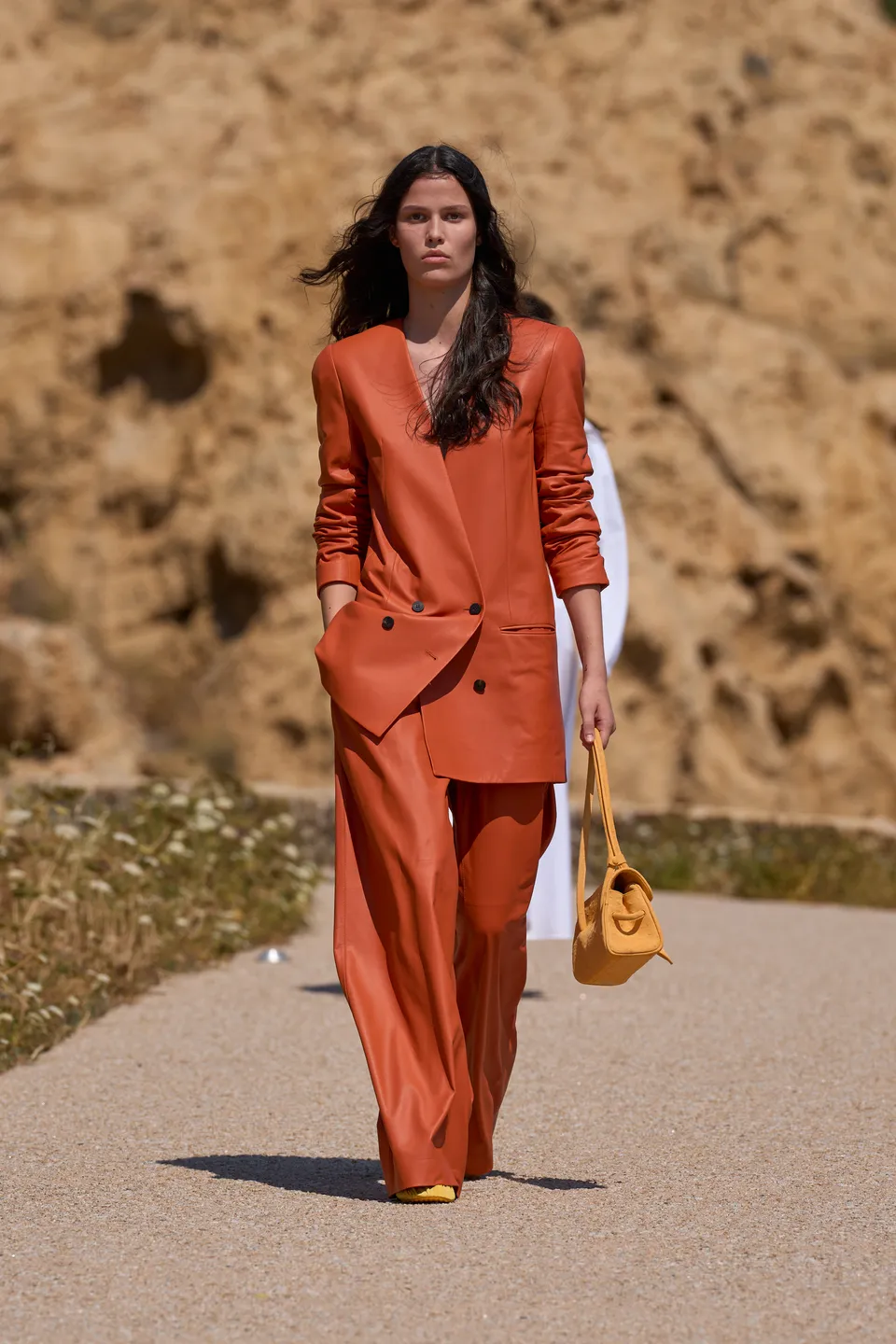
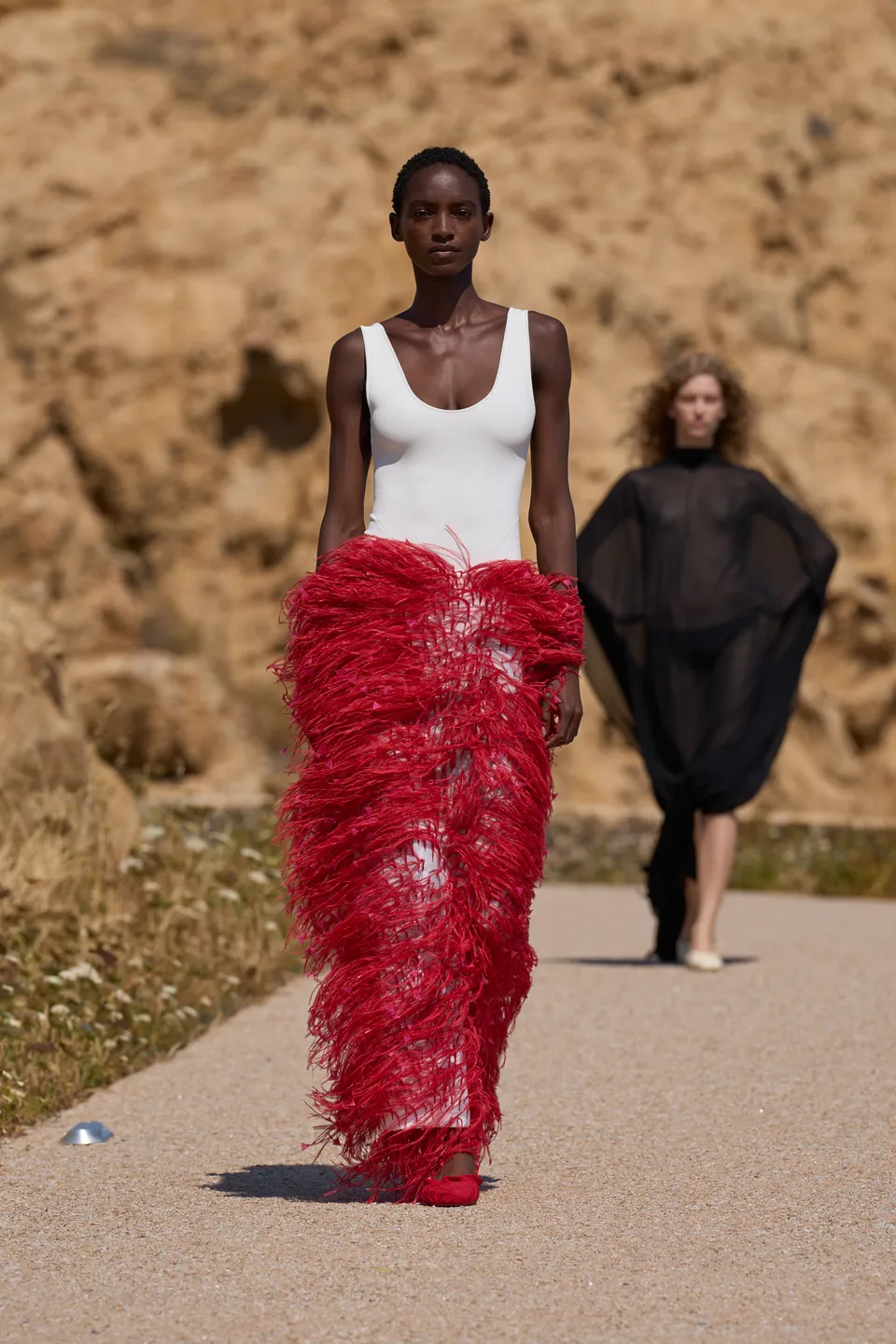
The paper-thin leather tanks were another strong technical gesture. Leather usually suggests weight and protection, but here it behaved almost like a second skin. The citrus-embossed orange leather trousers translated summer into texture rather than print. Shibori-molded pearl impressions gave fabric the feeling of memory pressed into surface. Silk organza bias strips moved like seaweed, turning marine life into garment behavior. The red ostrich-feather evening piece added organic movement, less Hollywood glamour than coastal bloom.
This is why Jacquemus Spring 2027 should not be read only as image-making. The show was photogenic, of course, but the clothes had real design logic. They were built for motion, wind, light, and touch. The simplicity was not empty minimalism. It was controlled reduction.
With “Le Bonheur,” Jacquemus Spring 2027 proposed happiness as a luxury strategy. At a time when luxury often sells status, scarcity, hardness, and distance, Jacquemus offered ease, skin, sunlight, sea air, and emotional accessibility. This was not naïve. It was strategic. The collection repositioned pleasure as something valuable because it feels increasingly rare.
That strategy becomes especially important as the house prepares to enter beauty. Jacquemus Spring 2027 already felt like a bridge toward that universe. The clothes kept returning to skin, glow, citrus, pearls, sun, water, and tactile surfaces. The collection did not simply dress the body; it staged the body as part of a sensory lifestyle. It felt ready to expand into fragrance, skincare, color, and sun-drenched beauty imagery.
Accessories served as commercial anchors inside the dream. Les Ballerines Pietra, The Valérie bag, Le Tote Pietra, strappy sandals, socks, and soft bags turned the Corsican fantasy into objects that could travel. They made “Le Bonheur” purchasable without making the emotion feel entirely cheapened. That is the tension at the heart of modern Jacquemus: the more intimate the dream appears, the more efficiently it becomes global brand content.
In final analysis, Jacquemus Spring 2027 succeeded because it understood that happiness cannot survive as a slogan. It must be built through proportion, memory, weather, fabric, movement, and place. The show was intimate and strategic, innocent and commercial, deeply Mediterranean and instantly exportable. Its beauty came from that contradiction. “Le Bonheur” was not just a summer fantasy. It was Jacquemus turning simple pleasure into a serious form of luxury.
Advertisement