MENU
Close





In the world of Simon Porte Jacquemus, the Jacquemus runway exists as a rhythmic dialogue between the needle and the infinite horizon. He treats the landscape as a primary protagonist, inviting the elements to weather the silk and the sun to illuminate the palette.
In the world of Simon Porte Jacquemus, the Jacquemus runway exists as a rhythmic dialogue between the needle and the infinite horizon. He treats the landscape as a primary protagonist, inviting the elements to weather the silk and the sun to illuminate the palette.
January 30, 2026
Advertisement
Advertisement


By stepping out of the traditional ateliers and into the breathing wild, he collapses the distance between high-concept luxury and the raw, salt-of-the-earth nostalgia of the French countryside. Every collection acts as an invitation to witness a rare alchemy, where the rigor of industrial production dissolves into a soft-focus dream. He possesses a singular ability to tether the fleeting beauty of a season to the permanent soul of a place, proving that a runway remains both a logistical triumph and a profound love letter to the land. That reverence for the landscape reaches its peak in Jacquemus Spring 2020 and Spring 2021 collections, where dressing feels like belonging, and the garment and the earth move to the same heartbeat.
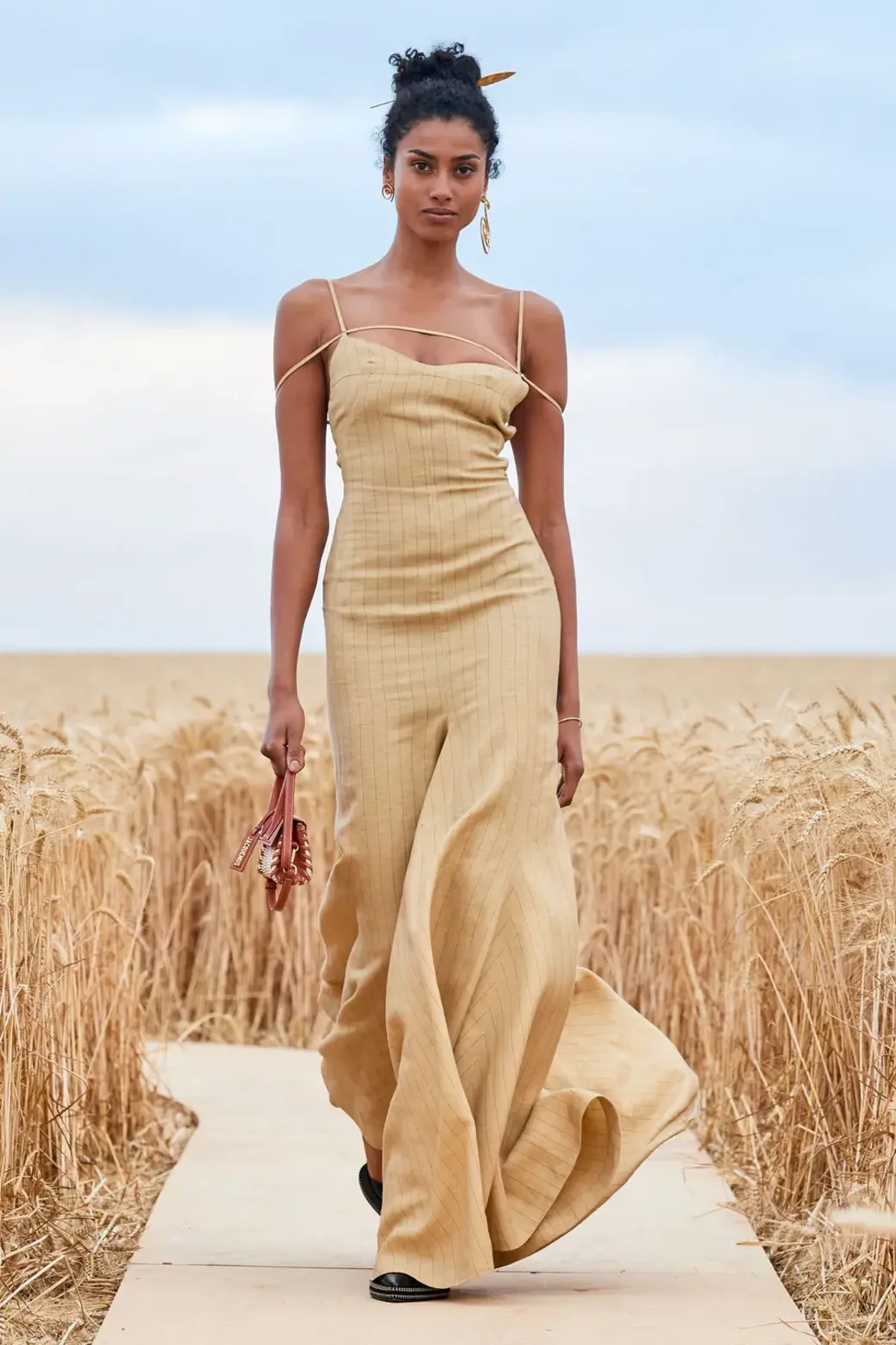
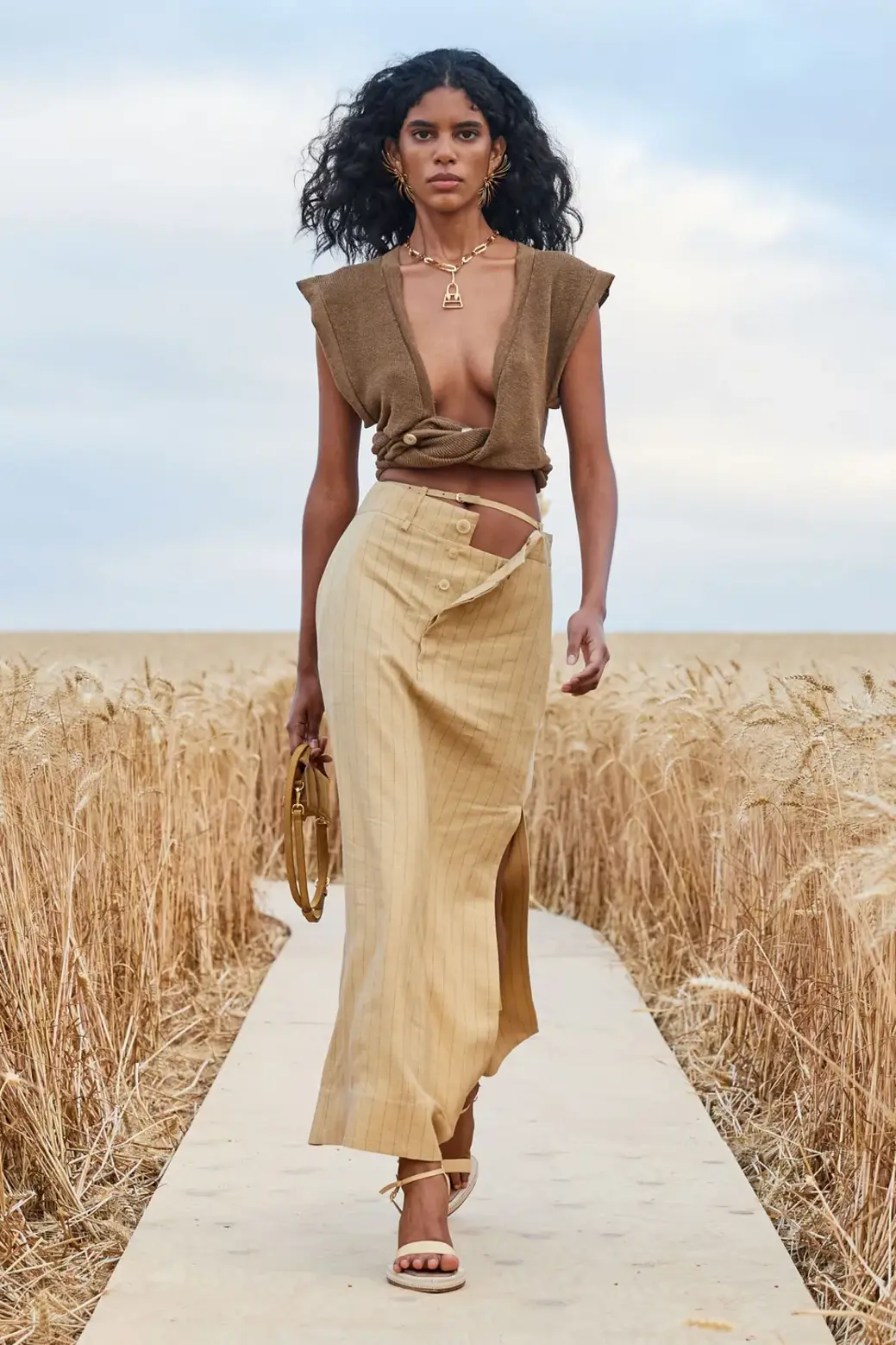
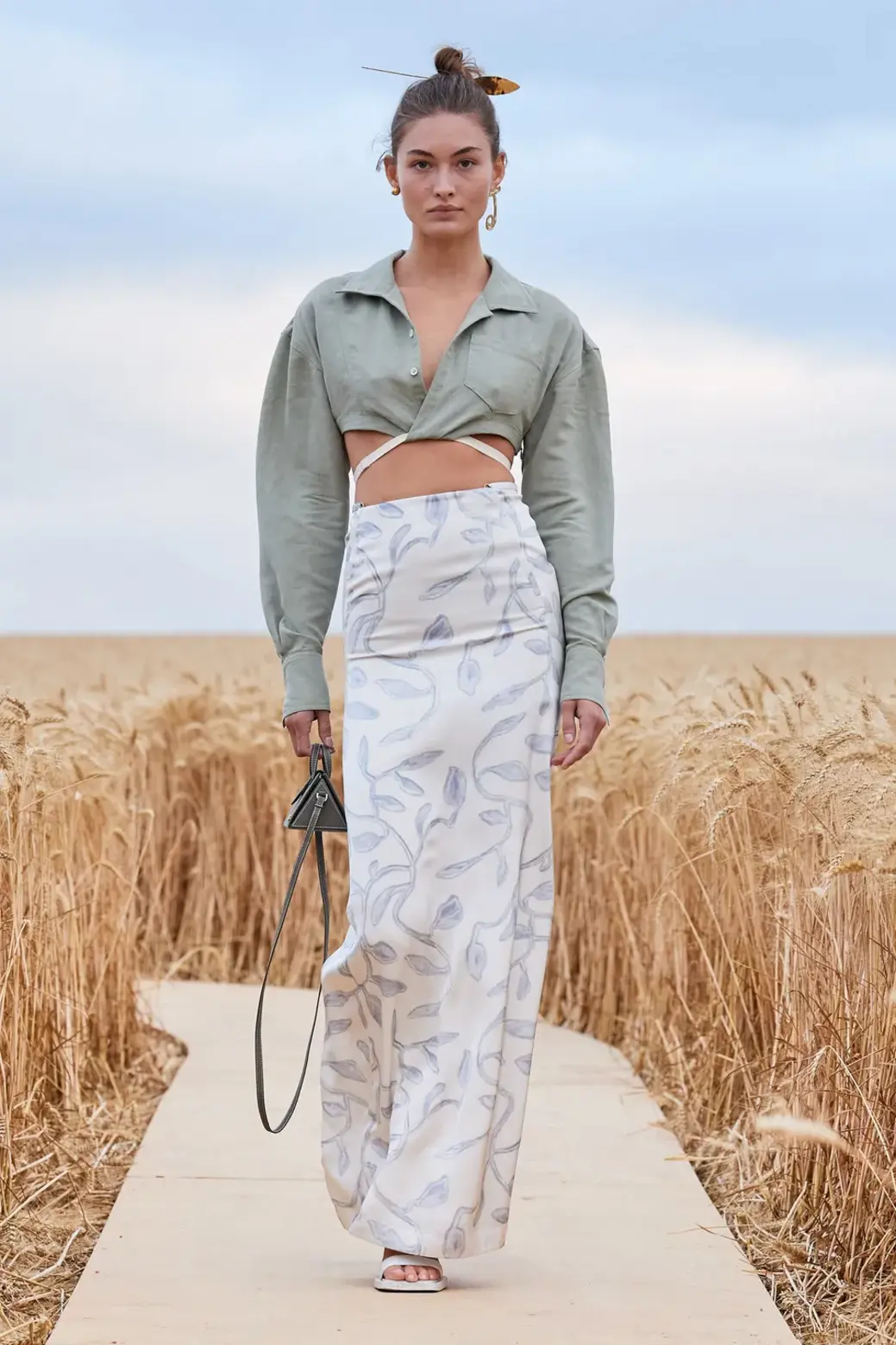
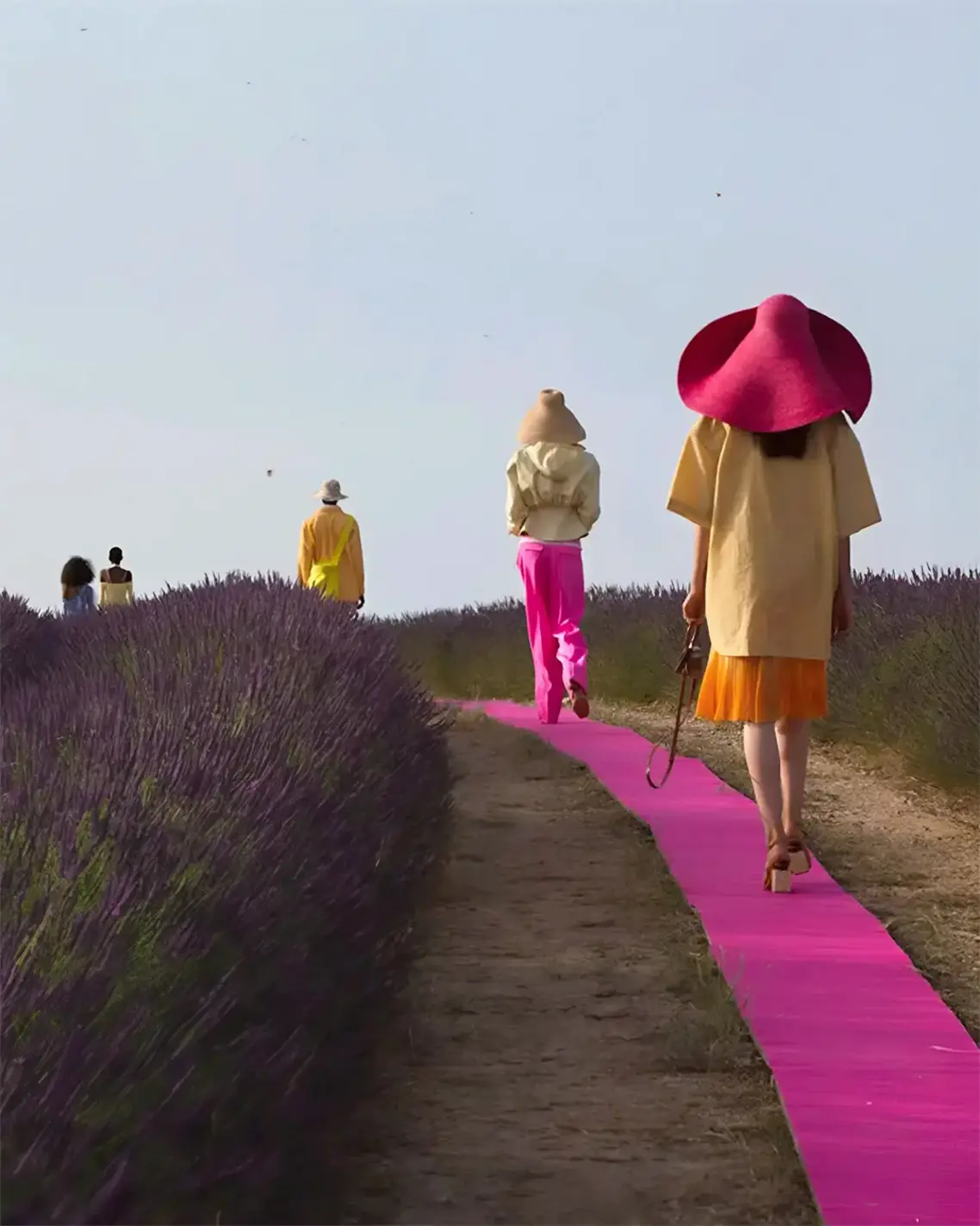
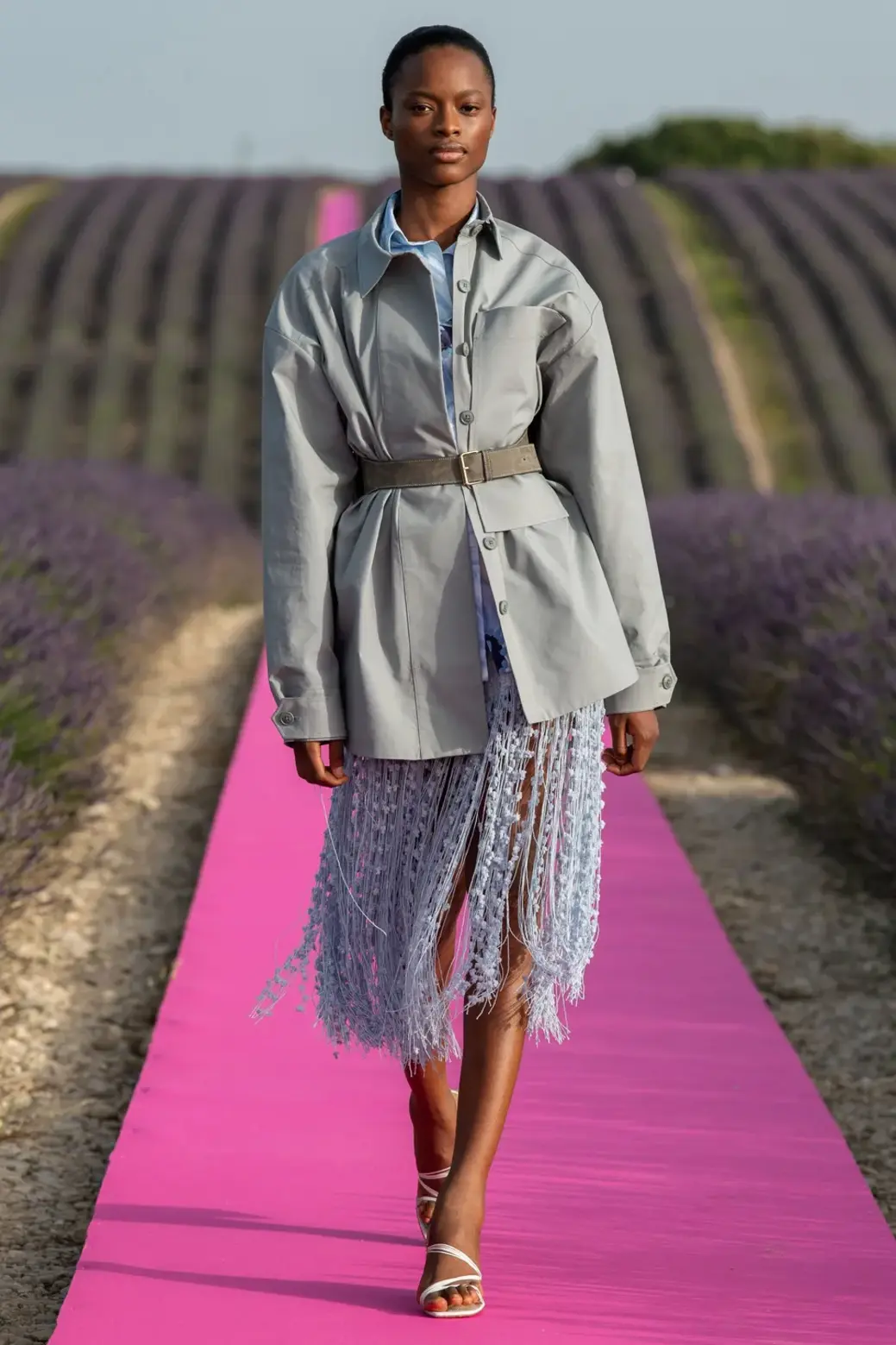
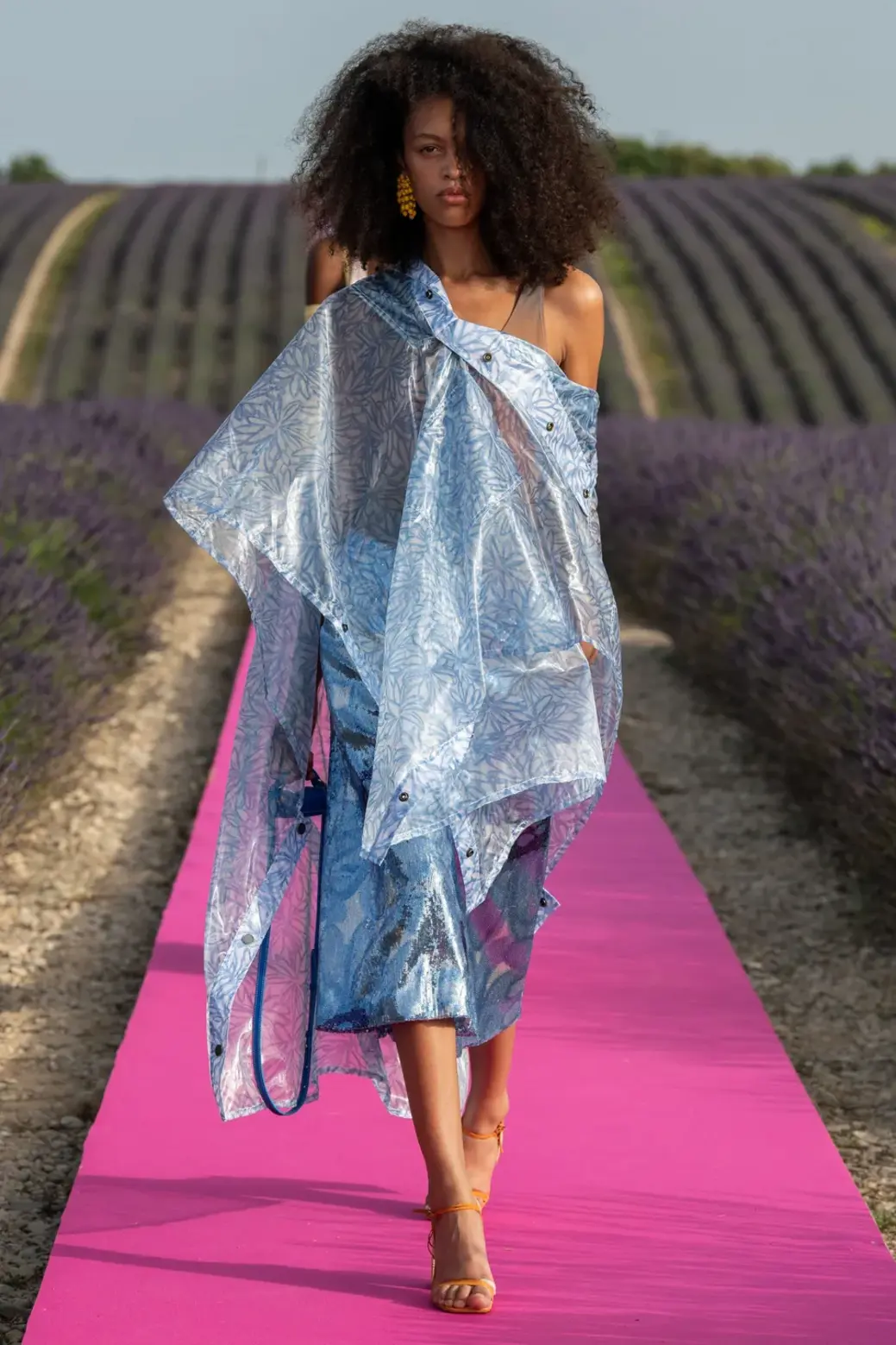
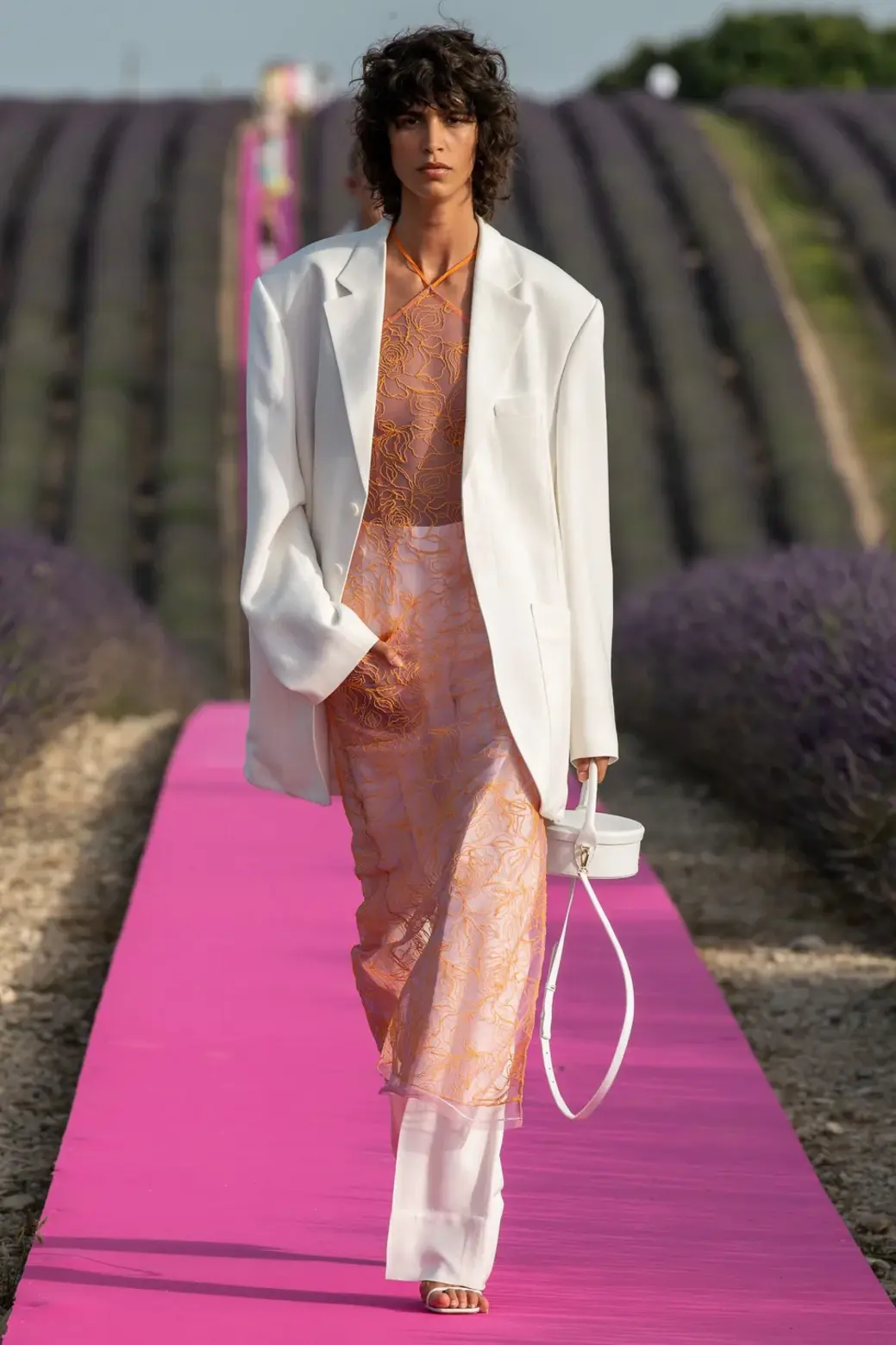
In Le Coup de Soleil Spring 2020, Valensole becomes a living canvas. A vibrant pink ribbon of fabric, stretching like a brushstroke across a sea of lavender, rises and dips with the land until it meets that sharp Provençal blue. Bees hum in the heat, white umbrellas bloom like paper flowers in the audience, and the whole scene reads like David Hockney’s pop clarity filtered through the romance of Claude Monet, as if the air itself were painted in oils: ultramarine sky, violet fields, a streak of cadmium pink so joyful it feels audible. The clothes follow the same logic of harmony rather than contrast. Loose tailoring moves like a warm breeze through stalks and stems. Modern peasant dresses with ribbon straps feel born from the countryside instead of styled for it. Sheer knits, art heel shoes, and playful bags scale up and down like nature does, from a single petal to a whole horizon. It is sophisticated, yet light, like a summer cocktail lifted to the lips at golden hour.
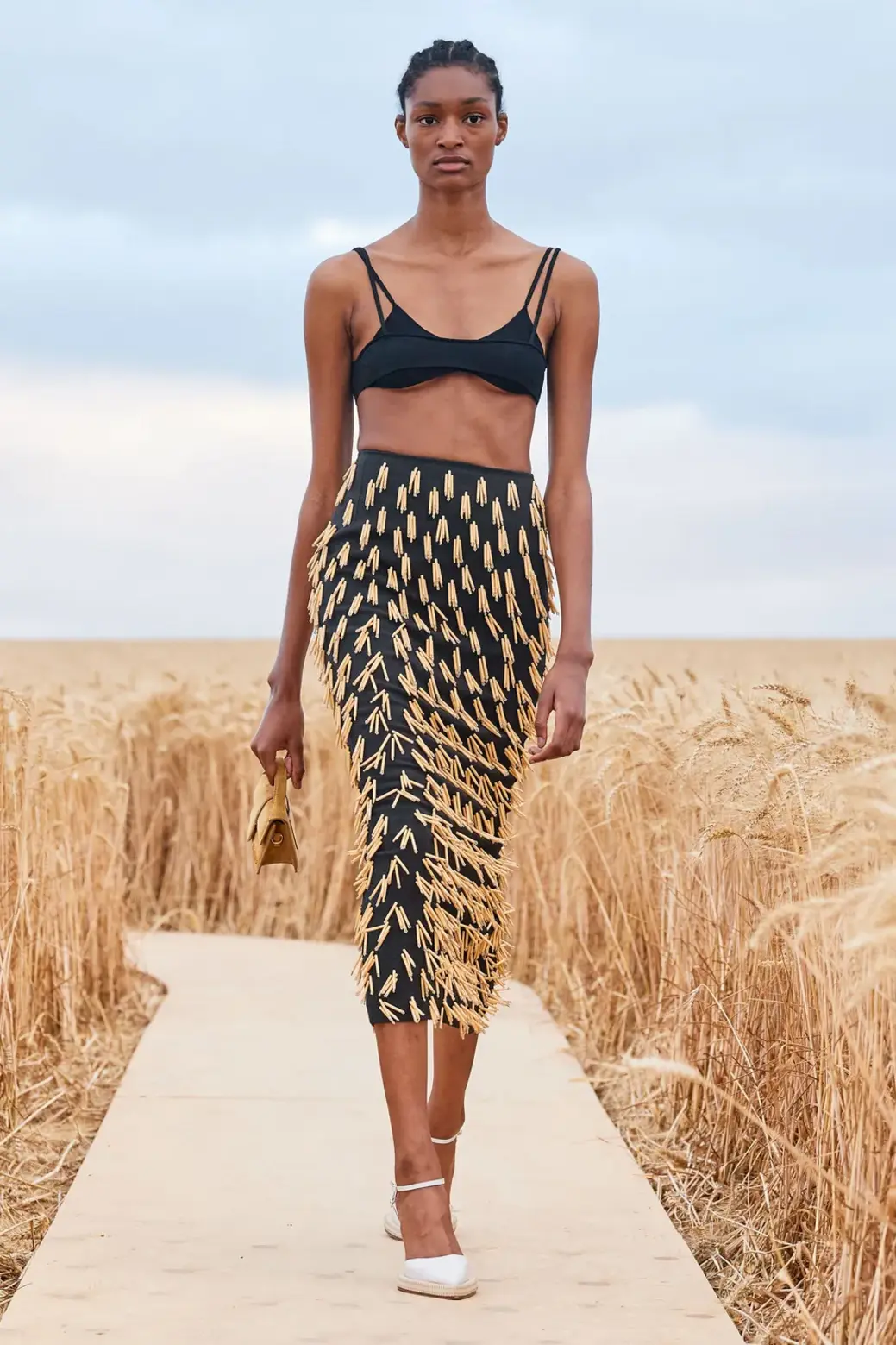
Then L’Amour Spring 2021 takes that emotional purity and translates it into a harvest dream near Paris, where a long wooden runway snakes through sunlit fields like a line drawn by a steady hand. The concept feels like a simple country wedding, a harvest festival, a protective bubble made of open air. Provençal memories appear as small, intimate details: ceramics, a poem like a pressed flower, a grandmother’s tablecloth corner, cherries gathered like bright punctuation. The palette sits in the throat of summer: sage, ecru, clay, soft black, all tones that look kissed by sun and dusted by grain. Dresses carry Southern French ease, with breezy wheat sheaf beading and tassels that flutter like seed heads. Broderie anglaise reads as countryside lacework, airy and devotional. Even the witty accessories feel like souvenirs from an honest life, where beauty comes from everyday objects given a little grace.
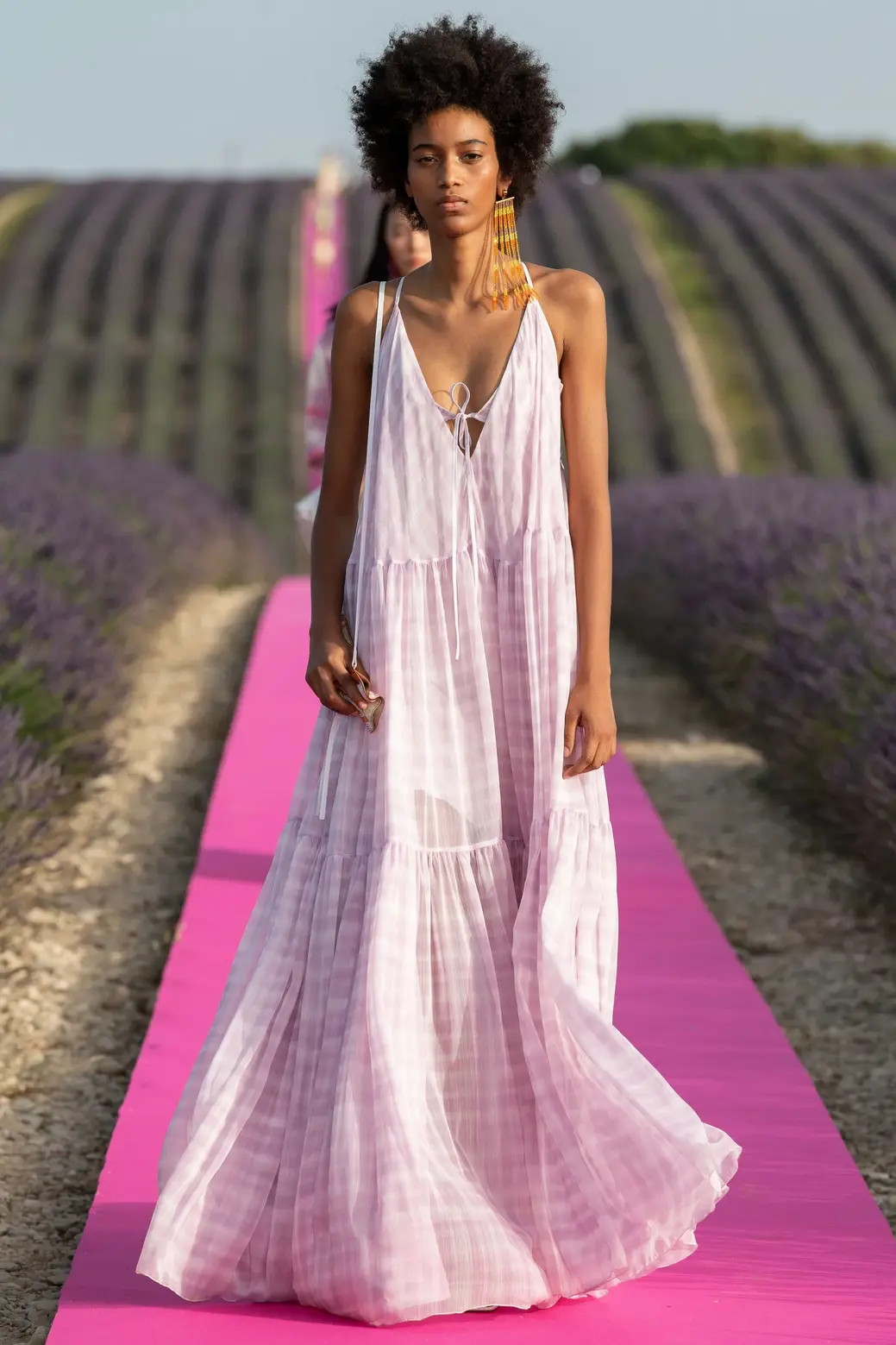
Pulling off an outdoor runway in a living landscape asks a fashion house to operate like a film crew, a festival, and a public works team at once: securing landowner agreements plus local authority sign offs, planning environmental protection and site restoration, building power, sound, seating, shade, water, backstage tents, security, medical support, and transport to a remote field where weather and light keep shifting the schedule in real time.
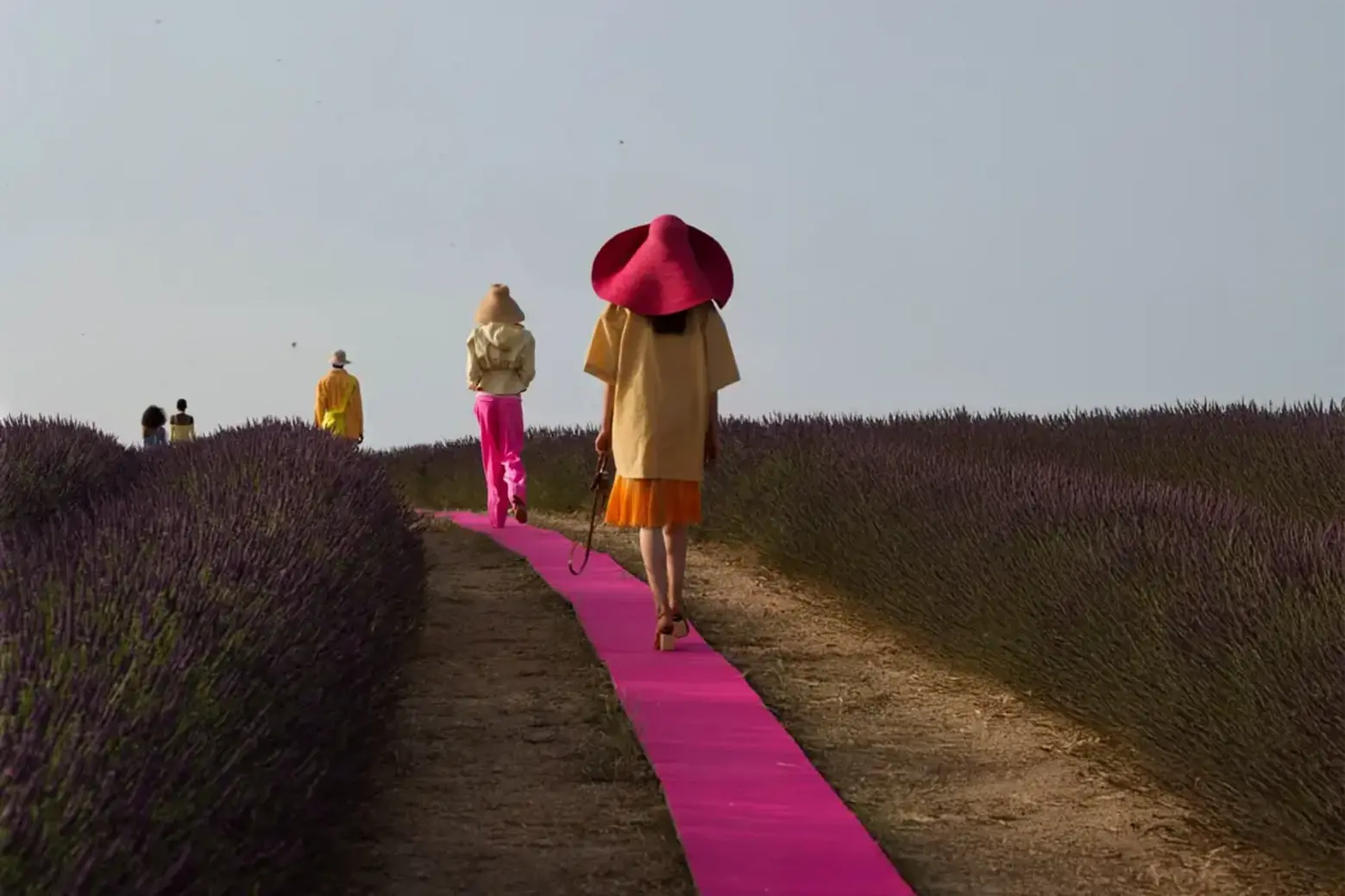
At the scale of a Jacquemus runway, the challenge becomes architectural: the Jacquemus runway in the Valensole lavender fields featured a third of a mile of vivid pink fabric laid through the purple stalks, while the Jacquemus runway for L’Amour stretched a near 2,000-foot wooden path through golden wheat. Each Jacquemus runway demands rigorous engineering, labor, safety checks, and meticulous choreography across the terrain, all to deliver clothes that feel weightless and intimate. This is where Simon Porte Jacquemus shows rare dedication: he invests in the unseen production discipline so the visible result stays pure, poetic, and emotionally direct. With every collection tuned to the landscape’s own palette and mood, the Jacquemus runway and the garments read as one artwork, precise enough for the camera, tender enough for the heart.
Advertisement