When the jazz kicks in and the room turns into a mirror maze of light, why does Art Deco style make elegance feel like a game, and winning feels inevitable?
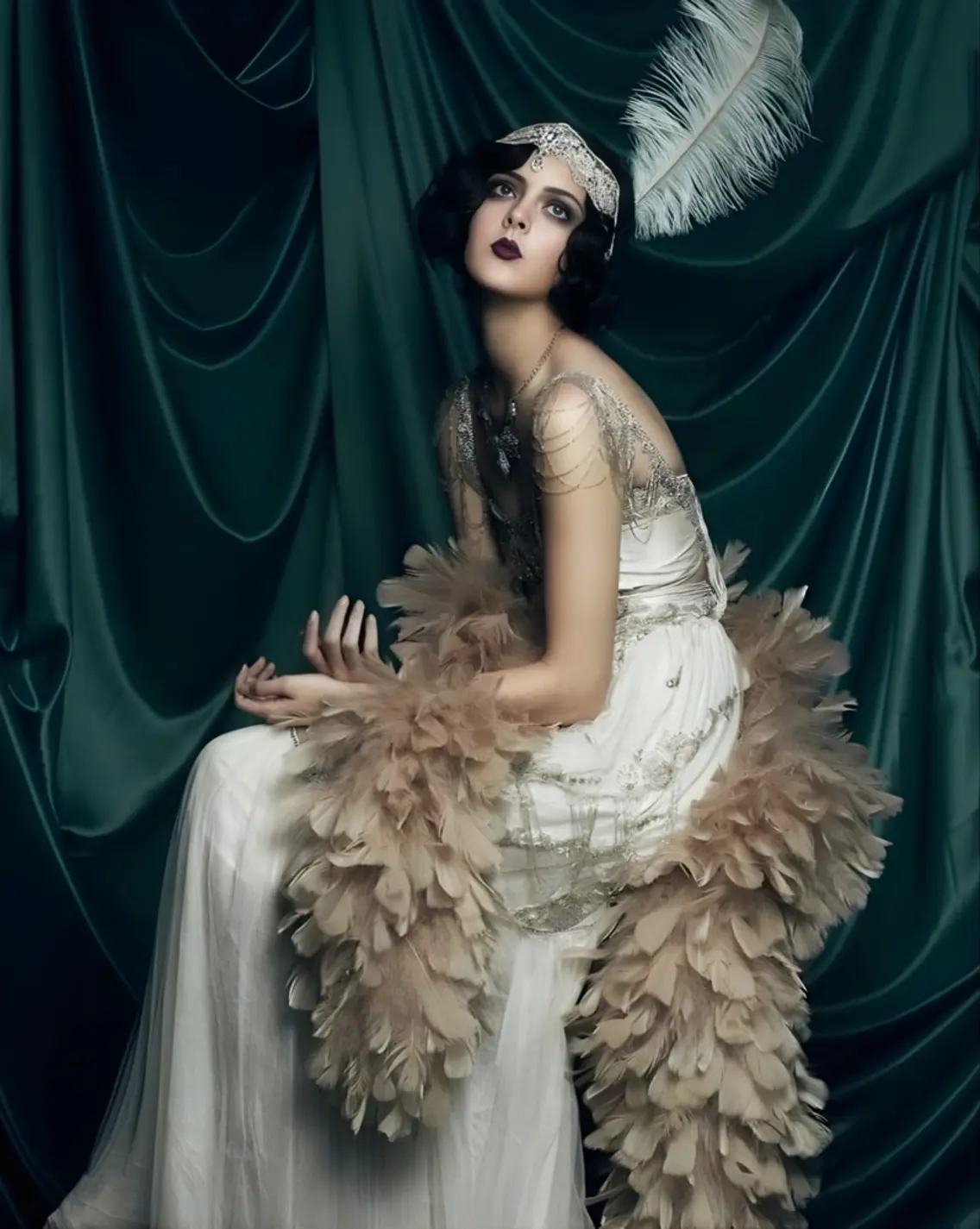
Art Deco Style: The Golden Hour of Designed Seduction
When the jazz kicks in and the room turns into a mirror maze of light, why does Art Deco style make elegance feel like a game, and winning feels inevitable?
March 11, 2026
Advertisement
Advertisement


Evening arrives dressed in light, and the city answers with a hush of anticipation; when the doors open, warmth rolls outward, perfume, champagne, lacquer and polished brass, while inside an Art Deco ballroom blooms like a jewel box engineered by dreamers who trusted lines, symmetry, and modern invention as seduction.
A chandelier scatters its radiance in clean angles, mirrors multiply each glance into a constellation, black marble remembers every step, and jazz pulls bodies into motion as bias-cut satin slips along the spine and beadwork flashes in chevrons and sunbursts.
The Architecture of Glamour
Art Deco in fashion is a language of modern luxury built from geometry, symmetry, and an appetite for progress, a style where glamour takes the shape of design, and desire learns the discipline of structure, and every detail, every line, every shimmer, every cut, participates in a larger composition that reads like architecture set free upon the body.
In its purest form, Art Deco fashion expresses clarity through elongated silhouettes, surfaces that gleam with intention, and ornament arranged as pattern and rhythm, with motifs that echo the era’s visual signatures, chevrons, zigzags, stepped forms, radiating sunbursts, fan shapes, translated into beadwork, embroidery, pleating, seaming, and the way fabric bends into light.
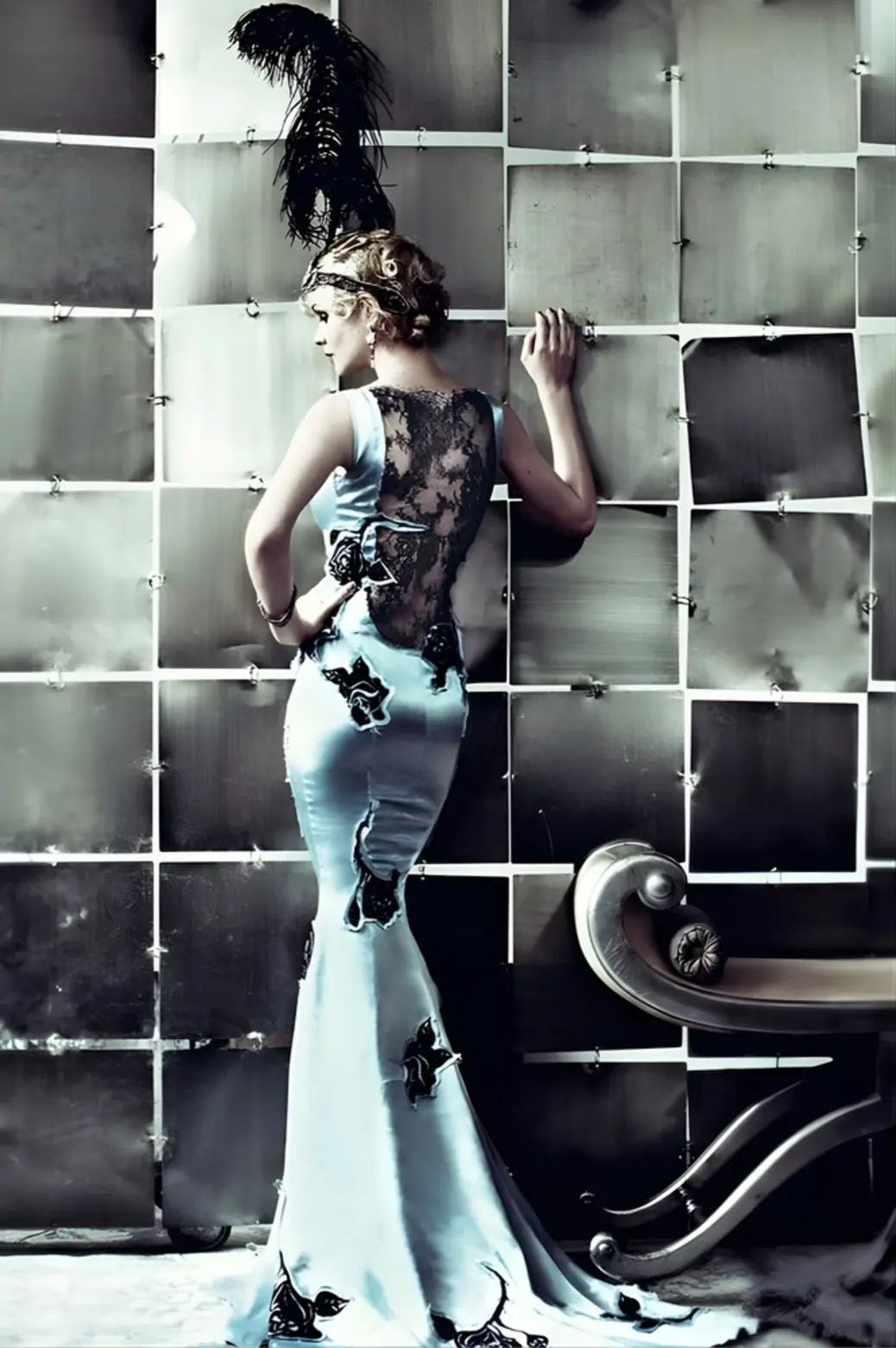
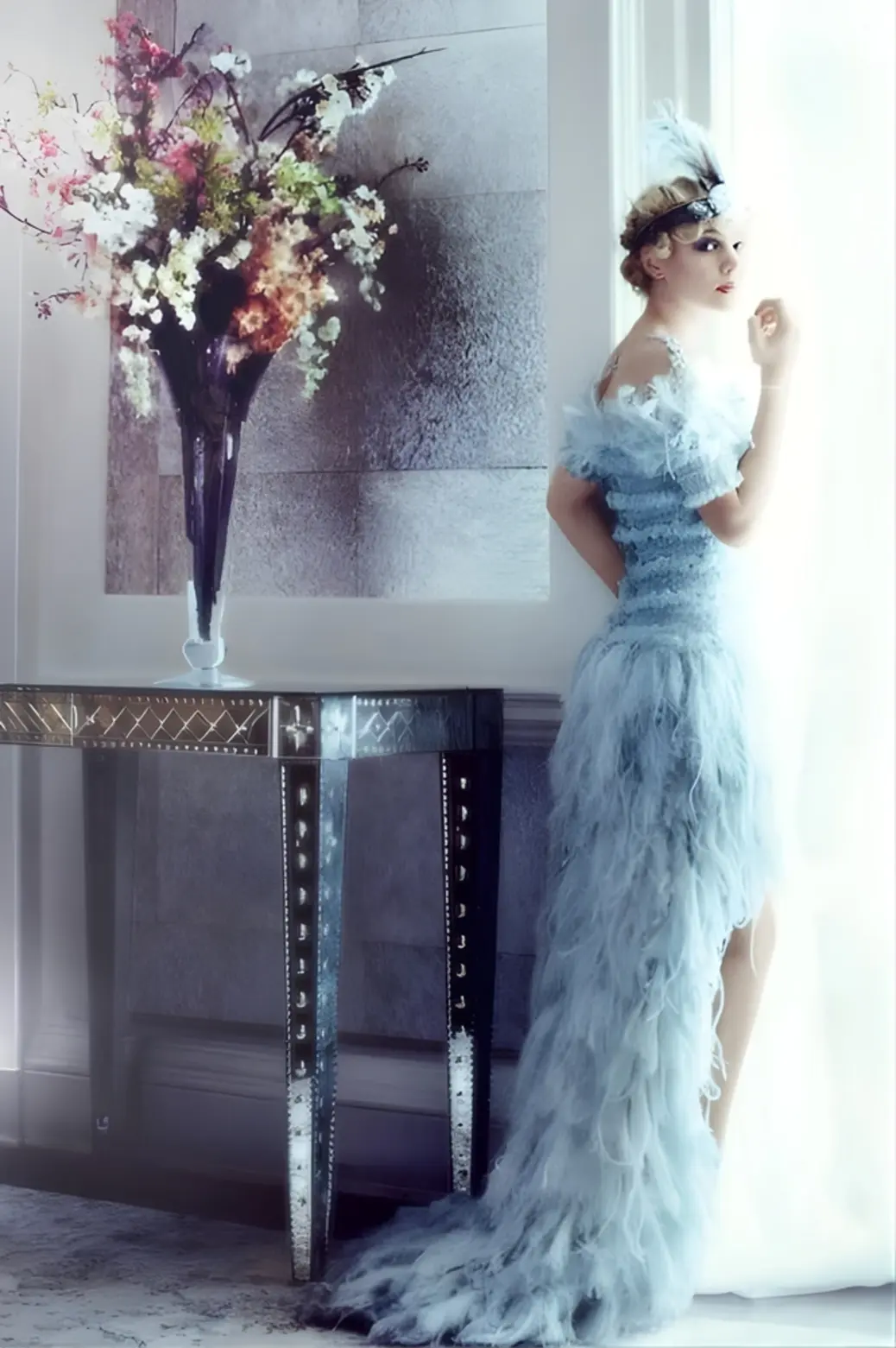
Art Deco loves materials that flirt with reflection: silk satin with its liquid shine, velvet with its midnight depth, lamé and metallic threads that turn movement into electricity, glass beads and sequins placed like city lights mapped across a skyline, and lacquered accessories that feel sculptural, precious, and exact.
This style carries a distinct emotional temperature: sensuality refined by precision, romance shaped by symmetry, luxury expressed through controlled radiance, and a belief that modern life, fast, urban, cinematic, deserves a wardrobe that speaks in clean, confident sentences.
Art Deco fashion feels designed the way a building feels designed: purposeful, balanced, dramatic, and alive.
How Art Deco Style Learned Its Shape
Art Deco rises from a century pivoting on invention, culture, and desire, a period when the world reorganized itself around electricity, automobiles, aviation, radio, cinema, ocean liners, department stores, and the new social choreography of cities, and within this momentum, design became a public language, visible in architecture, interiors, objects, typography, jewelry, and the garments that carried these ideas into the street, the theater, the dance floor.
The story gathers force in Paris, where a key moment arrived in 1925 with the Exposition Internationale des Arts Décoratifs et Industriels Modernes, an international showcase that gave the style a name and a stage, presenting a vision of modern elegance rooted in craftsmanship, luxury materials, and a sleek new geometry that felt aligned with contemporary life.
Global influences flowed into the style with the intensity of a decade that adored travel and spectacle, and one event cast a particularly glittering shadow across popular imagination: the 1922 discovery of Tutankhamun’s tomb, which inspired a wave of Egyptomania in jewelry, fashion, interiors, and graphic design, shaping motifs that appeared as stylized lotus patterns, scarabs, winged forms, bold stripes, and a love of gold paired with saturated jewel tones, all filtered through a modern, geometric sensibility that made ancient references feel startlingly current.
In the same cultural breath, Art Deco absorbed African art’s sculptural power, East Asian lacquer traditions, and the sleek opulence of global luxury objects circulating through museums, exhibitions, and elite collecting, and fashion translated these influences into surfaces, palettes, and accessories that felt cosmopolitan, daring, and artfully composed.
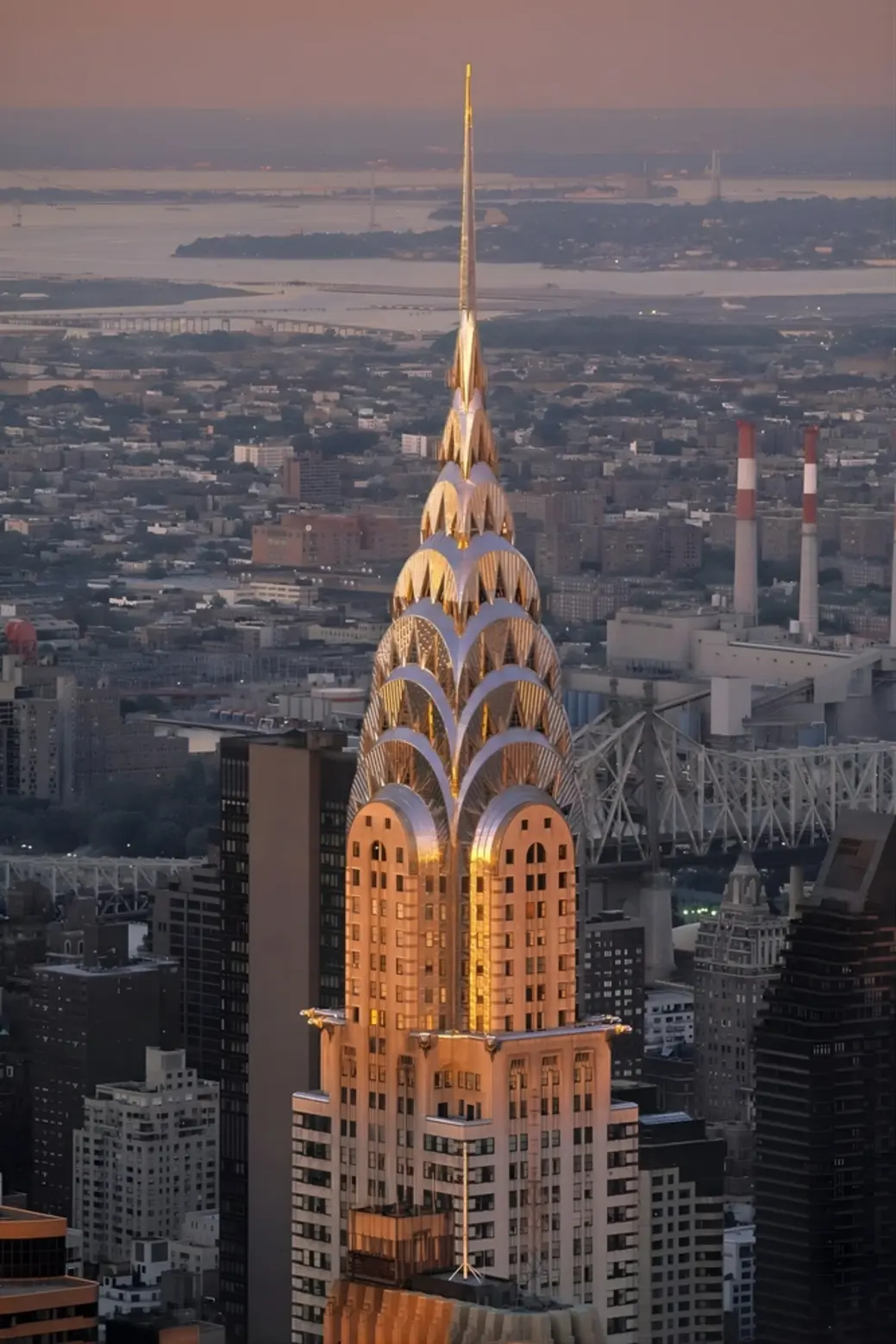
Meanwhile, architecture rose as the era’s grand metaphor, shaping Art Deco’s emotional landscape through buildings that became icons of aspiration and modern identity: the Chrysler Building in New York, completed in 1930 under architect William Van Alen, crowned by gleaming metal and radiating motifs that felt like a hymn to speed; the Empire State Building, completed in 1931, rising as a vertical statement of ambition; Rockefeller Center in the 1930s, presenting a curated modern city within a city, where sculpture, design, and public space merged into a polished vision of urban elegance.
These buildings mattered to fashion because they taught the culture a new silhouette: vertical, streamlined, luminous, composed.
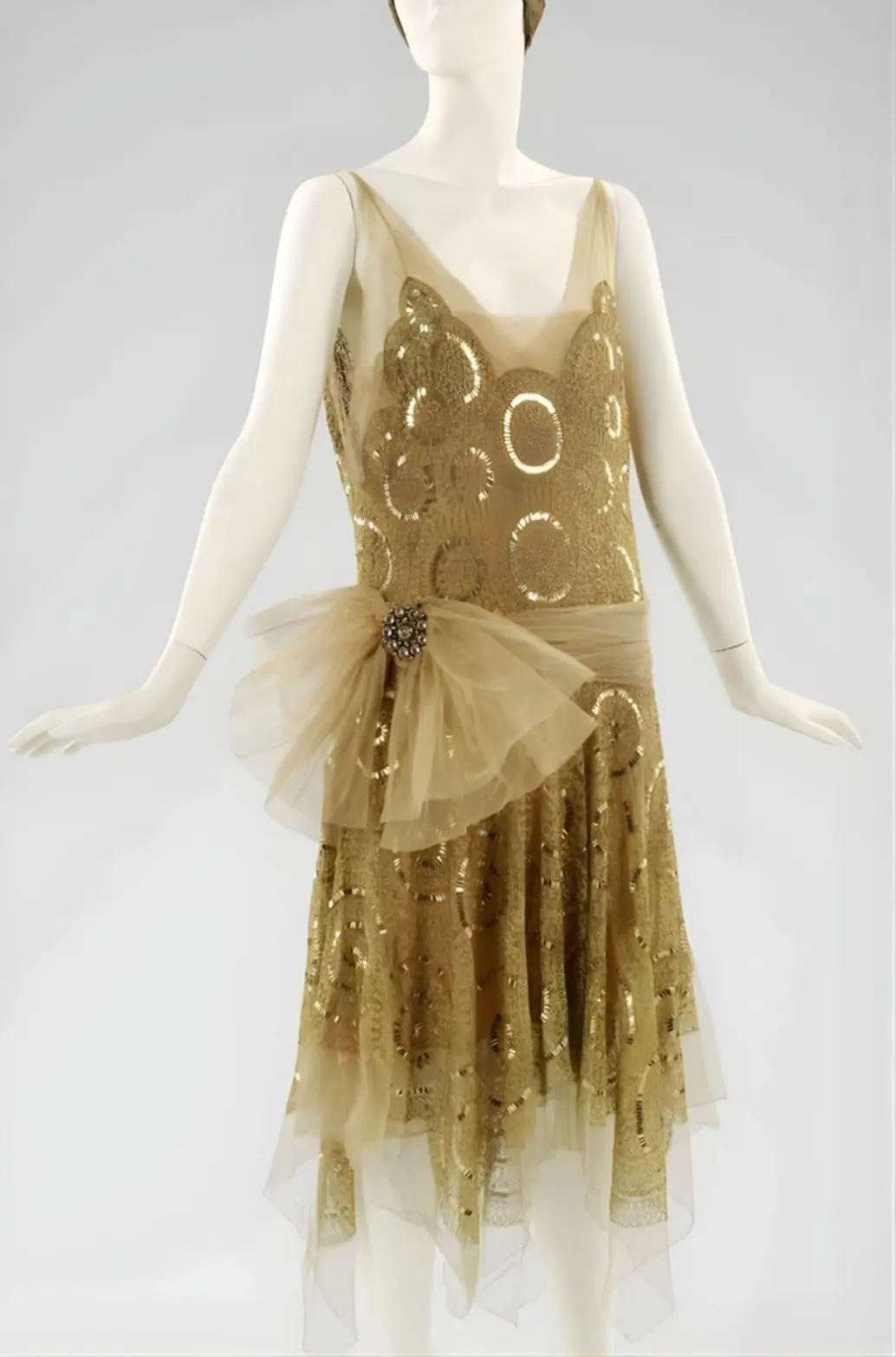
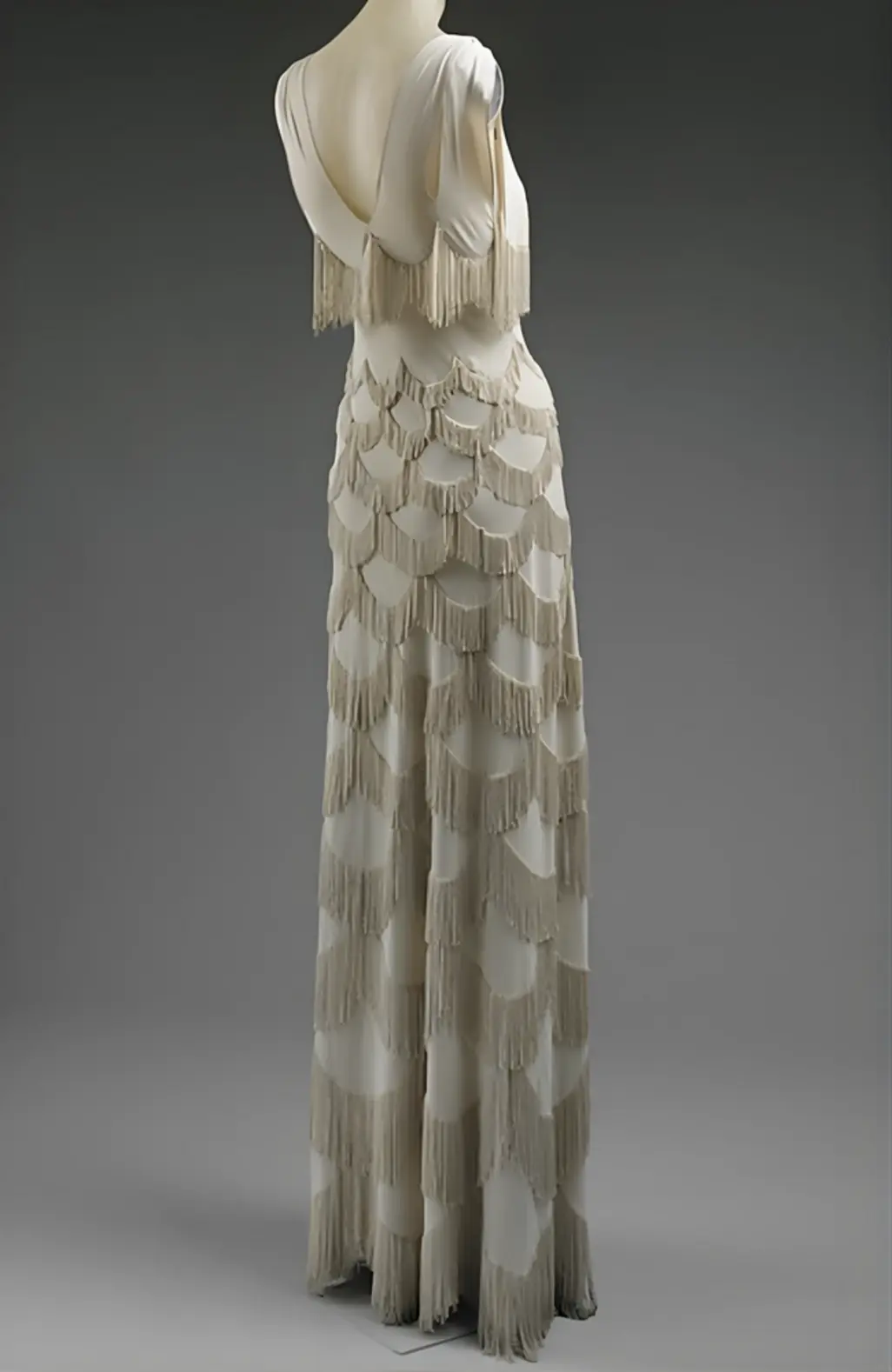
Fashion existed inside this ecosystem, and couture designers shaped the Art Deco wardrobe as a living expression of the era’s ideals: Jeanne Lanvin brought elegance with structure and ornament arranged like architecture; Madeleine Vionnet elevated the bias cut into a form of engineering, turning fabric into a fluid sculpture that moved with the body; Jean Patou embodied sporty modern luxury and the ease of a woman who belonged to the city and the sun; Elsa Schiaparelli later carried the era’s taste for bold design, graphic wit, and theatrical modernity into garments that felt like art you could wear.
This history carries a rhythm across the decades: the 1920s with its sleek, youthful energy, dropped waists, tubular lines, shimmering surfaces designed for dance, then the 1930s with its elongated sophistication, where bias cuts and refined tailoring shaped a more statuesque glamour that looked sensational in motion and devastating in stillness, like a column of light.
The Art Deco Night: Style as a Total Experience
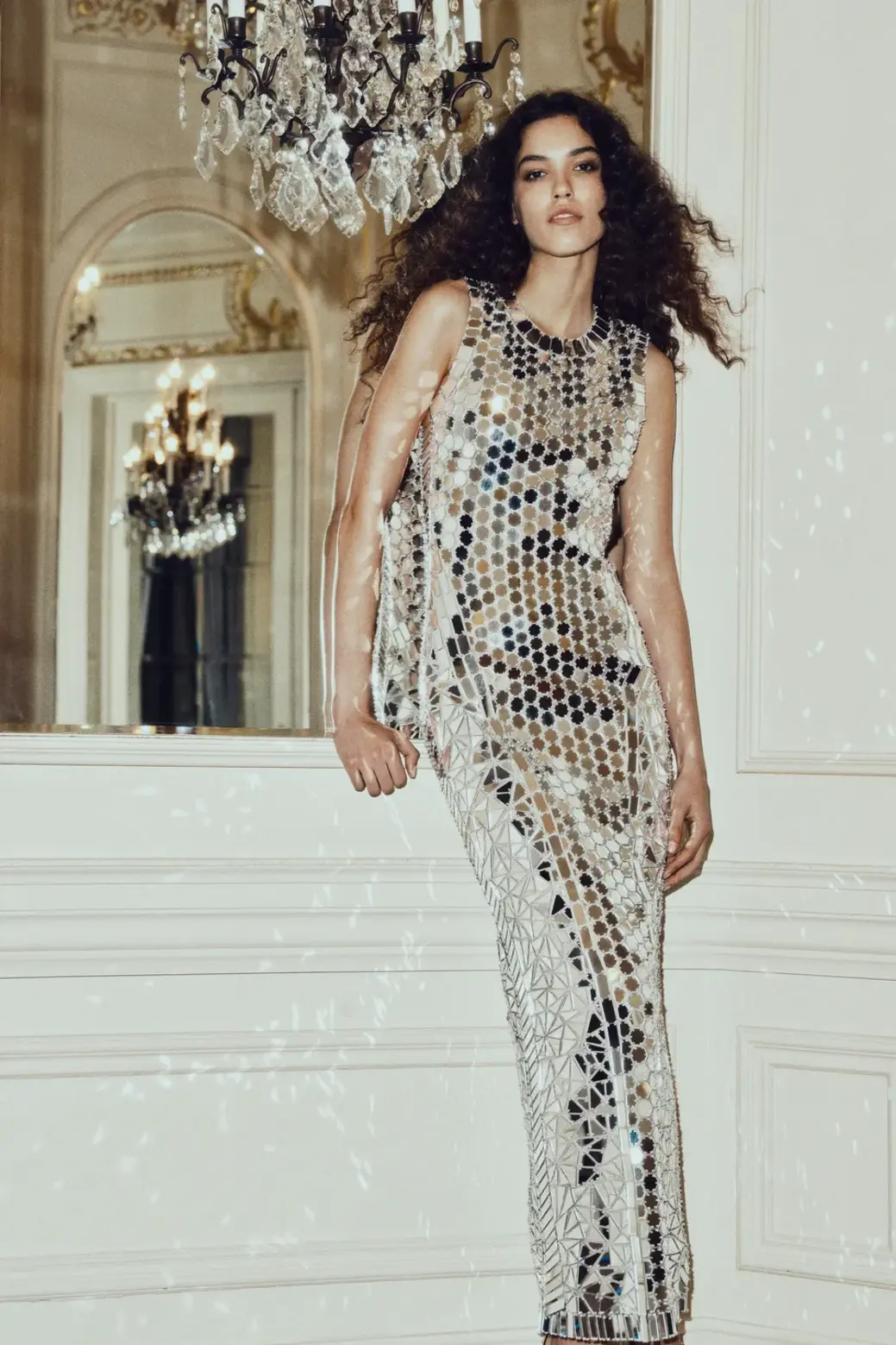
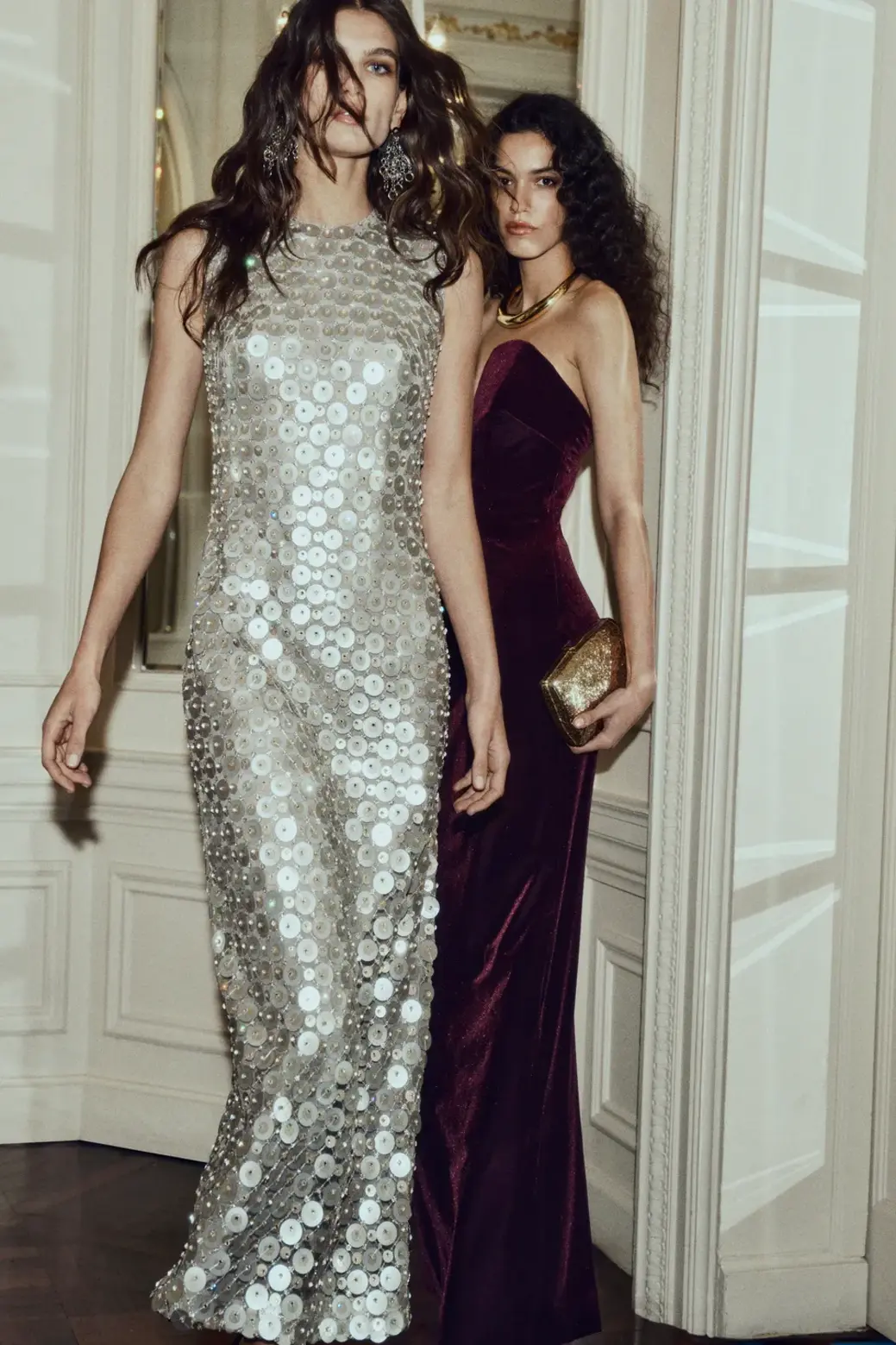
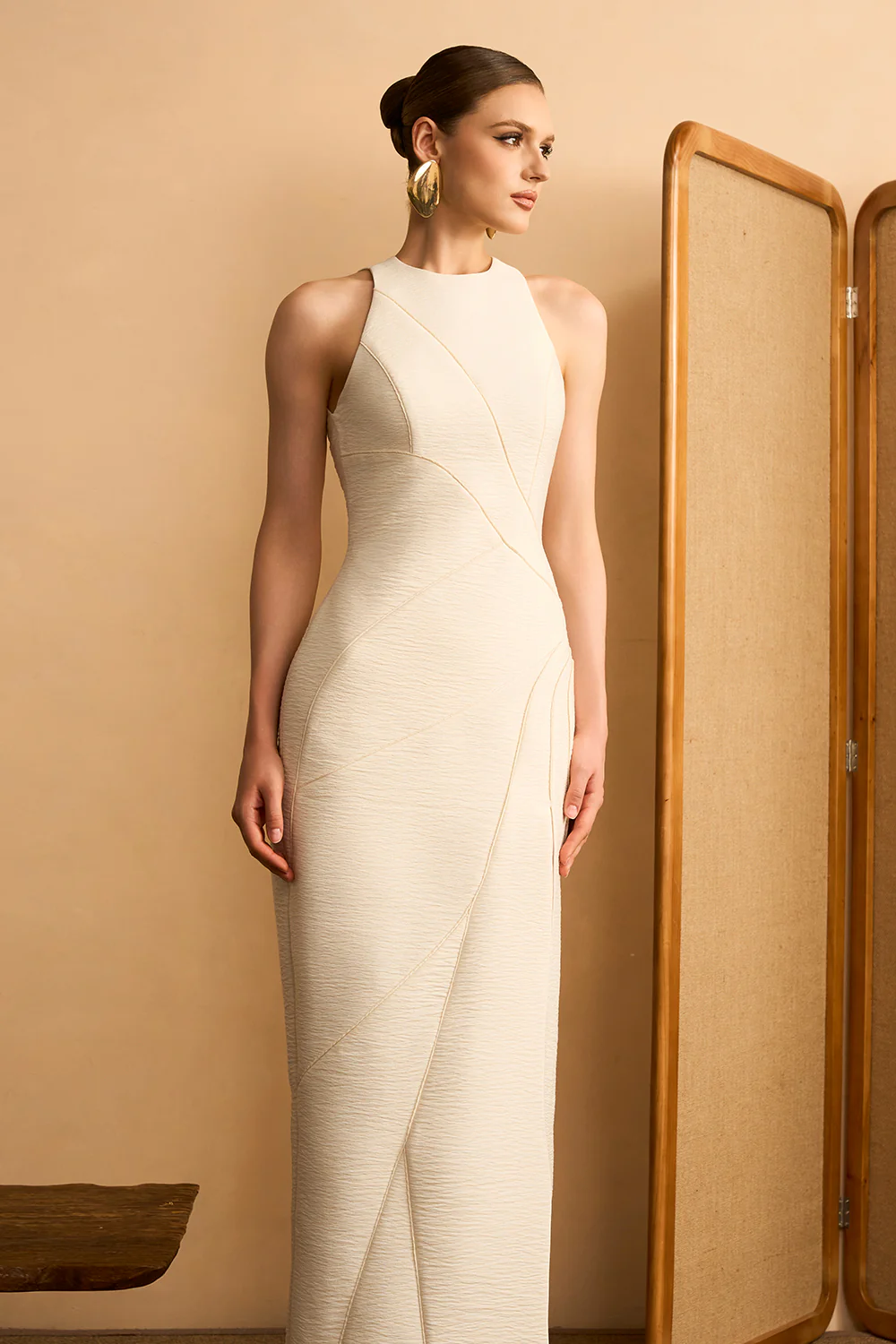
Art Deco silhouettes favor elongation and clarity: I-line dresses that create a long, elegant line; gowns shaped by the bias cut that drape like liquid sculpture; drop-waist dresses of the 1920s designed for dancing, movement, and youthful ease; refined 1930s eveningwear that lengthens the body into a sleek, luminous form; tailored ensembles with strong shoulders and streamlined lines that turn posture into presence.
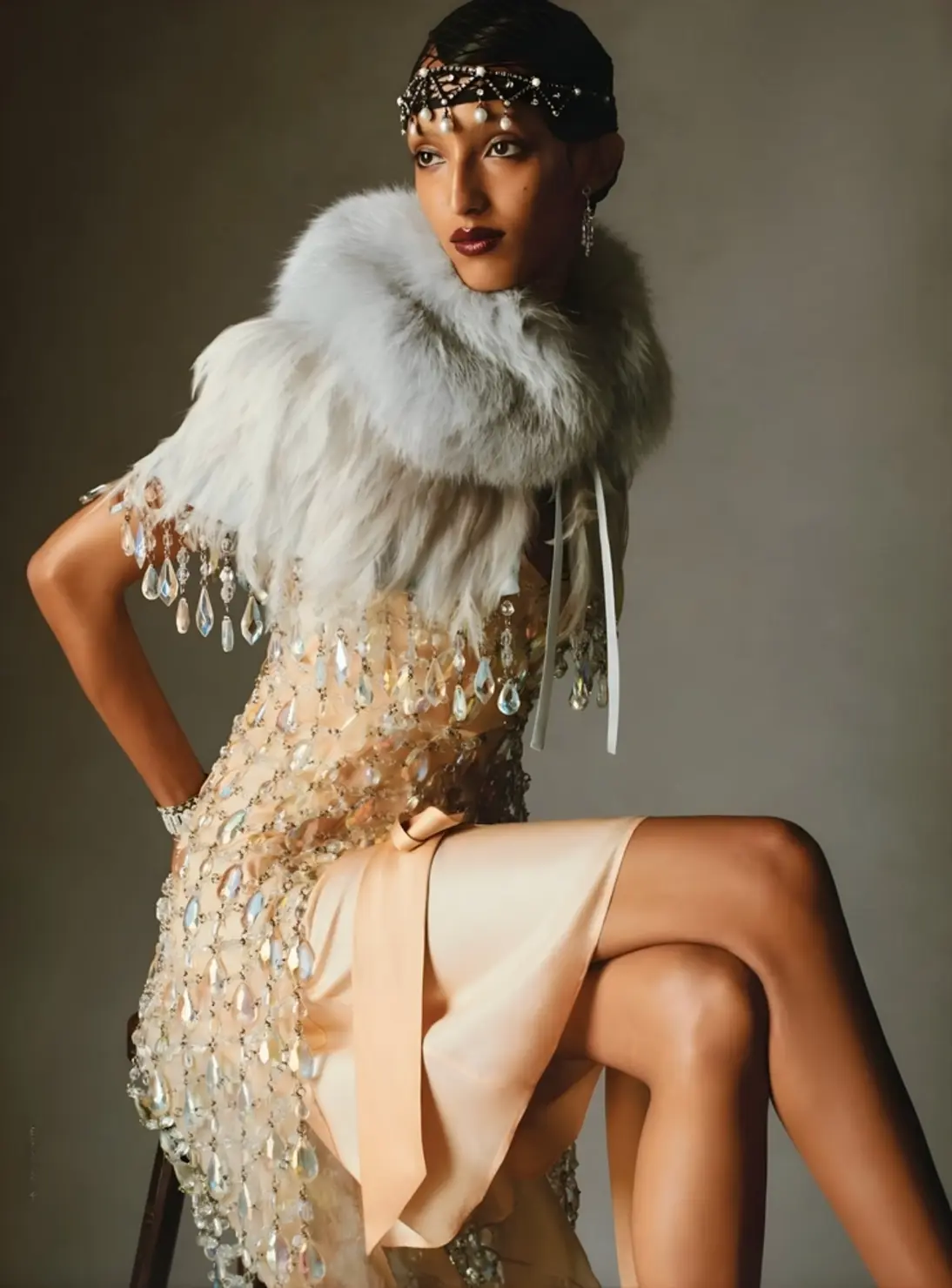
Art Deco style thrives in fabrics that interact with light and movement: silk satin that glows like moonlit water; velvet that holds color with depth and richness; chiffon that drifts in controlled softness; lamé and metallic threads that turn the wearer into a moving reflection; beadwork and sequins that shimmer in organized patterns, crafted to echo architecture’s precision.
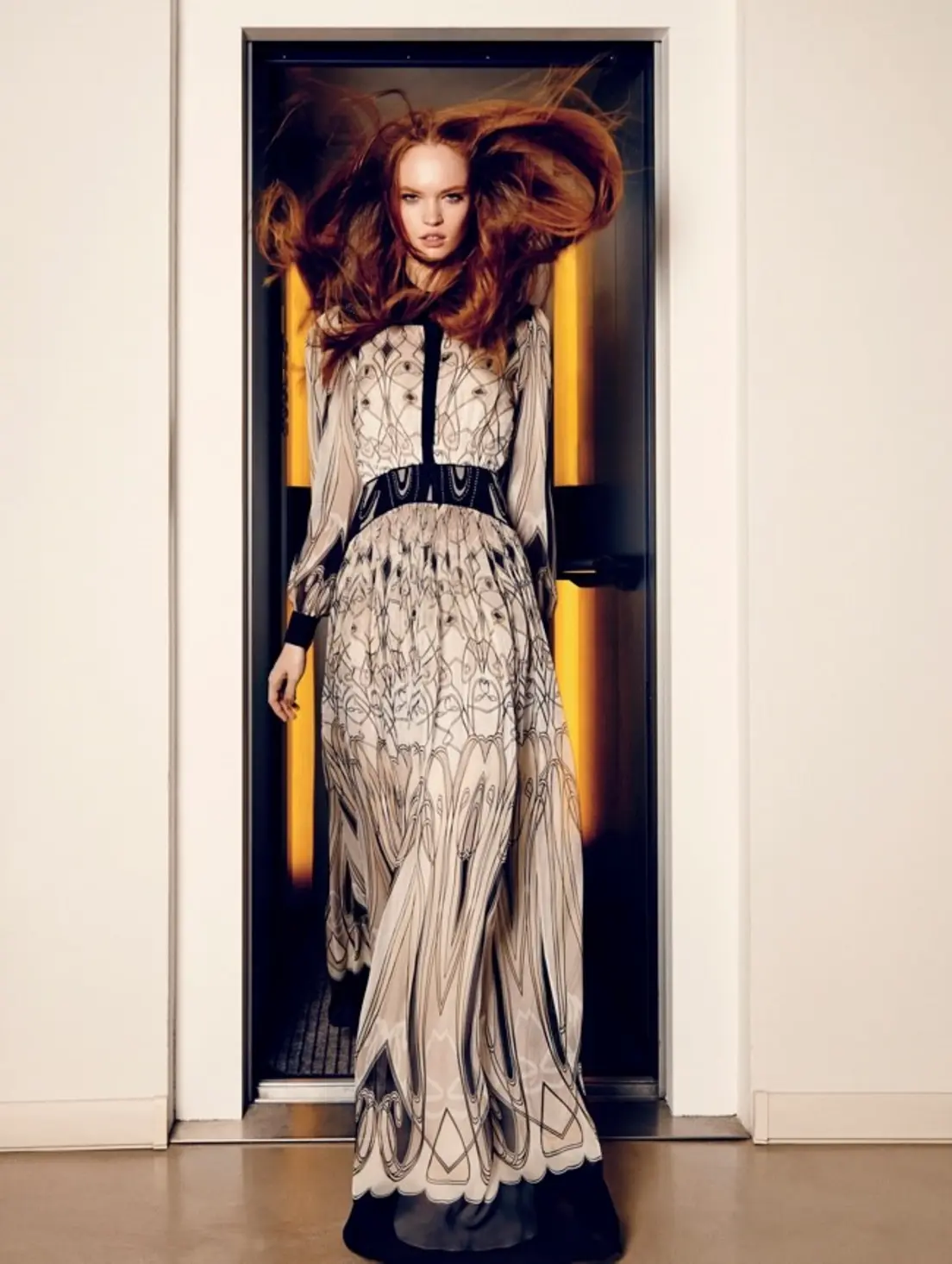
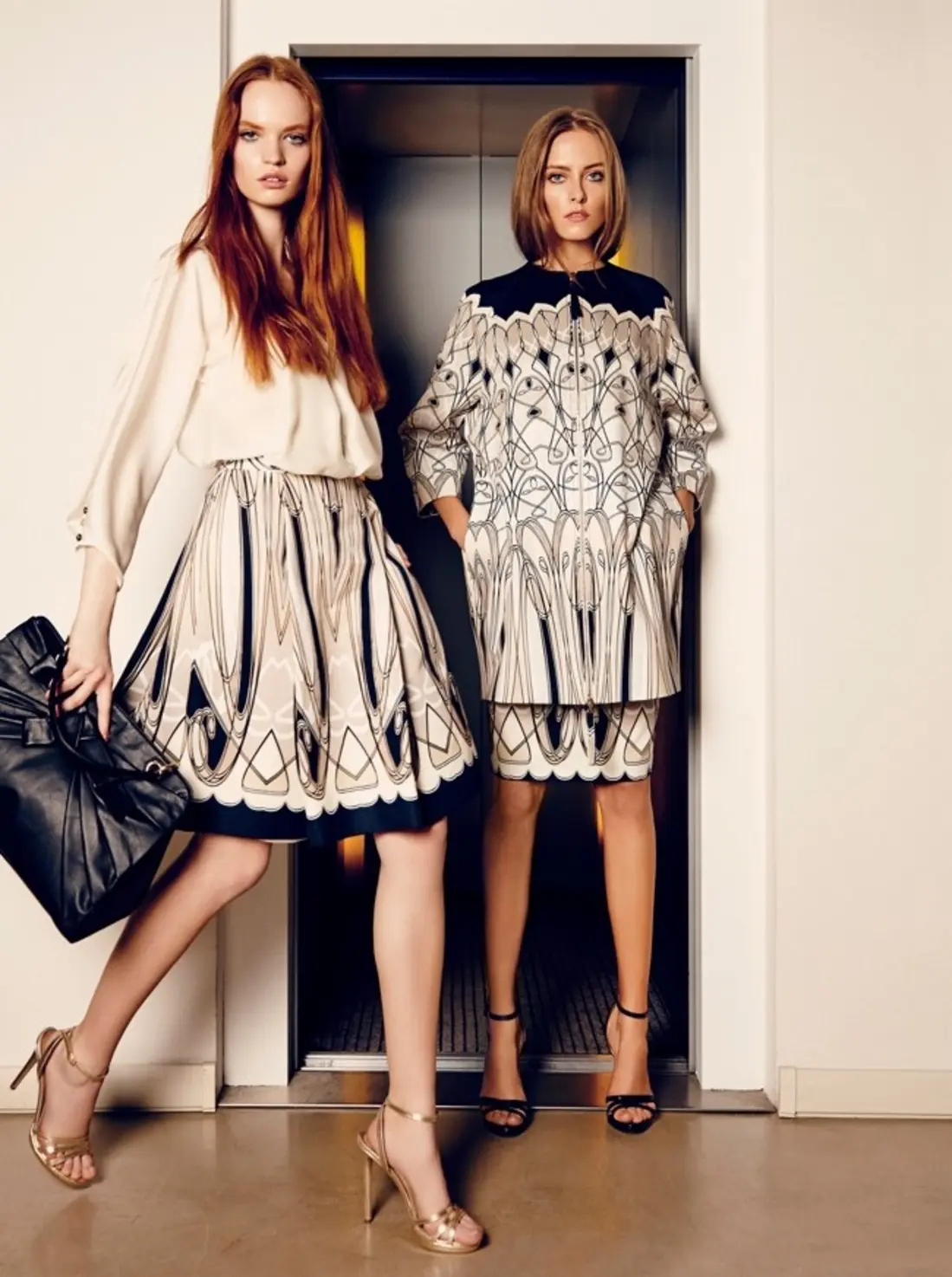
Art Deco motifs emerge as stylized geometry: chevrons, zigzags, stepped forms inspired by ziggurats, sunbursts that radiate outward like electrical energy, fan shapes that feel theatrical and graphic, linear patterns that guide the eye along the body as if tracing a blueprint.
The palette often embraces high-impact elegance: black as a foundation of sophistication; ivory, champagne, and silver as luminous neutrals; jewel tones such as emerald, sapphire, ruby, and deep amethyst that resonate with the era’s jewelry culture; gold and bronze that carry warmth and opulence; combinations that feel bold, polished, and intentional.
Art Deco detail tells a story of design discipline: embellishment placed to emphasize structure; beadwork arranged to elongate, contour, and radiate; pleats and panels that create visual rhythm; necklines that feel clean and graphic; backs that reveal skin like a deliberate design choice; hems that move with engineered elegance.
Art Deco fashion treats the body as a site of design, and it dresses movement as an aesthetic event.
The Art Deco Spirit: Attitude, Symbolism, and the Golden Era Mood
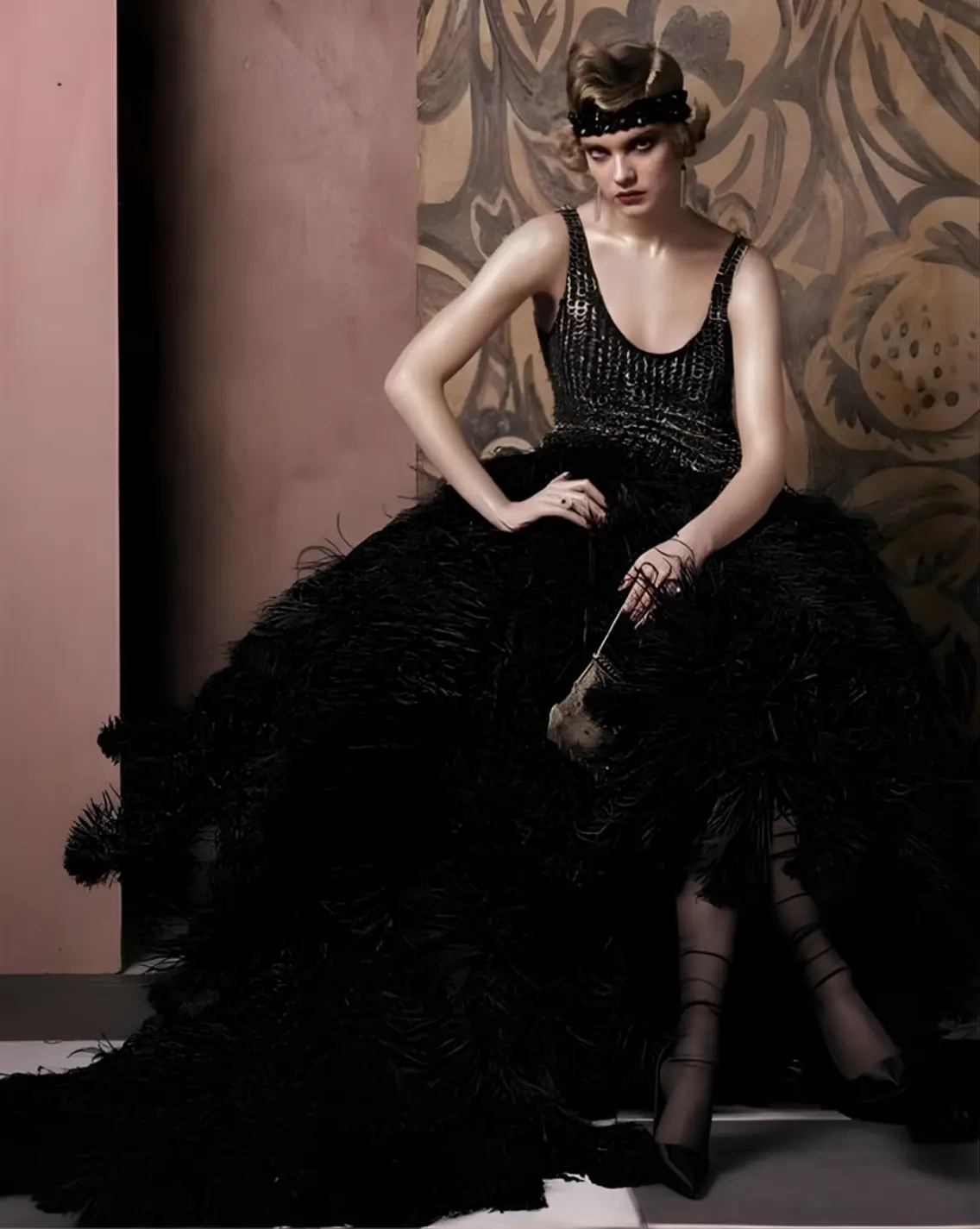
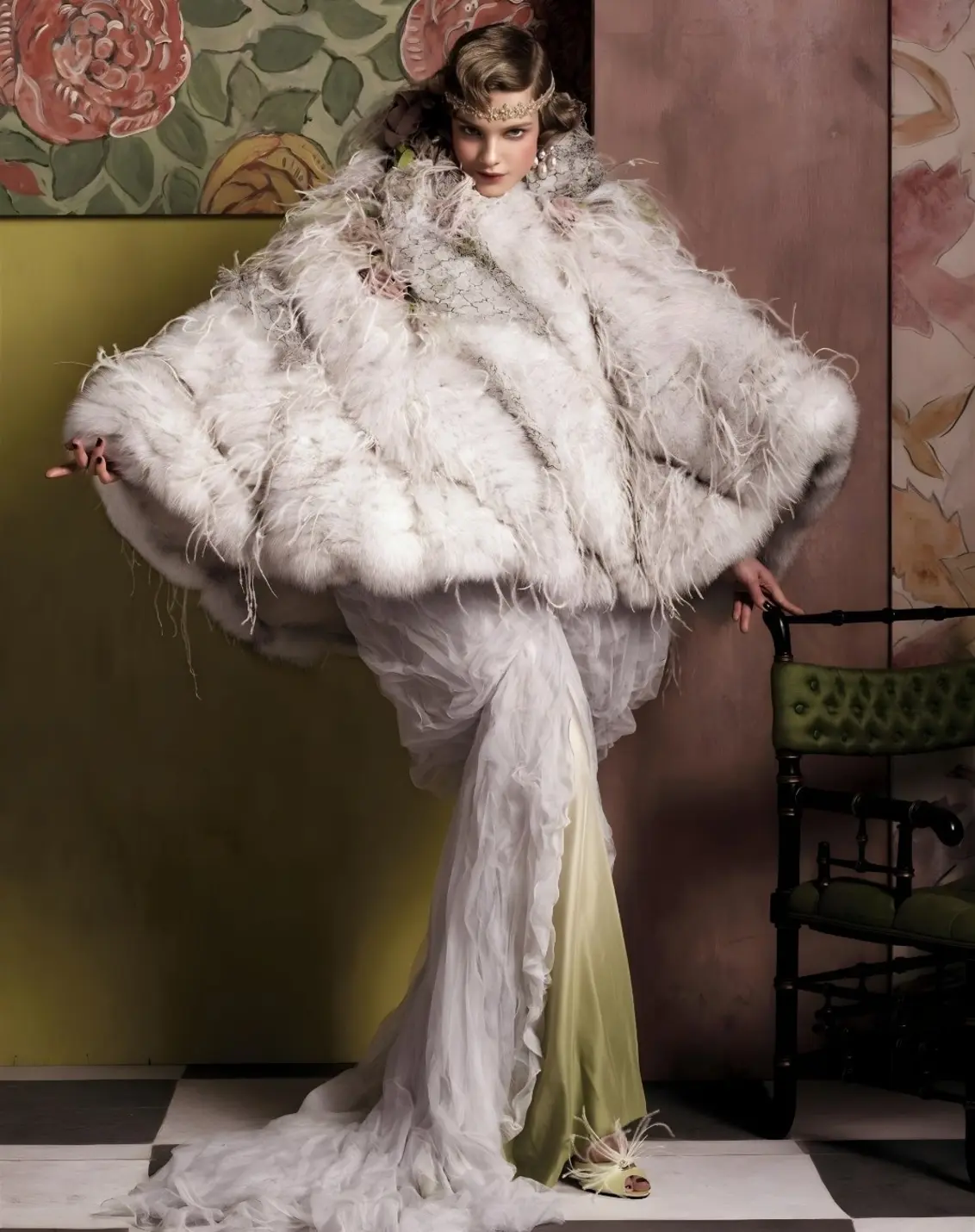
Art Deco style symbolizes a cultural desire for modern life shaped into elegance, and it carries a distinctive attitude that lives in gesture, gaze, and the way a person occupies an attitude that feels urban, self-possessed, and composed.
This style expresses faith in progress, pleasure in modern technology, and admiration for design as a form of civilization, and it celebrates the idea that luxury belongs to the present moment, that beauty thrives in cities, that art and industry can share a single heartbeat.
The Art Deco spirit also embodies social transformation, especially the visibility of women moving through public life with new autonomy, traveling, working, dancing, choosing, wearing garments that support motion and self-expression, clothing that frames the body with confidence and invites the world to meet her gaze.

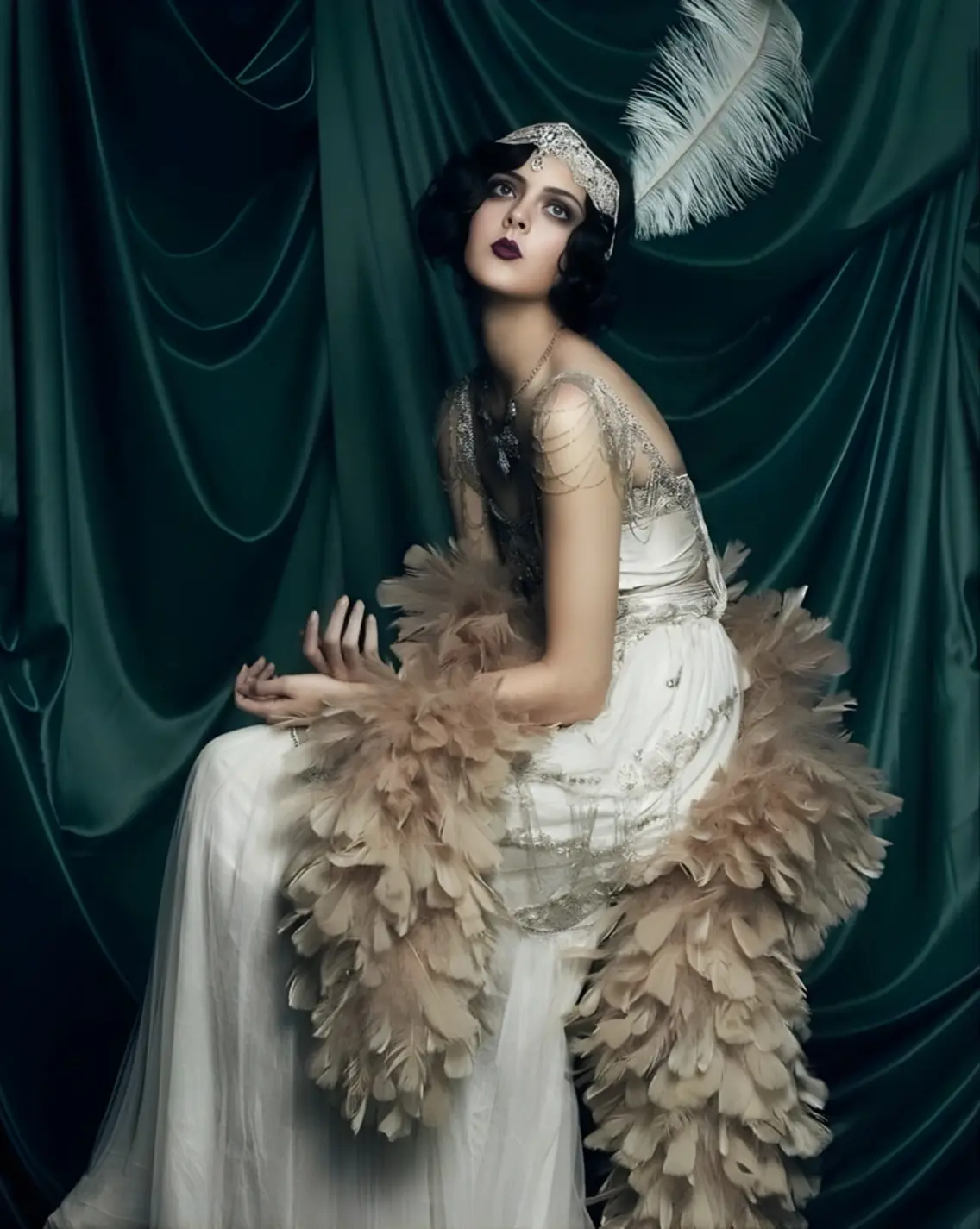
Art Deco style carries a particular hunger, one for progress, for status, for thrill, for the sweetness of being modern, and it refines that hunger into shapes that feel inevitable, as if desire itself has been cut on the bias and draped with precision, as if ambition has been polished into chrome, as if pleasure has been mapped into chevrons that guide the eye and the heart in the same direction.
Art Deco style also symbolizes the union of art and everyday life: a dress that echoes a skyscraper, a necklace that echoes a sunburst over a city, a theater interior that echoes a bracelet’s geometry, a poster’s typography that echoes the lines of a gown, and within this harmony, style becomes a total environment, a world where beauty surrounds, guides, and elevates.
The golden era mood lives in sensory detail: the warmth of a crowded dance floor, the sparkle of beadwork as a body turns, the cool touch of metal against skin, the scent of powder and perfume, the soft clink of glass, the sound of laughter folded into jazz, the way a city at night feels like a promise.
Art Deco style carries that promise, and it makes modernity feel romantic.
Art Deco: Gatsby’s Glittering Spell
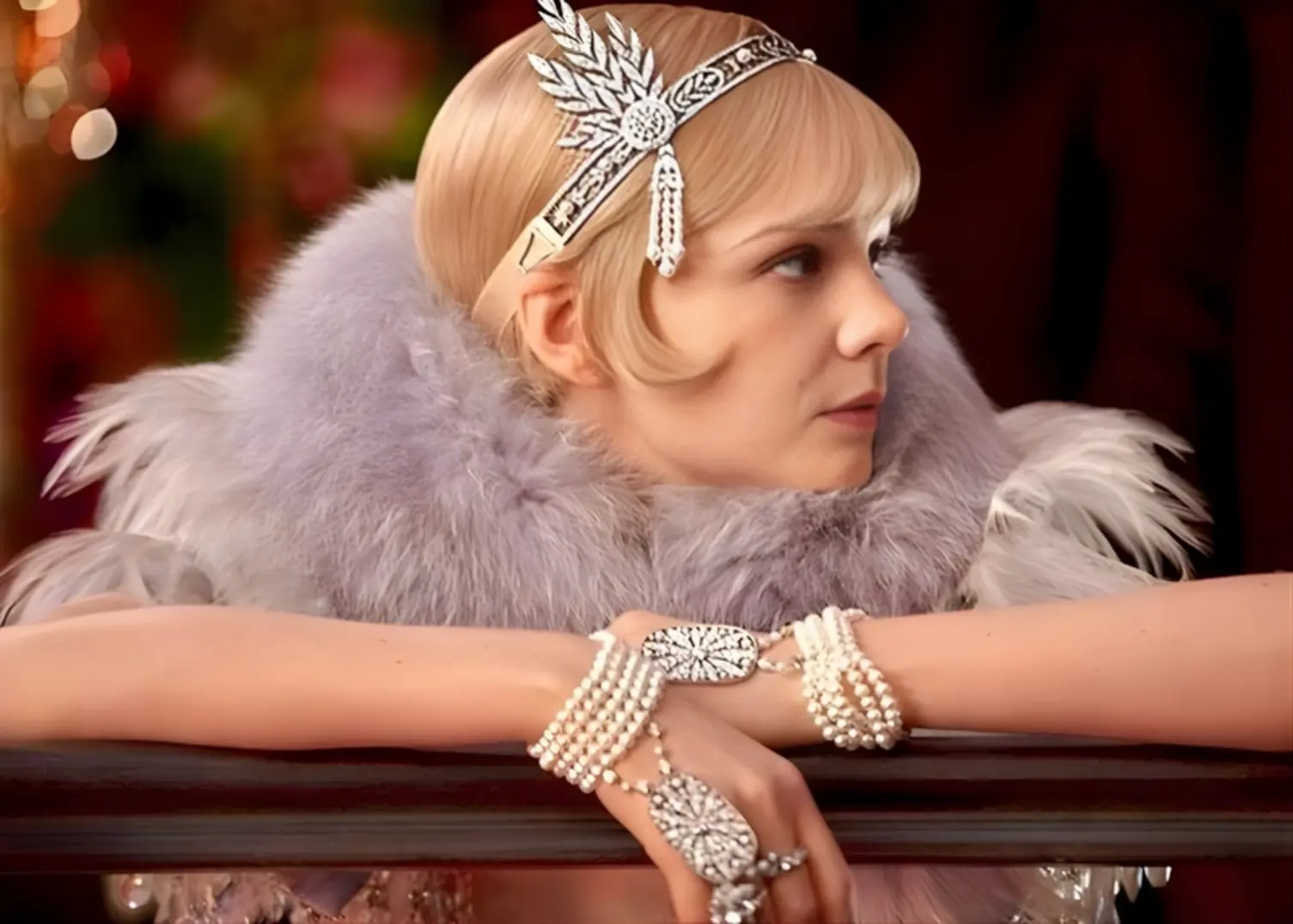
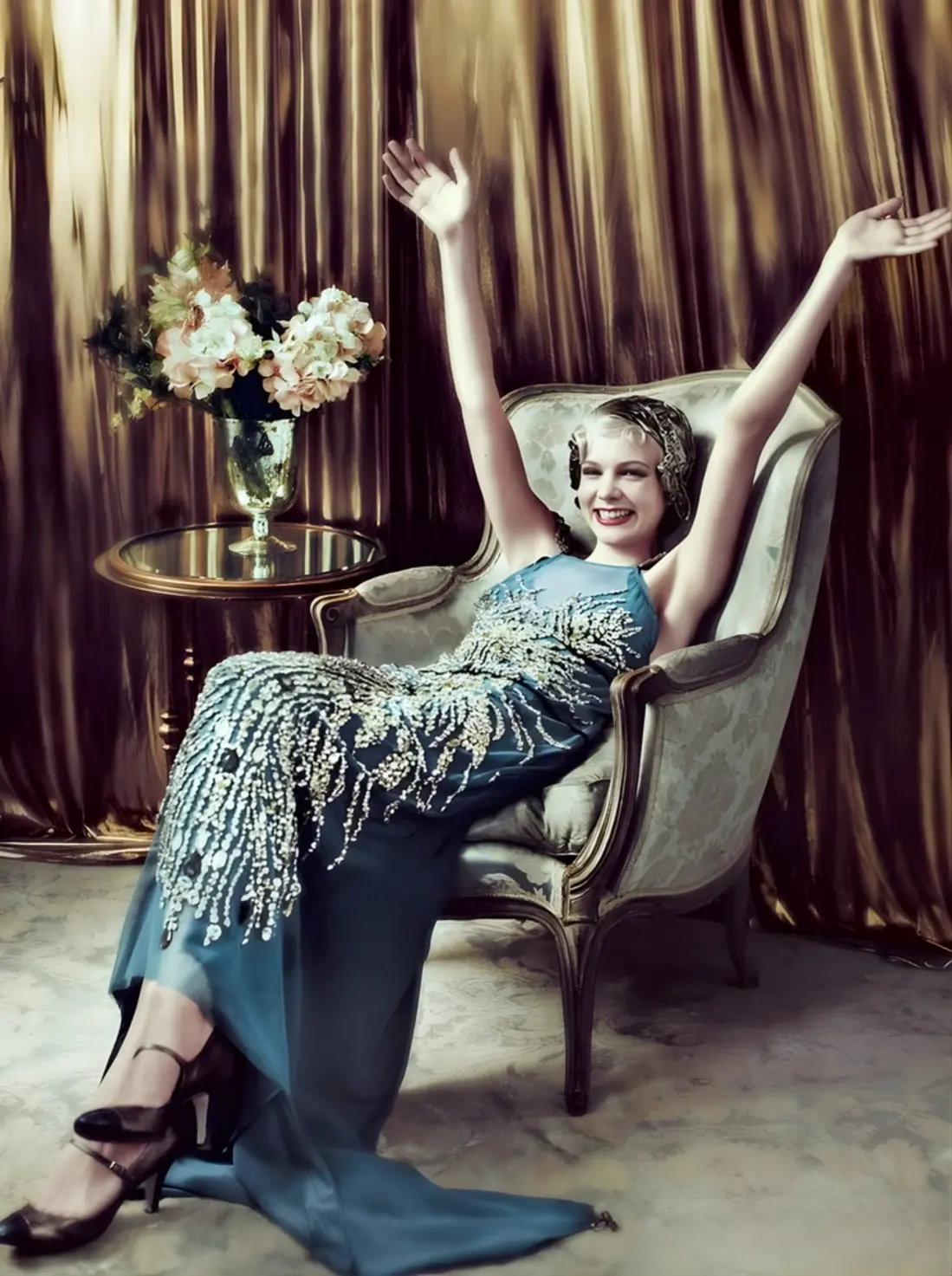
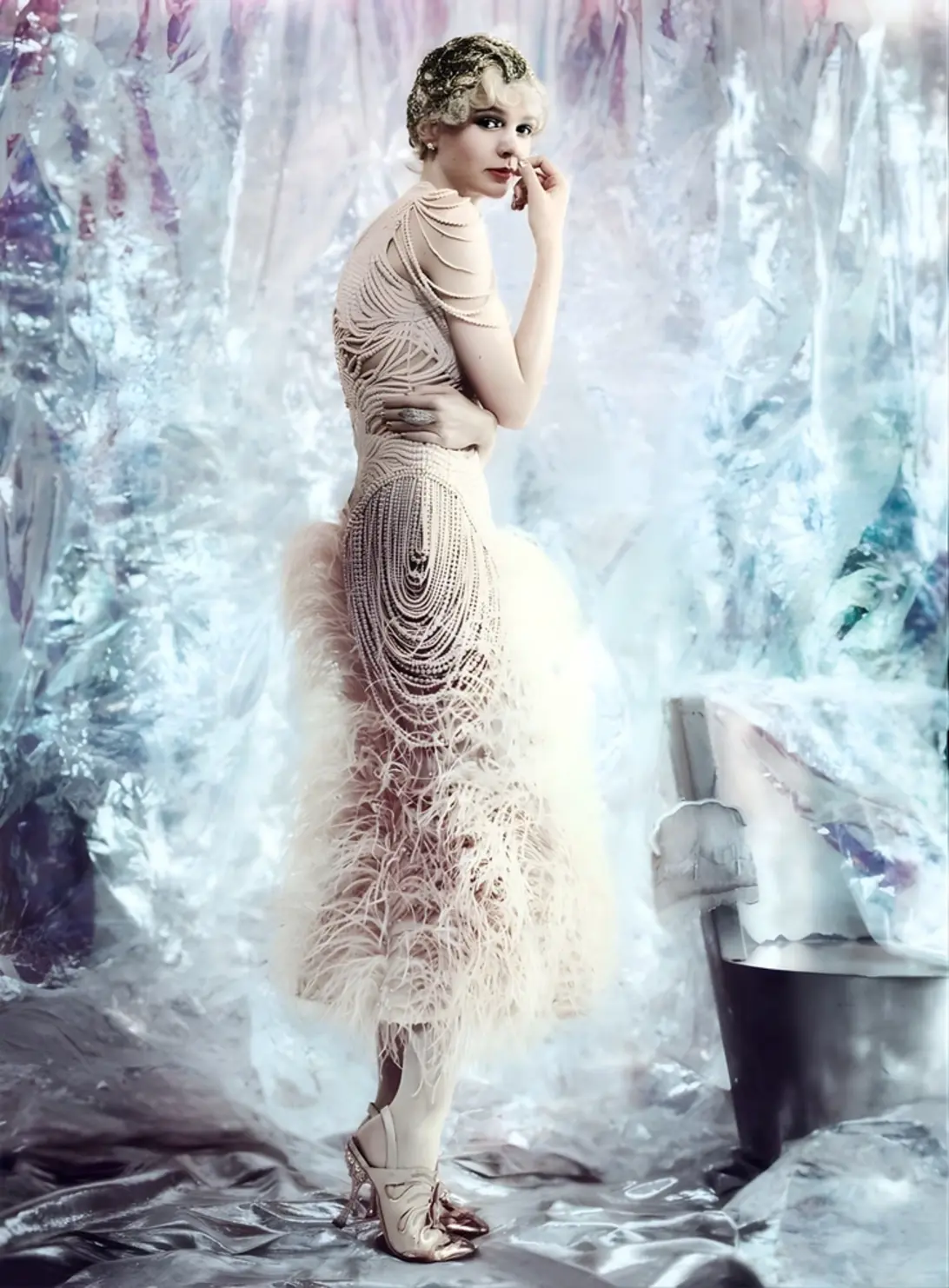
In the early 2010s, Art Deco style surged back into the mainstream on the strength of The Great Gatsby because the film offered more than beautiful clothes, it offered a whole world where style functioned as power, invitation, disguise, and longing, and the plot itself carried the perfect fuel for a revival: new money chasing old gates, ambition dressed as destiny, love treated like a glittering risk, and parties staged as luminous proof that a person could reinvent their name, their future, their entire silhouette.
Art Deco style became the visual grammar of that life: sharp elegance for people who wanted to look untouchable, ornament for people who wanted to be unforgettable, and glamour for people who needed the world to believe their story. When the film won the Oscar for Costume Design and Production Design, its imagery gained an almost official authority, and culture responded instantly, suddenly the 1920s returned as a modern fantasy of nightlife, status, and romance, and runways began to echo the same mood: not “vintage,” but a decadence, a desire for structure and shine that could make ambition look effortless and heartbreak look expensive.
Art Deco on the Modern Runway: The Style’s Continuing Life
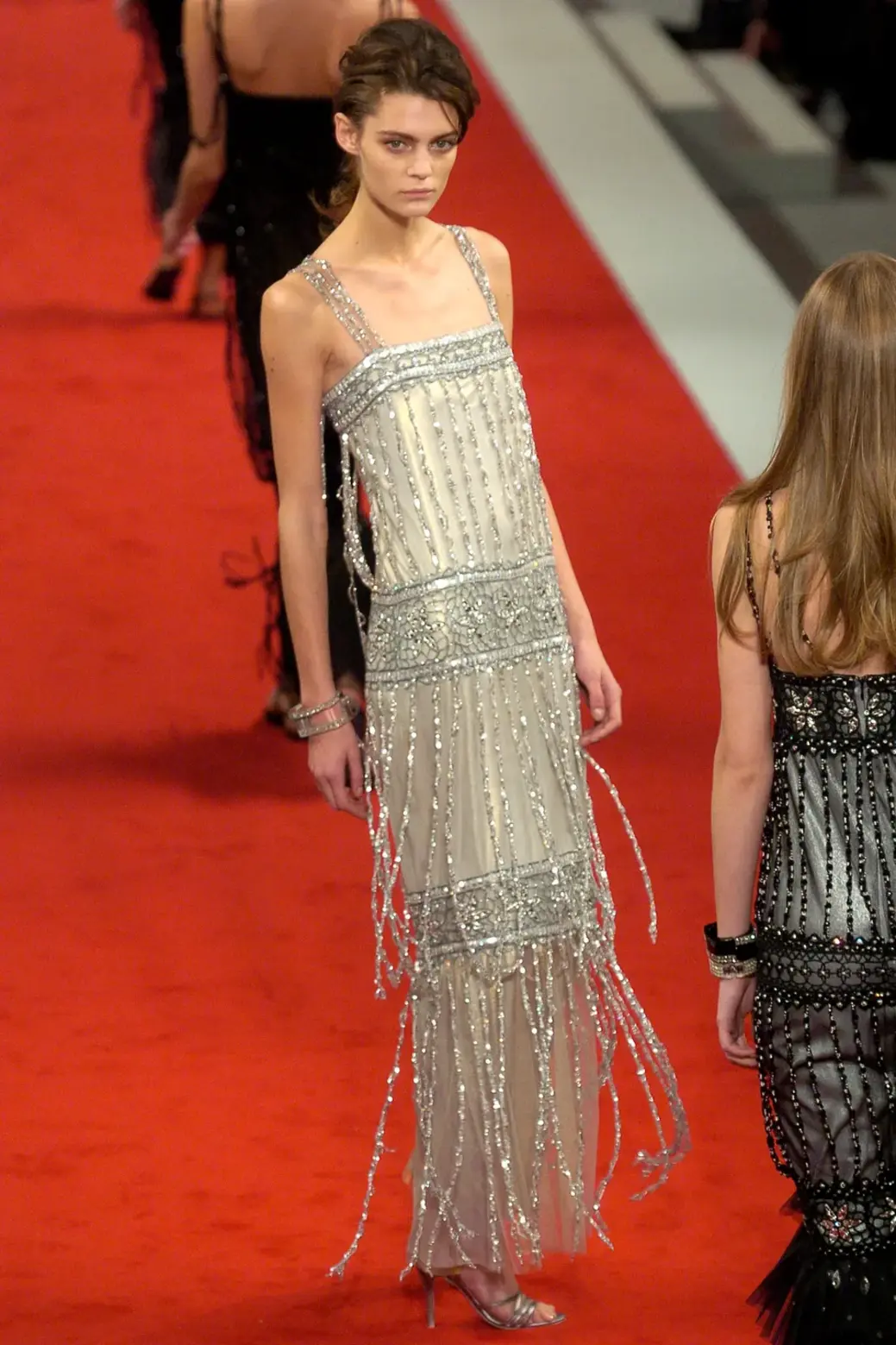
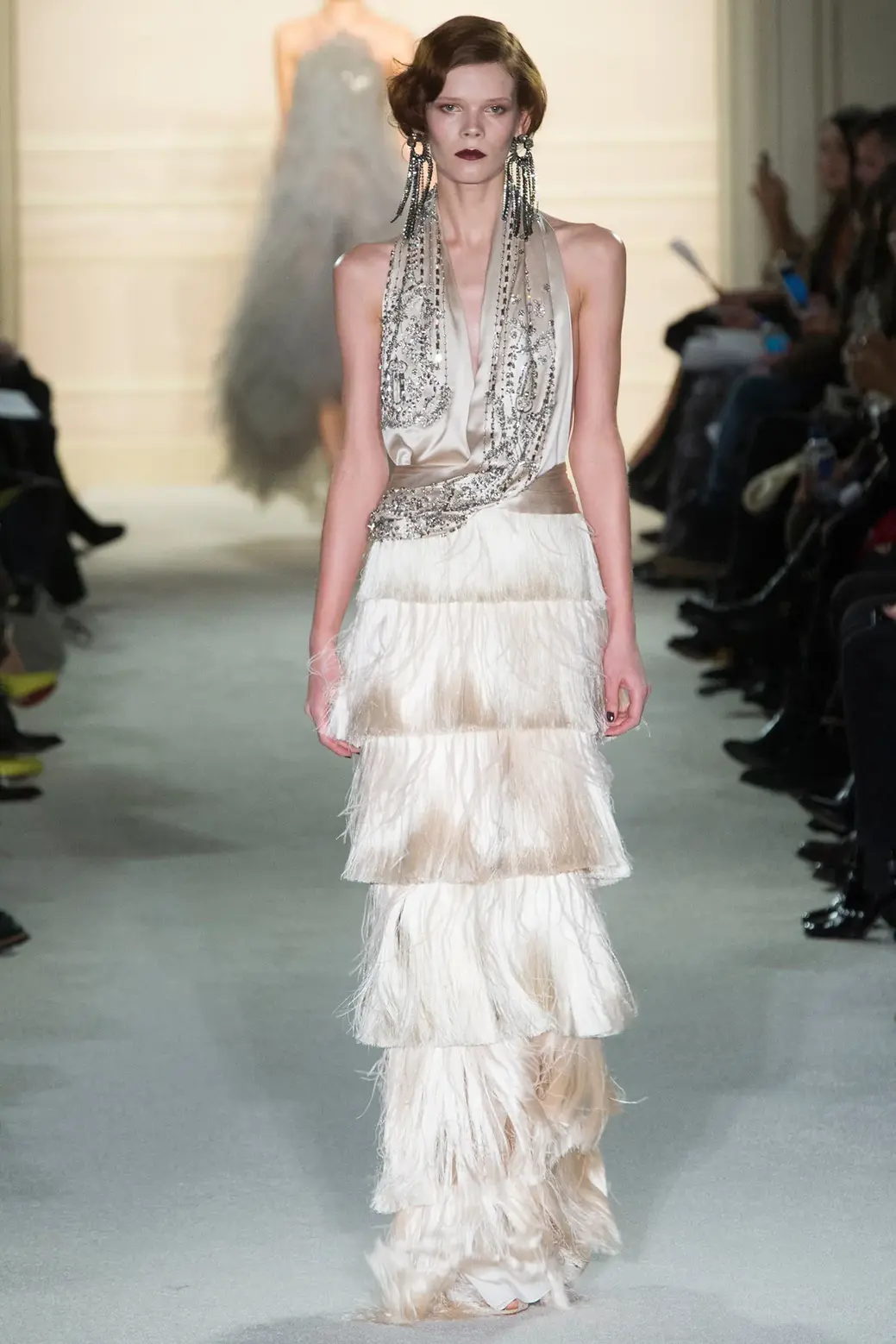
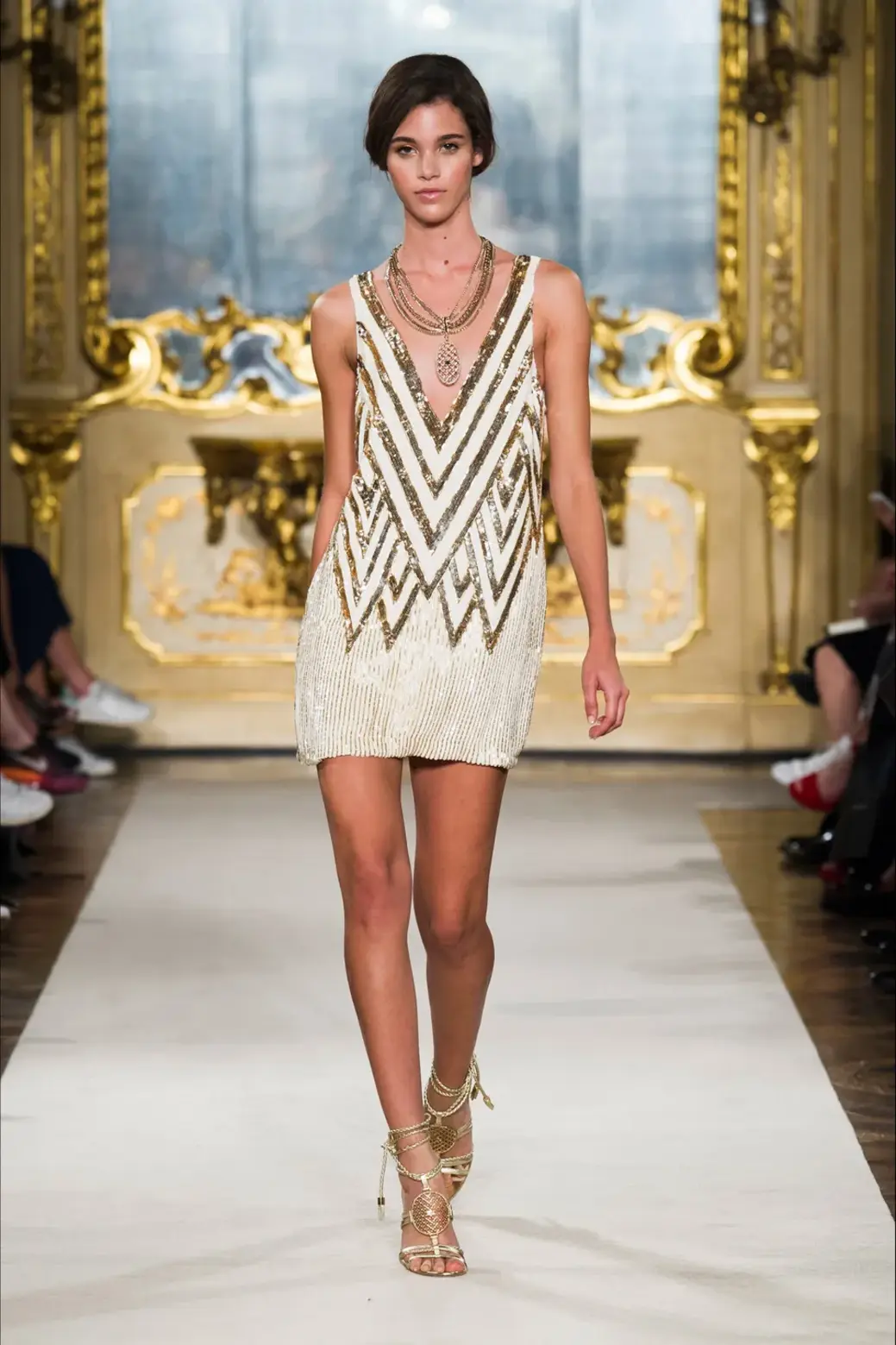
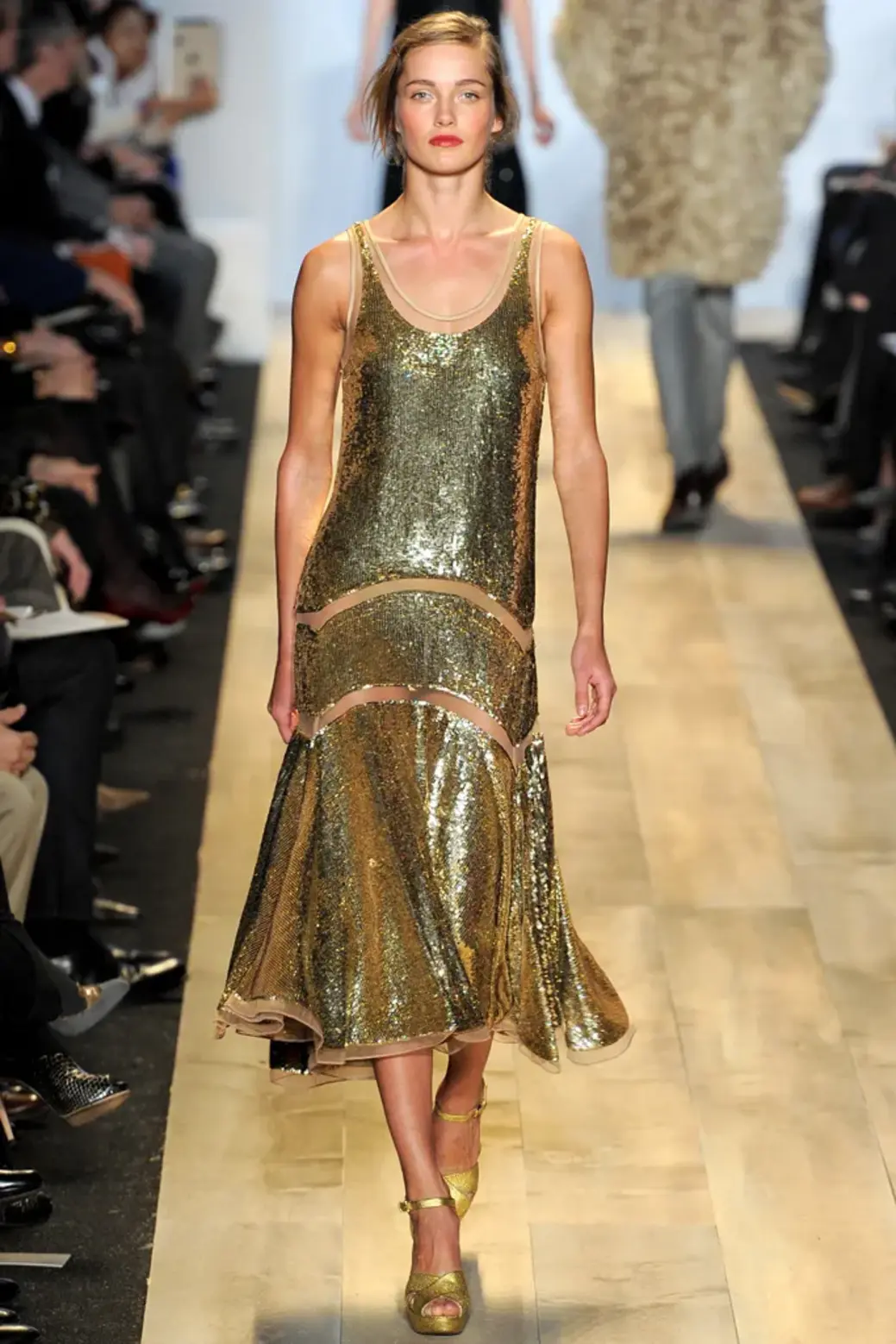
On today’s runways, Art Deco style arrives as sensation before reference, the discipline of a line, the authority of symmetry, the way metallic shine feels like architecture catching fire under spotlights, and in that instant the era returns with its favorite promise: glamour engineered for movement, made to look effortless while every detail lands exactly where desire expects it.
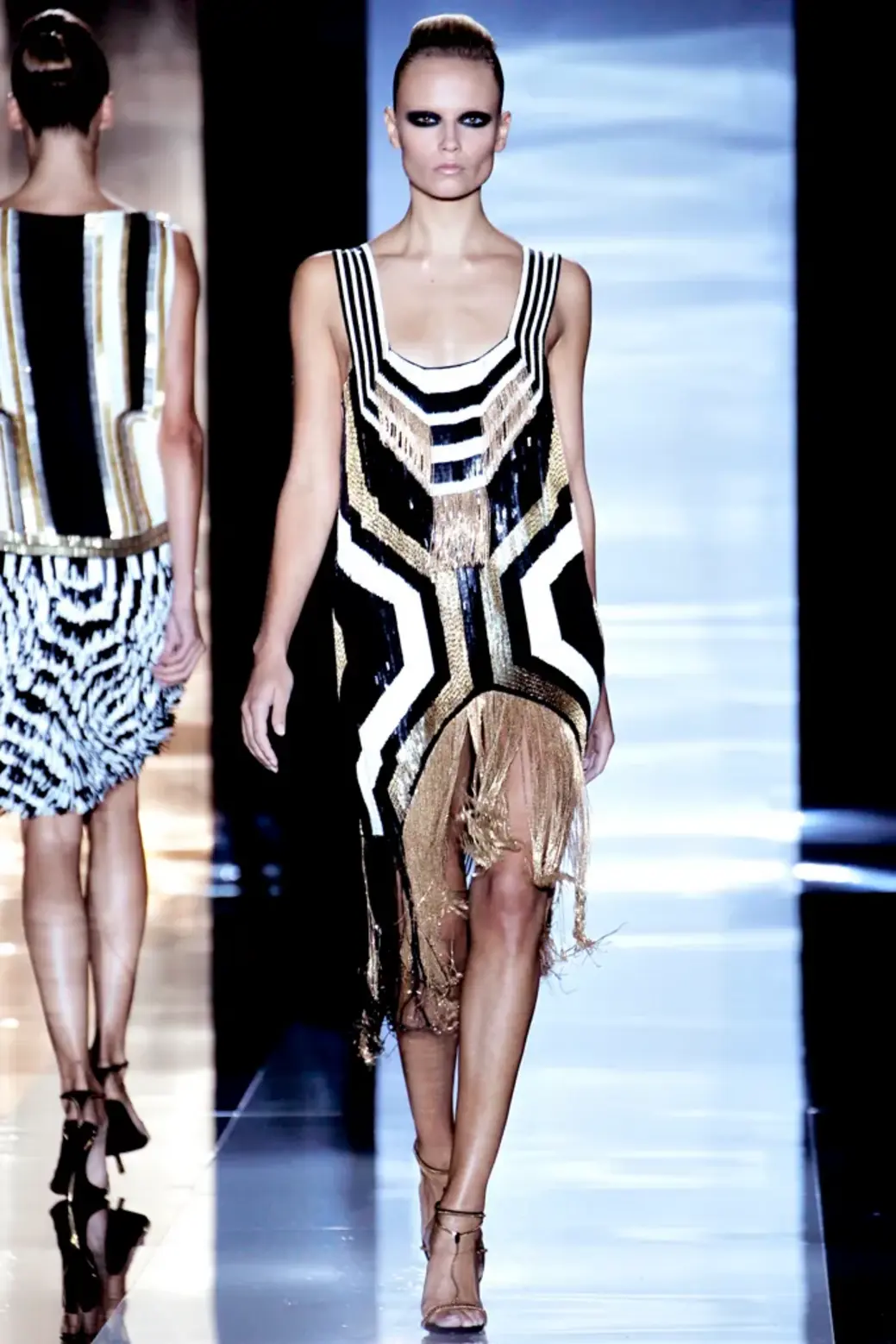
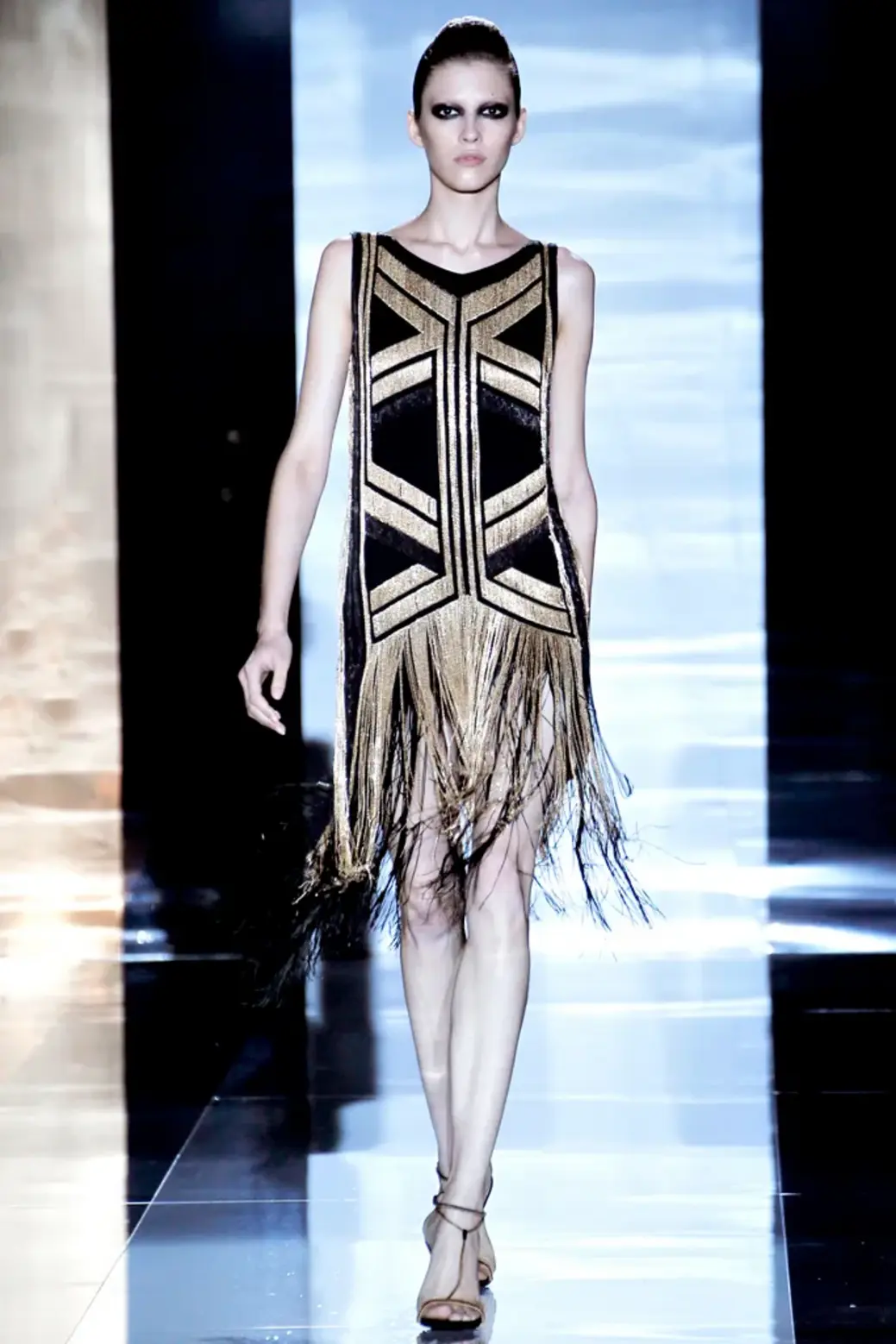
Gucci wears Art Deco style as nightlife with a skyline pulse: gold on black, graphic banding that slices the body into elegant sections, fringe that swings like punctuation, and surfaces that gleam.
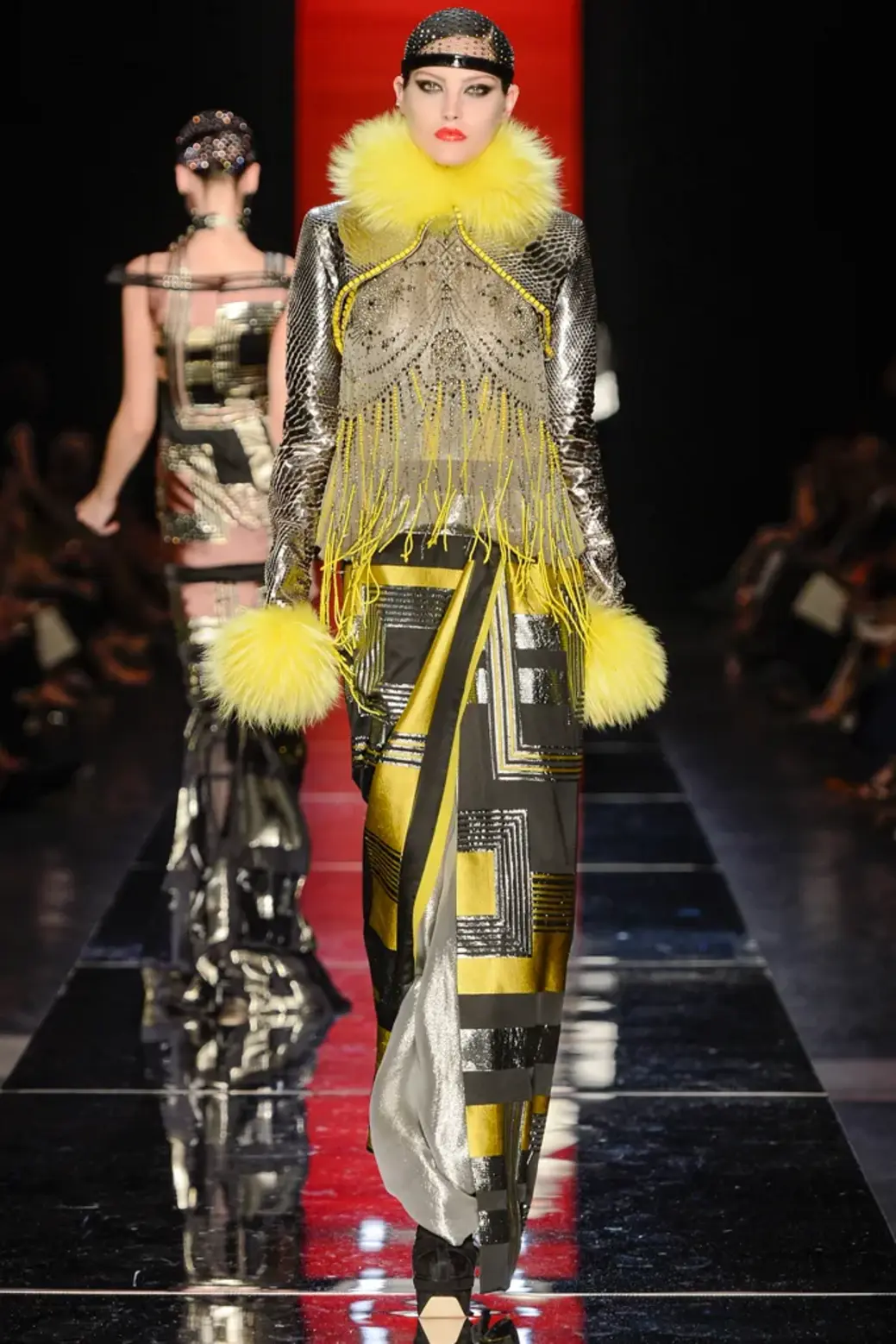

Jean Paul Gaultier takes Art Deco style and turns it theatrical, high-contrast geometry, graphic drama, a cabaret electricity that makes pattern feel like a poster come alive, so the body becomes a stage for sharp lines, jewel-like shine.
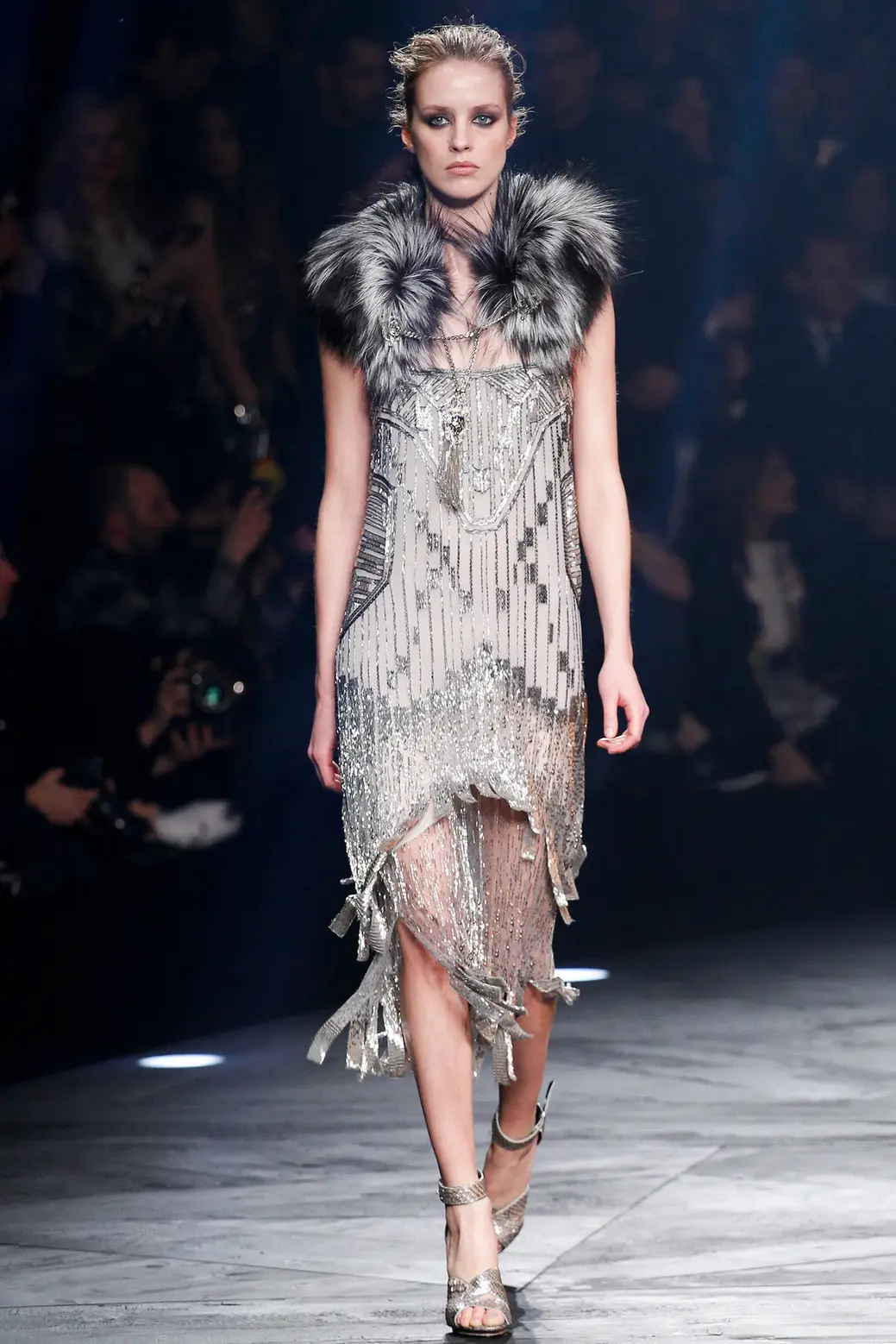
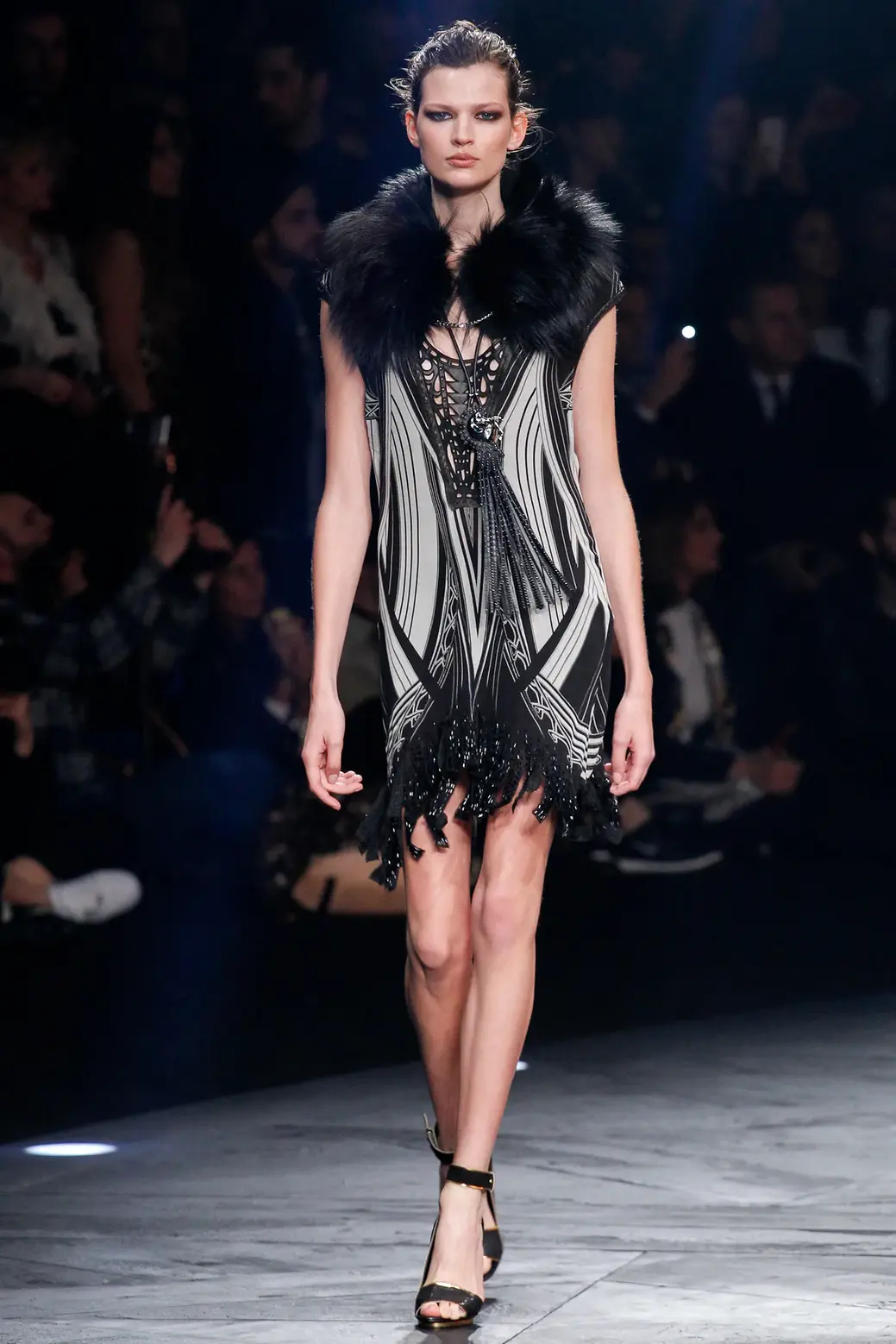
Roberto Cavalli reads Art Deco style through heat and radiance: sunburst energy, gold that behaves like sunlight trapped in fabric, prints and embellishment that feel like jewelry expanded into garments, and a runway mood that carries the exuberance of a gilded night, bold, gleaming, unapologetically sensual.
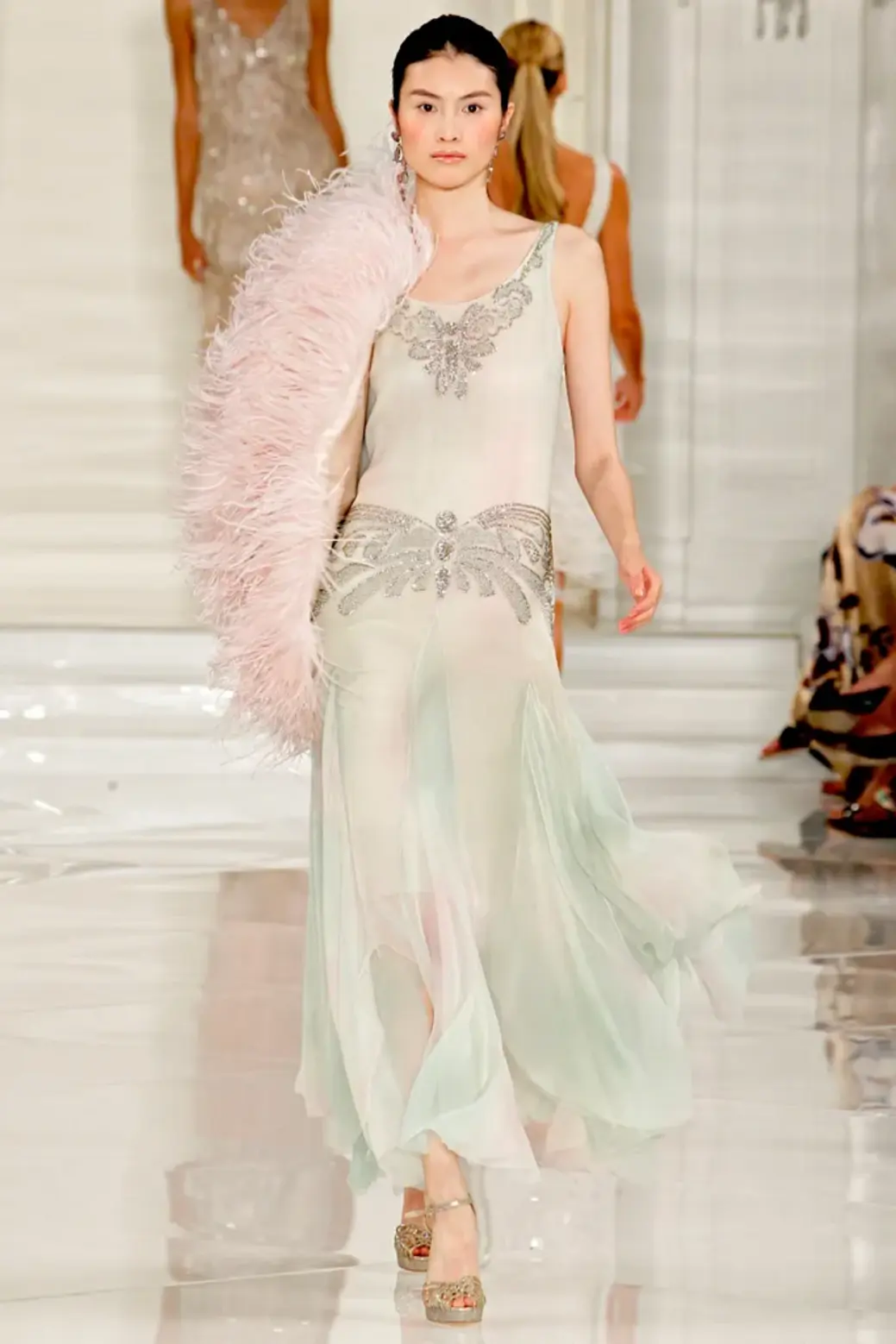

Ralph Lauren brings Art Deco style into a club universe, where tailoring sharpens into eveningwear and eveningwear borrows the authority of tailoring, the palette leans into the classic glamour of black, ivory, and gold.
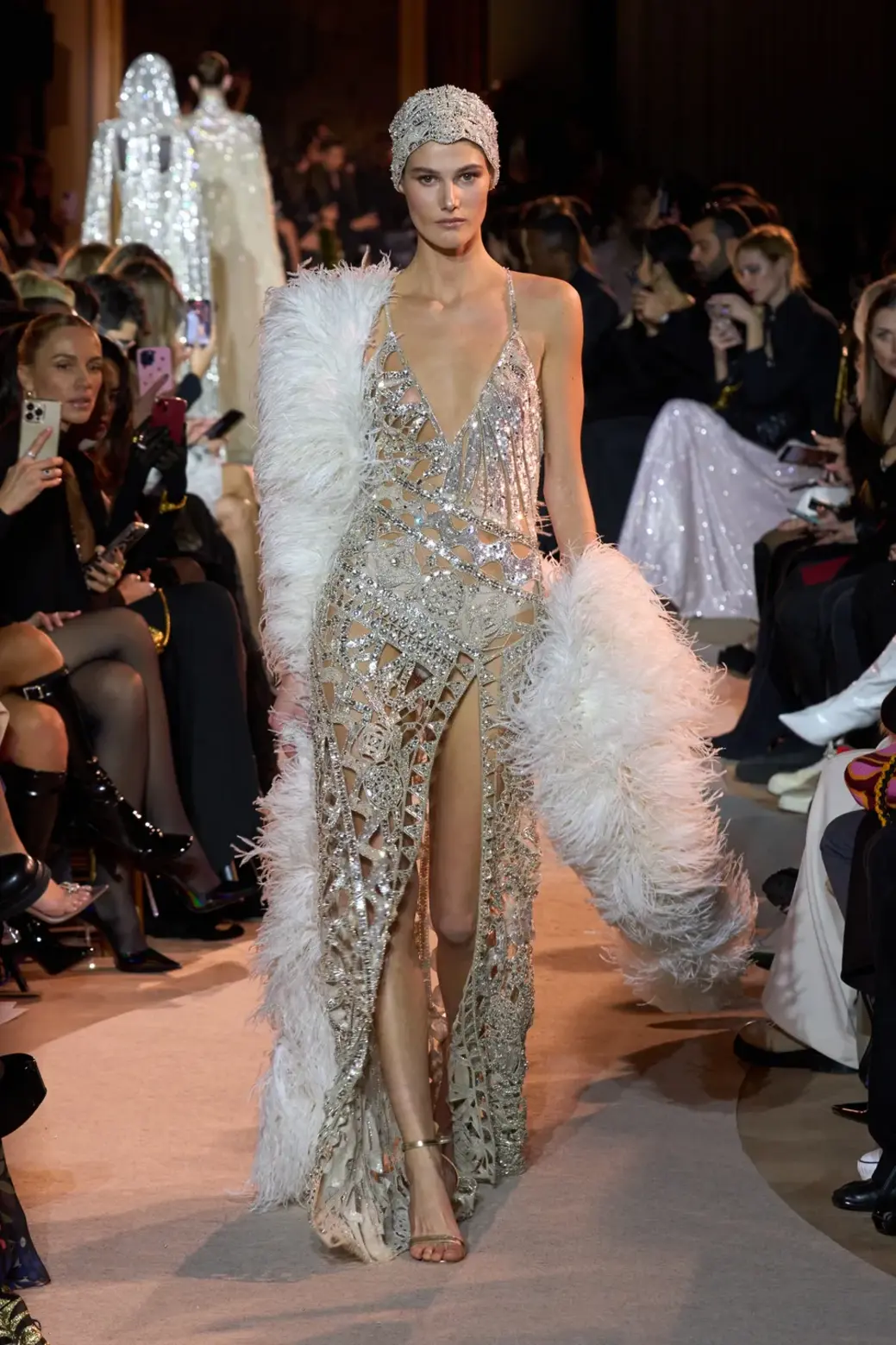
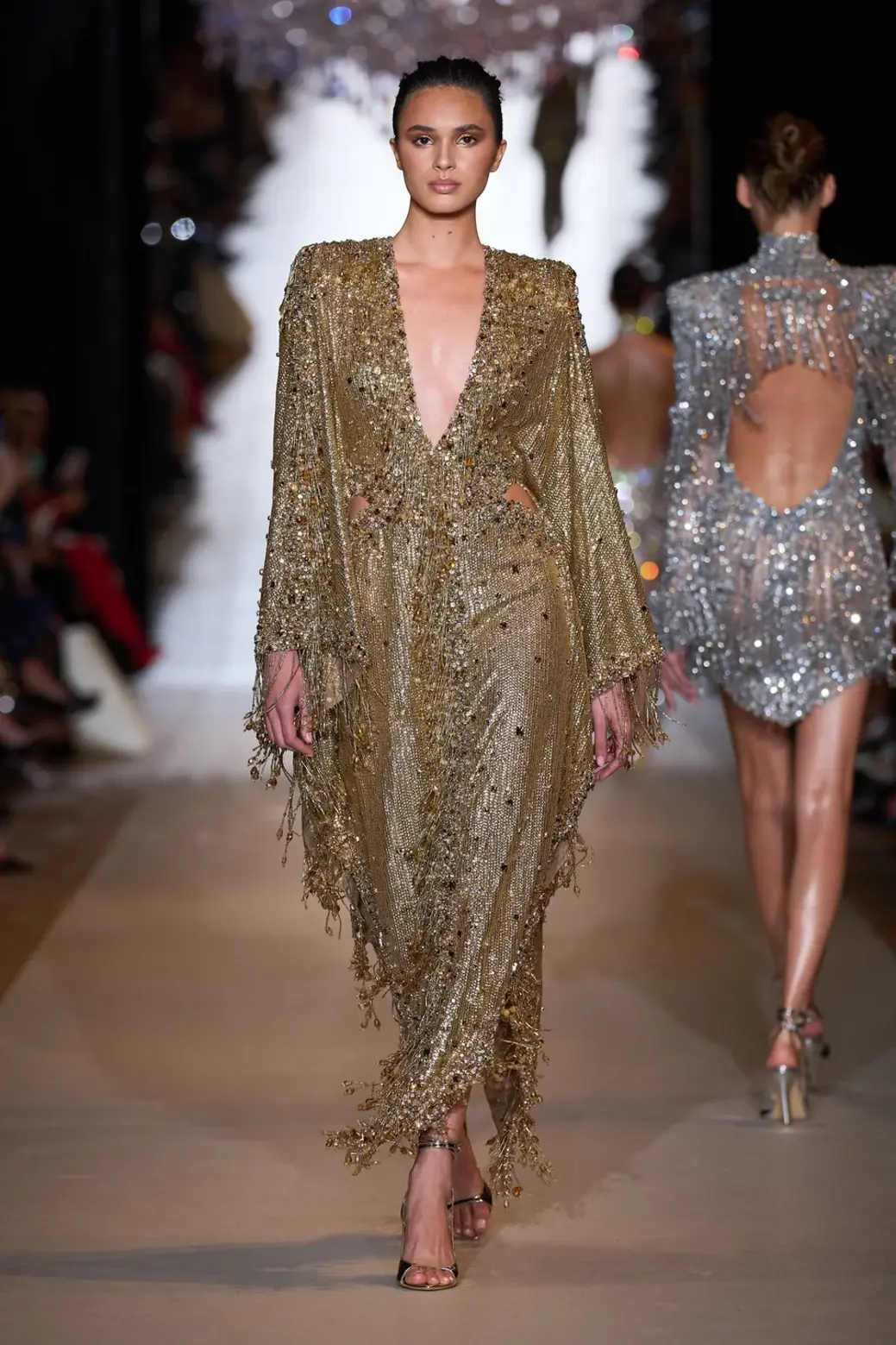
In Zuhair Murad’s hands, Art Deco becomes pure midnight spectacle, gowns built from precise geometry, radiating beadwork, and jewel-toned shine that moves like a chandelier across the body.
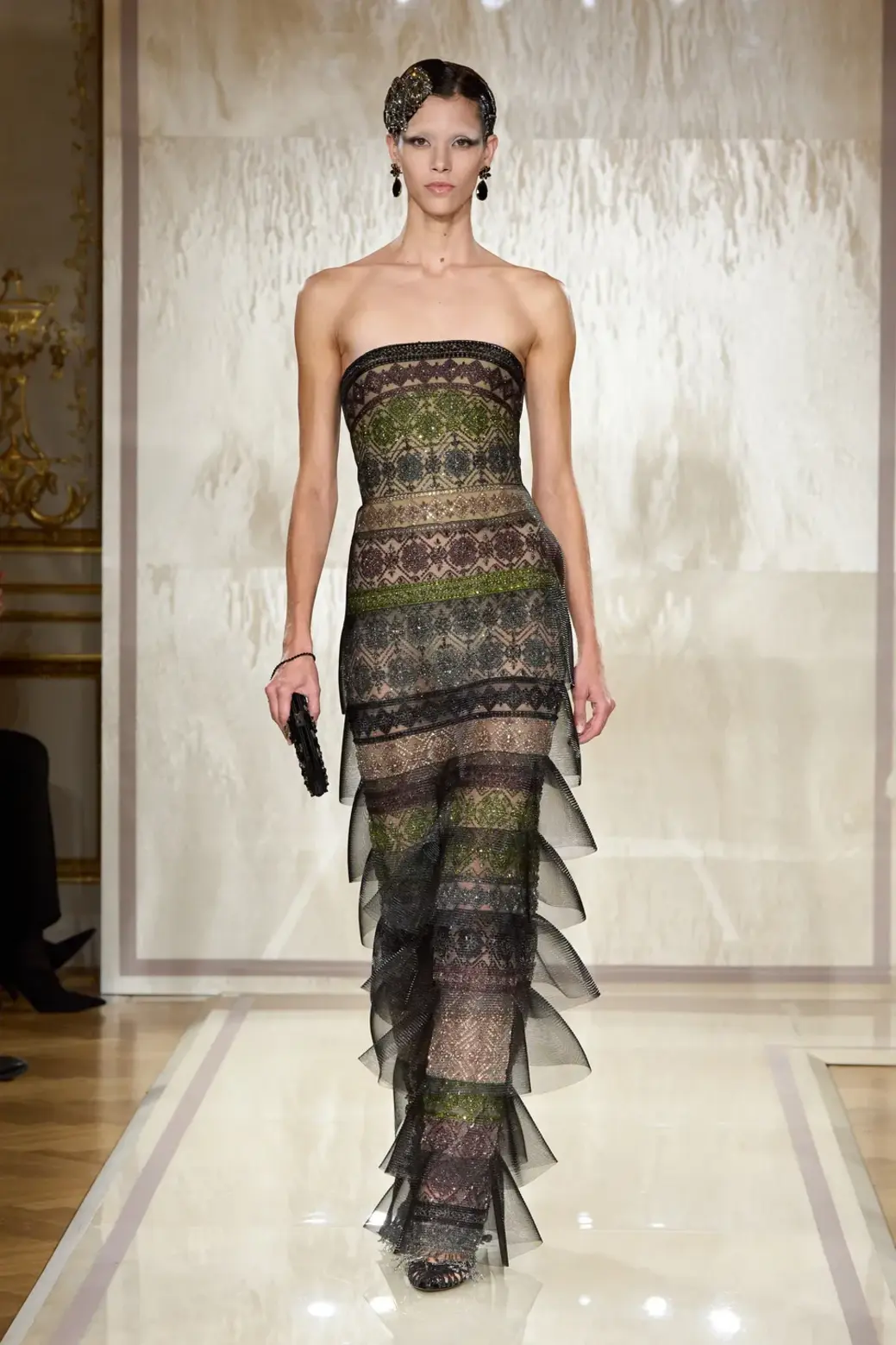
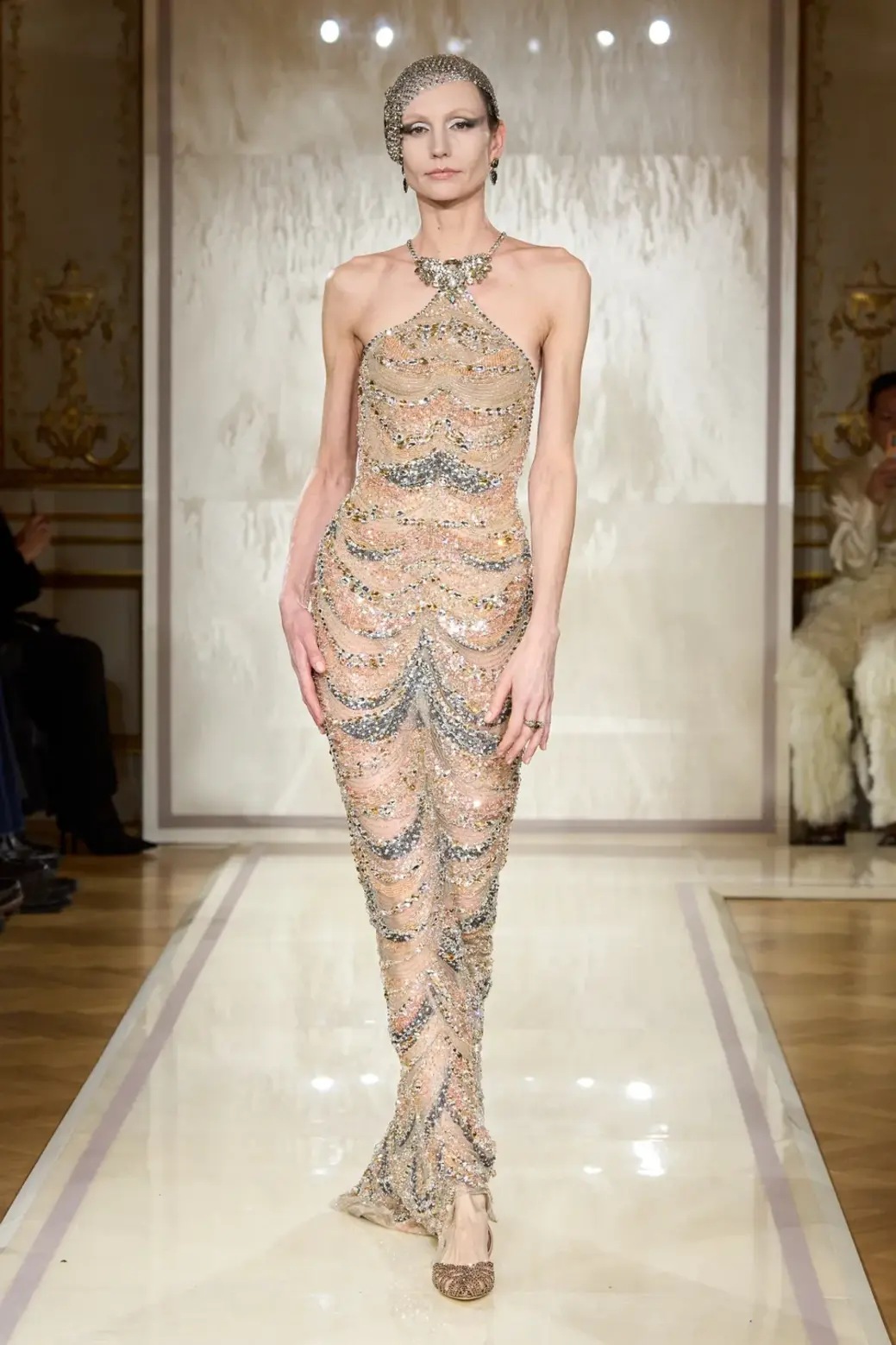
Armani Privé speaks Art Deco style in the most refined dialect, sleek silhouettes, elongated lines, couture beading placed with architectural logic, shine that reads as polish, so the clothes glow like a perfectly cut gem, and the romance feels quiet, controlled, devastatingly intimate, the kind of glamour that never chases attention because attention follows it naturally.
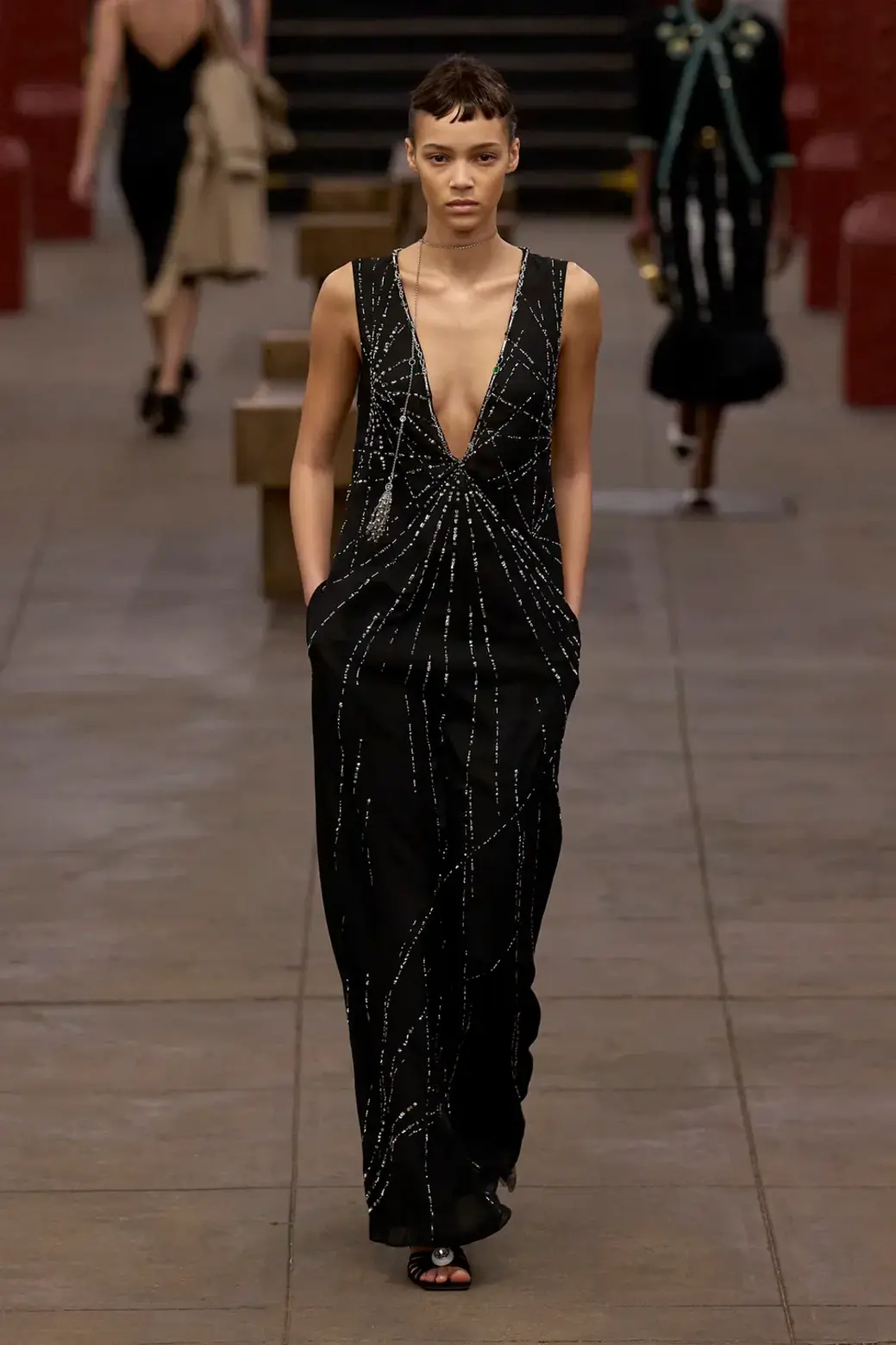
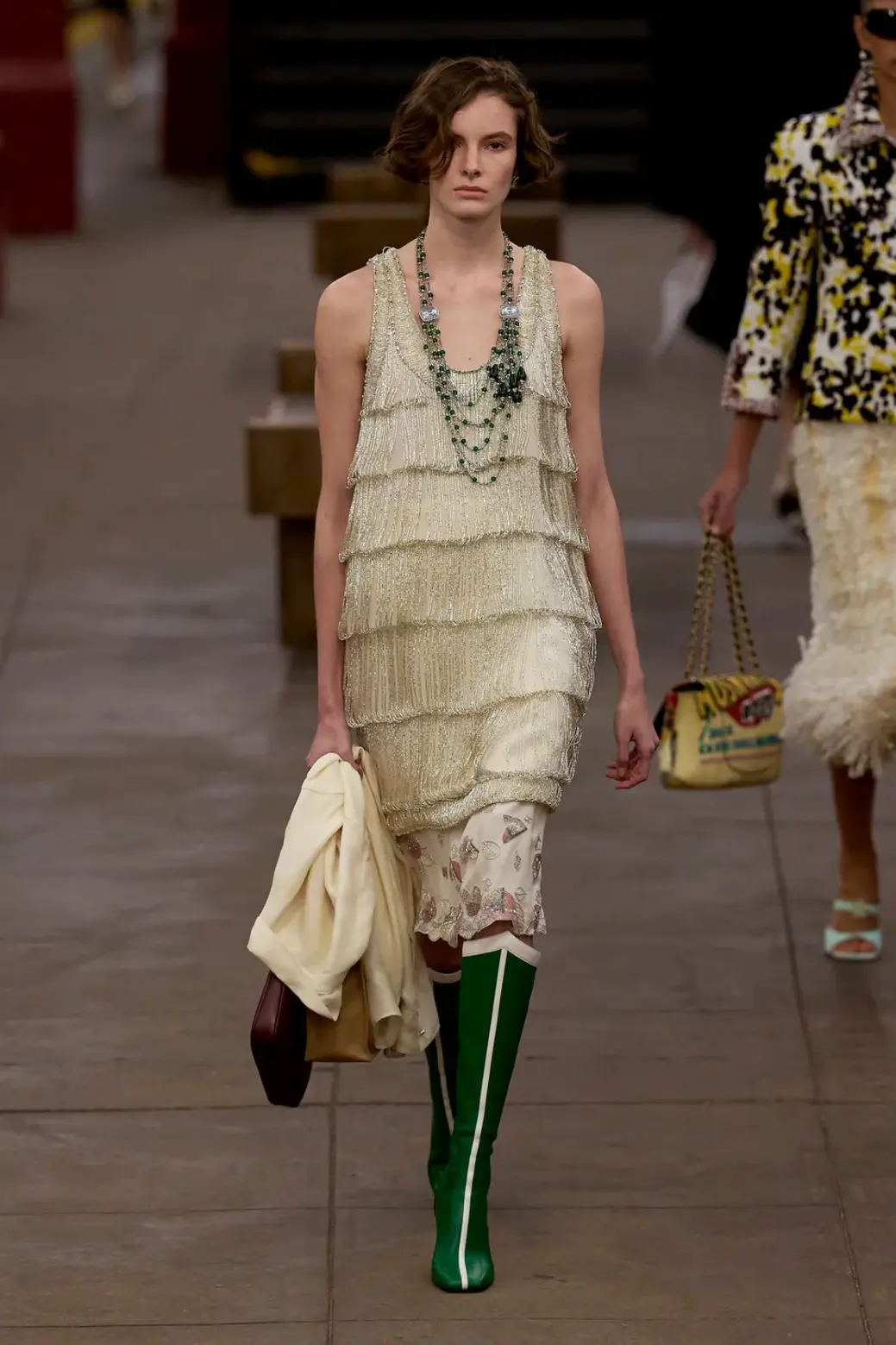
At Chanel, Art Deco lives through modern instinct for clean lines and graphic elegance, where black, gold, and jewel-like geometry turn eveningwear and jewelry into a quiet kind of architectural glamour.
Epilogue: Leaving the Ballroom With the Light Still on Your Skin
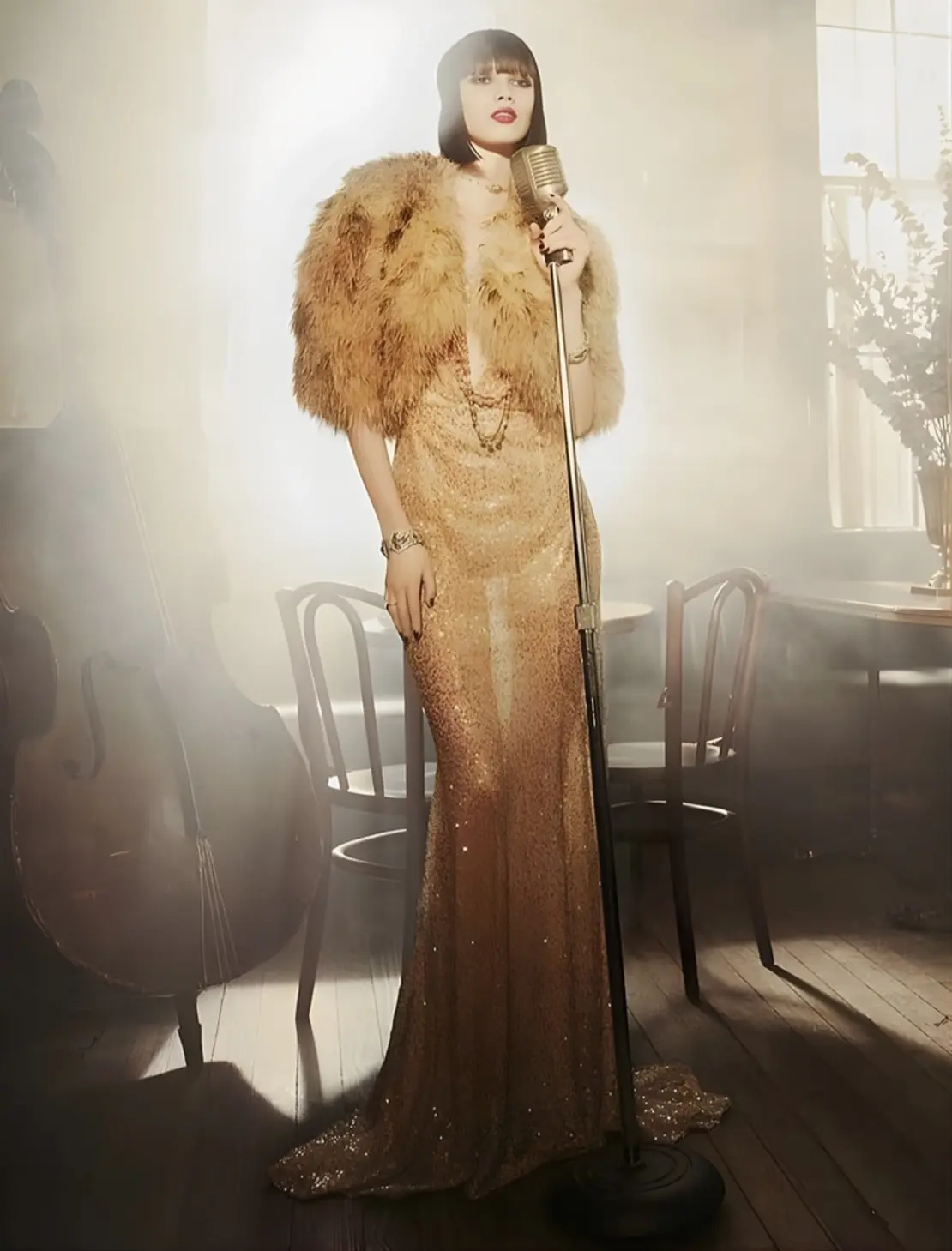
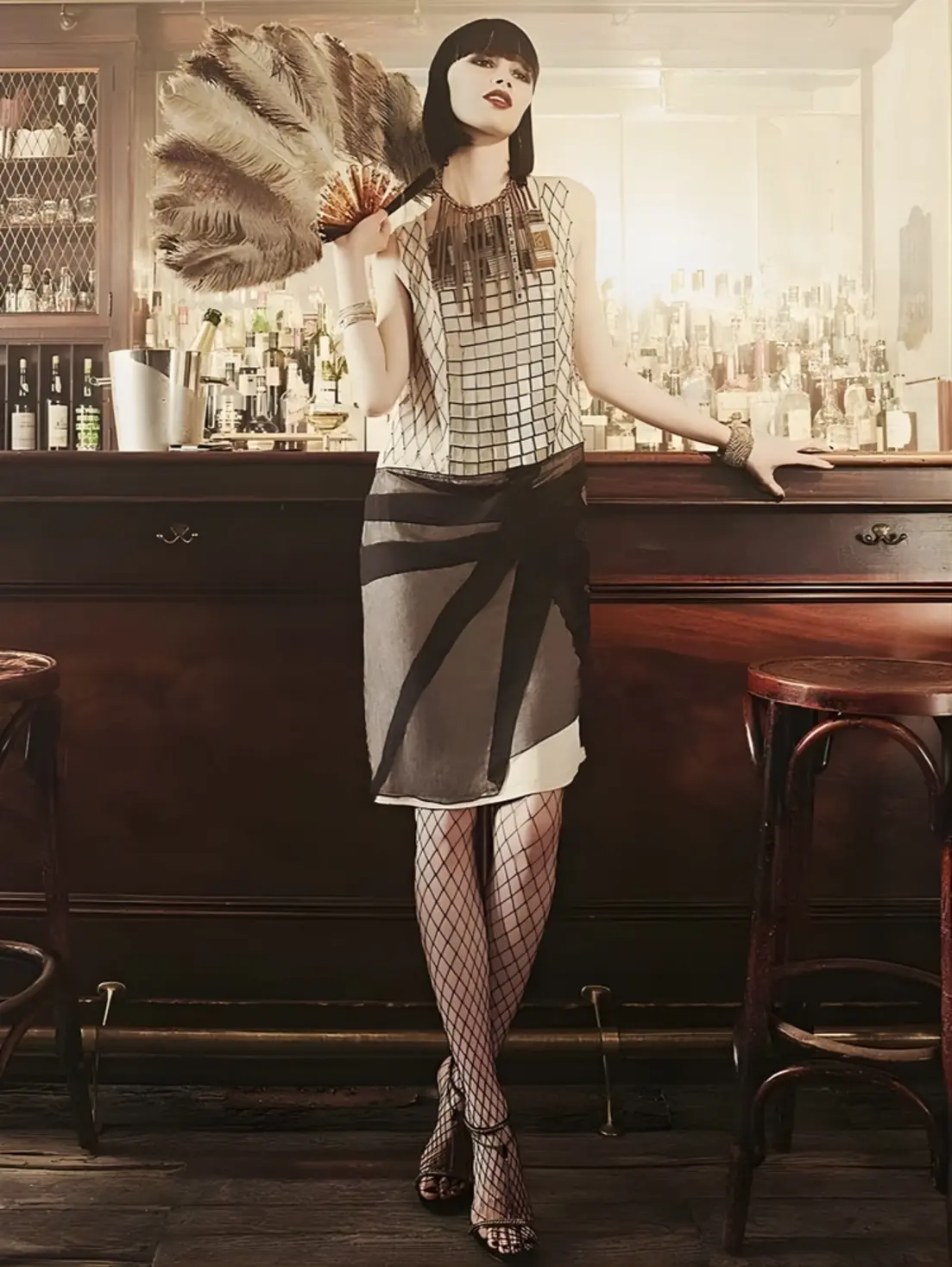
Art Deco style entered history as the modern language of its time, and its continued relevance comes from its relationship with modernity as a mindset, an embrace of progress, a fascination with design, an admiration for innovation, a love of the city as a stage where identity becomes visible.
Today’s world shares many of the era’s obsessions: speed, technology, urban life, image-making, global influence, design as culture, and the constant reinvention of self, and within this contemporary energy, Art Deco style feels like a companion style, one that offers a map for turning modern life into elegance.
Art Deco style also resonates with the contemporary hunger for craftsmanship and intentionality, for objects and garments that carry meaning through construction, detail, and material quality, for surfaces that feel luxurious because they feel considered, for silhouettes that feel powerful because they feel designed.
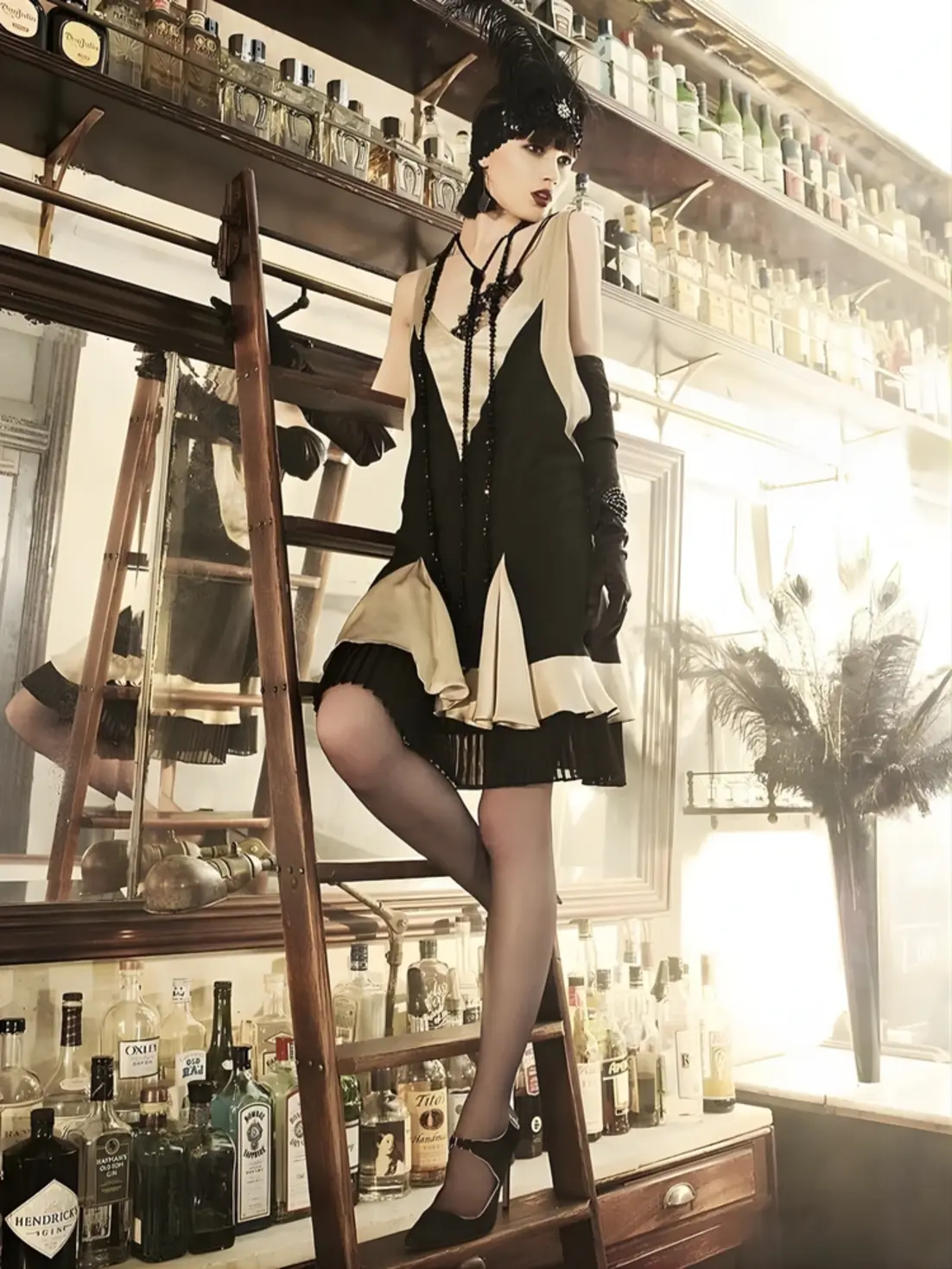
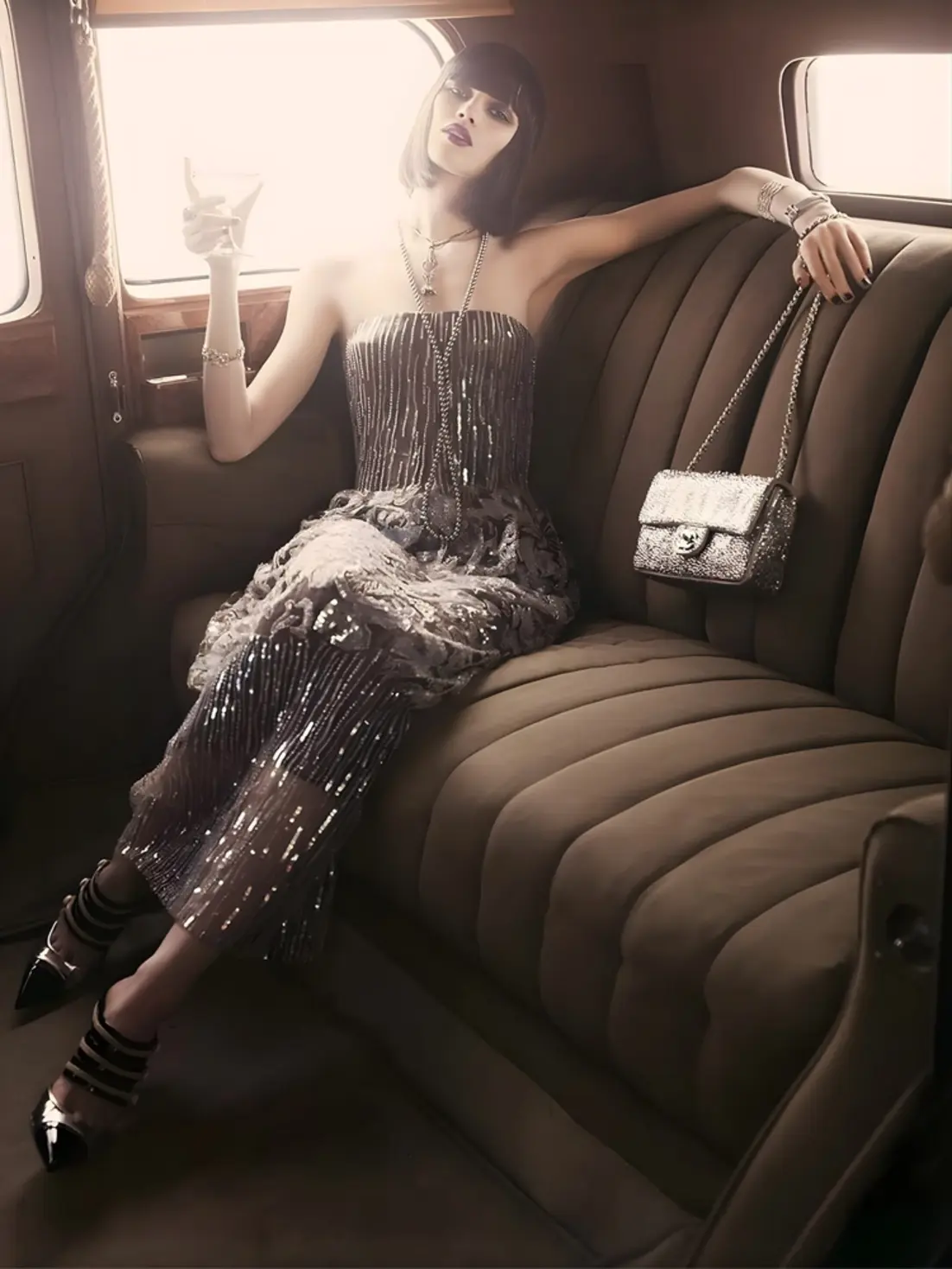
Art Deco style also offers a romance suited to modernity: a romance built from light and architecture, from the intimacy of cities at night, from the idea that progress carries beauty, from the belief that desire and design share the same electricity.
The style moves forward through reinterpretation, through contemporary materials, fresh tailoring, modern sustainability conversations, new cultural contexts, while its essence remains a celebration of modern elegance shaped by intention.
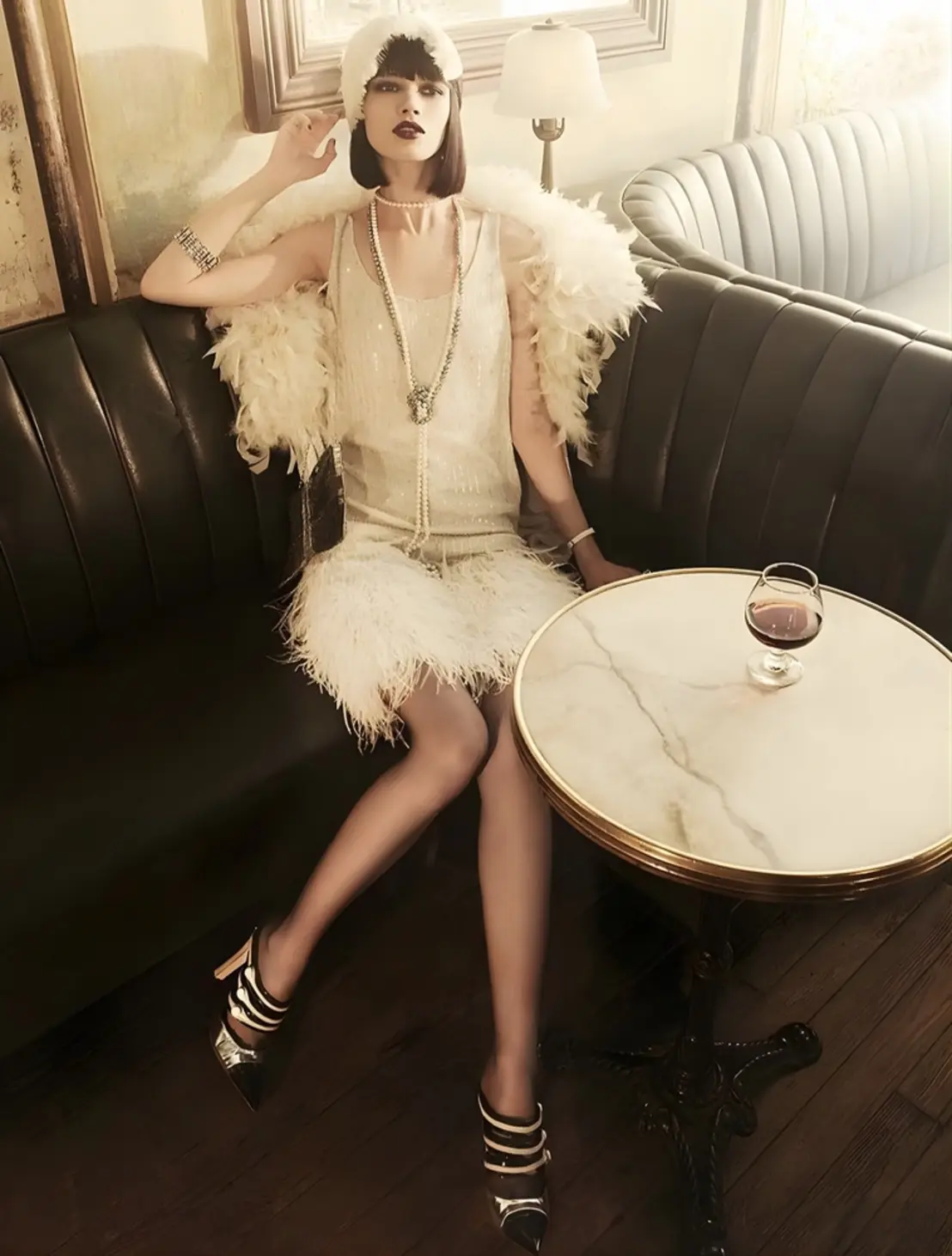
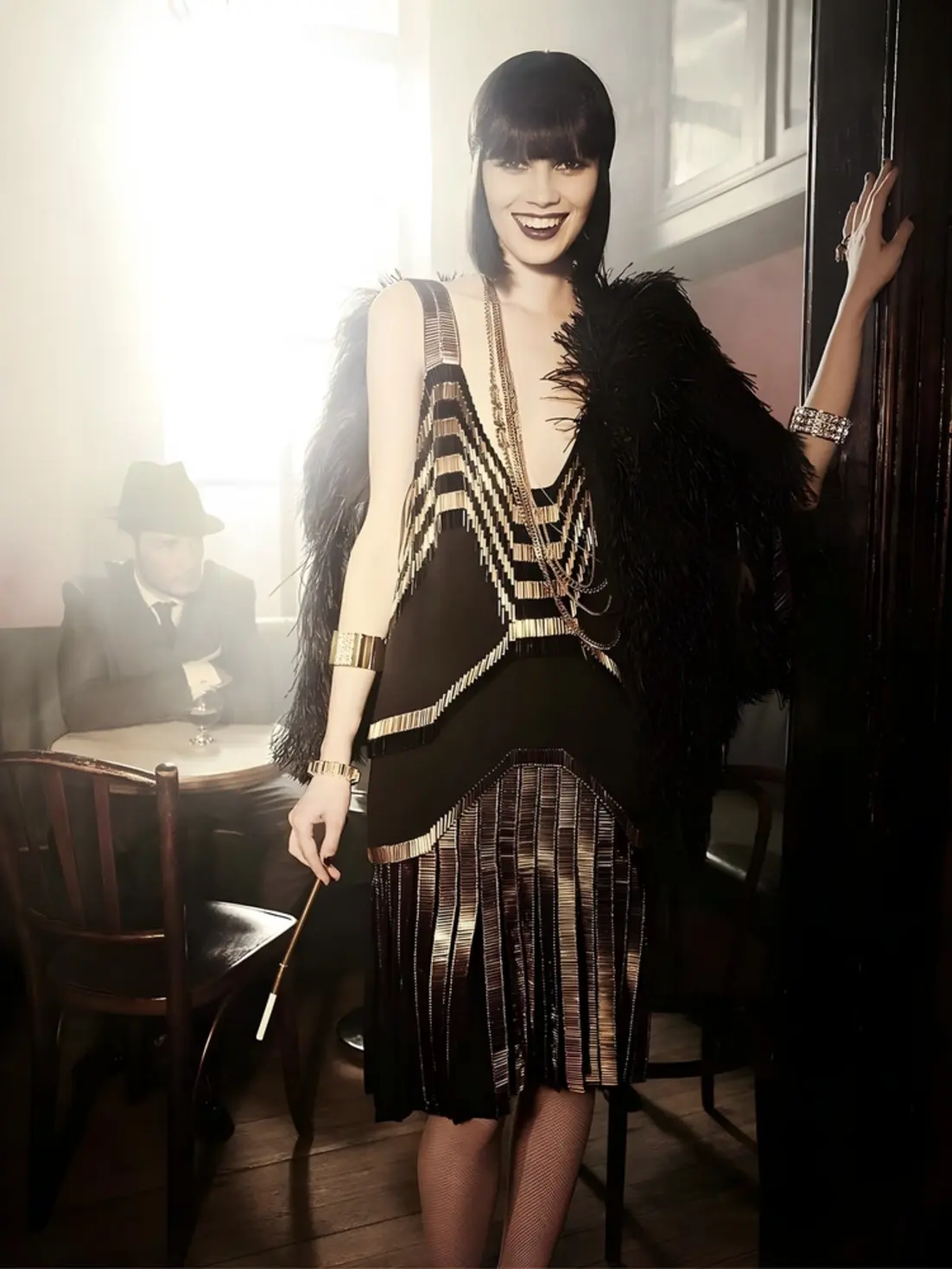
As the evening thins into late hours, the room holds its glow, and the city outside continues to shimmer with the same geometric confidence that lives inside every mirrored wall and metallic detail, and when the doors open again, a cool breeze meets warm skin, carrying perfume into the street like a signature.
The night leaves behind a sensation: the feeling of light moving along beadwork, the memory of jazz shaping air, the awareness of posture turned into power, the sweetness of glamour guided by design, the intimacy of modernity dressed as romance.
Art Deco style lives in that sensation, in the way a century learned to fall in love with the future, and in the way fashion learned to translate that love into line, surface, movement, and the quiet thrill of entering a room and feeling the world brighten because you arrived.
Advertisement