MENU
Close





At what point does another million become meaningless? The paradox of wealth sits somewhere between a Monaco penthouse, a private jet and a billionaire's next ambition.

At what point does another million become meaningless? The paradox of wealth sits somewhere between a Monaco penthouse, a private jet and a billionaire's next ambition.
October 16, 2026


The billionaire's dilemma has an unusually simple premise: every imaginable luxury is within reach, yet the desire for something greater remains. A collection of 56 watches can still accommodate another acquisition. A Mediterranean residence can be exchanged for a more prestigious address. Even an established business empire can become the foundation for another ambitious venture.
These contradictions emerge throughout a documentary examining the lives of wealthy Germans, from entrepreneurs and luxury service providers in Monaco to lottery millionaires, former professional athletes and investors building businesses around their personal passions. The subjects inhabit vastly different financial circumstances, but their stories repeatedly return to a question that wealth alone seems unable to settle: how much is enough?
The paradox of wealth concerns more than the relationship between money and happiness. It reveals the changing psychological function of money as an individual moves from financial insecurity to comfort, abundance and extraordinary privilege. At each stage, wealth acquires a different purpose, and the conditions for feeling satisfied can shift along with it.
Monaco offers an unusually concentrated illustration of extreme wealth. Its harbor accommodates superyachts, its residential towers command extraordinary prices, and its social calendar connects entrepreneurs, celebrities, investors and the service providers who sustain their lifestyles.


German entrepreneur Björn Leffna, whose name appears phonetically in the supplied transcript, describes money primarily as a source of freedom. Greater financial resources give him more choices and greater control over his time. Yet his experiences in Monaco reveal how quickly those advantages can produce additional ambitions.
During a visit to a luxury watch boutique, he considers another acquisition despite already owning dozens of watches. Later, he explores purchasing an apartment in the principality, where the property shown in the documentary carries a multimillion-euro asking price.
These purchases represent more than personal enjoyment. In environments where extraordinary wealth is commonplace, luxury possessions become instruments of comparison. A rare watch, a prestigious address or a larger yacht can communicate a person's position within an already exclusive social hierarchy.
This is a form of relative status. Individuals evaluate their success partly through comparisons with the people around them. As their social environments become wealthier, the reference point against which they measure their own circumstances shifts upward.
A millionaire living among ordinary earners may experience substantial economic security and prestige. The same millionaire surrounded by billionaires can perceive entirely different standards of achievement.
The documentary introduces the Matthew effect, a sociological concept describing how existing advantages tend to produce further advantages. Financial wealth can compound through investments, networks and opportunities, while social proximity to wealth can expose individuals to additional commercial possibilities.
Consequently, the pursuit of wealth operates on two levels. Money provides practical freedom, but it also becomes a competitive measure of achievement. The first function can reach a level of sufficiency. The second has no obvious upper limit.
One of the documentary's more revealing observations concerns people who aspire to experience the lifestyles of the ultra-wealthy without possessing comparable fortunes.
The emergence of semi-private aviation illustrates this commercial opportunity. Travelcoup, featured in the documentary, offers individual seats aboard smaller aircraft with spacious cabins, accelerated airport procedures and personalized service. Its proposition resembles private aviation in comfort and convenience while spreading the cost among passengers.
Economic innovation lies in separating some of the privileges associated with private ownership from the enormous capital commitment required to possess an aircraft.
A similar principle shapes contemporary luxury hospitality. An expensive boutique hotel can offer guests a temporary experience of exclusivity, architectural sophistication and personalized attention without requiring them to own a comparable property.


For luxury businesses, this transformation expands the potential market. Experiences once associated with a narrow class of asset owners become accessible, occasionally, to a larger affluent clientele.
However, the underlying appeal goes beyond comfort. These services allow consumers to temporarily inhabit a particular social identity.
The psychological distinction is important. Someone booking a semi-private flight may value reduced waiting times and greater privacy, but the experience also conveys an impression of belonging to a more exclusive category of traveler.
Luxury consequently becomes a language through which economic aspirations are expressed. Its value depends partly on how convincingly a product or experience communicates distinction.
This creates an interesting contradiction for luxury companies. Their commercial growth may depend on expanding access, while their desirability often relies on preserving a sense of exclusivity.
The most effective luxury experiences navigate this tension by making customers feel individually recognized, even when the underlying service has become increasingly standardized.
The documentary introduces a substantially different relationship with wealth through German entrepreneur Jan Henric Buettner, the investor behind Weissenhaus, a luxury resort on Germany's Baltic coast.

Having accumulated considerable wealth through business ventures, Buettner approaches money as a means of realizing ambitious projects. The transcript describes his tendency to acquire properties, invest heavily in their redevelopment and transform relatively modest initial ideas into elaborate enterprises.
His explanation centers on a particularly interesting concept: money as "frozen future potential."
In this interpretation, financial wealth possesses little inherent purpose while sitting unused. It acquires meaning through the opportunities it can finance. Capital allows an individual to execute ideas, assume risks and pursue projects that might otherwise remain hypothetical.
Buettner's involvement in professional chess provides a striking example. His interest in the game developed into an ambitious tournament project involving leading international players, including Magnus Carlsen. The initiative grew into Freestyle Chess, which has since developed a larger international competitive presence.


Buettner's experience demonstrates how wealth can transform private interests into public-facing ventures. The substantial financial risks associated with developing such projects are manageable because he already possesses a level of security that most entrepreneurs spend their working lives trying to achieve.
His story also complicates the familiar moral distinction between productive investment and extravagant consumption.
A luxury resort, an international sporting tournament and an expensive personal collection can all consume enormous amounts of capital. Their social and economic significance depends on the opportunities they create, the people they involve and their longer-term consequences.
Yet the entrepreneur's philosophy contains another paradox. If independence is the ultimate goal, each new venture introduces responsibilities, commitments and risks that can limit the freedom his fortune originally secured.
Money gives him the ability to pursue almost anything. Ambition ensures that he continually finds something else to pursue.
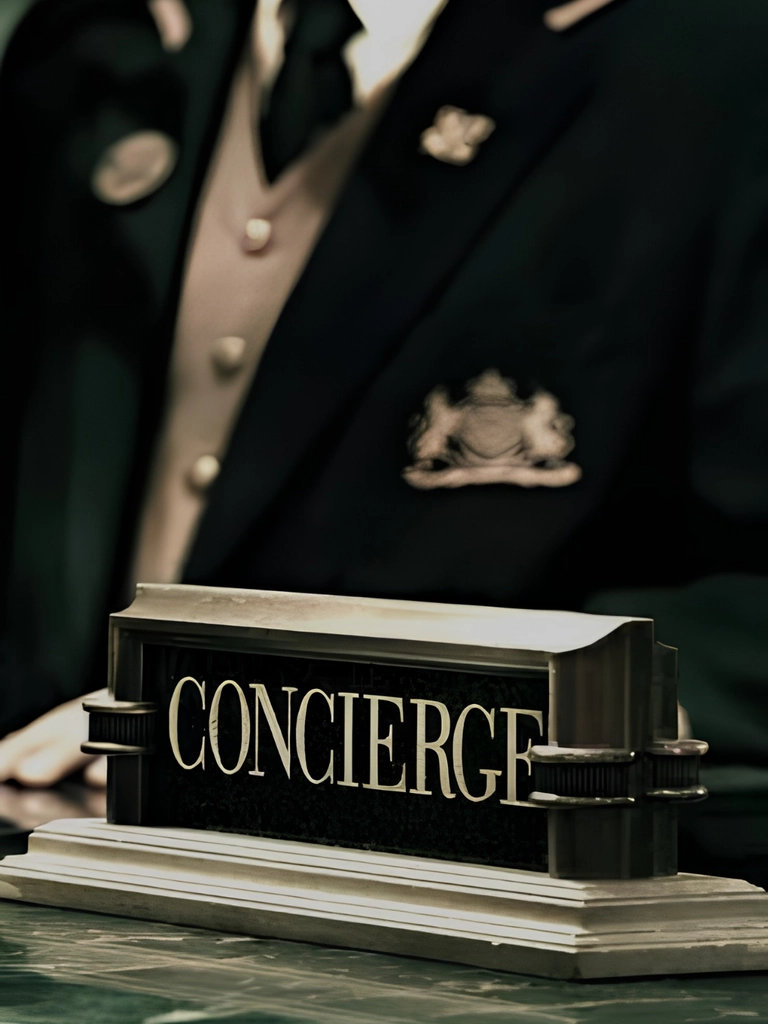
In Monaco, interior designer Kamyar Moghadam built a business around the social desires of affluent clients. His showroom combines furniture, textiles, decorative objects and bespoke interior services, creating environments designed for people accustomed to extraordinary levels of personalization.

Moghadam also operates an invitation-only private club, an intimate space where social interaction and commercial opportunity frequently overlap. The documentary describes a venue with no conventional membership system, where entry depends on personal relationships and privileged access.
Its exclusivity has a practical business dimension. The relationships cultivated in private social settings can lead to substantial commissions, furniture purchases and long-term client relationships.
Moghadam presents hospitality as an extension of his professional philosophy. An atmosphere of comfort encourages people to remain, socialize and eventually establish the trust on which expensive personal transactions depend.
This relationship between access and economic value illustrates an often overlooked characteristic of the luxury market. Its most valuable commodities frequently exist beyond the physical objects available for purchase.
Connections, discretion and recognition can become forms of social capital, granting entry into otherwise inaccessible communities. A private invitation may communicate status more effectively than an expensive possession because access depends on being acknowledged by someone already inside the circle.
The commercial implications are significant. Luxury brands cultivate prestige through selective distribution, intimate client relationships and controlled experiences. Scarcity can be created through restricted access as effectively as through limited production.
Moghadam's model also reveals how carefully social pleasure can be integrated into commercial strategy. A glamorous party may appear spontaneous to its guests while simultaneously strengthening the professional networks that sustain the business.
At the highest levels of wealth, leisure itself can become an economic infrastructure.
The documentary leaves Monaco to visit an unusual gathering of German lottery millionaires. Its participants have experienced an extraordinary financial transformation, yet their conversations frequently concern everyday matters, including household maintenance, domestic projects and ordinary expenses.
Their circumstances offer a valuable contrast with the continual accumulation pursued by some members of the ultra-rich.
One lottery winner describes using her winnings to build the Tuscan-inspired home she had always wanted. Another appreciates being able to replace a broken washing machine without anxiety.
These examples illuminate the distinction between financial security and competitive wealth accumulation.
For individuals accustomed to economic uncertainty, money changes daily life by reducing exposure to unexpected costs. It creates a buffer between ordinary difficulties and personal crisis. Expenses that previously threatened financial stability become manageable inconveniences.
Wealth can also introduce new anxieties involving investment, relationships and identity. Sudden financial success changes how other people perceive an individual, sometimes before the recipient has developed the knowledge or confidence to manage the transformation.
The lottery winners' regular gatherings function as an informal support network, allowing participants to discuss challenges that may be difficult to share with friends or relatives whose circumstances remain unchanged.
Their experiences suggest that the psychological benefits of wealth depend substantially on the conditions from which a person starts.
An additional million euros can profoundly change the life of someone struggling with financial insecurity. The same increase may have little practical impact on a person who already possesses hundreds of millions.
This distinction complicates the popular debate about whether money buys happiness. Financial resources can alleviate serious problems and expand personal choices, but the subjective value of additional wealth changes according to an individual's needs, expectations and social environment.

Former German footballer Jimmy Hartwig offers perhaps the documentary's most personal account of wealth and its consequences.
Growing up in economically difficult circumstances, Hartwig experienced financial success through professional football. Expensive clothes, cars, watches and champagne became tangible evidence of the social position he had achieved.

He recalled the satisfaction of wearing luxury brands and publicly displaying his achievements. For someone whose early experiences involved economic exclusion, these possessions carried emotional significance. They communicated that he had successfully entered a world previously beyond his reach.
His eventual financial difficulties exposed the fragility of that security.
According to his account, poorly understood investment arrangements, questionable professional advice and mistakes in financial management contributed to the loss of substantial assets. The same wealth that had once given him extraordinary confidence became a source of distress.
Hartwig's story highlights an important distinction between generating wealth and preserving it. Exceptional talent in sport, entertainment or business does not automatically provide expertise in investment, taxation or financial planning.
The problem can be amplified by the social circumstances surrounding newly wealthy individuals. Financial success attracts advisers, acquaintances and commercial opportunities whose interests may be difficult to distinguish from genuine personal support.
Following his financial setbacks and serious health challenges, Hartwig describes a different understanding of personal success. Physical well-being, routine and meaningful everyday activities have become more important than outward demonstrations of prosperity.
His experience should not be interpreted as evidence that financial hardship inherently produces wisdom. Losing substantial wealth can inflict serious damage, and adequate resources remain essential to personal security.
What changes in Hartwig's account is the symbolic importance of luxury. Once the possessions associated with success disappear, their capacity to define the person who owned them becomes questionable.
The former athlete's perspective presents a fundamental challenge to conspicuous consumption: an expensive object can communicate achievement to other people, but its disappearance reveals how little of a person's identity it can permanently secure.
The documentary's exploration of private fortunes takes a more political direction through Anne Brorhilker, the former German prosecutor recognized for her investigations into the Cum-Ex tax fraud scandal.

The schemes involved financial transactions designed to obtain multiple tax reimbursements on dividend taxes that had only been paid once or had not been paid at all. German authorities have investigated extensive networks of financial professionals and institutions involved in these transactions.
Brorhilker's work revealed the considerable imbalance between public enforcement agencies and sophisticated financial actors equipped with substantial legal resources. Following her departure from public prosecution, she joined the financial reform organization Finanzwende to continue advocating for stronger action against financial crime.
Her presence introduces a crucial question into the discussion of wealth and personal freedom. At what point does an individual's pursuit of financial advantage impose unacceptable costs on the wider society?
The ability to accumulate wealth depends on legal systems, public infrastructure, commercial institutions and economic stability. Extraordinary private fortunes therefore exist within collective arrangements that make their creation and preservation possible.
Tax evasion exposes this relationship particularly clearly. Illegally extracting public revenue produces a private benefit while reducing resources available for public purposes.
Yet the documentary also presents wealthy entrepreneurs who emphasize employment, domestic investment and financial responsibility.
The factory owner featured earlier in Monaco describes his decision to continue manufacturing in Germany despite the possibility of reducing costs through relocation. He regards his company's long-standing workforce and regional relationships as obligations that deserve consideration alongside profitability.
These contrasting perspectives reveal the limitations of treating all wealthy individuals as a single social category. Fortunes can be acquired through different economic processes, and their owners make substantially different choices about taxation, employment, consumption and investment.
The central issue concerns how economic power is exercised. Wealth can finance productive enterprises, artistic projects and public initiatives. It can also facilitate regulatory avoidance, political influence and practices that intensify existing inequalities.
Financial independence grants individuals considerable discretion over how they deploy their resources. The social consequences of those decisions extend well beyond their personal lives.
The documentary's final reflections return to the relationship between prosperity and personal contentment.
Researchers and wealthy interviewees repeatedly distinguish between the practical benefits of financial resources and the psychological desire to accumulate more. Money can alleviate hardship, increase autonomy and create opportunities for meaningful projects. It can also become a measure of competitive achievement that demands continual escalation.
The luxury market thrives partly on this unresolved tension. New objects, addresses, experiences and memberships promise distinction, yet the feeling of exclusivity can weaken as consumers become accustomed to their possessions and surroundings.
Within affluent social circles, even extraordinary privileges can gradually become ordinary expectations.The paradox of wealth therefore emerges when a tool originally pursued for freedom becomes an endless obligation to maintain or improve one's position.