MENU
Close





Few natural materials possess the quiet allure of pearl. Its shifting iridescence has captivated artisans for centuries, finding exquisite expression in both high jewelry and high watchmaking.

Few natural materials possess the quiet allure of pearl. Its shifting iridescence has captivated artisans for centuries, finding exquisite expression in both high jewelry and high watchmaking.
October 14, 2026


A pearl originates through an extraordinary biological process. Within certain mollusks, successive microscopic layers of calcium carbonate accumulate to form nacre, producing the distinctive luminosity that has fascinated civilizations for millennia. The same substance lines the interior of many shells, creating the iridescent material known as mother-of-pearl.
Although closely related, pearls and mother-of-pearl occupy different positions within high jewelry and high watchmaking. Natural pearls form without deliberate human intervention, making exceptionally large, symmetrical specimens extraordinarily rare. Mother-of-pearl, meanwhile, can be cut into thin sheets, delicately carved, engraved, and assembled into intricate artistic compositions.
Their contrasting properties have inspired remarkable expressions of luxury craftsmanship. Historic pearls acquire value through exceptional rarity and distinguished provenance, while contemporary watchmakers transform mother-of-pearl into miniature works of art that explore light, texture, and the passage of time.
Before cultured pearls became commercially widespread during the twentieth century, fine natural pearls represented an exceptional concentration of wealth. Their unpredictable formation and the difficulty of finding closely matched specimens made magnificent necklaces especially desirable among European and Asian royal families.
Within the history of high jewelry, their significance extended beyond rarity. A pearl inherited through generations of monarchs could acquire a cultural and historical identity inseparable from its physical beauty.
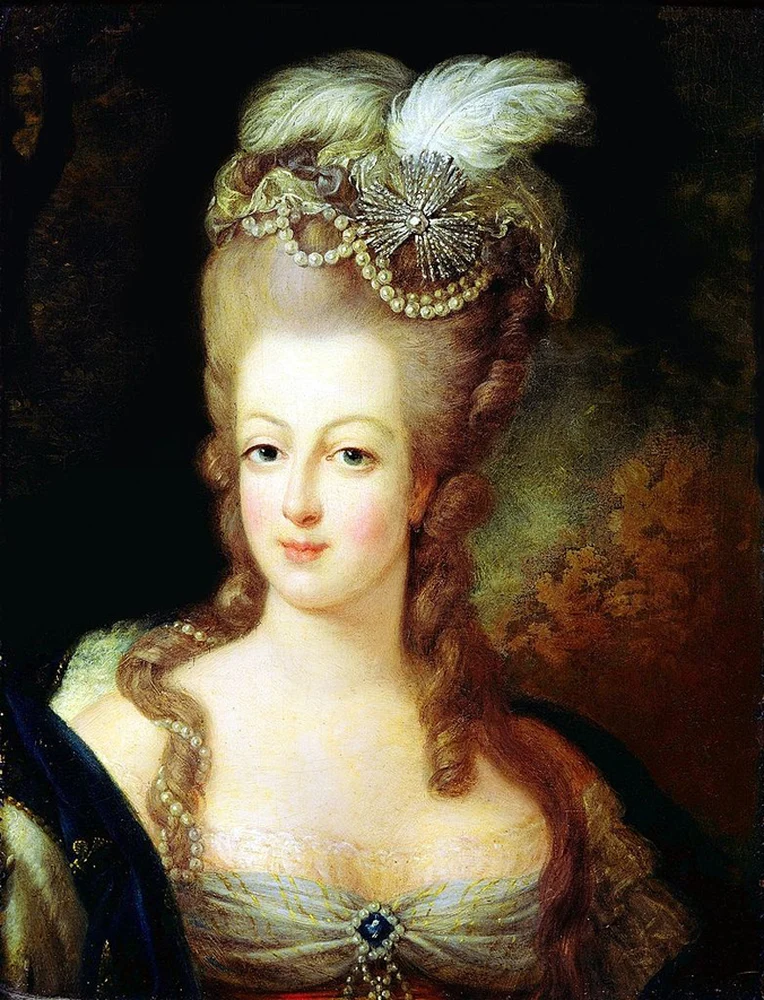
The extraordinary pendant once belonging to Marie Antoinette offers a particularly compelling example.
The eighteenth-century jewel features a substantial pear-shaped natural pearl suspended beneath a diamond-set bow and a large oval diamond. Its proportions reflect the refined jewelry traditions of the French royal court, while its provenance introduces an extraordinary historical dimension.
During the French Revolution, Marie Antoinette arranged for precious jewels to be sent out of France. Following her death, they eventually passed to her daughter and subsequently remained within the Bourbon-Parma family for approximately two centuries.

When Sotheby's presented the pendant in Geneva in November 2018, its estimate of CHF 1–2 million proved remarkably conservative. Competitive bidding carried the final price to CHF 36,427,000, approximately US$36.2 million at the time, establishing an auction record for a natural pearl.
The sale illustrates the extraordinary influence of provenance within the high-jewelry market. Collectors were acquiring an exceptional natural gem alongside a tangible connection to one of Europe's most extensively documented royal histories.
Few pearls possess a history as remarkable as La Peregrina, meaning “The Wanderer” in Spanish. Discovered in the Gulf of Panama during the sixteenth century, the 50.56-carat natural pearl passed through Spanish royalty and European aristocratic collections before Richard Burton purchased it for Elizabeth Taylor in 1969.

While individual natural pearls can command exceptional prices, assembling an entire necklace of closely matched gems presents another level of rarity.
The legendary Baroda Pearls originated from the treasury of the Maharajas of Baroda in India. Once part of an extraordinary seven-strand necklace, a selection of the pearls was subsequently assembled into a two-strand composition featuring 68 graduated natural pearls and a Cartier diamond clasp.
Their remarkably consistent luster, shape, and graduated proportions demonstrate the difficulty of sourcing pearls that complement one another so precisely. At Christie's New York in 2007, the necklace achieved $7,096,000, confirming the extraordinary value placed upon historically significant natural pearl strands.


A different expression of rarity appears in the Cowdray Pearls, a necklace composed of 42 natural grey saltwater pearls formerly belonging to Viscountess Cowdray. Their softly metallic tones distinguish the necklace from traditional white pearl strands. Equally remarkable is the consistency of color and luster across the entire composition, a quality requiring extraordinary selectivity when working with naturally occurring gems.
In October 2015, the necklace achieved HK$41,080,000, approximately US$5.3 million, at Sotheby's Hong Kong, setting an auction record for a natural grey pearl necklace.
Together, these historic jewels reveal a fundamental principle of pearl valuation within high jewelry. Exceptional quality depends upon the interaction of size, shape, surface condition, color, luster, and matching. Distinguished provenance can further elevate a necklace into the highest category of collectible jewelry.
The relationship between high jewelry and high watchmaking finds one of its most fascinating expressions in mother-of-pearl.
Its iridescence originates from the microscopic architecture of nacre, where light interacts with successive crystalline layers to produce delicate variations in color. Unlike the concentrated brilliance of a faceted gemstone, mother-of-pearl possesses a shifting luminosity that responds continuously to its surrounding environment.


In high watchmaking, artisans cut and polish carefully selected sections of shell into exceptionally thin dials. The material's fragility demands precise handling, particularly when additional engraving, carving, or gem-setting is involved.
Natural variations ensure that even similarly designed watches retain subtly individual characteristics. For maisons working at the intersection of horology and jewelry, this quality offers an opportunity to create exceptional timepieces whose artistic identities extend beyond their mechanical complexity.
For Chanel, mother-of-pearl offers a particularly poetic interpretation of Gabrielle Chanel's artistic universe.
The Mademoiselle Privé collection frequently references the designer's fascination with Chinese Coromandel lacquer screens, whose elaborate landscapes and symbolic imagery furnished her Paris apartment.
The 2014 Coromandel Twin Volute Enchantée creation explored this heritage through two exceptional jewelry watches. One employed Grand Feu enamel, while the other translated the ornamental composition into sculpted mother-of-pearl.
Carved reliefs introduce physical depth to the dial, creating subtle interactions between the material's natural iridescence and the surrounding diamond-set white-gold case.
The composition resembles a miniature sculptural artwork, demonstrating how high jewelry and high watchmaking can share a common artistic language through materials, craftsmanship, and intricate surface treatments.


With its Grand Lady Kalla, Vacheron Constantin explores the relationship between precious jewelry and mechanical timekeeping. Introduced in 2024, the collection revisits the manufacture's celebrated Kalla lineage through transformable creations that can be worn as wristwatches and jewelry.
The Diamond & Onyx composition incorporates lustrous Akoya cultured pearls into an elaborate sautoir, alternating their delicate luminosity with dark onyx and precisely arranged diamonds. The modular construction allows the timepiece to move between different forms of adornment, introducing versatility into an otherwise highly formal jewelry tradition.
Here, pearls extend the visual identity of the watch beyond its dial. The timepiece participates in a larger jewelry composition, illustrating an increasingly fluid relationship between high jewelry and high watchmaking.


In Chopard's L'Heure du Diamant collection, mother-of-pearl assumes a more restrained architectural role.
The maison employs luminous nacre dials, occasionally enriched through marquetry or textured treatments, surrounded by elaborate diamond settings.
The contrast between the shifting softness of the pearl surface and the sharply articulated brilliance of diamonds establishes a sophisticated visual balance.
Such compositions demonstrate the artistic potential of material contrasts within high jewelry and high watchmaking. The natural luminosity of mother-of-pearl establishes the visual character of the timepiece, while expertly arranged diamonds emphasize its delicate variations in color and texture.


The extraordinary prices achieved by historic pearls and the artistic ambition of contemporary mother-of-pearl watches reveal two approaches to the same natural phenomenon.
One celebrates the exceptional rarity of organic formation, where centuries of provenance transform individual gems into historical artifacts. The other explores how human craftsmanship can interpret intricate structures and luminous properties created by nature.
Their relationship also raises questions about the future of luxury. As technology allows increasing precision in the production of precious objects, the individuality of natural materials acquires another dimension of significance.
A pearl's irregularities, its delicate variations in luster, and the iridescent structure of mother-of-pearl preserve qualities that resist complete standardization. Their beauty emerges through processes unfolding beyond the direct control of the artisan.
For collectors, this unpredictability offers a compelling expression of exclusivity. Royal provenance establishes historical significance, while elaborate craftsmanship contributes artistic complexity. Yet the essential attraction remains the material itself, carrying extraordinary visual evidence of its natural formation.
In an increasingly engineered world, high jewelry and high watchmaking continue to draw inspiration from an ancient natural phenomenon, reminding us that technological mastery and artistic sophistication can coexist with the enduring unpredictability of nature.