MENU
Close





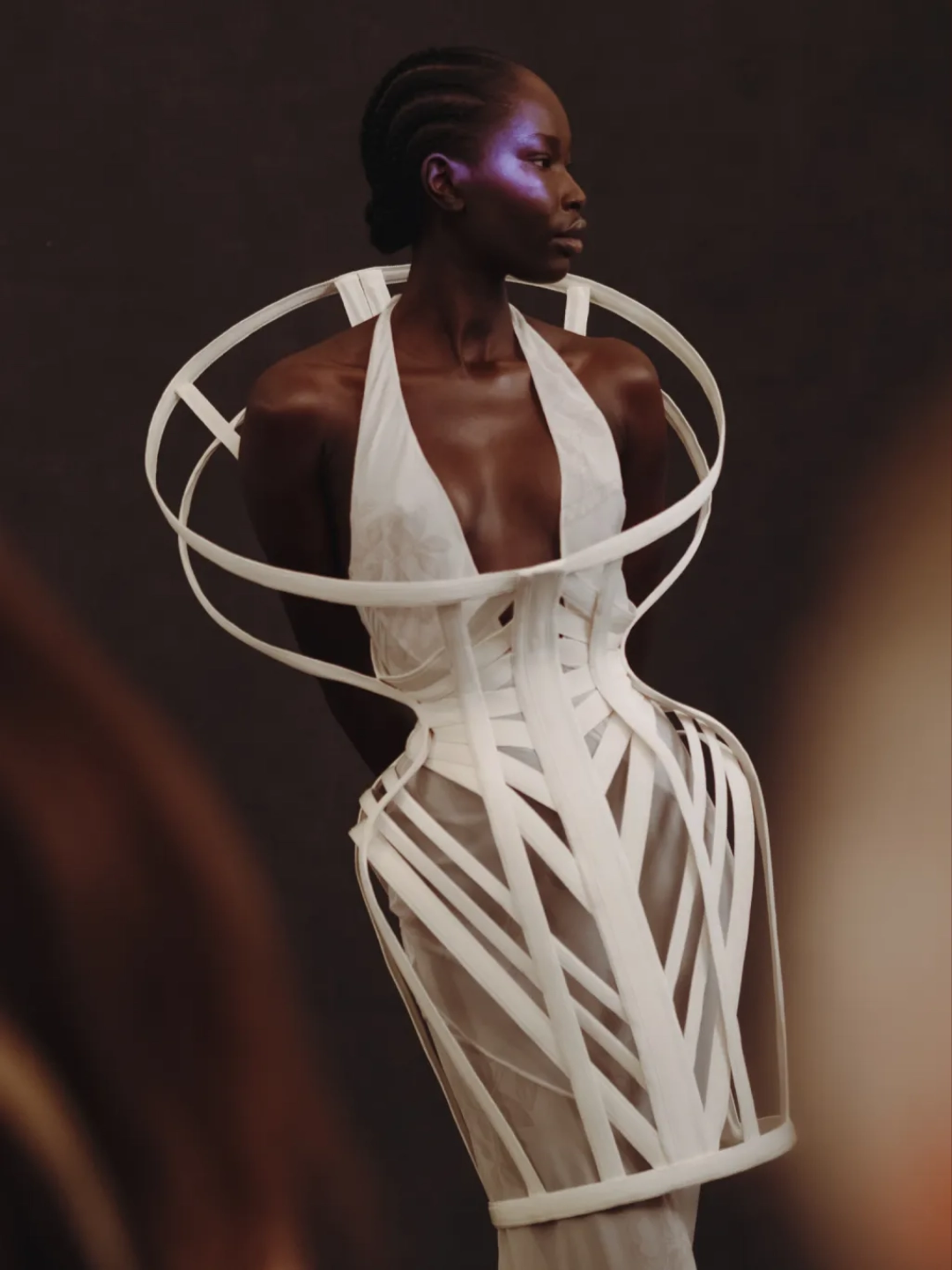
Patrick McDowell SS27 makes society dressing feel exciting again, pairing urban confidence with expensive taste, playful charm and the kind of polish that could make him London’s own Wes Gordon.
Patrick McDowell SS27 makes society dressing feel exciting again, pairing urban confidence with expensive taste, playful charm and the kind of polish that could make him London’s own Wes Gordon.
September 22, 2026
Advertisement

Advertisement



Wildflowers spilled through Yeomanry House while their reflections multiplied across a silver mirrored runway, turning a central-London military building into something between an English garden and a dream sequence. The sound of running water softened the architecture, portrait artists sketched arriving guests, and a small Aspinal keyring bearing one word waited on each seat: Love.
Patrick McDowell has recently dressed the Princess of Wales, won the BFC Fashion Trust prize and entered the second year of a ready-to-wear operation that began only in September 2025. The romantic world on the runway now has a commercial structure growing underneath it.
The first thread came from Wong Kar-wai’s In the Mood for Love, the favourite film of McDowell’s partner.
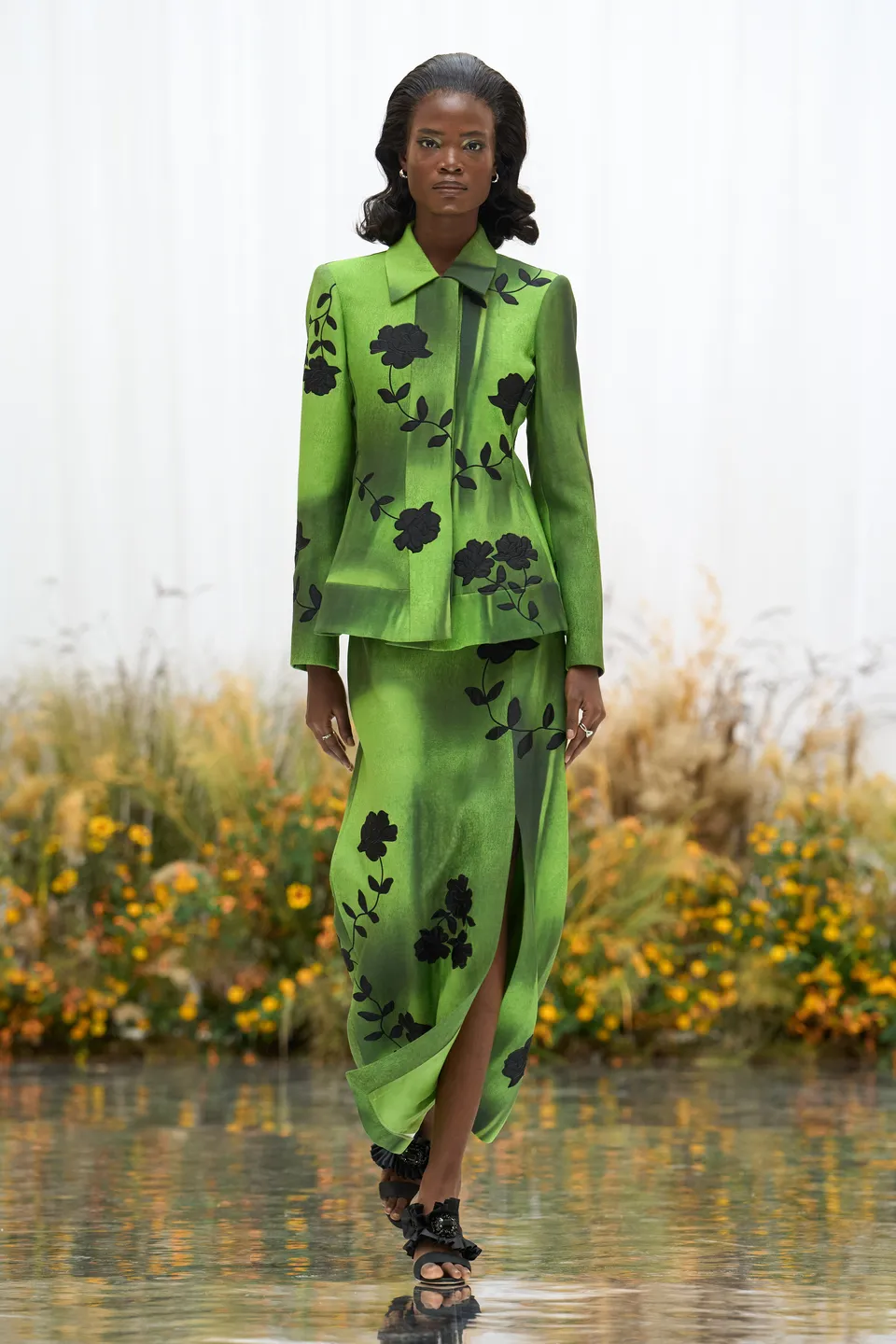
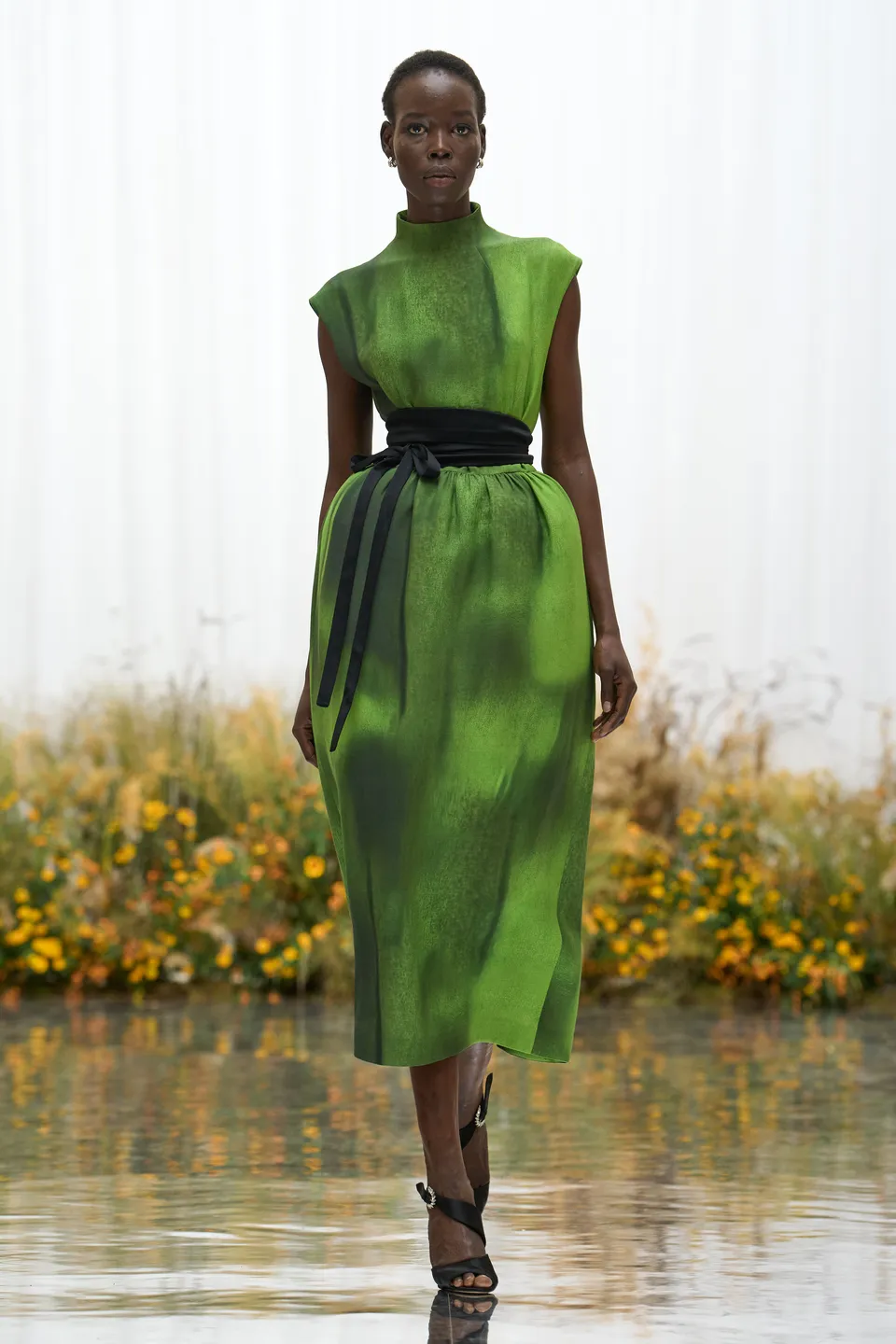
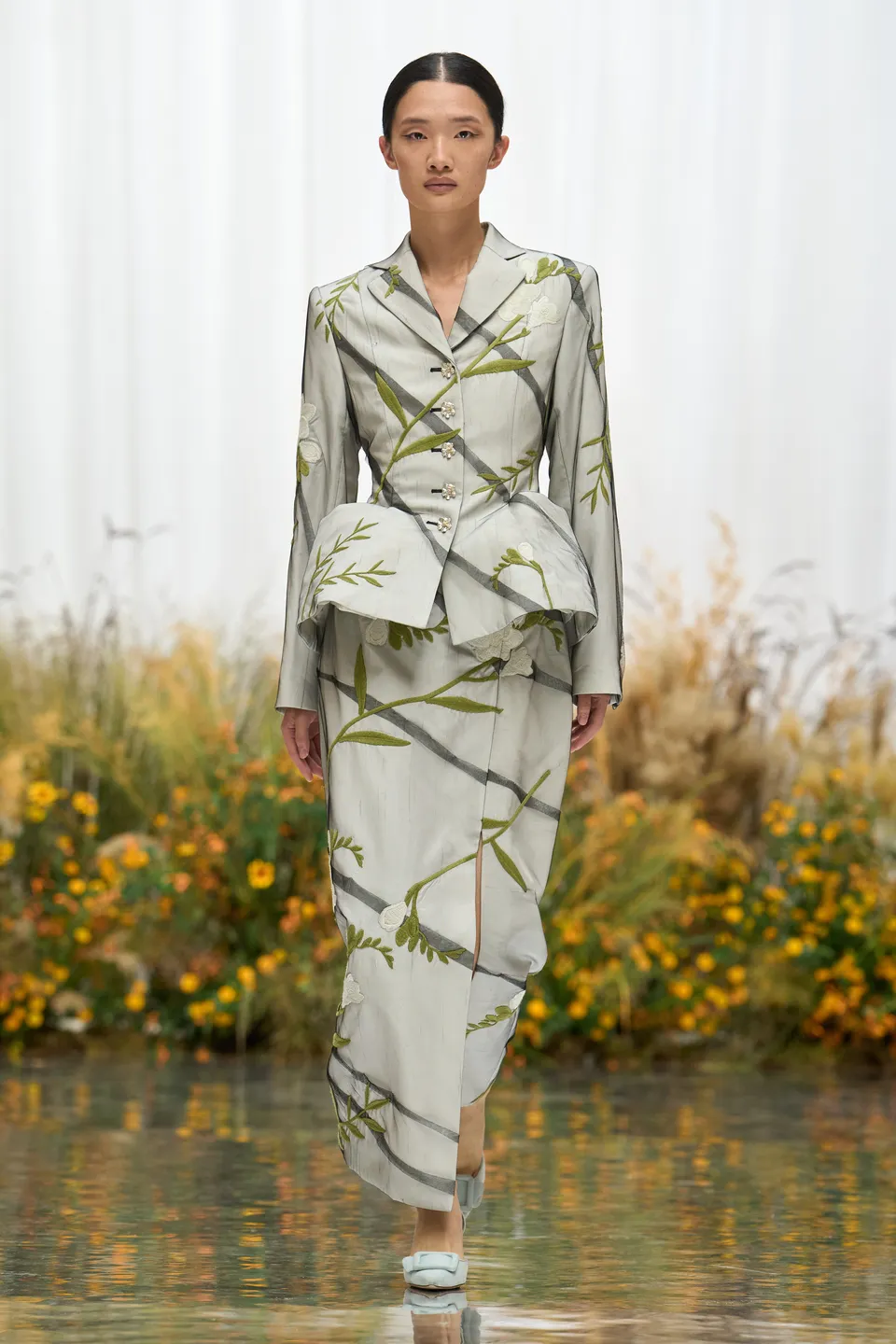
Maggie Cheung’s wardrobe is fundamental to the film’s hypnotic rhythm. She appears in 21 qipao looks on screen, while 46 were custom-made during production, their changing prints and colours registering time, emotion and restrained desire. Patrick McDowell extracted one striped motif and translated it into the green silk-wool material that opens the runway, while the film’s dominant reds and greens helped establish the collection’s palette.
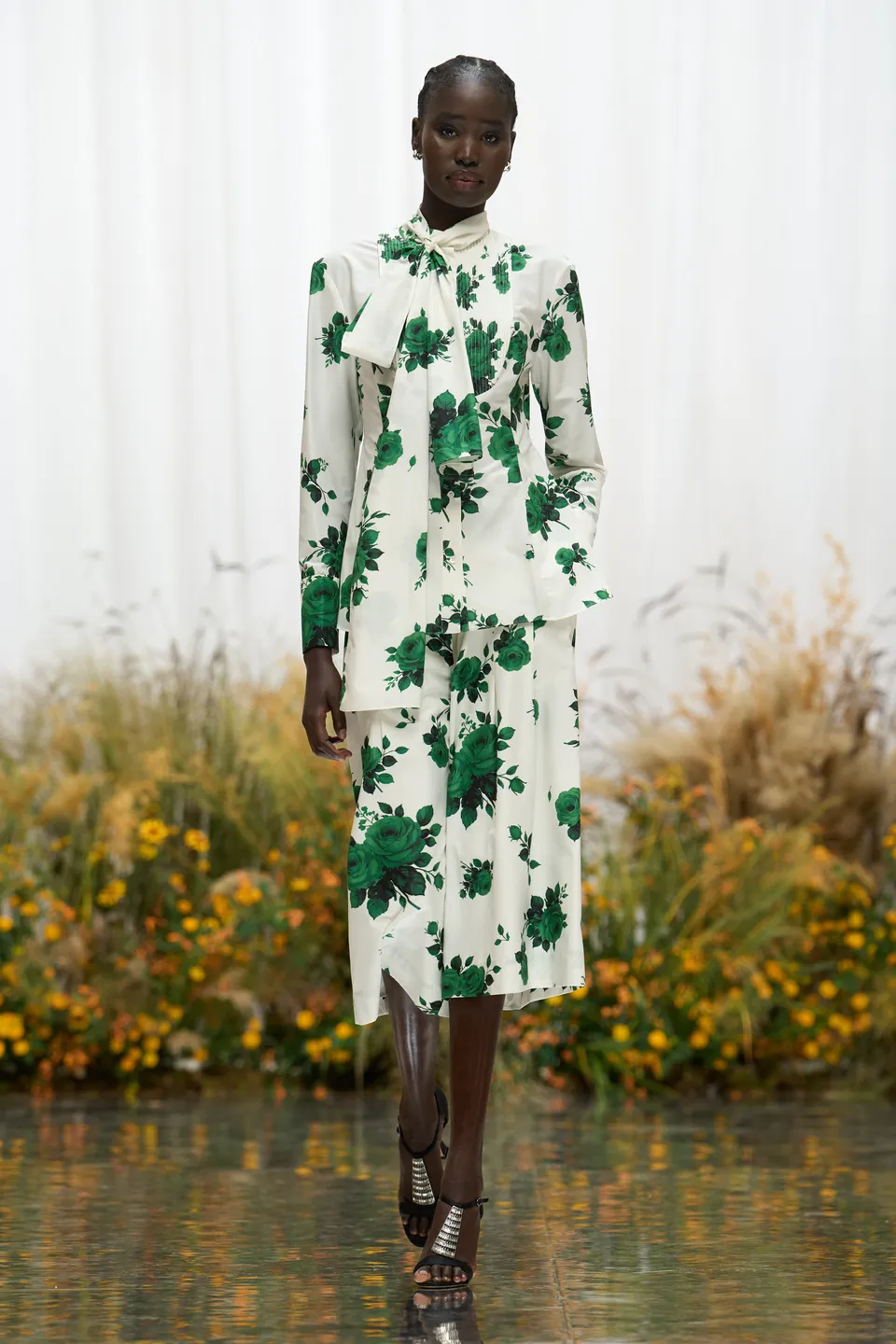
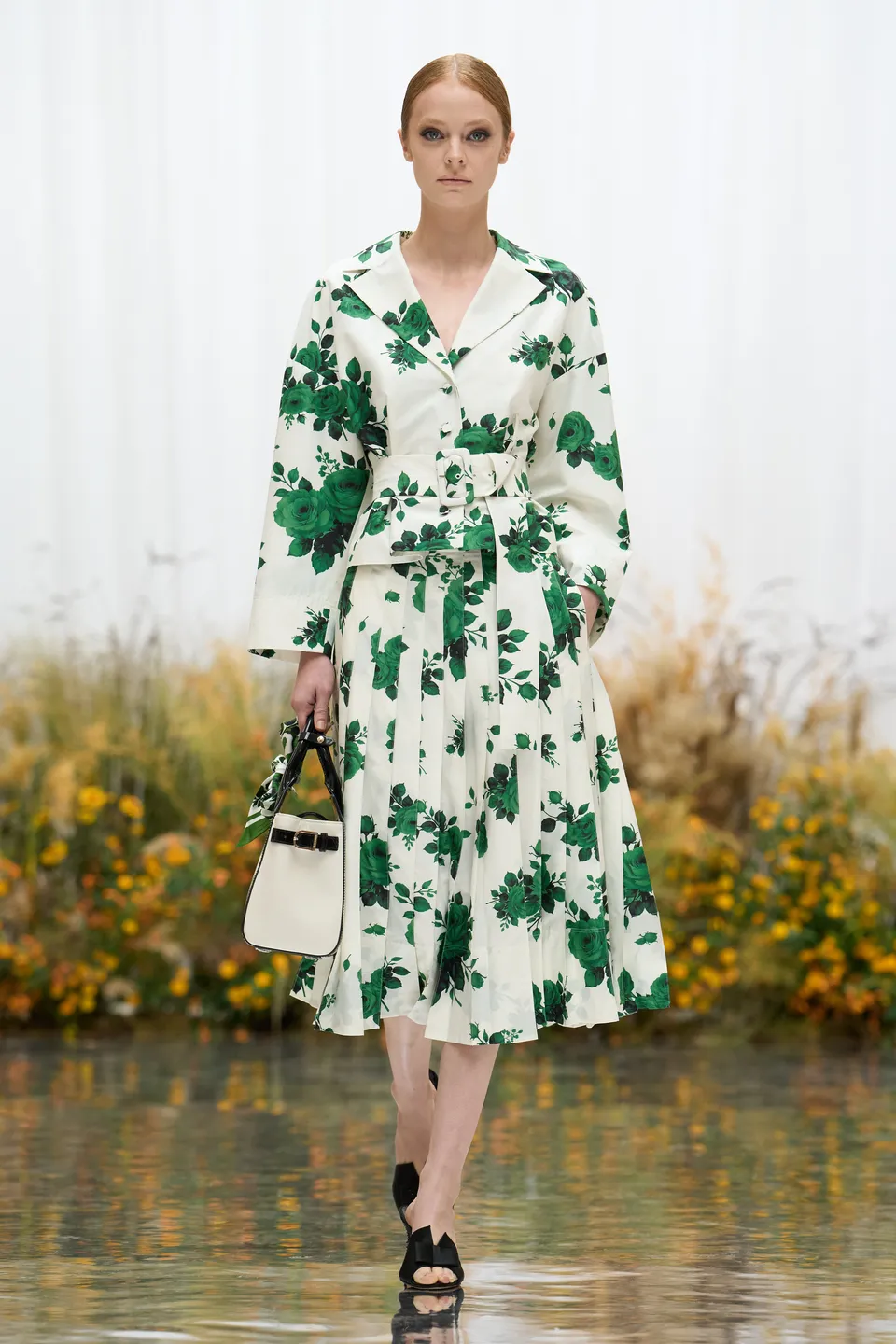
The inspiration works because McDowell responds to the film’s discipline as much as its beauty. Desire exists through control: a precise collar, a composed silhouette, a woman whose emotional intensity is carried through impeccable dress.
A floral briefcase, umbrella and jeweled flask appear almost as private clues scattered through the runway, giving the collection a sense of narrative while leaving the clothes firmly inside McDowell’s own world.
From Hong Kong cinema, Patrick McDowell moves into the polished social world of the early 1960s.
Lee Radziwill and Jackie Kennedy enter the research alongside the couture culture of Balenciaga, Christian Dior and Givenchy, placing the collection in an era when travel, public visibility and highly composed dressing formed part of a sophisticated woman’s social identity.
McDowell is interested in the ceremony of getting dressed properly.
That sensibility already belongs naturally to Patrick McDowell. Their client has been described as someone who owns established luxury status pieces and comes to McDowell for something carrying personality, colour and a sense of occasion. Spring 2027 gives that client an entire social vocabulary.
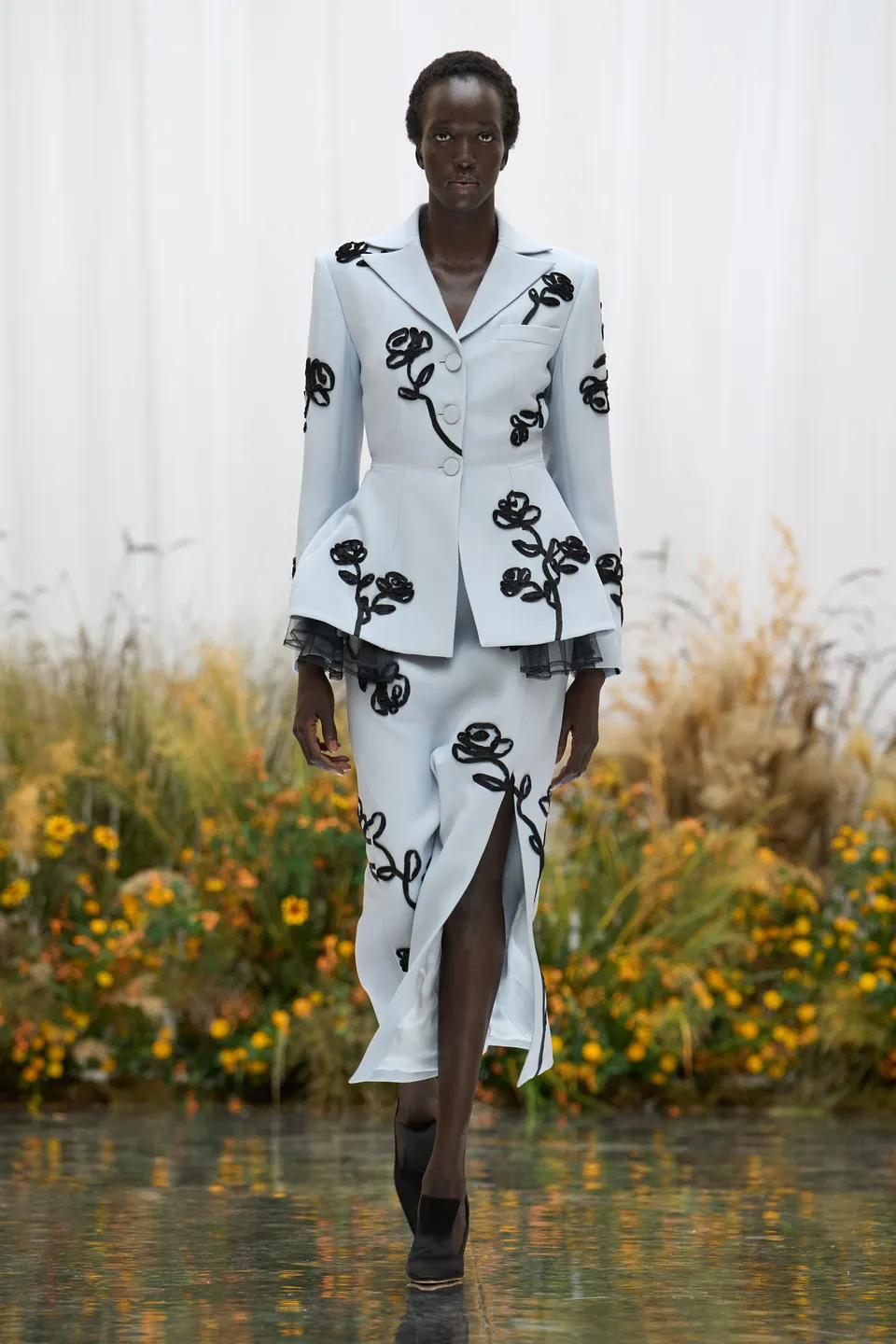
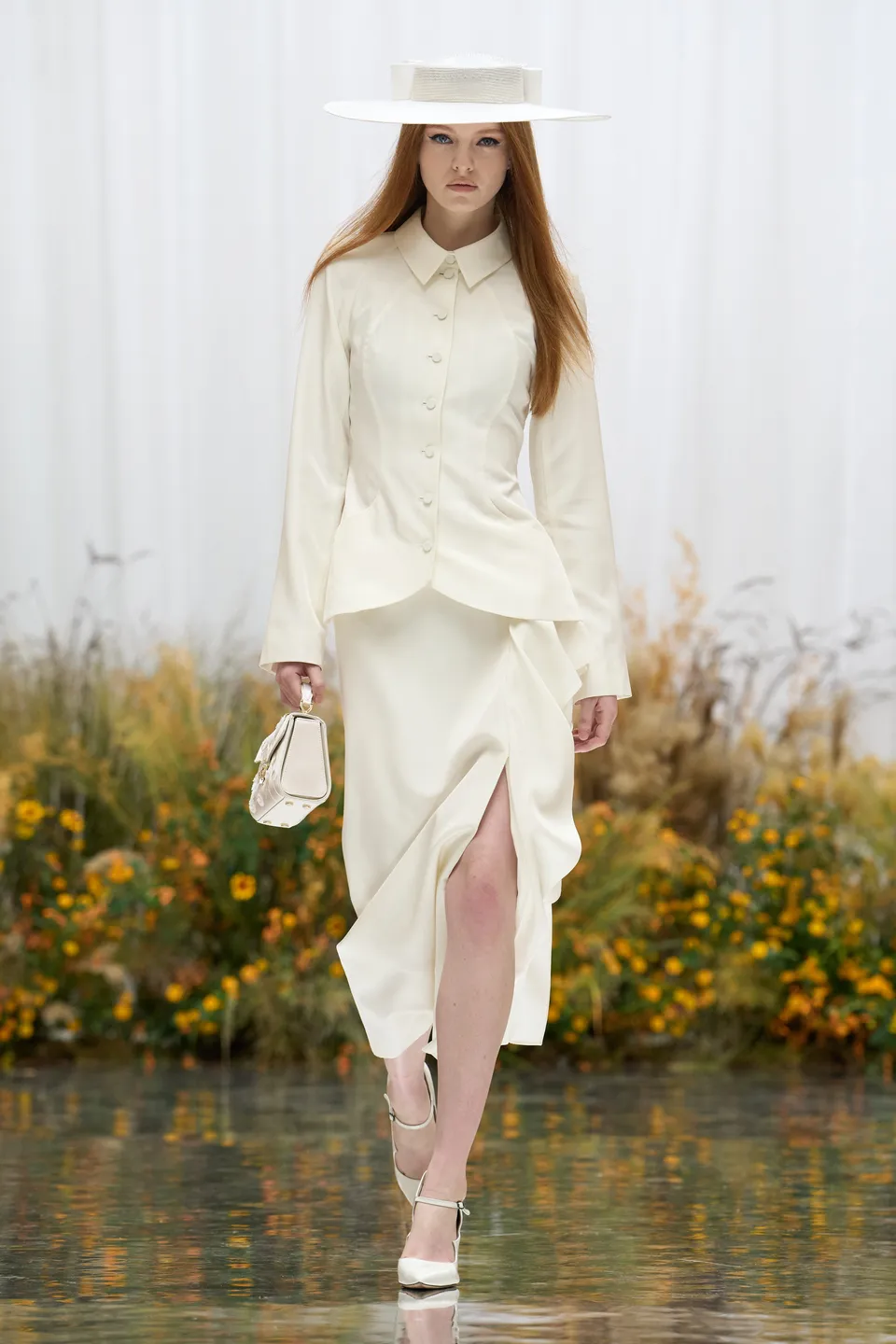
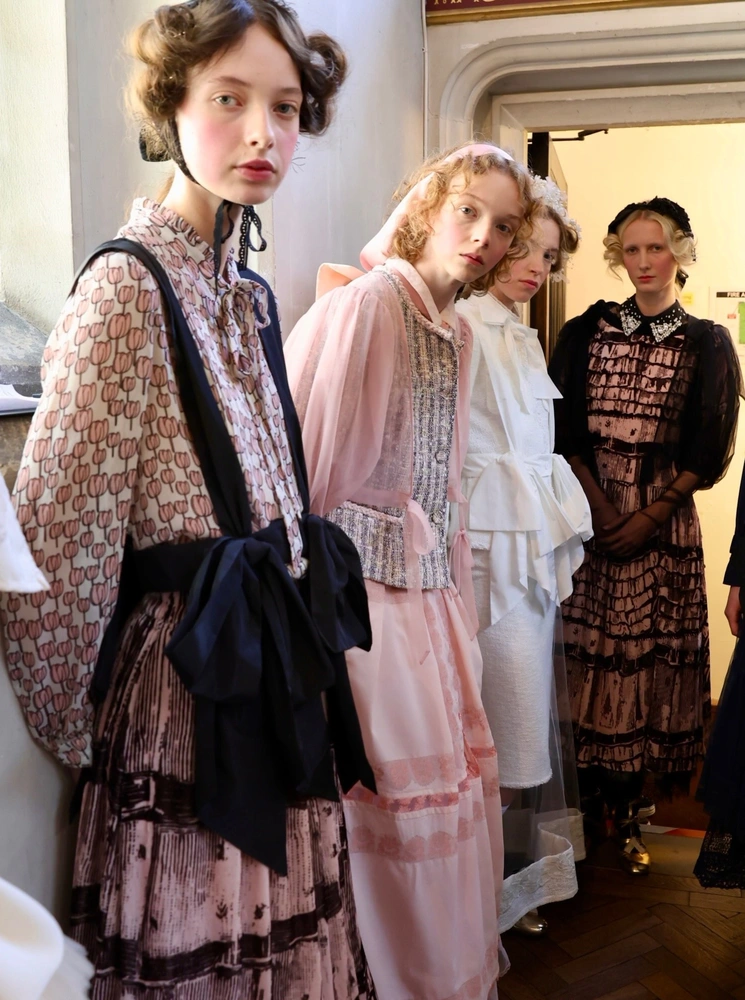
The opening look introduces the collection through one of McDowell’s favourite house pieces: the Sylvia jacket, cut in green-striped silk-wool georgette with a sculpted peplum and silk roses.
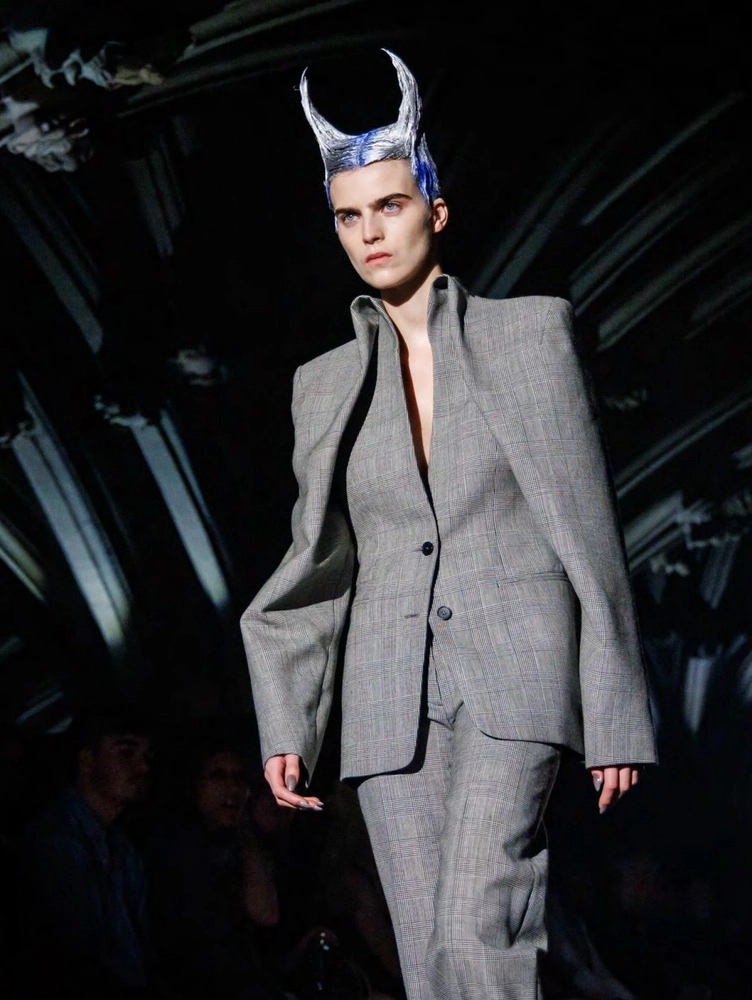
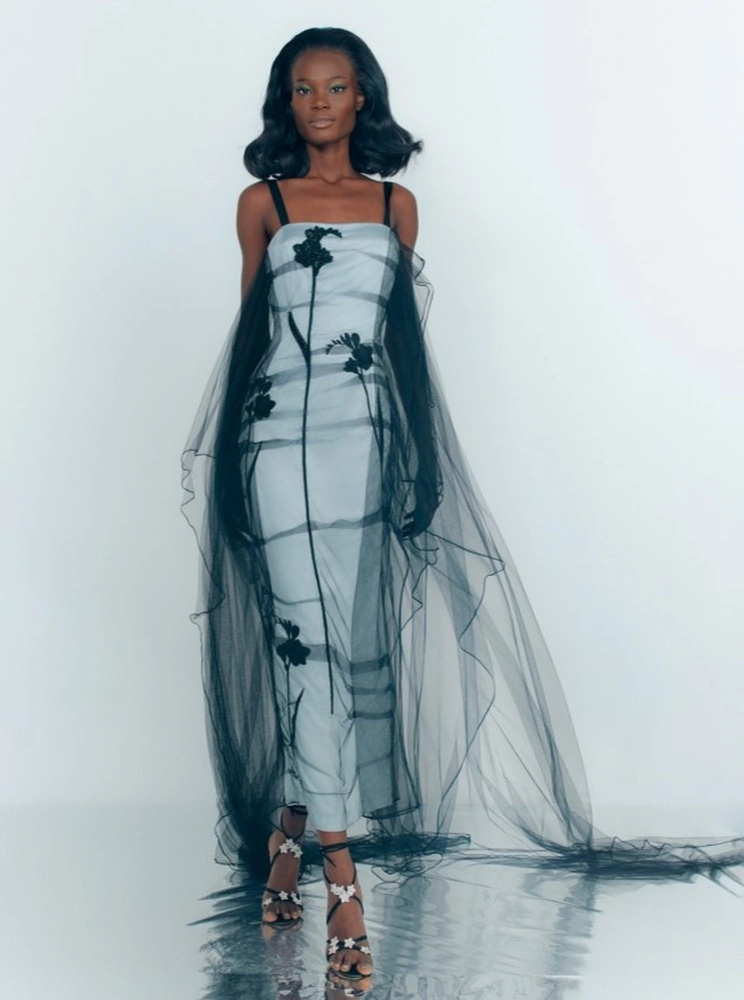
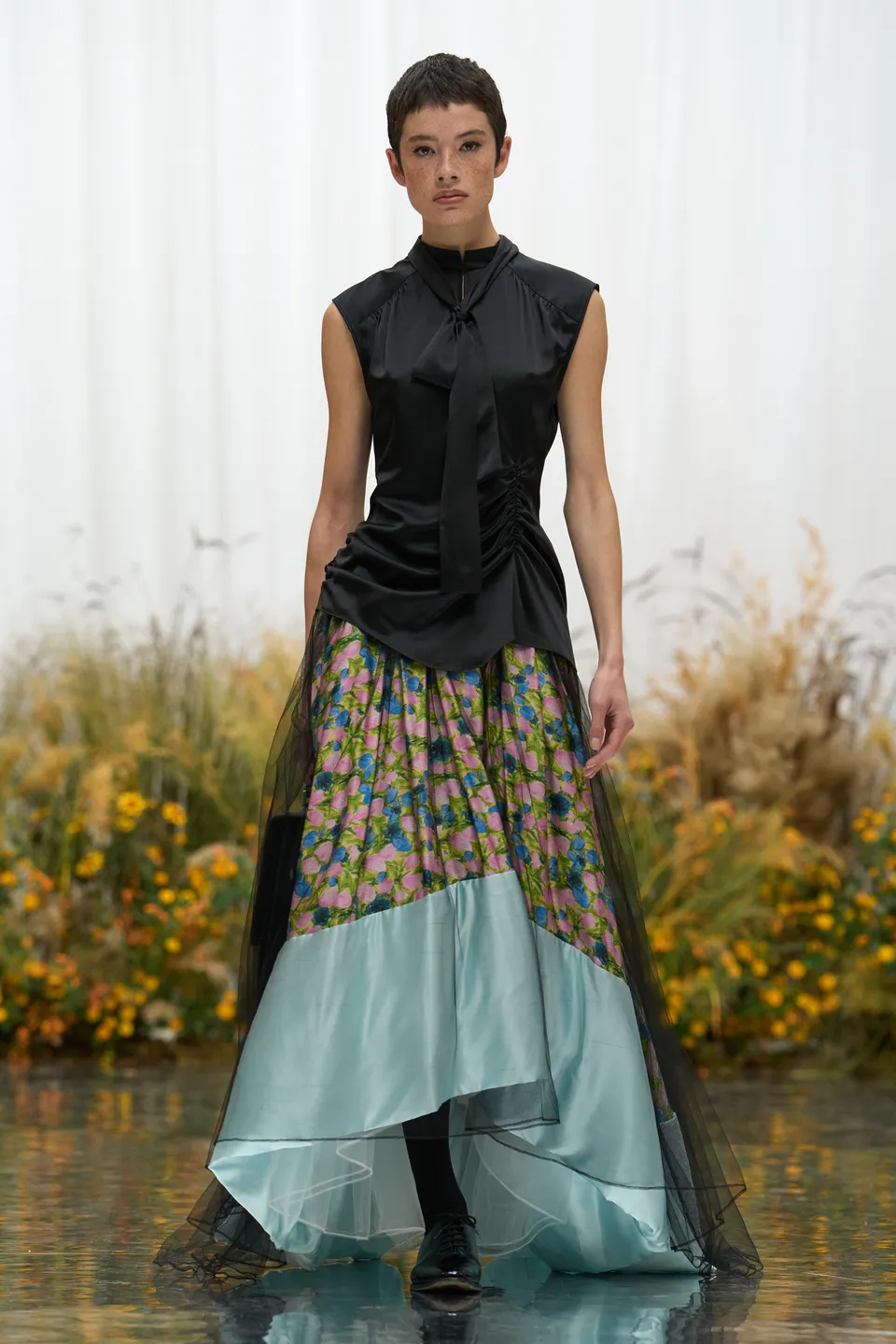
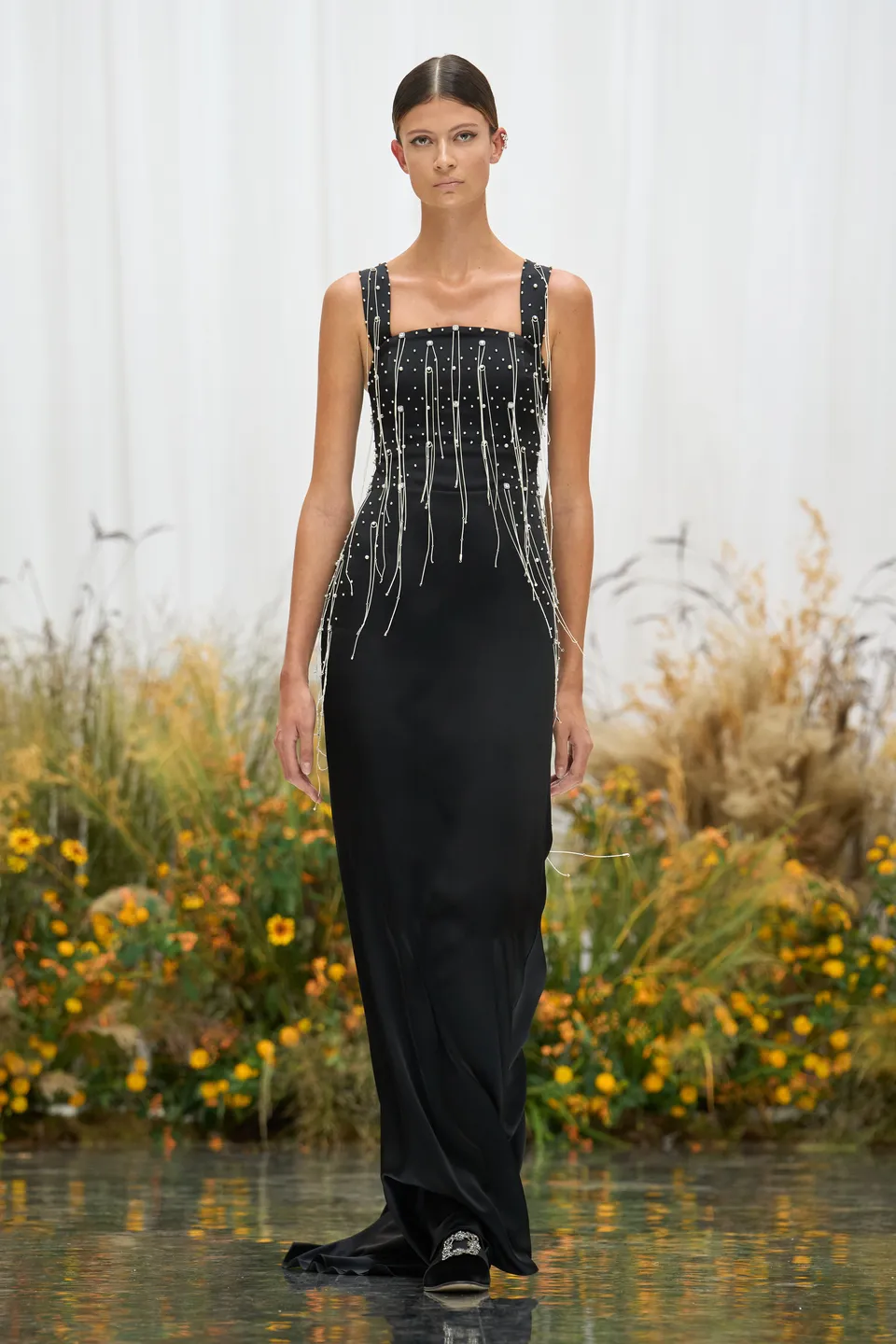
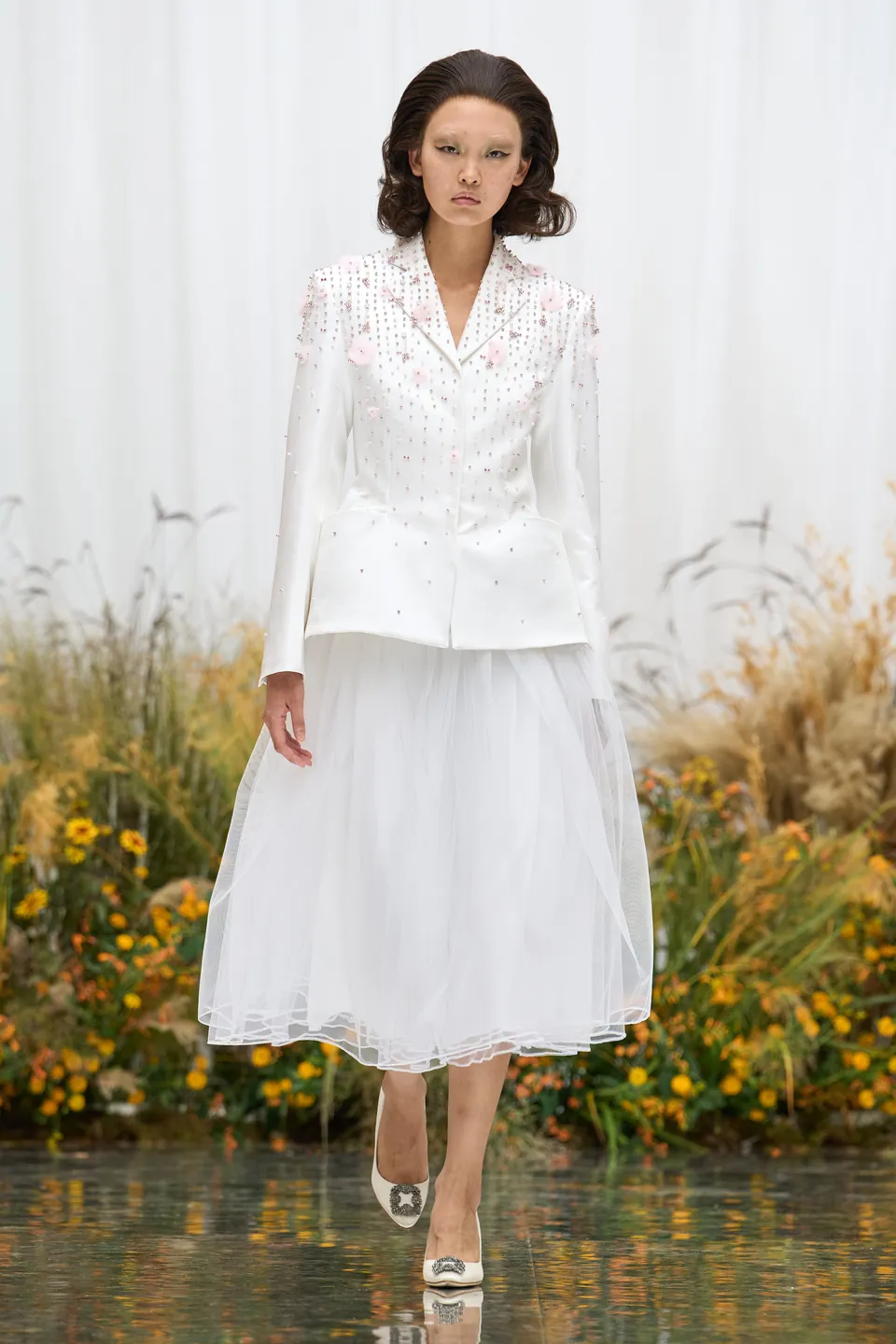
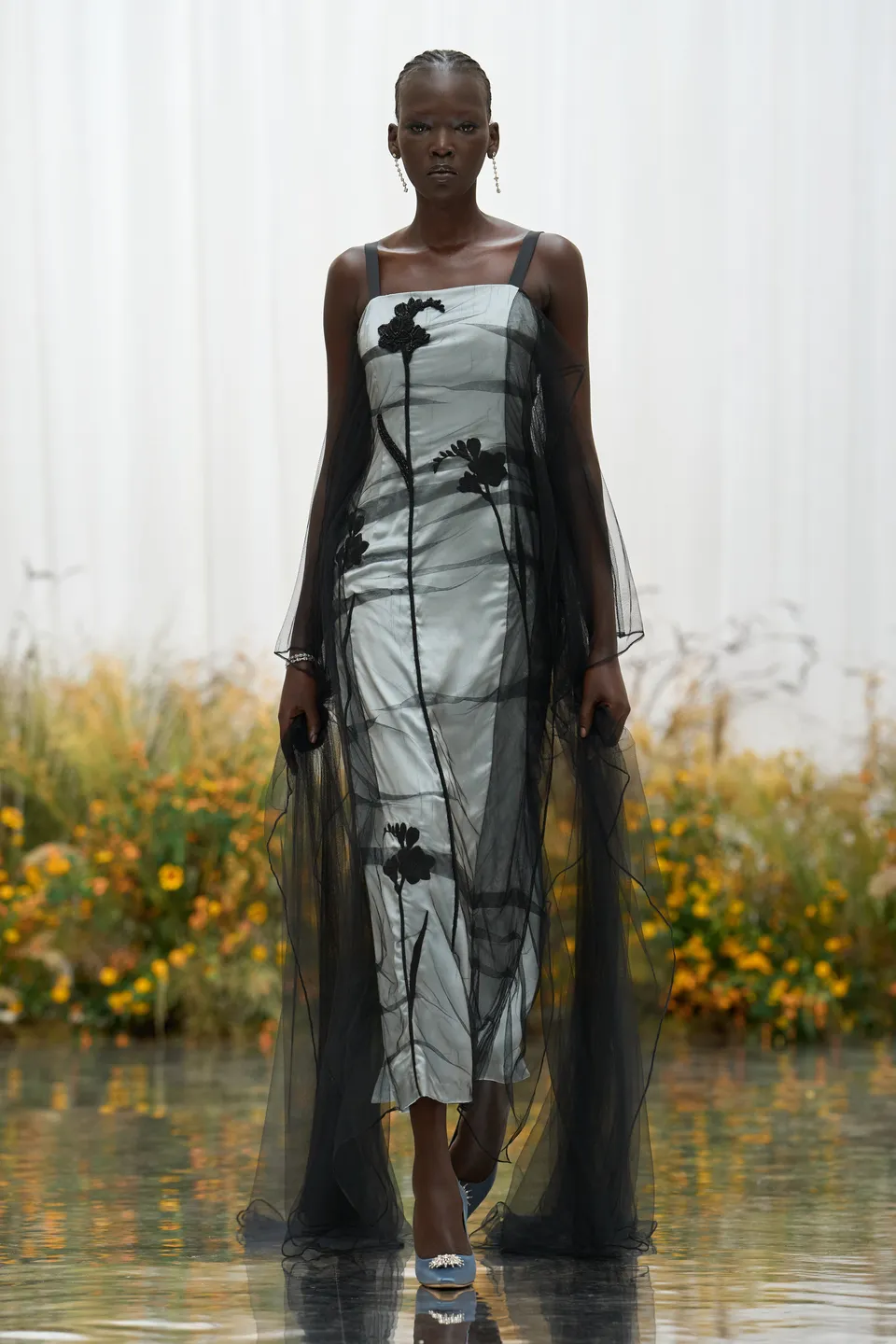
Waists remain sharply defined. Peplums create controlled volume around the hips. Narrow skirt suits give the figure a long, polished line, while A-line dresses, three-quarter trousers and high-low skirts extend the wardrobe into daytime. Evening pieces gradually expand outward through fuller skirts and heightened volume.
The collection understands social dressing through posture. These clothes encourage the wearer to stand straight, occupy the room and enjoy visibility. Flowers soften the geometry while colour keeps the formality lively.
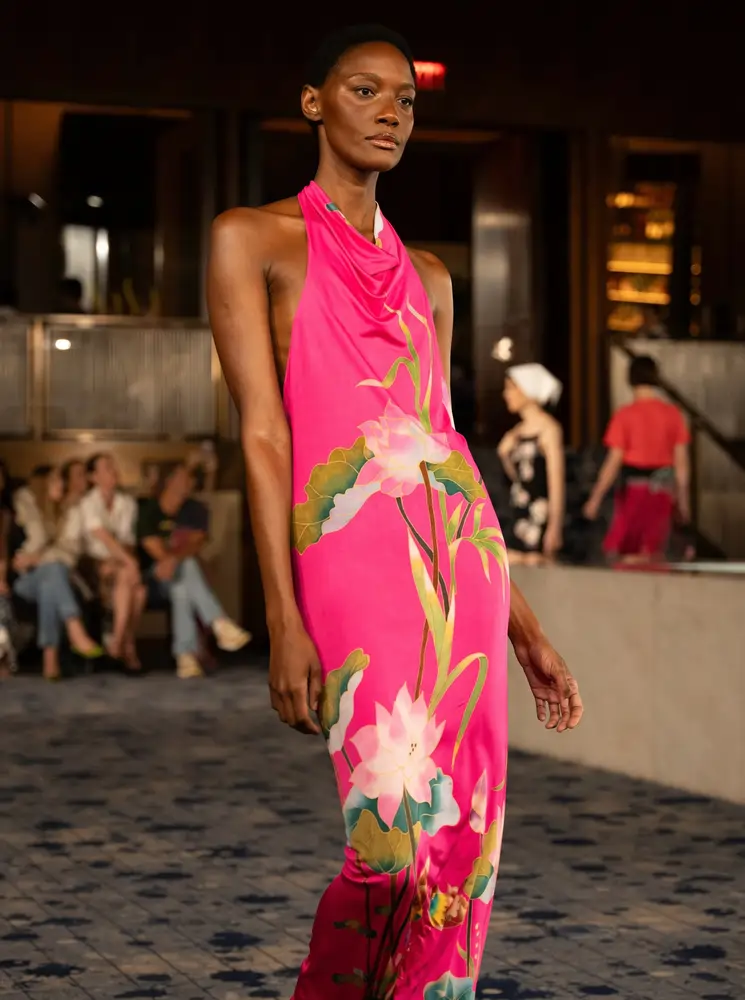
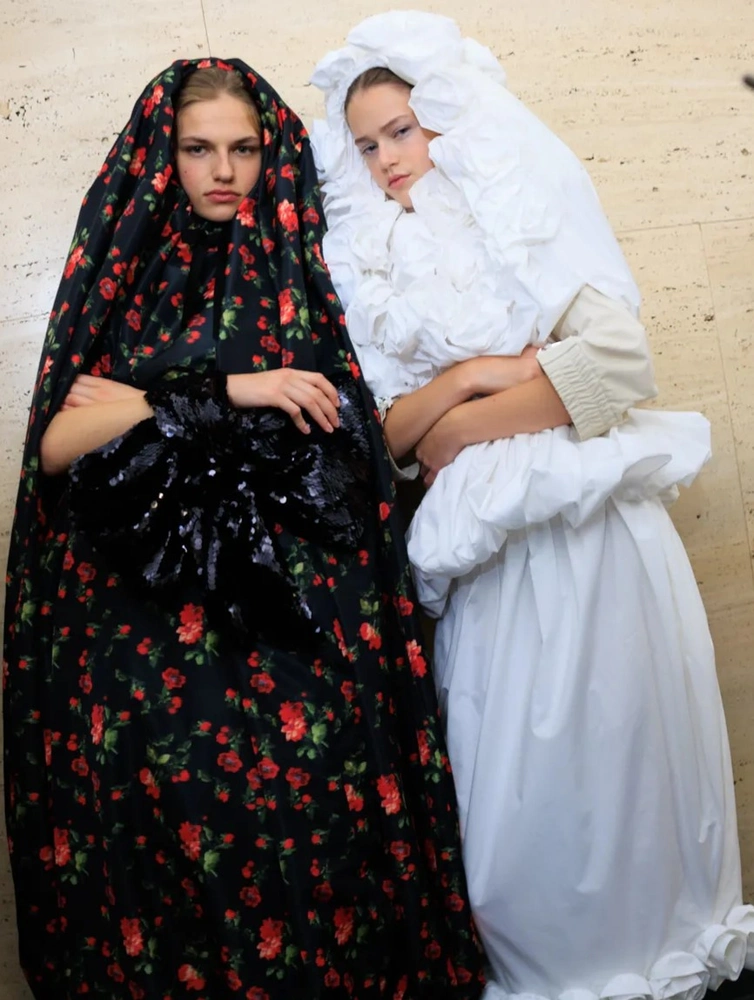
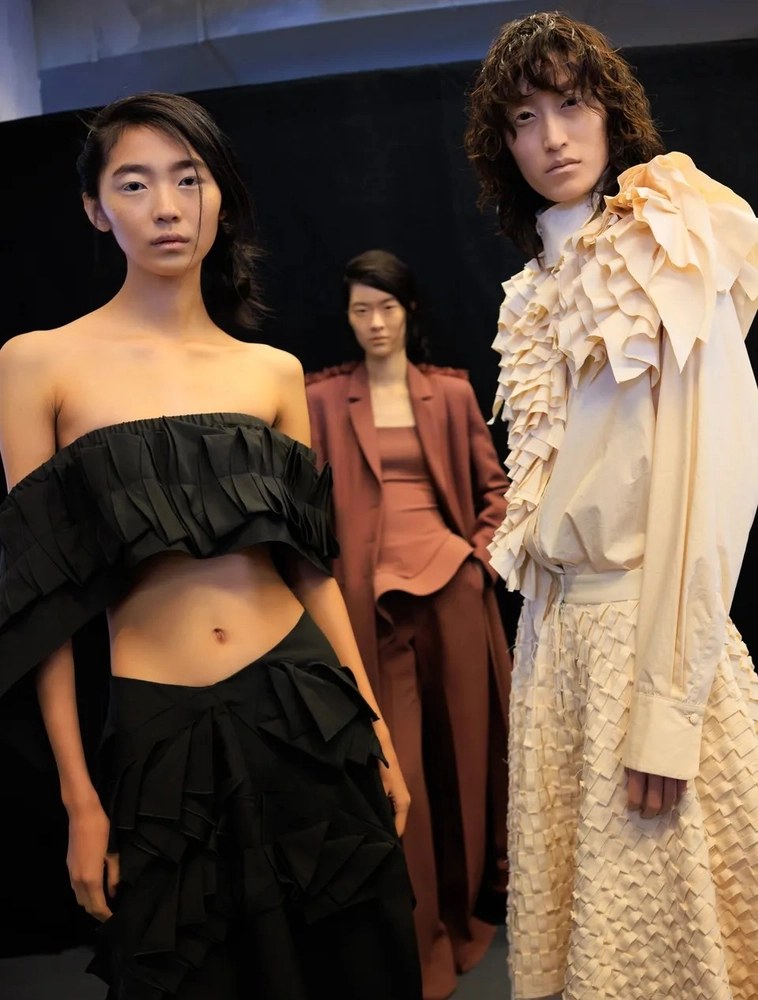
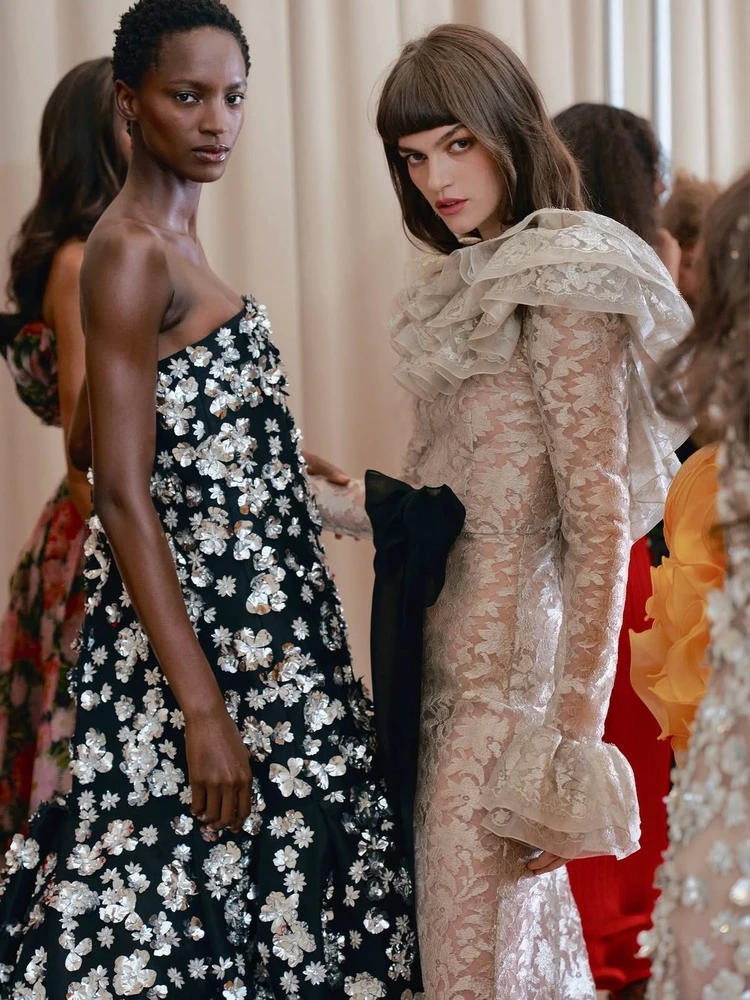
Green dominates the early runway before sky blue and black shift the temperature. Hand-painted roses, floral buttons, ribbon and freesia appliqués bring in McDowell’s established affection for botanical imagery; freesia carries a personal connection as the favourite flower of the designer’s mother.
Spring 2027 also reveals how Patrick McDowell increasingly operates as a conductor of specialist makers.
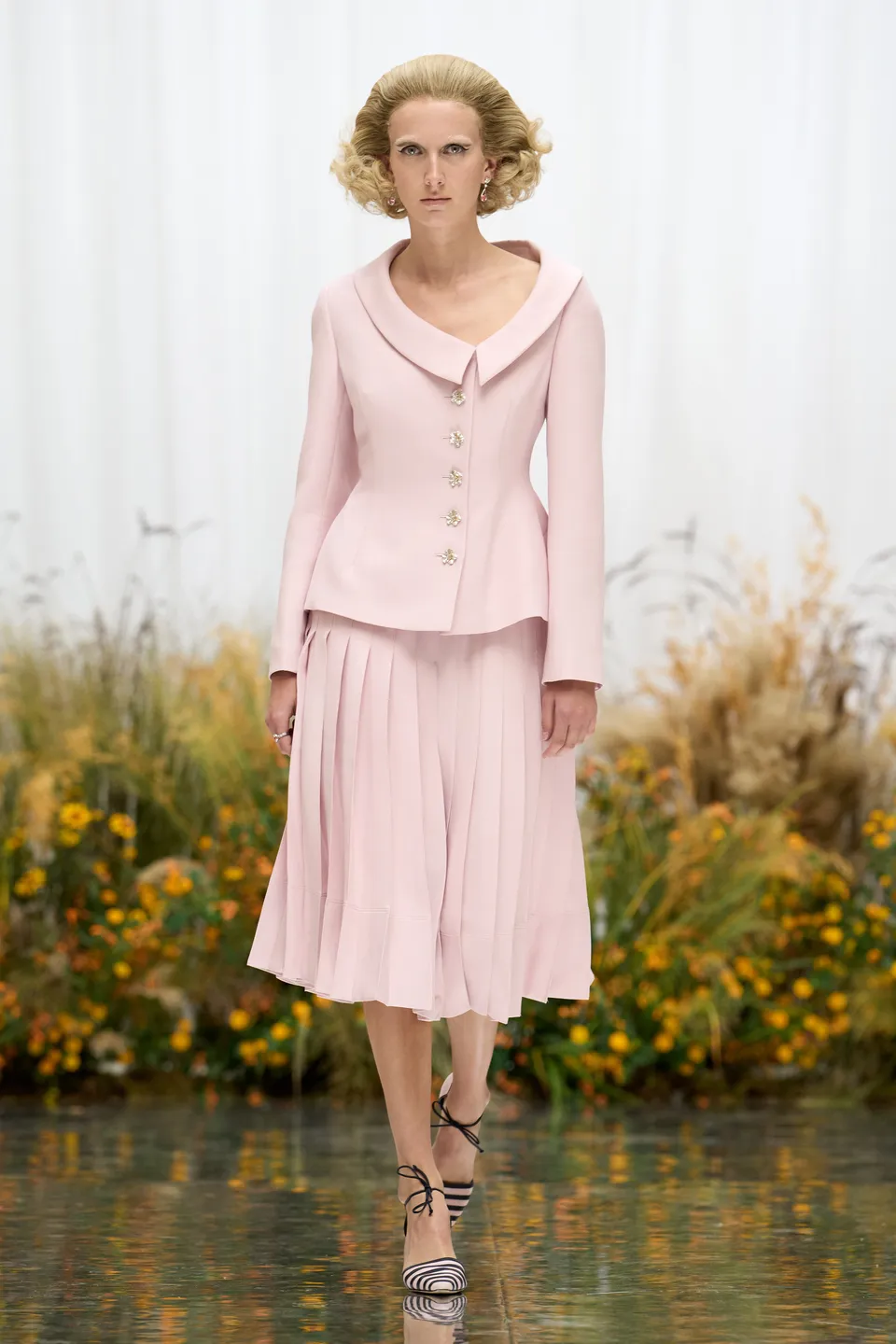
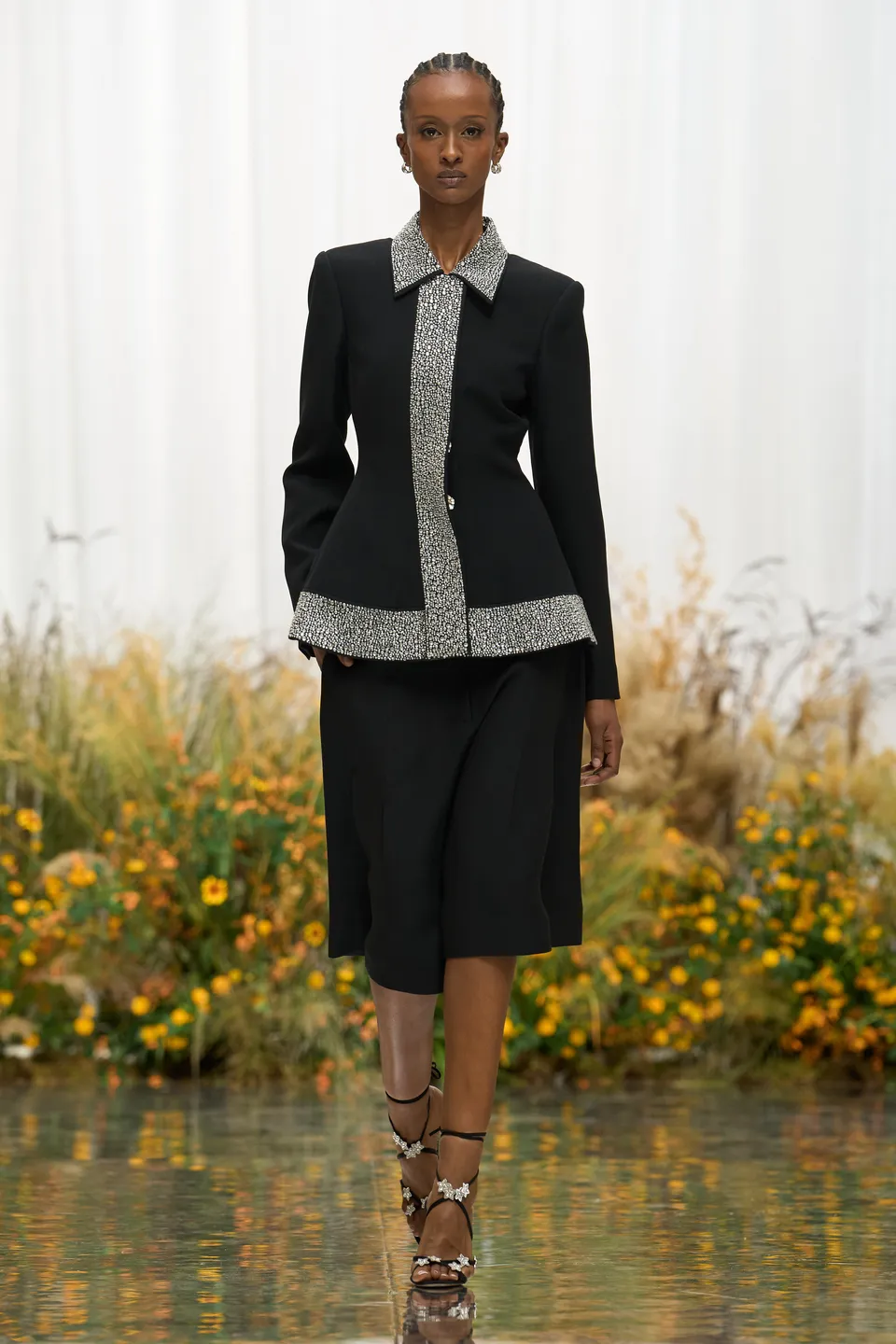
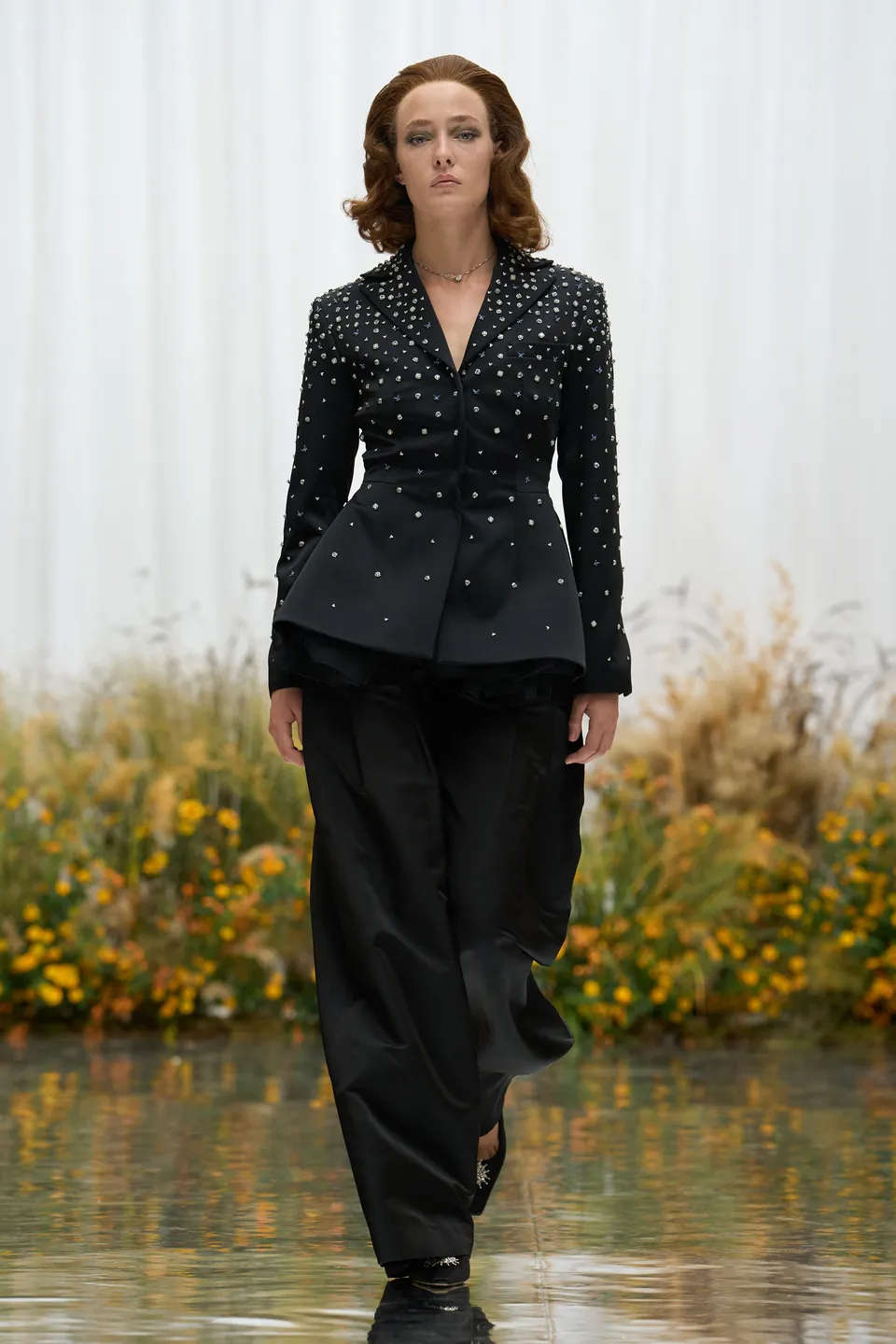
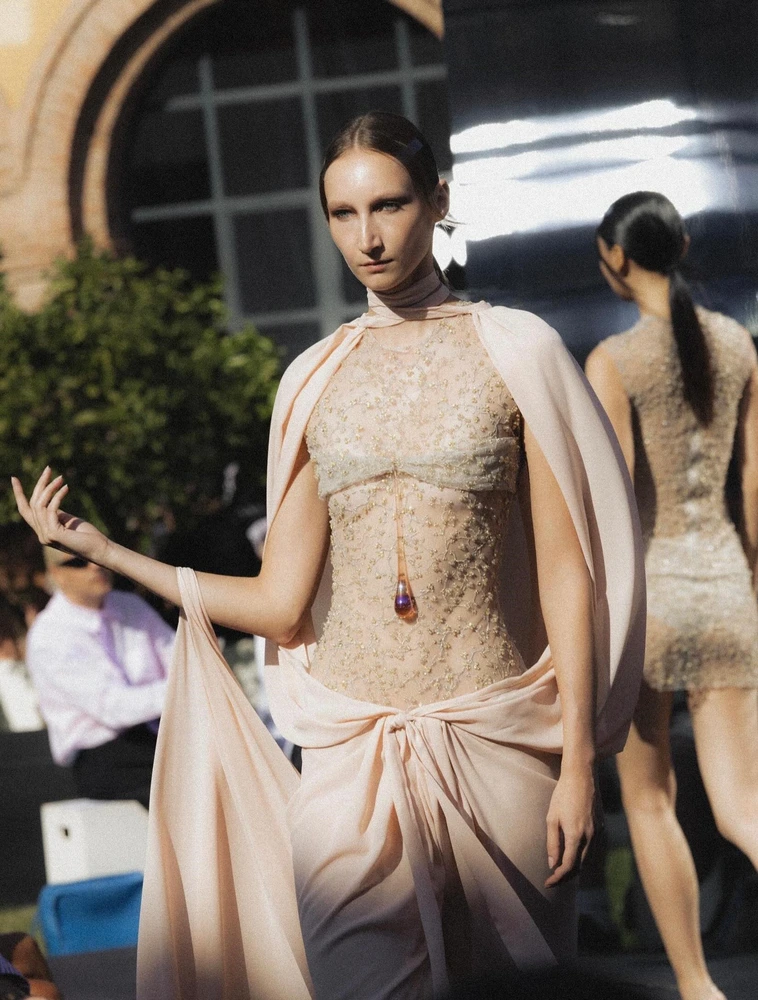
Three runway looks were hand-embroidered in London with Pandorajewellery, requiring over 500 hours of work. Charms and earrings migrate from accessories into garment surfaces, while bespoke one-of-one pieces featuring lab-grown diamonds extend the collaboration into traditional jewellery territory.
Aspinal of London continues another established collaboration through limited-edition handbags inspired by the English garden, some hand-painted and embroidered in small quantities. Milliner Jane Taylor completes the social wardrobe with early-1960s references, including pillbox forms, broad-brimmed hats and a skull cap whose starting point came from Princess Margaret.
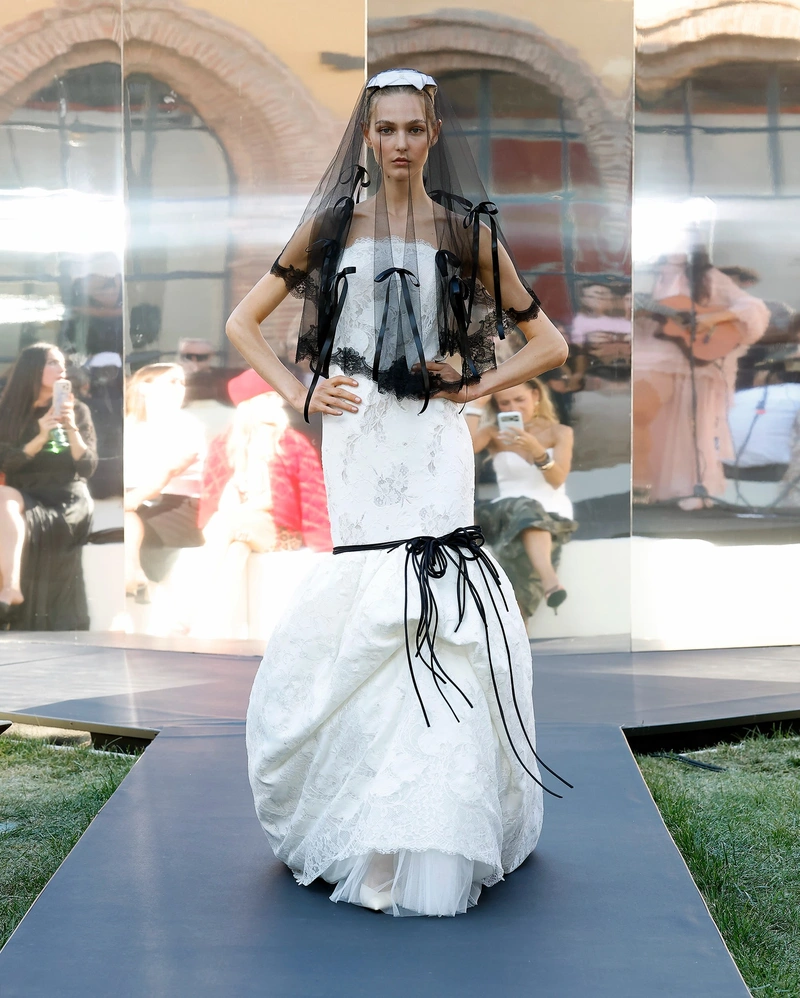
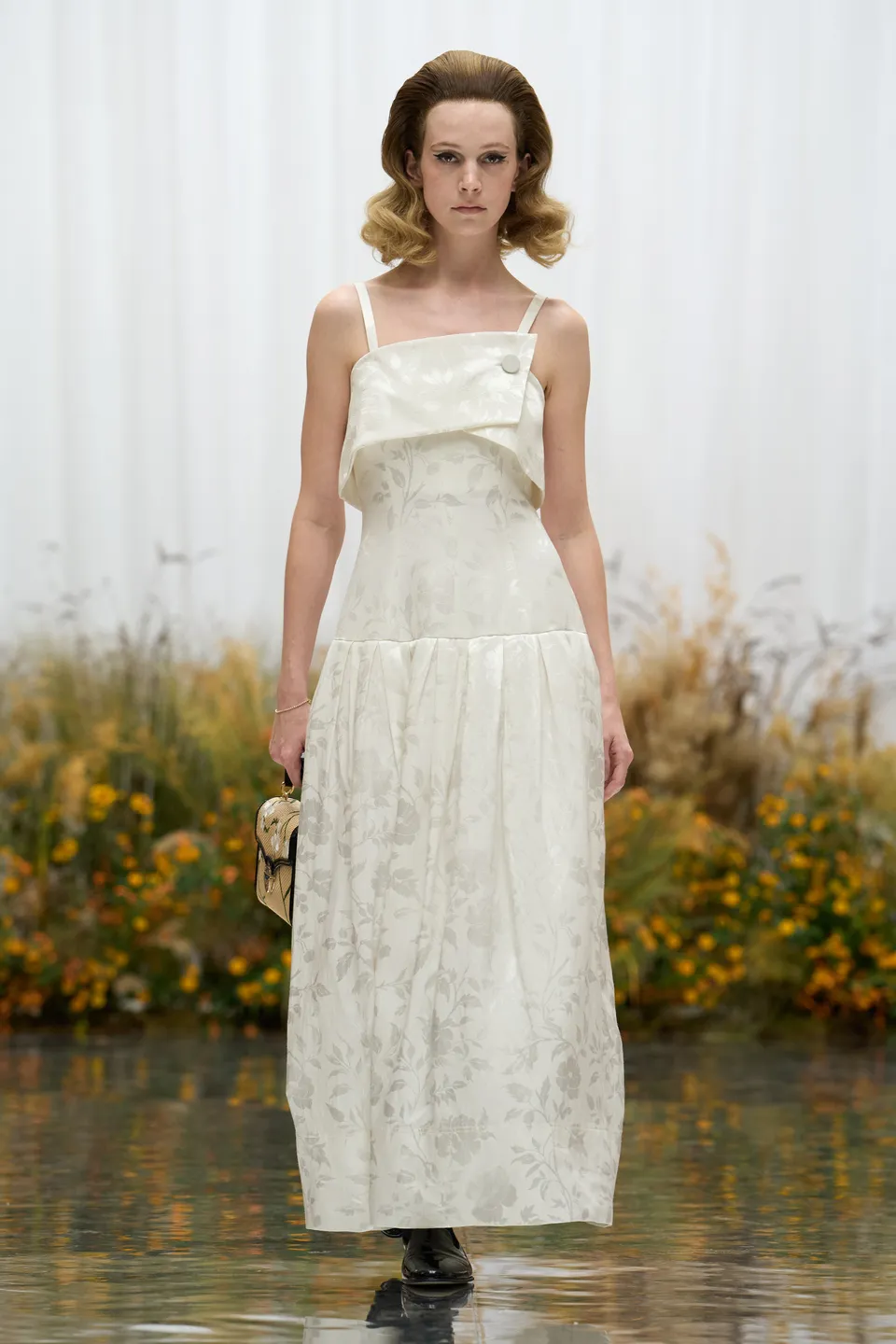
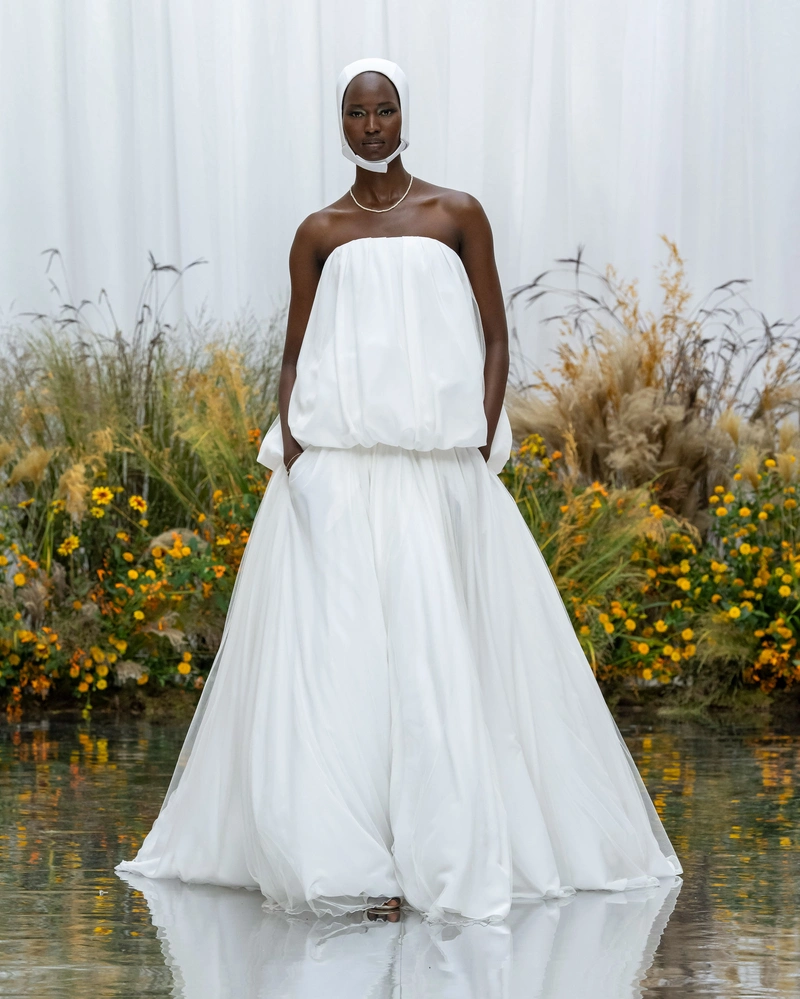
The Patrick McDowell bride appears in a strapless drop-waist construction of silk crepe de chine, silk georgette and tulle, developing into a soft cloud of volume as Etta James’s At Last fills the room. McDowell described it as the least structured garment they had yet sent down a runway.
Its position makes the gesture emotionally effective. Structure has carried the collection through public life; the bride closes it through surrender.
The philosophy of Love also maps directly onto the way Patrick McDowell has chosen to grow ready-to-wear.
The line launched with Spring 2026 after years centred primarily on bespoke work. Production remains deliberately controlled, with limited runs generally ranging from five to 60 units, selected wholesale distribution and continued services for repair, refitting and redesign. Each ready-to-wear piece receives a Certilogo Digital Product Passport capable of recording provenance, makers and future circular services.
Spring 2027 is already McDowell’s fifth ready-to-wear collection, and the first year of the programme has brought accounts across the United States, Asia and London.
Even the Hong Kong inspiration has an operational echo. McDowell first visited Hong Kong at 17 after financing the trip by making and selling bags, and the city now forms part of the label’s expansion strategy through retailers including Joyce. The place that supplies part of Spring 2027’s cinematic imagination is also becoming part of the brand’s real distribution map.
Across the Atlantic, Wes Gordon has spent his years at Carolina Herrera refining a wardrobe for the confident metropolitan woman whose life moves naturally between work, travel, cultural events, weddings, dinners and the occasions where dressing beautifully becomes part of participating in society. His Herrera woman enjoys colour, flowers, and the ritual of arriving somewhere properly dressed, yet her elegance carries the ease of someone accustomed to moving through cities and across borders.
Patrick McDowell is beginning to speak to a related woman from a distinctly London perspective. She is polished and urban, culturally curious and comfortable with ceremony, yet she also carries the eccentricity, wit and openness that British fashion can give formal dressing.
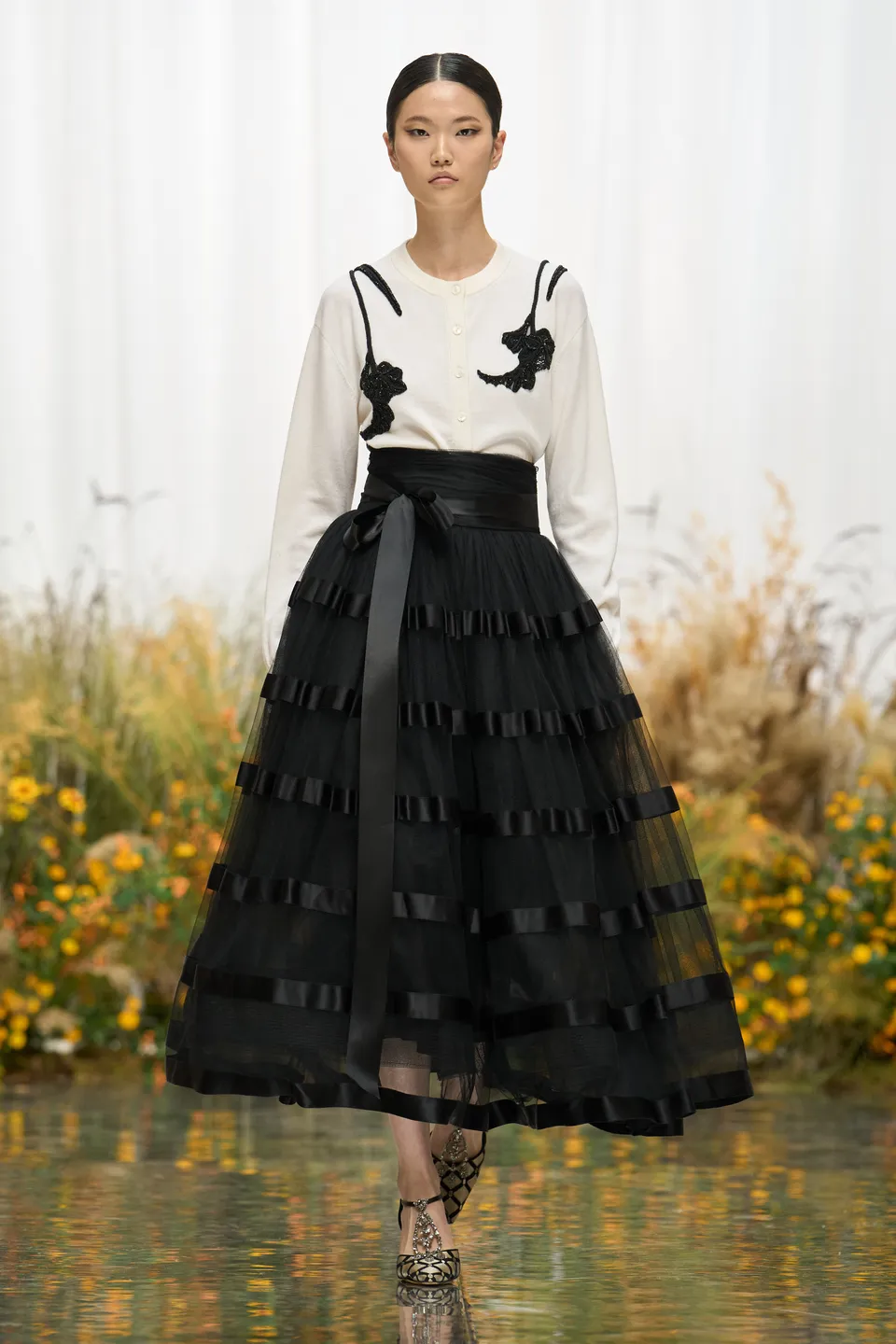
The sophistication therefore comes from a woman who has seen things, travelled, collected references and developed taste through experience.
This is where the Wes Gordon parallel becomes genuinely interesting. Gordon inherited a house with decades of established social codes and has shown how those codes can remain desirable to a contemporary generation. Patrick McDowell is building the house, the codes and the woman almost simultaneously. The scale is young, yet Spring 2027 already suggests the outline of something substantial: a London label capable of making society dressing feel culturally literate, joyfully elegant, distinctly queer-informed and suited to the rhythm of an internationally minded urban life.
Perhaps the question worth following over the next decade is whether Patrick McDowell can grow into London’s answer to the territory Wes Gordon has mastered at Carolina Herrera: a house women turn to when they want to look impeccably dressed, unmistakably confident and completely alive to the world around them. The foundations are beginning to appear, and watching McDowell decide what this woman sees, collects, loves and wears could become one of the most interesting parts of the brand’s evolution.
Advertisement