MENU
Close





Could the Hong Kong starlet, draped in a qipao that charts the fever of her soul, feel the erotic, intoxicating pull of a thousand-year heritage, one that asks her to glow with an inner heat?
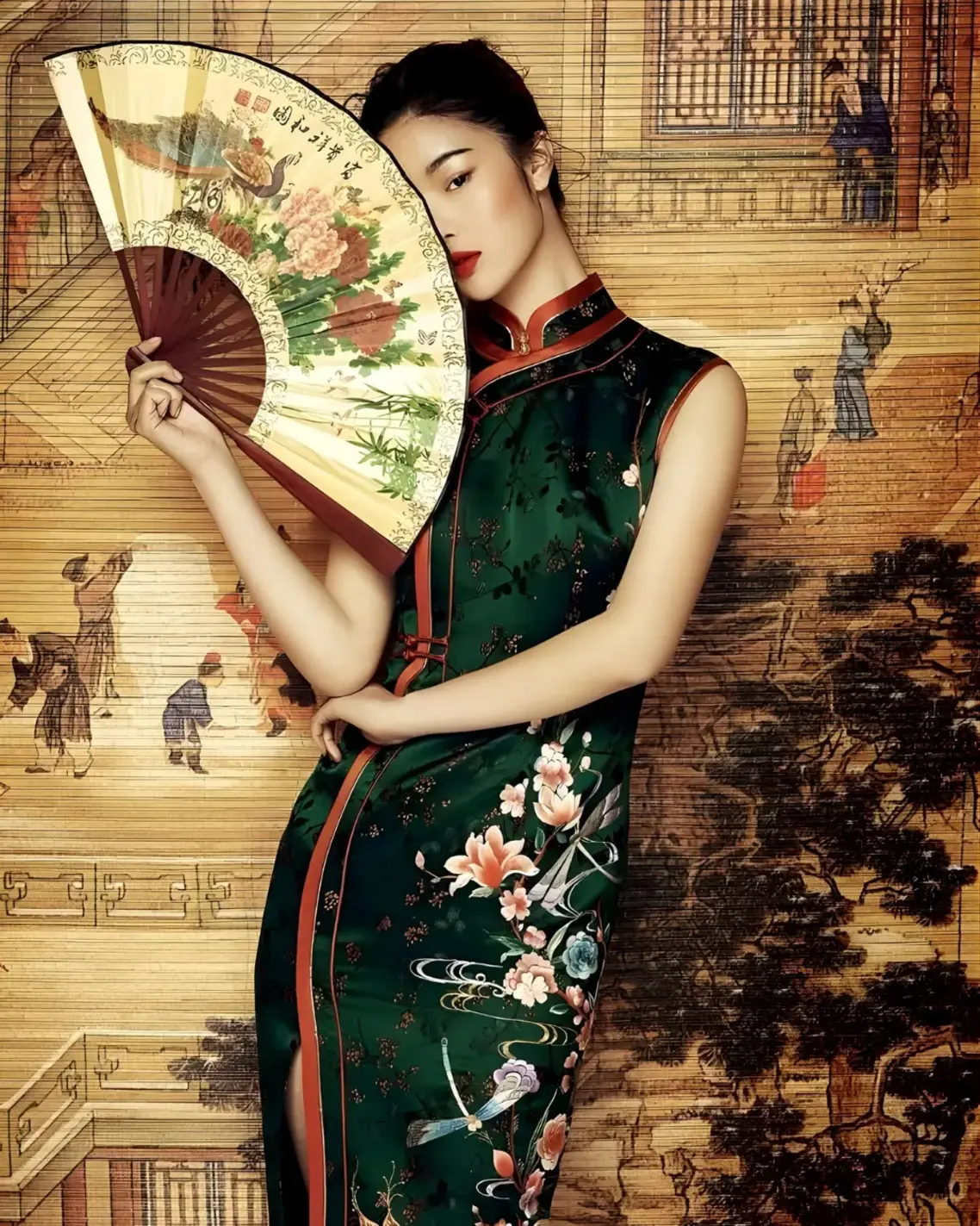
Could the Hong Kong starlet, draped in a qipao that charts the fever of her soul, feel the erotic, intoxicating pull of a thousand-year heritage, one that asks her to glow with an inner heat?
April 9, 2026
Advertisement
Advertisement
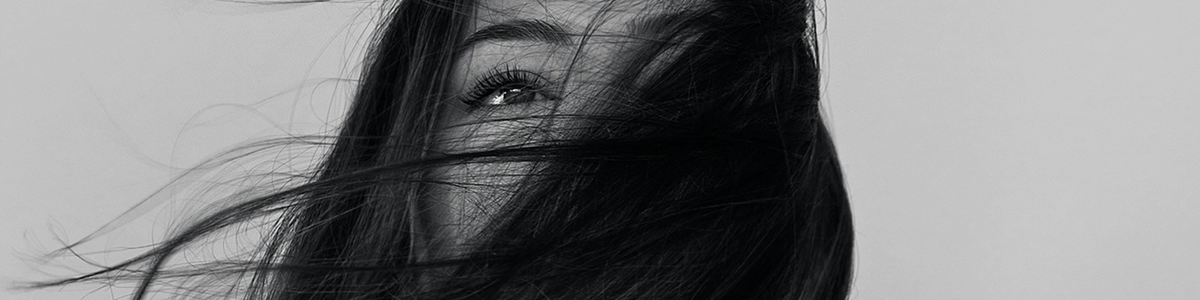


Midnight in Shanghai, 1934. The city breathes in a fever dream of heavy opium clouds and the scorched sweetness of roasted chestnuts, all washed clean by a sudden, silver rain. Under the amber shiver of a gaslight, she standsa vision of fragile porcelain caught in a halo of mist. She strikes a match, the flame dancing in eyes that have seen the inside of every smoke-filled gambling den from the Bund to the French Concession.
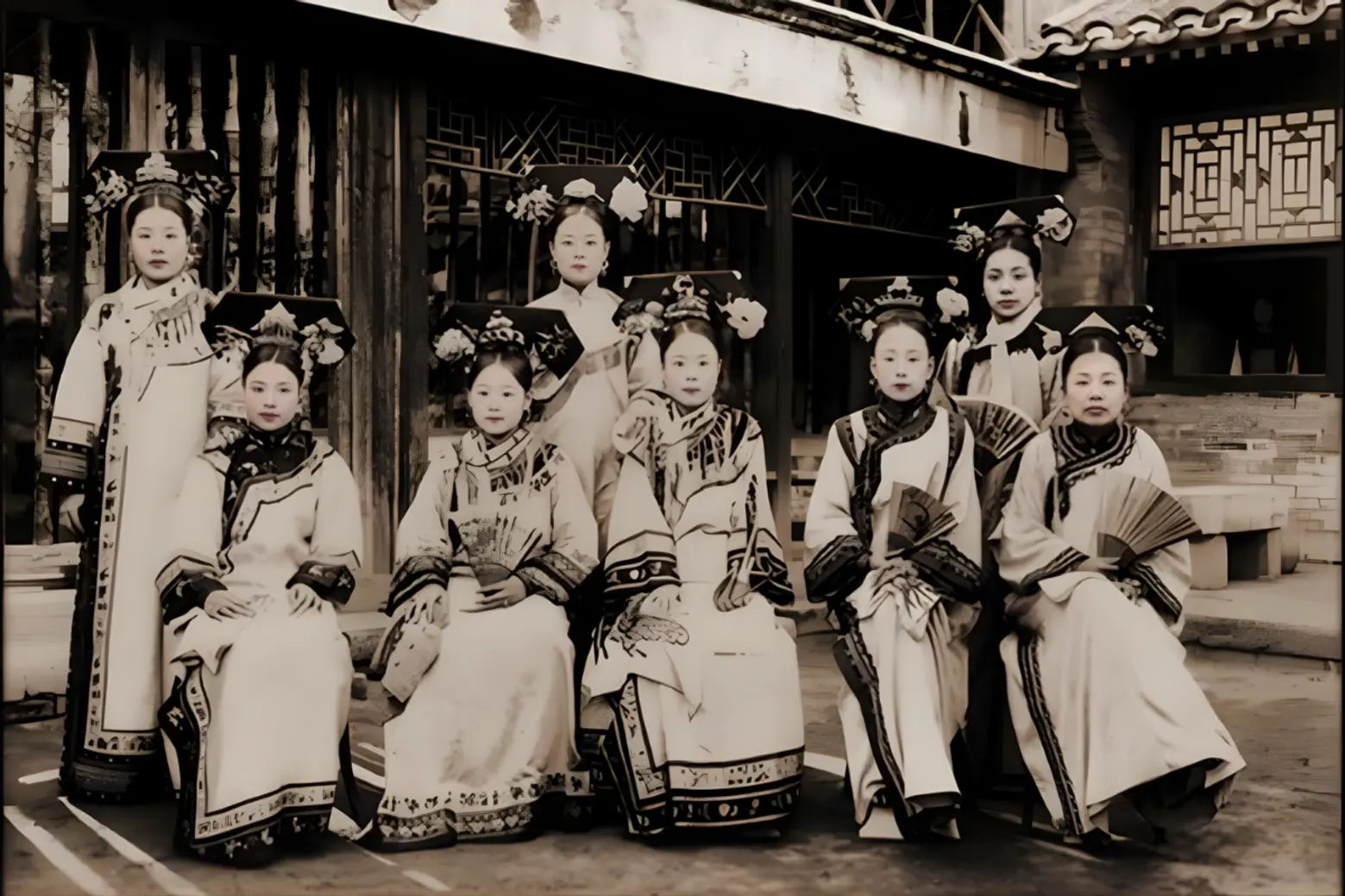
The dress is cut with Western-style darts, a revolutionary Shanghai innovation. Unlike the flat robes of the past, this silk is carved to the small of her back, creating a S-curve that was once scandalous. Her silhouette is a masterpiece of verticality, defined by a Mandarin collar that rises like a high, silken altar. This column of stiffened brocade encases her neck, sculpting a posture of regal defiance. It is the architecture of the untouchable, lengthening her spine into a slender reed that bends for no one.
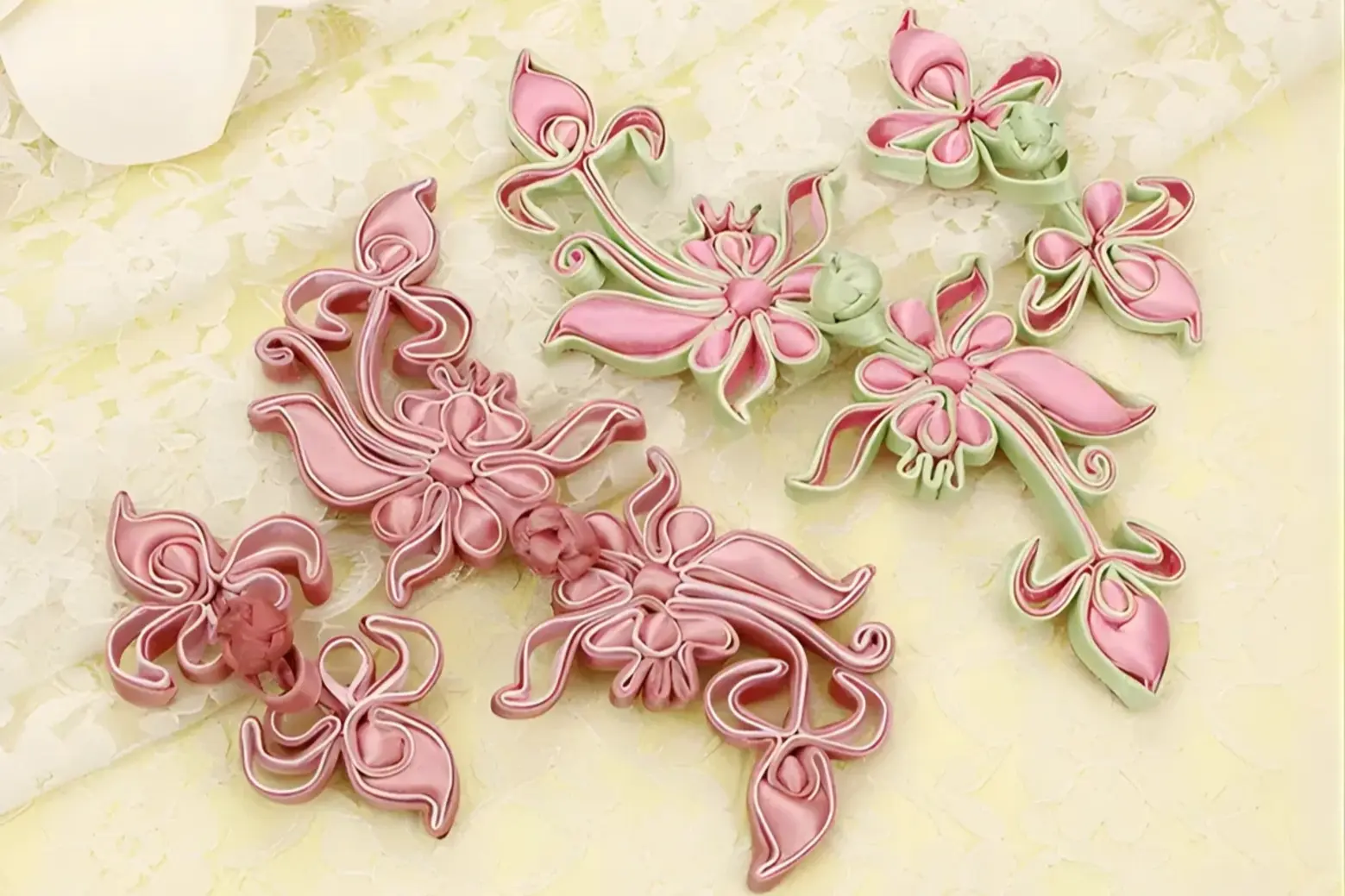
Moving down the curve of her ribs, the Pankou, those hand-braided frog buttons that flutter like silken moths pinned against her side. At the side, the Pankou are sculptural marvels. These are "Hollow-Flower" knots, stiffened with starch and thin copper wire hidden inside the silk casing. They take the shape of a "Lingzhi" (the mushroom of immortality) or a "Swallow-Tail," each loop hand-turned to ensure it snaps shut with a crisp, audible click. They are placed with mathematical precision: one at the throat, one at the collarbone, and a rhythmic descent down the right-hand front lapel (P襟), tracing the delicate slope of her shoulder.
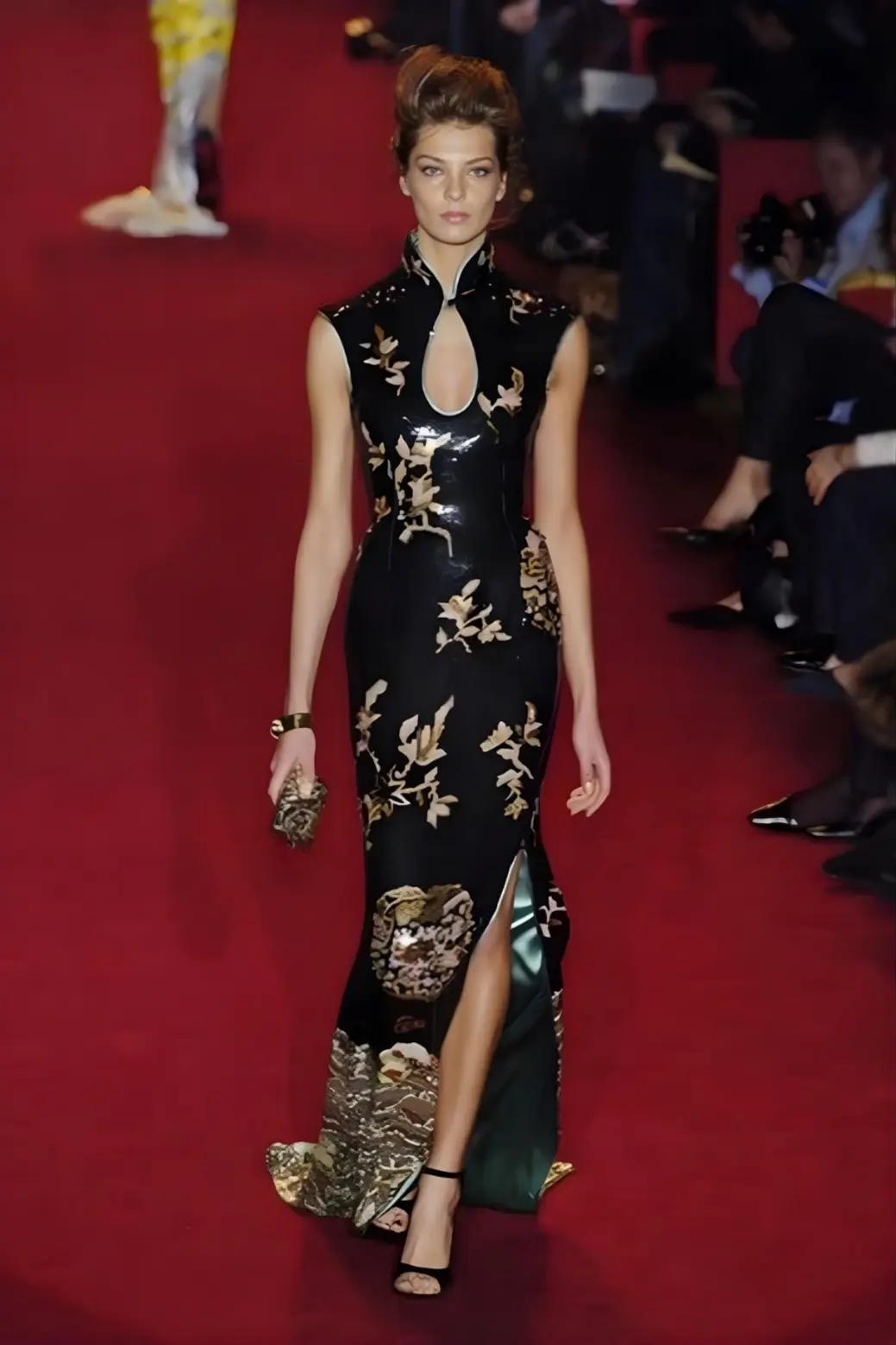
The fabric is a heavy, moon-drenched silk heritage, a weightless armor that clings like a second skin. It is a lush tapestry of damask and heavy satin, where the surface ripples with the luster of a thousand silkworms. Across the darkness of the textile, gold-thread Zhen-Xiu embroidery erupts in a riot of forbidden gardens. These threads form the "Cloud-and-Phoenix" motif where each scale of the phoenix is rendered in a seed stitch, a tiny, knotted point that creates a pebbled, three-dimensional texture. Peonies are the size of a woman’s palm bloom in raised crimson stitches, their petals curling around the shimmering scales of a silver phoenix. Every stitch is a labor of obsession, a tactile landscape of New Chinese opulence that catches the neon flicker of the casino lights.
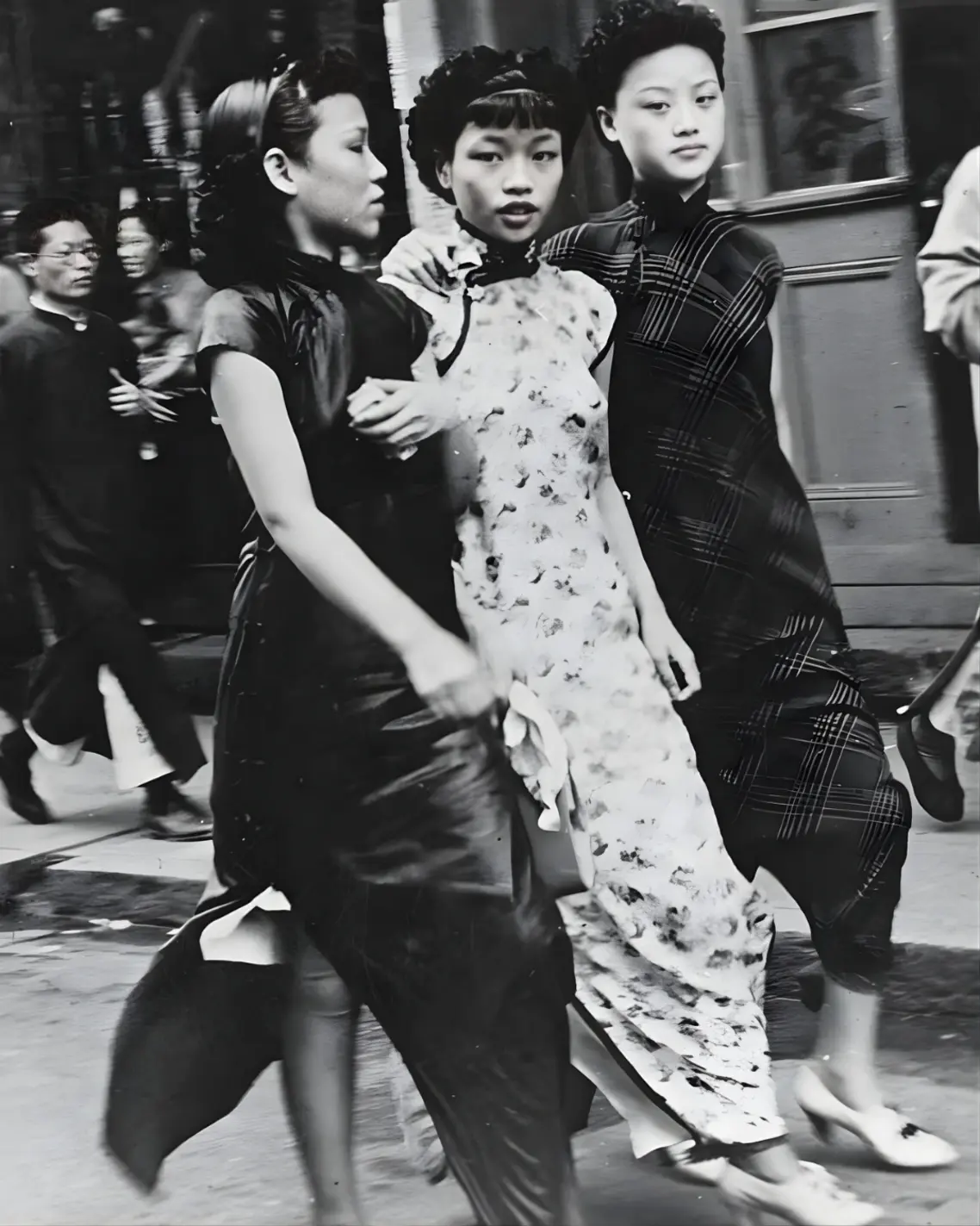
As she moves, the side slit becomes the heartbeat of the street. It is the ultimate gesture of the femme fatale, a sharp, vertical incision in the silk that breathes with her stride. With every rhythmic strike of her high heels, the heavy fabric parts to release a flash of moon-white thigh, a glimpse of the ethereal hidden within the structural. Every edge of the garment is finished with Bian (piping), binding the edges of the dress in a continuous, flowing boundary, mapping the dangerous geography of her waist and bosom with the precision of a calligrapher’s brush. This is not a simple hem, but a triple-layered border of bias-cut silk. The outermost line is a tiger-skin pattern, a microscopic weave that provides a sharp, contrasting frame for the floral chaos of the body. This piping acts as a structural exoskeleton, ensuring that the side slit, the kaicha that never frays or loses its lethal, straight edge.
This is the Qipao in its apex: a liquid sheath of high-gloss velvet and embroidered memory. It is a garment of absolute presence, a symphony of shimmer and shadow that turns the nighttime street into a private stage, making every head turn as she vanishes into the velvet dark.
To understand the Qipao is to witness a metamorphosis: a slow, sacred uncurling of silk that spans three centuries of blood, rebellion, and beauty. It is a story not of a dress being made, but of a woman being reborn.
Before the neon of the cabaret, there was the silence of the snow. The Qipao’s lineage begins in the wild, nomadic heart of the Qing Dynasty, where the Manchu people rode across the northern plains. Its ancestor, the Changpao or Banner Gown, was a garment of sacred modesty. It was a wide, T-shaped fortress of heavy silk, designed to conceal the body entirely.
The empire fell, and the silk began to stir. In the 1910s and 20s, the wind changed. In the universities of Beijing and the tea houses of Shanghai, women began to step into the light of modern education. In an act of quiet revolution, they discarded the complex two-piece ensembles of the past for a simplified, one-piece robe. This early Qipao was a symbol of women’s liberation, a defiant mimicry of the long robes worn by male intellectuals. It was loose, bell-sleeved, and humble, a uniform for a new city life where the mind was finally allowed to outshine the fabric.
History paused in 1929 when the Republican government declared the Qipao the National Dress of China. It was a tension point where the state tried to capture a woman’s spirit in a regulation. Yet, the women of Shanghai had other plans. They took the state’s national dress and carved it into a weapon of cosmopolitan grace.
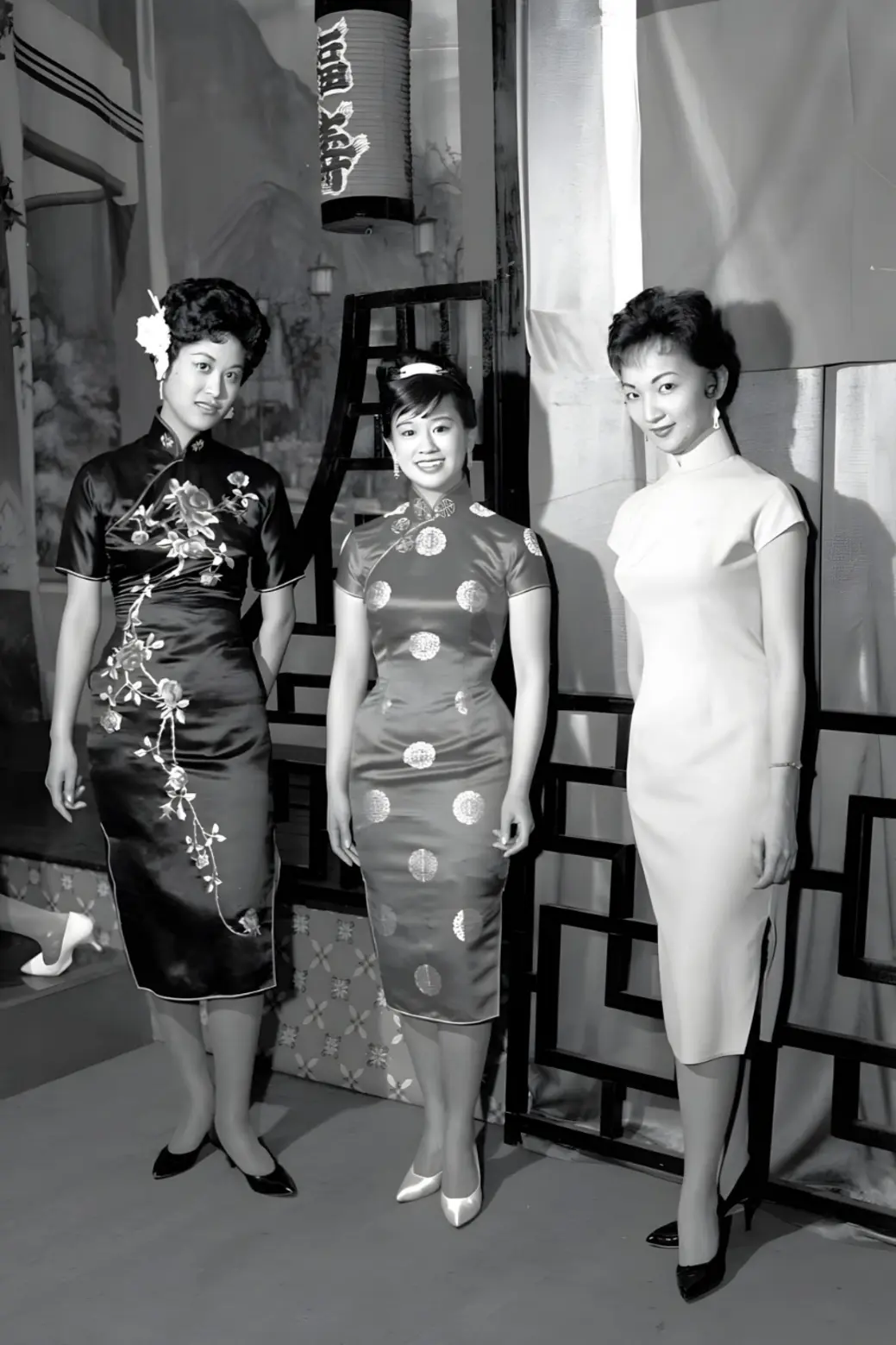
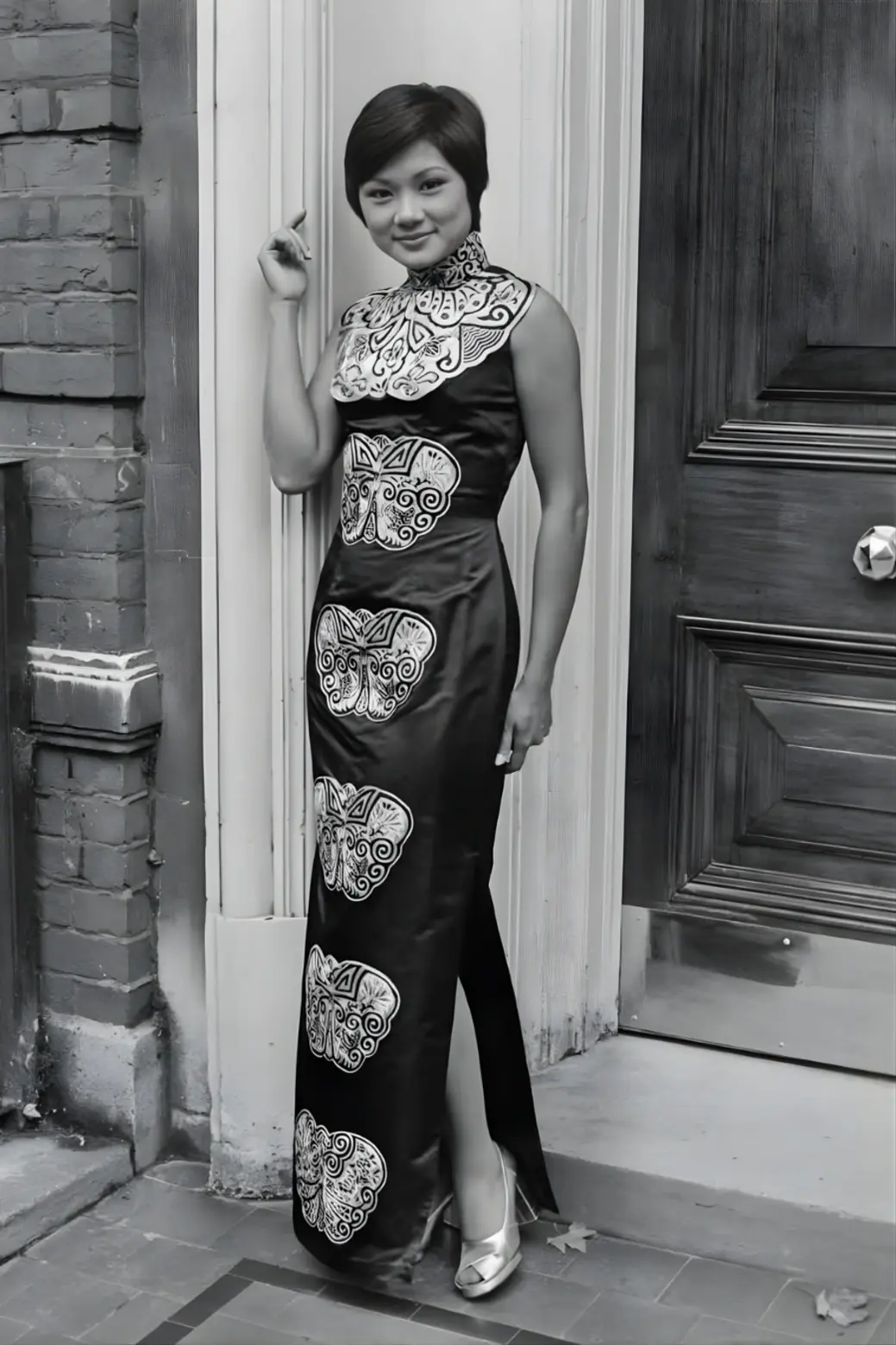
By the early 1930s, the Qipao had shed its innocence like a discarded skin. In the "Paris of the East," the dress became a breathless, cinematic scandal. Influenced by the silver screens of Hollywood and the syncopated jazz of the Bund, the silhouette was hollowed out and carved into a high-tension sheath. This was the era of the Shanghai Sifu, those master tailors who worked like surgeons, using Western darts to pull the silk so tight against the spine it became a second, more dangerous skin.
The sleeves vanished entirely, exposing arms like pale stalks of lilies, while the hemline performed a provocative dance, rising to the knee to flirt with the scandalous rhythm of Charleston. The side slit climbed with a naughty, defiant ambition, whispering of a woman who was no longer a ward of the state, but a queen of the night.
When the smoke of revolution choked the mainland in the late 1940s, the soul of the Qipao fled to Hong Kong, seeking sanctuary in the humid, neon-drenched alleys of Kowloon. Here, the dress entered its most sacred and sophisticated incarnation.
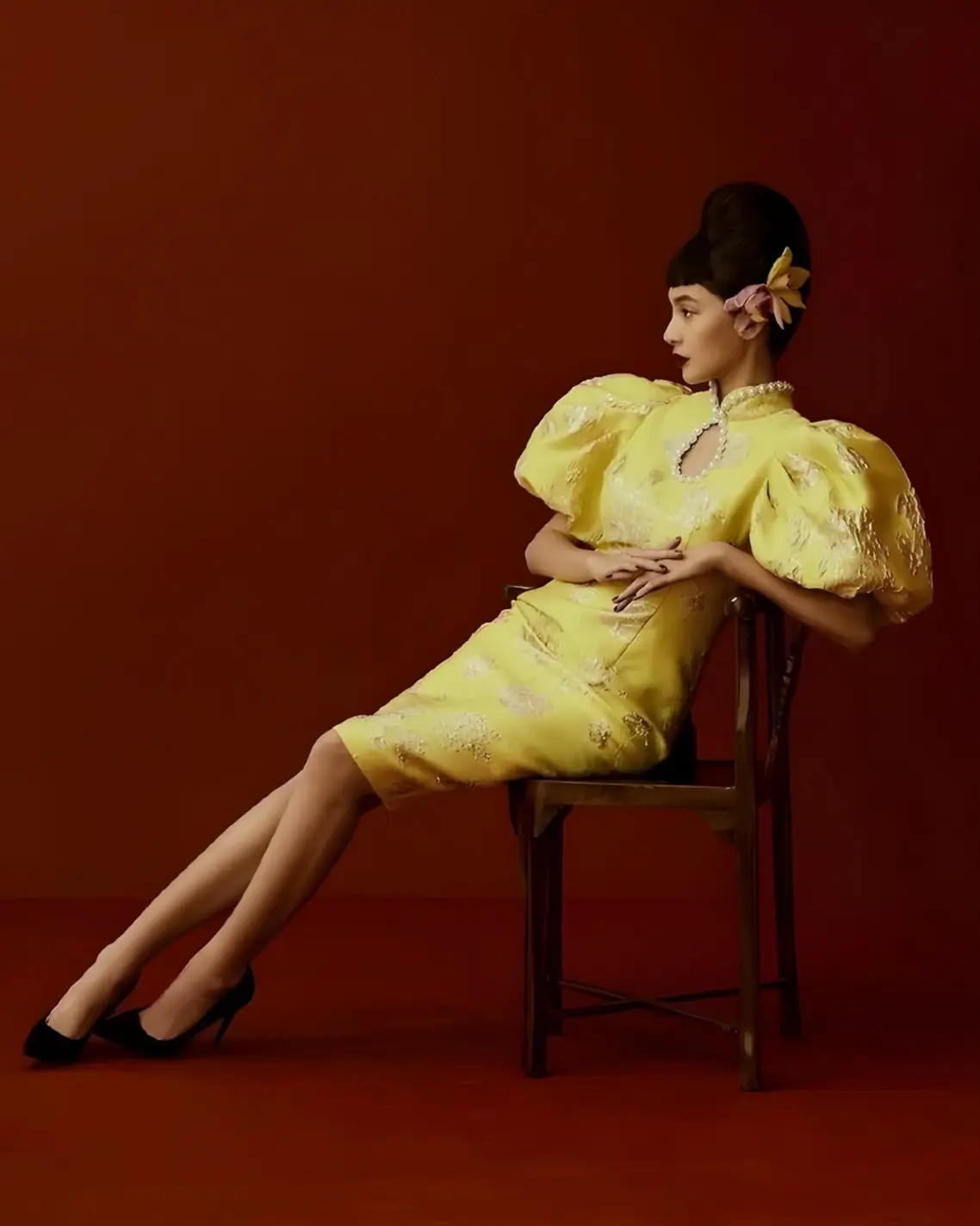
In the tight, crowded stairwells of mid-century Hong Kong, the Qipao became a holy armor. The collar rose even higher, a stiff, proud fortress that forced a gaze of icy elegancewhile the body was cinched into an hourglass so extreme it seemed to defy the physics of breath. This was the era of the Cheongsam, a Cantonese masterpiece immortalized in the shadows of back-alley cafes and the flicker of mahjong tiles. It was a garment of delicious contradictions: the high collar promised sacred modesty, while the razor-sharp fit betrayed every secret curve. It was the dress of the Femme Fatale who navigated the British colony with a sharp mind and a lethal silhouette, making the streets of Central feel like a private, high-stakes casino.
As the 20th century turned into the 21st, the Qipao underwent its final transformation. It re-emerged from the nostalgia of the past into the white heat of the Guochao movement. No longer just a vintage relic, it has become a global icon of cultural pride. From the red carpets of Paris to the digital screens of pop culture, the Qipao persists.
At the lake’s edge, beneath a moon like a silver coin on black silk water, her qipao turns into a soul-technology, so silent, dangerous, and ancient, while tide-rhythm saxophone drift from a ballroom window.
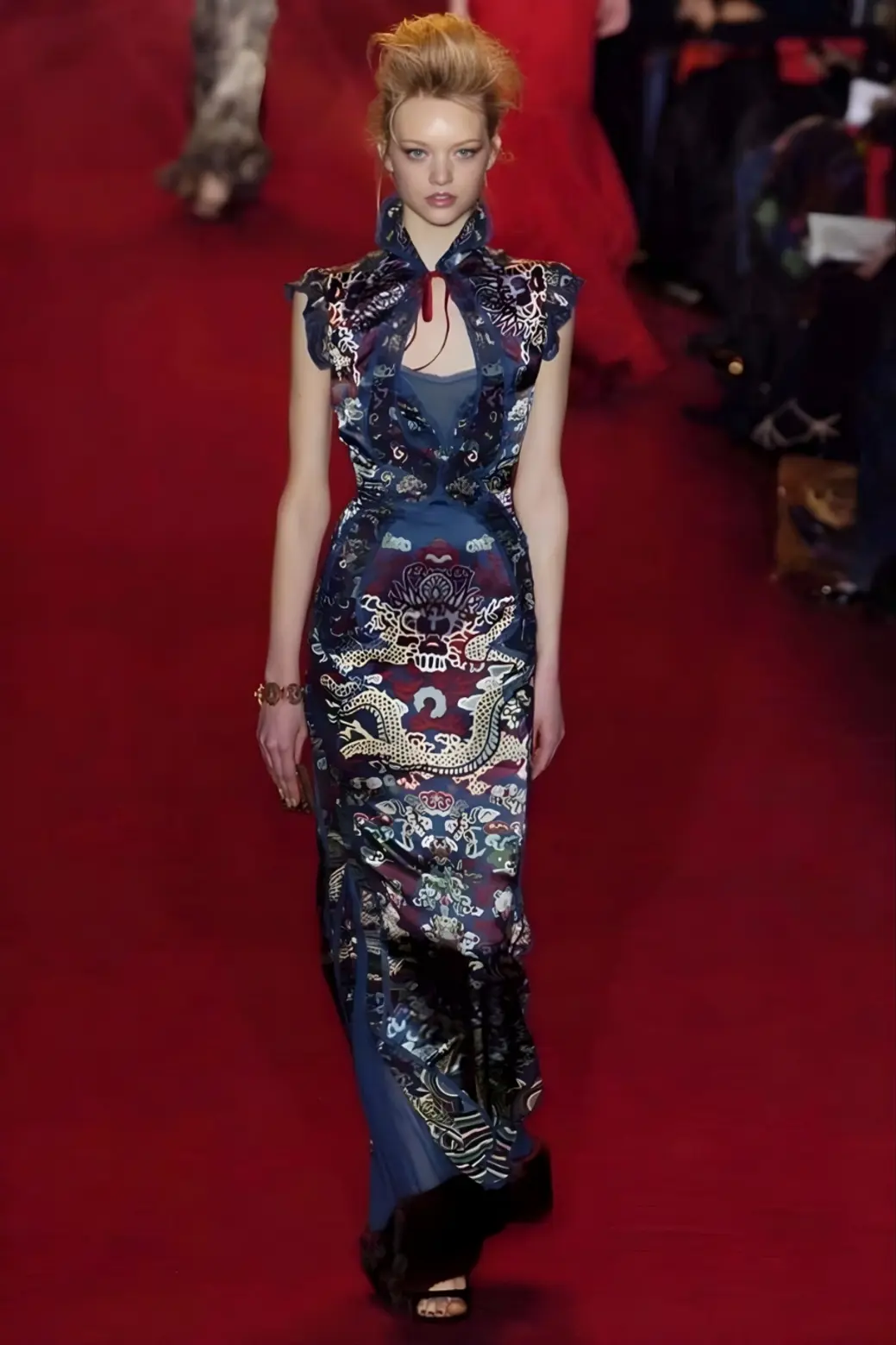
As the moonlight grazes her shoulder, the dragon woven into the deep indigo silk seems to stir. In the garment logic of the East, this is not just a creature of myth; it is the crest of her internal empire. The dragon is her yang, the fire, the sovereignty, the masculine strength she carries beneath a feminine veil. It wraps around her torso, a guardian of her power. But where the dragon breathes fire, the peony, the king of flowers, blooms in lush, heavy thread across her hip. This is her yin, her wealth, and her blooming honor. The dress is a cosmic balance, a map of a woman’s dual nature: the strength to rule and the softness to seduce, entwined in a single stitch of gold.
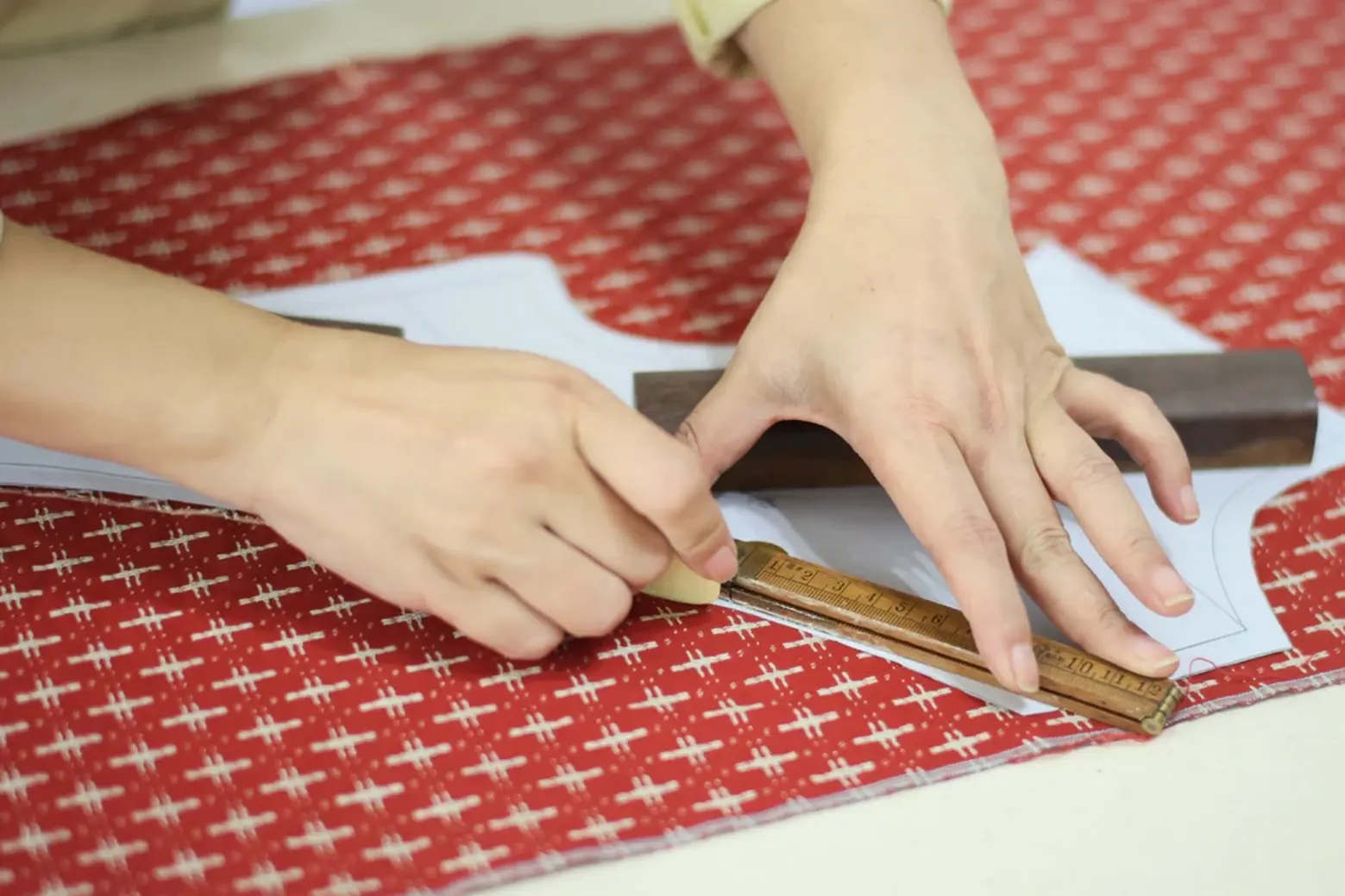
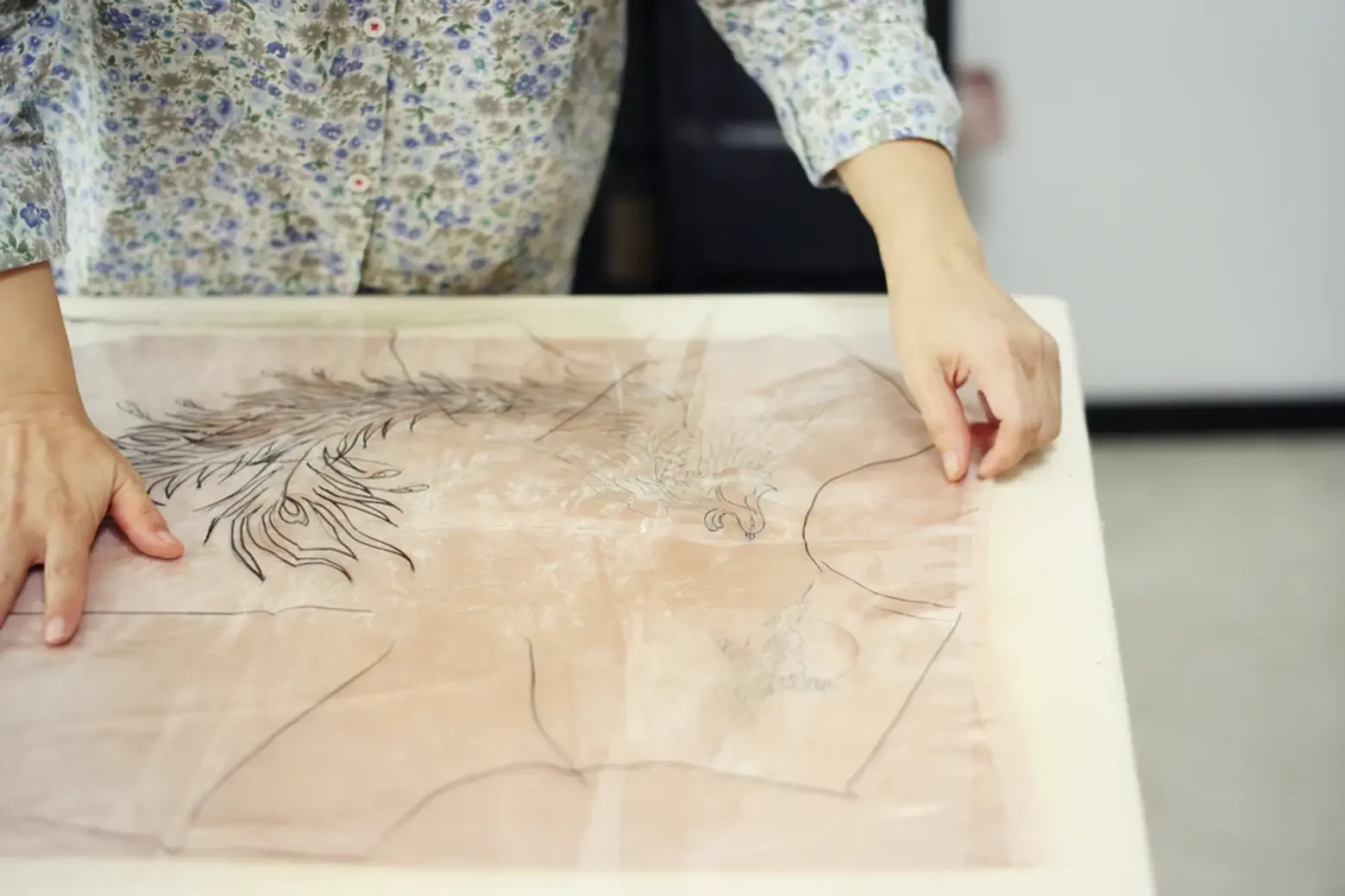
The qipao is the ultimate paradox of purity and there is a sacred eroticism in this restraint. The high collar is a sentinel of discipline, a sacred restraint that guards the throat and demands an outer stillness. It projects a monastic purity, a refusal to be touched. Yet, this very discipline is what makes the fire beneath so irresistible. The dress operates on a philosophy of covered sensuality, where the more the body is hidden, the more the imagination is set ablaze. It is the dress of the woman who says everything while her lips remain parted in a silent, smoky smile. The high neck is the "no," but the liquid cling of the silk is the "yes."
In this moonlit reflection, the dress also carries the ghosts of two different urban souls. She is dressed in the Shanghai glamour, a spirit that is avant-garde, experimental, and unashamedly decadent, where the silk is a canvas for the "new woman." Yet, in the way she holds her cigarette, there is the shadow of the Hong Kong polish, a spirit of resilience and refined exile, where the cheongsam became the uniform of a sophisticated identity forged in the heat of a changing world.
As she turns away from the lake, her heels clicking against the stone, she is a walking riddle of silk, a goddess of the threshold, forever poised between the stillness of a statue and the heat of a starlet.
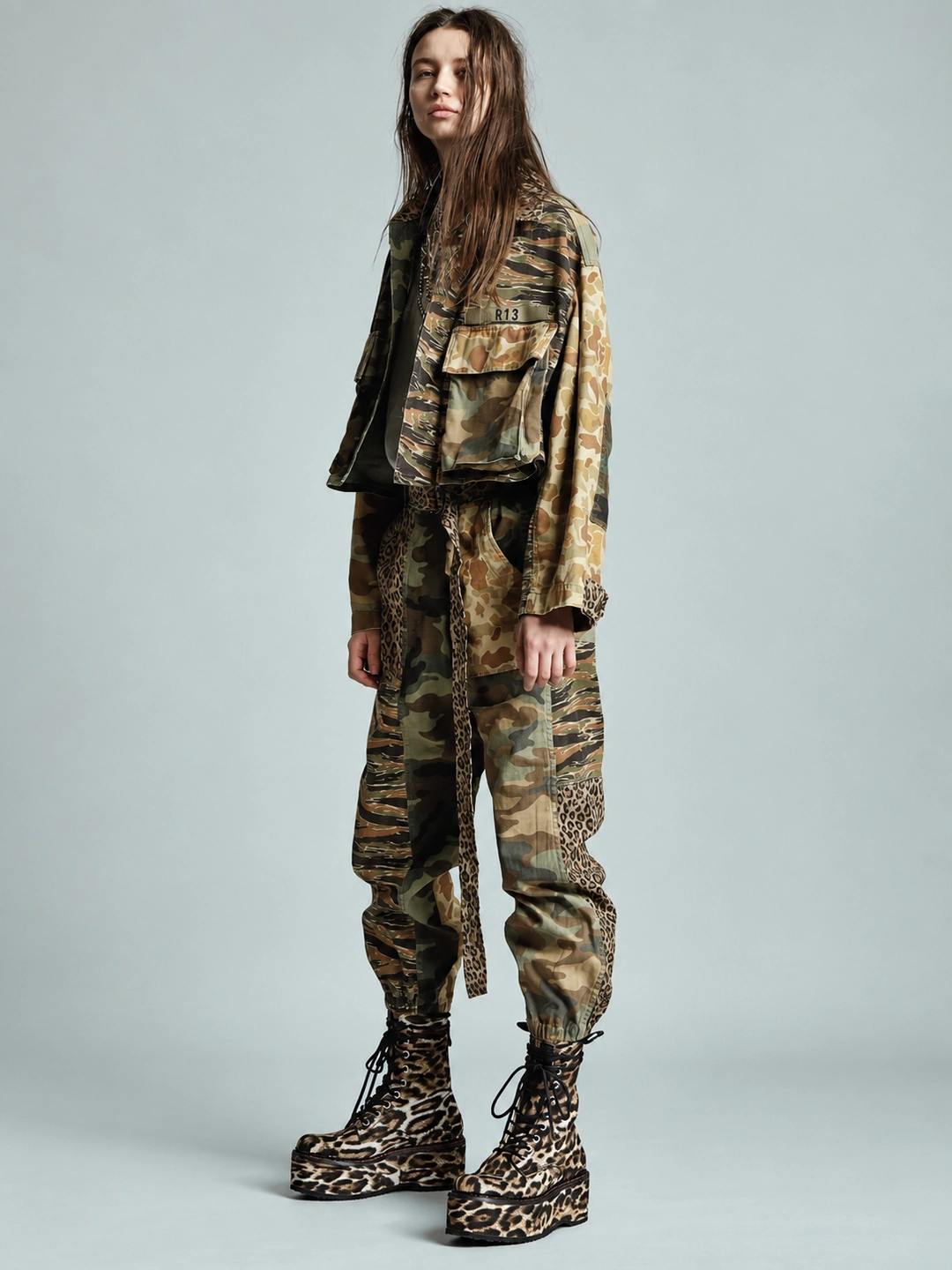
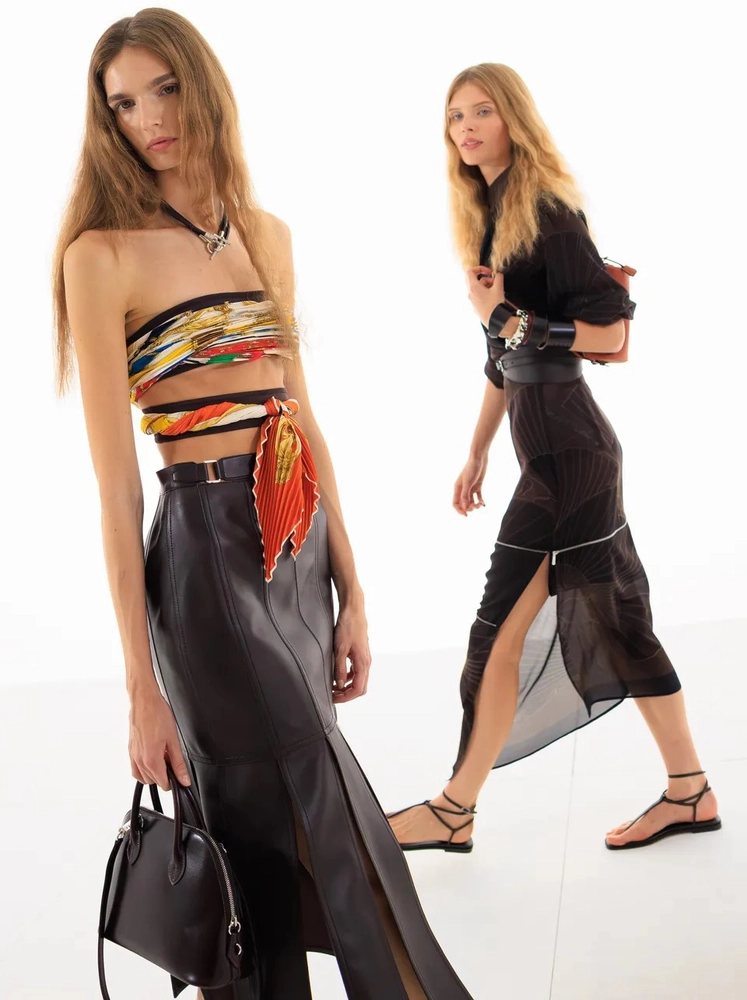
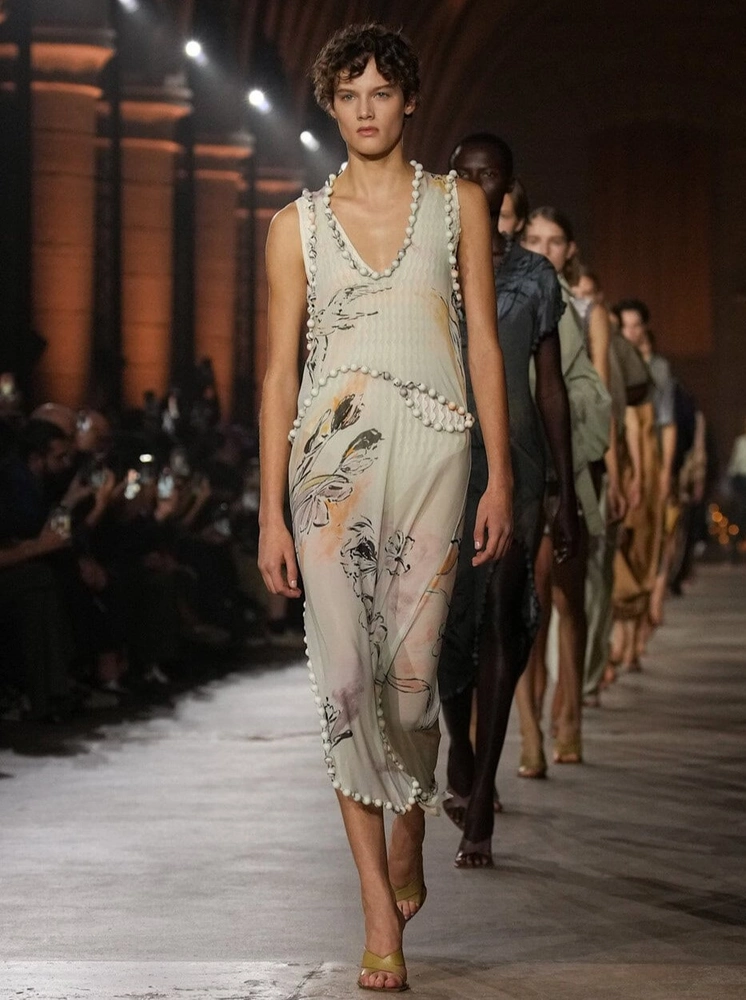
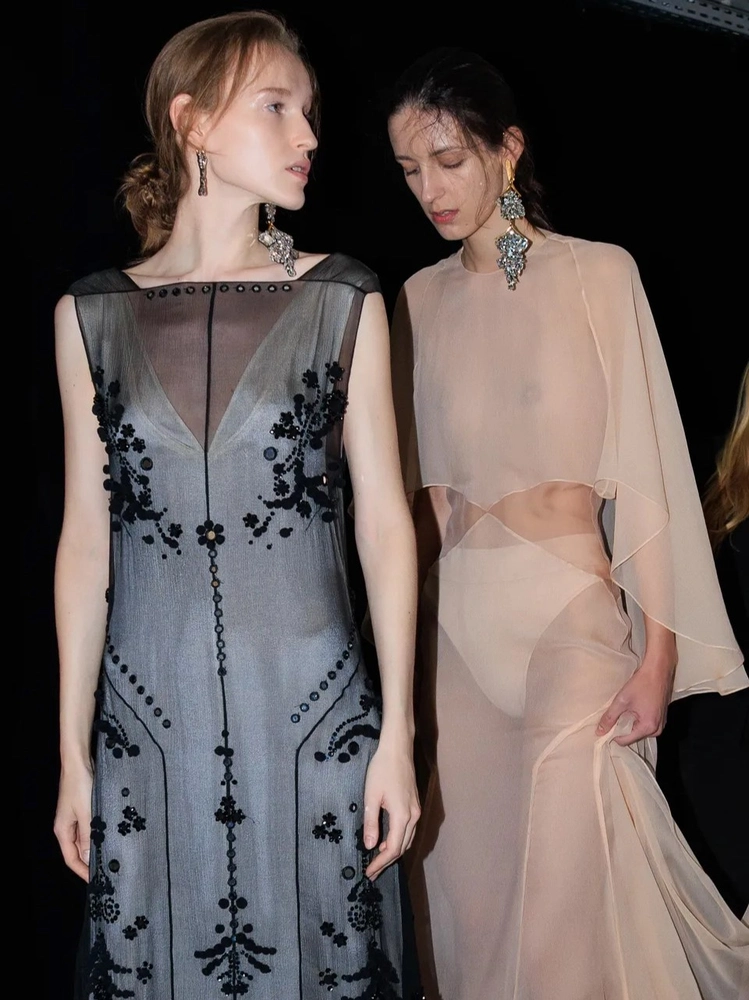
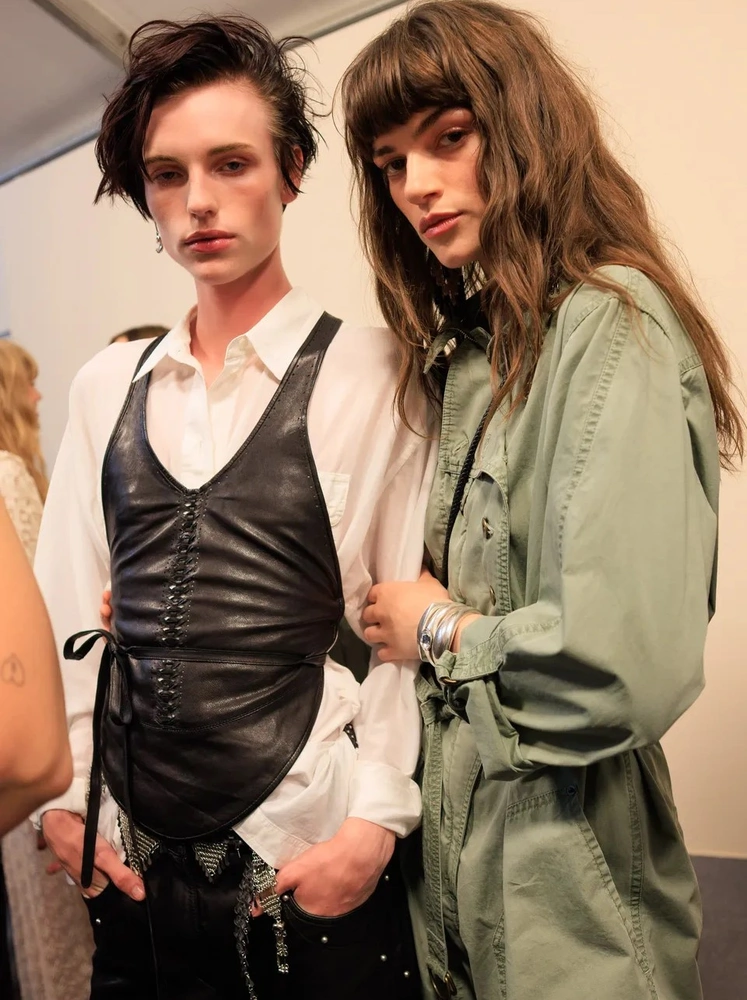
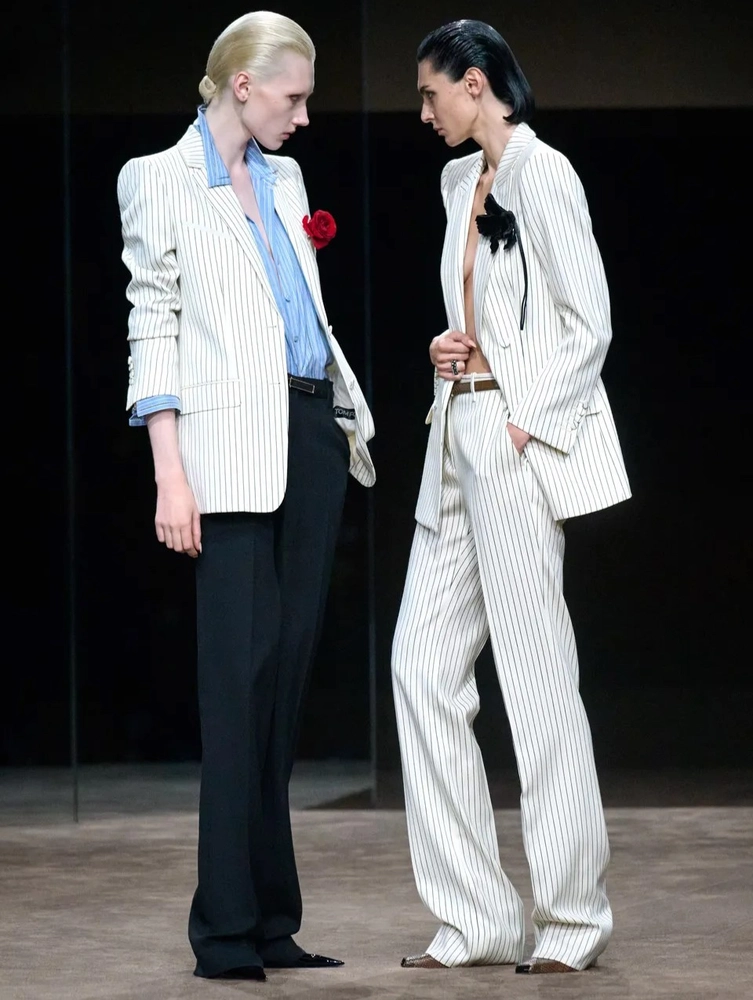
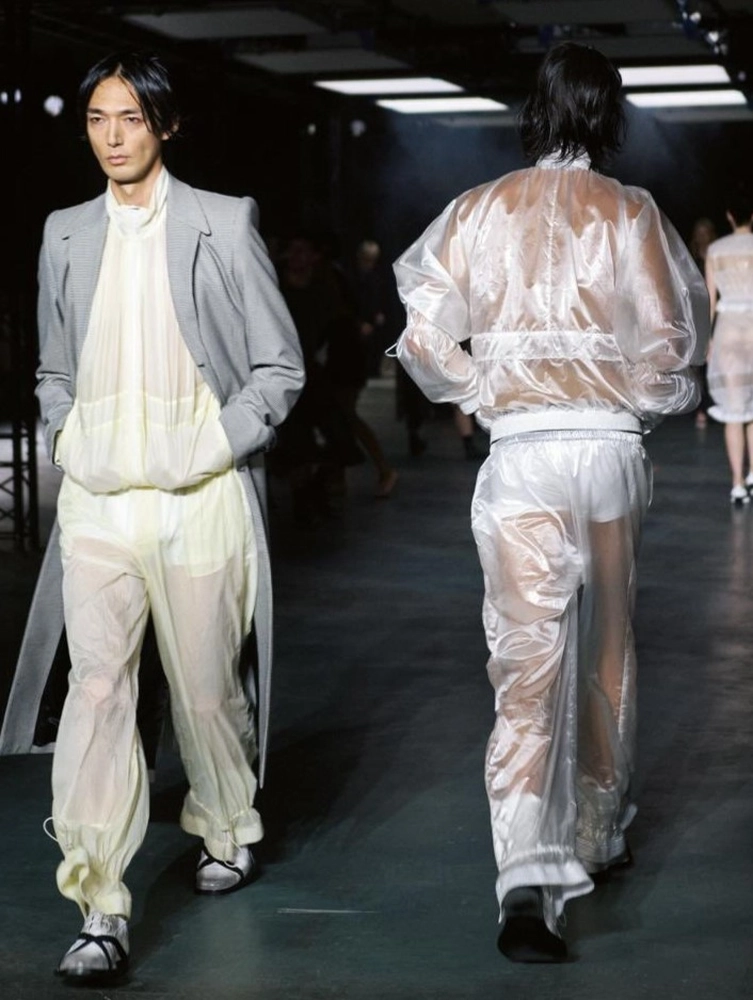
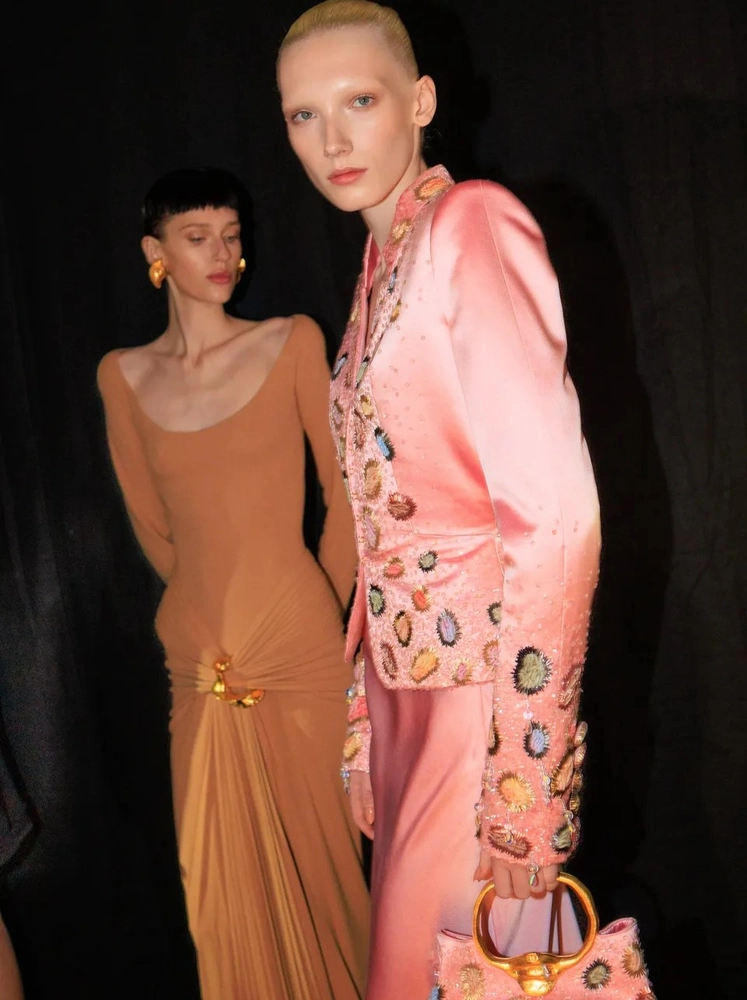
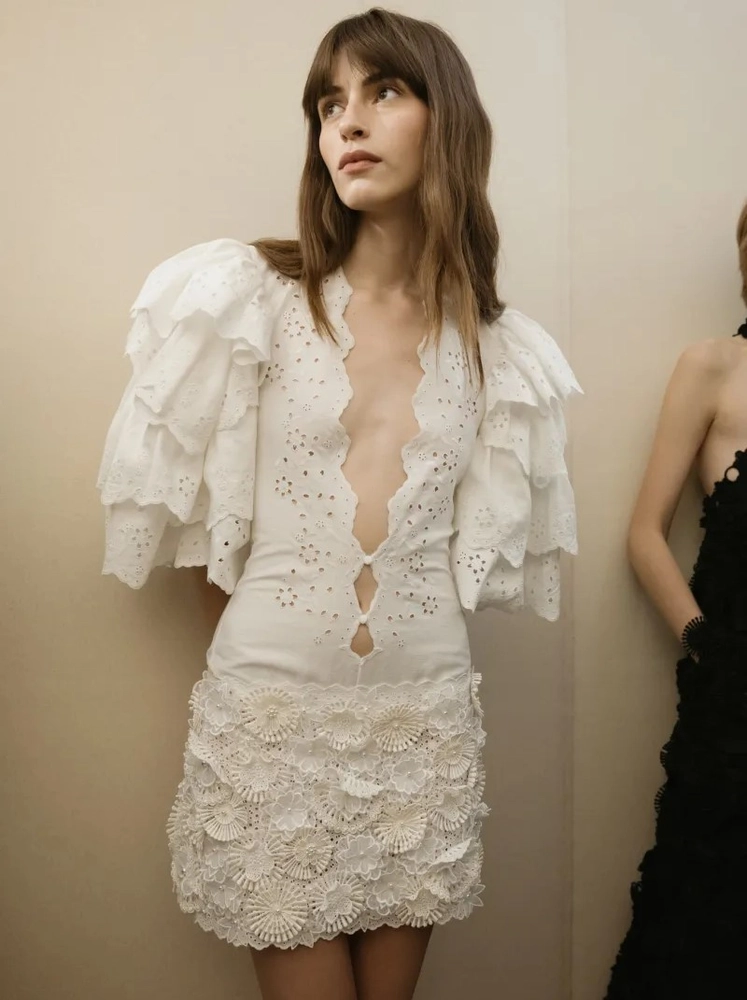
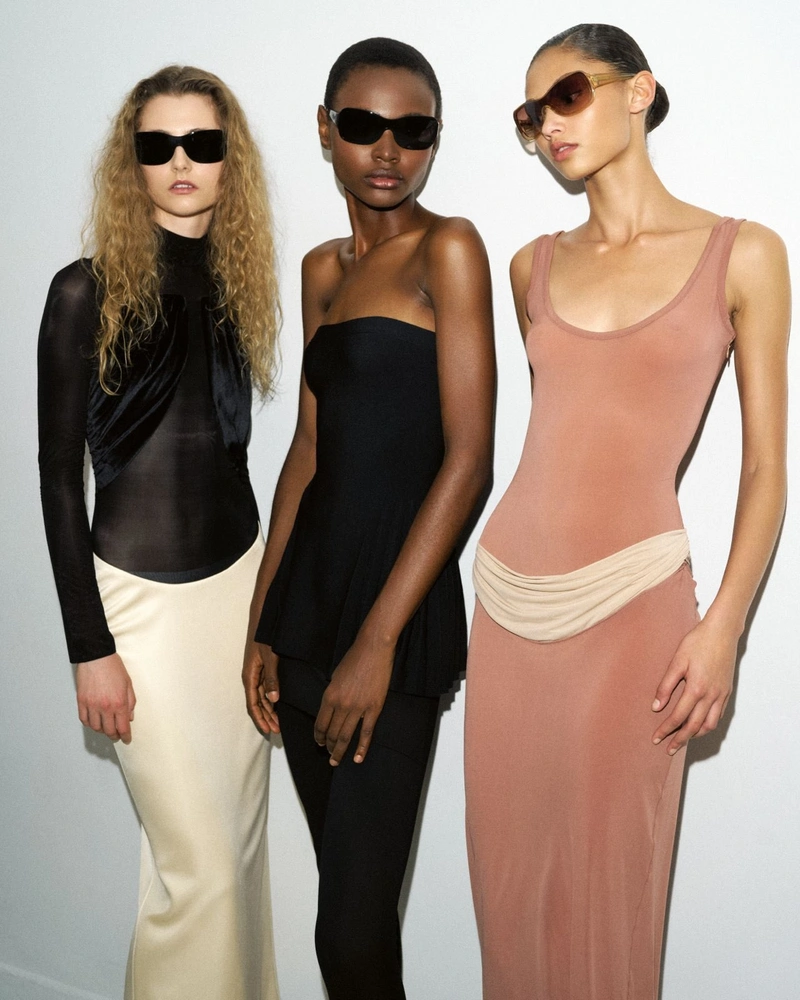
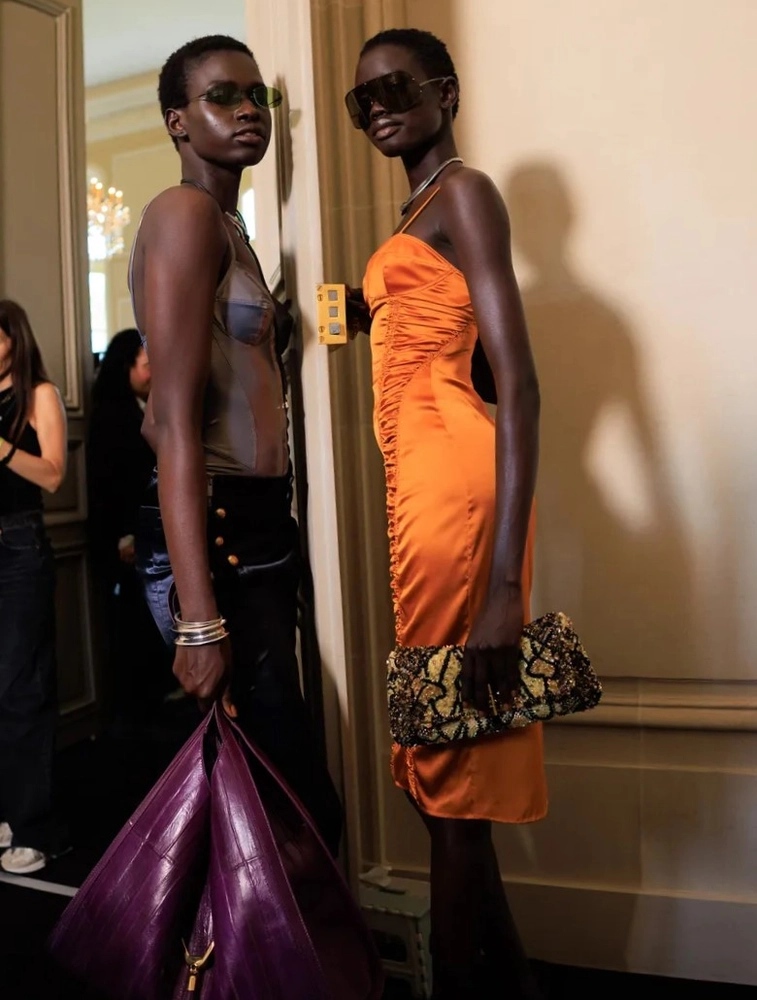
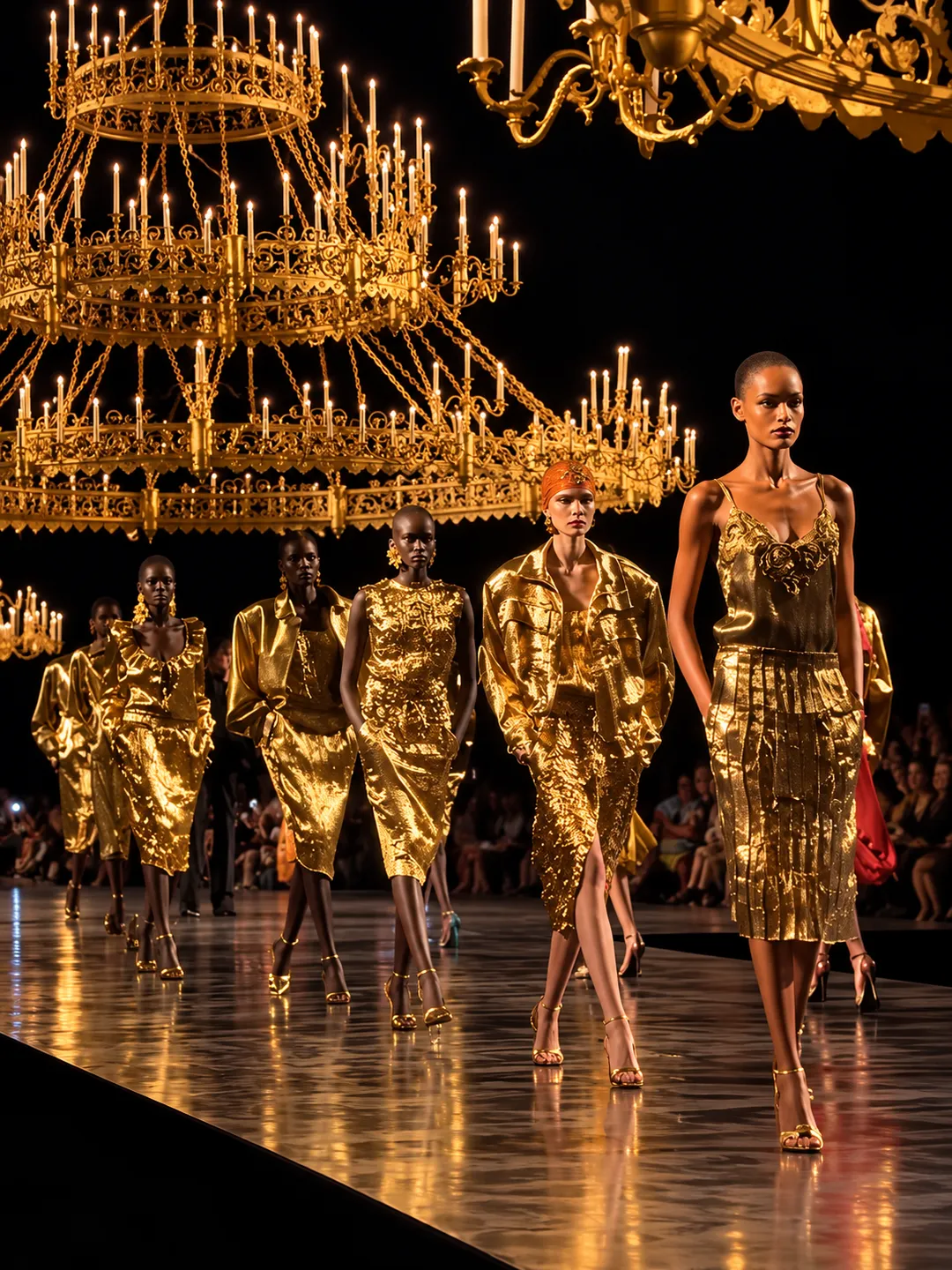
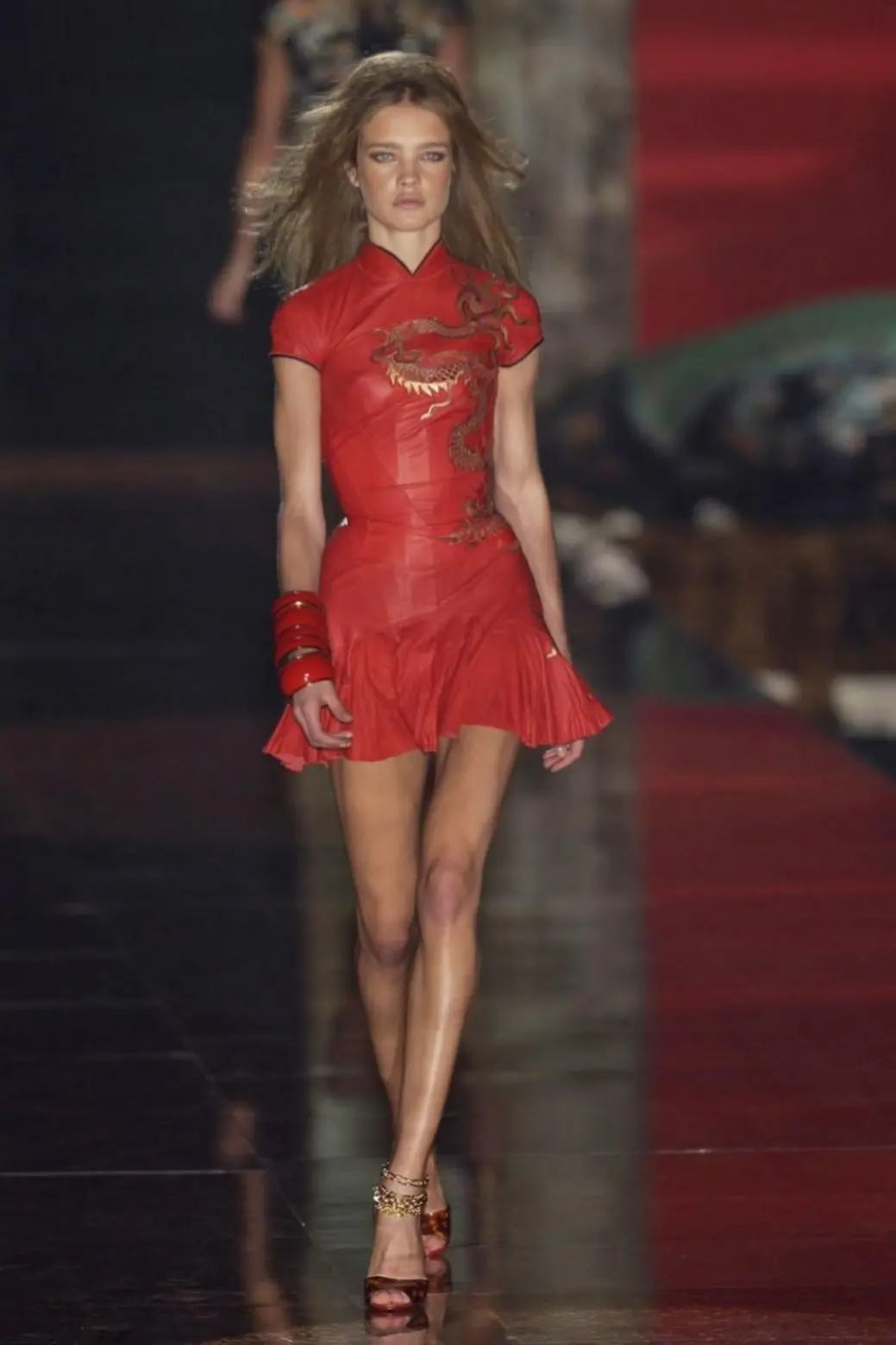
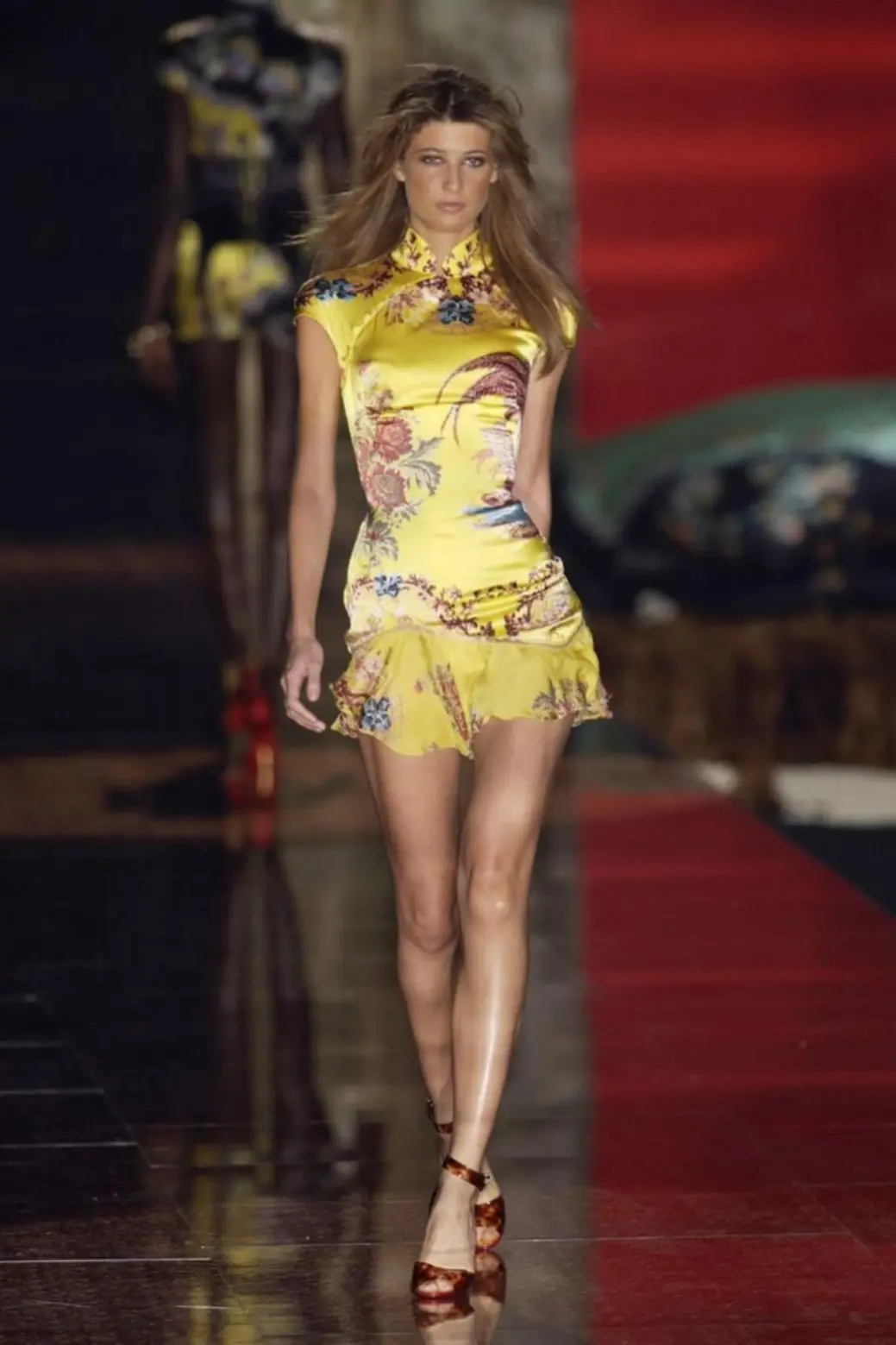
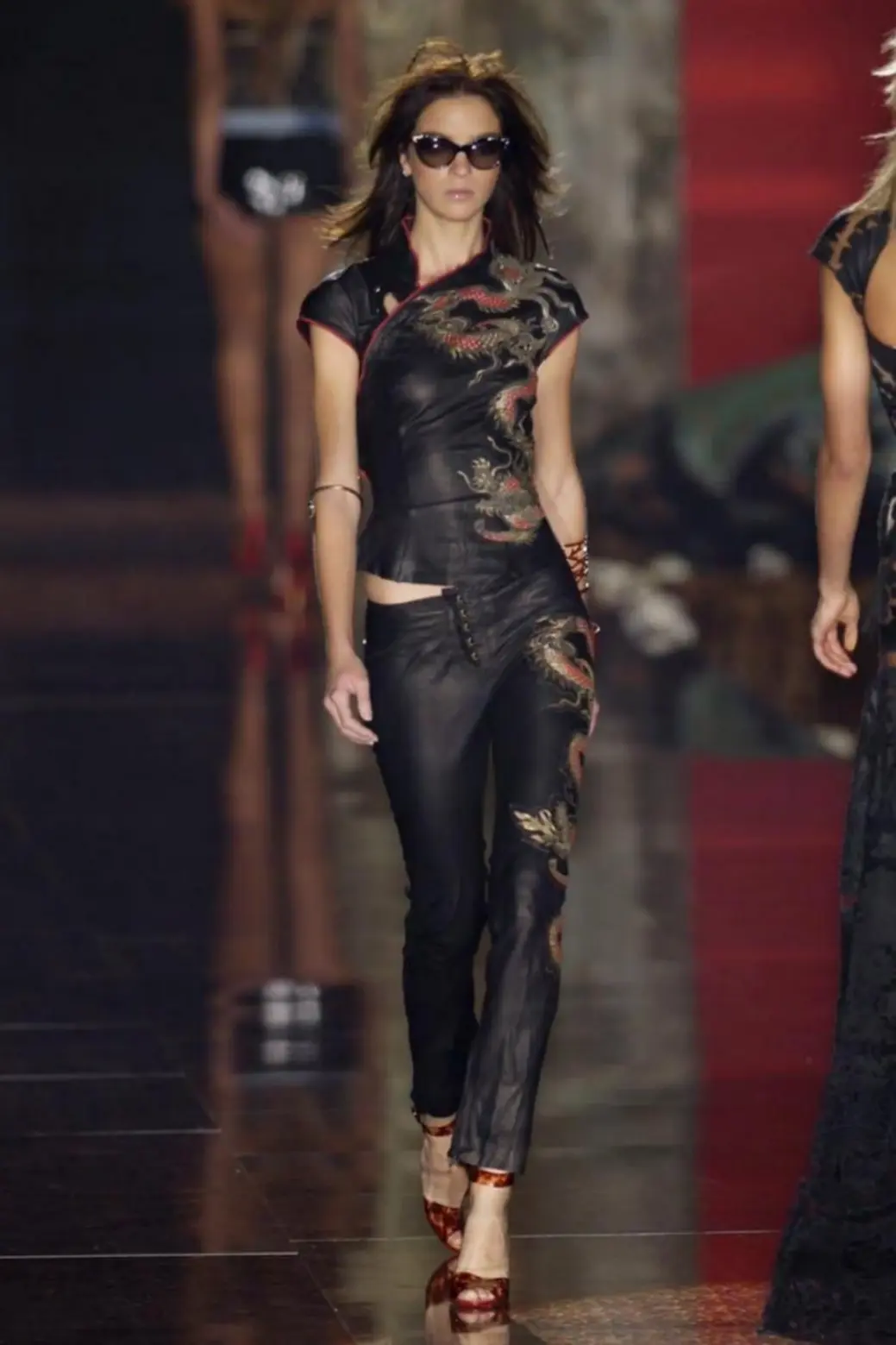
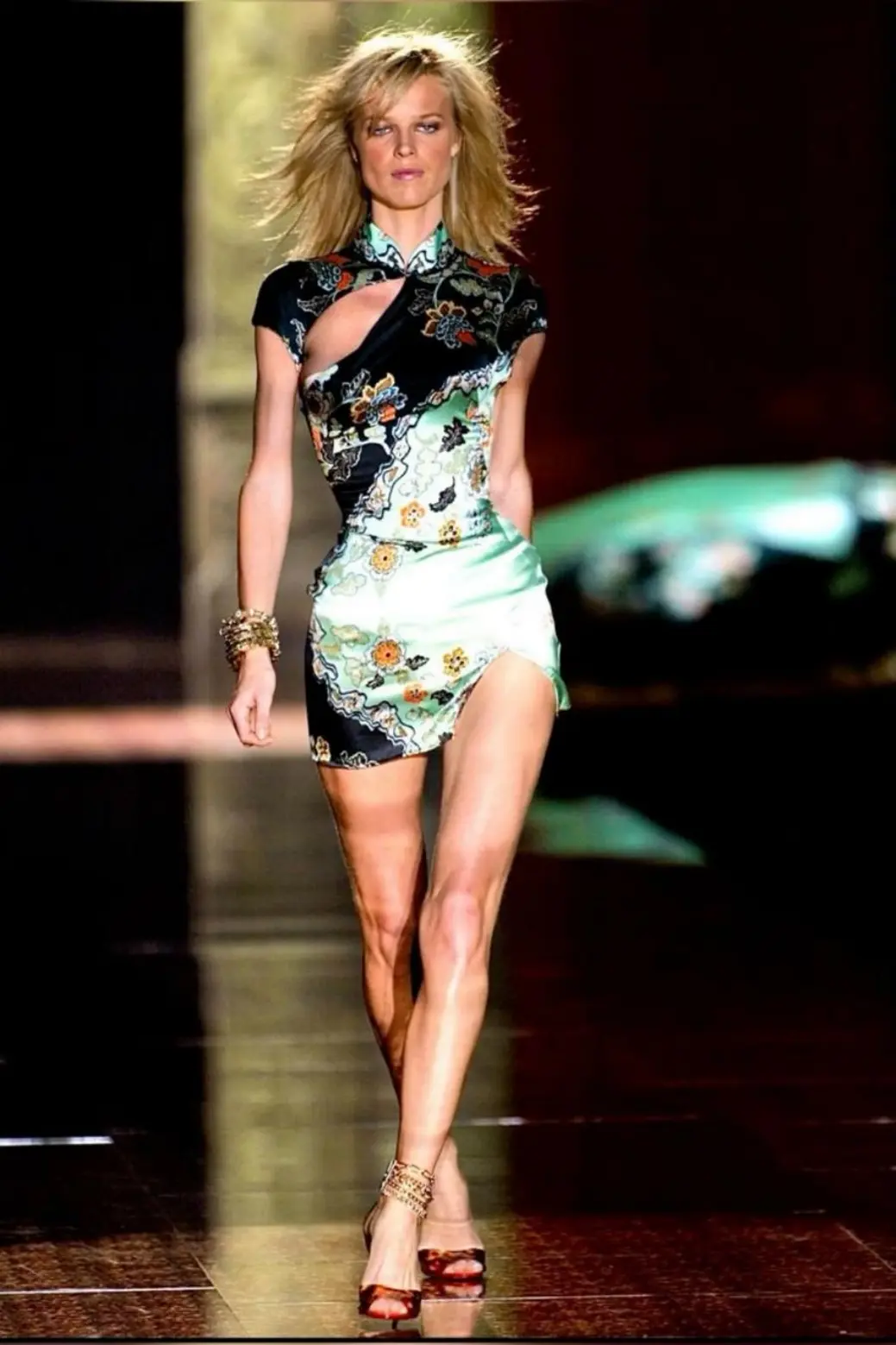
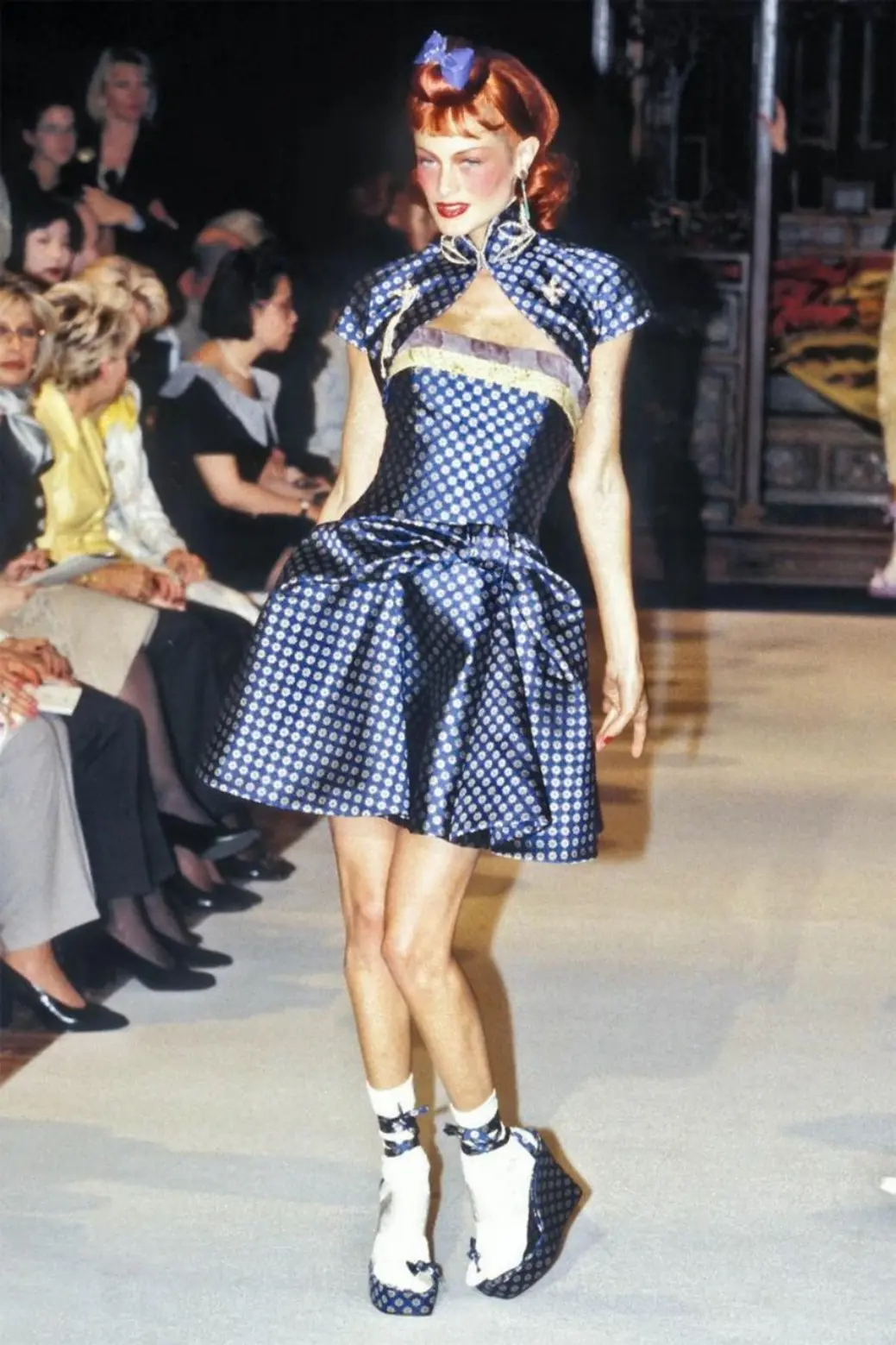
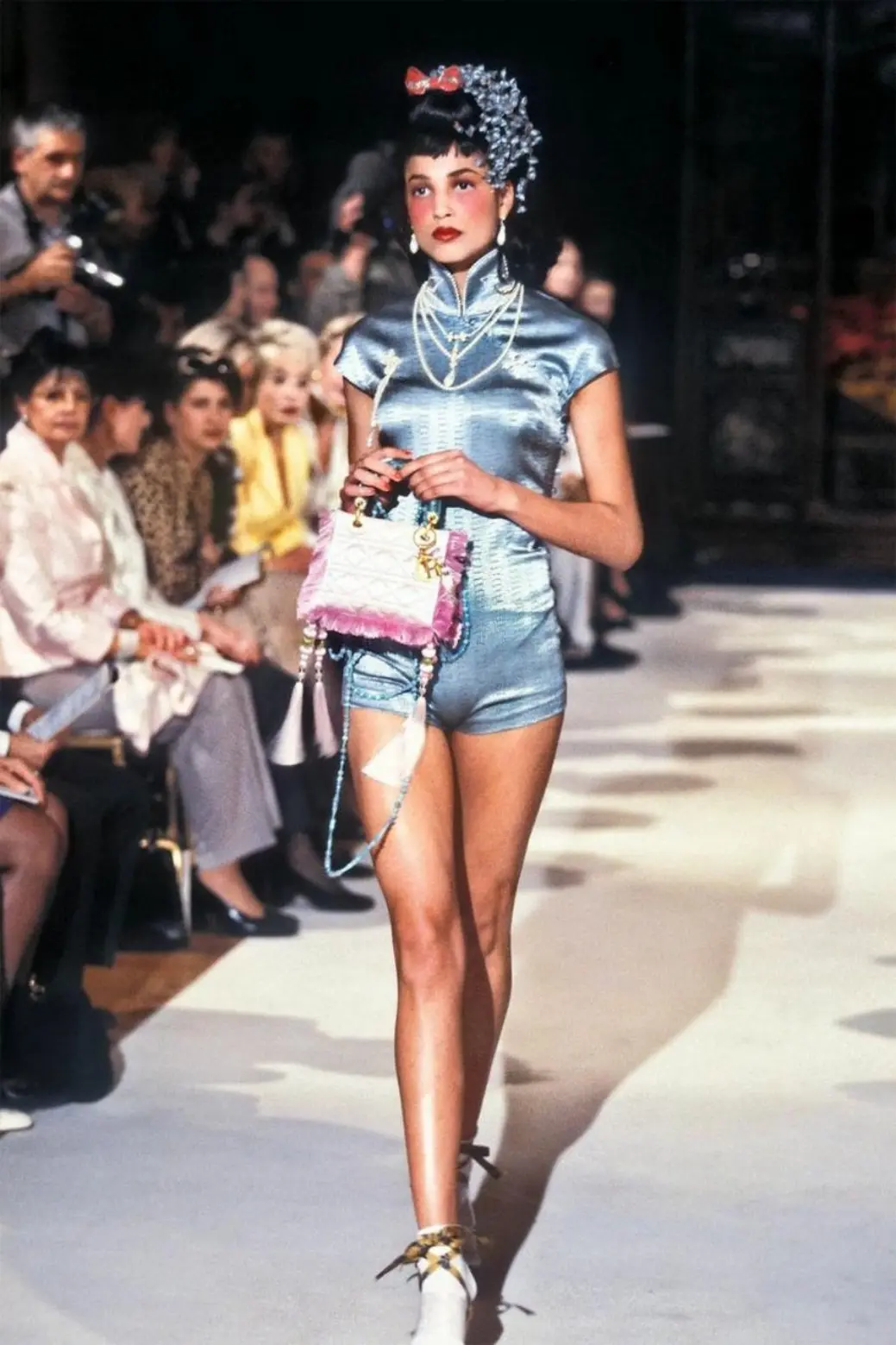
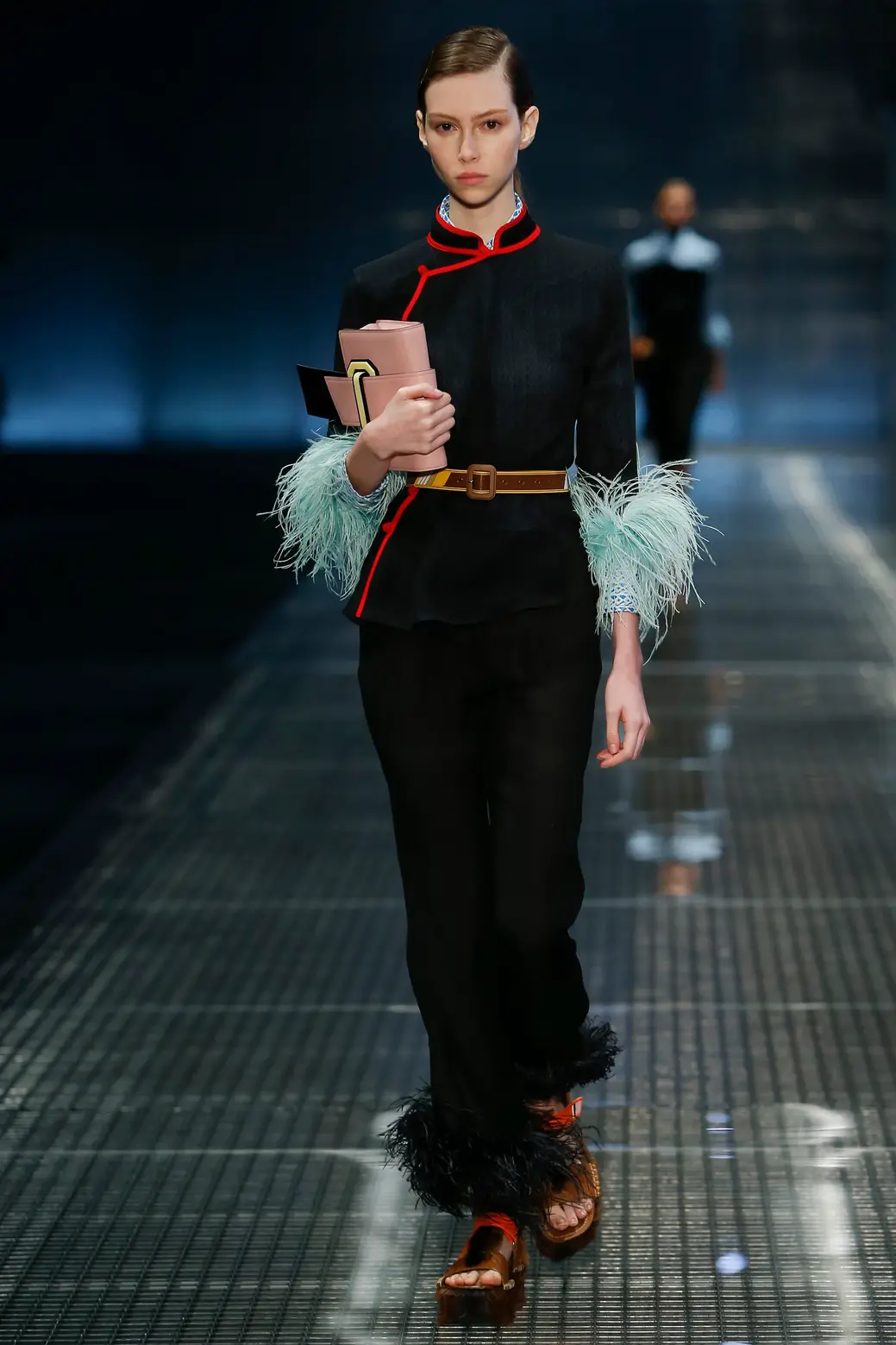
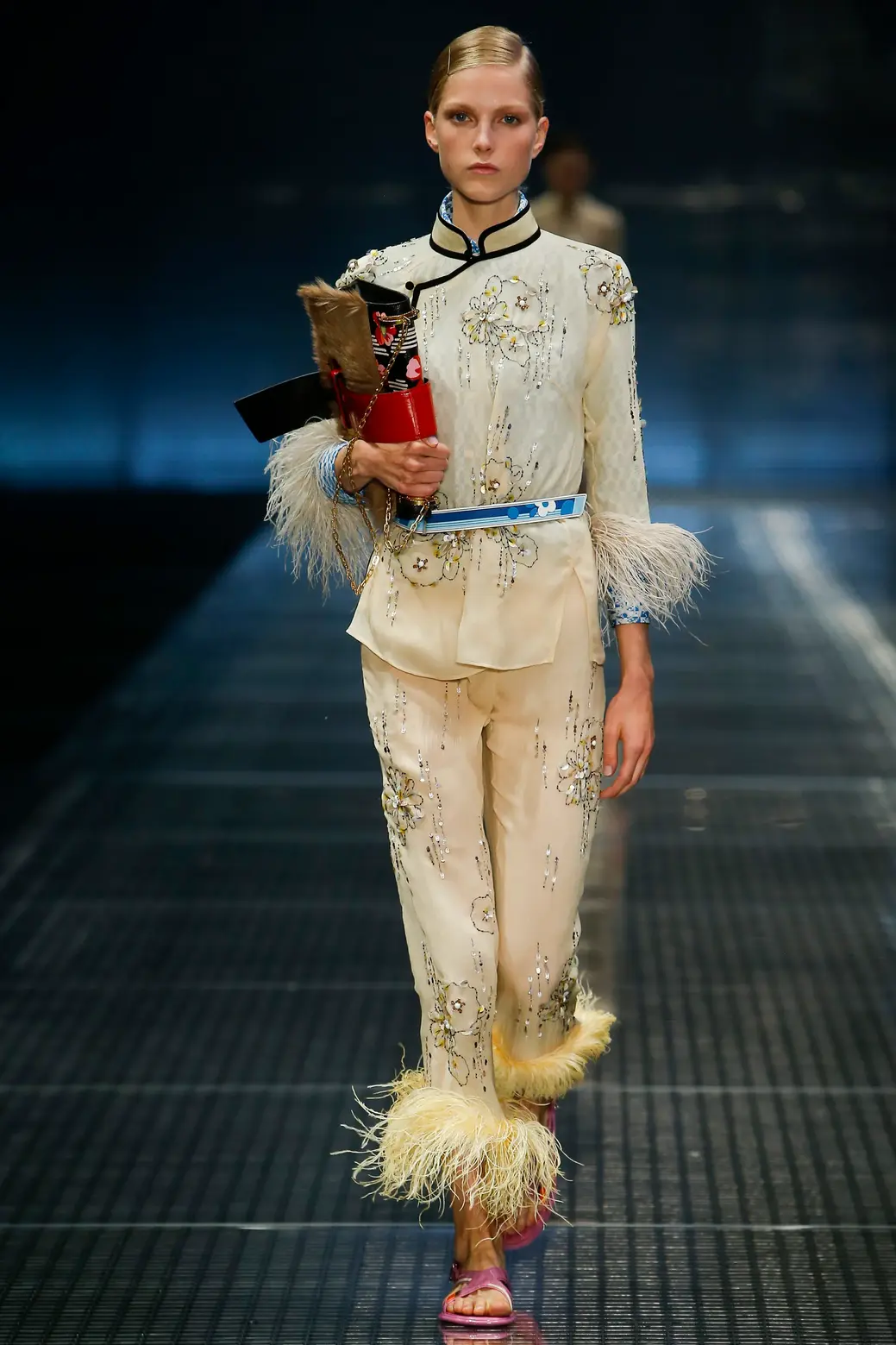
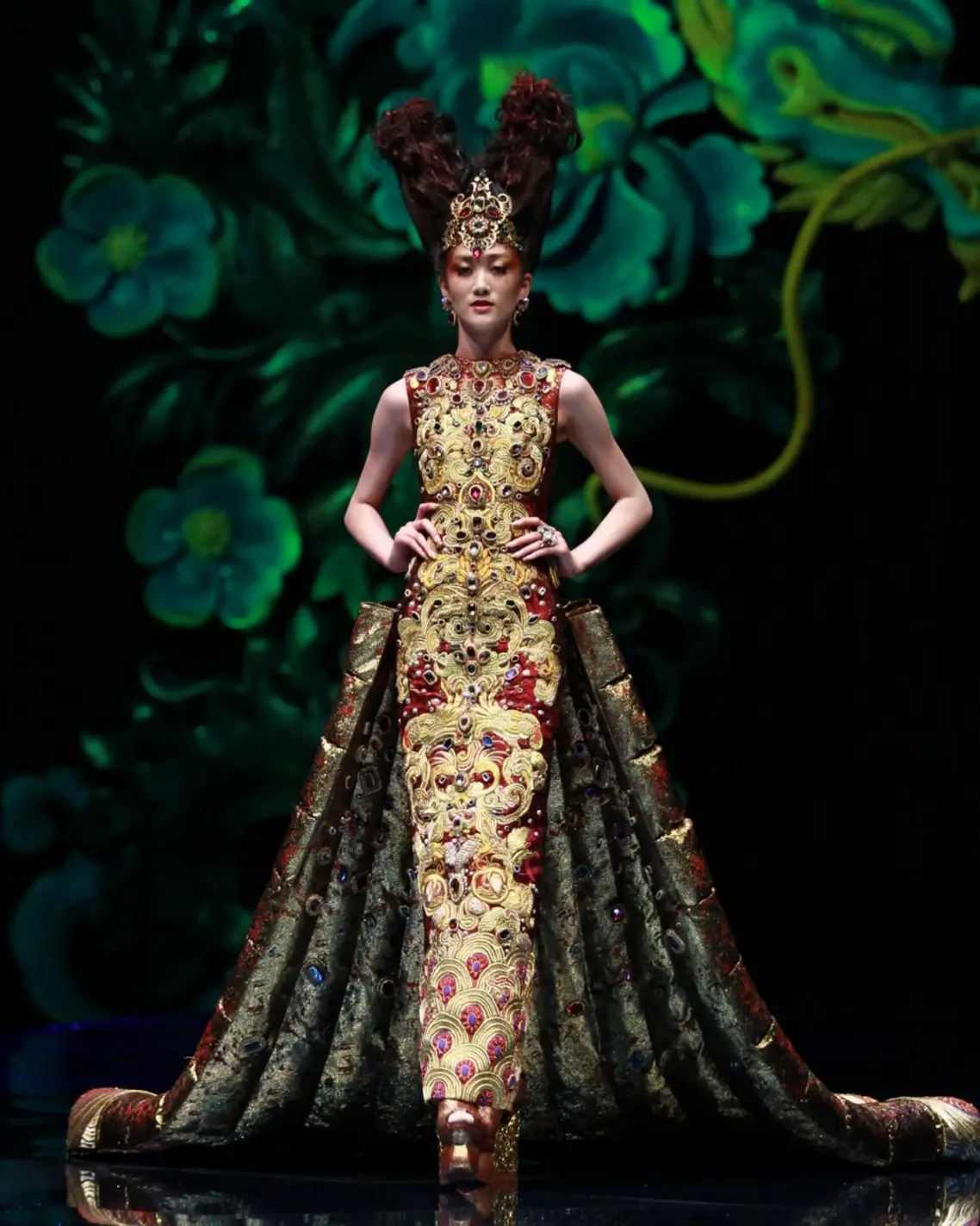
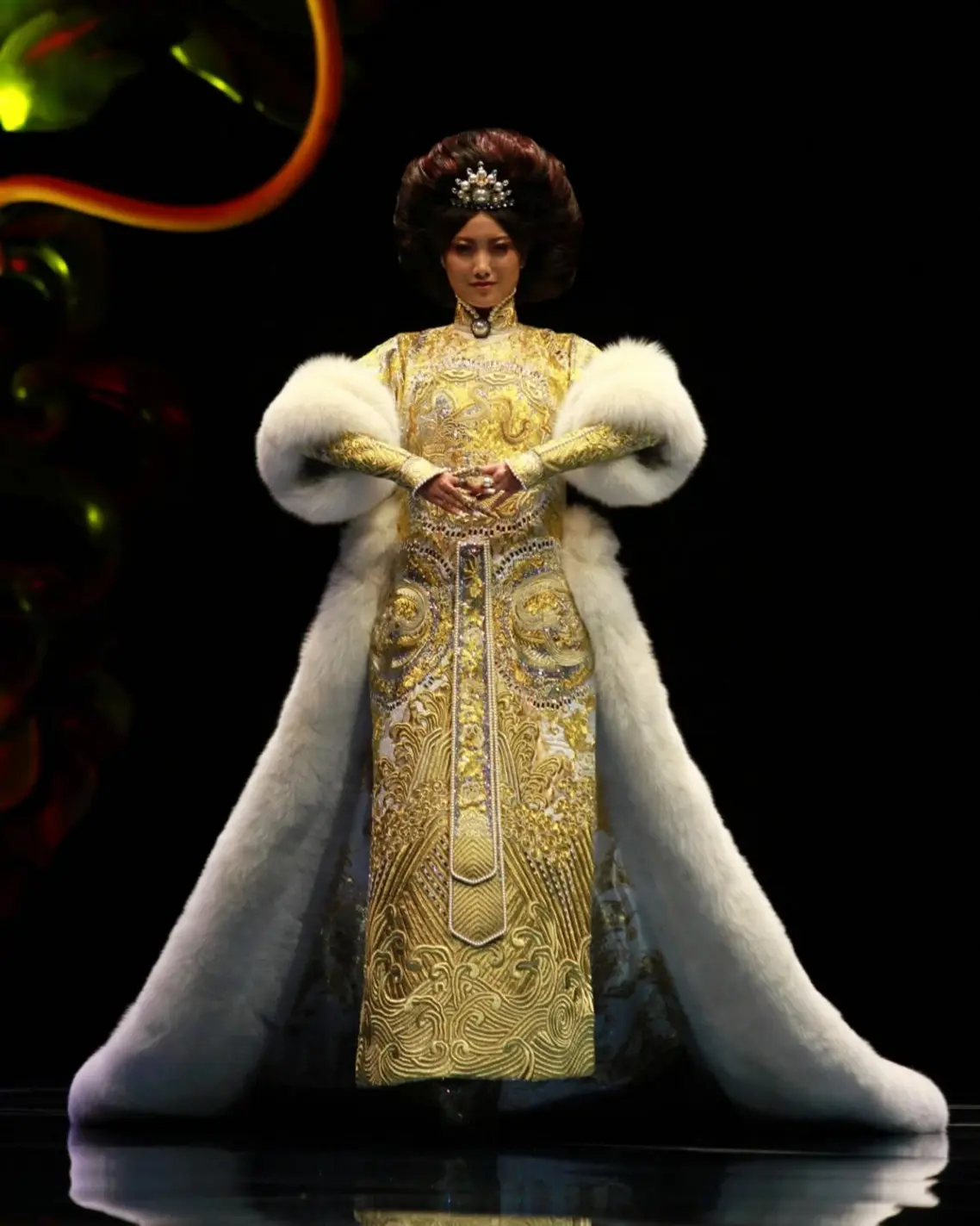
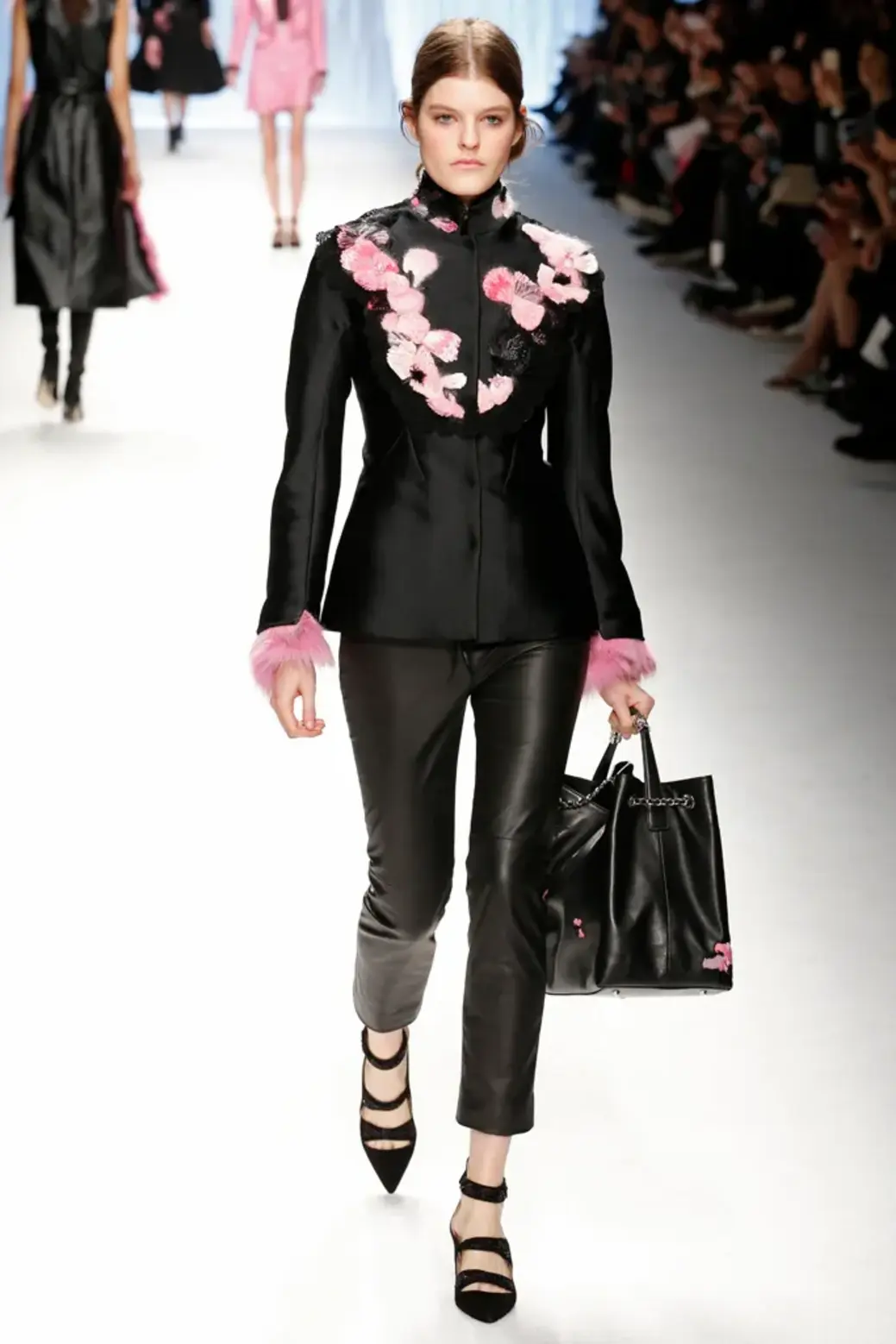
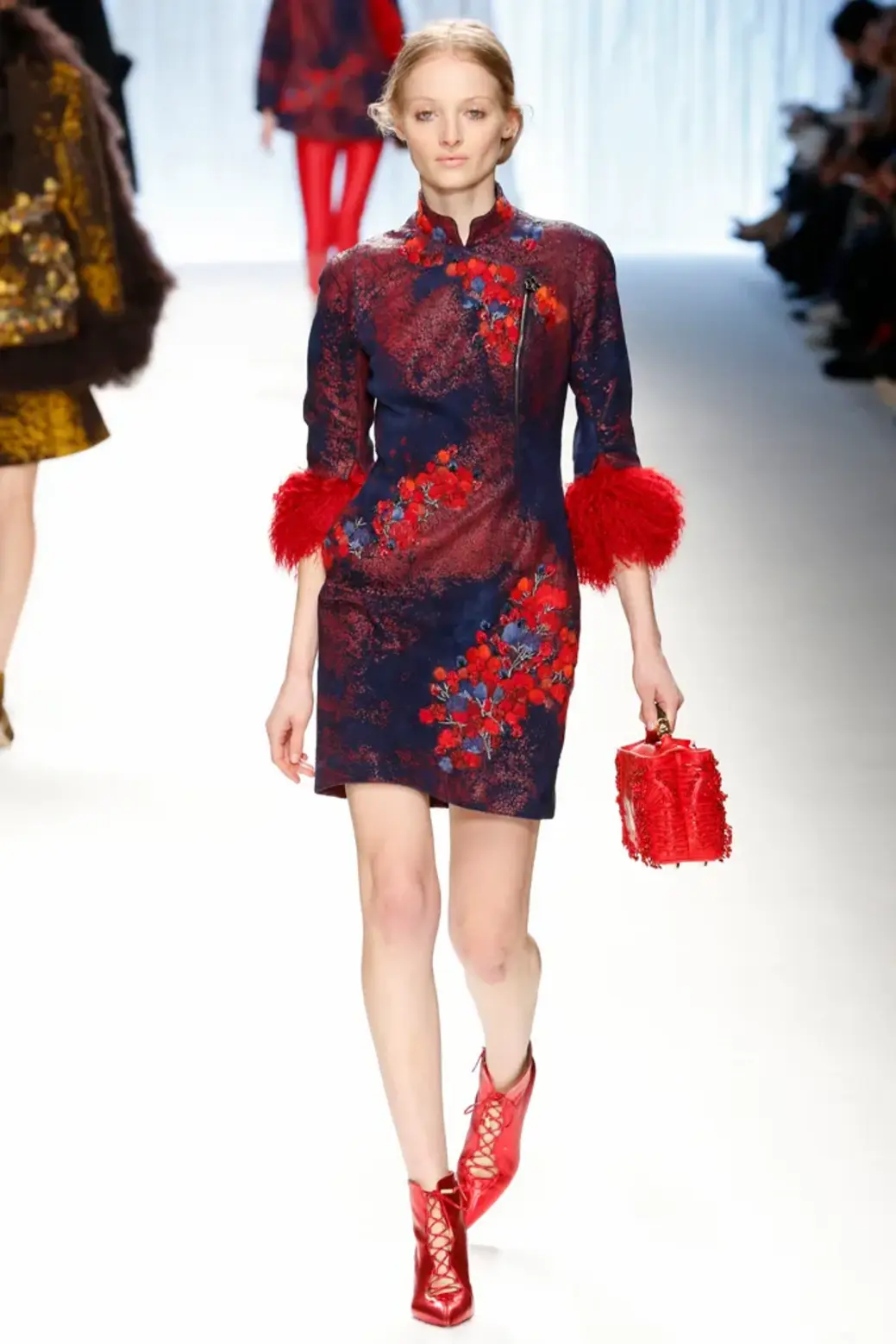
On the global runway, the qipao’s hypnotic soul is stripped of its domesticity and reimagined as a high-fashion fever dream. Across these legendary houses, the traditional ink-line is deconstructed and reborn through a lens of sheer luxury and avant-garde seduction.
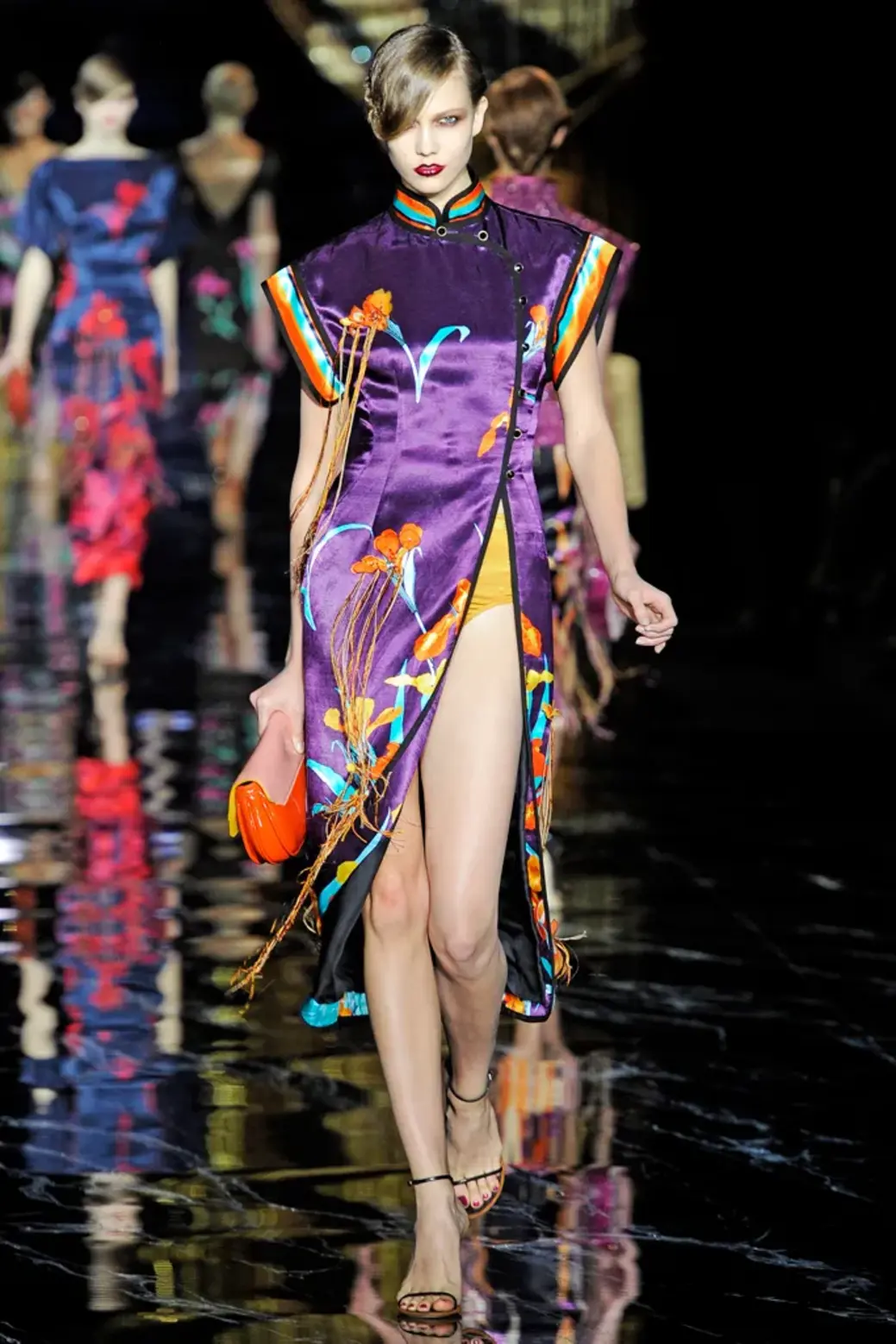
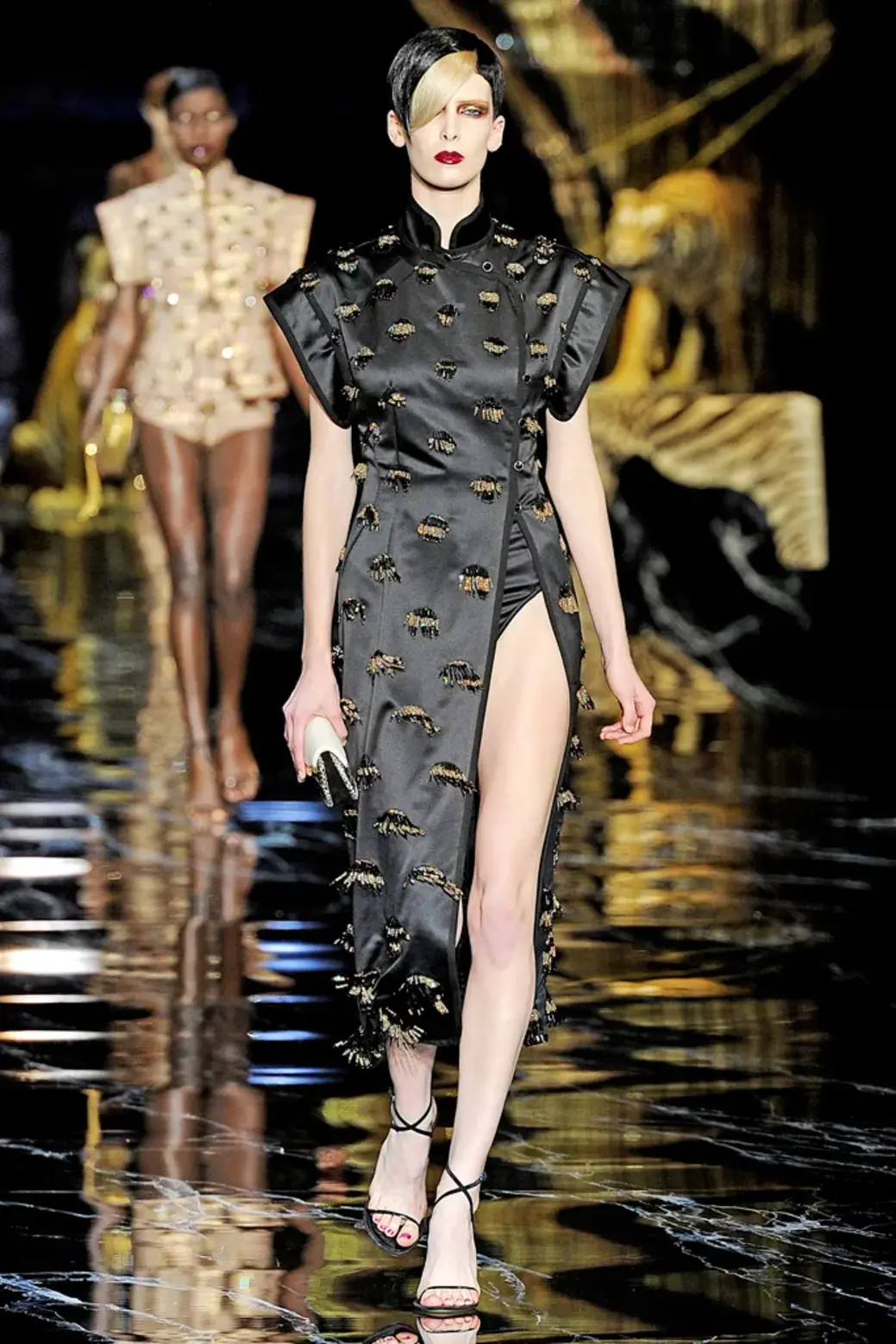
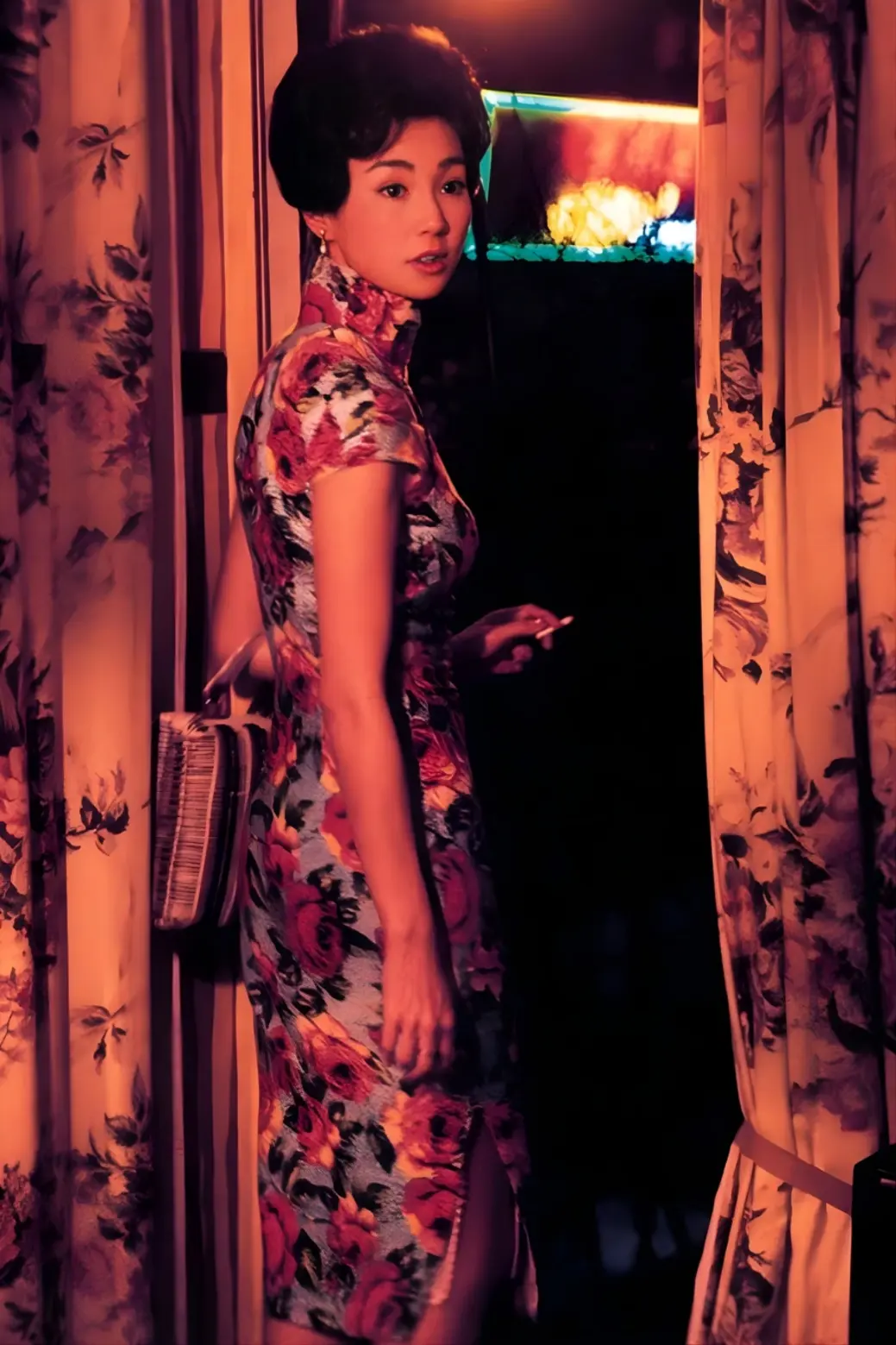
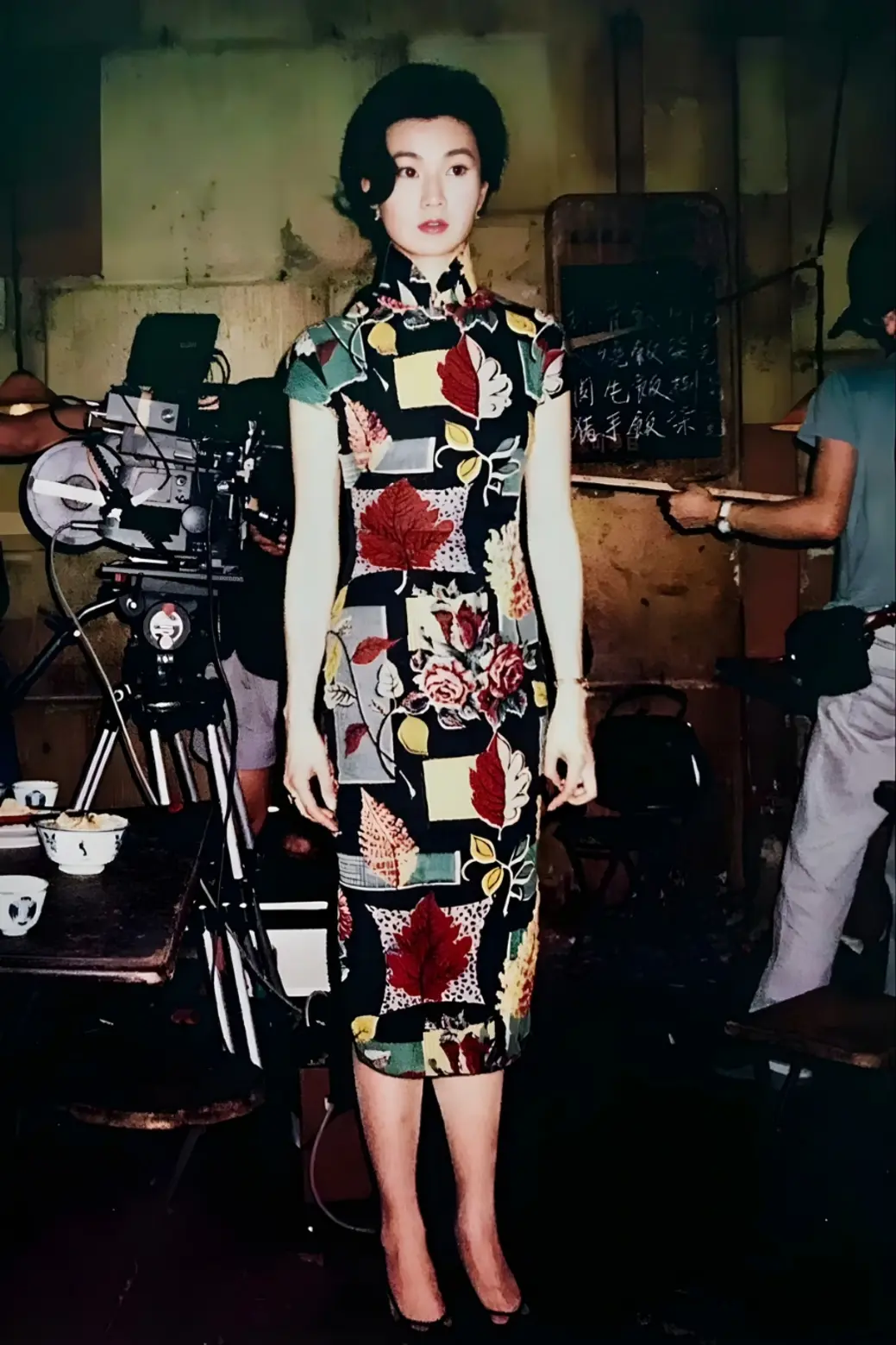
This is the ultimate masterpiece of emotional clockwork. Here, the qipao is not a costume; it is the ticking heart of the film. William Chang designed over twenty dresses for Maggie Cheung, each one a high-collared fortress of restraint.
The patterns are hypnotizing, ranging from aggressive florals to somber geometries, reflecting the forbidden heat beneath the woman’s porcelain exterior. It is the definitive study of the contained flame, where the dress is so tight it seems to hold the character’s secrets within the very threads of the silk.
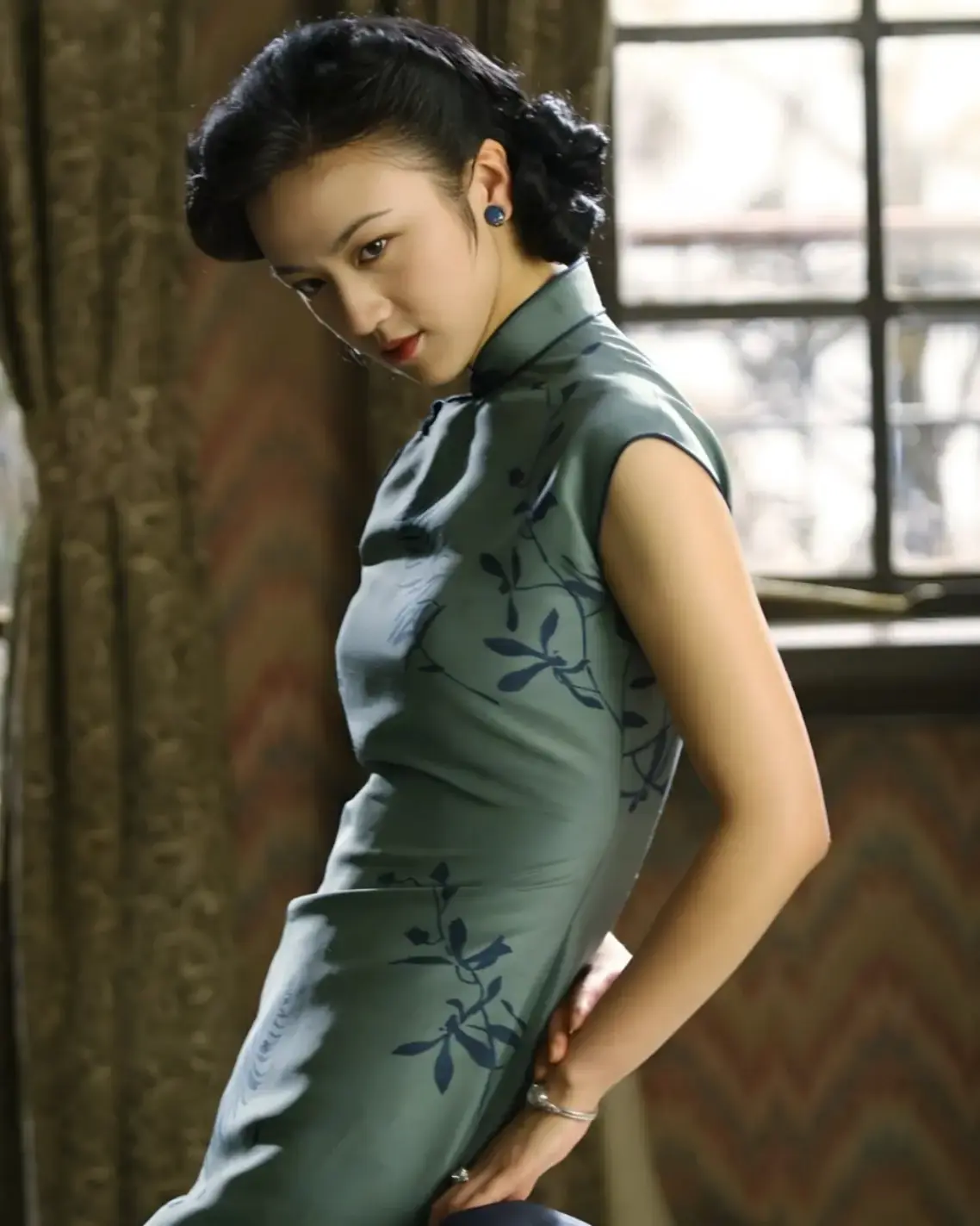
If you want to see the qipao used as a psychological weapon, this is the film. Set in the rain-slicked, dangerous streets of 1940s Shanghai and Hong Kong, the dresses here are a masterclass in exotic sexiness.
The protagonist uses the qipao to seduce and destroy. As she moves deeper into a web of espionage, the fit of her dresses becomes more lethal, the colors more intoxicating. You see the transition from the modest, academic styles of a student to the dangerous beauty of a femme fatale. The embroidery sparkles under the dim lights of mahjong parlors, and the side slits offer a tease of the forbidden that makes the head swim. It captures that specific hazy atmosphere where the line between a starlet and a spy is blurred by the luster of the satin.
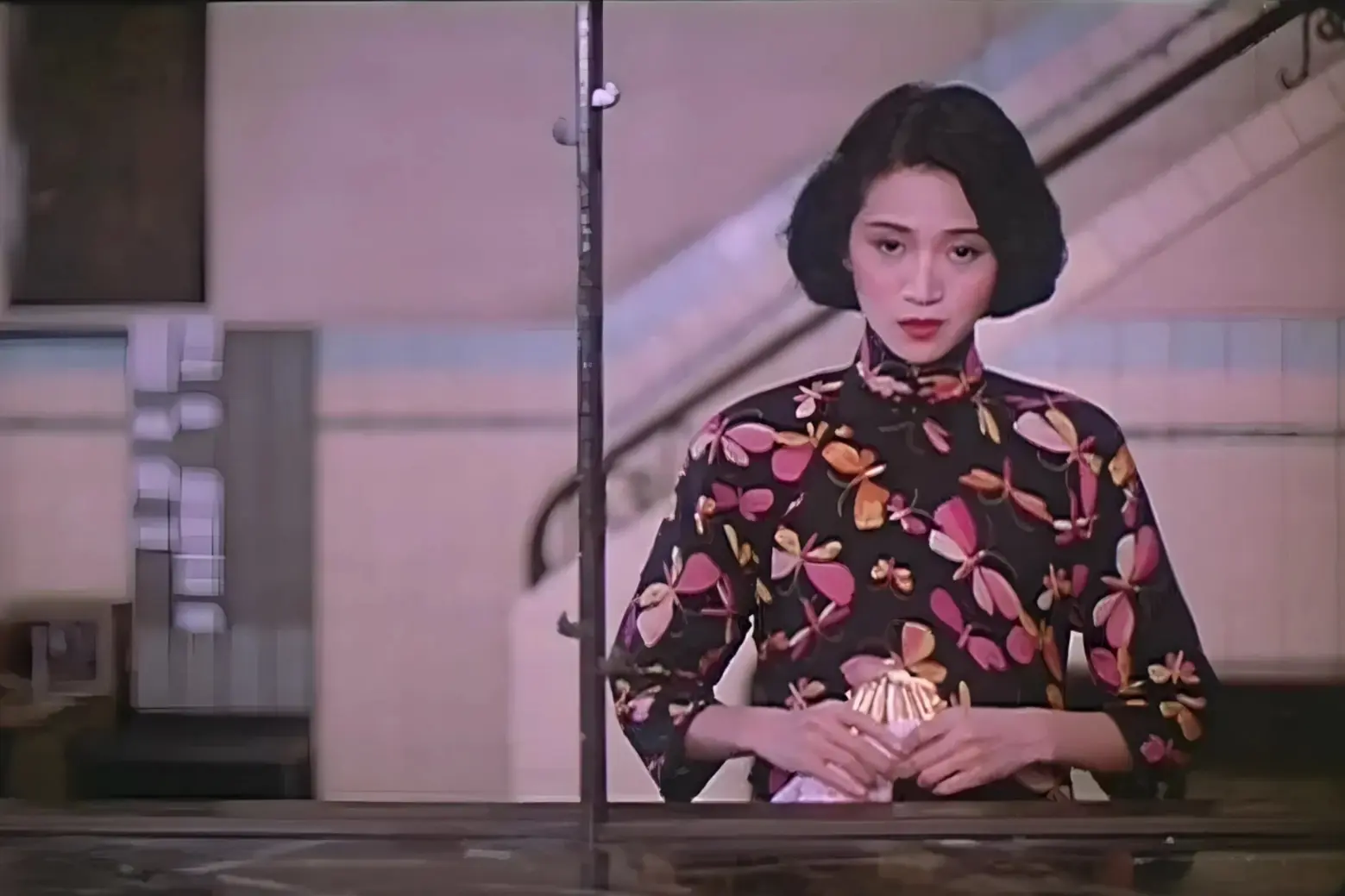
For the most sacred, ghostly, and nostalgic vision of the qipao, Rouge is unparalleled. Anita Mui plays a 1930s courtesan whose elegance is lacquered in tragedy.
The cheongsams in this film are flooded with tradition, deep, moody crimsons and blacks adorned with hypnotizing embroidery that feels like a floral trap. It embodies the seductive spirit perfectly; she is so fragile, so thin, yet her presence is a monumental force of desire. The silhouette is meticulously 1930s, featuring the iconic high collars and the long, sweeping lines that make her appear like a spirit from a lost era. It is a film that leaves you lost in a cloudy, romantic haze, mourning a level of class and glamour that only the qipao can provide.
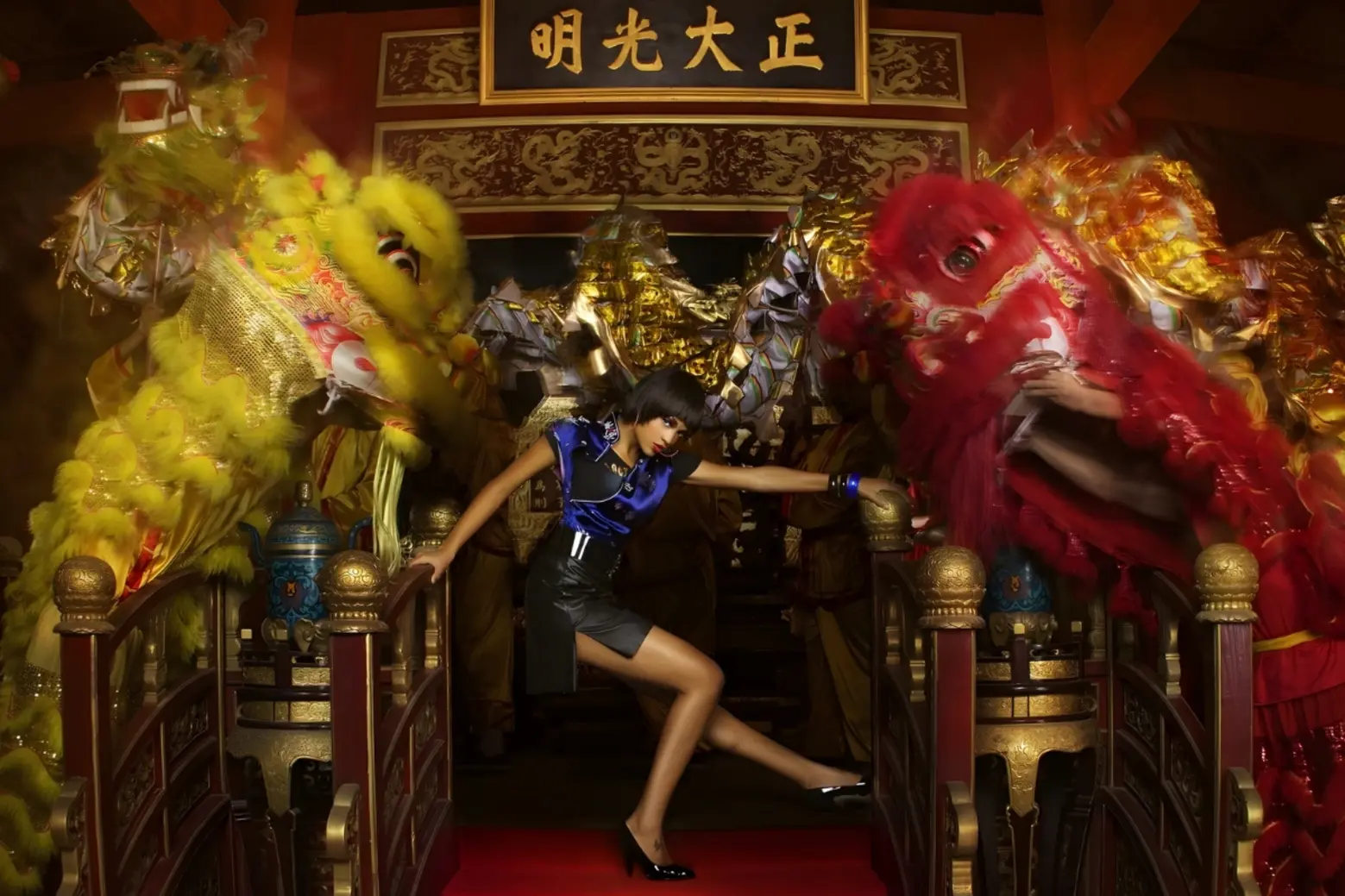
To slip into its silk is to leave the modern world and step onto the damp, ancient soil of the Middle Kingdom, where the air is heavy with the intoxicating scent of fermented plum wine and the medicinal, herbal sting of traditionally brewed baijiu. It is a dizzying, hazy descent, like a drink that makes the peripheral world dissolve into a cloudy blur, leaving only the sharp, electric vision of the woman standing before you.
It remains the eternal signature of the Chinese soul because it solves the ultimate obsession of fashion: the mastery of the gaze. It is a rare, expensive equilibrium where the weight of five thousand years is distilled into a single, clean stroke of genius. It exudes an expensive, untouchable class, yet it pulses with a primitive, oriental seduction. We find ourselves drowning in the hypnotizing piles of its fabric, the heavy, moon-slicked satins and cloud-brocades that feel like liquid mercury against the skin. The embroidery is a visual narcotic. To look upon it is to be hypnotized by a thousand years of craftsmanship, a tactile landscape that makes the heart race and the head swim.
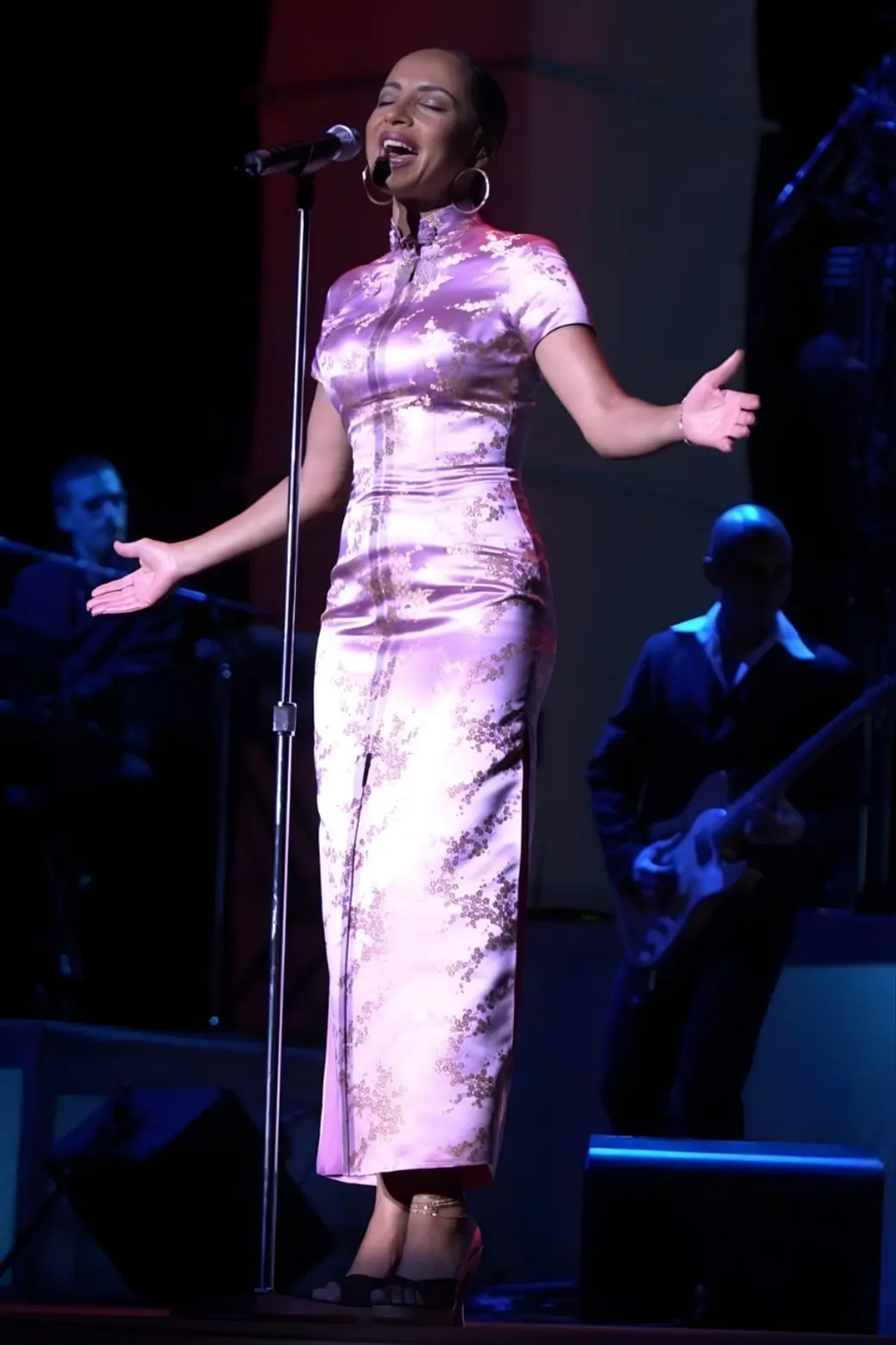
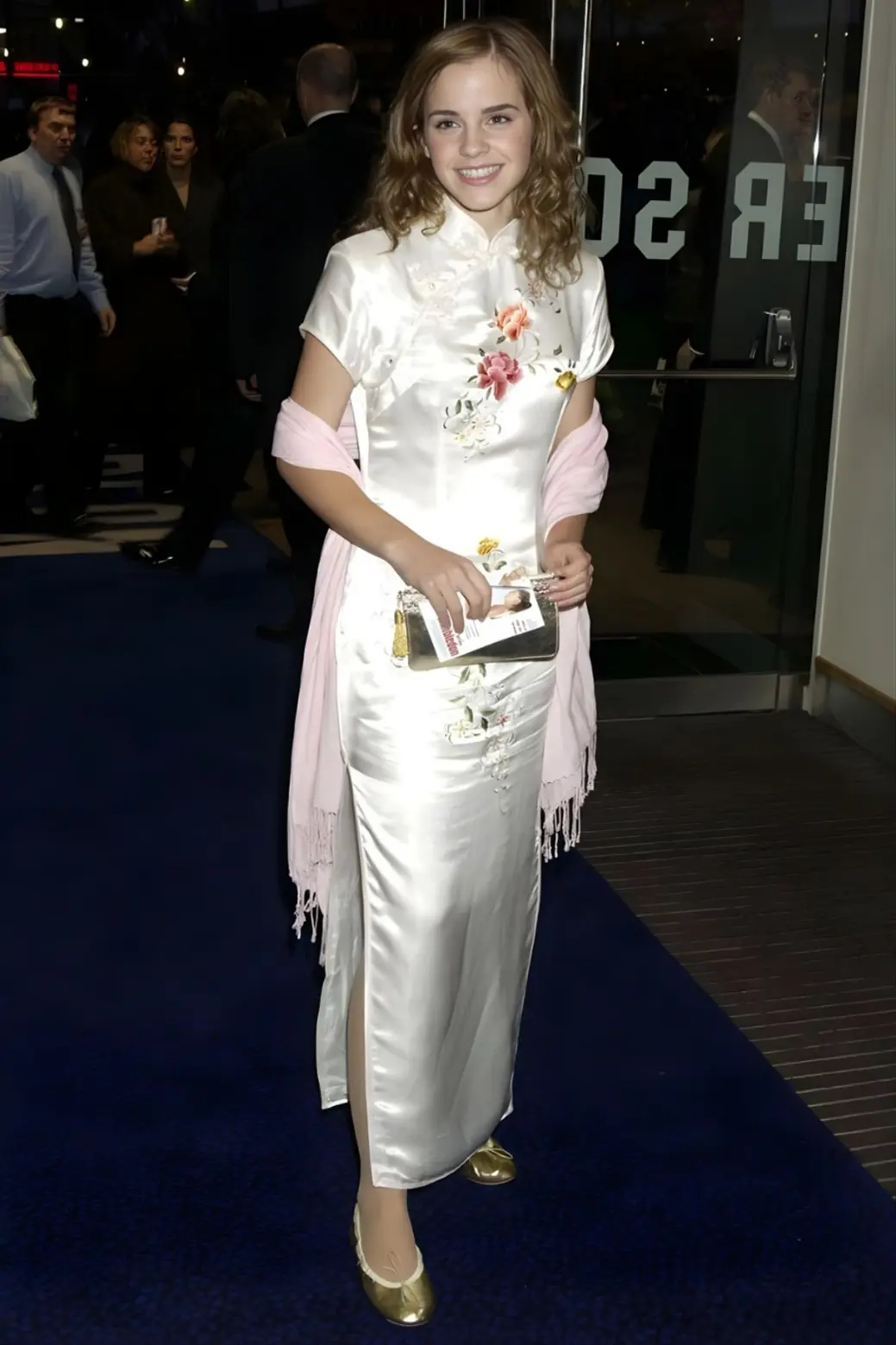
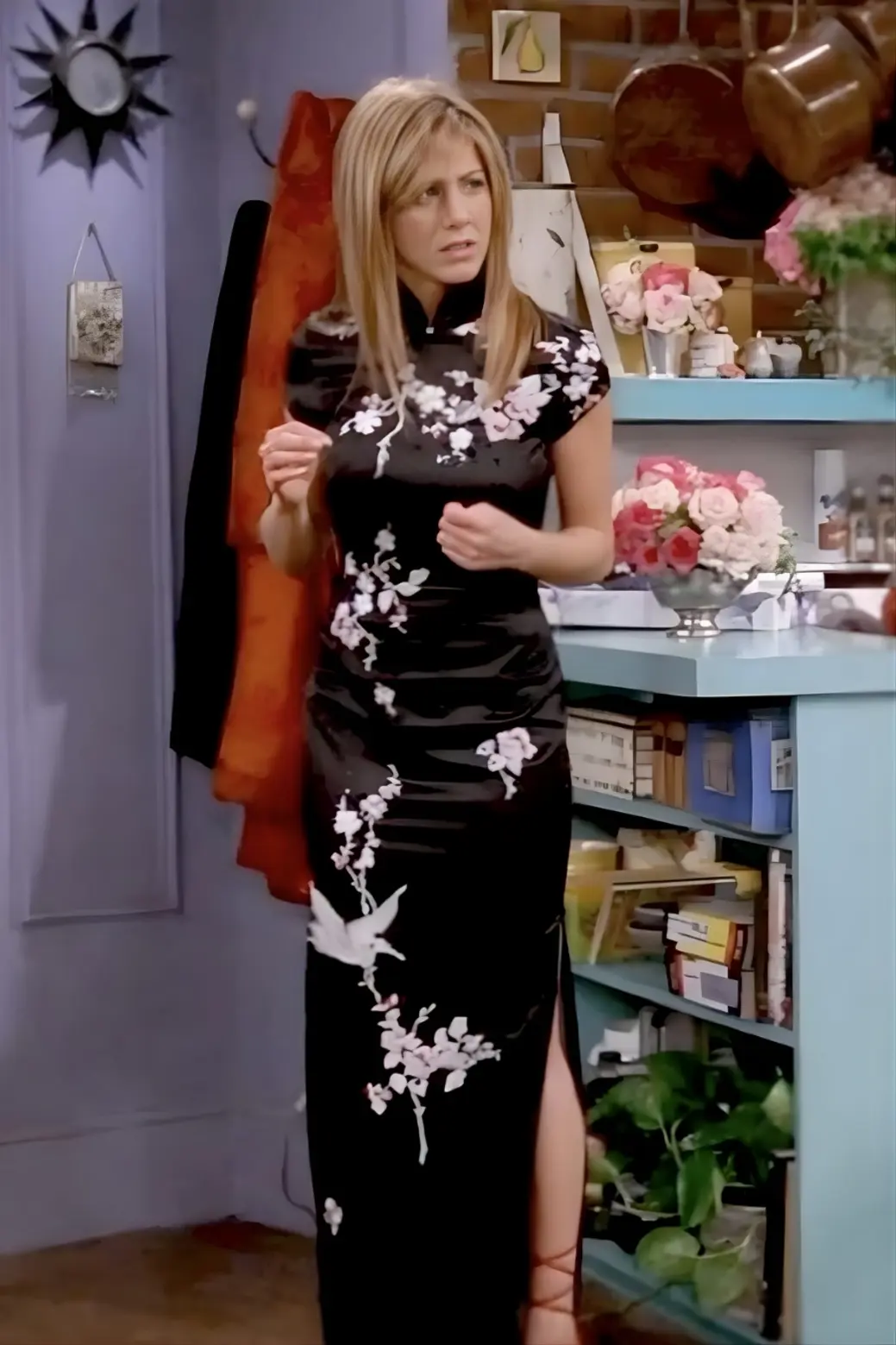
It is the hourglass silhouette that transforms a woman into a starlet of the Hong Kong cinema, a vision that raises a feverish desire and a dangerous curiosity. This is an exotic sexiness you cannot find anywhere else; it is not the loud, obvious exposure of the West, but a slow-burn eroticism that lives in the "almost." It is the way the heavy fabric clings to the small of the back, the way it records the shallow rise and fall of a breath, the way it transforms a simple walk into a predatory dance. It is the dress of the femme fatale who has mastered the art of being a mystery while standing in plain sight.
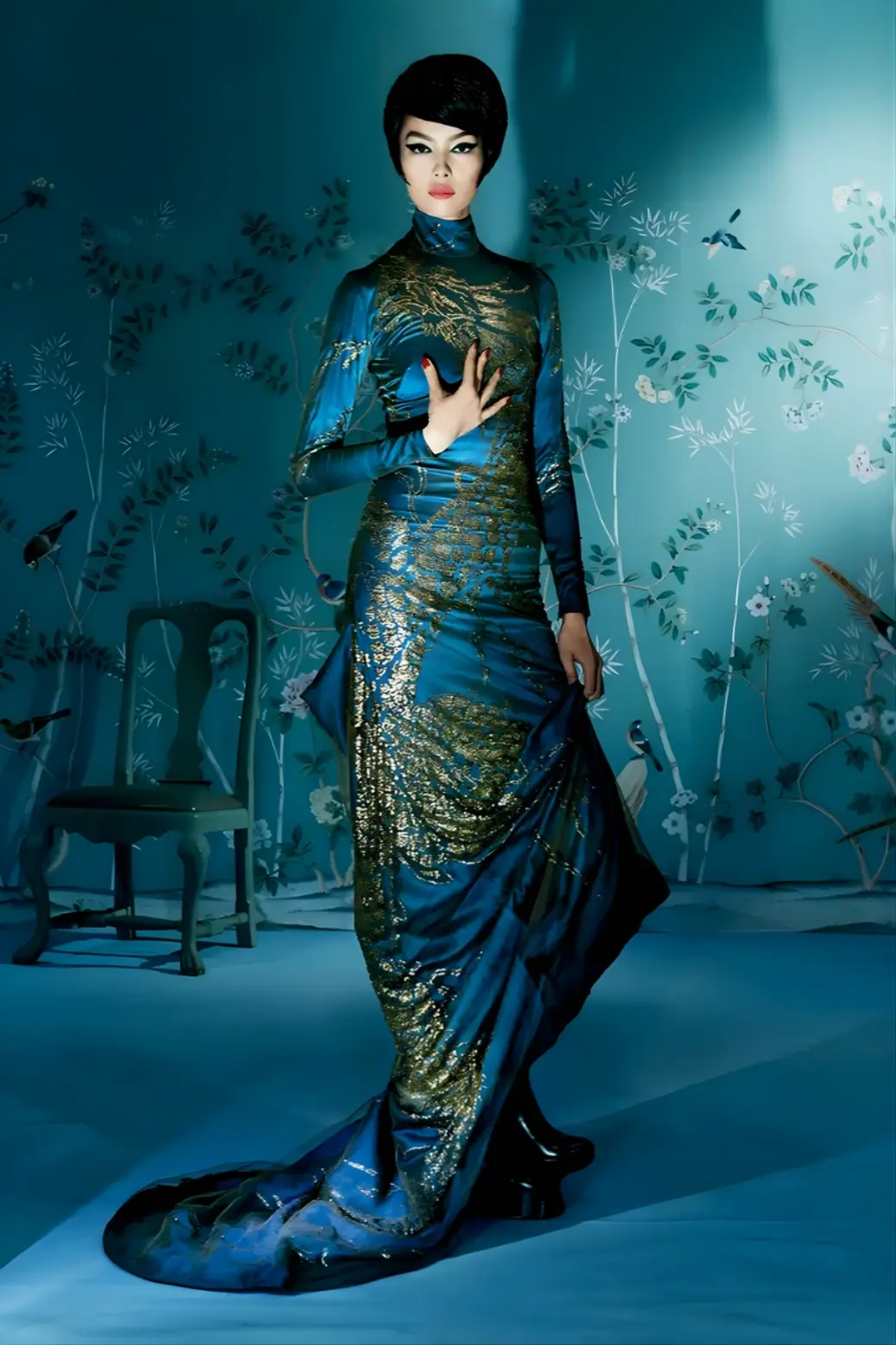
The qipao keeps returning because it is a living, breathing paradox that refuses to be exorcised. It thrives in the half-light of memory, from the smoky, rain-slicked flicker of celluloid masterpieces to the hushed, velvet galleries of global museums. It is the ultimate visual shorthand for an elegance that is both sacred and naughty. As we drain the last drop of that cloudy, herbal alcohol, we realize the qipao is not just a style; it is a fever. It is the silk-bound soul of the Orient, an irresistible haunting that will forever define the peak of human seduction.
Advertisement