MENU
Close





From a Hong Kong workshop that feels closer to a laboratory than an atelier, Wallace Chan has spent decades translating big ideas into small, exacting miracles: a face “floating” inside a gemstone, a brooch that wears like air, porcelain engineered to outlast its own fragility. His work sits in the rare zone where craftsmanship can be both devotional and radical, both intimate and cosmic.
From a Hong Kong workshop that feels closer to a laboratory than an atelier, Wallace Chan has spent decades translating big ideas into small, exacting miracles: a face “floating” inside a gemstone, a brooch that wears like air, porcelain engineered to outlast its own fragility. His work sits in the rare zone where craftsmanship can be both devotional and radical, both intimate and cosmic.
January 27, 2026


Wallace Chan’s origin story reads like a blueprint for obsession: leaving school at 13 to help support his family, then finding a future in gemstone carving and building his own workshop in 1974.
What makes the biography feel uniquely “Chan,” though, is the way he assembled an art education from whatever the city offered. Accounts of his early years describe him studying Western sculpture by visiting Christian cemeteries in Hong Kong, learning anatomy and light from marble saints and angels—museum training, except the entrance fee was attention.
That mix of poverty, improvisation, and a hunger to understand how light behaves on form, becomes the seed of everything that follows. Chan’s jewelry does not merely “feature” stones. It interrogates them. What can a gem do beyond sparkle? What else can it hold: an image, a memory, a moving mechanism, a sense of time?
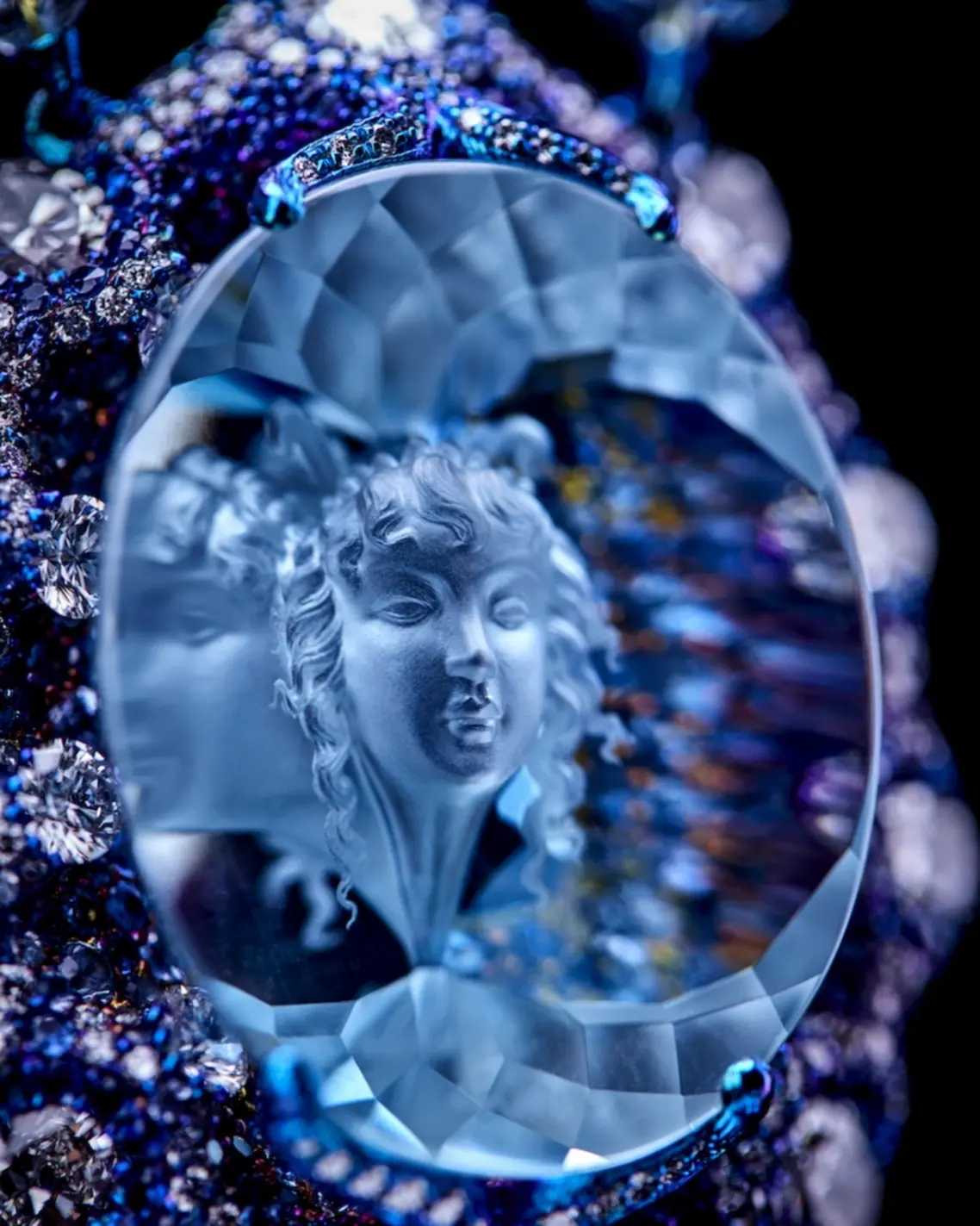
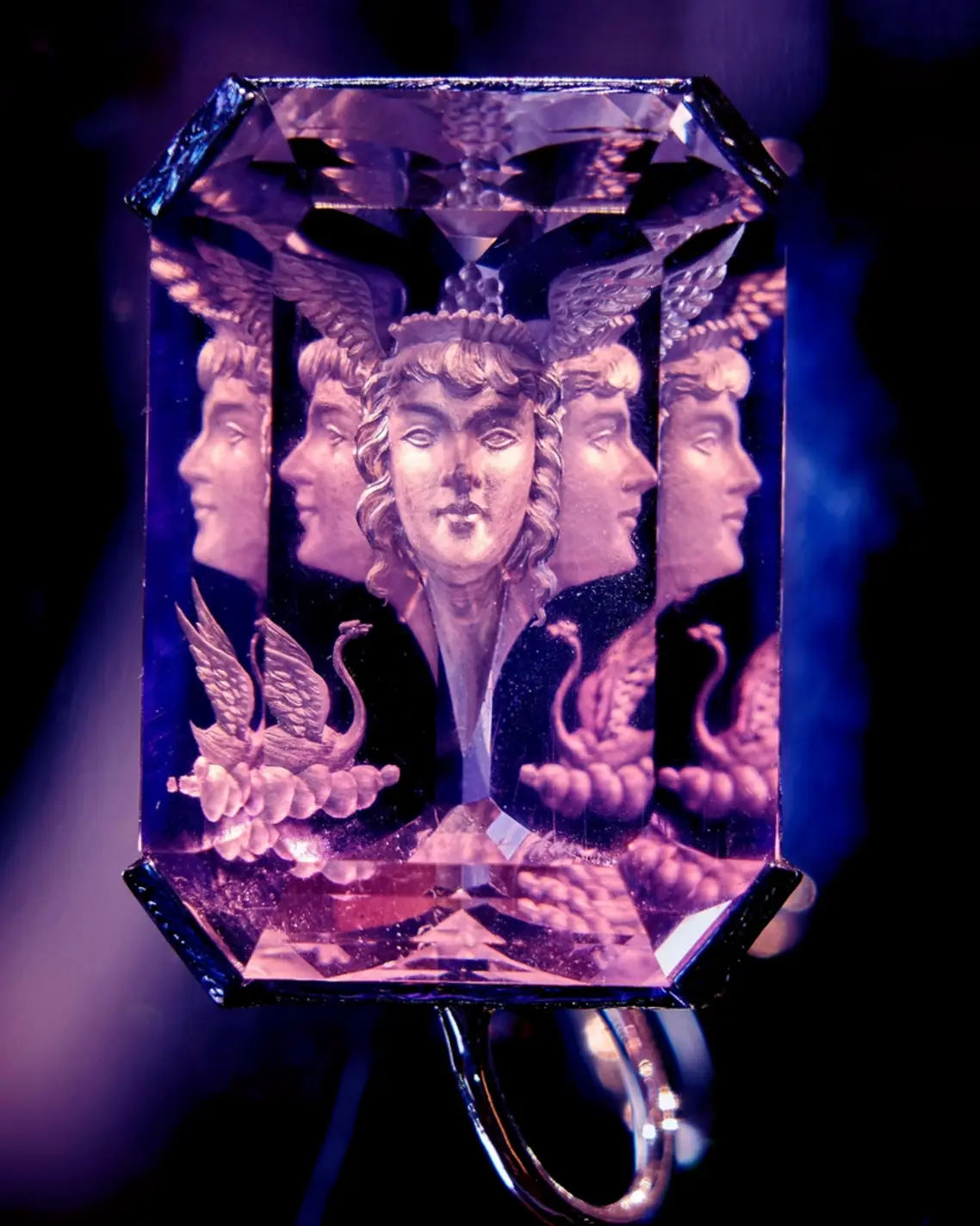
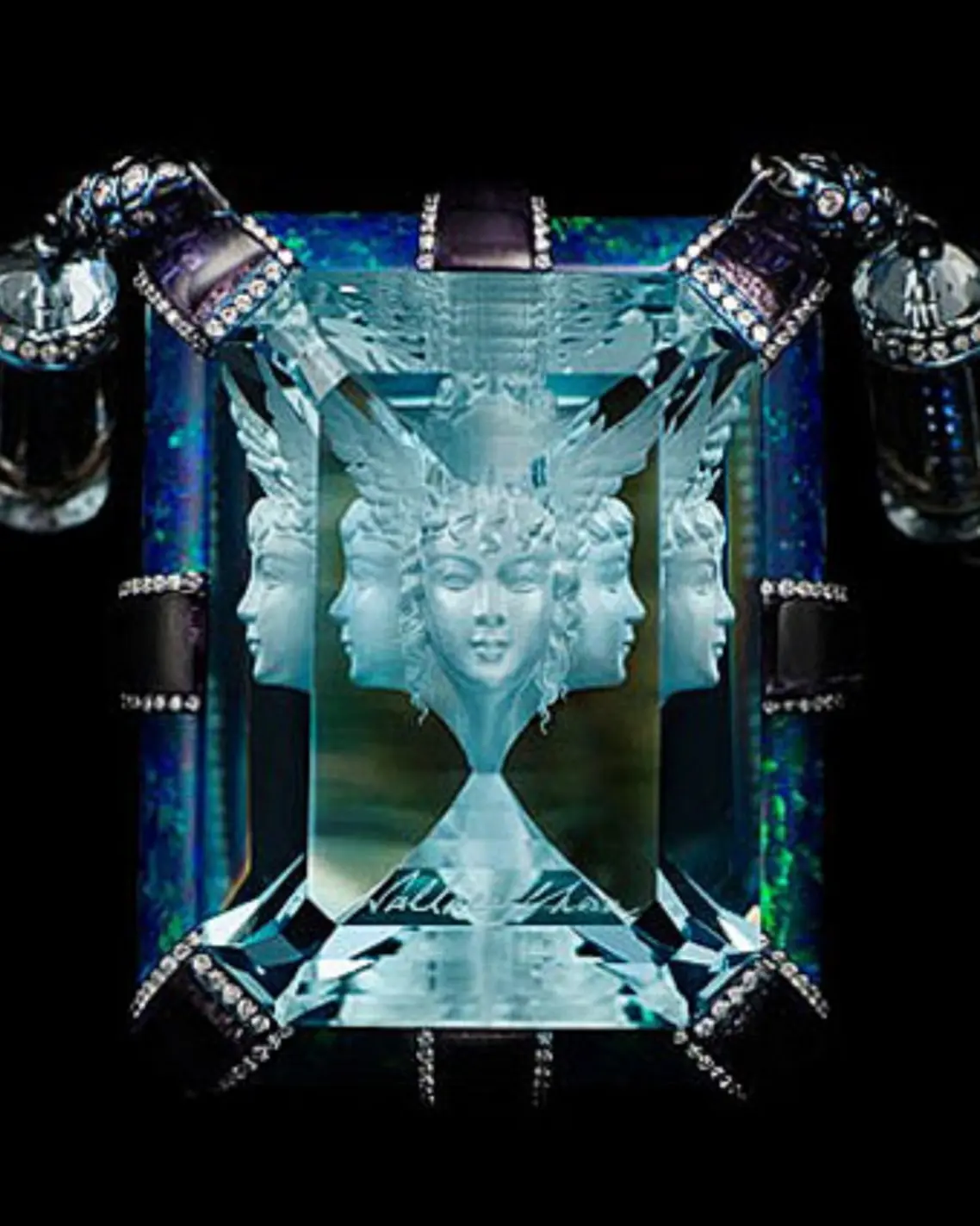
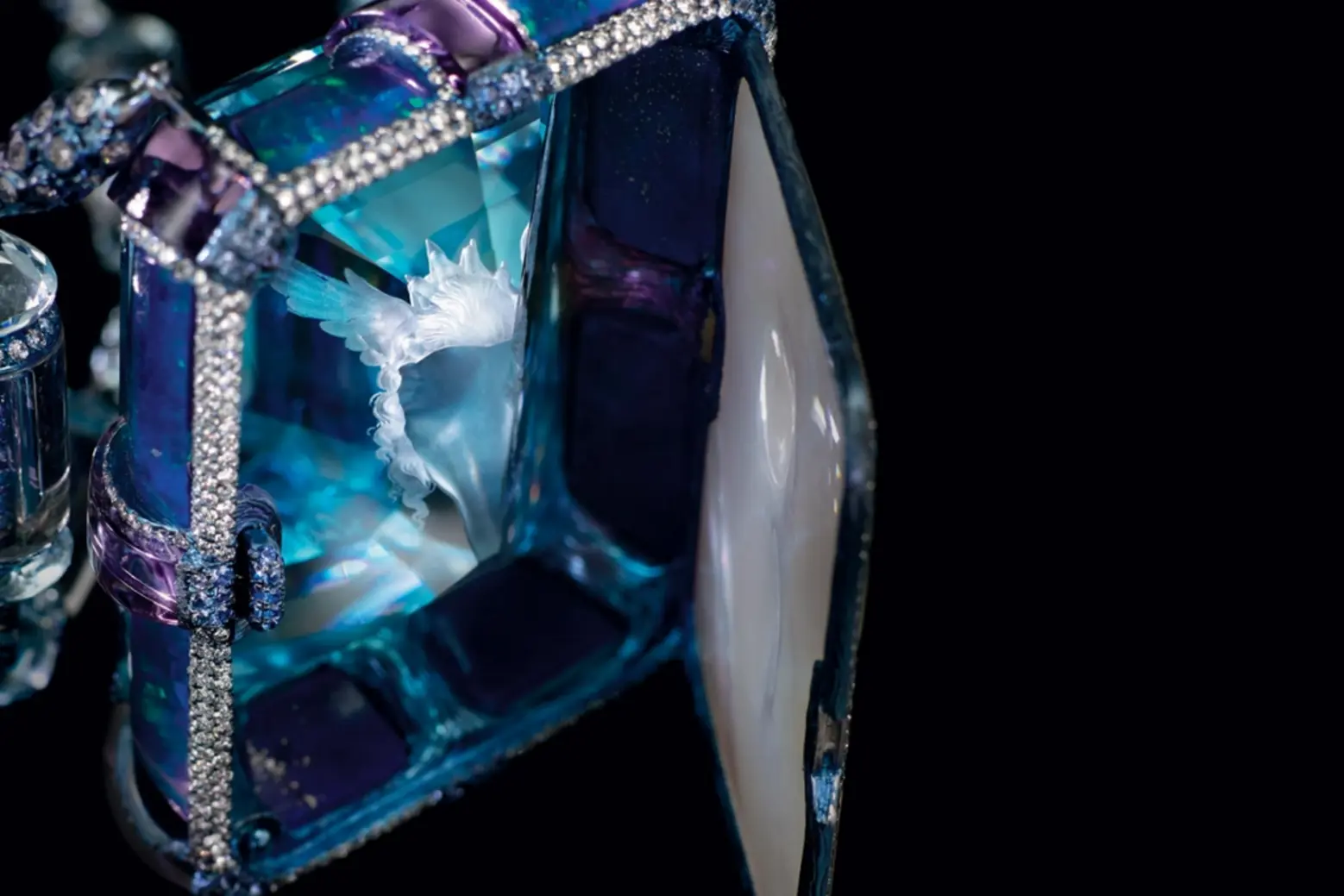
In 1987, Chan unveiled the breakthrough that still defines his mythology: the Wallace Cut, a technique that carves a three-dimensional figure into the back of a transparent gemstone, so the image multiplies through reflection, producing an uncanny, almost holographic effect.
The method is as conceptually poetic as it is technically punishing. Chan’s own account explains that he had to invent tools to execute it — modifying dental drills, and carve underwater to manage heat and tension that could damage the stone, while also helping him read the reflections during carving.
Editorially, the Wallace Cut feels like a thesis statement: jewelry as an optical event. Instead of treating a gemstone as a final, untouchable “center stone,” Chan treats it like a universe with interior architecture.
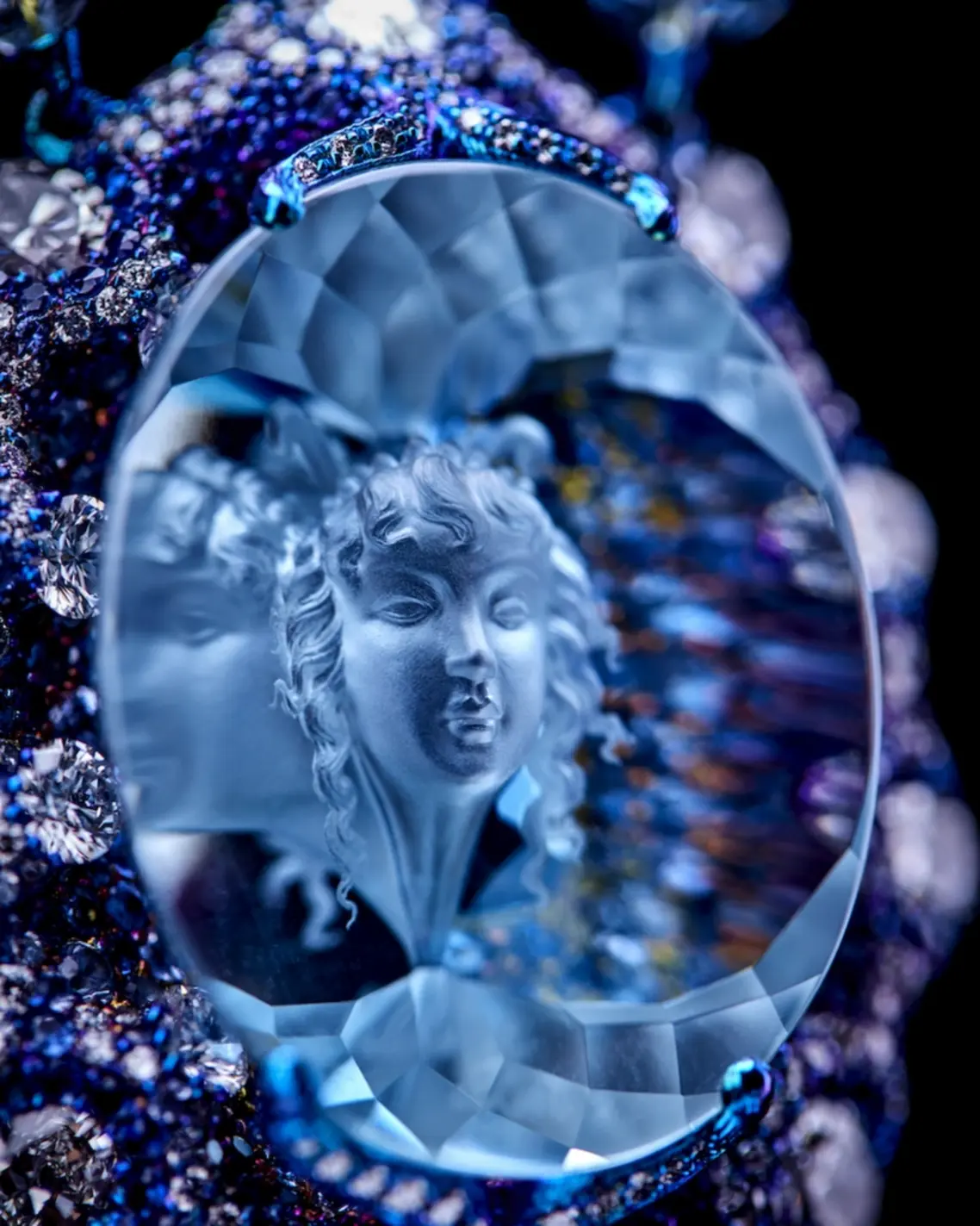
High jewelry loves mass: gold, platinum, the reassuring heft of tradition. Chan chose a different drama —weightlessness, by pioneering the use of titanium in his practice after years of experimentation. Christie’s notes that he spent eight years researching and testing ways to work with the metal at both small and large scales.
Titanium brings two transformative gifts: strength and lightness. It lets Chan build ambitious, sculptural forms, like shoulder pieces, winged brooches, structures that look as if they should weigh a body down, while keeping them wearable. This is where “alchemist” stops sounding like a compliment and starts sounding like a job title. He is shifting the rules of what jewelry can physically be.
Chan’s output also reinforces the idea of jewelry as singular art objects rather than repeatable product. Profiles describe him producing around 15–20 unique pieces a year, a pace closer to an artist’s studio practice than a conventional high-jewelry house.
Chan’s inventions often share one philosophy: Remove the “evidence” of how jewelry is built, so the eye can stay inside the illusion. Traditional claws interrupt a stone’s surface; Chan wanted settings that disappear into pure form.
On his official innovations record, Chan describes techniques that allow gemstones to help set gemstone, including a “diamond claw” method where stones function as claws, and an “inner mortise and tenon” method inspired by the logic of joinery. That mortise-and-tenon idea, associated with classical Chinese craftsmanship and furniture, returns as a structural poem in miniature: stones cut to fit and lock with minimal visible metal, so the piece reads as a single, continuous entity.
The effect is signature Chan: gem surfaces appear to hover, connect, and flow with a kind of impossible calm, engineering disguised as serenity.
If titanium is Chan’s lesson in modern industry, porcelain is his lesson in emotion. Multiple interviews trace the origin to a childhood moment: at five years old, he dropped and broke a porcelain spoon and was punished, an early imprint of fragility and consequence.
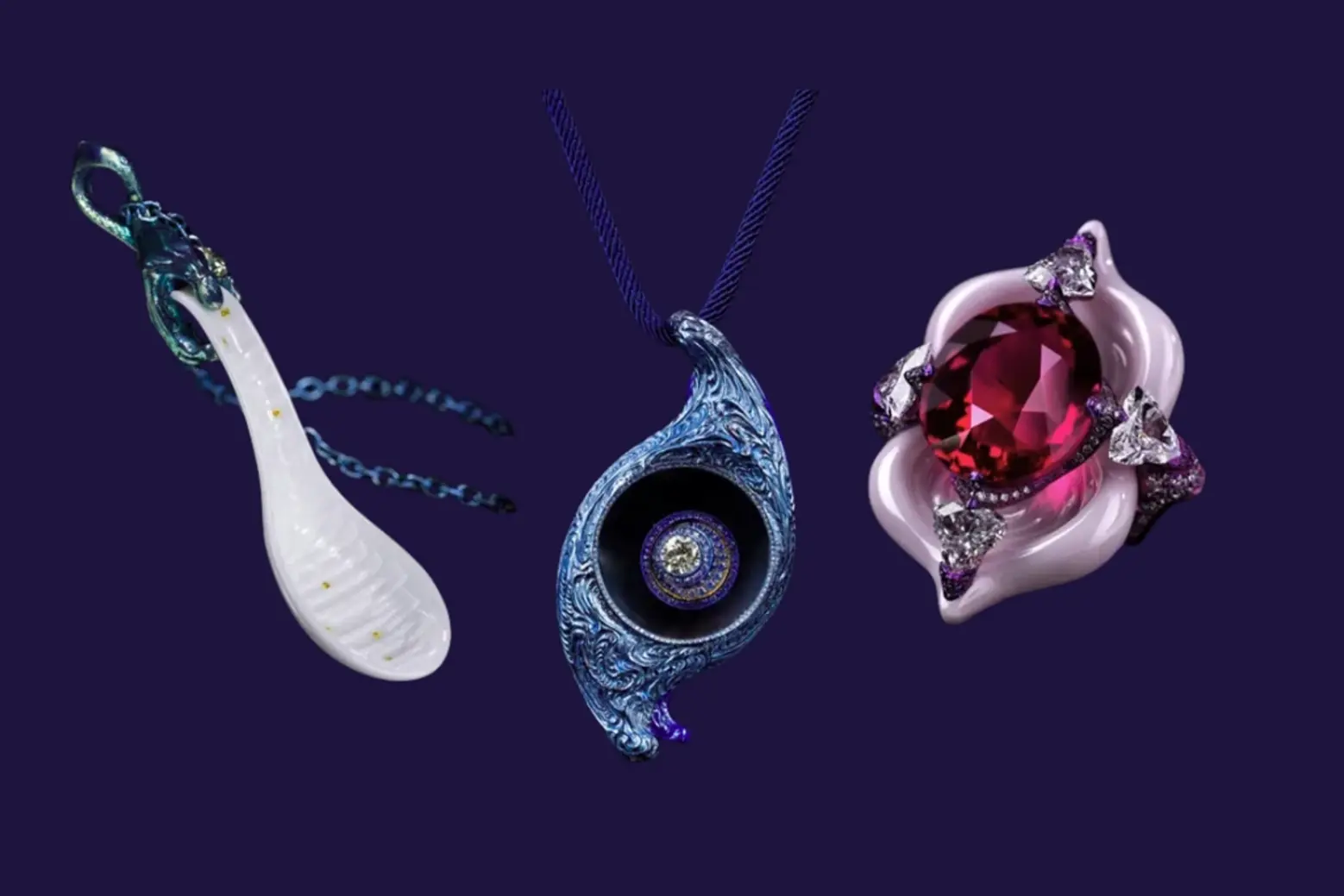
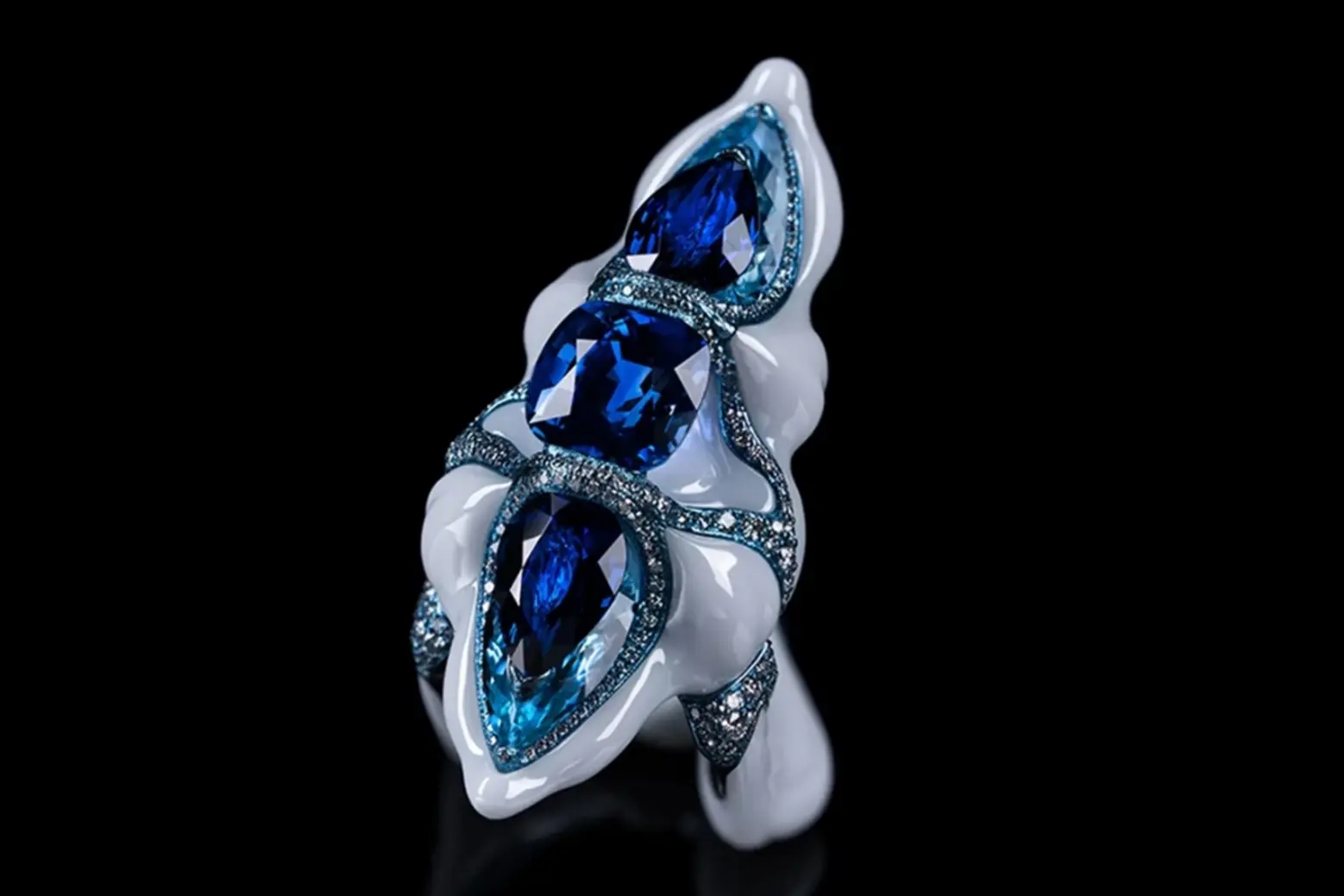
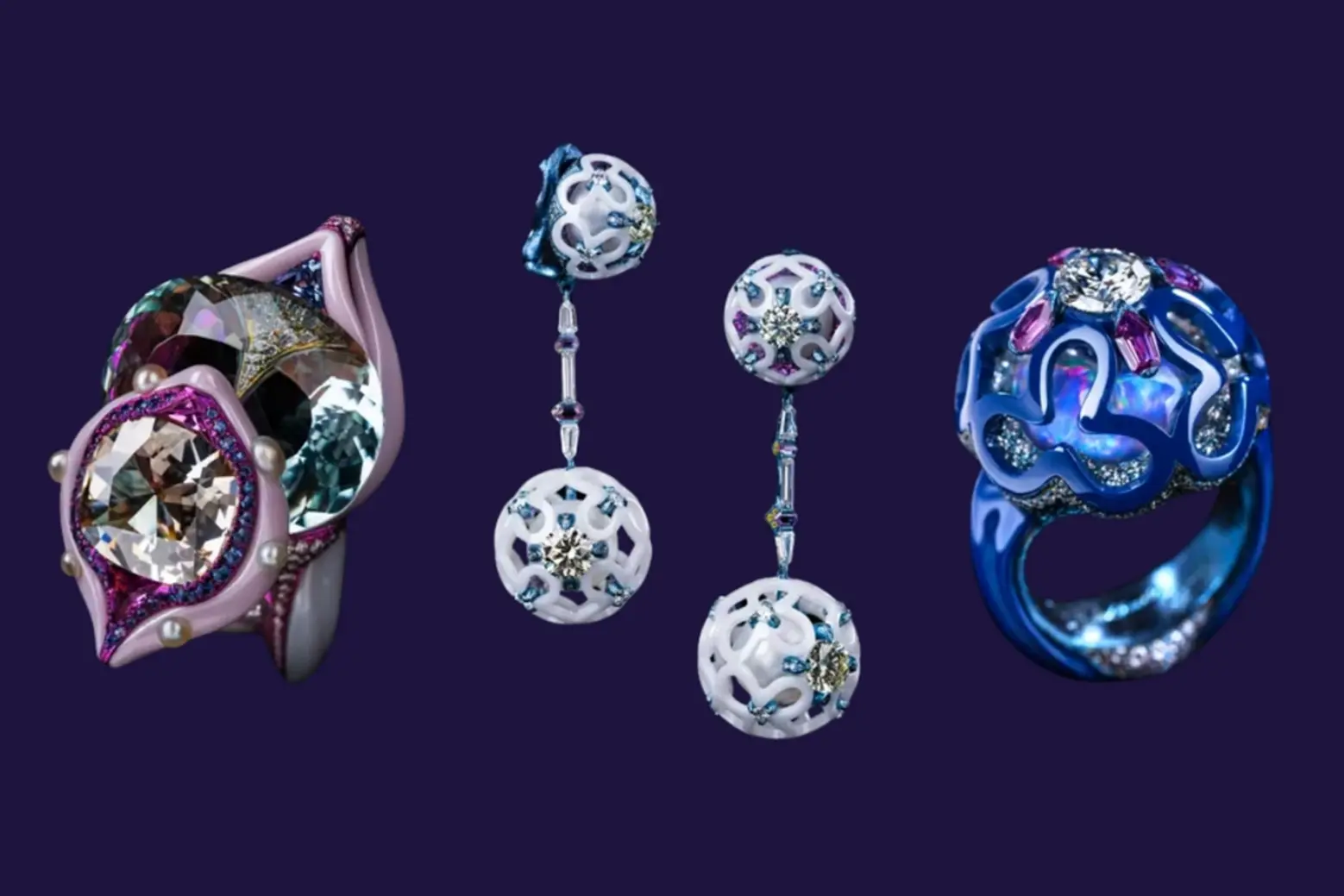
Years later, that memory became research. Chan developed The Wallace Chan Porcelain, described as a material five times harder than steel, achieved after years of R&D. Its most symbolic early expression is the ring "A New Generation" (2018), which his official artwork record states entered the British Museum’s permanent collection in September 2019, noted as the museum’s first Chinese contemporary jewelry creation in its collection.
Here, “innovation” reads less like technology-for-technology’s sake and more like a moral urge: to remake breakability into endurance, to turn a private scar into public craft.
Some Wallace Chan works circulate like whispered legends because they rarely appear in open market settings. When they do, the numbers land with the force of headline poetry. "The Great Wall" necklace has been described as selling for around €56 million, reported in contexts surrounding its display.
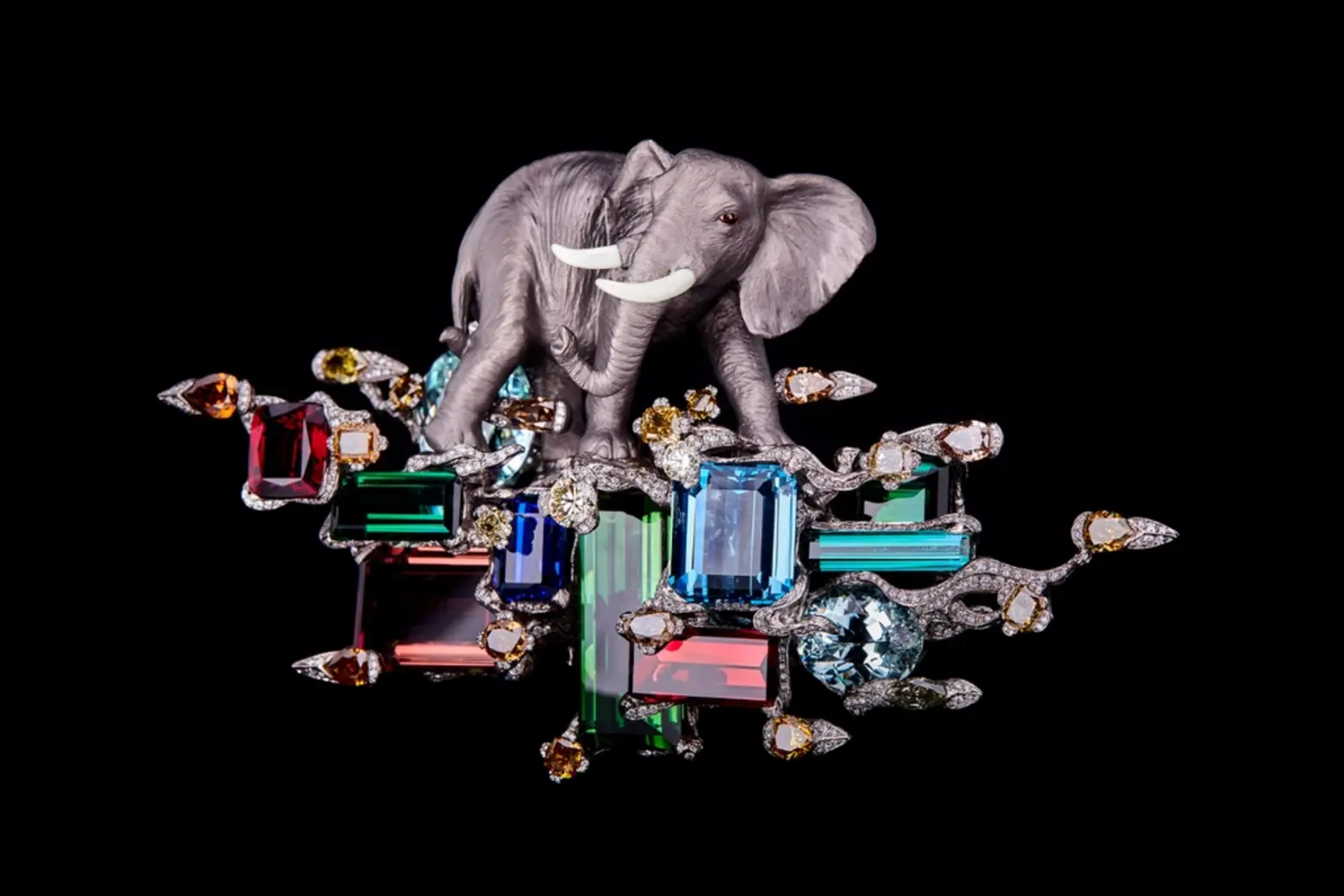
Then there is the theatrical scale of his exhibition moments. Christie’s "The Wheel of Time" (London, September 2023) presented over 150 one-of-a-kind jewelry creations alongside titanium sculptures, framing his career as an artist’s retrospective rather than a luxury showcase. And pieces like "Legend of the Color Black" — a shoulder brooch-sculpture featuring a 312.24-carat cut black diamond, underline how Chan uses rarity as narrative material, turning gemological extremity into conceptual drama.
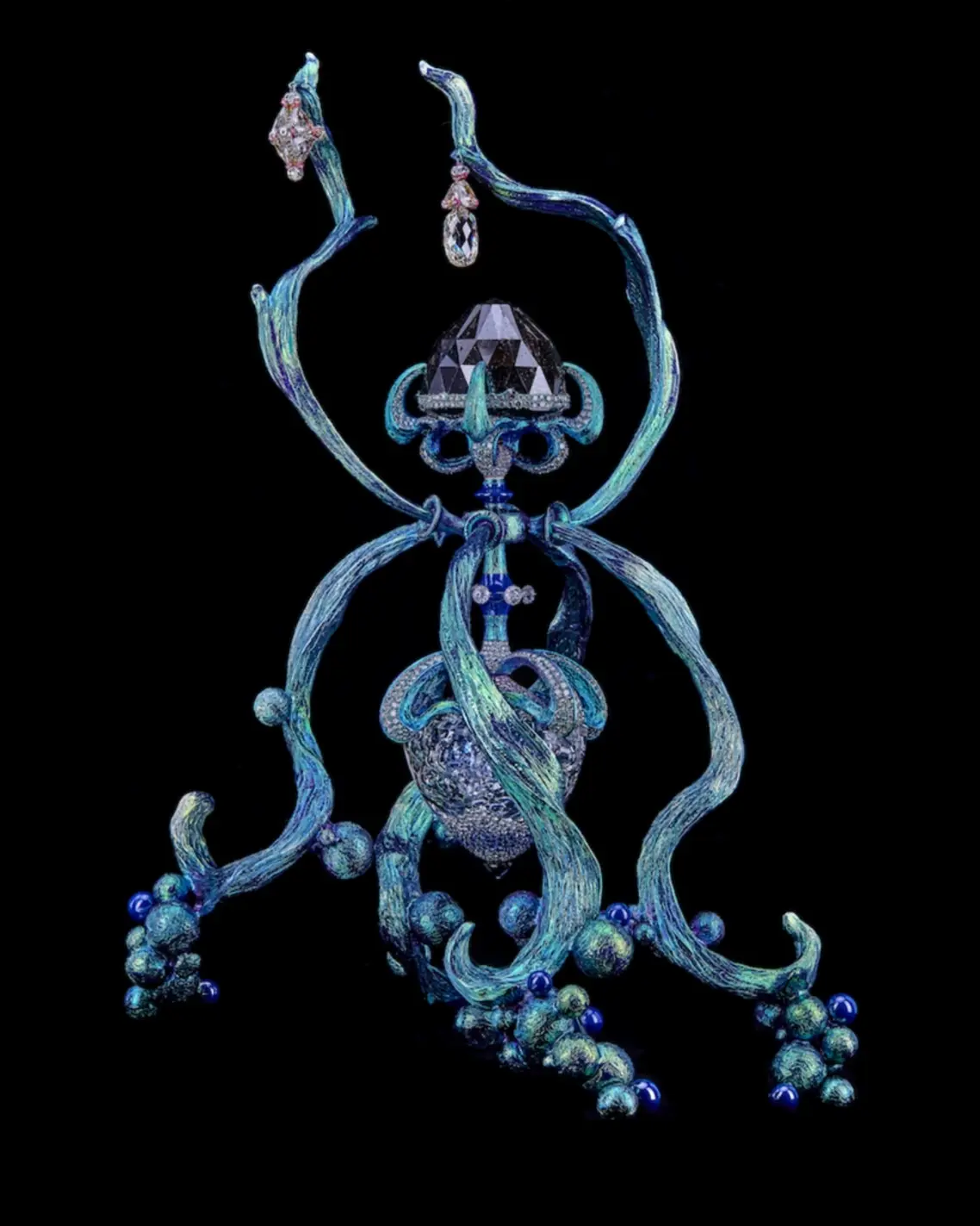
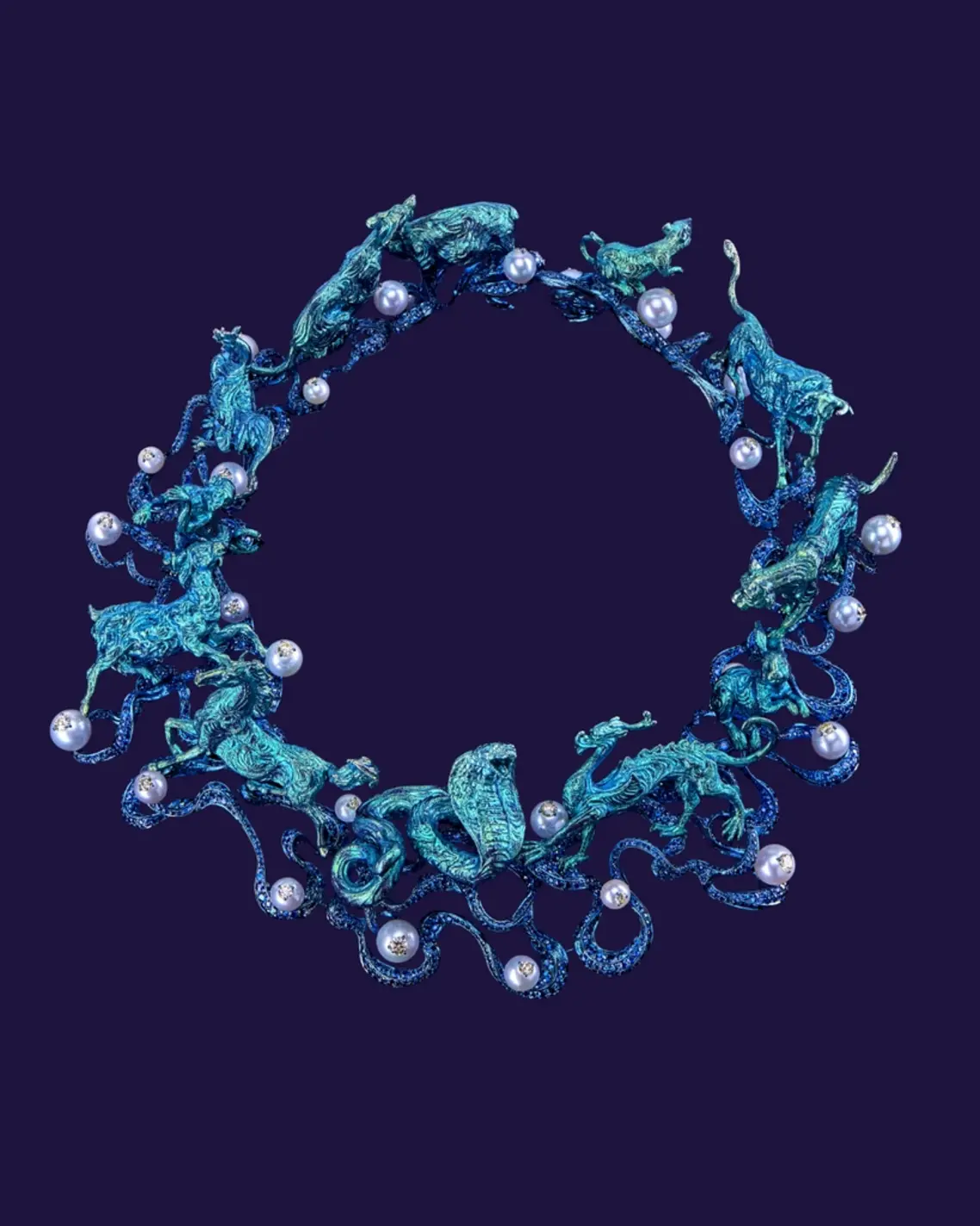
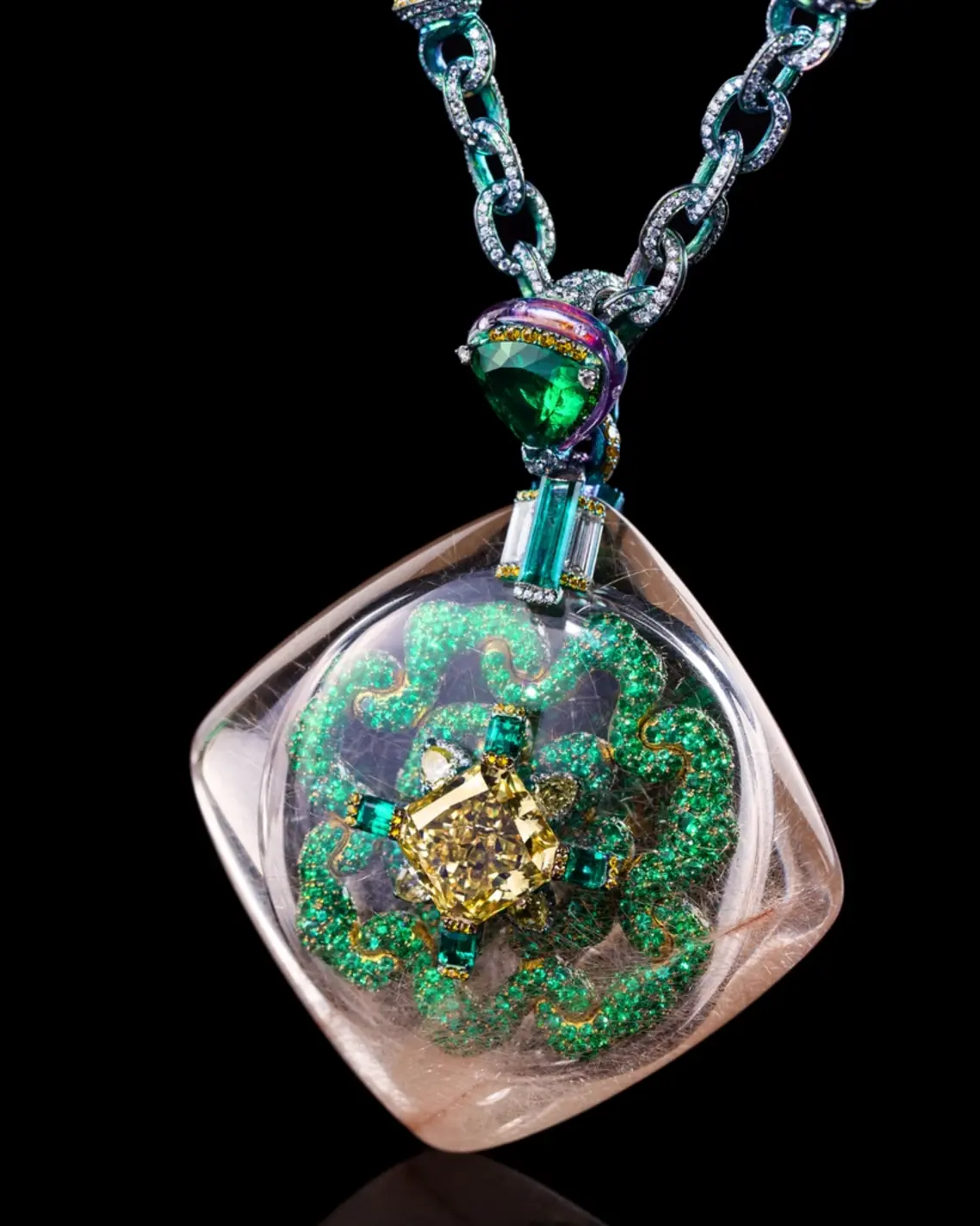
Even his “firsts” function like proof of category shift: his own exhibition timeline describes him as the first Chinese jewelry artist to exhibit at major art-and-collecting platforms such as TEFAF and the Biennale des Antiquaires, positioning him in dialogue with art fairs as much as jewel salons.
Calling Wallace Chan a “Jewelry Alchemist” works because his practice treats materials as states of being, each with its own spirit, resistance, and potential. A gemstone becomes an interior theater. Titanium has become a way to let sculpture breathe on the body. Porcelain becomes a vow: fragility rewritten as permanence.
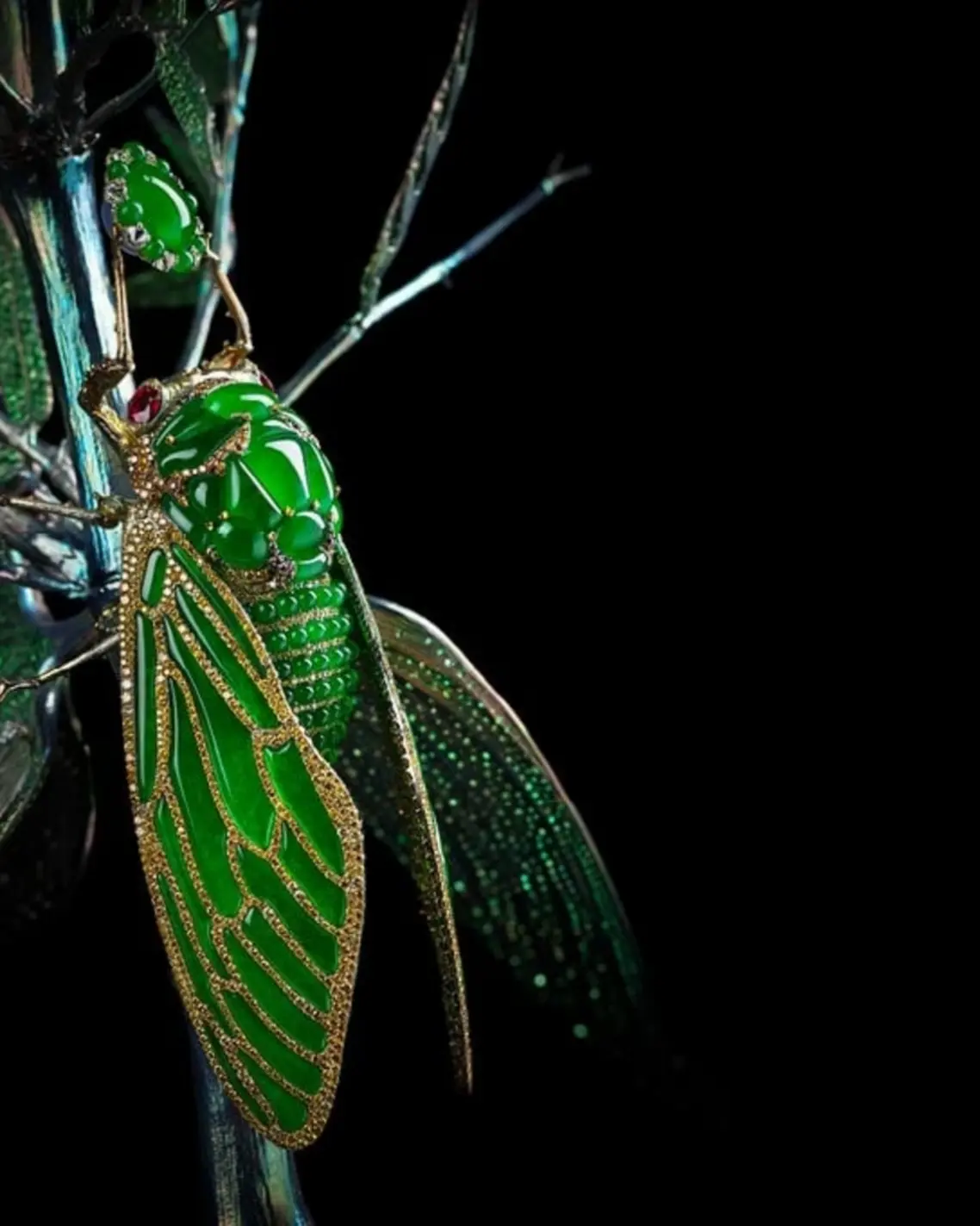
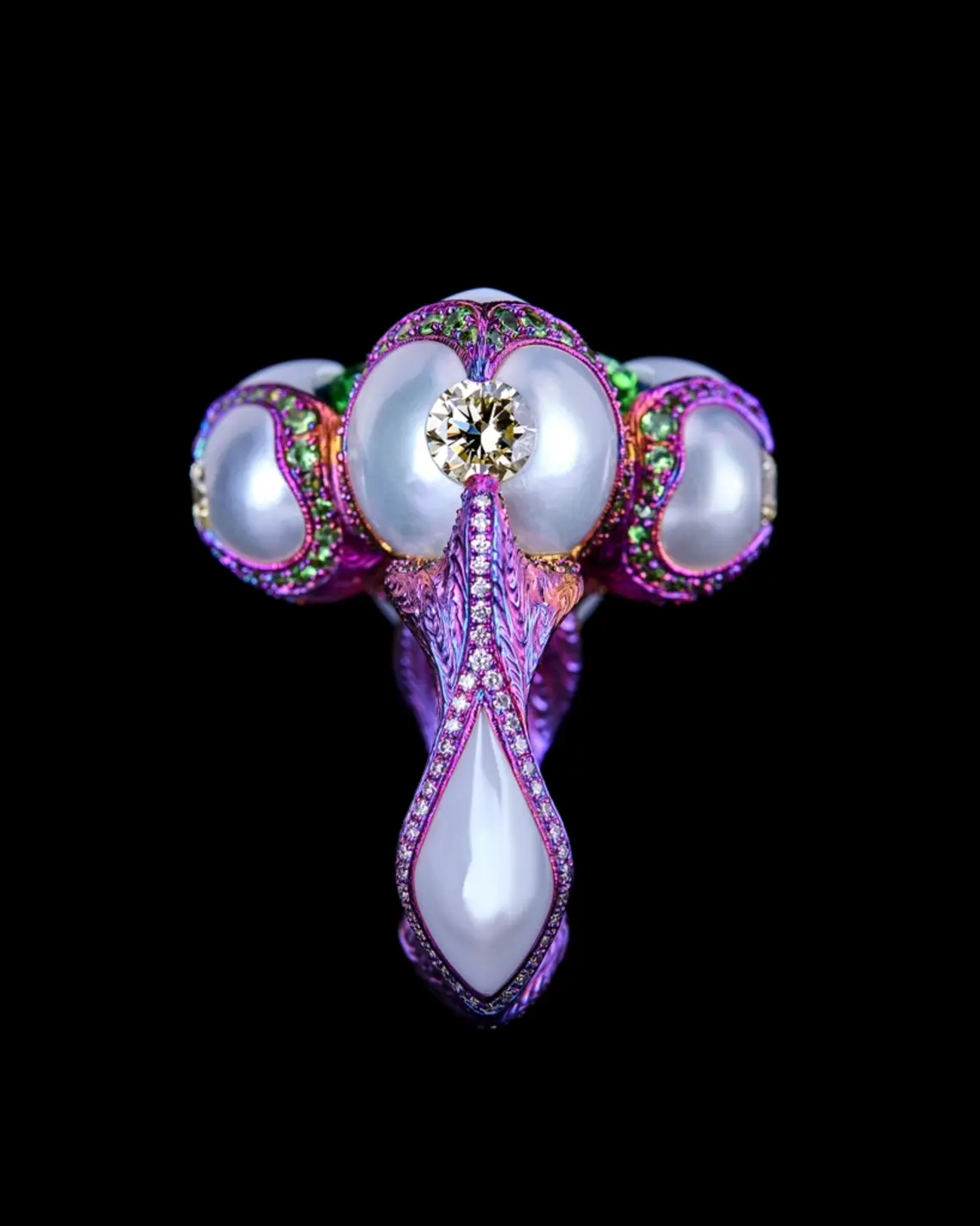
Yet the real transformation is conceptual. Chan’s work persuades us to read jewelry differently, not as a status signal, nor even as pure beauty, but as an argument about time. If each piece takes years, sometimes thousands of hours of accumulated labor and problem-solving, then the finished object carries that time like a hidden ingredient, compressed patience made visible.
In Wallace Chan’s universe, ornament becomes evidence: evidence that imagination can be engineered, that memory can be materialized, and that wonder, when treated with enough rigor, can turn solid.