MENU
Close





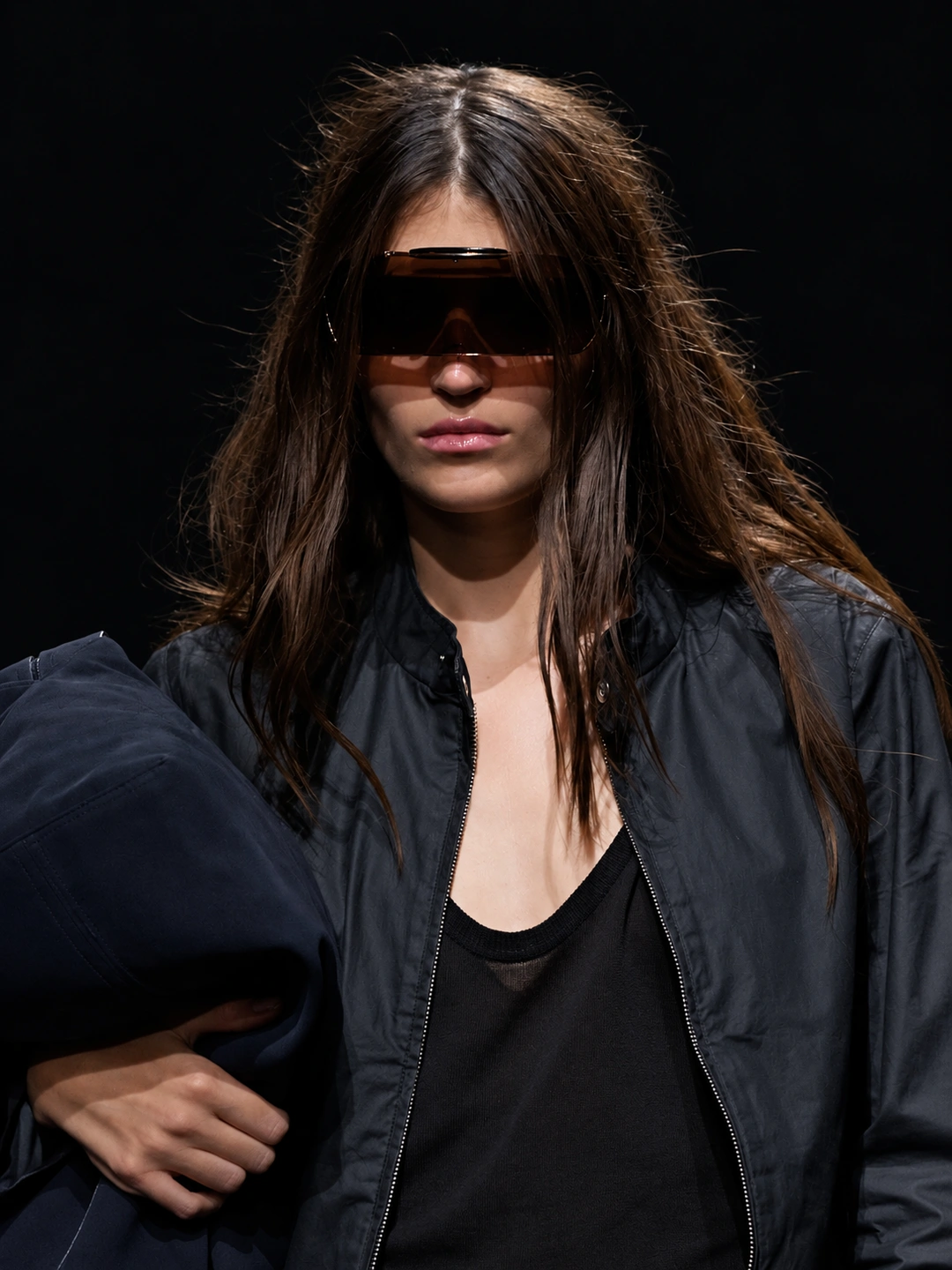
At Vaquera SS27, the joke is no longer whether the brand belongs in Paris. It clearly does. The fun now comes from watching it turn kitsch glamour into proof that bad taste can become very serious fashion.
At Vaquera SS27, the joke is no longer whether the brand belongs in Paris. It clearly does. The fun now comes from watching it turn kitsch glamour into proof that bad taste can become very serious fashion.
October 1, 2026
Advertisement
Advertisement


“I’m a put-on-a-show kind of girl.” The invitation already gave Vaquera SS27 away. Patric DiCaprio and Bryn Taubensee were never going to send out a polite parade of clothes.
That theatricality is familiar territory for Vaquera, but the collection lands at an interesting point in the brand’s evolution. The label has spent years turning awkwardness, parody and kitsch into a recognizable language. SS27 asks what happens once everyone already knows the joke.
The collection reaches back to archetypal uniforms from the 1920s and 1930s, but historical accuracy is hardly the point.
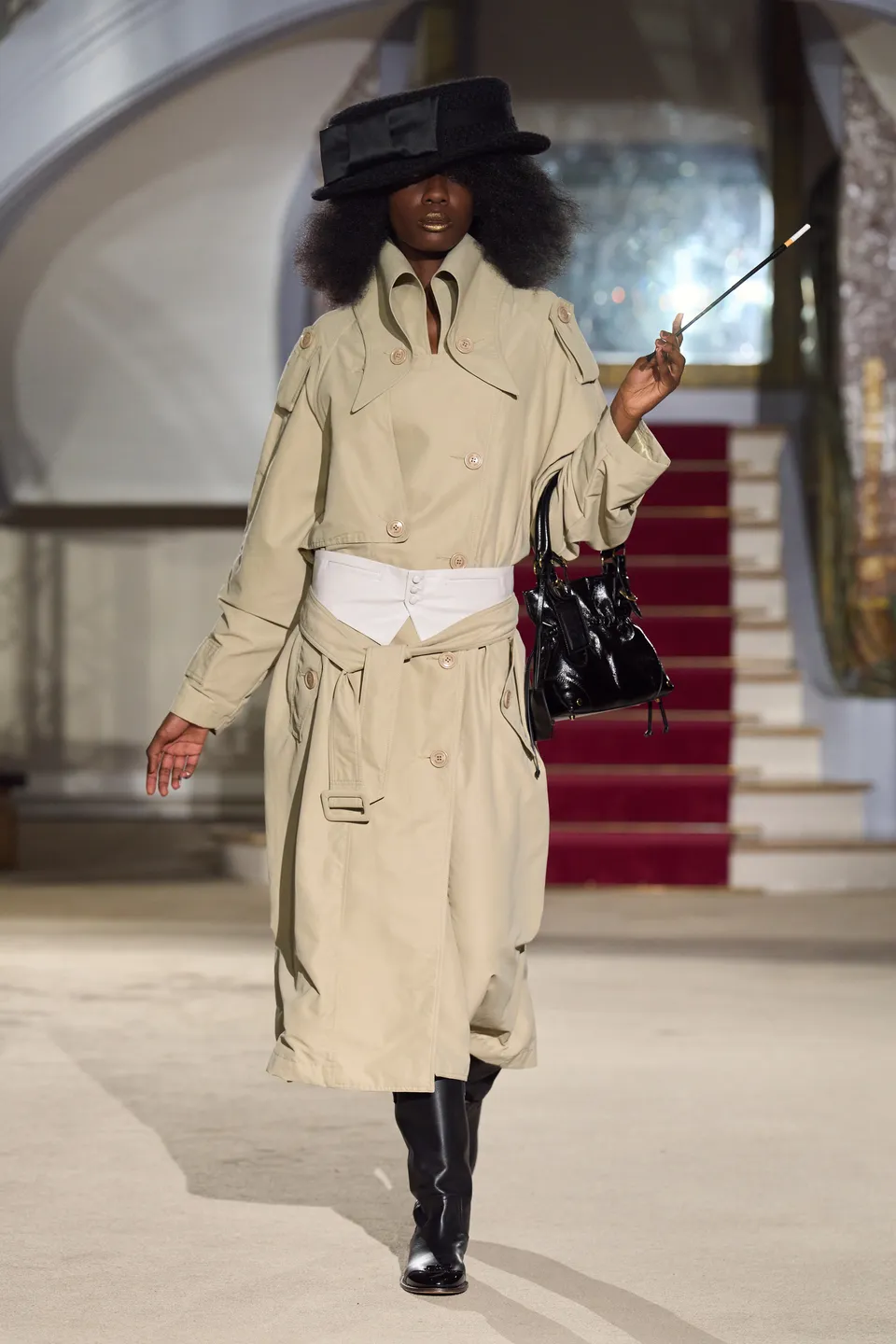
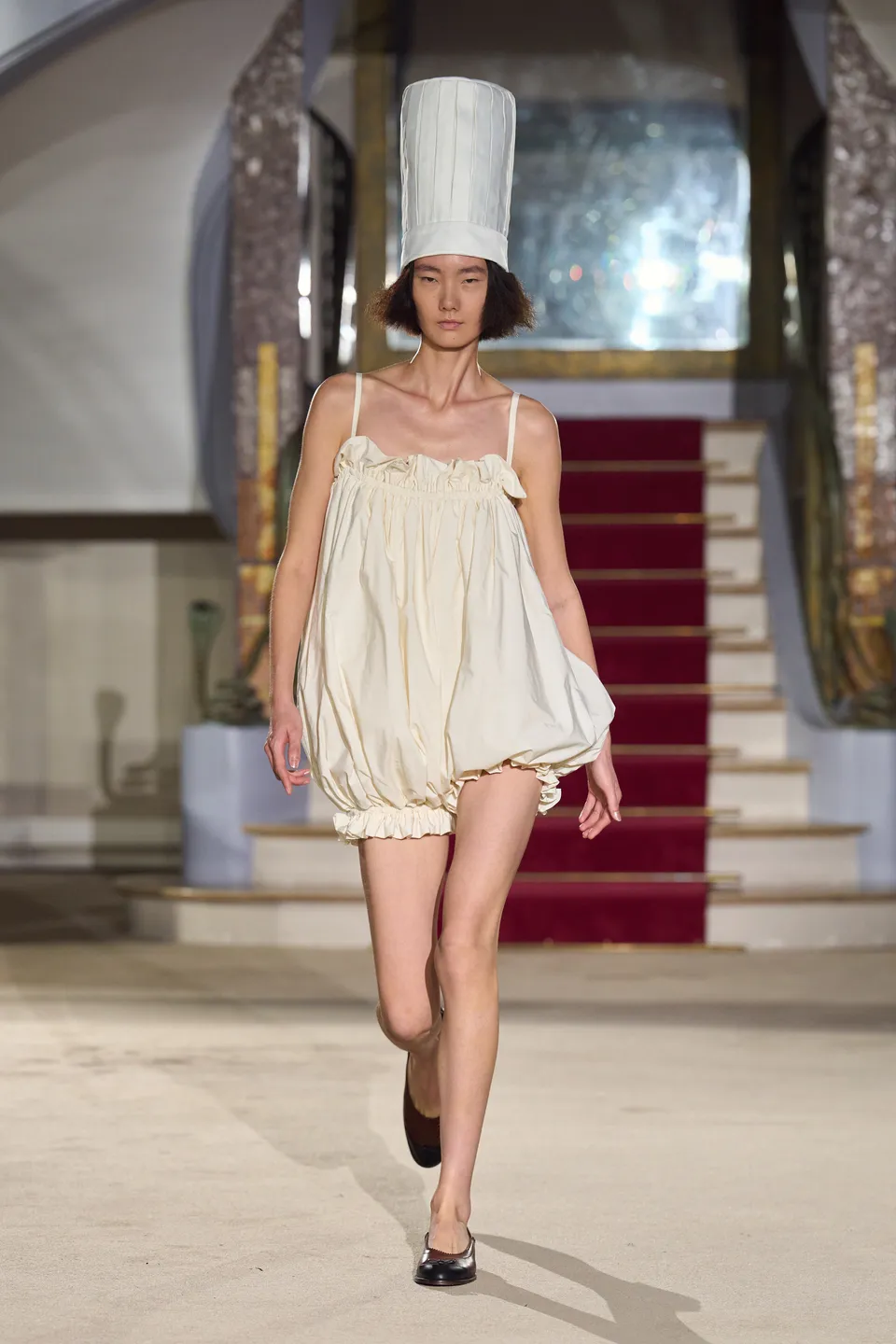
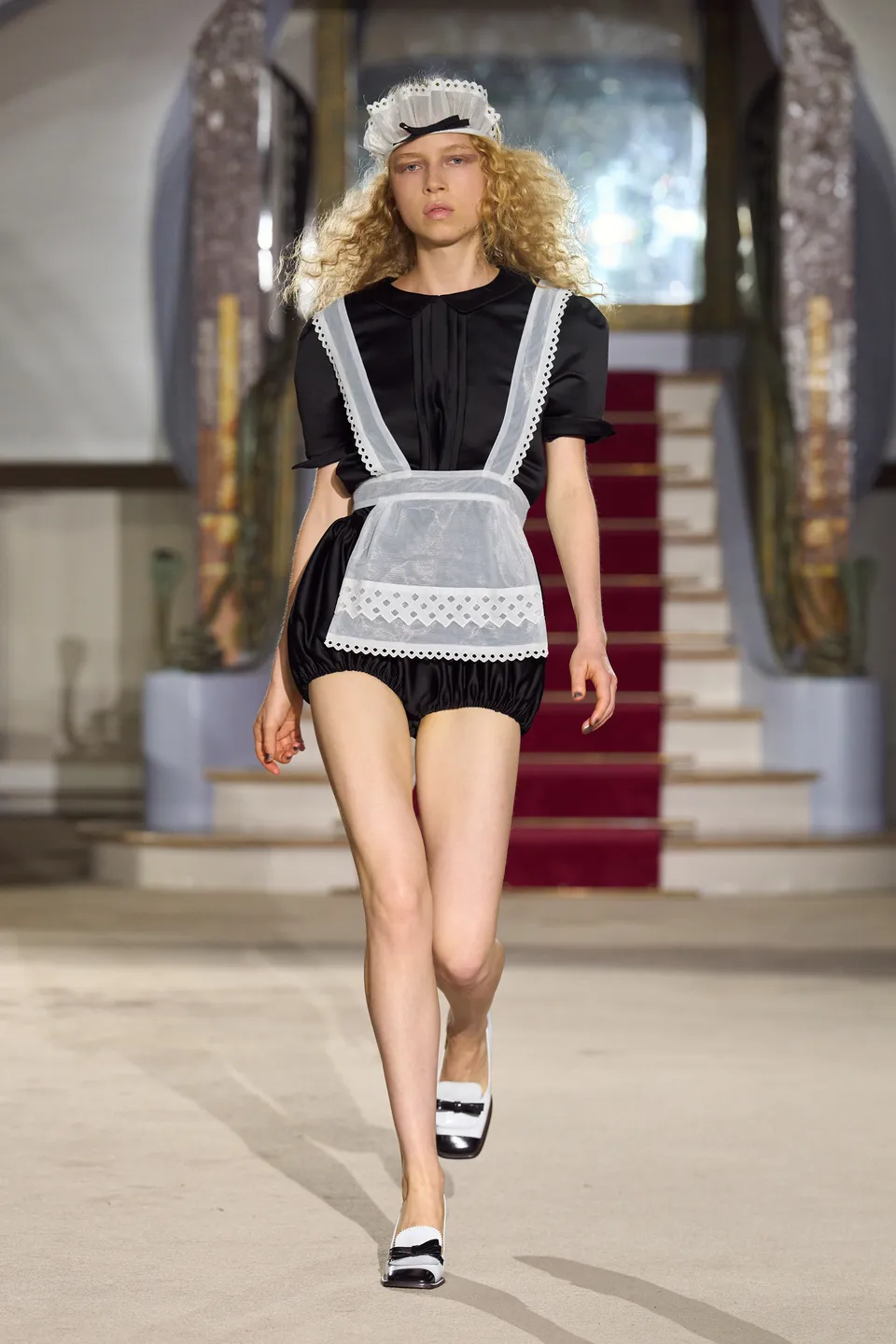
Vaquera works with characters the audience can identify almost instantly. A military jacket with jodhpurs creates authority. A chef’s toque turns a romper into culinary theater. A satin playsuit with an organza apron becomes the French maid. A waiter jacket, tapered trousers and dickey establish another social role with almost comic efficiency.
The reference system is messy in period terms, moving between old Hollywood, service uniforms, military dress, cabaret and broader early-20th-century glamour. Yet the collection remains coherent because the characters matter more than the dates.
That is the trick. Vaquera does not reconstruct history. It reconstructs the way fashion teaches people to read a role.
The maid is understood before the outfit can be analyzed. The chef arrives before the fabric does. The glamorous woman exists through gesture, cigarette holder and posture as much as through dress.
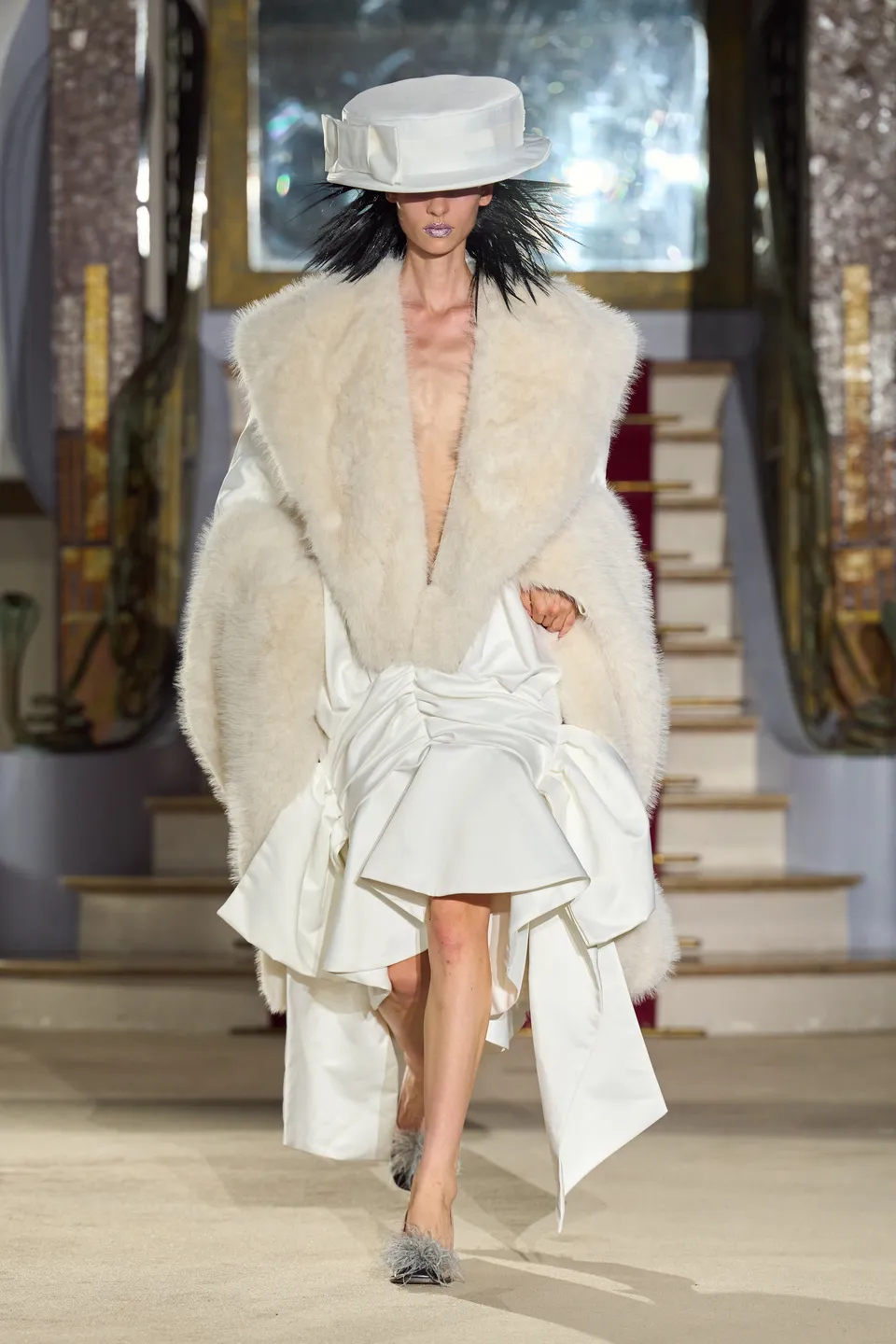
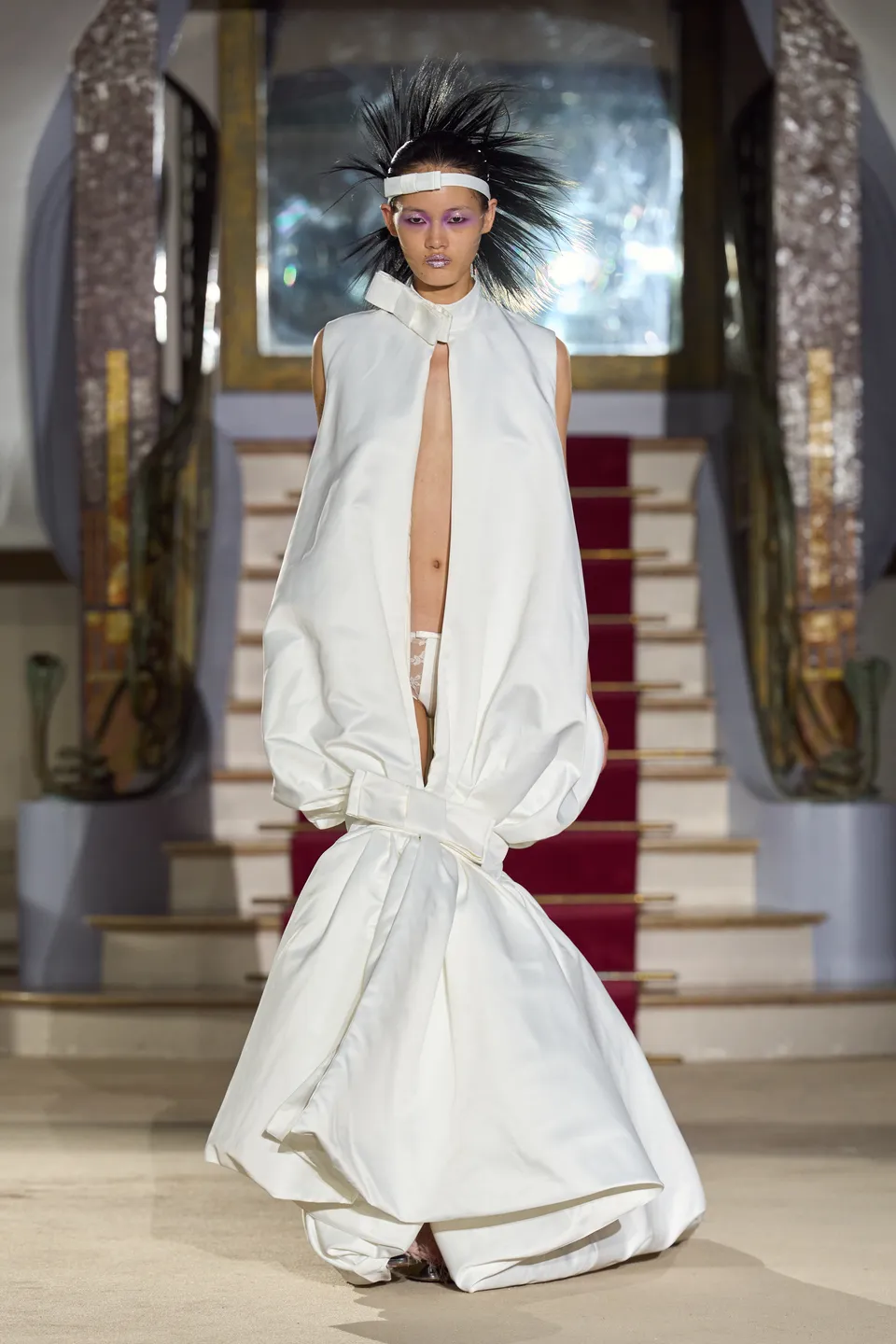
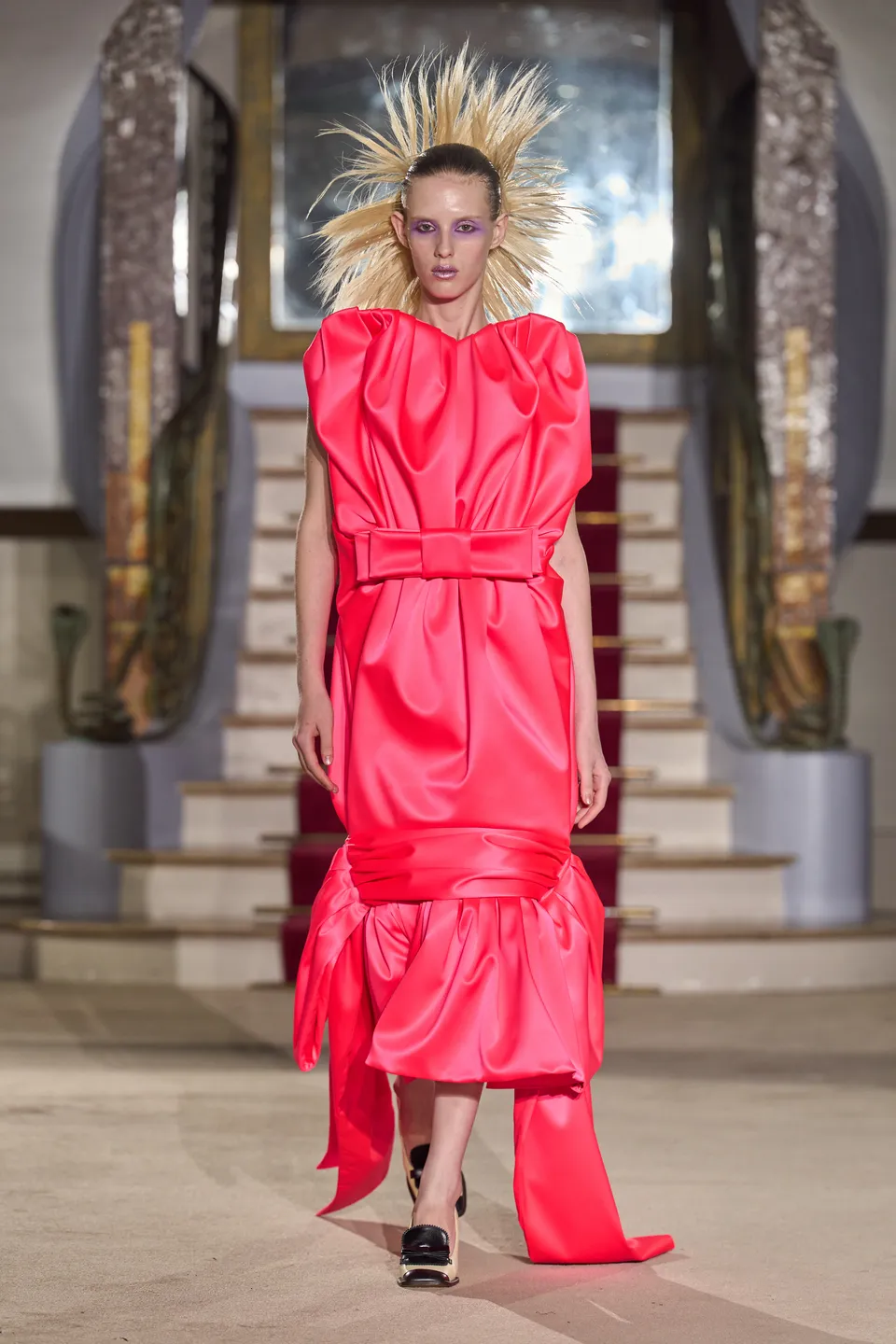
Five white gowns open the show. They return at the end in neon.
In white, the gowns carry purity, ceremony and something close to old-world glamour. Reappearing in neon, those same shapes become artificial, loud and almost chemically cheerful. The clothes barely change. The character does.
That transformation explains Vaquera better than a complicated conceptual statement could. The brand has always understood that styling, context and attitude can radically alter the meaning of a garment.
Neon gradually infiltrates the collection before that finale, sometimes appearing in smaller rectangles, trims or flashes, almost like a highlighter marking the clothes for later.
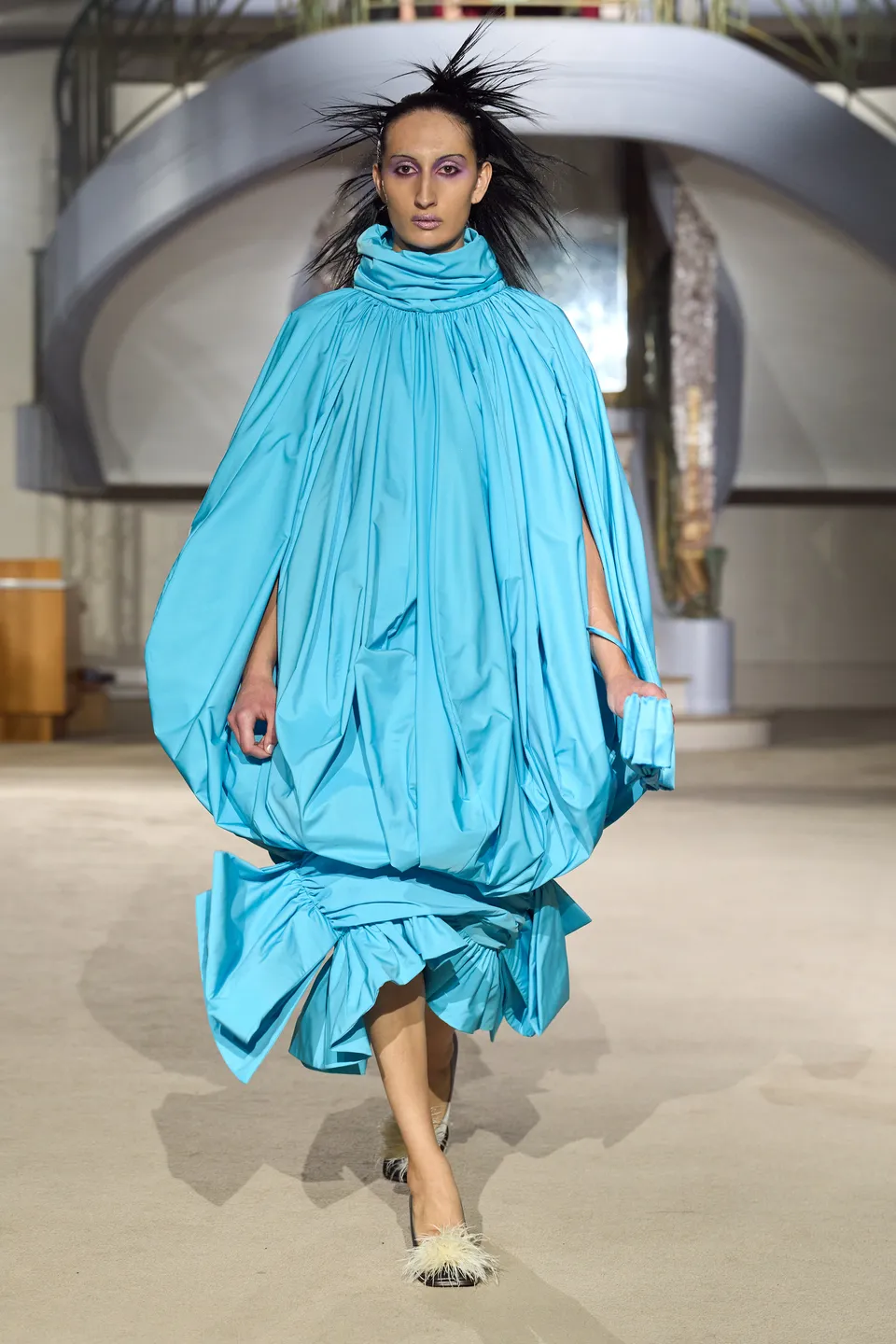
The silhouettes move constantly between control and deliberate awkwardness.
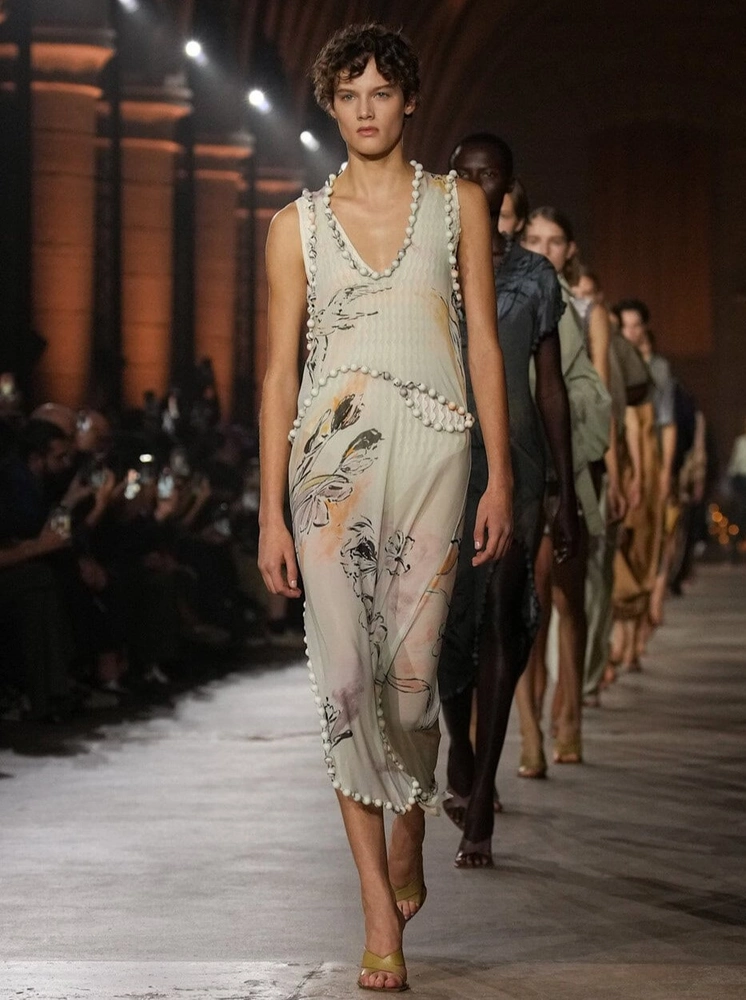
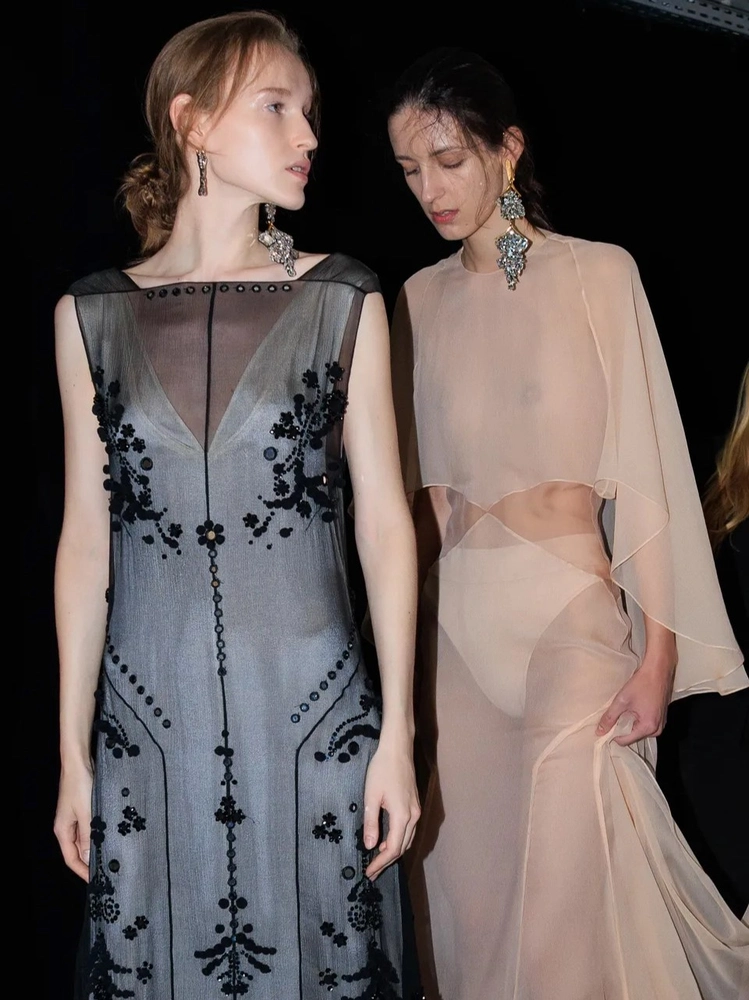
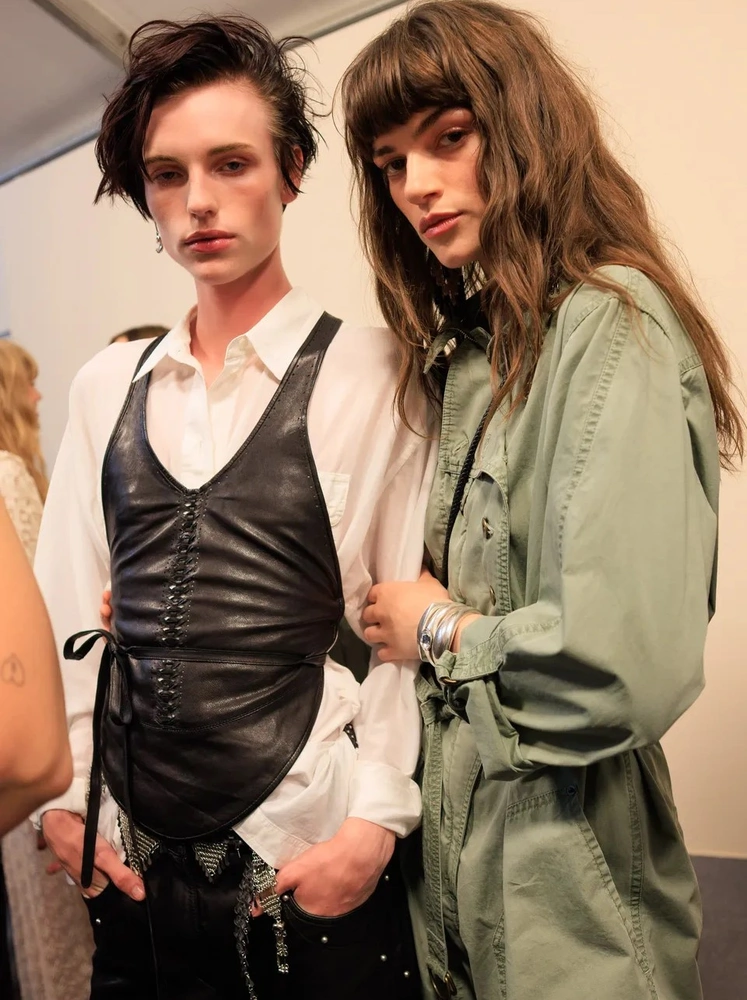
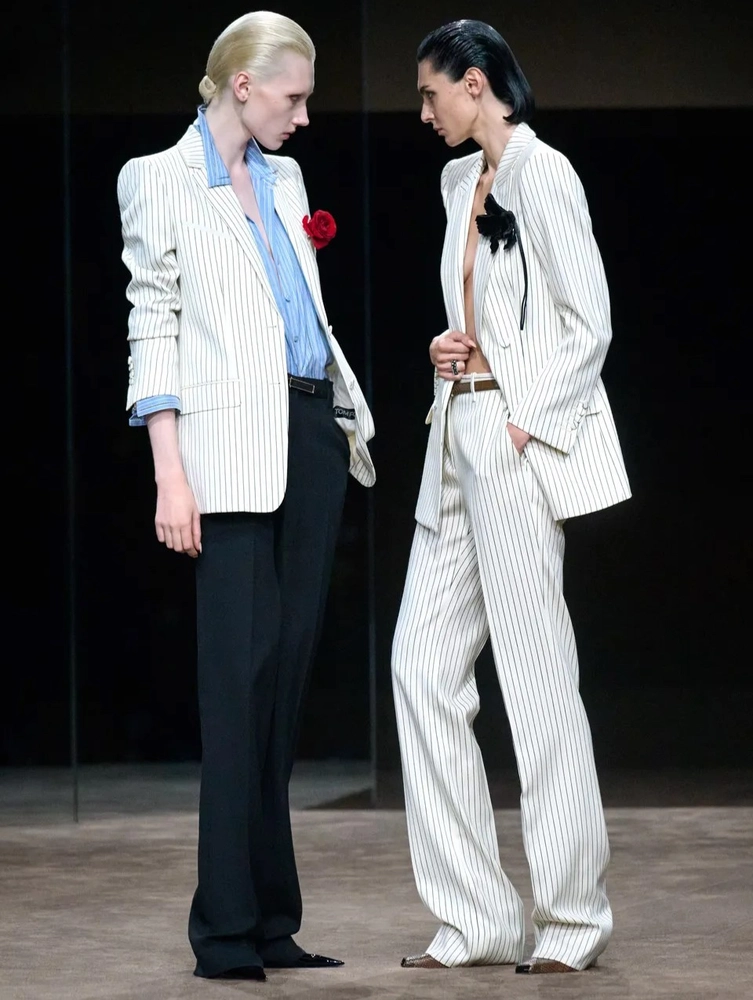
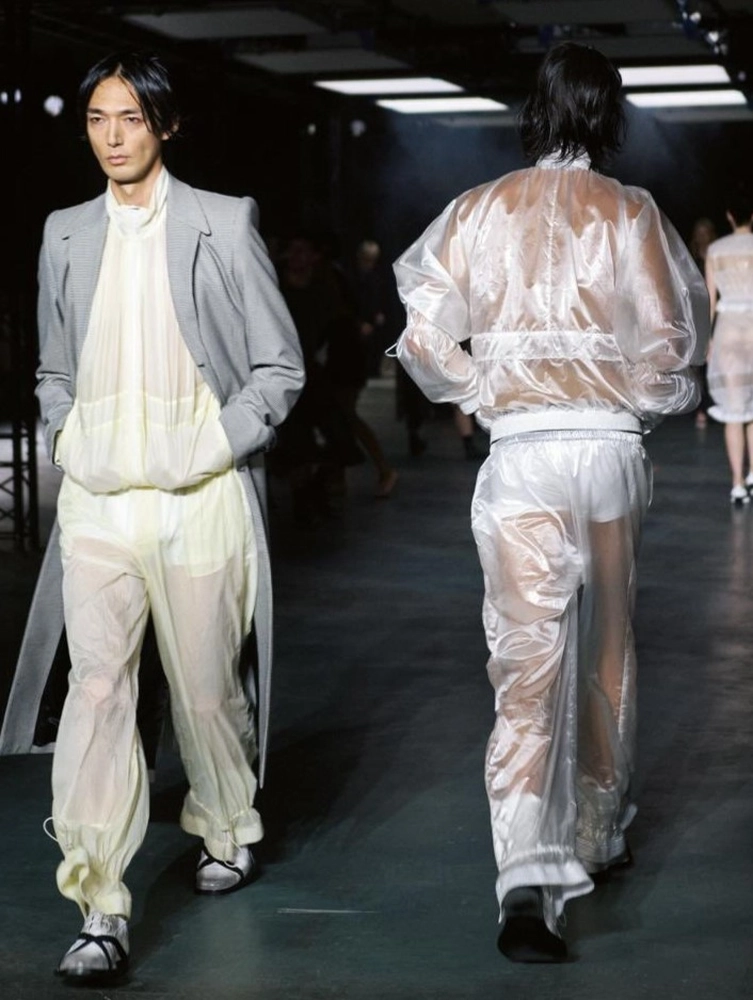
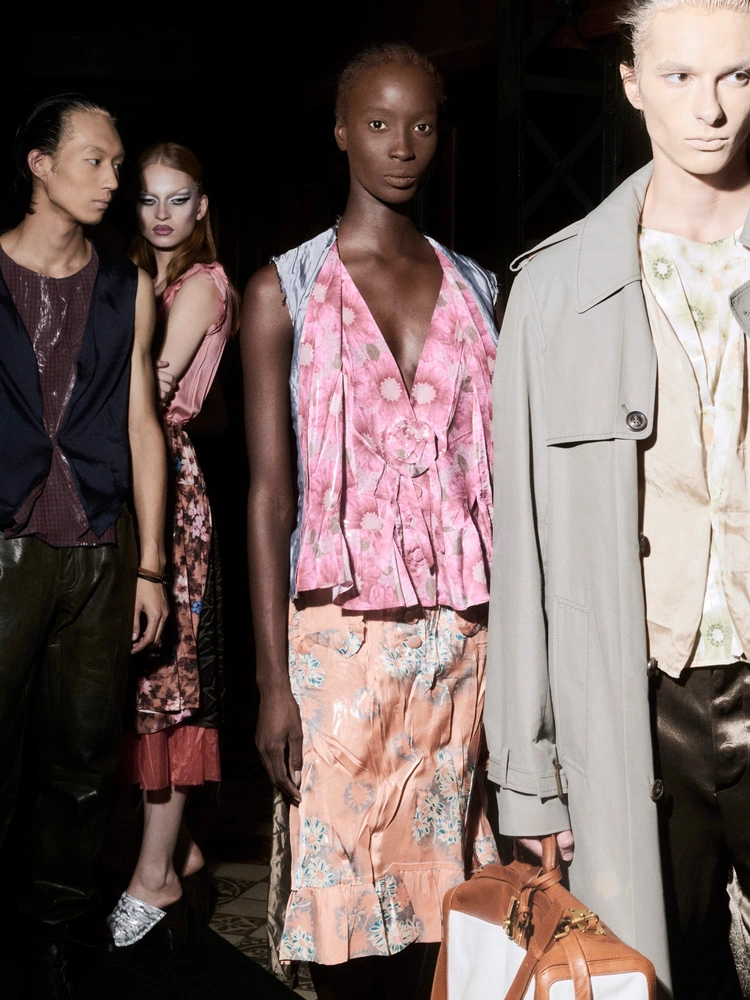
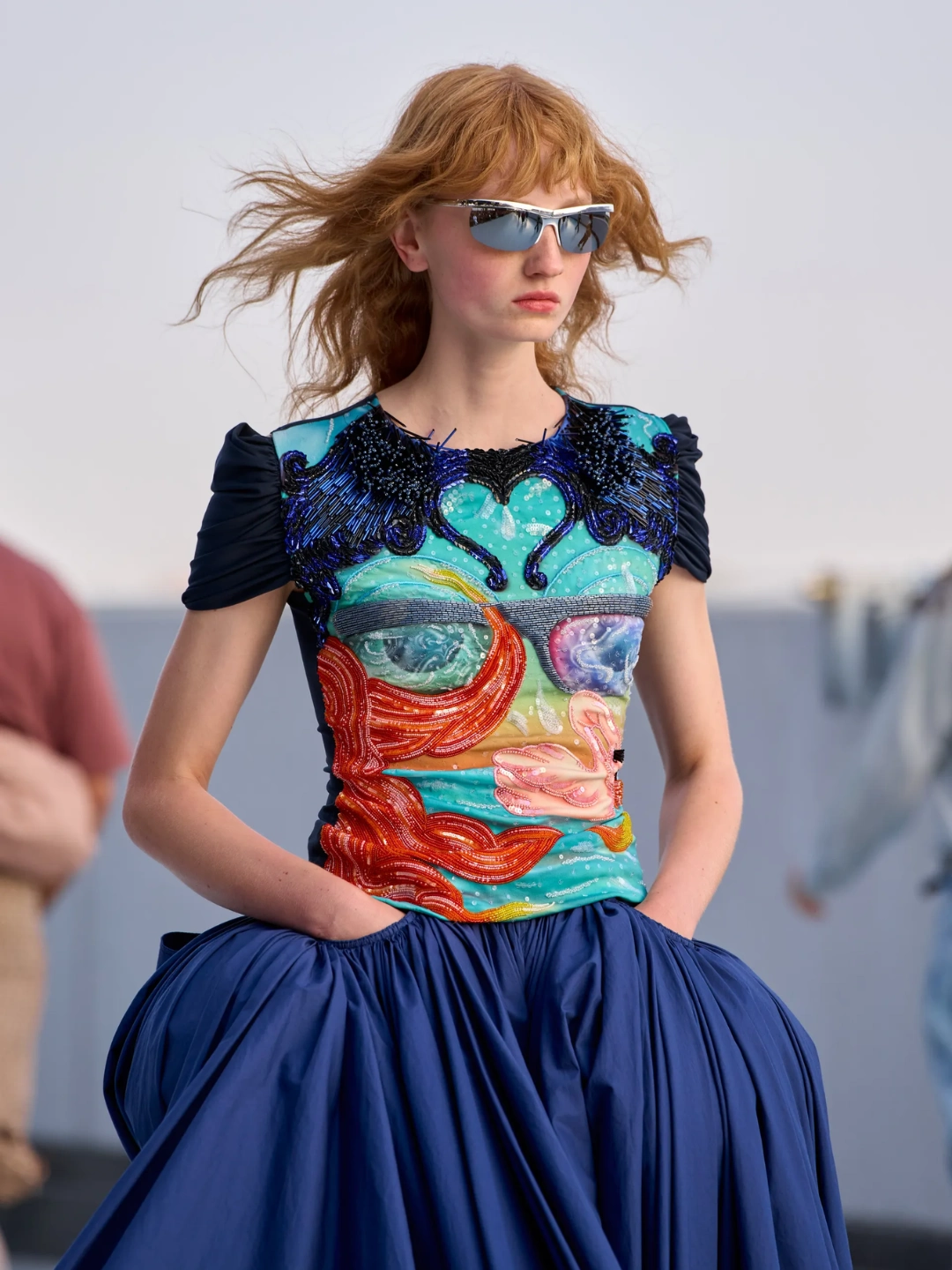
Military tailoring can look surprisingly precise before proportion begins to misbehave. A cropped leather trench meets a flounced skirt. Sheer babydoll dresses introduce fragility. High collars stretch upward. Bralettes appear over knitwear and shirts where convention would usually place them underneath.
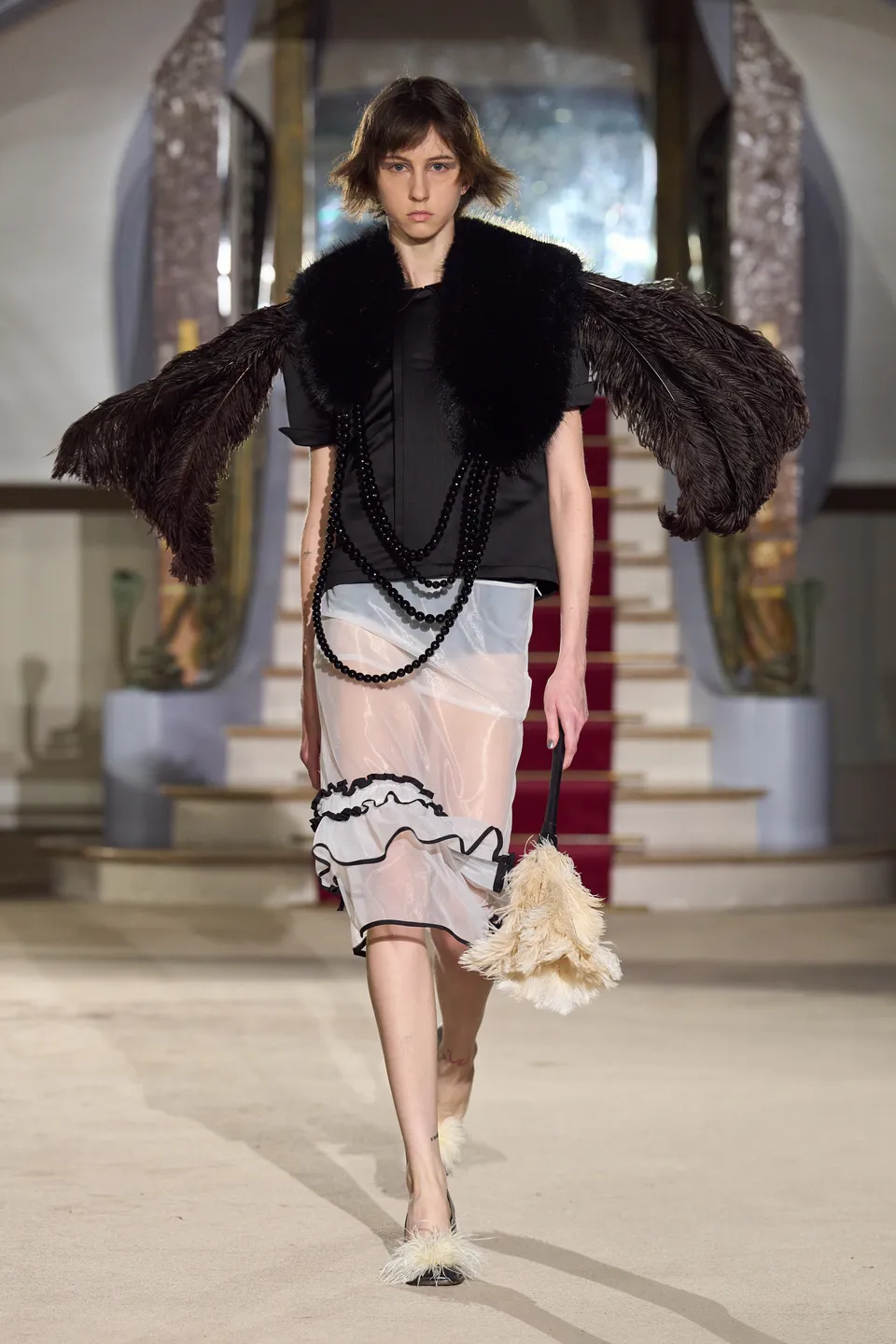
Then come the hats. Massive tweed boaters distort the entire upper body, making otherwise manageable silhouettes look suddenly top-heavy and absurd. Chef hats perform a similar function through costume rather than pure scale.
Vaquera has never been especially interested in flattering the body according to conventional fashion logic.
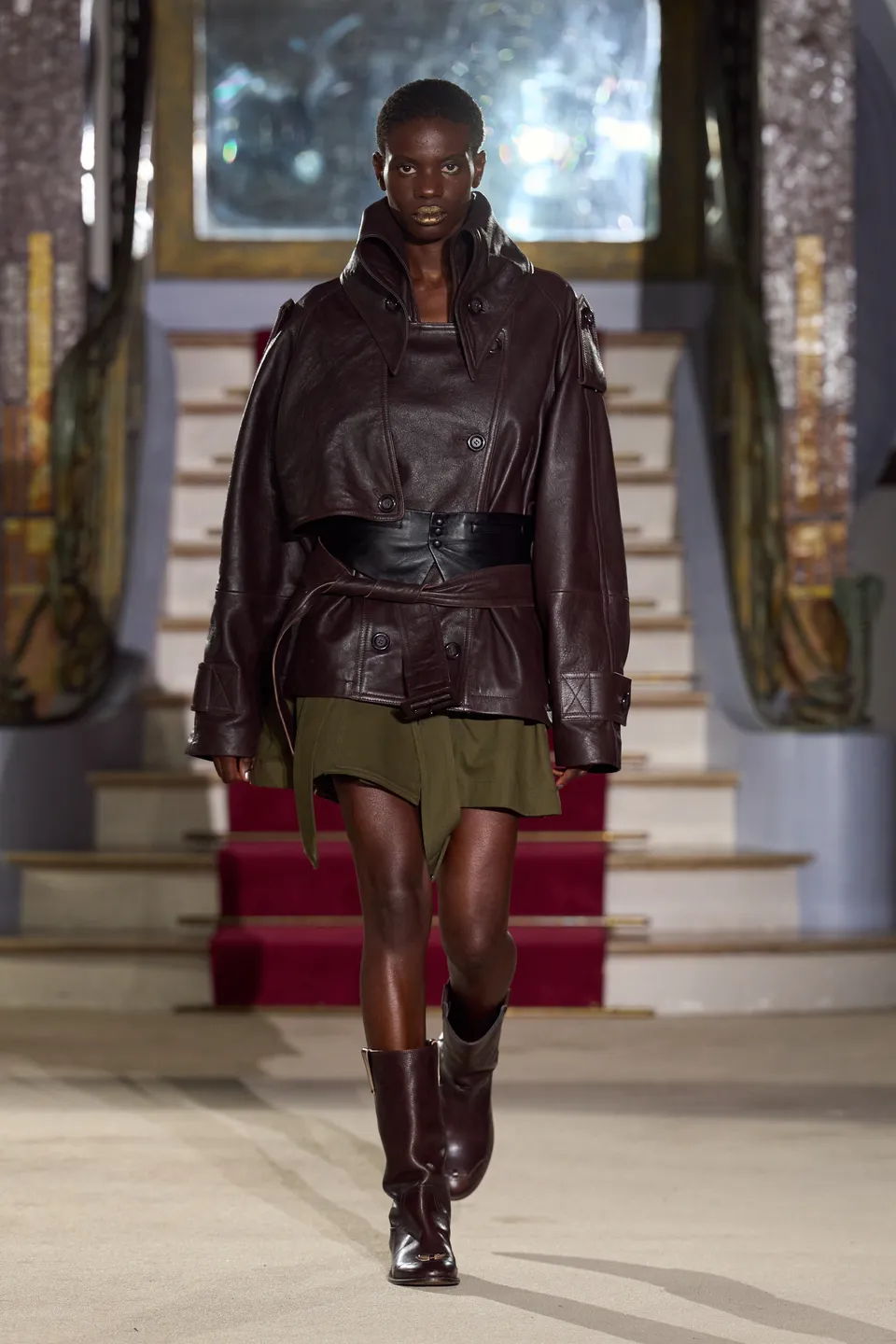
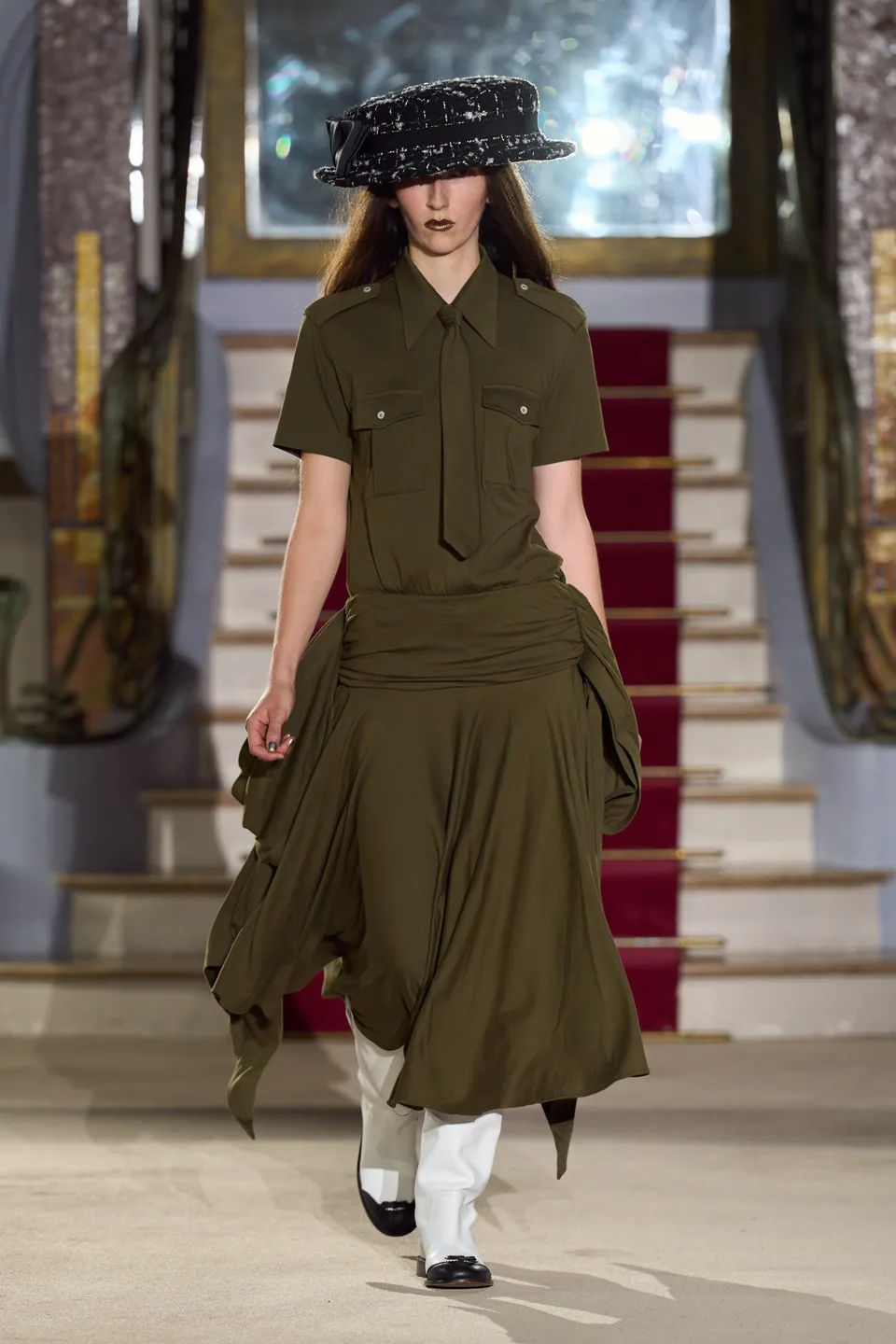
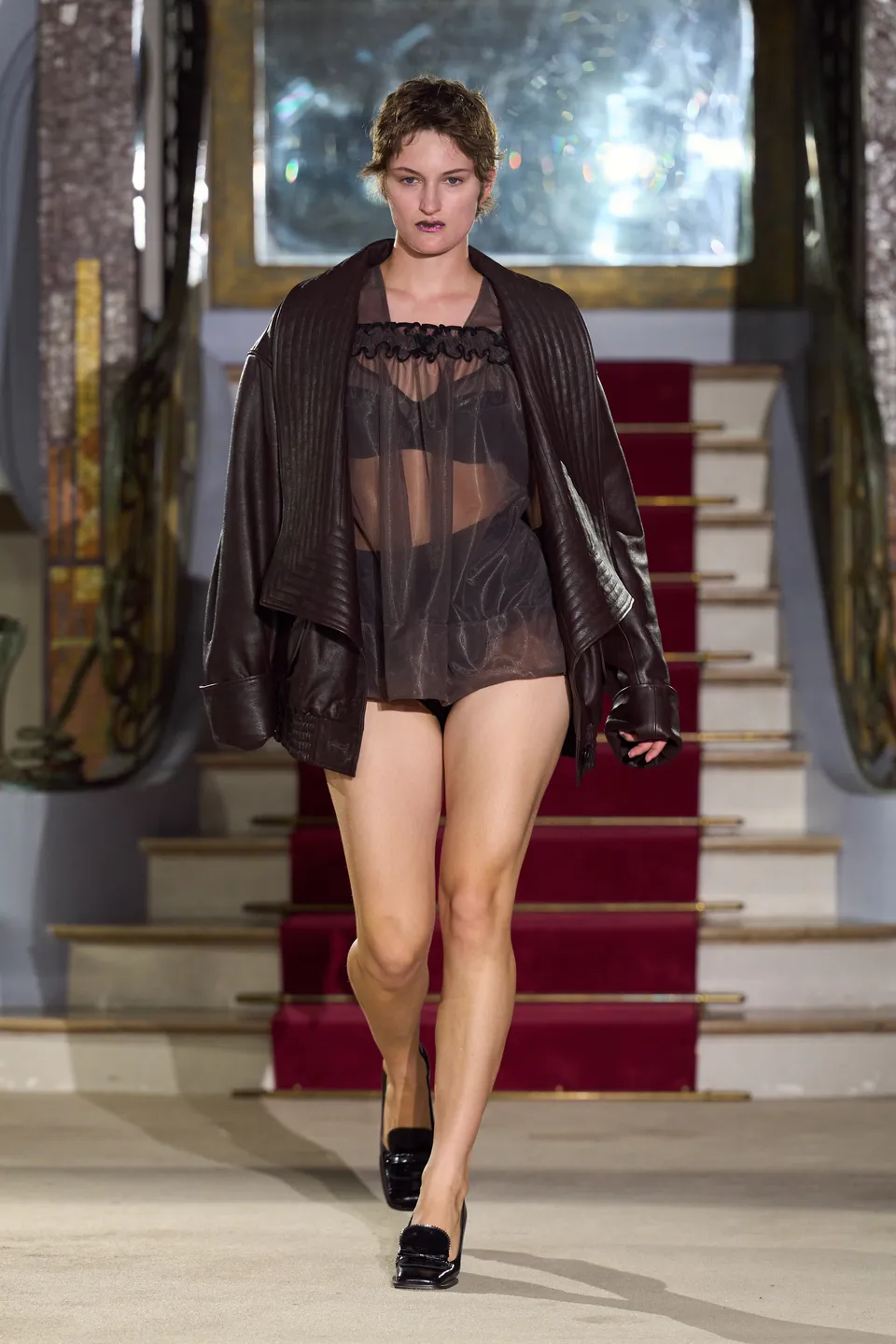
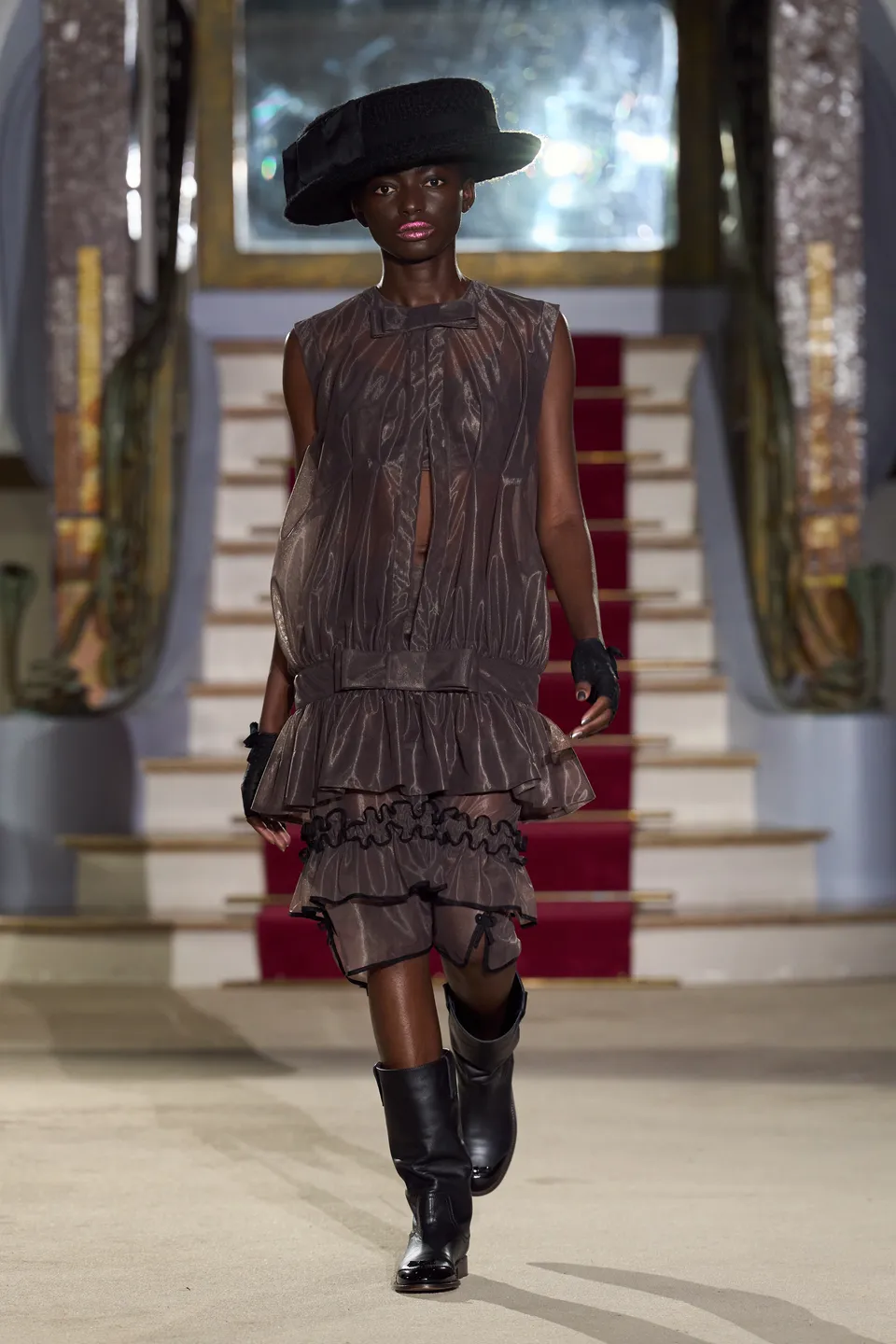
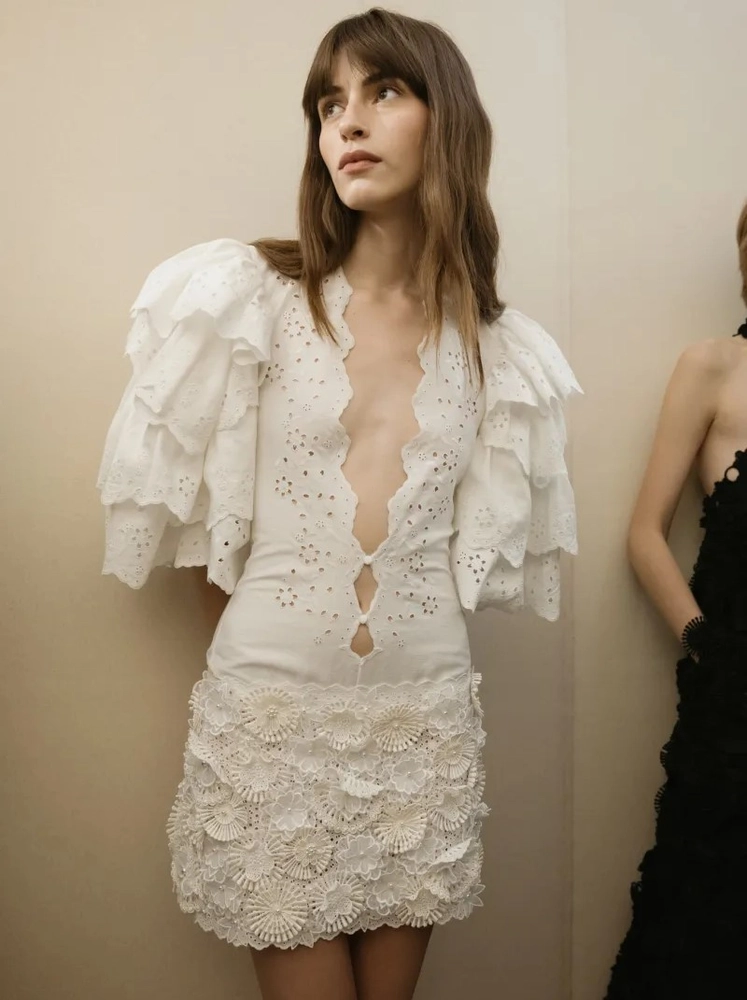
The figure is often interrupted instead. Shoulders expand. Tiny bottoms exaggerate the legs. Volume gathers in strange places. Hats become architecture. Ruffles and draping can turn a stable outline into something almost cartoonish.
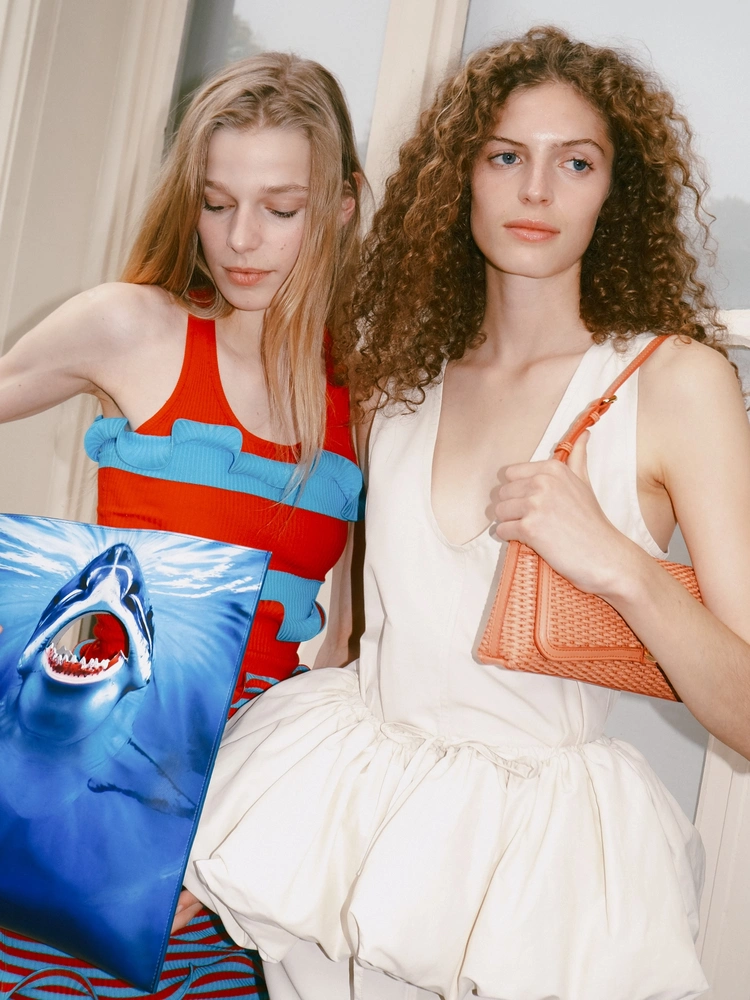
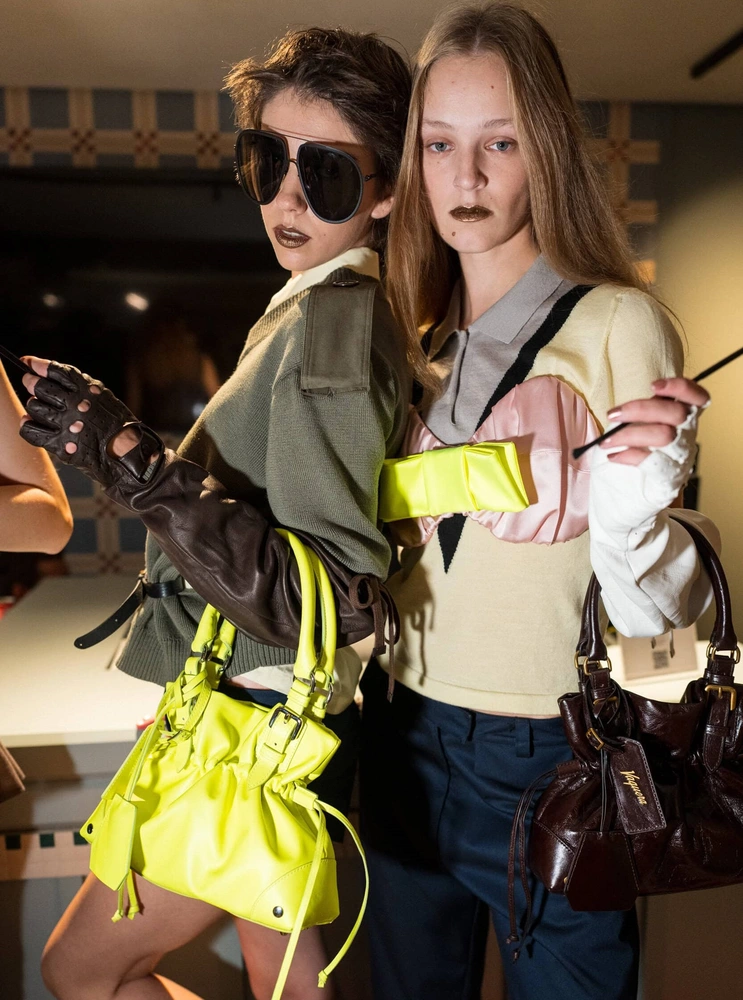
Cigarette holders extend gestures. Opera gloves create theatrical posture. Handbags make some characters look excessively proper. Giant hats destabilize scale. Two-tone shoes and eyewear sharpen the period references without turning them into literal reproductions.
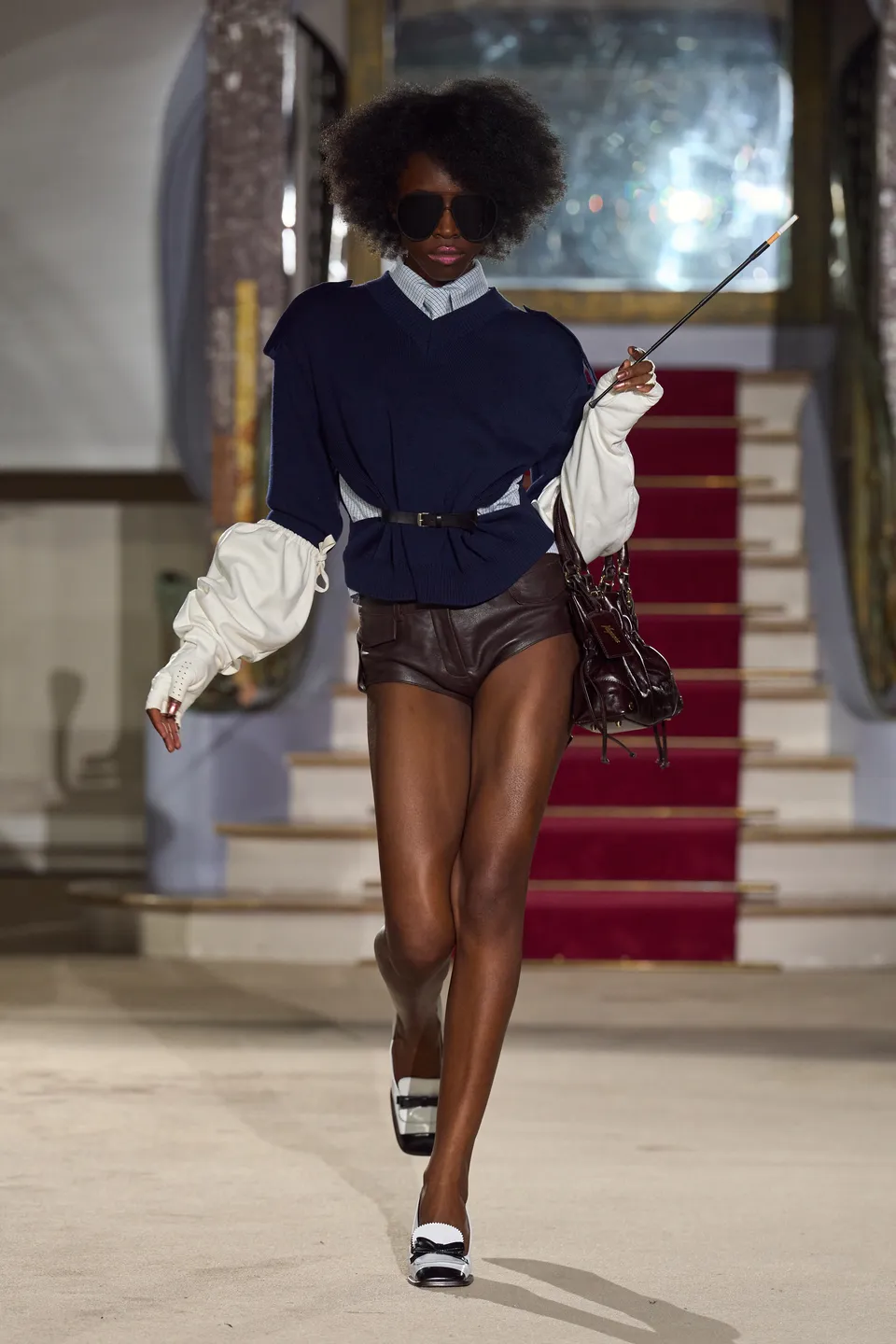
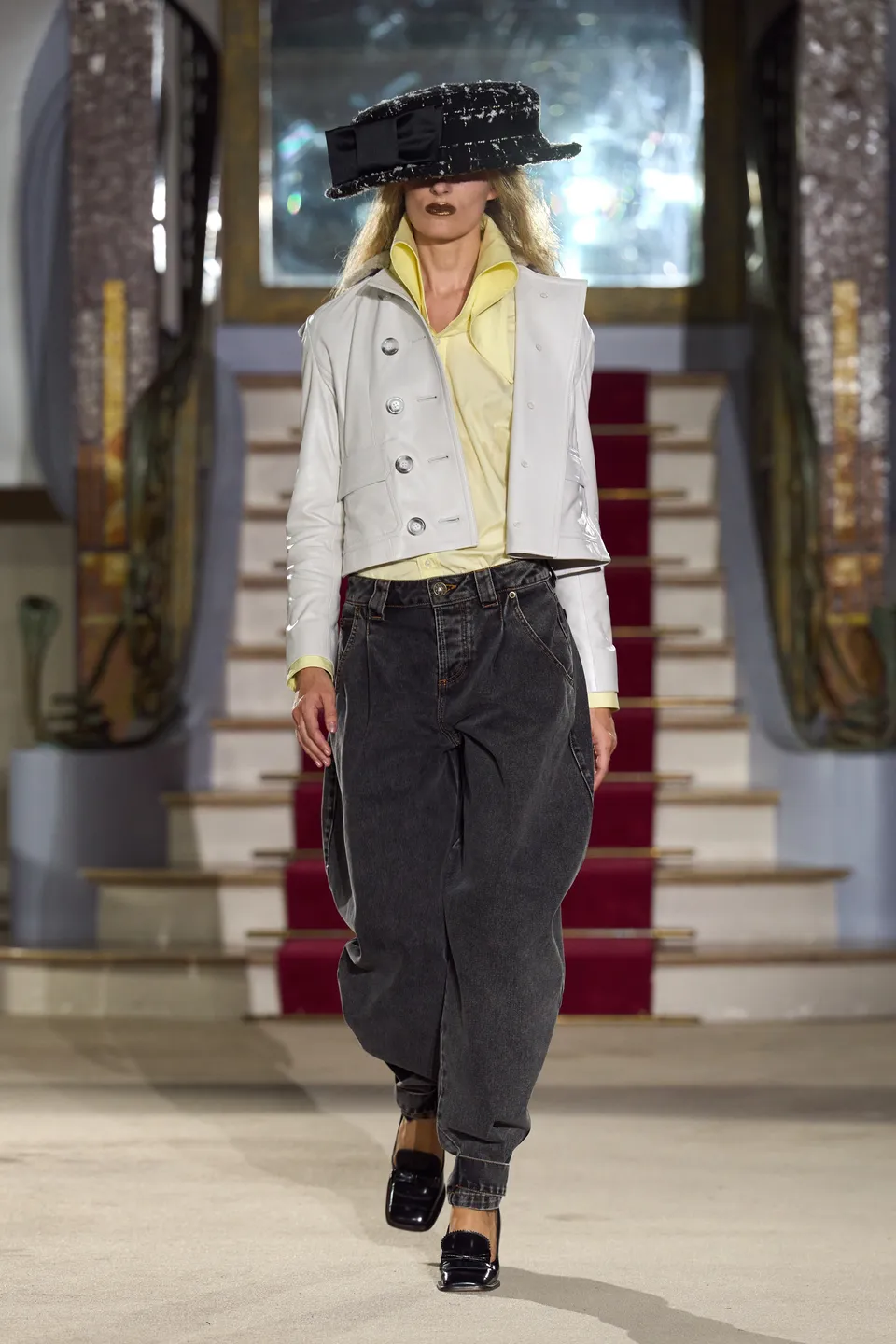
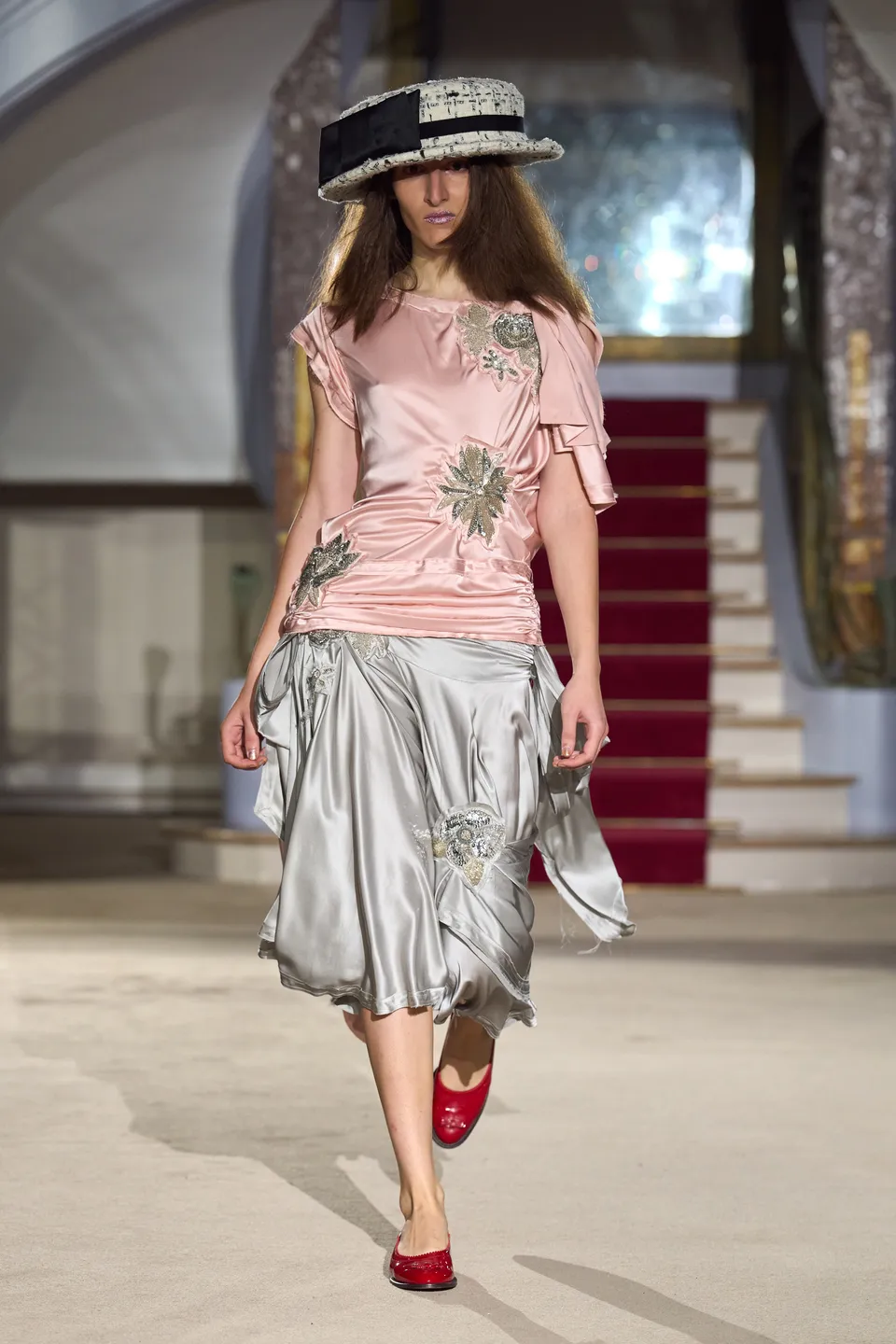
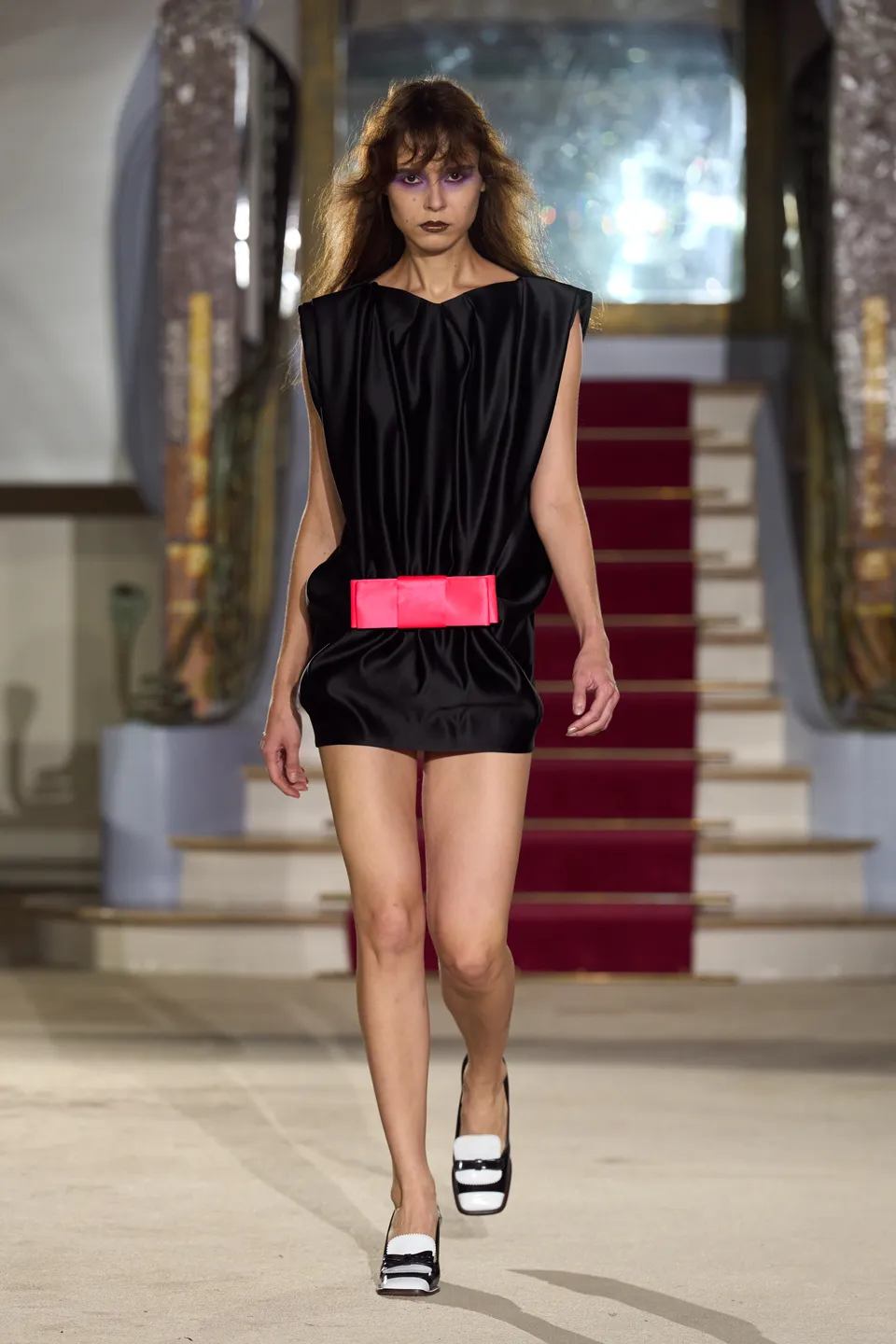
The runway is also organized through groups and tableaux, with characters appearing in clusters rather than as a purely individual procession. That staging makes the collection feel closer to theater, vaudeville or an old revue than a standard fashion presentation.
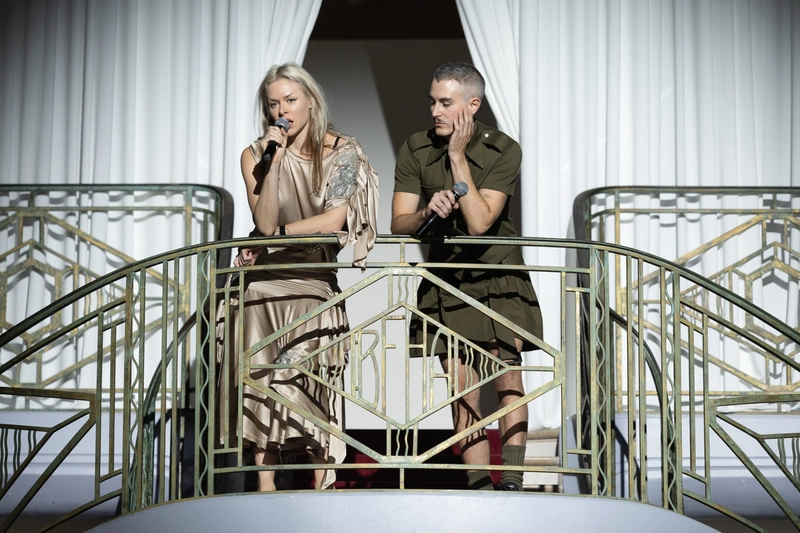
At one point, DiCaprio and Taubensee themselves perform a Sonny & Cher duet. Subtle? Absolutely not. But Vaquera has always understood that fashion-show seriousness can become kitsch very quickly. Their solution is to embrace the ridiculousness before anyone else can weaponize it against them.
The biggest development may be technical. The clothes are more controlled than in the brand’s earlier New York years.
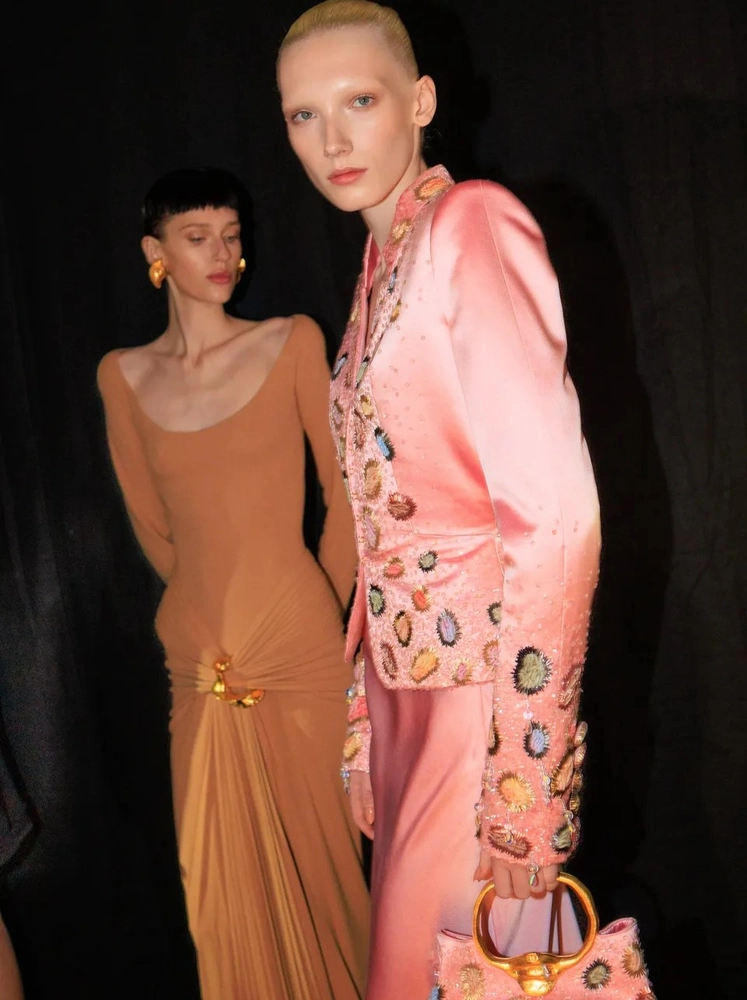
Tailoring sits more cleanly. Draping has greater authority. Volume looks engineered instead of improvised. Outerwear carries enough finish to function beyond the runway joke. The gowns, especially, reveal a brand increasingly capable of producing genuine luxury while maintaining its taste for awkwardness.
That matters because Vaquera’s earliest appeal partly came from DIY energy. The clothes could look unfinished, oversized or deliberately amateurish because that roughness belonged to the rebellion. As the company matures, repeating amateurism as an aesthetic gesture would eventually become another form of costume.
That growth also creates the collection’s most interesting problem. Vaquera began as a downtown New York outsider, parodying fashion from the margins and exaggerating the absurdities of luxury culture.
The brand now operates very differently. It shows in Paris. Dover Street Market supports it. Collaborations with Crocs and Mykita broaden the business. The press treats the label as an established creative voice. Its exaggerated silhouettes, oversized proportions, camp glamour and anti-good-taste attitude have become recognizable house codes.
Mocking Chanel from outside the system carries one kind of energy. Doing it once the fashion establishment already expects a Vaquera parody creates another.
The designers are increasingly inside the world they once treated as fantasy. SS27 works because they seem aware of that contradiction.
For Vaquera, they have become almost expected. That is the real danger. “Too much” can become a comfort zone.
The brand now has a recognizable formula: old-world glamour collides with New York vulgarity, proportions inflate, one object becomes ridiculous, irony runs through the styling and sincerity appears just long enough to keep the whole thing from becoming cynical.
The formula still works. SS27 is lively, funny and genuinely enjoyable. But rebellion becomes less rebellious once everyone knows what form it will take. The next stage for Vaquera may require disrupting its own chaos rather than simply increasing it.
Perhaps the biggest surprise would eventually be restraint.
One line behind the collection captures the irony perfectly: “There’s playing a role, and then there’s us playing a role as fashion designers.” Years ago, that could have sounded like self-deprecating outsider humor. Now it lands differently.
DiCaprio and Taubensee have a Paris platform, commercial collaborators, recognizable codes, improving craftsmanship and a clearly defined audience. They have built the thing they once appeared to parody.
The chef, maid and waiter can take their costumes off after the show. Vaquera cannot really return to being an outsider. The brand once made fun of fashion by pretending to belong to it.
Advertisement