MENU
Close





Givenchy SS27 turns precision into movement, with Sarah Burton using cut, drape and material tension to build a wardrobe that feels increasingly specific to her era at the house.

Givenchy SS27 turns precision into movement, with Sarah Burton using cut, drape and material tension to build a wardrobe that feels increasingly specific to her era at the house.
October 1, 2026
Advertisement
Advertisement


At Givenchy SS27, Sarah Burton begins with precision. Her third runway for the house is built around the idea of finding clarity inside lives moving through multiple perspectives at once.
That process gives the collection its real energy. Burton describes the wardrobe as something capable of moving between strict sartorial construction and free-form sensuality. The runway follows exactly that path.
Burton’s working method has always been unusually physical. She develops clothes directly on a live model, cutting, pinning, shortening and reshaping garments while watching how fabric reacts to the body. At Givenchy, the process involves teams in Paris and London, with draping and fitting used as active design tools throughout development.
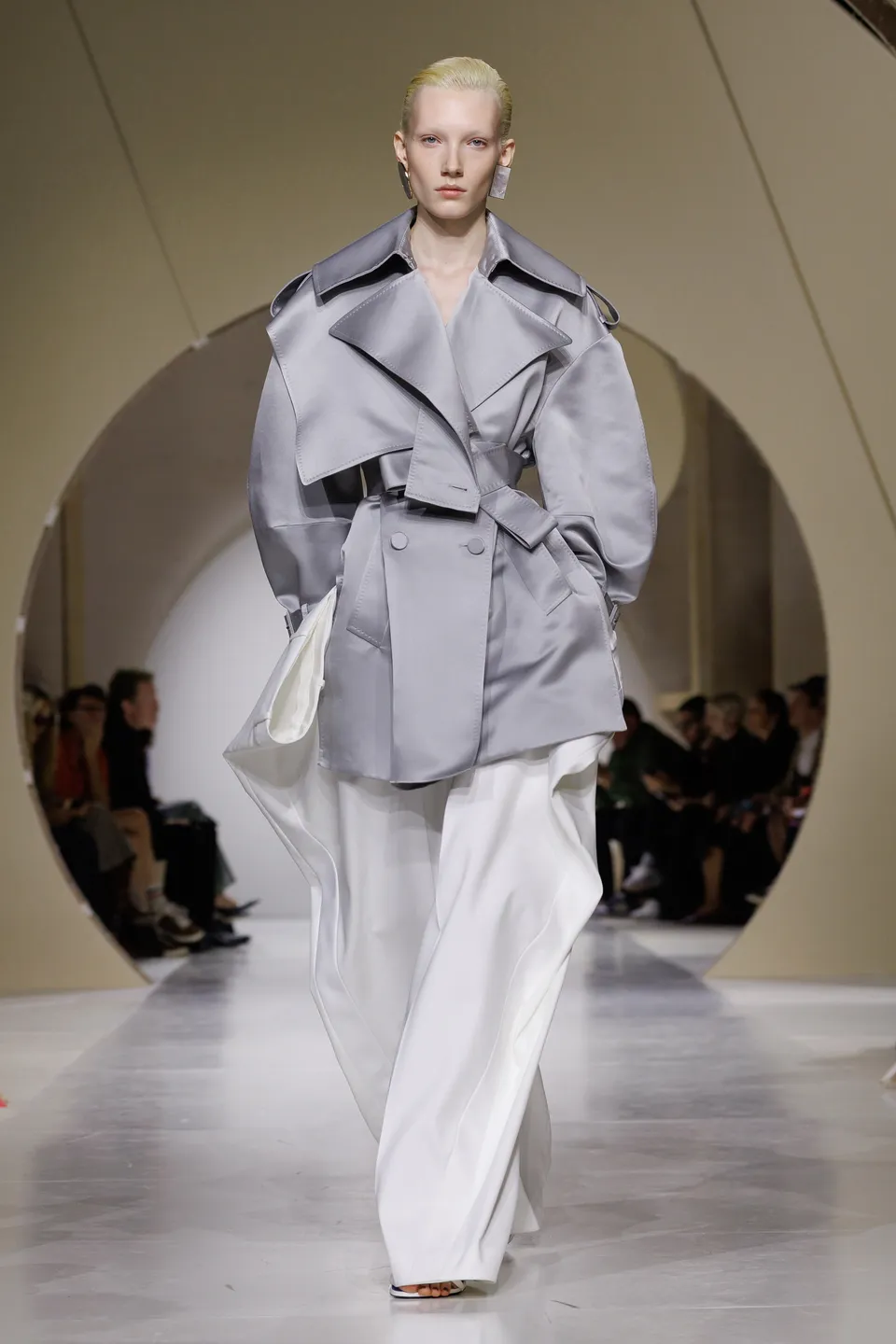
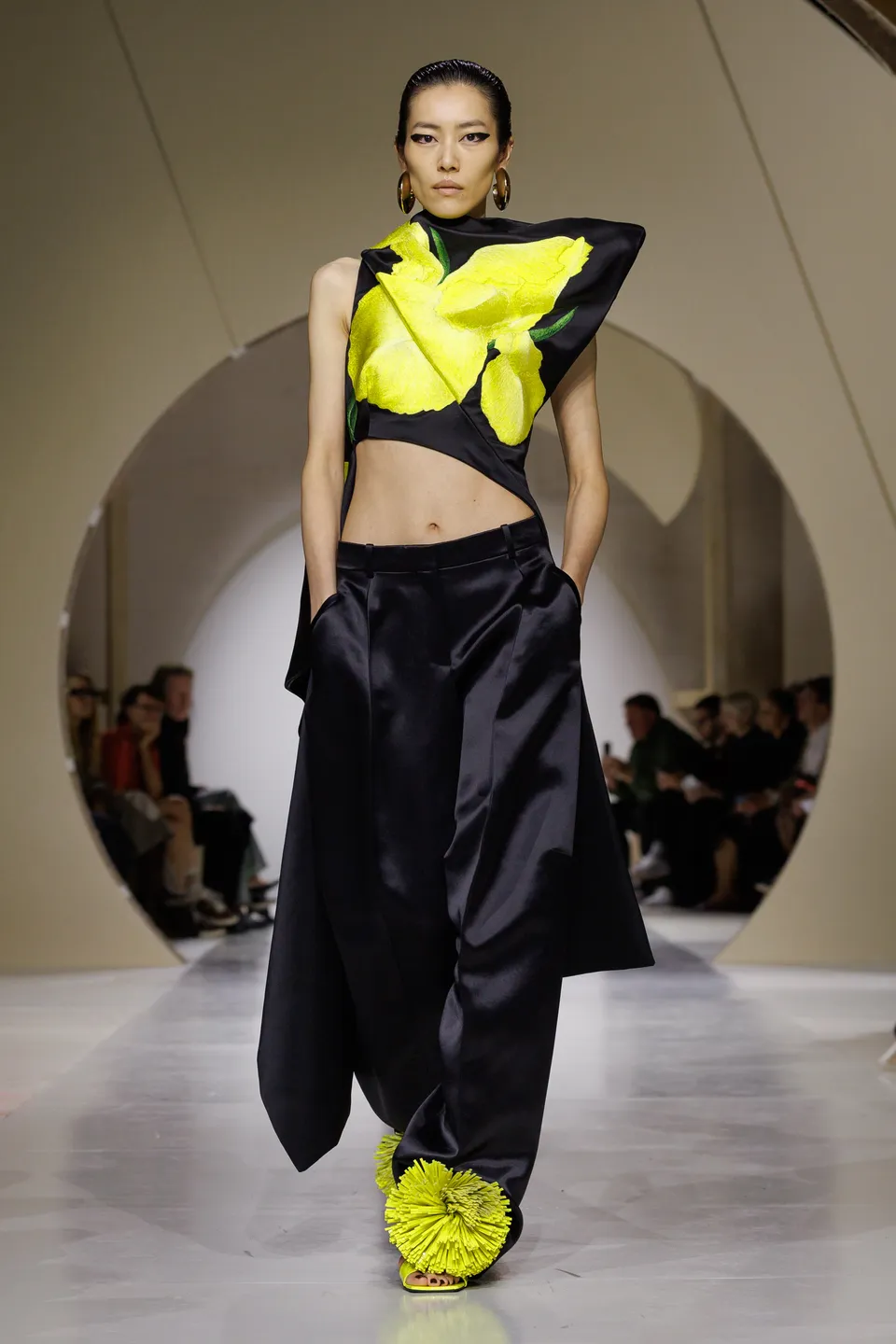
A trouser can begin as a conventional masculine shape, then Burton slices along the crease and swings part of the fabric outward, creating a draped panel that falls from the hip. Extended waistbands descend at the sides, almost producing a second skirt-like silhouette around the trouser underneath. The movement comes directly from construction, so the garment gains drama while preserving its clean central line.
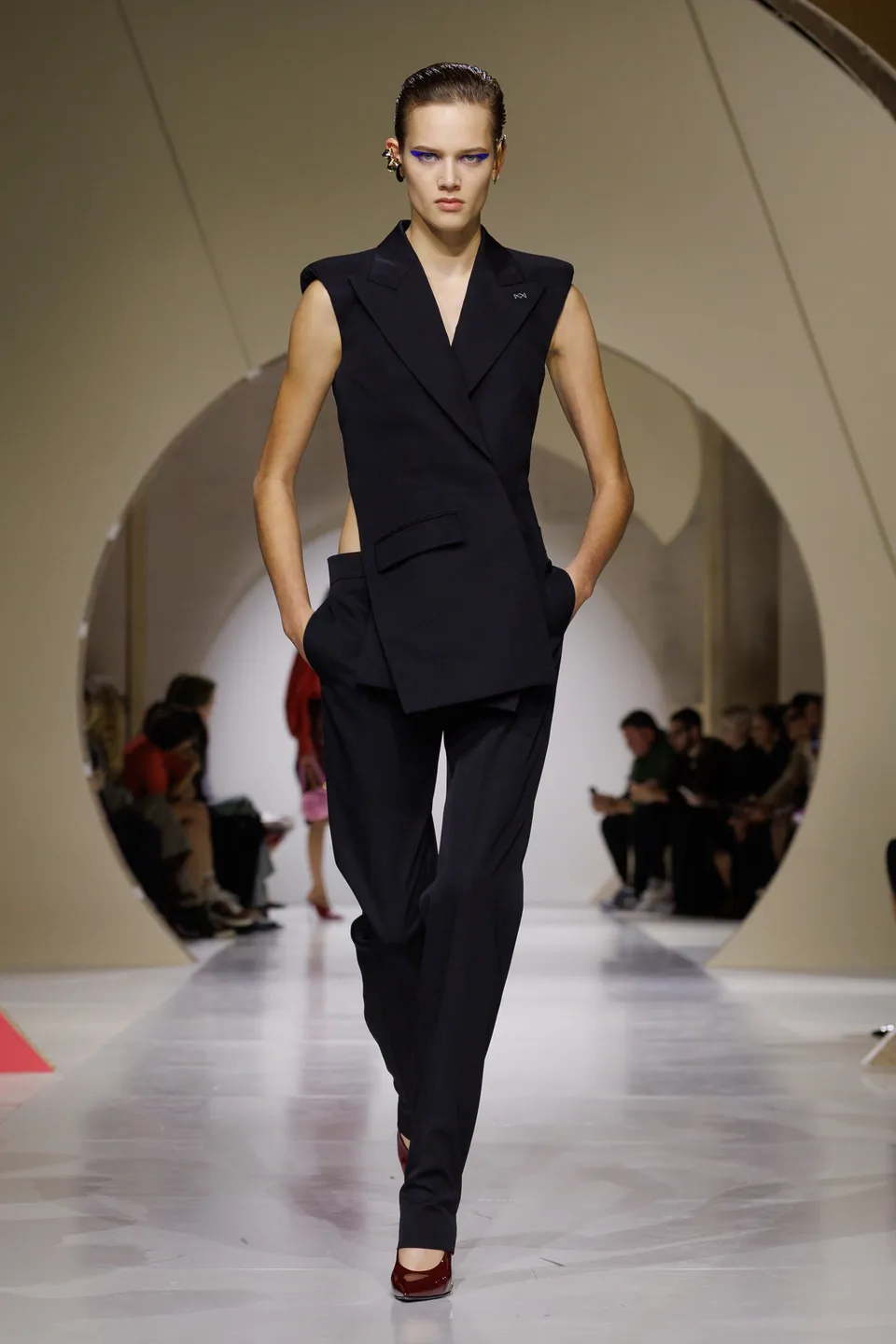
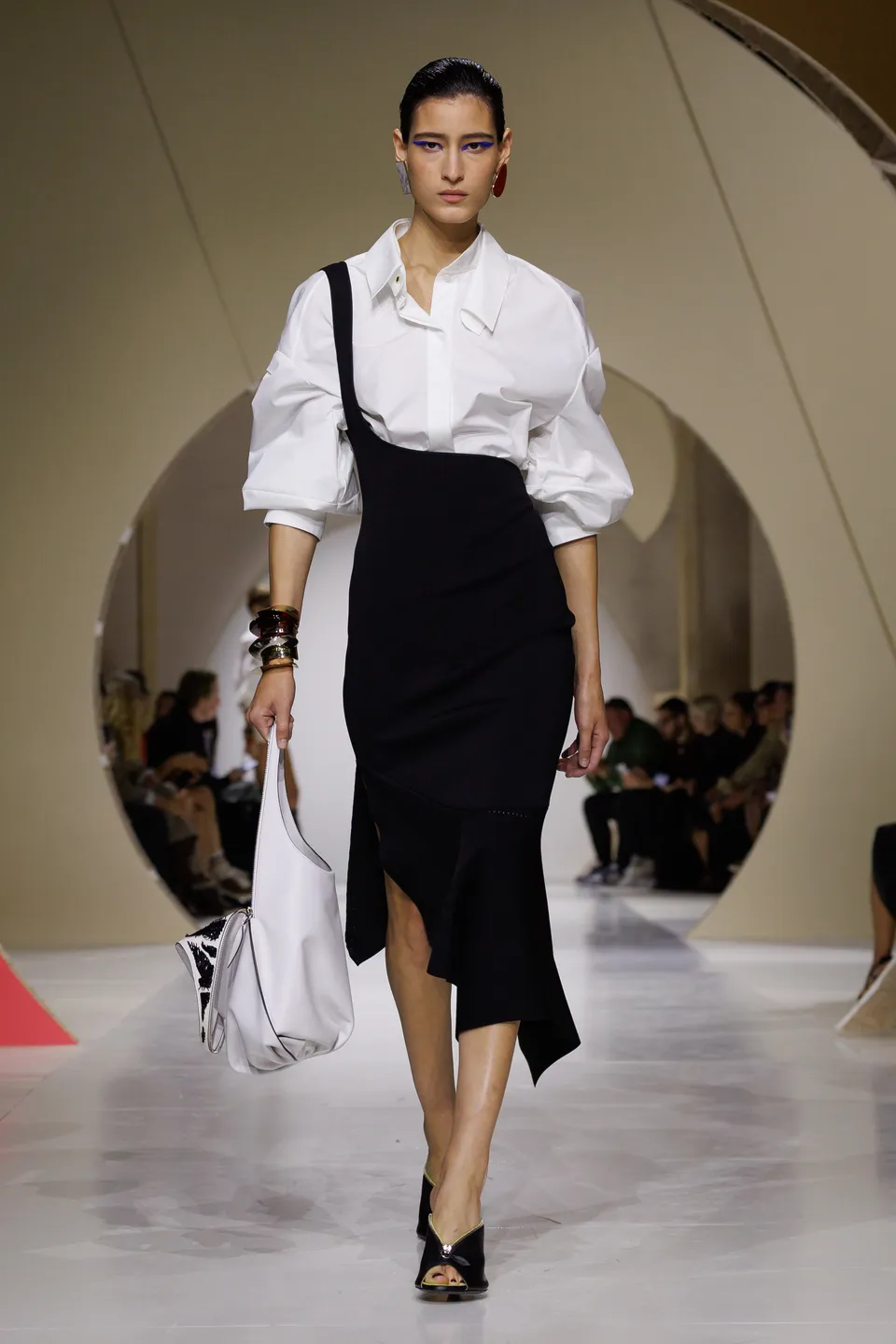
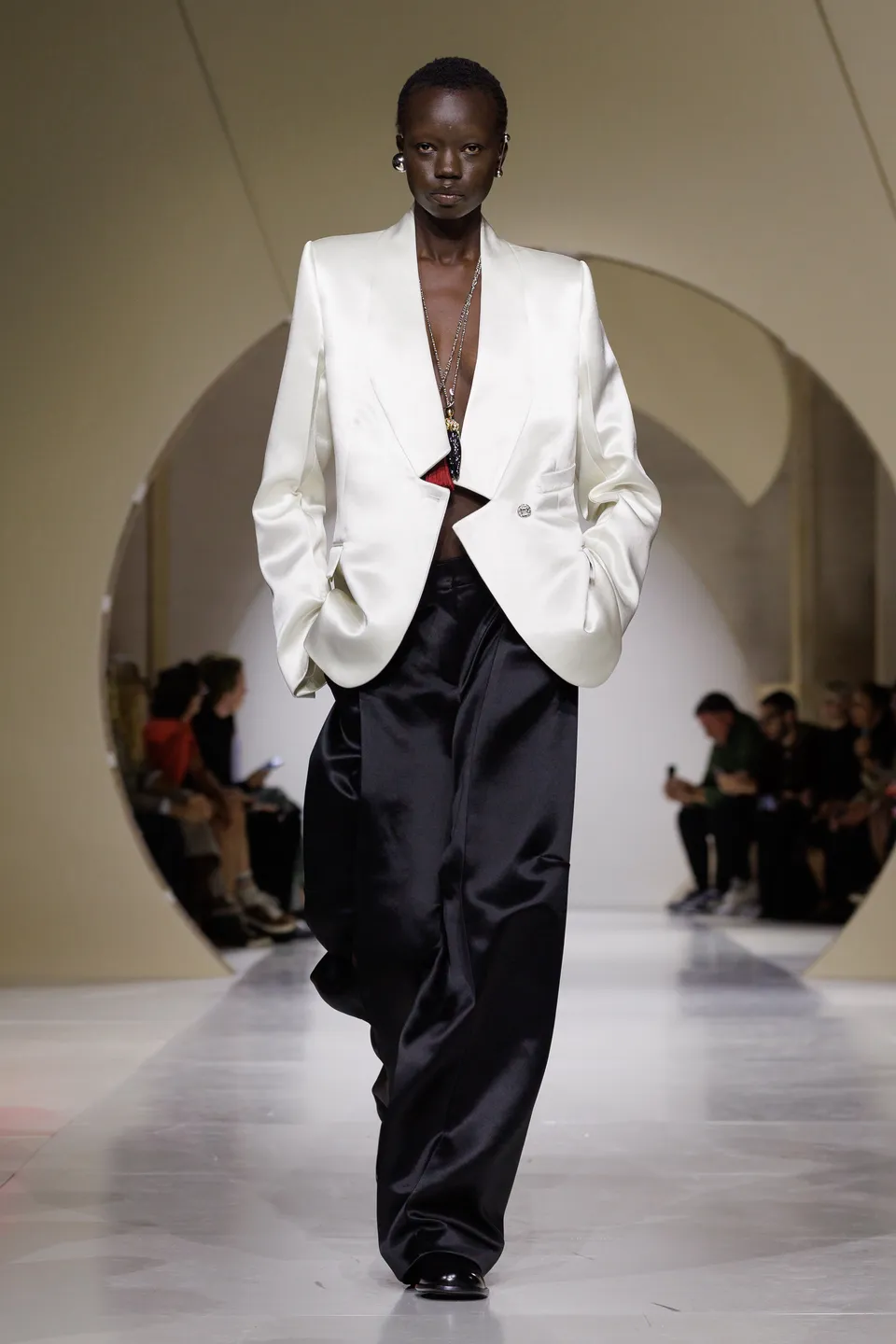
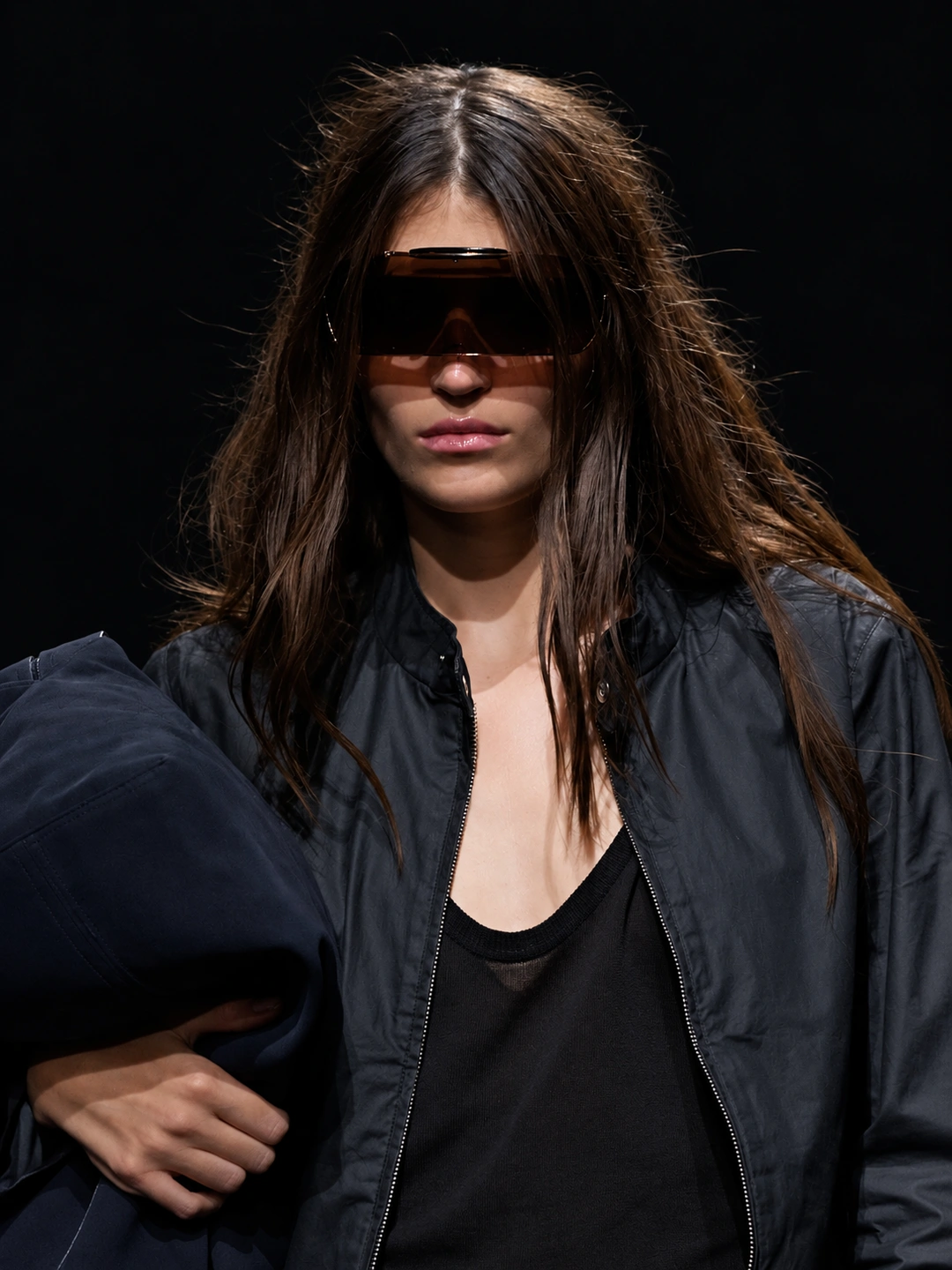
Jackets are treated with the same curiosity. Sleeves are cut away from the shoulder, flattened and pinned across the torso, becoming protective panels or elongated lapel-like forms. The familiar anatomy of a suit begins to migrate. The collection repeatedly plays with the difference between a controlled core and volume around it.
Slim suits stay close through the torso and leg. Double-breasted coats hold a firm vertical line. Elsewhere, skirts rise dramatically at the front and fall long along the sides, allowing the legs to cut through the silhouette while fabric continues moving around them.
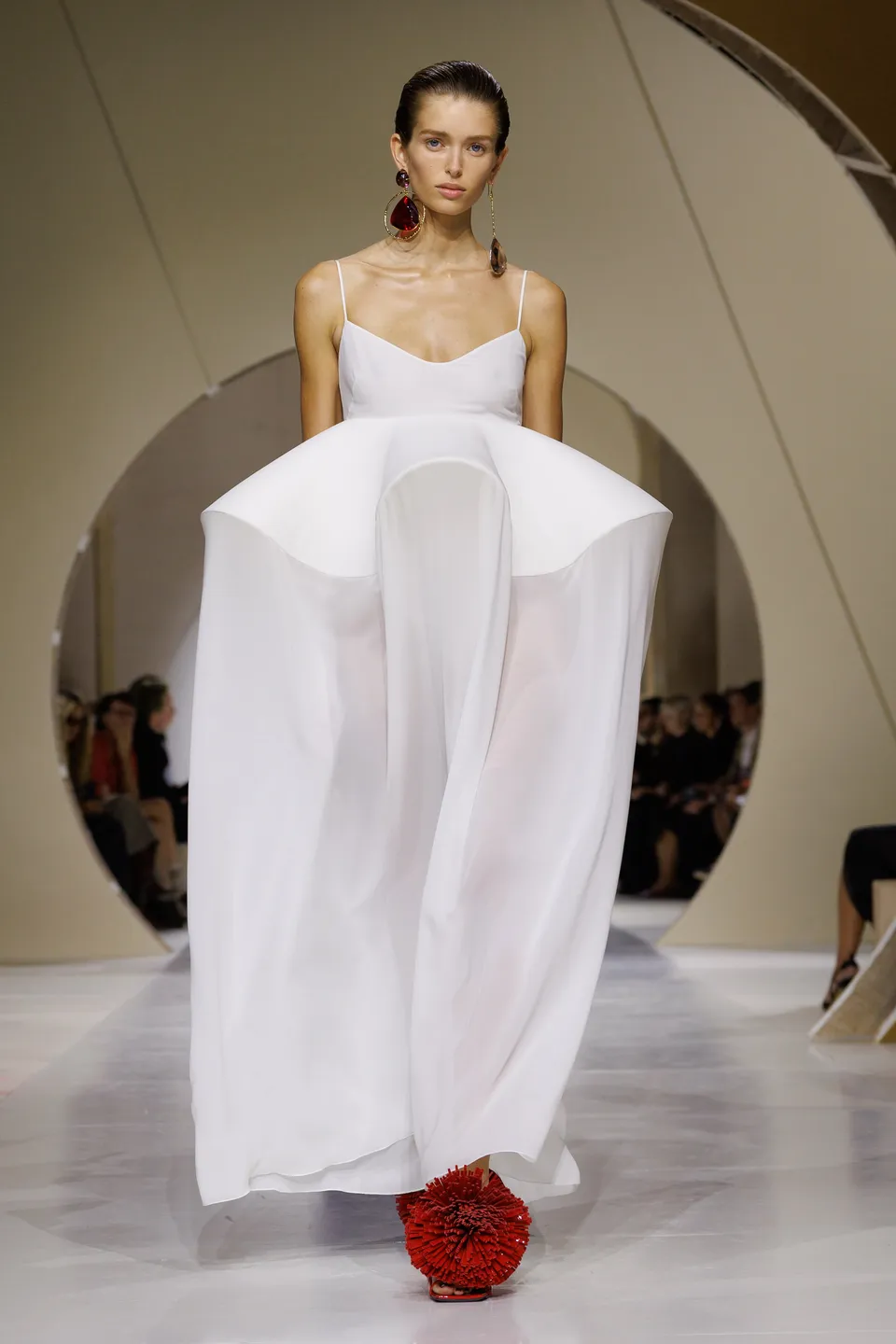
Even the peplums become larger and more architectural. Sheer frills bloom away from the hips, creating volume that appears almost suspended around the body. Some trousers carry extra lengths of cloth along the sides, allowing one silhouette to unfold into another while the wearer moves.
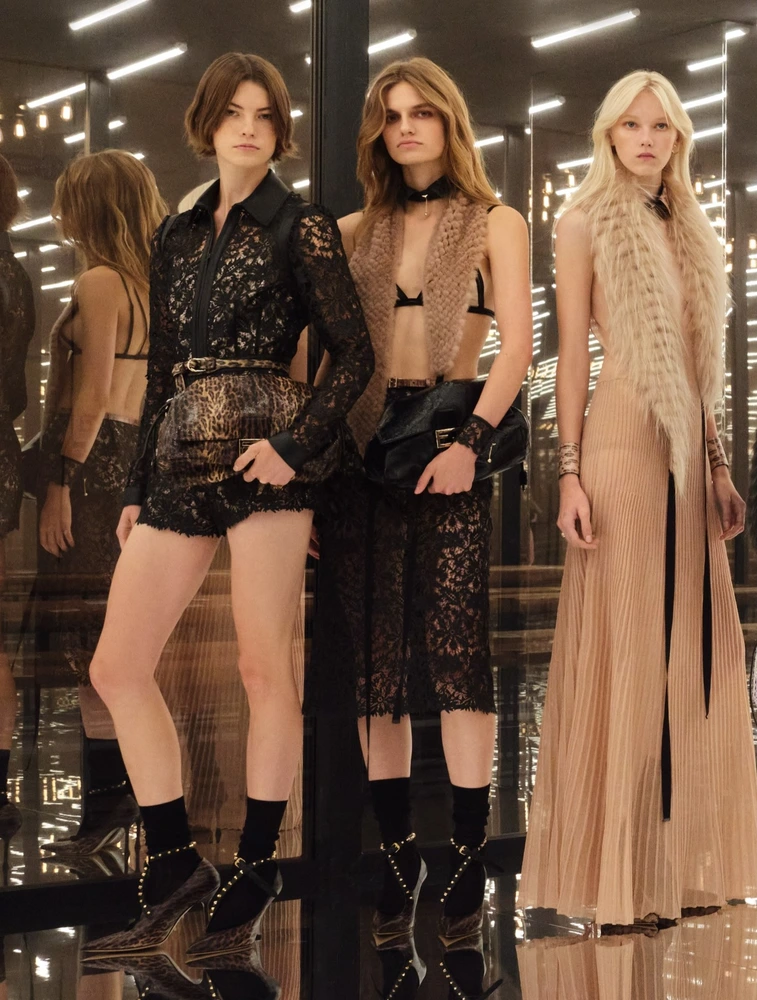
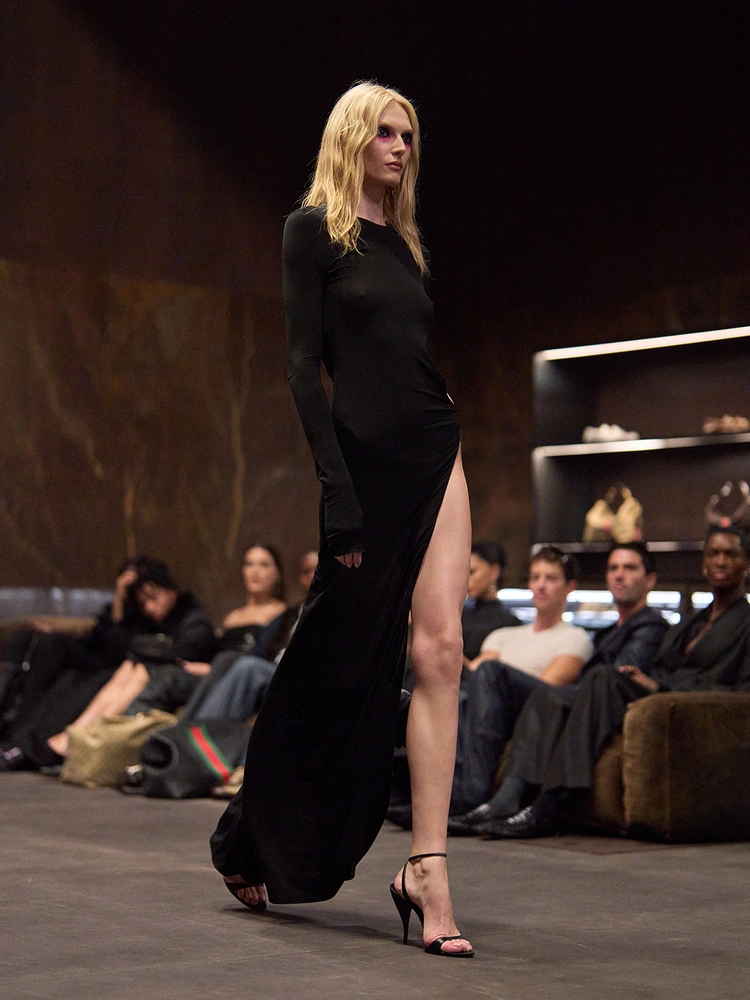
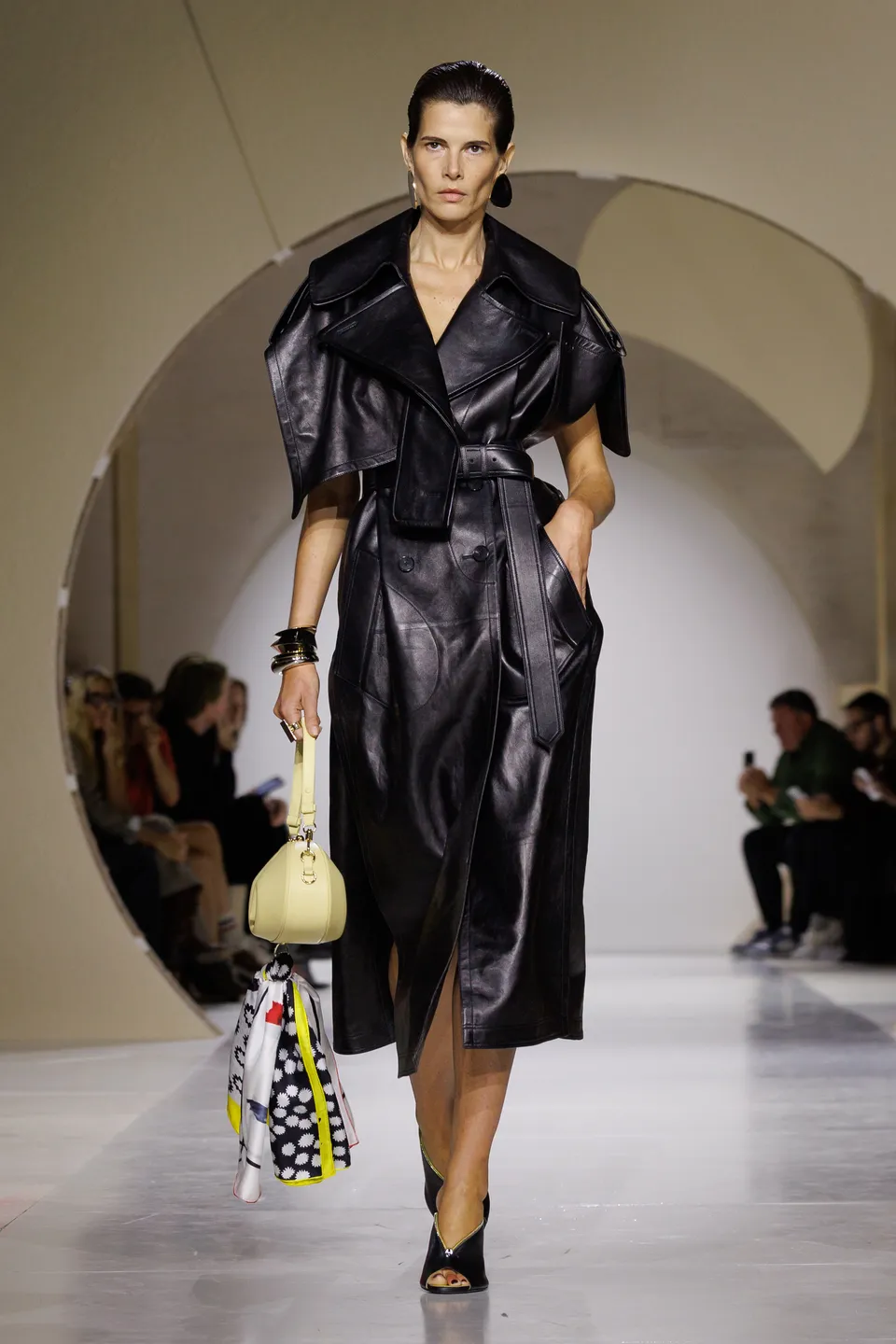
Leather becomes one of the richest material stories in the collection. Burton uses it for structured trousers, tiny hot shorts, close bodywear and the black opening dress, whose curved zippers travel along the sides to reveal vivid yellow lining underneath.
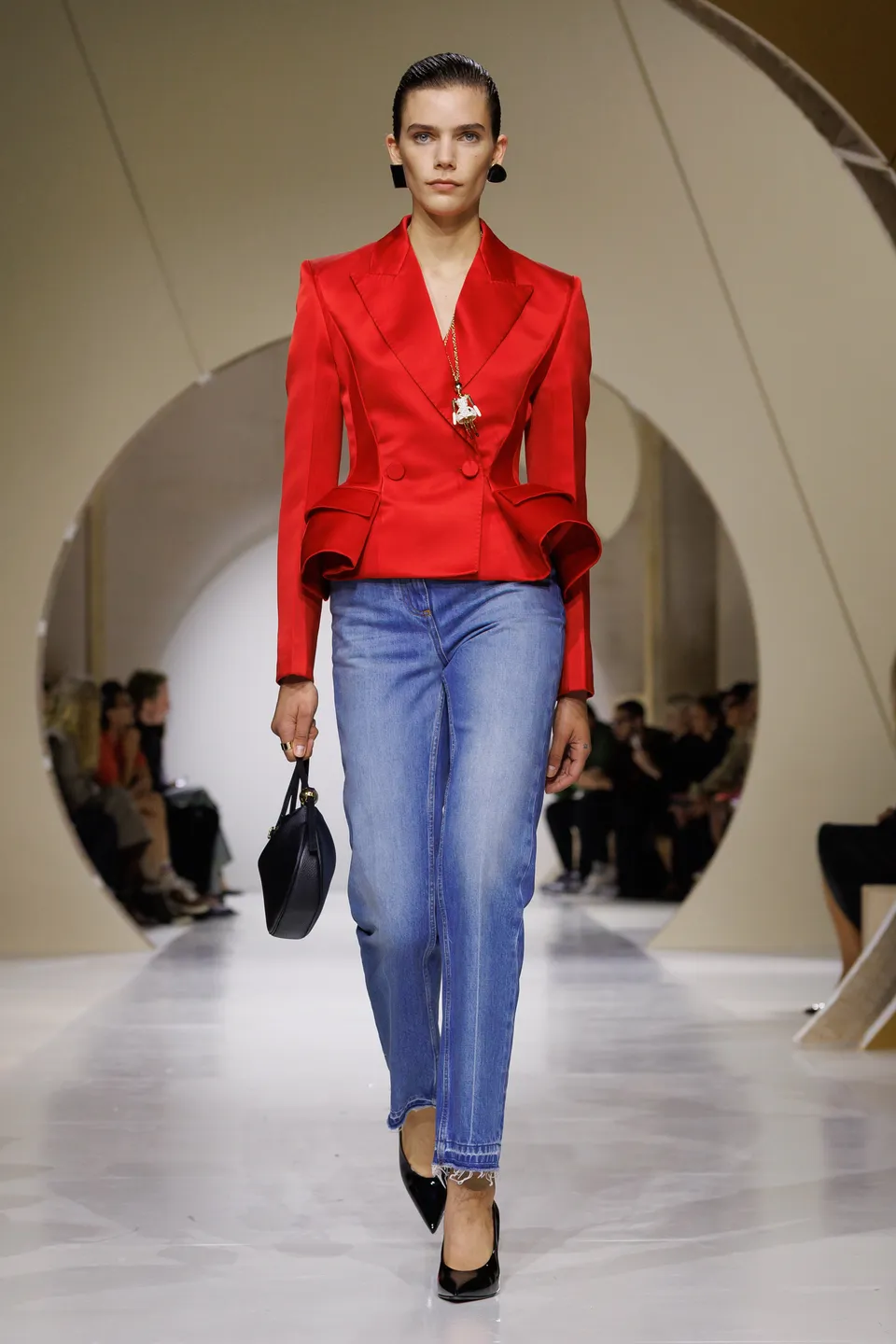
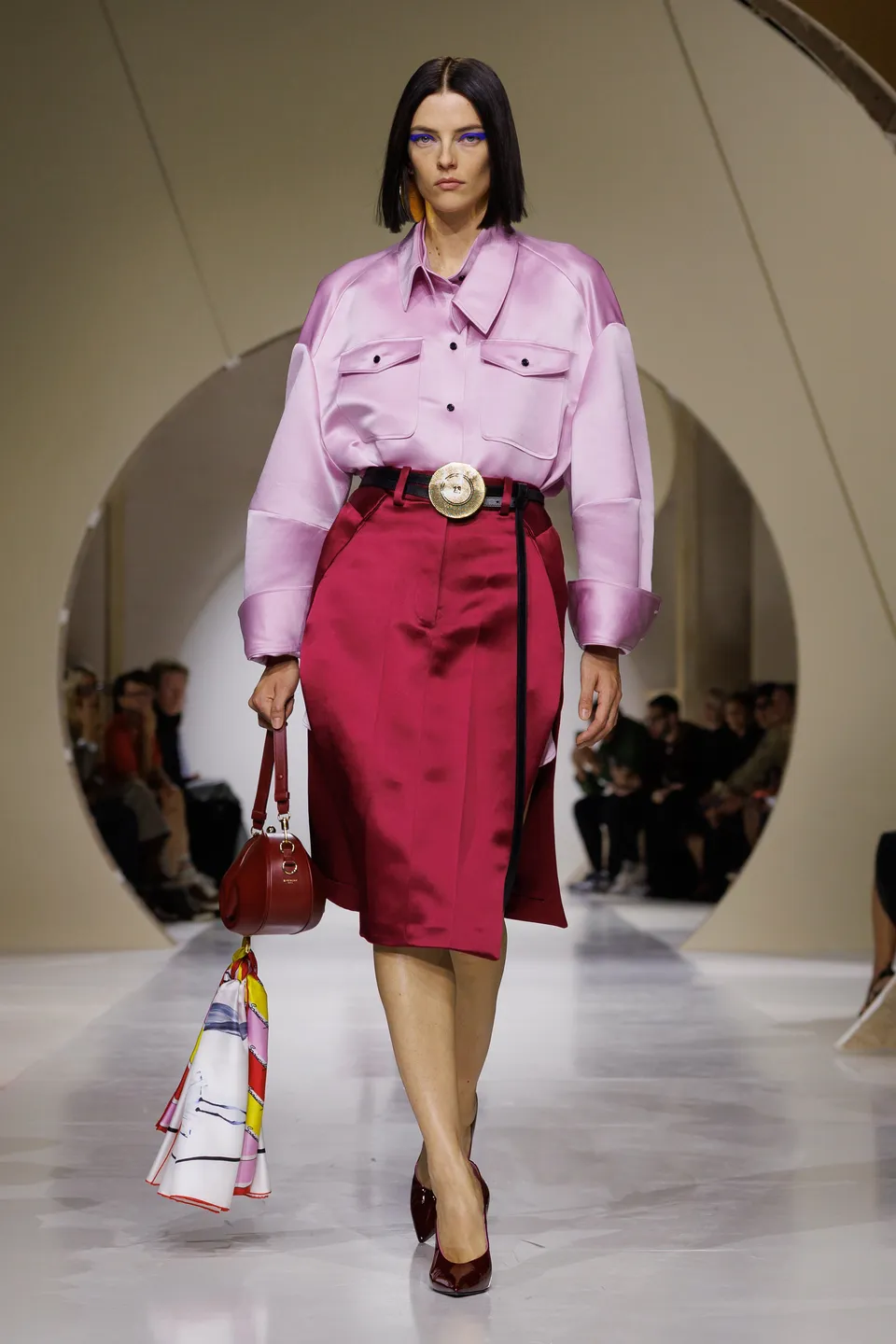
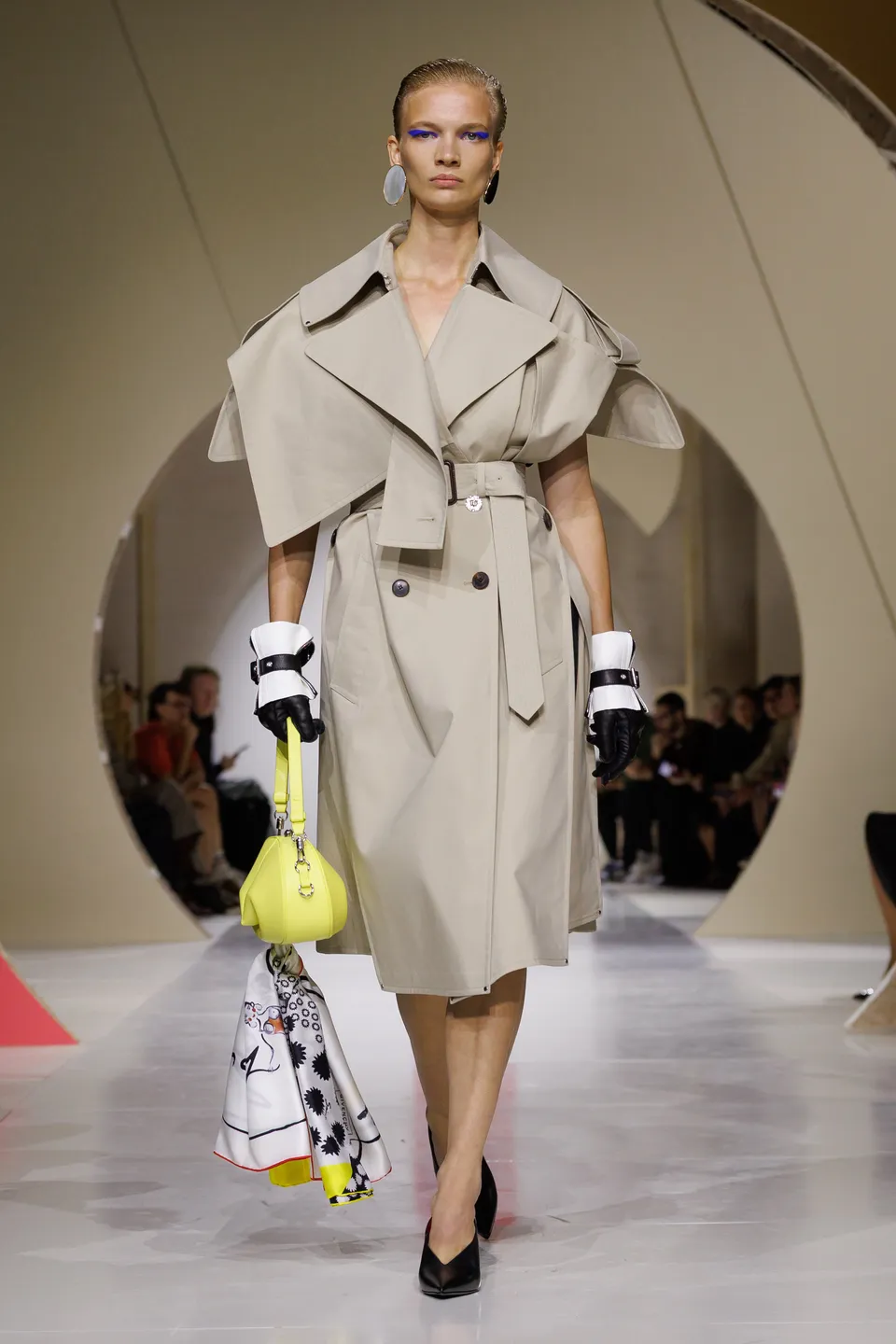
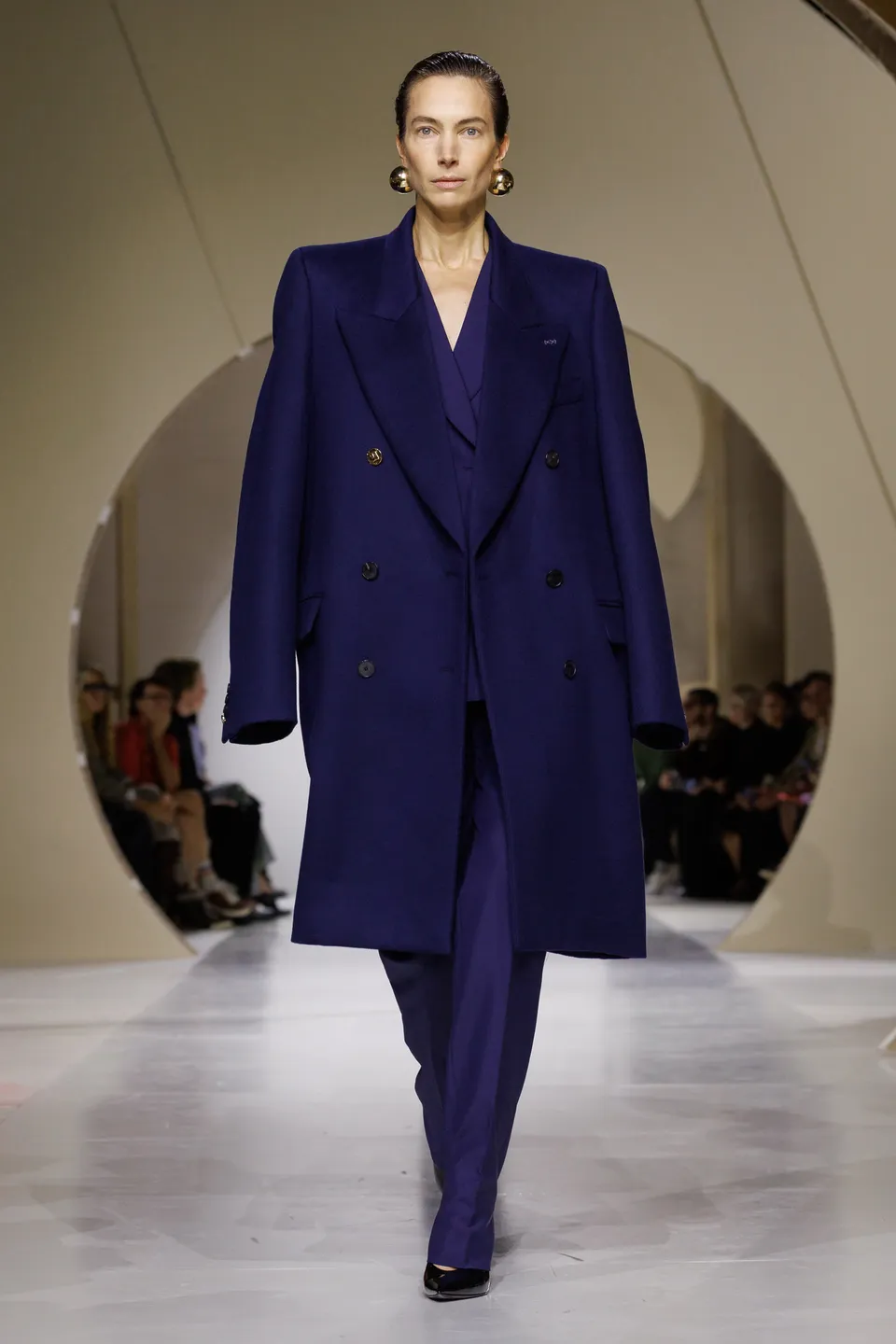
The material carries its usual firmness, yet several pieces are worked with enough suppleness to collapse and drape around the body almost like cloth. A vivid green leather dress is especially effective because the surface still has the weight and finish of leather while the silhouette moves with unexpected liquidity.
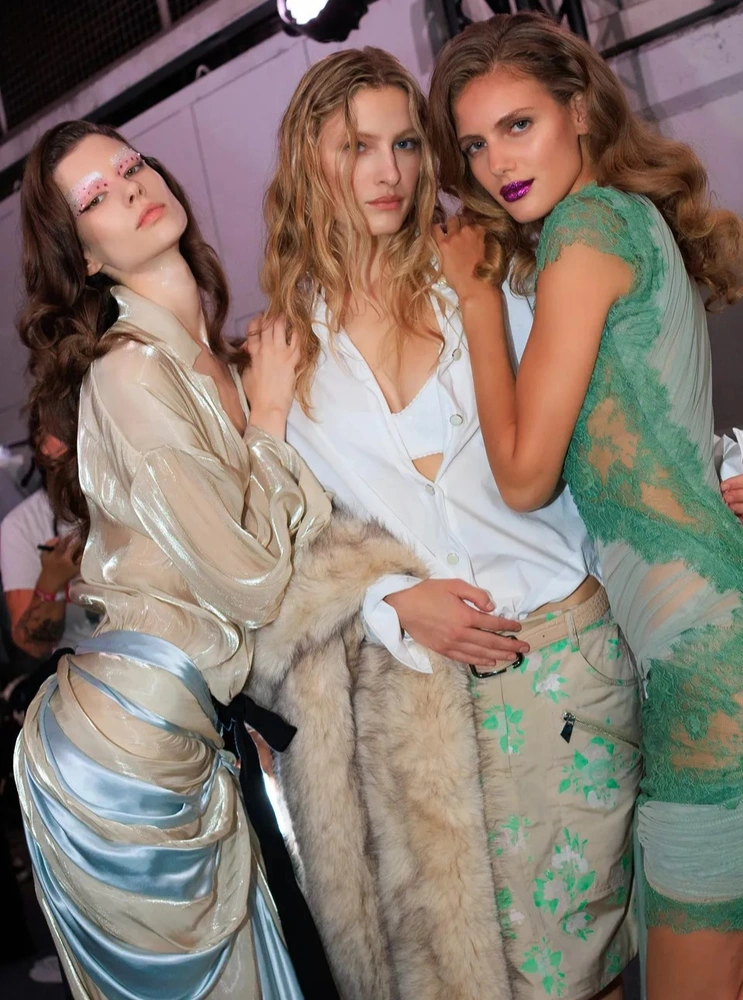
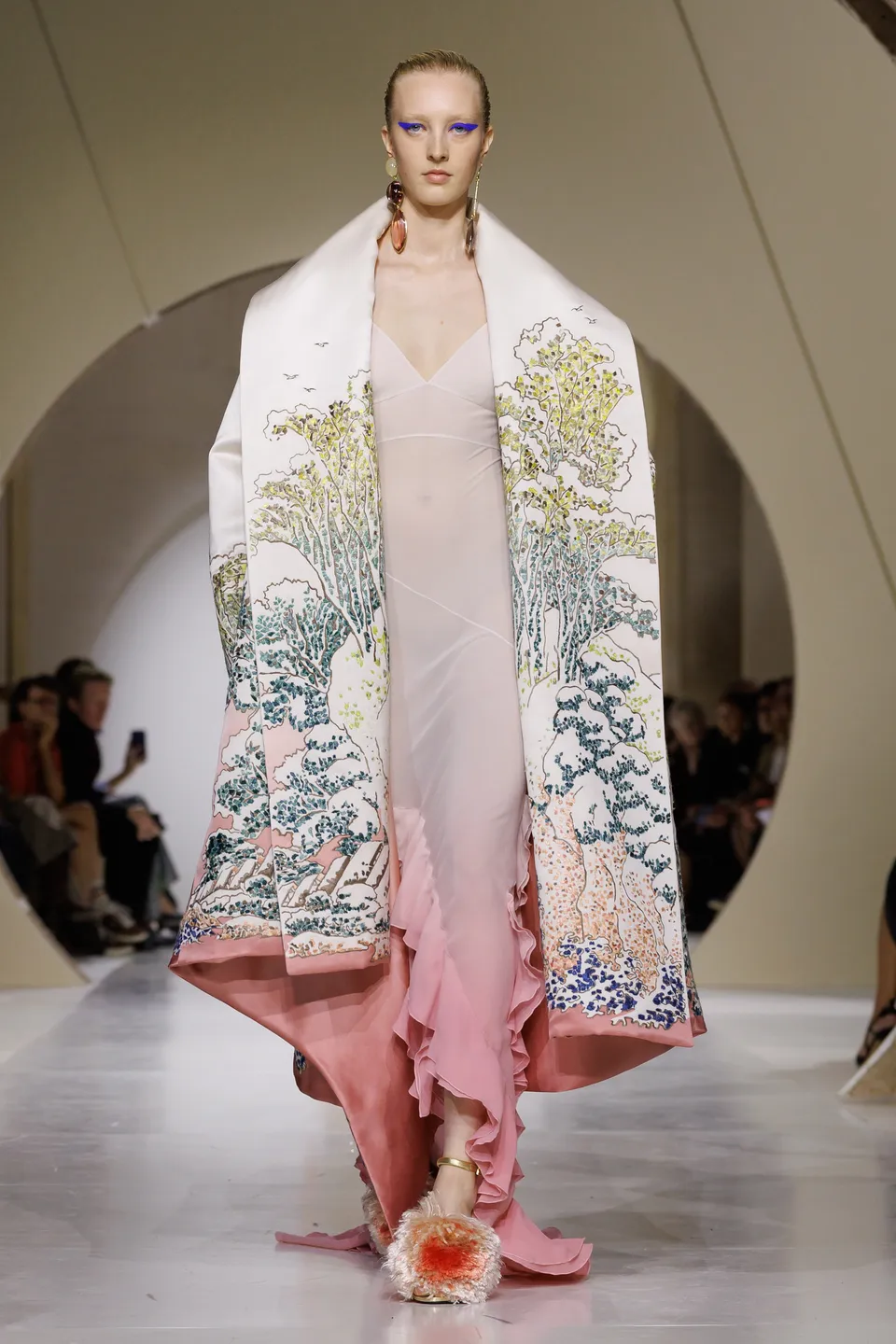
At the other end of the collection, heavy duchesse satin brings weight, gloss and almost painterly volume.
Givenchy’s official notes connect these pieces to glimpses of Northern European Old Masters, particularly through capes, head coverings and sculptural draping.
A cape can therefore fall heavily from the shoulder and still hold a strong curved edge. The jewel tones intensify that effect. Cobalt, pink and saturated shades carry a near-pictorial richness through the runway, while the fabric creates broad planes around the body.
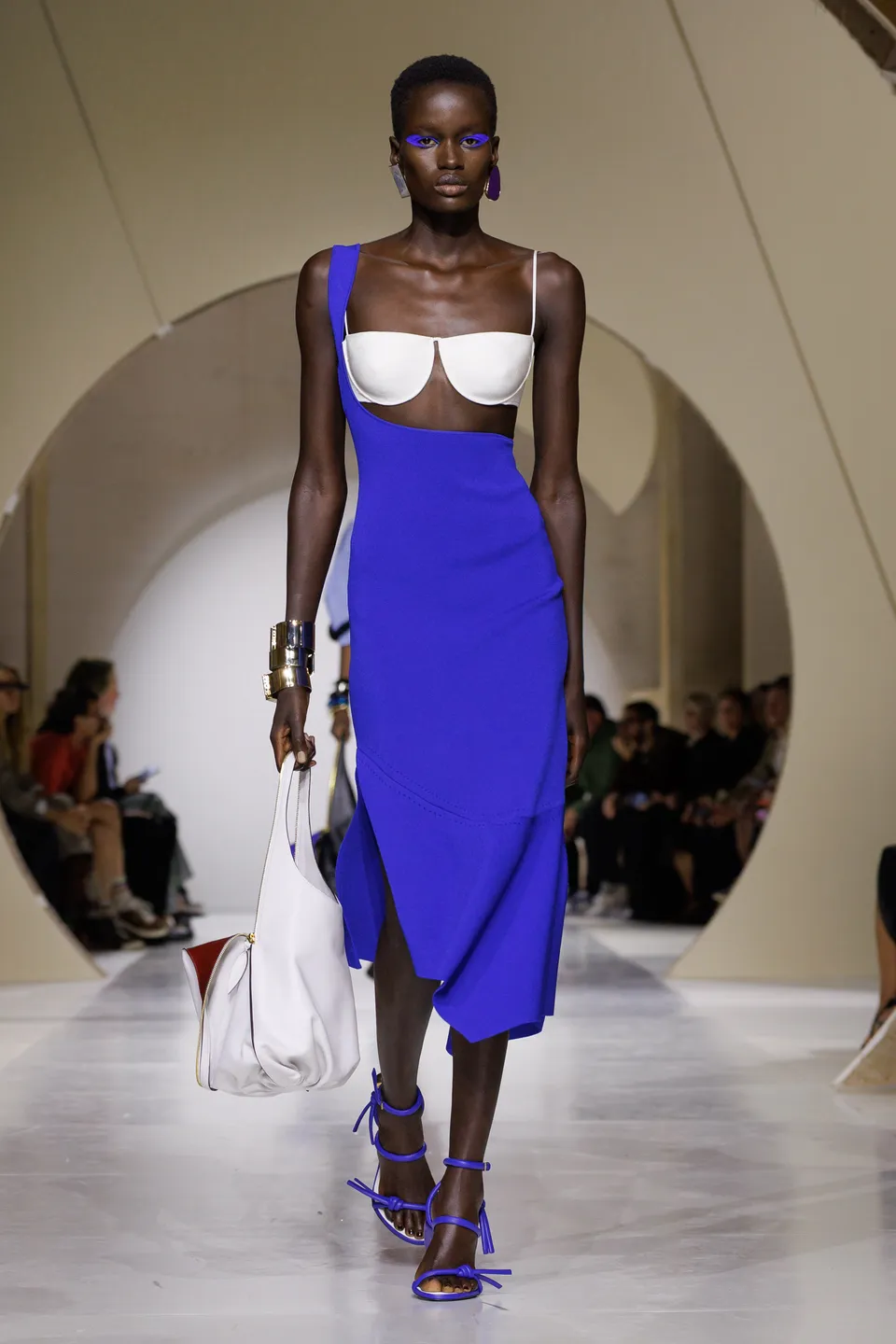
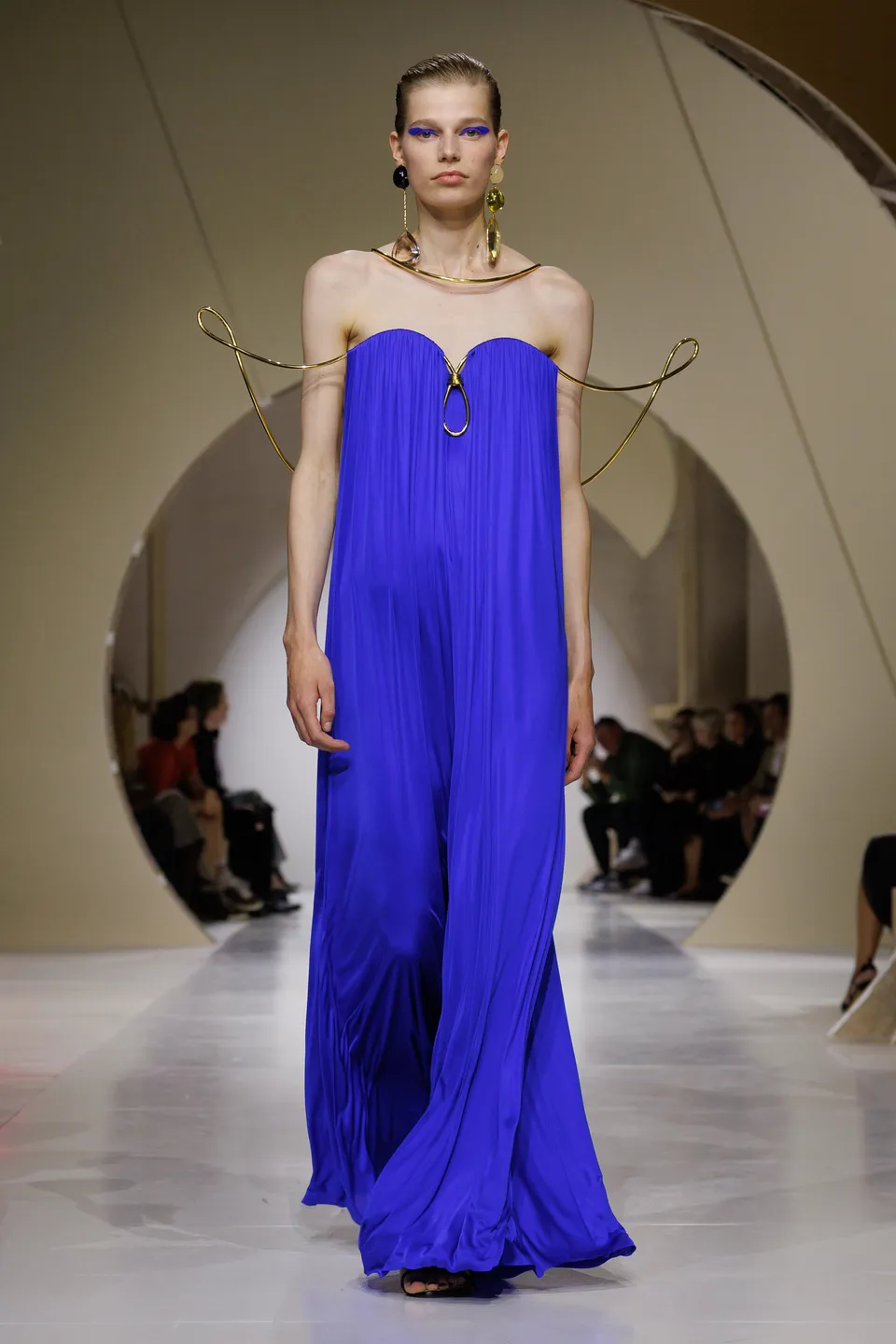
One of the collection’s most technically ambitious moments arrives through two evening dresses in extremely fine jersey.
Their draping is suspended over arabesque structures made from bent brass, creating wing-like forms that project from the body. Burton described the idea through suspension, sensuality and fluidity, citing Alexander Calder’s Cirque from 1926 as a reference.
Another construction develops that idea further through a single piece of brass bent around the figure, with fine chains descending from the frame and skimming the body.
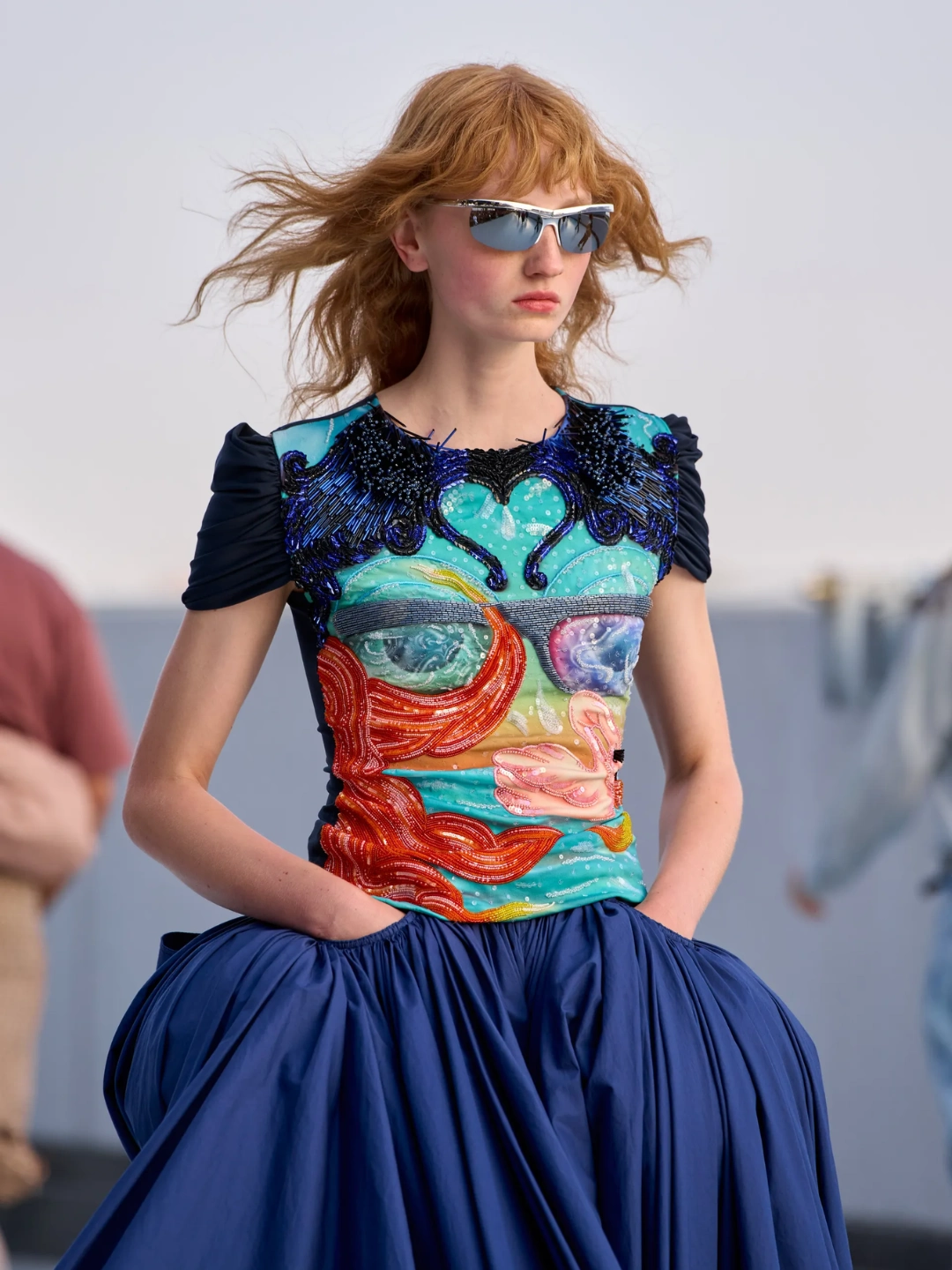
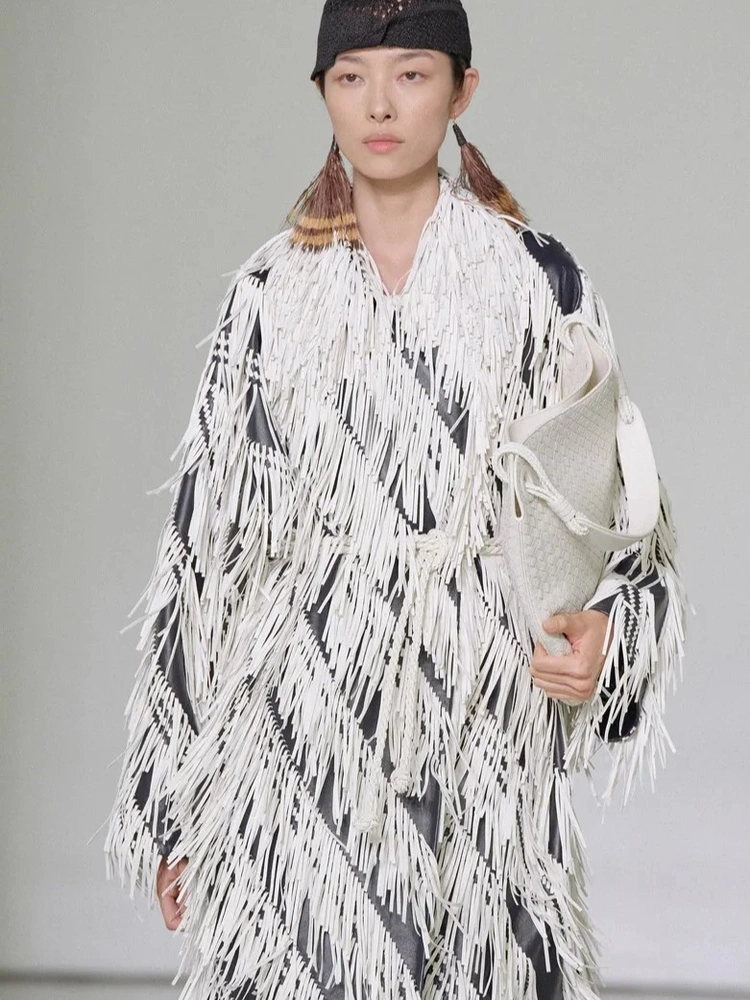
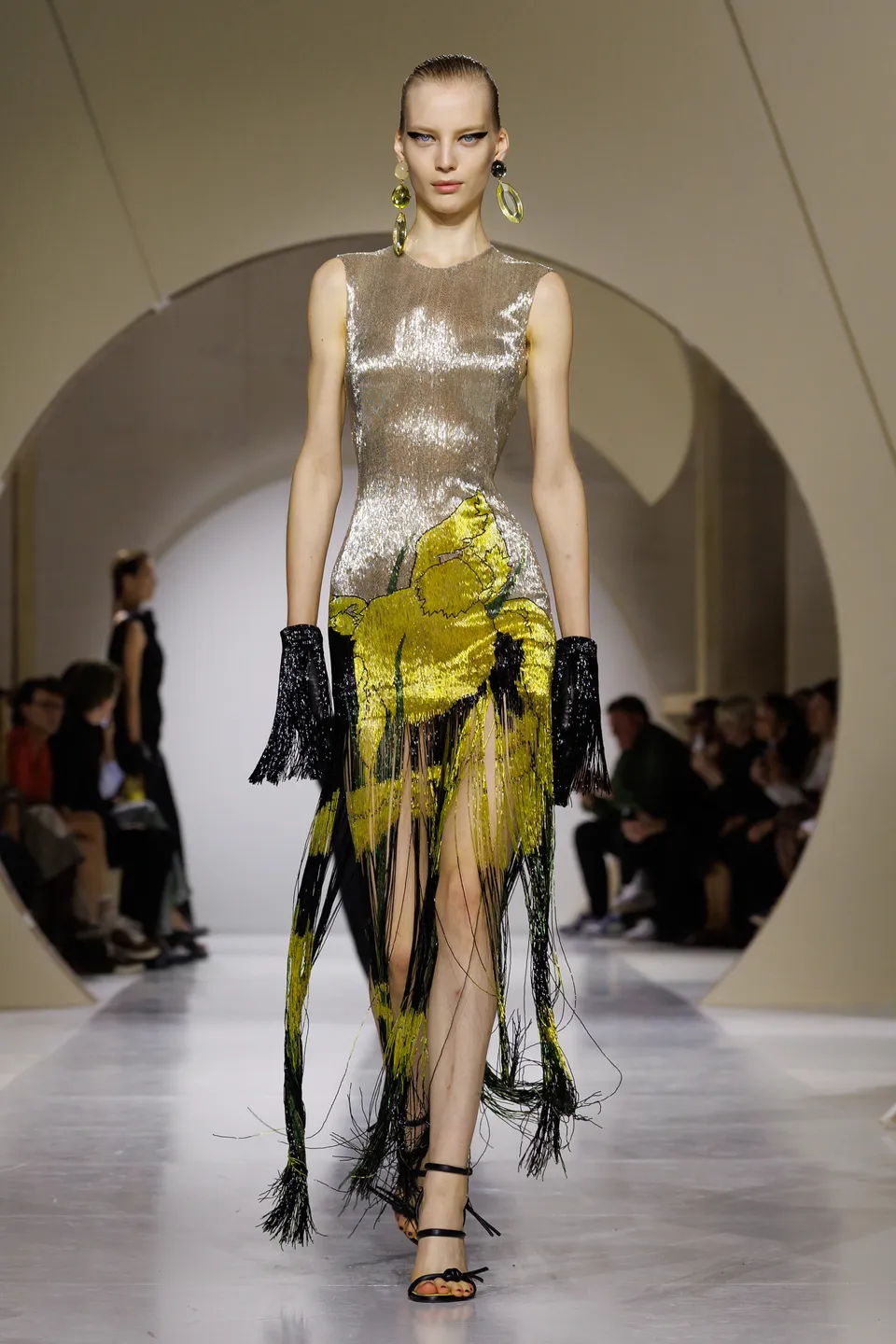
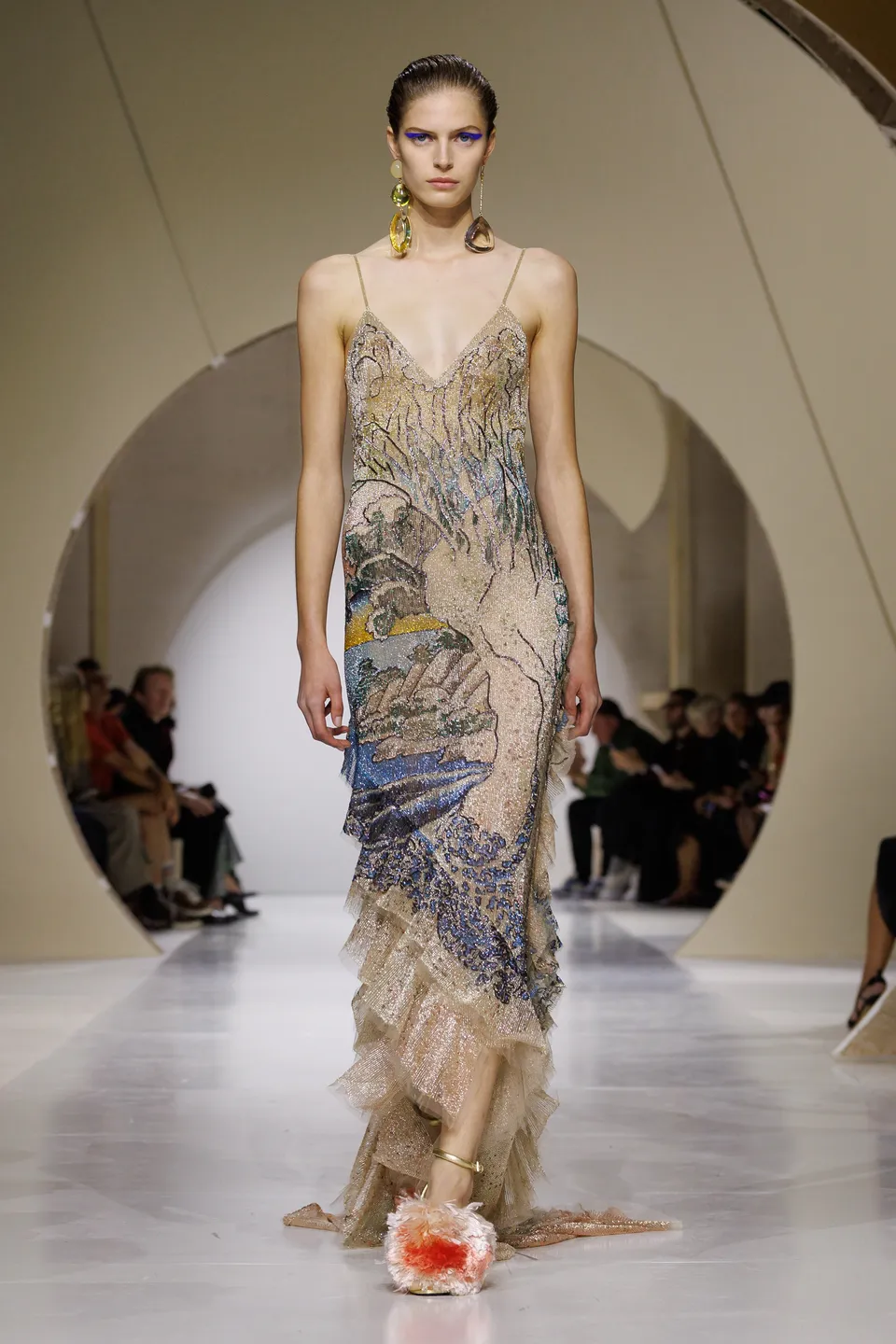
Shredded floral dresses, handwork, embroidery and fringe begin replacing the cleaner surfaces of the early tailoring. Givenchy’s official notes describe the evening pieces as flowered and shredded, while later looks introduce richer craft and references ranging from Japan to turn-of-the-century domesticity.
The fringed gowns are especially successful because their movement becomes part of the design. Calder’s suspended figures offer a useful parallel: each hanging element gains meaning through motion.
On Burton’s dresses, strips and fringe respond to the wearer with every step, changing density, outline and surface. The dress looks different in motion than it does standing still.
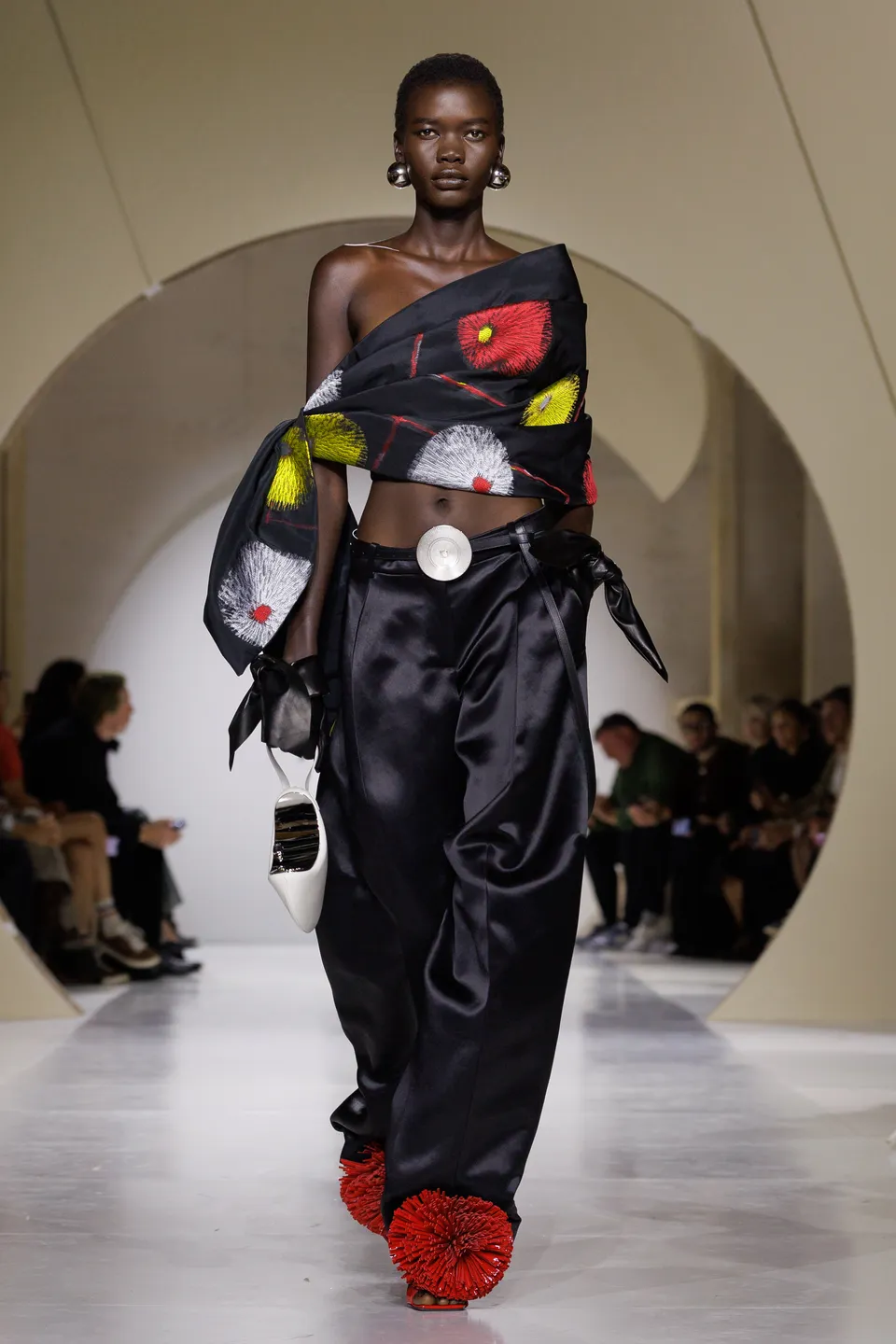
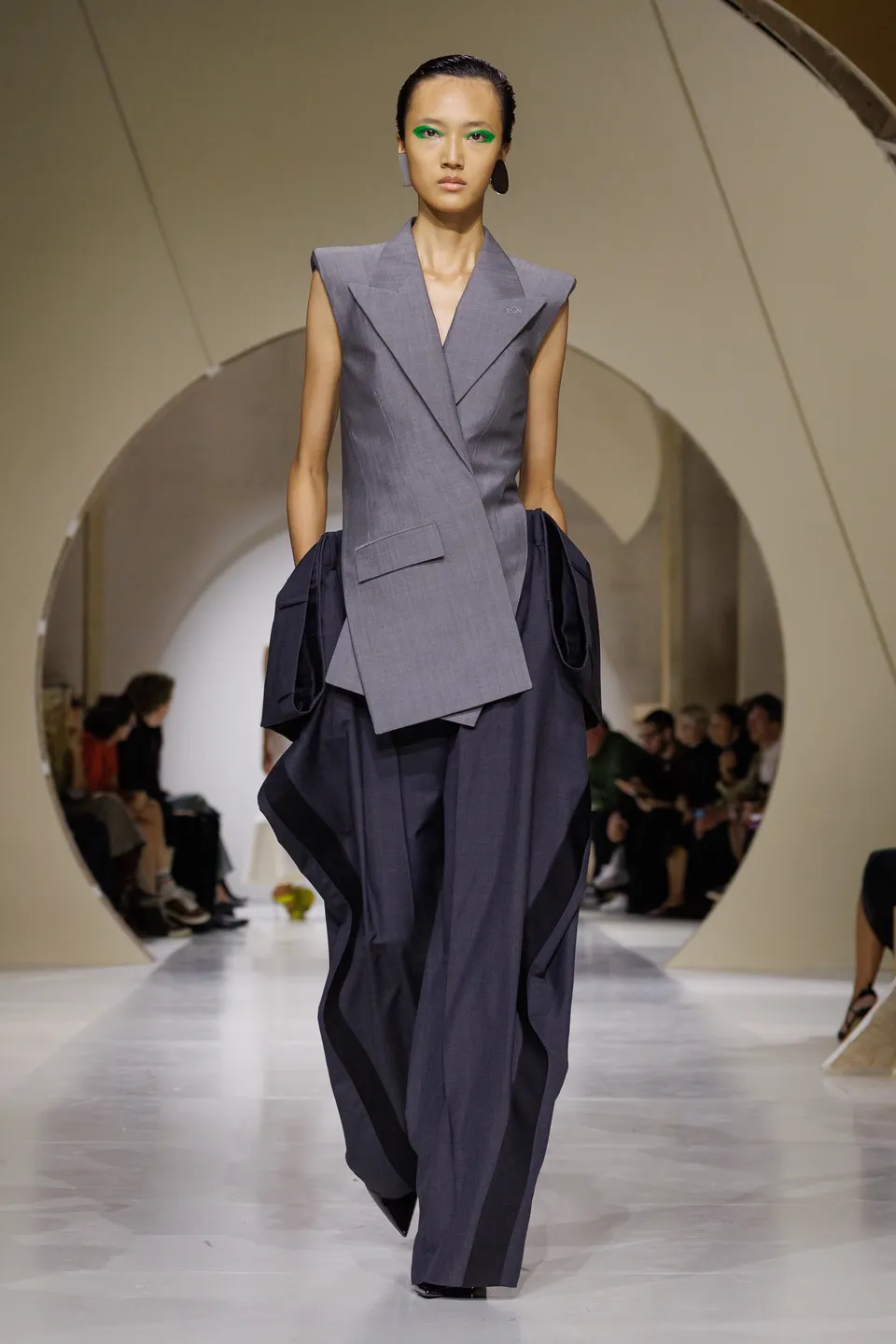
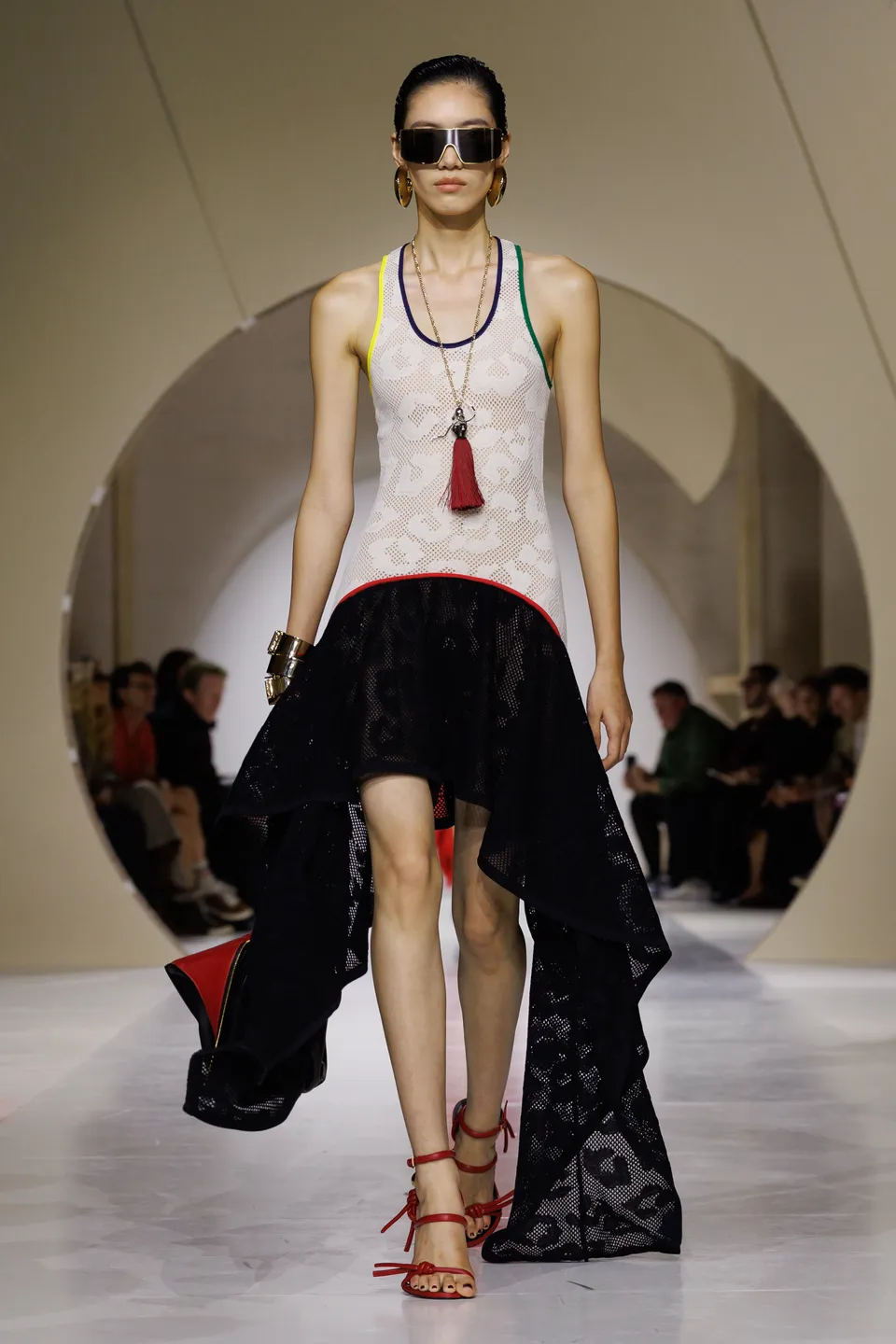
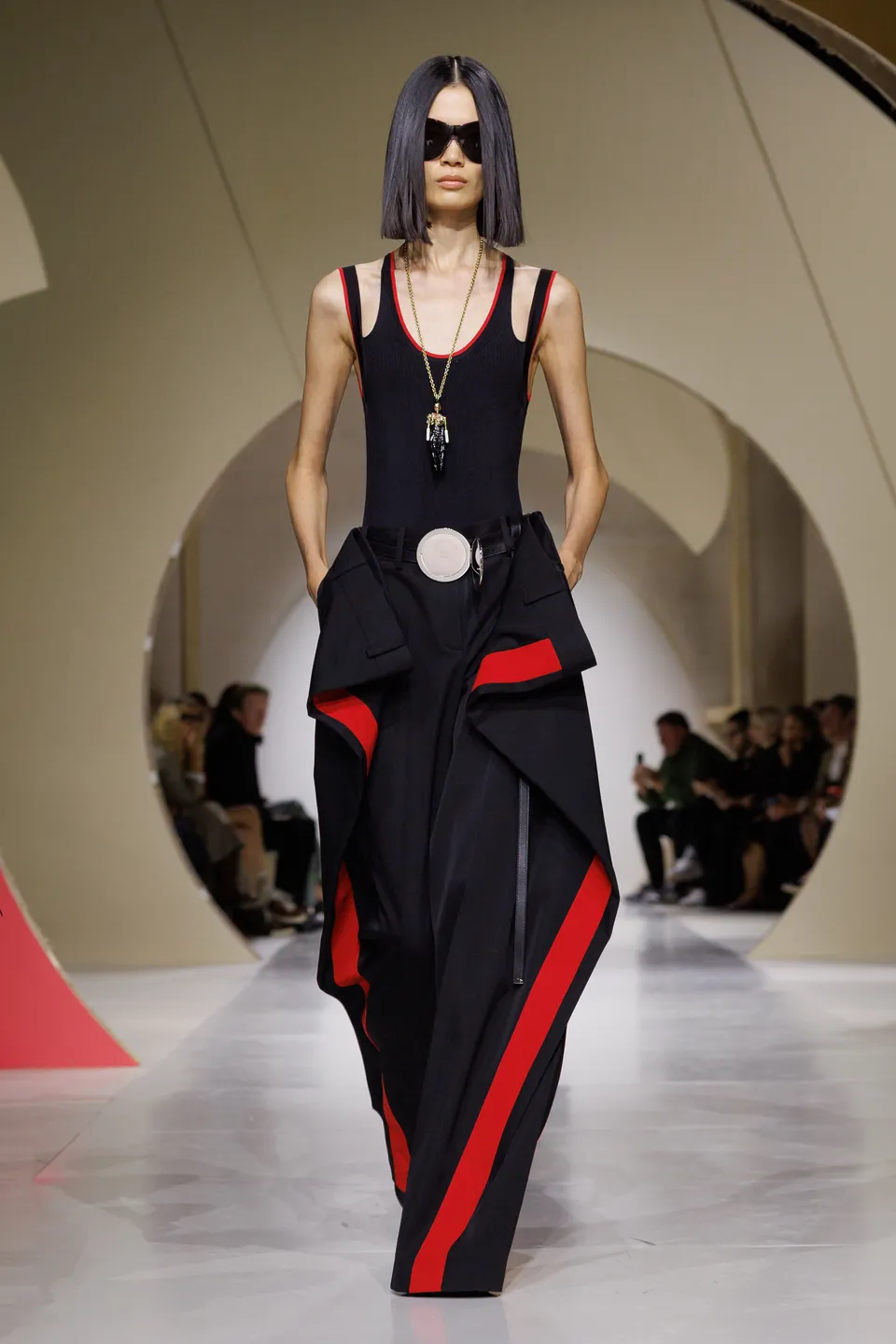
From the front, models appear to have a short, slicked style. From behind, a long braid emerges at the nape, revealing an entirely different silhouette according to viewpoint. The beauty direction therefore participates in the collection’s interest in multiple perspectives instead of functioning as an isolated styling statement.
Burton is also expanding her Givenchy language through accessories.
The crescent bags appear in vivid yellow, blue and white, with silver hardware holding their interiors. Their shapes feel soft and slightly peeled apart, continuing the collection’s interest in garments that shift away from their expected construction.
Riccardo Tisci’s Shark Boot returns with a front zipper and is worn completely opened, allowing Burton to engage with a more recent layer of Givenchy history.
The active Givenchy archive now stretches beyond Hubert’s couture vocabulary into the commercially powerful Tisci years.
Stiletto sandals curve into hook-like heels. Stacked rings become necklaces. Lock-and-key chokers introduce a faint fetish charge.
Across these accessories, Burton keeps returning to transformation. The same logic moves from tailoring to jewelry to footwear.
The collection is technically rich. The quieter stretches create the one concern.
After several passages of beautifully resolved shirting and tailoring, the runway begins to settle into a very polished rhythm. Givenchy FW26 carried a stronger theatrical charge, while SS27 keeps much of its drama concentrated around a smaller group of constructed and evening pieces.
That drama is still present. It simply hangs by a thinner thread this season.
Burton has several ways to push further without disturbing the precision that already works. A stronger print language could bring another layer into daywear. Surface treatments could enter tailoring earlier. Styling could create sharper visual collisions. More aggressive embroidery, texture or appliqué could interrupt smooth suiting. Even one recurring graphic device could make the quieter wardrobe pieces register with greater immediacy.
The foundation is already strong. Now Givenchy SS27 needs to let more of that experimentation travel through the entire collection, because polish only stays exciting when something keeps pressing against it.
Advertisement