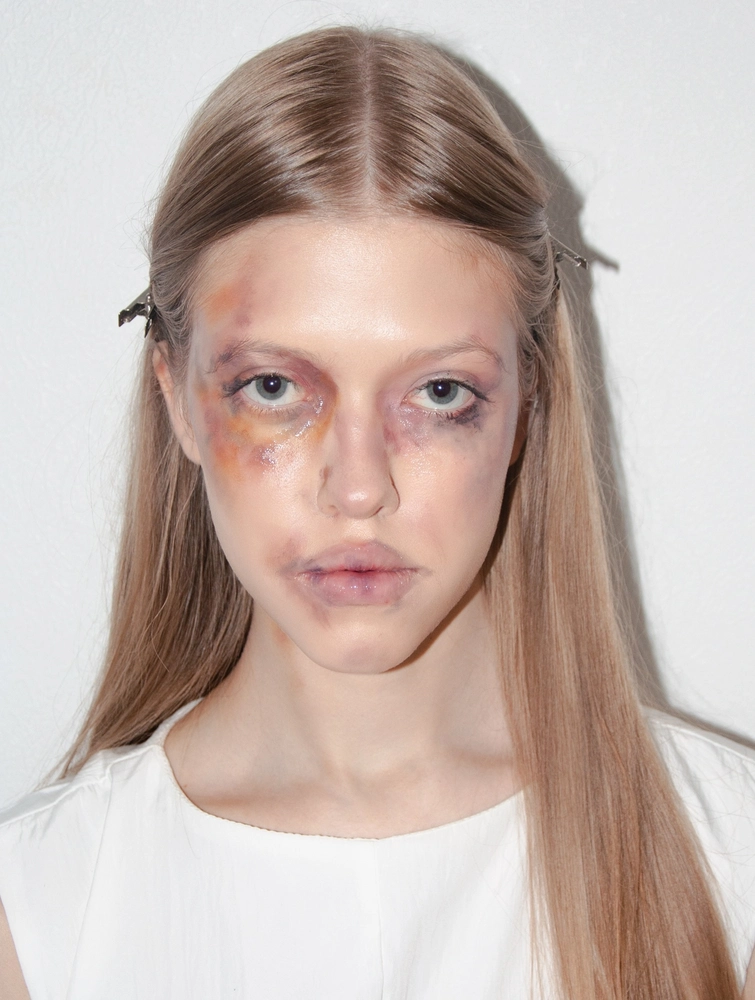
Sarah Burton’s Givenchy Fall 2026 unfolds like a meditation on womanhood in all its beautiful complexity: strength and softness, discipline and desire, memory and becoming.
Givenchy Fall 2026 by Sarah Burton: The Art Becoming Whole
Sarah Burton’s Givenchy Fall 2026 unfolds like a meditation on womanhood in all its beautiful complexity: strength and softness, discipline and desire, memory and becoming.
March 9, 2026
Advertisement
Advertisement


This Is the Show Where Sarah Burton Claimed Givenchy
By the time a designer reaches her third runway at a house like Givenchy, the fashion crowd usually expects one of two things: either the codes click into place, or the whole exercise starts to look like a very elegant hostage situation. Sarah Burton chose a far more interesting option. Givenchy Fall 2026 felt like the moment she stopped politely introducing herself to the maison and started speaking through it in a language that was unmistakably her own: precise, emotional, sharp at the shoulders, tender at the waist, and very aware that women are never only one thing at a time.
This was the collection where the earlier groundwork gave way to fluency. In the official show notes, she asked, “How can we put ourselves back together in the world we’re living in,” then described the collection as an intuitive portrayal of the strengths of women today. That is exactly why this show landed. It had a thesis larger than trends.
Not One Woman, But Many
The smartest thing Sarah Burton is doing at Givenchy is refusing the dead little industry habit of inventing a singular “woman” and treating her like a brand mascot in heels. She has been explicit about resisting the question of who her “woman” is, because it reduces women to a type instead of acknowledging them as a collective. Givenchy Fall 2026 was built on that refusal. This was a collection of plurality: the strict woman, the sensual woman, the woman who likes her jacket buttoned to military correctness, the woman who wants her back bare and her fringe halfway to the floor. Sarah Burton’s real subject was not identity as costume but identity as multiplicity.
That is why the collection never felt scattered even when it moved from pinstripes to leopard, from tailored coats to slip dresses, from solemn headwraps to playful bags. The coherence came from Sarah Burton’s point of view, which is less about dictating one ideal silhouette than about making different silhouettes feel equally inhabited. As she put it, “Each woman is her own person, each silhouette is her own character.” That single idea quietly organized the whole show. It explained the shifts in line, the variety of garment attitudes, and the deeper confidence of a designer who finally trusts the house enough to let it contain contradiction.
Old Masters, New Instincts
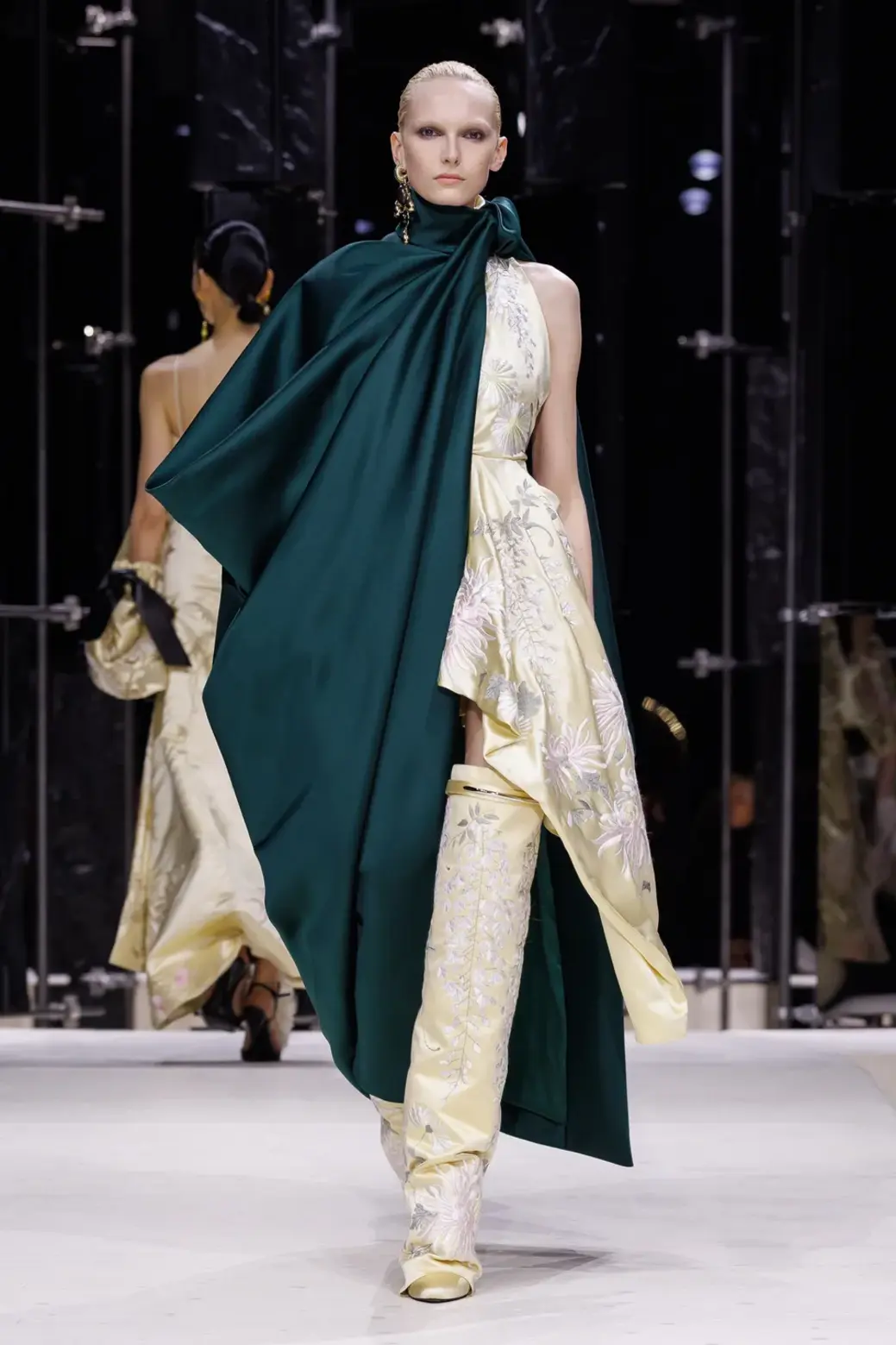
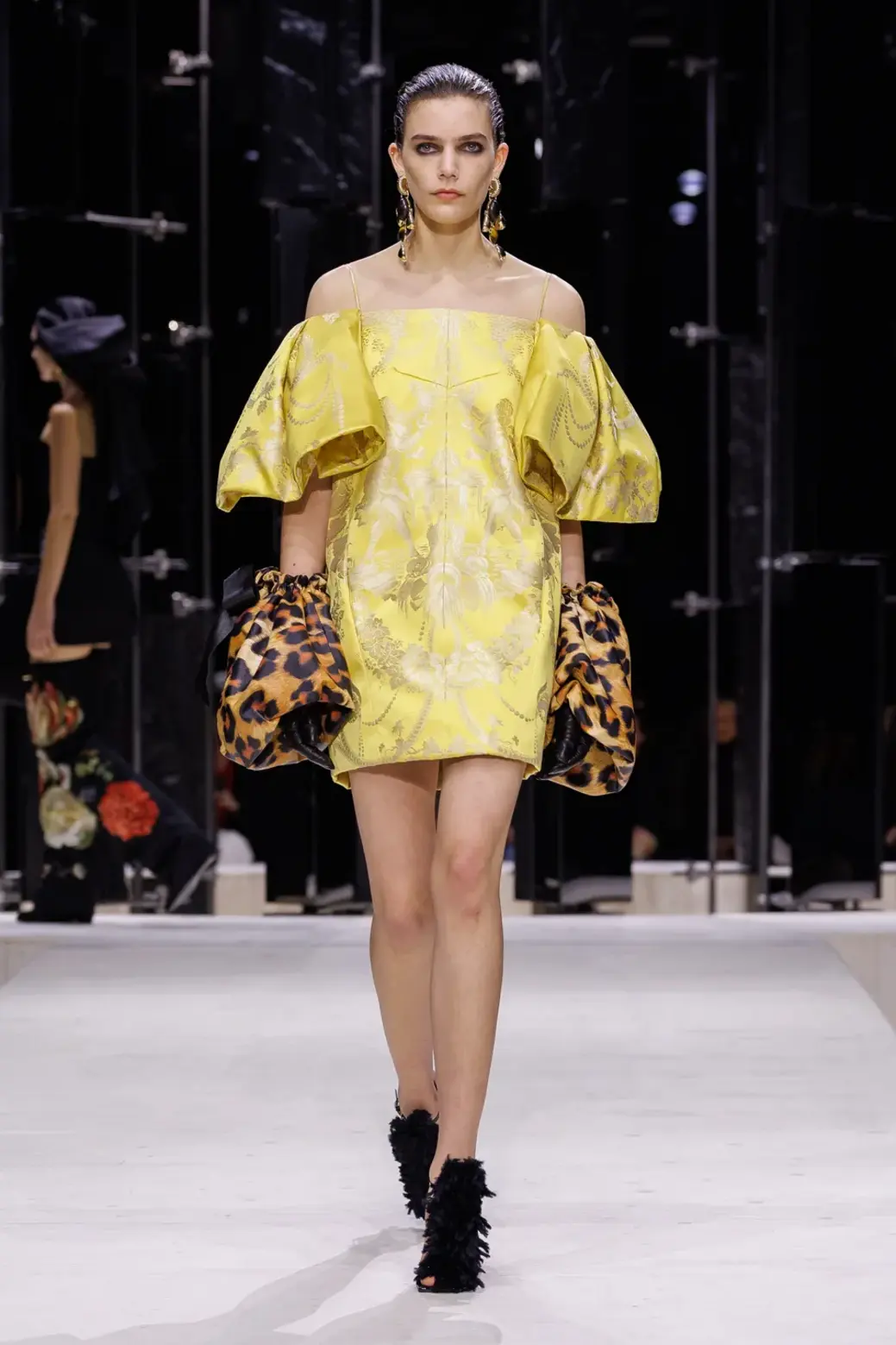
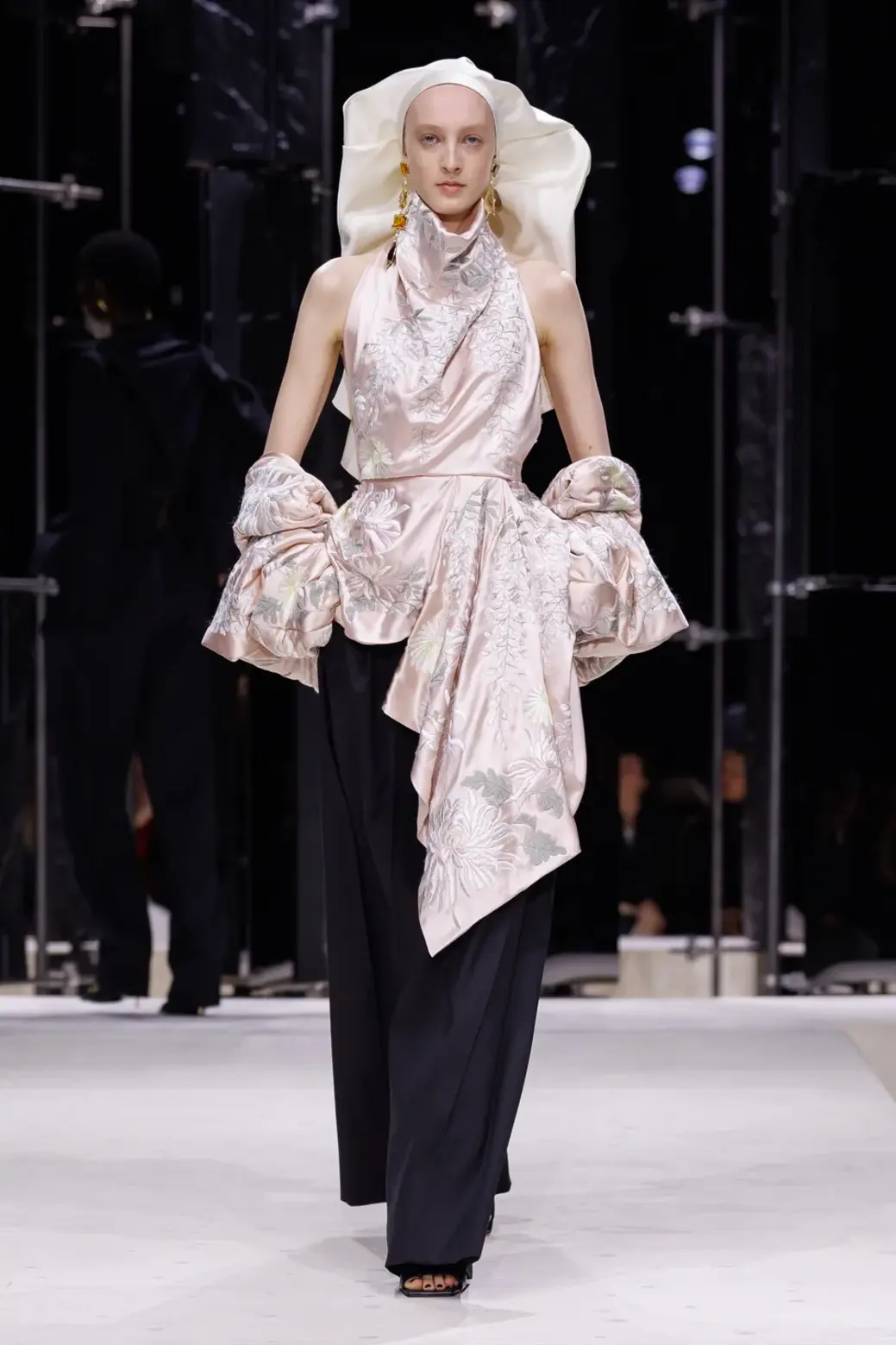
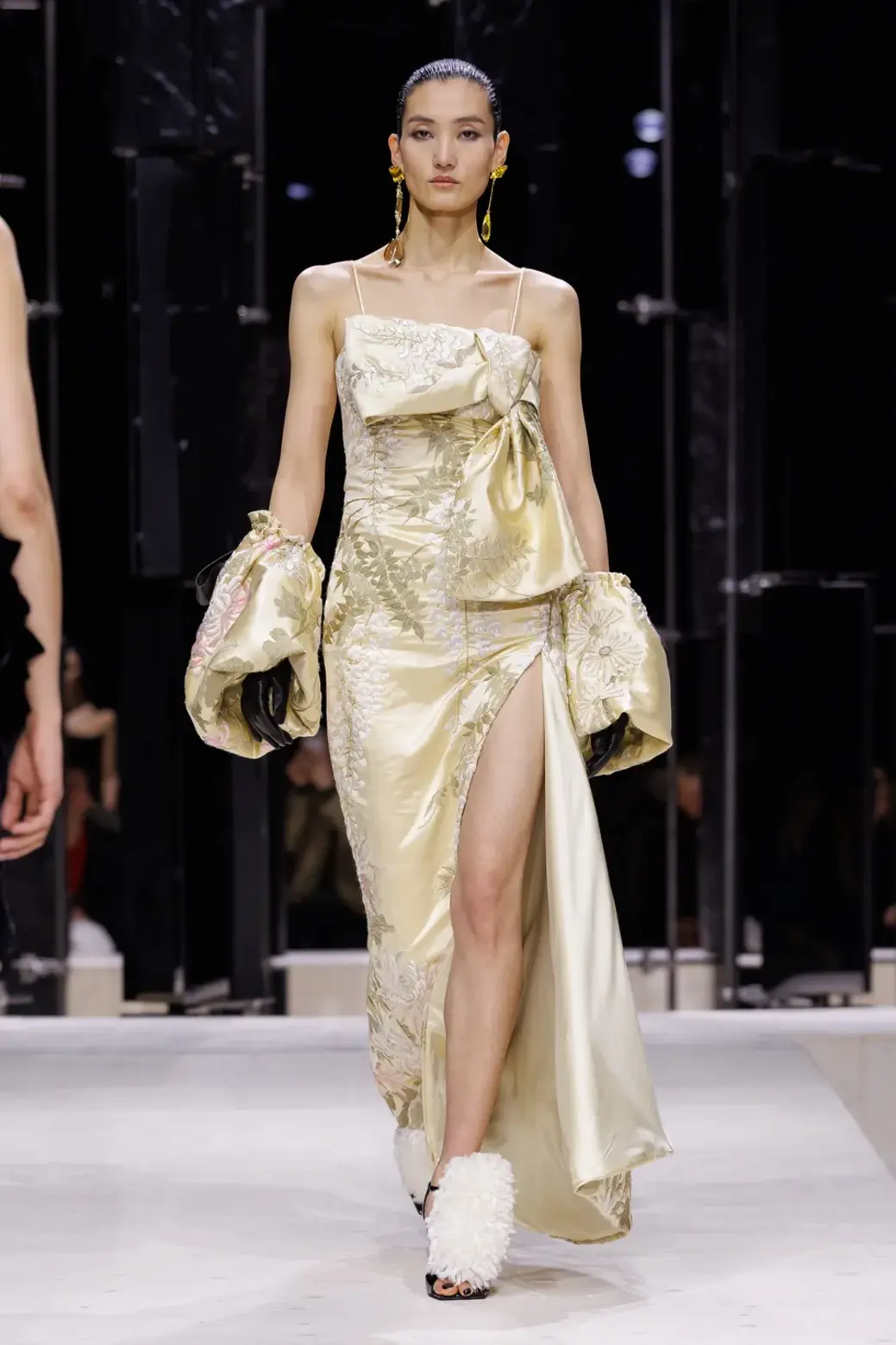
Burton’s inspiration for the season was explicitly rooted in Northern European Old Masters, and for once that reference did not feel like a decorative mood-board flourish thrown over otherwise ordinary clothes. The show notes spoke of painterly themes and sculptural forms, and the palette carried the language of art history: velvety black, ultramarine, garnet, emerald, burnished gold. These were not nostalgic museum colors. They were colors with moral weight, colors that seem to understand shadow, skin, oil paint, candlelight, and the drama of being looked at. Burton borrowed the gravity of portraiture without getting trapped inside period costume.
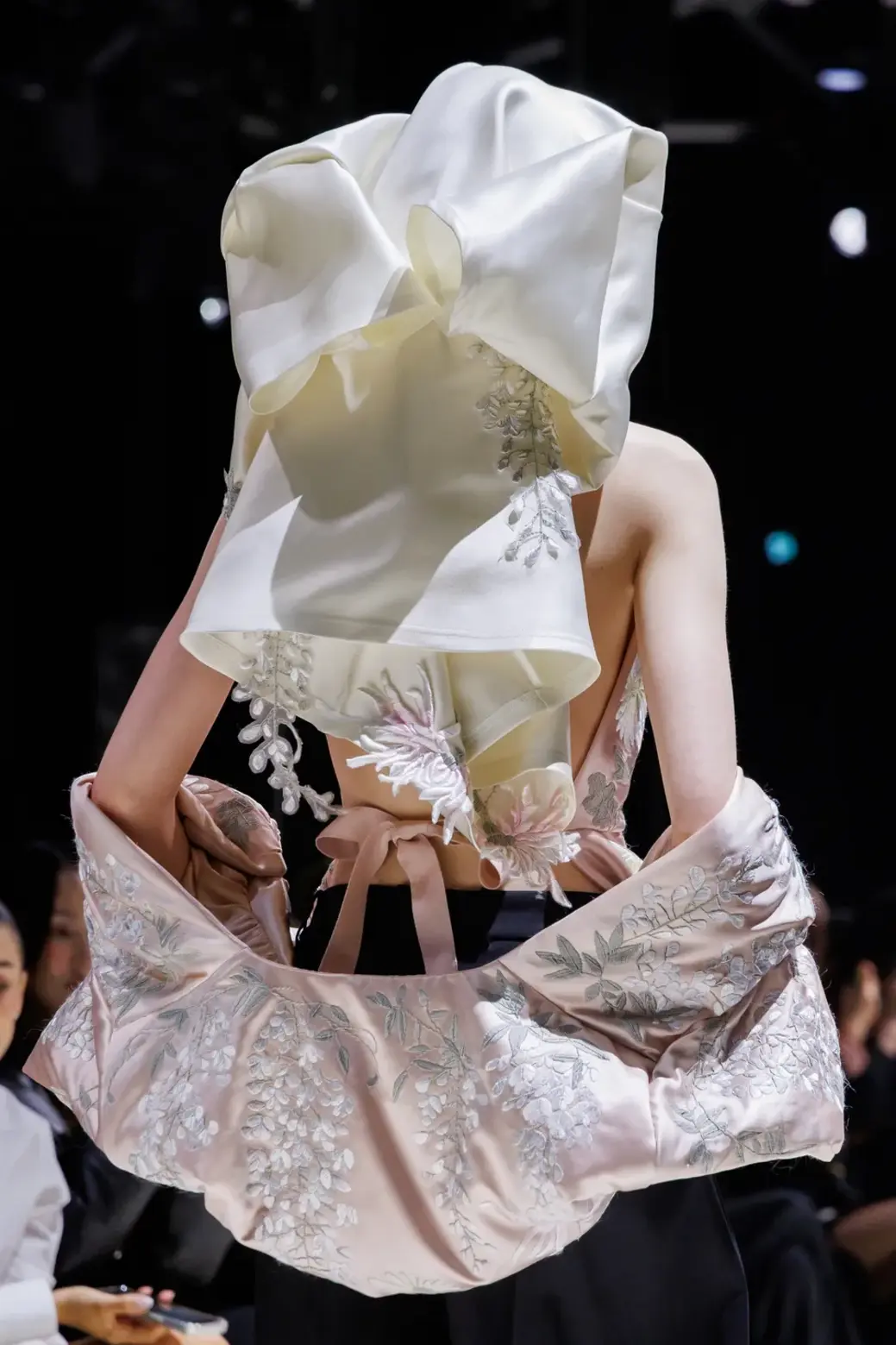
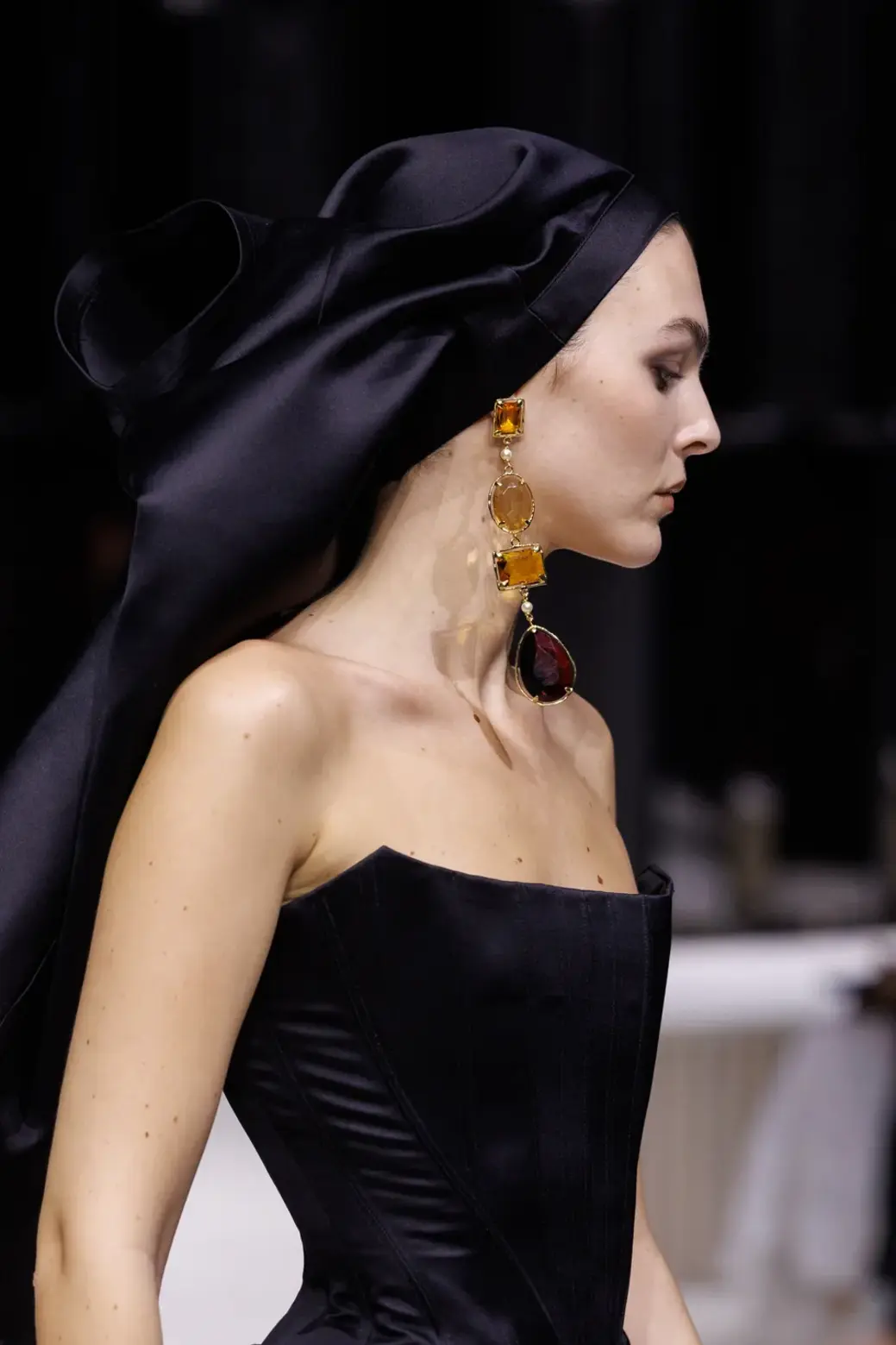
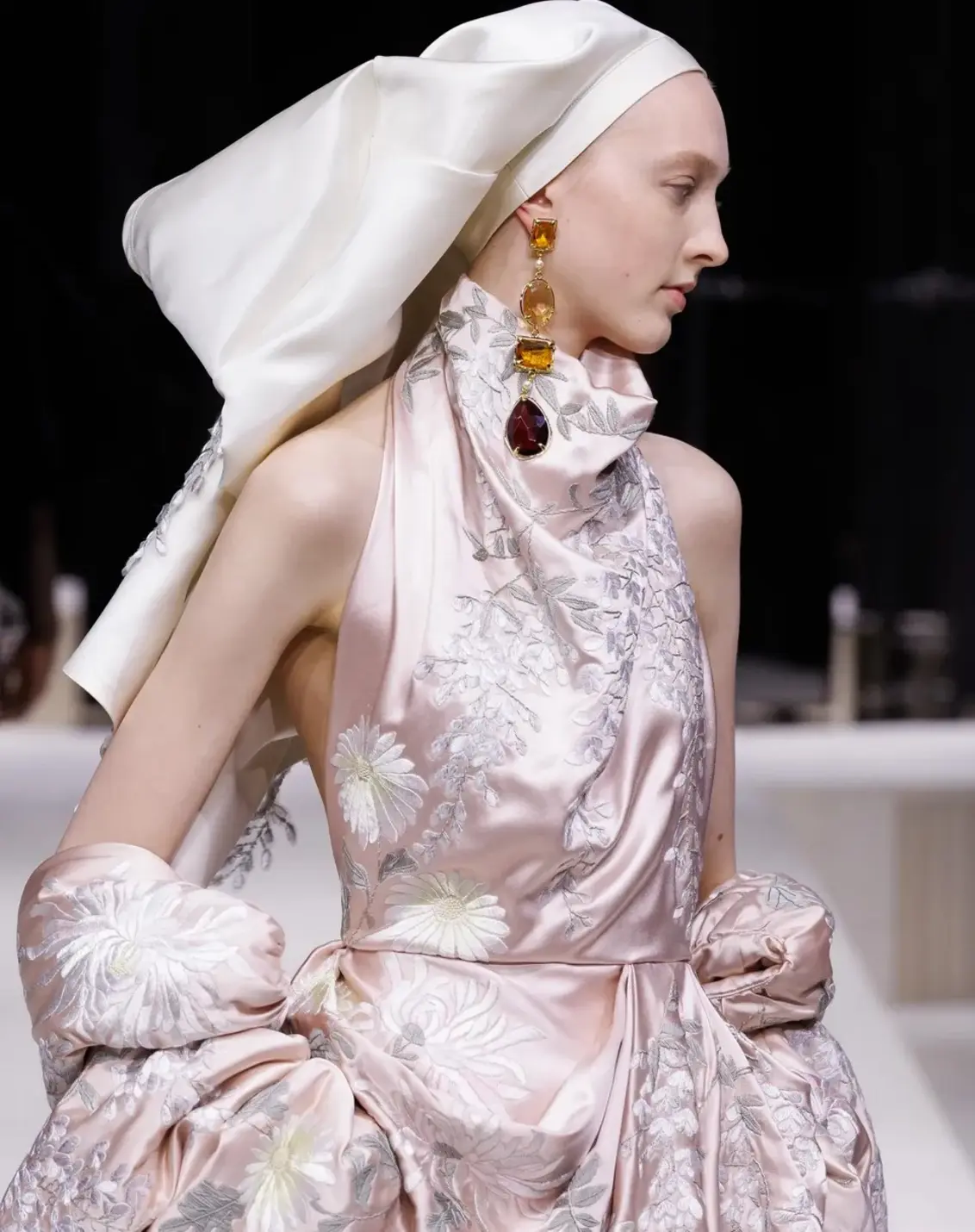
The headwraps were the stroke of genius here. Stephen Jones created them from satin T-shirts, and their humble origin story lingered in the air: just a T-shirt, just a twist, but with the right twist. In Sarah Burton’s hands it became a thesis about transformation. An ordinary object was lifted into ceremony. A soft jersey idea was translated into sculptural satin gravitas. The result carried something of Vermeer, something of devotion, and something unexpectedly modern at the same time. They framed the face with sanctity and swagger, which is a delicious combination.
Tailoring With a Pulse, Softness With a Twist
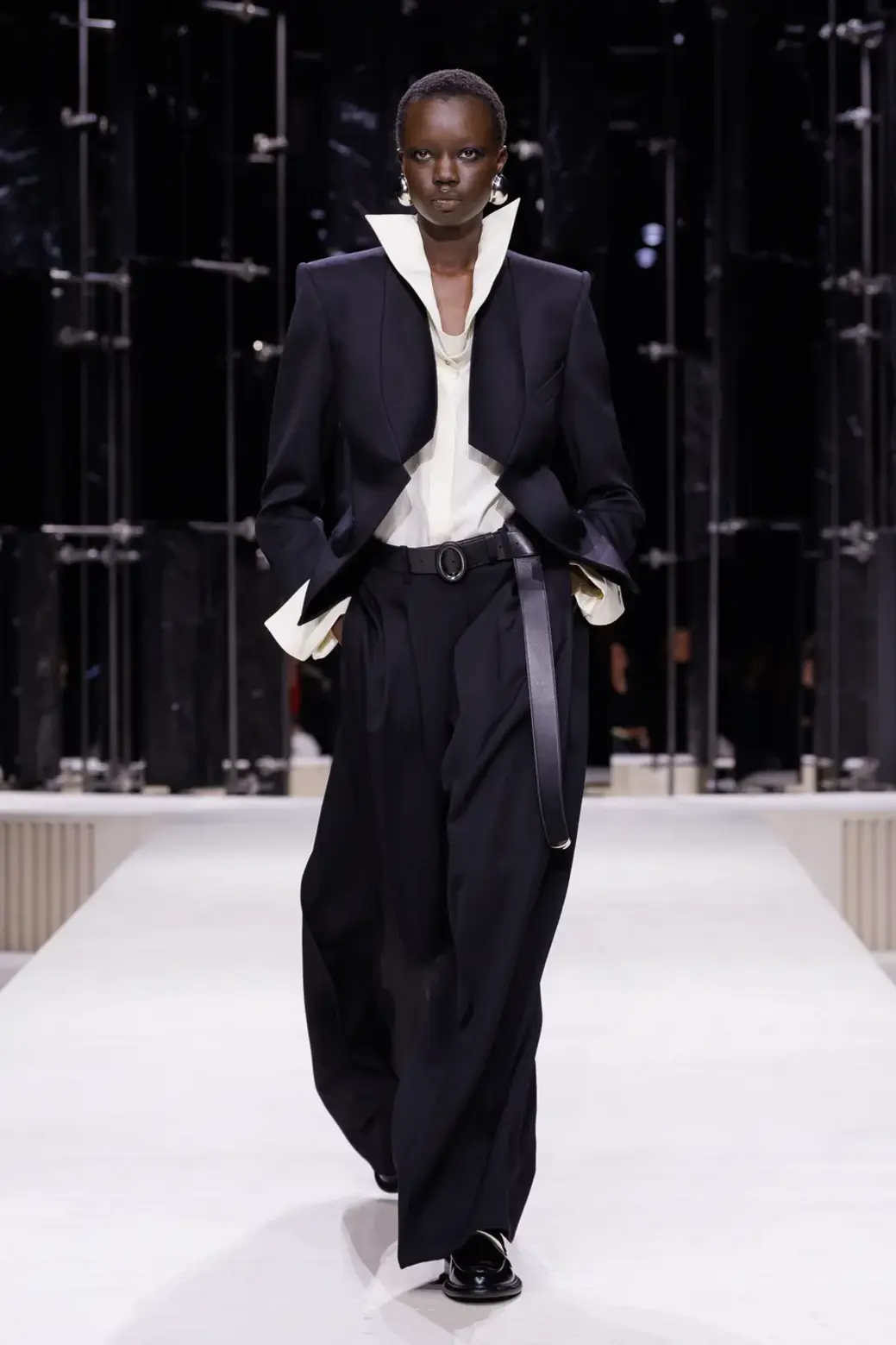
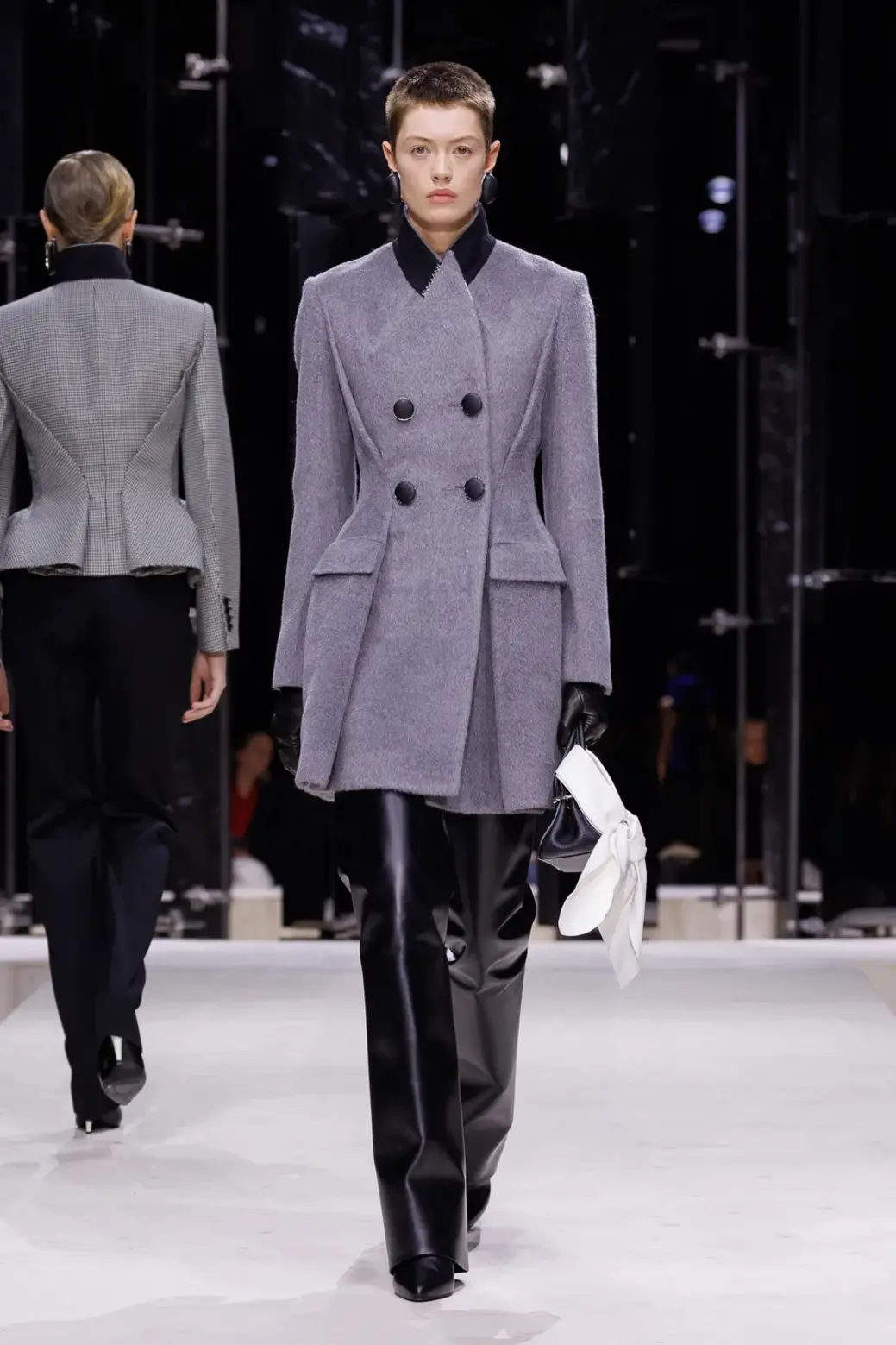
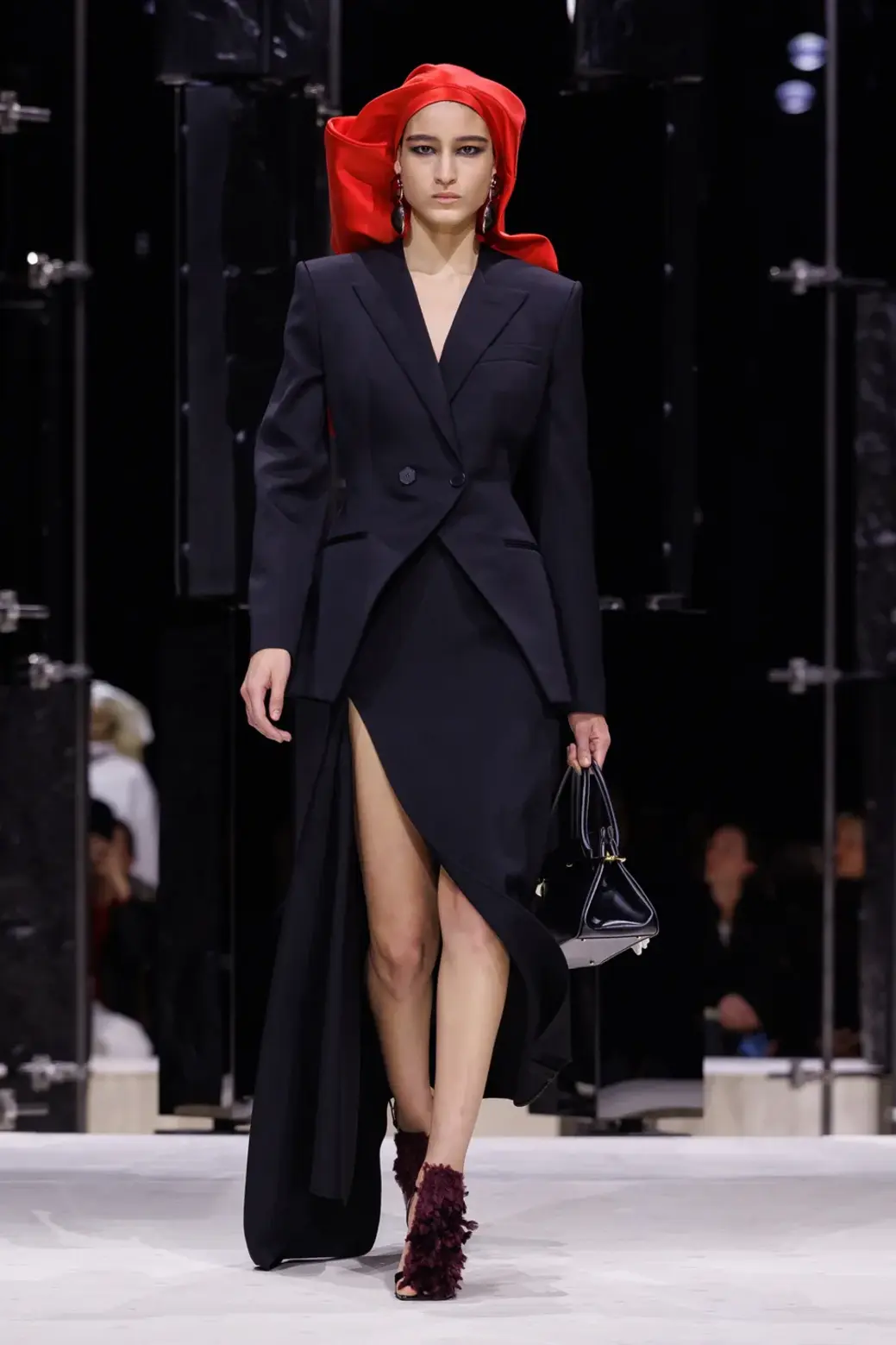
The collection’s real authority lived in the tailoring, which is where Burton has always been most dangerous. The hourglass suiting she established earlier at Givenchy had now relaxed into a broader arsenal of shapes, from masculine pinstripes to curvier cuts with peplum hips and a tuxedo finished with a razor-sharp evening coat. The opening look, a tailcoat tuxedo with an hourglass effect over a white shirt styled in reverse, its extra-tall collar stitched upside down and finished with polished metal studs, made the point immediately. Burton was treating tailoring less as uniform than as active architecture.
That mattered because Sarah Burton’s tailoring never tries to bully the body into obedience. It is sensual tailoring designed around the female form, emphasizing structure while respecting natural shape. So yes, there were double-breasted suits, belted trousers, peplum blazers, and broad-shouldered menswear echoes. But there was also curve, hip, ease, and a refusal to make power dressing mean emotional austerity. The jackets had conviction without becoming prison bars. The suits looked formidable, yet strangely personal, as though each one had learned the woman inside it before taking the runway.
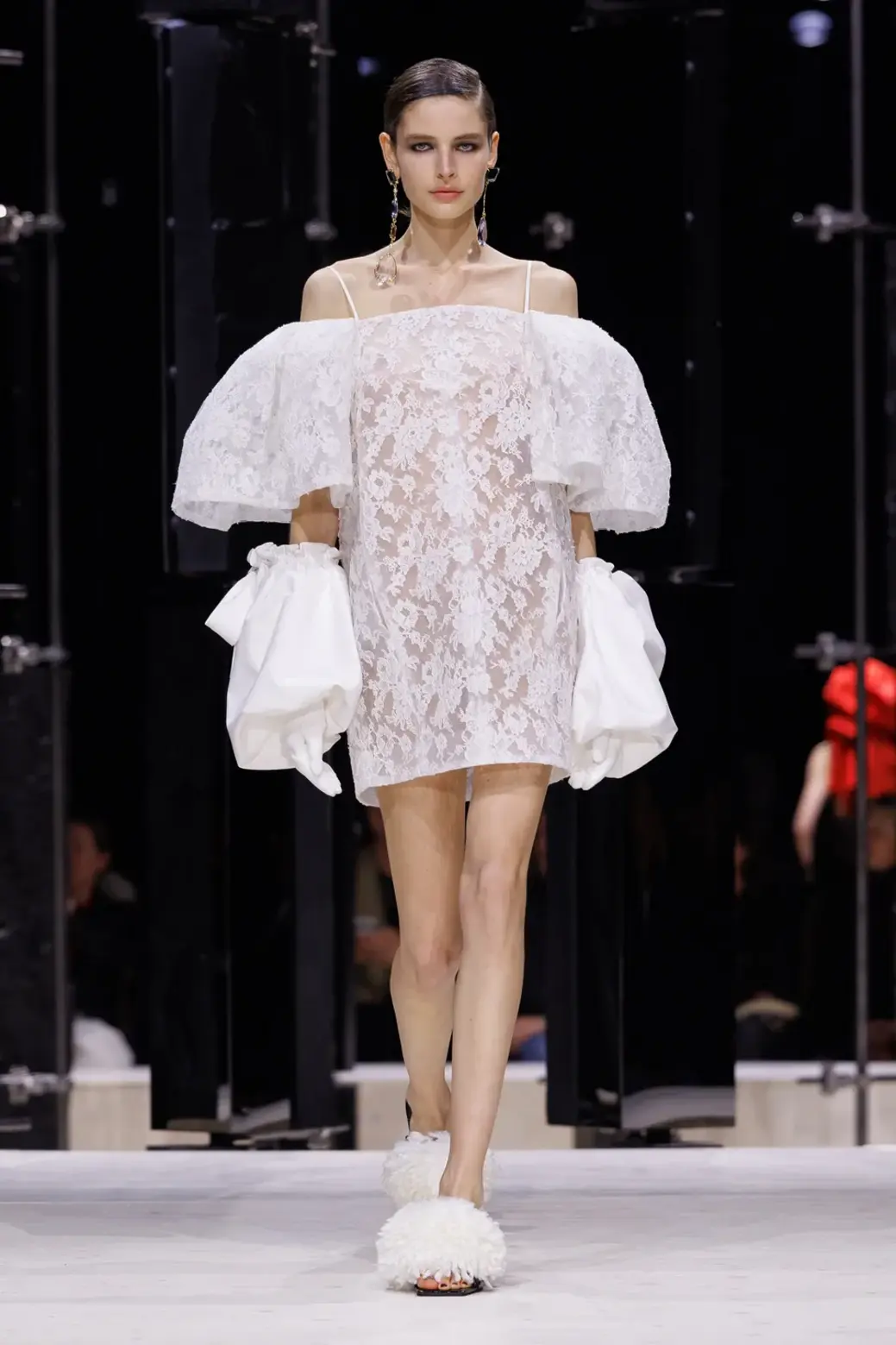
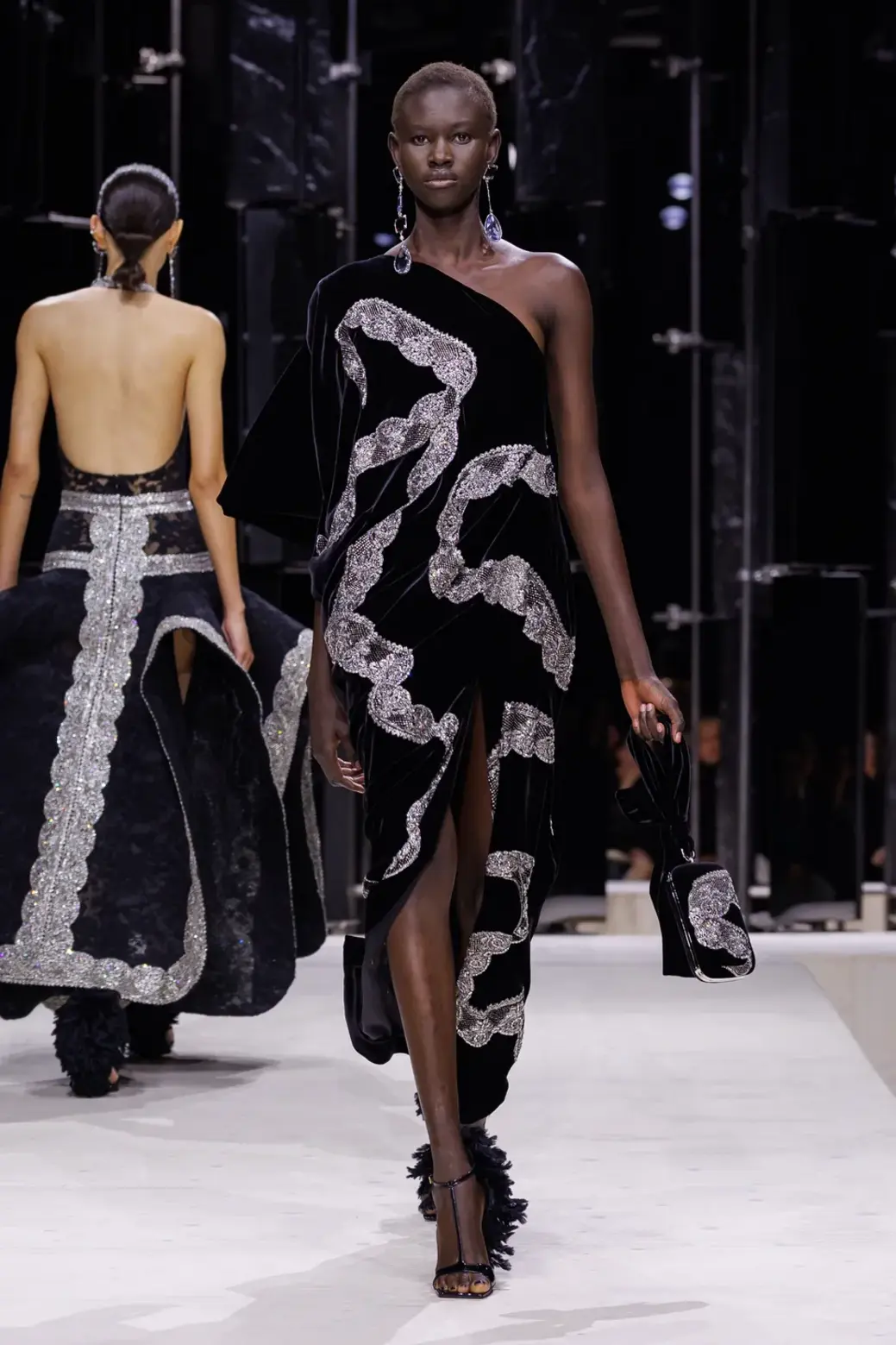
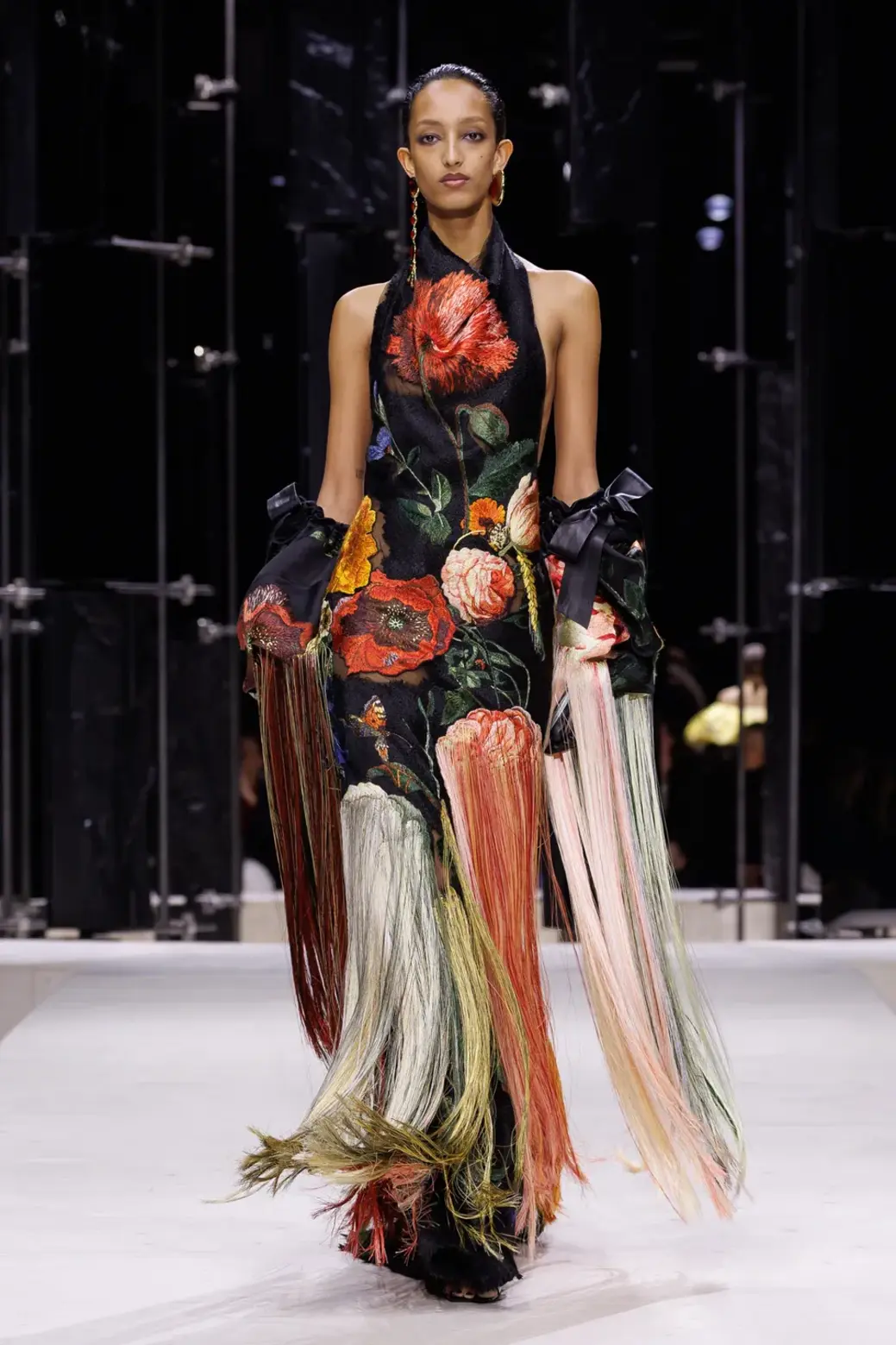
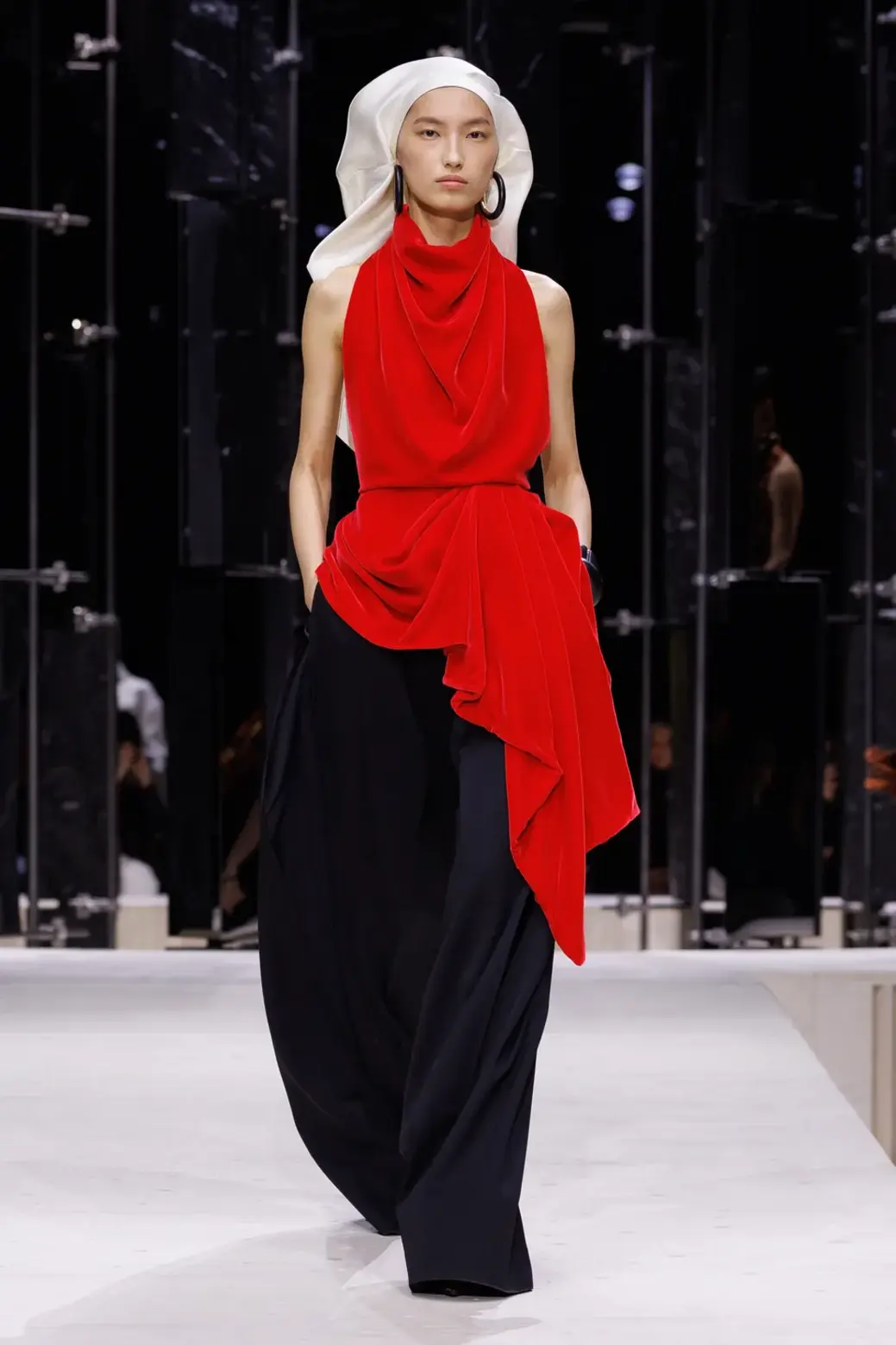
Just when the tailoring threatened to become the whole story, Burton loosened the collection’s jaw. The official notes described a movement from strict sartorial precision to sensual free-form drape, and that sentence really is the entire show in miniature. Against the pinstripes came draped blouses, capes, voluminous lace dresses, and evening pieces that looked as if they had been brushed by a romantic storm on the way out of the atelier. Sarah Burton understands a truth many designers miss: structure only looks intelligent when it has something soft to argue with.
A draped red velvet halter top was worn with baggy trousers, their volume engineered through double pleats and side seams twisted toward the front. It sounds small; it changes everything. A trouser seam shifted forward alters the gait, the line, the choreography of walking. Nearby came a sleeveless black dress embroidered with colorful poppies and long silk fringe nearly to the floor, plus a shaggy shearling coat dyed with leopard spots.
Character Dressing, Not Category Dressing
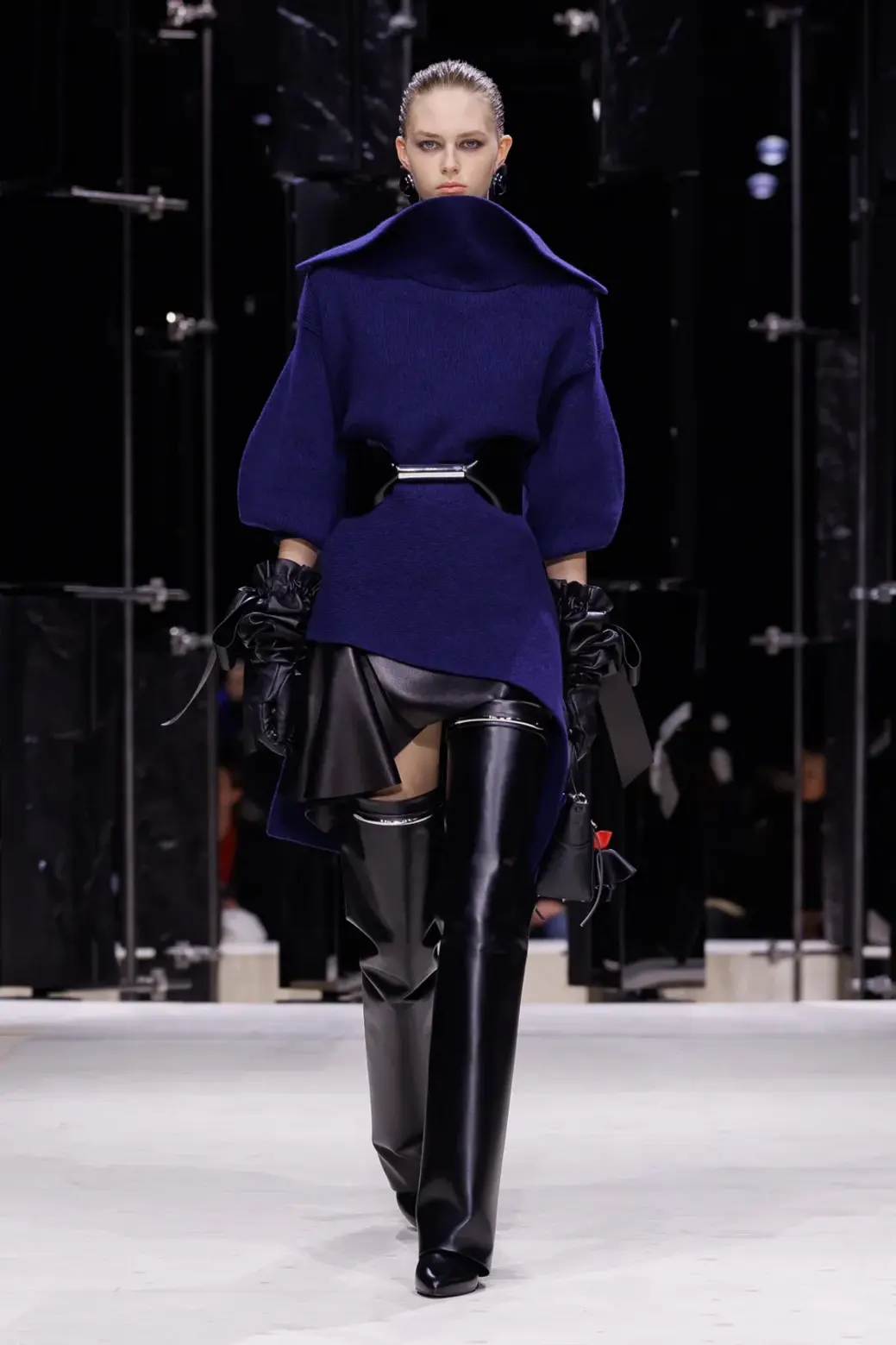
One reason the collection felt so assured is that Burton never allowed it to collapse into categories like tailoring look, lace look, evening look, accessory look. She treated clothes as characters. There were sculptural cherry-red sweater dresses with thigh-high black boots, bright velvet slips styled with fluffy, almost absurd shoes, leopard capes, oversized gloves, cobalt blue leather, floral appliqués, ribbons on bags. Even its trend-facing elements, animal print, fringe, bows, came across as part of a woman’s mood rather than bait for the season’s moodboard economy.
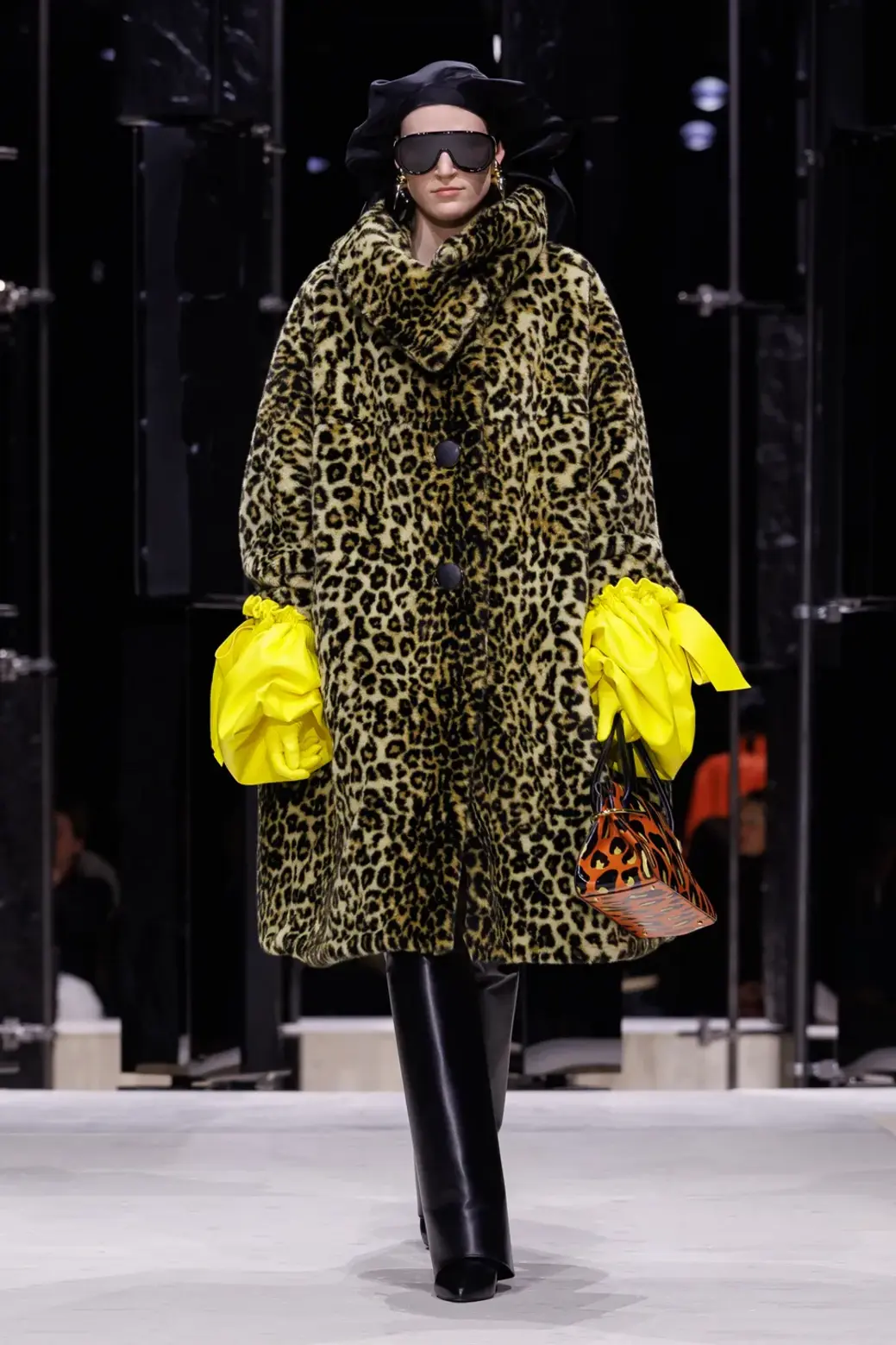
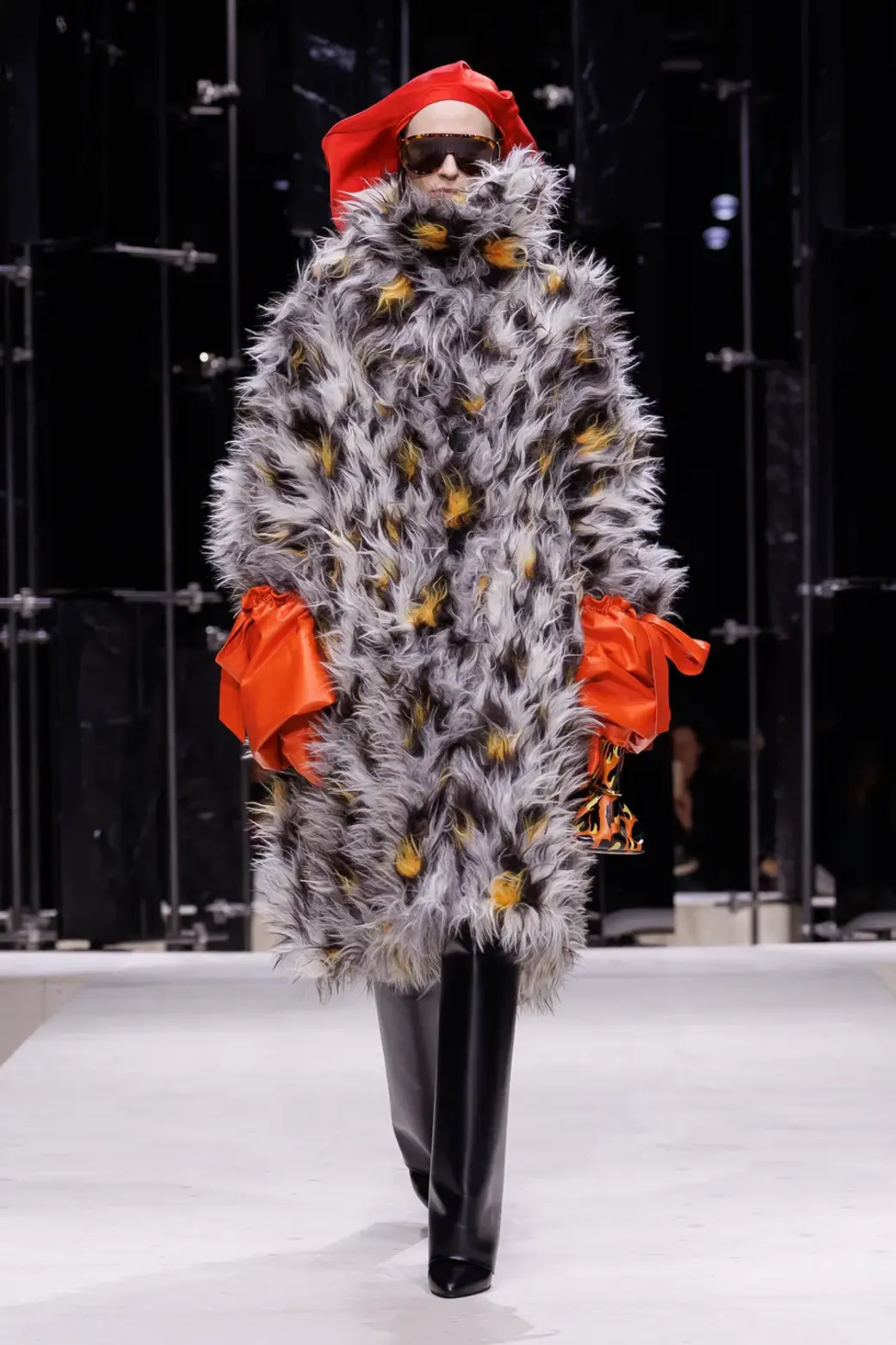
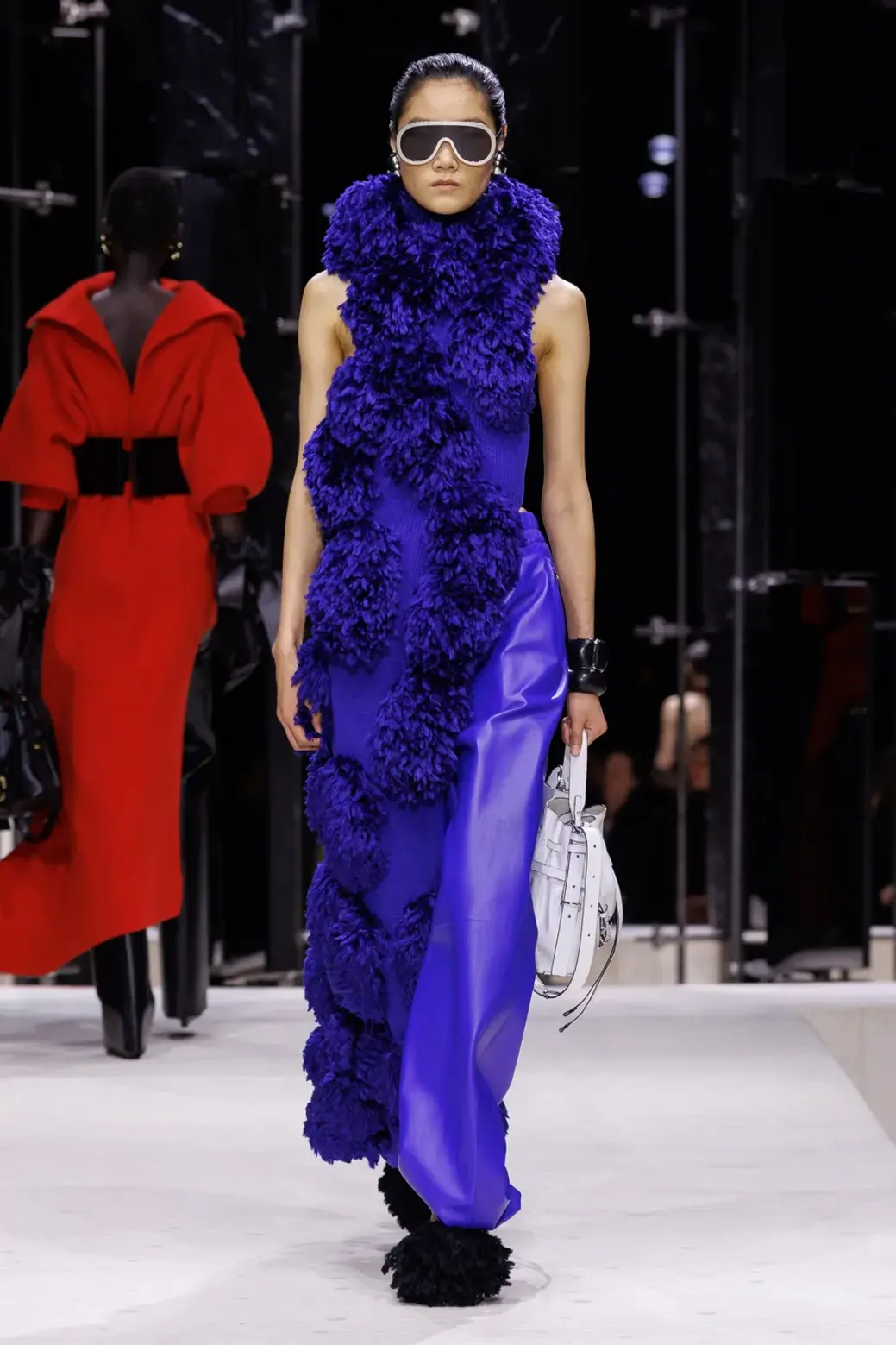
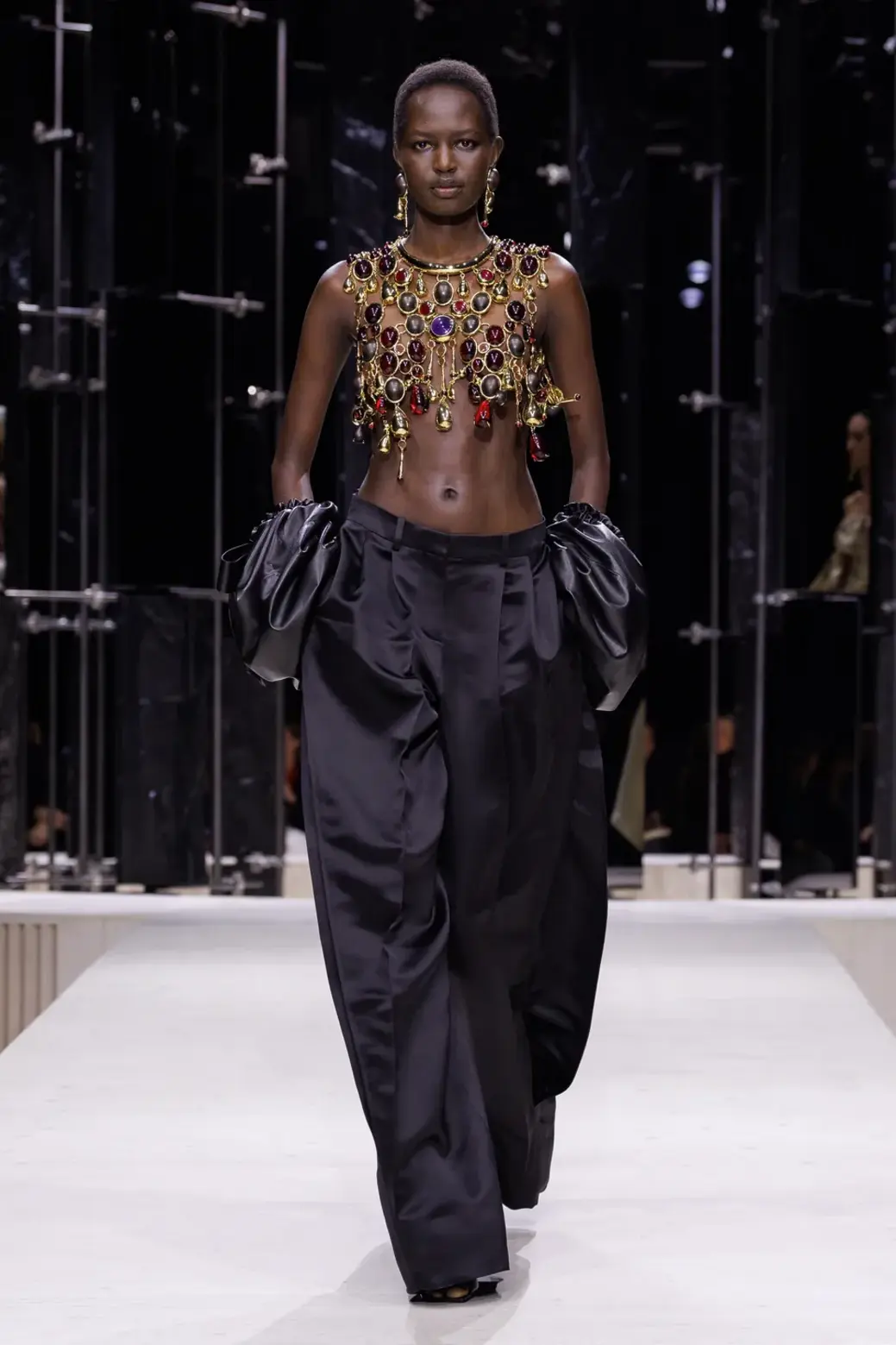
Other looks sharpened that instinct further: oversized pinstripe suits, little jackets with pleated peplums and contrast collars, a hyper-cropped bomber, a backless draped floral dress erupting into pastel fringe, and clean dresses finished with futuristic funnel necks. Burton was not just moving between hard and soft. She was moving between woman-as-portrait, woman-as-party, woman-as-strategist, woman-as-creature of appetite. That breadth is what made the show feel emotionally literate rather than conceptually neat.
Accessories were not decorative afterthoughts here. They were part of Burton’s argument about female force. The return of the Shark Lock boot, reworked as a thigh-high style with the signature fold-over shaft and metallic hardware, was a very smart move. Givenchy’s recent visual history includes a flashier, more aggressive glamour, and Sarah Burton did not pretend that chapter never happened.
Why Givenchy Fall 2026 Collection Lands So Hard
This was the reason Givenchy Fall 2026 by Sarah Burton lingered. Because beneath the tailoring, beneath the art references, beneath the exquisite severity of it all, there was a quiet and devastating proposition: that style at its highest form is not about transformation into someone else, but about the almost holy act of returning more fully to oneself.
Advertisement