MENU
Close





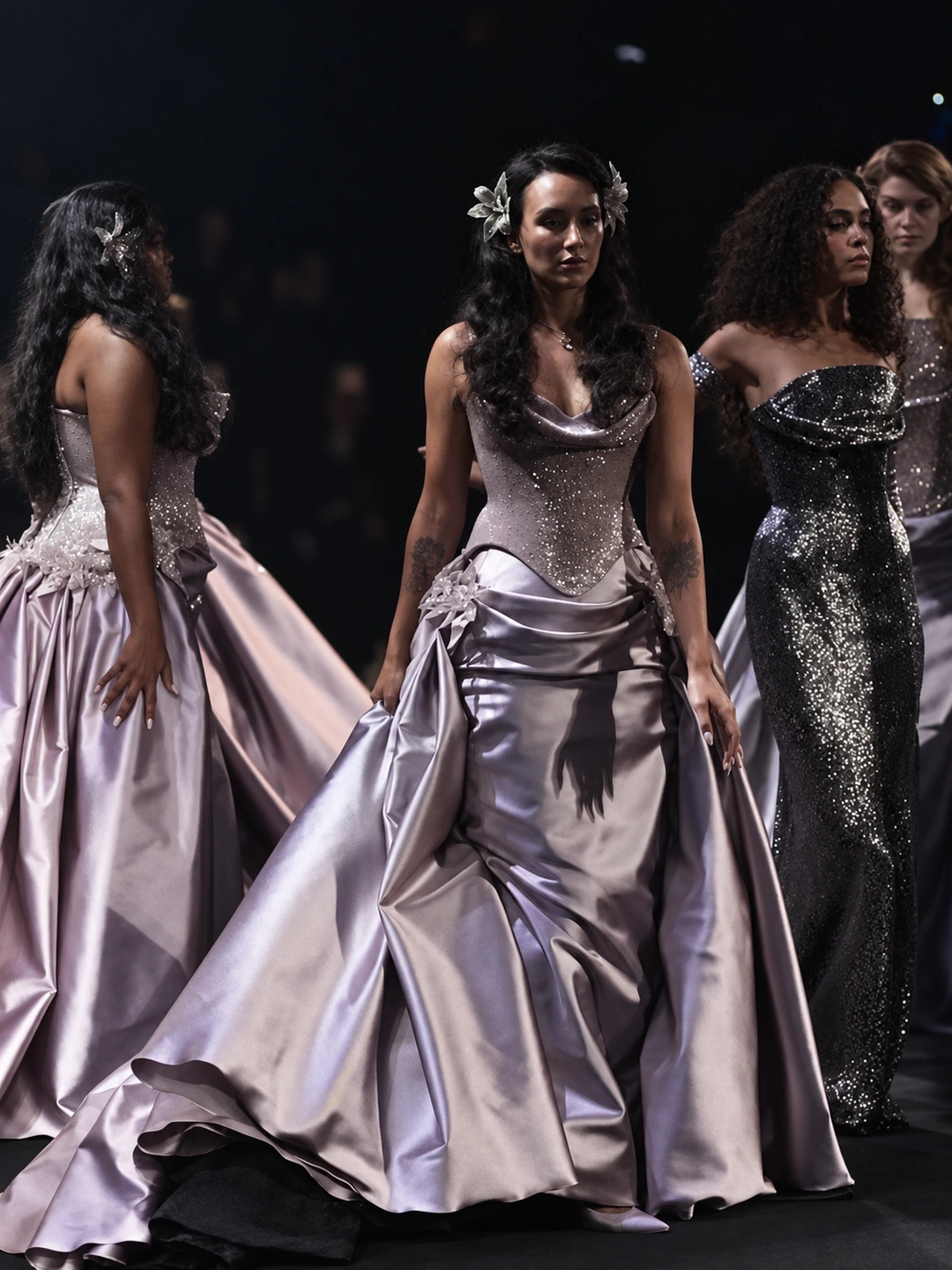
Bottega Veneta Fall 2026 by Louise Trotter unfolds like a reel of film slowly catching light, where Milanese precision, tactile craft, and a rising pulse of color turn the city wardrobe into something cinematic, modern, and vividly alive.
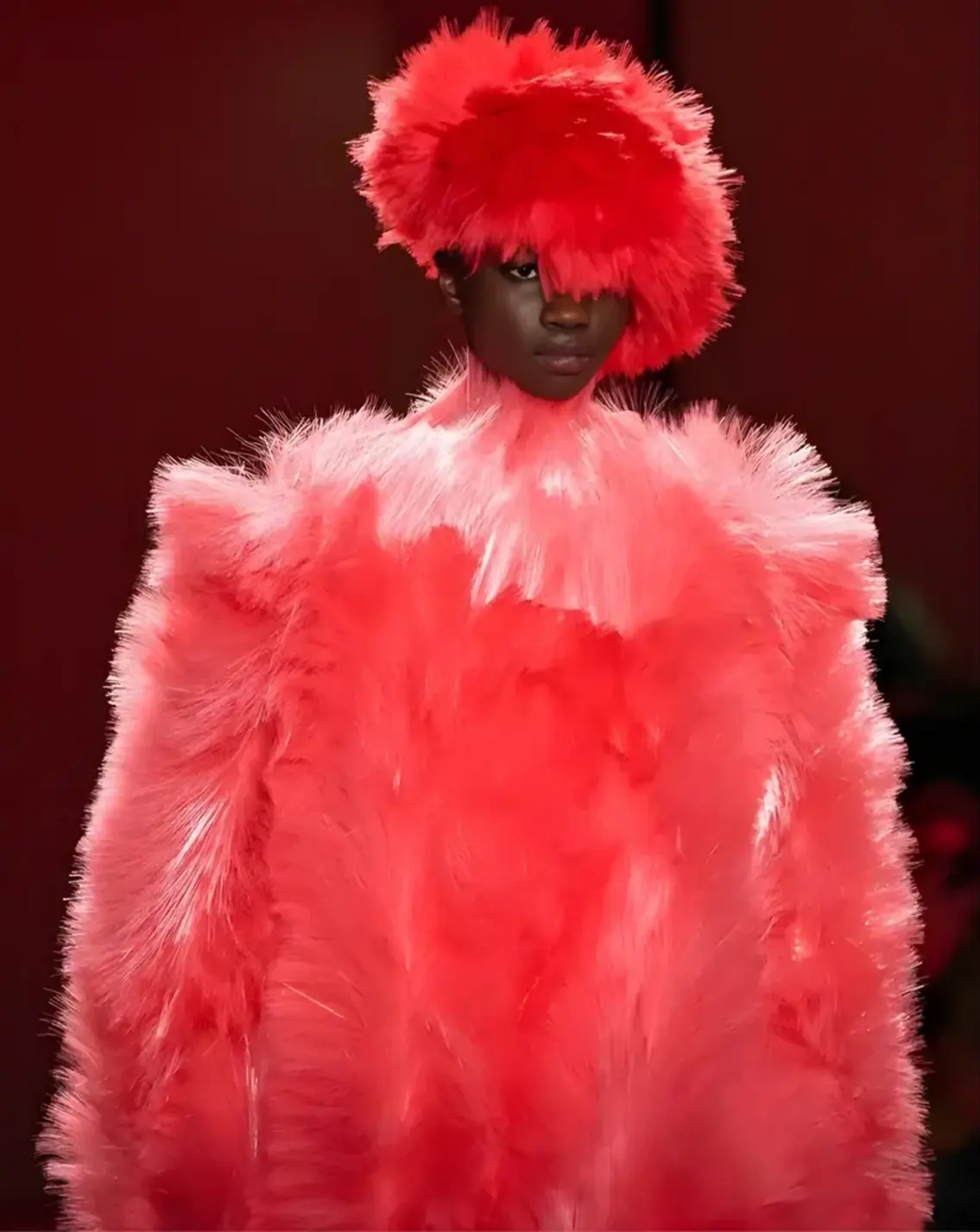
Bottega Veneta Fall 2026 by Louise Trotter unfolds like a reel of film slowly catching light, where Milanese precision, tactile craft, and a rising pulse of color turn the city wardrobe into something cinematic, modern, and vividly alive.
March 16, 2026
Advertisement

Advertisement



Bottega Veneta Fall 2026 by Louise Trotter prefers a seductive method. It begins in shadow, in the dark authority of a coat, in the curve of a shoulder, in the dense intelligence of surface, then gradually brightens until the whole runway hums with texture, color, and urban energy. That slow development is the collection’s real seduction. Louise Trotter builds the mood, frame by frame, until the woman at the center of the show feels less like a type than a whole atmosphere.
What makes that progression so persuasive is that Louise Trotter is not designing quiet luxury in the emptied-out, lifeless sense. Bottega Veneta Fall 2026 is too physical, too alert, too interested in the emotional charge of clothes for that. This is city dressing with voltage: modern but never cold, practical but never flat, foundational yet capable of turning suddenly electric. Louise Trotter gives Bottega Veneta a woman who can alter the temperature of a room without appearing to try.
The intelligence of Bottega Veneta Fall 2026 lies in its refusal to overstate itself. Louise Trotter has spoken about Milanese style as something exact rather than overworked, and that instinct governs the whole collection. She is not interested in clutter or theatrical excess for its own sake. She wants clothes to hold authority through line, material, and control. That is why the collection feels so assured. At the same time, Bottega Veneta Fall 2026 clearly marks a growth point for Louise Trotter.
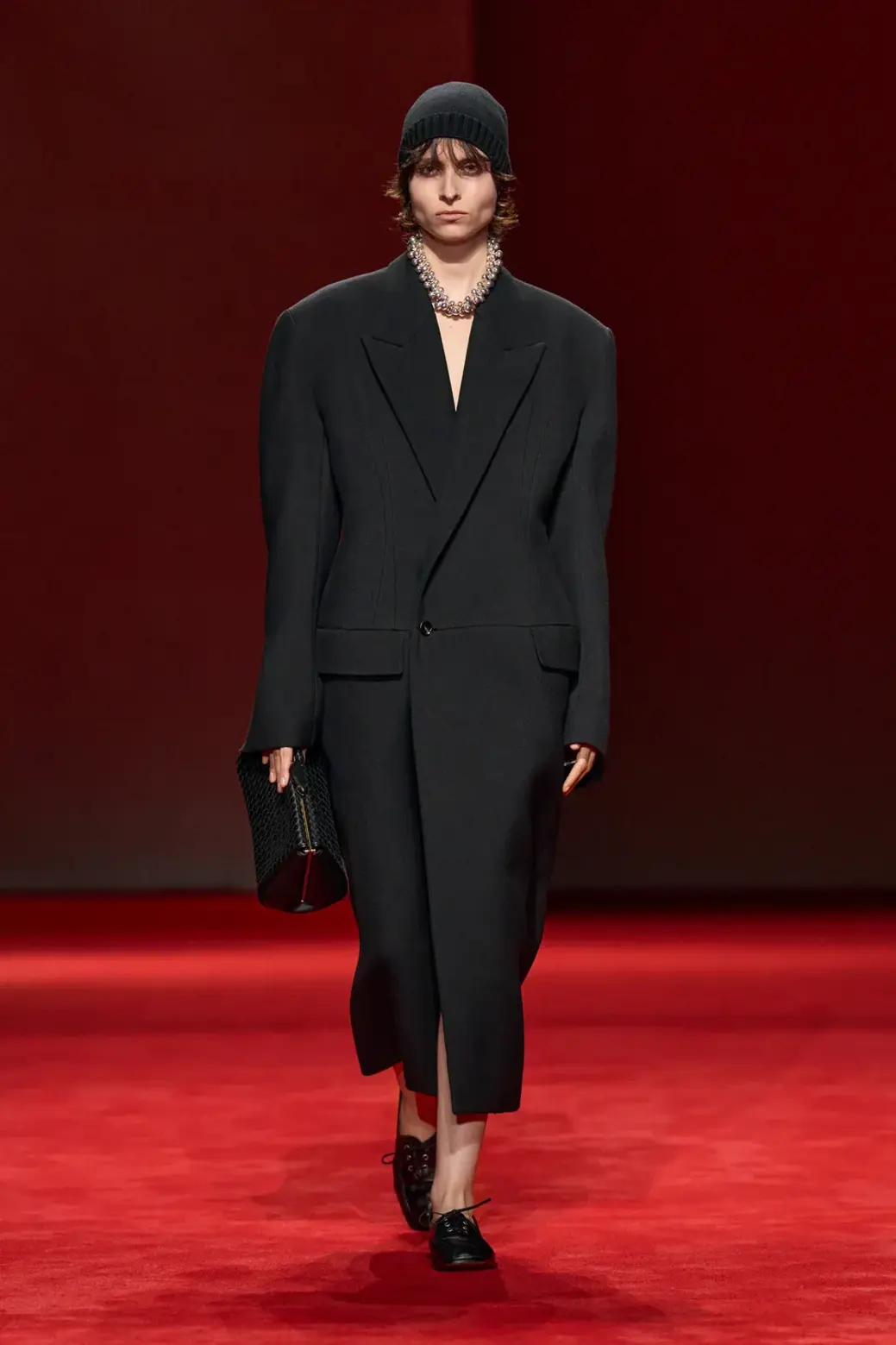
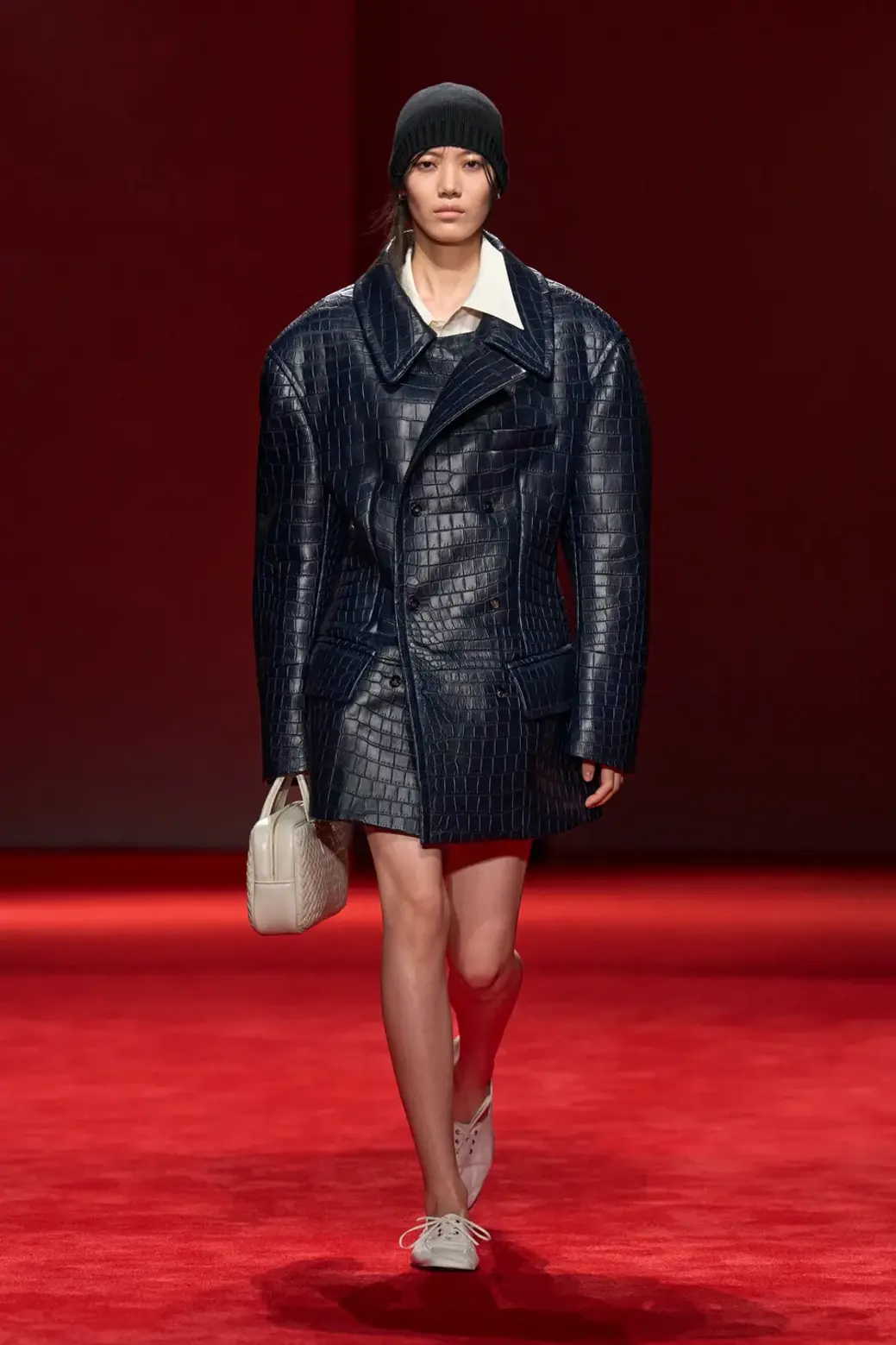
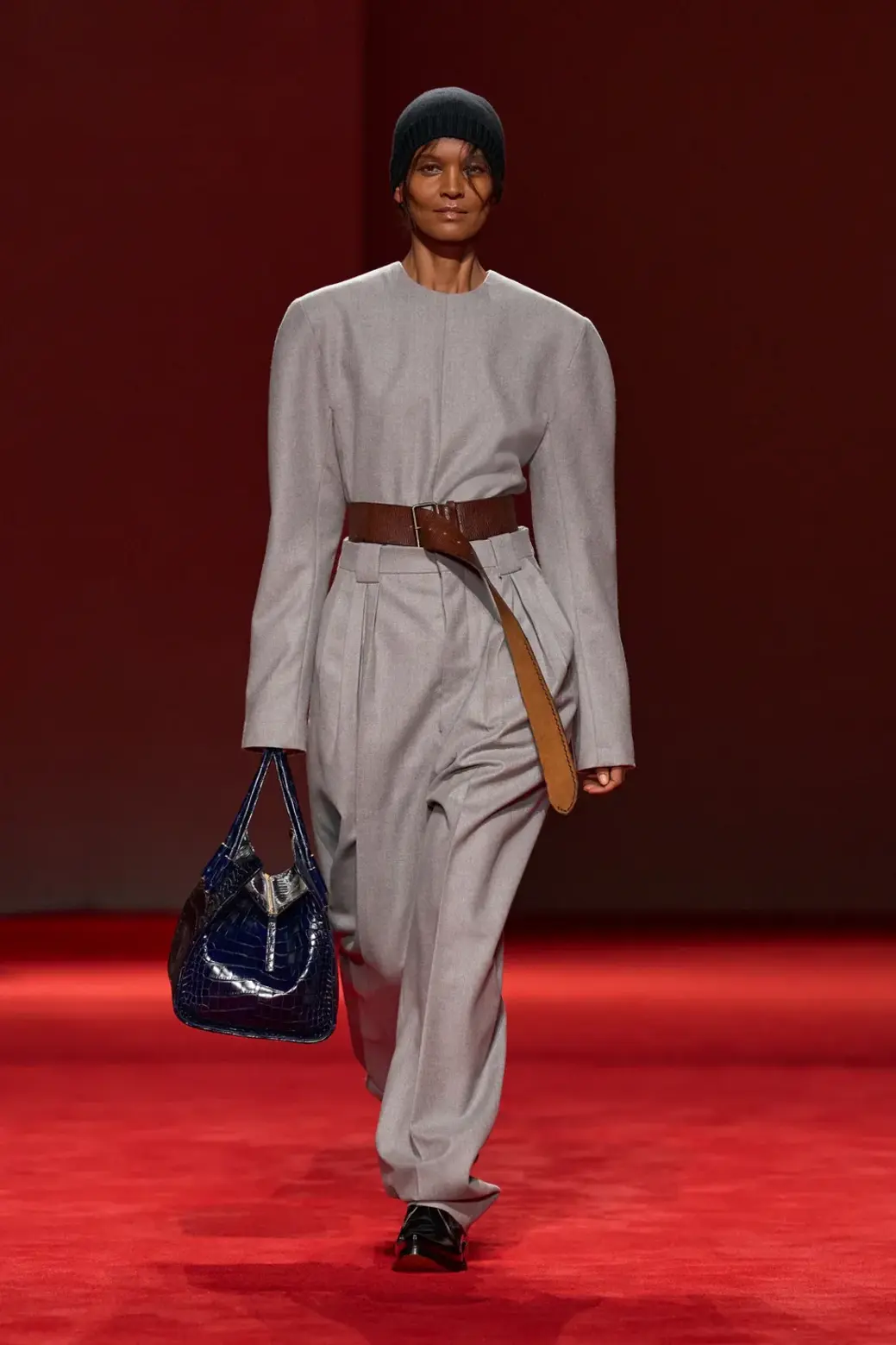
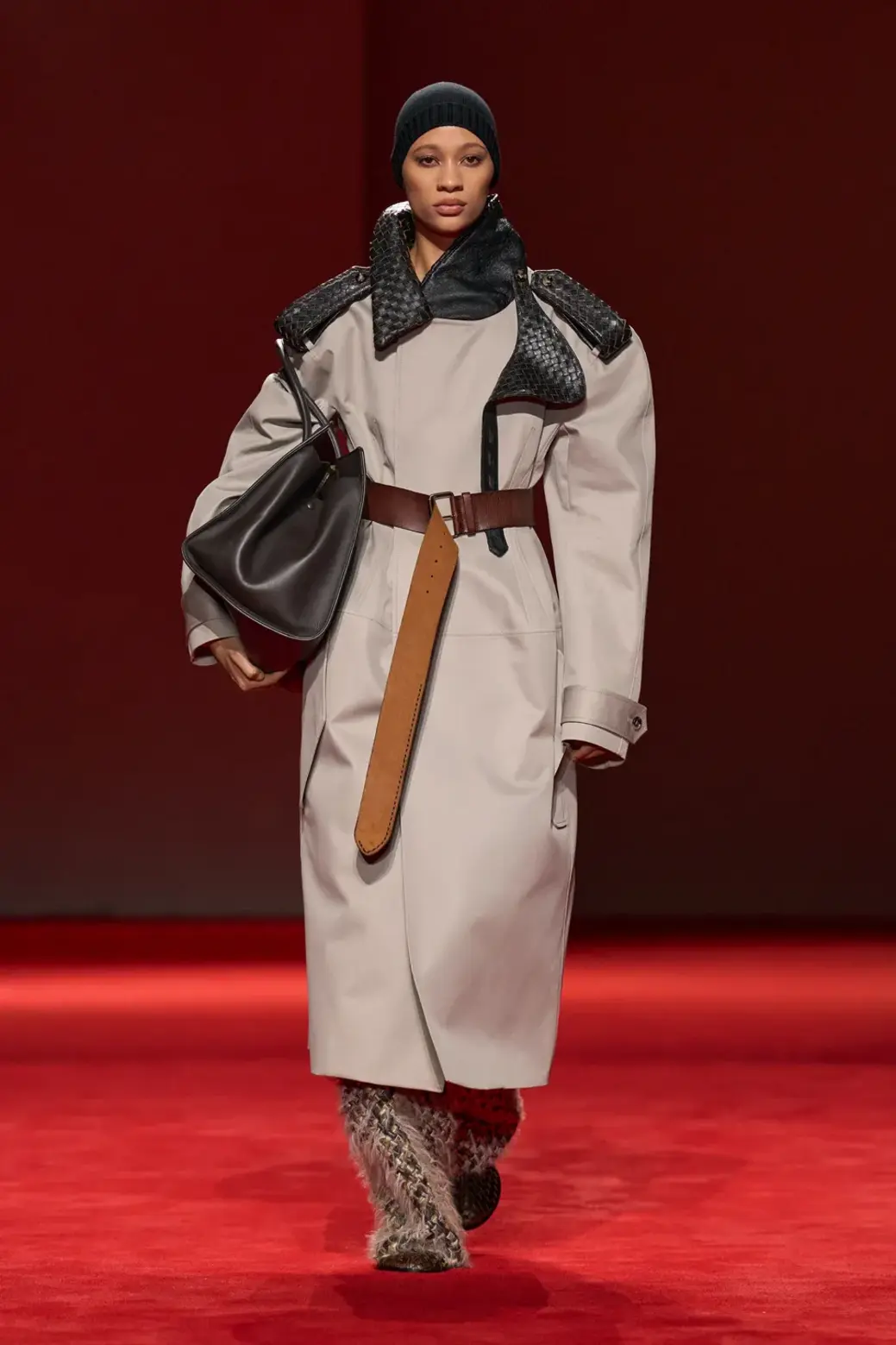
The imaginative world of Bottega Veneta Fall 2026 is not fantasy in the faraway sense. It is cinema built from city life. Louise Trotter imagines a woman moving through Milan with total command of pace, texture, and self-presentation. She is modern, yes, but not clinically so. She is vivid, diverse, layered, and socially alive. She can move from morning structure to evening brightness without ever seeming to change costume. She remains herself, only more sharply tuned.
That is why the collection feels like growth. A darker, more composed woman appears first. Then color enters. Then stranger textures. Then softer dresses. Then richer accessories. The woman of Bottega Veneta Fall 2026 is not fixed at one emotional note. Louise Trotter allows her to develop across the runway the way a character develops across a film. She becomes looser, more legible in her complexity.
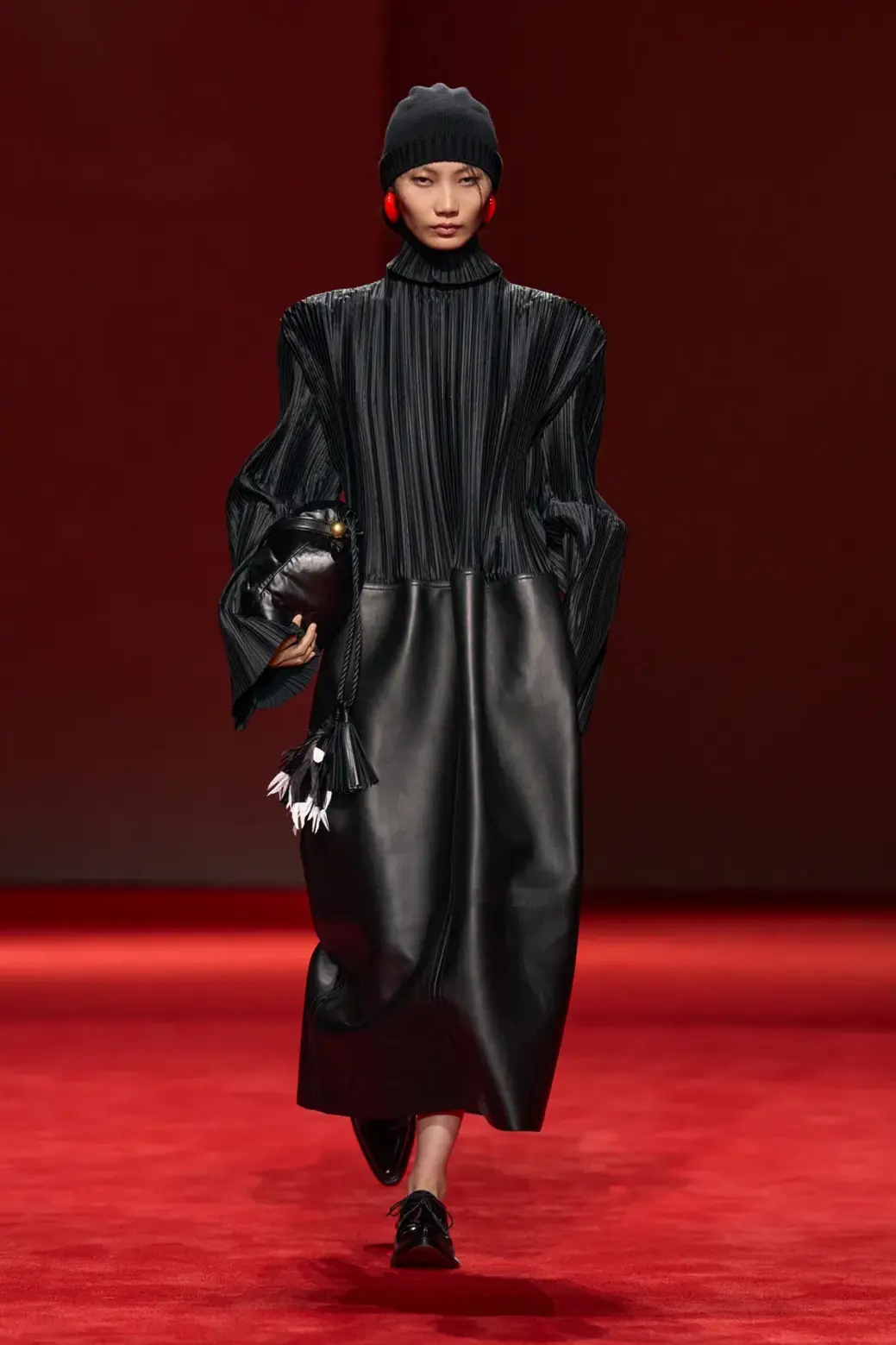
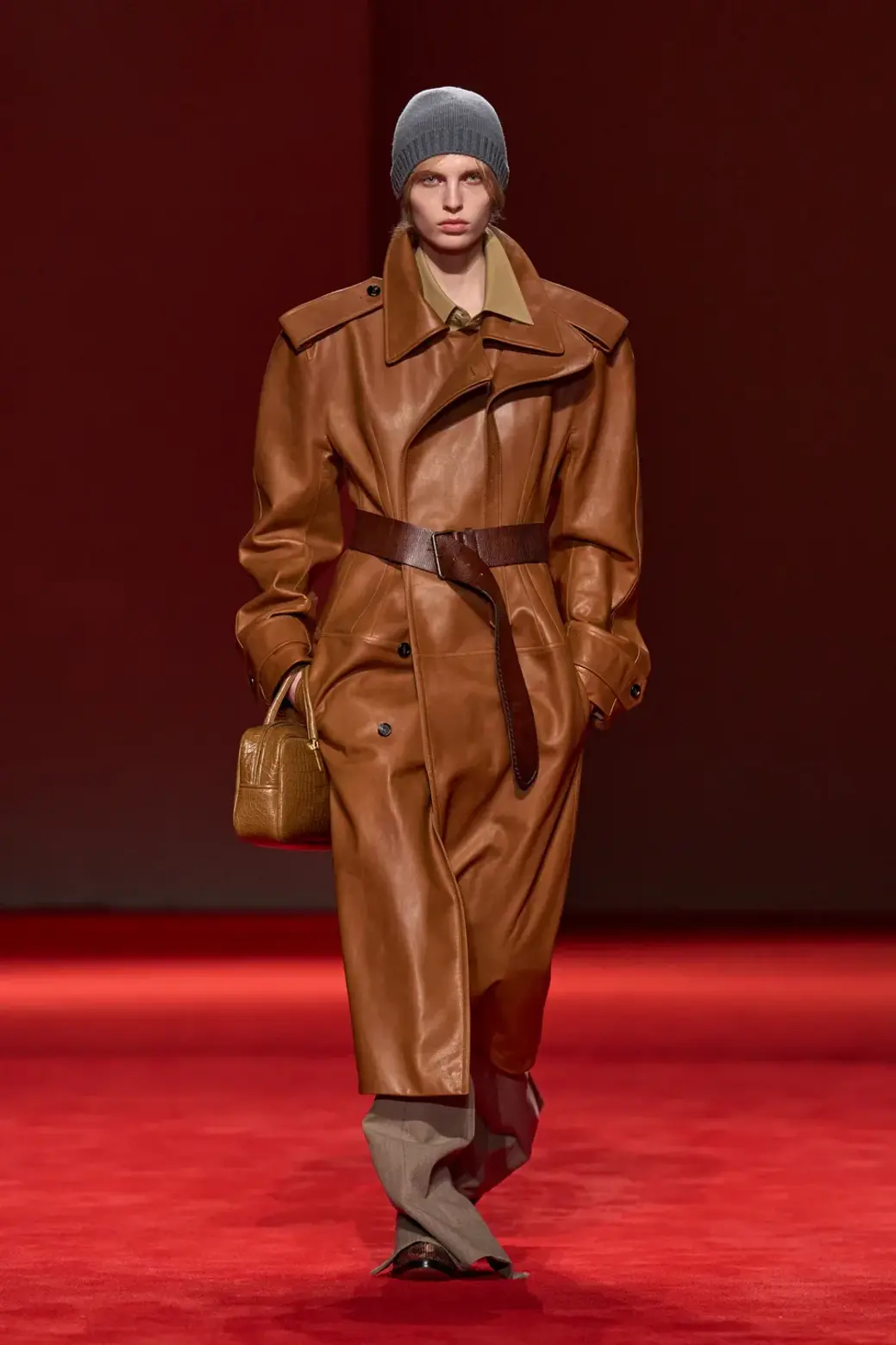
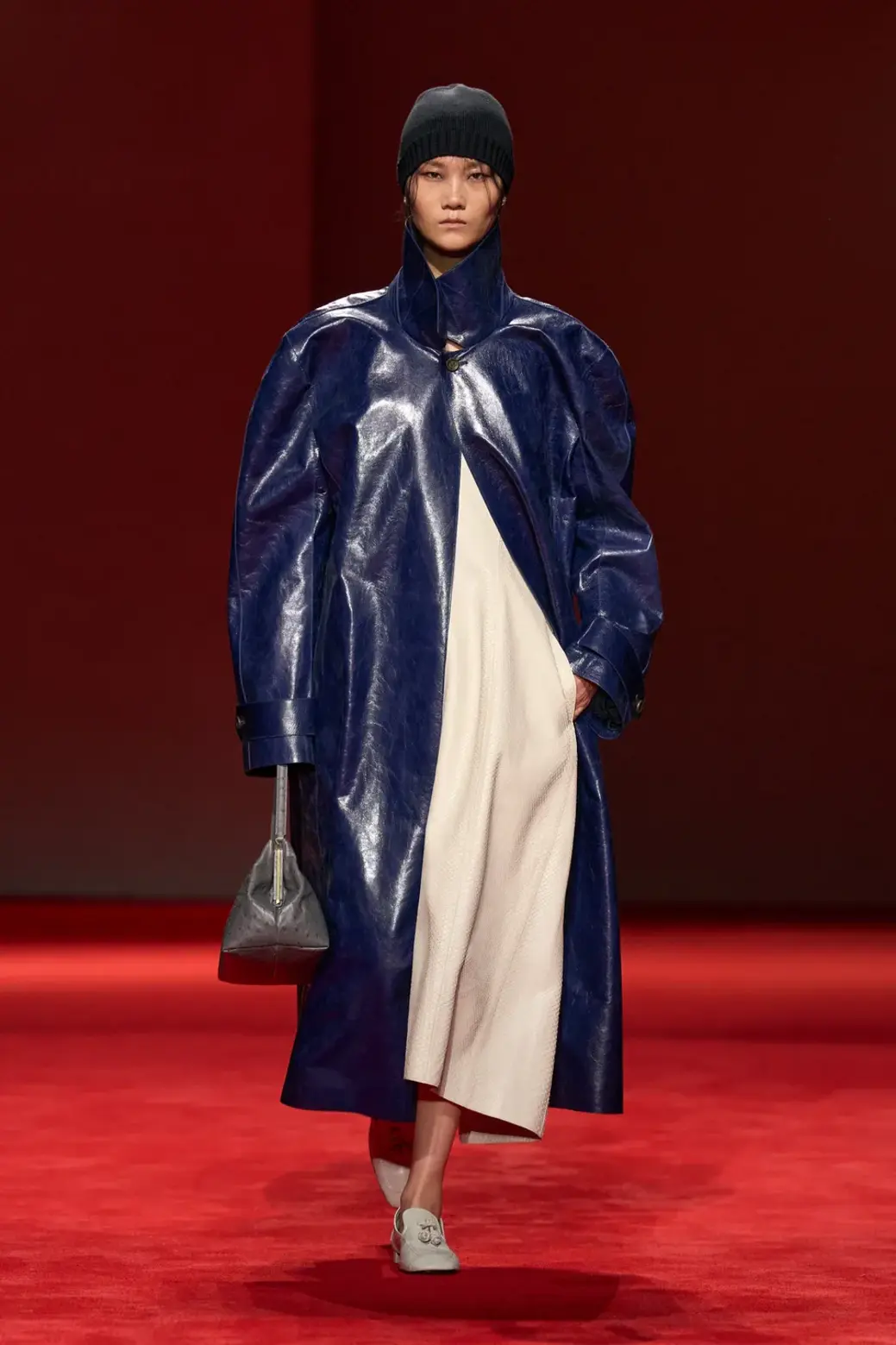
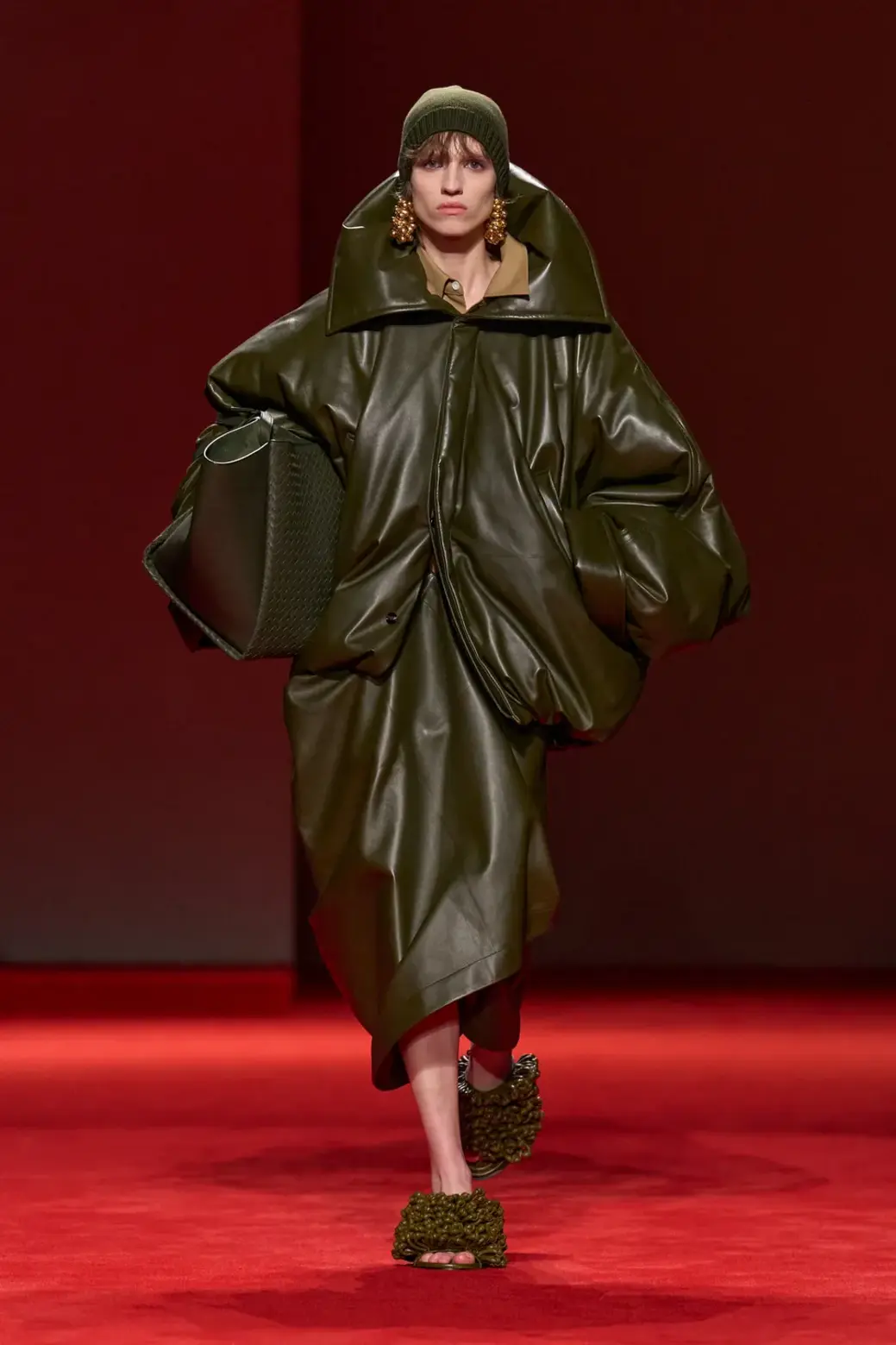
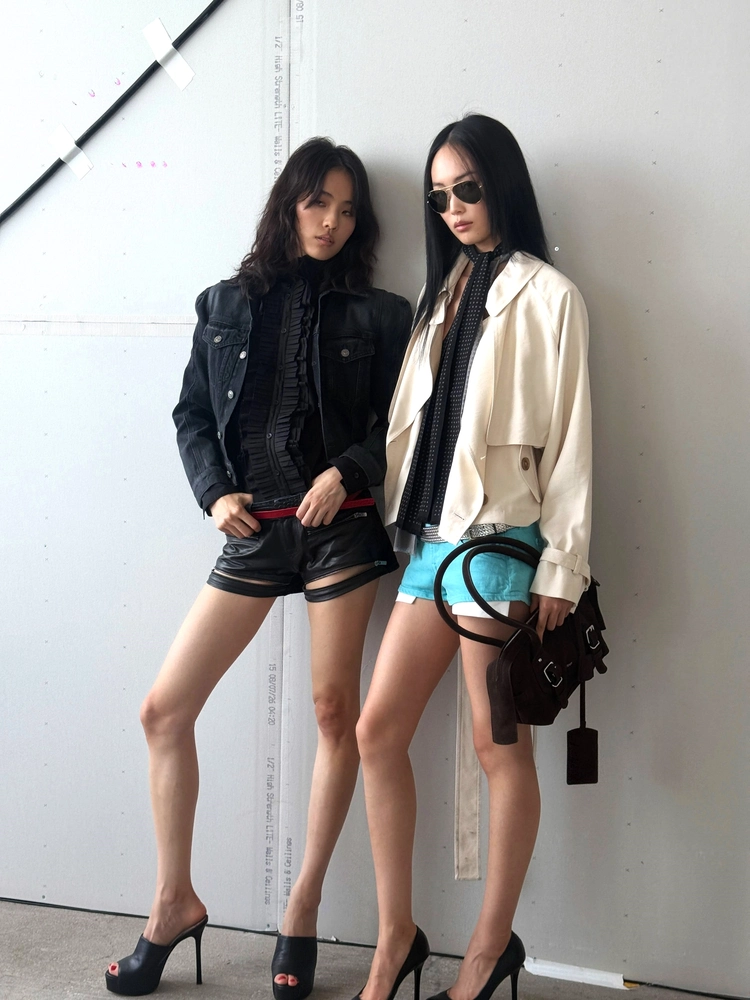
Louise Trotter’s silhouette work is one of the collection’s deepest strengths. The shoulders round, which immediately softens the body’s relationship to power. This is authority with breath in it. Roomy trousers give the lower half ease, while wrap skirts suspended from substantial leather belts create a different kind of control, one rooted in structure without rigidity. The collection repeatedly negotiates between containment and release, and that negotiation is what makes it feel genuinely modern.
The dresses deepen that idea beautifully. Slouchy tank shapes, softened trenches, and less aggressively fixed forms allow the body to move without losing presence. Louise Trotter understands that seduction in 2026 no longer needs to arrive through obvious exposure or punishing shape. In Bottega Veneta Fall 2026, seduction lives in confidence of line, in proportion that trusts the wearer, in the ease of a garment that looks expensive because it has been thought through from every angle.
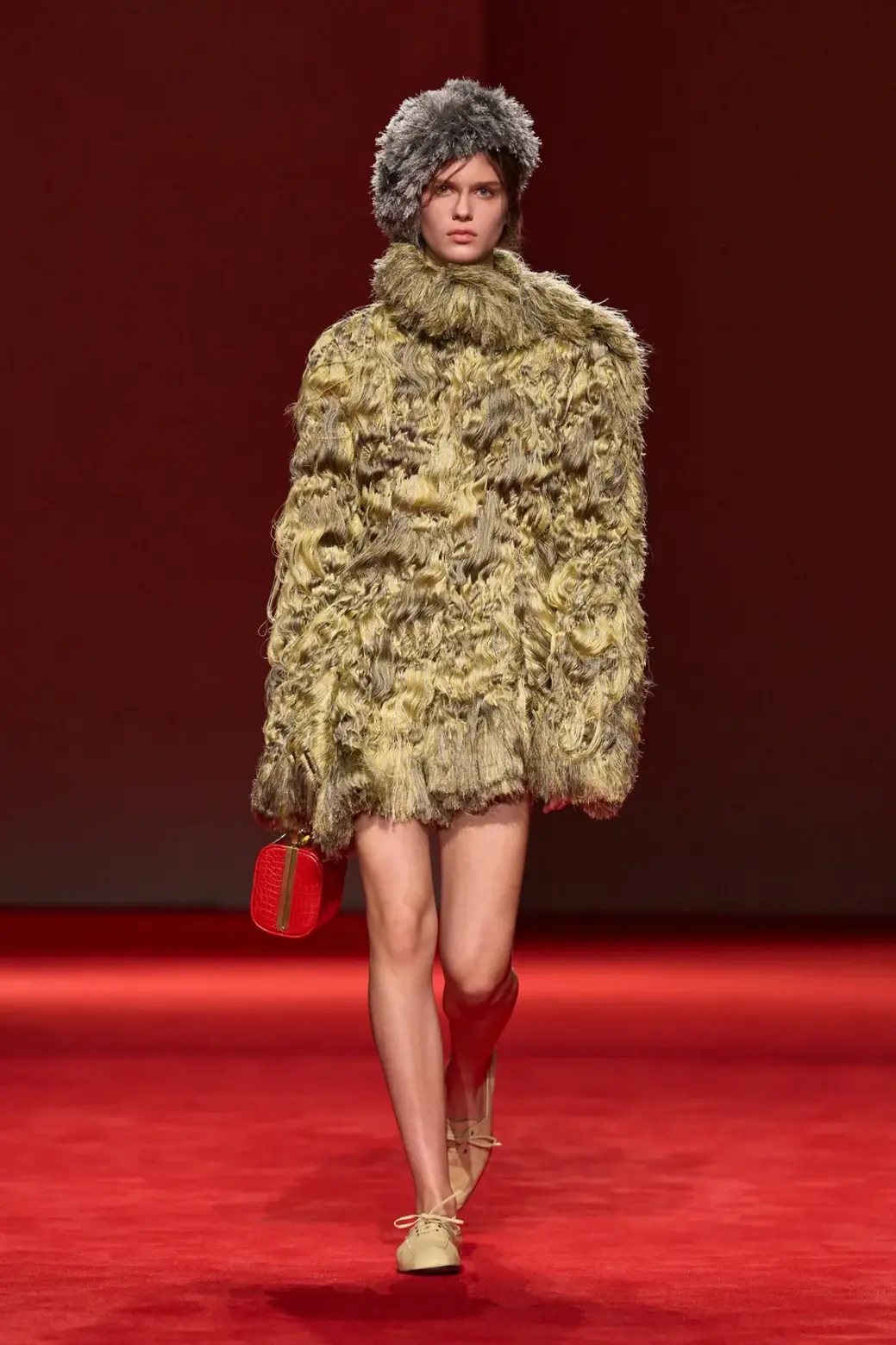
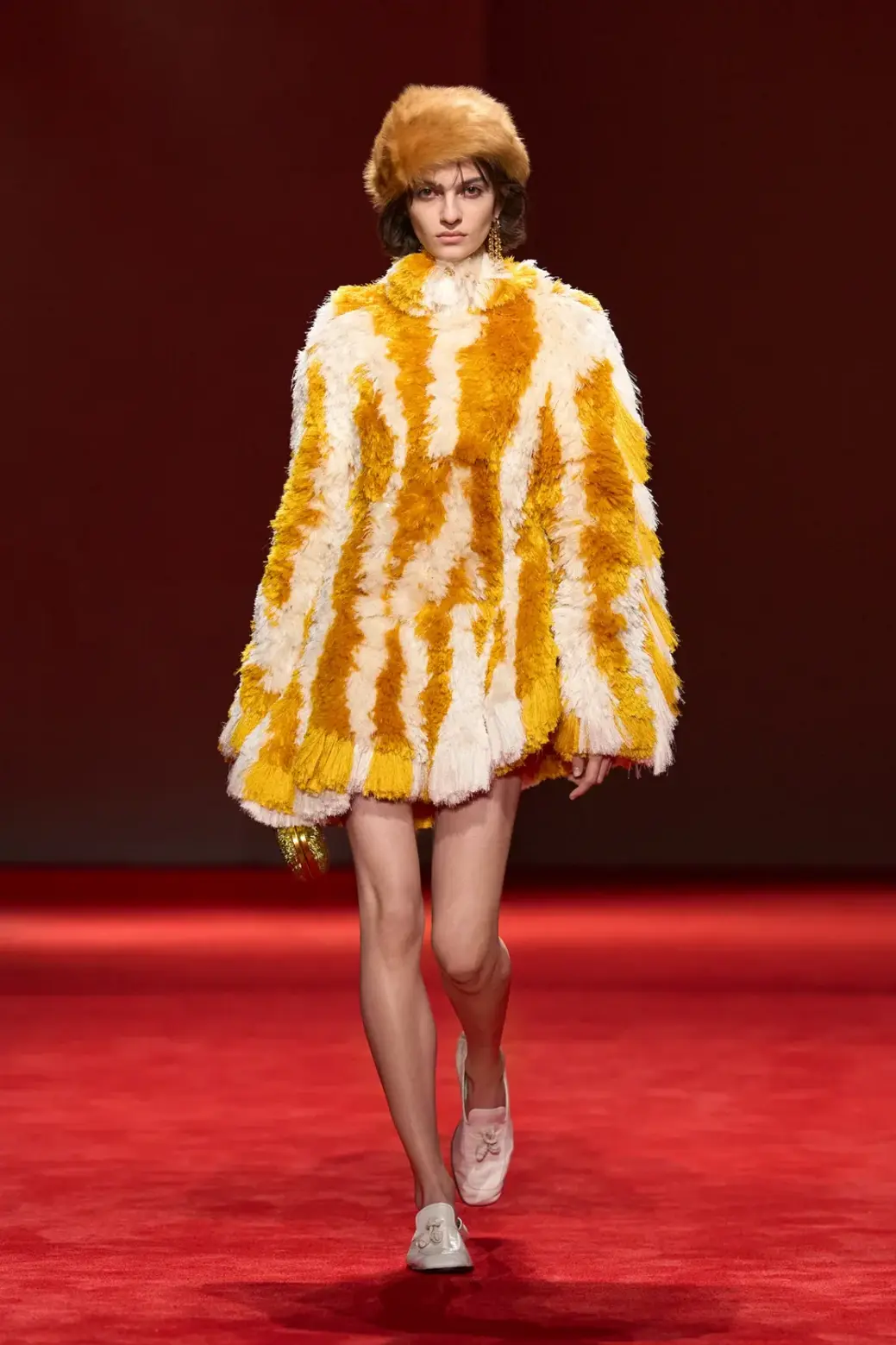
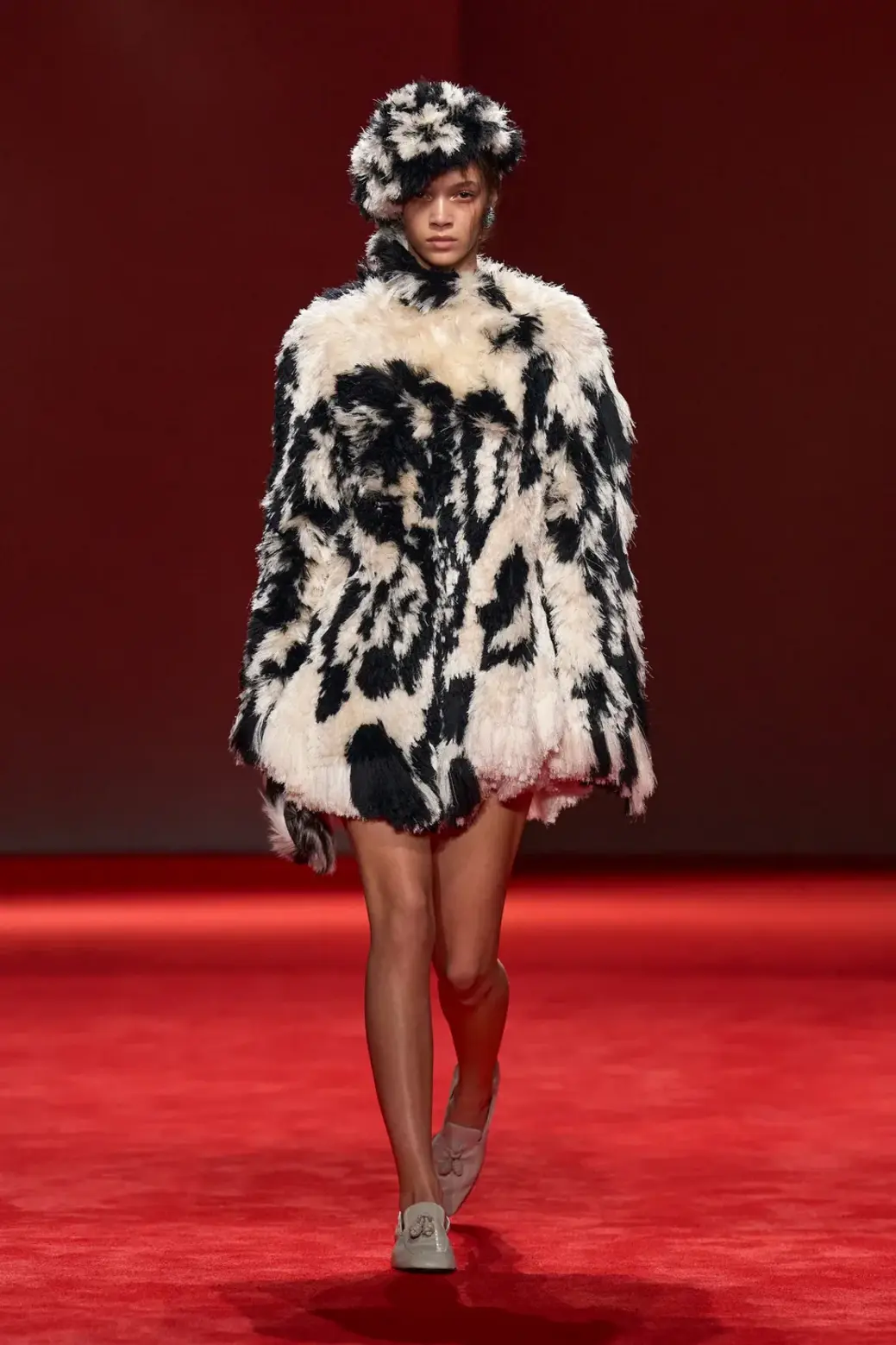
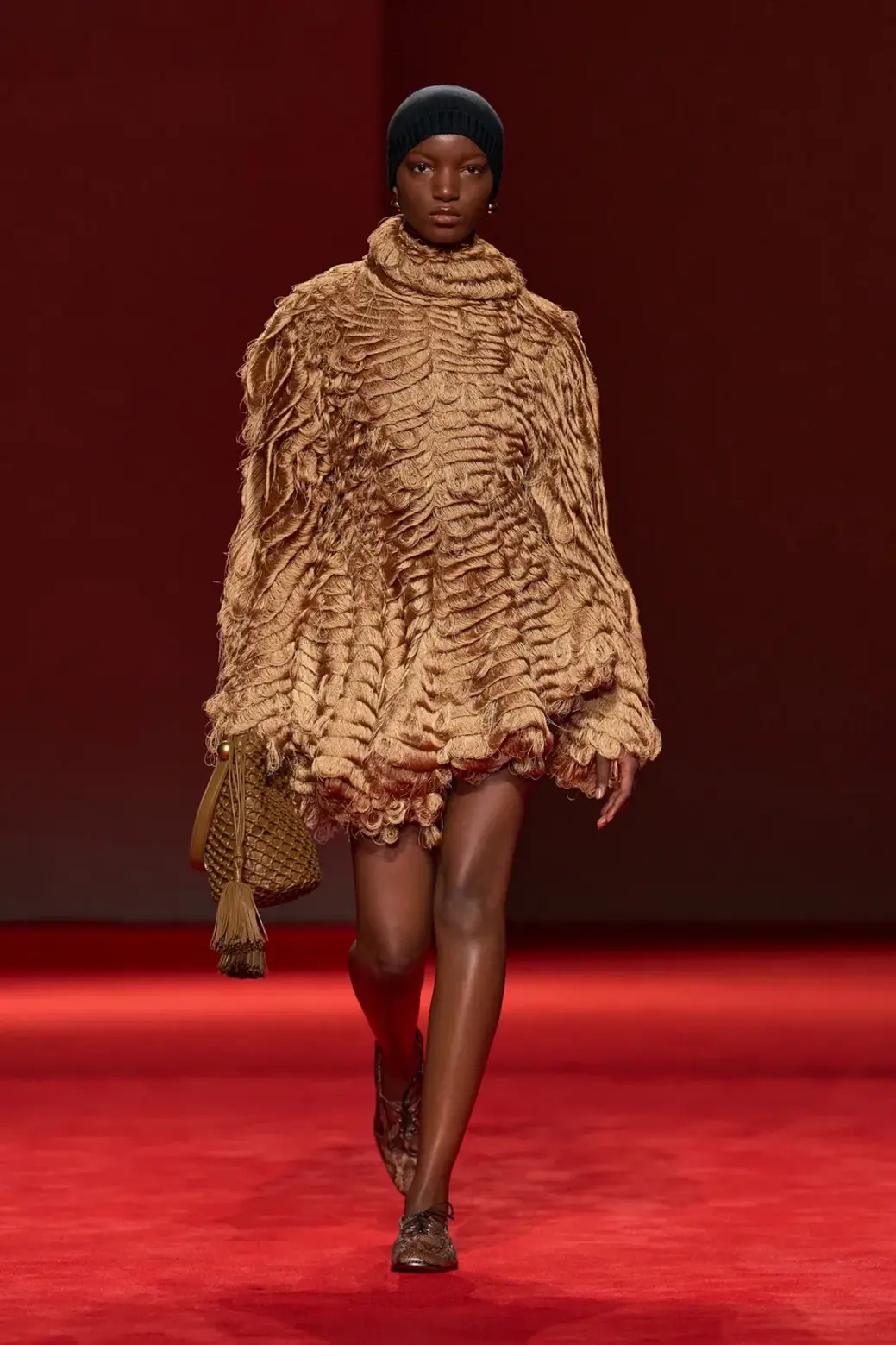
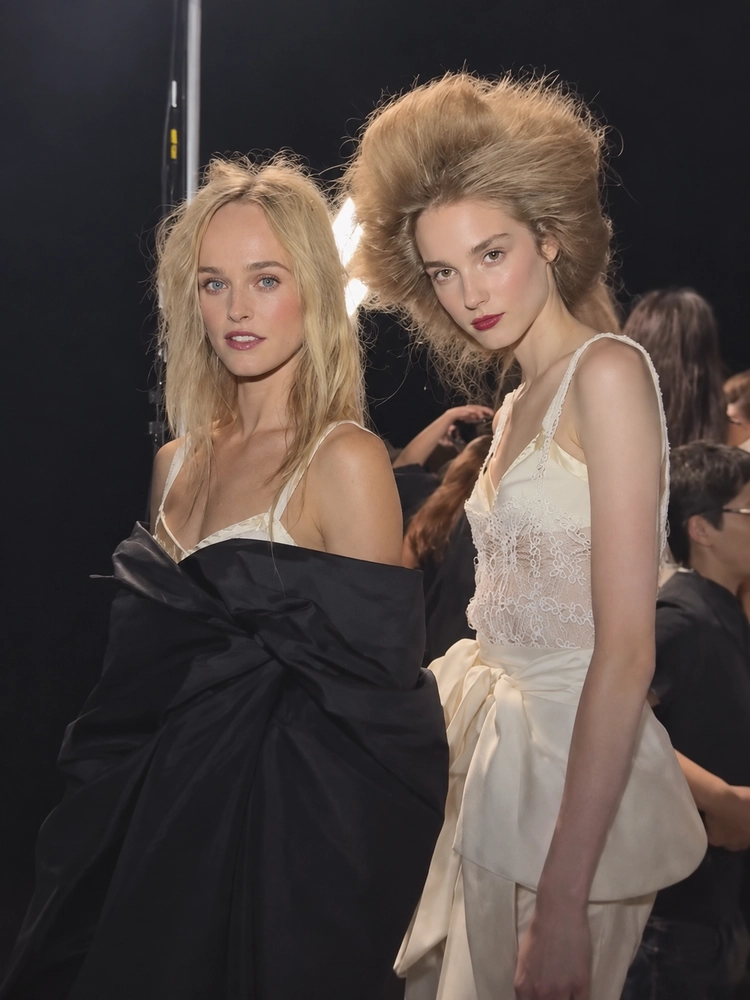
If silhouette is the skeleton of Bottega Veneta Fall 2026, texture is its pulse. The collection’s most memorable surfaces repeatedly hover between recognition and surprise: fur-like forms built not only from obvious plushness but from silk, fiberglass, knits, and felt; clipped textures that seem both tactile and architectural; brushed treatments that alter the speed of the eye moving across a look. Louise Trotter deliberately emulated furs and skins while working inside Bottega Veneta’s identity as a leather house: silk threads were manipulated to ripple like curly shearling, real shearling was brushed to resemble fox, and fiberglass reappeared in shaggy surfaces that changed the silhouette without abandoning control, knits and felt being pushed into fur-like effects.
That is what makes the show feel so alive. One surface slows the mood, another sharpens it, another introduces something animal, another something urban and polished. Bottega Veneta Fall 2026 keeps changing emotional register through material alone. A coat can feel protective, decadent, and strange all at once. A fur-like dress can read as sensual and slightly unreal. A brushed fabrication can turn a simple silhouette into a social event. Louise Trotter makes touch do the work of plot.
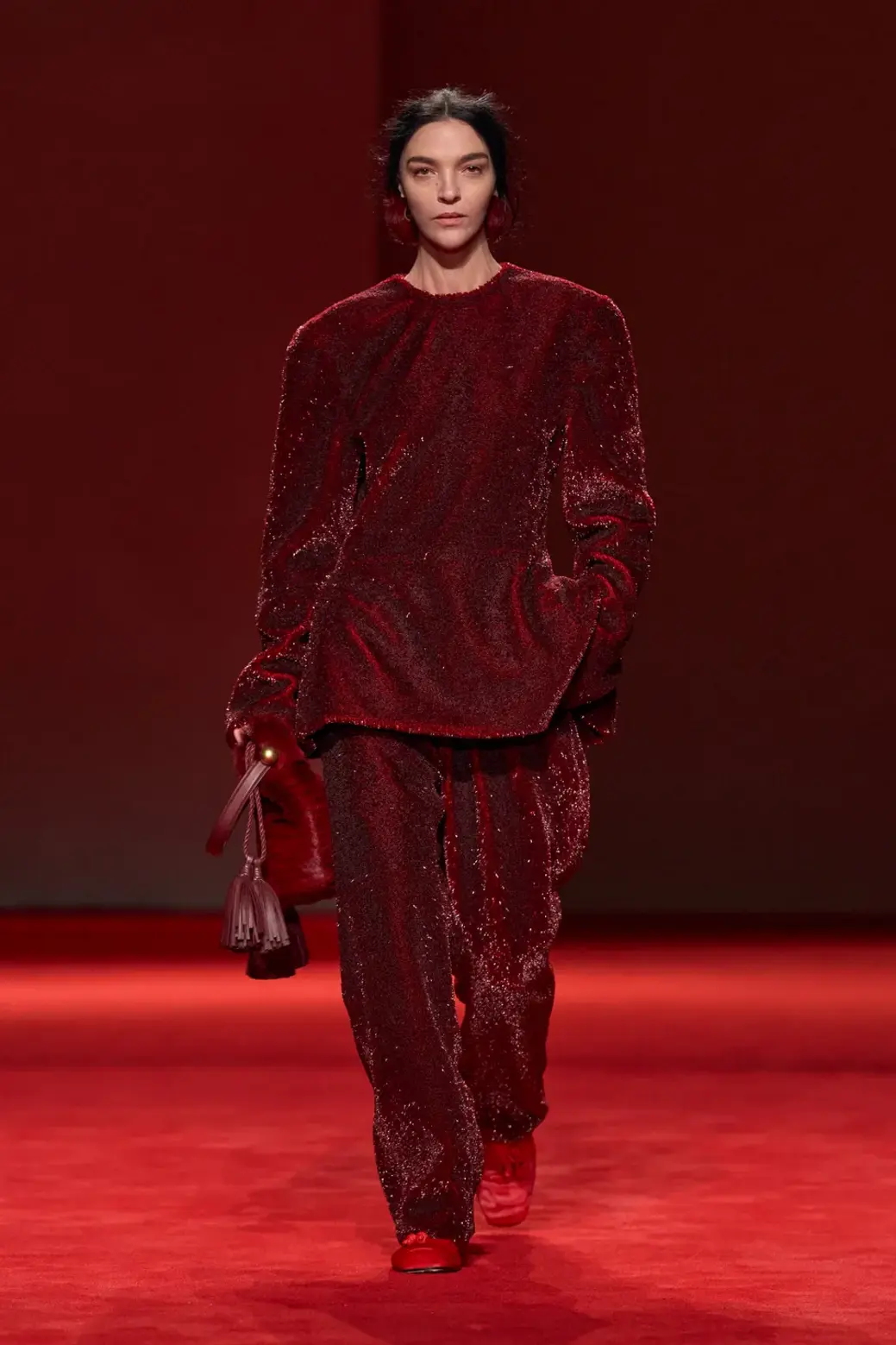
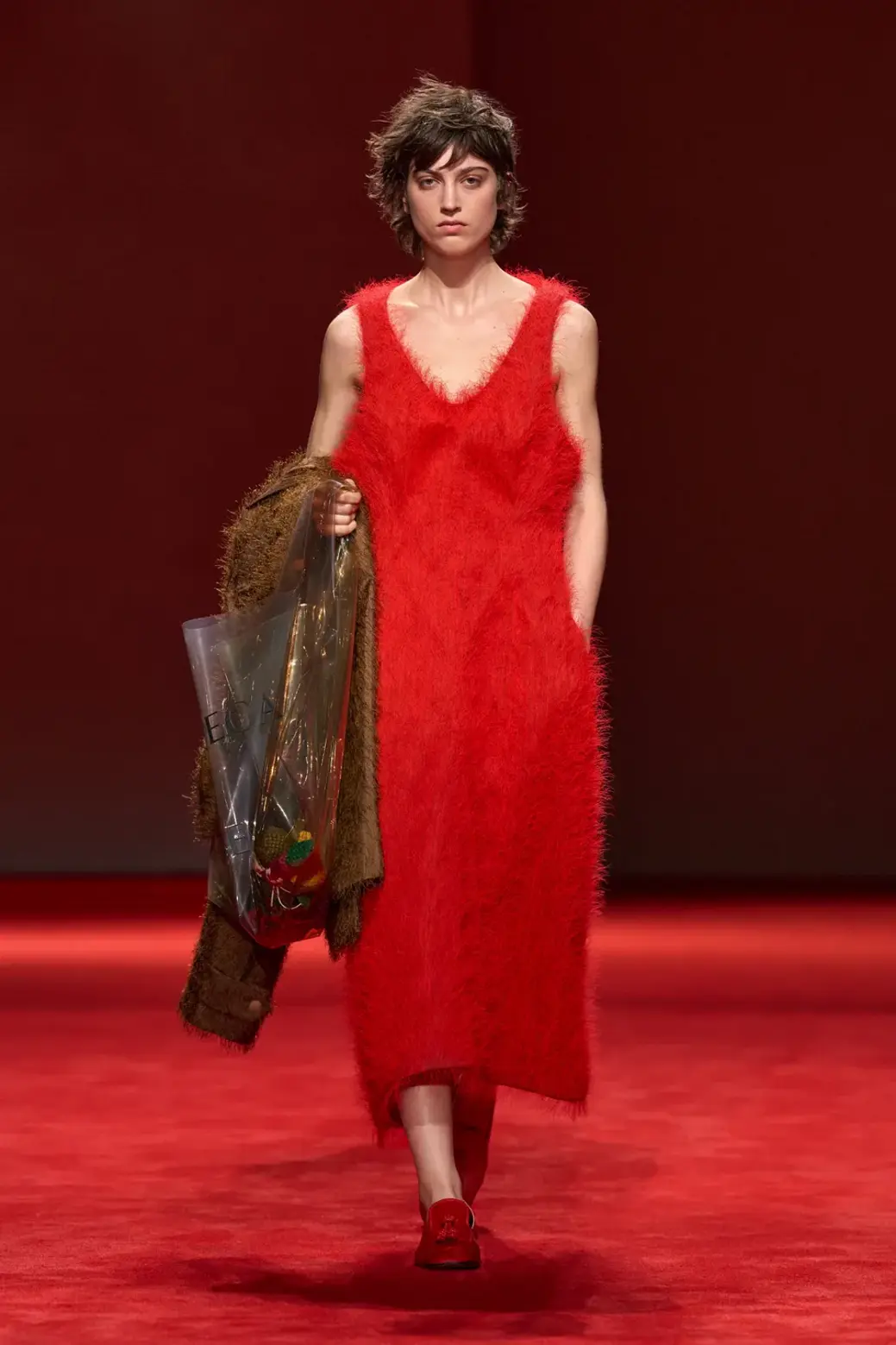
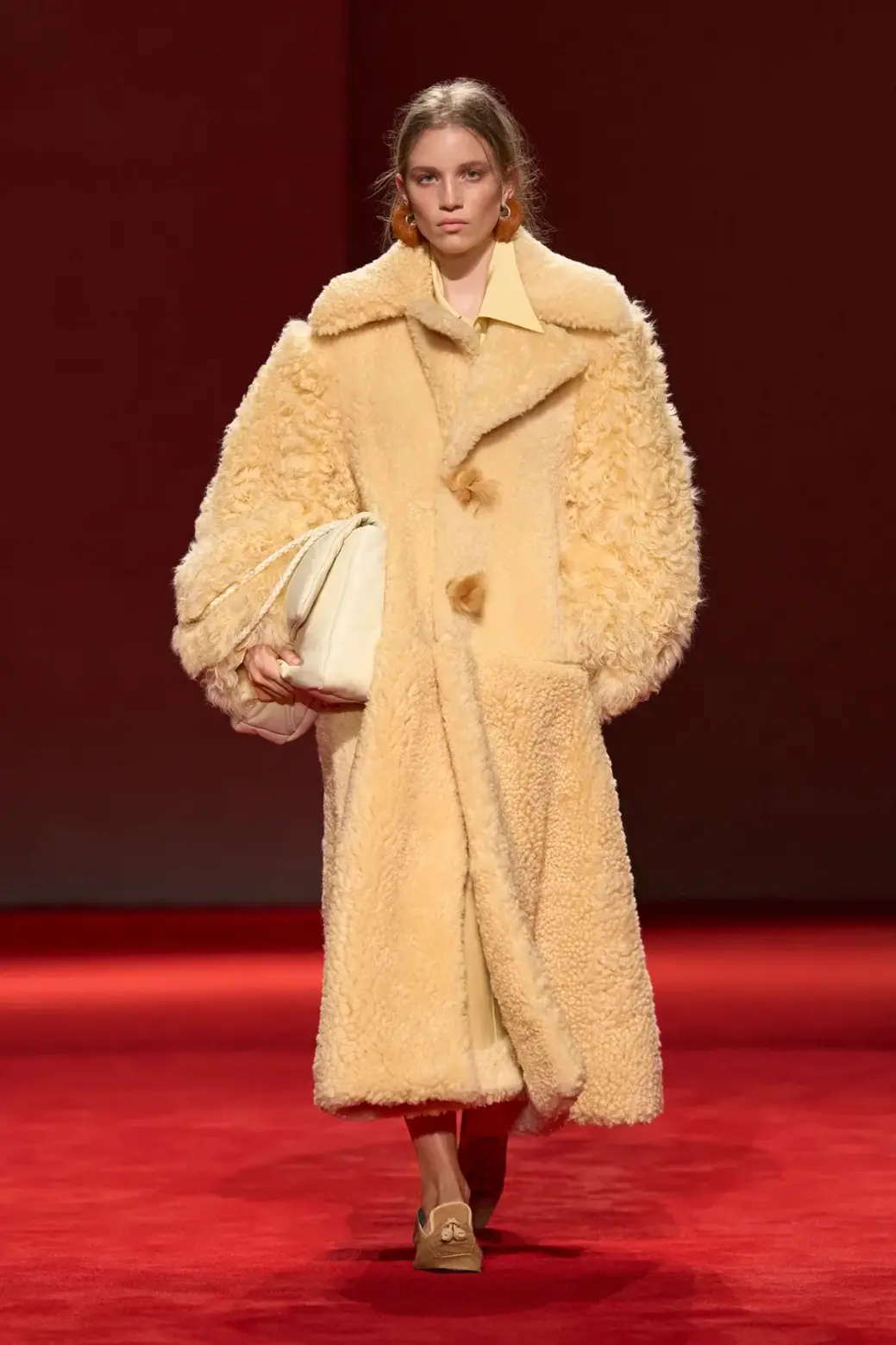
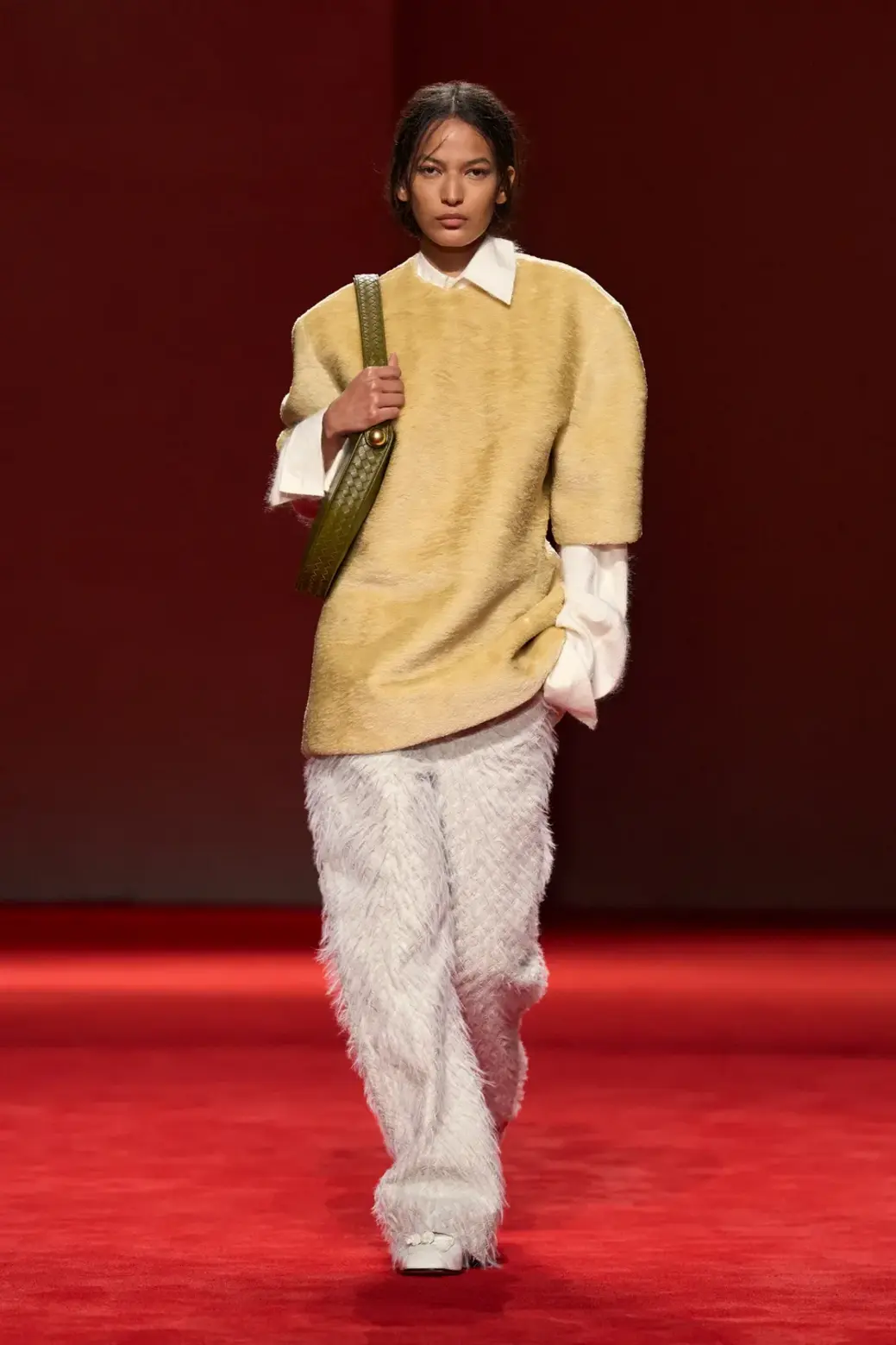
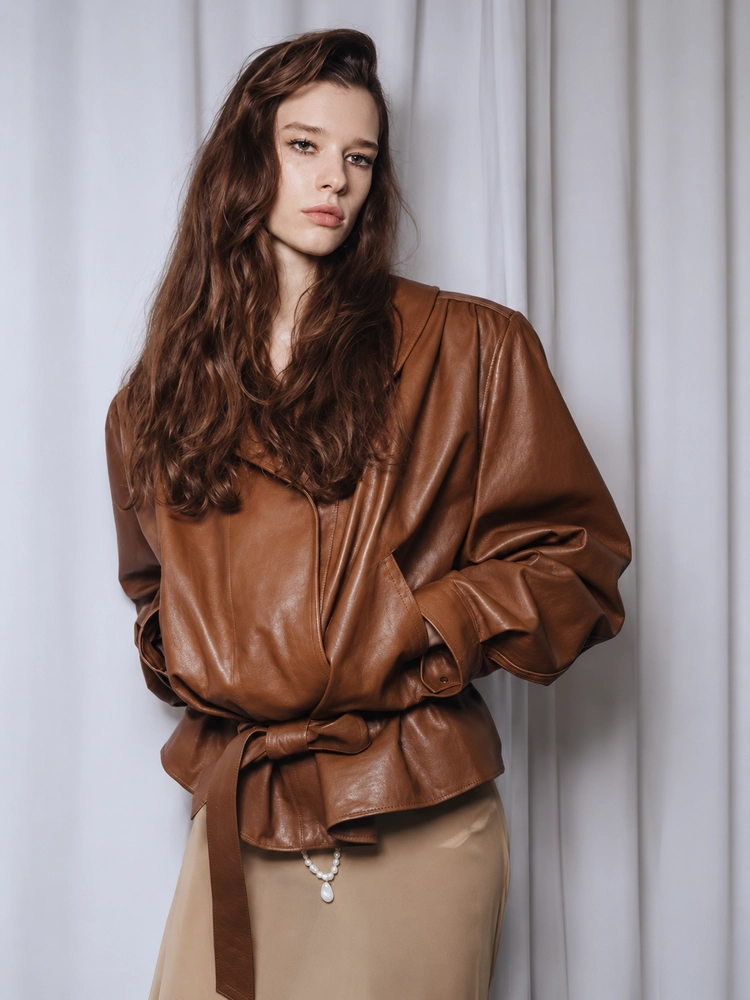
Certain pieces carry the entire argument of Bottega Veneta Fall 2026 with exceptional clarity. The coats are perhaps the most important. More than one review singled them out as the real status objects of the show, and for good reason. Under Louise Trotter, a Bottega Veneta coat becomes the center of gravity for the whole look: dense, shaped, and commanding. It organizes the body.
The lounging suiting is another key chapter, because it proves how much atmosphere Louise Trotter can wring from tailoring alone. Then there are the clipped fur-vest dresses, which push the collection into a more experimental, body-near register without losing sophistication. The wrap skirts built from belt logic are crucial too, because they show how Bottega Veneta house intelligence travels from accessory construction into clothing structure. Even the slouchy tank dresses matter. Under Louise Trotter, ease is never filler. It is a designed mood.
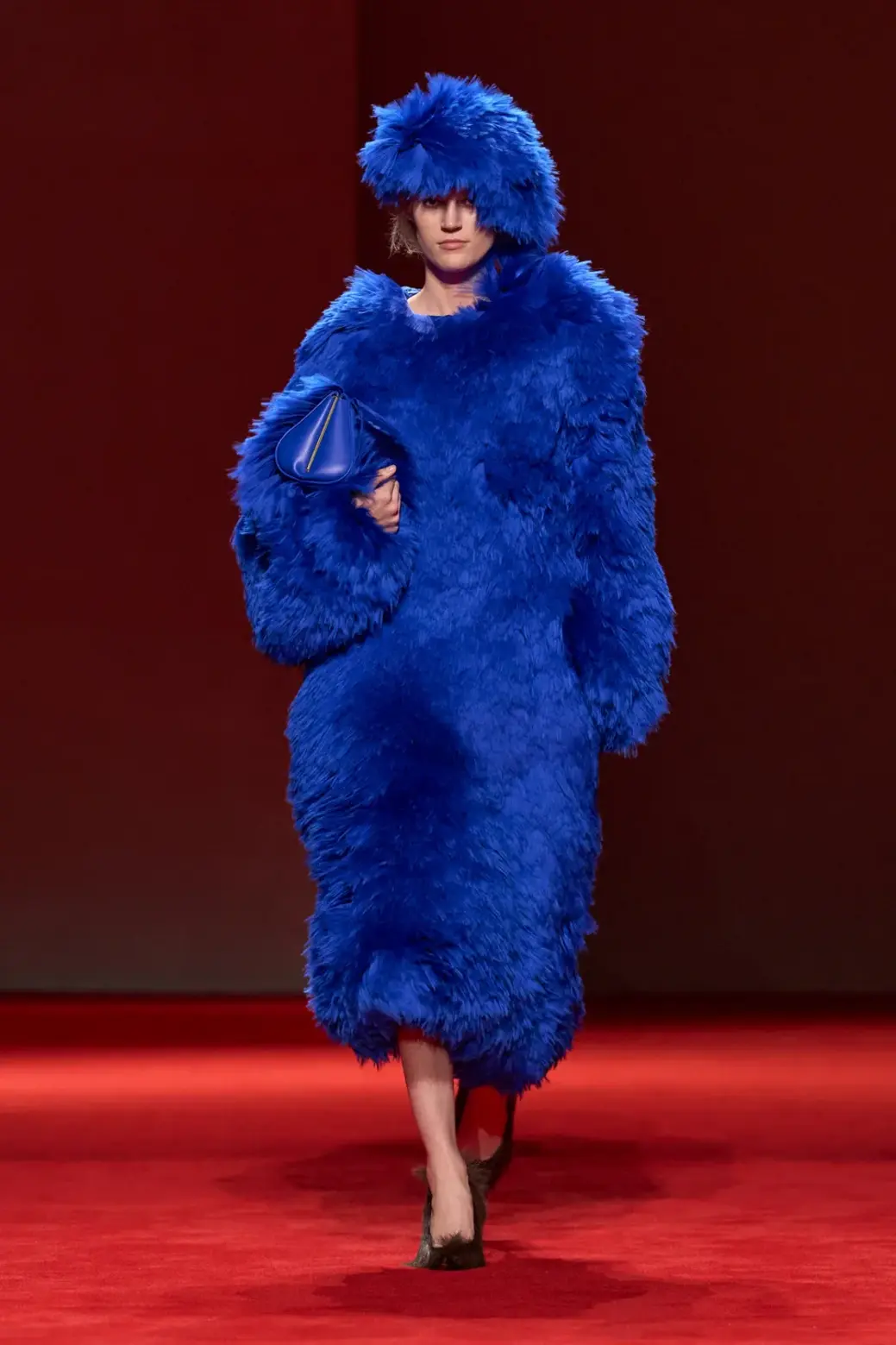
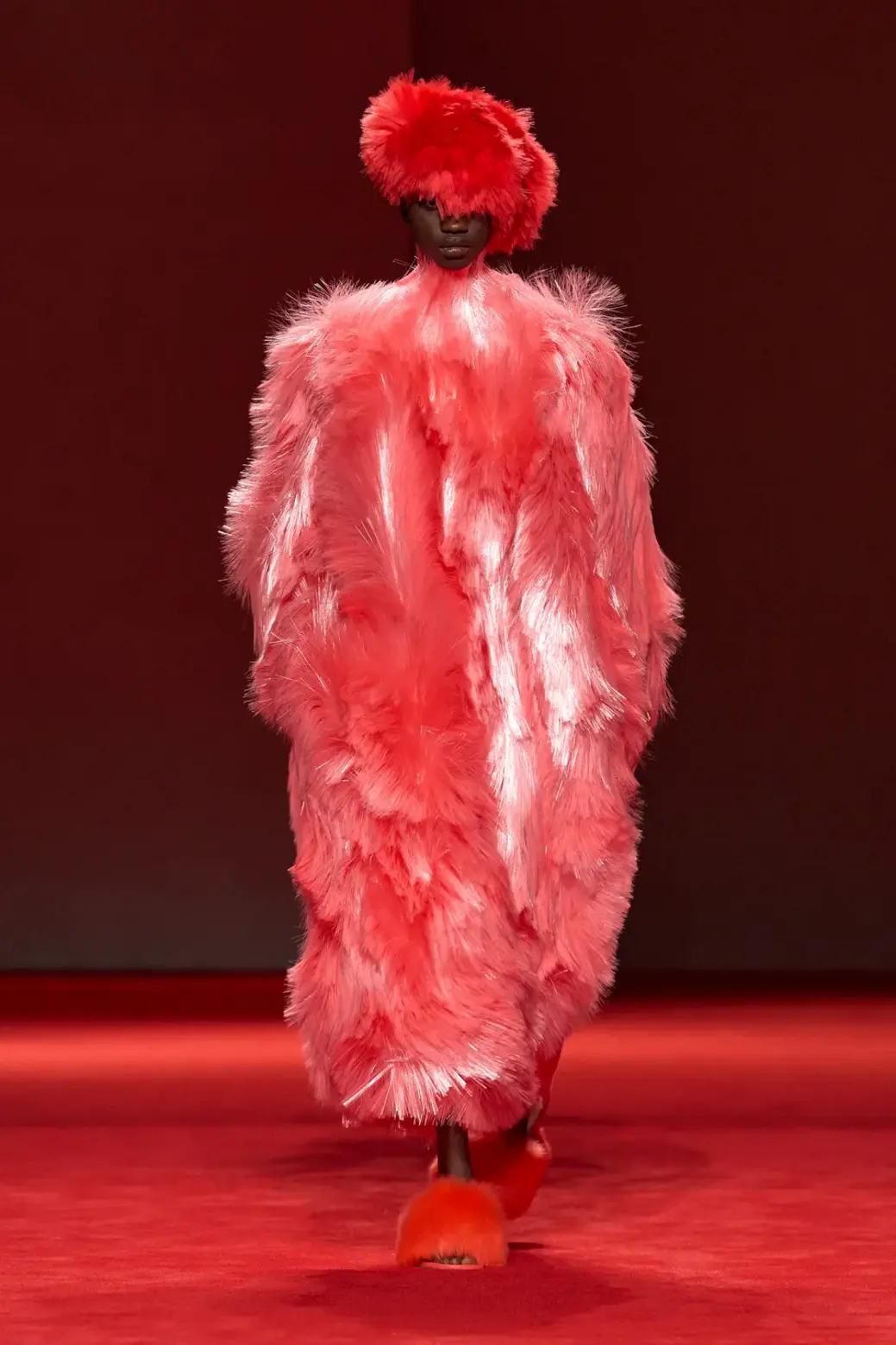
One of the loveliest things about Bottega Veneta Fall 2026 is how deliberately it turns toward brightness. The movement from more somber shades into vivid, pulsing color, and that shift is essential to the collection’s emotional architecture. Louise Trotter releases colors with timing. It arrives like a ray crossing the frame, changing how every texture reads and how every silhouette performs.
That is why the collection feels energetic. It begins with foundations, then allows itself vibrancy. It earns its brightness. Under Louise Trotter, Bottega Veneta Fall 2026 becomes colorful without losing seriousness, alive without losing control. resents clothes. The other changes light as it goes.
The process behind the collection is one of its smartest pleasures. Louise Trotter clearly thinks through Bottega Veneta from the inside out, beginning with the house’s leather heritage and allowing that logic to migrate across categories.
This is where Bottega Veneta Fall 2026 becomes foundational in the best sense. Louise Trotter is not decorating the brand identity onto clothes. She is building from house principles: construction, object intelligence, the discipline of making. That is why even the more exuberant textures never feel random. They are tethered to process. They come out of a house logic strong enough to support experimentation.
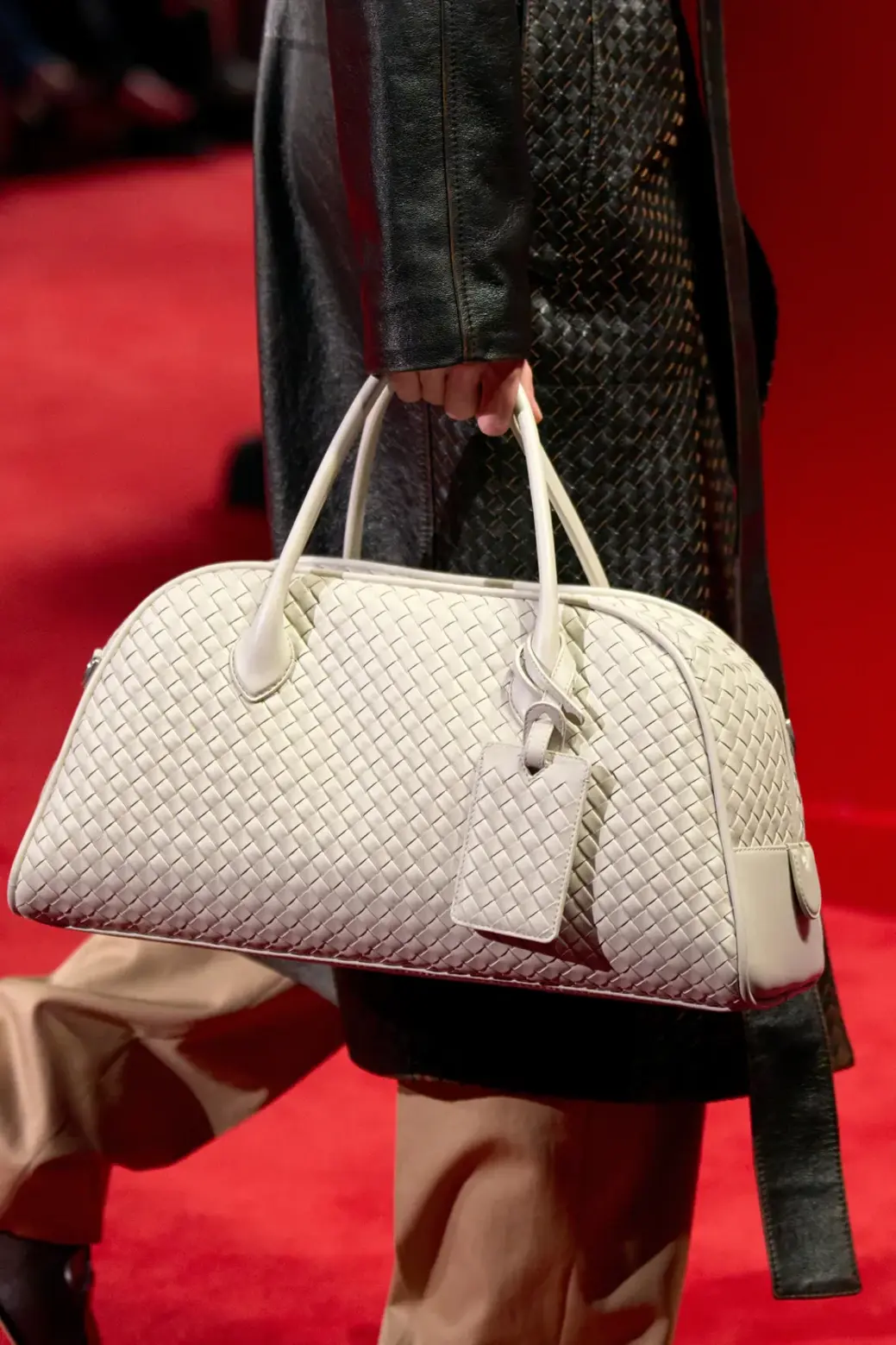
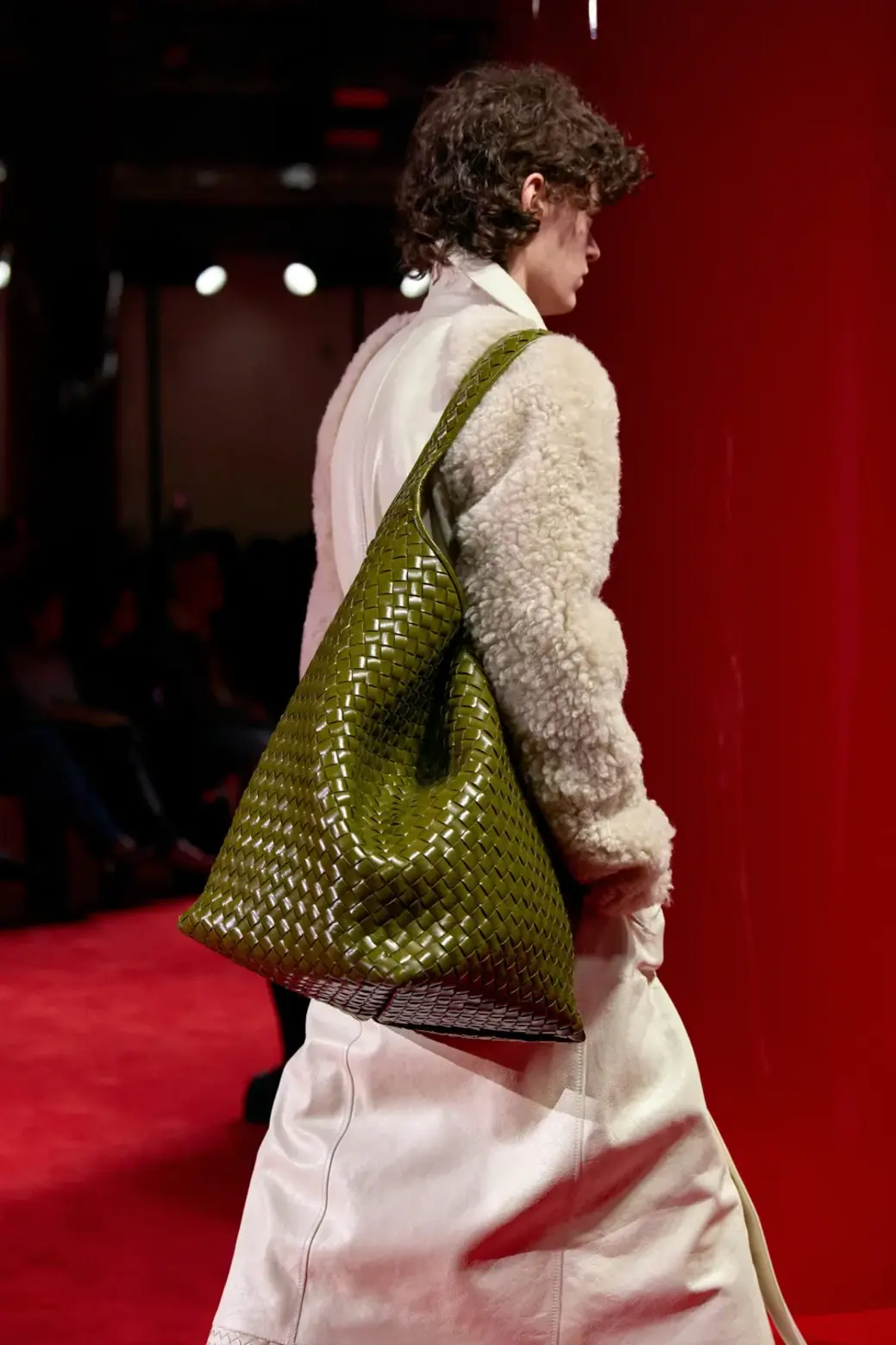
The accessories and styling reinforce the collection’s sense of plurality. Beanies, embellished headpieces, flats, moccasins, loafers, and signature bags in richer surfaces all contribute to the feeling that Louise Trotter is designing a woman with range. She can be practical, bright, tactile, severe, or relaxed without becoming inconsistent. Bottega Veneta Fall 2026 thrives on that multiplicity.
This matters because the collection’s spirit is not one of narrow identity. It is diverse and urban in the fullest sense. The woman at the center of Bottega Veneta Fall 2026 can turn up the mood because she contains more than one mood. She is foundational enough to live in these clothes and vivid enough to animate them. Louise Trotter understands that city life demands exactly that kind of wardrobe: one able to hold change without losing coherence.
What makes Bottega Veneta Fall 2026 so compelling is that Louise Trotter does not confuse maturity with stillness. She gives the house momentum. There is experimentation here, certainly, and at moments the textural ambition risks heaviness. But even that risk feels alive. It belongs to a designer pushing forward. The collection’s occasional excesses feel exploratory, which is exactly why they matter.
In the end, Louise Trotter makes Bottega Veneta Fall 2026 feel like a new breath because she makes craft move again. She makes texture cinematic, tailoring breathable, color earned, and city dressing emotional without sentimentality. It is Bottega Veneta made more vivid, more tactile, more fully in motion. She lets the women develop, scene by scene, until she stands in full view: confident, fearless, bright, foundational, and entirely herself.
Advertisement