Why are older models in fashion suddenly everywhere, and what does their rise reveal about an industry still terrified of changing its body ideals?

Why are older models in fashion suddenly everywhere, and what does their rise reveal about an industry still terrified of changing its body ideals?
April 30, 2026
Advertisement
Advertisement



Why is an industry that historically worships at the altar of youth suddenly so obsessed with women who have actually lived? Just look at Vogue. This month, the magazine did the unthinkable: it slapped two 76-year-old women on its cover. Of course, they aren't your average grandmothers; they are Meryl Streep and Anna Wintour, playing a clever, self-aware game of mirrors regarding the mythology of The Devil Wears Prada. Still, the number 76 is written in bold ink across an institution that usually fears gravity. The internet gasped, calling it actually groundbreaking in the comment sections. But here is the delicious irony: by finally letting older models in fashion through the front door, Vogue didn't look like a dusty antique. It looked incredibly modern. As Wintour herself declared in its pages, age is suddenly an advantage. But we have to ask ourselves: is fashion finally growing up, or is it just bored with the blank, unwritten faces of the very young? What happens when the ultimate gatekeepers decide that survival is suddenly chic?
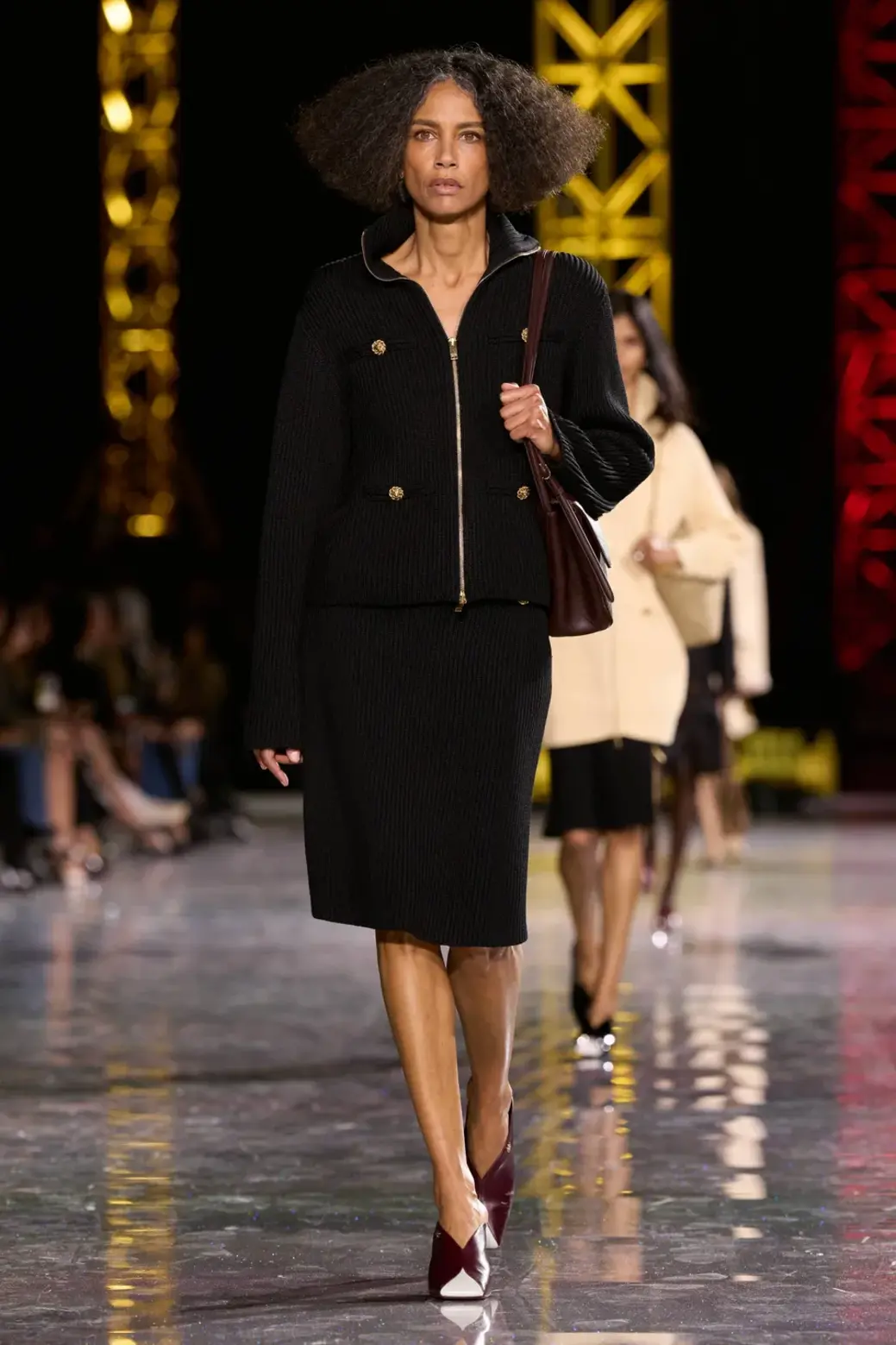

If you want proof of this strange new world, just look at the most recent runways. We witnessed a bizarre double standard play out in real-time. On one hand, the industry fiercely guarded its sample sizes, resulting in an almost complete blackout of size diversity. But on the other hand, it rolled out the red carpet for older models in fashion. Why is it that fashion will eagerly accept a wrinkle but completely reject a curve? Chanel didn't open its show with a fresh-faced teenager; it chose 50-year-old Stephanie Cavalli, who led a staggering fifteen models over the age of forty. The numbers for older models in fashion are everywhere: Bottega Veneta Fall 2026 gave us nine older models, Tom Ford Fall 2026 runway offered nine, Givenchy Fall 2026 runway eight, Balenciaga Fall 2026 runway five, and Louis Vuitton Fall 2026 runway four. And that is before we even mention the heavyweights, a 52-year-old Kate Moss stalking down the Gucci runway, a 57-year-old Gillian Anderson closing Miu Miu, and 79-year-old art legend Ming Smith gliding through Carolina Herrera alongside 52-year-old Amy Sherald. The data from the search engine Tagwalk lays the reality bare: while a pathetic 5 percent of top brands featured a plus-size model, an astonishing 100 percent featured older models in fashion. Are we witnessing a genuine revolution, or just a new, highly curated aesthetic trend?
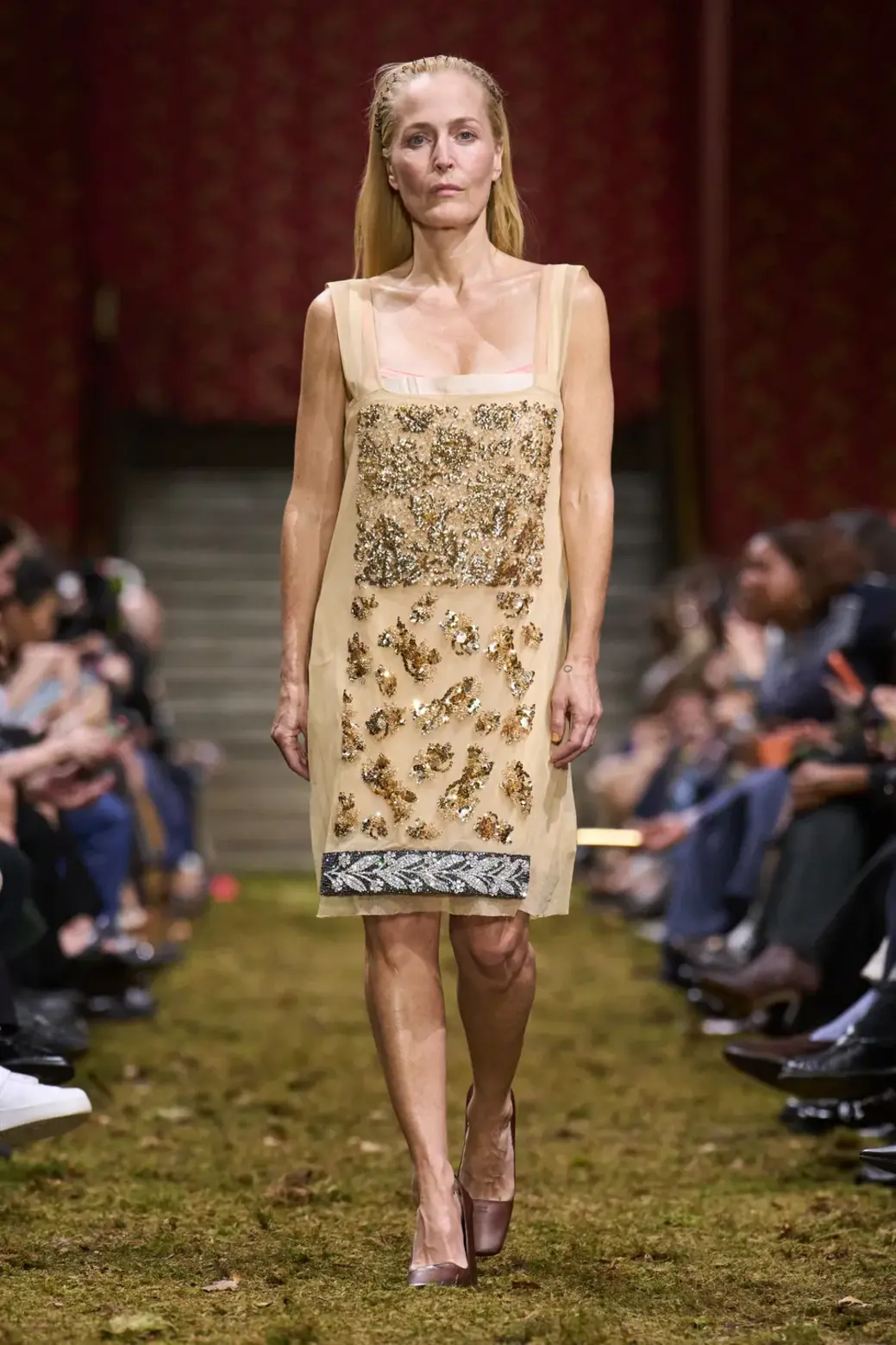

In the twisted reality of fashion, older usually just means anyone who has survived their twenties. But something different is happening right now. As Tagwalk's CEO Alexandra Van Houtte points out, brands aren't just hiring thirty-year-olds; they are actively hunting for the visible evidence of time. They want the silver streaks and the genuine laugh lines that only really arrive when a woman hits fifty. This fascination with time has spilled off the runway and straight into the velvet-roped front rows. At Celine, designer Michael Rider gave a center seat to 77-year-old Joan Juliet Buck, a former French Vogue editor turned actor and radio host, placing her right next to fifty-somethings like Naomi Watts, Sarah Paulson, and Tracee Ellis Ross. Over at Loewe, 76-year-old Sissy Spacek made a rare and dazzling appearance at Paris Fashion Week. Why are these luxury houses suddenly so proud to flaunt older models in fashion? Have they finally realized that the women who actually buy their clothes want to see themselves represented, or is age simply the new, shiny accessory to show off to the press?
This is not just a runway gimmick; it is a full-blown cultural rebellion happening right on our screens. Women in and around the fashion world are deciding to weaponize their age rather than erase it. We are even seeing the once-taboo topics of menopause and perimenopause transformed into a supercharged beauty market, championed by stars like Halle Berry, Gwyneth Paltrow, and Ms. Watts. How did we get here? We live in a suffocating era where artificial intelligence and social media filters erase every human flaw, and where guessing what plastic surgery a 30-year-old has had is a casual parlor game. In a world totally obsessed with the airbrushed age, where every spot is tightened, lifted, and filtered away, perhaps older models in fashion is the ultimate shock value. Is it possible that, after years of faking perfection, the most radical and weirdly bold thing a woman can do is simply let the world see her age?


Is it possible that the fashion industry has finally developed a conscience, or have the accountants simply realized that the youth have no money? We are witnessing a strange, chronological alchemy where the gray market is being spun into gold. Romae Gordon, a 52-year-old who walked away from the lens decades ago to manage the careers of others, now finds herself back under the burning lights of Chanel and Versace. Her story is a curious loop: a teenager from Jamaica who found moderate success, quit for a real life, and then returned to discover her best season ever in her fifties. But why does a woman need to survive a lifetime, including the loss of a partner and a complete career pivot, to finally be seen as a worthy vessel for a luxury gown? Gordon notes the practical reality that older women have the actual capital to buy the dreams fashion sells. Are older models in fashion being celebrated for their stories, or are they simply becoming the most elegant mirror for the only demographic whose bank accounts aren't empty?
The language of this shift is as fascinating as it is clinical. Talent scouts who once haunted high school hallways are now prowling supermarkets in the French countryside, hunting for women over sixty like rare, vintage artifacts. The industry has even birthed a new, polite euphemism for these survivors: generational. But there is a dark, hollow center to this newfound inclusivity. While the runway is suddenly welcoming older models in fashion, it is aggressively purging the curve. Pierpaolo Piccioli of Valentino admitted that while he sought a broad spectrum for his latest show, it was far easier to find an older models in fashion than a plus-size one. Two years ago, diversity of body shape was a promise; today, it feels like a forgotten fad. Why is the fashion world so comfortable with a wrinkle, yet still so terrified of a hip? Has aging gracefully simply become the only acceptable way to be imperfect in a world that still demands thinness?

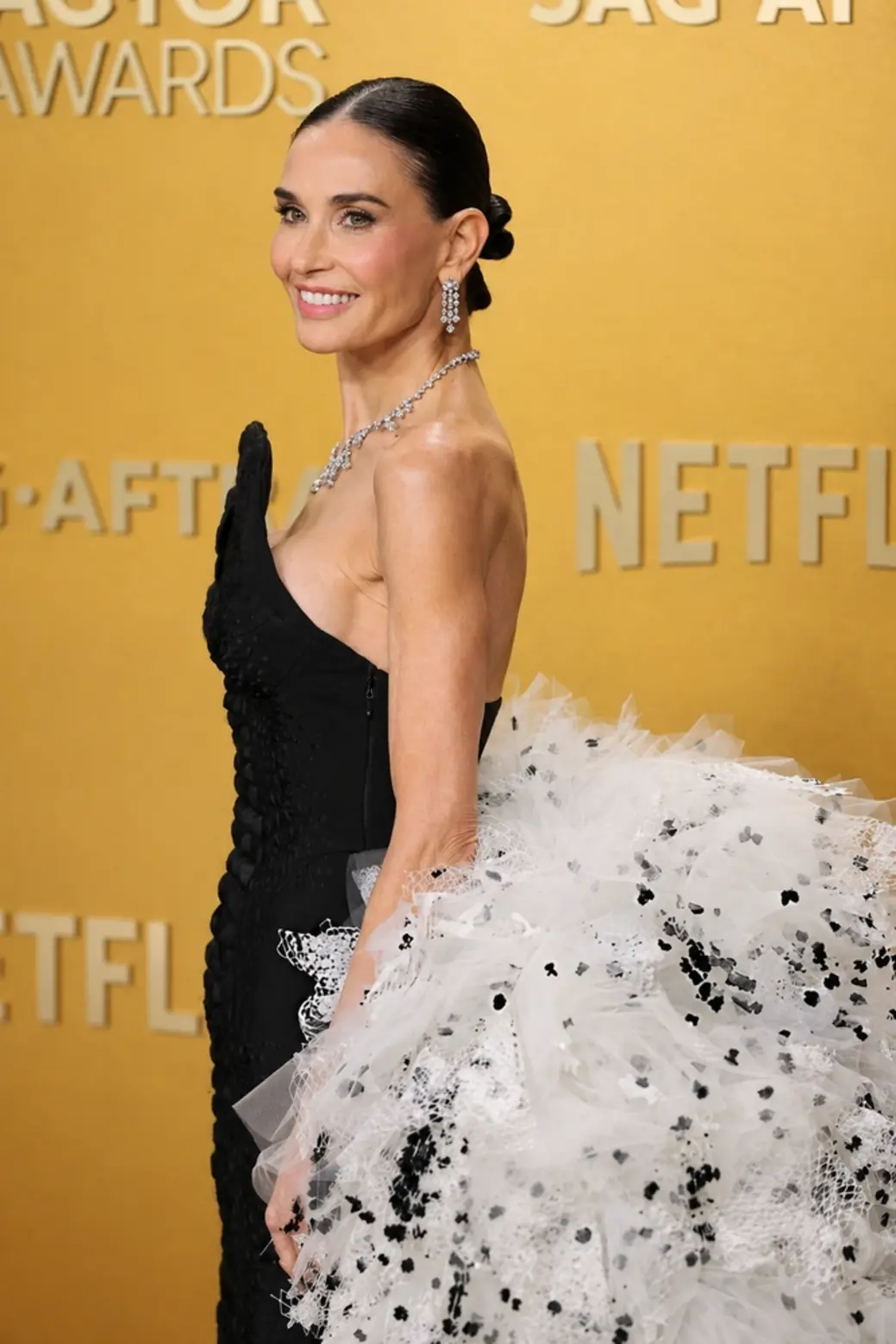
We are told that half of all spending power, and half of its growth, now sits squarely with the 50-plus cohort. In the United States, this group controls a staggering 70 percent of the nation's wealth. For a luxury market currently gasping for air in a stalled economy, ignoring these women isn't just a moral oversight; it’s a suicidal business strategy. We see the icons emerging: Martha Stewart posing in a swimsuit at 81, or Demi Moore commanding the spotlight at 61. It feels triumphant, yet we must wonder, at what cost? Sociology professor Ashley Mears points out the jagged paradox of this visibility: these women are celebrated for being old, provided they don’t actually look old. Is the new visibility just a new set of chains? If looking good at sixty requires an elite fortune in skincare, procedures, and personal trainers, then age hasn't been democratized; it has been rebranded as a luxury tier available only to the one percent.
In the midst of this glossy struggle, there is a quiet, almost radical push for the unvarnished. Designers like Matthieu Blazy at Chanel claim they want a "come as you are" energy, insisting on not correcting the faces of their mature models. Romae Gordon recounts the bizarre sensation of being told she is too good for makeup, no foundation, no concealer, not even a single eyelash to soften the gaze. It is a bold, almost weird demand: to be stripped of the very tools of artifice in an industry built entirely on theater. Is it empowering to be told your skin is a map worth showing, or is it just another way to be scrutinized under a different kind of lens? Piccioli argues that pride in one’s age is a symbol of power, a refusal to hide the vulnerability of time. But as fashion sells us this new strength, we are left to wonder: are we finally being allowed to be human, or have our wrinkles just become the latest fabric trend to be discarded when the next season rolls around?
Has the fashion industry finally grown a soul, or has it simply found a diversity loophole that doesn't require changing the size of its mannequins? We’ve seen these ripples before, Batsheva Hay casting only women over forty, or Balmain’s occasional nod to the seasoned muse. But the current consensus around older models in fashion suggests we aren't just looking at a passing season of "silver chic"; we are witnessing a tectonic shift in the industry’s very architecture. Yet, we must ask the uncomfortable question: is age inclusivity only safe because it doesn’t actually challenge fashion’s obsession with the skeletal? As Emily Huggard of Parsons notes, it is far easier to celebrate a wrinkle than to redesign a production line for a plus-size body. Is this genuine progress, or is it a strategic maneuver to look woke while keeping the sample sizes punishingly small? Why is the industry so willing to embrace a century of life, yet still so terrified of a few extra inches of waistline? This hunger for the "real" is a direct scream against the digital algorithm that has flattened our lives into a singular, velvety sameness. When everyone lives in the same Instagram-filtered apartment and sits in the same mid-century modern chair, simply being oneself becomes the ultimate, unattainable luxury. But this isn't just about fashion; it’s about the very way we inhabit our skin in a political sense. From the "Mar-a-Lago face", that plumped, hyper-smoothed mask of exaggerated patriarchal norms, to the fierce refusal to be malleable, the way a woman ages is becoming a statement of autonomy. Are we witnessing the death of the pleasing woman? More and more, women are looking at the collective demand to be shiny, new, and cloned, and they are simply saying, "No." They are choosing to be the old stone house, drafty and weathered, but undeniably there. In an era of AI-generated perfection, could the most creative act of all be the simple, stubborn refusal to hide who we have become?
Advertisement