Fashion exhibitions turn garments into bodies without breath, memories without owners, and revolutions behind glass, asking whether beauty can ever be innocent once it enters the museum.
Fashion exhibitions turn garments into bodies without breath, memories without owners, and revolutions behind glass, asking whether beauty can ever be innocent once it enters the museum.
April 30, 2026
Advertisement

Advertisement



Before the 1970s, fashion exhibitions functioned as a silent sanctuary of academic preservation, where garments were treated as specimens in a linear, chronological march of upper-class history. In this era of the static archive, a garment’s value was found strictly in its technical DNA, the intricate weaves of the fabric, the invisible architecture of tailoring, and the elite pedigree of the wearer. While this approach granted fashion a sense of historical seriousness, it also rendered the clothing emotionally inert; stripped of the living body, these pieces became frozen, distant objects in a graveyard of style that was respected by scholars but rarely felt by the public.
This paradigm was shattered by Diana Vreeland, who transitioned from the editorial urgency of Vogue to the Metropolitan Museum of Art and recognized a fundamental crisis: clothing on a mannequin suffers from a loss of kinetic energy. To solve this dead clothing problem, she performed a radical intervention by importing the techniques of high-end commerce into the gallery. Through the use of dramatic lighting, lifelike mannequins, and window-dressing stagings, she transformed the museum into a theatrical stage governed by the unapologetic mandate that everything must look Now. This shift toward sensory seduction reached its peak in the 1980 exhibition, The Manchu Dragon, where Vreeland bypassed the symbolic reality of the Qing Dynasty to style the collection with a layered, mix-and-match aesthetic that reflected 1980s tastes rather than historical truth. By even pumping YSL Opium perfume into the air to heighten the atmosphere, she prioritized a sensory vibe over academic veracity, successfully democratizing fashion exhibitions while simultaneously inaugurating the era of luxury hallucination.


This legacy remains a double-edged sword; while Vreeland brought the crowds through the doors, she also introduced a fundamental dilemma that still haunts the field: Are we witnessing the resurrection of history, or are we merely attending a high-budget seance where the past is forced to wear the face of the present for our entertainment? As curators like Valerie Steele and Alexandra Palmer have noted, this era of seduction, though successful in its reach, often lacked the intellectual depth required to truly inform. It represents the first major tension of the modern fashion exhibition, the discovery that it is far easier to make an audience look than it is to ensure they actually understand.
The radical democratization of the 1960s did more than change the silhouette; it dismantled the entire power structure of the fashion system. This era marked a tectonic shift where the top-down dictates of Paris haute couture, once designed exclusively for a tiny elite, were overwhelmed by a rising tide of youth culture, happenings, and the burgeoning power of popular media. Fashion ceased to be a mere reflection of wealth or a singular feminine ideal, transforming instead into a primary tool for individualization and political protest. As philosopher Gilles Lipovetsky observed, the hierarchical and unitary configuration of the old world exploded, allowing the sidewalk to engage in a direct, often defiant dialogue with the atelier.


For museums, this meant the traditional model of collecting luxurious, elite donations became obsolete; to remain culturally relevant, institutions had to look beyond the silk object to the societal and political context of the clothing itself. Richard Martin identified this shift as fashion aligning with the spirit of Pop Art and performance, a nexus of democratic social values where the wearer’s identity became the central work of art. This cultural turn was epitomized by the Victoria and Albert Museum’s 1994 exhibition, Streetstyle: From Sidewalk to Catwalk. Curated by anthropologist Ted Polhemus and grounded in Dick Hebdige’s seminal study of subcultures, this exhibition served as a watershed moment because it prioritized an underlying intellectual vision over the prestige of precious materials. It painstakingly traced how groups like punks and mods utilized self-selected looks to construct fierce, independent identities.


However, this move into the institution brought a profound paradox to the surface. When fashion exhibitions place a punk T-shirt used to propagate radical ideals behind glass, it inherently strips that garment of its power as a tool of dissent, reducing a lived act of defiance to a static, aesthetic artifact. This brings us to a pressing question for the modern observer: By inviting rebellion through the museum doors, is the institution actually preserving the soul of subculture, or is it merely sanitizing it into a safe, digestible spectacle for the very establishment it was meant to challenge? In this transition, the street certainly entered the museum, but in the process, the rebellion was often neutralized into a curated commodity, proving that once a revolution is labeled and framed, its teeth are inevitably drawn.
As fashion exhibitions evolved from a display of objects into a theater of ideas, curators began to treat the garment not as a finished artifact, but as a battlefield where power, gender, and identity collide. This intellectual maturation meant shifting the focus toward the "why" of clothing, using thematic juxtaposition to expose the hidden architectures that dictate how we inhabit our bodies. In Akiko Fukai’s groundbreaking exhibition Visions of the Body: Fashion or Invisible Corset, historical restraints were placed alongside Martin Margiela’s 1997 Stockman bodice, a piece constructed from the same raw linen as a tailor’s mannequin, to force a realization that the corset is not merely an antique curiosity, but a persistent social framework.

This interrogation of body politics reached a peak with Rei Kawakubo’s "Lumps and Bumps" (1997), a collection that deliberately displaced feminine curves to unconventional areas of the torso, effectively sabotaging the industry’s obsession with idealized sizes and proving the body is a constructed, unstable artifice. This deconstruction of the feminine ideal was further explored in the exhibition Woman by, which invited diverse designers to interpret femininity; while Vivienne Westwood viewed classical seduction through the lens of empowerment, Ann Demeulemeester presented a delicate yet tough womanhood, and Hussein Chalayan transcended mere apparel by using trampolines and confessional booths to map the philosophical stages of human life.

Beyond gender, the lens widened to globalization itself in Global Fashion, Local Tradition, which examined how the internet simultaneously erodes Western fashion hegemony and grants newfound cultural capital to regional crafts. Yet, this thematic ambition brings a significant danger to the fore: by framing the corset or the silhouette as a profound cultural study, the museum risks transforming visceral history into passive aesthetic pleasure. When we analyze the discipline of the body within the sanitized, silent white walls of a gallery, we risk obscuring the physical reality of the restriction itself. If a museum invites us to admire the social framework of a corset while ignoring the physical pain it once inflicted, are we truly uncovering the hidden violence of beauty, or are we simply learning to find the architecture of our own suppression elegant? In this light, the museum’s intellectual rigor can inadvertently act as a luxury shroud, turning the battlefield of the body into yet another beautifully curated, highly intelligent distraction.
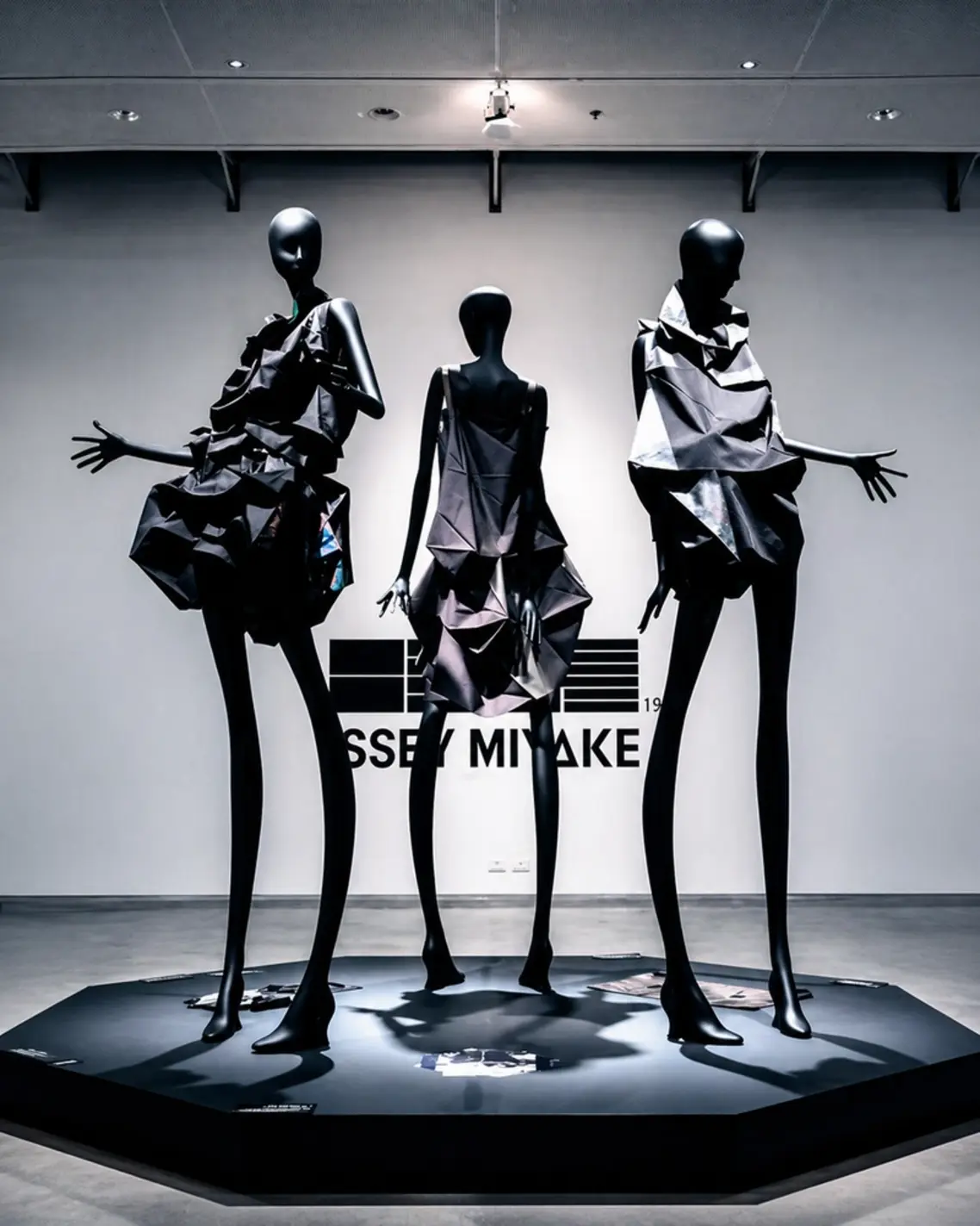
The final evolution of fashion exhibitions represents a total embrace of conceptualism, where the garment is no longer merely a wearable product but a vessel for identity, environment, and the rigorous exploration of self-image. For the modern avant-garde, visionaries like Rei Kawakubo, Yohji Yamamoto, and Issey Miyake, the traditional catwalk has become an insufficient medium, replaced by the museum’s ability to frame fashion as design attached to the human body with the same gravity as Pop Art. This is particularly evident in the A-POC system by Miyake and Dai Fujiwara, where the complex technical process of weaving an entire garment into the fabric required a gallery setting to explain a systemic concept that the product alone could not communicate. Similarly, Hussein Chalayan utilized the museum aura to make visible his complex meditations on migration and globalization, themes that demand a slower, more immersive environment than the frantic pace of the runway provides.


This conceptual turn is perhaps most visceral in the work of Maison Martin Margiela, who utilized the gallery to design time itself. Influenced by Barbara Vinken’s idea that fashion after the 1980s began designing mortality rather than just the new, Margiela used second-hand clothes that already carried the traces of life. His 1997 Rotterdam exhibition famously featured garments injected with bacteria that mutated in color and texture during the show until they eventually fell apart. By turning the exhibition into a memento mori, Margiela forced a confrontation with transience in an industry otherwise obsessed with the forever new.
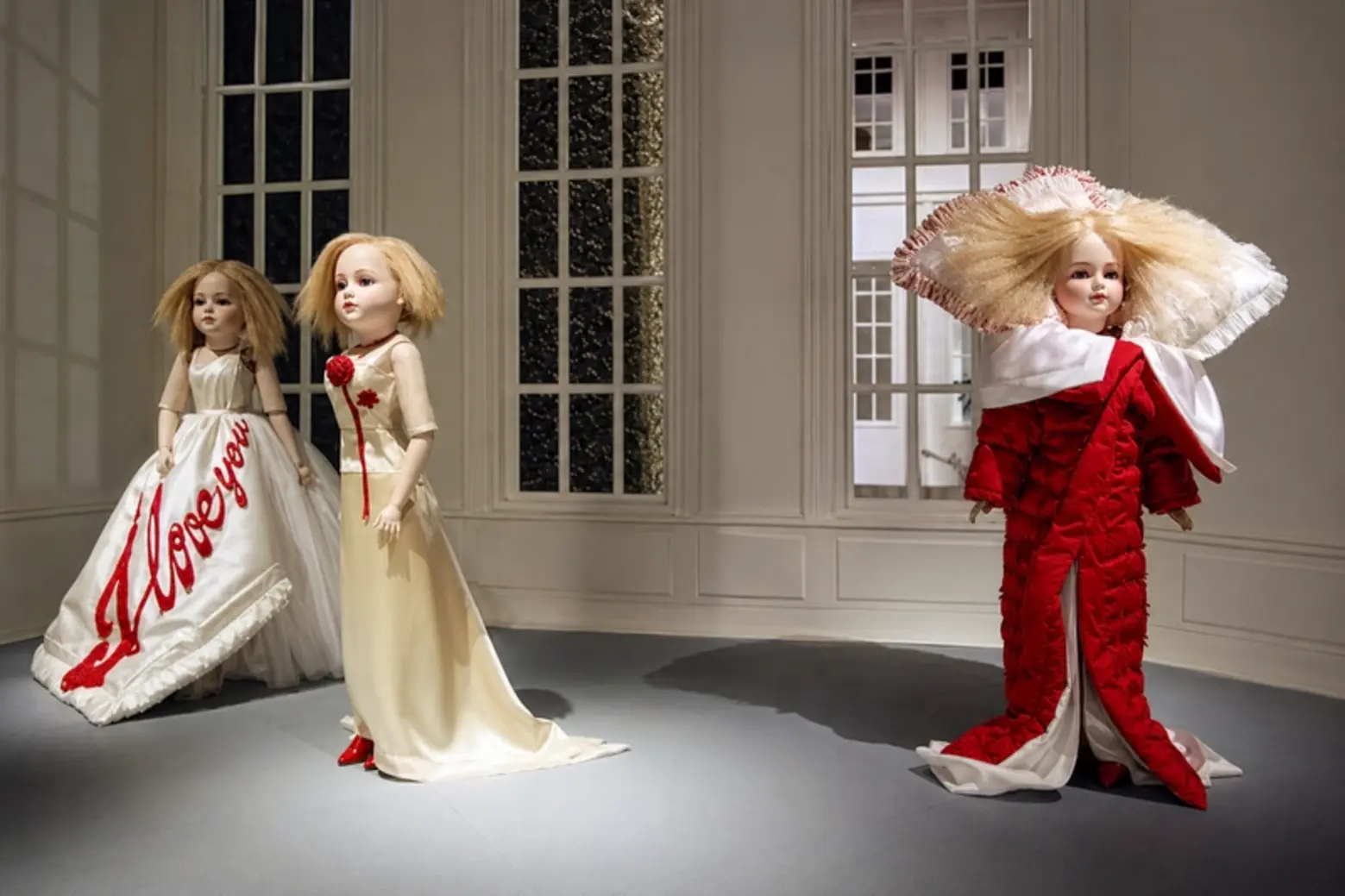


However, this shift toward a theatricality of meaning has sparked significant curatorial friction, as seen in Judith Clark’s 2004 Malign Muses. Based on Caroline Evans’s Fashion at the Edge, the show explored themes of trauma and alienation through elaborate installations that some felt overshadowed the work. Traditionalists like Lou Taylor argued that the garments had been reduced to incidental illustrations for a curator’s narrative, while Christopher Breward defended it as an effective new form of communication. In these spaces, the clothing is no longer the star; the idea is. This culminates in the rise of the brand myth, exemplified by the 2008 Barbican exhibition of Viktor & Rolf, which used a five-meter-high dollhouse and porcelain miniatures to create a fairytale that was both democratic and unsettling. By showing original designs on life-sized dolls alongside their miniature counterparts, they challenged the viewer’s relationship to beauty ideals and fashion fantasy. Yet, as fashion exhibitions grants these commercial products an aura of high art, it risks becoming a masterclass in brand storytelling rather than objective criticism. Has the museum truly liberated fashion from the constraints of commerce, or has the luxury industry simply mastered the language of the institution to transform the gallery into its most prestigious and deceptive runway?
Fashion exhibitions are the industry’s ultimate bid for immortality. They trade the frantic, thirty-second blur of the runway for the heavy, contemplative silence of the gallery, offering a depth that no front-row seat can provide: context, and a proximity that borders on the intimate. In these spaces, fashion is stripped of its commercial utility and reassembled as a weaponized language of body politics, local identity, and avant-garde defiance. But this newfound intellectual weight is a seductive trap. The more breathtaking the curation, the more carefully we must interrogate what, exactly, we are being lured into believing. We are not just looking at archives; we are looking at a curated version of the truth. Fashion exhibitions possess the uncanny power to resurrect a dead garment, but it also has the power to perfume the corpse, light it beautifully, and call the result history.
Advertisement