Chrome Hearts turned the locked door into a business model, then made an entire generation beg for the key.
Chrome Hearts: The Secret Society Everyone Can See
Chrome Hearts turned the locked door into a business model, then made an entire generation beg for the key.
April 28, 2026


Chrome Hearts has always carried the temperature of a forbidden room: leather warmed by gasoline, silver cold as a blade, a shop door that feels closer to a dare than an invitation. The brand began as a Los Angeles mutation, born from biker gear, rock-star appetite, Hollywood accident, and one man’s taste for objects that looked handmade by saints with criminal records.
For more than three decades, Chrome Hearts has survived inside a strange contradiction. It is cult and commodity. It is sacred and overexposed. It is the sterling-silver chalice of obsessive collectors and the trucker-hat uniform of hype culture. How can one brand dress Japanese die-hards like medieval biker priests while also feeding the same logo machine that turns every cool thing into a punchline?
That is the Chrome Hearts riddle. The brand has become one of fashion’s rare monsters: ugly enough to feel honest, expensive enough to feel untouchable, famous enough to feel endangered. Its greatest achievement may also be its greatest curse. Chrome Hearts learned how to sell the secret.
Inception: A Biker Myth Born from Hollywood Static

The origin story sounds almost too cinematic, as if Chrome Hearts wrote itself out of a half-burned Western script and rode straight into Los Angeles on a custom motorcycle. In 1988, Richard Stark, a Hollywood carpenter with a taste for craft and grit, entered the orbit of a low-budget horror-comedy film about biker women and zombies. The film once carried the working title Chrome Hearts. The title moved away from the movie and into Richard Stark’s hands, where it found a far more dangerous life.
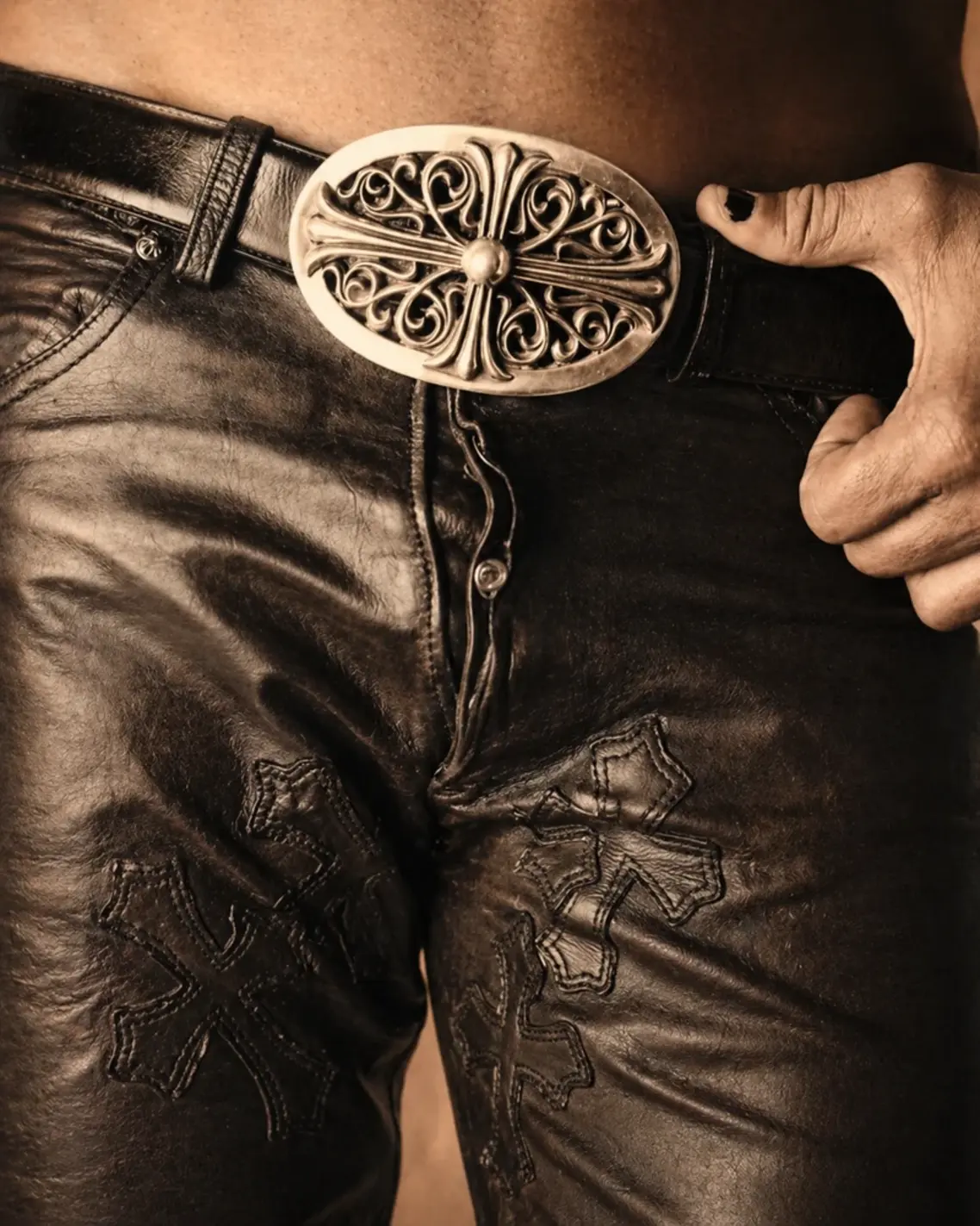
What began as costume work quickly became a language. Stark connected with leather manufacturer John Bowman and later Leonard Kamhout, a master of sterling-silver jewelry. Together, they built the first Chrome Hearts vocabulary: black leather, gothic crosses, heavy hardware, silver snaps, zipper pulls, buttons, and objects that looked touched by speed, sweat, and ritual. This was motorcycle gear treated like altar furniture.
Then came the rock gods.
Motley Crüe, Guns N’ Roses, The Rolling Stones, Aerosmith, Lenny Kravitz: they understood the product before fashion did. Chrome Hearts spoke their dialect. It had the brutality of the road, the polish of handwork, and the ego of a stage light. A Chrome Hearts jacket carried the arrogance of armor. A pair of pants could look like a tour bus had turned into couture.


The fashion establishment eventually arrived too, almost awkwardly. The CFDA recognized Richard Stark in 1992, and Cher, dressed in full Chrome Hearts, gave the moment its proper theatrical madness. Then Rei Kawakubo opened another gate by bringing Chrome Hearts into the Comme des Garçons universe in Aoyama. Suddenly, the brand moved from Los Angeles subculture into Japanese fashion devotion. The biker relic had crossed the ocean. The cult had found its second temple.
The Secret Door: How Chrome Hearts Turned Distance Into Desire

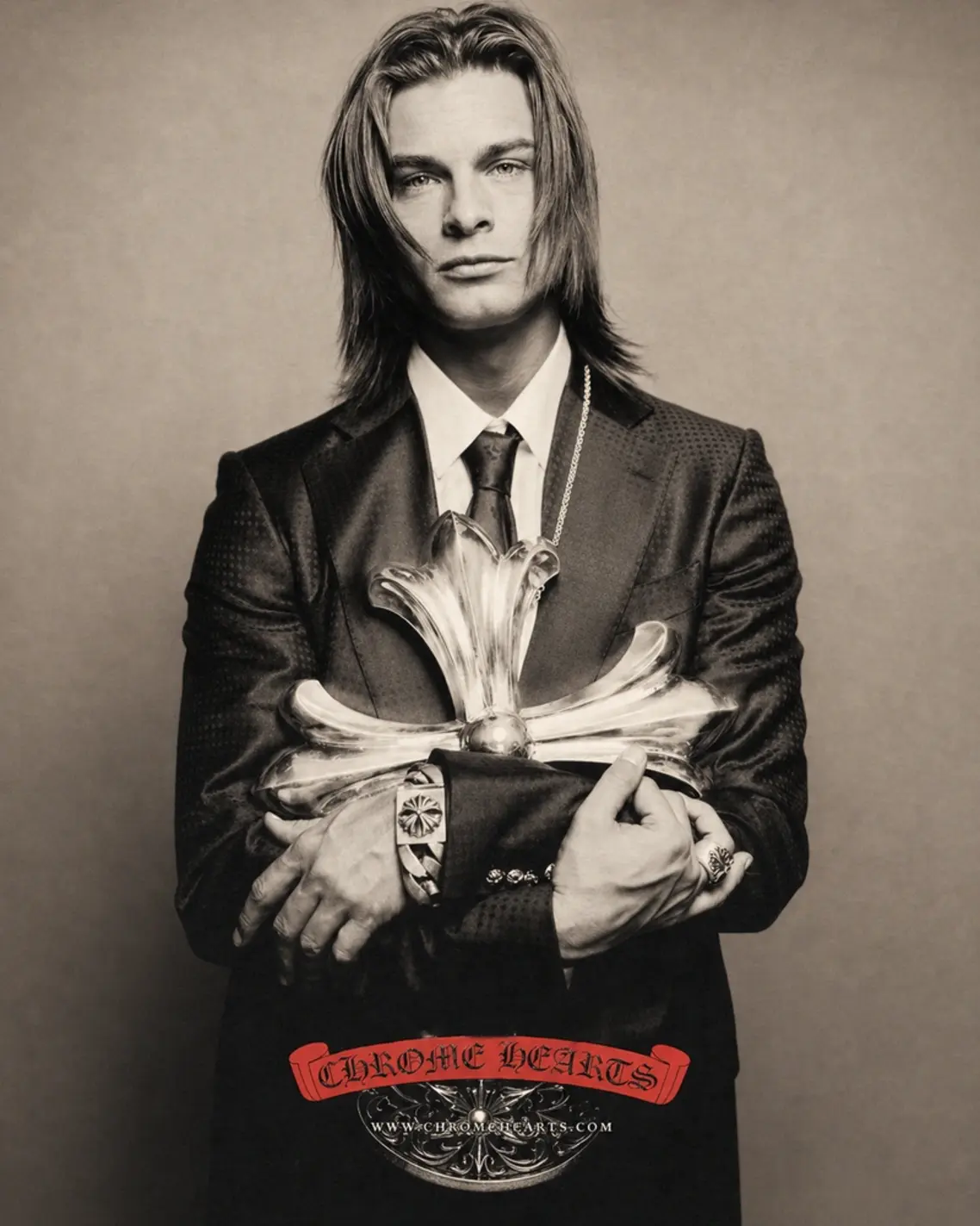
Chrome Hearts understood something luxury often forgets: mystery has weight. Distance creates hunger. A locked door can become more erotic than a billboard.
Through the 2000s and 2010s, the brand built its empire through scarcity, silence, and atmosphere. Richard and Laurie Lynn Stark opened flagships that felt less like stores and more like private chapels for the devout. Everything inside could become Chrome Hearts: the furniture, the counters, the handles, the hangers, the rooms themselves. Retail became world-building. The customer entered a house where the brand had touched every surface.
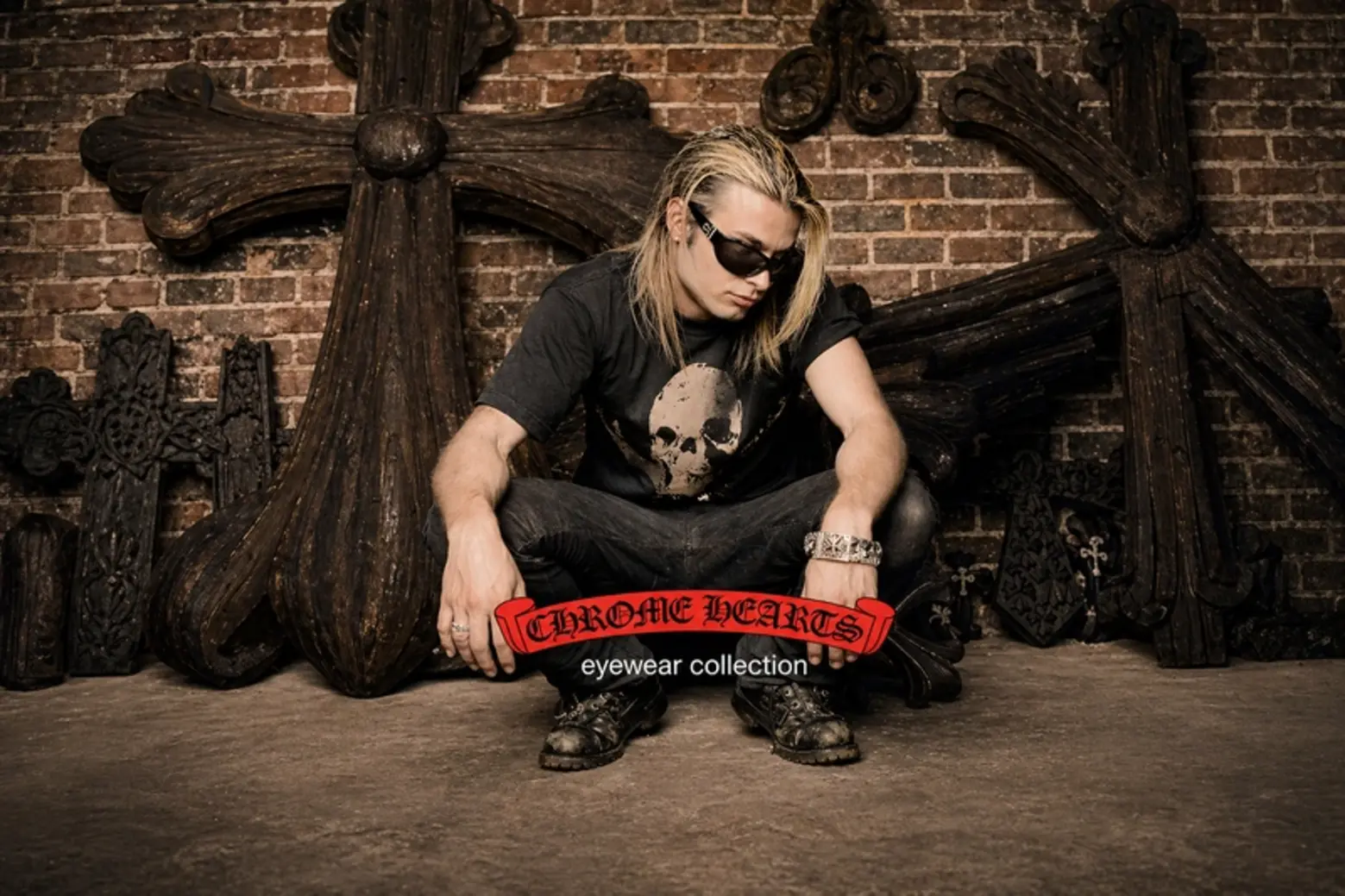
Its website existed mainly as a map. The product lived elsewhere, inside physical stores, private relationships, and whispered access. That was the brilliance. Chrome Hearts made consumption feel earned. You had to travel, search, ask, wait, know someone, know something. The brand turned inconvenience into status.
And what a cruelly effective spell that was.
Because Chrome Hearts has always thrived on partial knowledge. The more opaque the brand became, the more powerful it felt. Factories, collaborations, inventory, pricing, product drops, celebrity clients, all of it moved through fog. The consumer received fragments and built mythology around them. Even those inside the cult felt as if another chamber existed beyond them.
That is the seduction of Chrome Hearts. It gives access, then hints at a deeper access. It opens the door, then shows another door.
Mainstream Consumption: When Rap Made the Secret Loud
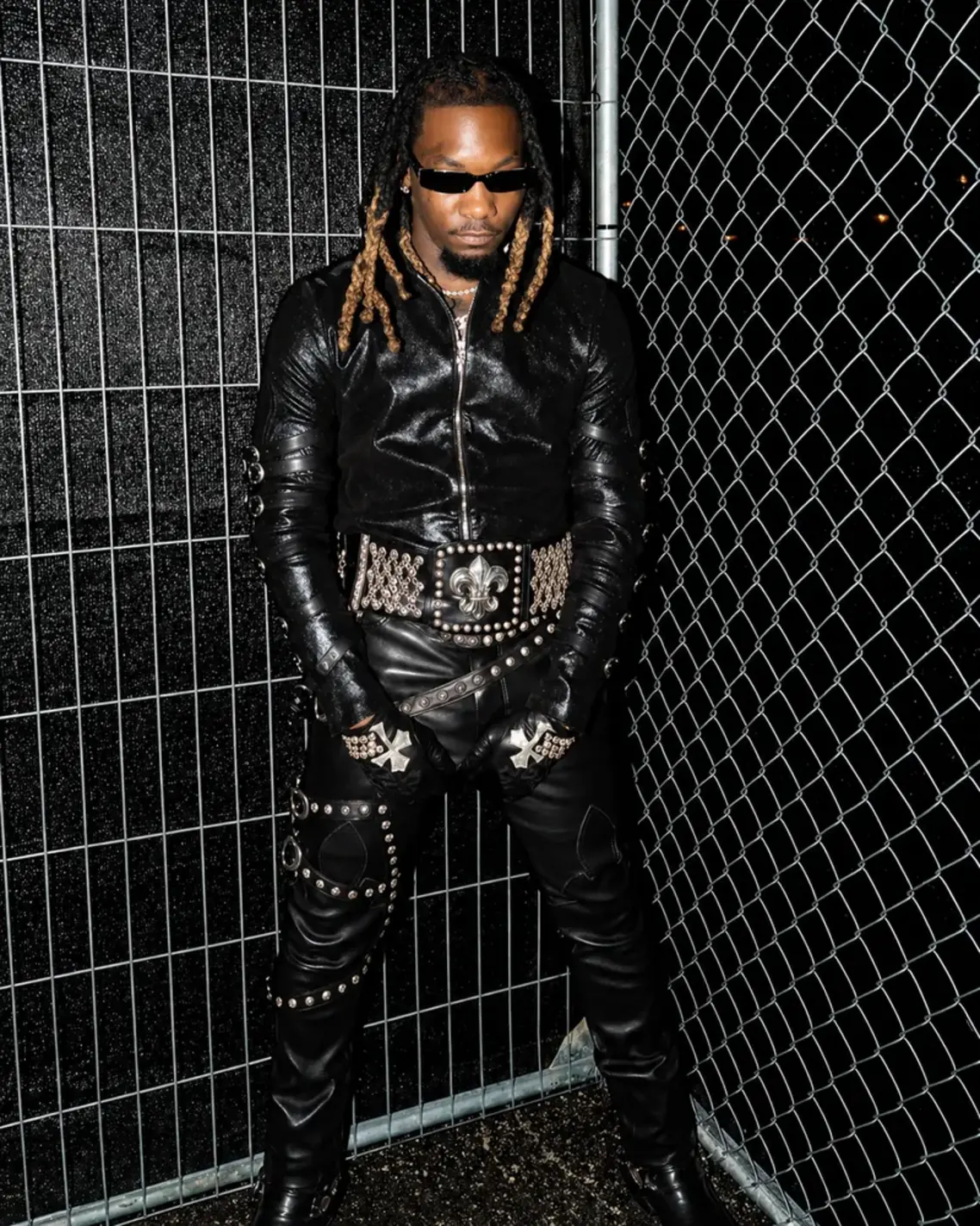
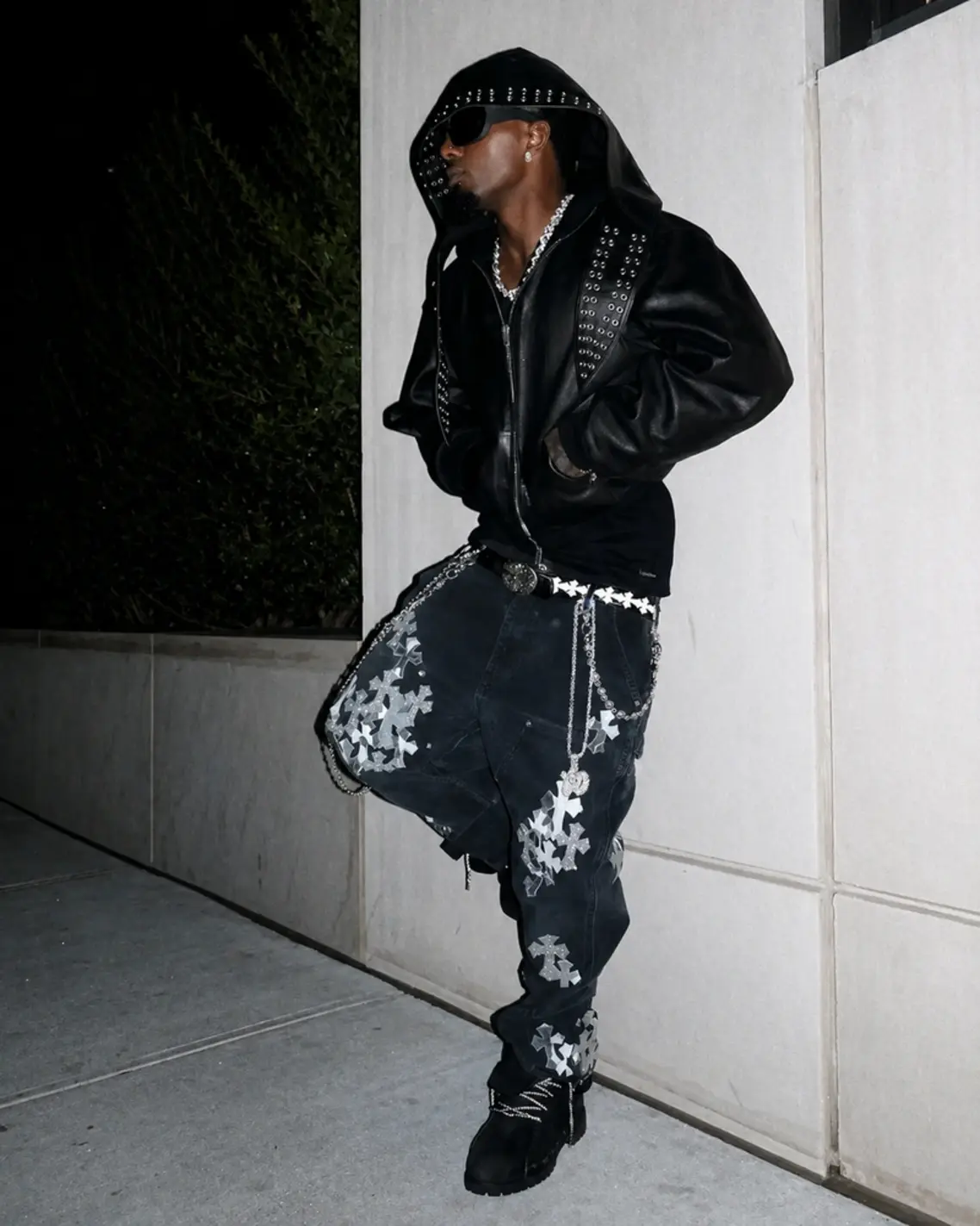
Then the internet changed the weather. Fashion consumption moved from boutiques to feeds, from collector circles to screenshots, from private devotion to public signaling. Moodboards, resale platforms, celebrity stylists, Instagram pages, fan accounts, and algorithmic obsession turned secrecy into a new kind of visibility.
Chrome Hearts could have remained a cryptic object in the corner of fashion. Yet culture came pounding at the gate, and rap carried the loudest fist.
Hip-hop and rap gave Chrome Hearts a new mythology. Jay-Z, Lil Wayne, Drake, Migos, Travis Scott, Lil Uzi Vert, Young Thug, Playboi Carti: the names formed a second archive of the brand. A leather-and-silver house once beloved by rock stars became the jewelry box of rap aspiration. The Chrome Hearts logo moved through lyrics, courtside photos, paparazzi shots, backstage images, and stylist pulls.
This shift mattered because rap altered the brand’s social function. Chrome Hearts became legible to a generation raised on proximity. Fans heard the name in music, saw it on celebrities, found it on resale platforms, and learned to read the gothic typography as a signal of taste, money, and subcultural fluency.
What happens when an inside joke becomes a global password? What happens when everyone learns to pronounce the sacred name?
The Starks adapted. E-commerce, secondary markets, private shoppers, stylists, and direct consumer demand widened the portal. Chrome Hearts entered a new phase where the brand could preserve its ritualistic aura while also feeding a mass appetite for hoodies, hats, T-shirts, and graphic pieces. The cult had discovered volume. The secret had learned logistics.

Every cult eventually meets parody. Chrome Hearts met the meme.
The same symbols that once felt dangerous began circulating as jokes: Horseshoe graphics, gothic lettering, trucker hats, loud embroidery, men dressed like final bosses of silver devotion. The internet did what the internet always does. It flattened aura into template. It turned obsession into content. It made the logo funny.
Here lies the sharpest contradiction in Chrome Hearts today. The brand still produces extraordinary objects: leather goods, jewelry, furniture, custom oddities, one-of-one pieces that feel closer to sculpture than merchandise. At the same time, its most visible public image often comes from screen-printed products and logo-heavy basics. The gateway pieces travel fastest. They also carry the greatest risk.
Because saturation has a scent. Once the logo appears everywhere, the public begins to smell the machine.
Still, Chrome Hearts has a strange immunity. Chrome Hearts seems to absorb ridicule into its own ugliness. The brand already looks abrasive, vulgar, overbuilt, and half-mad. Mockery almost completes it. A Chrome Hearts hat can feel cringe on one person and ceremonial on another. That instability keeps the brand alive.
Maybe that is the real power. Chrome Hearts can look ridiculous and desirable at the same time. Fashion rarely survives that duality. Chrome Hearts lives there like a king.
The Future: Family Empire, Silver Myth, and the Price of Survival

The Chrome Hearts ride keeps climbing in the present tense, and its business altitude feels almost mythic. The company sits comfortably in billionaire territory, signaled by the Starks’ quiet sale of 10 percent of the house to a private equity firm for roughly $150 million. Yet that valuation barely touches the customer’s encounter with the brand. Chrome Hearts still moves with the same dirty-silver temperament that shaped it in the early 1990s and 2000s. The products have shifted toward the appetite of a younger, faster, logo-hungry generation, but the engine remains the Stark family’s old machine: leather, metal, secrecy, attitude, control. Walk into a flagship and the FUCK YOU spirit still hangs in the room like incense. Reaching a brick-and-mortar Chrome Hearts store still feels like a pilgrimage. The leather work still comes out of its Hollywood factories, carrying the aura of American-made craft, while the eyewear line keeps its Japanese production. What kind of billion-dollar fashion house still behaves like a locked garage with cathedral furniture inside? That is exactly the point. In a fashion economy ruled by endless scrolling and evaporating attention, the Starks have adapted their strategy while keeping the ritual intact.
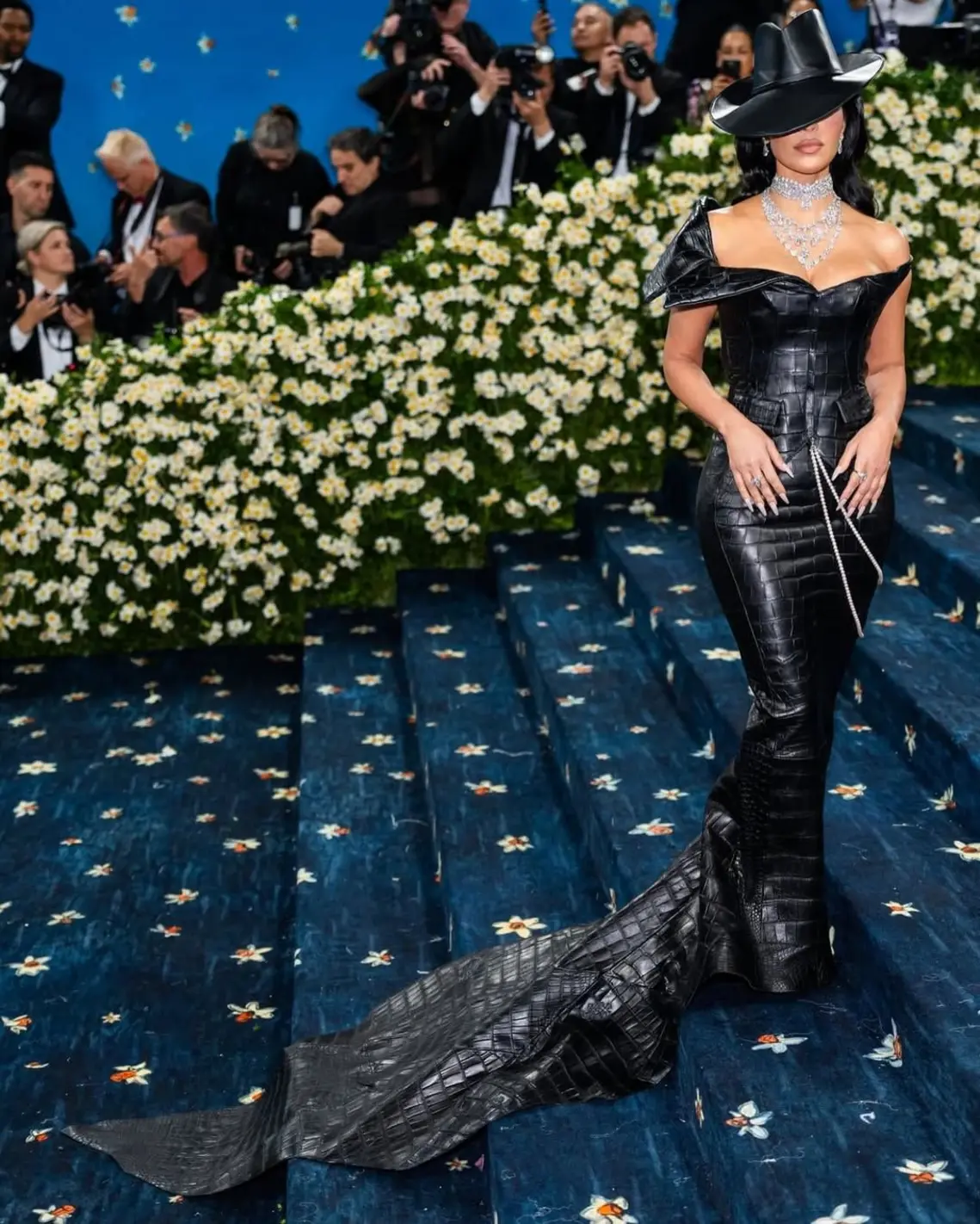
To push sales into their current fever pitch, Chrome Hearts expanded its screen-printed merchandise for public consumption. The streets wanted T-shirts stamped with abrasive gothic logos and confrontational typography, and the brand answered that craving with the same instinct it once used when Hollywood wanted leather jackets. Demand changed costumes; the Chrome Hearts appetite stayed wild. The future looks rich with more collaborations, more strange objects, and more product-led storytelling. The Stark family has also pulled creative energy from its own bloodline, allowing projects to reflect the interests of their children and inner circle, from bikinis and nail polish to workwear. That family dimension makes the empire feel less like a corporate expansion and more like a private mansion adding new locked rooms.
With creative director Mattyboy, Chrome Hearts has pushed deeper into the contemporary art sphere. His hand-drawn universe brings a feral graphic electricity to the house, placing bright characters and irregular lines against the brand’s traditional crosses, gothic symbols, and silver-dark codes.
Its great challenge sits inside one question: how much accessibility can a cult survive?
Chrome Hearts has already answered part of that question through contradiction. It can sell screen-printed merchandise while producing museum-like one-offs. It can be meme culture and master craft. It can be rapper uniform and collector grail. It can be painfully obvious and still feel strangely hidden.
That is why Chrome Hearts remains fascinating. The brand emerged from Hollywood grit, polished itself in sterling silver, seduced Japan, fed rap culture, survived the meme cycle, and built a world where vulgarity became luxury language. Its future belongs to the same dangerous formula that built its past: make the object heavy, make the access theatrical, make the symbol impossible to ignore.
Chrome Hearts has become the cult that opened the gates and somehow kept the smoke inside.