What does “Made in Afghanistan” mean now, when Afghan fashion is stitched by women whose own visibility has become political?

Afghan Fashion When One Stitch Carries a Life Erased
What does “Made in Afghanistan” mean now, when Afghan fashion is stitched by women whose own visibility has become political?
April 27, 2026


There is a cruel quietness around Afghan fashion today, the kind of quietness that does not come from absence, but from forced disappearance. A dress is still being cut somewhere. A sleeve is still being embroidered. A woman is still counting threads by a window, still answering a customer through an unstable internet connection, still trying to turn a needle into rent, bread, schoolbooks, medicine, dignity. Yet the world rarely sees her face, rarely hears her name, rarely knows whether she is working from a workshop, a back room, a family house, or a life deliberately pushed out of view.
Afghan Fashion Before the Fall of Kabul
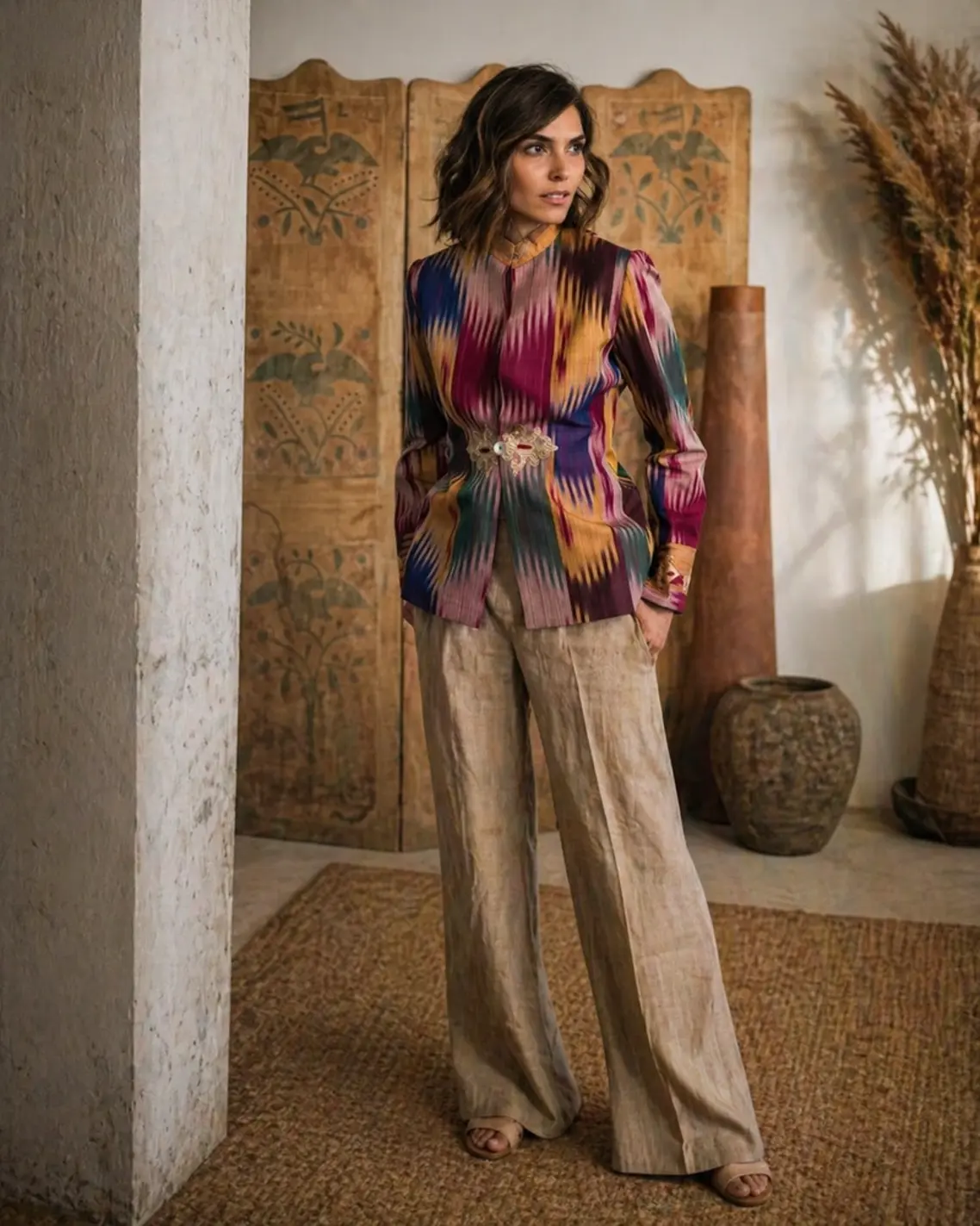
Before the Taliban returned to power in August 2021, Afghan fashion had begun to carry a rare and fragile promise. It was not only a question of clothes. It was a question of national imagination. Could “Made in Afghanistan” mean more than war, aid, displacement, and diplomatic tragedy? Could it mean silk, lapis, mirrorwork, embroidery, tailoring, modern luxury, and the hands of women paid for the intelligence of their craft? The 2021 fashion story you shared captured that exact moment through Laman, a brand founded by Haseeb Rahimi and his sister Rahiba Rahimi, who wanted to build what the article described as Afghanistan’s first modern luxury brand, with a network of 500 craftspeople and a vision of sewing “made in Afghanistan” into every piece as a new cultural statement. That detail remains powerful because it shows what Afghan fashion was trying to become: not costume, not charity, not an exotic souvenir for outside eyes, but a contemporary language built from inherited skill.
The old story also understood something many fashion articles still miss. In Afghanistan, fashion was never merely about taste. It was a route toward women’s income in a country where many women had been excluded from formal ladders of education and employment. It was work that could happen from home, through family networks, through embroidery frames, through tailoring tables, through the intimate economy of hands. It was also a form of authorship. When a woman embroiders a dress, she does not only decorate fabric. She records a line of memory that moves through mothers, grandmothers, tribes, cities, migrations, markets, weddings, and vanished futures. Afghan embroidery is archive. Afghan craft is biography. Afghan fashion is the place where a country’s wounded public history meets the private labor of women who have been asked, again and again, to disappear.
How Afghan Fashion Became Political Under Taliban Rule
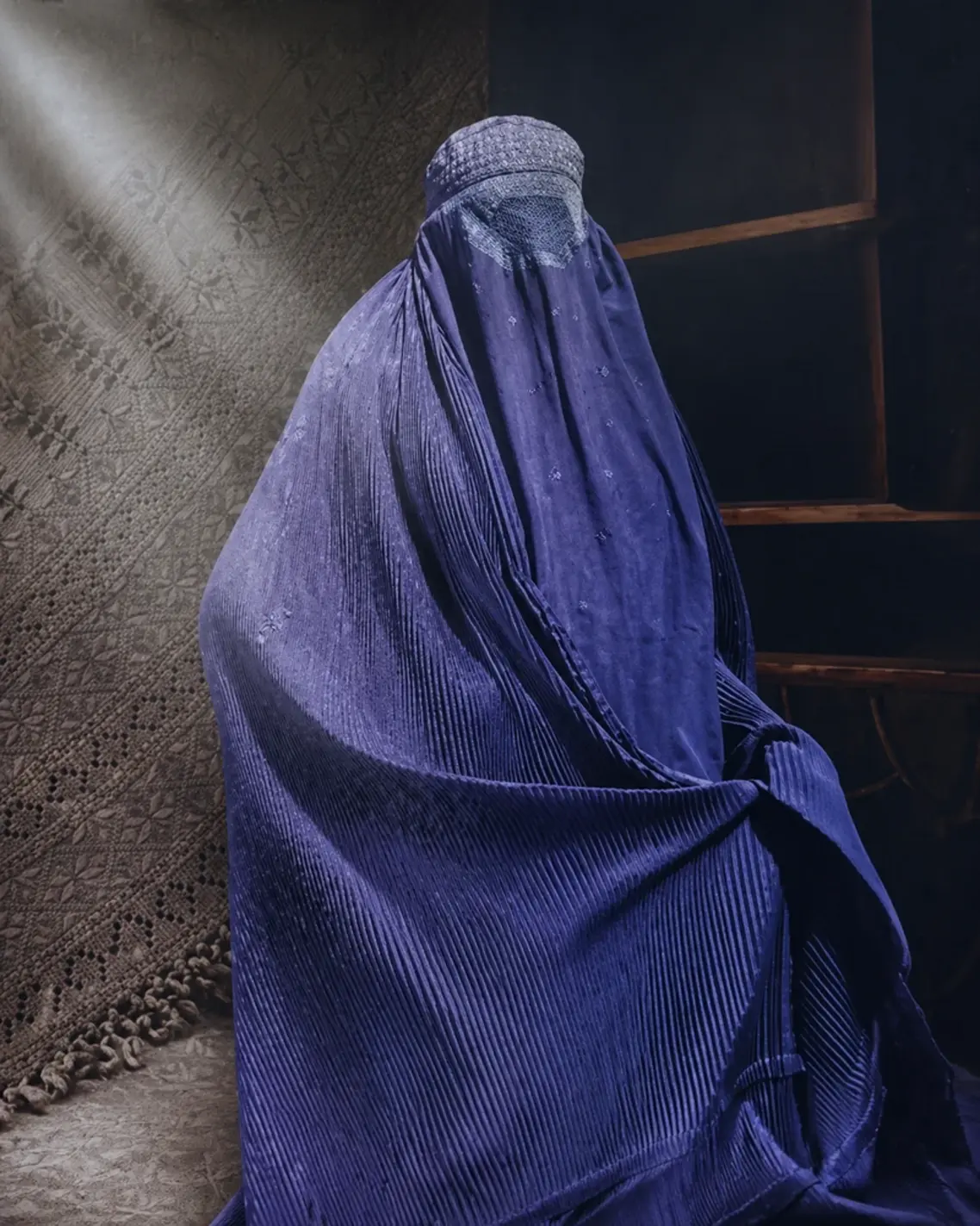
According to Human Rights Watch’s 2026 Afghanistan chapter, the Taliban deepened restrictions in 2025, maintained bans on secondary and higher education for girls and women, imposed severe restrictions on women’s movement and access to public spaces, enforced strict rules on dress and behavior, and carried out workplace raids to monitor gender segregation. (Human Rights Watch) This is the political context in which Afghan fashion now exists. A sleeve is not only a sleeve when the state polices how women dress. A workroom is not only a workroom when authorities raid workplaces to enforce separation. A beauty salon is not only a beauty salon when women’s appearance labor is forced underground. A voice is not only a voice when women’s public speech, song, recitation, and presence are treated as things to be controlled.
So what does fashion become when visibility itself is dangerous? What happens to a garment when the woman who made it cannot safely be named? What does ethical fashion mean when credit, publicity, and recognition, the very tools the global fashion industry usually celebrates, may become forms of exposure? This is where Afghan fashion under Taliban rule becomes one of the most politically charged fashion stories of the decade. It forces the industry to confront its own habits. Fashion loves the artisan’s hand, but does it protect the artisan’s life? Fashion loves heritage, but does it pay the women who keep heritage alive? Fashion loves stories of resilience, but does it turn those stories into beautiful suffering for distant audiences?
Afghan Women Artisans and the Survival Economy
The New Humanitarian reported in 2023 that fashion and craft had become a work lifeline for Afghan women, especially as restrictions on women’s activities, bans on women working for NGOs and the United Nations, banking limits, sanctions, and aid reductions narrowed employment options. It also reported that designers trying to work with Afghan women often had difficulty speaking to them directly, with men frequently standing at the forefront of communication.That detail matters deeply. It shows how Afghan fashion is shaped not only by fabric and technique, but by access, mediation, permission, fear, and silence. A dress may travel across borders while the woman who made it remains locked inside the politics of who is allowed to speak for her.
Yes, craft can feed a family. Yes, embroidery can preserve identity. Yes, tailoring can become a form of economic survival. But survival is not freedom. A woman stitching for income while she cannot study freely, move freely, work openly, or claim public credit is not a simple inspirational story. She is living inside a contradiction that the global fashion world must have the courage to see. How much hope can be placed on a needle when the hand holding it is denied the full rights of a citizen? How much can beauty repair when the conditions around beauty are designed to reduce women’s lives?
Afghan Fashion and the Internet Lifeline
One of the strongest updates for the article is the role of the internet. In older fashion stories, the internet is often treated as marketing, branding, e-commerce, or visibility. In Afghanistan, for many women, it has become something more basic: a lifeline. Reuters reported in September 2025 that a Taliban-imposed fibre-optic internet ban in more than five northern provinces hurt businesses, schools, and homes, leaving many people reliant on costly and unstable mobile data. The report specifically noted that women-led workshops making traditional Afghan dresses lost orders, including a handicraft business employing women breadwinners who stitched firaq partug, the long embroidered dresses worn by Afghan women.
This detail should sit near the emotional center of the article. It makes the story painfully contemporary. The threat to Afghan fashion is not only a closed runway, a canceled luxury collaboration, or a vanished showroom. It can be a dead connection. It can be an order that never arrives. It can be a customer who cannot be reached. It can be a widow’s workshop losing sales because the digital thread between maker and buyer has been cut.
If a regime can control women’s movement, then the internet becomes movement. If a regime can control women’s voices, then a message to a buyer becomes voice. If a regime can control public space, then an online shop becomes public space. That is why internet restrictions are not separate from fashion. They strike directly at the hidden economy of women’s craft. They make it harder for women to sell, learn, organize, document, and remain connected to the outside world. Afghan fashion survives partly because women find routes around locked doors. When the digital door closes too, what remains?
Afghan Embroidery as Cultural Memory
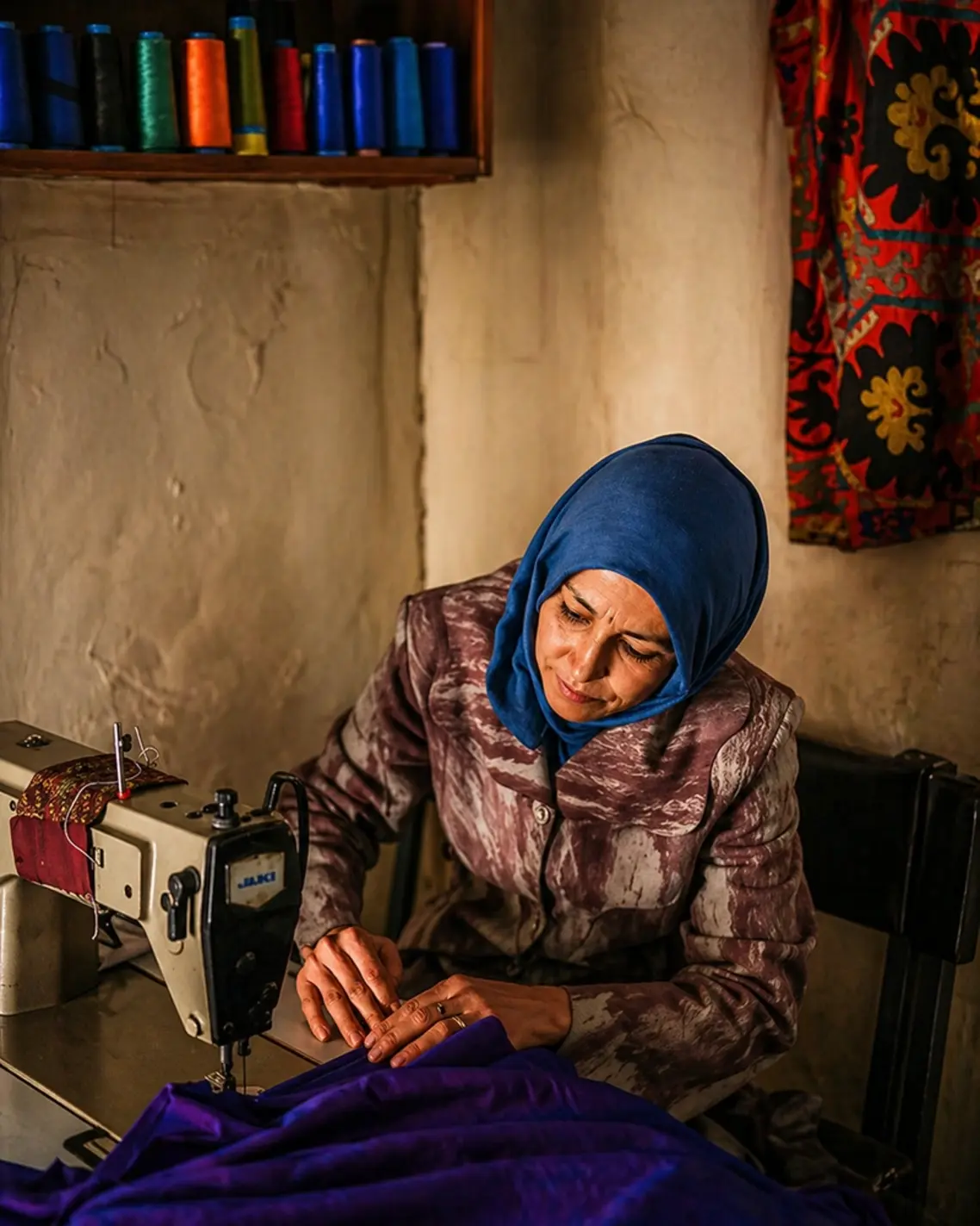
Afghan embroidery is not simply a pattern to be admired, sampled, or borrowed. It is memory made tactile. It carries the geometry of place, the patience of women’s time, the symbolic charge of region and family, the knowledge of materials, the discipline of repetition, and the intimacy of clothing made close to the body. But in 2026, that foundation needs a more urgent question: what happens to cultural memory when the women who hold so much of it are pushed from schools, offices, public platforms, and institutions?
Afghan fashion is not only preserving beautiful techniques. It is preserving women’s right to have made something that lasts. A hand-embroidered dress is a record of labor. A mirrorwork panel is a record of skill. In a country where women’s public presence has been narrowed, the object becomes witness. The dress says someone was here.
What Global Fashion Owes Afghan Fashion Now
It is easy for international fashion to love Afghanistan aesthetically. It can love the romance of the Silk Road, the rugged glamour of the afghan coat, the shimmer of mirrorwork, the dense poetry of embroidery, the blue of lapis, the drama of old textiles repurposed into new silhouettes. But love without responsibility becomes extraction. What does it mean for a luxury brand to admire Afghan craft while Afghan women artisans remain unnamed, underpaid, unreachable, or unsafe? What does it mean for fashion media to praise resilience while avoiding the political machinery that made resilience necessary? What does it mean to call a garment empowering if the woman who made it cannot travel, study, negotiate openly, or sign her name?
Afghan fashion does not need pity as much as it needs ethical infrastructure. It needs safe sourcing. It needs payment that recognizes skill, not charity pricing disguised as support. It needs diaspora bridges that protect women inside the country while creating markets outside it. It needs us who understand that sometimes anonymity is not a lack of credit, but a form of protection. It needs brands to stop treating Afghan references as decorative tragedy. It needs us to understand that the most beautiful garment in this story may also be evidence of a woman’s fight to remain economically alive.
Afghan Fashion Under Taliban Rule: Is There Still Hope?

Hope exists, yes, but it is not soft. It is not sentimental. It does not float above politics. It sits in the hand of a woman who continues to sew after her market has shrunk. It sits in a daughter learning embroidery when schools above sixth grade remain closed to girls. It sits in a workshop trying to hold online orders together through unstable internet. It sits in a brand trying to keep Afghan craft visible without endangering the people who make it. It sits in the refusal to let “Made in Afghanistan” become a label of fear alone.
Yet hope must be asked to answer difficult questions. Can Afghan fashion survive if the women who sustain it are cut off from education? Can craft be a future if it is allowed only as hidden labor? Can the world celebrate Afghan embroidery while accepting the disappearance of Afghan women from public life? Can beauty still be called beauty when it is produced under conditions of silence? These questions should disturb the reader. They should make us feel urgent. Because the story of Afghan fashion today is not a charming tale of heritage under pressure. It is a warning about what happens when a society tries to keep women’s hands useful while making women’s lives invisible.
And still, the hands continue. That is the ache of the story. Afghan fashion under Taliban rule is not dead, but it is not free. It survives in fragments. The label “Made in Afghanistan” once promised a new image of a country through craft. In 2026, it means something more painful and more profound. It means a woman was here. It means that Afghan fashion has become one of the last visible traces of women’s authorship in a country where visibility itself has become political.