White rooms, sharp tailoring, and the flicker of exposed skin turn Haider Ackermann’s Tom Ford Fall 2026 into a mind game, where power feels immaculate, desire feels dangerous, and every look seems to know more than it says.
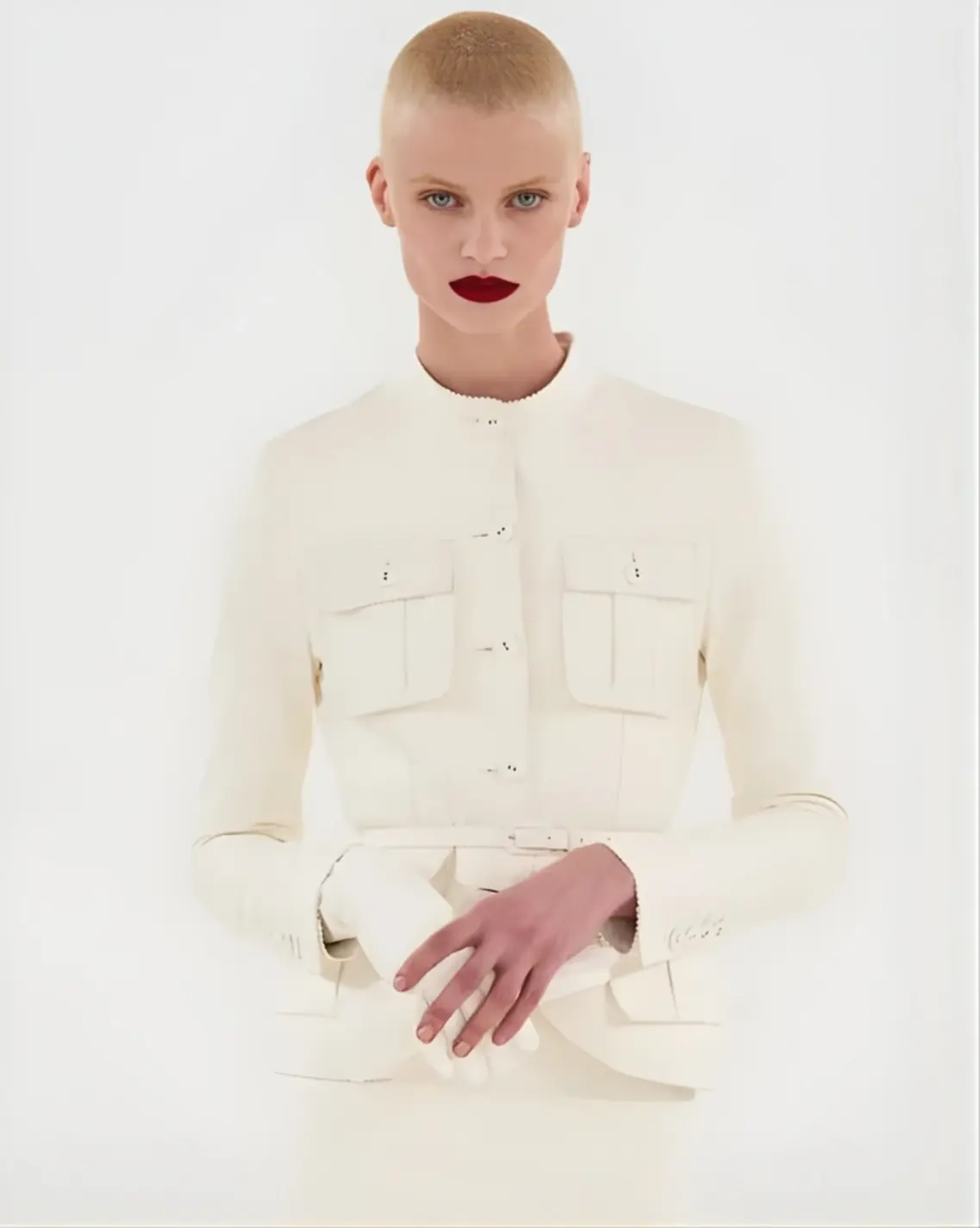
Tom Ford Fall 2026: Haider Ackermann's Mind Game
White rooms, sharp tailoring, and the flicker of exposed skin turn Haider Ackermann’s Tom Ford Fall 2026 into a mind game, where power feels immaculate, desire feels dangerous, and every look seems to know more than it says.
March 9, 2026
Advertisement

Advertisement



The Room Was White, and Something Was Off
By the third collection, excuses expire. A designer either keeps orbiting the house codes like a careful guest, or she walks in, locks the door behind her, and starts rearranging the furniture with unnerving confidence. Fall 2026 was that second kind of moment. Haider Ackermann took Tom Ford’s old vocabulary of seduction and ran it through bleach, chrome, and discipline until it came out colder, harder, and much more dangerous. The room was stark white. The models wandered. Everything looked clinically pure, which of course meant everything felt faintly corrupt.
This was seduction under fluorescent pressure. Not the easy hedonism historically associated with the house, but the kind that keeps immaculate records and never lets her pulse show. Haider Ackermann has always understood that desire becomes more potent when it is disciplined. Here, he took a brand built on polished appetite and made it feel watched, withheld, almost forensic.
Haider Ackermann Turns Seduction Into Control
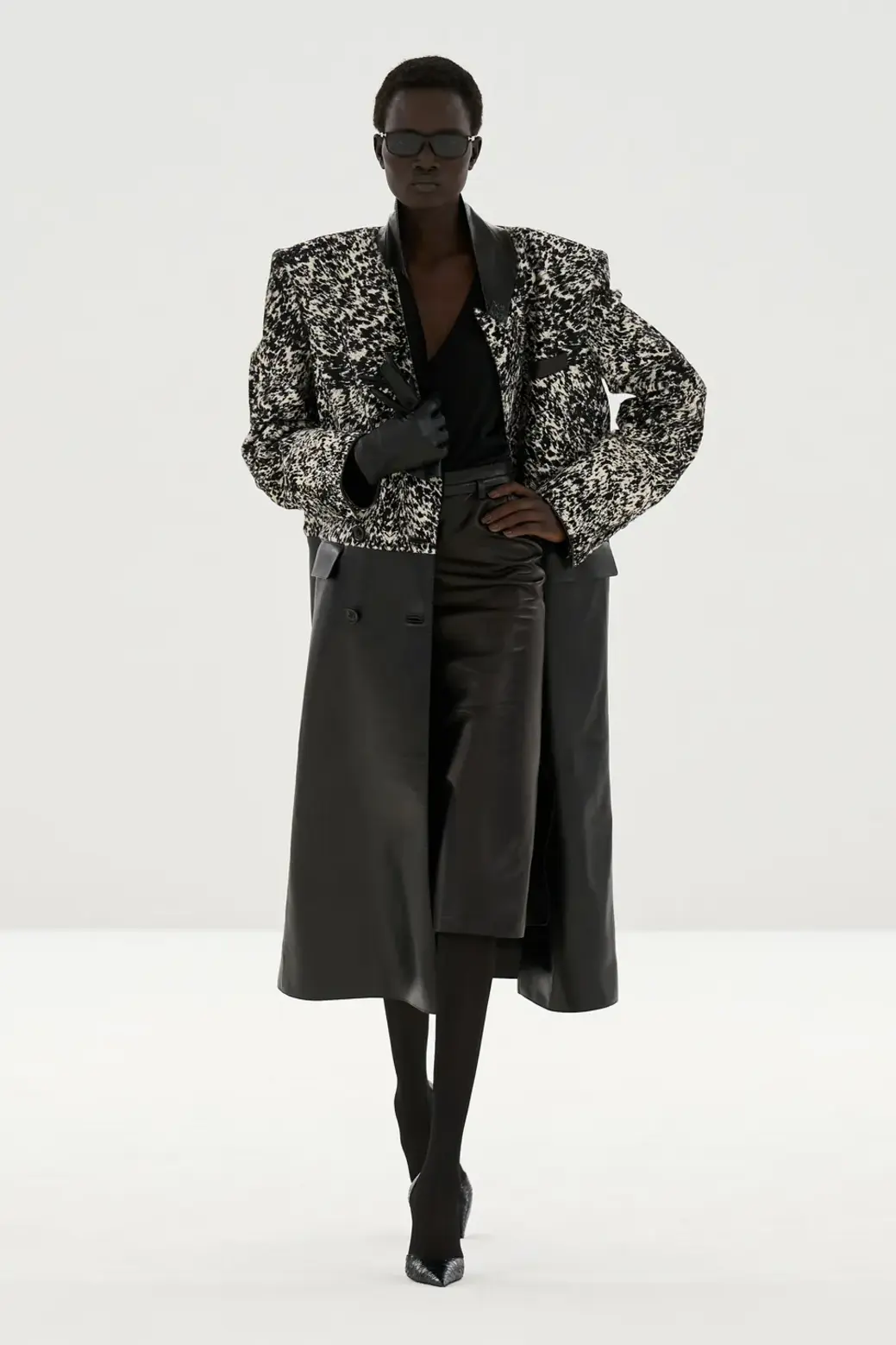
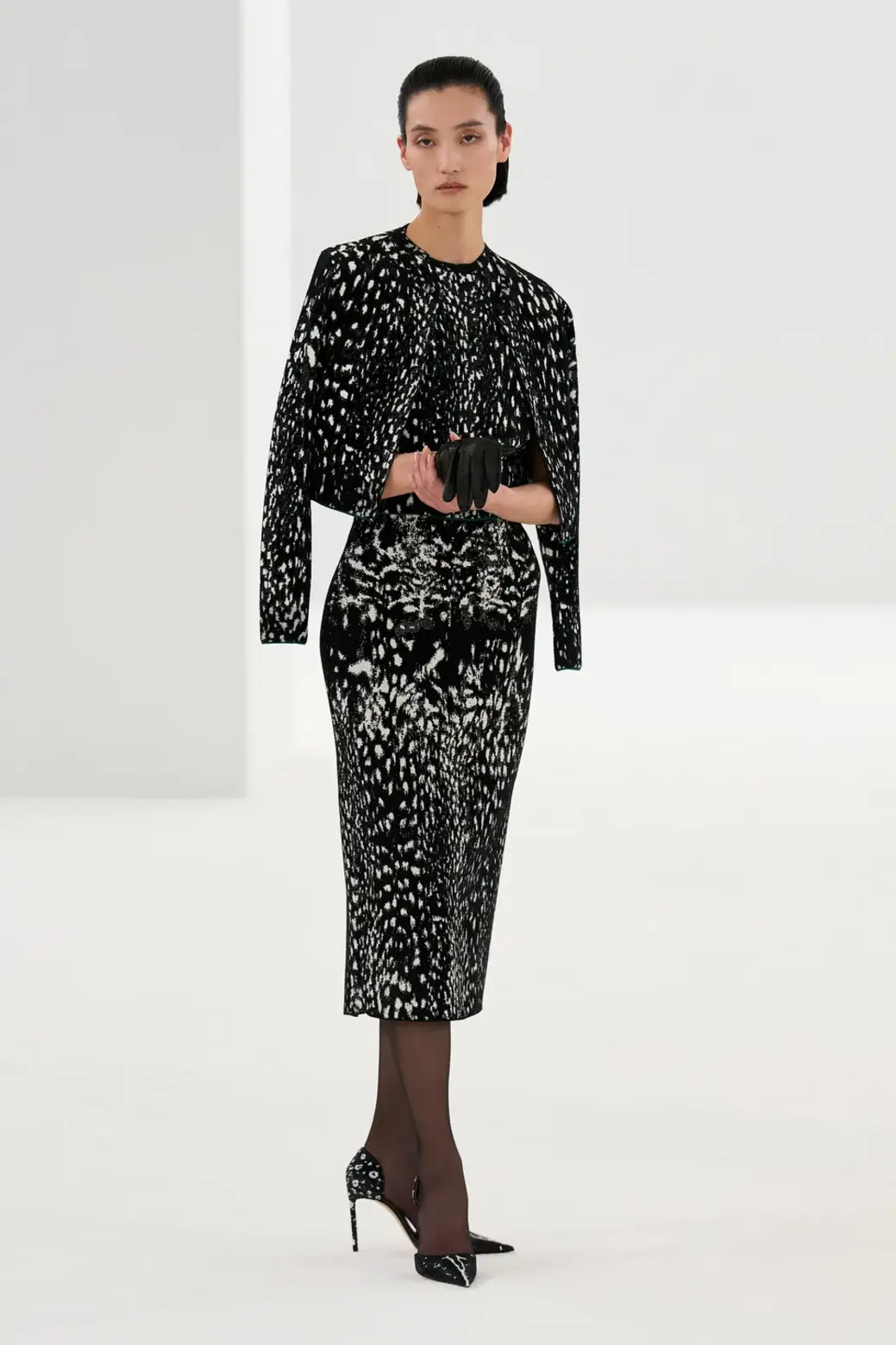
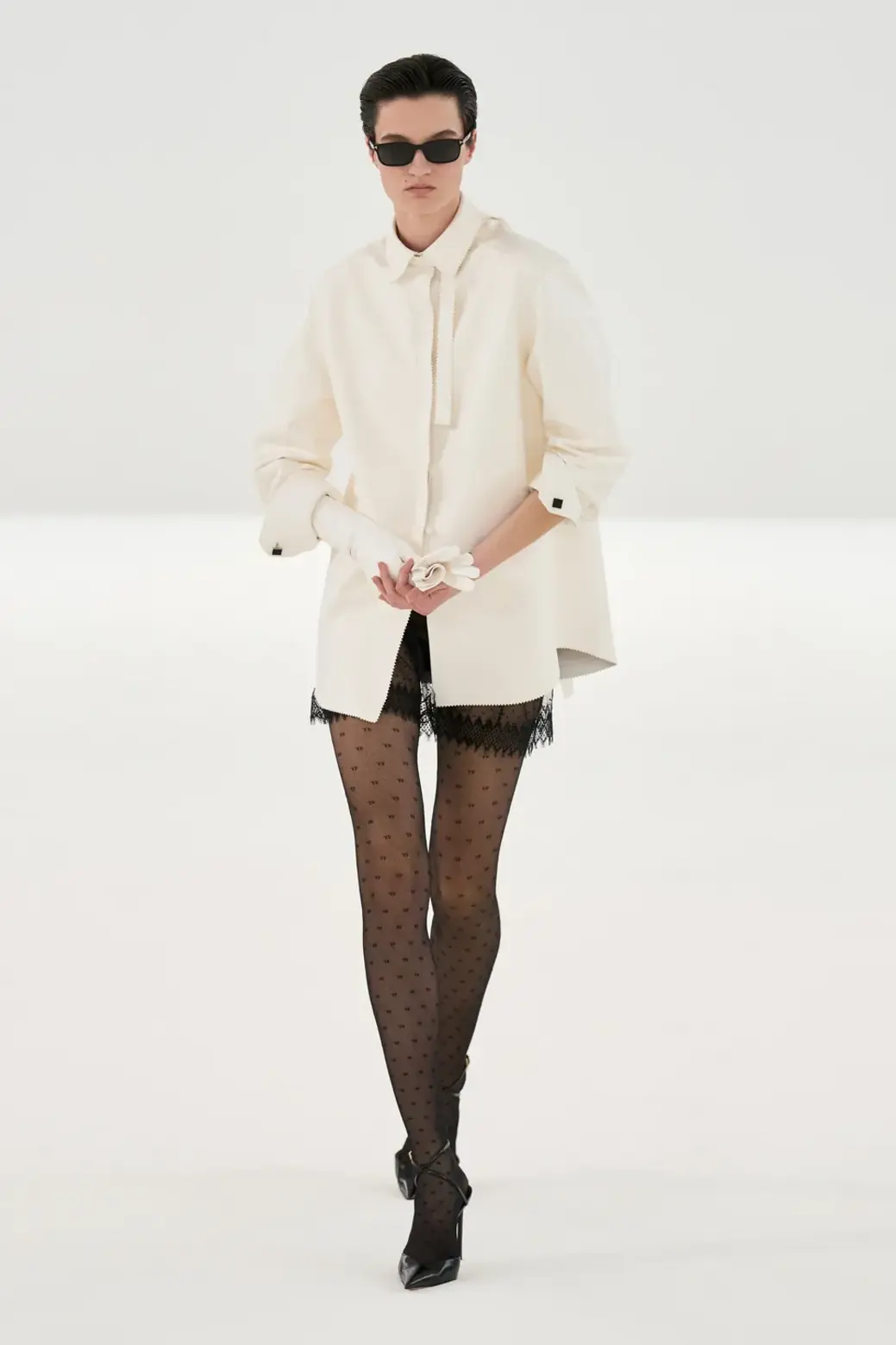
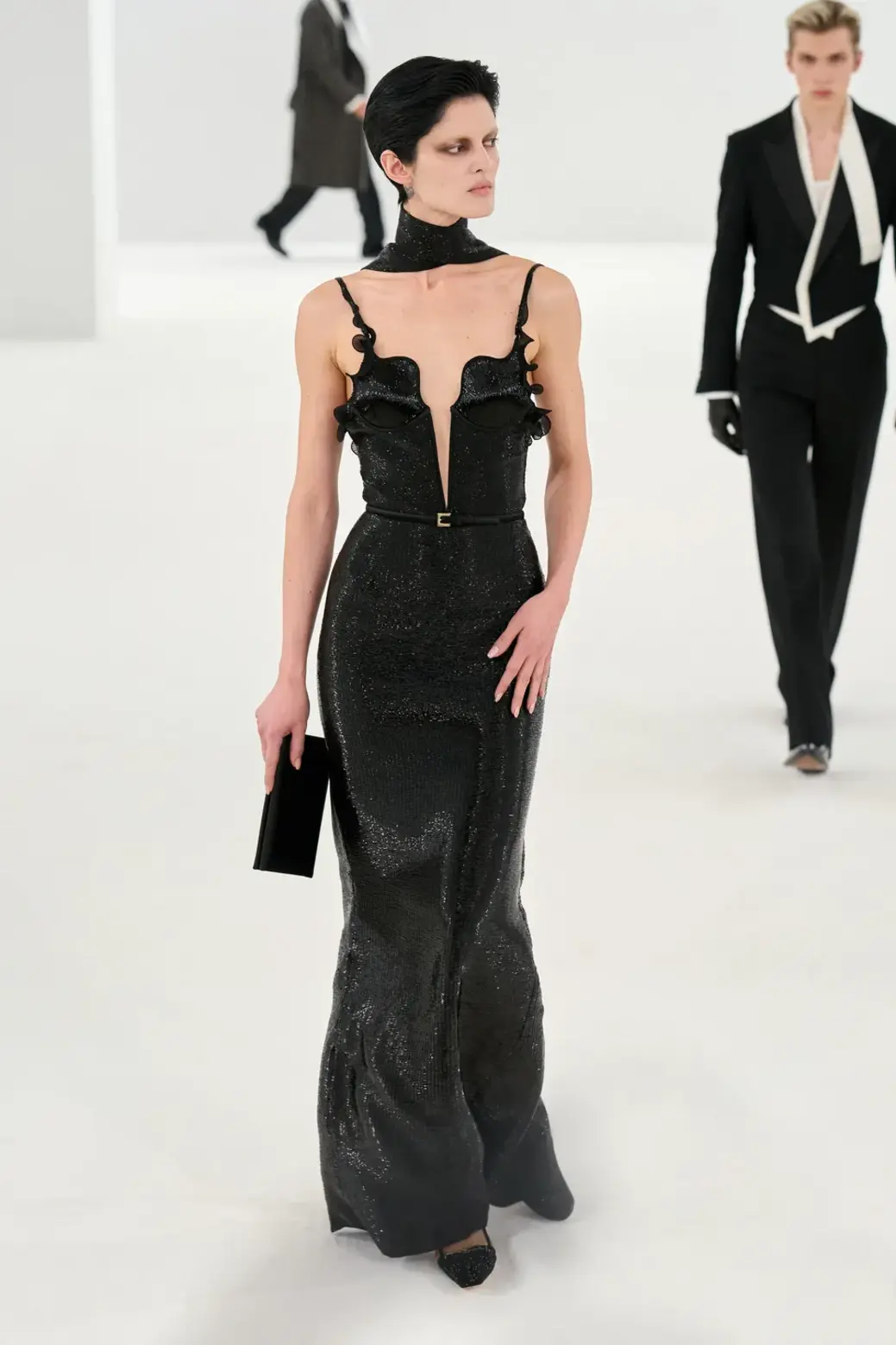
The most intelligent thing Ackermann did was refuse nostalgia as performance. He tightened the old Tom Ford fantasy with a better soundtrack and a fresh set of cheekbones. The recurring impressions around this show were strikingly consistent: executive realness, late-’90s restraint, corpcore sharpened into threat, a trace of Patrick Bateman, a woman who looks expensive enough to ruin your life and organized enough to schedule it.
The imaginative world behind the collection was built from cultural ghosts that should not quite belong together and therefore worked beautifully. There was the chill of late-’90s minimalism, the immaculate American cool often associated with Carolyn Bessette-Kennedy, the stylized corporate violence of American Psycho, and a little thread of New Wave sharpness running through the collars, ties, and narrow silhouettes. Together they created a woman who is composed to the point of suspicion.
What made the mood compelling was the friction between social perfection and private danger. Haider Ackermann understands that the truly unnerving woman is rarely the loudest one in the room. She is the one with the clean white shirt, the impossible restraint, the face that reveals almost nothing, the silhouette that looks modest until you realize exactly how much calculation lives inside it. This collection was full of that kind of intelligence. It flirted like someone reading your weaknesses in real time. It carried the energy of a love game already halfway converted into a mind game.
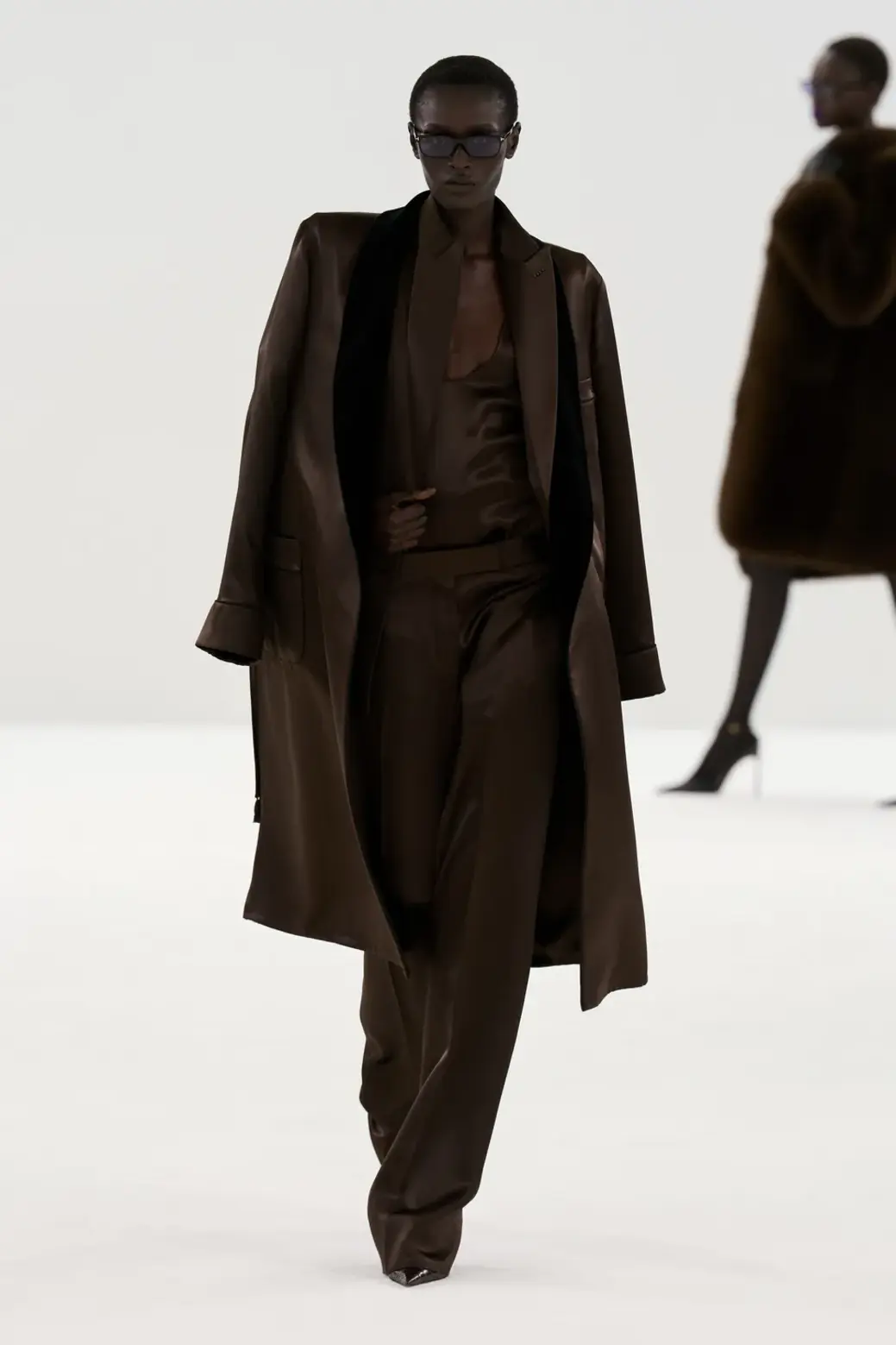
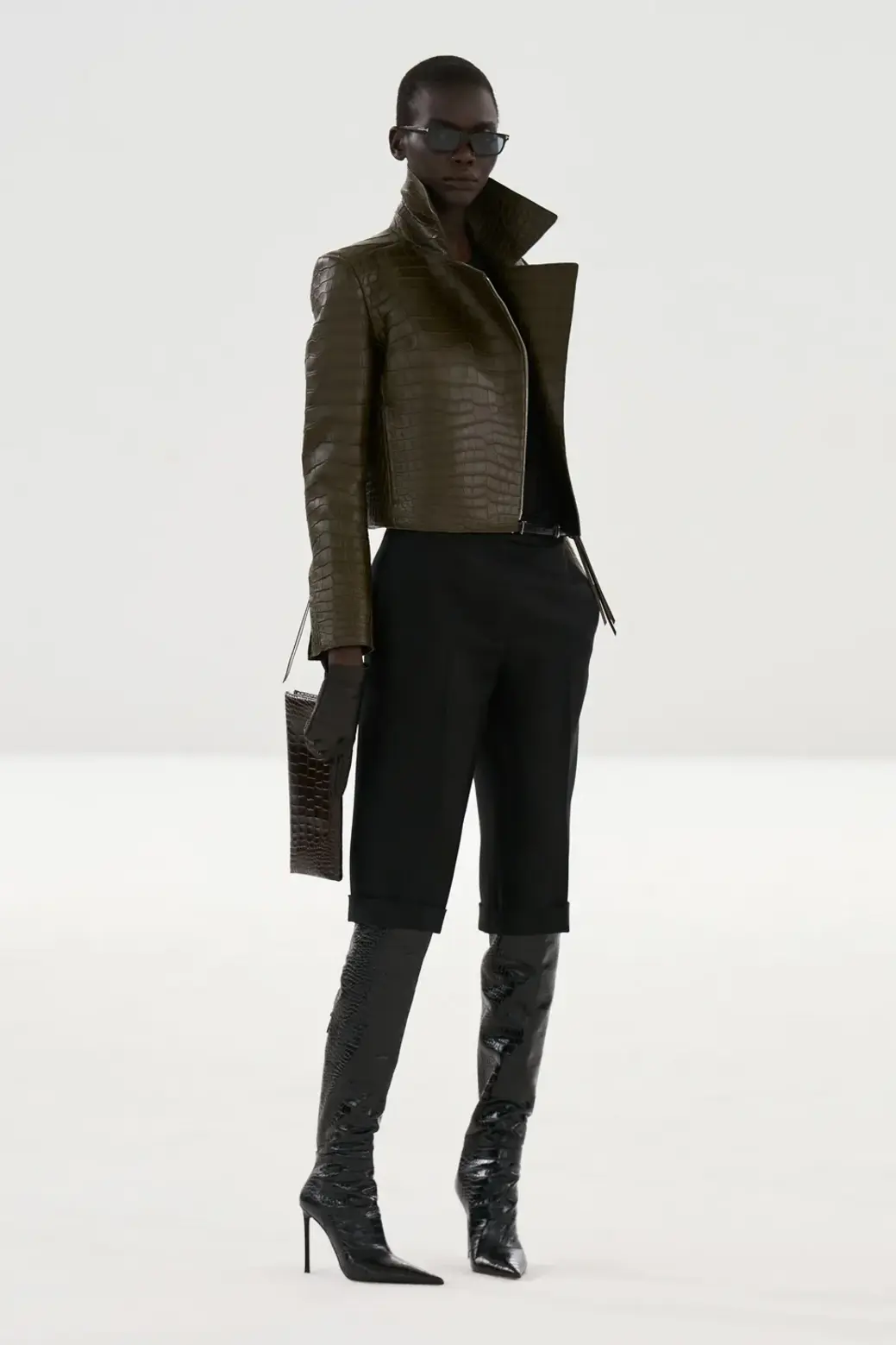
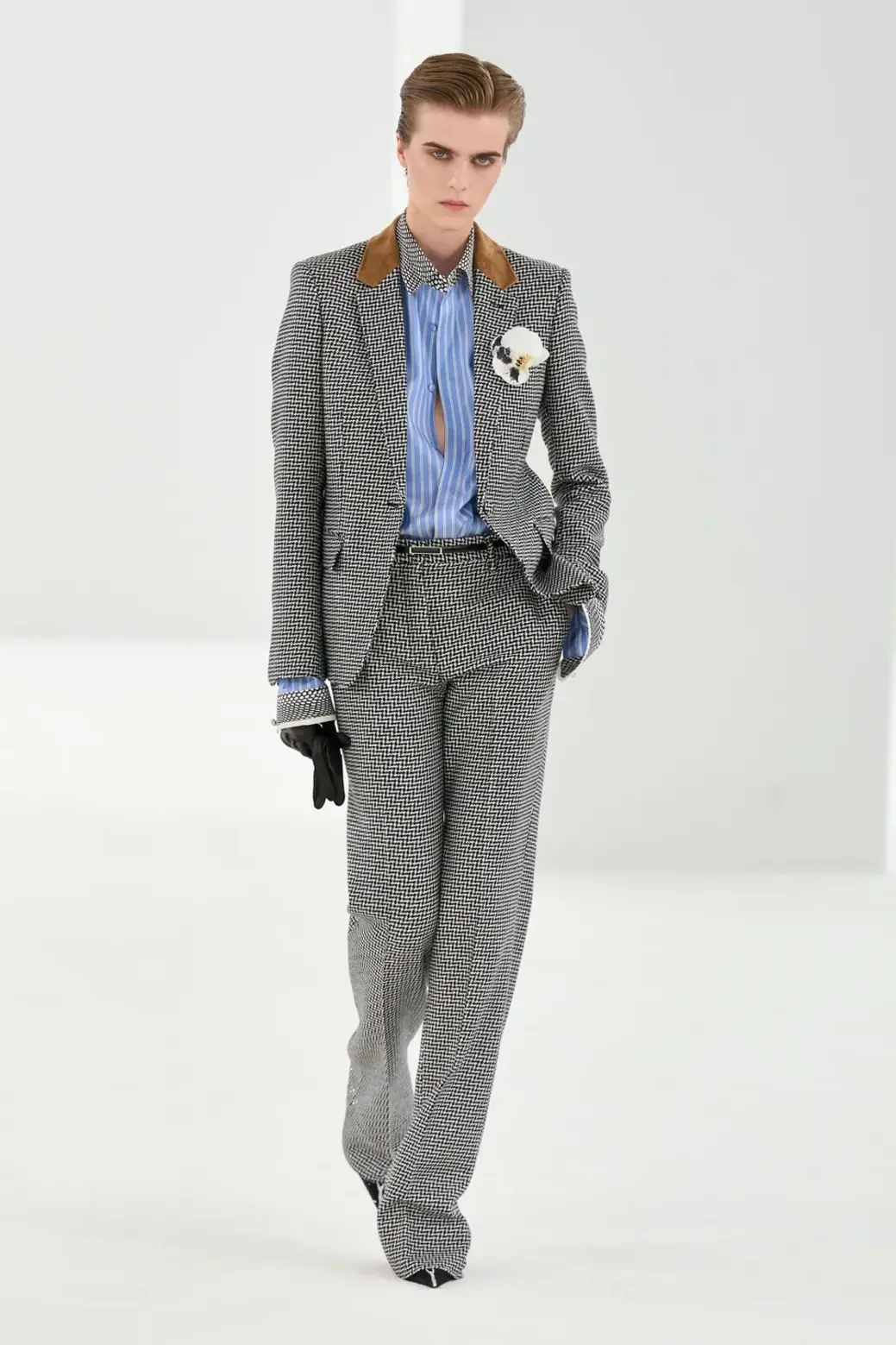
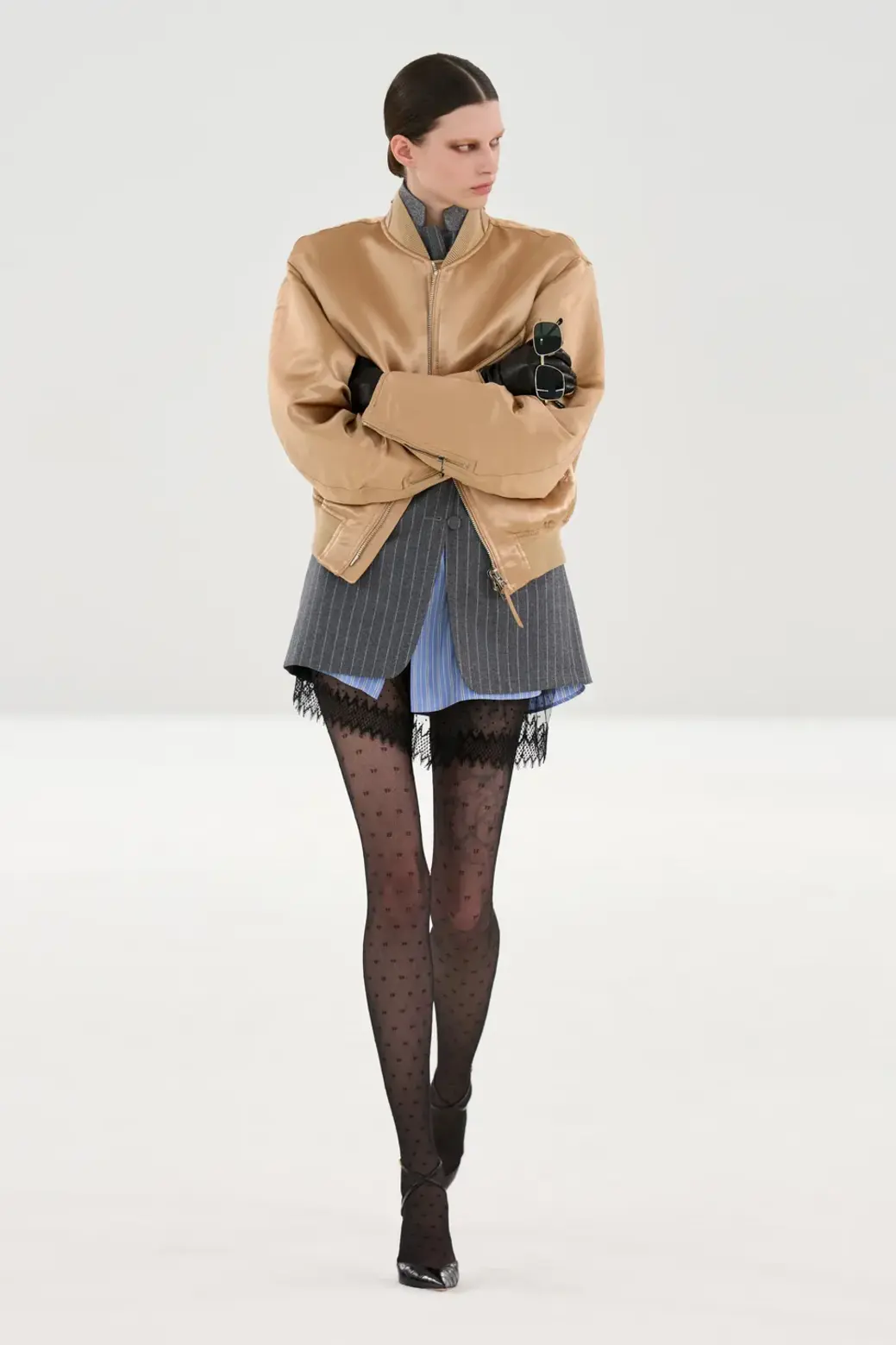
The tailoring was the collection’s behavioral system. Haider Ackermann has always known how cut can alter not just shape but conduct, and here he used that knowledge ruthlessly. Reviews consistently pointed to slim suiting, strong shoulders, sharp jackets, clean lines, navy pinstripes, houndstooth, crisp shirts.
That precision is what gave the collection its woman-version Patrick Bateman charge, though Haider Ackermann was far too intelligent to let it slip into costume. Double-breasted jackets, exact collars, narrow ties, disciplined shoulder lines, and trim trousers created a silhouette that felt corporate on paper but psychologically charged in motion. This was officewear stripped of bureaucratic boredom and rebuilt as controlled menace.
Even the severity had nuance. The line never became cartoonishly hard: a shoulder slightly too sharp, a jacket slightly too clean, a shirt too crisp for comfort. The result was not masculine dressing in lazy drag. It was a woman taking codes of authority and wearing them with such absolute fluency that they became erotic on her terms. That distinction matters. She was editing power dressing.
Transparent Threat

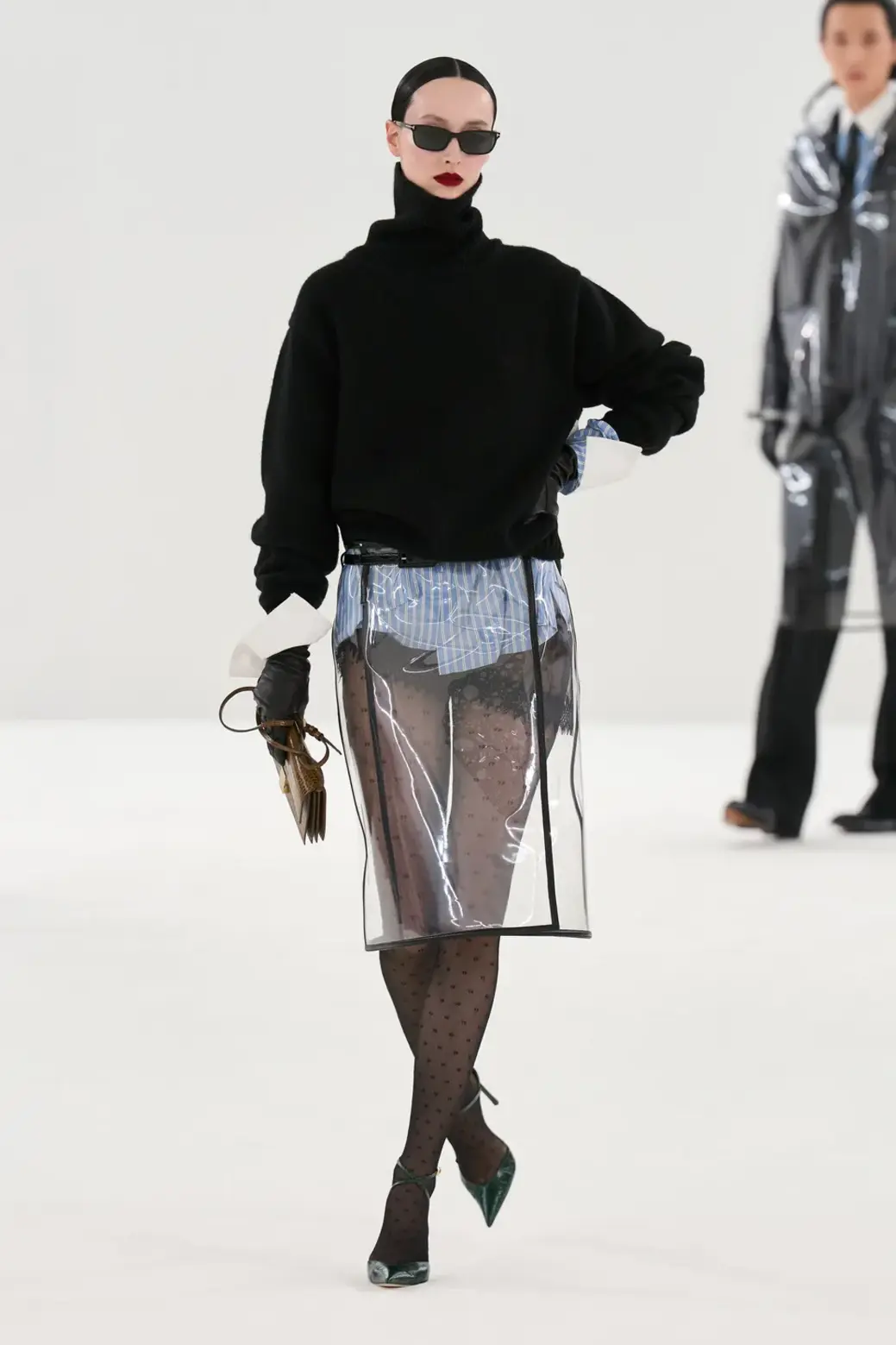
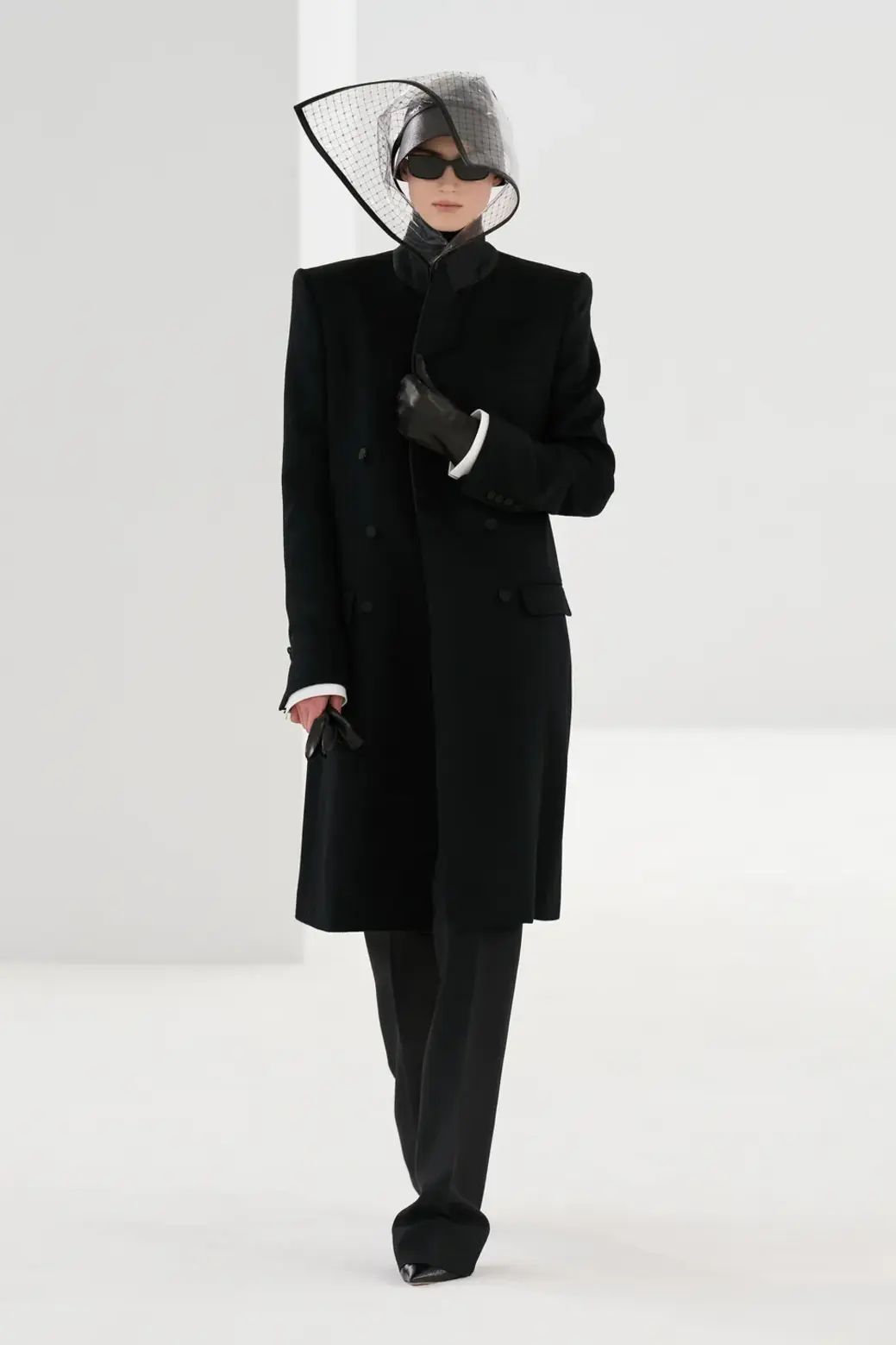
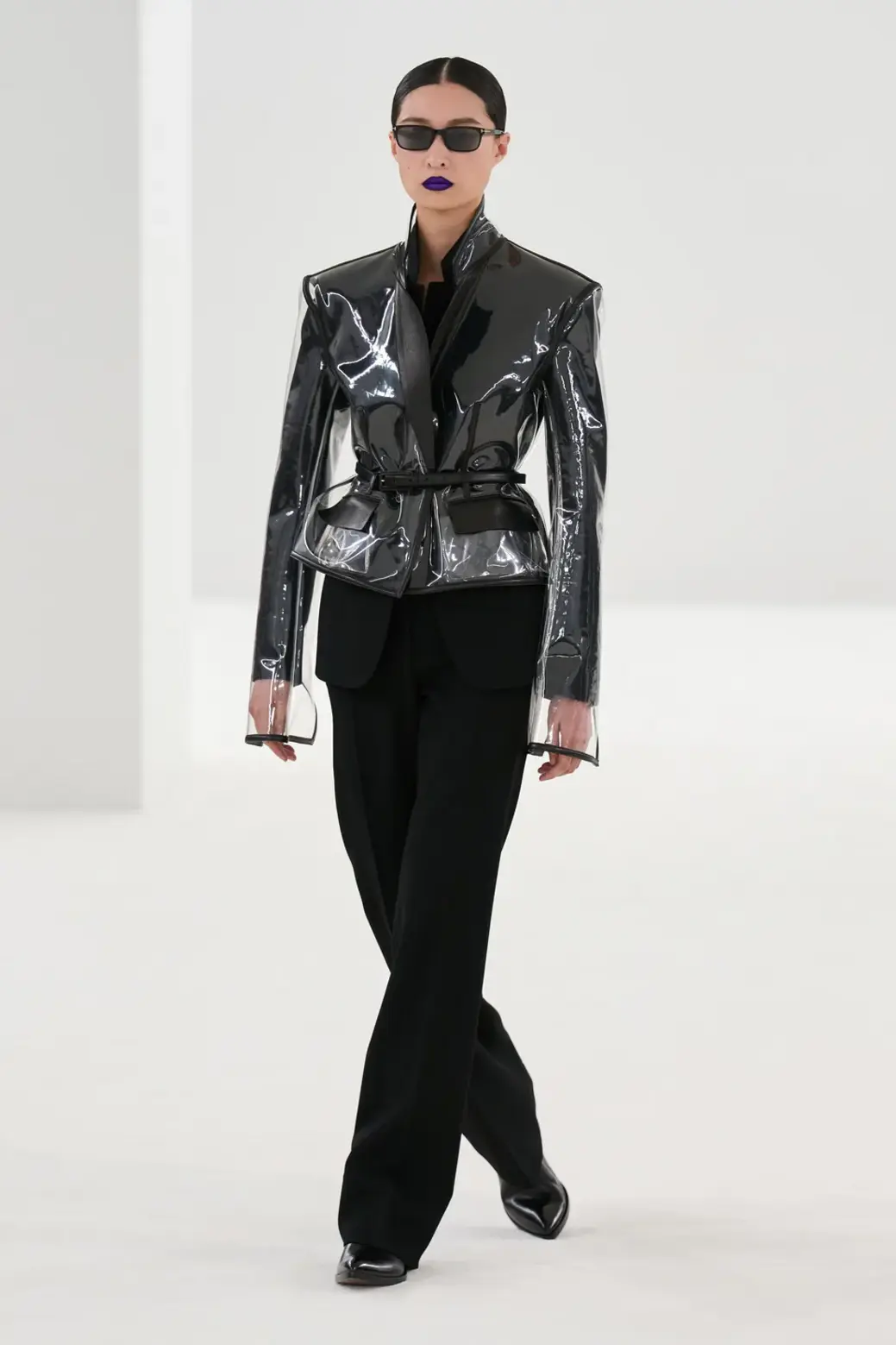
Then came the erotic interruption, and this is where the collection turned from merely excellent to properly sly. Haider Ackermann broke the field of disciplined tailoring with looks that revealed very little yet suggested everything: low-slung trousers, a single exposed hip, sheer button-downs, transparent outerwear, belts threaded through one loop as though order itself had developed a dangerous crack. One of the most discussed gestures was that low-dipping tailored trouser, hanging with studied imbalance on one side.
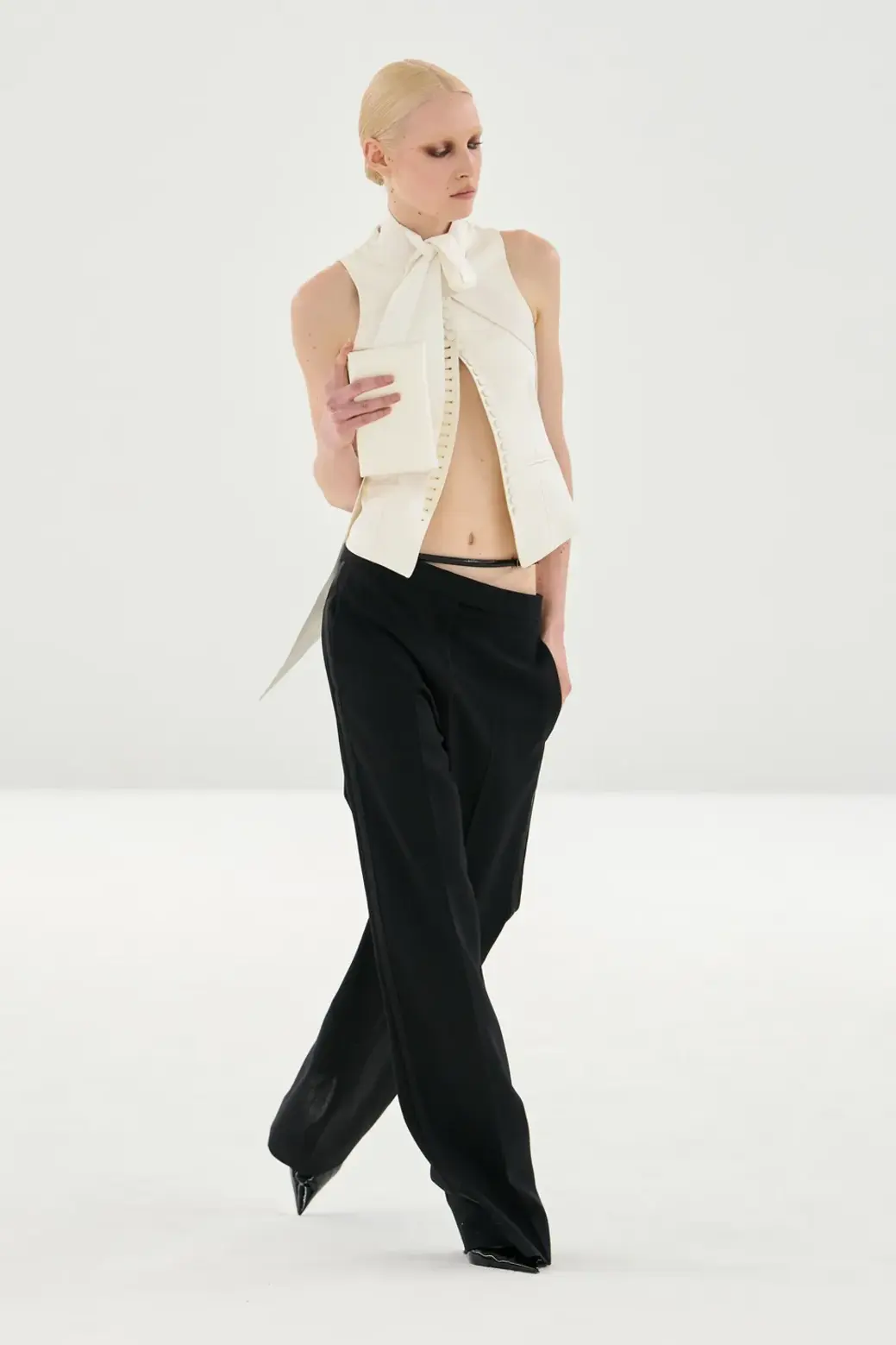
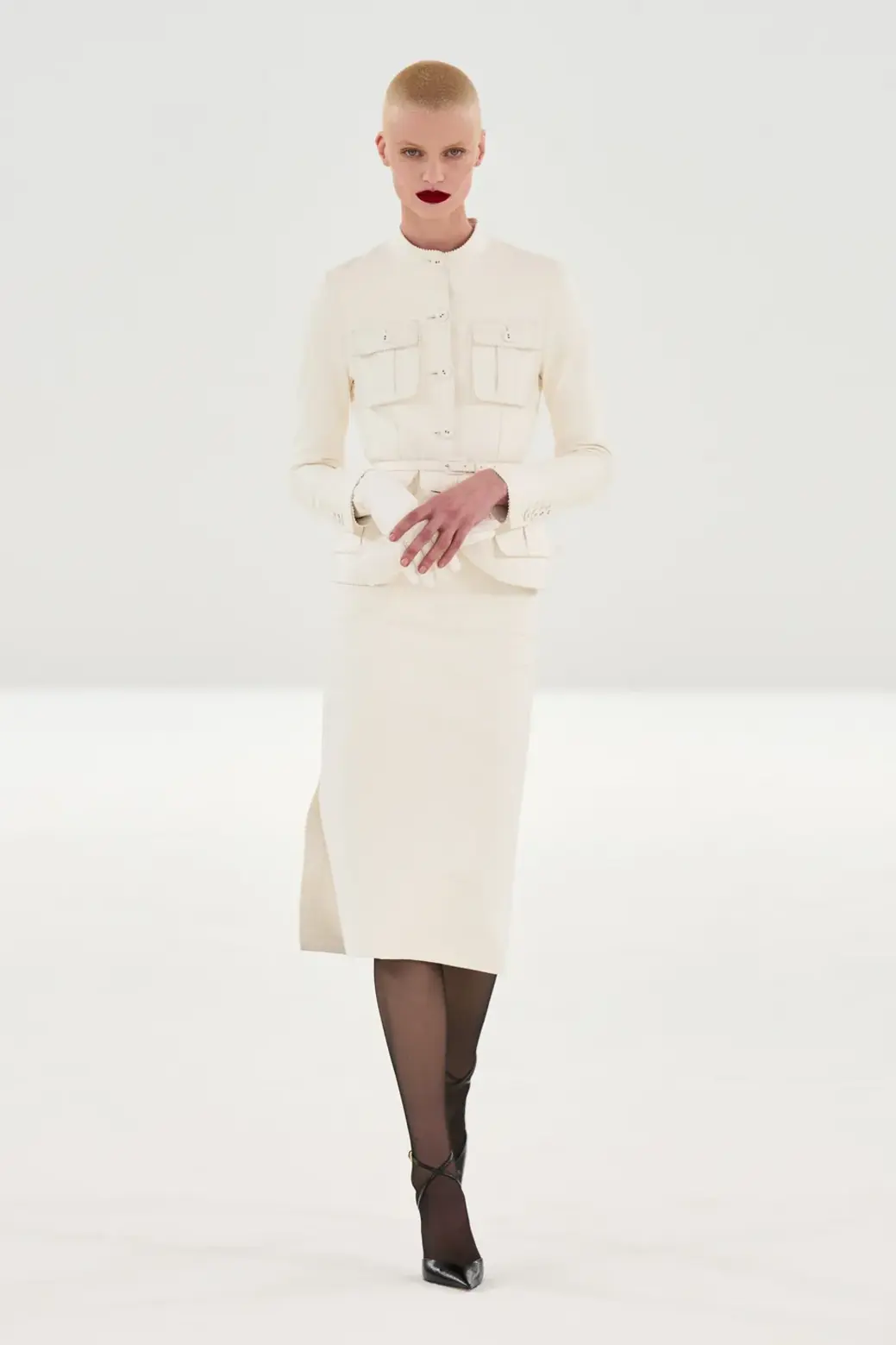

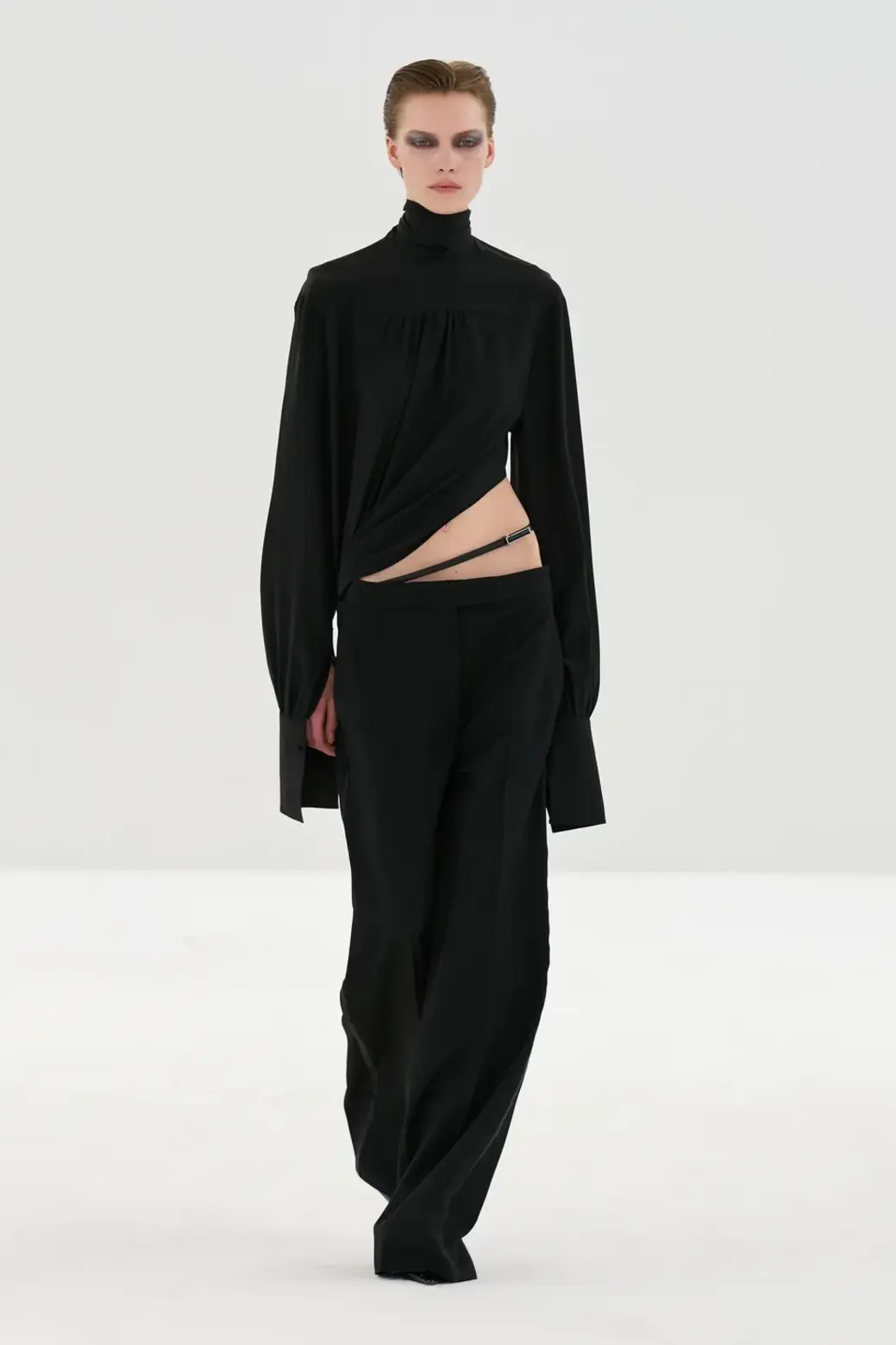
This was sexiness built through negative space. Haider Ackermann did not flood the body with revelation. He let desire gather at the edge of a hipbone, under a clear trench, behind a transparent rain hat, in the cool distance between a proper shirt and an improper intention. That is a much more adult kind of eroticism. It understands that control is a stronger aphrodisiac than chaos. It understands psychology.
The materials carried their own script. Clear PVC coats, caps, pencil skirts, vests, and cropped jackets introduced a voyeuristic slickness that felt both protective and incriminating at once. Croc-embossed leather jackets and pencil skirts brought a harder urban animalism. High-gloss leather dresses sharpened the body into something lacquered and nearly untouchable. Lace appeared as a counterpoint. These were surfaces chosen for how they manipulate visibility, not just for how they photograph.
PVC was the masterstroke because it turned transparency into tension. A clear coat on this runway read as evidentiary. It framed the body like a case file. Croc embossing did something similar through texture, bringing reptilian fantasy into a world of executive polish. Gloss amplified the collection’s sense of speed and surveillance, while lace stopped the whole thing from becoming emotionally sterile. Haider Ackermann used fabric the way some directors use lighting: to make desire feel colder, more exact.
Why Tom Ford Fall 2026 by Haider Ackermann Feels Like a Mind Game
What made Tom Ford Fall 2026 land so hard was not simply that it was sharp, sexy, or immaculately styled. It was that Haider Ackermann found the point where seduction and suspicion begin to look like twins. He turned Tom Ford’s legacy of desire into something more alert, more disciplined, more unnerving. This was why it felt like a rush. The speed did not come from volume or chaos. It came from line, ratio, precision, and the way the clothes accelerated the eye. He made polish feel sneaky. He made the collection behave like a love affair with a criminal: elegant, calculated, strangely irresistible, and impossible to trust.
Advertisement