MENU
Close





At Hermès SS27, Nadège Vanhée treats ventilation, movement and exposure as construction, building a summer wardrobe around air itself.
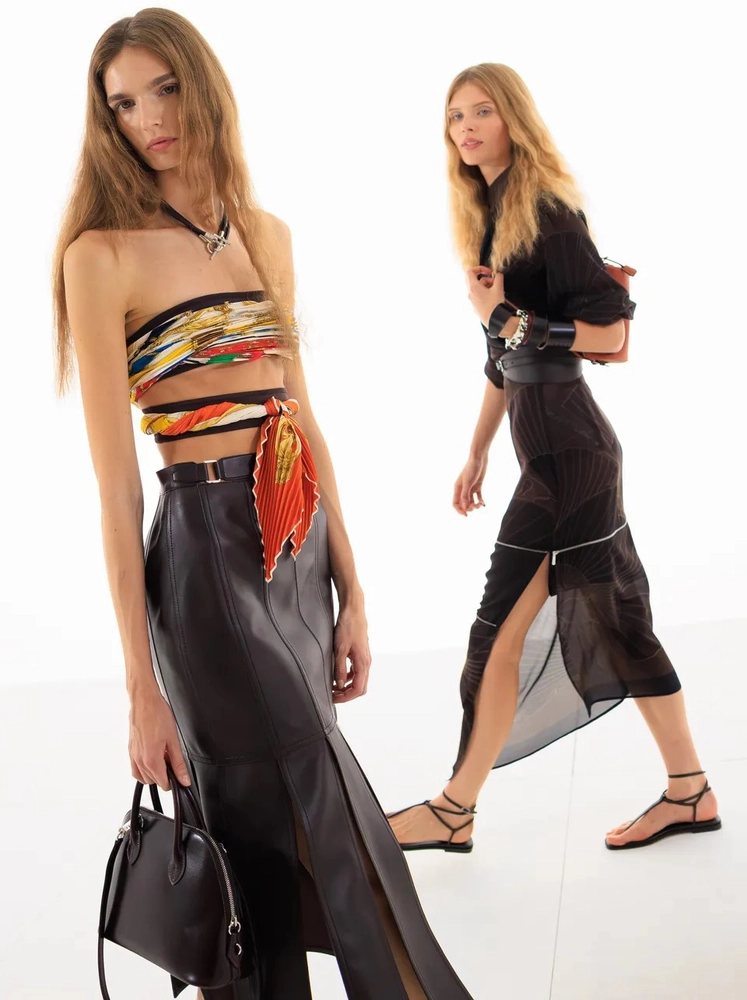
At Hermès SS27, Nadège Vanhée treats ventilation, movement and exposure as construction, building a summer wardrobe around air itself.
October 1, 2026
Advertisement
Advertisement


At Hermès SS27, Nadège Vanhée treats air almost like another textile. The collection begins from heat, movement and the practical question of how clothes can travel through summer while still carrying the weight, precision and tactile intelligence associated with the house.
Vanhée has been shaping Hermès womenswear since 2014, and SS27 reveals how deeply she now understands the house as a system of material, hardware and movement. The collection feels relaxed on the surface, yet almost every gesture has been engineered.
The fan provides one of the most precise conceptual images for the season because its physical logic already contains many of the ideas Vanhée develops through the clothes. Its structure depends on repeated linear elements capable of folding inward, opening outward and producing air through movement, and those same principles recur across pleats, separated panels and garments whose volume changes as the wearer moves. The motif therefore operates beyond illustration.
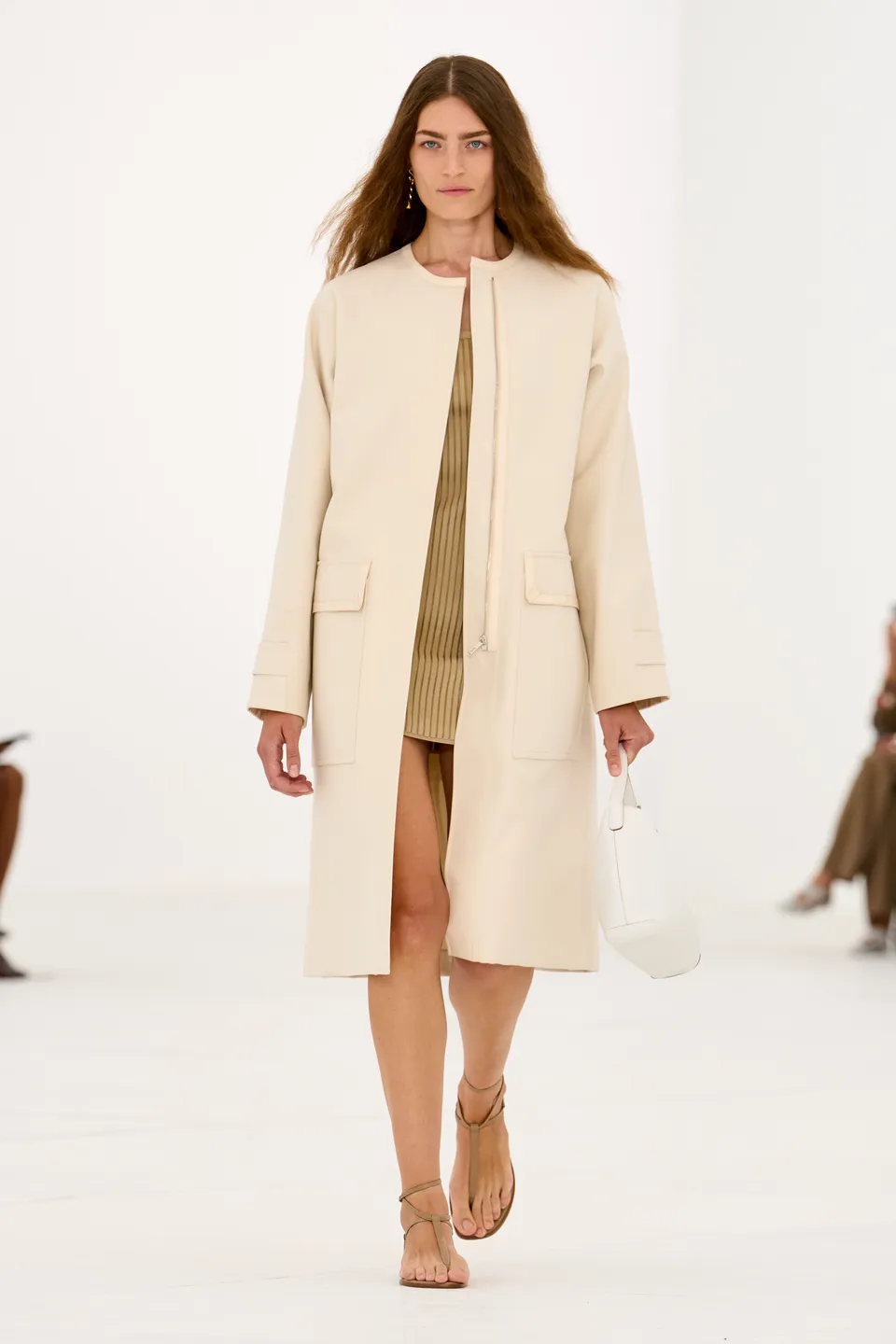
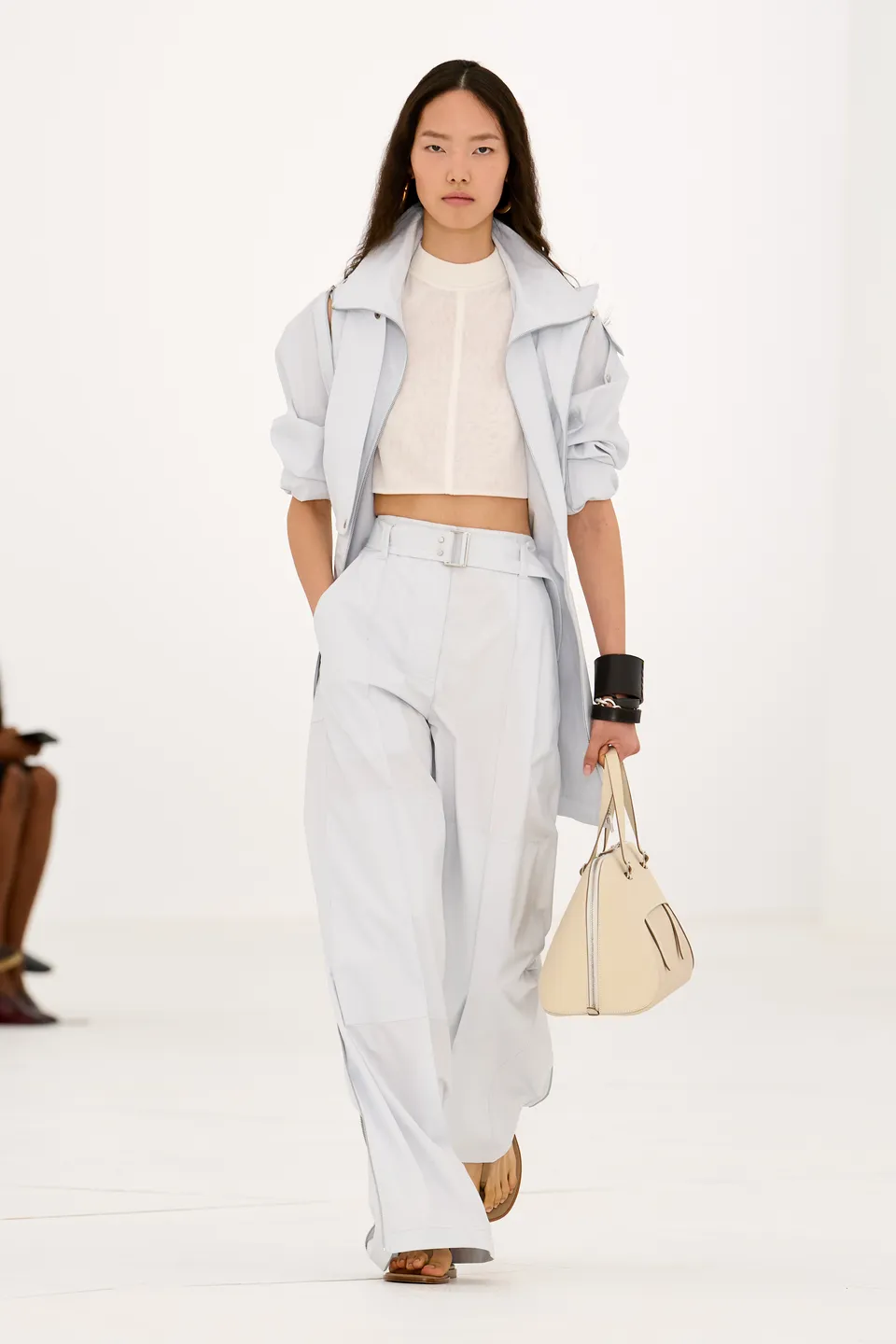
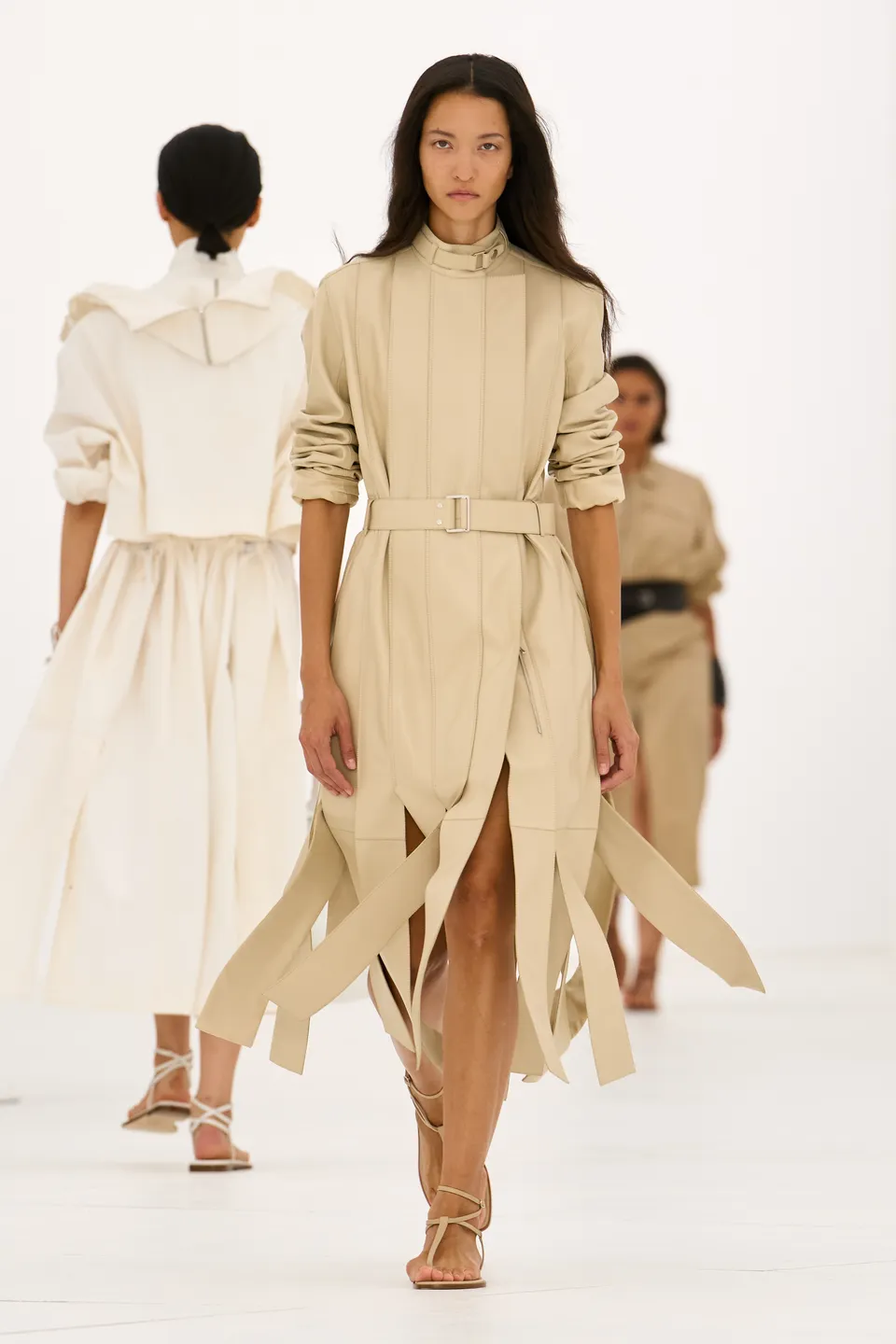
Vanhée described the season through a simple idea of air, and the most convincing pieces turn that idea into construction. Zippers become central.
A skirt can change length through a zip, moving between shorter and longer proportions. Trouser legs can open or narrow. Parkas split at the waist and reconnect through snaps, giving the wearer control over volume and ventilation.
Hardware regulates the relationship between clothing and environment. A zip creates airflow. A snap changes proportion. A fastening opens a garment toward the skin.
The technique also continues an idea Vanhée explored in previous seasons, where hardware controlled exposure and concealment. Here, its purpose expands into climate, flexibility and motion.
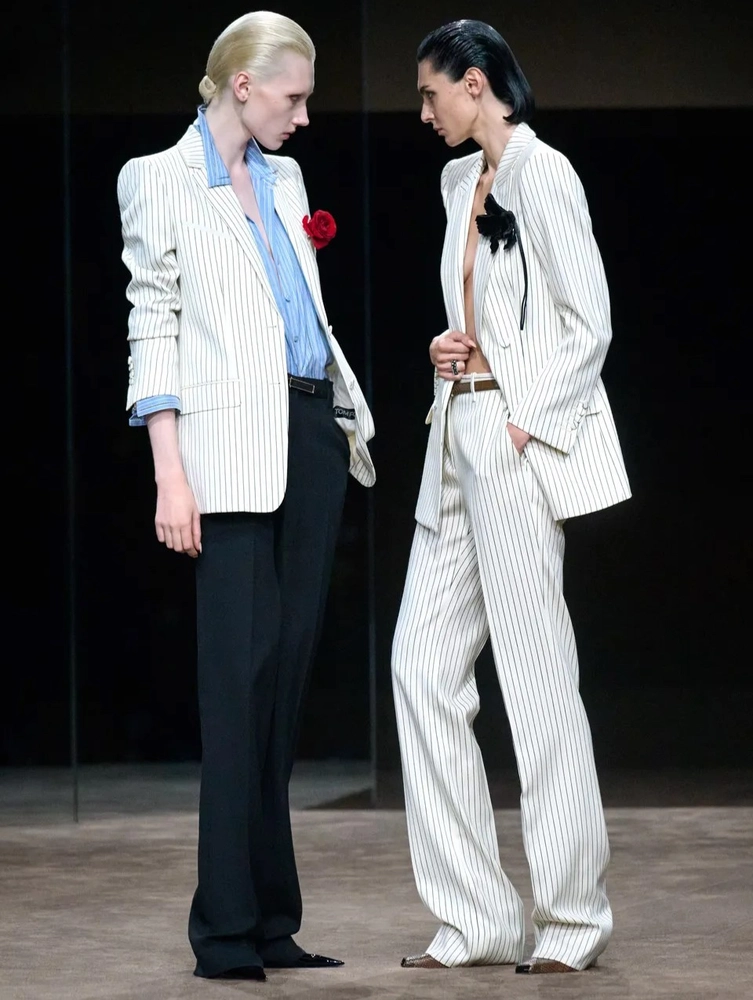
The collection keeps a disciplined center through much of the body. Waists stay defined. Pencil silhouettes remain narrow. Long trousers extend the leg. Tubular dresses maintain a clean vertical line.
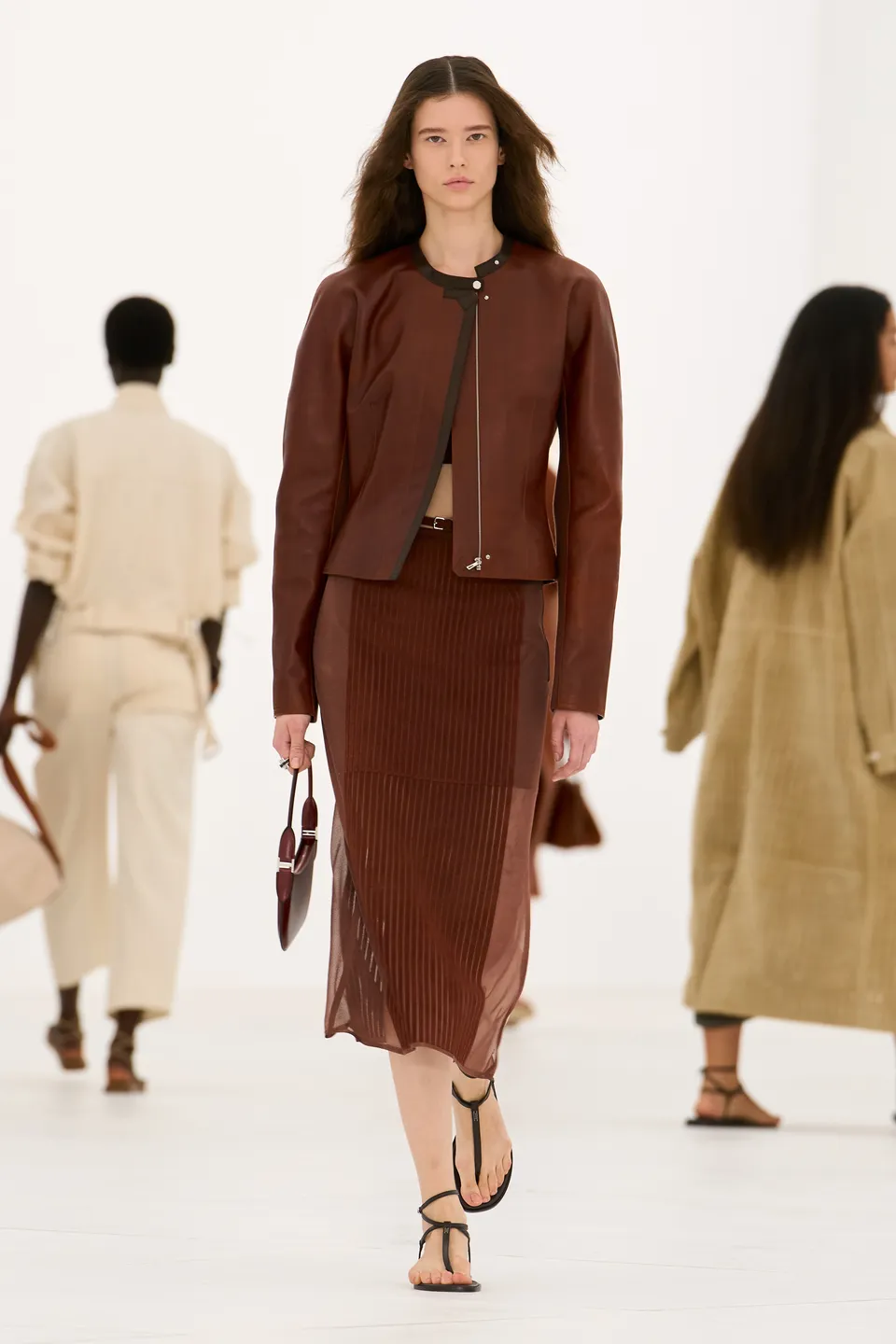
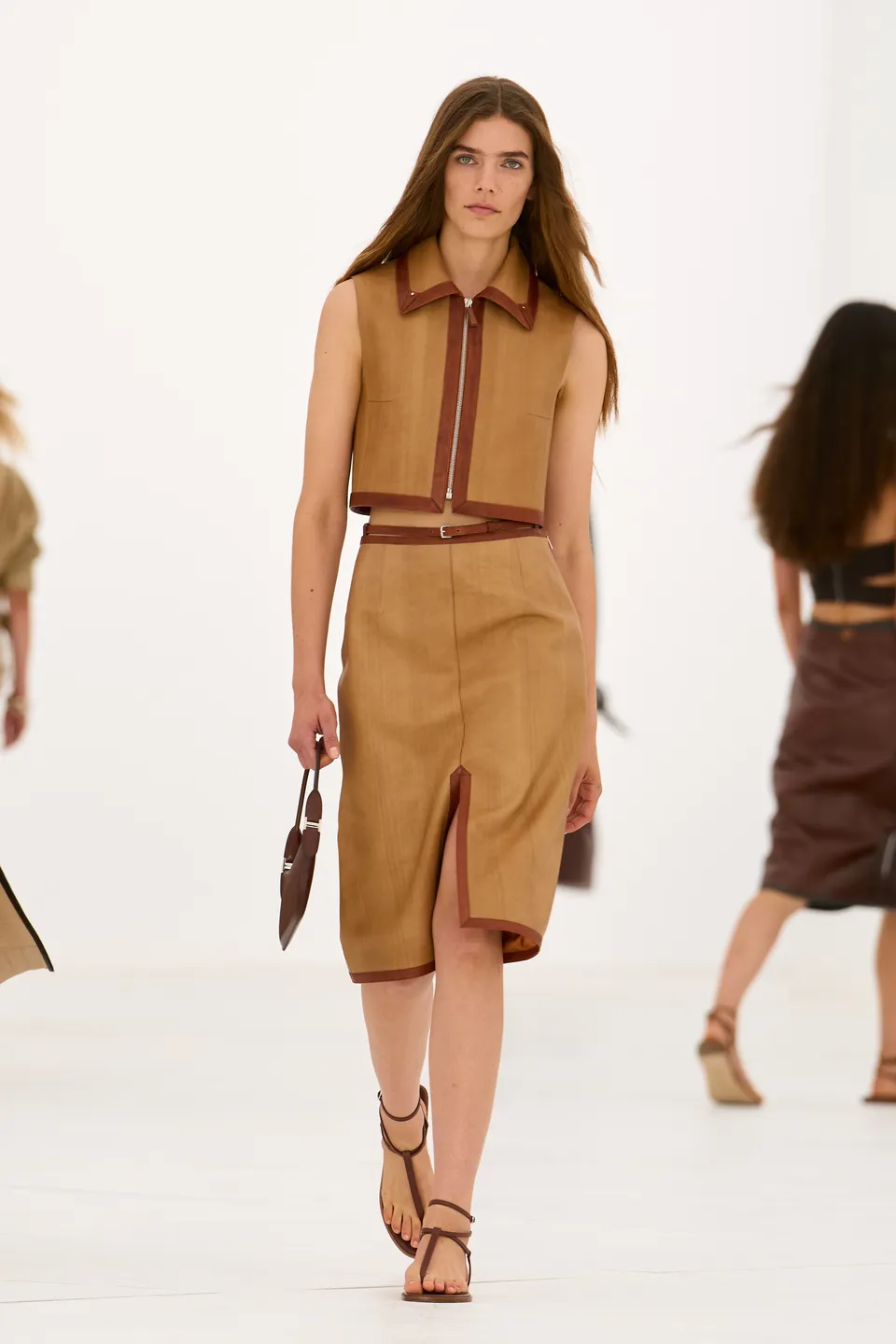
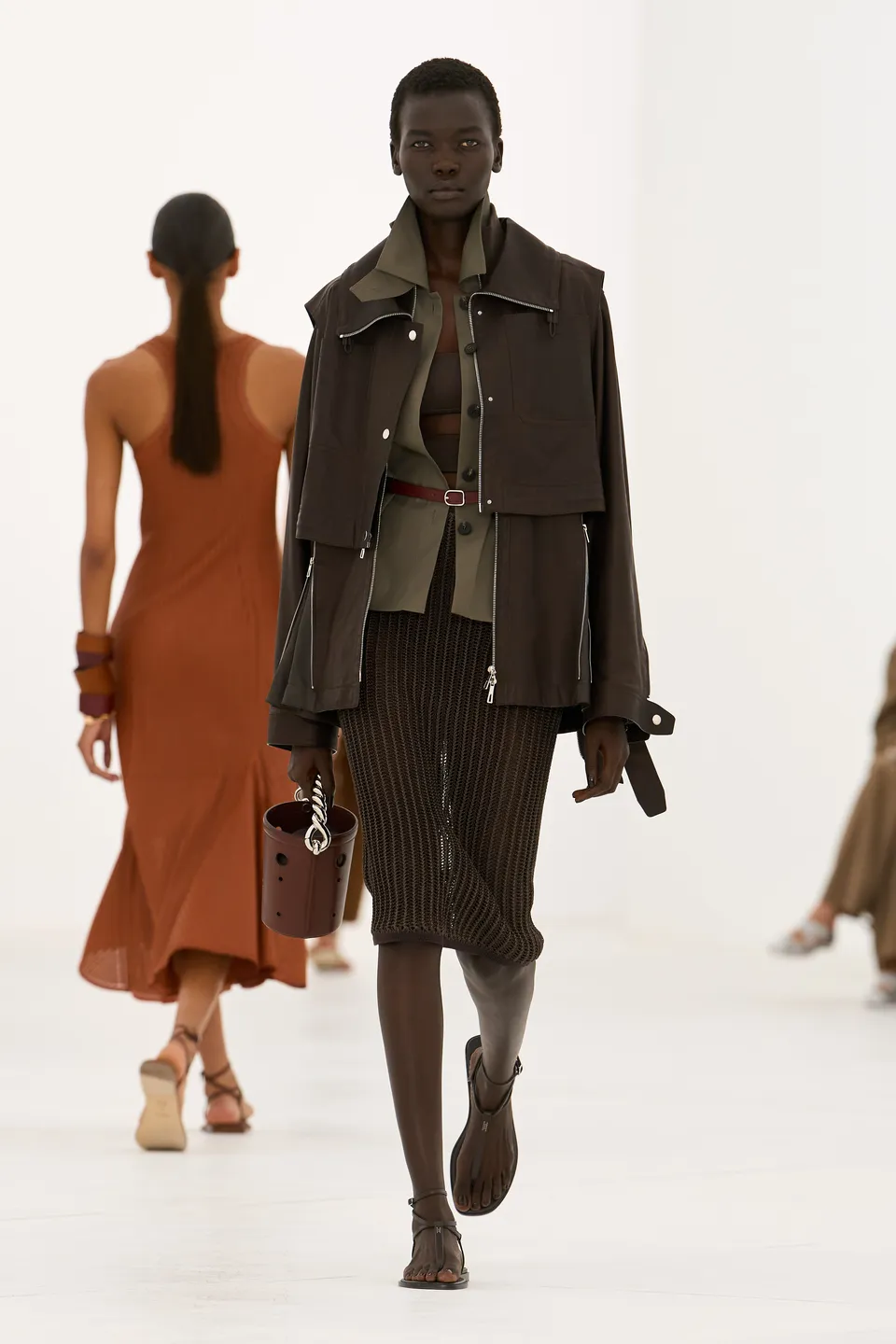
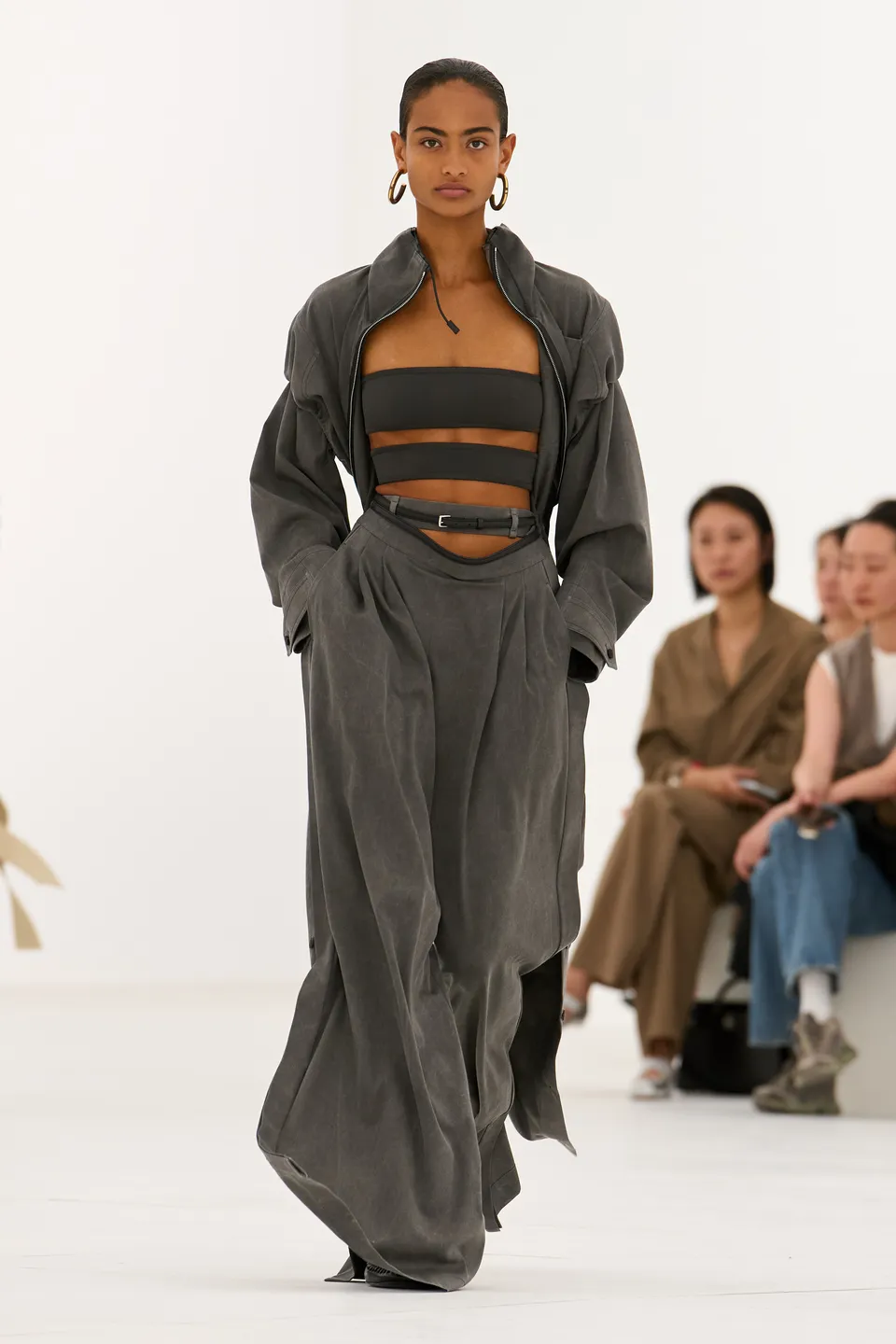
Some skirts rise into high openings along the thigh. Longer hems divide into strips that swing individually as models walk. Parkas create volume around the torso before tightening again at the waist. Cropped jackets expose sections of the body beneath.
The long panels move independently, producing a “carwash” effect as air passes through the spaces between them. A garment that looks relatively contained while standing gains a completely different architecture once the wearer begins walking.
The deepest technical work of the collection happens in leather. Vanhée approaches it as a material capable of opening, thinning, splitting and filtering air.
Calfskin appears worked to an extremely fine weight. Suede is perforated. Glazed nappa is interrupted by vertical cuts. Other pieces use laser cutting to carve repeated openings through the surface.
Some constructions turn leather into lattice. Narrow strips create grids and ribs across the body, leaving negative space between them. Elsewhere, leather is combined with lighter textile bases so structure appears without creating visual heaviness.
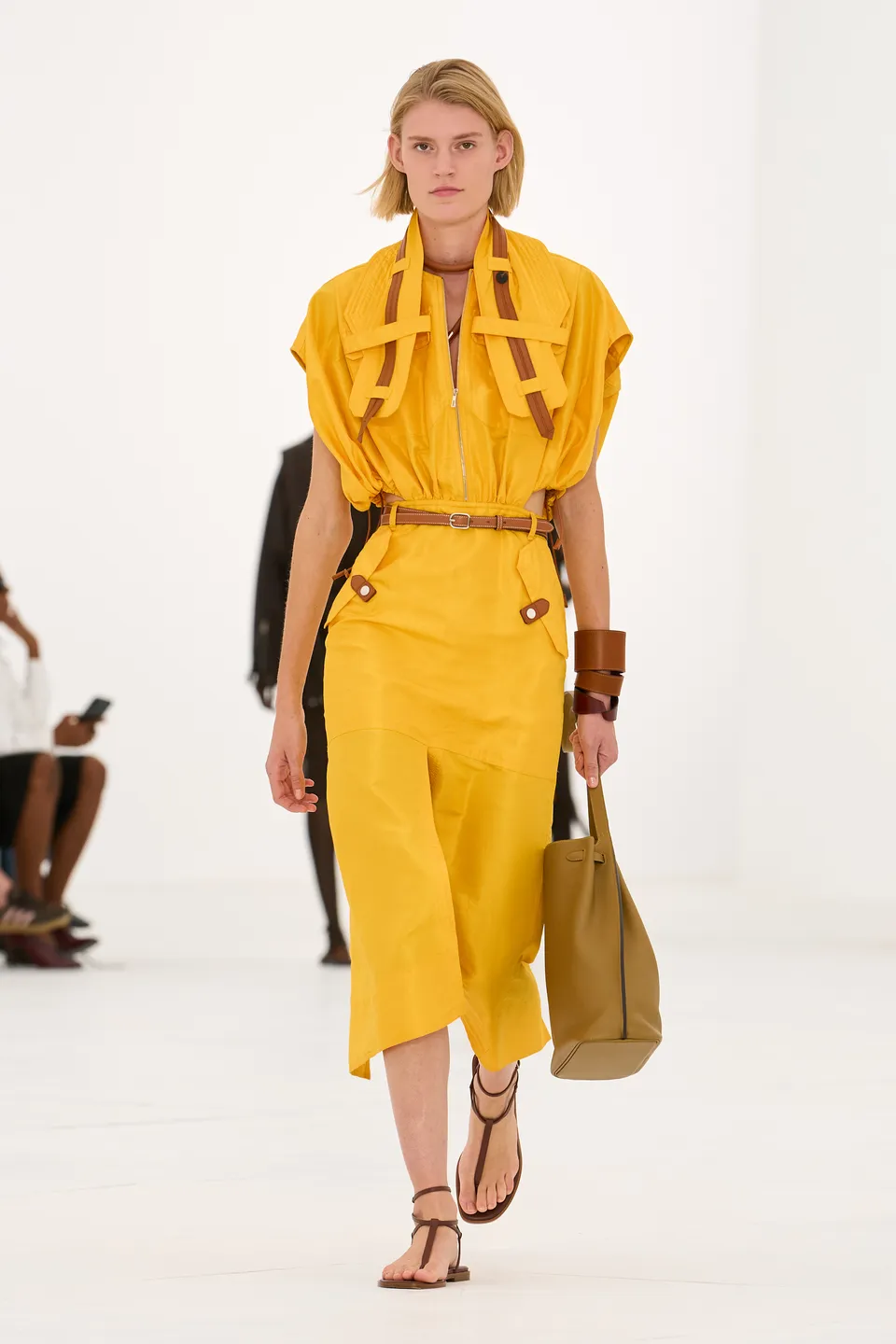
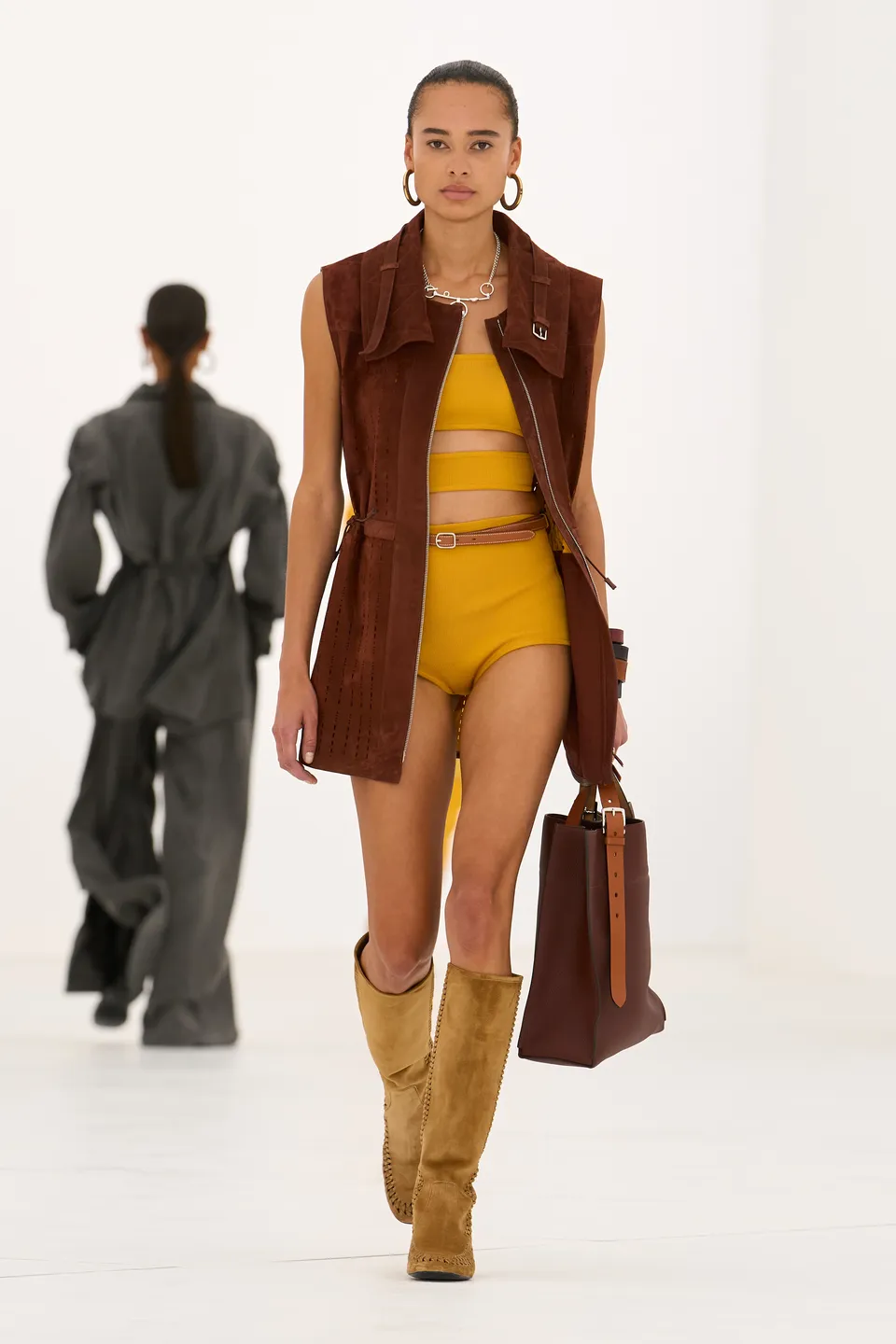
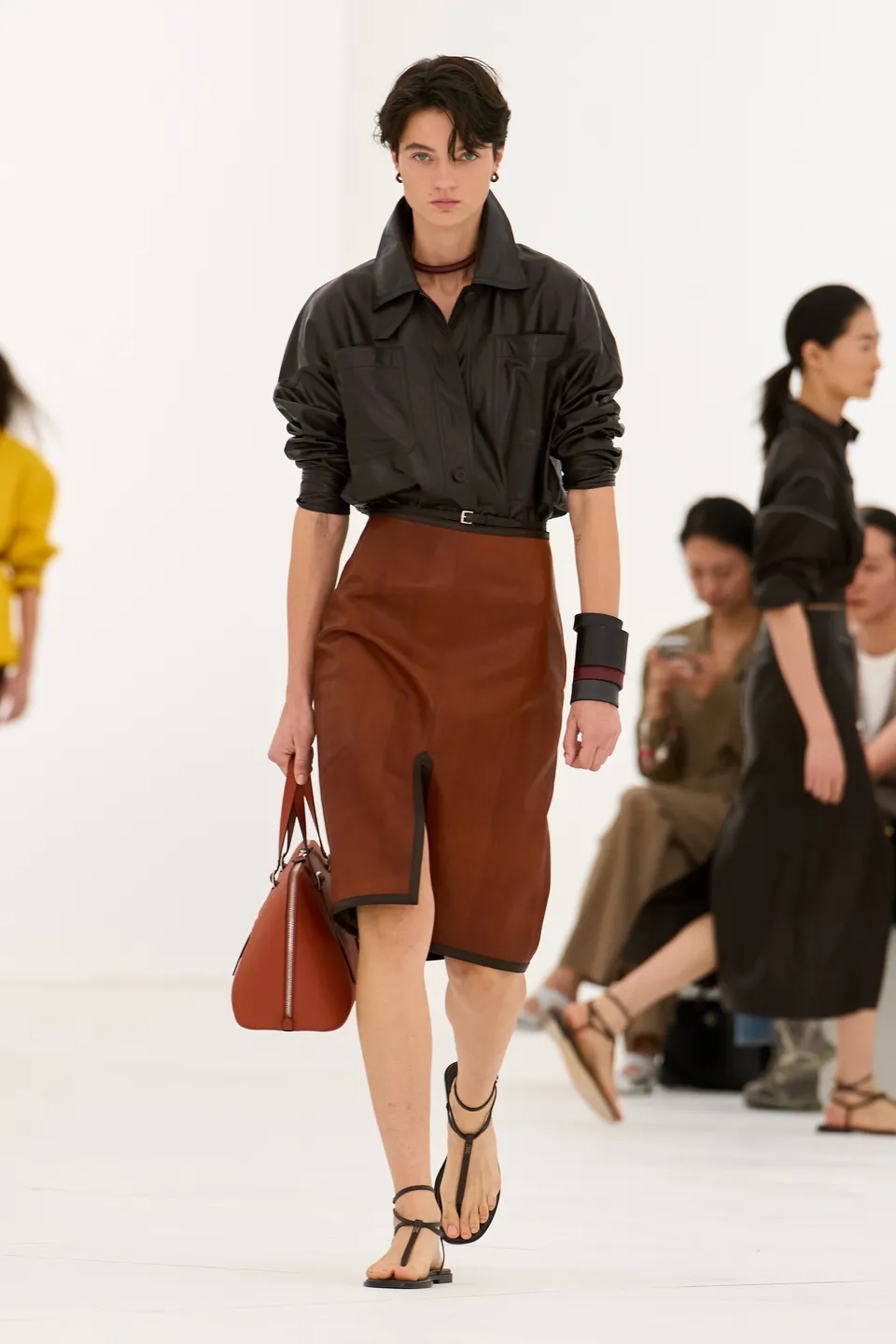
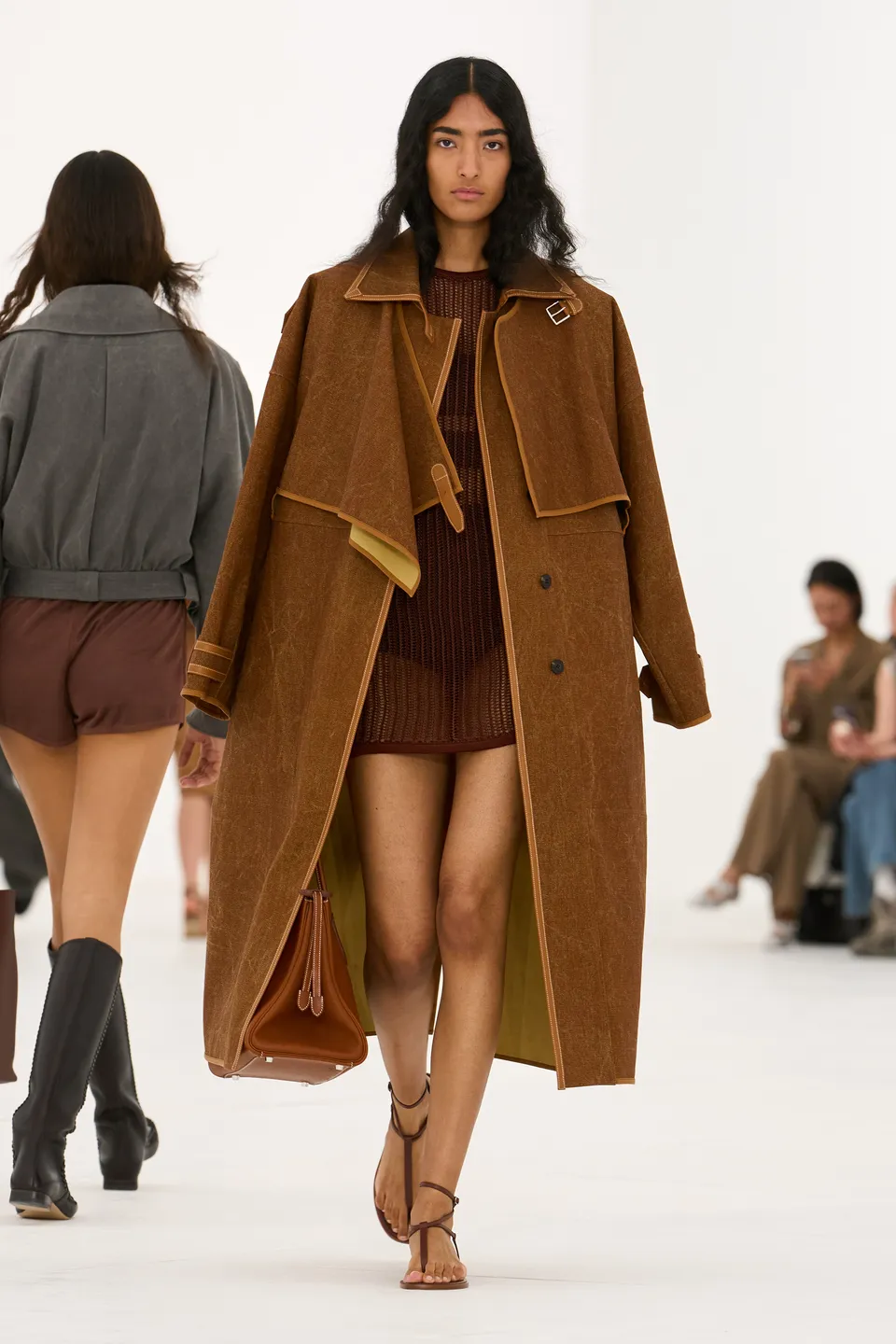
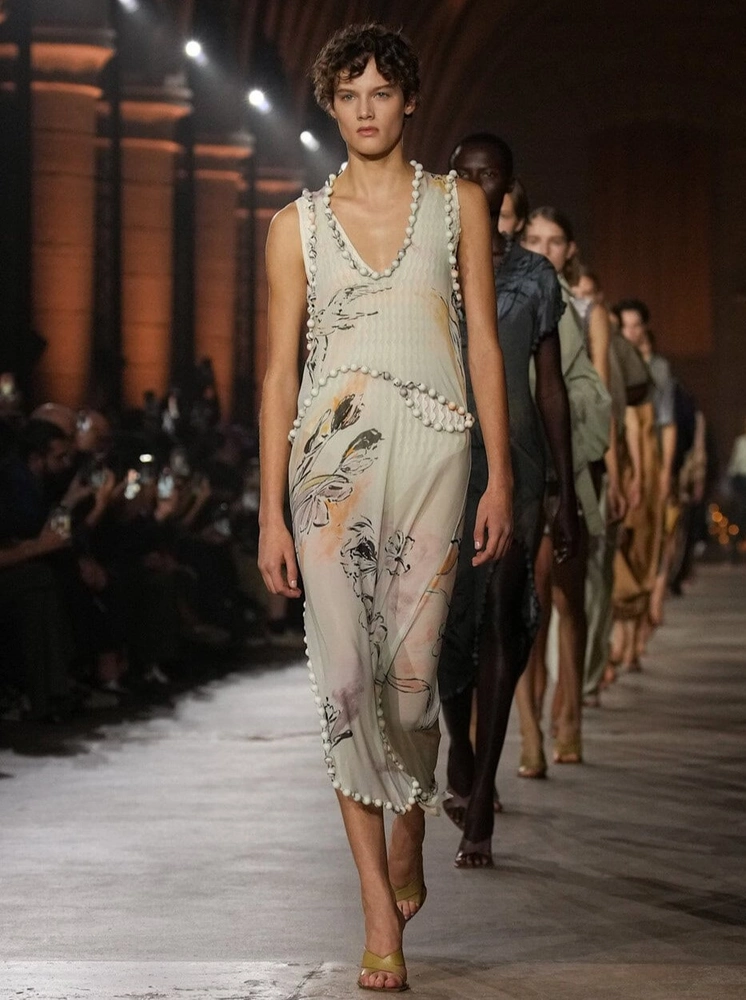
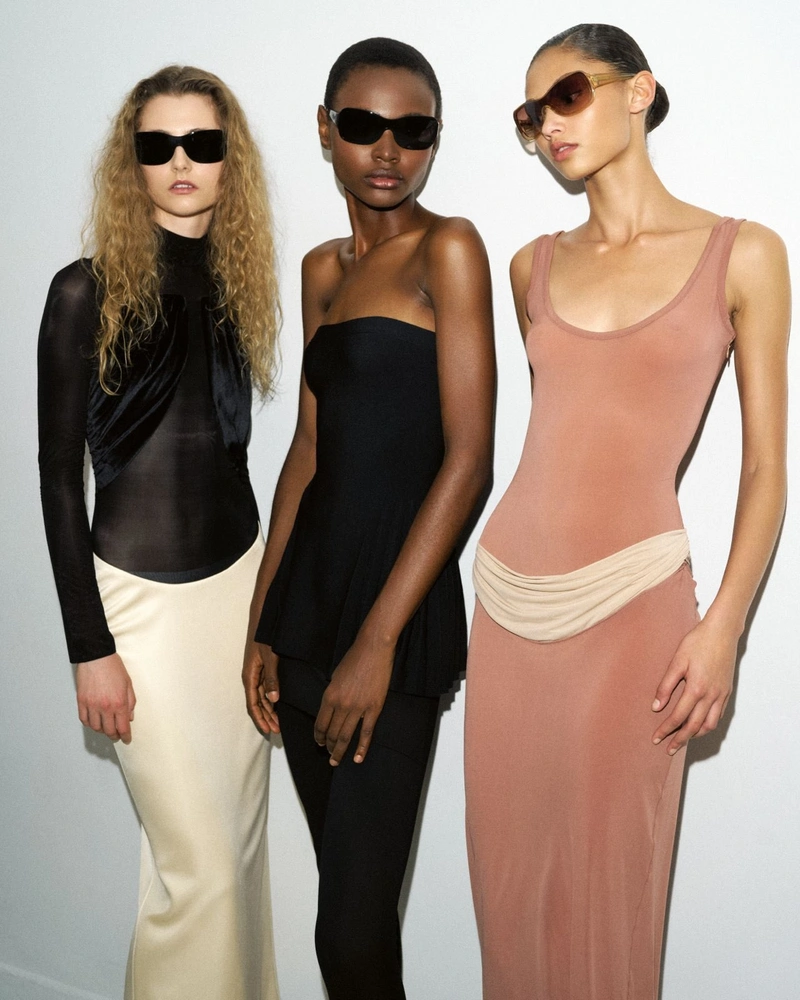
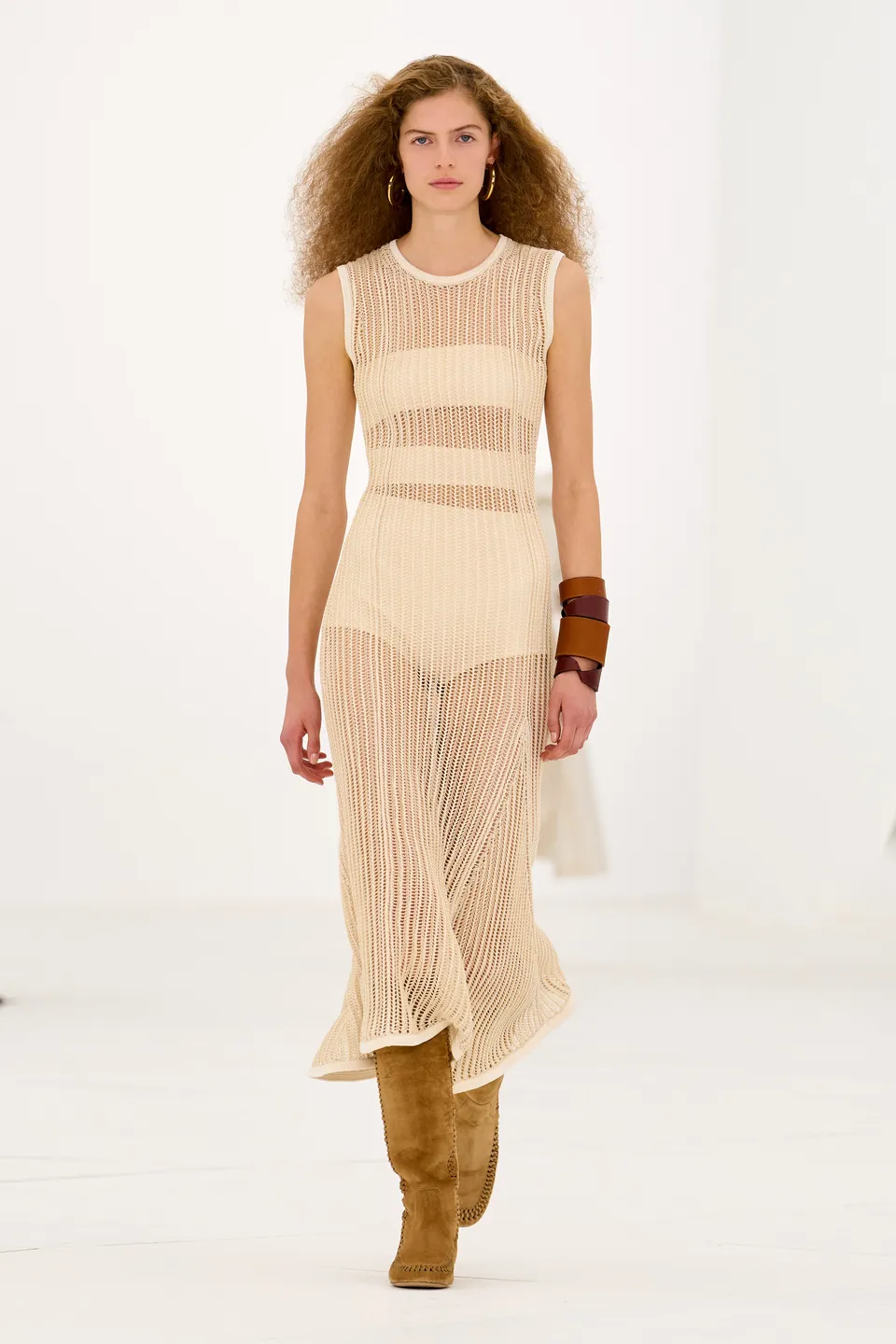
The softer fabrics take the same idea in another direction. Open-stitch knits expose bandeaus and briefs underneath while leaving enough structure to hold the silhouette. Fine-gauge knitted sheath dresses stay close to the body, their openness creating a visual rhythm of skin and textile.
Silk pongee brings a light technical quality to parkas and outer layers. Crinkled silk faille has a dry, slightly irregular surface that Vanhée described through a feathery sensation. Its movement feels almost weightless because the crushed texture prevents the fabric from sitting flat against the body.
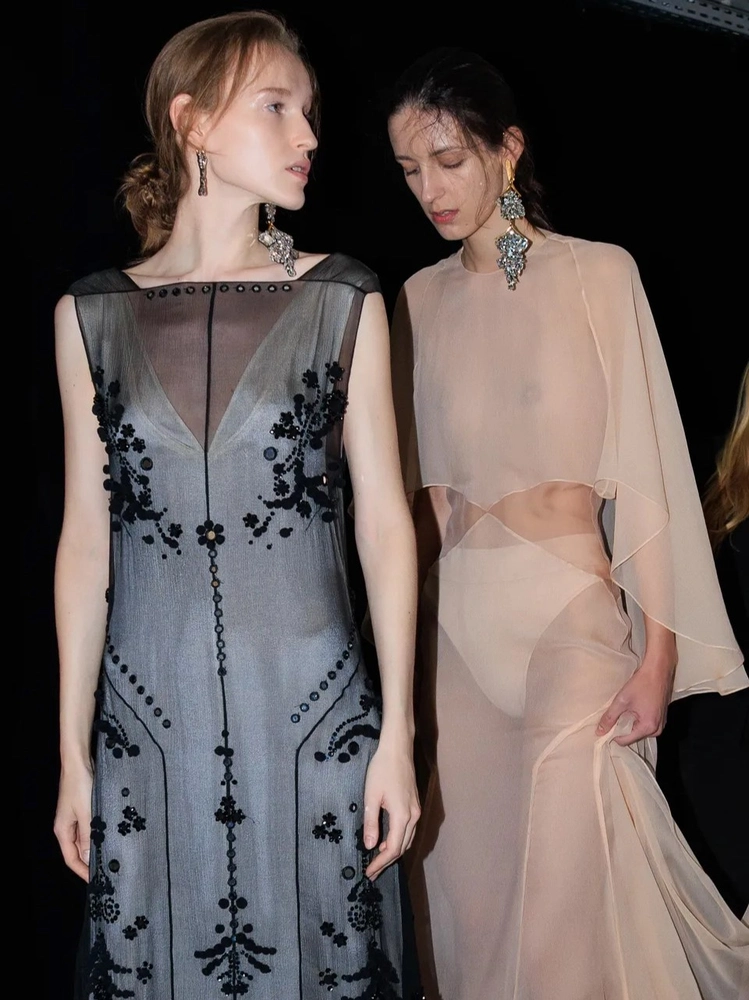
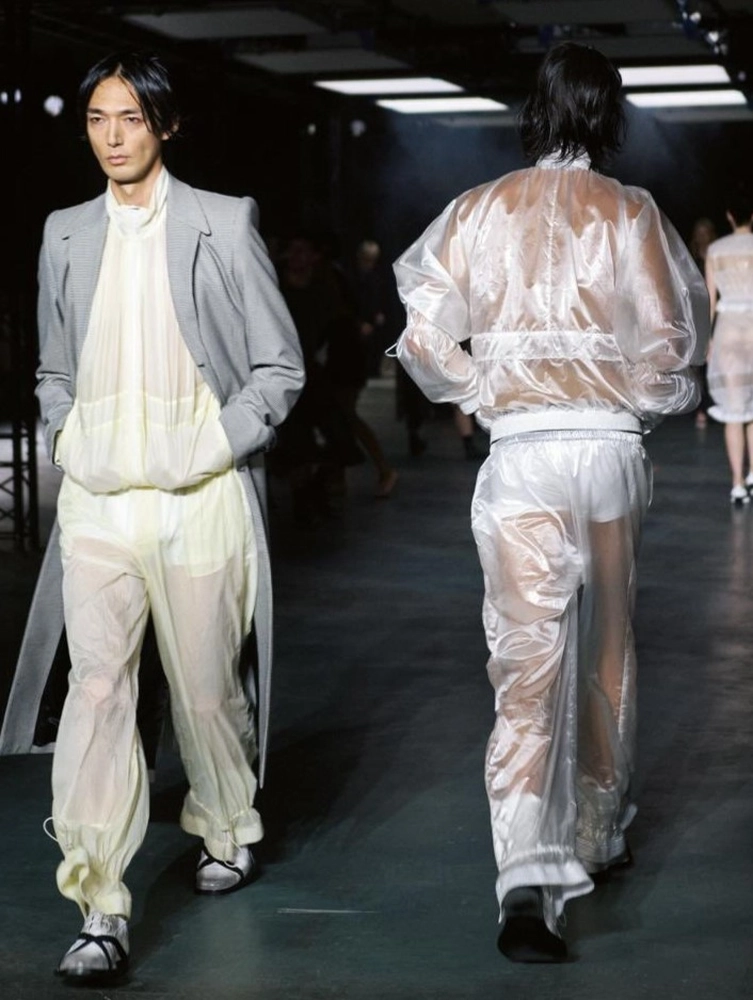
Sheer fabrics introduce another kind of openness. Transparency appears in controlled sections, creating layers of opacity, skin and movement rather than turning the whole look into a single transparent plane.
Fine knitted sheath dresses are interrupted by vertical bands that emphasize the body’s length while giving the surface a ribbed, segmented appearance.
This approach gives Hermès texture through construction itself. That negative space can look almost graphic from a distance, then reveal much more technical complexity up close. The collection therefore rewards proximity. A relatively simple silhouette may contain an entire system of slicing, stitching, opening or spacing across its surface.
Traditional print plays a smaller role in SS27. Graphic effect comes instead through repeated openings, stripes formed by construction, blocks of color and the placement of Hermès silk.
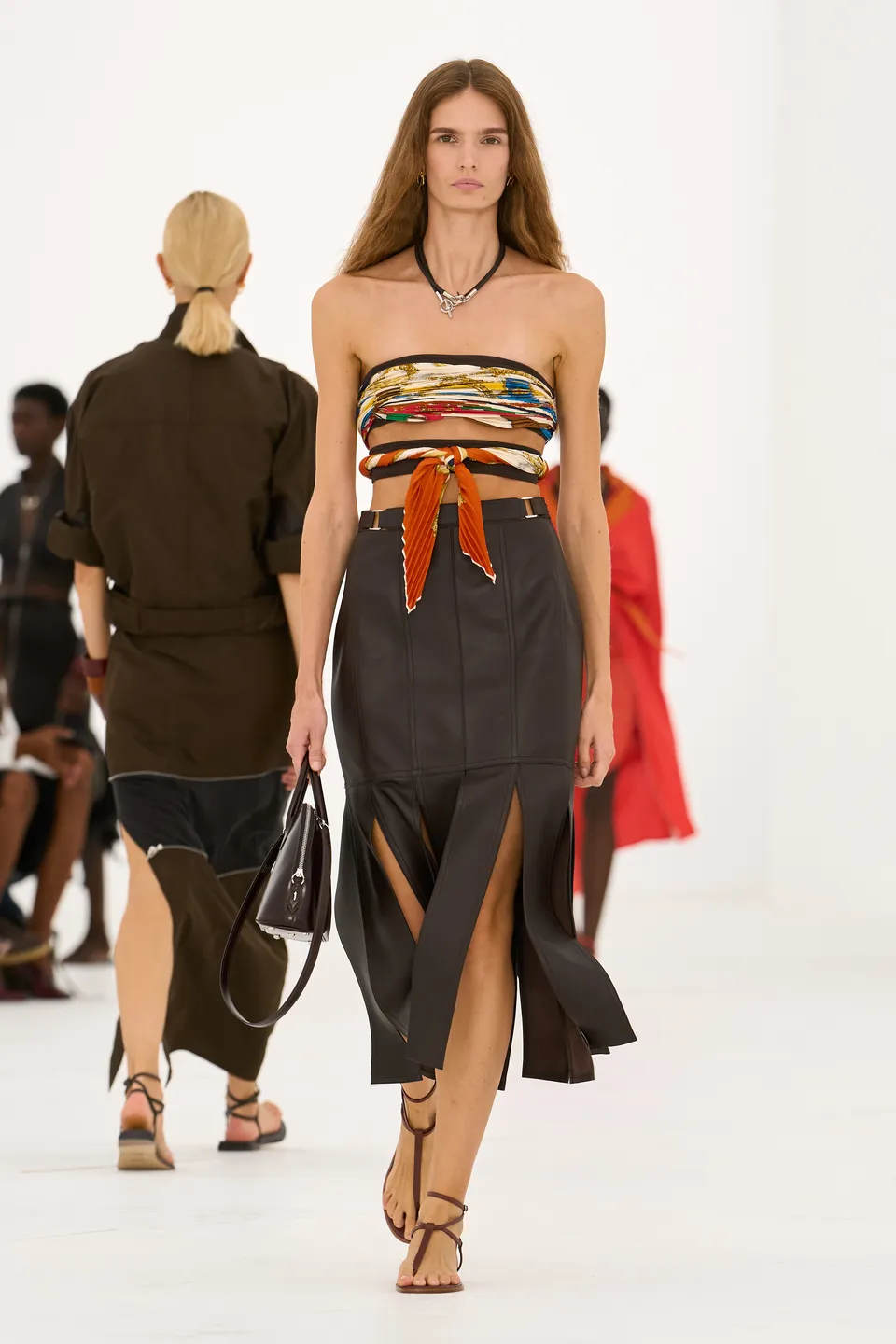
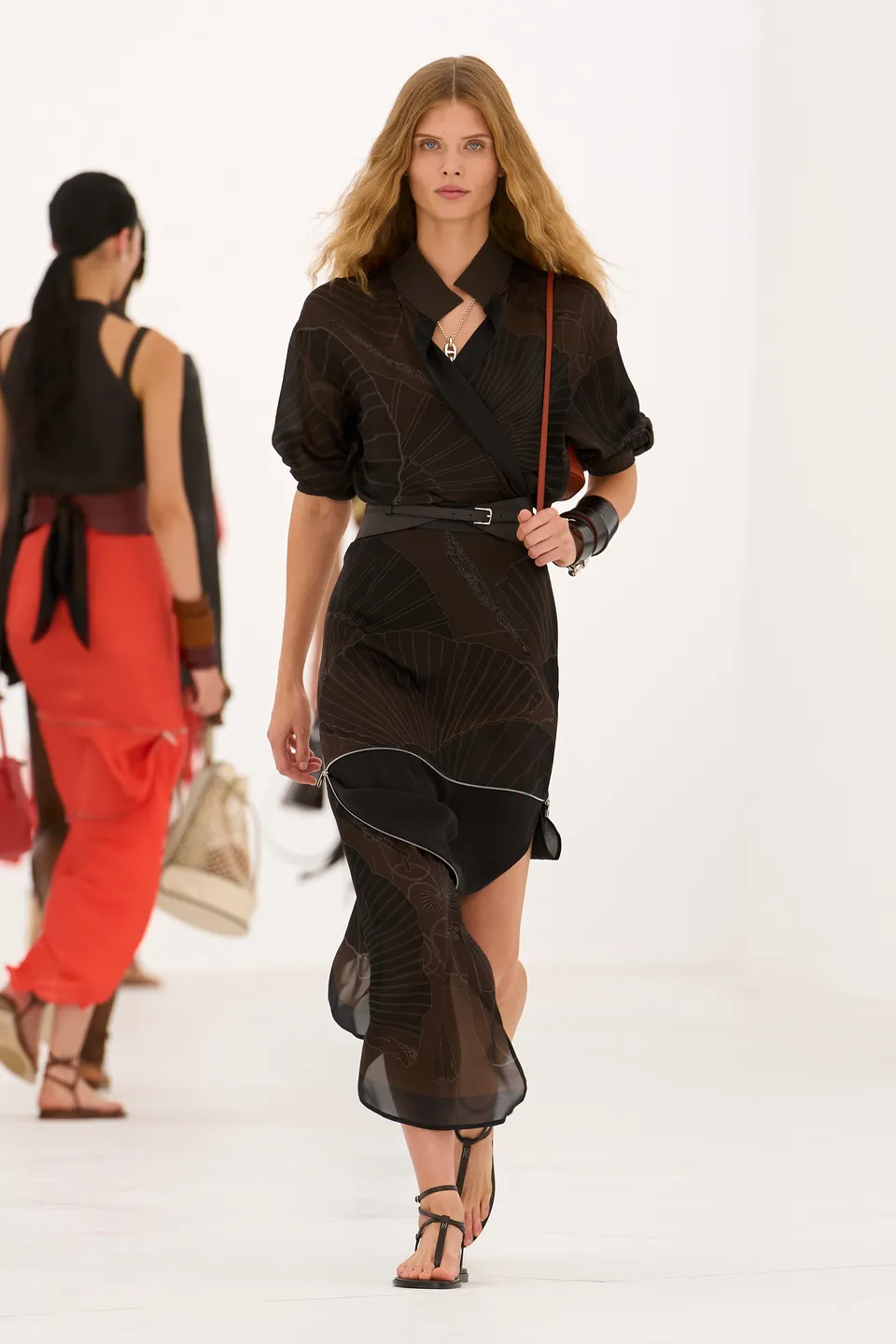
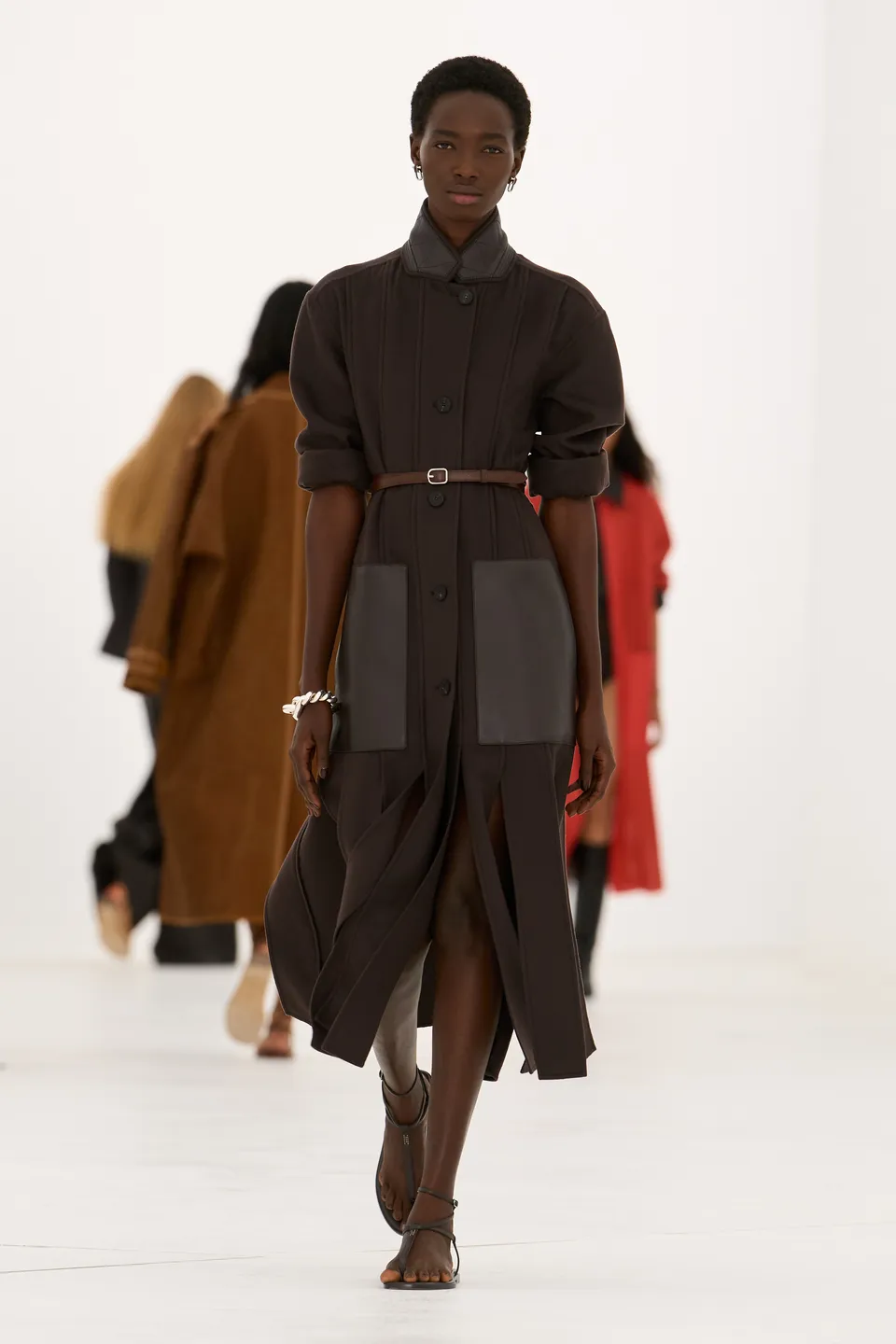
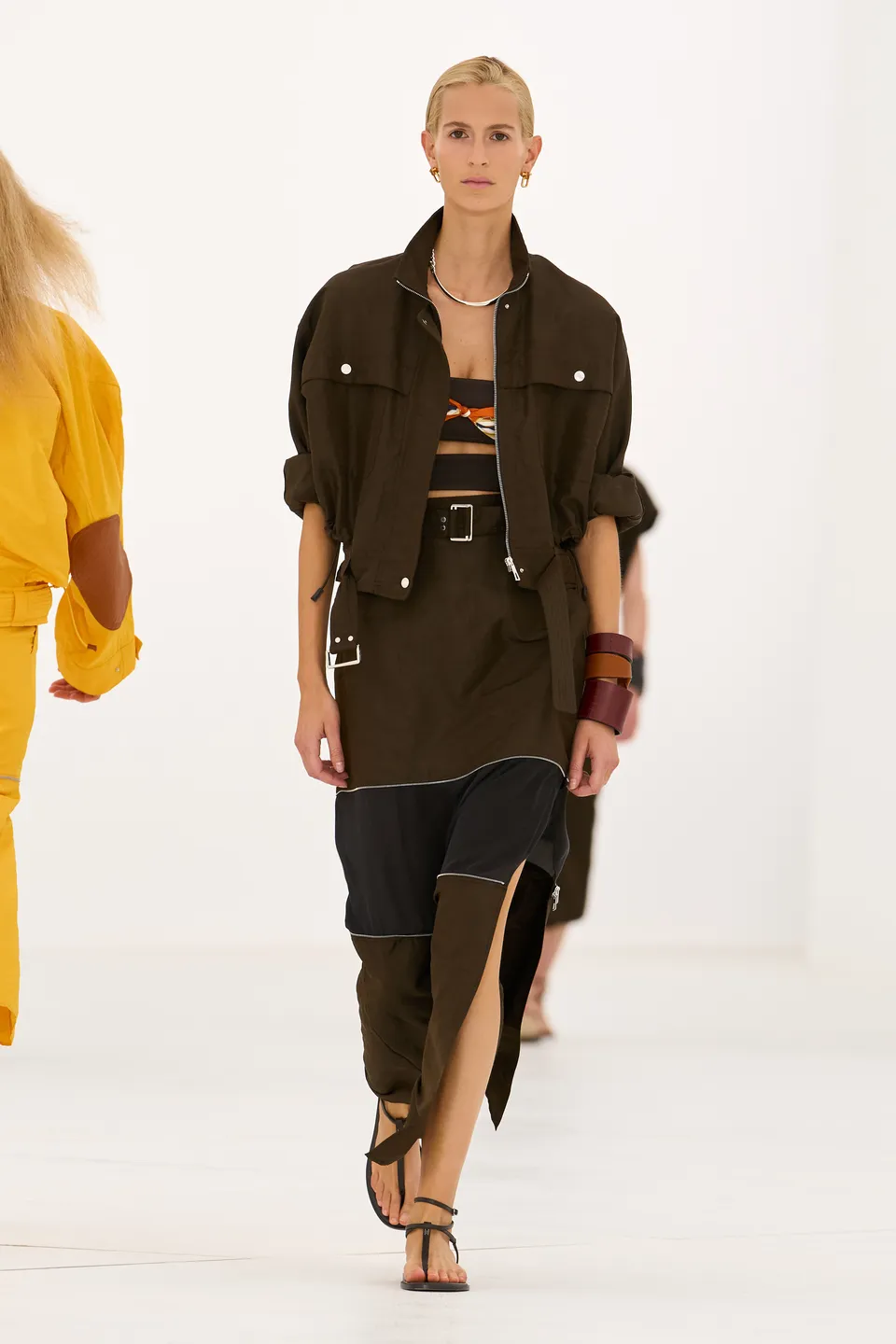
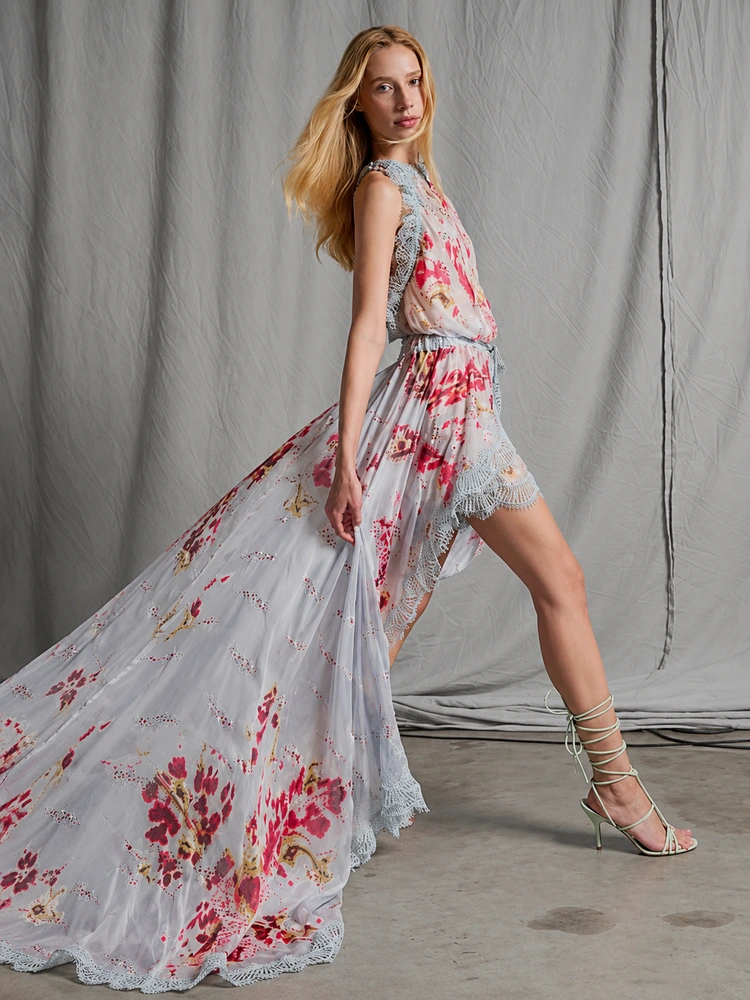
Scarves appear integrated into clothing instead of functioning solely as accessories. Silk can form tubular tops or trail from a jumpsuit, allowing one of the house’s most famous categories to become part of the garment architecture.
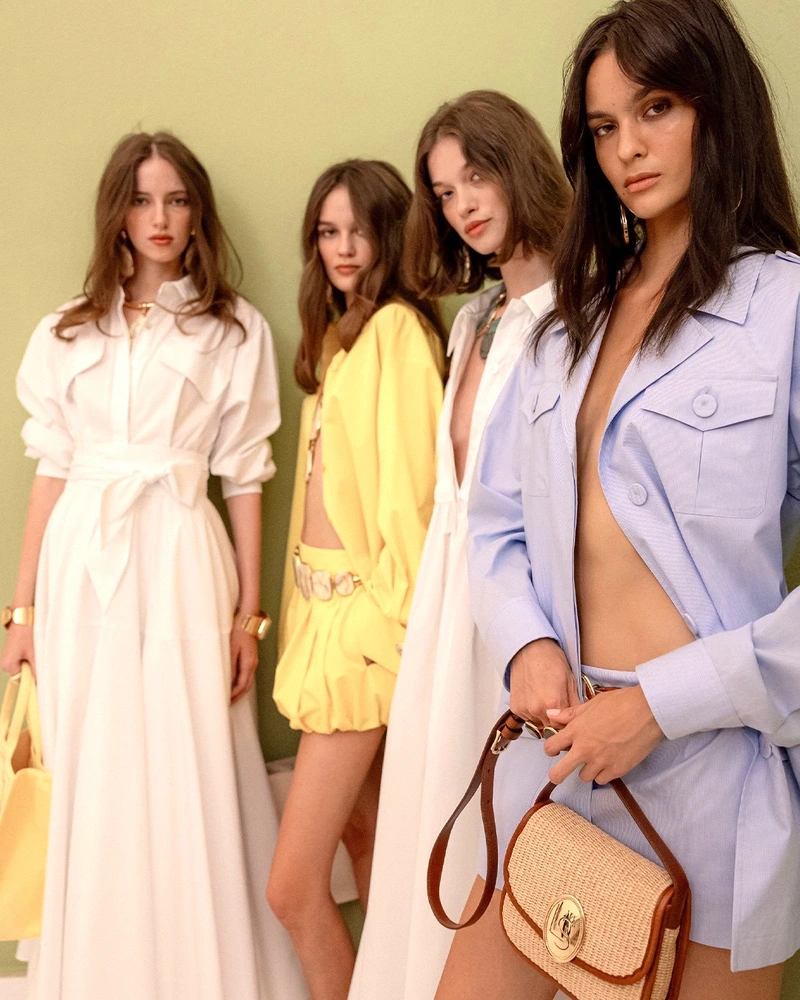
The palette begins with light. Cream, beige and pale blue establish a cool, bleached atmosphere, almost like clothing seen through intense summer sun.
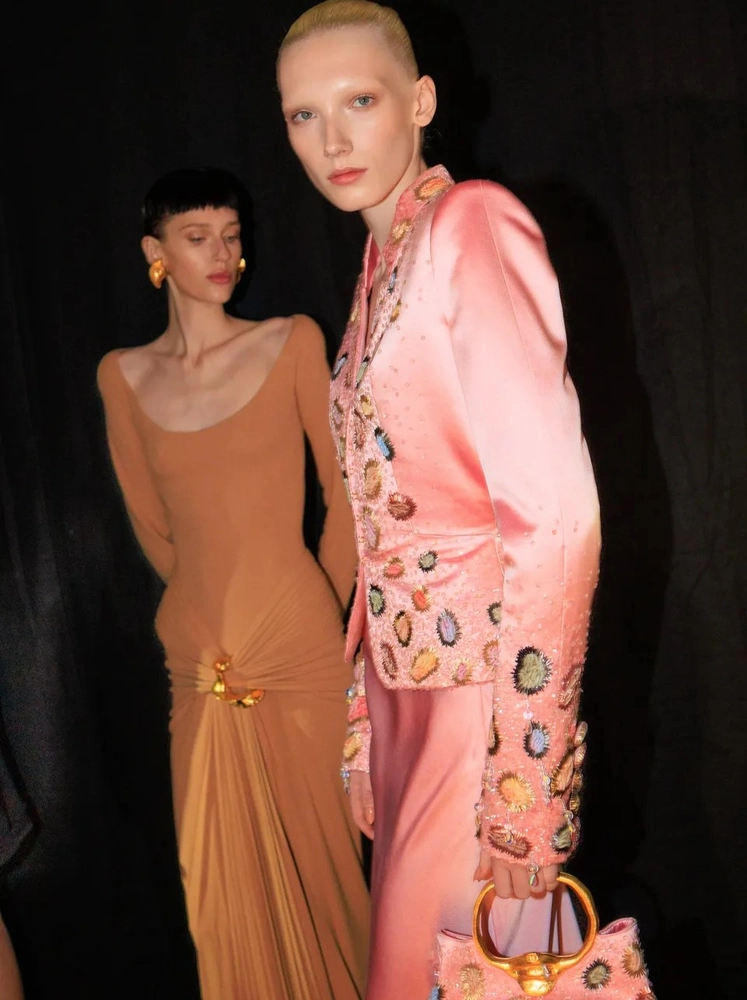
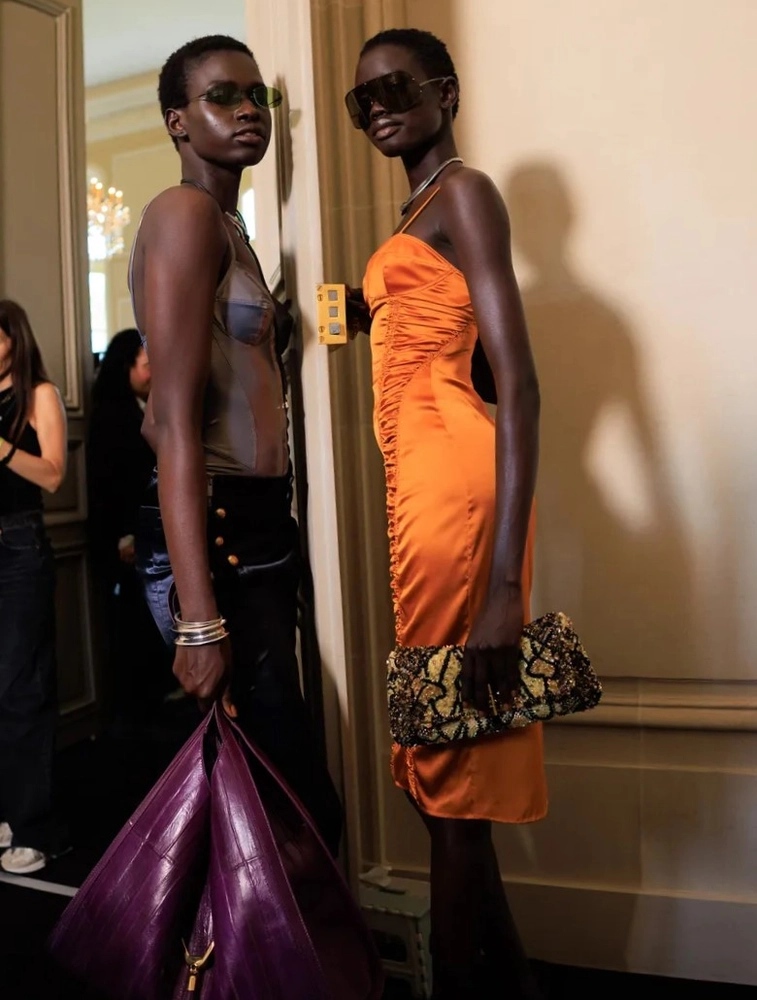
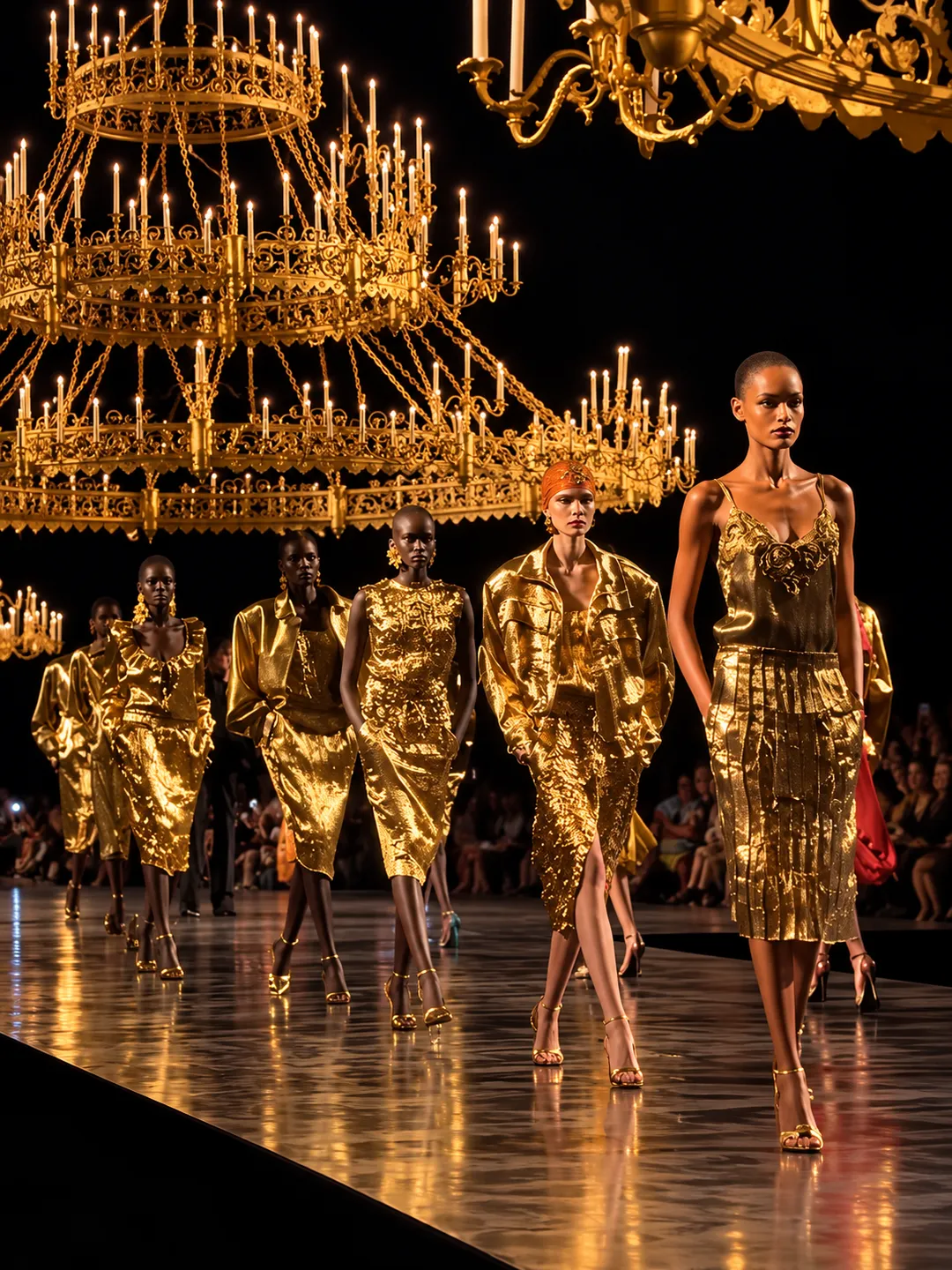
Then warmth gradually builds. Hermès orange appears with immediate authority. Tomato red adds heat. Yellow pushes the temperature further. Olive and chocolate ground the stronger colors with earthier depth.
The styling extends the collection’s climate logic through restraint and exposure, allowing the body to remain visibly present without turning the runway into a conventional resort fantasy.
Bandeaus sit beneath open-knit layers, micro shorts keep the leg line uninterrupted, sleeves are pushed above the elbow, and flat sandals reduce the visual weight around the foot, while elongated scarf ends trail behind the body and introduce movement through fabric rather than added volume.
Sensuality emerges from practicality: skin appears because the clothes have been conceived for heat, movement and ventilation, and the resulting wardrobe feels suited to summer as it is actually lived, through travel, city movement and shifting temperatures.
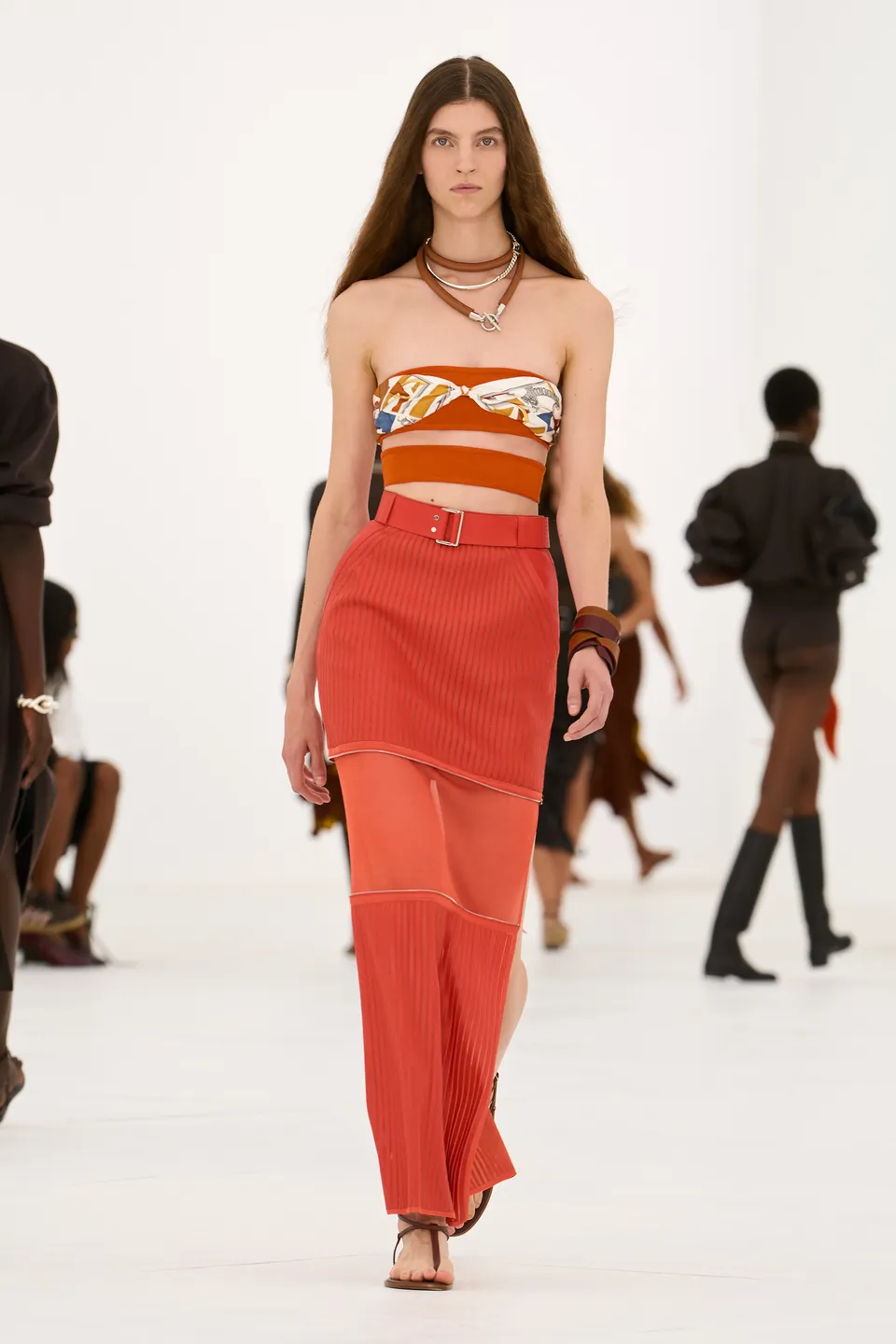
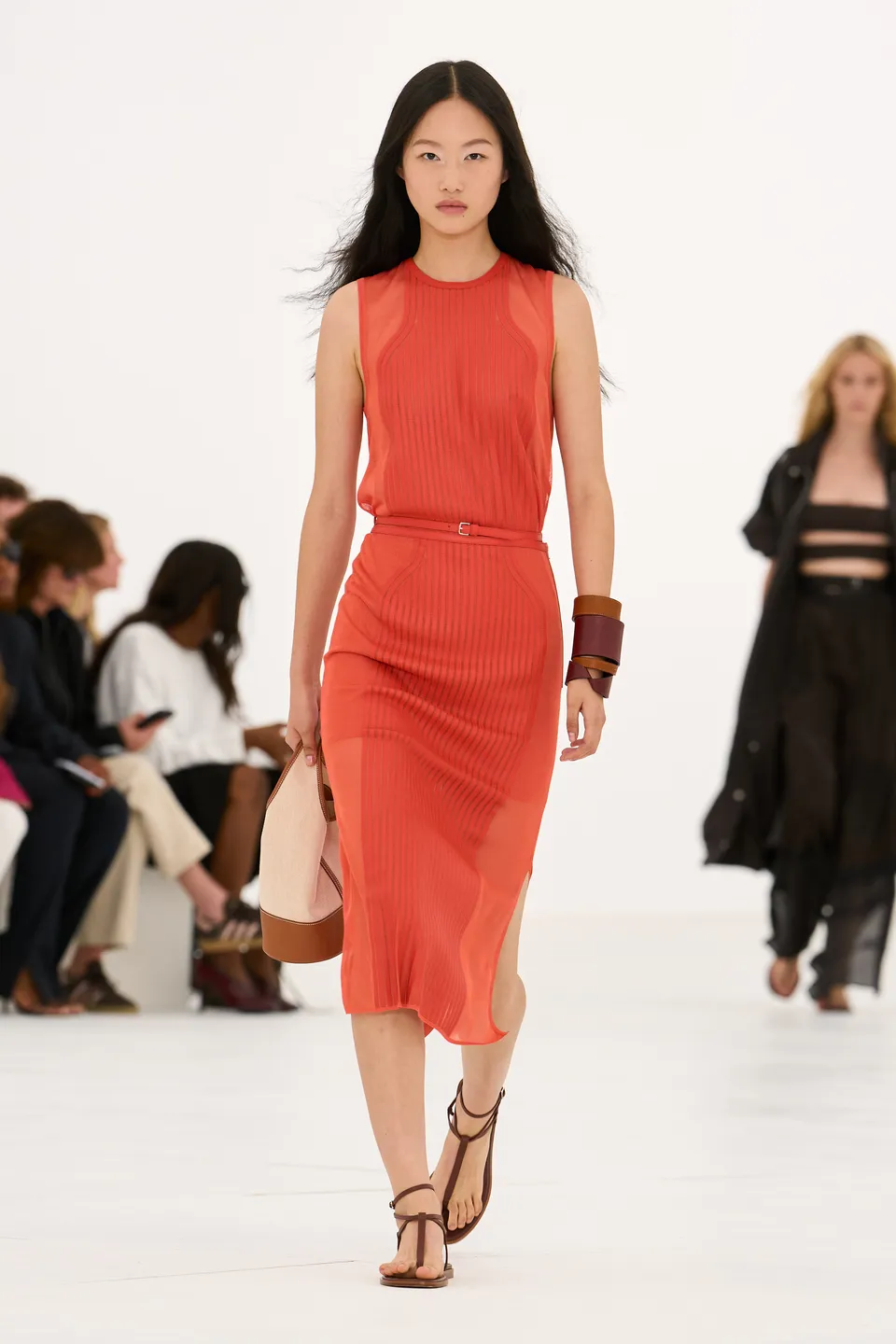
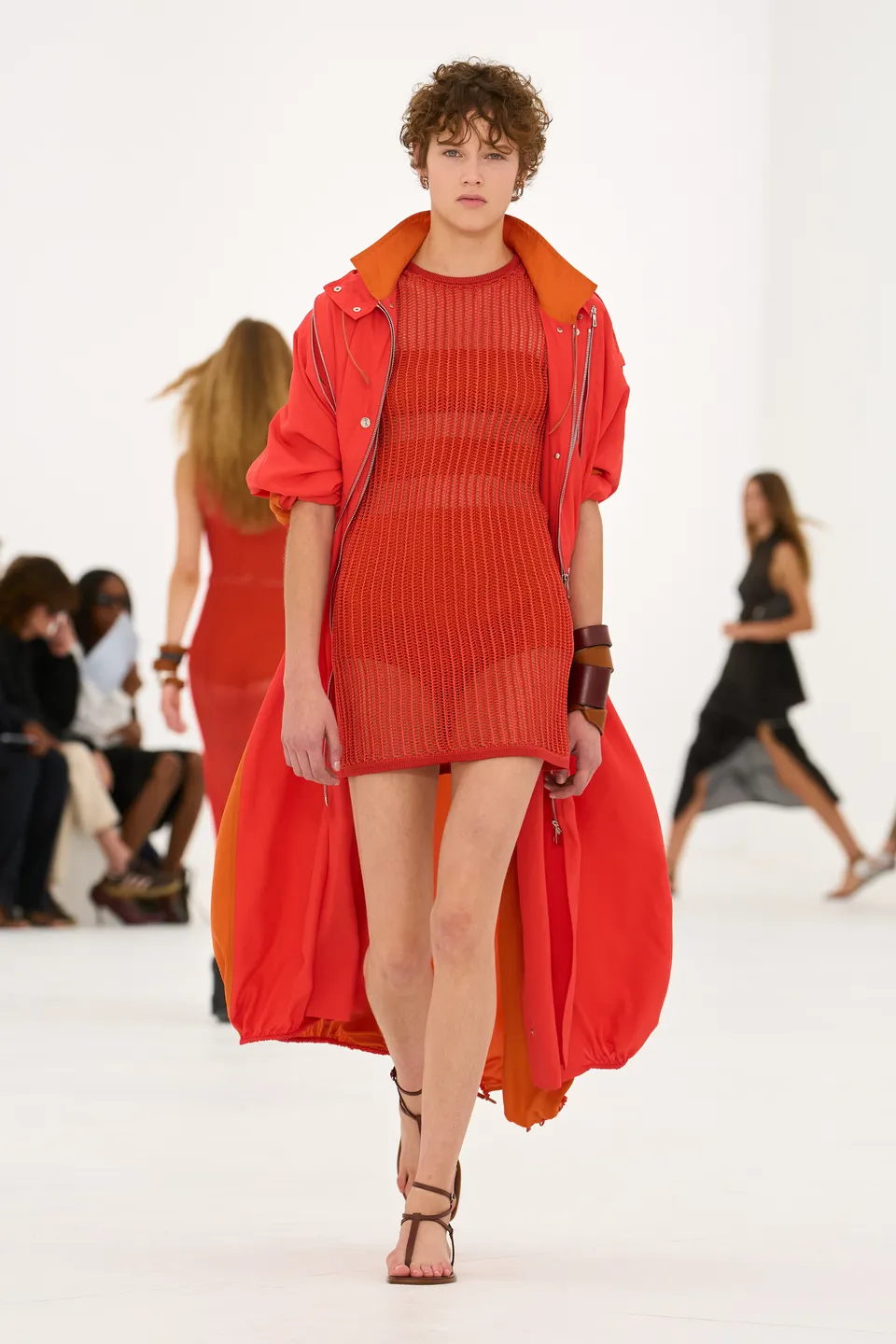
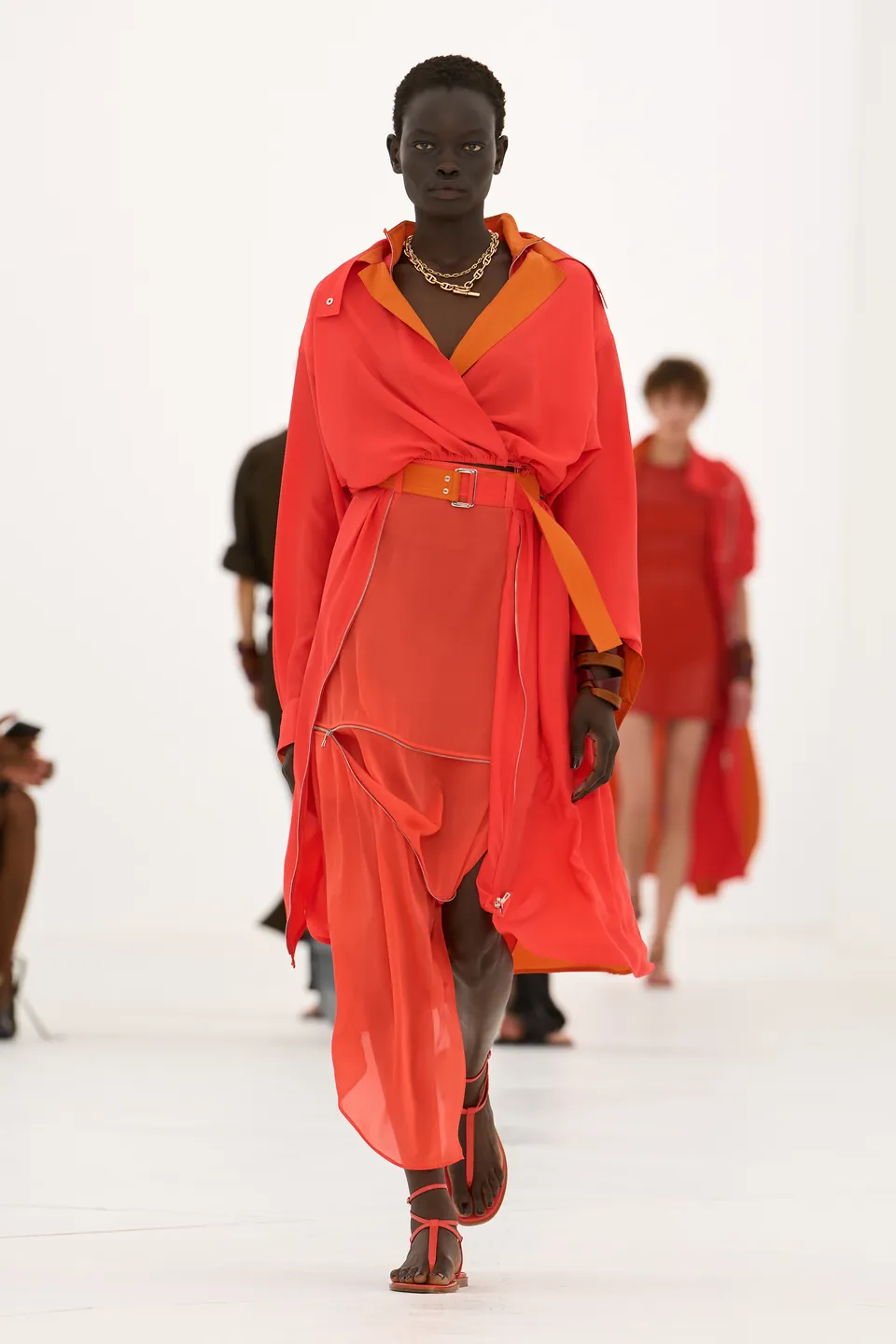
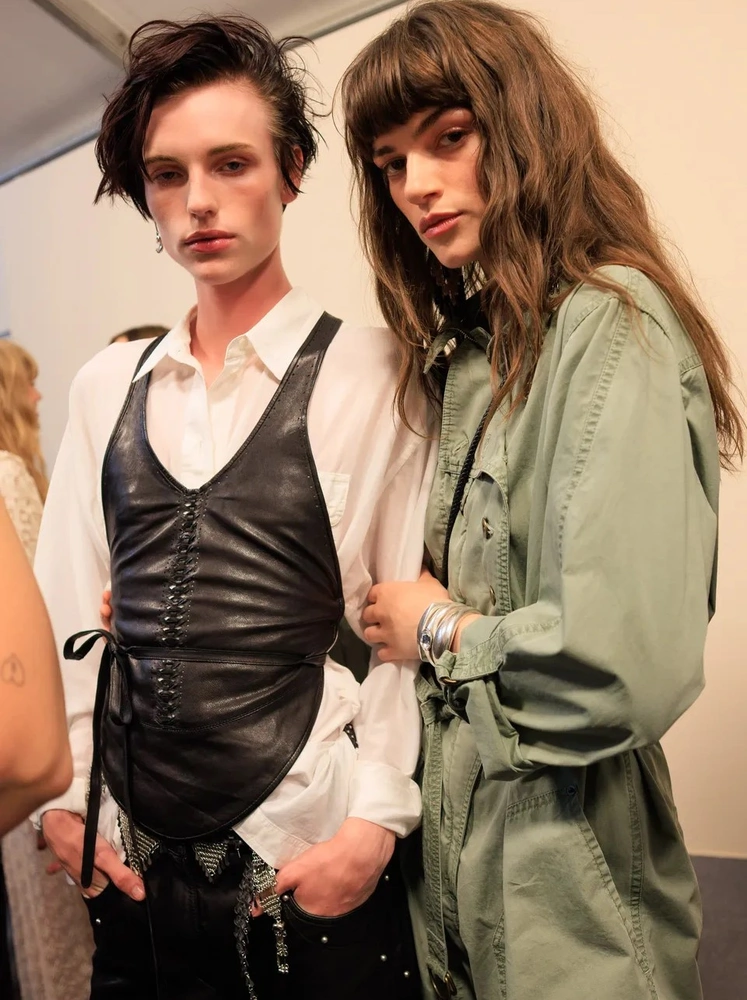
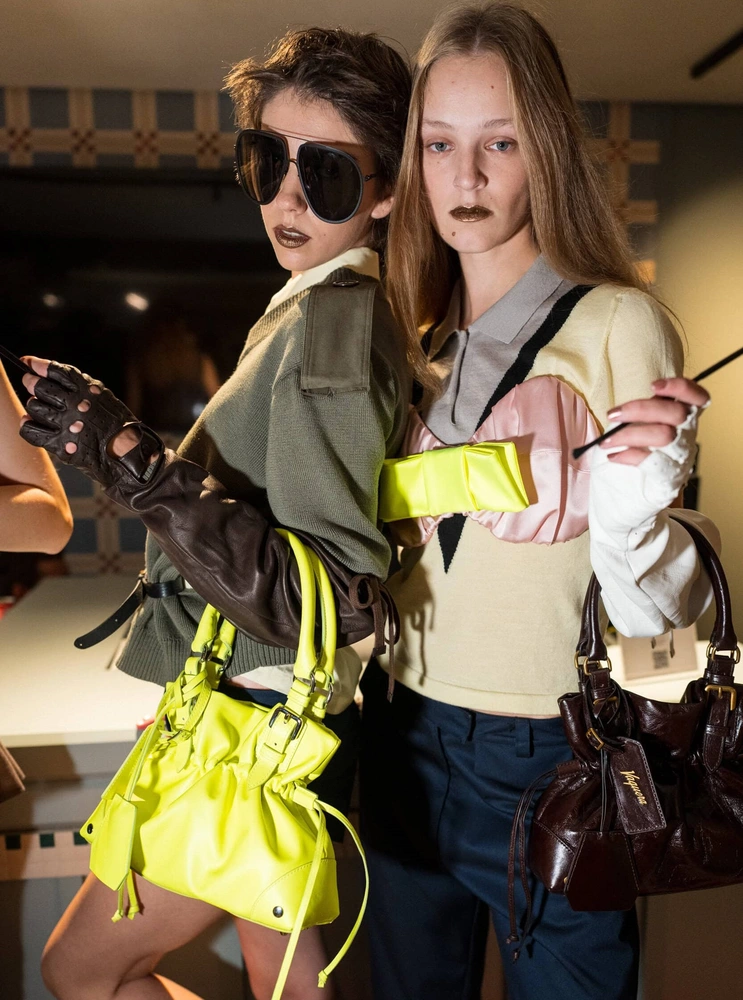
Accessories follow the same disciplined approach, with belts taking on a particularly important role in controlling proportion and redistributing volume around the body. Narrow versions tighten the waist with precision, wider corset-like constructions create firmer architectural emphasis, and belt bags integrate storage directly into the silhouette, extending Hermès’s longstanding relationship with equestrian utility and engineered fastening.
Footwear remains visually light, from thong sandals that expose most of the foot to summer boots incorporating moccasin-derived details while preserving a long, clean line through the leg. Bucket bags introduce circular openings and geometric structure, carrying the collection’s interest in permeability into an object designed for daily use.
SS27 arrives at a particularly significant moment for Hermès, with Vanhée preparing to present the house’s first modern haute couture collection in January 2027. That forthcoming step gives the ready-to-wear collection an additional layer of meaning, because many of its central ideas already concern precision, modularity and the exact relationship between material and body.
Seen in that light, SS27 acts as an intriguing bridge between two modes of design. Vanhée spends the season exploring how clothes can loosen, open and respond to climate while retaining the rigor associated with Hermès.
Couture will offer another register entirely, where that same mastery of material and construction can be pushed toward greater complexity and concentration.
After more than a decade at Hermès, Vanhée has established one of contemporary fashion’s clearest house vocabularies, built through utility, sensuality, equestrian discipline, technical hardware and a highly controlled relationship between body and garment.
SS27 extends that language with intelligence. The experimentation is substantial at the level of fabrication, yet the overall silhouette remains tightly controlled, and that leaves an opening for the next stage of development.
A few more disruptive proportions, stronger graphic interventions or unexpected surface treatments could allow the technical innovation already present inside the materials to register with greater immediacy across the runway. January will reveal how far that precision can travel once Hermès couture gives her an even larger laboratory for construction, craft and imagination.
Advertisement