MENU
Close





Luxury art collecting discerns taste, because how can one stand before two canvases of similar dimensions, made with similar materials, and discover that one costs $20,000 while the other carries seven figures?
Luxury art collecting discerns taste, because how can one stand before two canvases of similar dimensions, made with similar materials, and discover that one costs $20,000 while the other carries seven figures?
August 7, 2026


A painting does not enter the market with a universally discoverable value.
The first question is where it is being sold. The primary market handles the first commercial sale of a work, generally through the artist or a representative gallery. The secondary market begins once that work is resold, through an auction house, dealer or private transaction.
That distinction changes the entire pricing mechanism.
For a living artist represented by a gallery, a new canvas might be priced at $30,000 because previous works of comparable dimensions sell around $25,000, demand has strengthened, several institutional acquisitions have occurred, and the gallery believes a measured increase can be sustained.
Five years later, the same painting could appear at auction for $100,000.
Now a different machine is at work.
The artist's gallery once controlled supply, client selection and price progression. At auction, bidders test the market publicly. The resulting number becomes evidence that future sellers, advisors, insurers and collectors can study.
This is why luxury art collecting demands two kinds of literacy: understanding the artwork and understanding the infrastructure surrounding it.
Early prices can look deceptively simple.
Scale remains one of the most practical starting points. A large oil painting often carries a higher price than a smaller canvas by the same artist. Works on paper generally occupy another tier, while photographs, prints and other editions introduce edition size and production format into the calculation.
Yet geometry only gets a collector so far.
Representation can transform the economic context surrounding an artist. A gallery assumes costs associated with exhibitions, staff, storage, fairs, shipping, client cultivation and career development. A frequently cited industry convention divides primary-sale proceeds approximately 50/50 between gallery and artist, although individual agreements vary considerably.
The gallery is therefore selling much more than an object.
It is building the network around that object.

Museum exhibitions, biennials, respected private collections, curatorial attention and institutional acquisitions can gradually strengthen confidence around an artist. None automatically guarantees future appreciation, yet collectively they help create the consensus from which durable pricing emerges.
Amy Cappellazzo once described a particularly revealing market dynamic: “People stop wanting what they cannot easily have.”
Demand and supply continually influence one another.
Scarcity has to be calibrated.
Push an emerging artist's prices from $20,000 to $100,000 too quickly and a gallery risks building a speculative market that collapses when buyers move elsewhere. Keep prices artificially low while waiting lists stretch for years and secondary-market sellers may capture much of the economic upside.
Good gallery pricing therefore resembles career architecture more closely than simple profit maximization.
A sold sticker can hide a complicated social negotiation.
Highly demanded primary-market works are frequently allocated. Galleries may prioritize museums, established collectors, patrons who lend works to exhibitions, or buyers with records of supporting artists over many years.
The highest offer can consequently lose.
Some galleries also use resale restrictions designed to discourage immediate flipping. These may prohibit resale for a period commonly around three to five years or grant the gallery a Right of First Refusal, allowing it an opportunity to repurchase or place the work before it reaches the broader market.
Here, luxury art collecting separates itself sharply from ordinary luxury retail.
Buying the handbag establishes ownership. Buying an intensely sought-after contemporary painting may also establish a relationship with the gallery, an expectation concerning future behavior and a position within an informal hierarchy of collectors.
Access itself acquires value.
A catalogue estimate can make subjectivity look surprisingly mathematical.
Auction specialists examine condition, rarity, quality, provenance and comparable auction results when establishing estimates. But those variables operate differently for every artist.
Take period.
Collectors rarely value an artist's entire career evenly. A painting created during the years associated with a major stylistic breakthrough can command dramatically more than a technically similar work produced decades later.
Rarity changes the equation again.
An artist who produced thousands of similar works offers the market a broad supply. Another may have created only a small number of paintings within a celebrated series. When one of those scarce examples enters an auction after several decades in the same collection, ordinary comparisons become difficult.
Then provenance enters.
A work with a documented chain of respected collectors, major exhibitions and institutional loans carries information about how previous generations judged it. Prestigious provenance can strengthen desirability because ownership history becomes part of the object's biography.
For luxury art collecting, the buyer is consequently purchasing several overlapping histories: who made it, when it was made, who possessed it and where it has been seen.
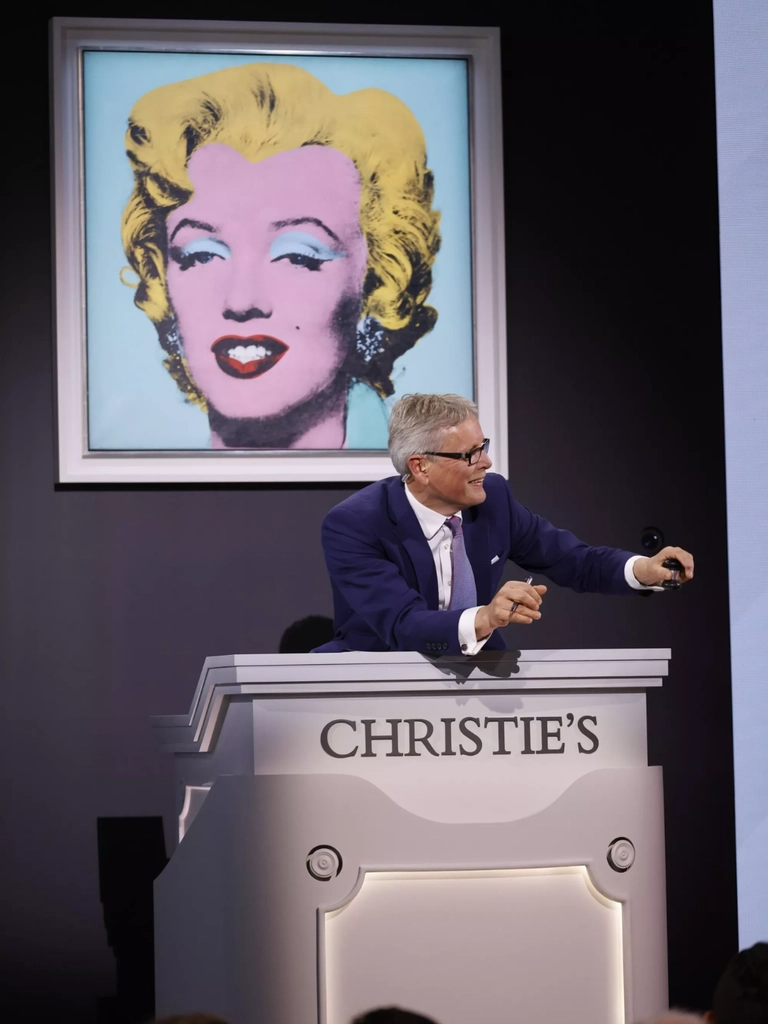
The hammer creates one of art's few public numerical records.
Imagine that comparable paintings by an artist have recently sold between $200,000 and $300,000. A particularly strong example enters an evening auction estimated at $250,000 to $350,000.
Several determined bidders compete.
It reaches $700,000.
Suddenly, advisors have a new reference point. Owners reconsider their holdings. Potential consignors become interested. Galleries may face pressure around primary prices. Future estimates move.
The mechanism also works backwards.
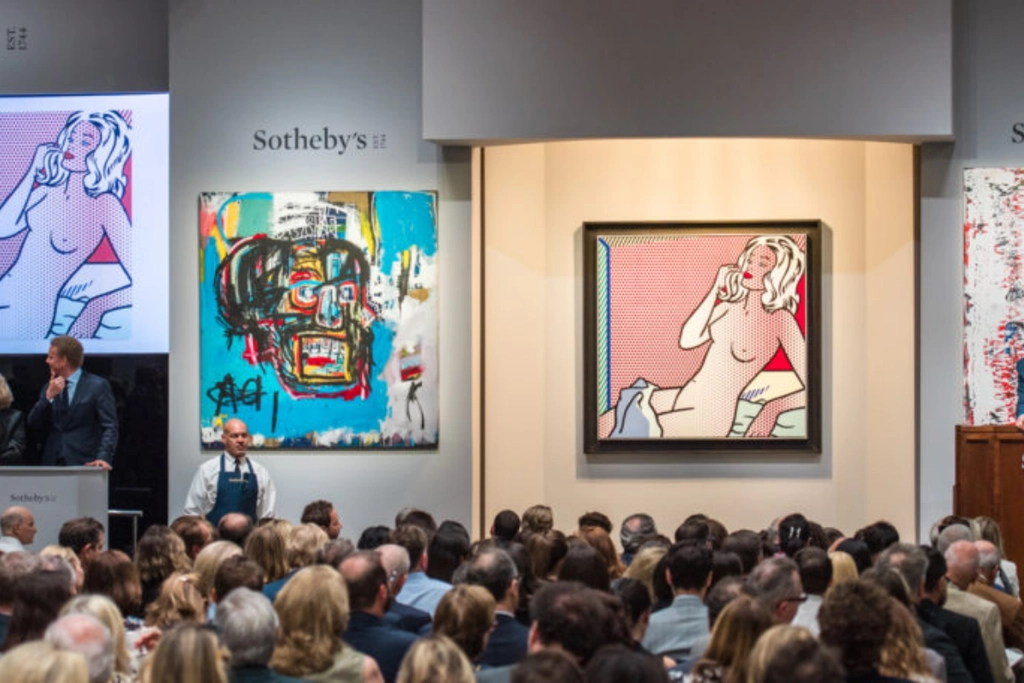
When a heavily promoted work fails to meet its reserve and remains unsold, the market has acquired another piece of information. A failed auction can make the same object harder to reposition immediately because buyers now know that a room of bidders declined it at a particular price.
Marion Maneker's observation that “Art is always in a bubble” gets close to the unusual economics involved. He argues that subsequent demand ultimately determines much of a work's economic value.
The physical painting may remain unchanged.
Its market context can transform completely.
Huge numbers coexist with surprisingly private transactions.
Global art sales reached an estimated $59.6 billion in 2025, rising 4% after two consecutive years of declining value. Around 41.5 million transactions occurred during the year.
The geography remains concentrated:
Together, the US, UK and China represented 76% of global art sales by value.
The channel split reveals something equally important.
Dealers generated approximately $34.8 billion in 2025, while public auction sales reached $20.7 billion. Auction-house private sales contributed just under $4.2 billion.
Public auctions attract enormous attention because results can be observed. Yet a huge portion of the market still travels through galleries and private conversations where final transaction prices remain confidential.
Art fairs remain particularly powerful within that private infrastructure. In 2025, fairs accounted for approximately 35% of dealer turnover, their highest share since 2022.
The art market may trade tens of billions of dollars, yet relationships still move a remarkable amount of that money.
A $1 million hammer does not mean the collector pays $1 million.
Auction houses charge a buyer's premium on top of the winning bid. The exact calculation changes by house, location and price tier. At Sotheby's in 2026, for example, standard fine-art premiums in several major markets start at 28% on the first pricing tier, then decline to 22% and 15% on portions above specified thresholds.
Taxes, shipping, insurance, storage and potentially artist resale royalties can add further costs.
Resale royalty legislation also creates an unusual connection between the secondary market and an artist's continuing economic rights. In the UK, Artist's Resale Right applies to qualifying commercial resales during an artist's lifetime and for 70 years after death, with royalty rates calculated on a sliding scale.
Primary sales contain their own quiet negotiations.
A 10% collector discount has long existed as a familiar gallery convention, while institutions may sometimes receive larger concessions, although discounts remain discretionary and can disappear entirely when demand is intense.
The number printed on a price list is therefore rarely the complete economic story.
Good collecting requires a different question from “Will this go up?”
Before committing serious capital, a collector can interrogate the price itself:
The answers reveal how much architecture sits underneath the figure.
A $500,000 painting supported by fifteen years of museum exhibitions, controlled supply, significant collections and repeated auction evidence occupies a different market position from another $500,000 work whose price emerged from one spectacular bidding battle.
Both cost the same today.
They carry different kinds of evidence.
That distinction sits at the intellectual core of luxury art collecting. Connoisseurship teaches the eye to judge the object. Market literacy teaches the collector to judge the number attached to it. The strongest collections are often built where those two forms of knowledge finally meet. Big collections start small, sometimes, even on a budget. Want to start art collecting today? Here's your guide.