MENU
Close





Mowalola calls SS27 The Hunger, and the name reaches beyond appetite: this is fashion driven by the human instinct to want, seduce, surrender, and consume.
Mowalola calls SS27 The Hunger, and the name reaches beyond appetite: this is fashion driven by the human instinct to want, seduce, surrender, and consume.
September 23, 2026
Advertisement

Advertisement



For two years, the Mowalola runway had been quiet. Then, late on a Friday night in Westminster, the door opened again.
Mowalola Ogunlesi chose a grand Neoclassical office building near the Houses of Parliament for her Spring/Summer 2027 return, placing her world of flesh, nightlife, and erotic tension inside a setting associated with British institutional power. The room carried polished authority. The collection arrived carrying hunger.
She called it exactly that: The Hunger.
The collection takes inspiration from films including Queen of the Damned, The Cell, and Female Perversions, works filled with women whose sexuality operates as force, appetite, and authorship.
Ogunlesi brought that thinking directly into the office.
“I’m running my company, and I wouldn’t dress like a ‘CEO’. This is how I show up,” she wrote in the show notes, describing women who find power through their own sensuality. The quote gives The Hunger its central proposition: authority can live inside lingerie, a transparent shirt, an exposed hip, and a waistline hanging dangerously close to the pubic bone.
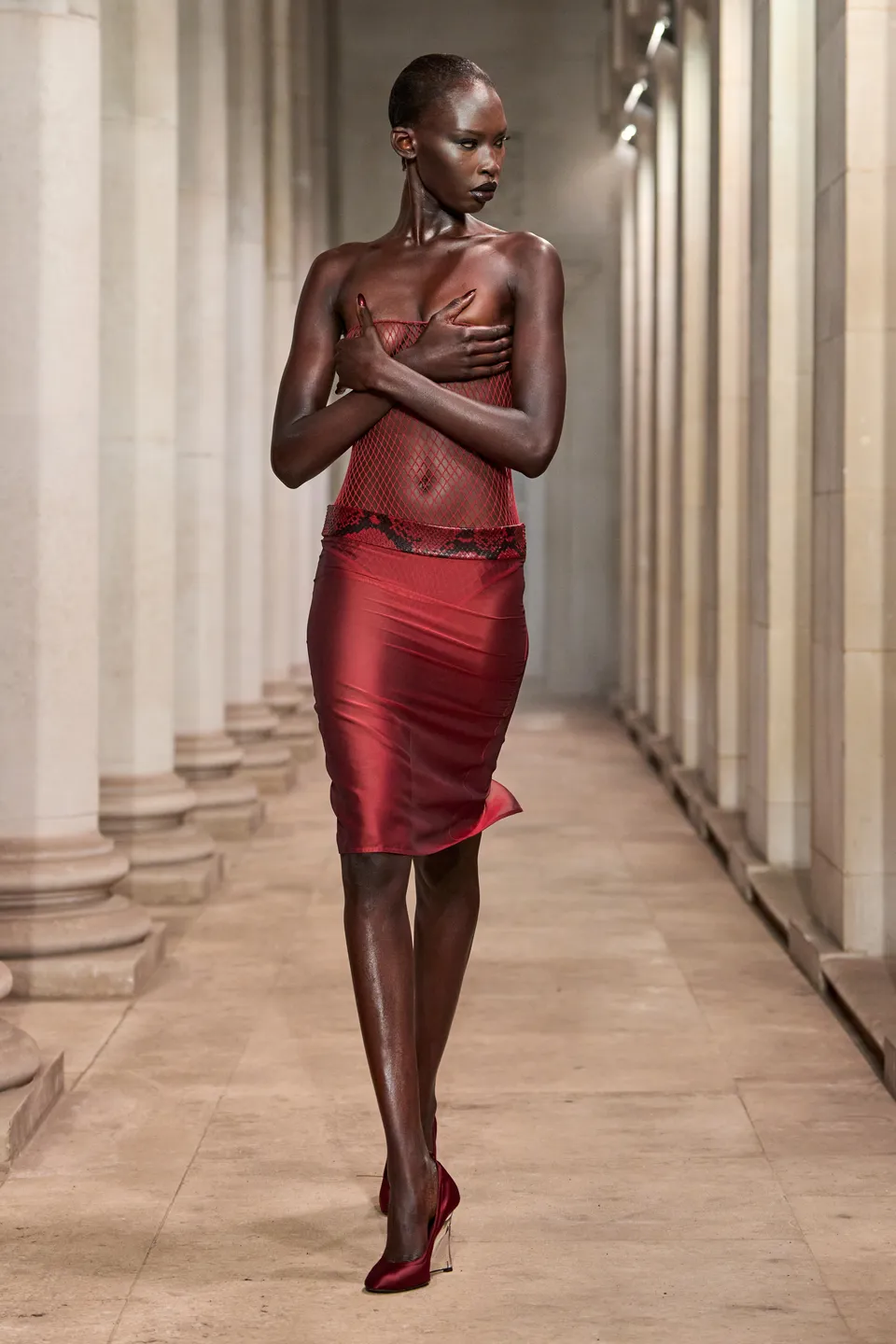
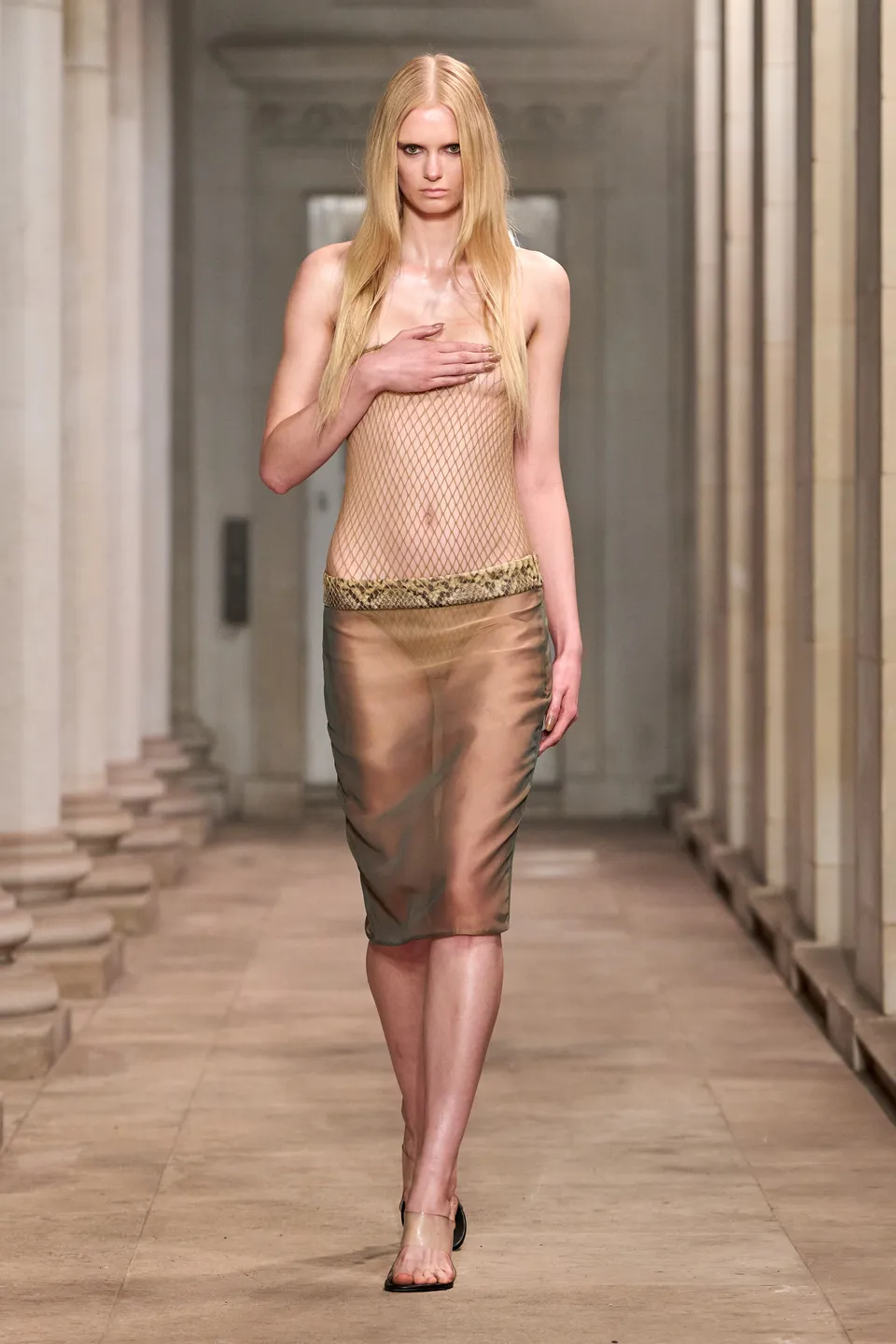
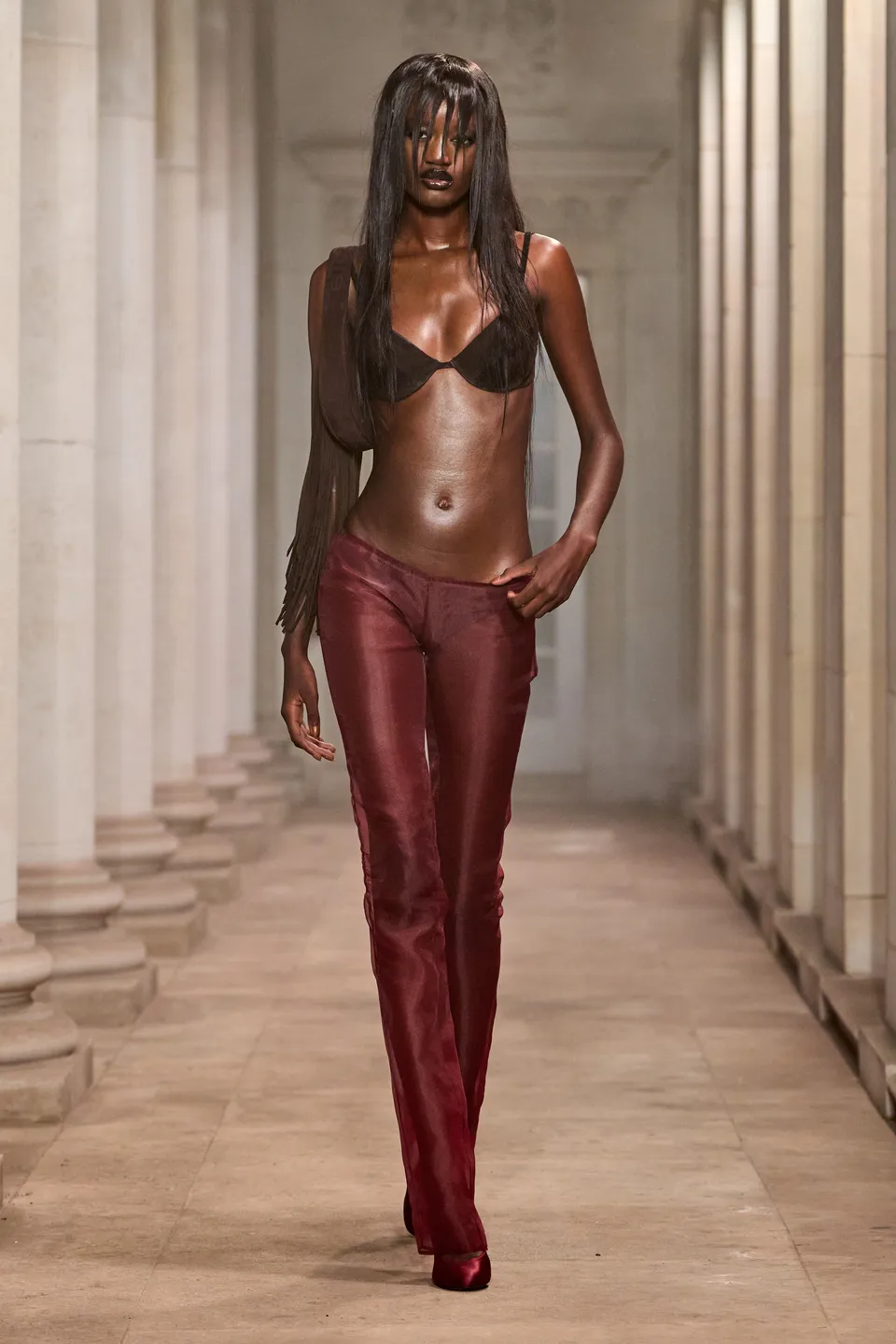
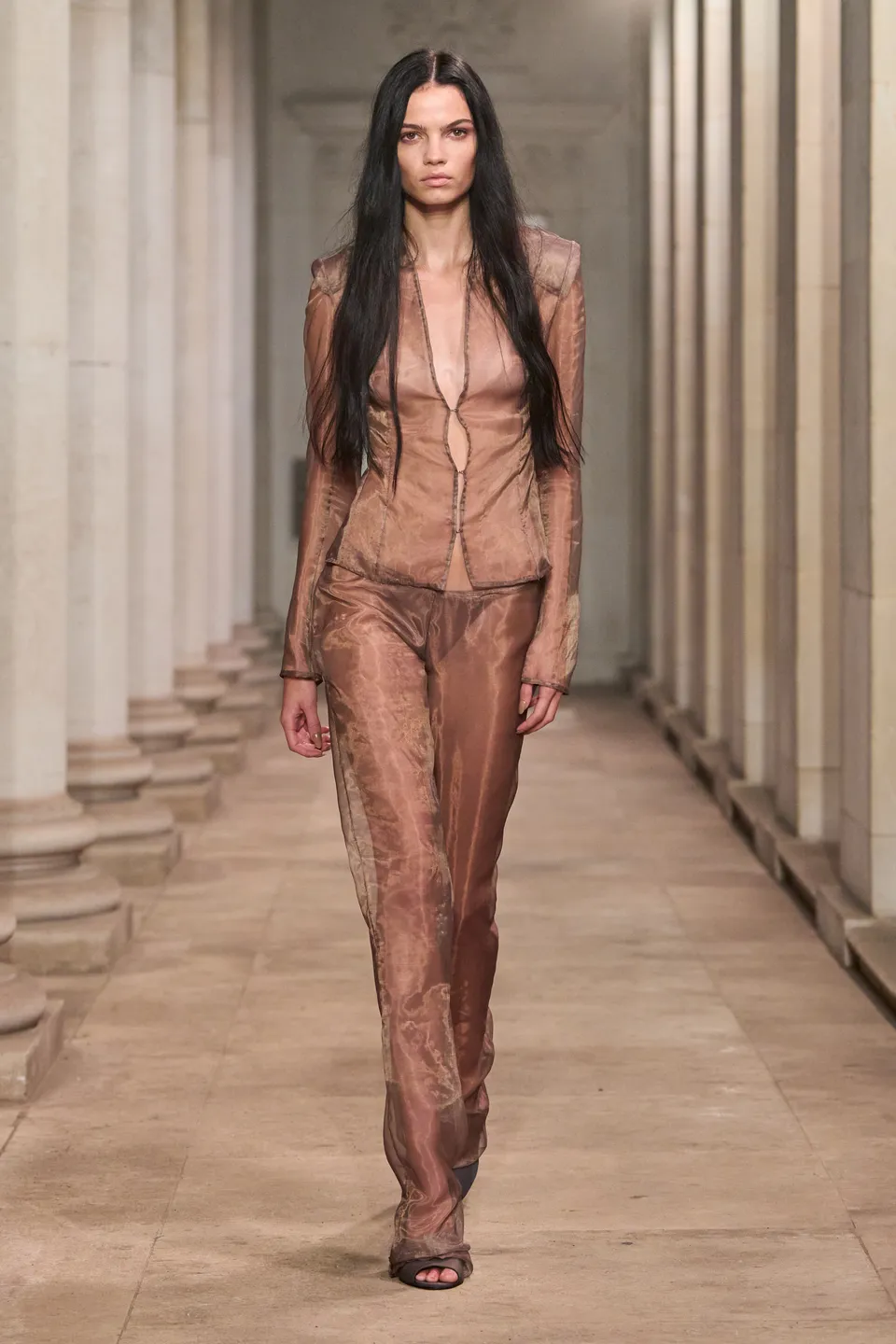
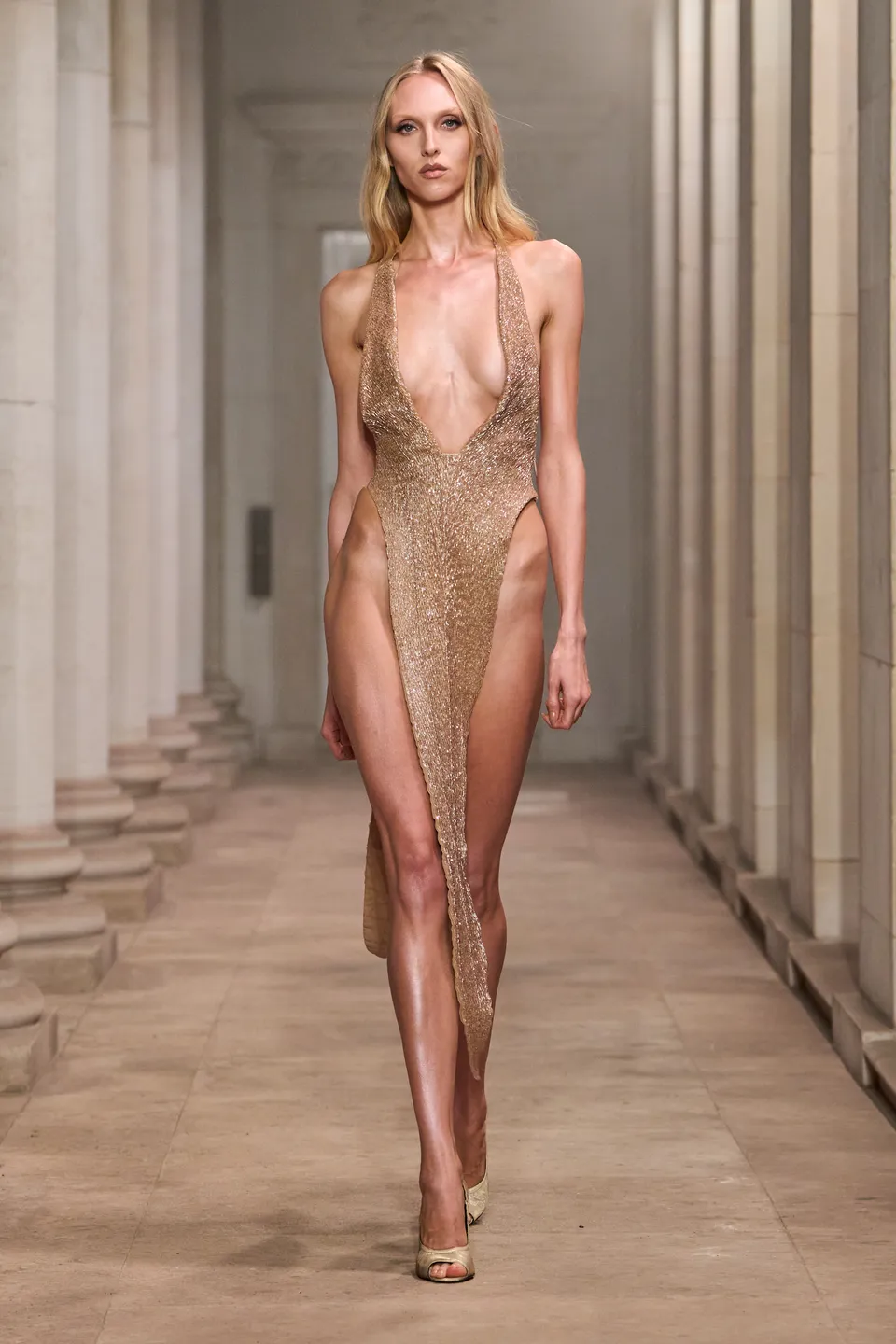
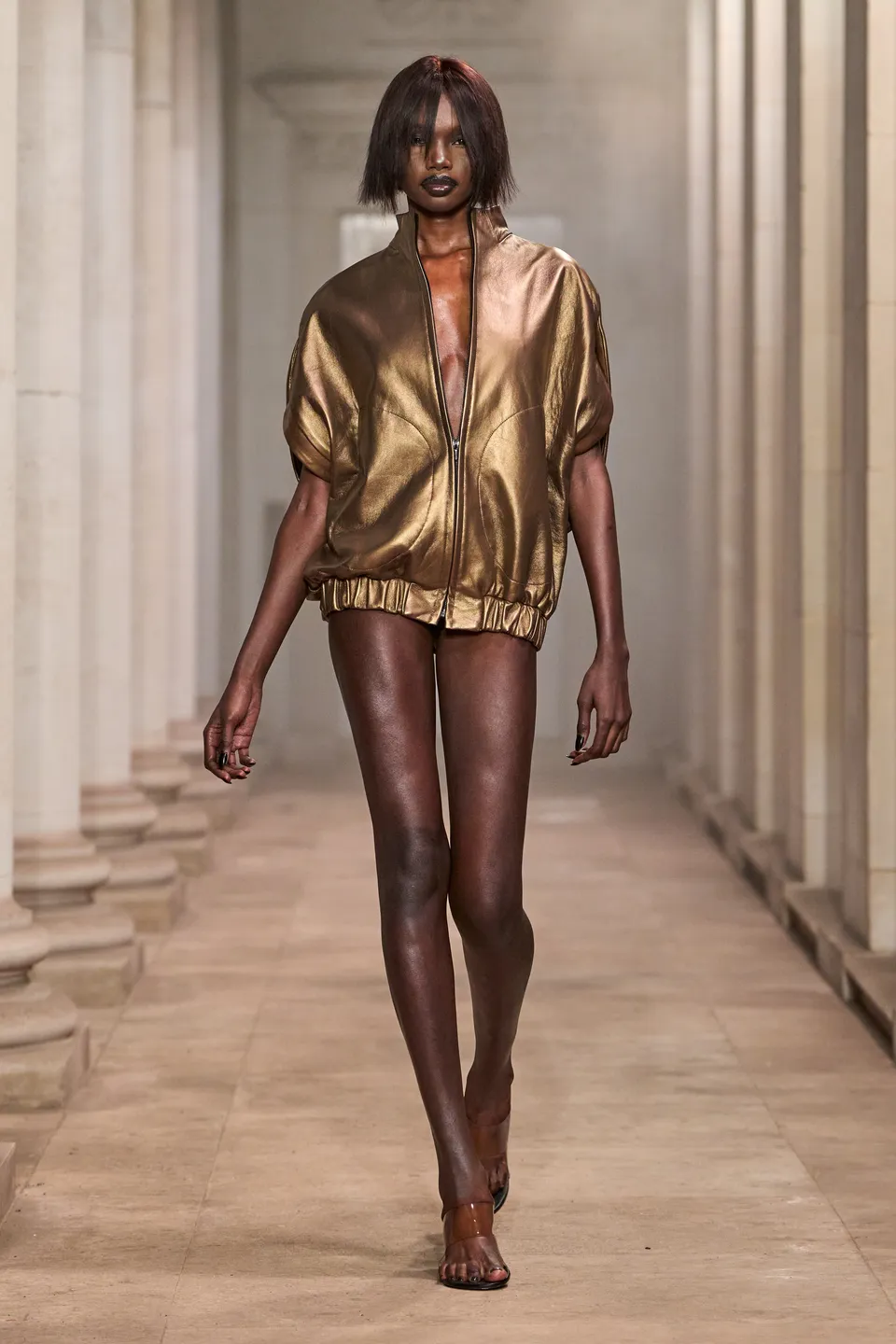
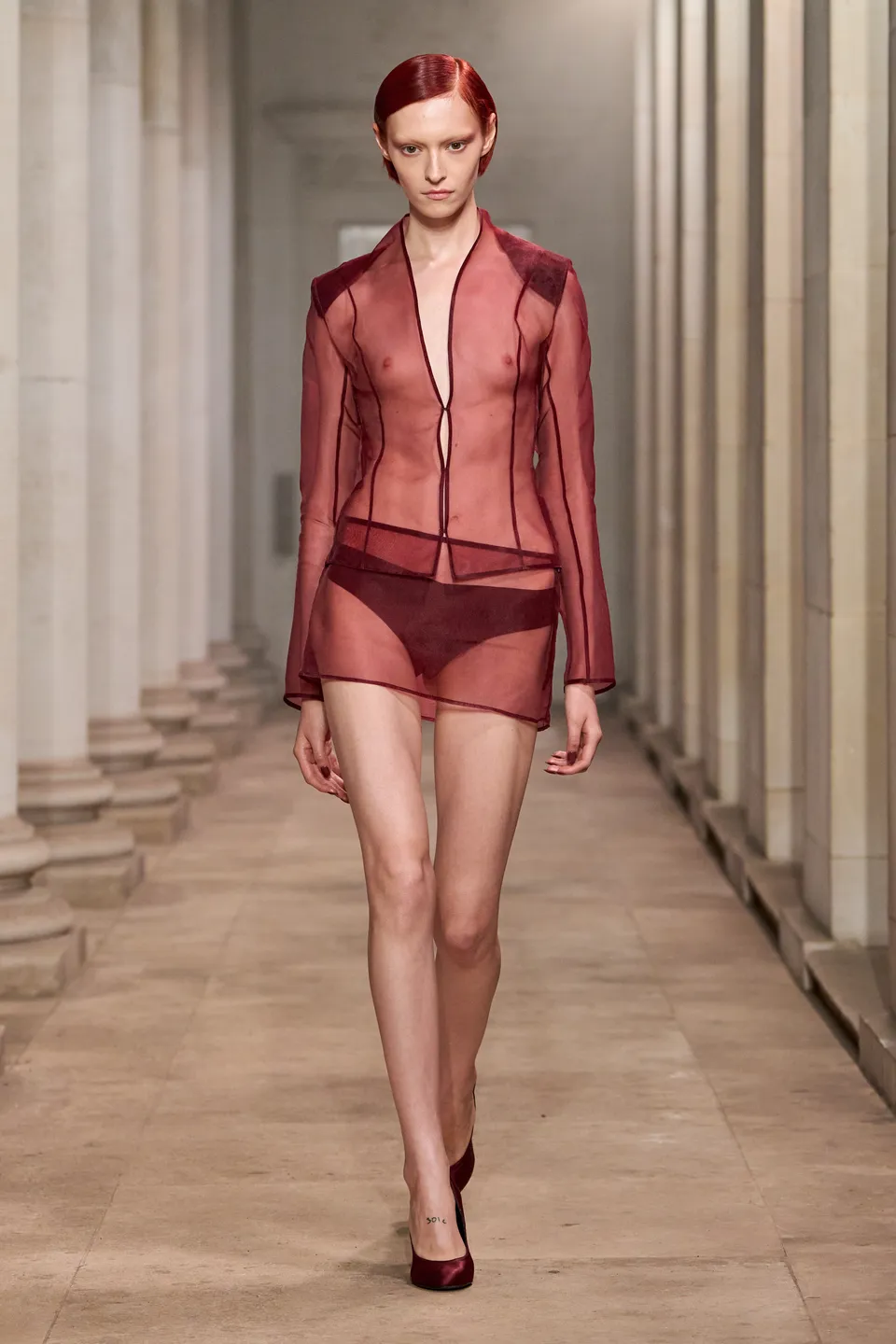
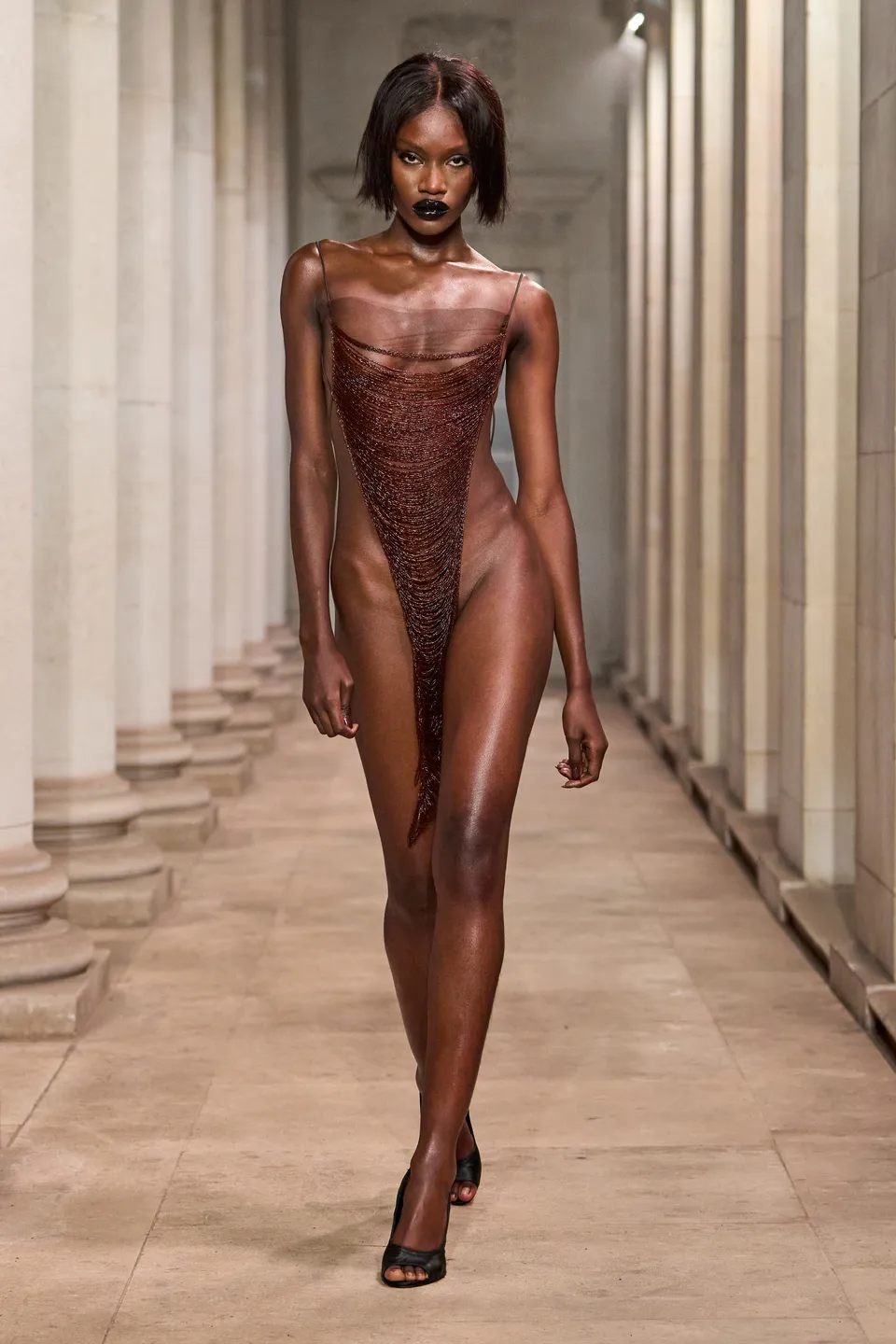
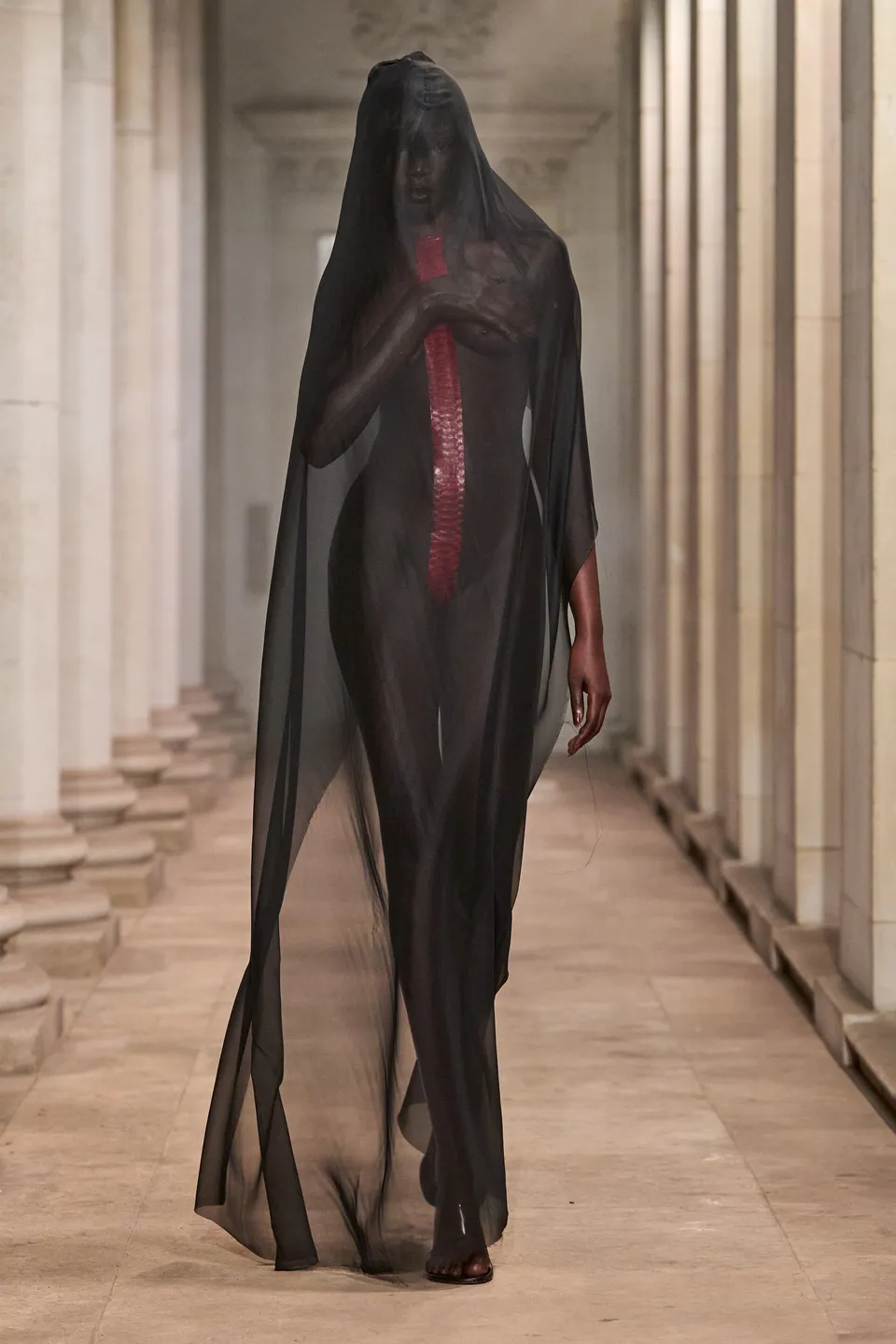
Chiffon lies close enough to the body to feel damp. Leather follows the torso in long controlled lines. Organza hangs from the hips with the lightness of breath against skin. Tiny bralettes reduce the upper body to a few deliberate straps and surfaces.
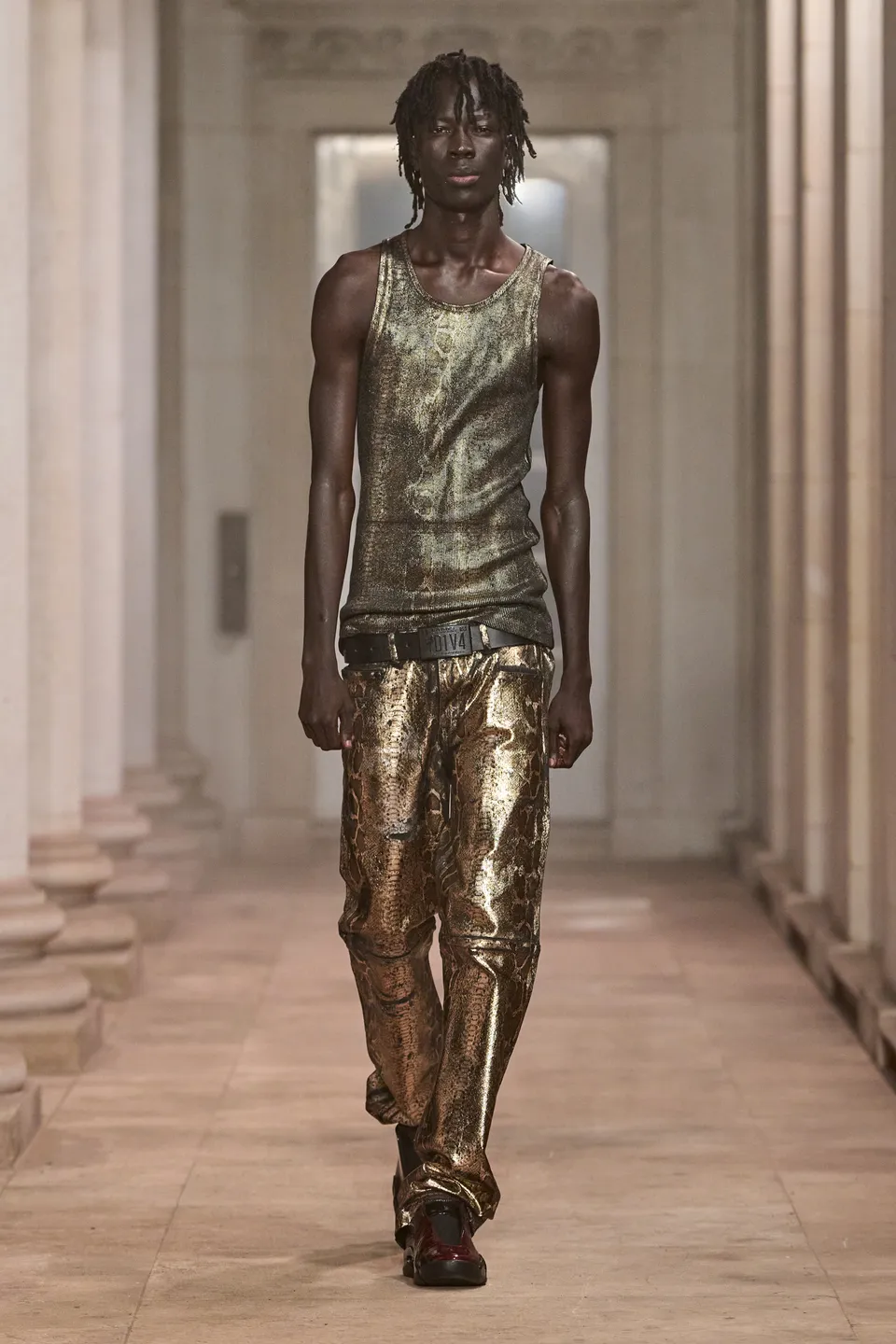
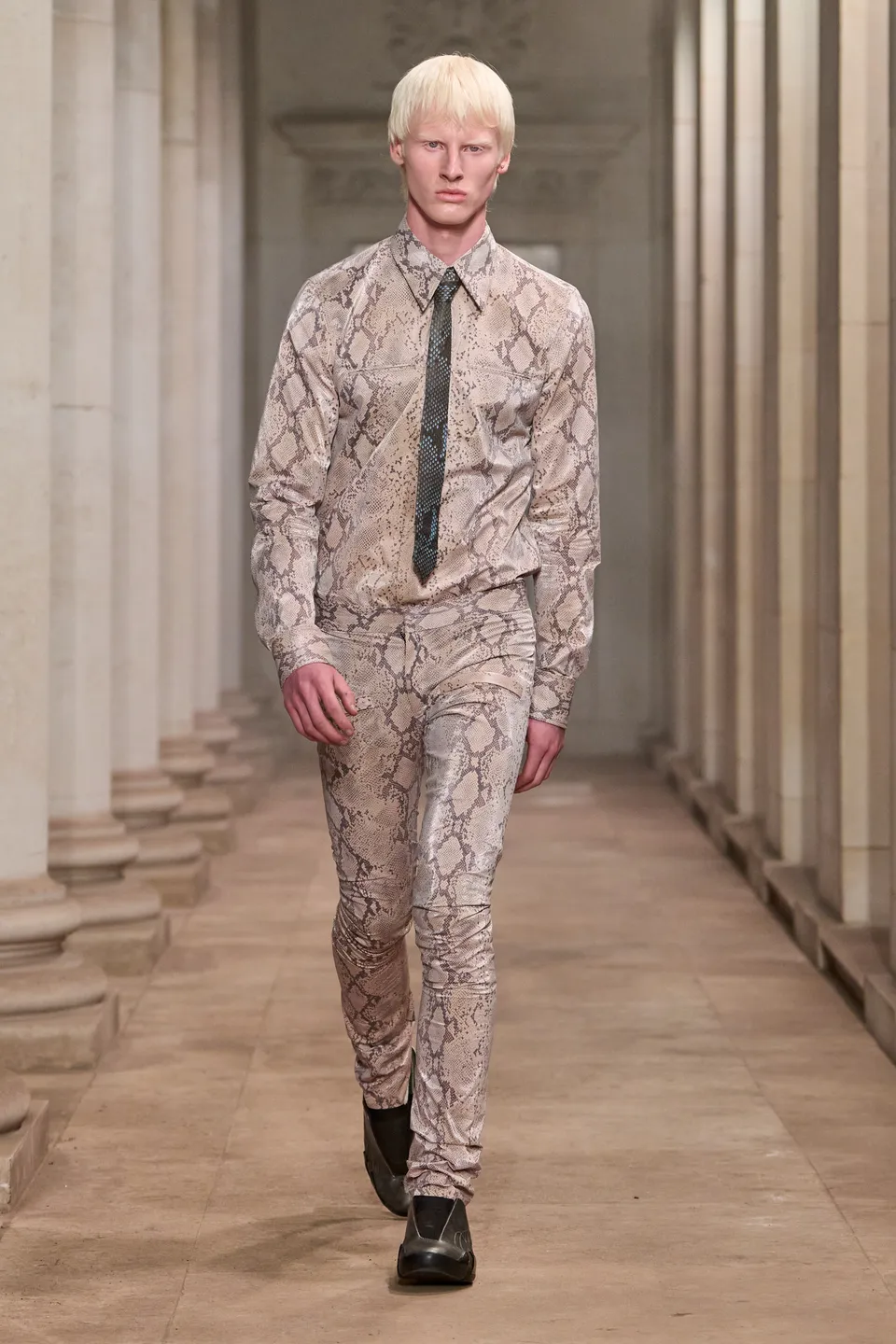
Menswear channels another temperature. Tight trousers, exposed torsos, and slick tailoring soften masculine authority into vulnerability, drawing the male body into the same charged room through surrender.
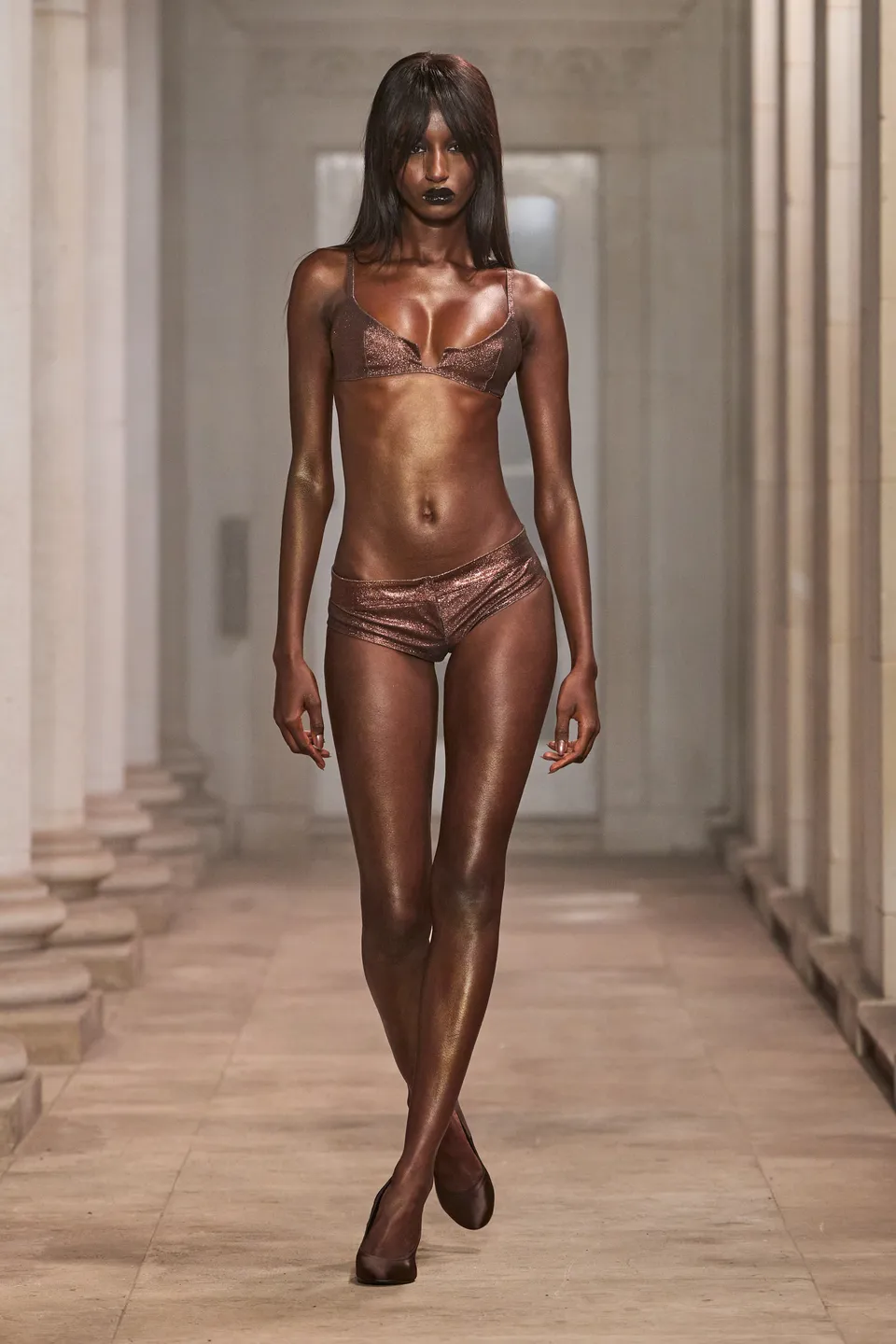
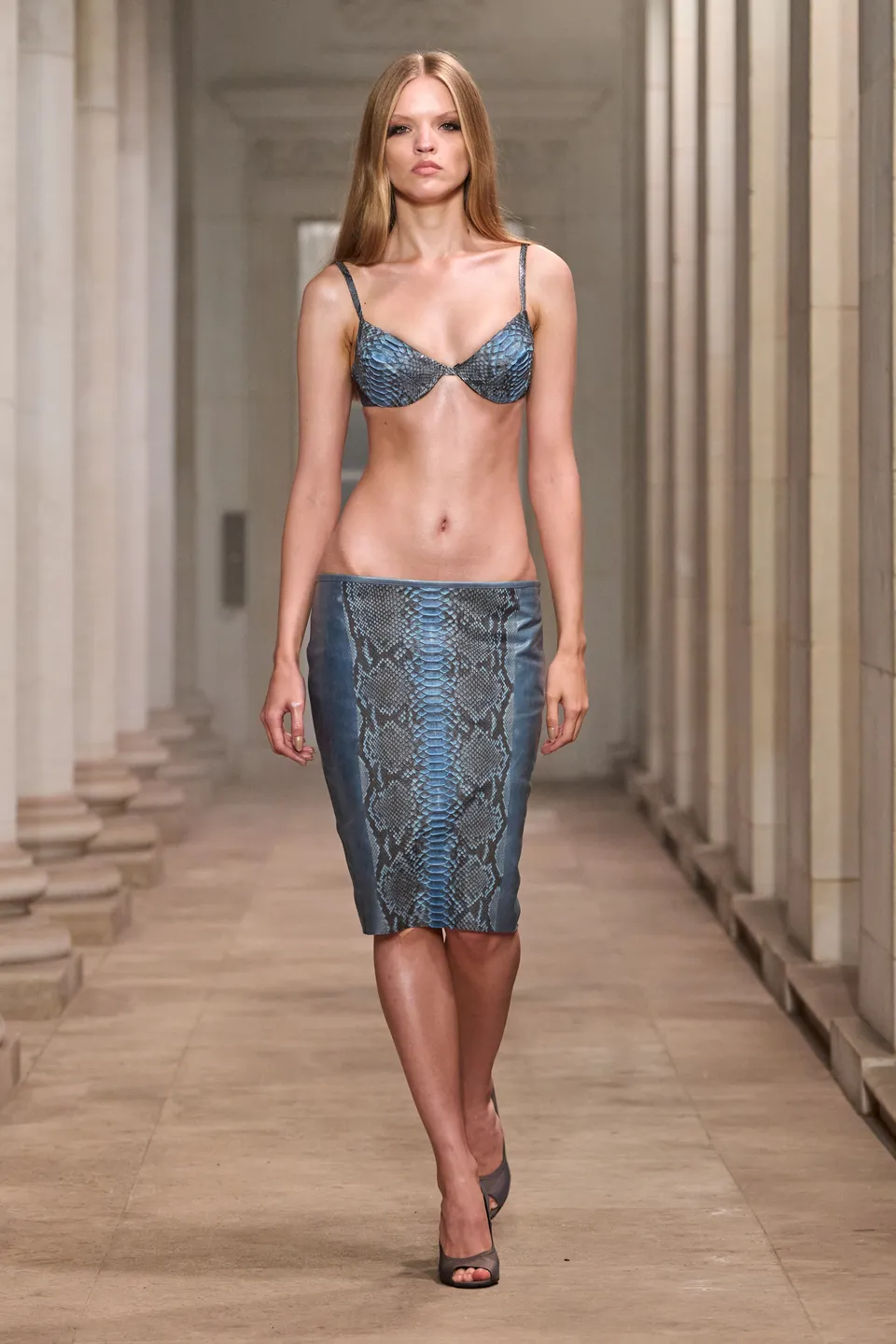
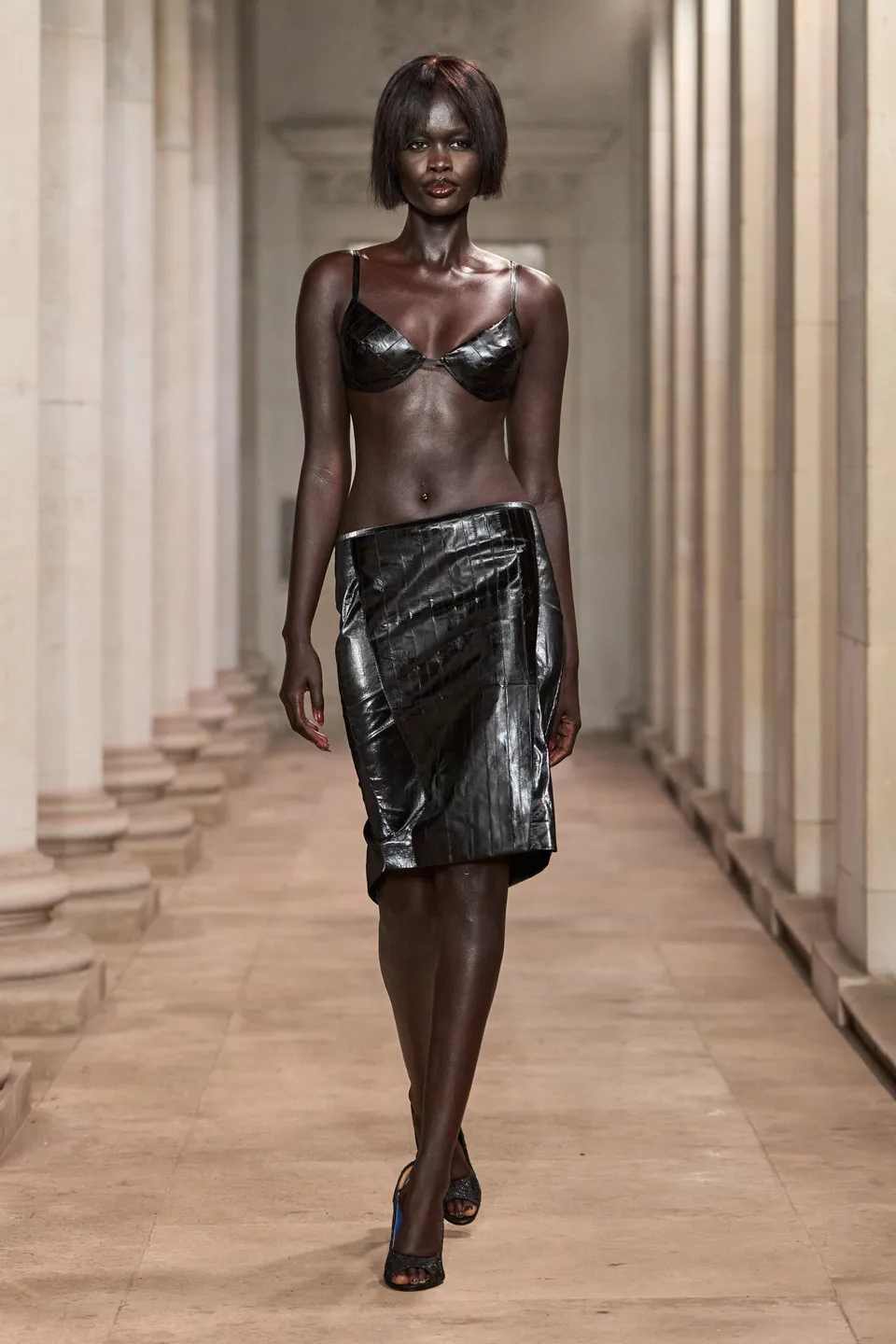
Waistbands slide toward the pelvis. Pencil skirts begin far below the natural waist. Trousers narrow around the hips and continue down the leg in long, almost liquid columns. Bras and cropped layers leave the torso exposed so the gap between top and bottom becomes part of the silhouette.
A low-rise organza pencil skirt suspended from a snakeskin waistband captures the idea beautifully.
The waistband grips the hip with reptilian tension. Beneath it, transparent organza falls almost weightlessly, leaving skin visible through a layer that appears suspended somewhere between clothing and atmosphere. The body carries the garment and simultaneously becomes part of its surface.
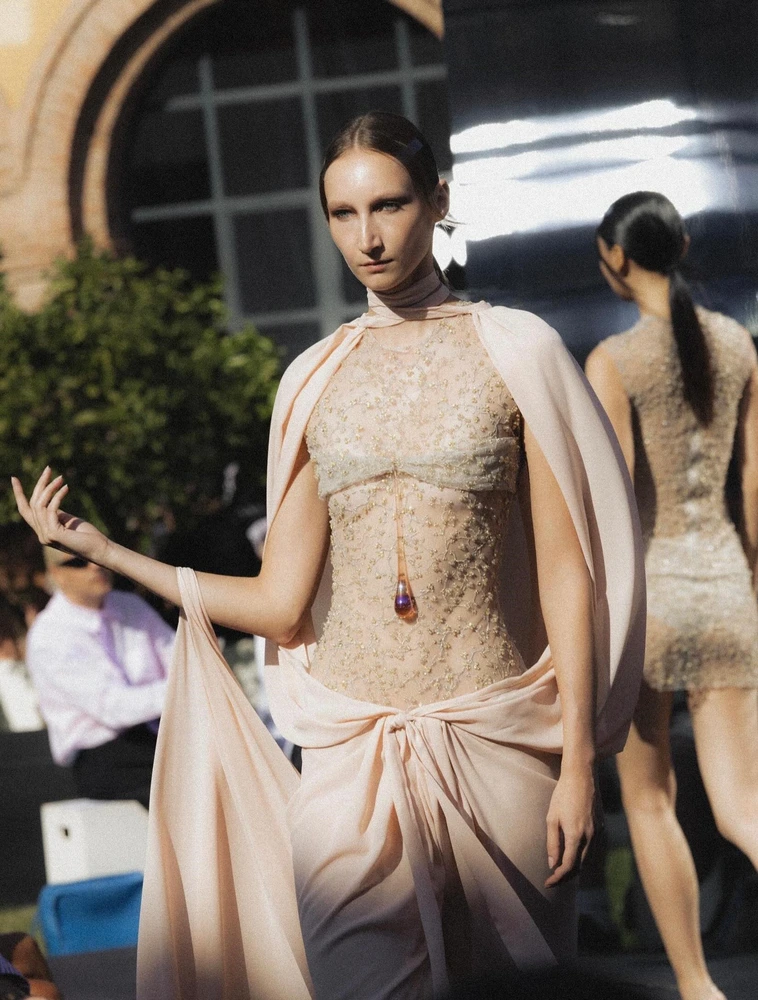
Second-skin chiffon deepens that effect. Skin-toned fabric follows the figure so closely that seams begin to look like markings across flesh. Transparent tailoring pushes the same idea into an area traditionally associated with professional dress: jackets retain their recognizable architecture while the body remains present through them.
Then the surfaces start to move.
Eelskin becomes a dress, carrying a natural sheen that gives the body an almost aquatic finish. The material appears slick, dense, and slightly uncanny, as though the wearer has surfaced from somewhere dark and warm.
Suede becomes underwear. Canvas becomes a glitter-coated bra.
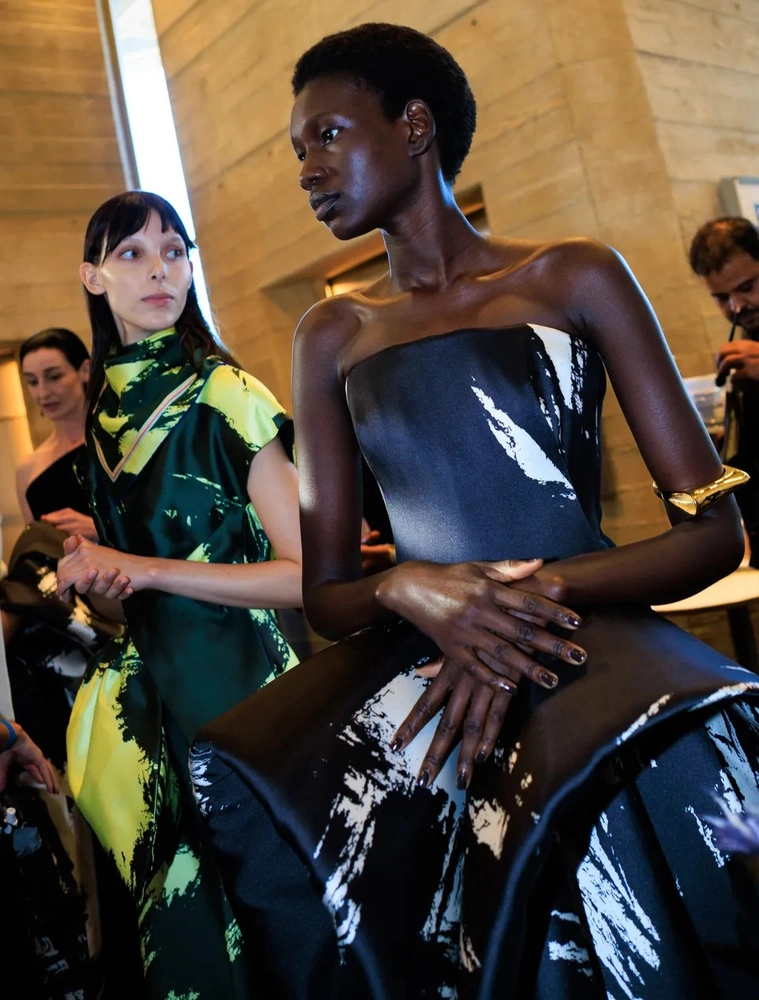
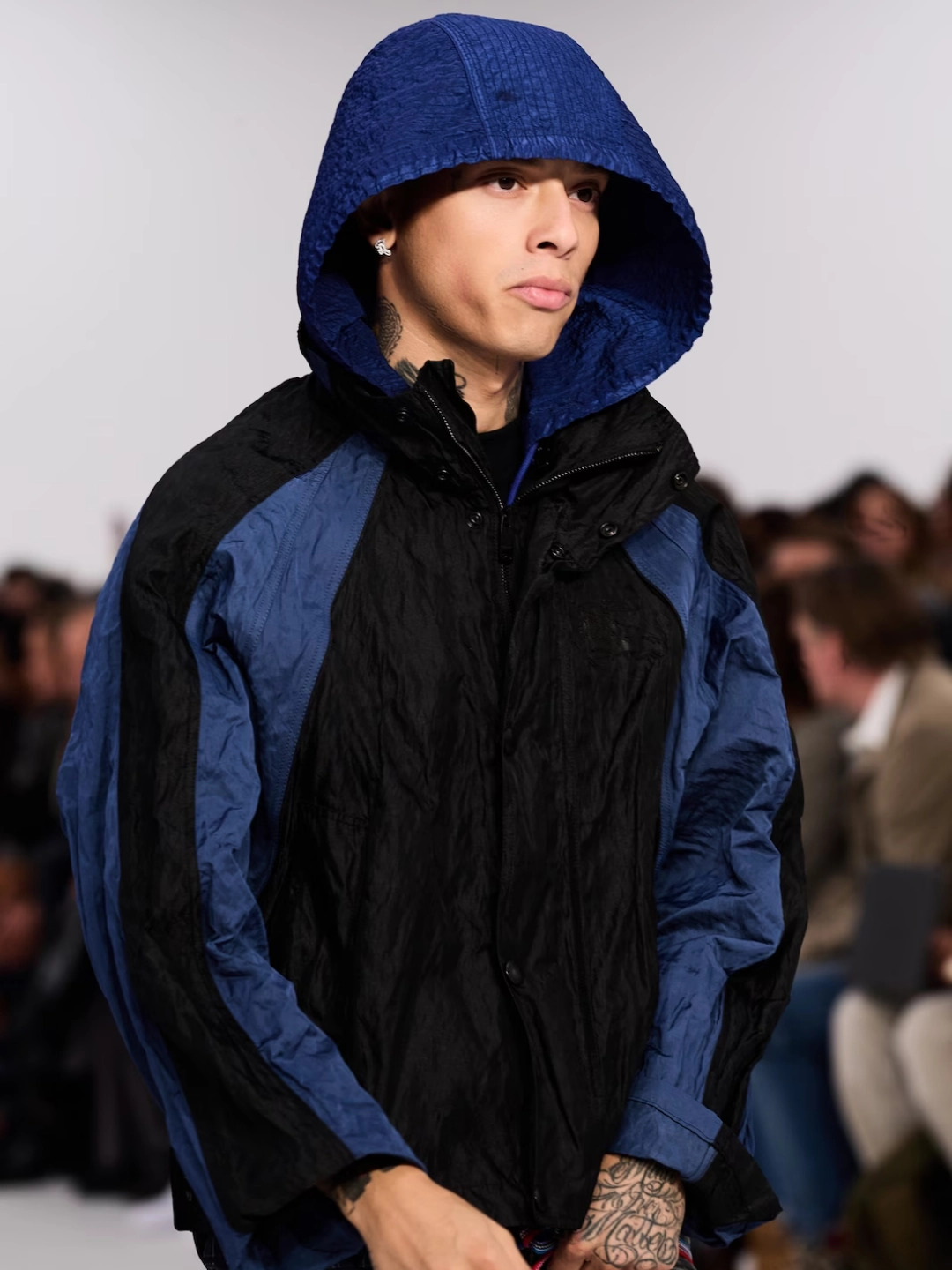
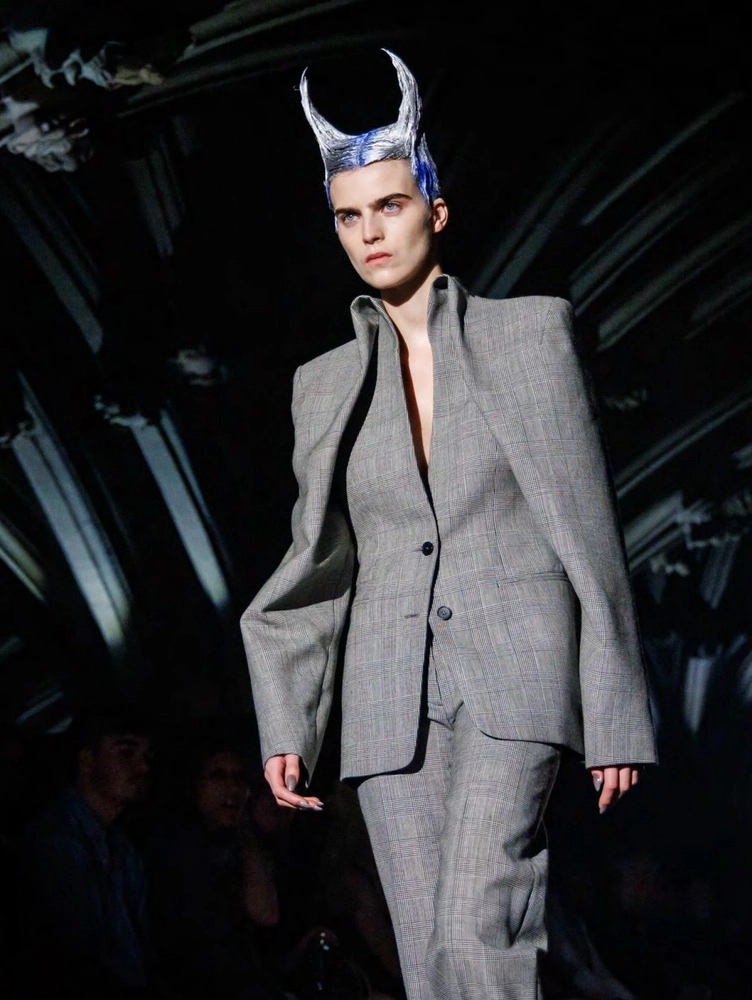
Waxed cotton develops a wet gloss across tailoring, catching light with the shine of skin after hours spent inside a crowded club. Foiled denim gains a metallic film that pushes a familiar everyday textile into a harsher nocturnal register. Matte snakeskin appears around collars and cuffs, surfacing at the edges of polished menswear like something alive beneath the clothing.
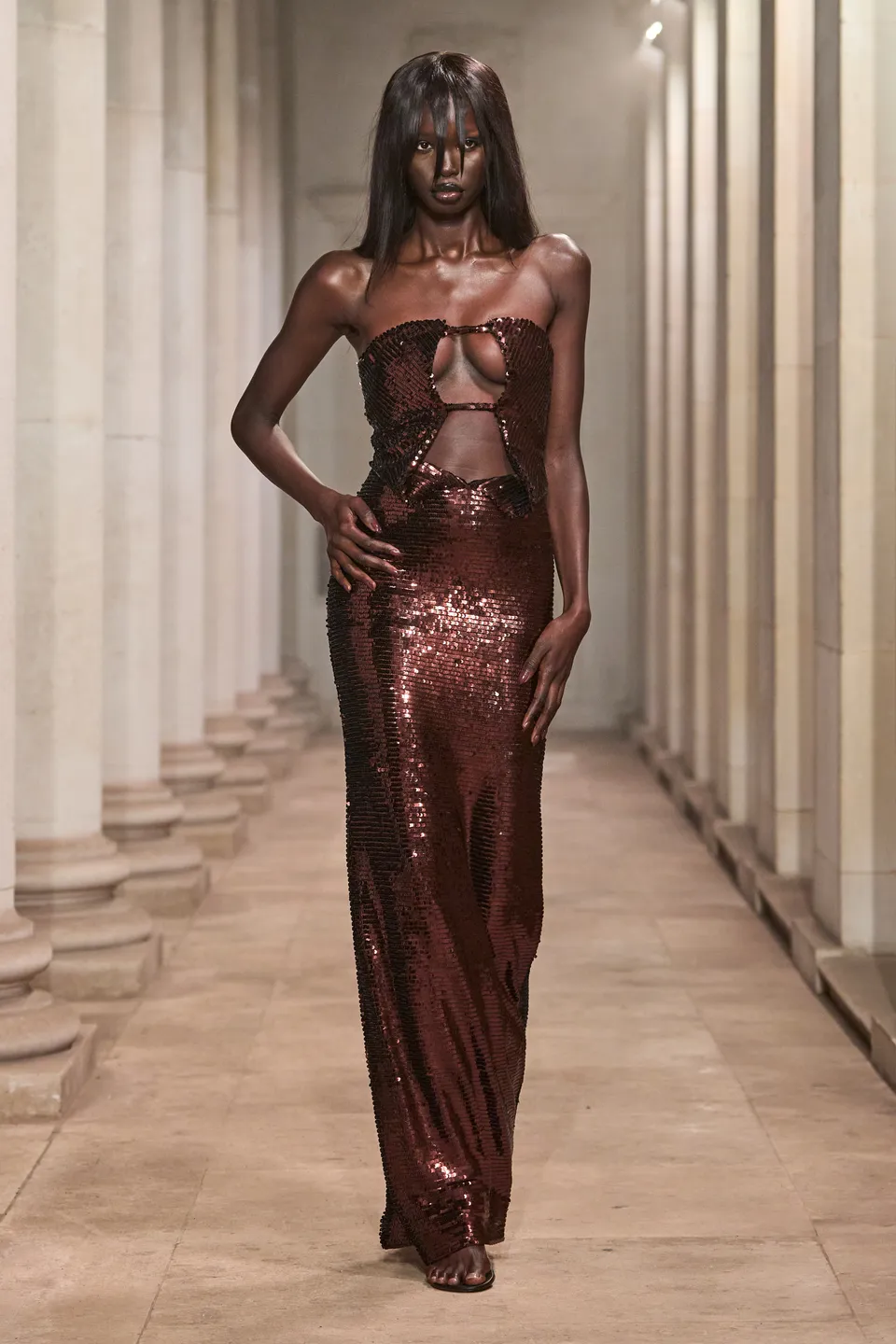
Bronzed leather adds another temperature, coating the body in a metallic warmth that resembles sculpture left under humid light.
The techniques move between industrial treatment and hand labour. Pieces feature hand-beading produced in Nigeria, drawing dense craftsmanship into a collection whose energy initially feels immediate and impulsive. Perspex jewellery continues the obsession with hard, glossy surfaces around exposed bodies.
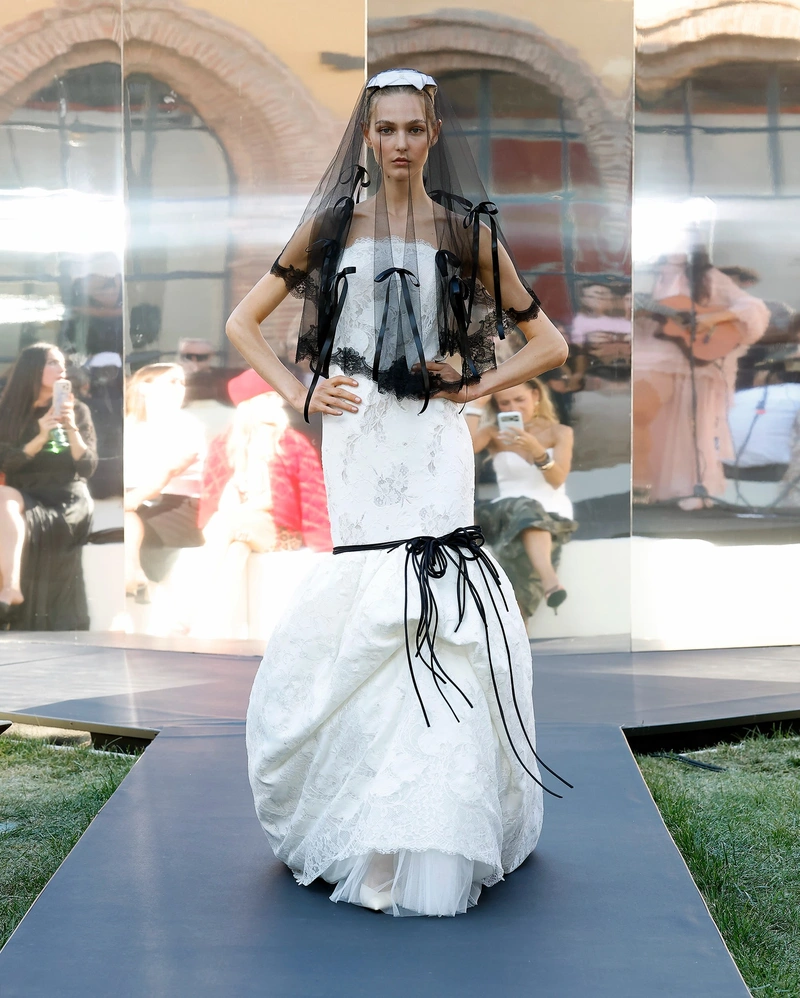
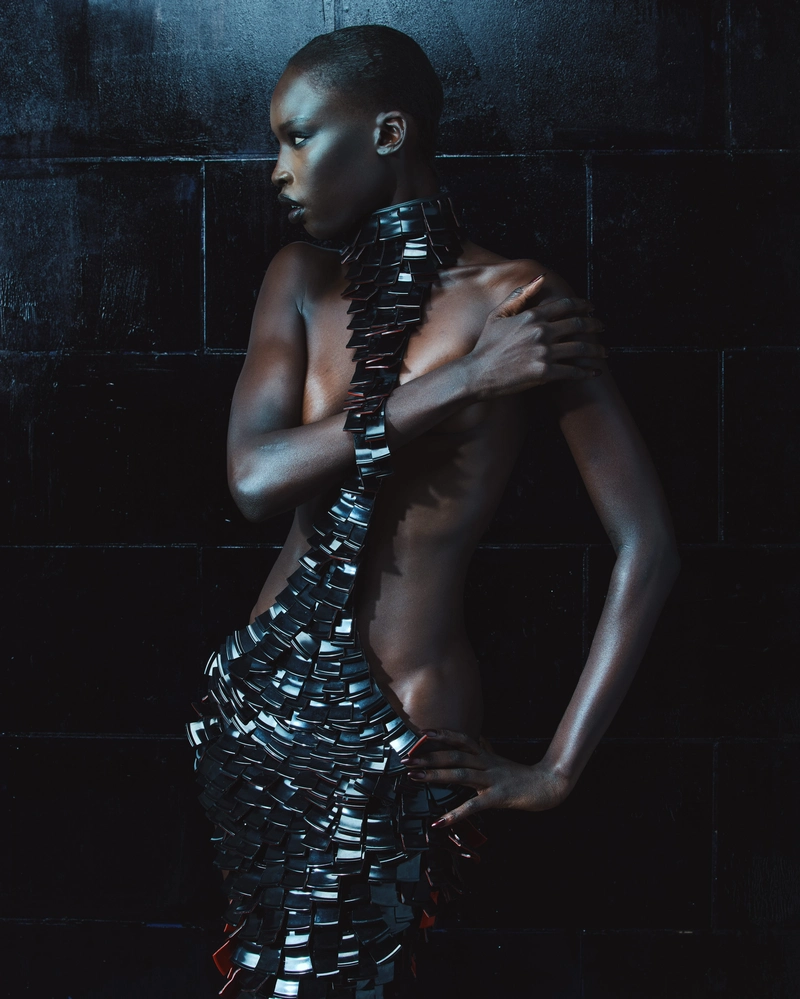
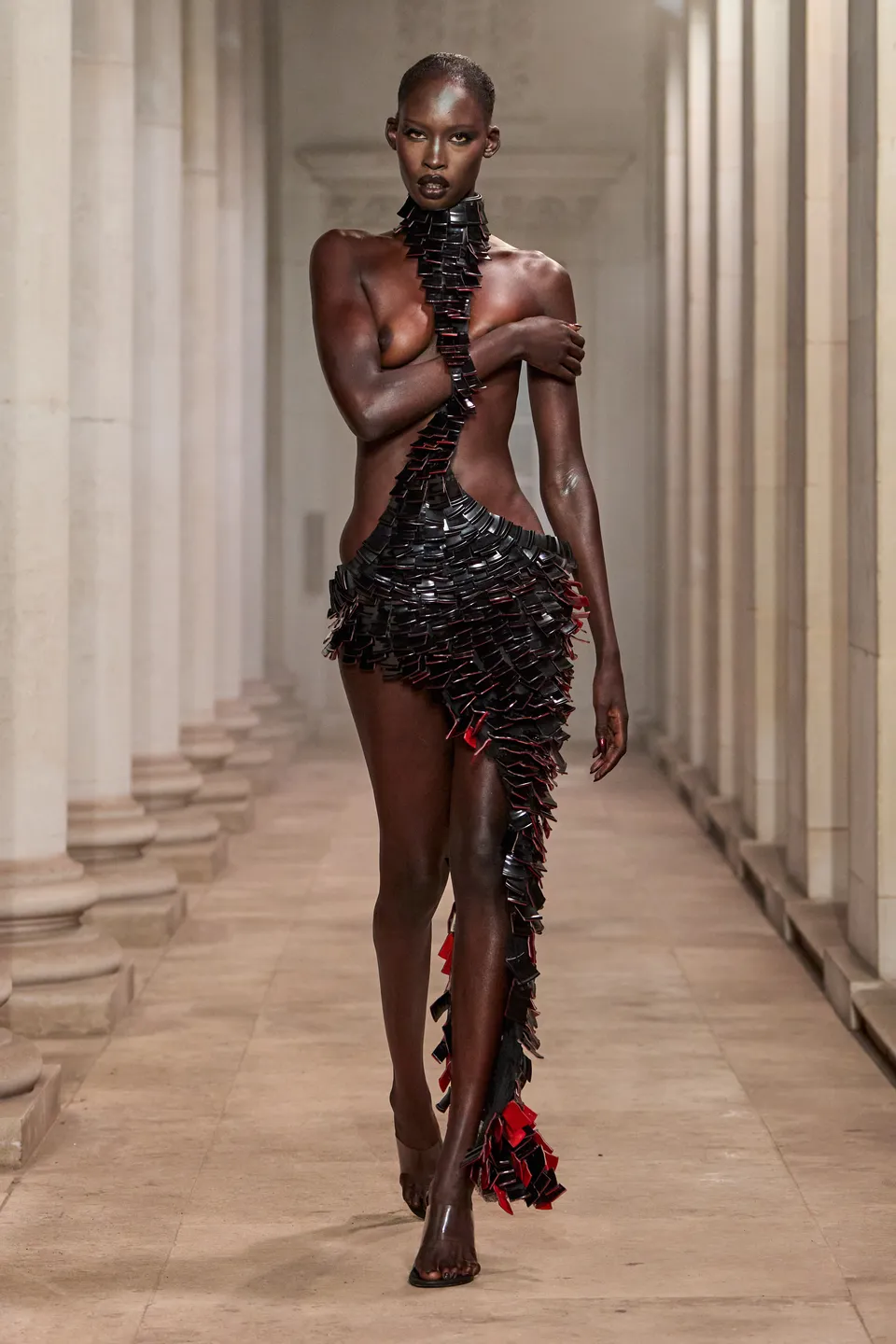
Created with Tô Genesis, the closing gown uses tiles made from smashed plastic plates, turning fragments into oversized paillettes around the body. Broken material catches light with every step. Each shard carries the memory of impact while the finished dress moves with ceremonial grandeur.
Here, Ogunlesi’s statement that her taste in glamour is “decayed” becomes tangible. Glamour has already been worn, cracked, sweated through, and dragged across the night before it reaches the runway.
Styling by Peri Rosenzweig keeps everything close to human temperature.
There is little distance between clothing and body. Sheer layers reveal muscle and bone. Tiny garments leave broad fields of skin exposed. Narrow tailoring pulls the eye vertically before the low waists drag it downward again.
The cast walks with an almost predatory calm.
Scarlet organza flashes under the lights. Bronze sequins catch and release them. Blue fishnet wraps itself around the body like residue from a night that has already gone too far. John Glacier, Gabriel Moses, and Slawn watched from the audience as the show moved through its late-night rhythm.
Underworld’s “Born Slippy” belongs naturally in this universe: music culturally soaked in club floors, chemical euphoria, and the strange emotional clarity that can appear somewhere deep into the night.
The runway introduced three patent-leather Air Jordan 14 Mule colorways in black, dark red and dark blue, alongside a burgundy suede Air Jordan 14 Retro SP and silver mule. Their rounded, armored forms sit heavily against the narrow clothing above, creating the sensation of a body barely dressed and firmly grounded.
SS27 introduces Mowalola’s first fragrance, described through sweat, smoke, and sweet dark berries.
Sweat carries the body. Smoke carries the club. Berries bring sweetness with a dark, ripe edge. Fragrance allows Ogunlesi to turn the atmosphere surrounding her clothes into something that can remain on skin after the garment comes off.
That expansion arrives during an important phase for the label. Mowalola’s name has travelled widely through collaborations, footwear, graphics, celebrity dressing and internet culture. The Hunger shifts attention toward the design language at the centre of that expanding universe.
That is a meaningful milestone for a designer approaching a decade of work.
Cultural heat gave the brand visibility. SS27 gives that heat a physical form.
By the time the last model leaves the red-lit room, The Hunger feels like the moment after someone passes close enough for their perfume, sweat, and body heat to remain hanging in the air. Mowalola is turning that residue into a fashion system.
Advertisement