MENU
Close





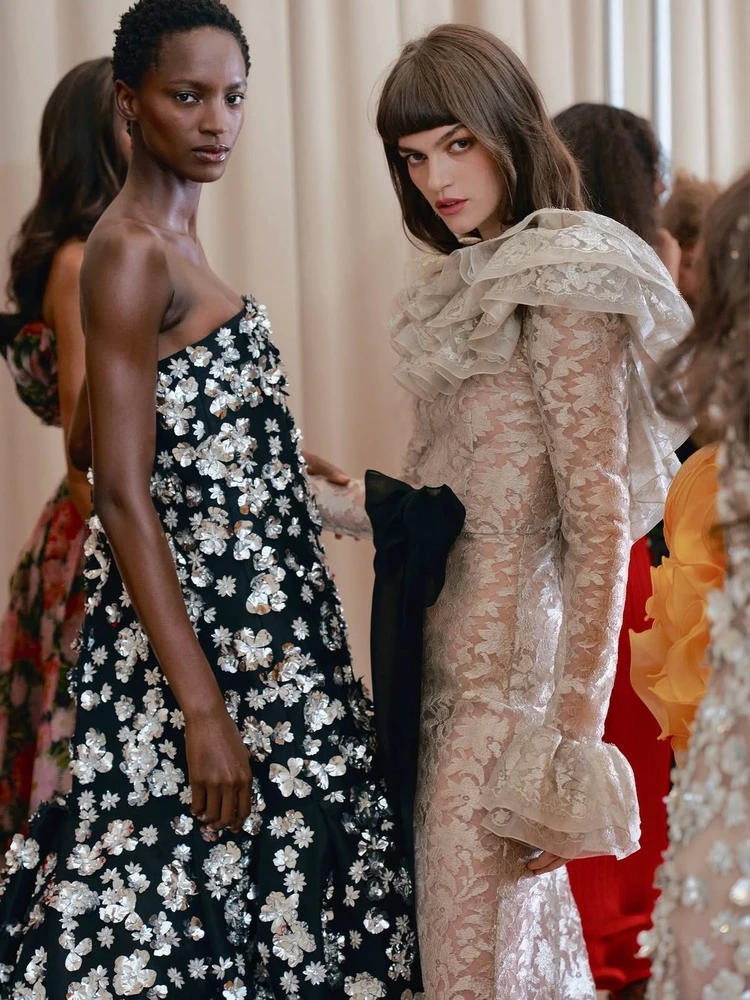
Inside the Old Bailey, where marble, stained glass and judicial architecture give every entrance a ceremonial weight, Simone Rocha sent out women who seemed to have dressed themselves somewhere between waking and dreaming.
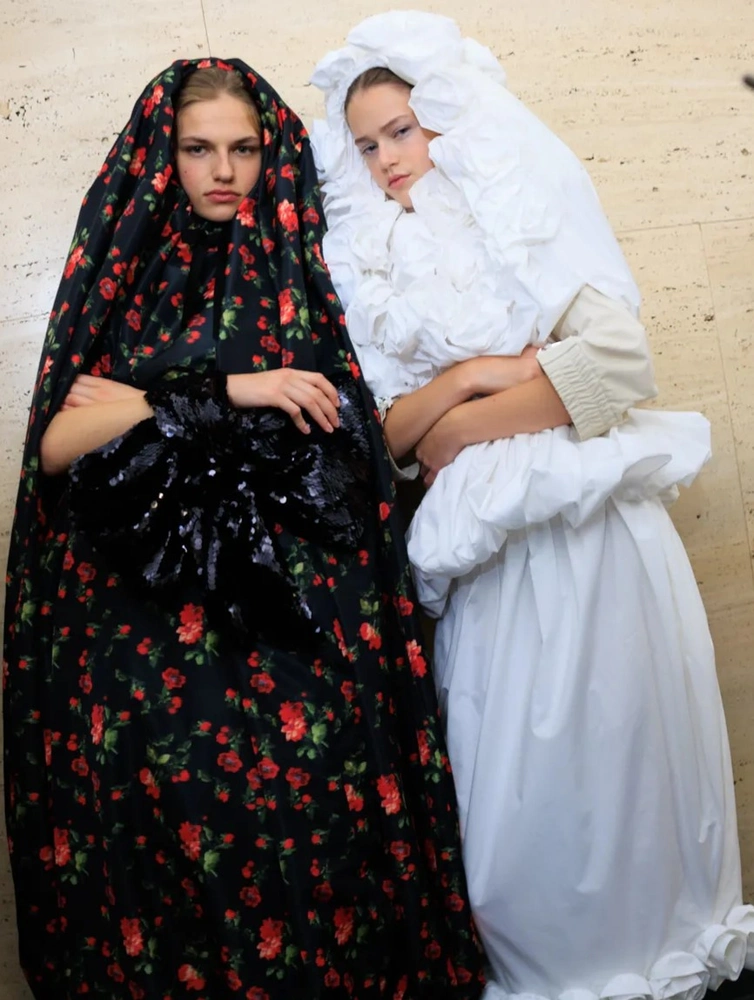
Inside the Old Bailey, where marble, stained glass and judicial architecture give every entrance a ceremonial weight, Simone Rocha sent out women who seemed to have dressed themselves somewhere between waking and dreaming.
September 21, 2026
Advertisement

Advertisement



The collection was called I Was Trying To Love You, a title whose undone grammar suits the clothes beautifully. Love appears here as an action still in progress, something touched, adjusted, occasionally bruised and continually negotiated through the body.
Spring 2027 also arrives at an important moment for Simone Rocha as a house. After introducing her first standalone menswear collection at Pitti Uomo in June, Rocha returned to London with womenswear given its own concentrated space again. The separation allowed her to examine femininity with unusual closeness, stripping away some of the protective accumulation that has long surrounded her women and allowing the wearer herself to become part of the construction.
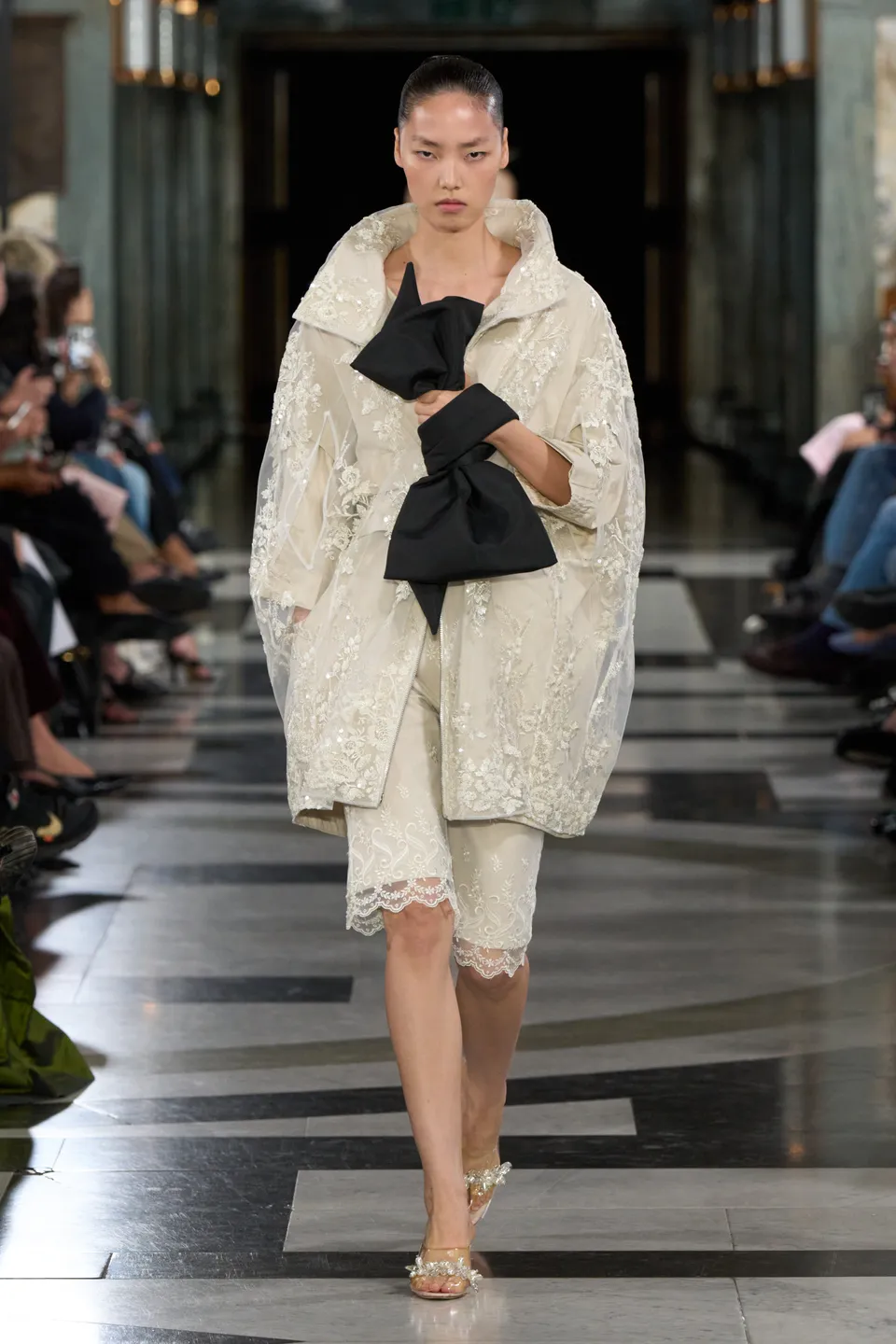
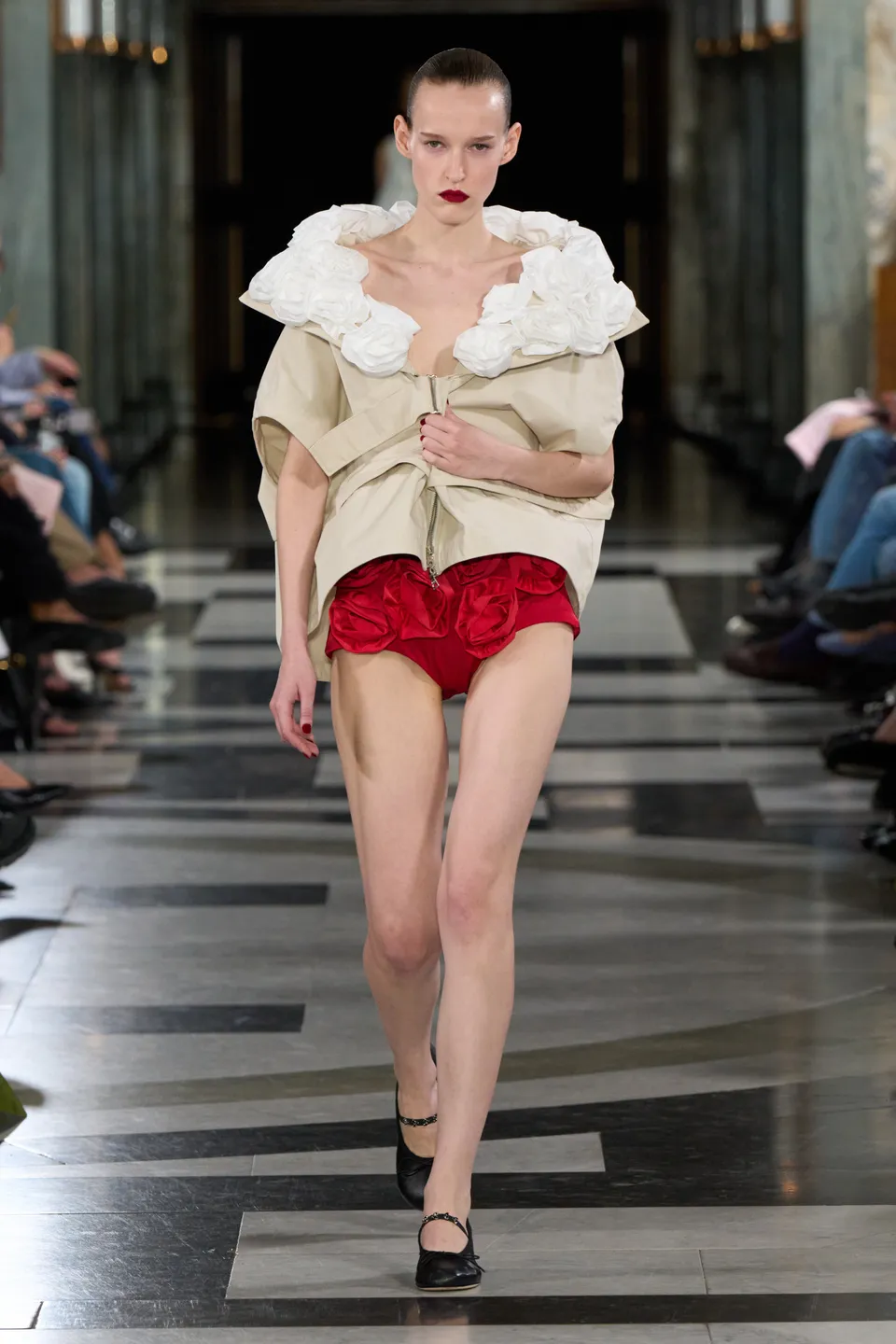
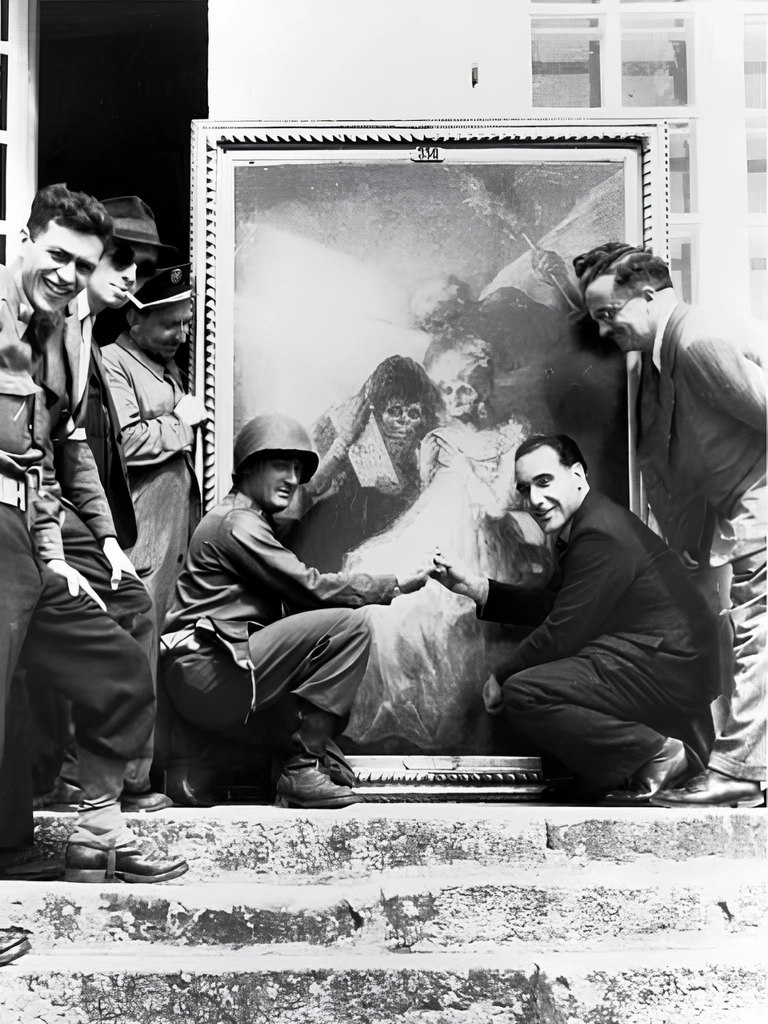
The collection began with Caravaggio’s The Taking of Christ, yet the painting’s modern history interested Rocha as deeply as its violent chiaroscuro.
For centuries, the work had lost its attribution before being rediscovered in 1990 inside a Jesuit residence in Dublin, where it had hung for decades under another artist’s name. One of Caravaggio’s great paintings had effectively been hiding in an ordinary room, its significance concealed by familiarity.
Backstage, Simone Rocha described the collection through the phrase “done and undone,” and this becomes the most useful way into the runway.
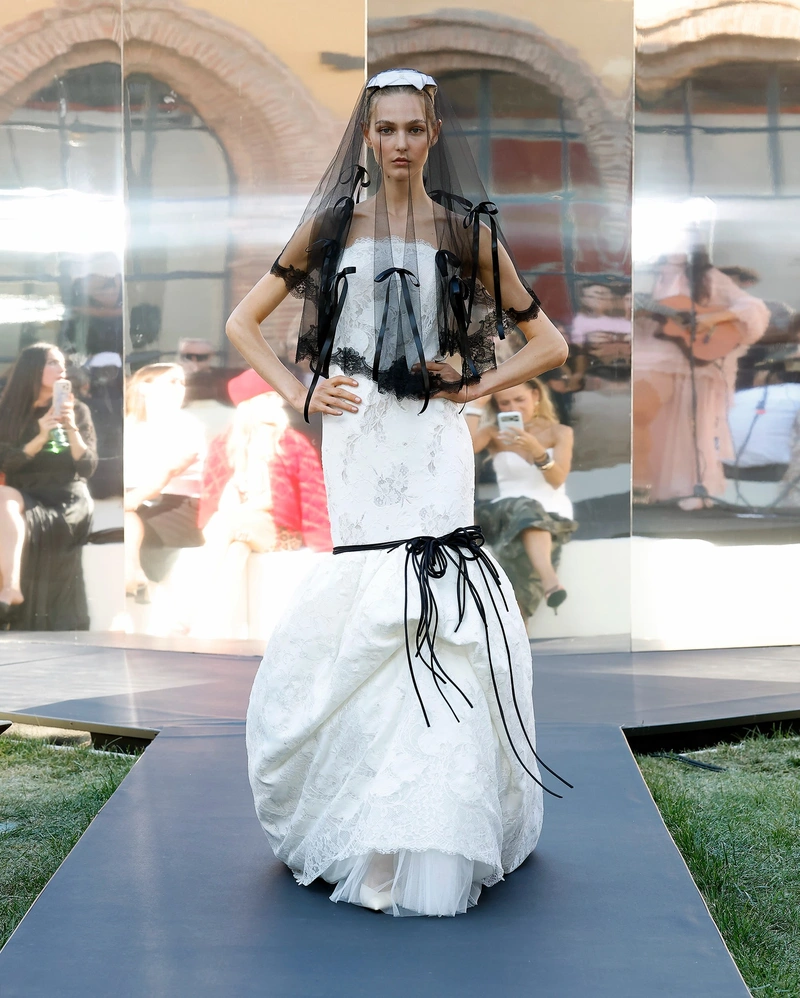
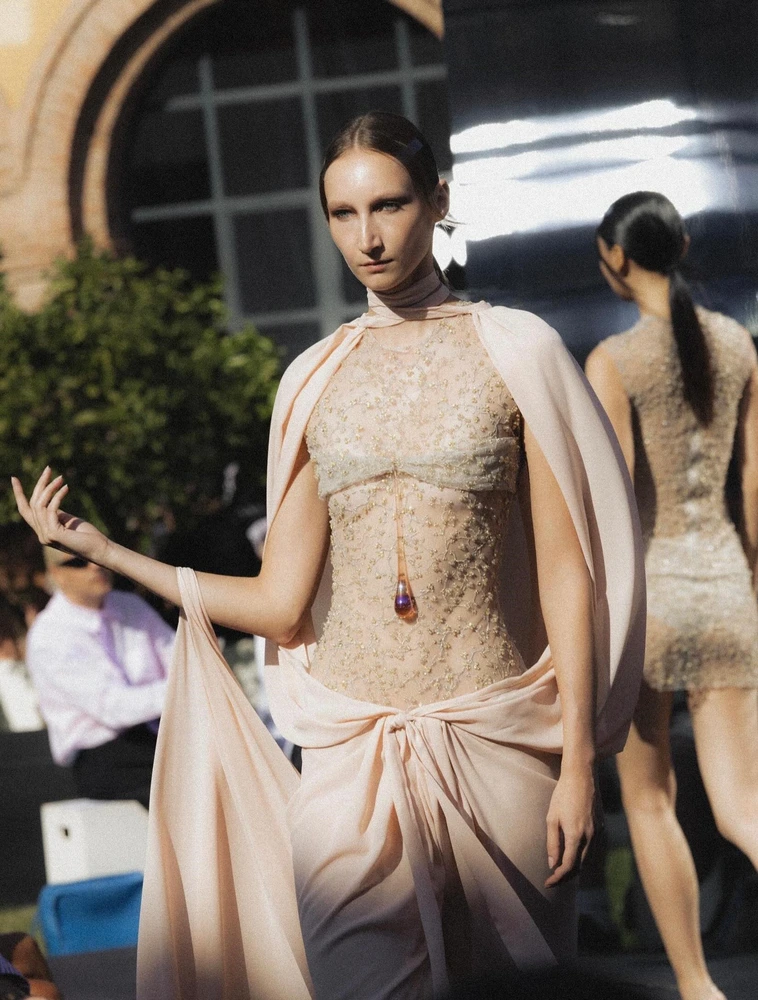
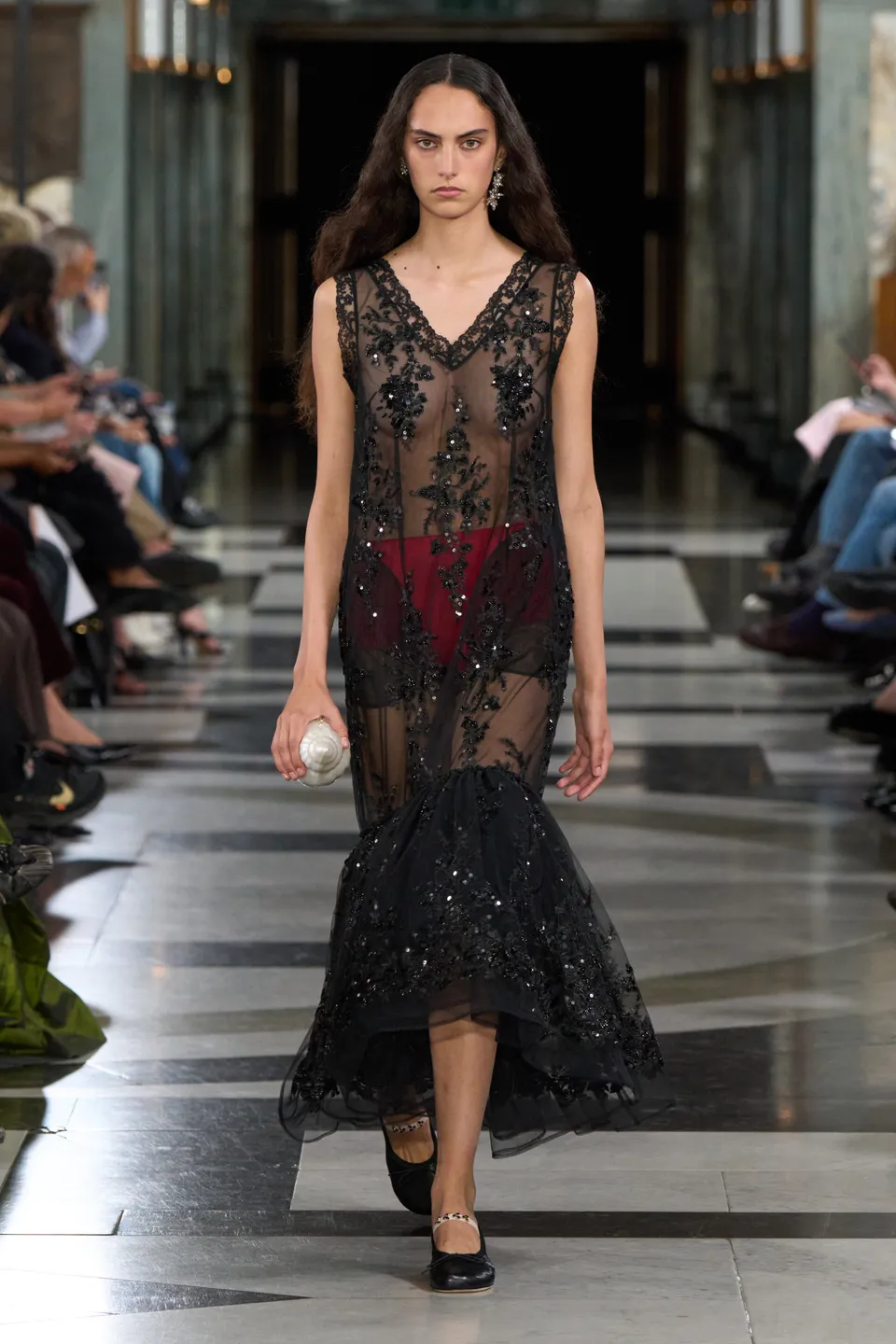
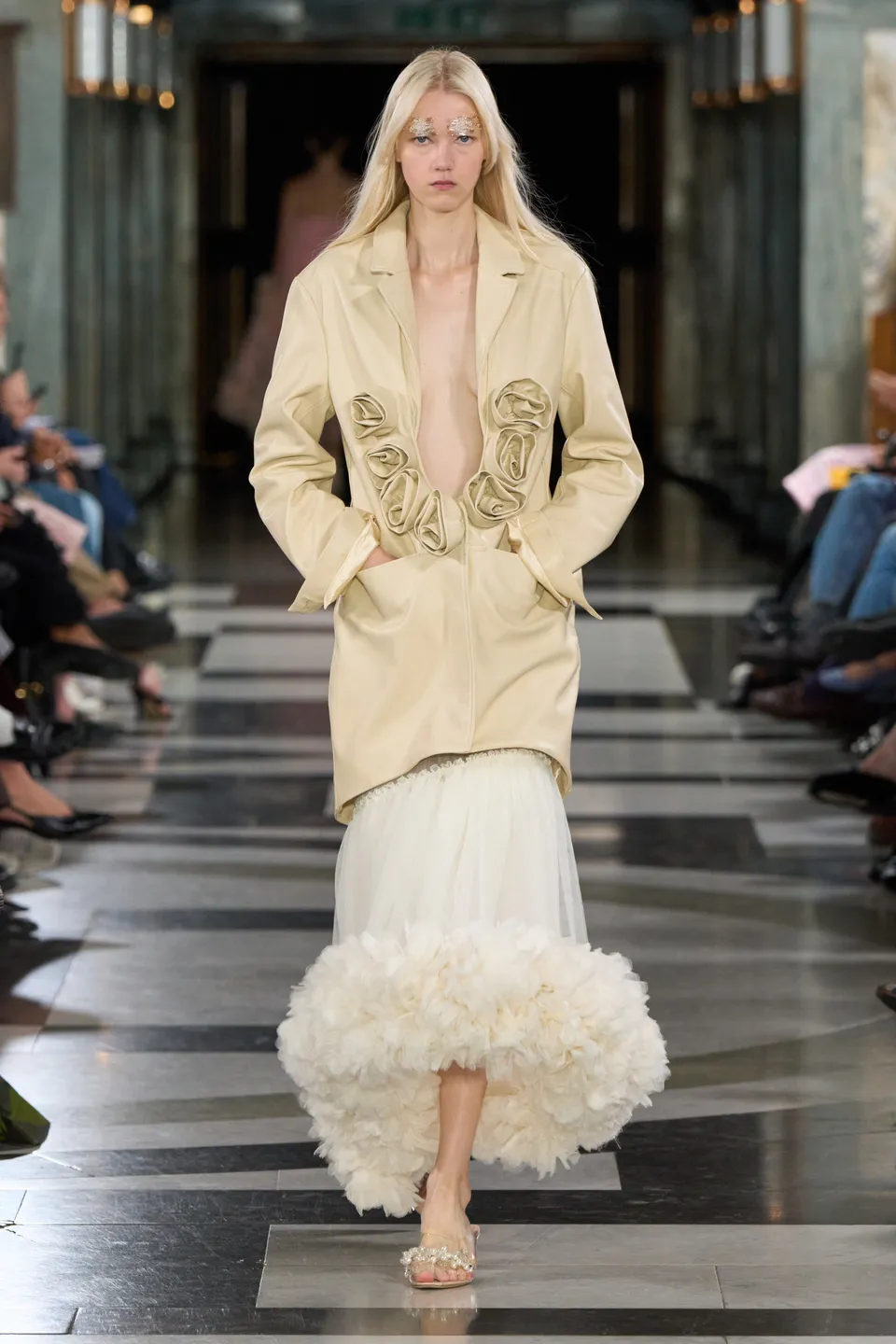
The styling constantly suggests a woman caught during the act of getting dressed: a cuff pushed upward, fabric shifted across the torso, a jacket allowed to fall open, a transparent layer revealing what sits underneath. These gestures give the collection a sense of private time, as though each look records the few minutes between deciding what to wear and stepping through the door.
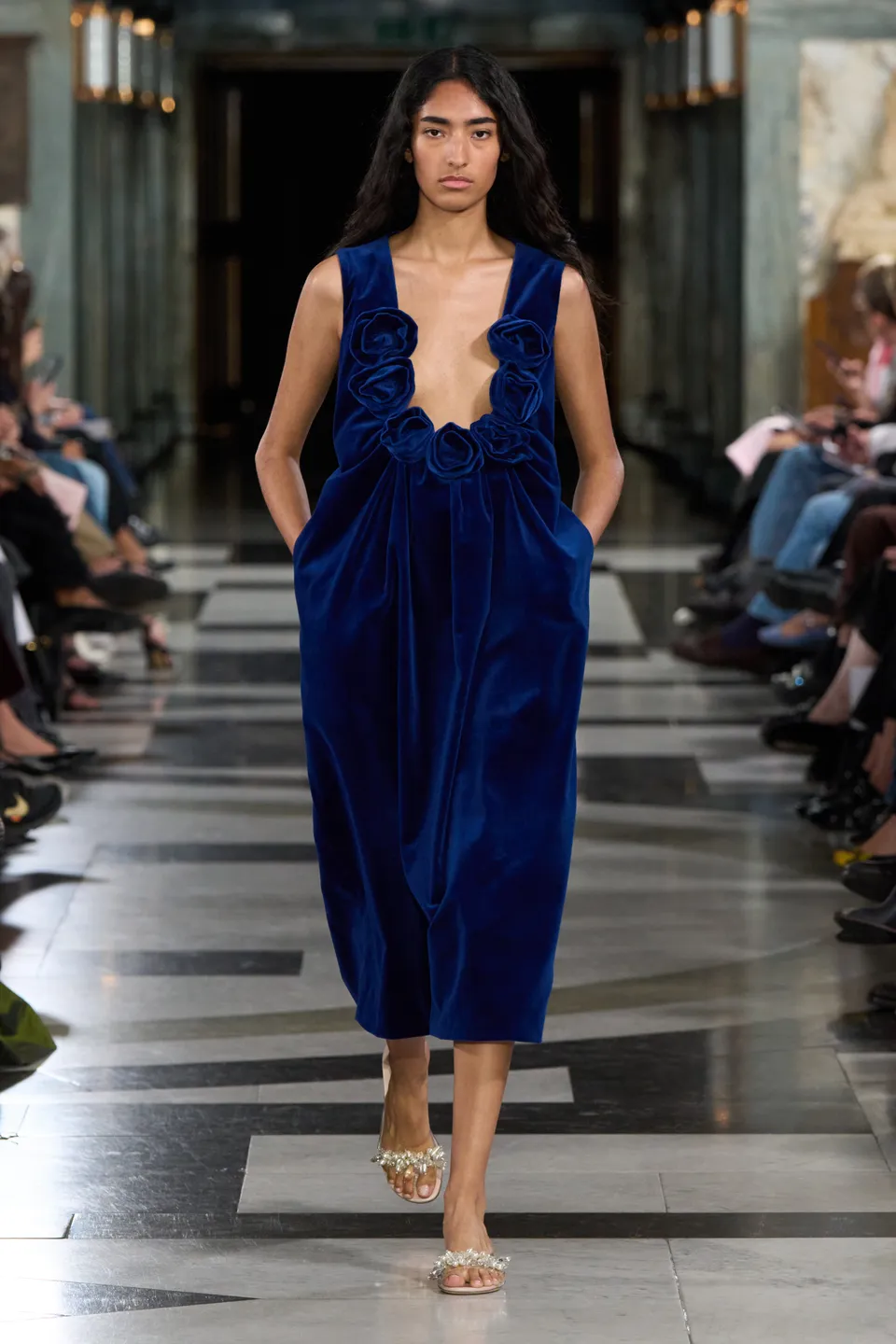
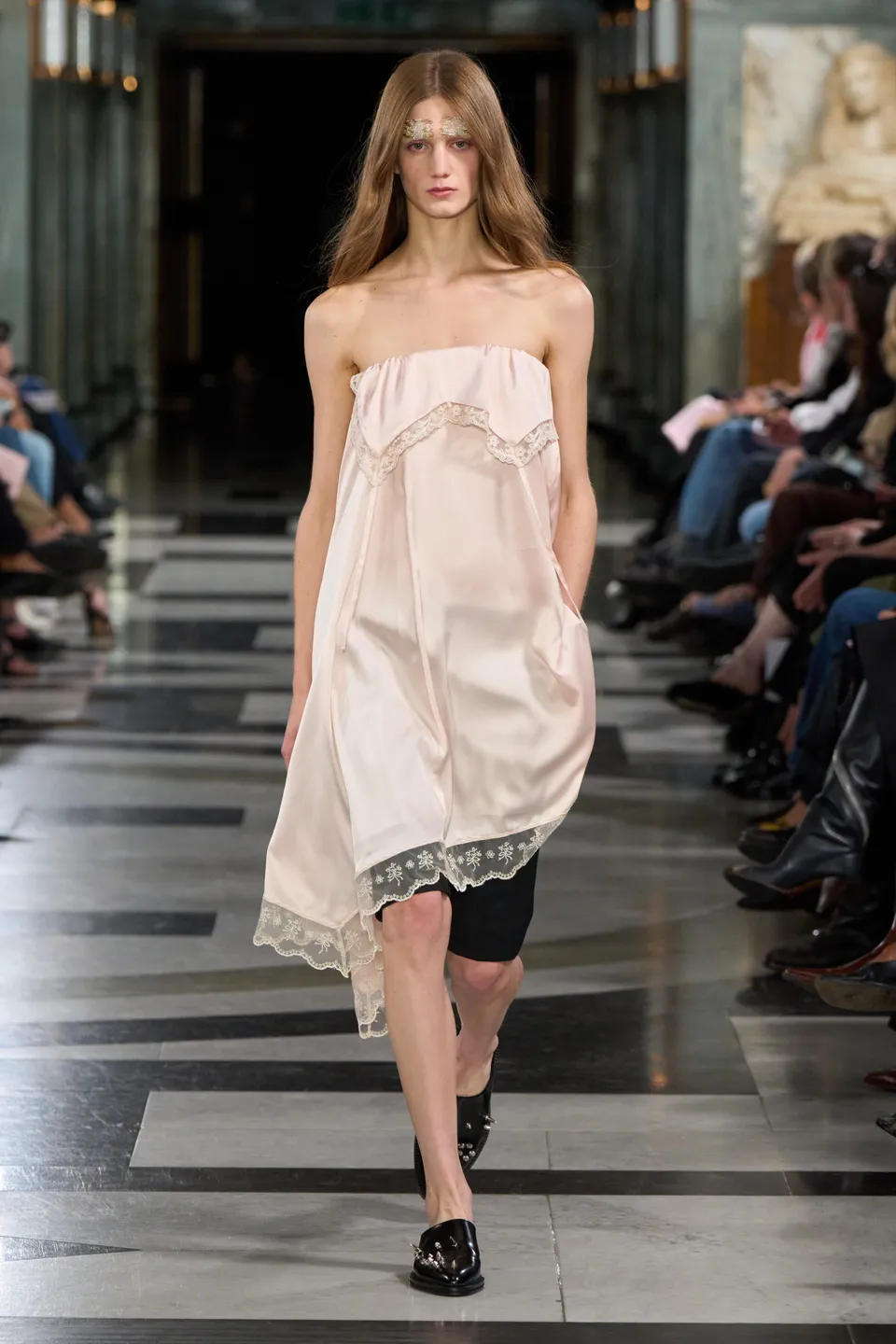
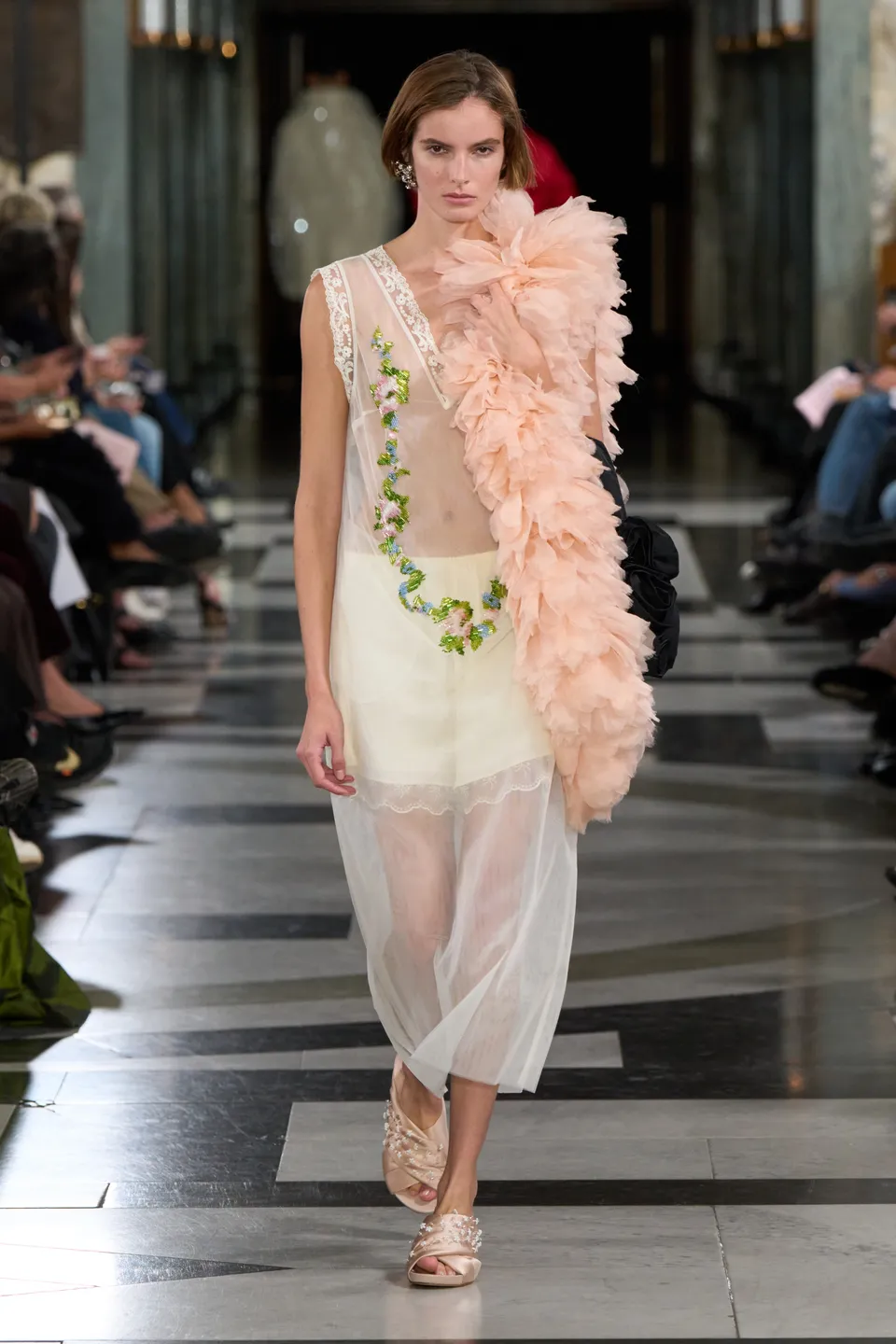
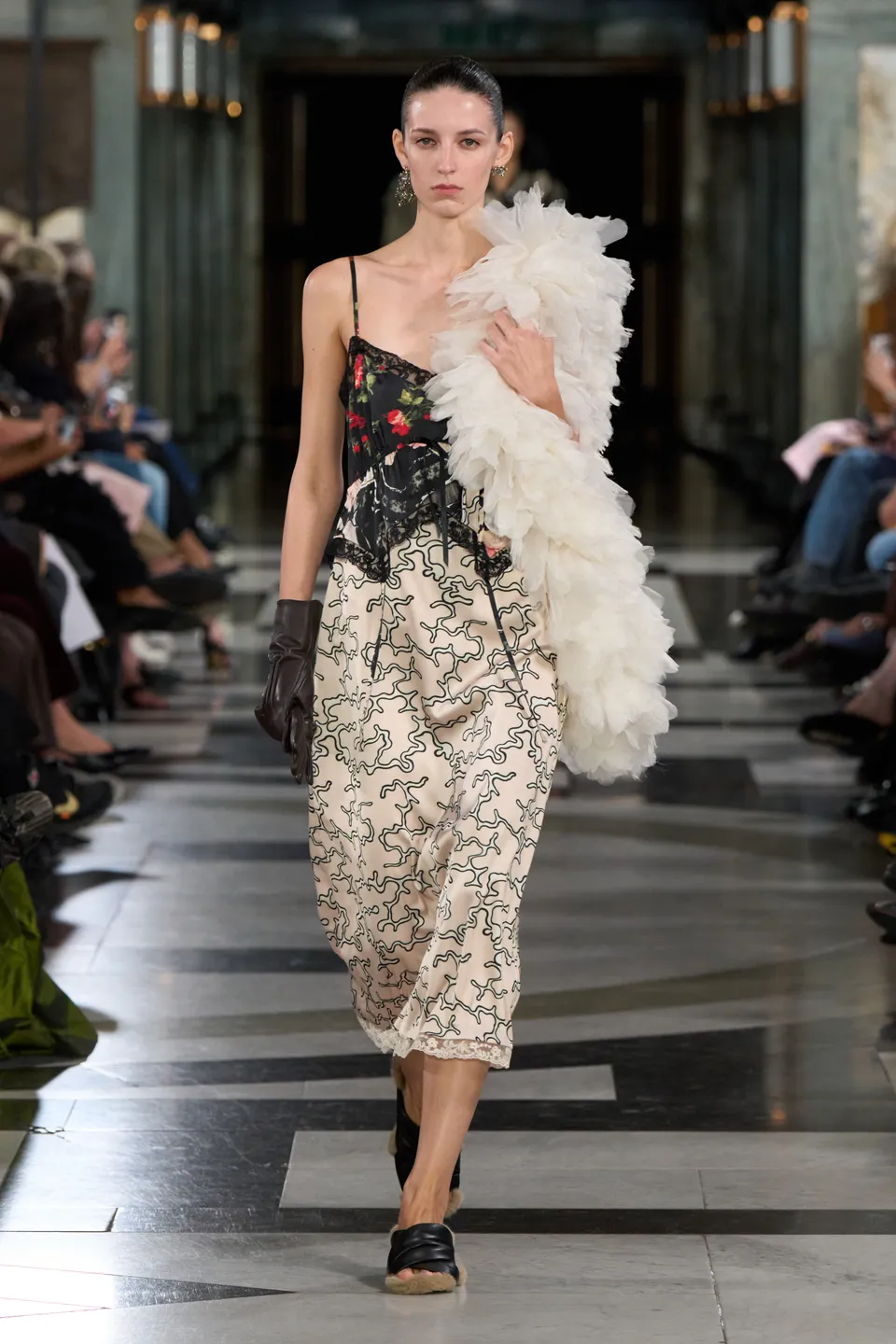
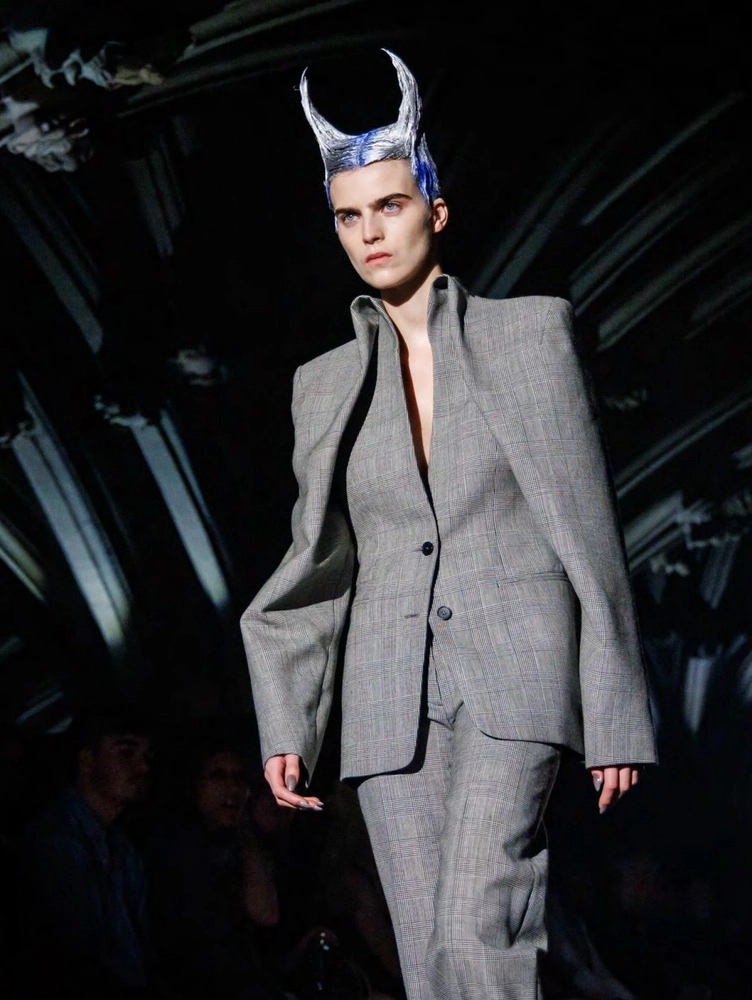
Rocha has often used layering as emotional protection, building fabric around the body until femininity acquires the physical density of armour. Spring 2027 loosens that relationship. Skin appears through tailoring, briefs remain visible beneath transparency, and dresses reveal sections of the torso through construction. Vulnerability becomes structural, carried through openings and exposure as much as through mood.
Her romance contains unease, sensuality, ceremony, childishness, mourning and desire, frequently occupying the same garment. Here, that complexity shifts closer to the wearer. The clothes seem shaped by someone who has already inhabited them, which gives the runway an intimacy that polished styling alone could never produce.
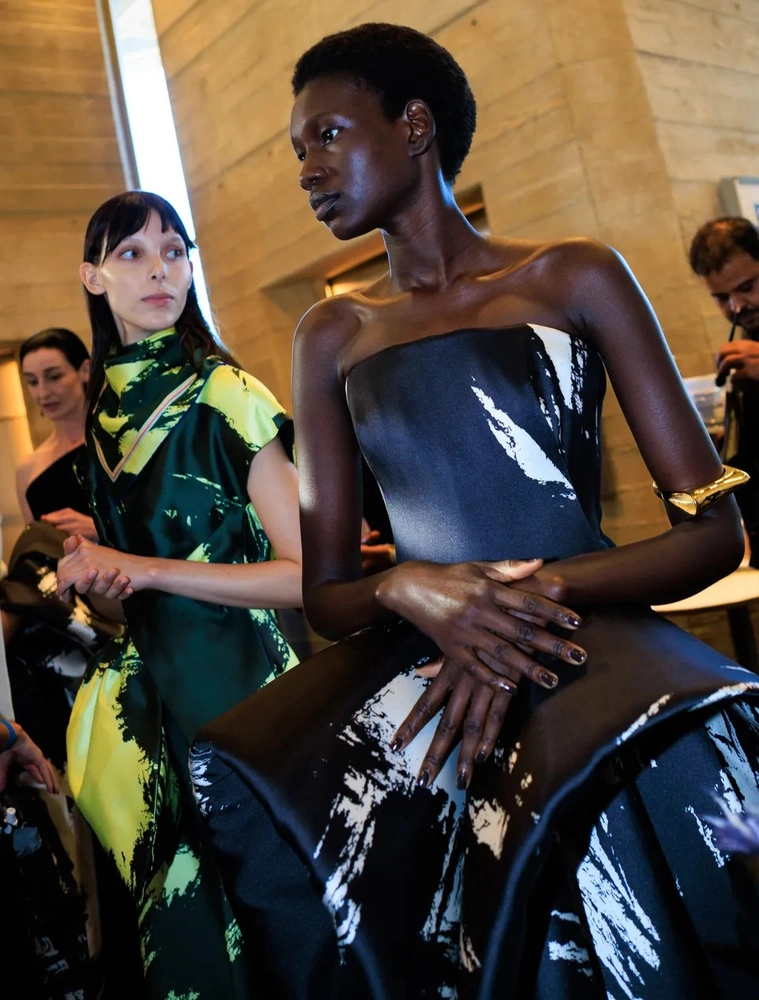
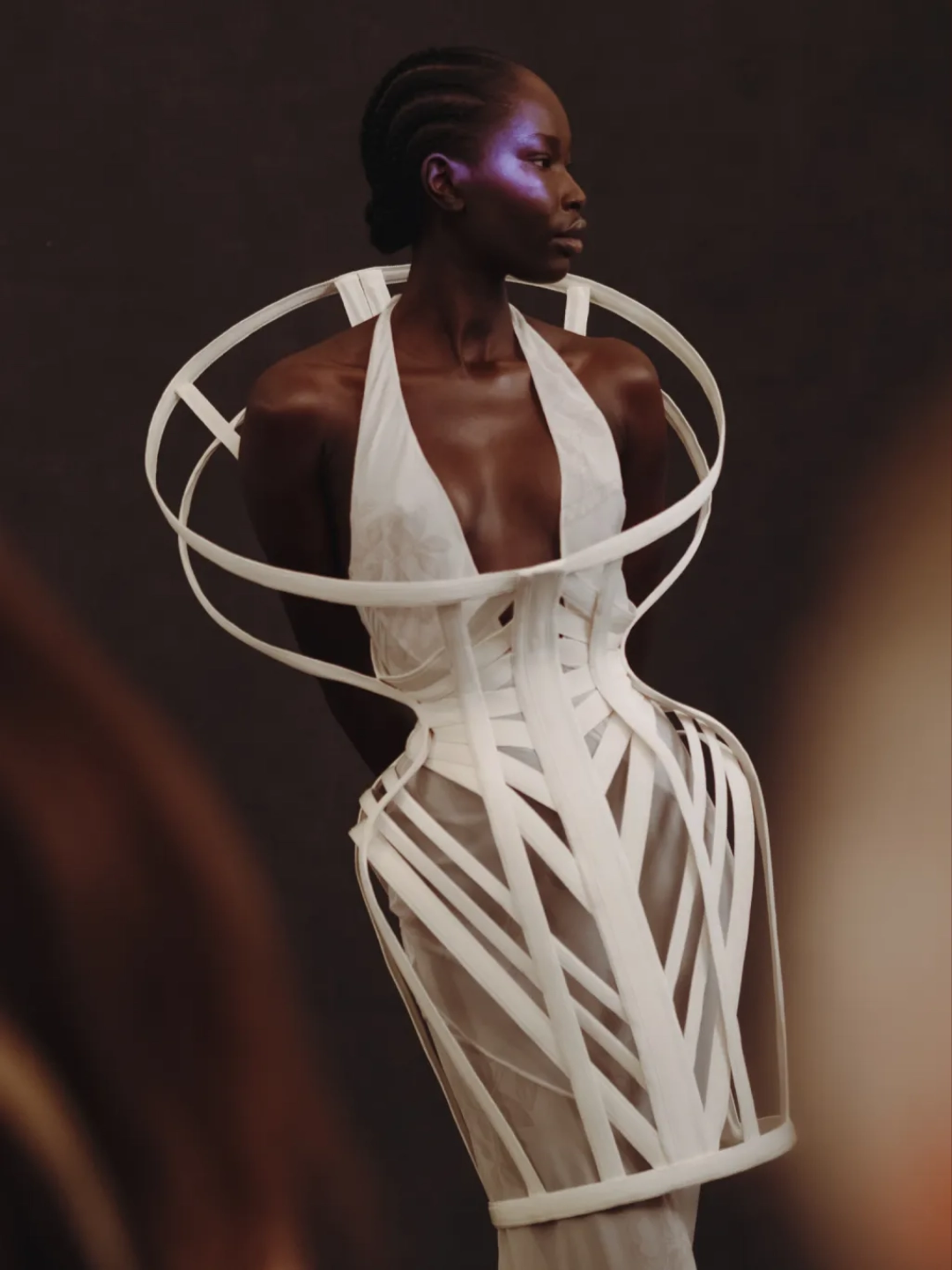
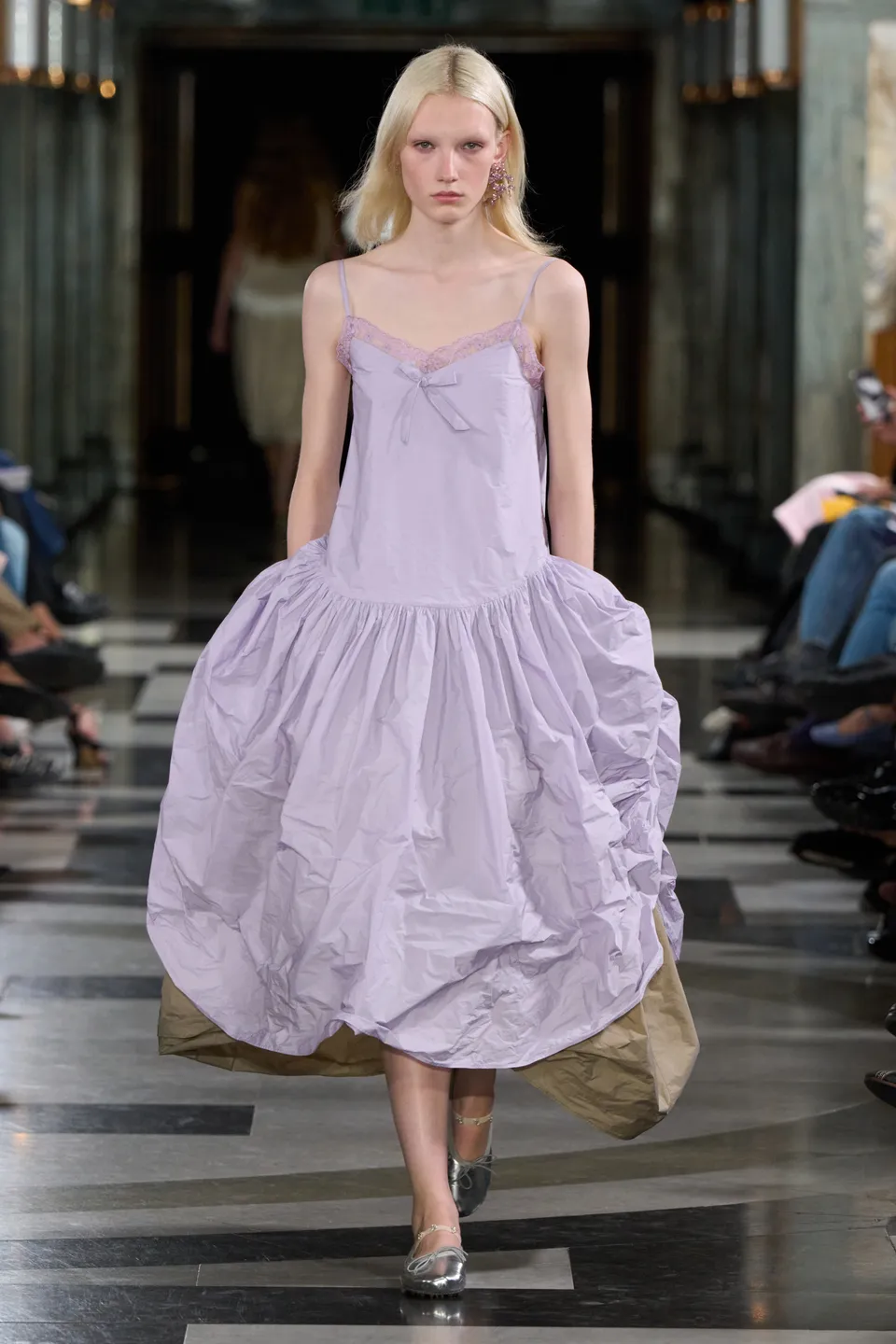
Drop waists extend the torso before releasing into balloon skirts, while slips fall with deliberate irregularity and fitted bodices open into volumes that hover around the body. Tailoring gives shape to shoulders while exposing the chest, and trapeze, hobble, and peg-top forms create pockets of air between skin and cloth. The body appears intermittently framed, concealed, and released.
Then come the great taffeta cocoon silhouettes, with fabric rising around the head and shoulders like a hood, shell, or improvised mantle. Their presence carries traces of religious dress, theatrical costume, and protective wrapping, yet argyle knickers visible beneath some of these forms interrupt the solemnity with Rocha’s characteristic instinct for awkward humor.
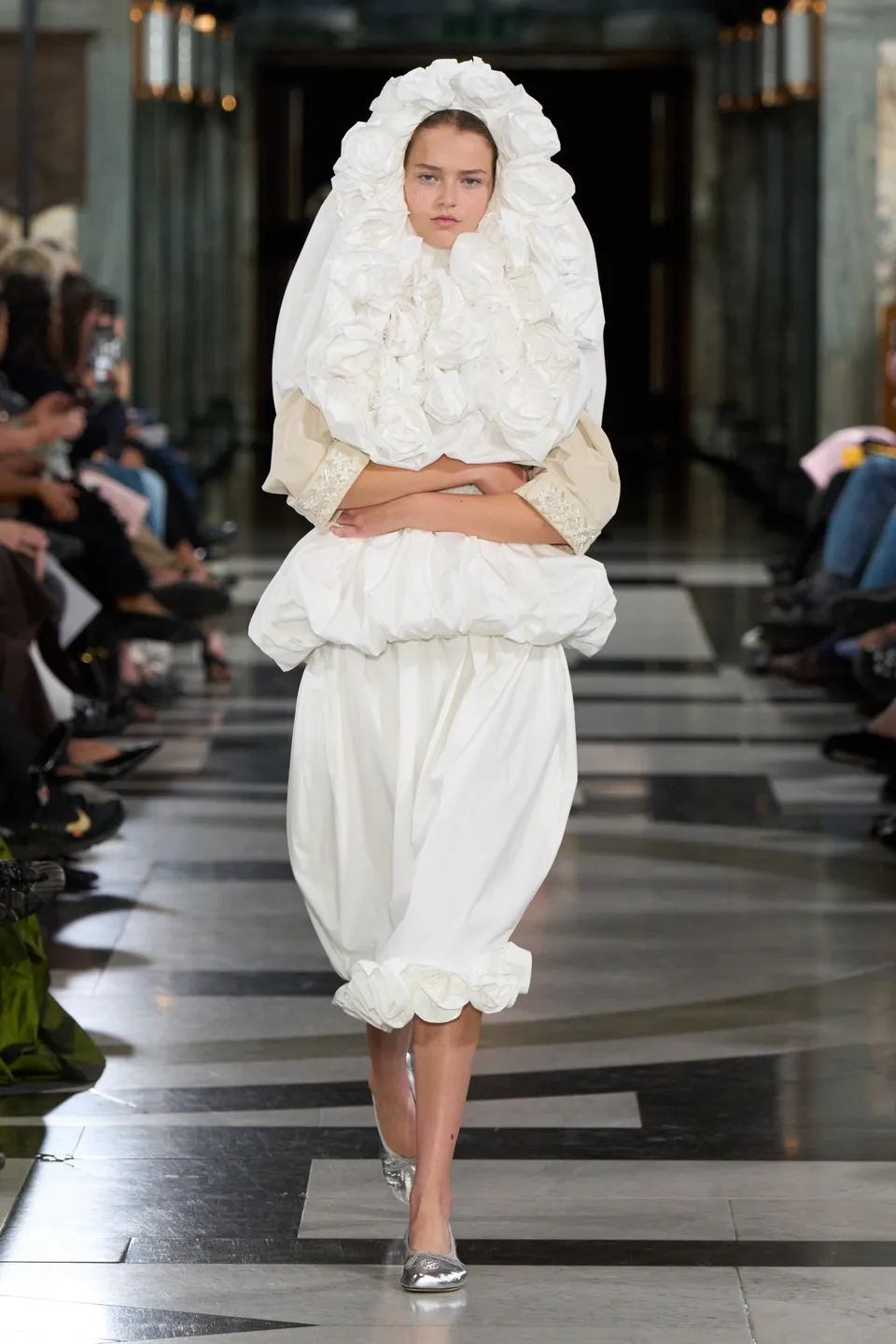
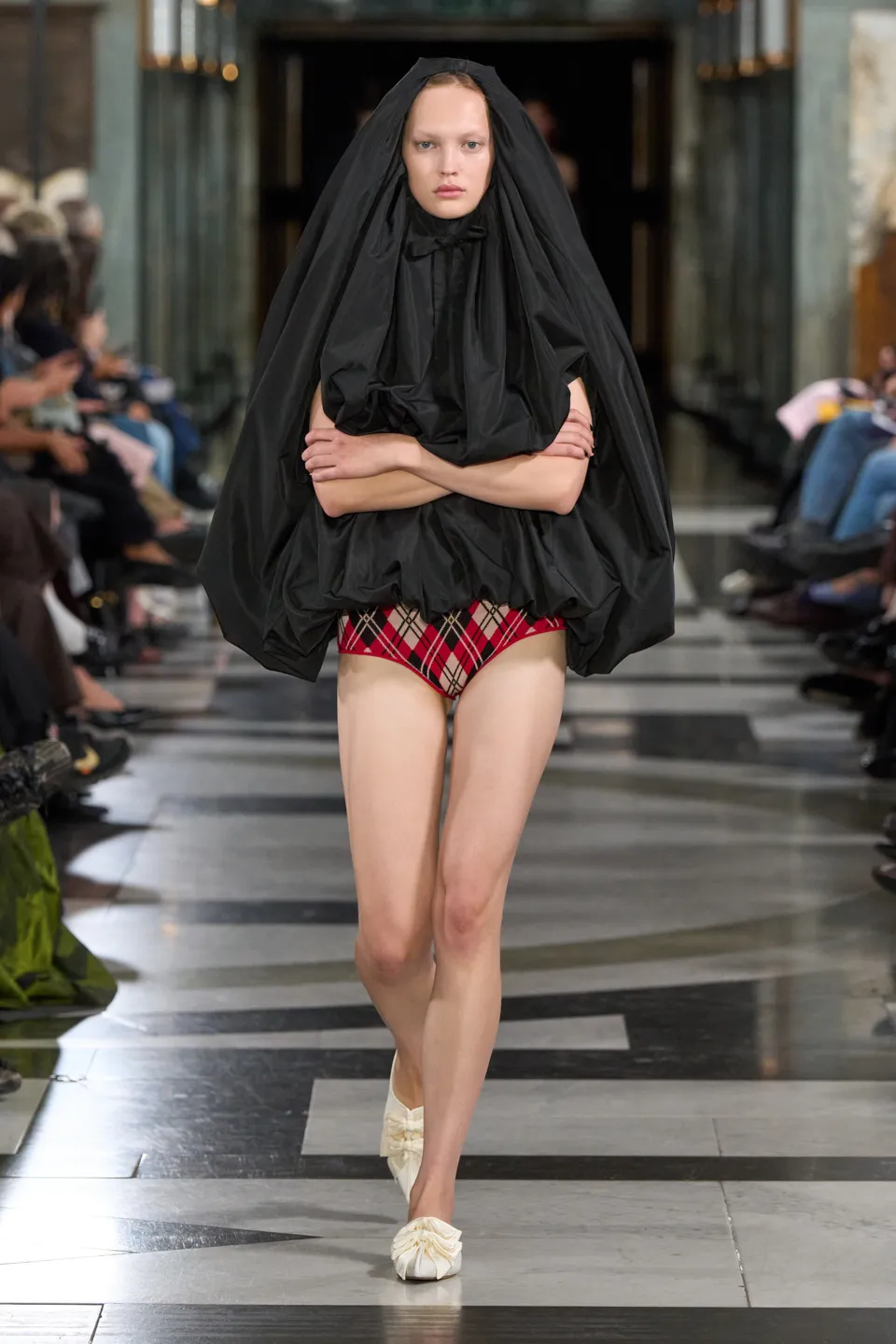
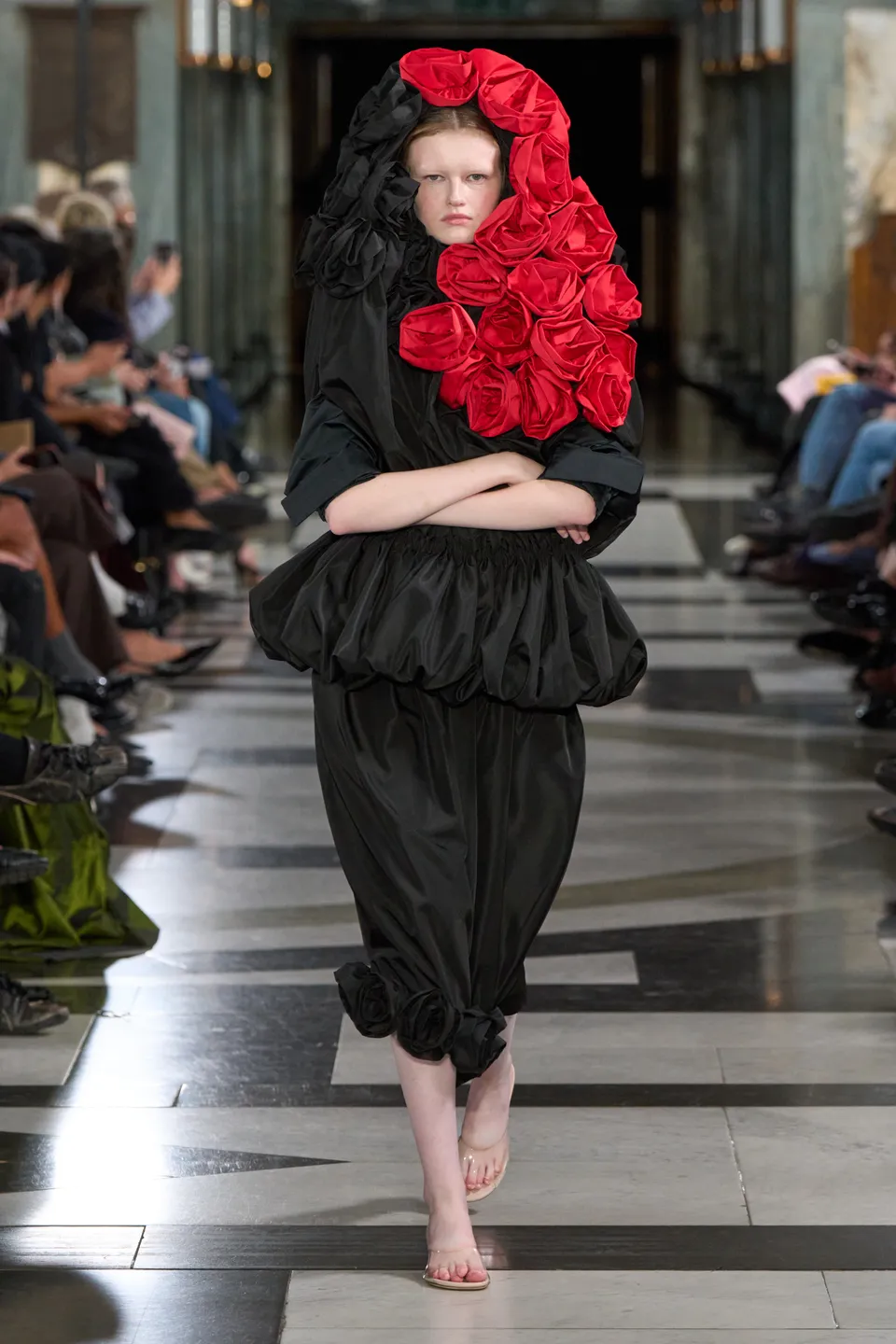
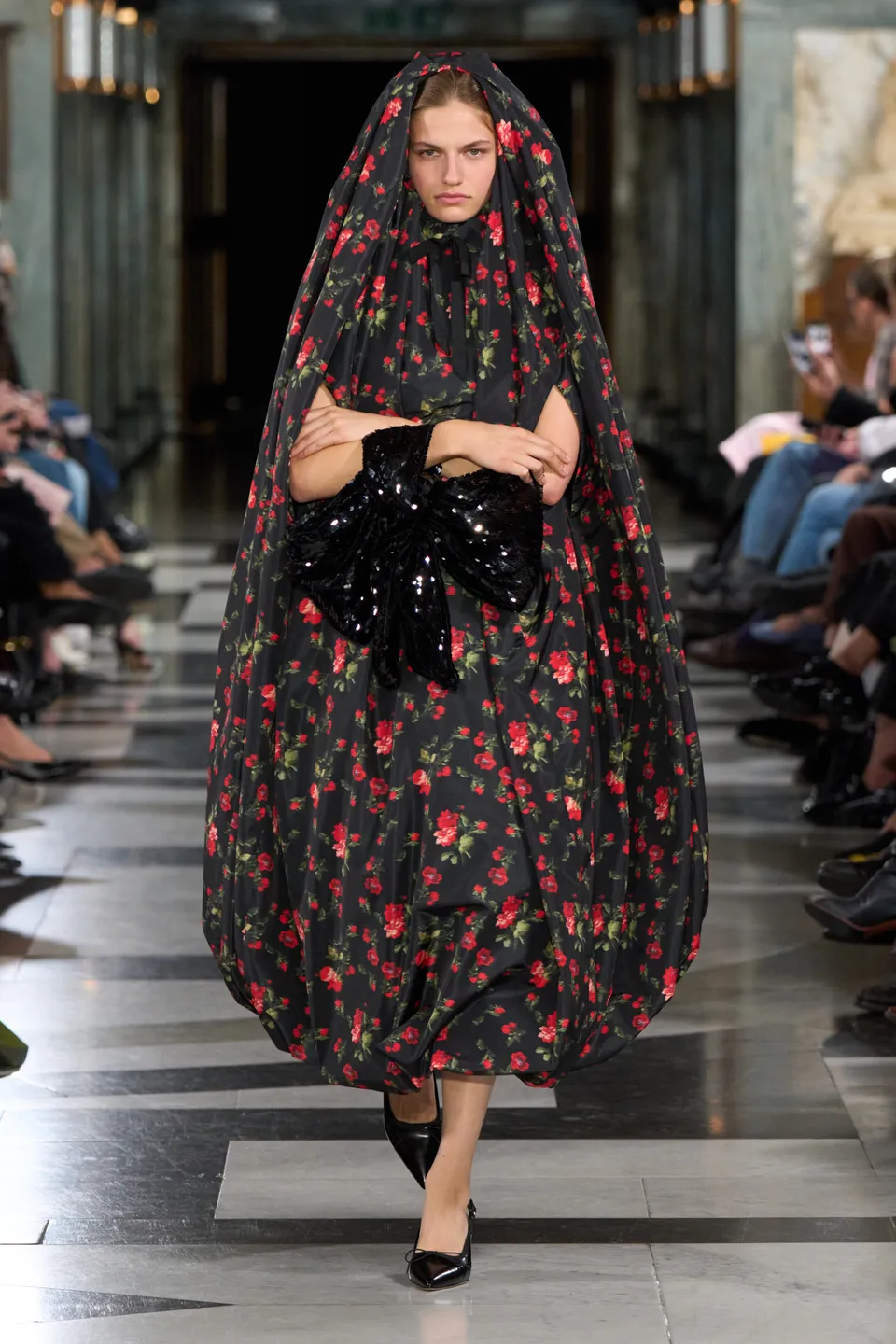
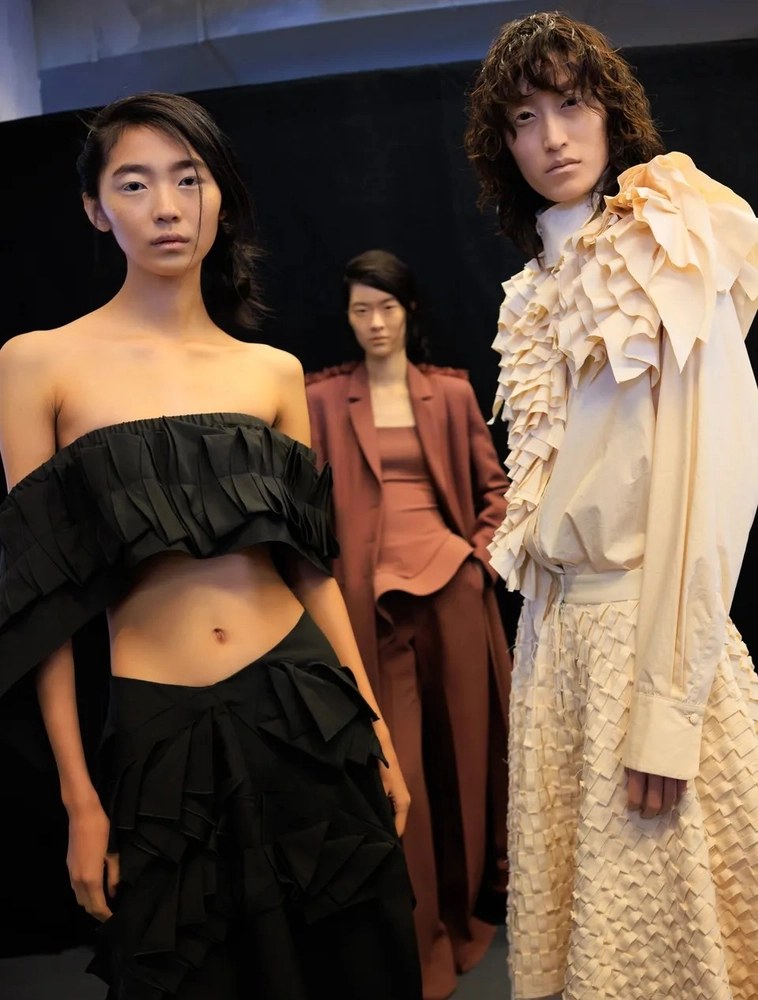
Material controls the emotional temperature of each passage. Velvet absorbs light and deepens the Caravaggesque palette; leather creates hard, glossy boundaries around exposed skin; organza introduces translucency and fragility; taffeta suspends volume around the body with an almost architectural lightness. Crimson, royal blue, petrol, lilac, cream, khaki, and black move through the collection like pigments lifted from an old painting and transferred onto contemporary bodies.
One of Spring 2027’s most compelling technical ideas sits inside the fabric itself.
Rocha developed full-skirted taffeta pieces woven with superfine metallic thread, giving the material enough memory to respond physically to pressure. The wearer can push, compress, twist and reshape the surface, leaving a temporary record of contact inside the silhouette.
For Simone Rocha, this turns the season’s emotional language into engineering. “Touched and pushed” becomes a material property.
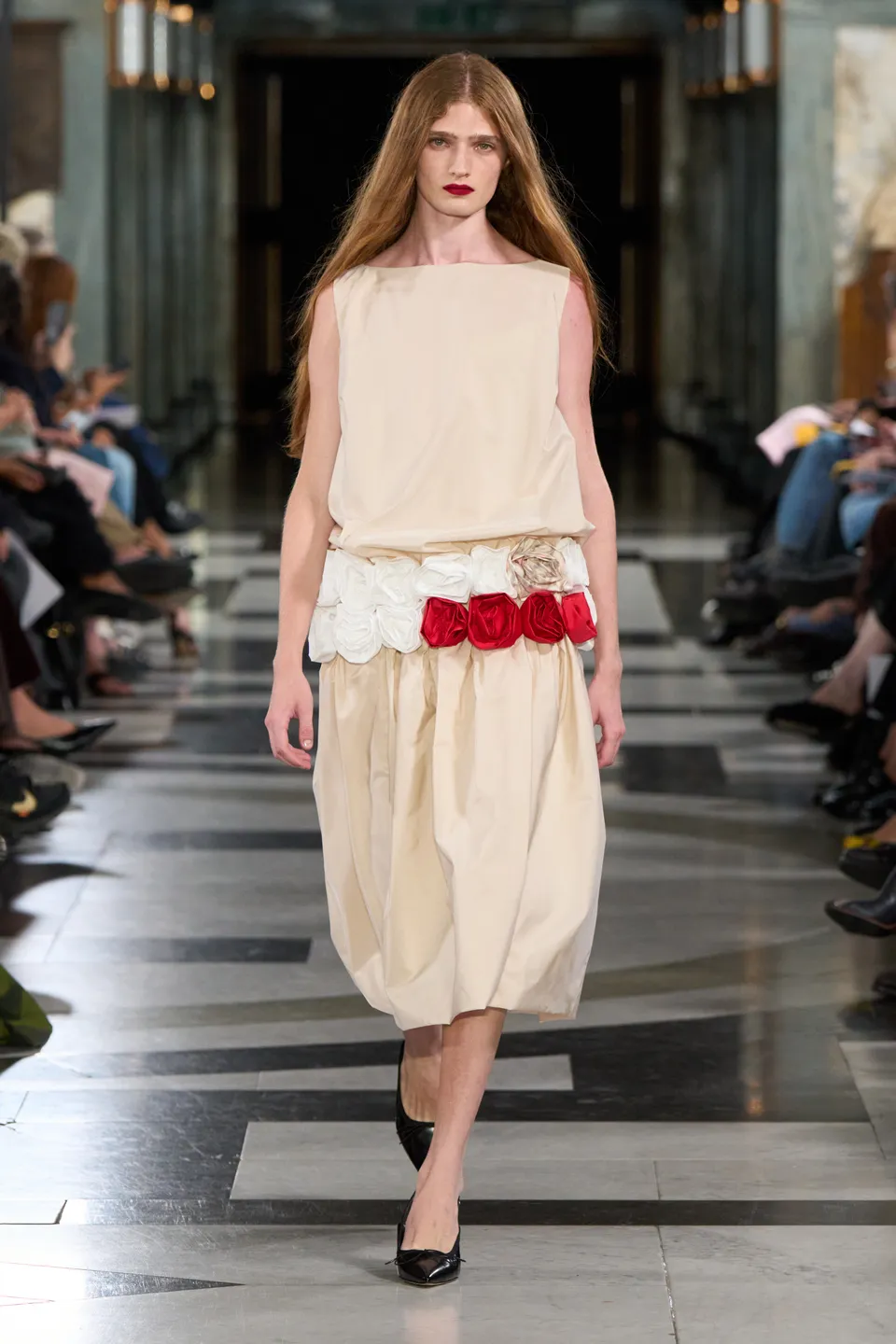
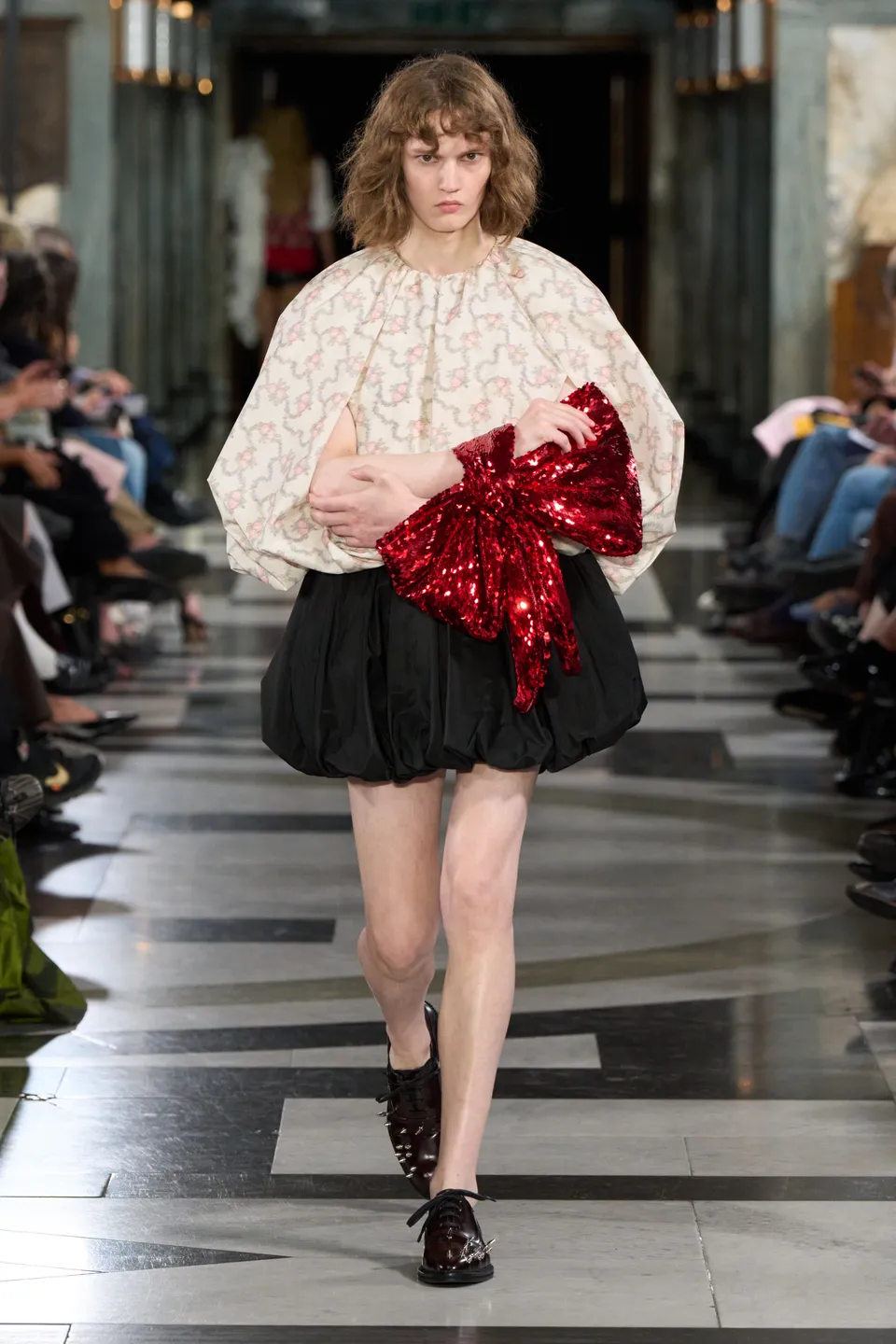
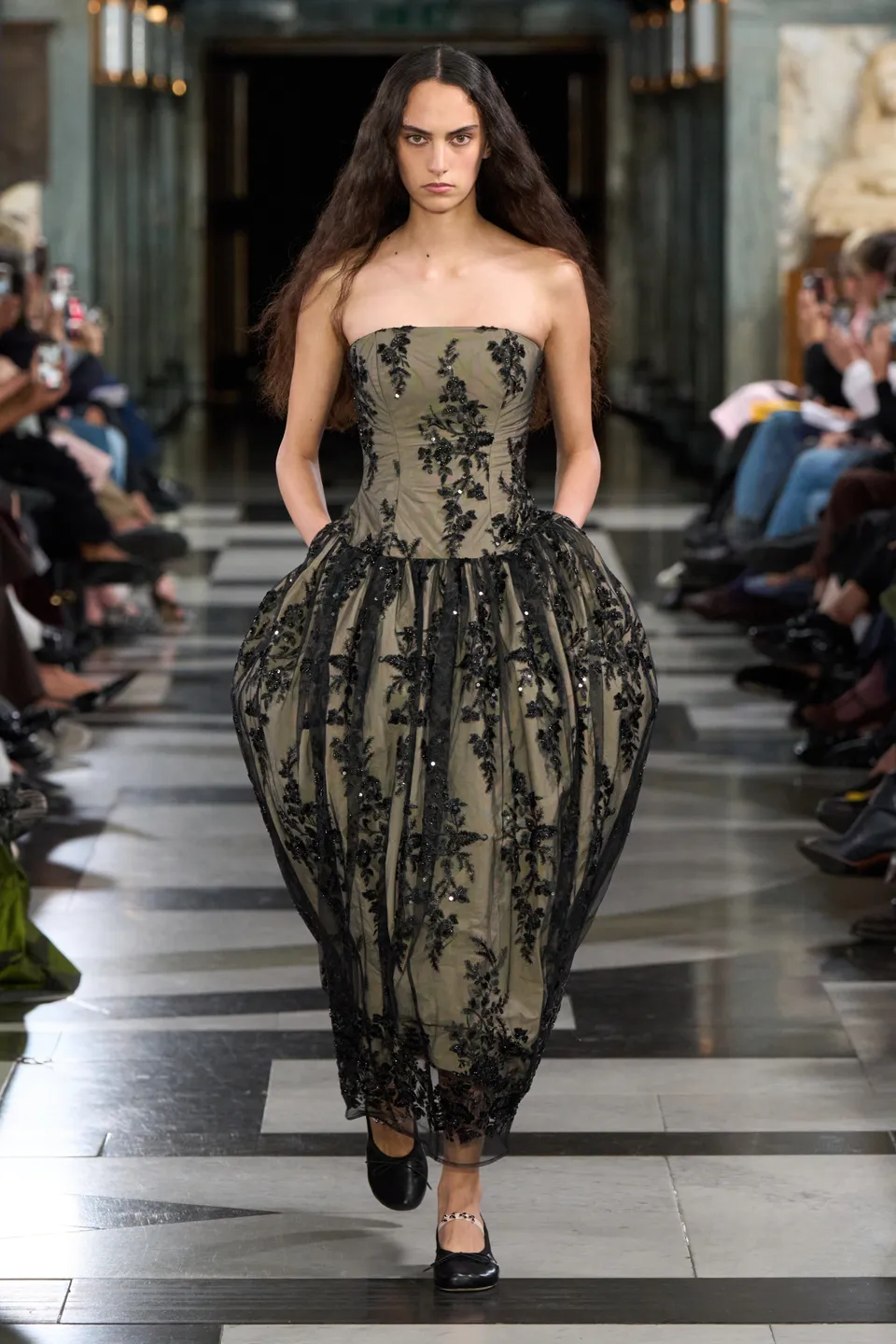
The atelier establishes the initial architecture, then the woman continues the work through wear, making the final silhouette a collaboration between construction and bodily gesture.
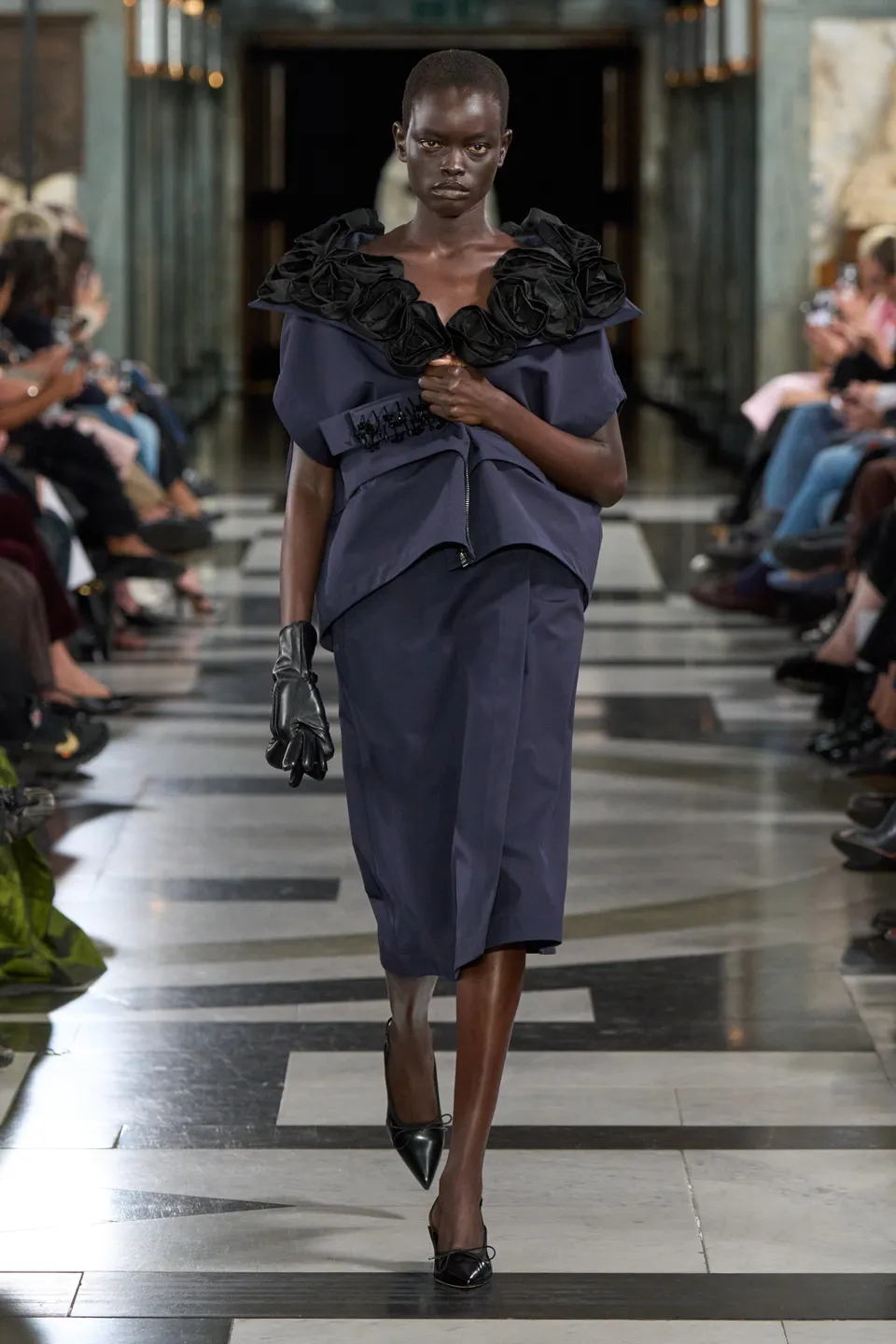
The hand-furled roses work through another register of the same idea. Their petals gather around collars and frame faces, each flower carrying tiny variations created through making. Craft becomes visible through irregularity, giving these highly worked surfaces an almost biological quality.
The hand enters the garment twice: first through the atelier, then through the person who wears it.
The collection reaches its most persuasive moments when Simone Rocha places her established romantic codes somewhere unexpected.
A scarlet Harrington jacket receives a dramatic rose collar, transforming a familiar piece of British outerwear into something ceremonial without erasing its everyday identity. The flower gains energy through that collision, carrying Rocha’s romantic vocabulary into a garment rooted in utility, youth culture and ordinary dressing.
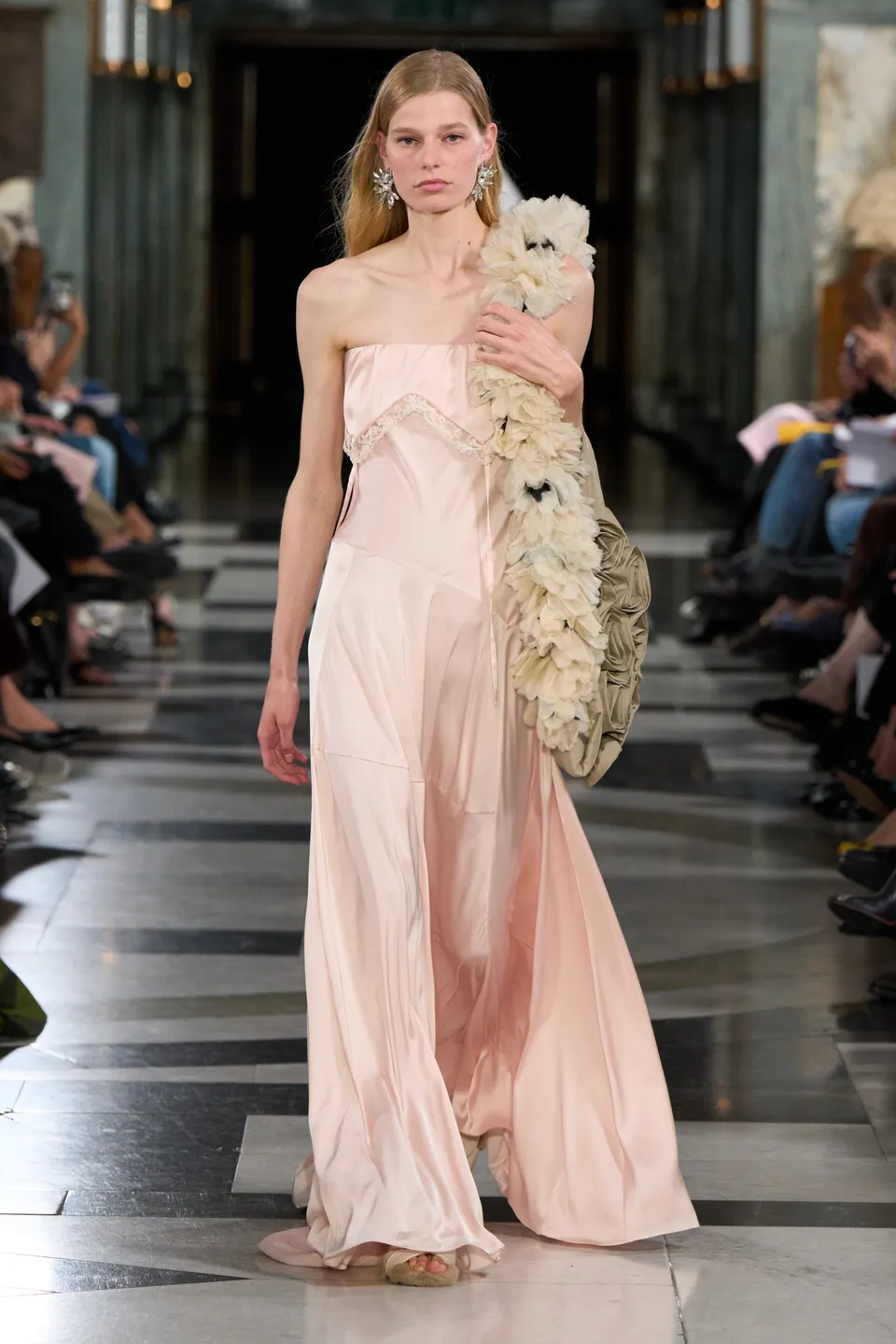
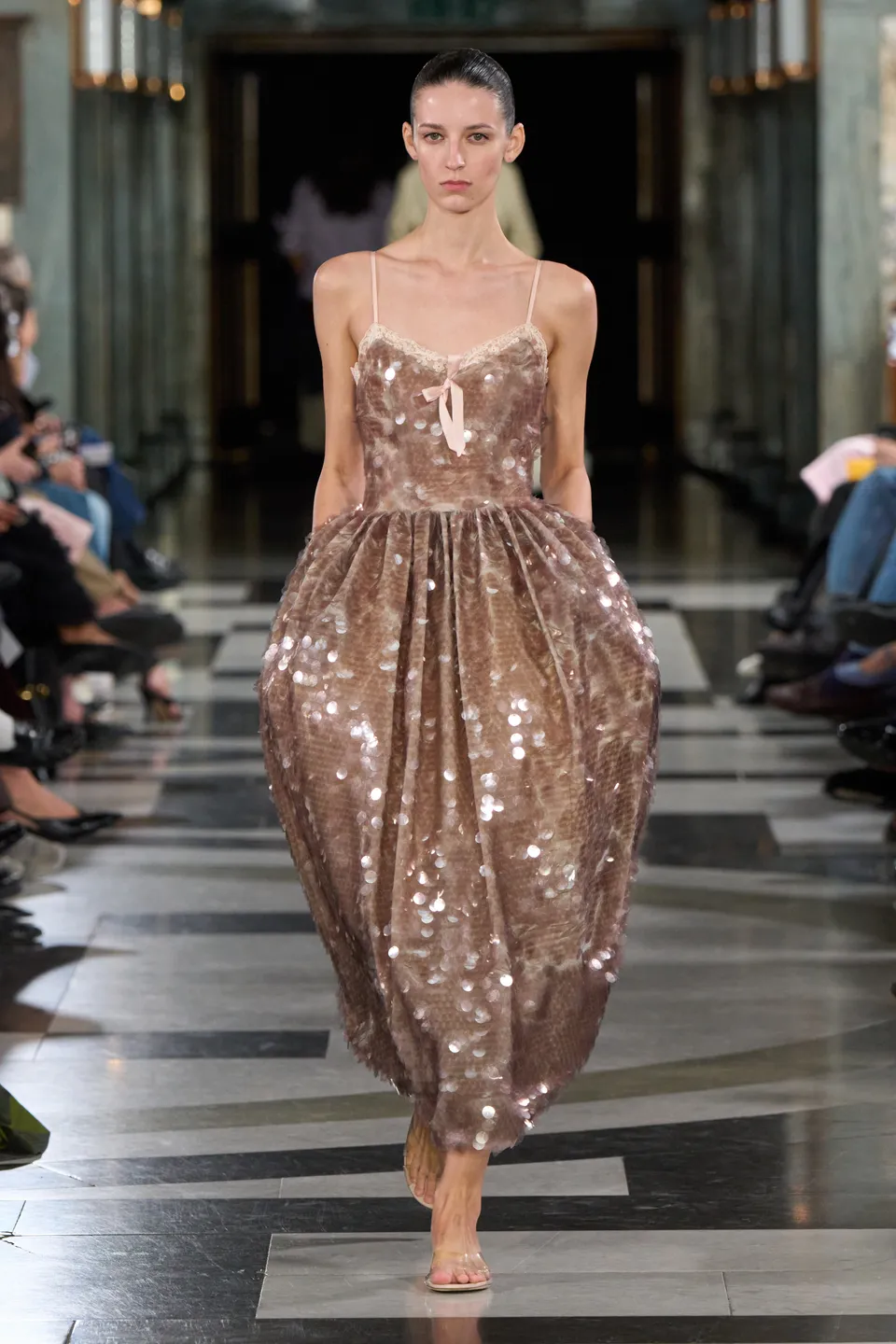
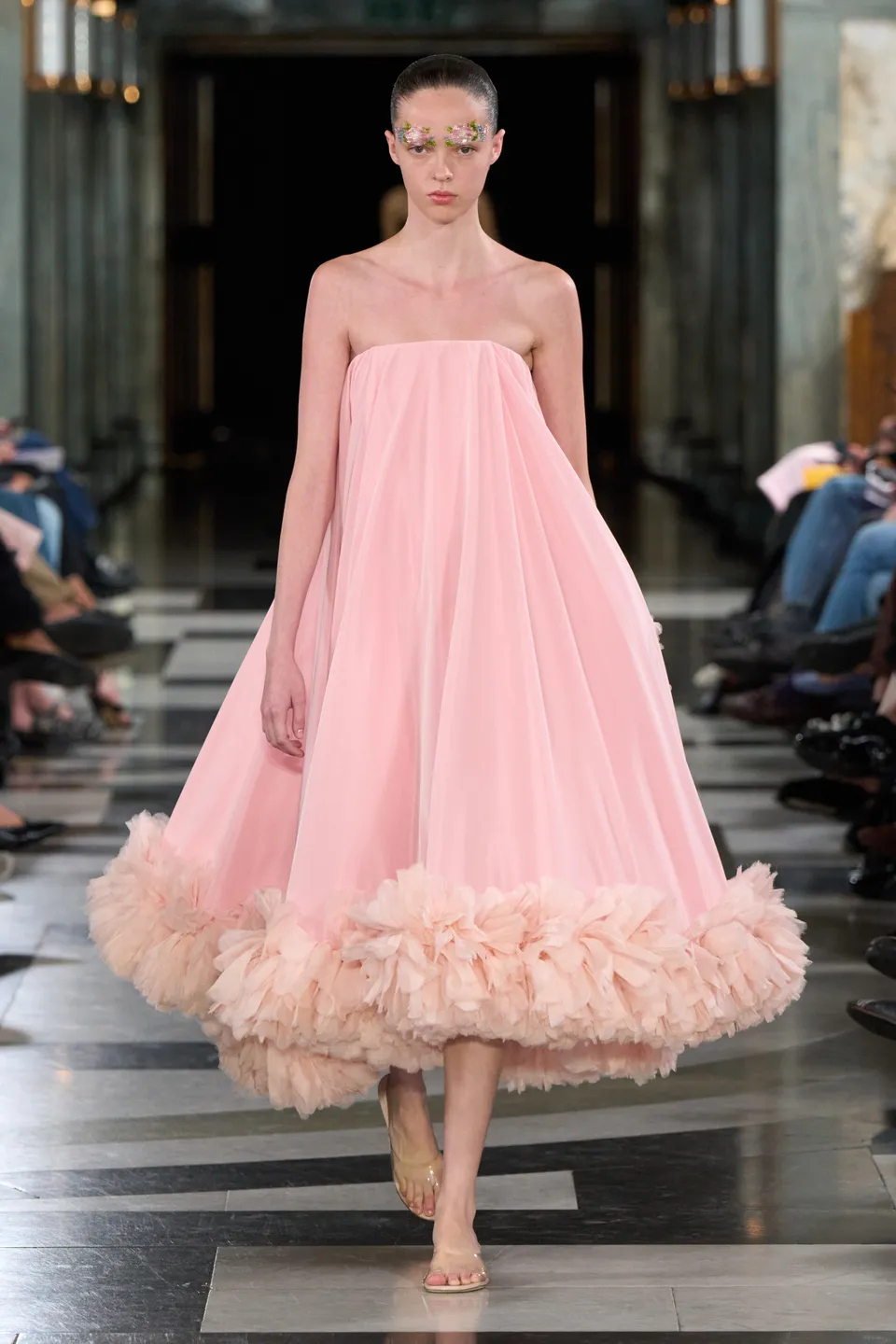
Rocha’s romanticism has always benefited from a streak of oddness, and Spring 2027 keeps that quality alive through pieces drawn from practical wardrobes.
Across these looks, Simone Rocha finds fresh life inside familiar house codes by changing their circumstances. Romance migrates into outerwear, ceremony accepts bodily interference, and femininity gains specificity through use.
This may be Simone Rocha at her strongest because the collection understands the power of leaving space around an idea. The emotion feels quieter, the romance carries less theatrical insistence, and the clothes seem comfortable existing without constantly proving where they came from. Fifteen years of building an unmistakable world have given Rocha something valuable: the confidence to let that world breathe.
There is maturity in knowing exactly how much an idea needs. Simone Rocha has reached a point where her identity can sit inside a gesture, a mood or an unfinished feeling and remain completely legible. The strength of this collection comes from that certainty.
Advertisement