MENU
Close





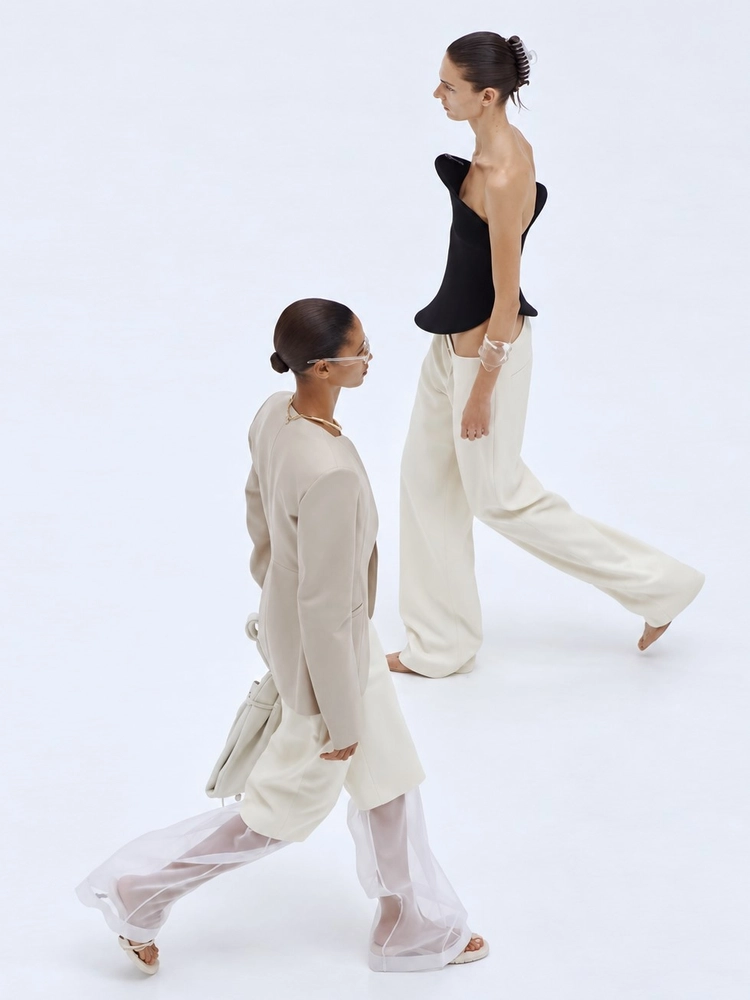
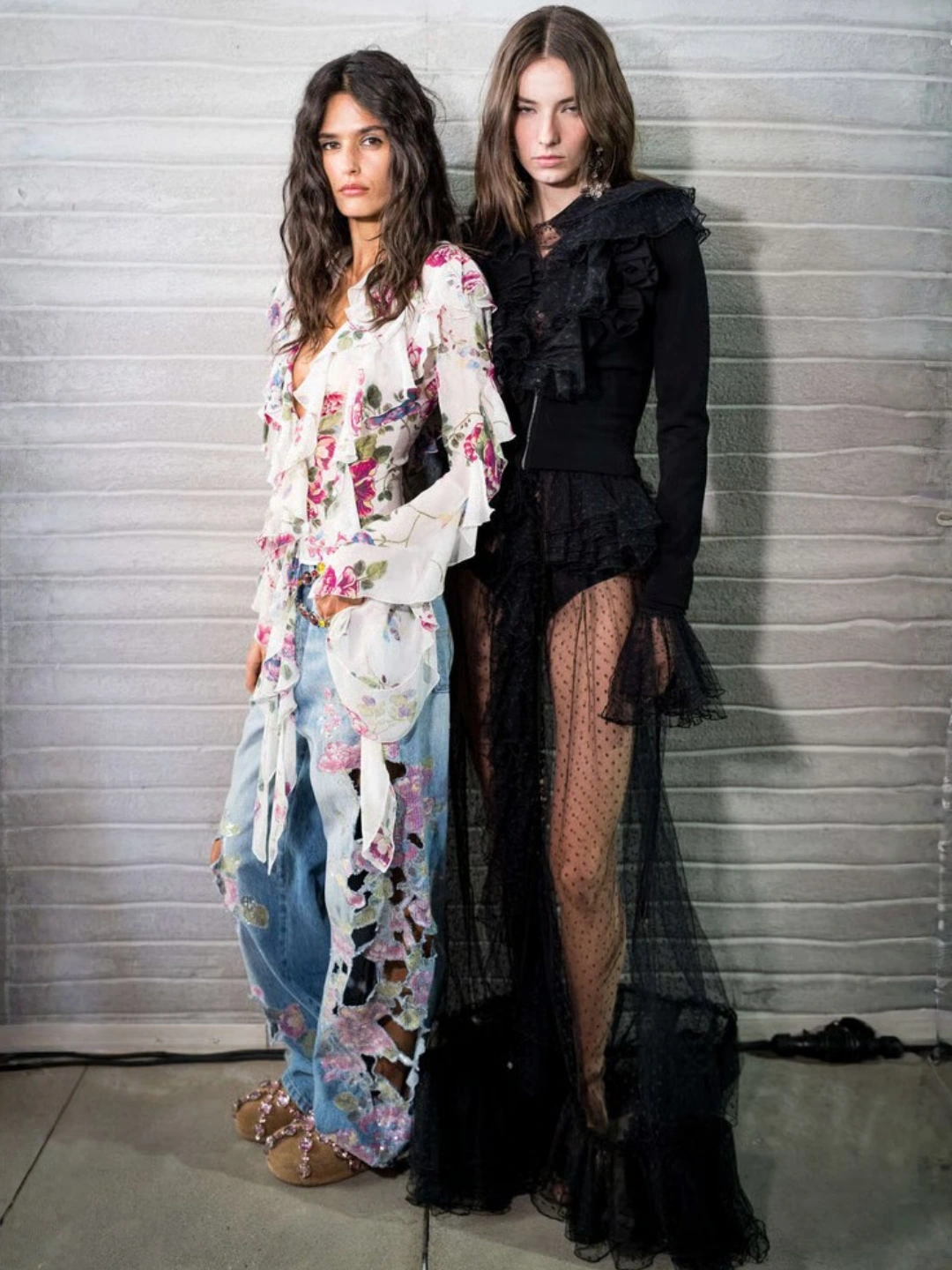
Copenhagen Spring 2027 has discovered the drama of almost falling apart through the falling-off effect.
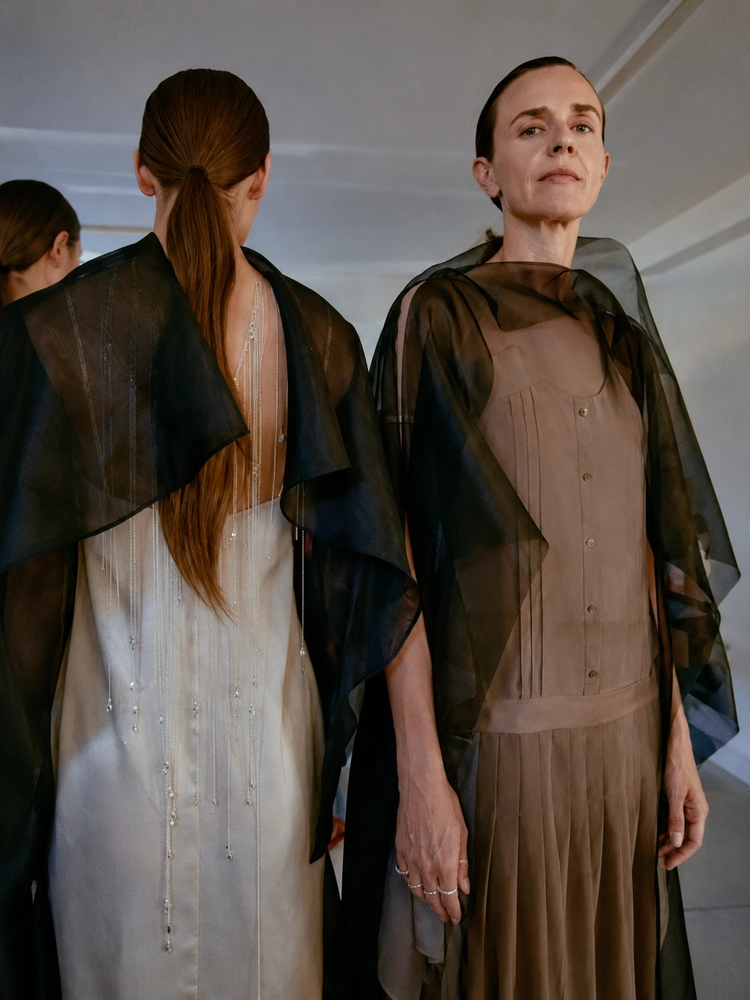
Copenhagen Spring 2027 has discovered the drama of almost falling apart through the falling-off effect.
August 18, 2026
Advertisement

Advertisement


Why are designers spending so much effort making expensive clothes look moments away from falling off? Copenhagen Spring 2027 has turned the wardrobe malfunction into a styling language, where straps wander, chiffon drifts, knits sag, and the body seems caught halfway through getting dressed. The falling-off effect is becoming one of the season’s most intriguing visual signatures.
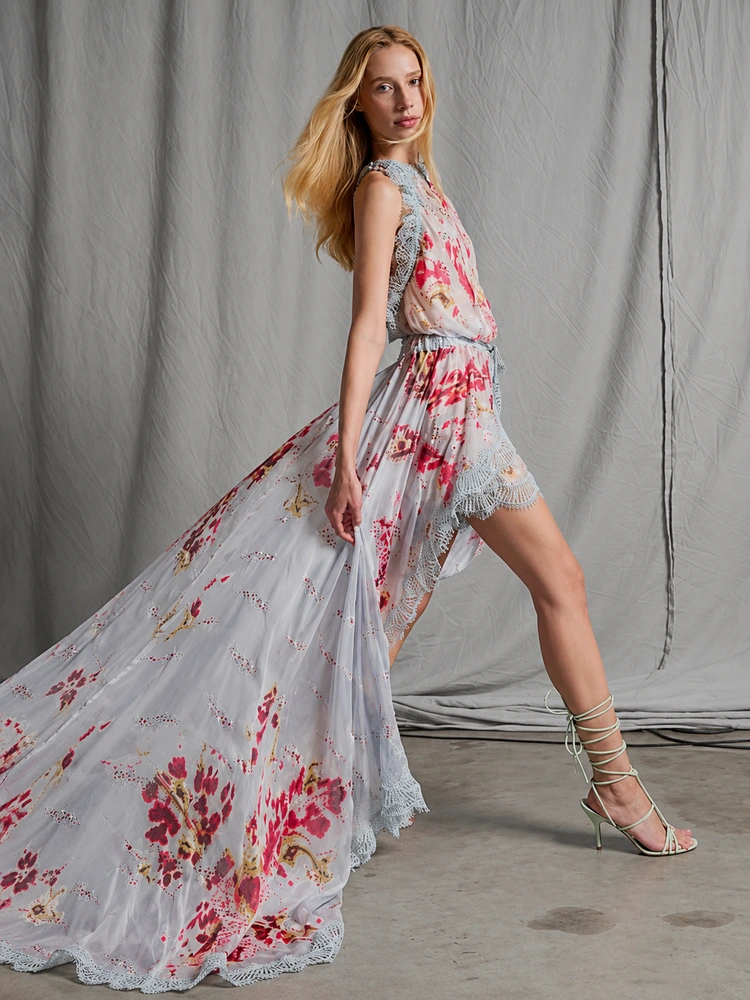
The Garment provides the clearest clue through a dress constructed with a deliberate falling-off effect. Here, the woman feels caught inside a caress, somewhere between bedtime, romance, and sulking seduction. Fabric slides close to the body with the softness of sheets after sleep, giving the clothes an almost private emotional temperature.
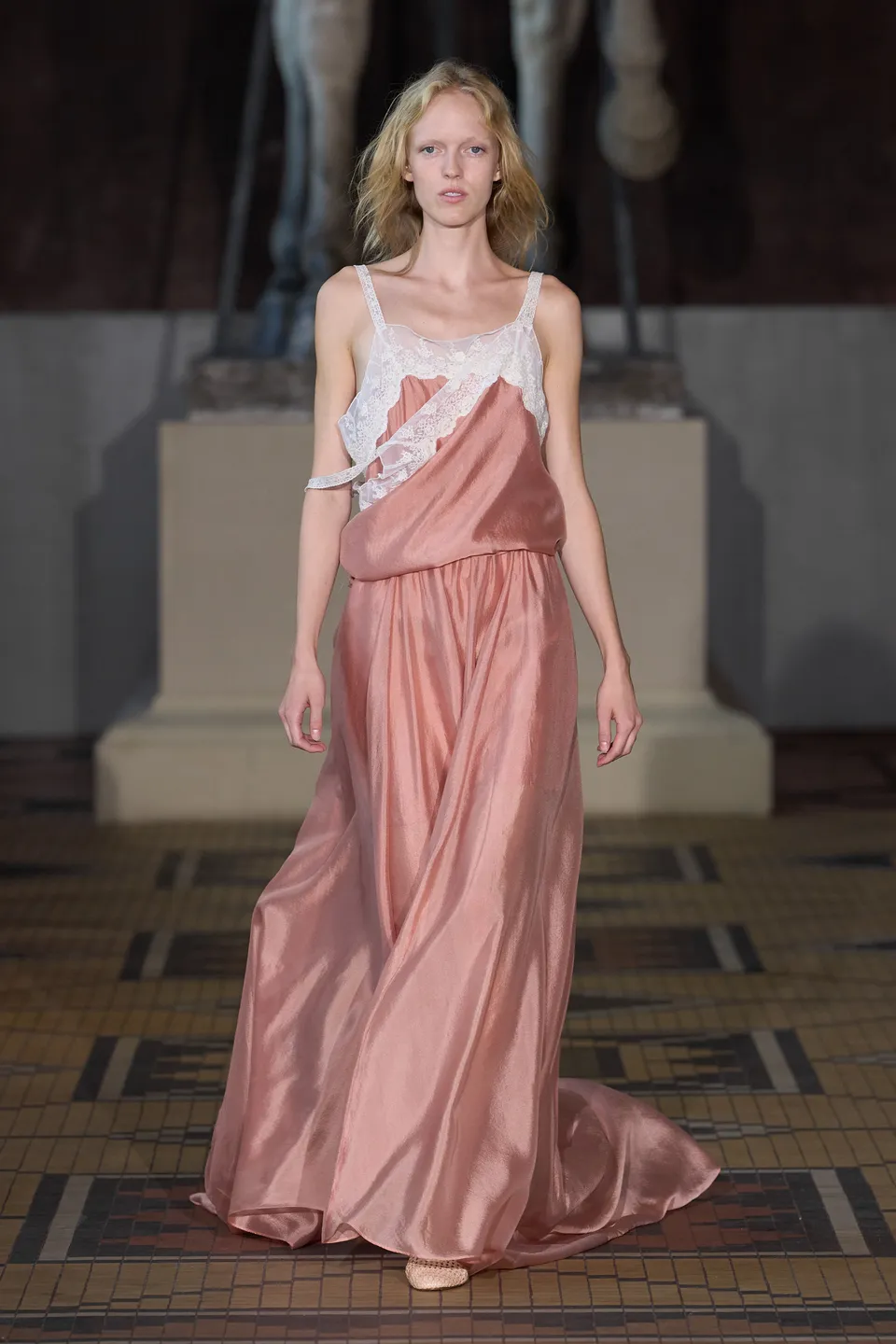
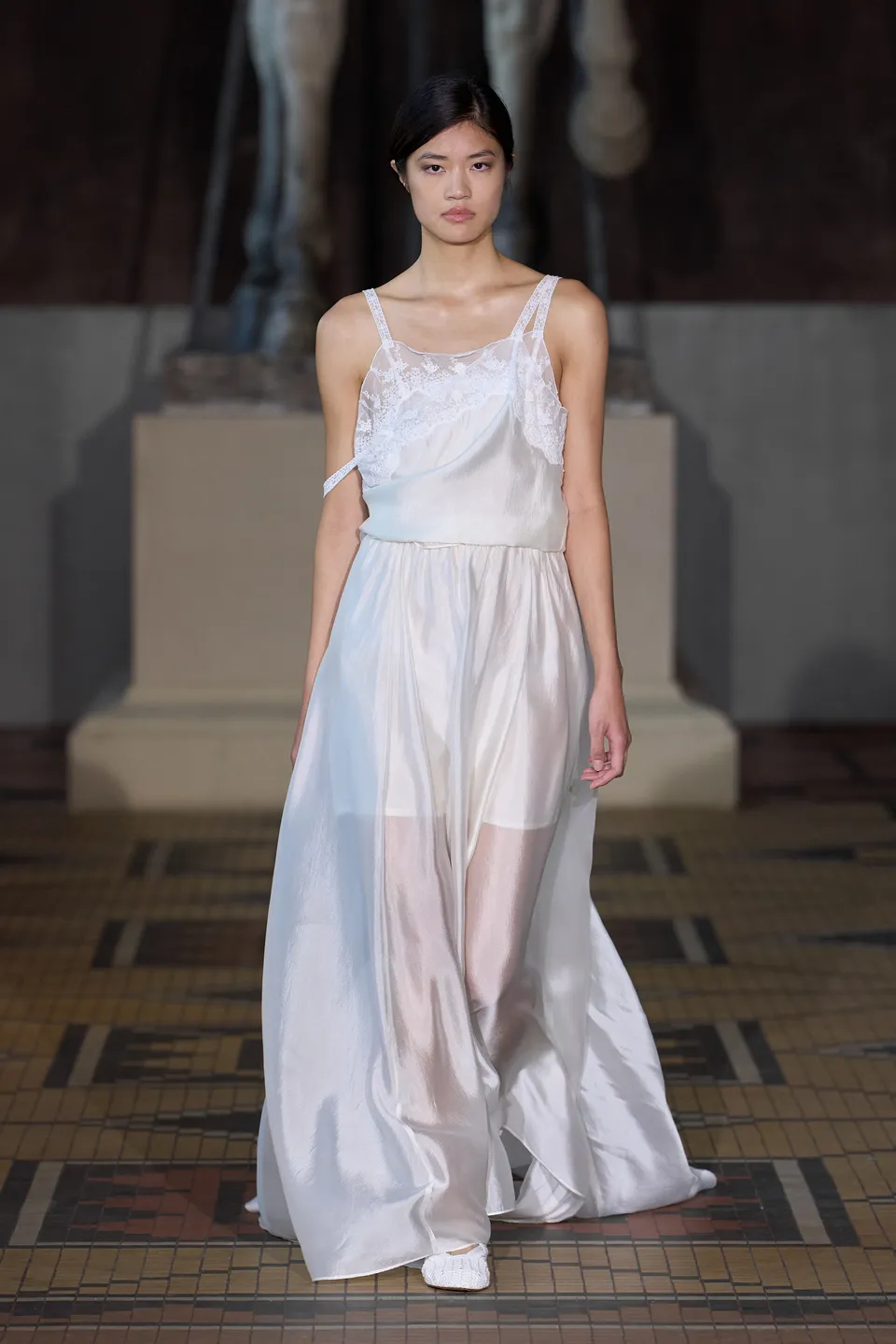
Freya Dalsjø lets wisps of organza wrap around the body with the temporary logic of fabric caught in motion. Anne Sofie Madsen sends chiffon diagonally across geometric constructions, allowing corners and folds to wander beyond familiar placements. Each garment creates a tiny question: where exactly is this supposed to sit?
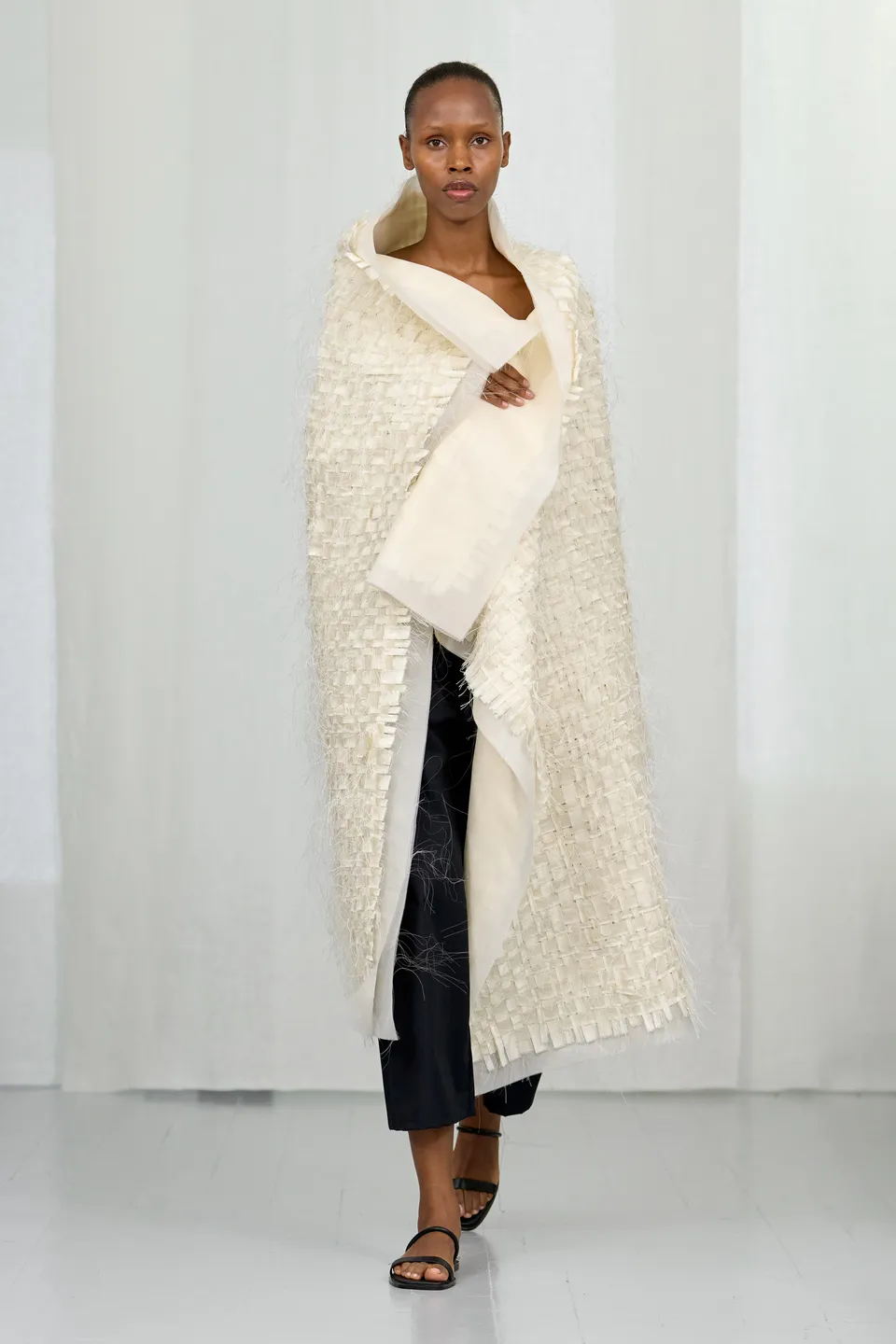
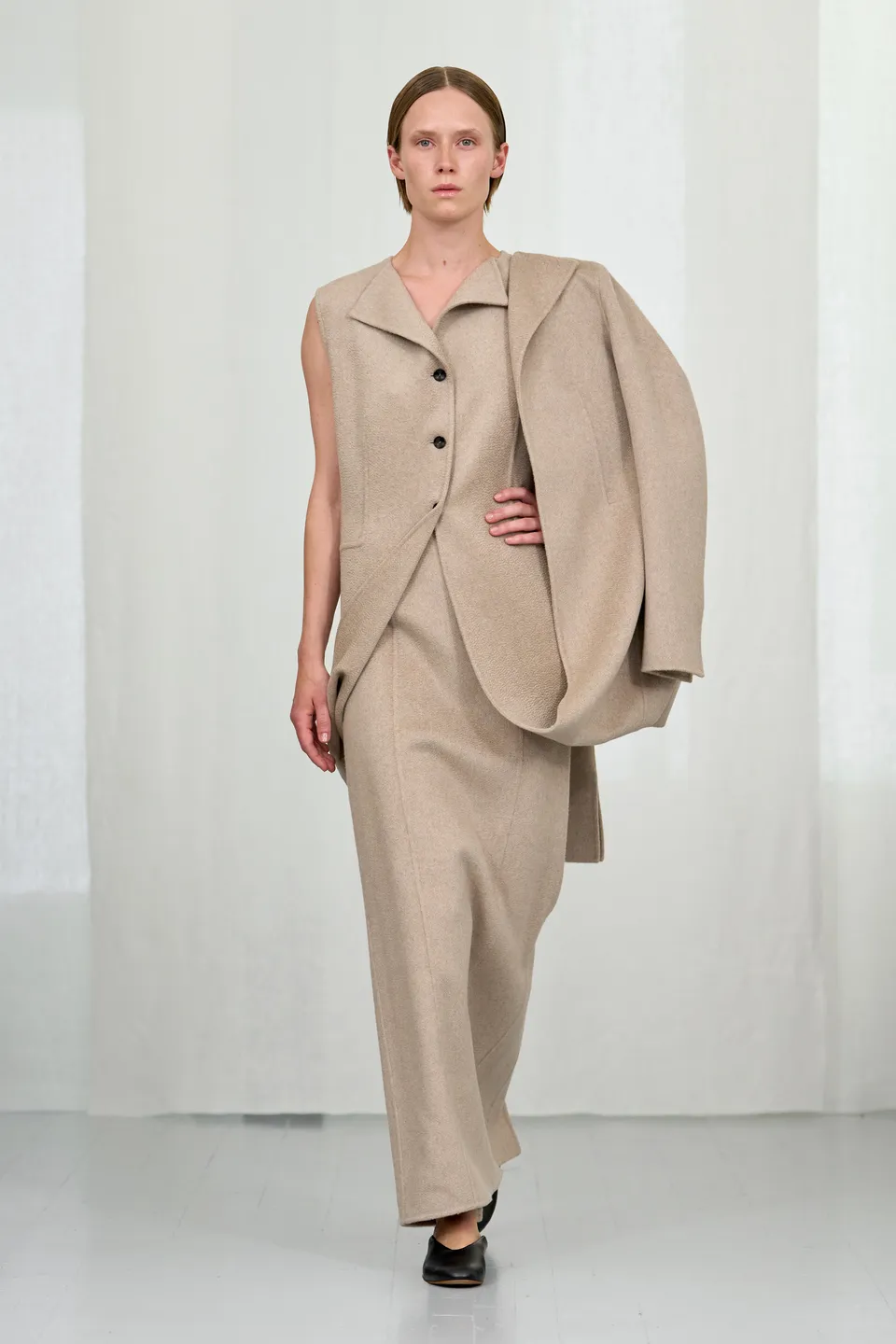
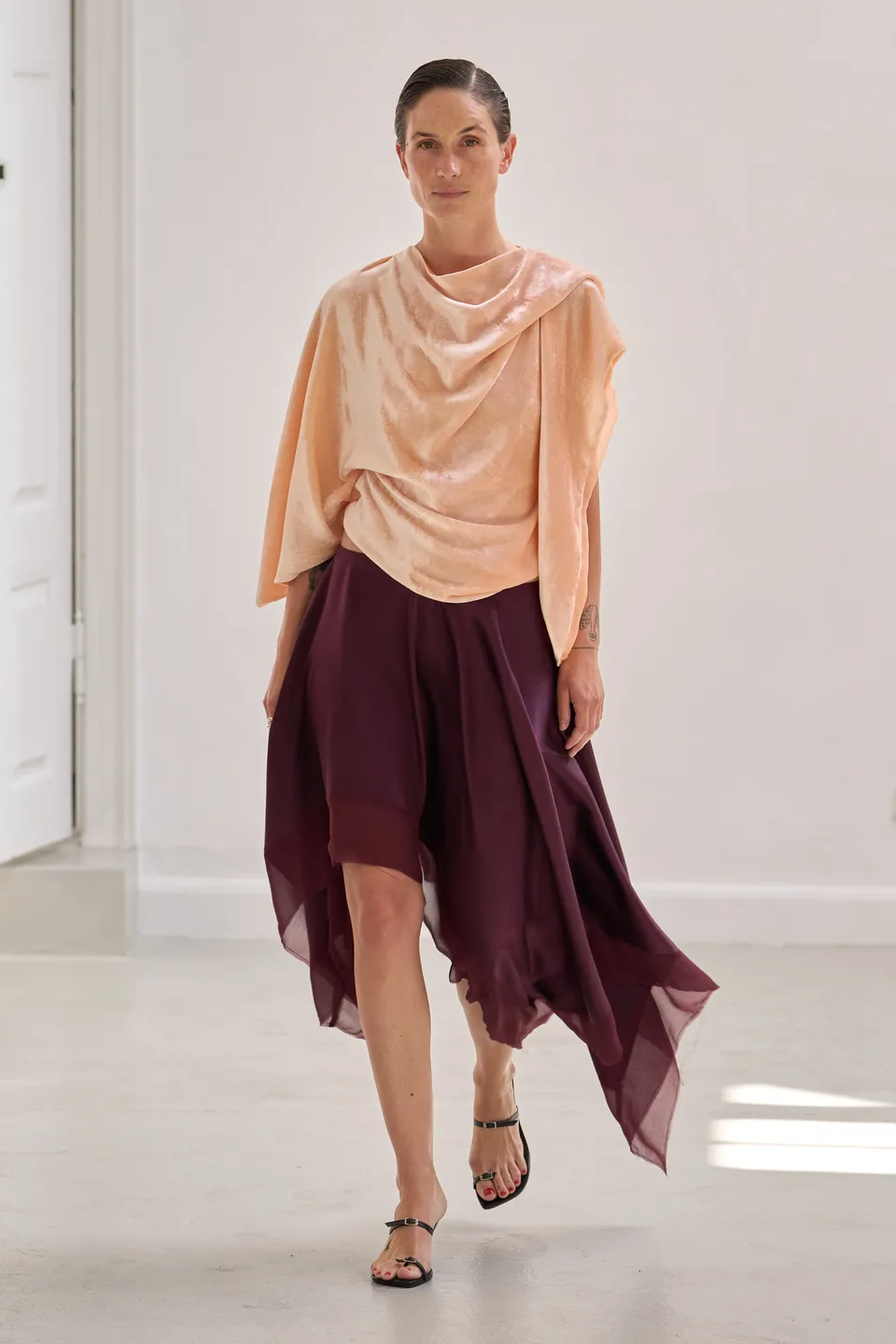
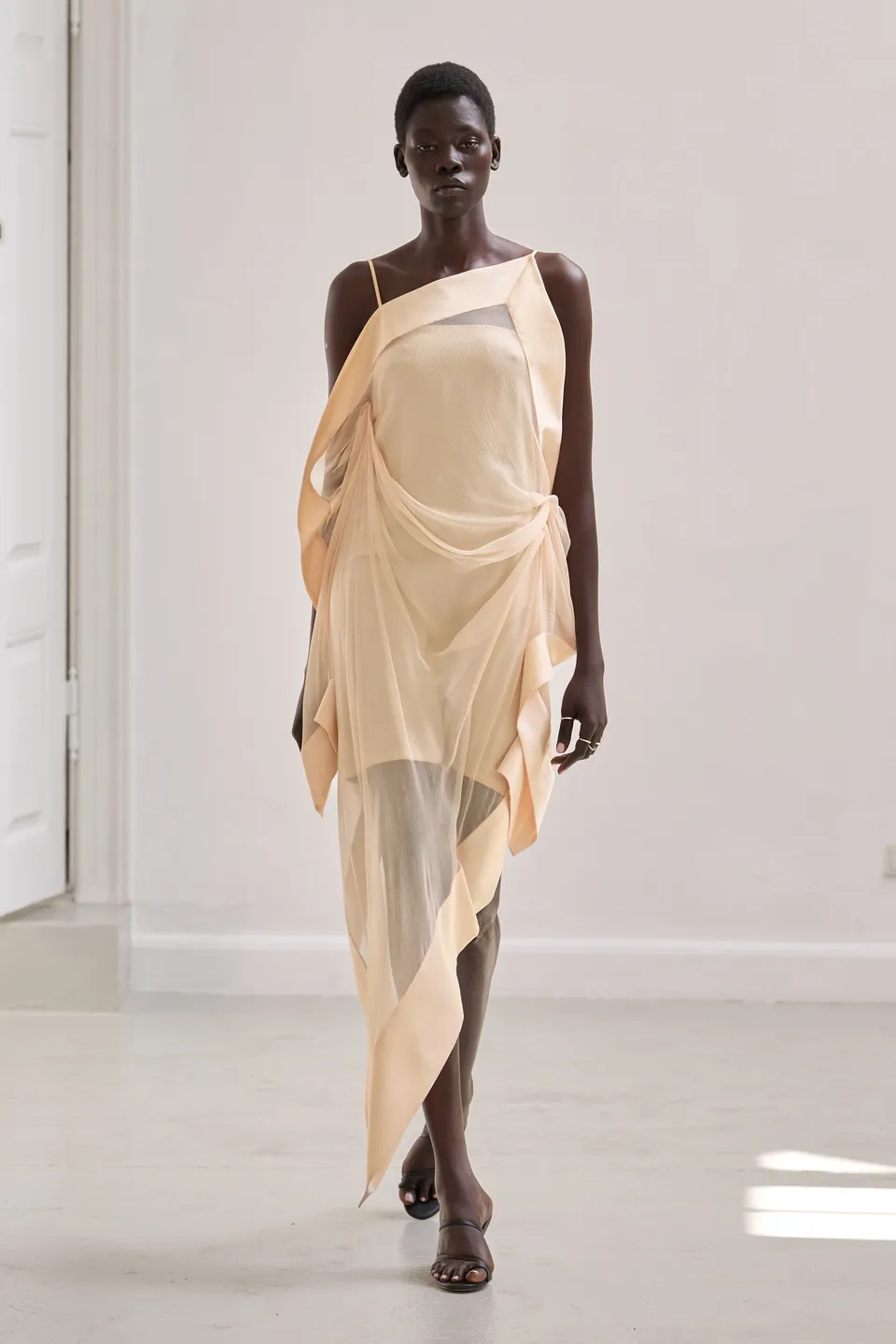
That uncertainty gives the clothes their charge.
Traditional dressmaking creates expectations that live almost invisibly in our heads. Shoulders anchor sleeves. Necklines frame the chest. Waistbands establish where the torso ends. Clothing trains the eye to expect certain coordinates.
Spring 2027 keeps nudging those coordinates out of place. The falling-off effect turns displacement into a design decision.
A strap slides lower and suddenly the eye follows it. A back opens unexpectedly and the garment acquires a sense of recent movement. A dress tilts across the torso and seems to preserve the physical trace of somebody adjusting it seconds earlier.
That detail pushes lingerie dressing into a more psychologically interesting place. Bras, briefs, slips and sheer layers have spent several seasons occupying the visible wardrobe. Copenhagen takes intimacy into the act surrounding those pieces.
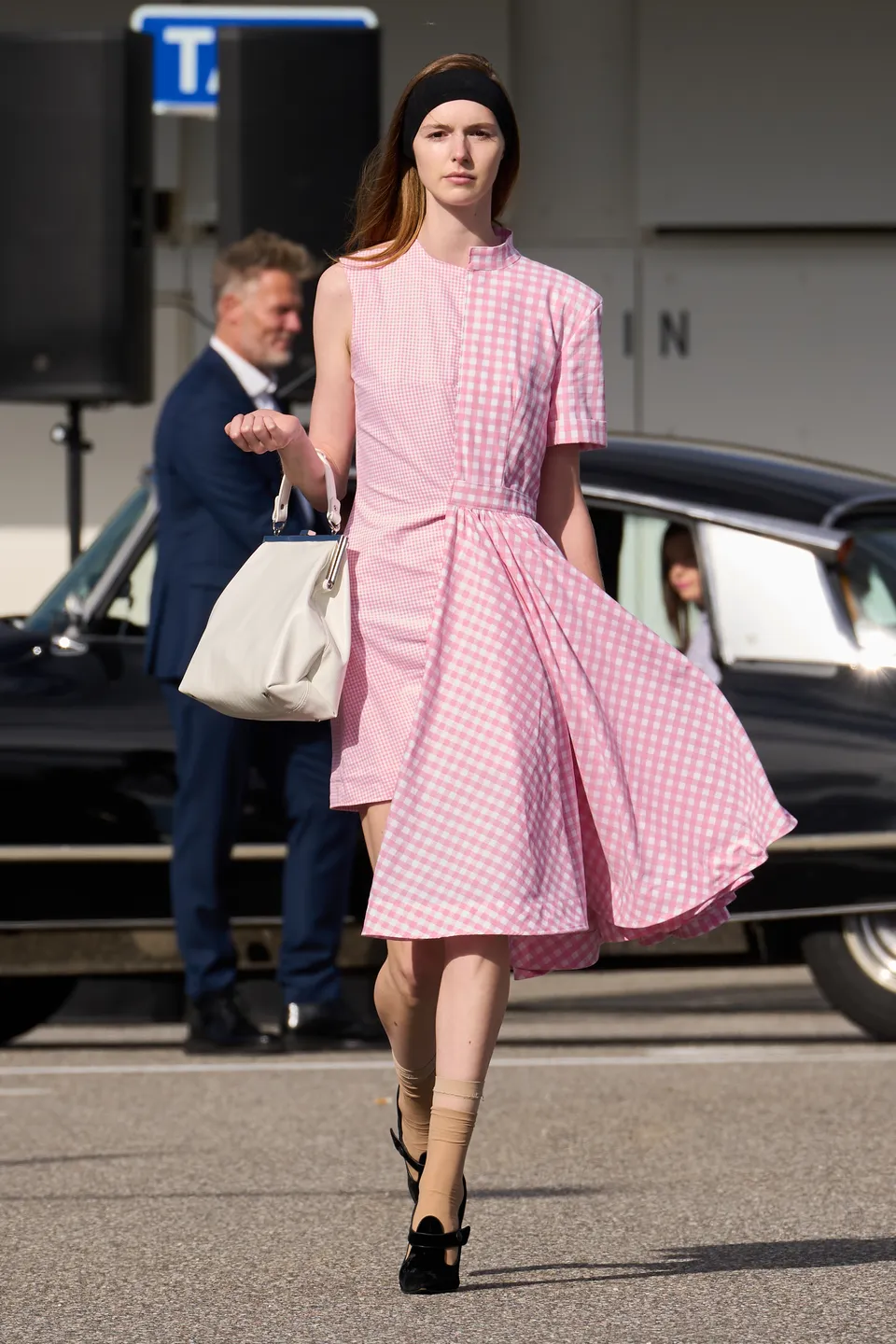
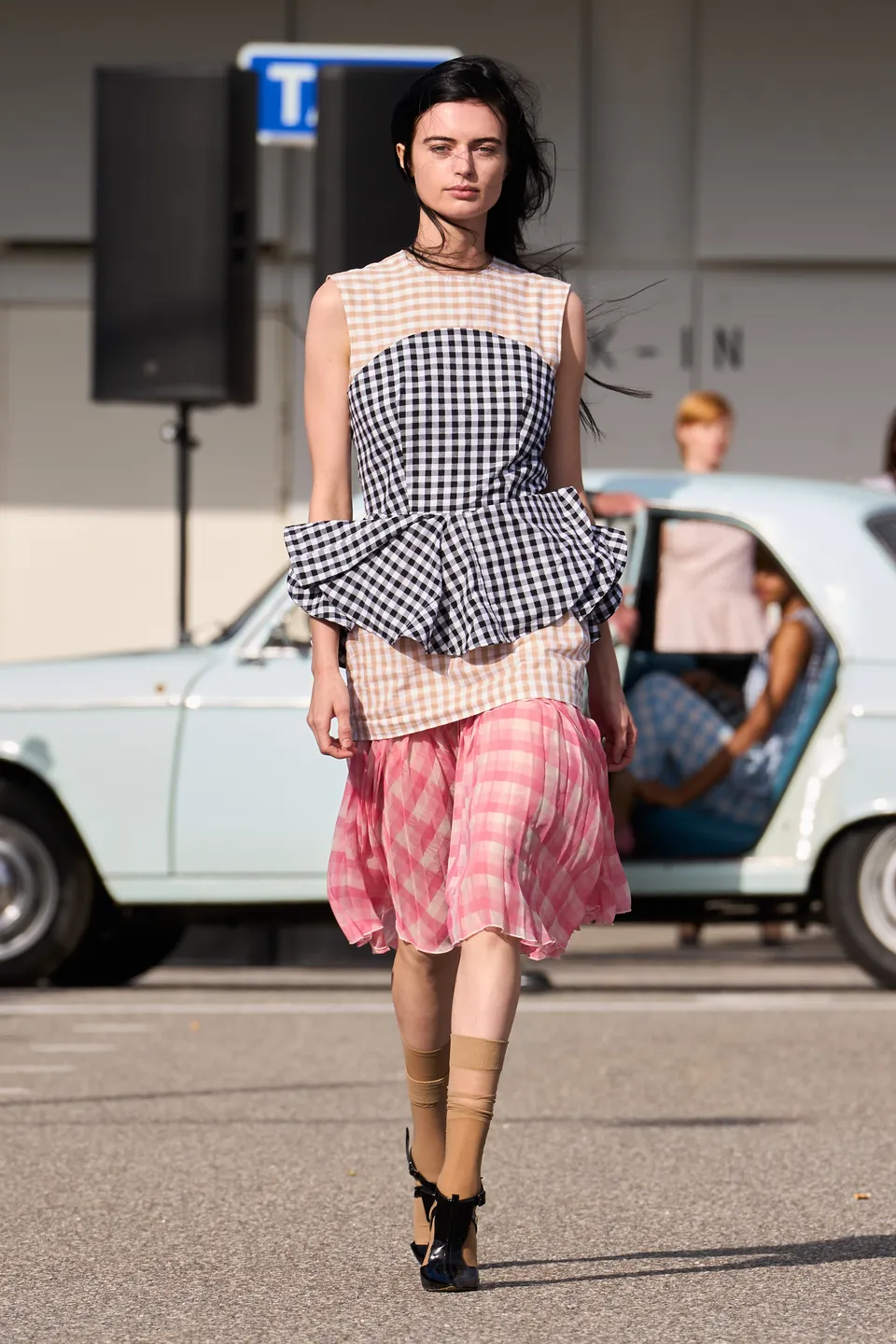
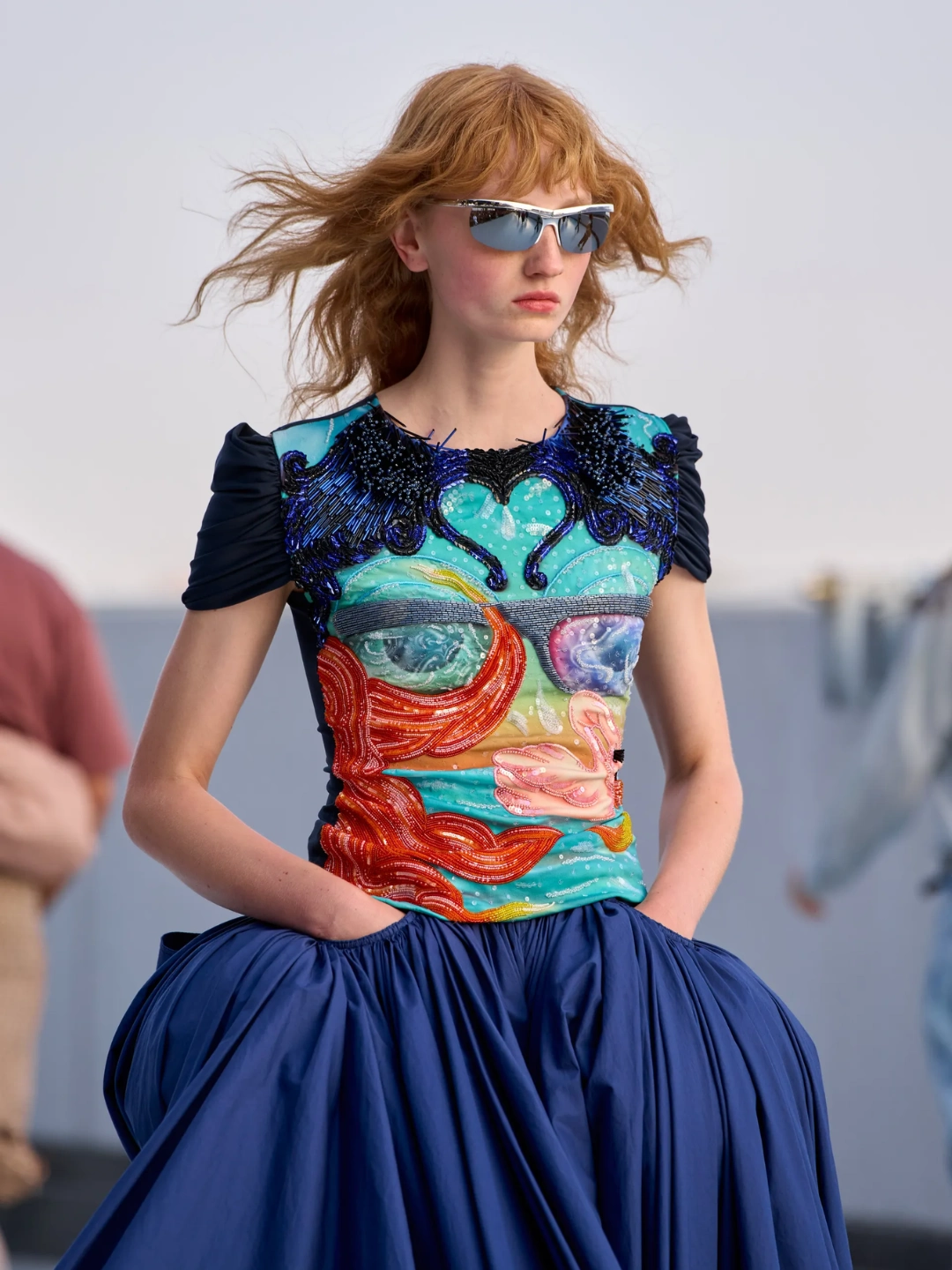
Studio Constance pushes the falling-off effect into something almost historical. The panniered shape recalls an Elizabethan maid caught between service and ceremony, with hoop structures barely veiled by whisper-thin fabric in muted tones. The drapery hangs with an exhausted softness, giving the figure a strange vulnerability, as though centuries of costume have loosened around her body and left only their ghost behind.
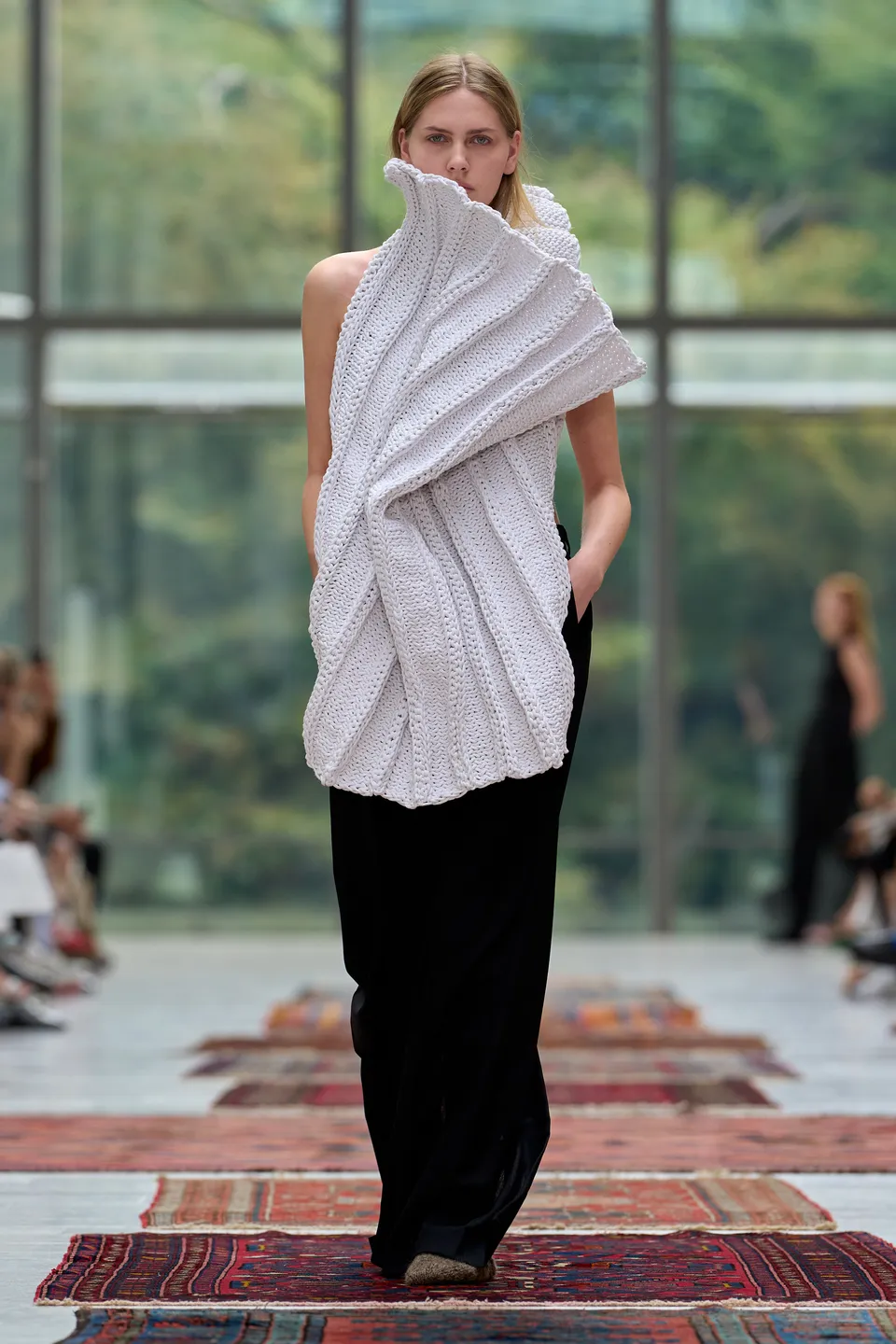
At Institution, wrapped tops seem to fight against their own construction, twisting around the torso with the possibility of slouching lower at any moment. The falling-off effect lives inside that instability, where the garment appears to be holding itself together through sheer friction and gravity.
Nicklas Skovgaard approaches the idea through accumulation. His dresses often look as though one dress is slipping away from another, with layers, straps, trims and accessories colliding inside a single look. The effect creates visual confusion with purpose: the eye keeps searching for where one garment ends and the next begins.
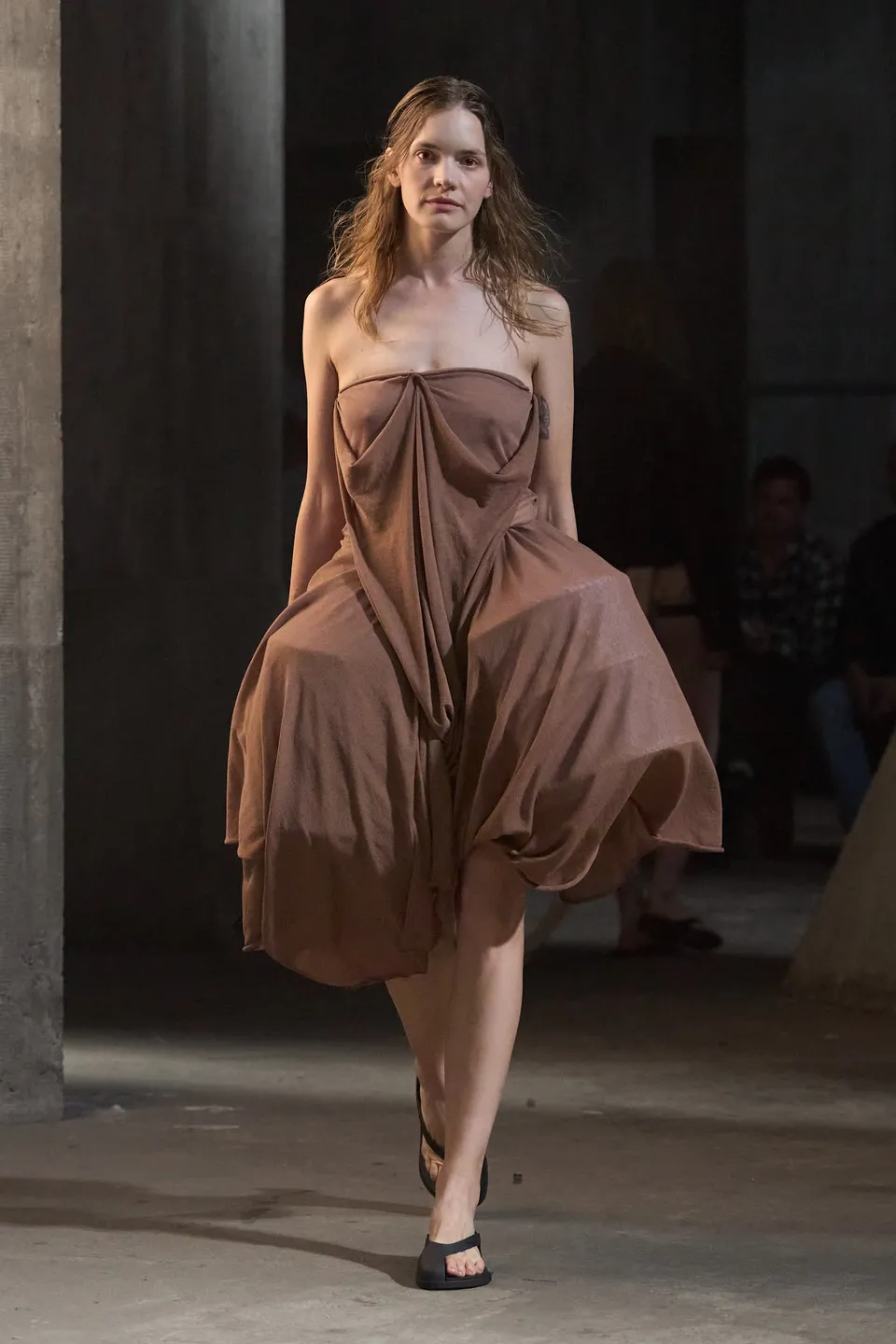
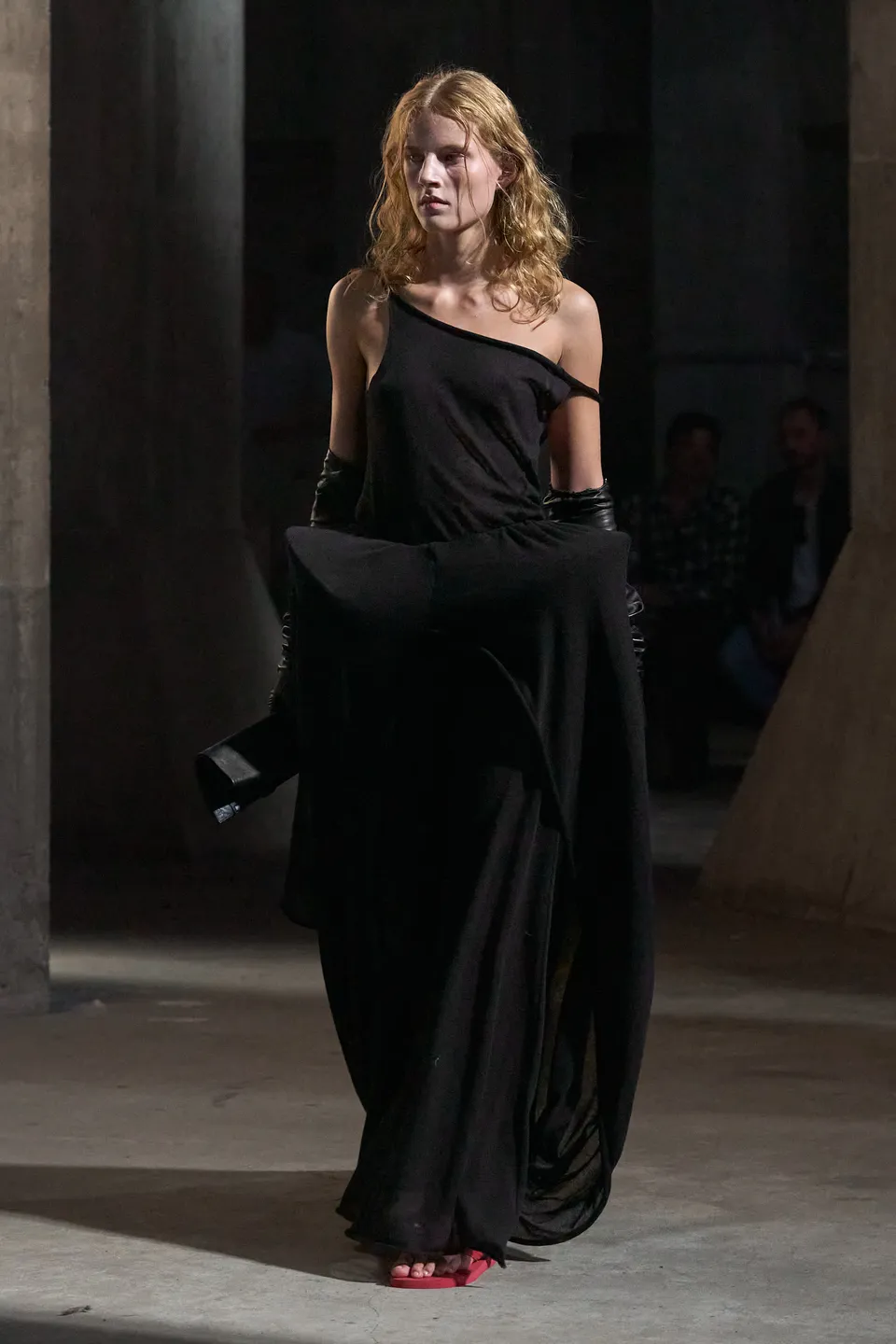
Here, sensuality lives inside implication.
A fallen strap contains a past position. An open fastening suggests a hand. A displaced neckline carries the memory of movement. The garment begins telling a story before the wearer says anything.
The falling-off effect turns dressing into choreography. Someone fastened this. Someone loosened it. Someone touched it.
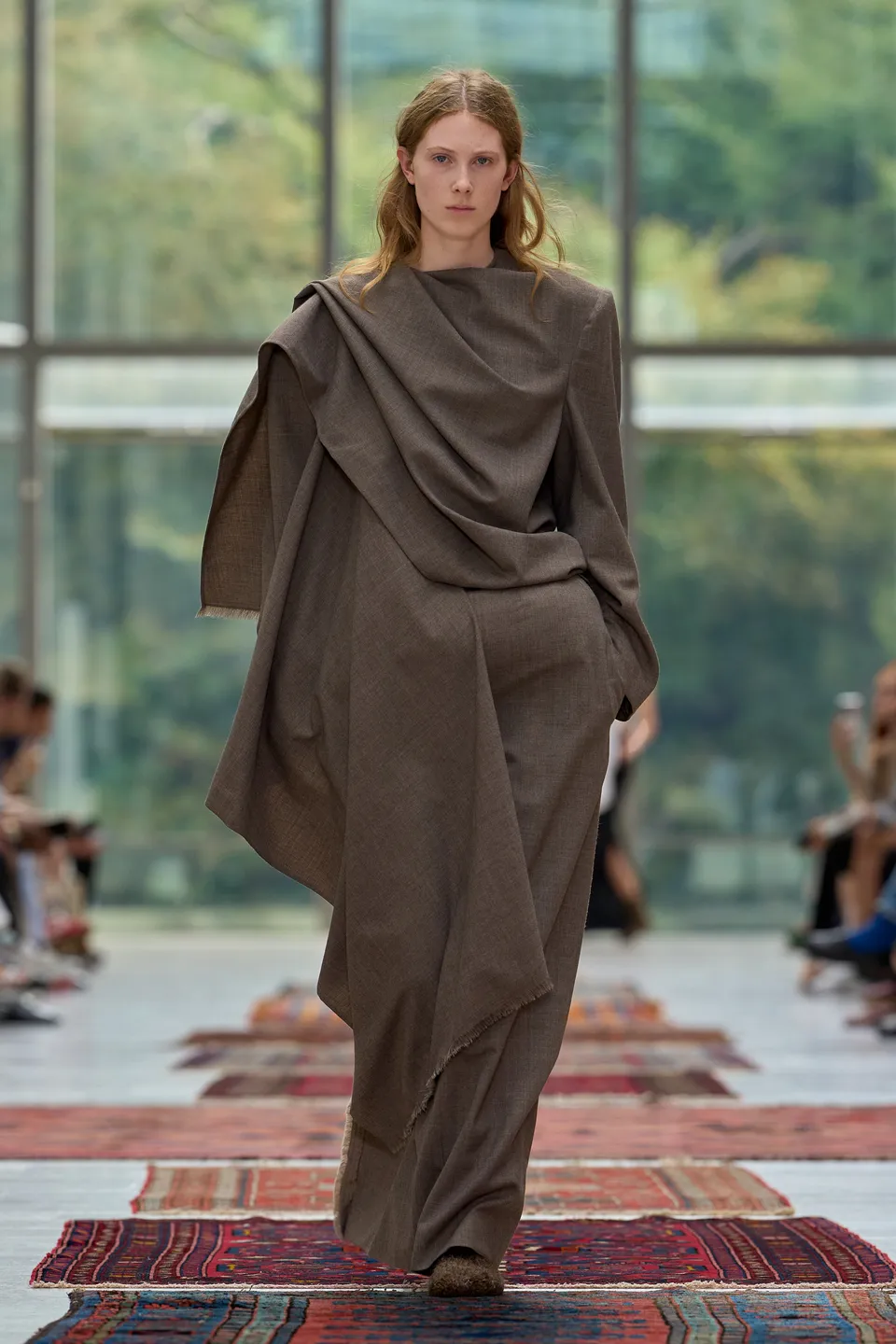
These clothes invite gravity into the construction process. Draping, wrapping, loose knits, generous lengths of fabric, and geometric pieces allow material to negotiate its own relationship with the body.
The garment keeps changing, and the falling-off effect becomes part of that transformation.
That quality gives Copenhagen’s famous ease a more emotional pulse. Scandinavian dressing has built enormous cultural power through clarity, function and an almost architectural awareness of everyday life. Spring 2027 lets that composure become beautifully disordered.
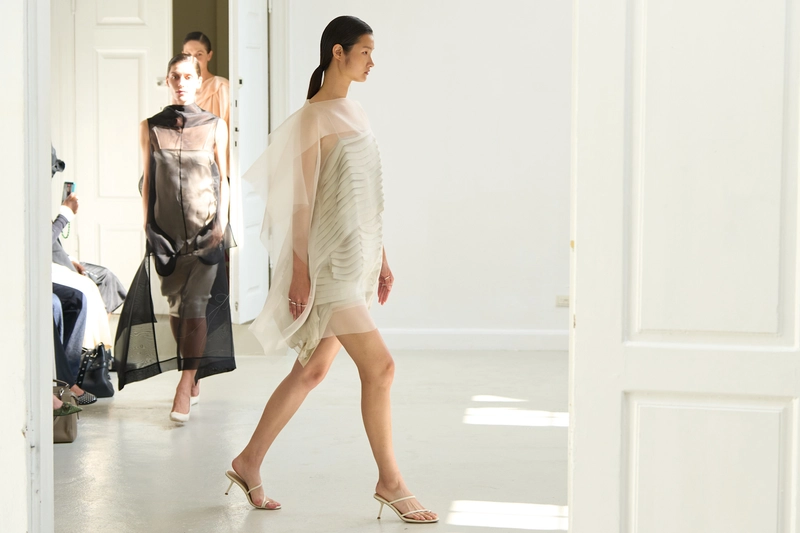
The woman still understands clothes. She simply appears to have spent several hours living inside them.
A perfectly arranged outfit belongs to the moment in front of the mirror. These slipping garments belong to everything that happens afterward: walking, sitting, dancing, pulling something over the head, pushing a sleeve upward, letting a shoulder fall free again.
That sense of human interference sits comfortably inside fashion’s current fascination with visible craft and irregularity. Hands, gravity, and motion leave marks on the final silhouette. The wearer becomes another stage of the design process.
Perhaps that is the real seduction of the falling-off effect. The garment arrives unfinished in the most intentional way possible, leaving one final job for the body.
Advertisement