MENU
Close





PDRN has already won the marketing battle. Now comes the more interesting one: can every serum carrying the name earn the biological promise attached to it?
PDRN has already won the marketing battle. Now comes the more interesting one: can every serum carrying the name earn the biological promise attached to it?
September 25, 2026


Beauty has managed to make DNA look surprisingly pretty. Pink ampoules, glossy droppers, and “regeneration” claims have transformed PDRN into one of 2026’s most recognizable skincare ingredients.The commercial rise has been extraordinary. Medicube’s PDRN range passed 50 million cumulative product sales by early 2026, a sharp acceleration for an ingredient that many consumers had barely heard of a few years earlier.
Popularity alone says little about effectiveness, though. PDRN deserves a closer look because it carries genuine biological activity, a medical research history and a growing body of topical research. The interesting question is how much of that science applies to the serum sitting on a bathroom shelf.
PDRN stands for polydeoxyribonucleotide, a purified mixture of DNA fragments traditionally derived from salmonid sources.
The phrase “salmon sperm facial” has given the ingredient plenty of viral mileage, yet it creates a slightly misleading mental image. Finished PDRN is highly processed and purified. What remains is fragmented nucleic-acid material, not intact reproductive tissue.
The word fragmented is important.
Think of a full genome as an enormous library filled with books arranged in precise order. PDRN is closer to shredded sections of those books. The material still contains the chemical building blocks of DNA, while the complete genetic instructions have been broken apart.
This is also why conversations about PDRN “changing your DNA” quickly become confusing. Gene-editing technologies require highly specific molecular systems capable of locating and modifying defined genetic sequences. PDRN operates through a completely different biological route.
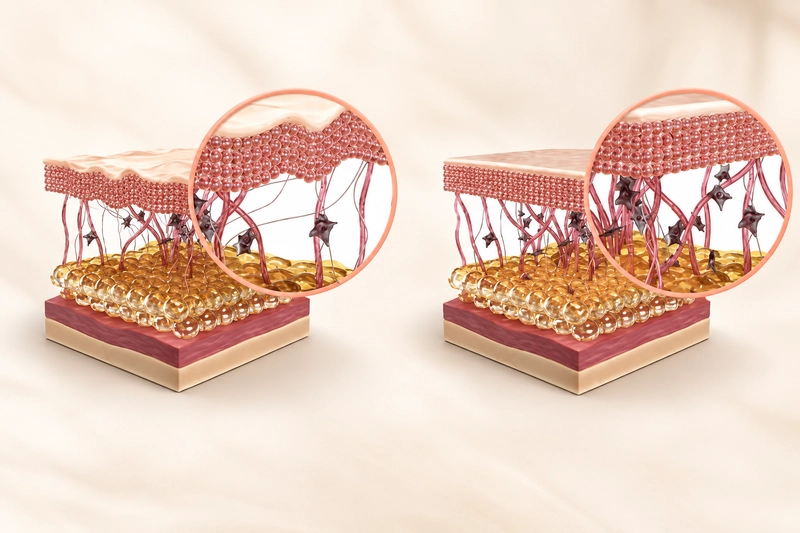
One reason PDRN attracts scientific attention involves something called the salvage pathway.
Cells constantly need nucleotide building blocks when maintaining and producing DNA. Creating every component from scratch requires energy, so cells also recycle material already available around them.
PDRN-derived fragments can be broken down into smaller components that enter this recycling system.
A simple analogy is melting down an old gold necklace and using the metal to make something new. The gold remains useful, while the original necklace design disappears. PDRN fragments can contribute molecular raw material without carrying their original genetic meaning forward.
Research also links PDRN with adenosine A2A receptors, which participate in inflammation, blood-vessel activity, and tissue repair. This receptor activity forms part of the reason PDRN has been explored in wound healing and regenerative medicine.
Those mechanisms make PDRN biologically interesting. They also make precision especially important when beauty brands use words such as “regenerate,” “repair” or “renew.”
The biggest challenge for topical PDRN is surprisingly simple: skin is very good at keeping things out.
The outermost layer, the stratum corneum, acts as a protective barrier. Large molecules generally have a much harder time moving through intact skin through passive diffusion. PDRN fragments can be very large, which creates an obvious formulation problem.
A well-known guideline in skin pharmacology is the “500 Dalton rule,” which suggests that smaller molecules pass through skin more easily. Scientists now treat that number as a useful reference point rather than an absolute border. Formulation, molecular structure, delivery systems, and skin condition all influence penetration.
That makes a 2026 topical study especially interesting.
Researchers tested a defined 0.1% PDRN formulation and detected PDRN-associated signals within superficial viable epidermal layers over time. The study also reported improvements in several periocular skin measurements.
This is meaningful evidence because it challenges the idea that topical PDRN automatically stays entirely on the surface.
The limitations matter just as much. The human clinical portion involved 31 healthy Chinese women and lasted 28 days. Penetration was modest, reaching only a few percent in the pilot Raman measurements after 24 hours. Longer and broader studies would help clarify how much of the observed improvement comes from PDRN itself, how durable the effect is and how much delivery depends on the exact formula.
So the current science supports possibility, not a universal promise.
This may be the most important consumer point.
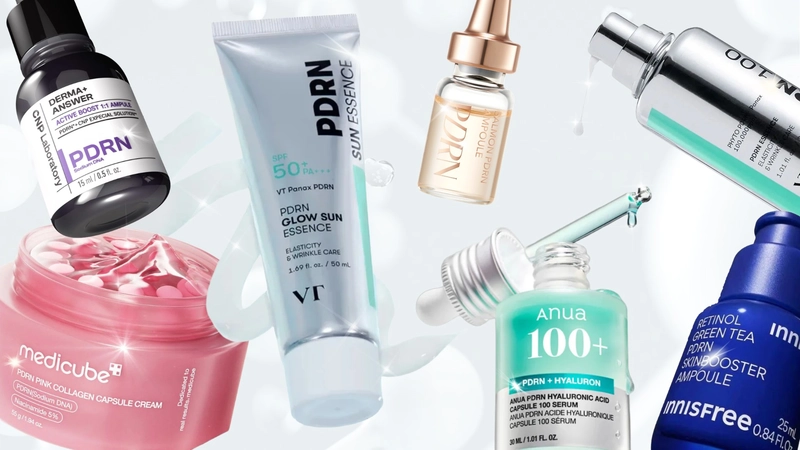
The claim “Contains PDRN” in a PDRN serum tells you surprisingly little by itself.
Two products carrying the same ingredient name can differ in:
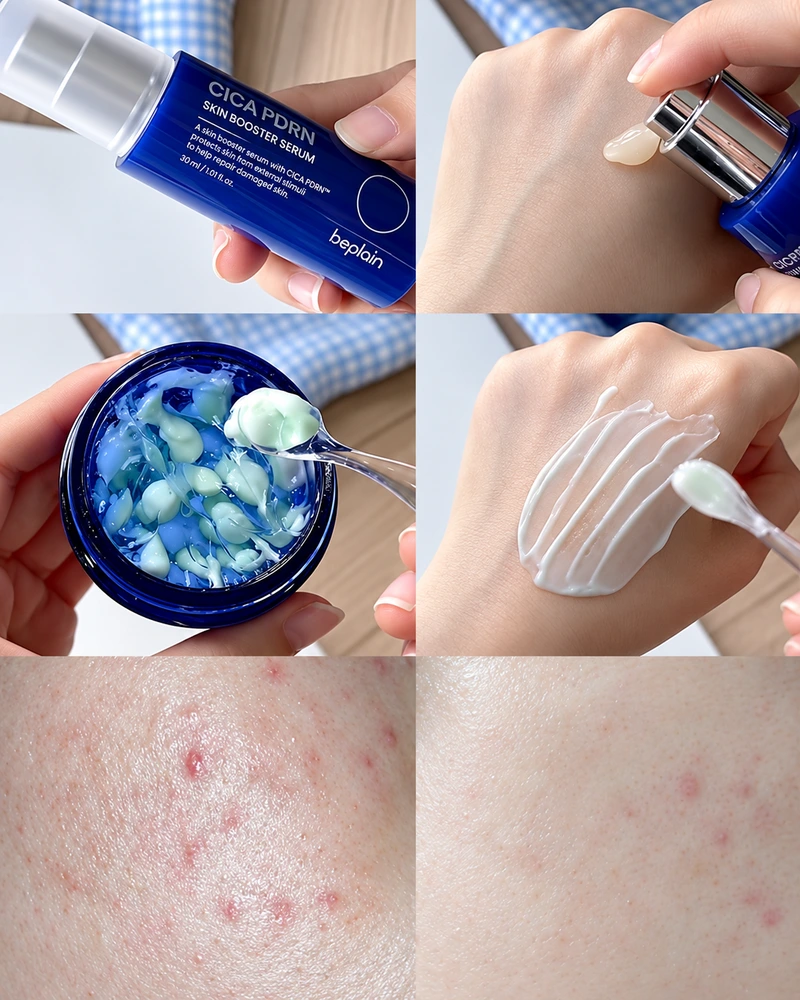
The 2026 study tested one specific PDRN preparation inside one specific formulation. Its findings give useful evidence for that formulation and for topical PDRN research more broadly. They do not automatically prove that every PDRN toner, mask or ampoule delivers the same biological effect.
This is where beauty marketing can move much faster than science. An ingredient earns credibility in one setting, then the entire category borrows the halo.
For PDRN, formulation may be almost as important as the ingredient itself.
Saying that PDRN does not edit human DNA is reassuring, but it answers a very narrow question.
Plenty of skincare ingredients create biological changes without altering genetic sequence. Retinoids affect cellular behaviour. Peptides interact with signalling pathways. Hormones act through receptors. Biological activity exists on a wide spectrum.
The more useful questions are practical.
How much topical PDRN reaches living skin? At what concentration? How long does it remain there? Which delivery systems improve activity? What happens with repeated long-term cosmetic use? How much evidence comes from independent research?
At the moment, PDRN sits in an unusually interesting middle ground. Its pharmacology is credible, its medical research history is substantial, and emerging topical studies are genuinely promising. What remains less established is the leap from that science to sweeping claims across the rapidly expanding cosmetic market.