MENU
Close





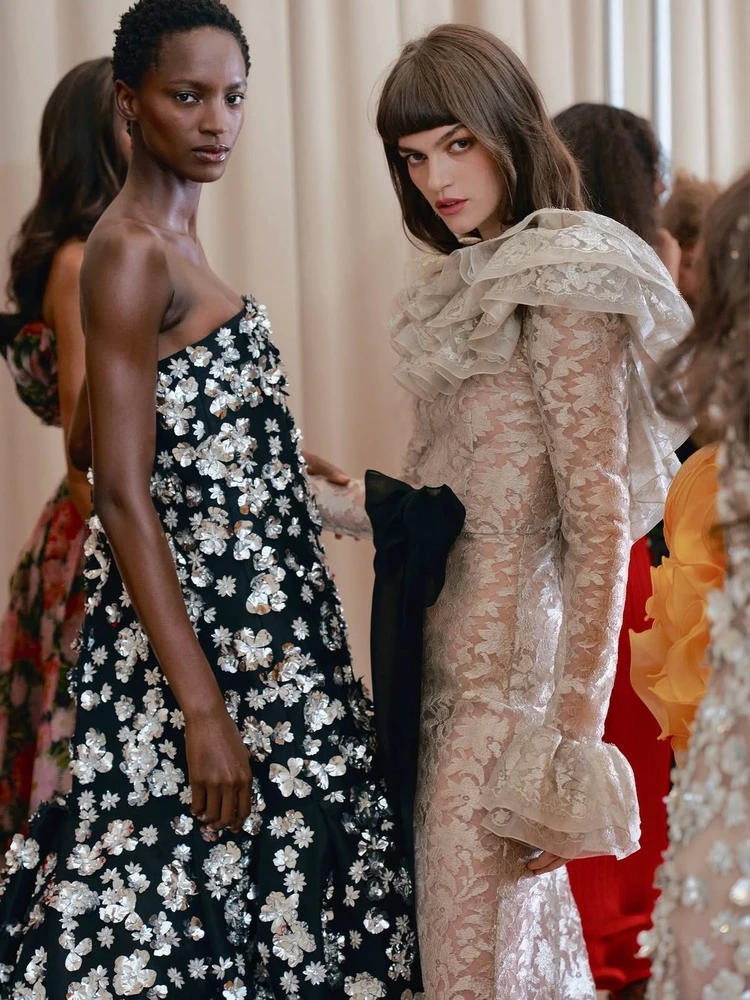
Roksanda SS27 places art directly inside the wardrobe, pairing Françoise Grossen’s fiber sculpture with Ilinčić’s own portrait painting as the house rethinks what daily dressing can become.
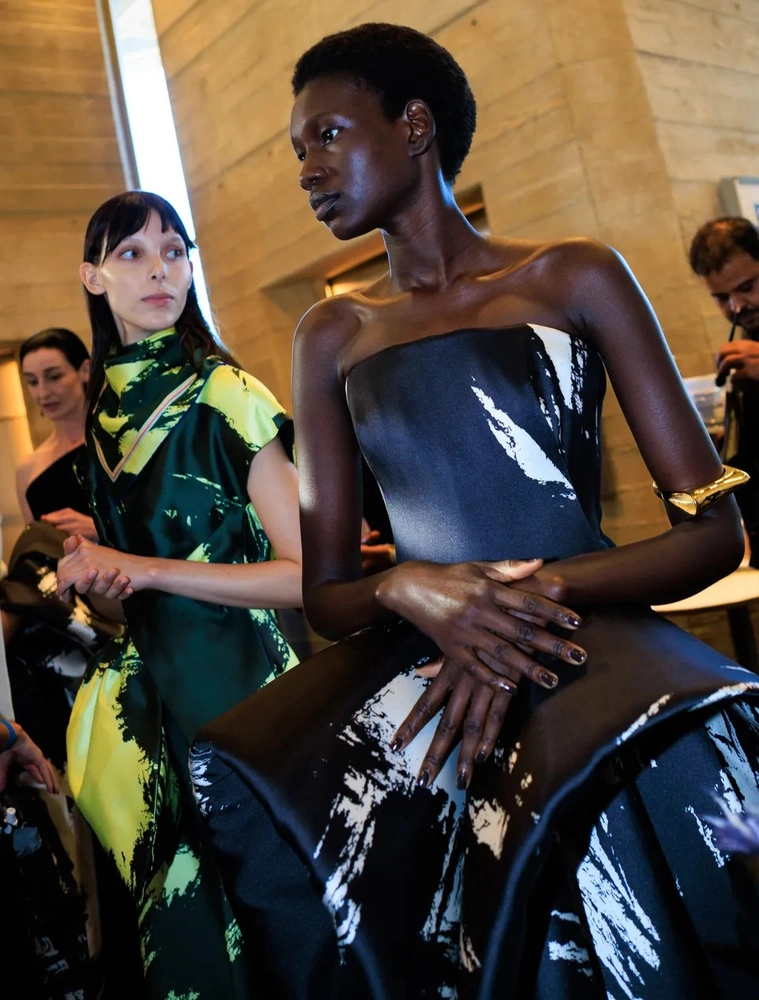
Roksanda SS27 places art directly inside the wardrobe, pairing Françoise Grossen’s fiber sculpture with Ilinčić’s own portrait painting as the house rethinks what daily dressing can become.
September 22, 2026
Advertisement

Advertisement



Concrete rose around pockets of greenery, the Thames sat beyond the Brutalist architecture, and late-September sunlight moved across clothes whose proportions have always understood the value of space. Roksanda Ilinčić has spent two decades designing women who can hold their own against imposing surroundings; this season, the larger question concerned how that authority might travel through an ordinary week.
Spring 2027 also marked Roksanda’s return to the runway following a Fall 2026 season devoted to the opening of her Sloane Street concept space. That pause coincided with a larger evolution inside the company, where daywear, retail expansion and a wider product range have become central to the next stage of the house. The runway therefore carried a practical challenge inside all its colour and sculpture: what does Roksanda look like before evening begins?
The artistic starting point came from Swiss-American fiber artist Françoise Grossen, whose enormous suspended constructions helped bring rope, knotting and braiding into the territory of sculpture.
Grossen treated techniques carrying associations with hair, domestic craft and repetitive handwork as objects capable of commanding architectural space. Roksanda has long pursued a related instinct through clothing, allowing folds, sleeves, colour and volume to give fabric the physical presence of sculpture.
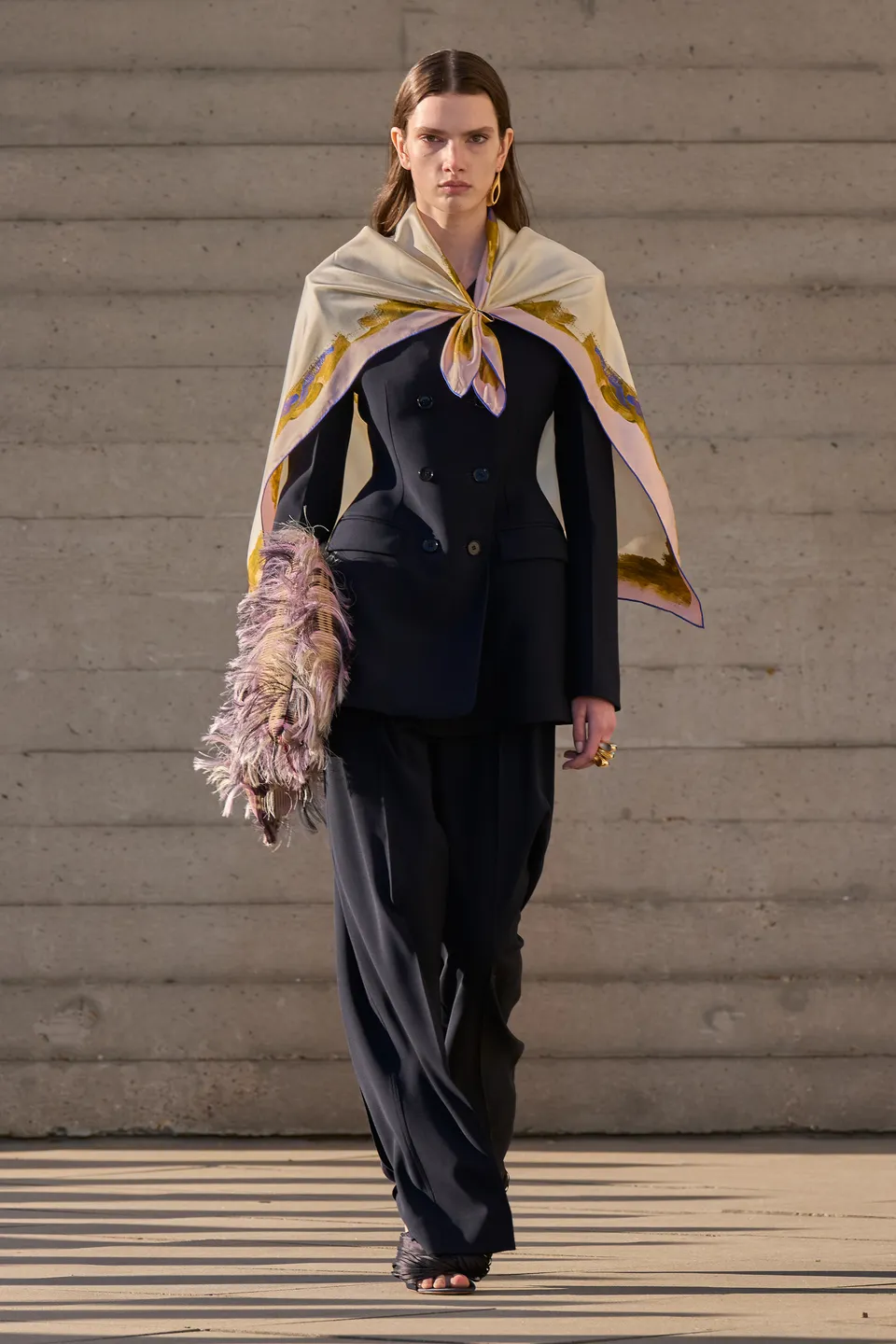
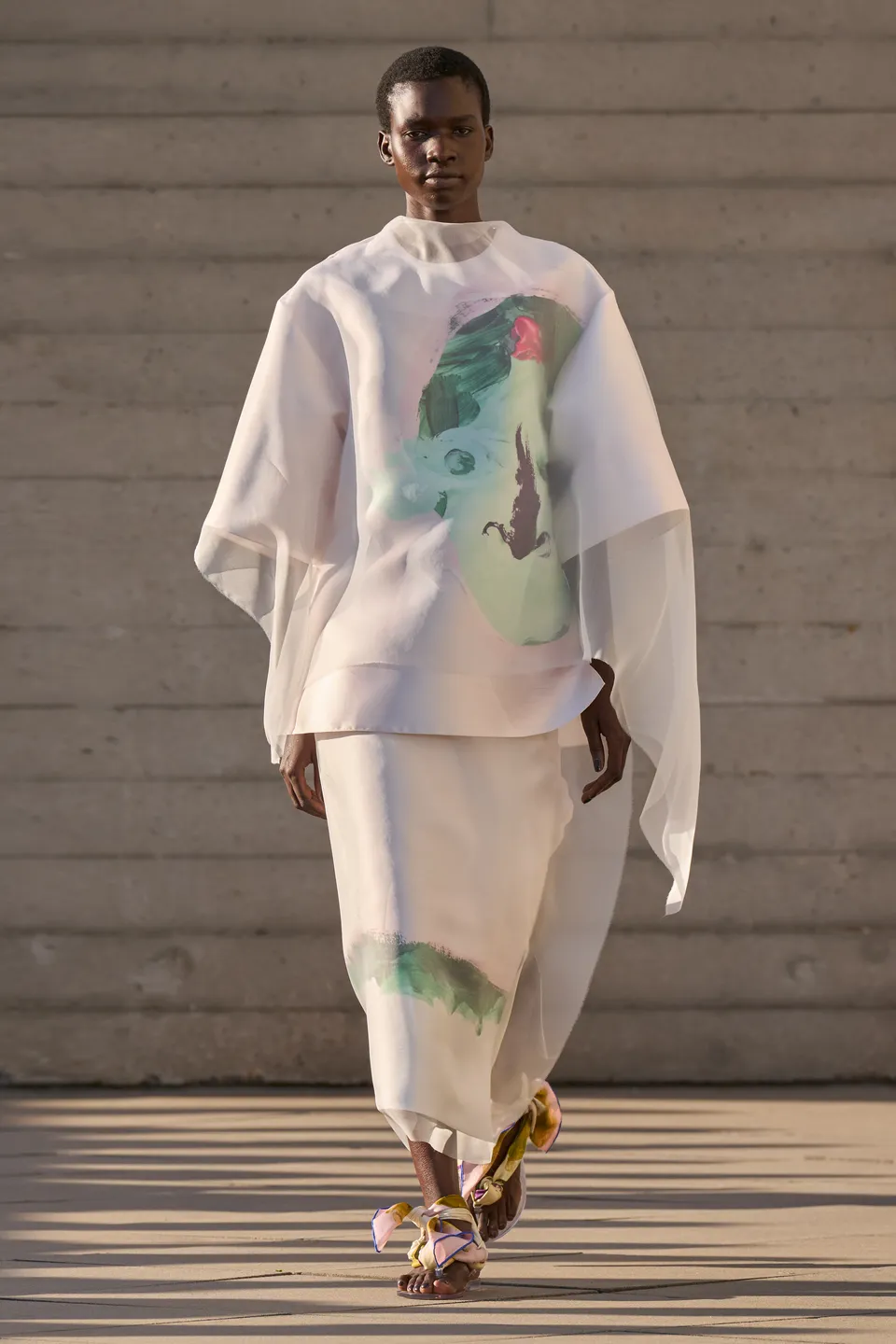
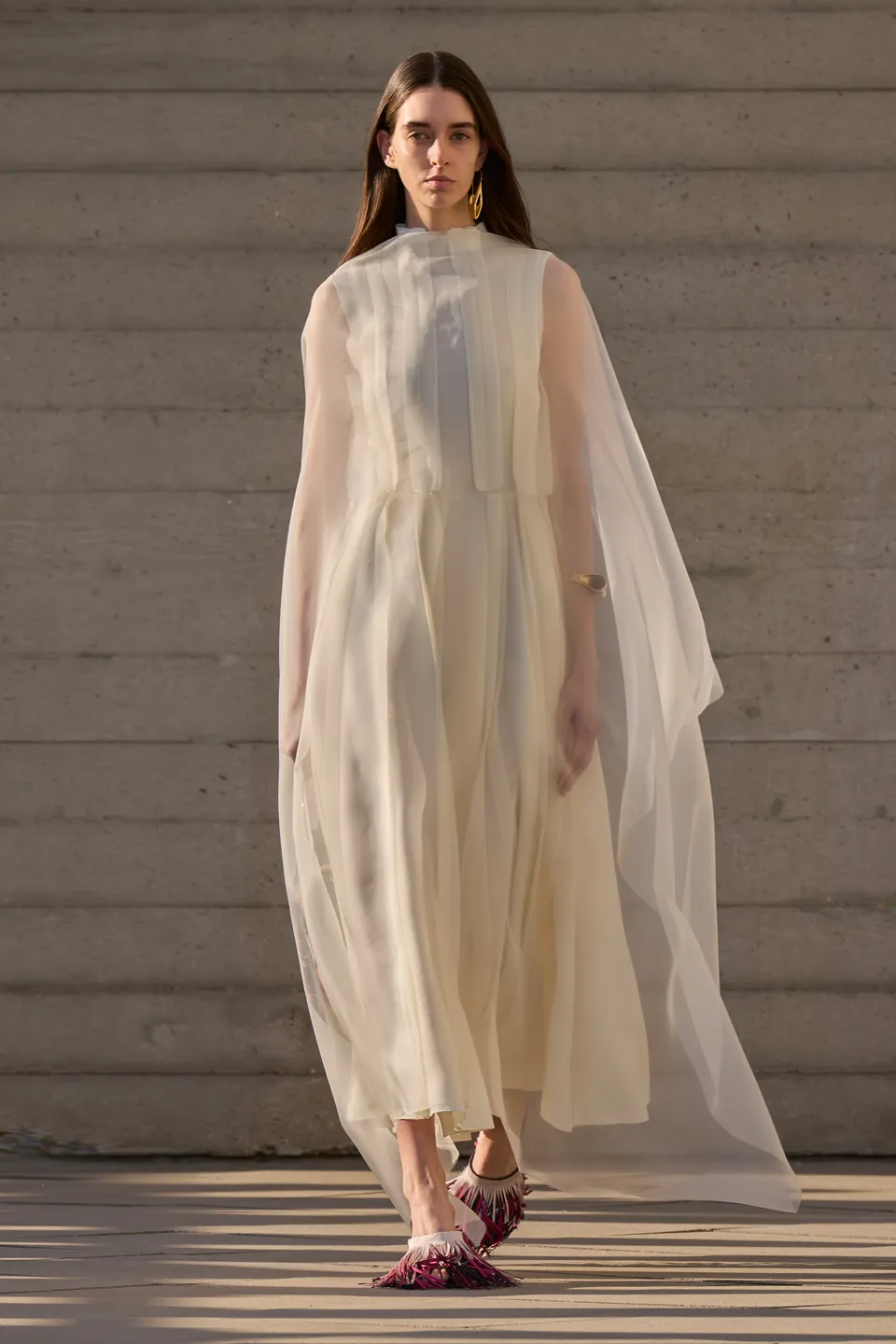
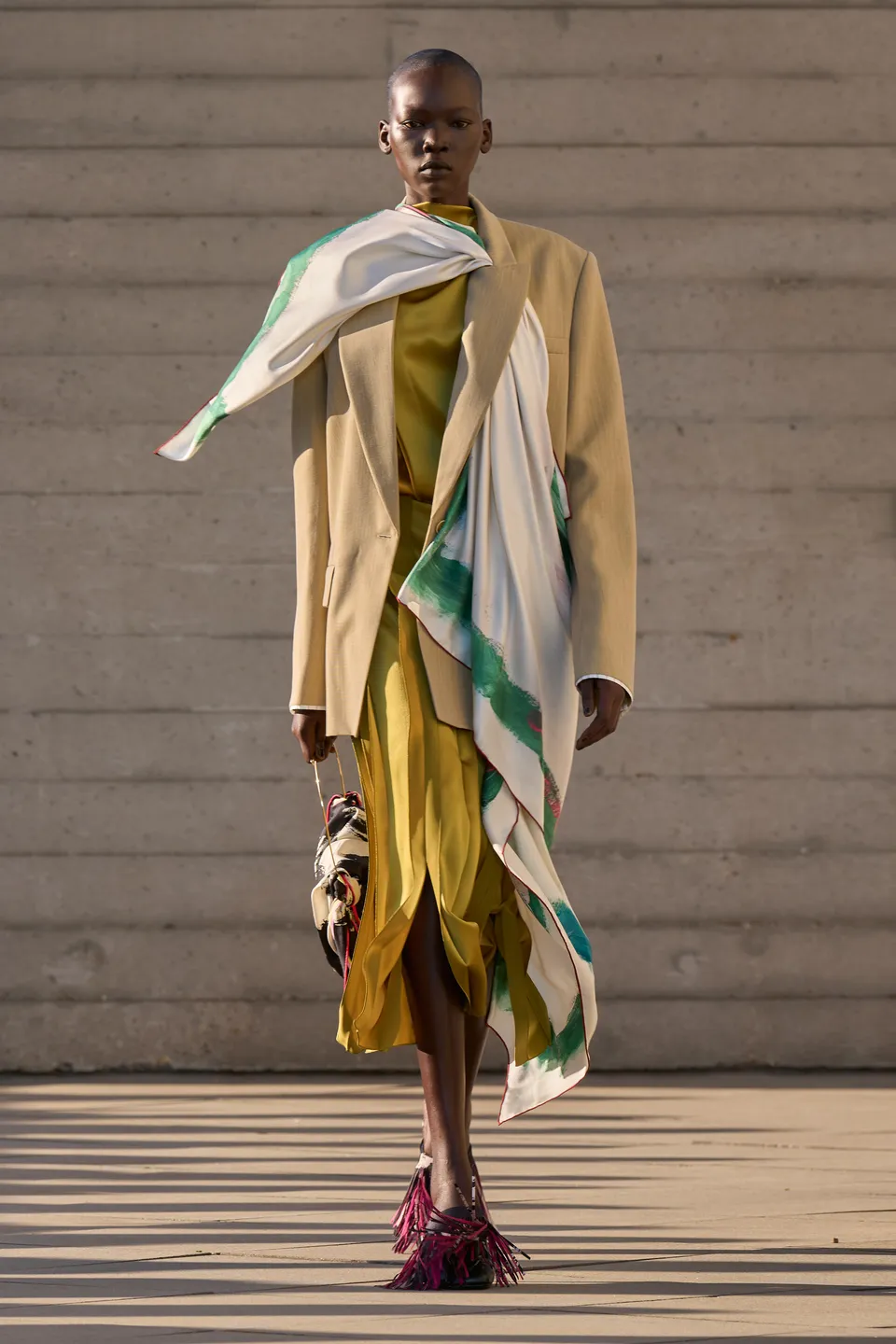
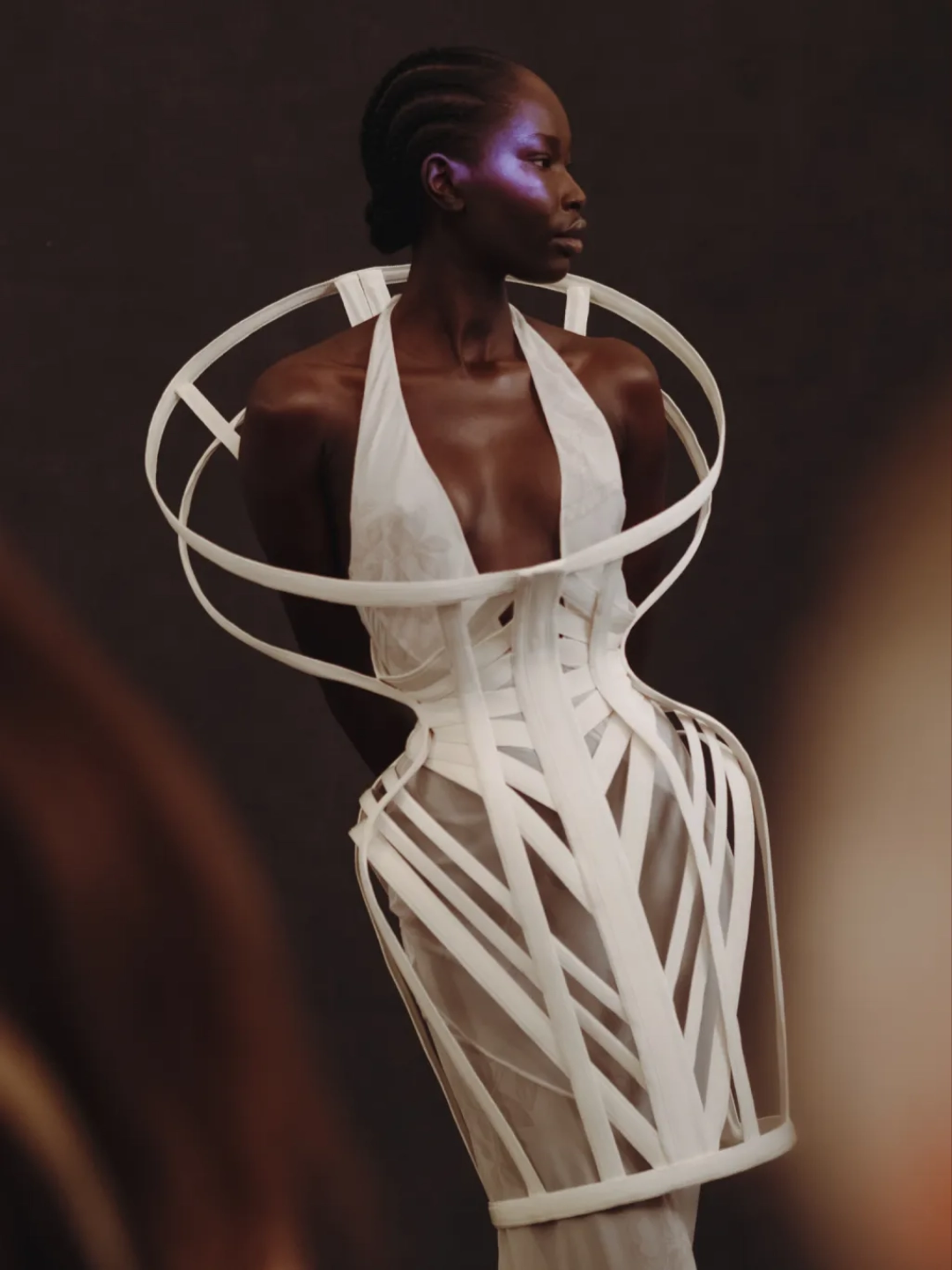
Spring 2027 absorbs that thinking through braids, cords and suspended threads that travel across the body like structural lines. Some pull garments inward; others descend from backs or bags; loose ends move independently as the models walk.
The reference carries an underlying idea about female labour as well. Braiding belongs to many domestic and communal histories, from hair rituals to handcraft, and its enlargement gives those gestures physical authority. For Roksanda, the braid becomes a line drawn through space.
Before studying fashion under Louise Wilson in London, Ilinčić studied fine art in Belgrade. During the summer of 2026 she returned to painting, producing portraits of women that eventually became large silk scarf prints for Spring 2027.
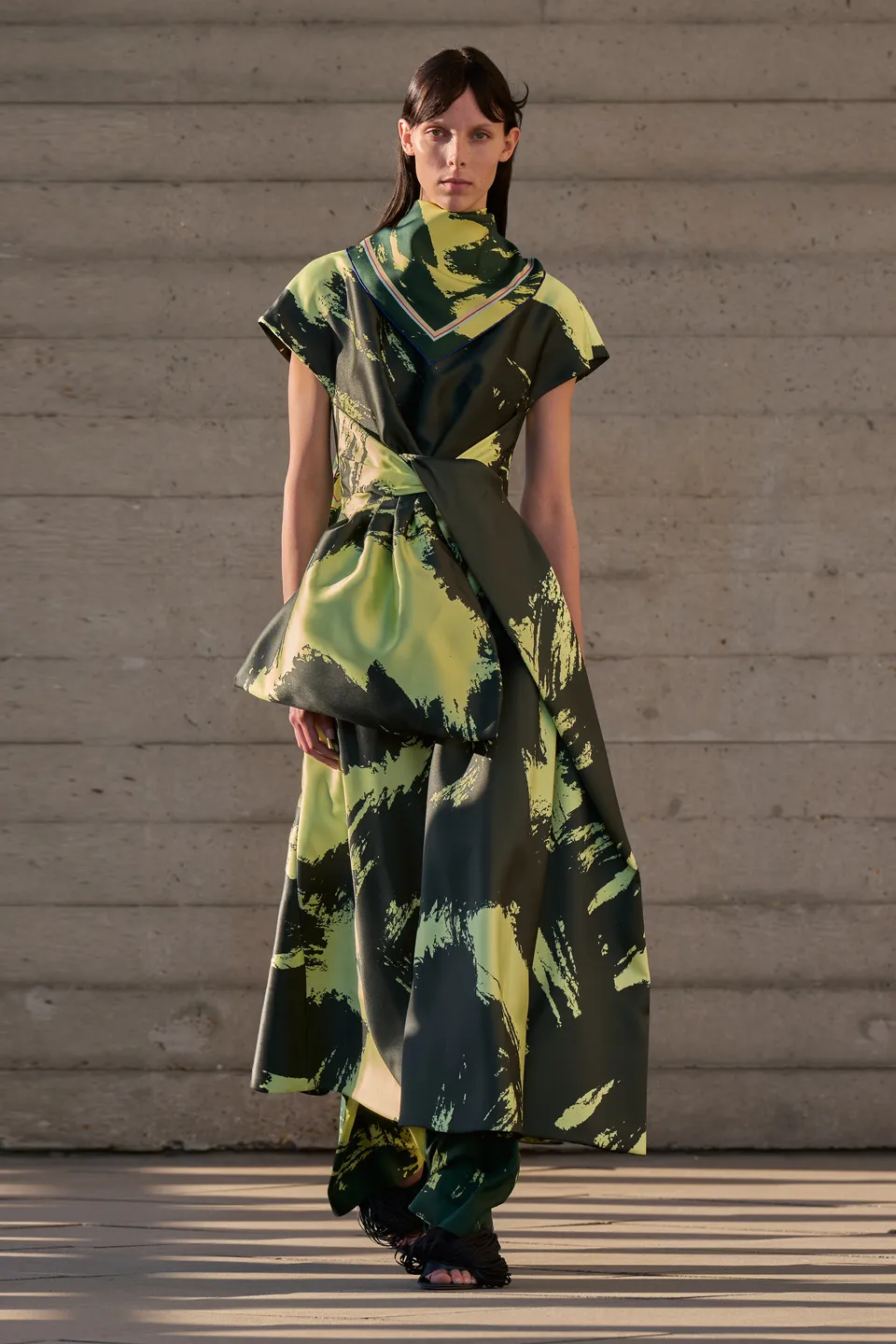
This gives the collection a personal layer. Faces break apart as silk wraps around the body, turning portraiture into something fluid and incomplete. A cheek can disappear into a fold; an eye can shift around the side of a dress; brushstrokes expand until the original subject almost dissolves into colour.
Roksanda conceived several of these scarves as pieces capable of becoming dresses or tunics, allowing the wearer to manipulate the composition through dressing.
Here, Roksanda acts simultaneously as designer and image-maker. The fashion process starts before pattern cutting, with her own hand moving pigment across a surface. That directness gives the collection an emotional intimacy inside its grand proportions.
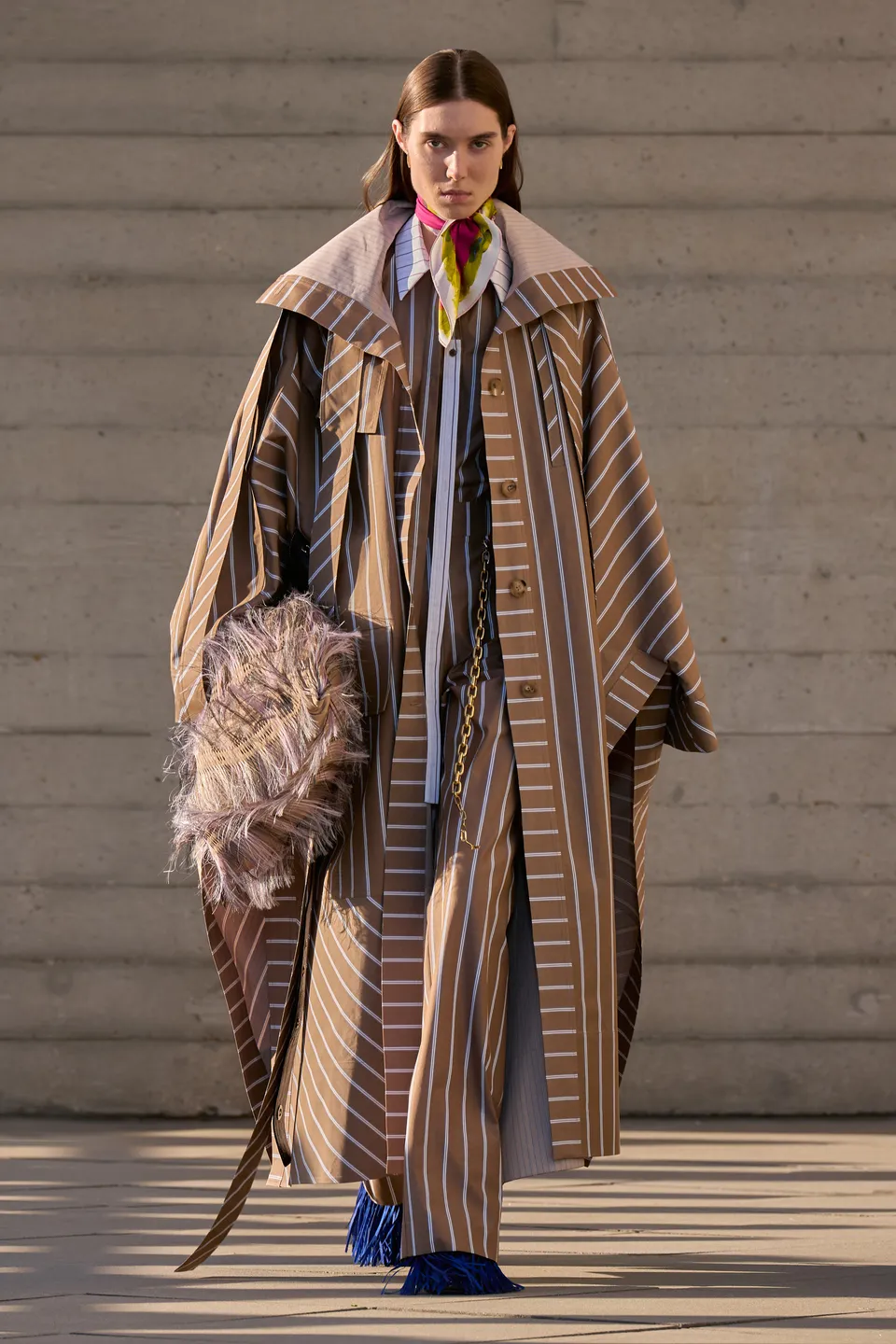
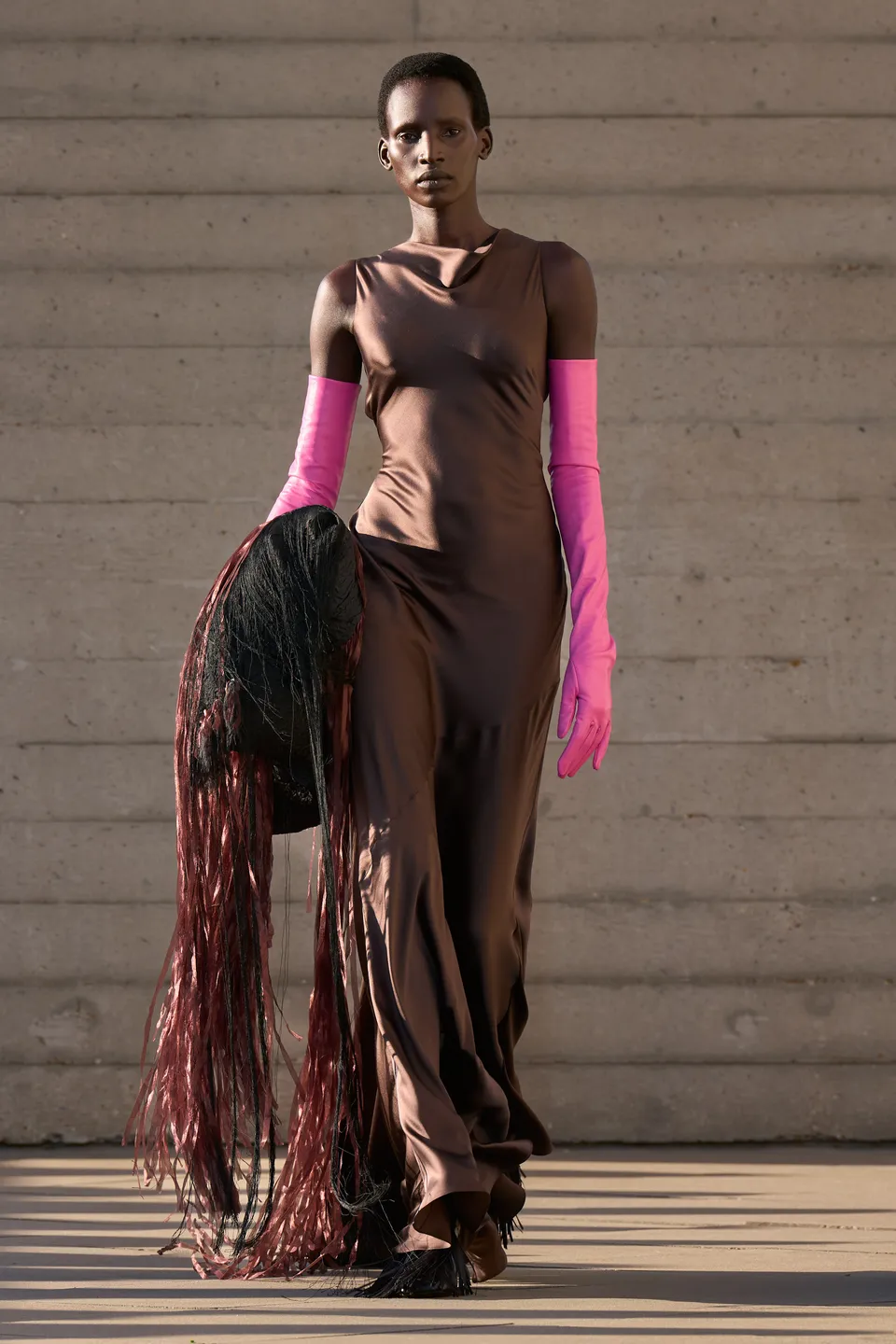
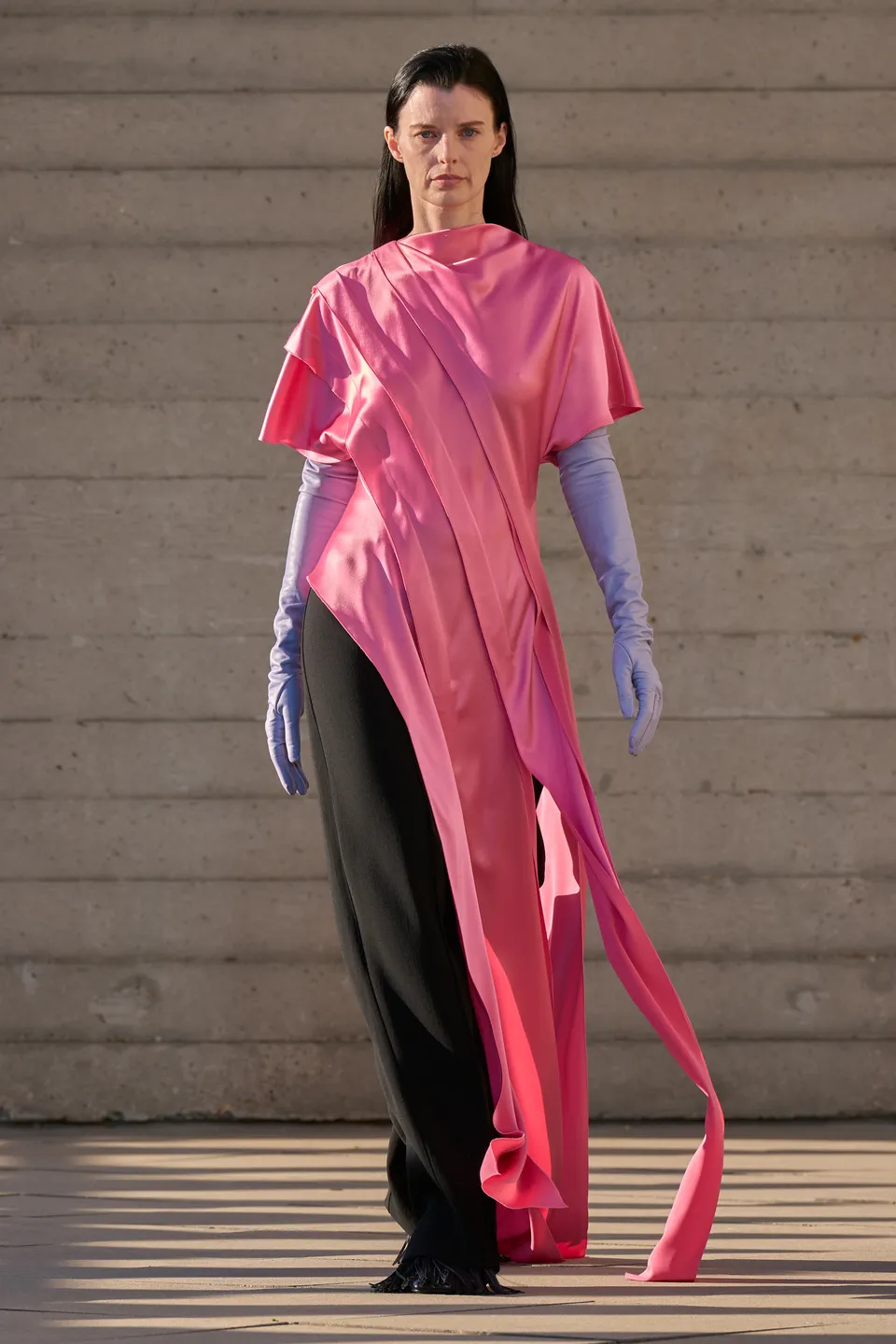
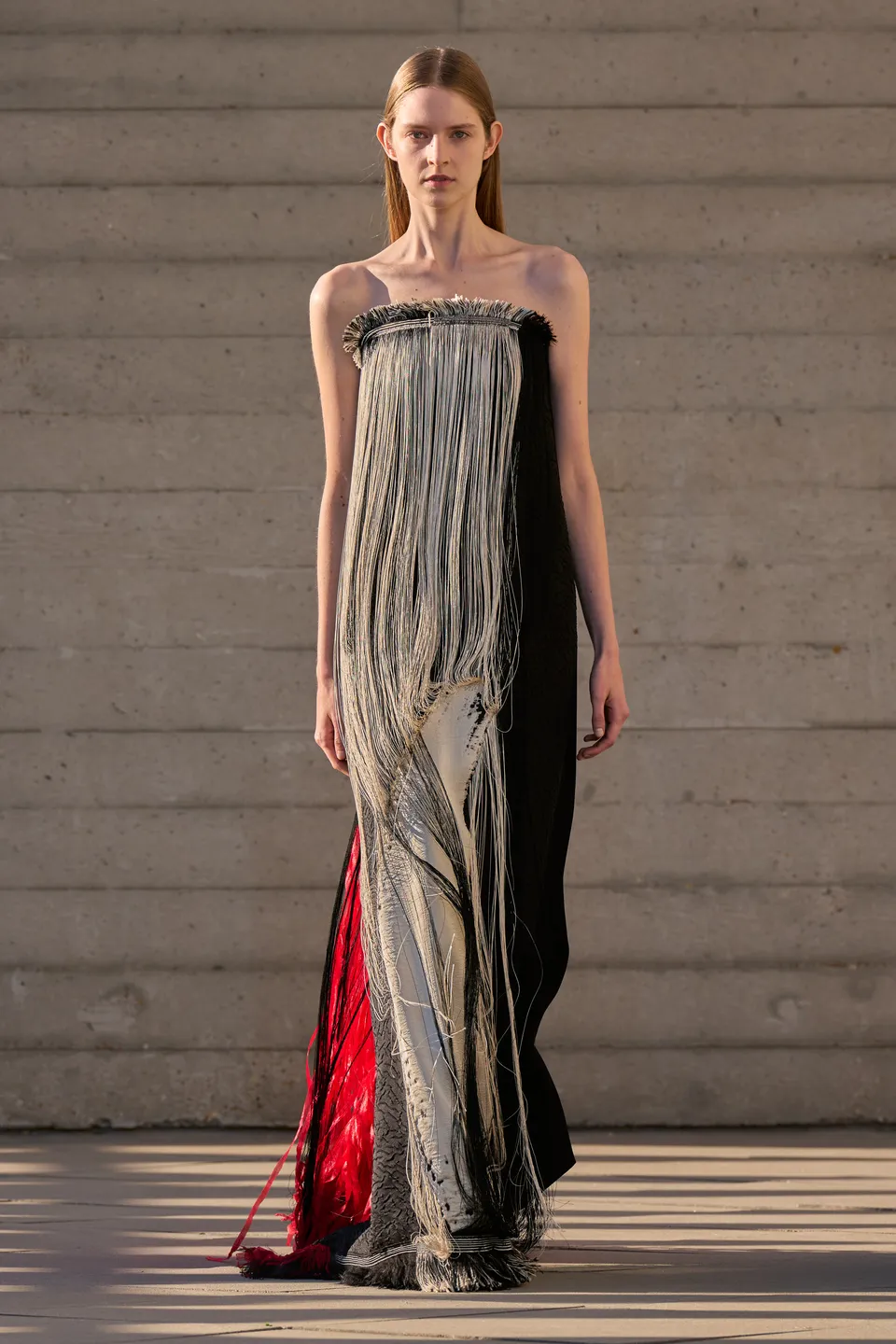
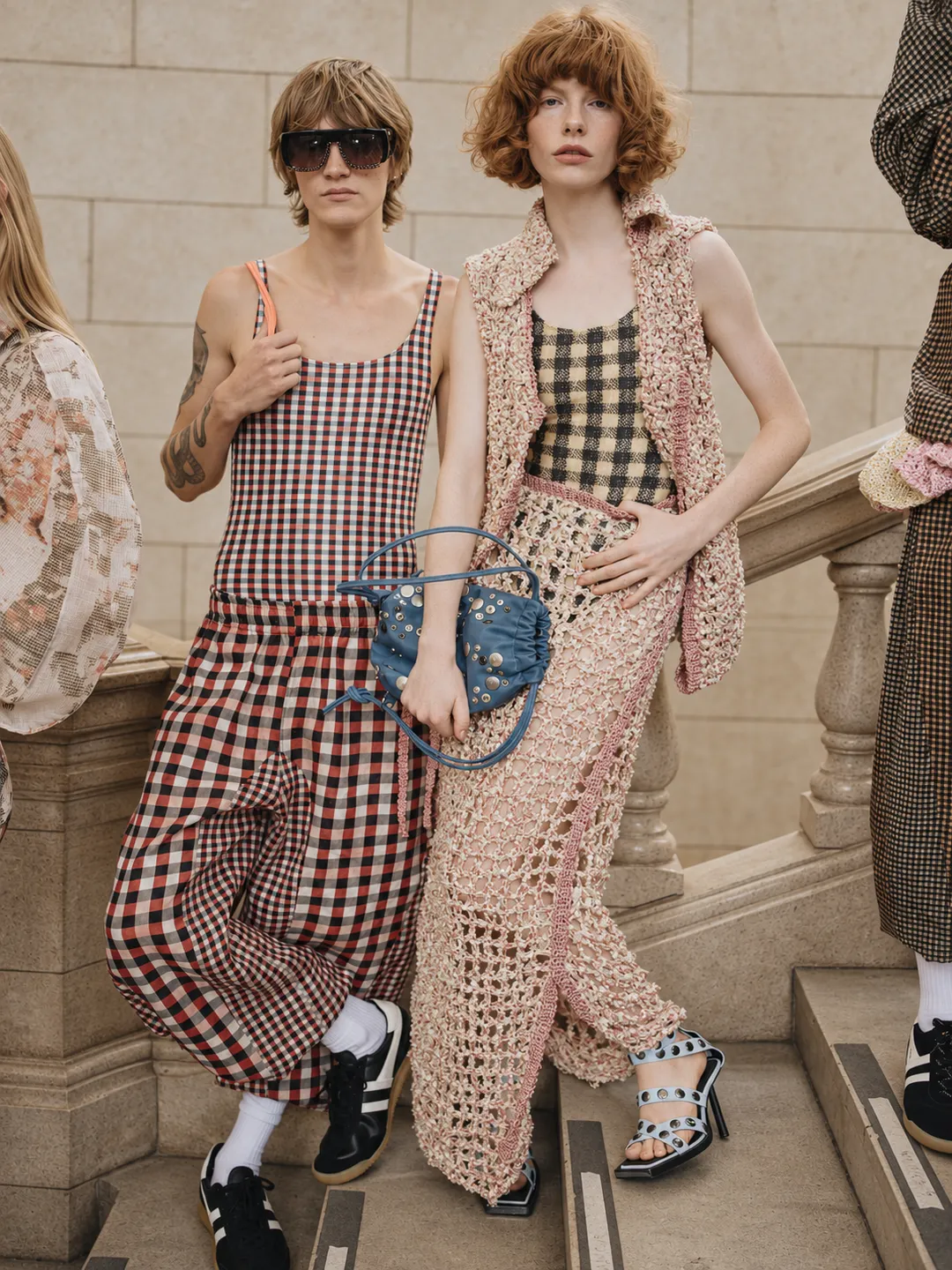
Roksanda’s customers had been asking for a wardrobe that could carry them through all seven days, and Spring 2027 answers with safari jackets, striped shirtdresses, tailored trousers, practical separates and outerwear shaped by the same architectural instincts that usually define the house’s occasion dressing.
That request creates an interesting design problem. Roksanda already knows how to make a gown command a staircase, a gallery or a red carpet. Daywear demands a different type of authority, one capable of surviving lunch, work, travel and an ordinary Wednesday afternoon.
A striped sleeve projects slightly away from the arm. A waist becomes sharply articulated. Pockets grow graphic enough to alter the balance of a jacket. Tailoring carries a faintly exaggerated hourglass. Familiar wardrobe categories therefore enter the Roksanda universe through shape, preserving the designer’s appetite for presence at a scale suited to daily life.
Once the runway settles into its rhythm, Roksanda gradually expands the silhouette.
Hourglass suits tighten through the centre before releasing around the hips. Bias-cut silks move close to the body, allowing braids to trace a strong vertical line down the back. Sculptural peplums arch outward like small pieces of architecture attached to the waist. Scarf constructions create looser forms, giving painted surfaces space to shift as the wearer walks.
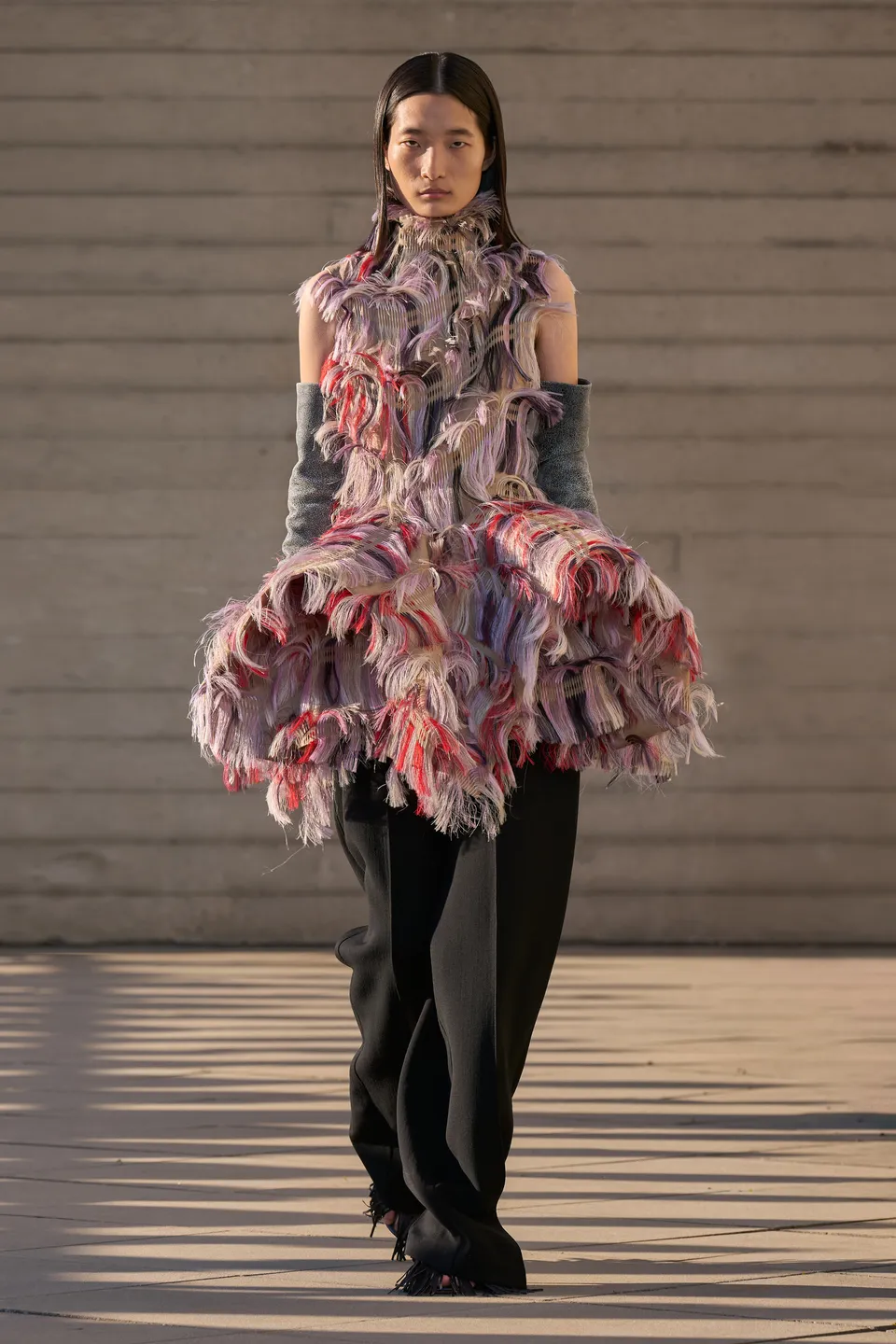
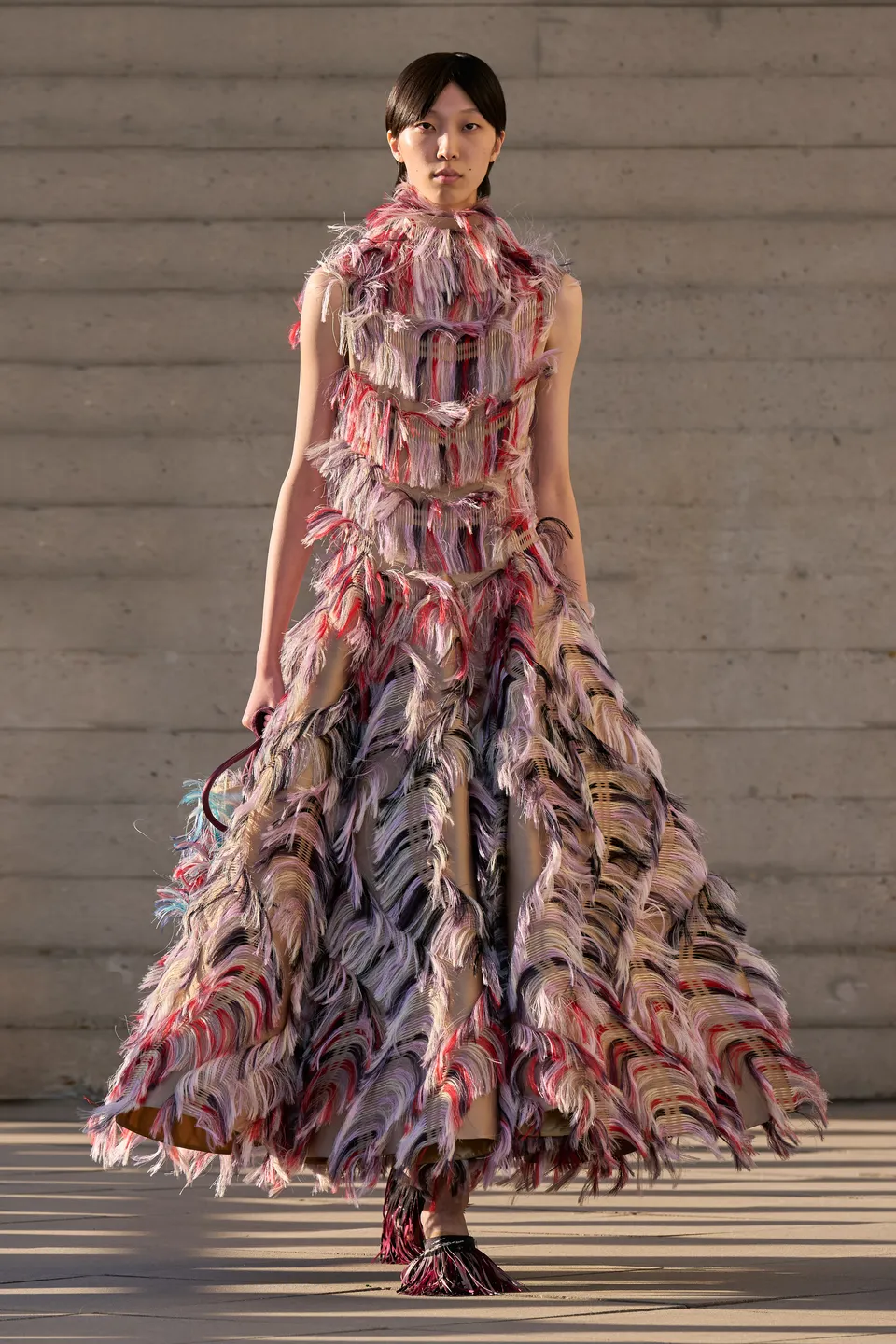
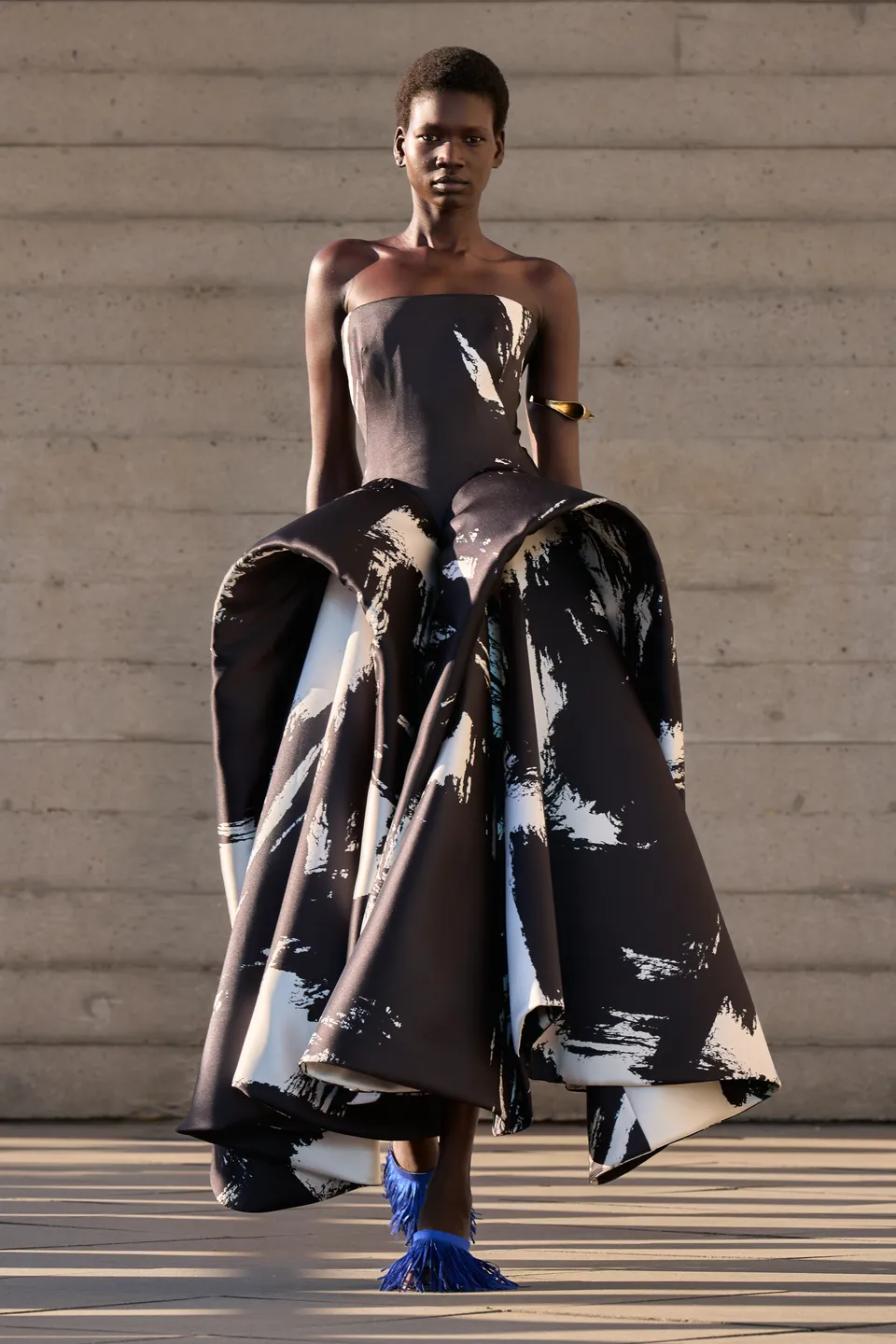
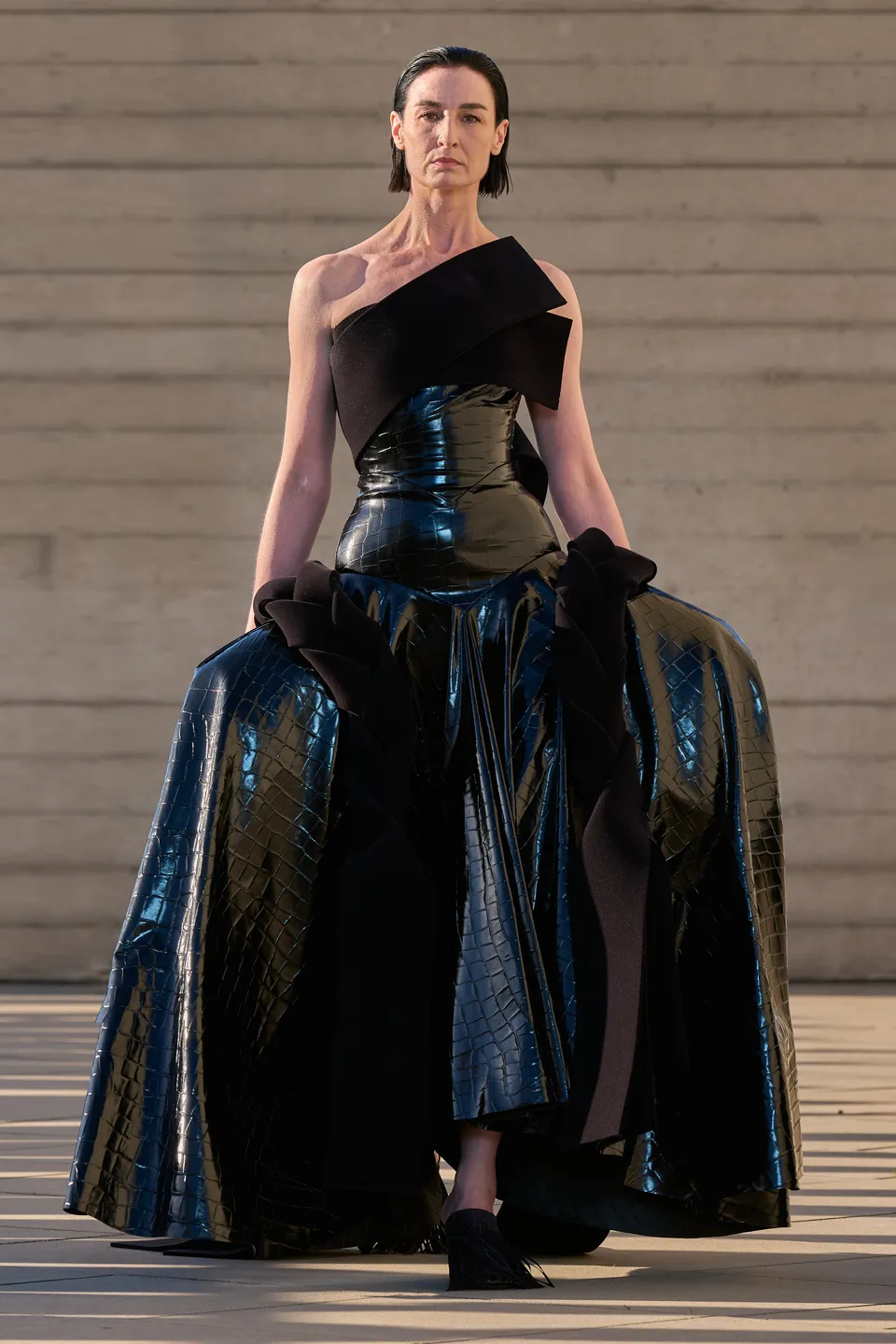
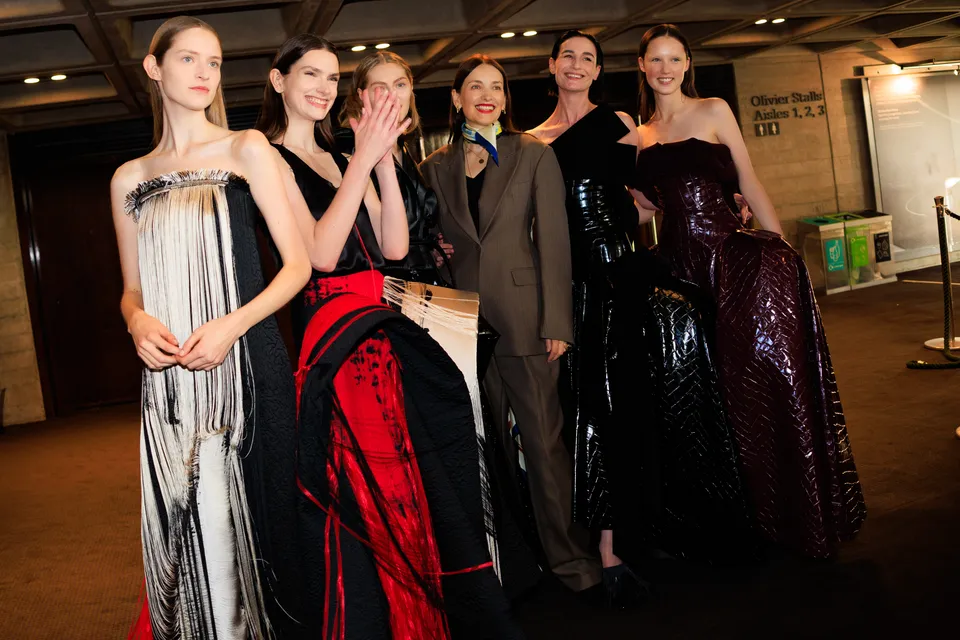
Fringe becomes dense enough to create whole surfaces; yarn accumulates around the body; glossy crocodile-effect materials give evening shapes a heavier visual weight. The progression feels carefully staged, with the collection moving from clothes designed for daily circulation toward the kind of imposing silhouettes closely associated with Roksanda.
These pieces reveal themselves around the side and back as often as through the front, which made the open-air National Theatre setting especially effective. A static photograph captures colour and outline; walking activates cords, fringe, pleats and suspended strands.
One brown bias-cut silk dress carries a thick braid down the back like an external spine. Elsewhere, cords cinch tailoring, strands escape from bags, and eyelash fringe trails behind the body. The craftsmanship has a deliberately visible quality: connections, endings and hanging threads become part of the finished image.
This gives Roksanda SS27 a productive tension between discipline and release. Tailoring controls the body, then a braid escapes down the spine. A polished dress gains an unruly edge through fringe. A bag behaves almost like a textile sculpture as cords spill outward.
That approach suits Ilinčić’s larger design language because her work frequently depends on controlled imbalance. A garment can feel precise through the waist and extravagant through the sleeve; colour can appear highly composed while volume behaves with far greater freedom.
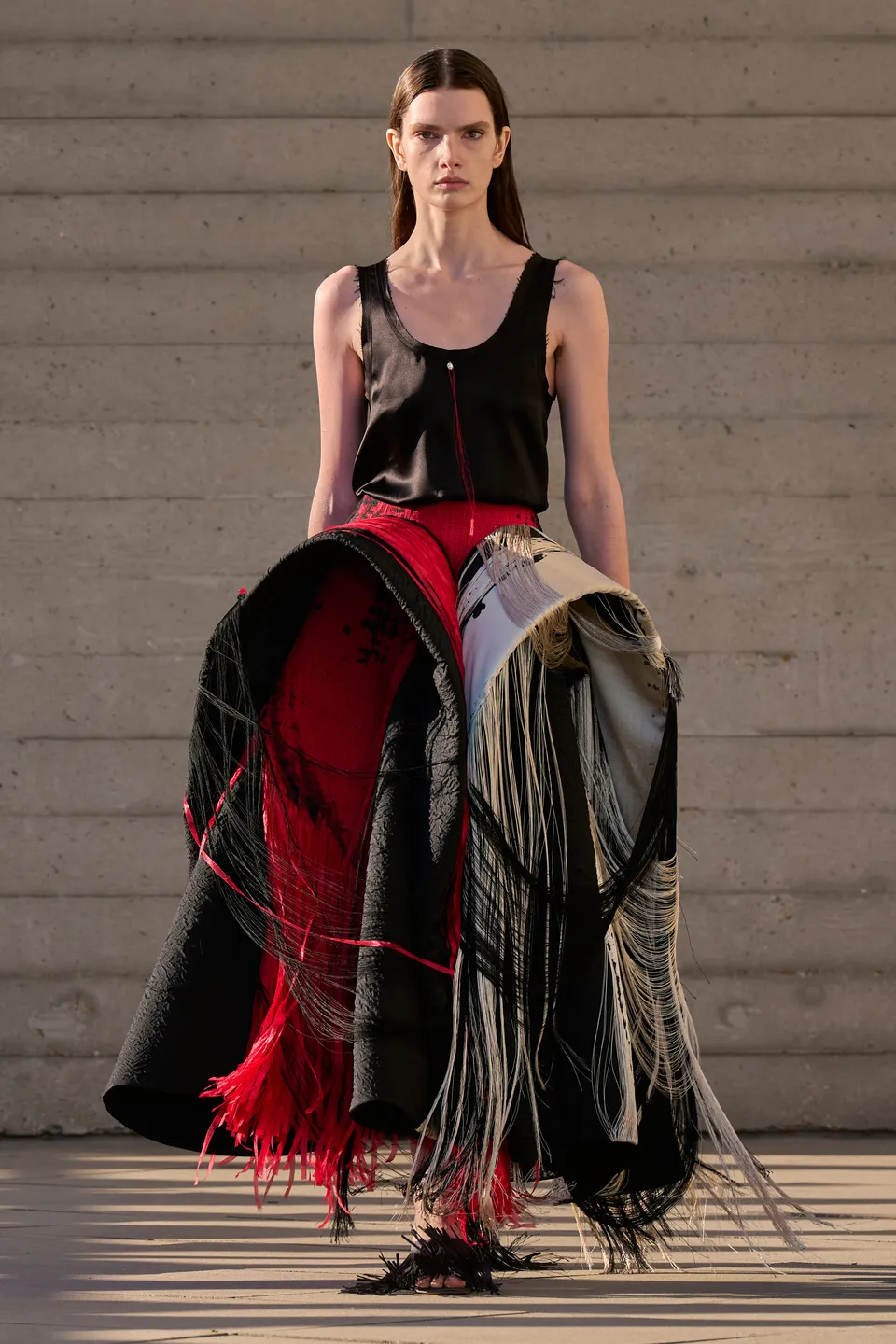
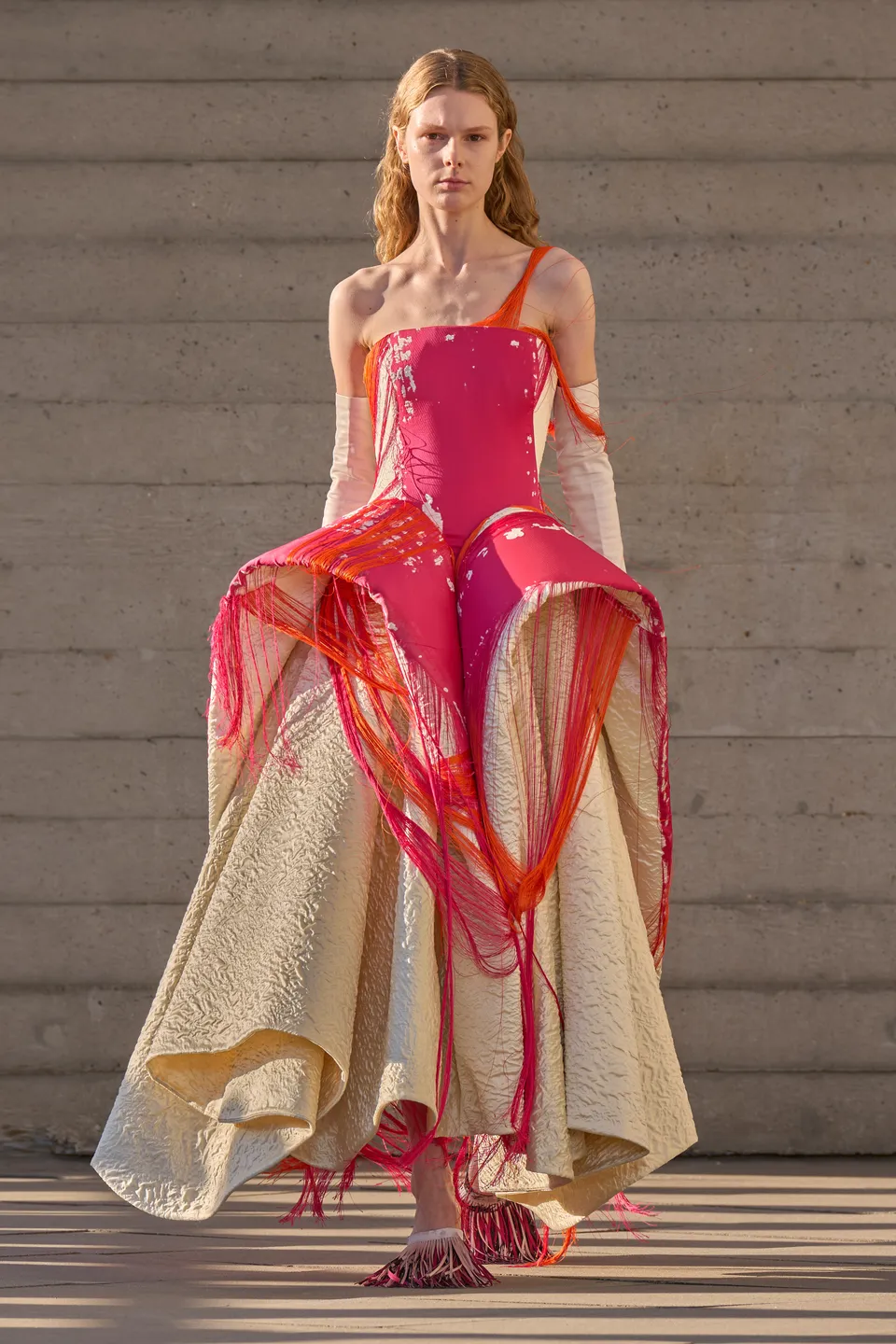
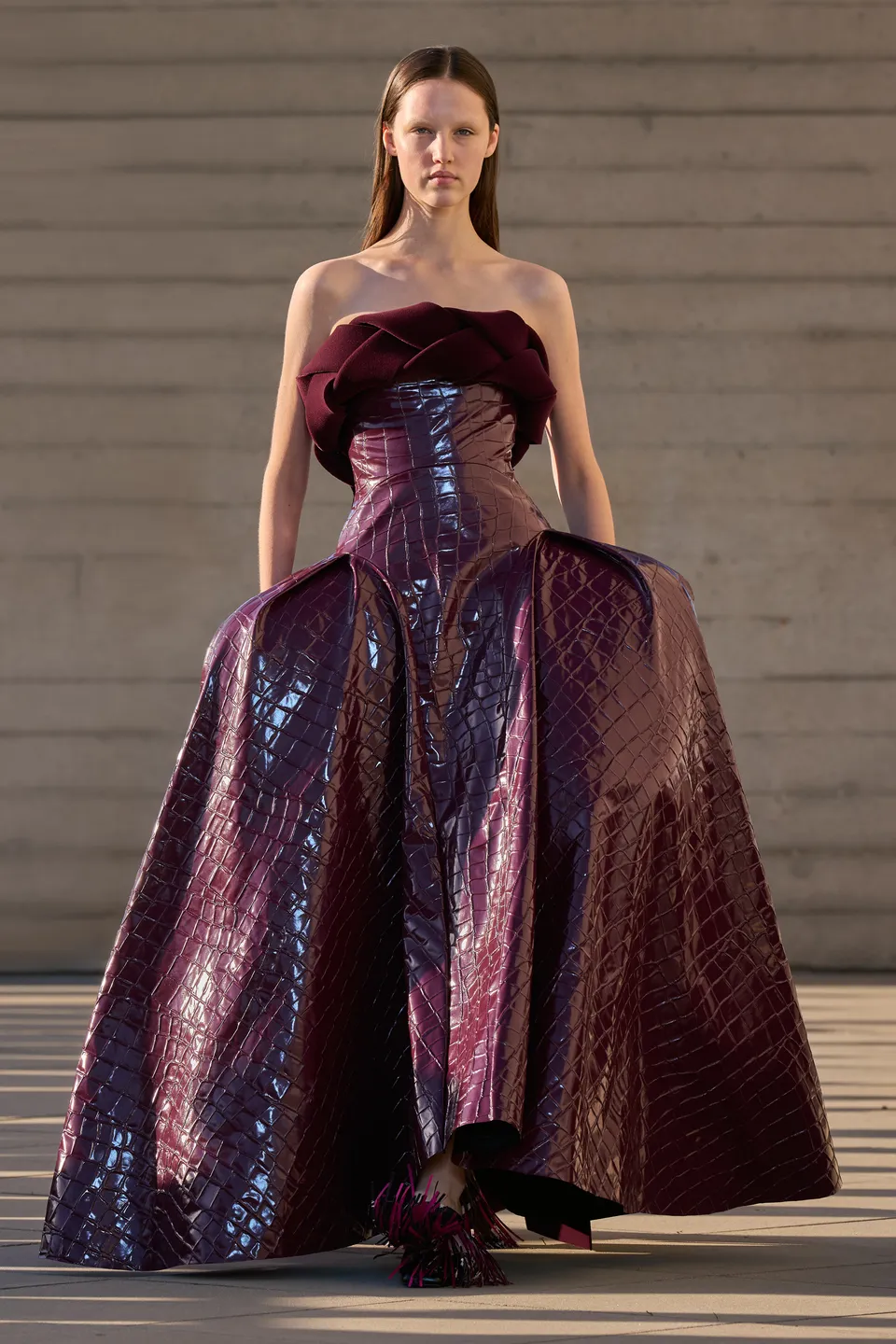
The portrait-print silk pieces offer another kind of intimacy because their imagery originates from Ilinčić herself, turning fashion into an extension of her painting practice.
Then Erin O’Connor closes the 30-look show in an imposing mock-croc ballgown built around a central braided element, a finale that brings the collection back to the monumental territory where Roksanda has always appeared completely at ease.
Founded in 2005, Roksanda entered a major transition after financial difficulty in 2024 led to its acquisition by The Brand Group. Patricia Sancho became CEO in January 2026, bringing experience across luxury and premium fashion, while the company began sharpening supply chains, expanding categories and targeting growth in markets including the United States and Middle East.
The three-storey Sloane Street concept space provides a physical expression of that strategy. It functions as retail, showroom and cultural environment, placing Ilinčić’s clothes beside other female-led design and lifestyle propositions.
A broader daywear offer creates additional reasons for a customer to enter the Roksanda world, extending the relationship beyond occasion dressing.
For Roksanda, the next chapter may be defined by exactly that ability: giving an ordinary day enough presence to feel monumental.
Advertisement