MENU
Close





Bora Aksu SS27 draws Mary Beale and Gaziantep craft into the same dream, where softness gains structure and every delicate surface carries the memory of work.
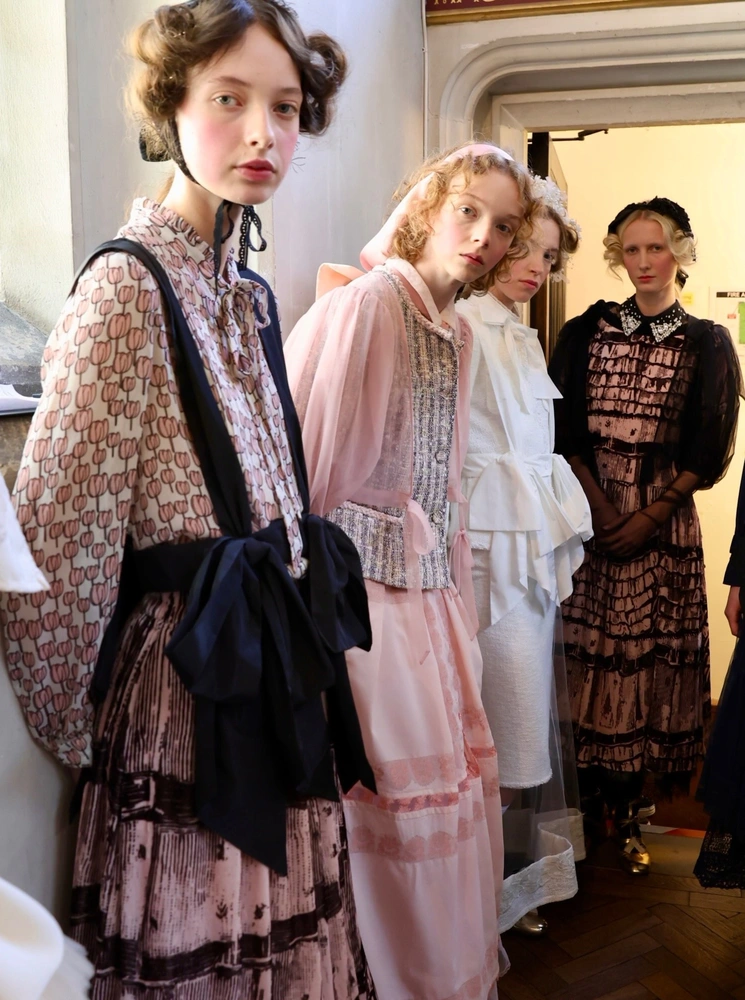
Bora Aksu SS27 draws Mary Beale and Gaziantep craft into the same dream, where softness gains structure and every delicate surface carries the memory of work.
September 22, 2026
Advertisement

Advertisement



Inside St Cyprian’s Church near Regent’s Park, Bora Aksu asked fashion week to move at the pace of craftsmanship. Thirty-one looks passed slowly through the Victorianinterior while a dreamlike soundtrack stretched time around lace, organza, tailoring and handwork. The models walked with deliberate calm because Aksu wanted the audience to study what had gone into the clothes: the tiny surfaces, the suspended threads, the construction and the months of labour hidden inside pieces that might otherwise pass the eye in seconds.
That decision sets the emotional rhythm of Bora Aksu SS27.
The central figure is Mary Beale, born in 1633 and active as a professional portrait painter in seventeenth-century England.
Beale established a London studio, supported her household through painting and built a steady clientele of clergymen, politicians, writers and other influential figures. Her husband Charles managed the studio, documented commissions and supported the commercial side of her practice, creating an unusually collaborative household around her work.
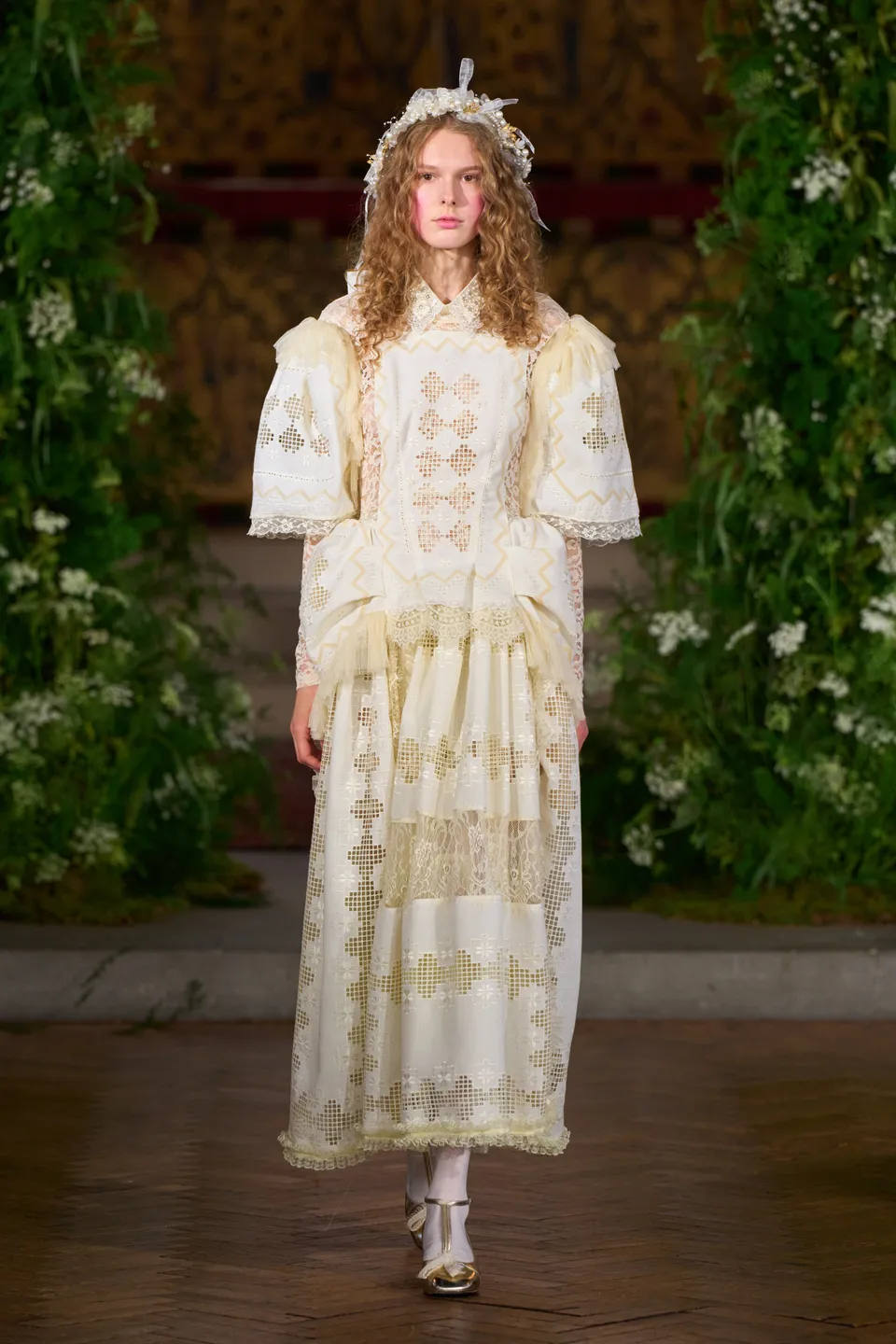
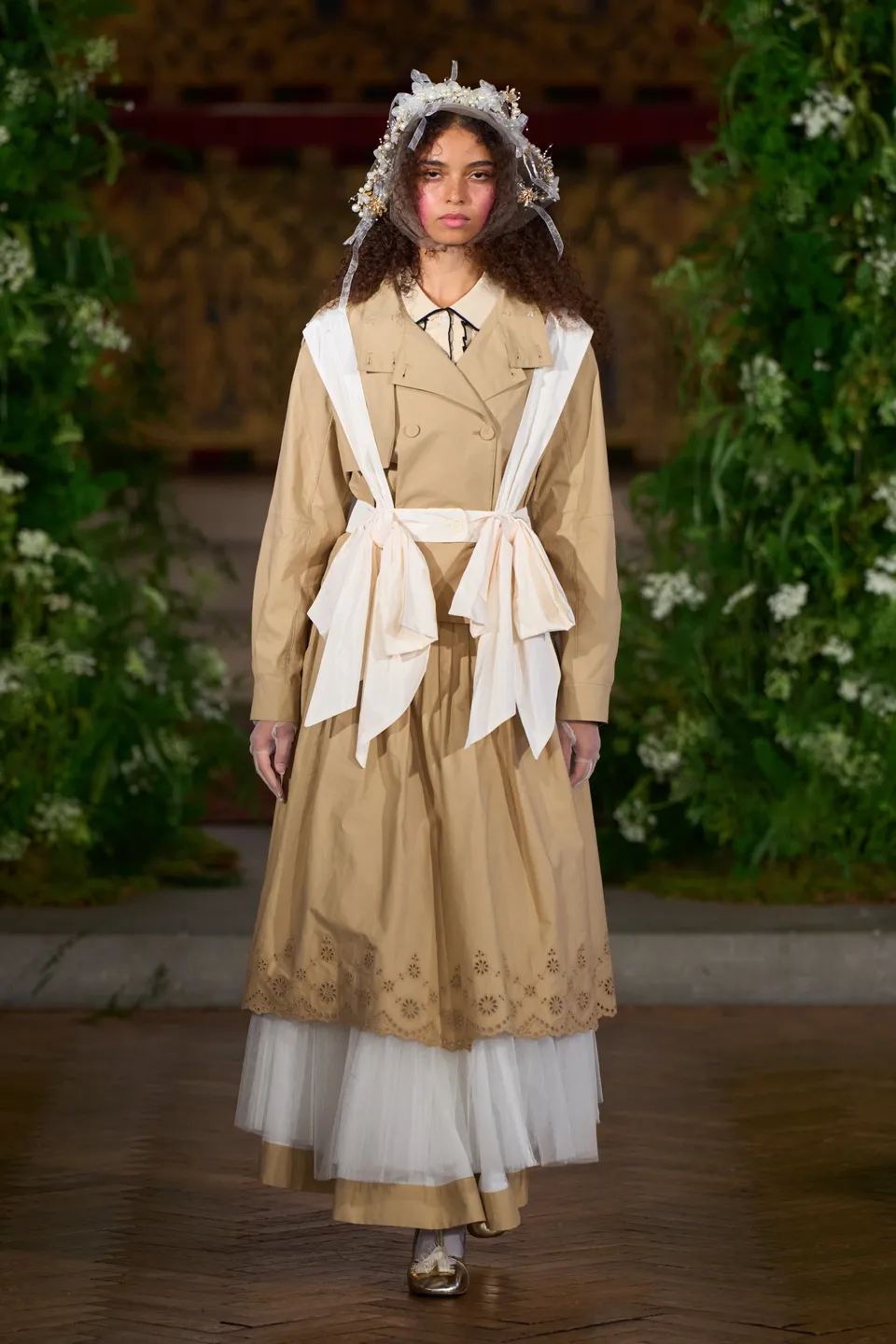
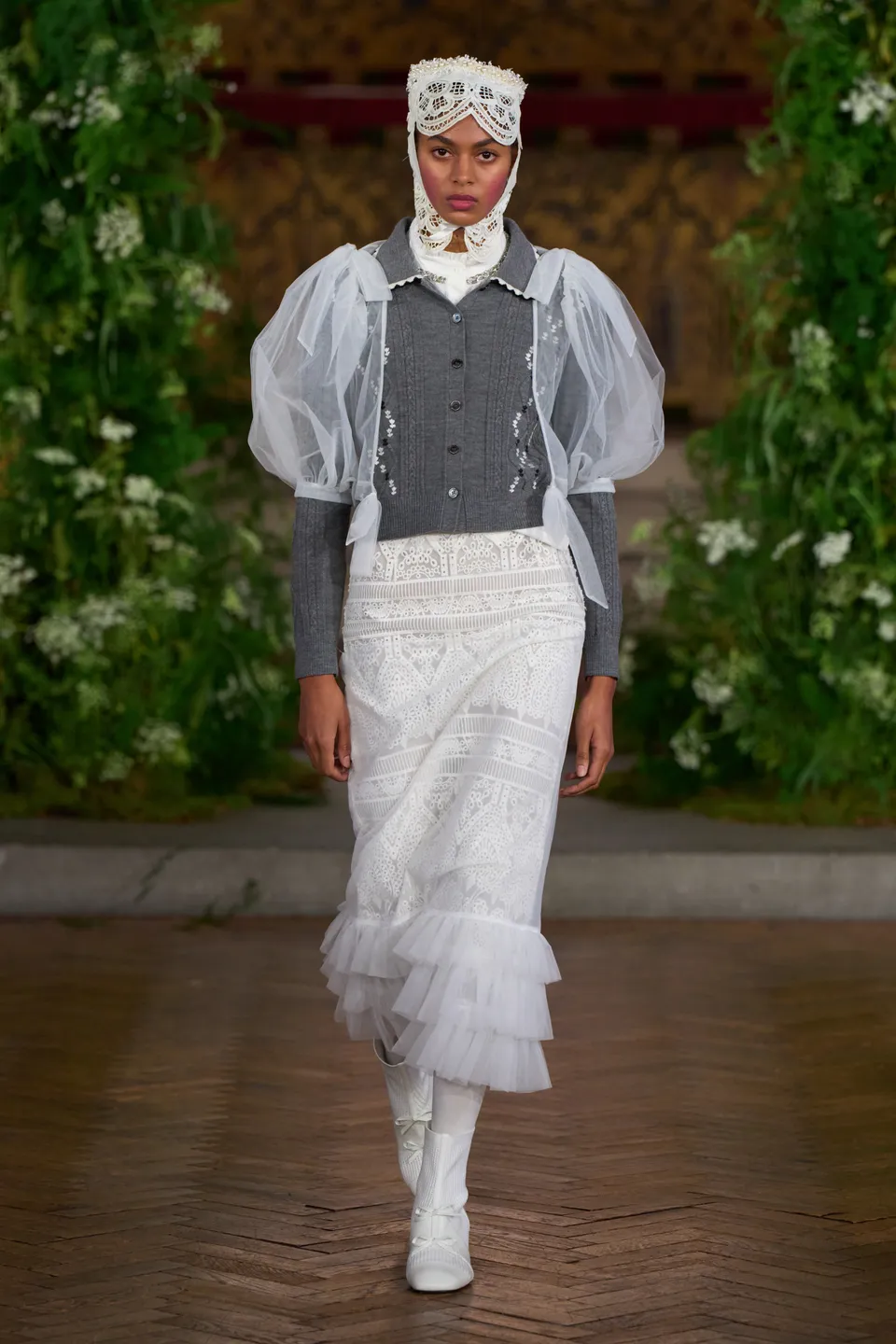
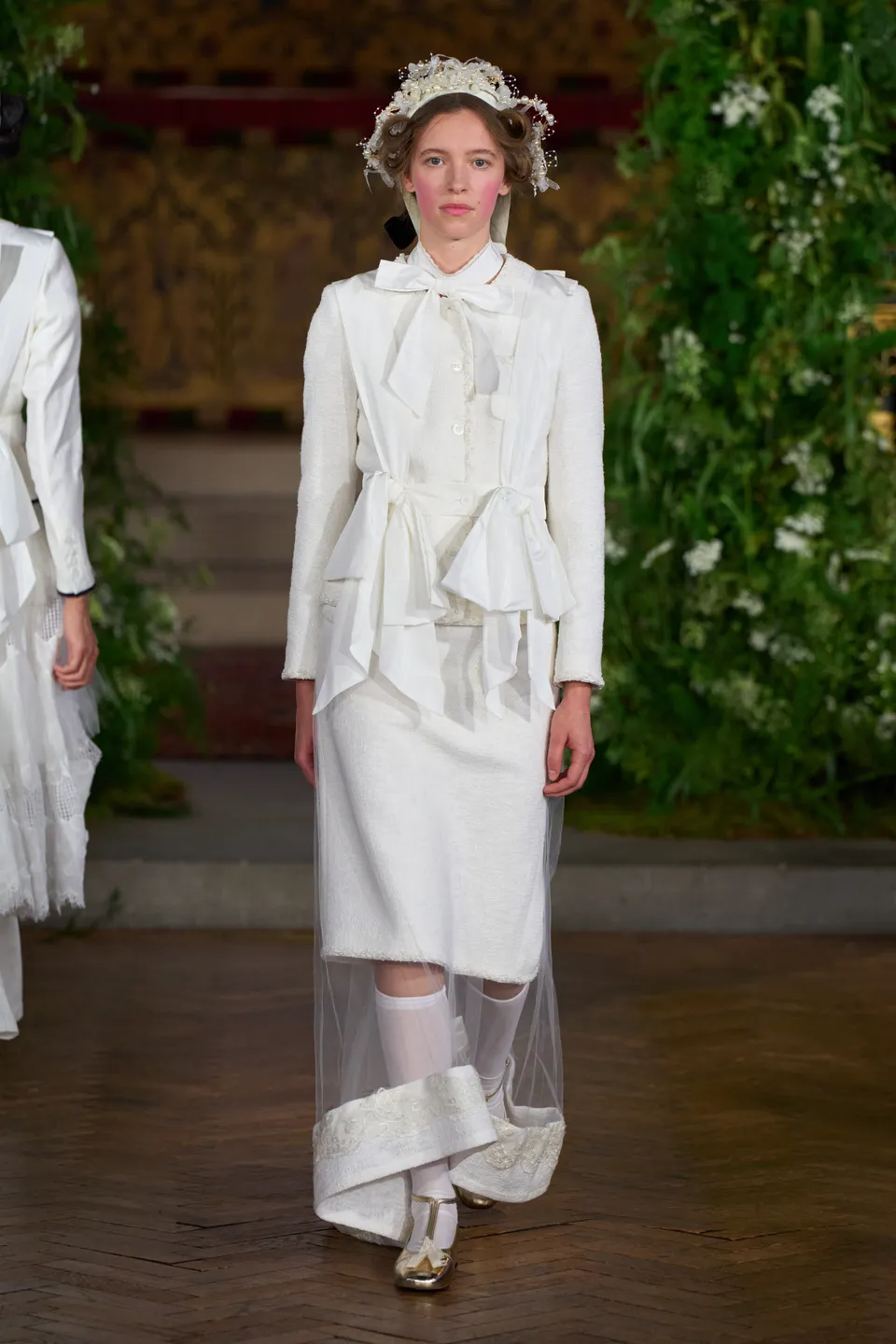
What interested Bora Aksu was the visual world surrounding those portraits. Beale painted men dressed in the formal vocabulary of their time: waistcoats, structured jackets, broad waist treatments and layers carrying social authority.
Aksu took that clothing language and redirected it toward women.
The idea gives the collection its backbone. Mary Beale appears through history, yet her presence reaches the runway through posture, structure and the sense of a woman whose work had economic value.
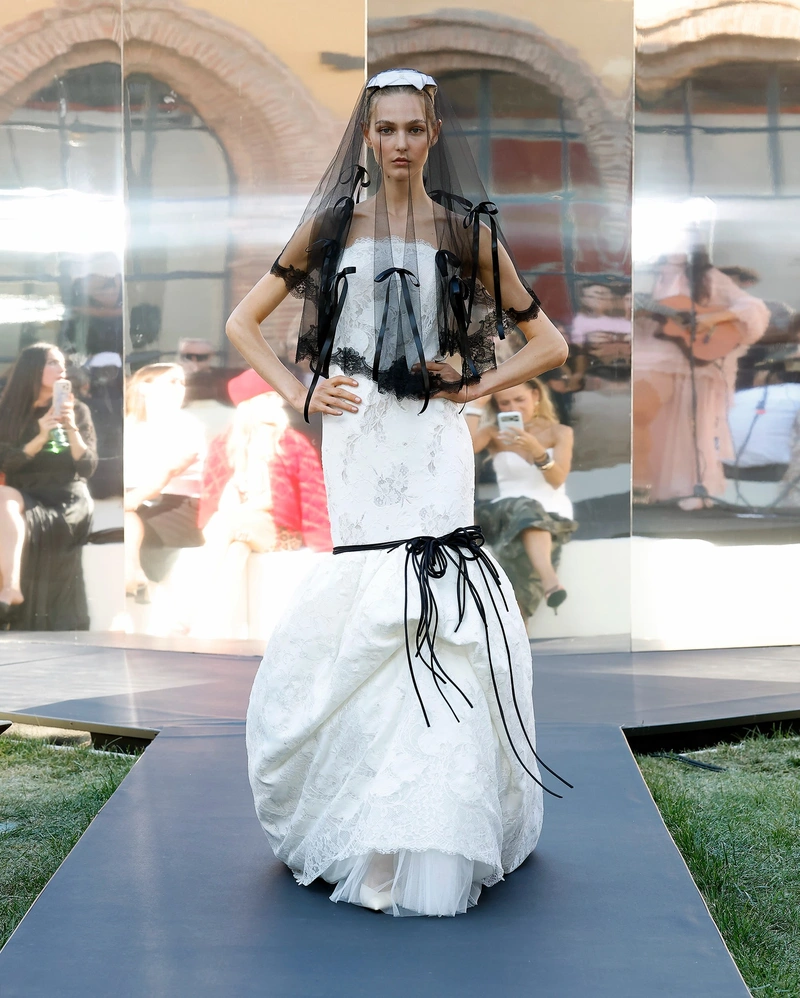
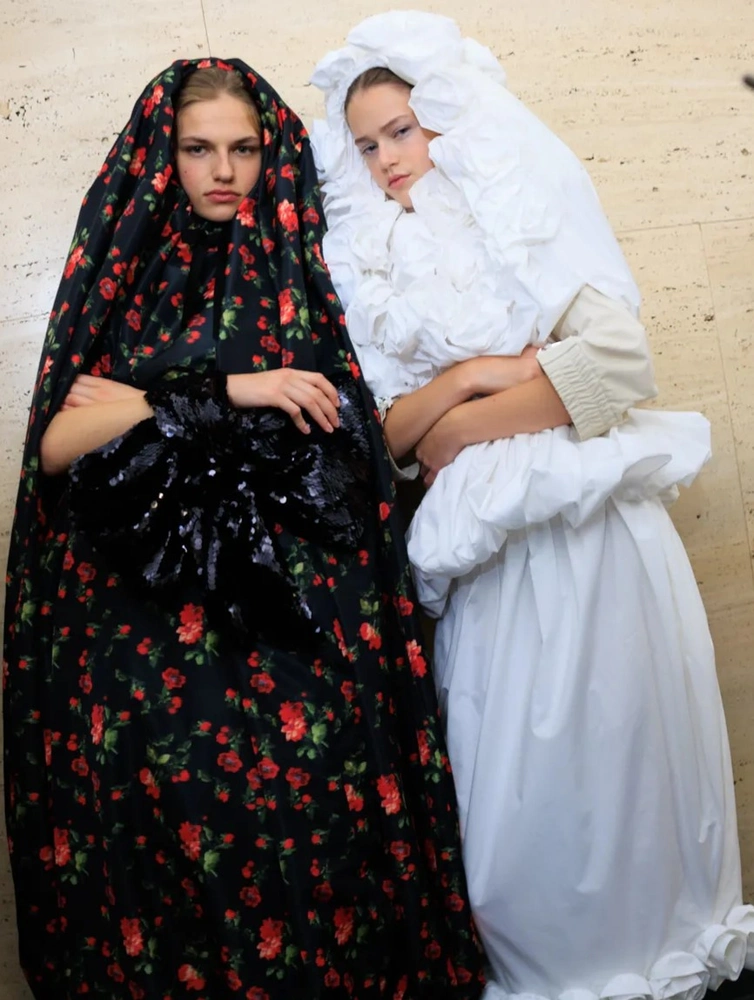
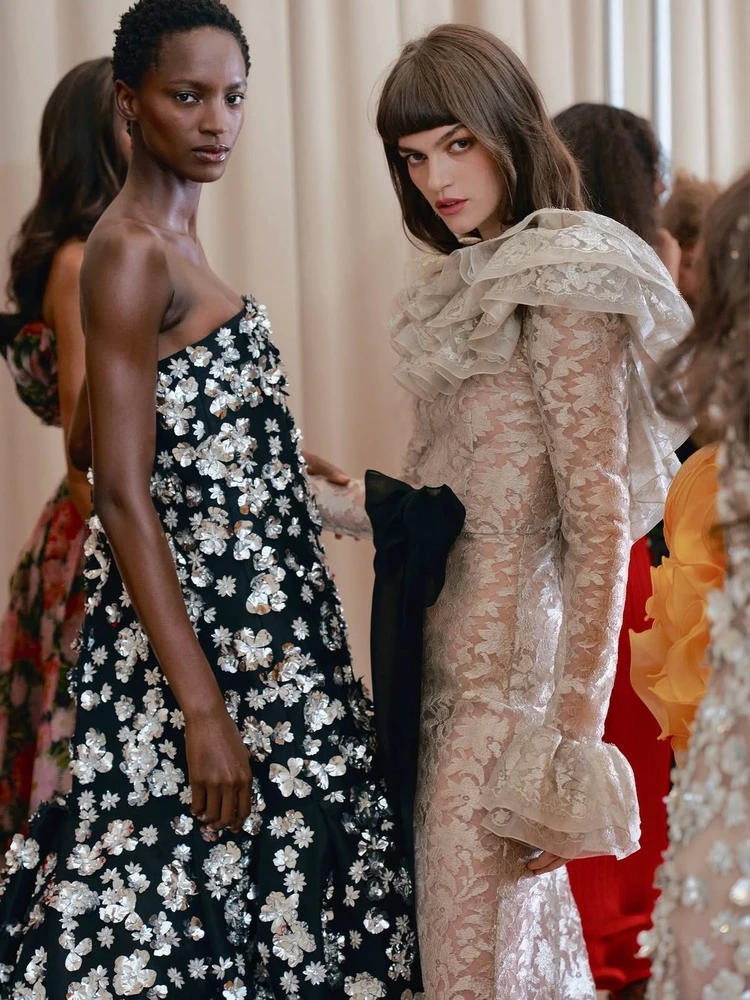
The runway opens inside familiar Bora Aksu territory. Pale lilacs, washed blues, cream and powdery neutrals drift through lace, broderie anglaise, puffed sleeves and airy dresses with an almost pastoral sweetness.
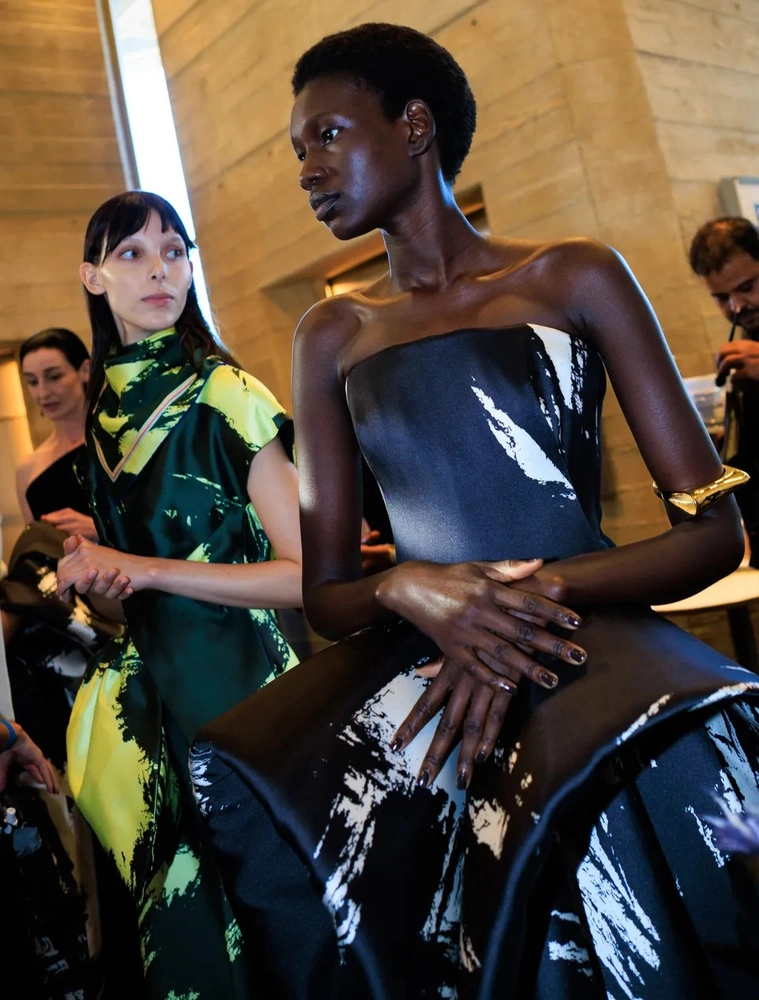
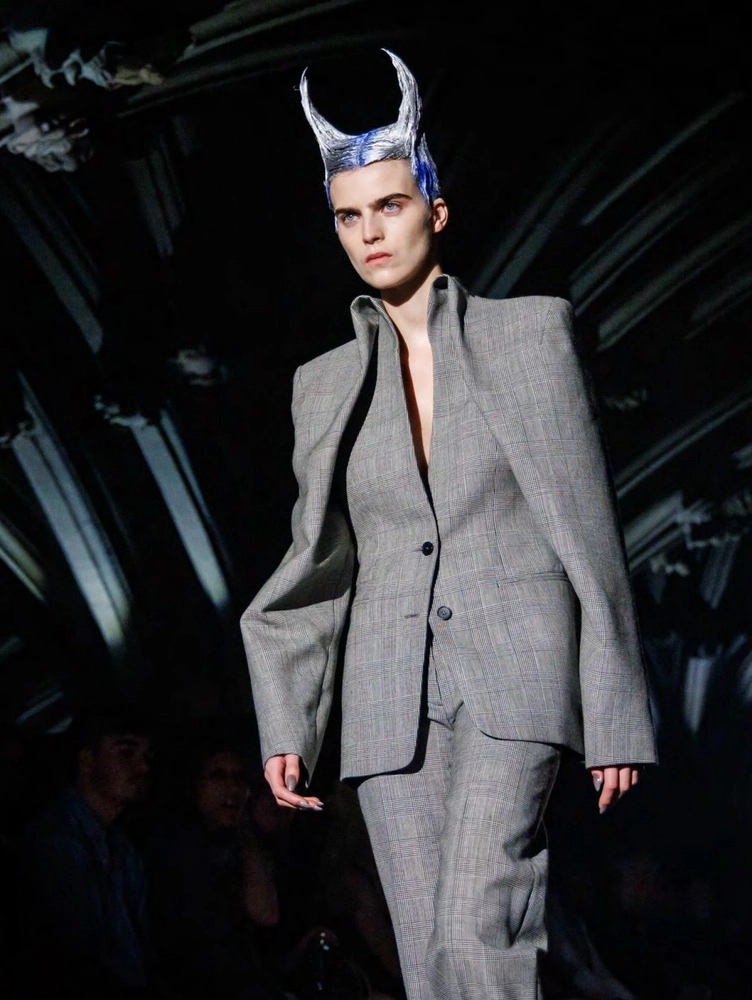
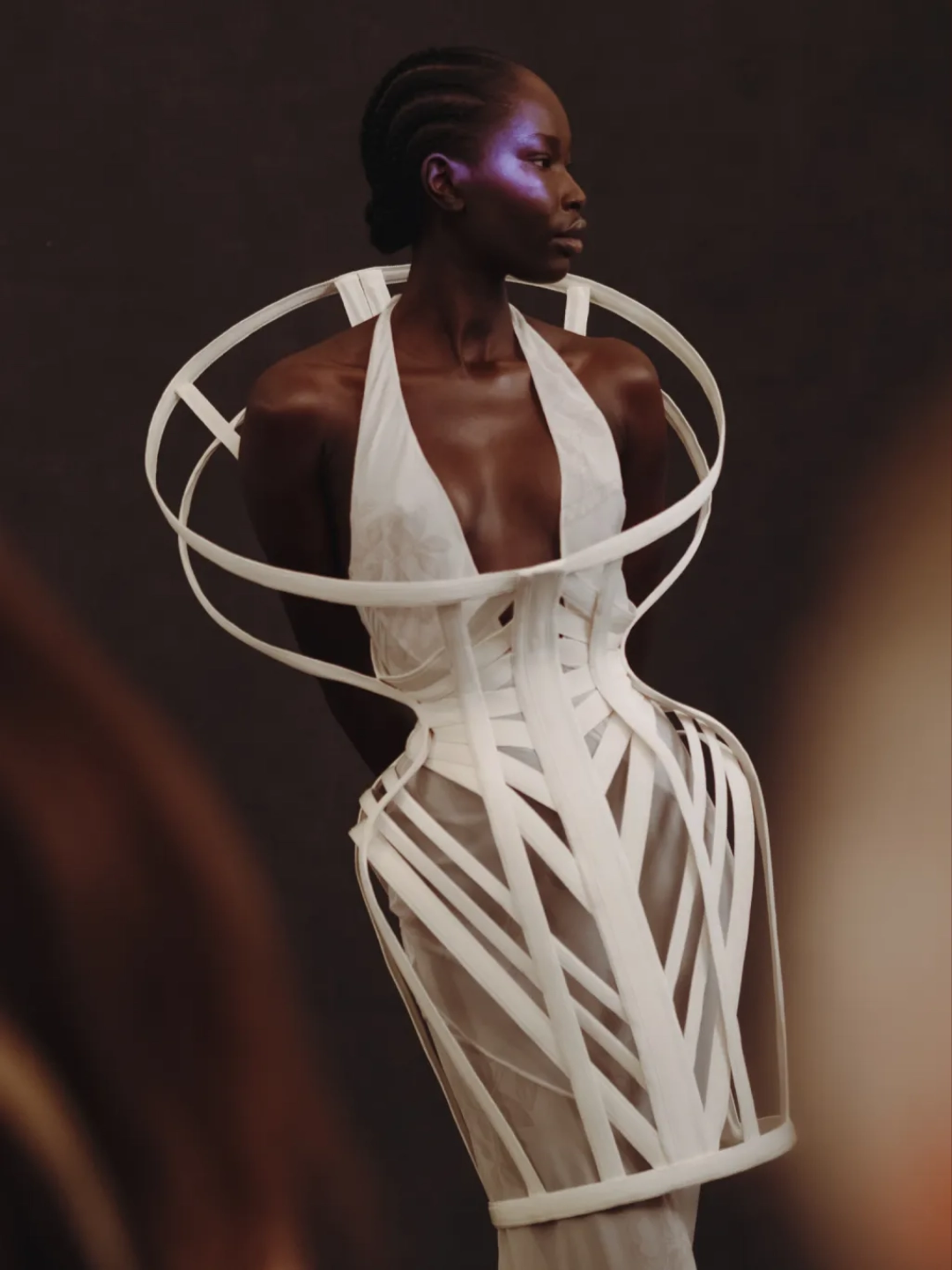
Tailored jackets enter. Trench-like constructions sharpen the shoulders. Waistcoat references appear through fitted layers. Bibs, apron ties and broad bands pull attention toward the torso, while corsetry gives the body a clearly defined centre.
The transformation happens gradually enough to feel almost psychological. The Bora Aksu woman starts in softness and gains physical authority as the collection progresses.
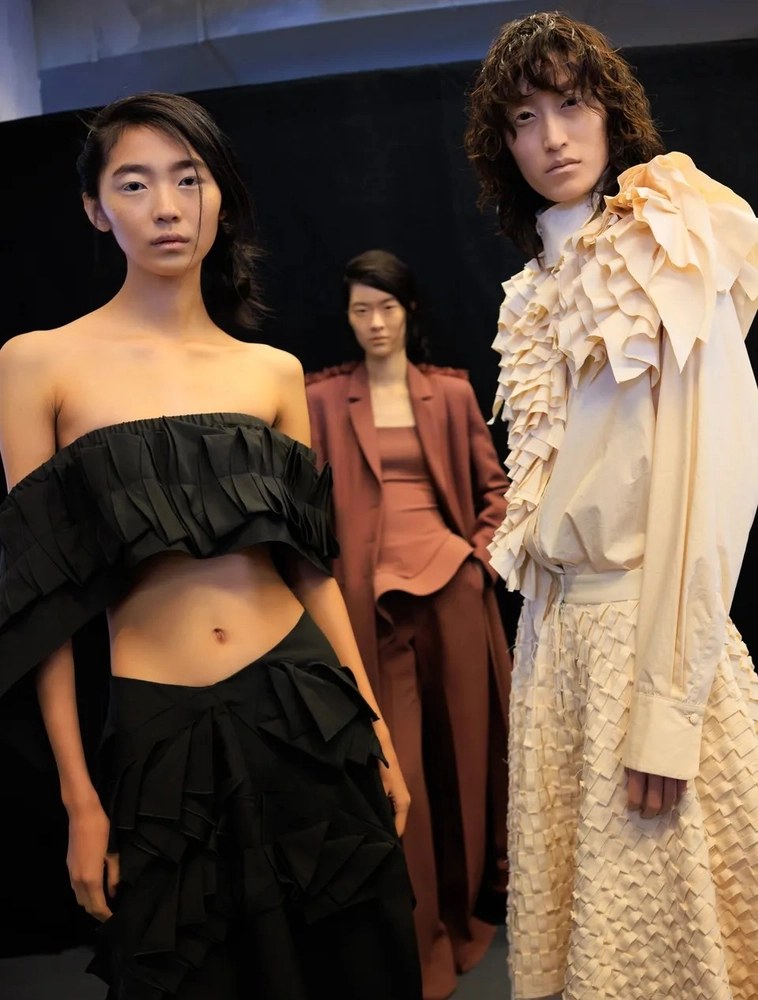
Colour follows the same journey. Oxblood deepens the later passages, pulled from the tonal richness of Beale’s portraits and carrying a darker emotional temperature through the final section of the show.
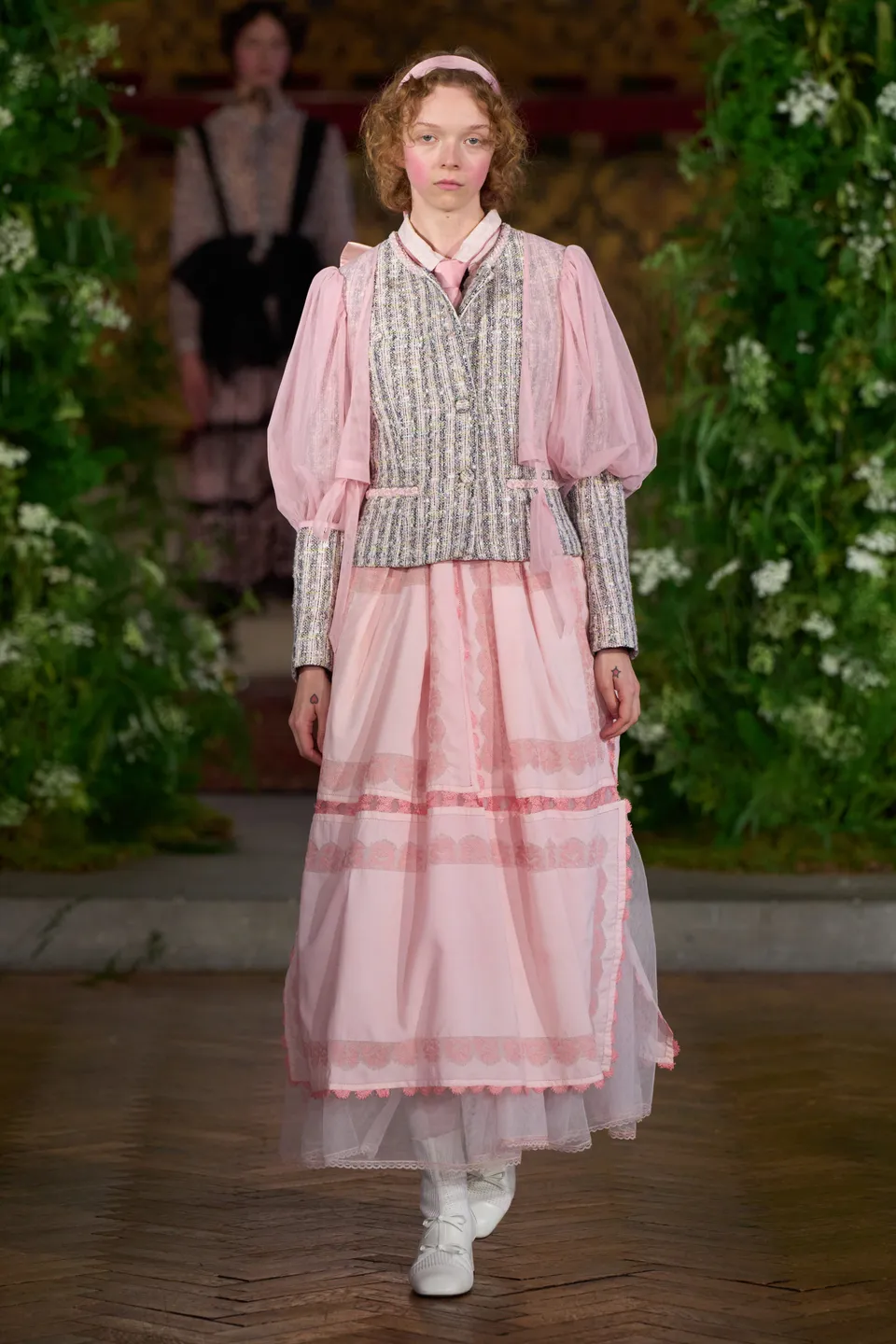
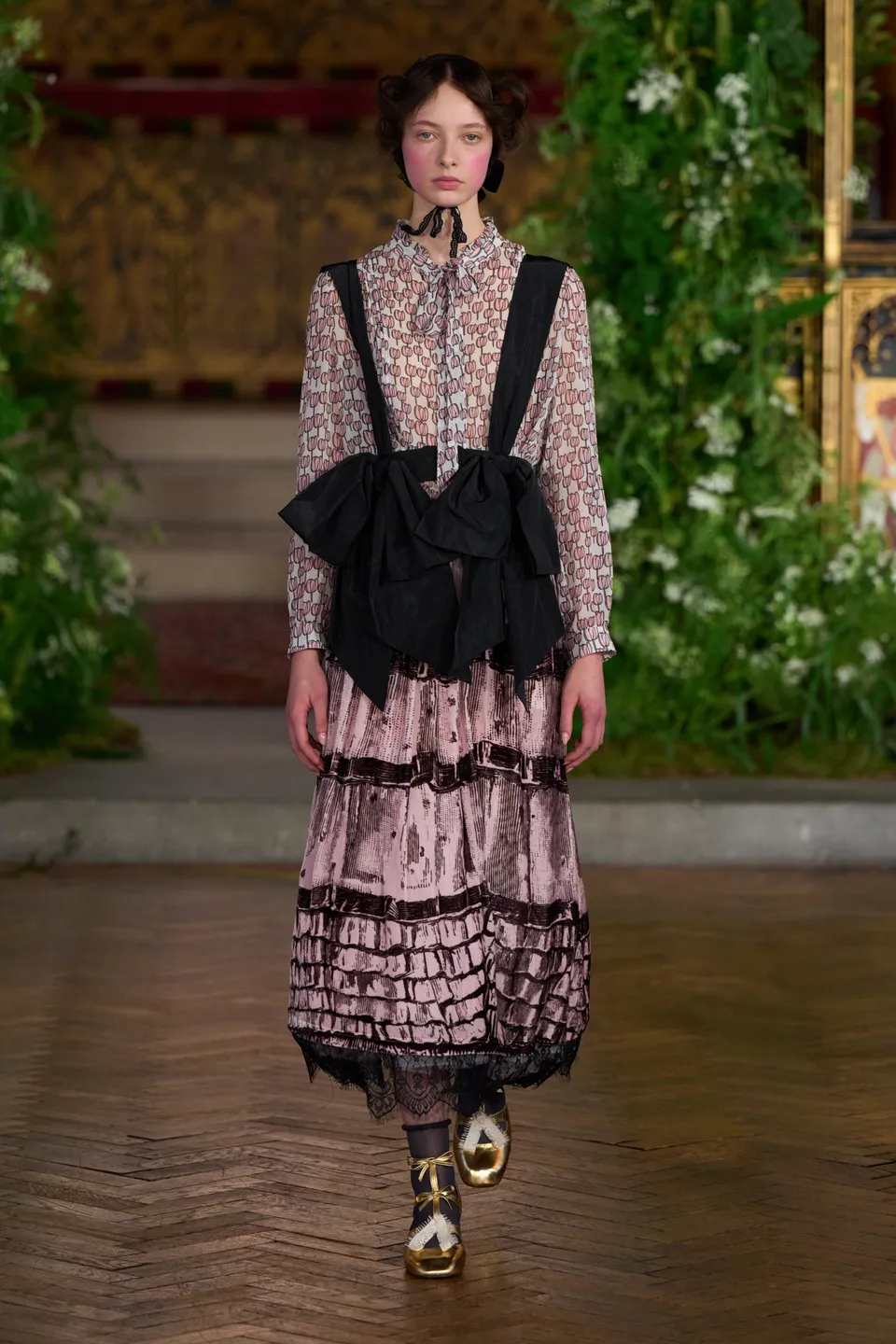
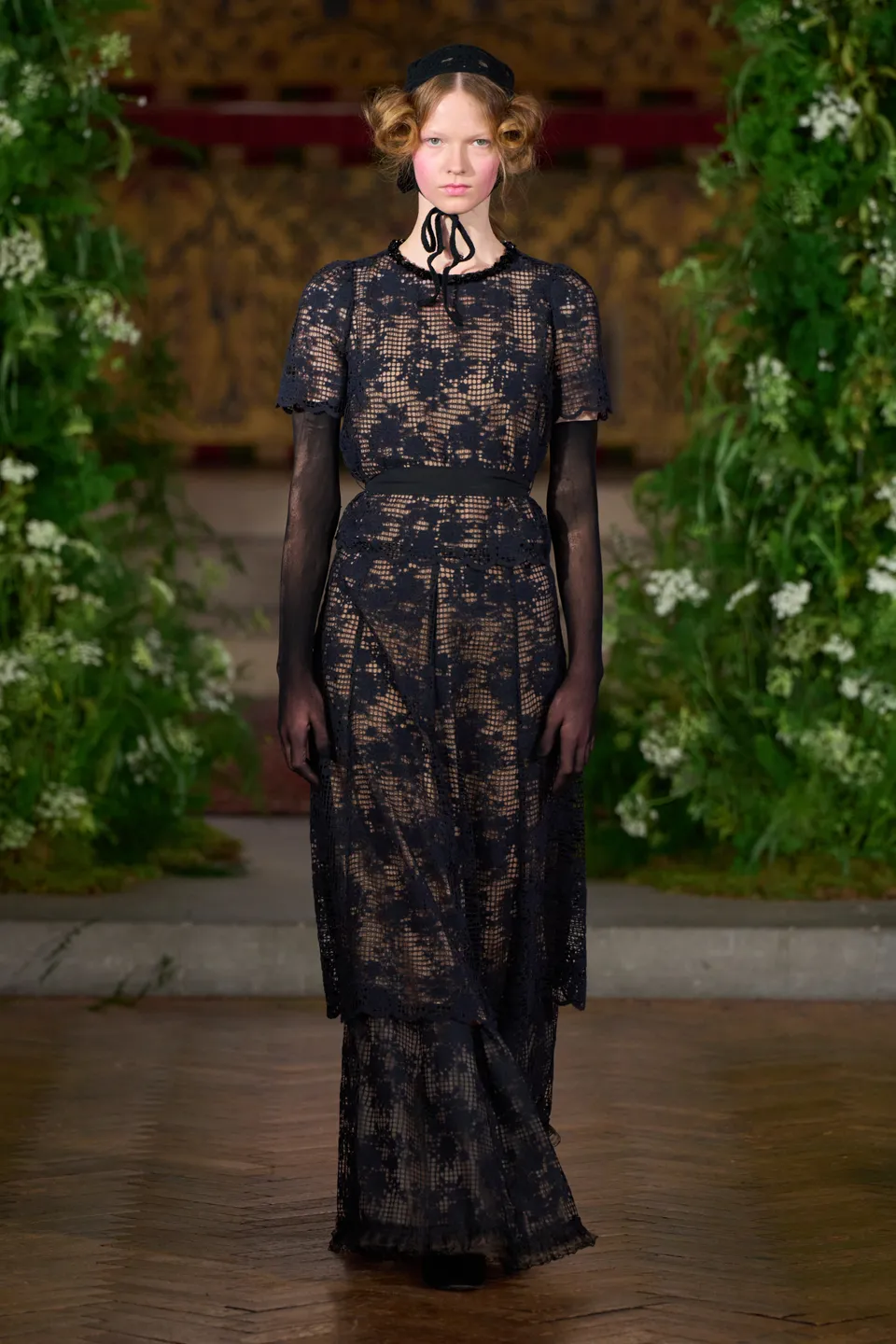
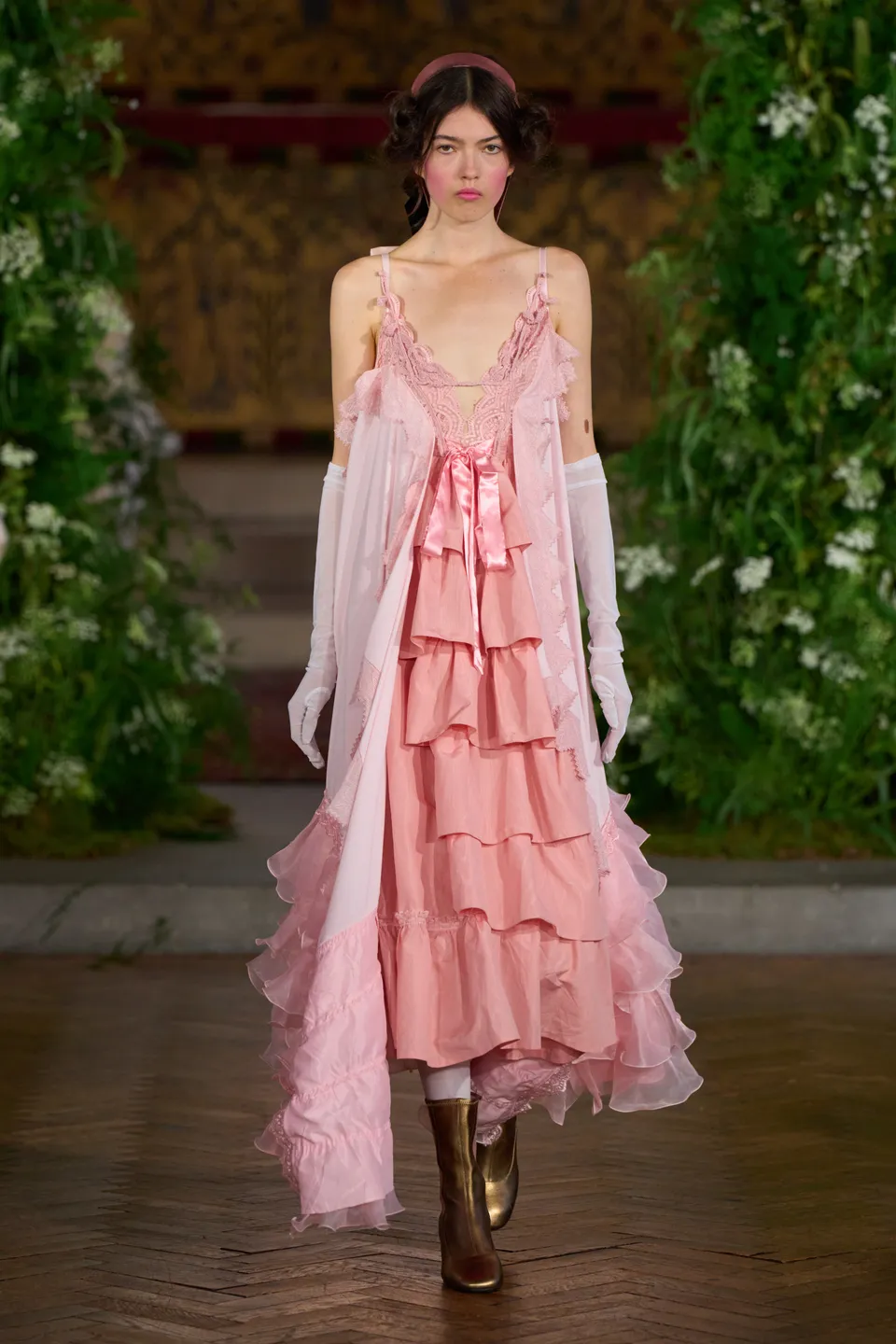
The most extraordinary technical story inside Bora Aksu SS27 comes from Gaziantep.
During a visit to southeastern Turkey, Aksu encountered Antep işi, an intricate textile tradition practiced through meticulous thread removal, knotting and needlework. Fine fabric is worked line by line, with different artisans specialising in separate stages of the process. Complex pieces can require several months of concentrated labour.
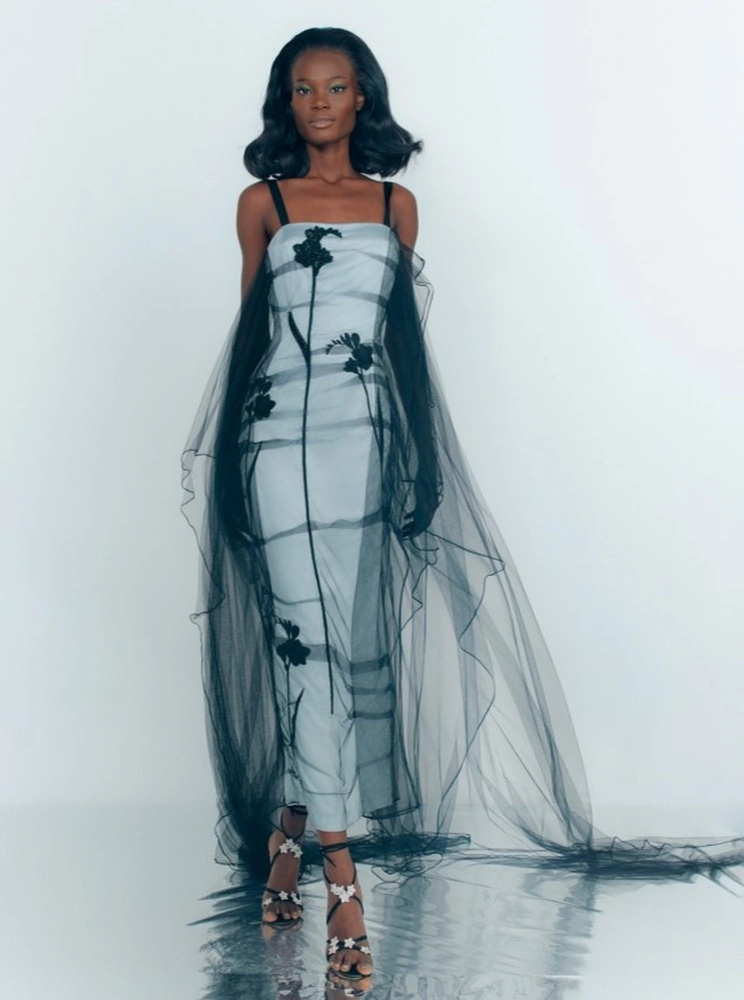
Historically, the technique has lived through domestic textiles such as tablecloths, napkins and bedspreads. For Spring 2027, Aksu brings that knowledge into fashion, integrating the handwork with tulle, organza and lace.
Mary Beale produced professional art from a household studio. The women preserving Antep işi developed specialist knowledge through domestic craft traditions. Their histories meet through the value of skilled female labour, turning the collection into something deeper than a romantic exercise in historical dress.
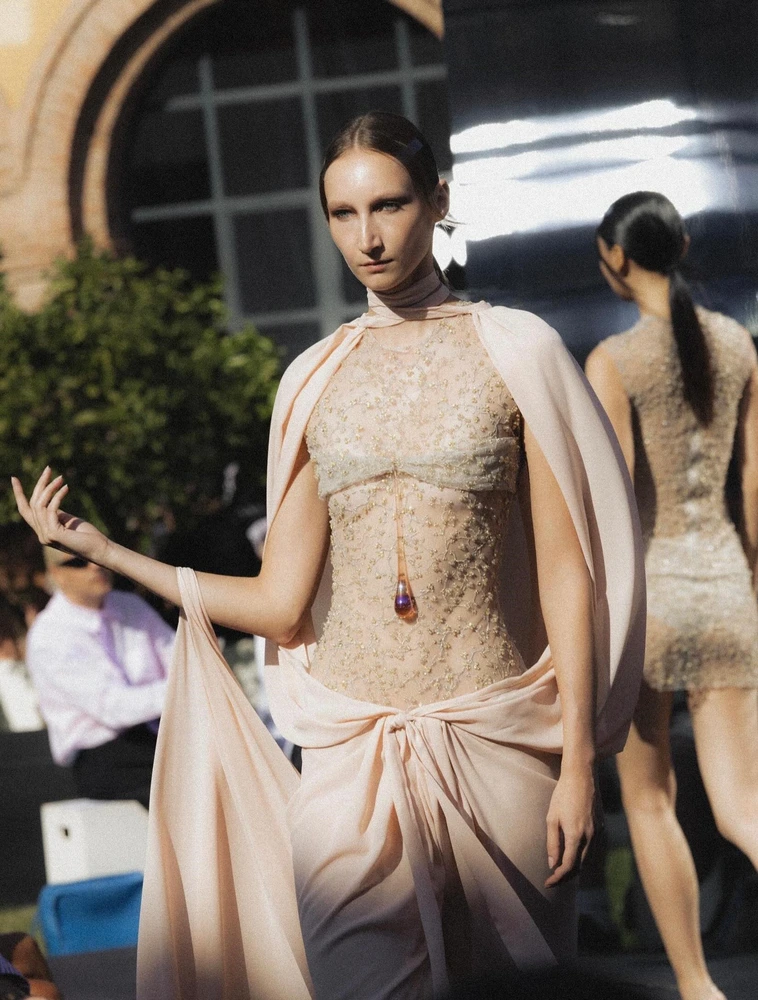
Ruffles accumulate through repetition. Raised threadwork creates relief across translucent surfaces. Fine layers trap air around the body, allowing dresses to expand while remaining light in movement. Yarn crawls across darker pieces like exposed roots, adding texture that feels almost biological.
Across Bora Aksu SS27, A-line, I-line and tiered silhouette form the collection’s main structural vocabulary, moving between clean verticality, gentle flare and layered volume while keeping the body framed with a distinctly romantic precision.
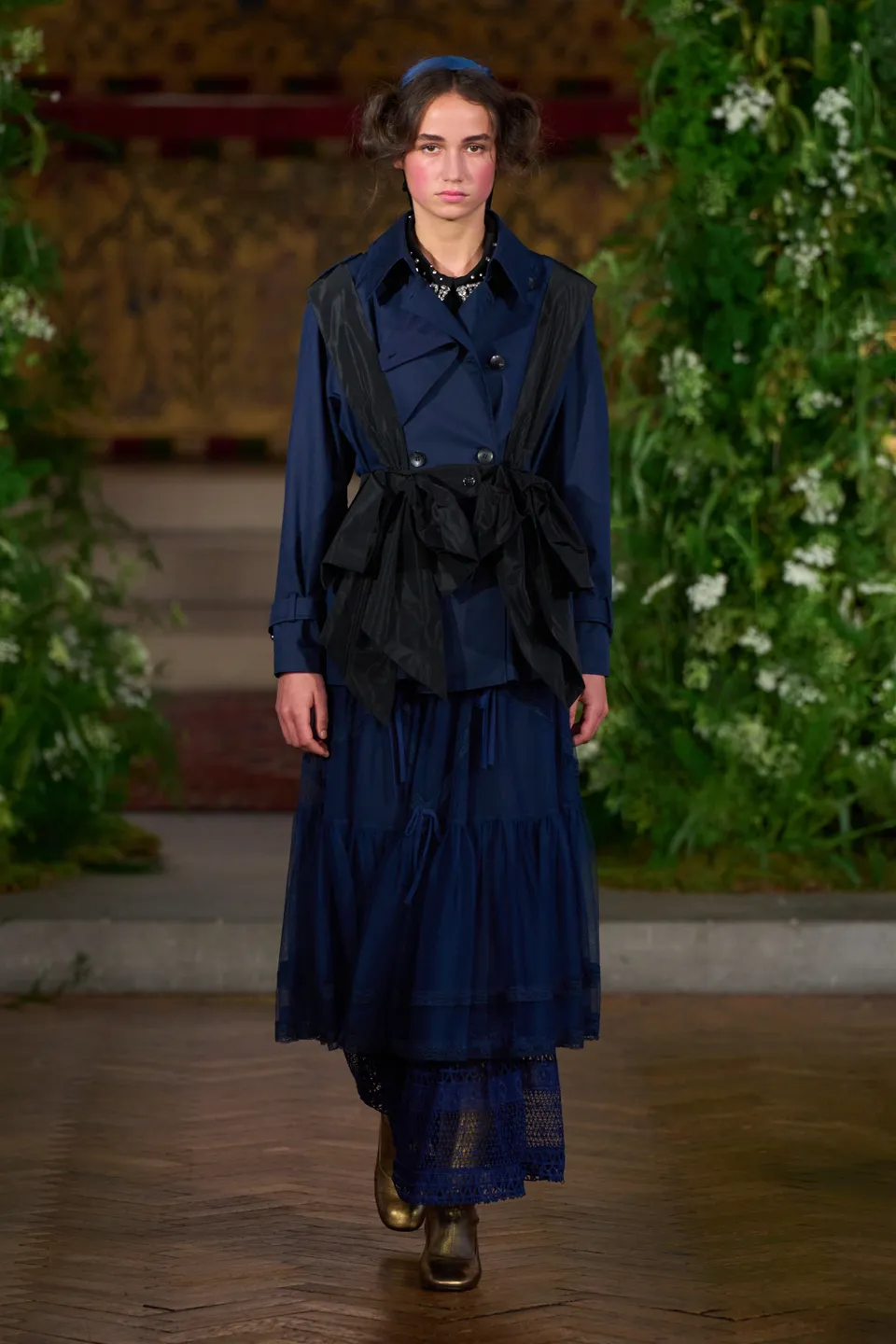
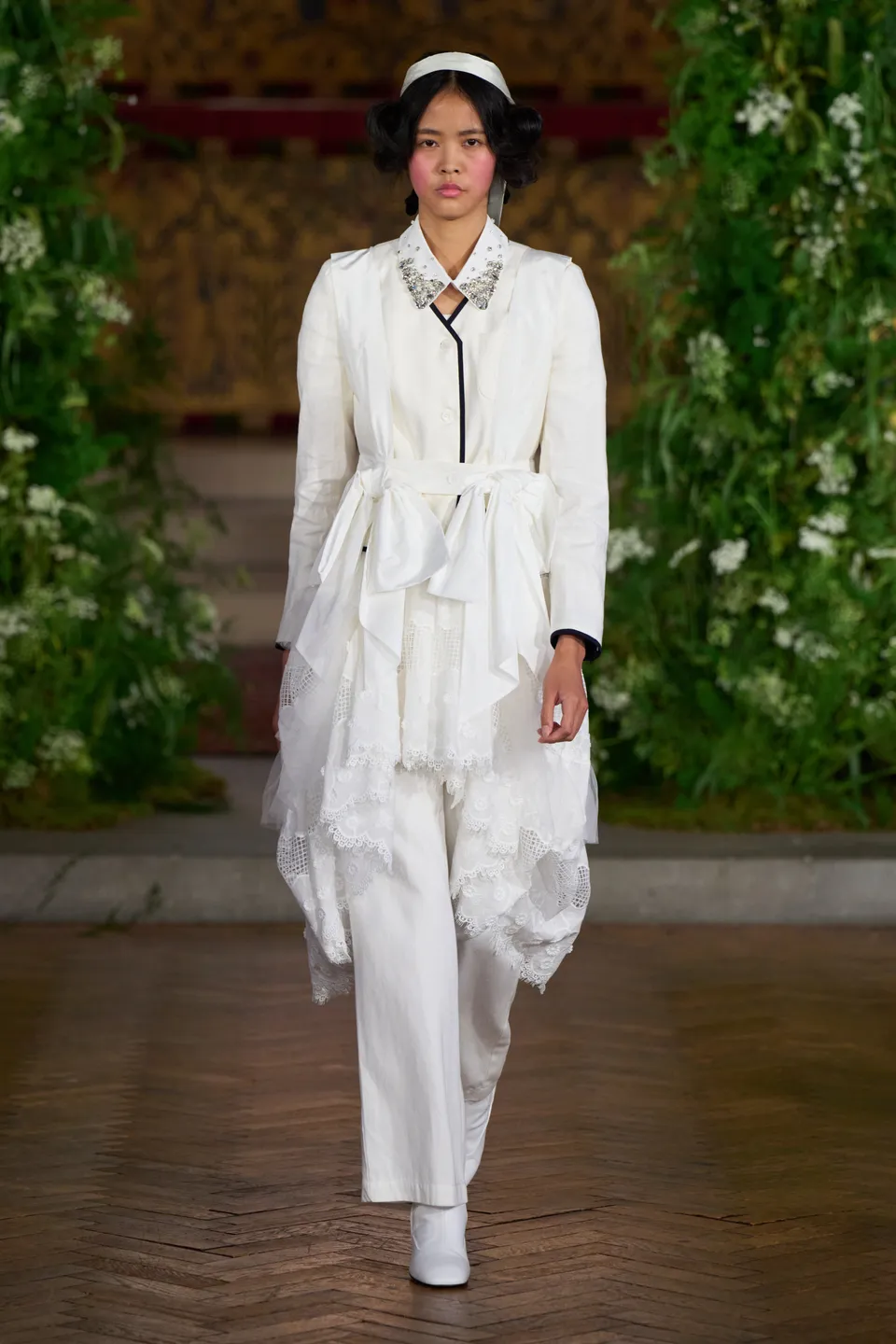
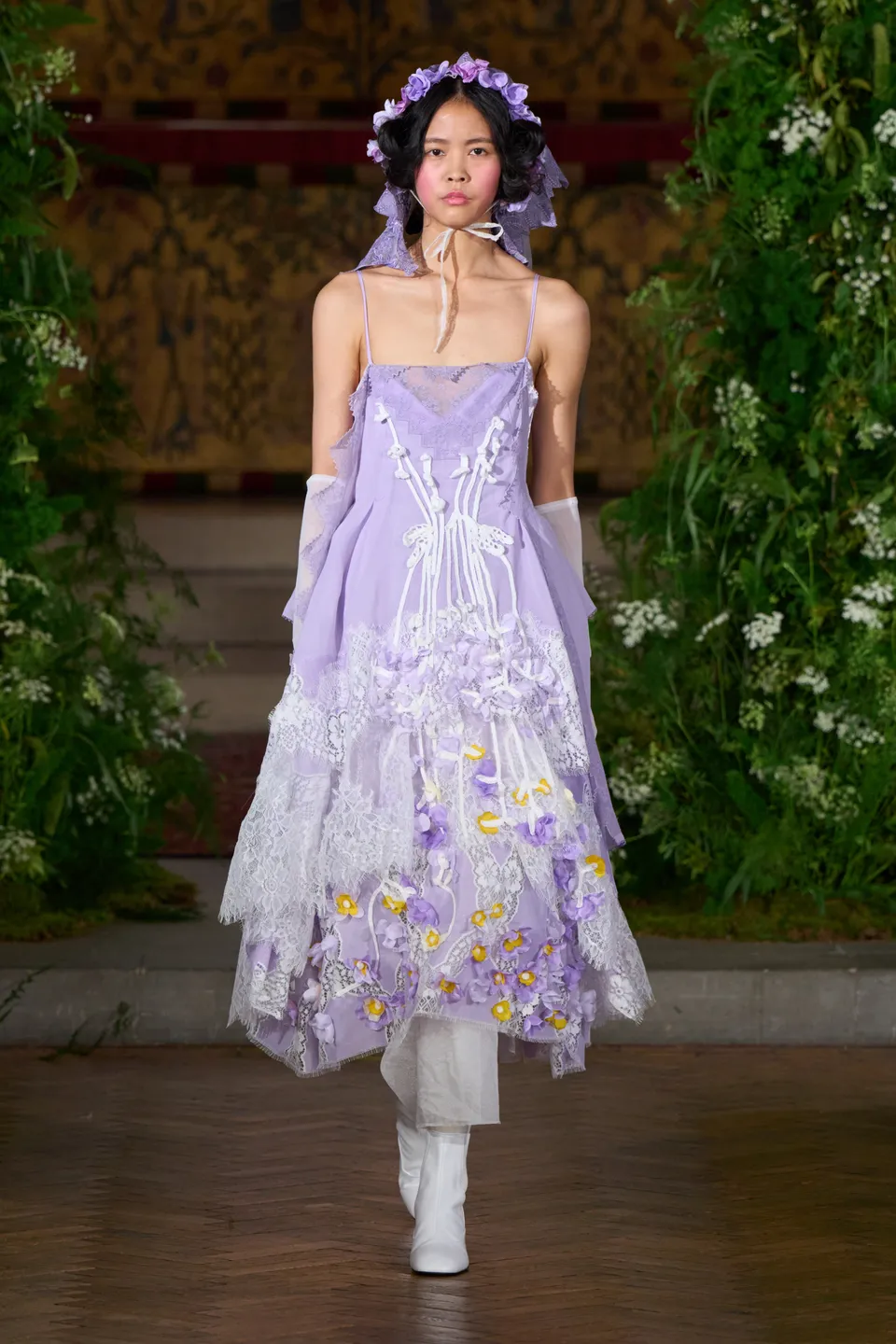
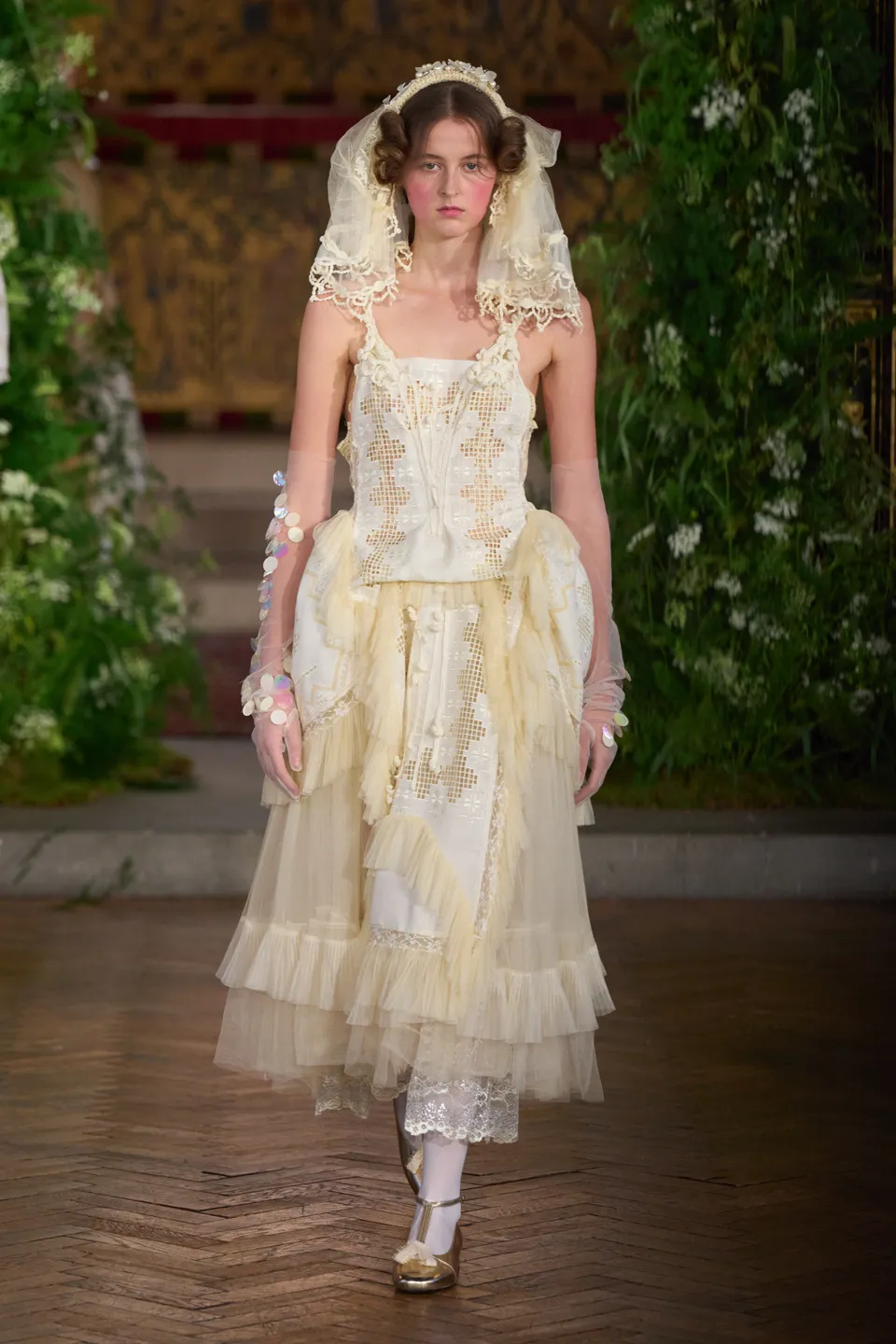
An early pale dress establishes the pastoral dream through airy volume and delicate surface work, giving the runway a soft beginning. A structured jacket layered over romantic fabric introduces the authority drawn from Beale’s male sitters, changing the posture of the body through tailoring.
The Antep-worked pieces bring another register entirely, asking the viewer to read the garment at close range and appreciate the concentration of human time embedded inside it.
By the time the oxblood looks appear, the mood has deepened. Exposed corsetry, dark threadwork and denser construction give the final passage a sense of gravity, as though the portrait has gradually accumulated shadow.
The runway unfolds like an image being developed: first atmosphere, then structure, then depth.
Glossy ringlets, soft ponytails and decorative bows give the models a romantic softness, while pale, painterly beauty keeps the faces aligned with the portraiture running through the collection. Against the church interior, they resemble figures who have stepped out of old paintings and entered a strange contemporary procession.
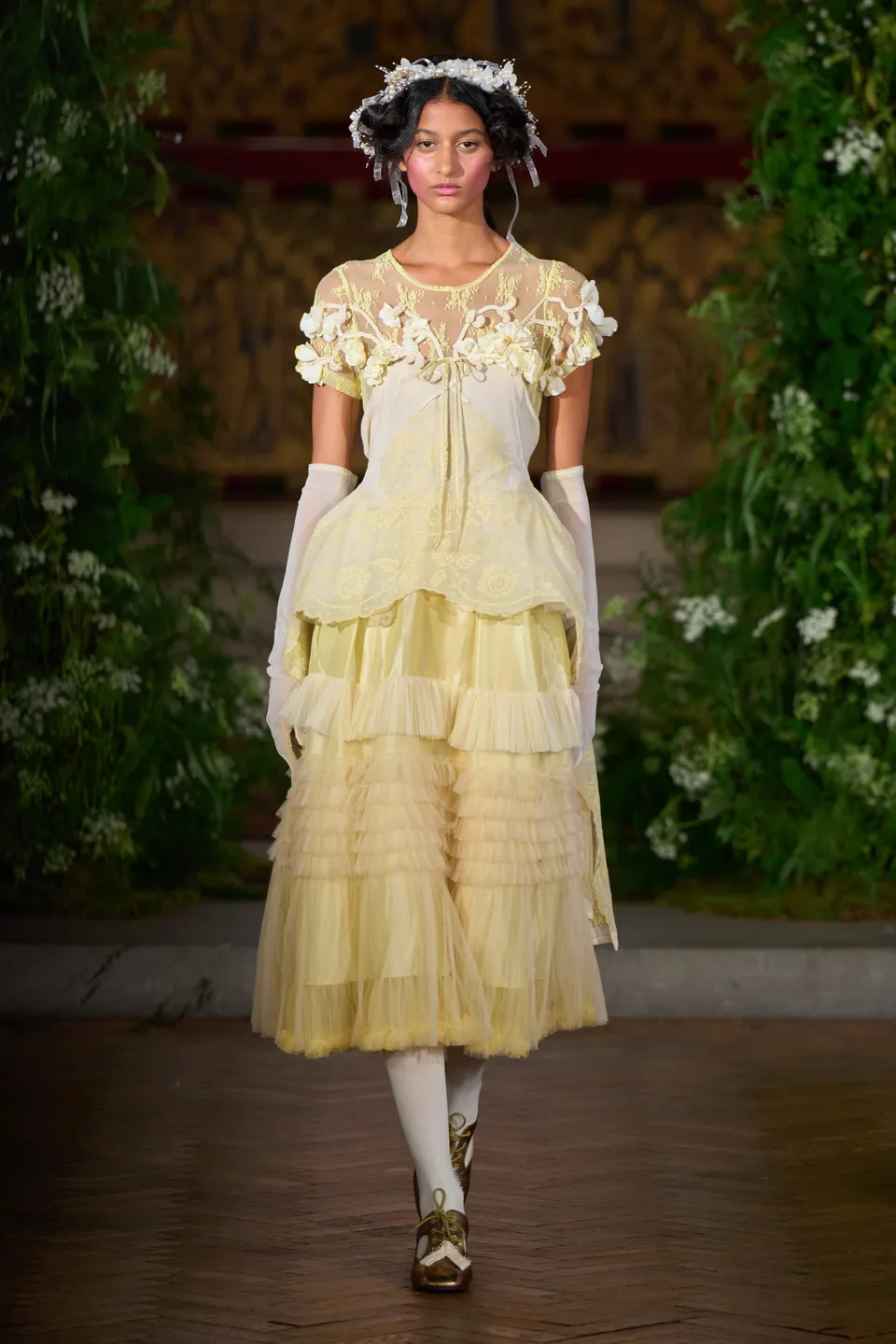
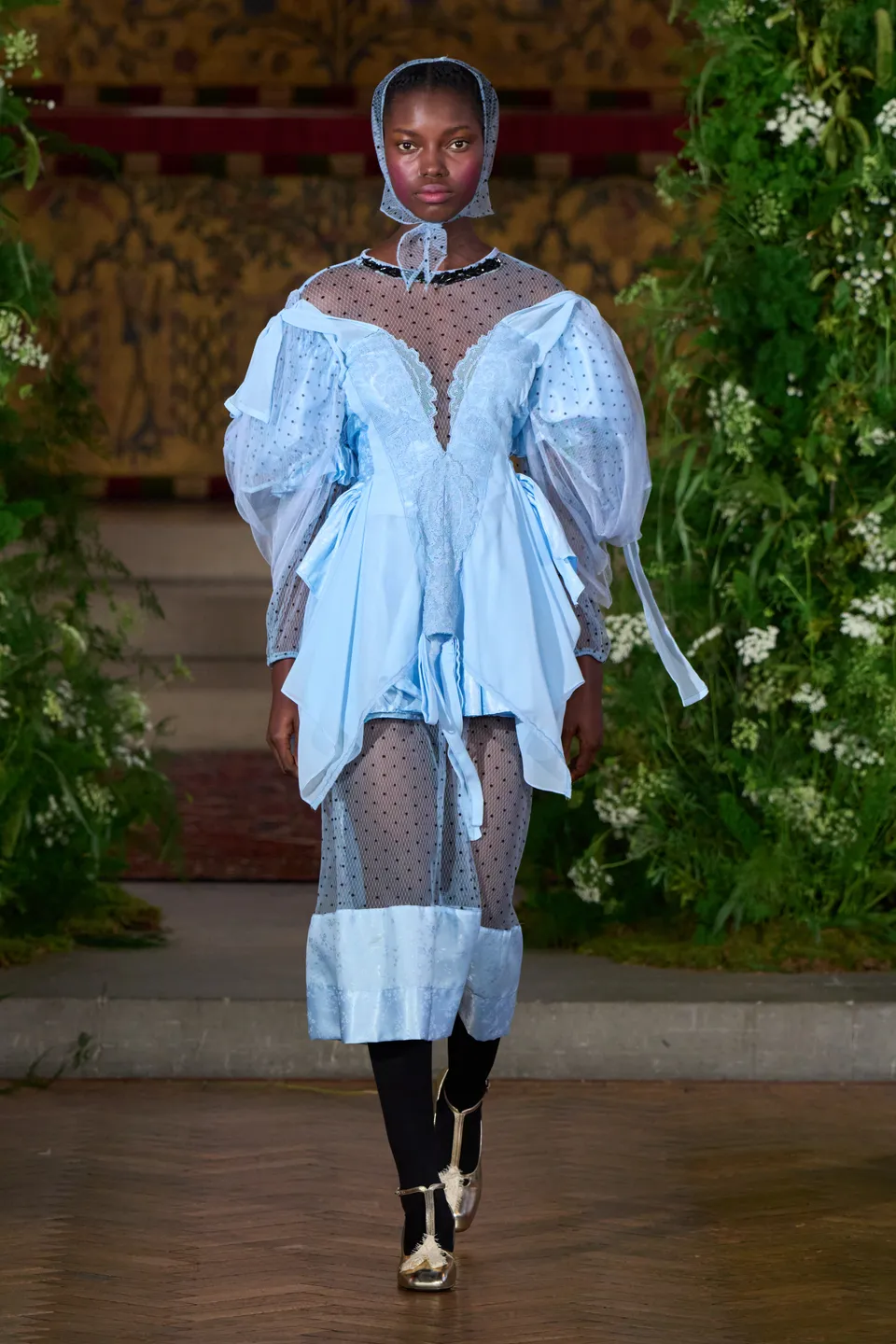
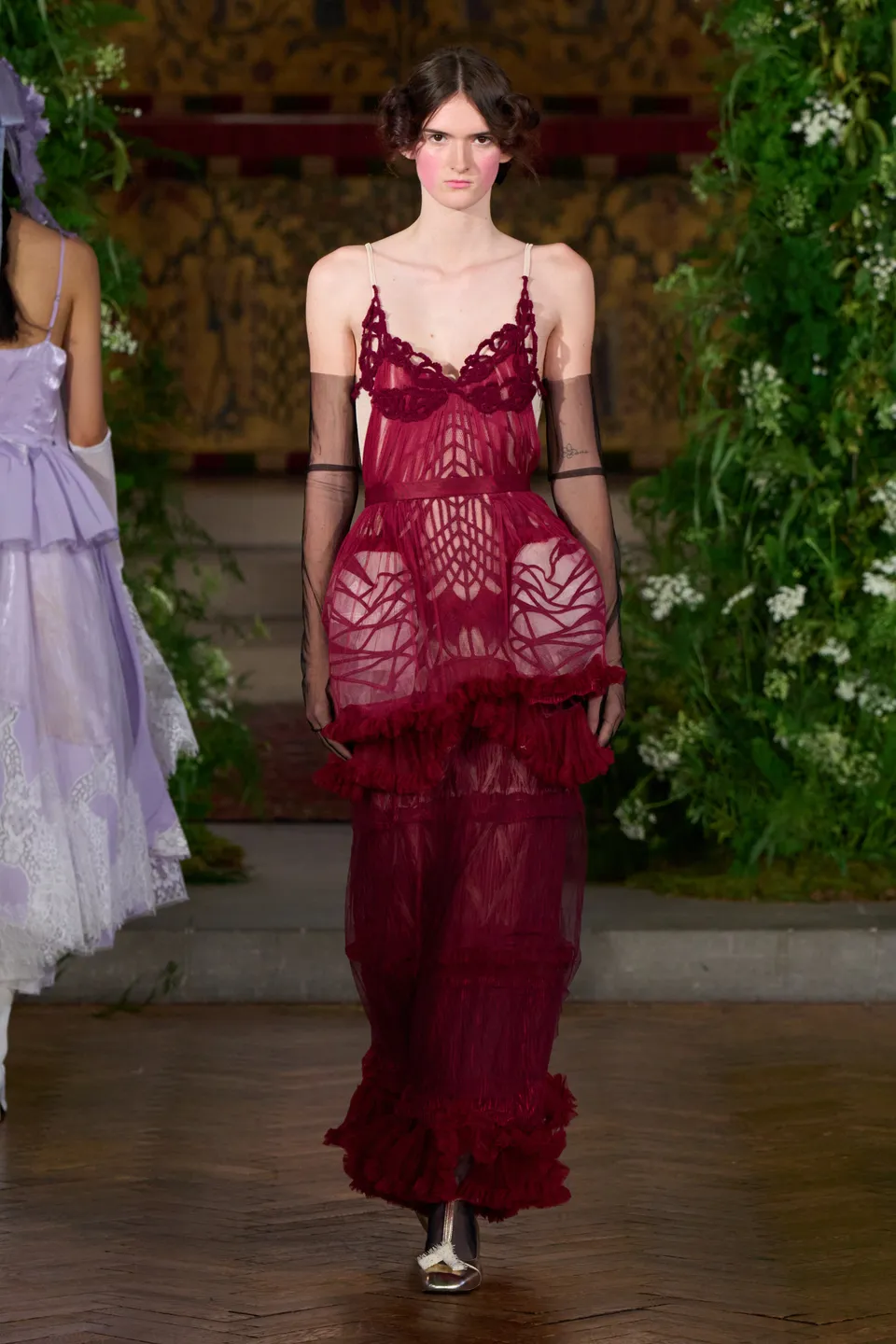
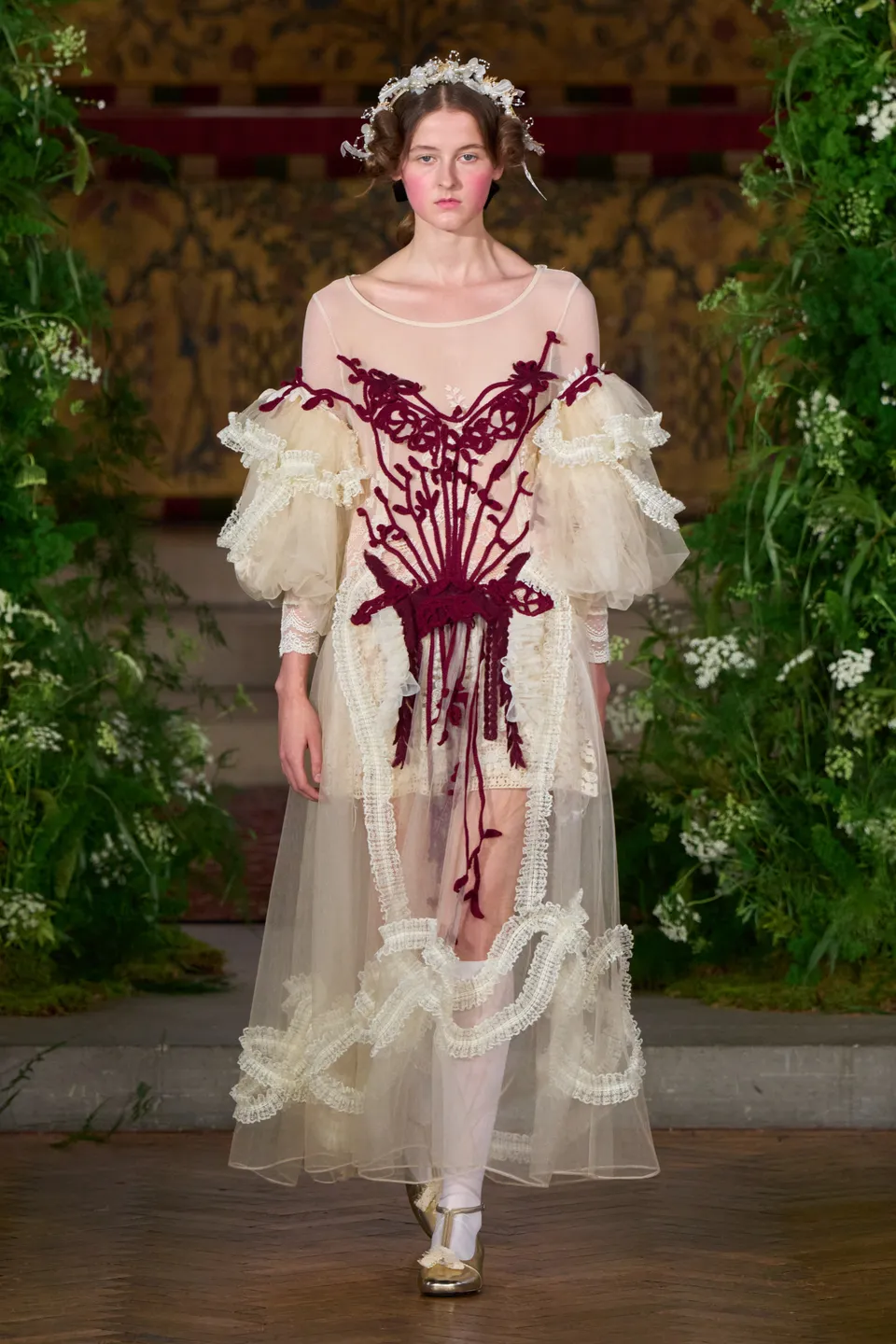
Aksu encountered Antep işi through research in Turkey and then worked with artisans whose specialised knowledge sits far outside the conventional luxury supply chain. Bringing that technique onto a London Fashion Week runway required the collection to accommodate an extremely slow form of production, with individual handmade elements demanding months of work.
The show’s deliberately reduced walking pace suddenly feels connected to the way the clothes were actually made: Aksu wanted the audience to spend time looking because time had already become one of the collection’s raw materials.
That approach also helps explain how Bora Aksu has maintained such a distinctive identity while developing a much broader commercial footprint. Since founding the label in 2002, he has built a romantic visual vocabulary strong enough to travel internationally, including a major standalone retail presence across Asia-Pacific. SS27 shows the mechanism behind that recognition. The business expands geographically while the creative process continues to move inward, toward Turkish heritage, historical research and highly specific hand techniques.
Advertisement