MENU
Close





Fall 2026 is wrapping the waist in satin and calling it a look. The cummerbund has moved across runways, retail, bringing a little evening glamour to almost everything it touches.
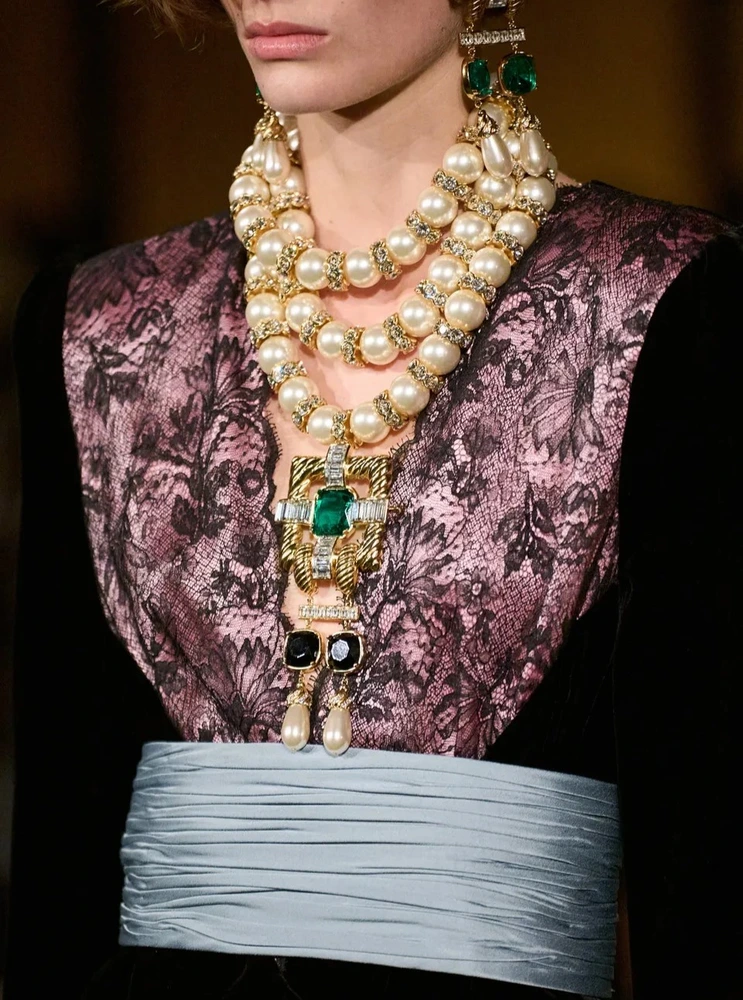
Fall 2026 is wrapping the waist in satin and calling it a look. The cummerbund has moved across runways, retail, bringing a little evening glamour to almost everything it touches.
September 24, 2026
Advertisement
Advertisement


Atelier Jéa developed its Tassel Cummerbund around designer Andrea Ricci’s desire to make the piece visible over dresses and coats. The style subsequently sold out, and the brand cited high demand alongside extended preparation times for orders. Customers and fashion insiders began wearing the piece across shirts, dresses, and layered looks, giving the product a life far beyond formalwear.
The market soon stretched across dramatically different price points. Valentino introduced a ruched silk cummerbund priced around $1,750, Reiss interpreted the idea through polished grosgrain, and Zara brought a pleated cummerbund belt into its current accessories assortment. Christopher Esber developed the construction directly into a Fall 2026 jersey top, allowing the waistband to become part of the garment itself.
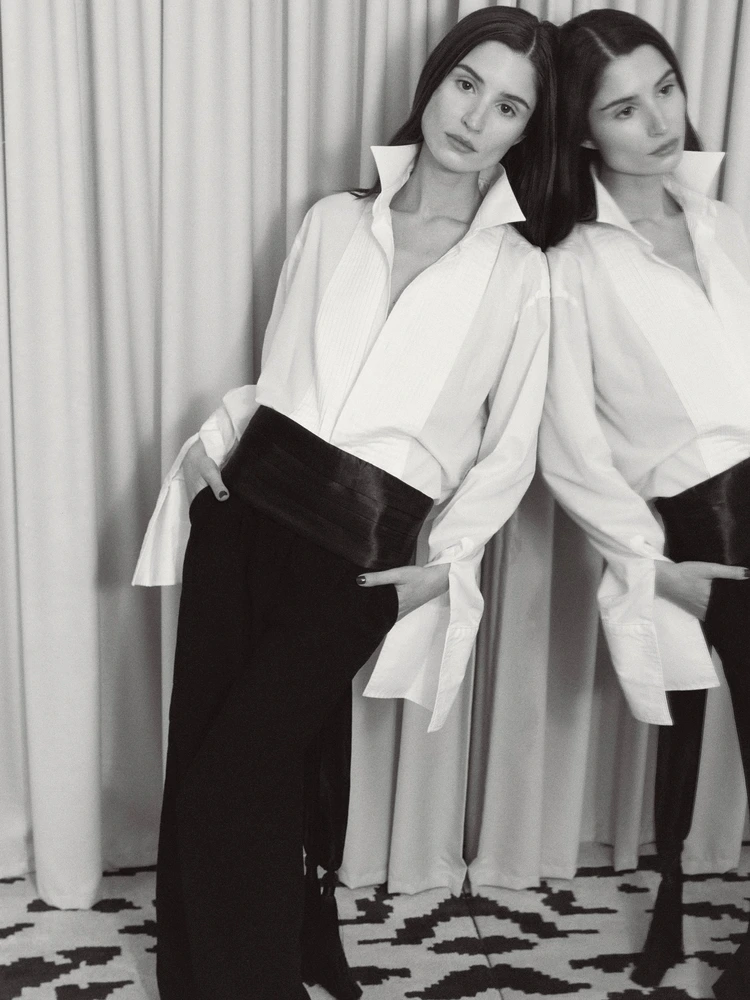
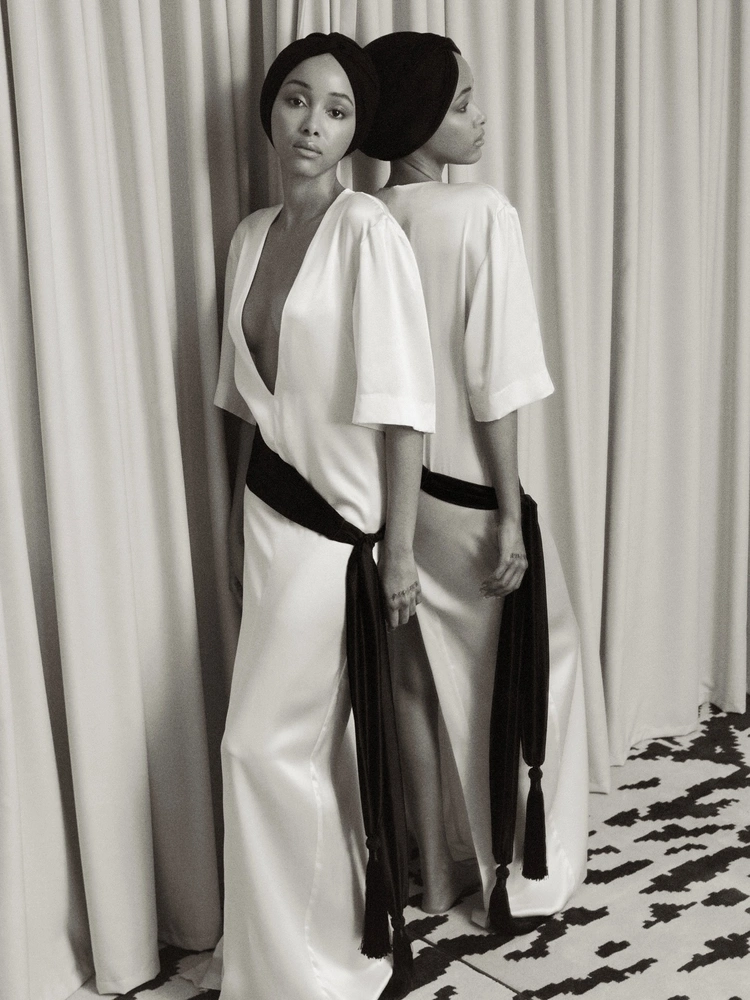
For generations, the cummerbund occupied a precise place in formal menswear: a pleated sash circling the waist between a dinner shirt and tuxedo trousers. Fall 2026 has taken that familiar horizontal band and given it a far wider job.
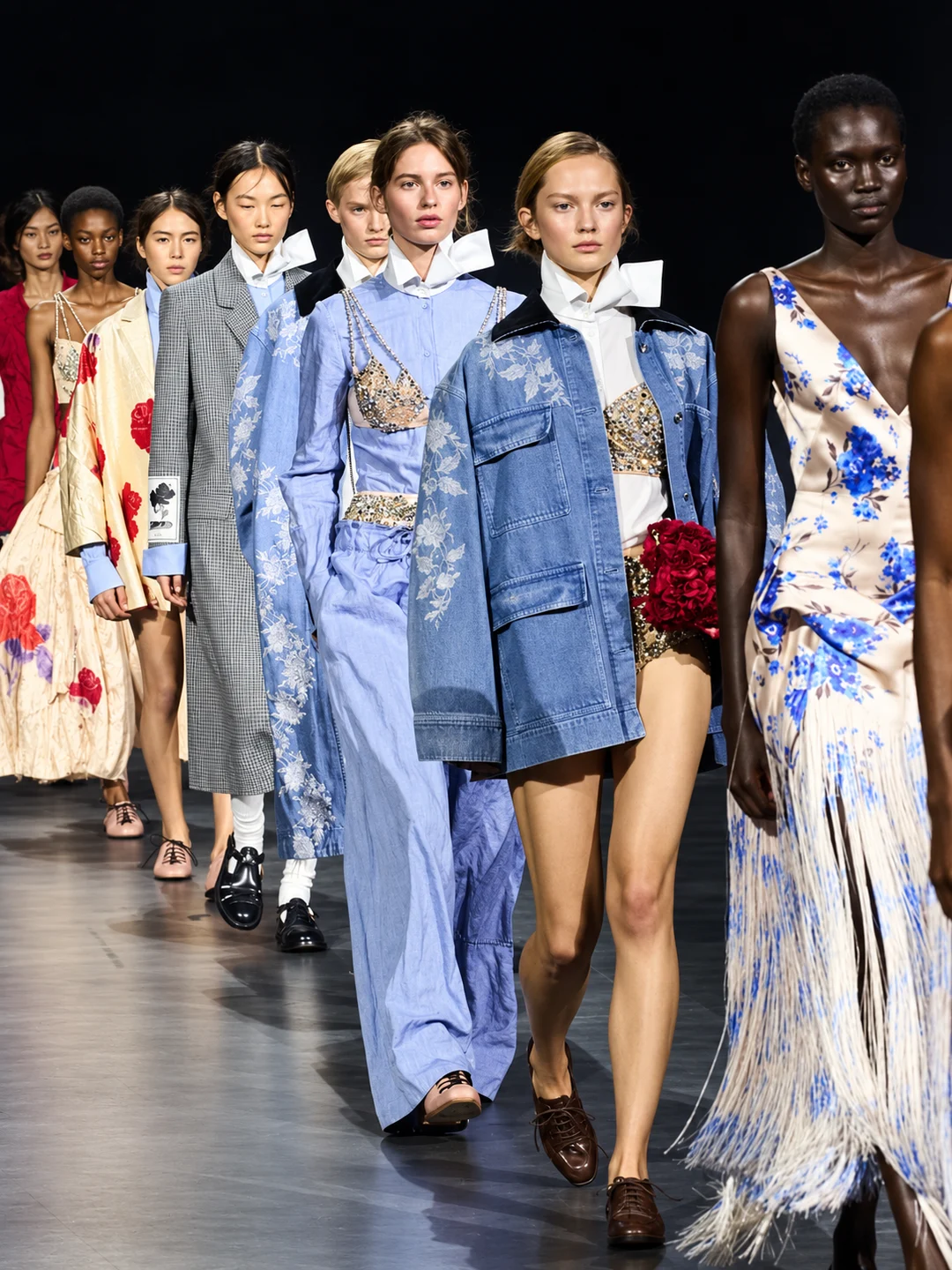
At Valentino, Alessandro Michele threaded brightly coloured satin cummerbunds through chiffon blouses, minidresses, sequined eveningwear and blue denim, allowing one formal detail to travel through several completely different wardrobes.
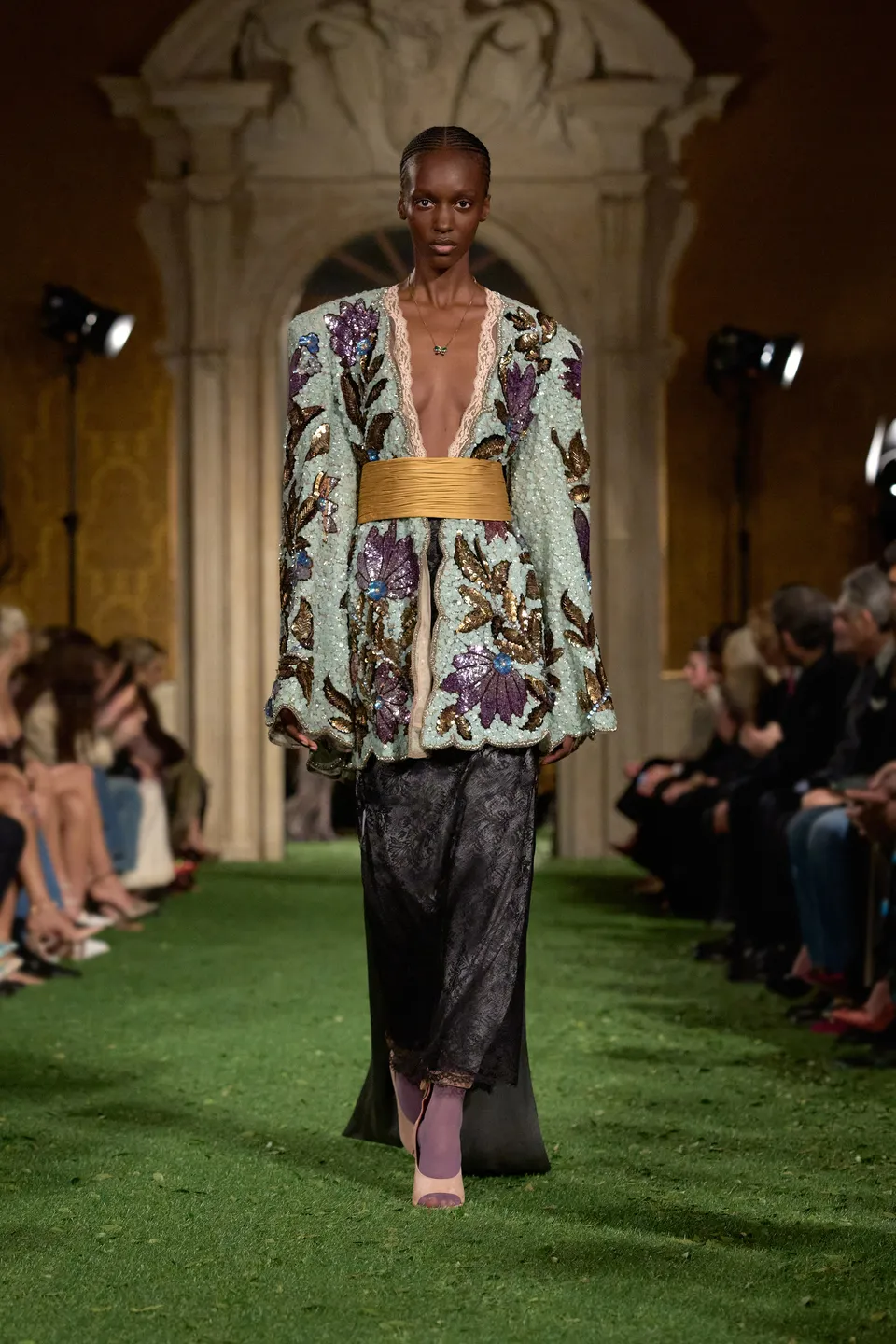
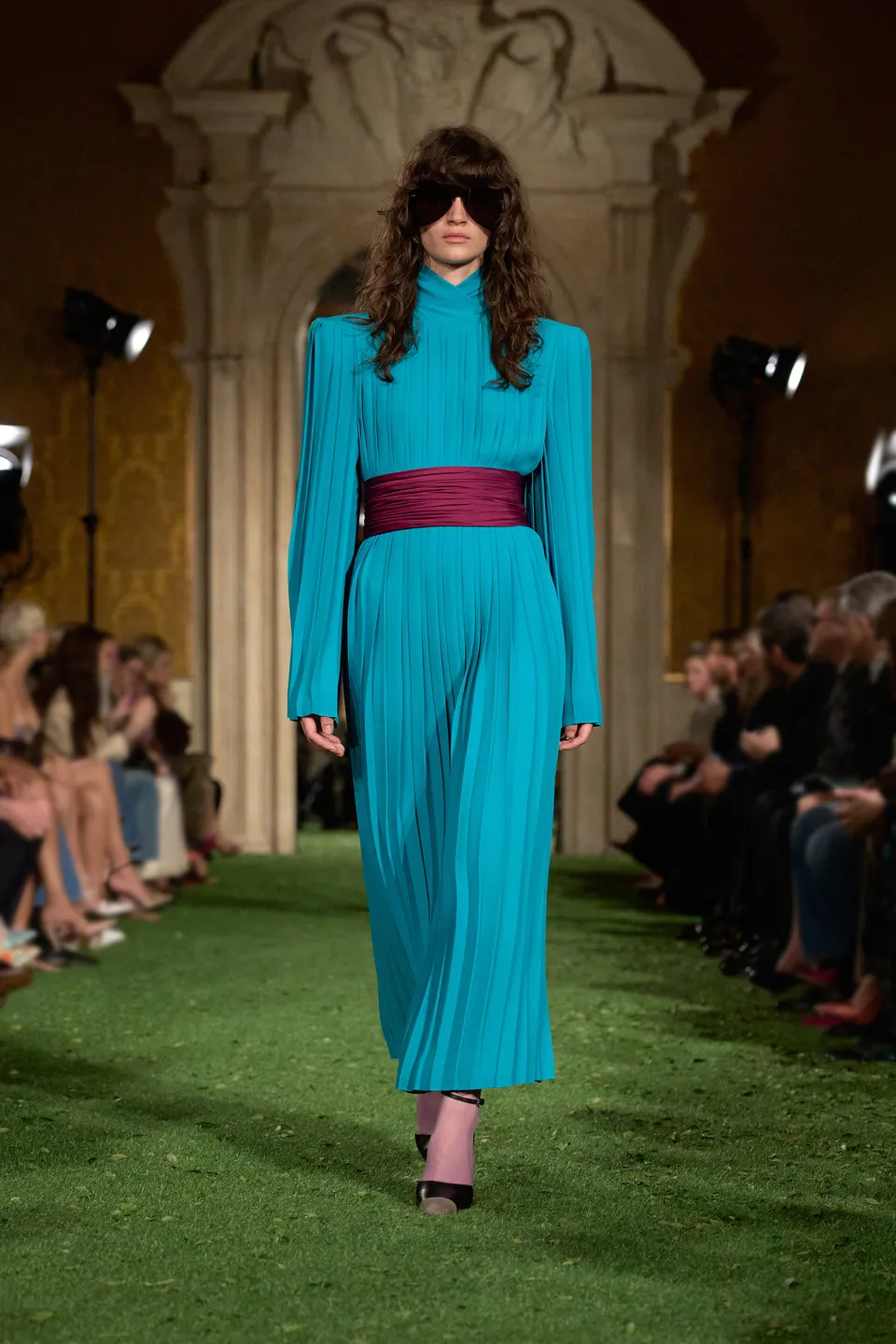
At Celine, Michael Rider pushed the idea into everyday menswear through saturated pink and plum silk cummerbunds worn with crewneck knits, balloon trousers, and jazz shoes. The colour alone changed its character, while the pairing with soft knitwear made the waist feel deliberately dressed inside an otherwise relaxed silhouette.
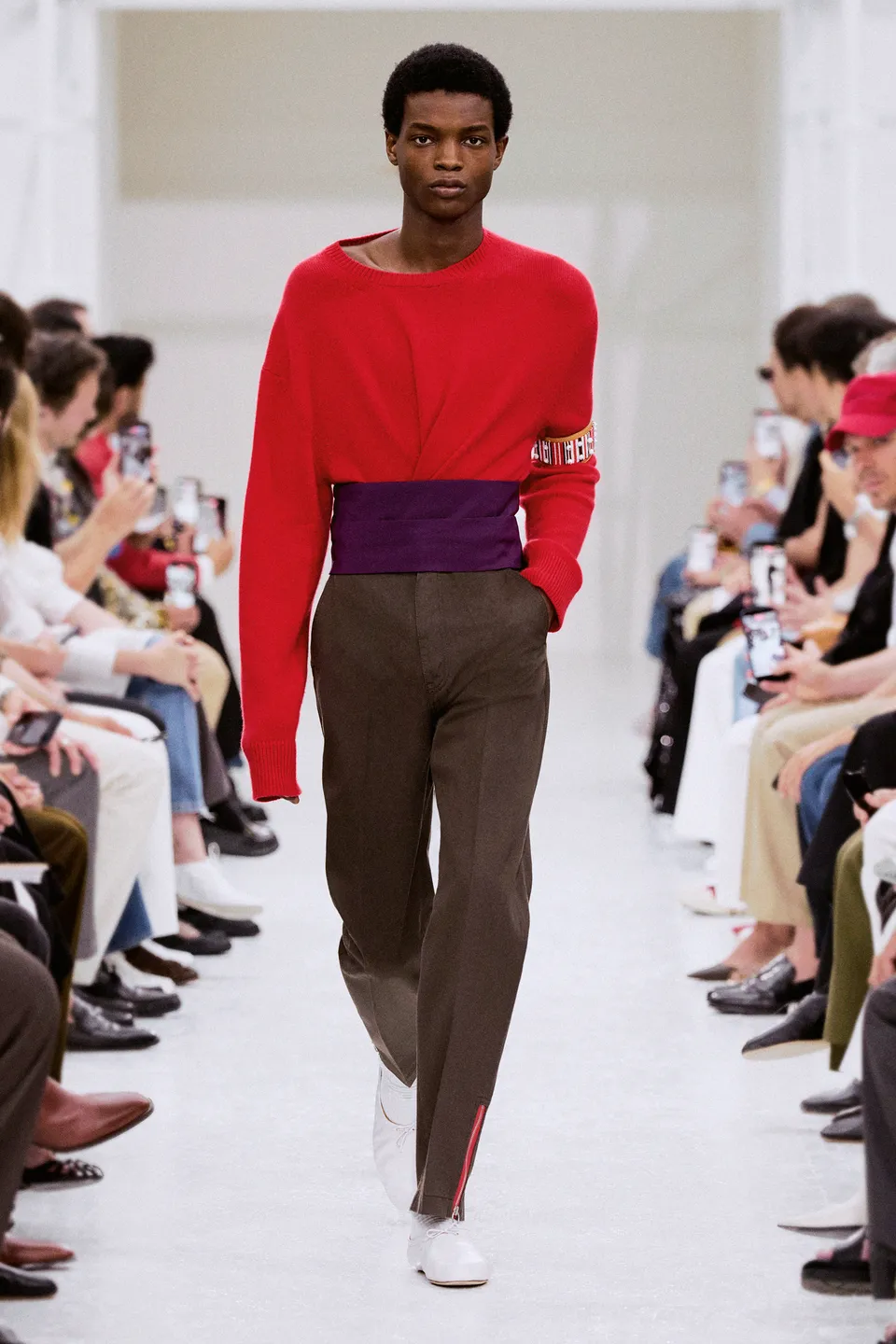
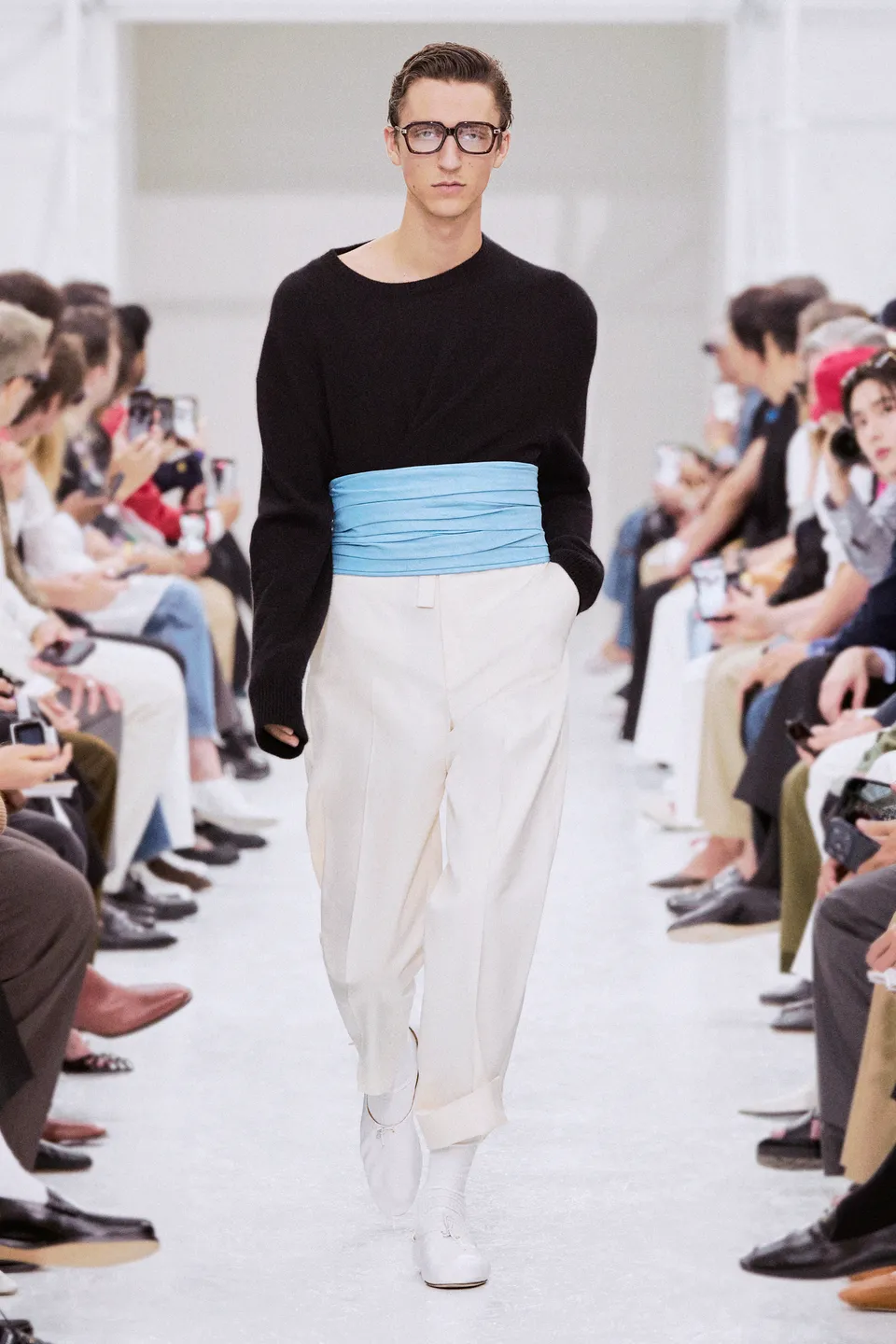
Conner Ives approached the waist through scarf-based construction, pleating, and wrapping silk across the hip and middle of the body. Róhe absorbed the idea into trousers themselves, converting the cummerbund from removable accessory into garment construction.
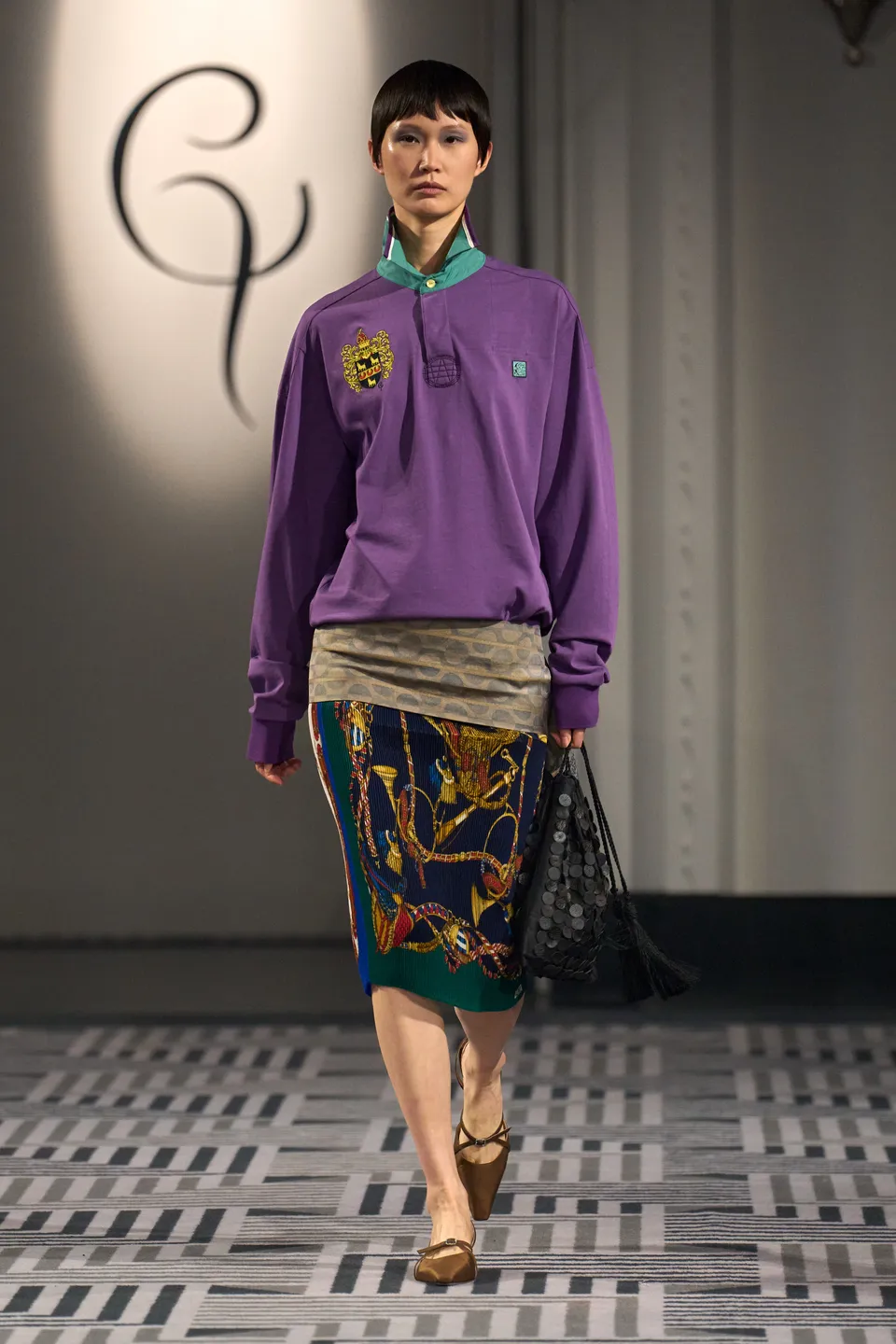
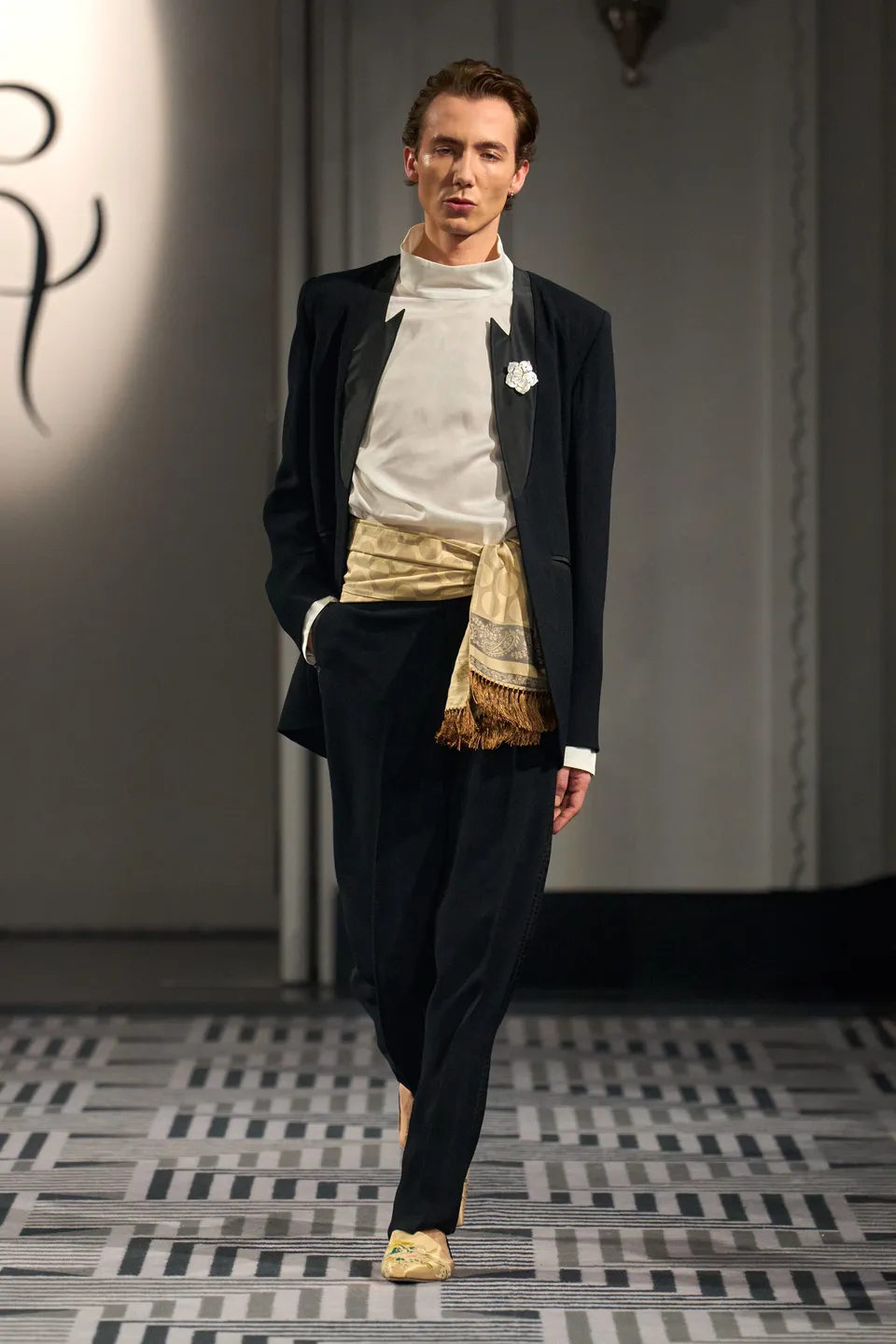
Kenzo carried a related idea through Nigo’s use of wide ribbon and grosgrain treatments, where bands, ties, and wrapped details interrupted sporty pieces and preppy layers around the body.
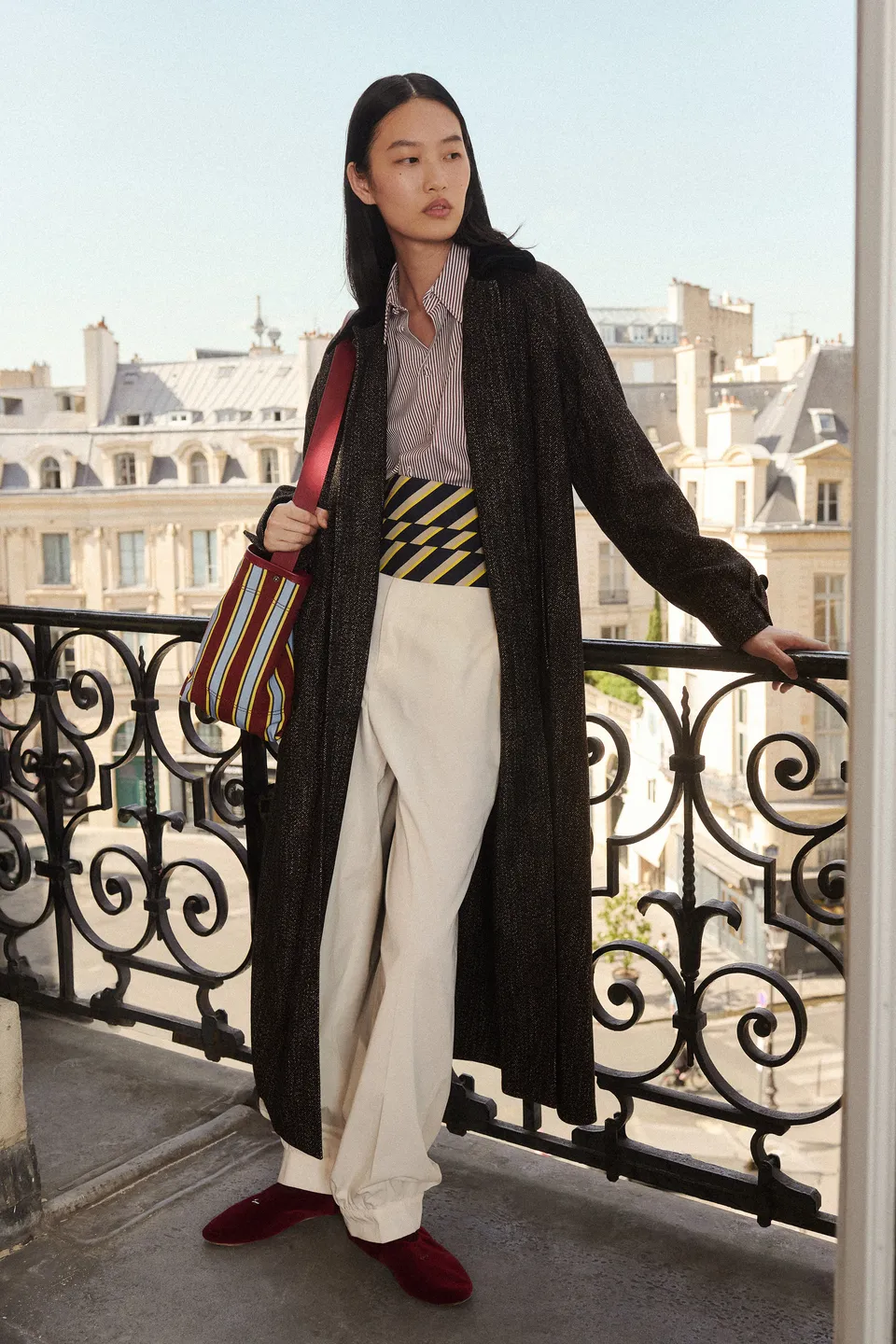
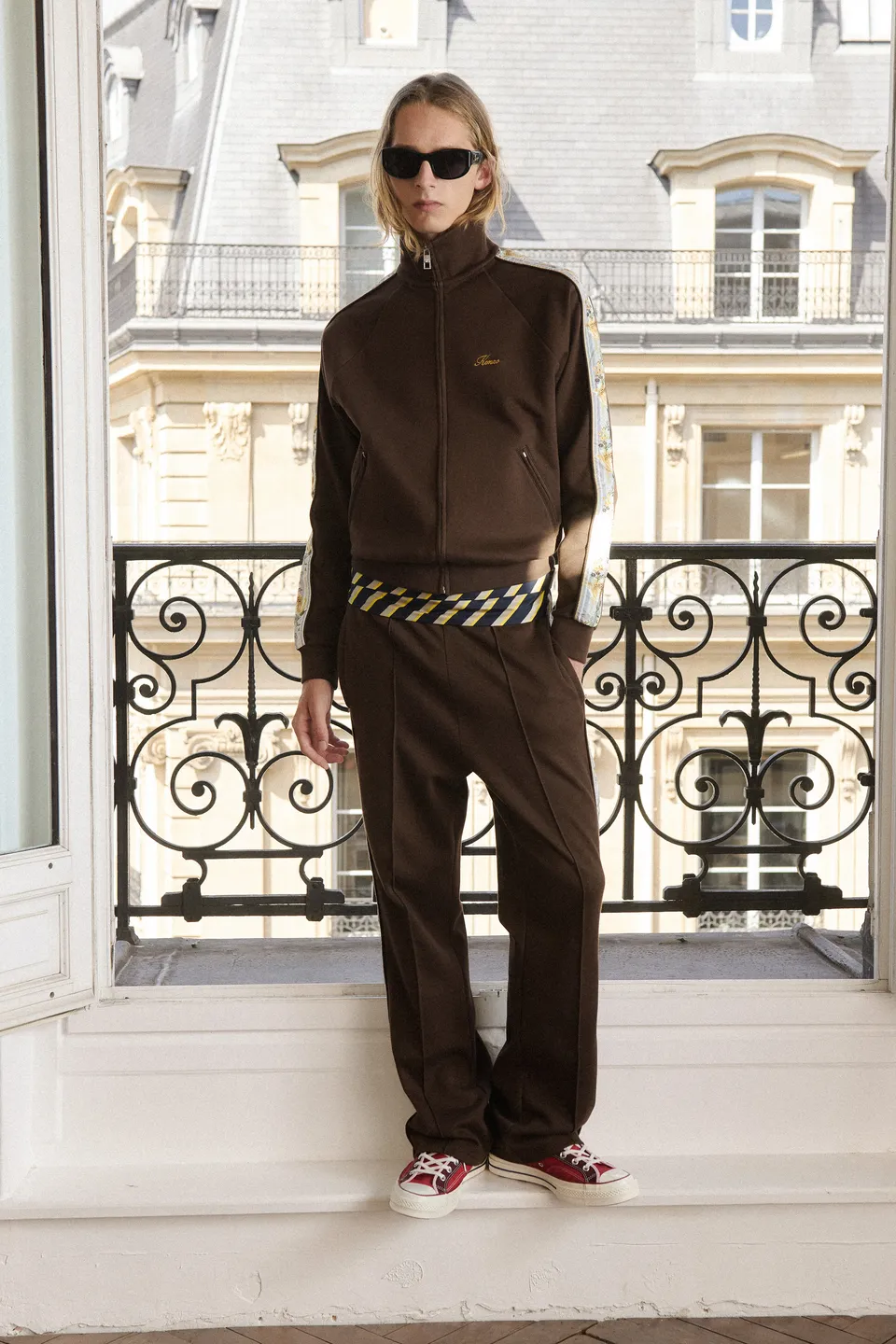
Across these collections, the appeal sits in the same design gesture: one uninterrupted band can reorganize the entire middle of an outfit.
Hudson Williams gave the cummerbund one of its clearest 2026 menswear moments at the Golden Globes, wearing a white grosgrain version with a Giorgio Armani dinner jacket, silk evening shirt, and black trousers. The open neckline loosened the formality around the waist, while the cummerbund kept the look sharply composed.
Sarah Paulson pushed the idea into a more sculptural direction at the 2026 Vanity Fair Oscar Party in Matières Fécales, where a pale satin waist panel cut through a soft ivory knit and full skirt, turning the cummerbund into part of the silhouette itself.
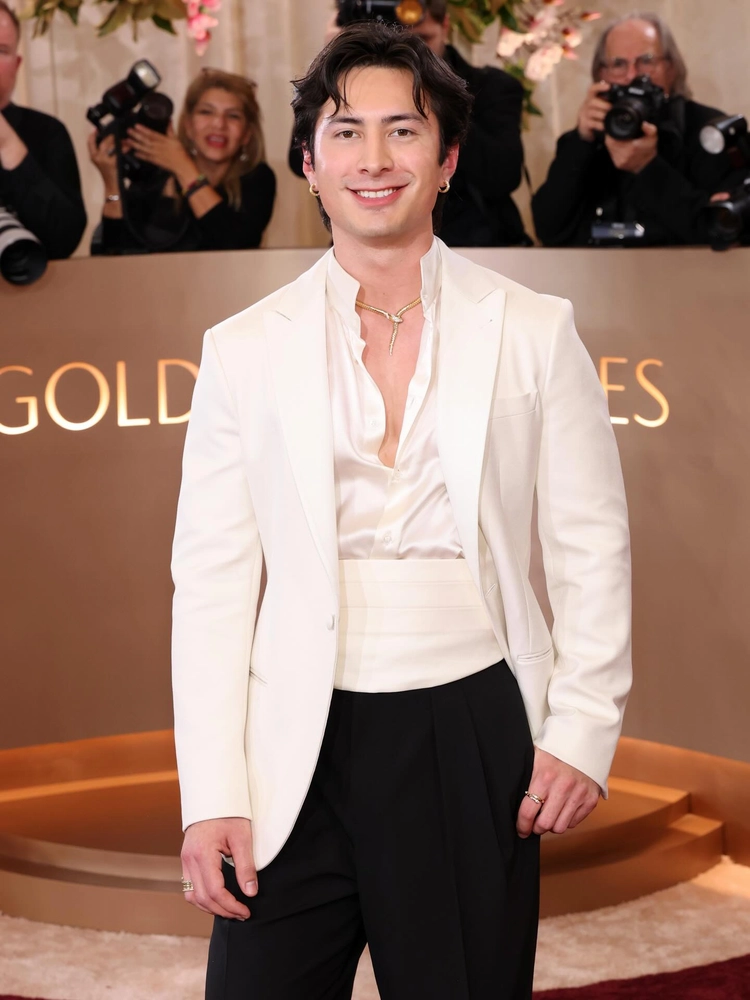
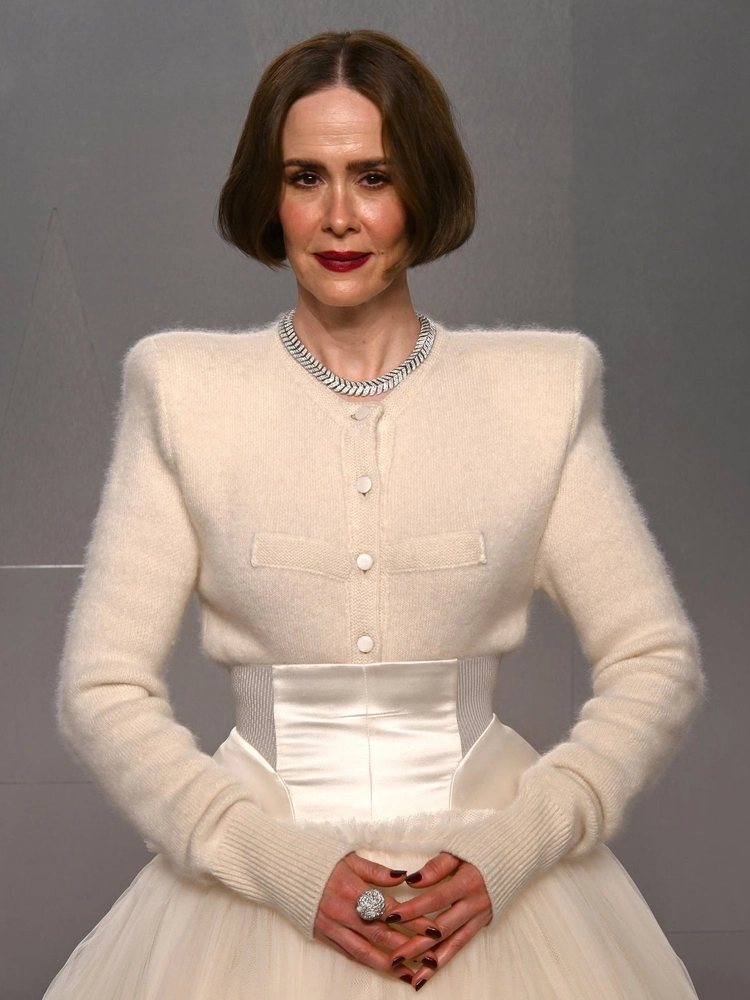
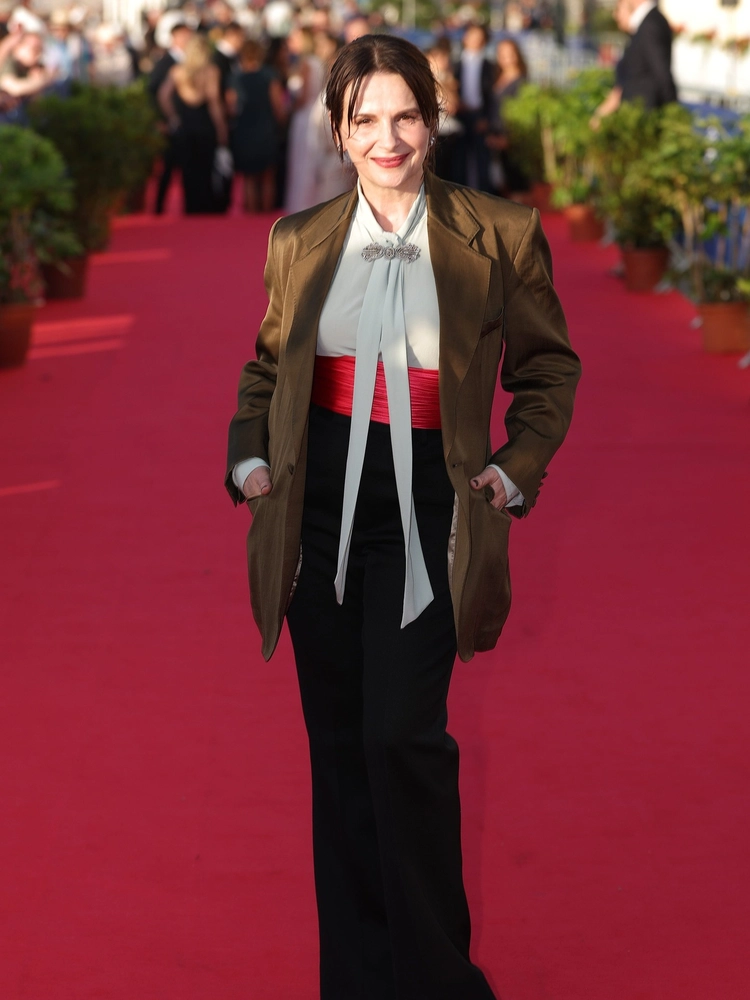
Juliette Binoche used a vivid red Valentino version at the 40th Cabourg Film Festival closing ceremony, letting the saturated band anchor a fluid blouse and relaxed brown blazer.
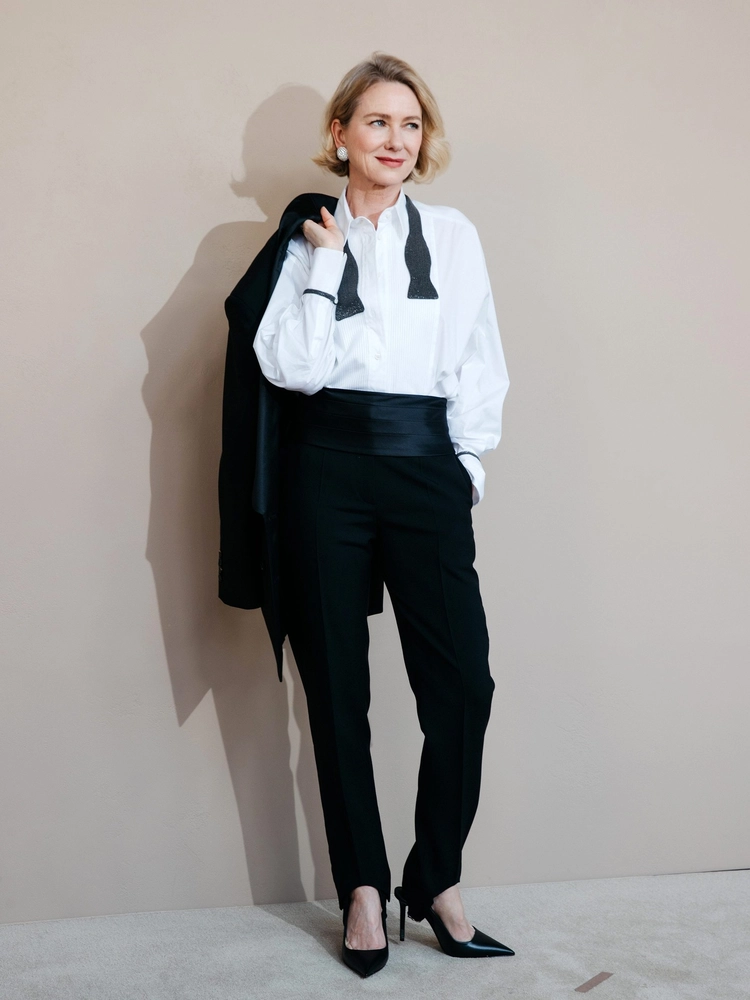
Naomi Watts took the opposite end of the spectrum at the April 2026 Brunello: The Gracious Visionary gala in New York, wearing a black cummerbund with crisp white shirting and tailored black trousers for a cleaner eveningwear expression.
Its gender flexibility comes from geometry. A broad horizontal strip can sit around almost any body and attach itself to almost any wardrobe language, allowing fabric, colour, and styling to determine its character.
A belt traces a narrow line around the body. A cummerbund occupies an entire zone, often stretching several inches vertically across the torso. That extra surface gives designers room to change proportion, divide garments and introduce large blocks of colour or texture directly through the centre of a look.
A satin band can visually connect a blouse with trousers. A dark pleated panel can anchor a flowing skirt. A wide waistband placed over tailoring can redraw the lower edge of a jacket. When used with knitwear, it gives soft fabric a deliberate centre point and creates an immediate shift in silhouette.
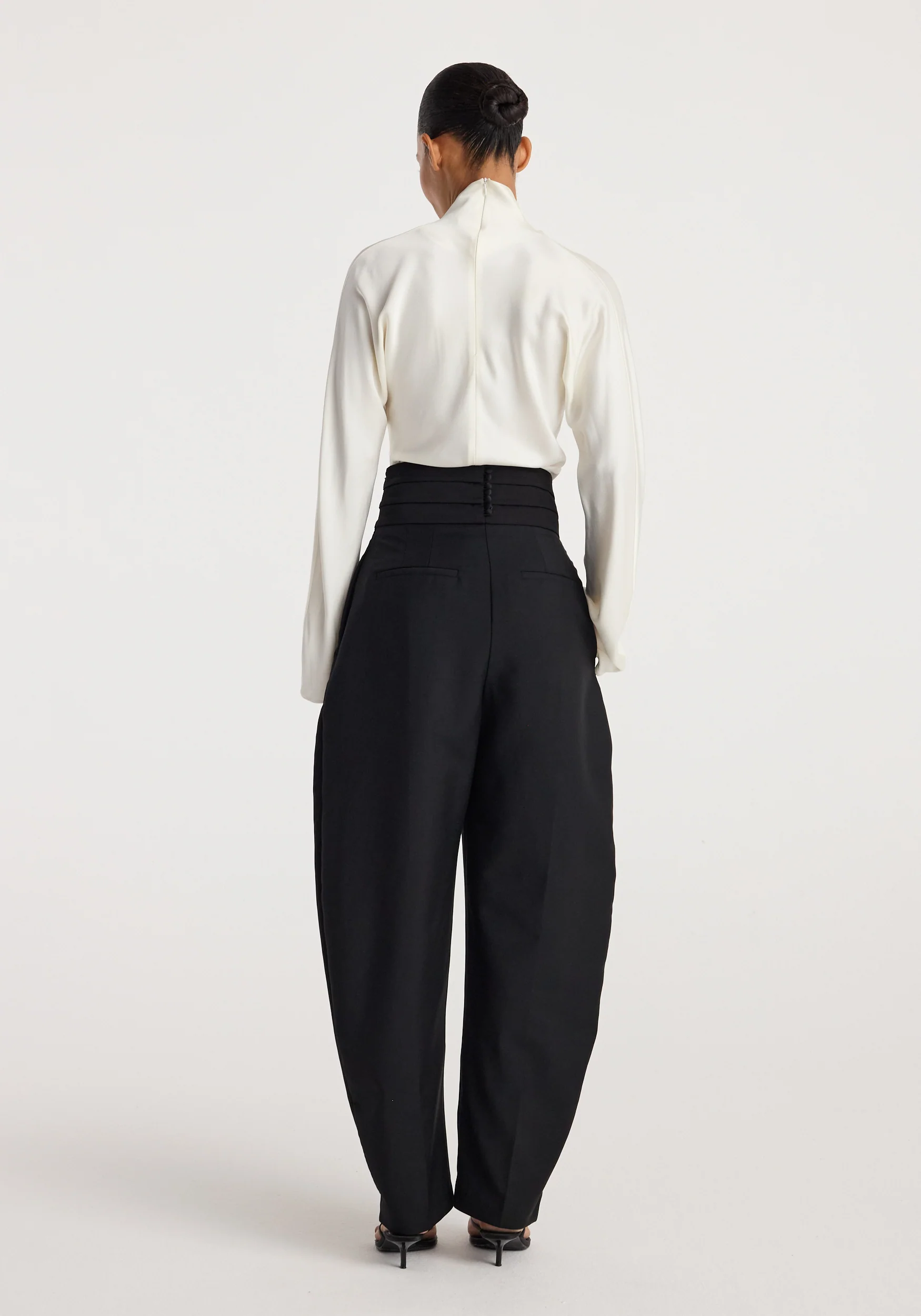
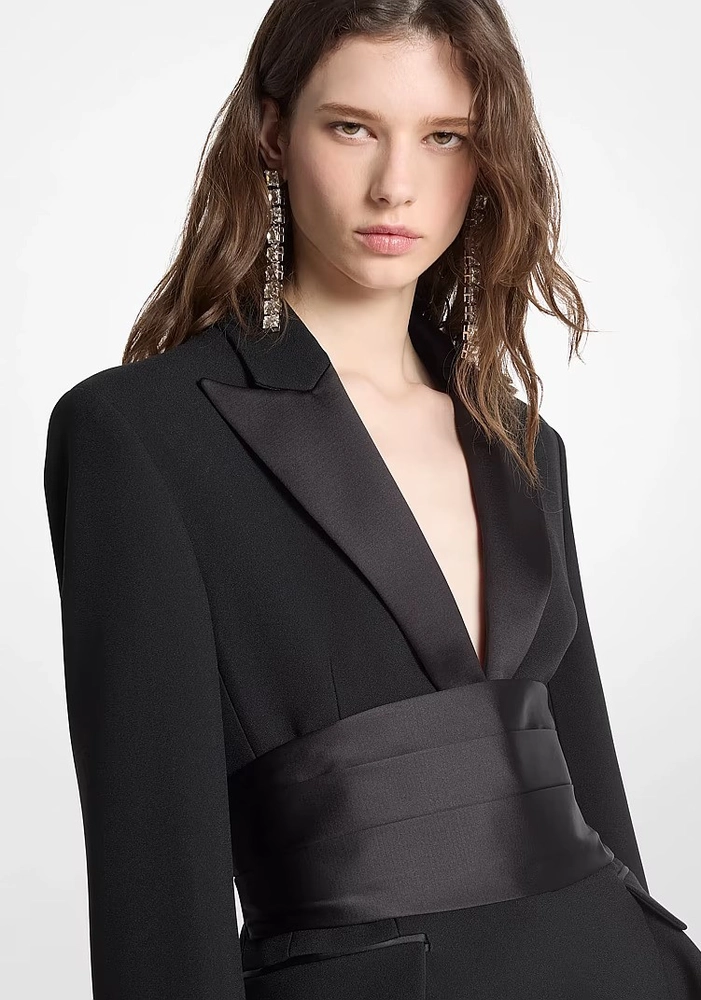
This also explains the appeal of coloured versions. Burgundy, pink, yellow, cream and jewel-toned satin transform the cummerbund into an intentional graphic interruption. Pleats catch light across the waist, silk adds evening polish, and heavier constructions introduce architectural structure.
The most convincing styling experiments eventually moved away from full designer looks.
British GQ senior style editor Mahalia Chang wore cummerbunds through 2026 with jeans, camouflage trousers, and Fashion Week outfits. Christina Grasso placed one over an oversized shirt. Marie Claire editor Alexis Badiyi wore Atelier Jéa’s tasselled version during New York Fashion Week, and Endrit Nurcaj discussed recreating the runway idea through pieces already present in his wardrobe.
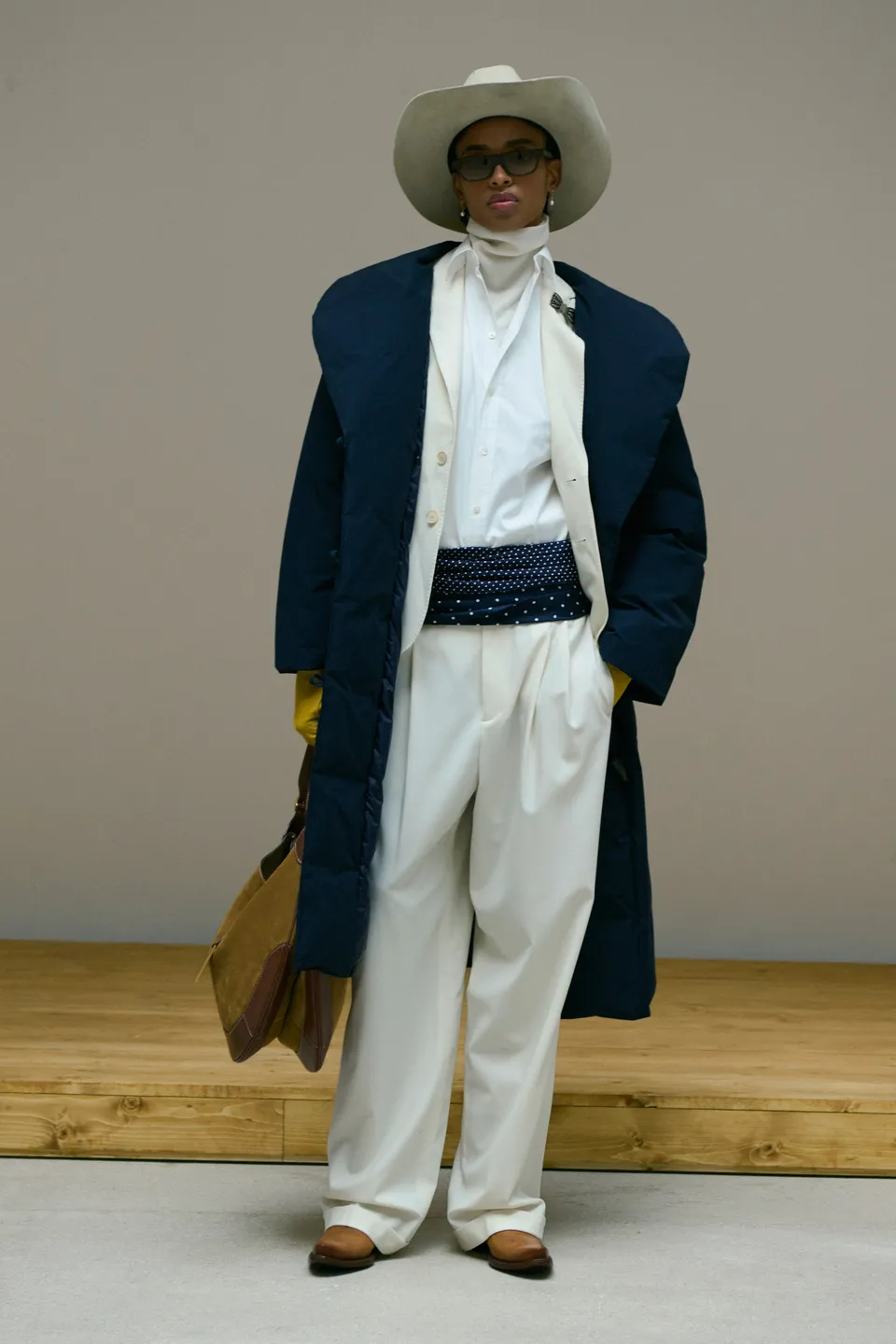
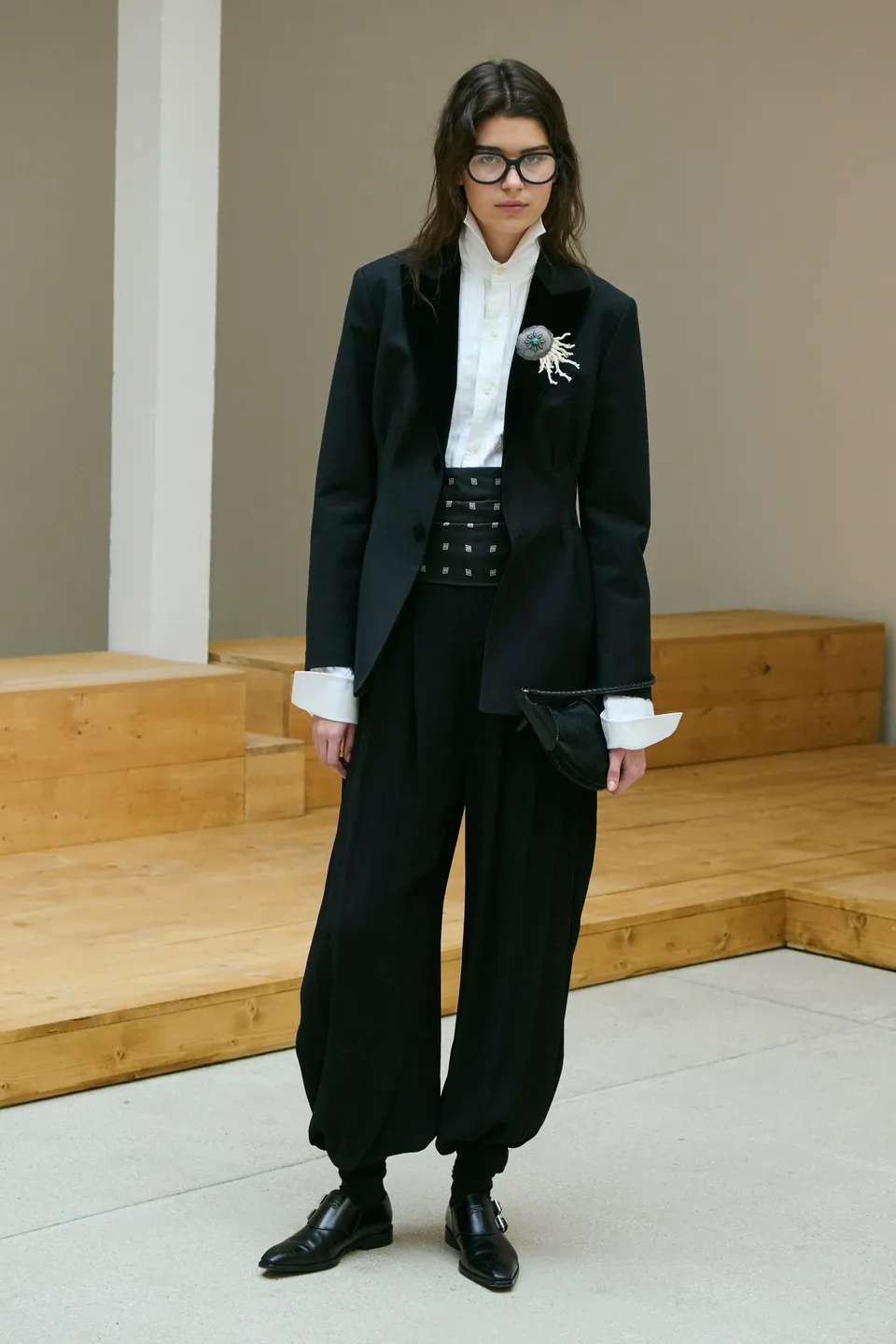
Their styling reveals the simplest formula behind the trend: familiar clothes gain a concentrated dose of ceremony around the waist.
A white shirt suddenly carries eveningwear structure. Denim gains a polished centre. Loose trousers acquire a clearly defined proportion. Knitwear gains shape through one horizontal interruption. The cummerbund works almost like punctuation, creating a deliberate pause between the upper and lower halves of an outfit.
Perhaps that is why the cummerbund feels so right for this particular Fall. Fashion has taken one of black tie’s most disciplined accessories, released it across the entire wardrobe, and discovered that almost any outfit becomes a little more exciting once the waist looks dressed for somewhere glamorous.
Advertisement