MENU
Close





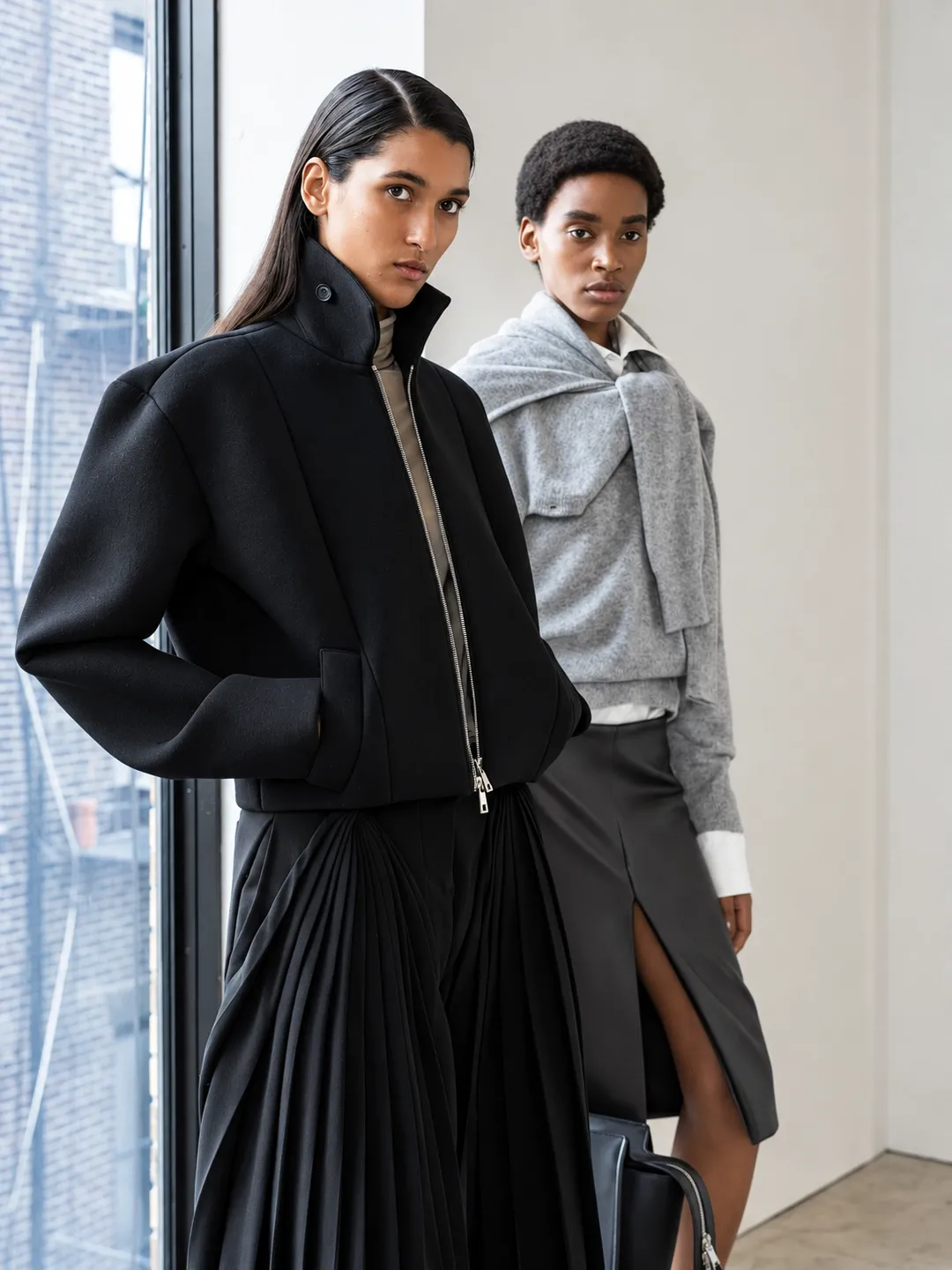
Part 2 of Madrid Fashion Week SS27 brings together ten collections with very different coordinates, yet each is grounded in a designer-specific story worth following beyond the runway image.
Part 2 of Madrid Fashion Week SS27 brings together ten collections with very different coordinates, yet each is grounded in a designer-specific story worth following beyond the runway image.
September 21, 2026
Advertisement

Advertisement



By the middle of Madrid Fashion Week, the conversation shifts toward whether a designer has enough structure around the idea to let that idea survive beyond one runway.
That question aligns with Madrid's fashion landscape, since the city is currently full of designers with distinct visual instincts, yet the strongest collections in this middle stretch also reveal an awareness of repetition, product architecture, international distribution, atelier discipline and category building. These are quieter subjects than spectacle, though they often decide which names remain visible after the season ends.
Moisés Nieto returned to the official Madrid Fashion Week runway after years of working through smaller, more intimate formats, and the timing feels deliberate. His business has reached a point where visibility can serve expansion again, with international wholesale returning to the conversation and a strong tourist customer already entering his store.
His Spring 2027 collection looks toward Andalucía through a deliberately inward lens.
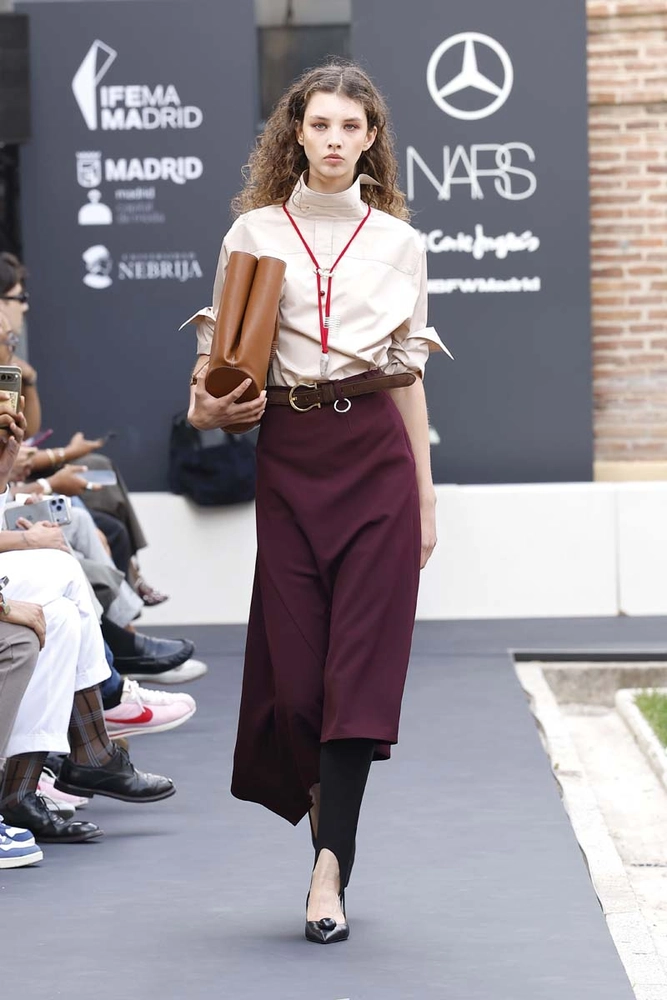
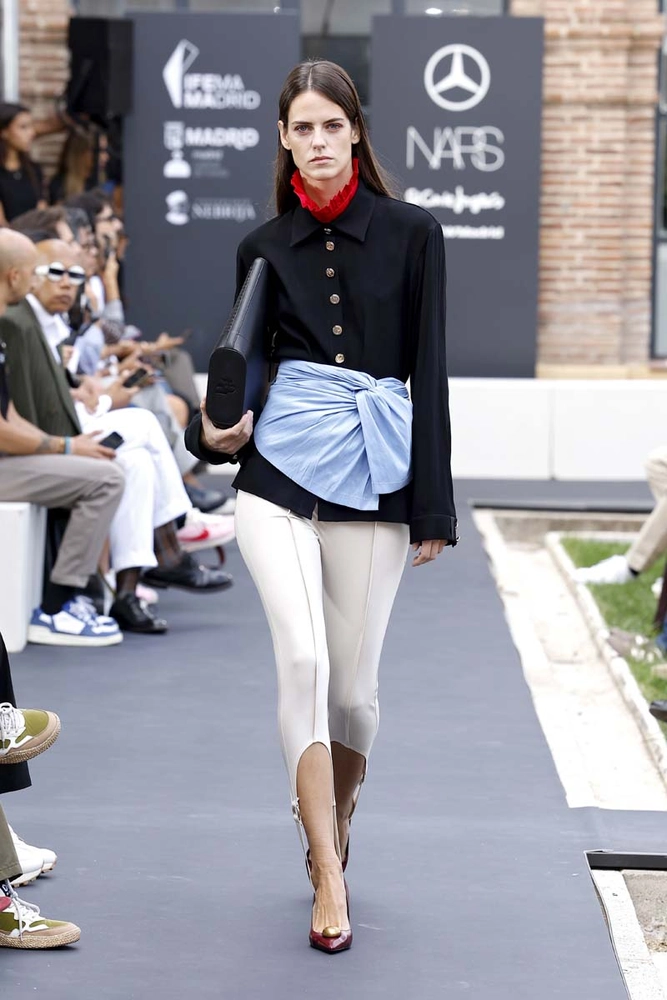
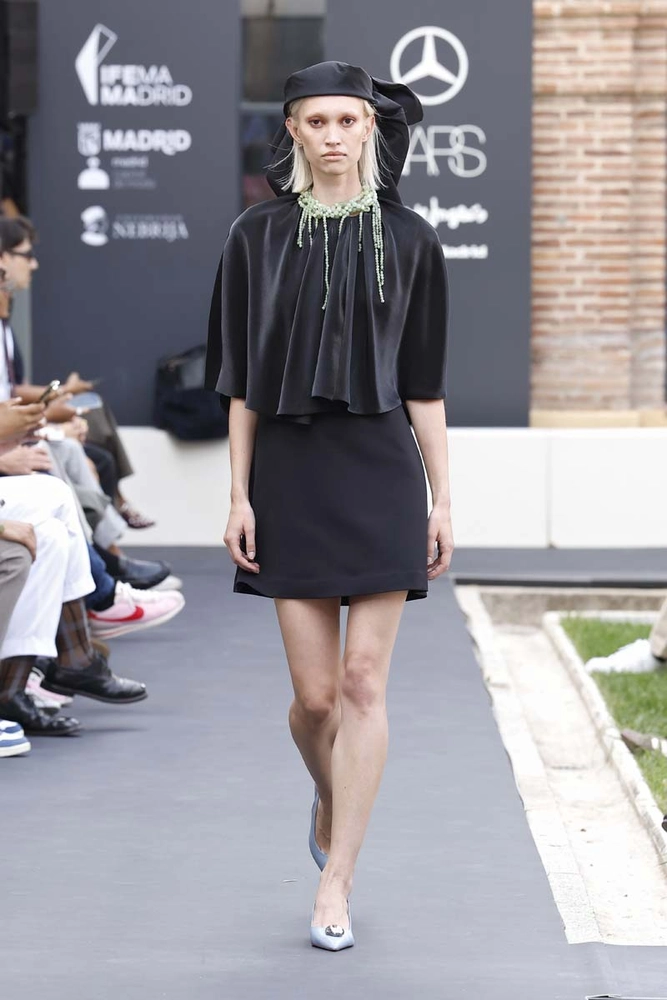
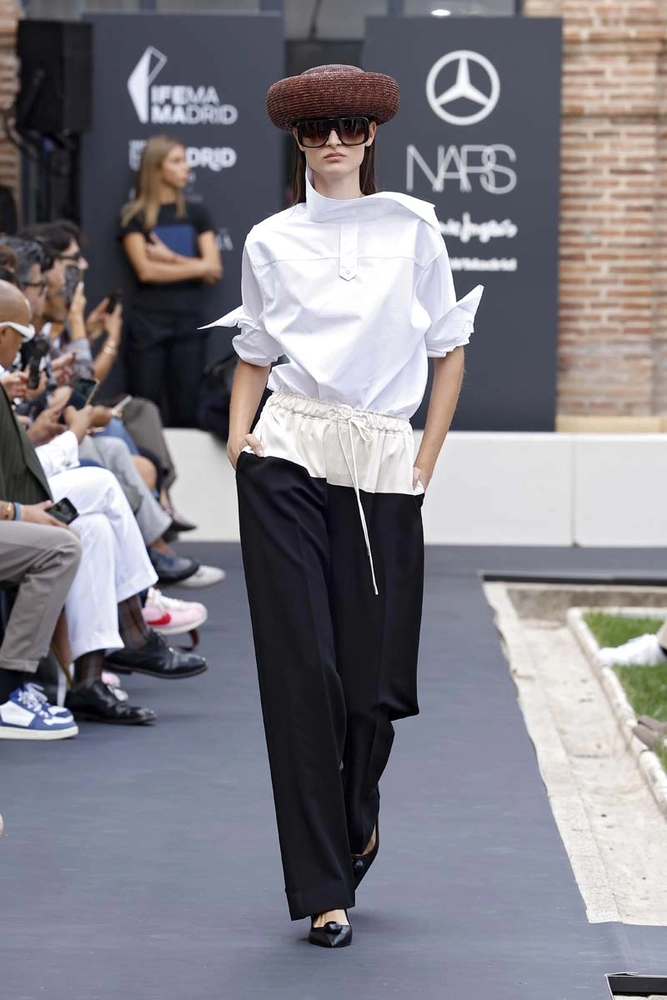
Federico García Lorca and Julio Romero de Torres sit somewhere behind the mood, yet the clothes are infused with folklore spirit, moving through dark burgundy, black and cream with a sense of quiet tension. Dropped shoulders, tied tunic forms, fuseau trousers and looser bodies give the collection a grounded physicality, while silk knit, tricot and punto roma introduce material experiments that feel structural.
Ernesto Naranjo has already experienced one of fashion’s most intoxicating accelerants: celebrity visibility.
Zendaya wore one of his dresses, and demand followed. Customers came asking for that exact red piece. The attention was immediate, useful and brief enough to teach a harder lesson.
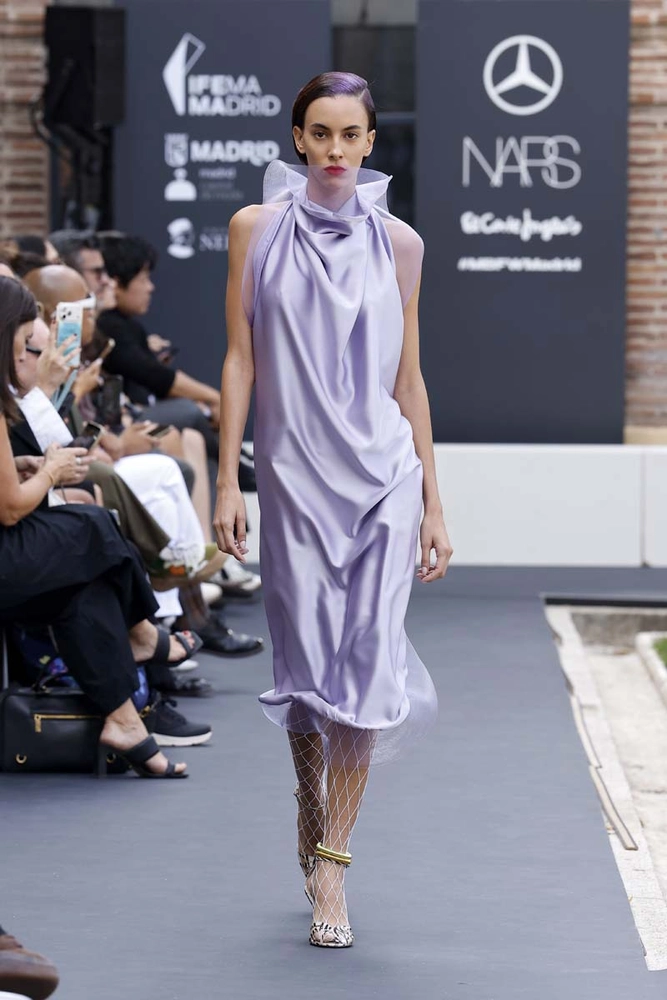
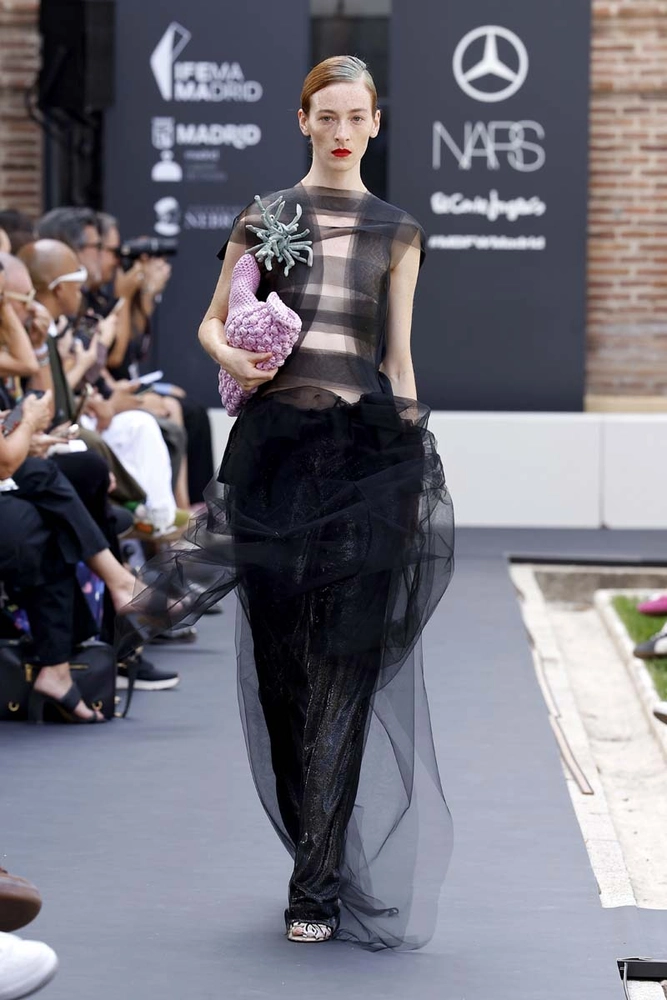
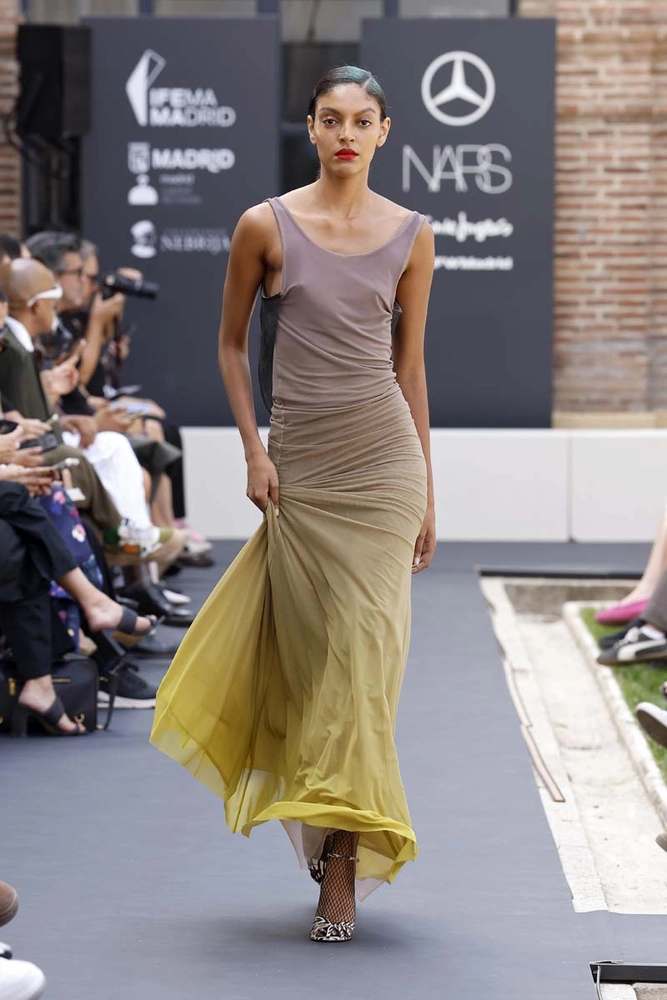
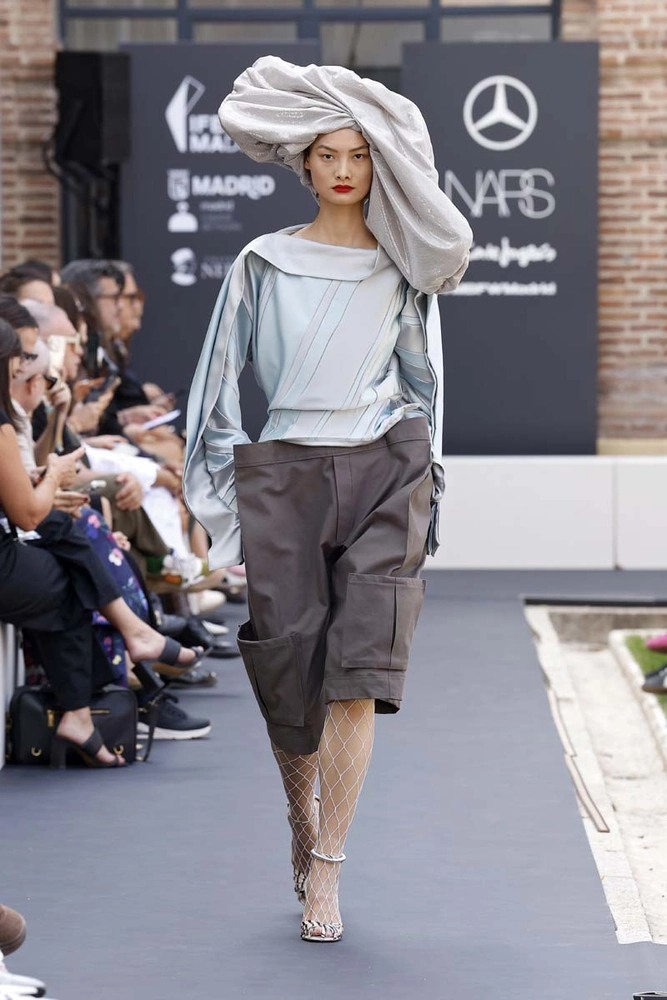
Naranjo is simplifying the name to Naranjo, a move that prepares the label for a broader future involving accessories, footwear, eyewear and additional categories. The collection, titled Ondine, uses marine references through gradients, silver net surfaces, mesh, technical cotton, satin, silk taffeta and multicolored fringe, yet the real story sits in the recurring details.
The Liza top, named after Liza Minnelli, returns as a recognizable code. An anemone brooch is designed with commercial life in mind. Children’s necklaces become anklets. Bags woven by his mother-in-law, Angelita, pull domestic craft directly into the brand vocabulary.
Baro Lucas starts from one of art history’s most visually unruly sources, Hieronymus Bosch’s The Garden of Earthly Delights, then filters it through a design language built around precision.
That friction shapes EXTASE.
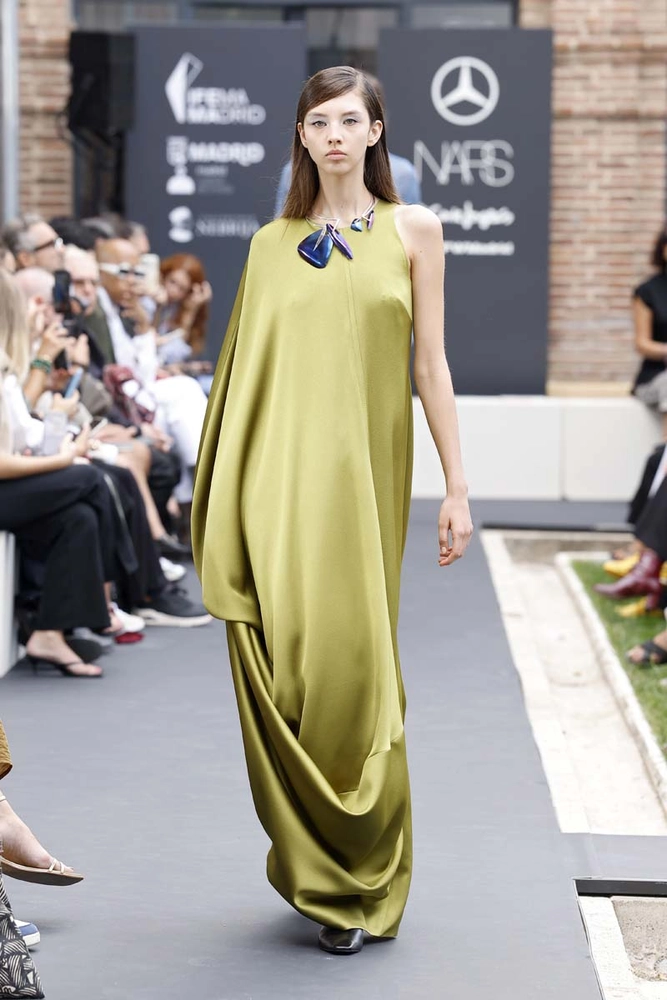
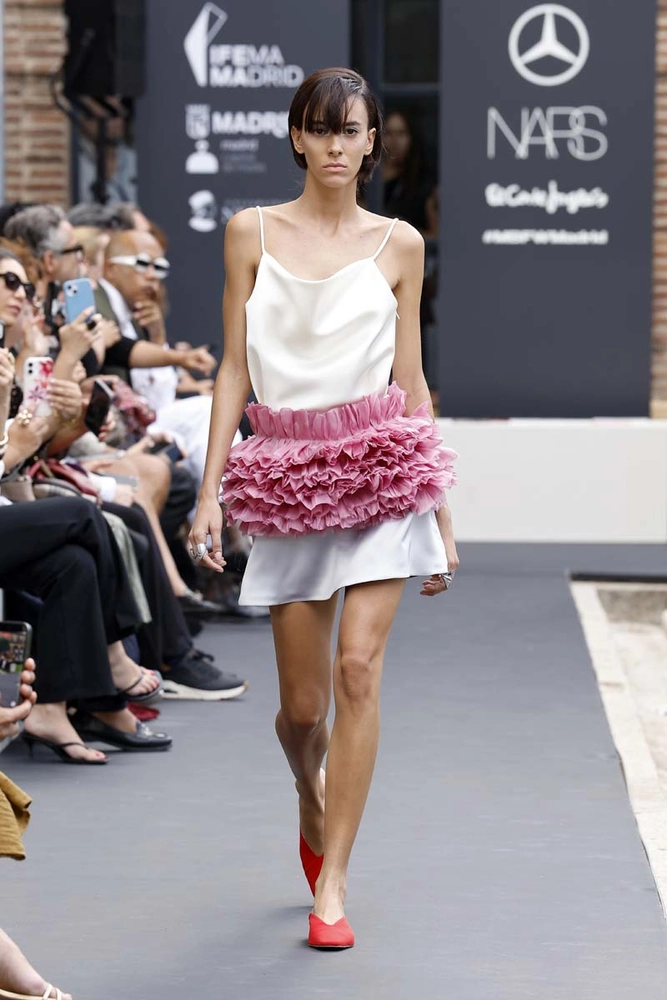
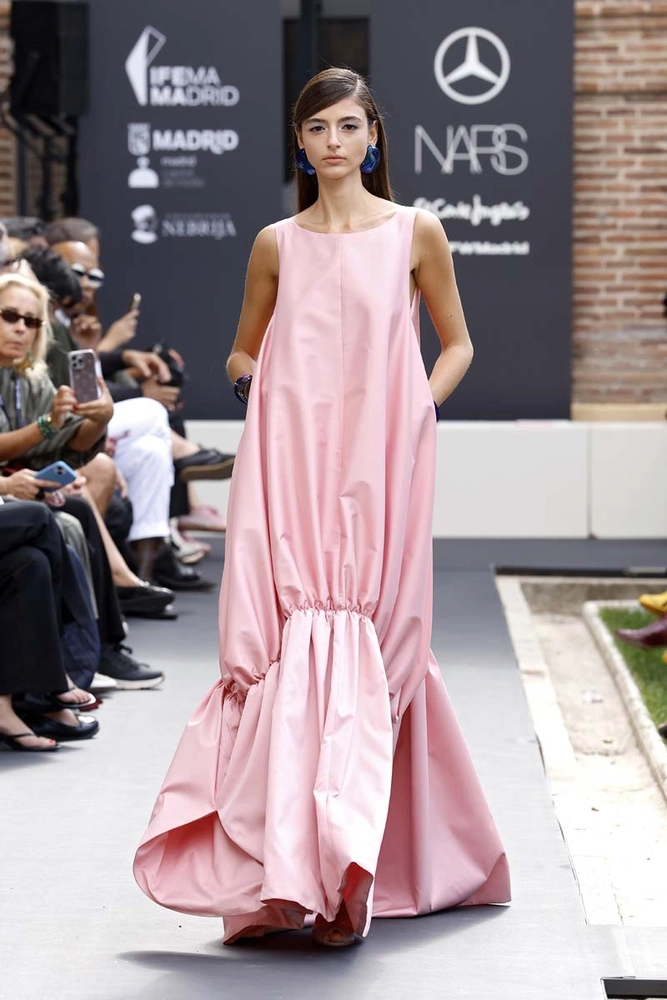
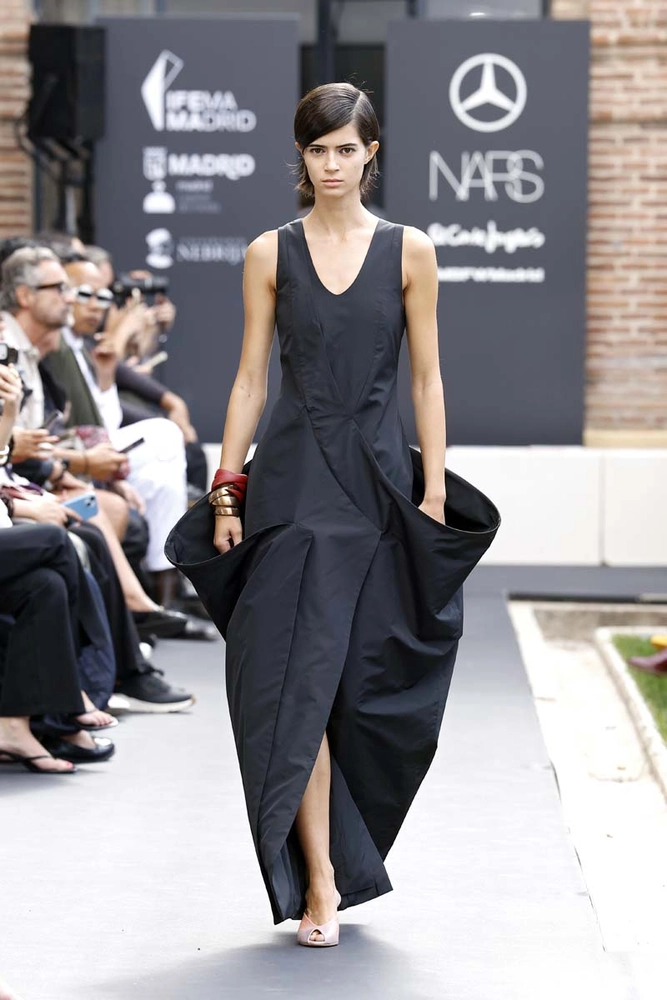
The collection develops gradually from cleaner, lighter silhouettes like I-line or H-line into more dramatic peg-top and hobble silhouettes, and denser spatial ideas. Silk taffeta, triacetate, tarlatan, cool wool and felt give him surfaces with very different degrees of rigidity, while coral, pastel pink, clover green, petrol blue, rust and black pull the collection through moments of sweetness and unease.
The interesting point is that Lucas resists treating surrealism as a license for chaos. His shapes stay intentional. Volume arrives where it can alter the body meaningfully. Color breaks the calm at controlled intervals.
Acromatyx spends Spring 2027 looking backward into its own work.
Franx de Cristal and Xavi García revisit patterns from previous collections, changing proportion, material and color while keeping the original logic visible underneath. That move is significant because an archive usually becomes culturally interesting after years of recognition; Acromatyx is beginning to treat its own recent history as reusable design material much earlier.
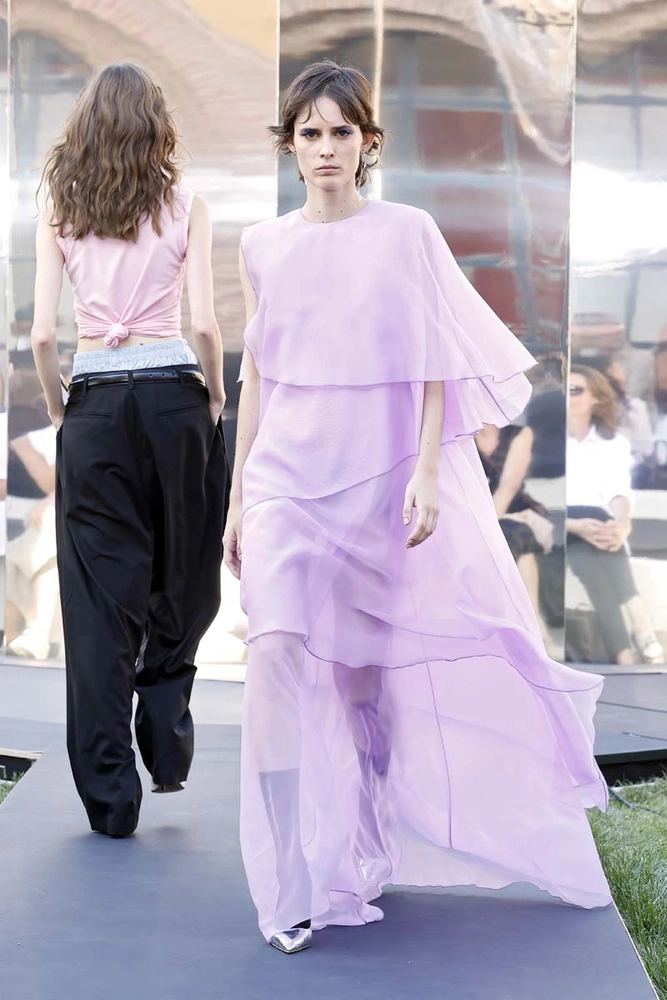
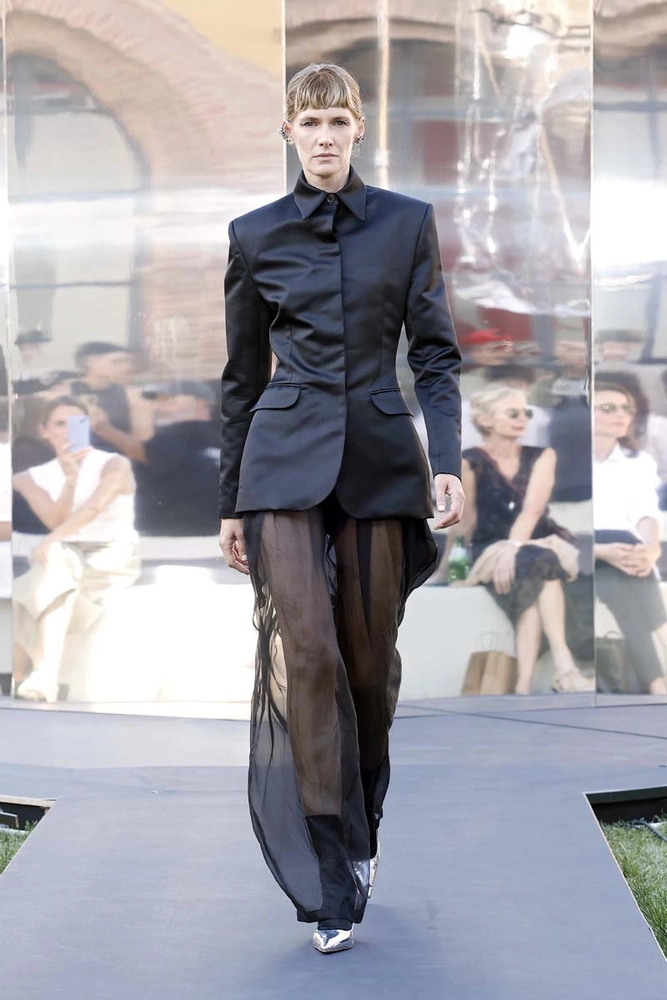
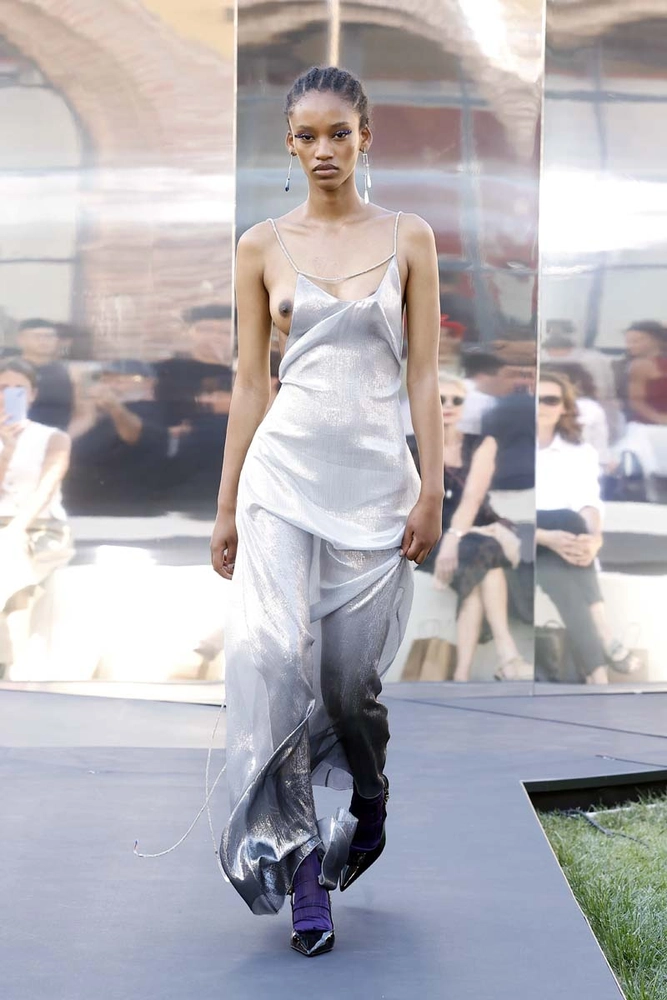
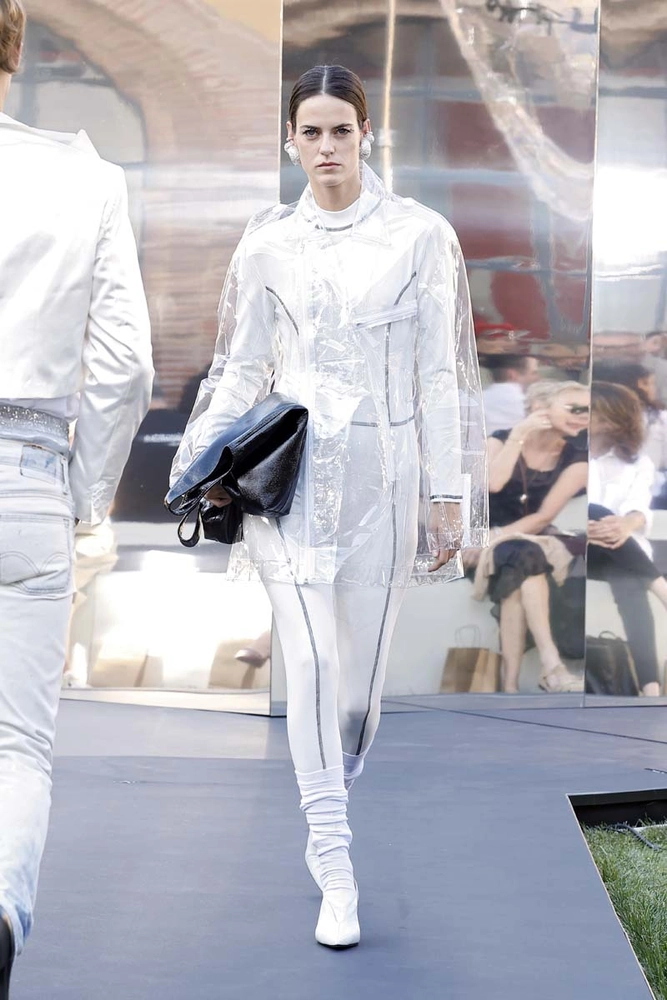
Slim silhouettes sit beside architectural volume. Nylon, organza, satin, cotton and cool wool move through transparent white, powder pink, violet, lime, blue and the house’s familiar black.
The designers’ backgrounds in hairdressing and image-making continue to shine here.
Álvaro Calafat turns to Burnt Rose Garden, a collection built around beauty under pressure.
The rose functions as a recurring image of fragility, persistence and damage, yet the collection becomes especially interesting once you look past the symbolism and into how the brand is organized.
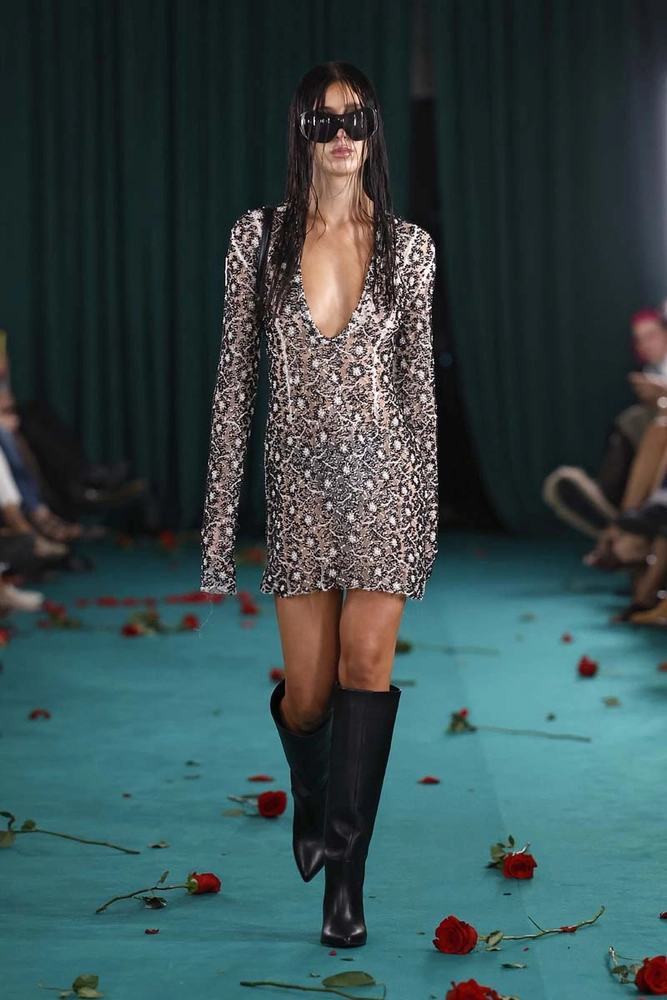
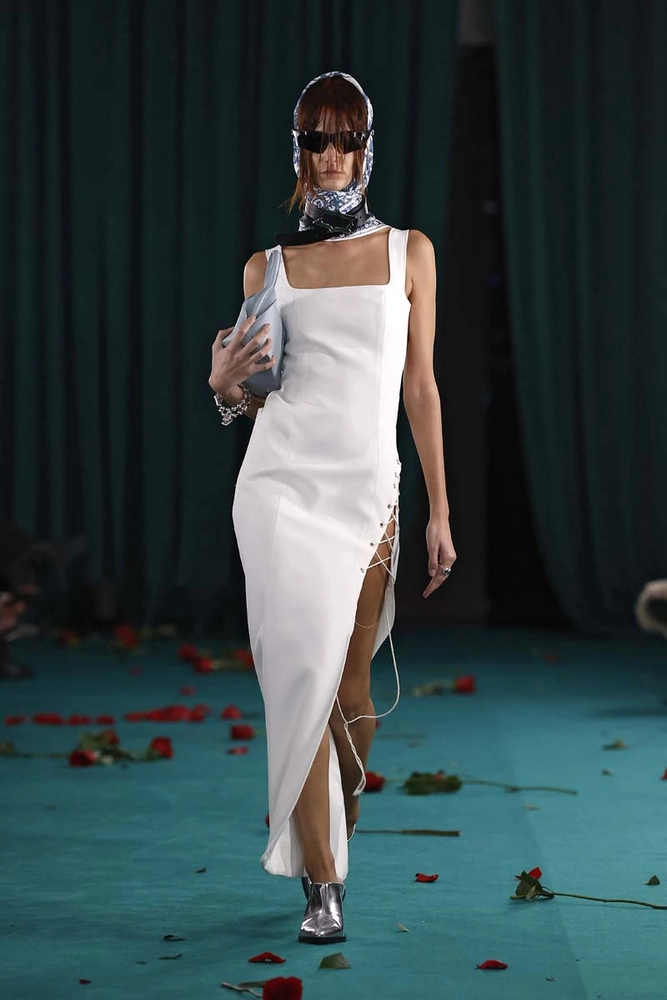
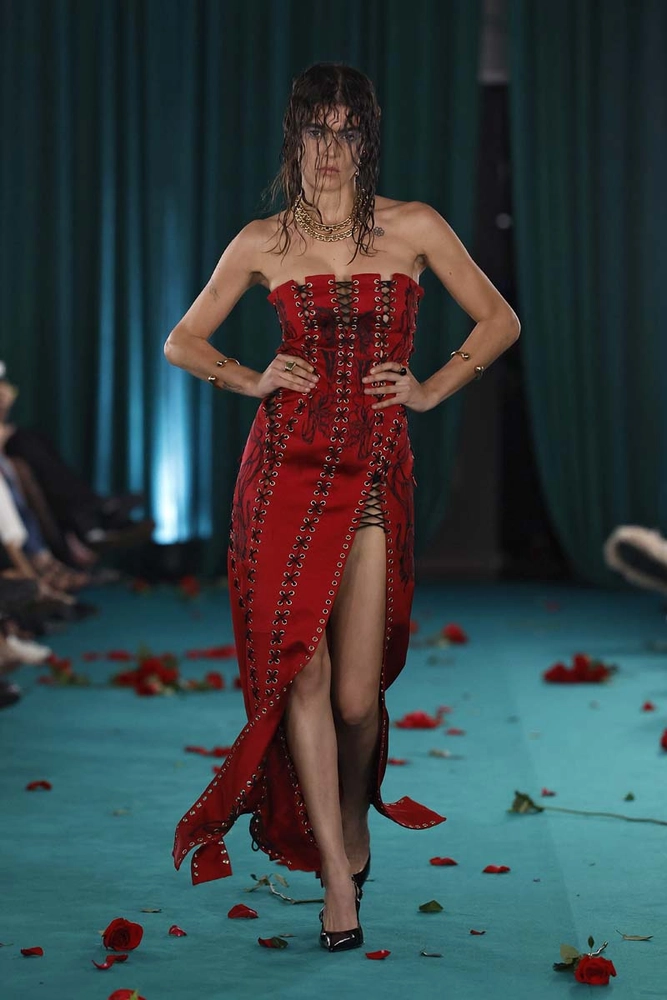
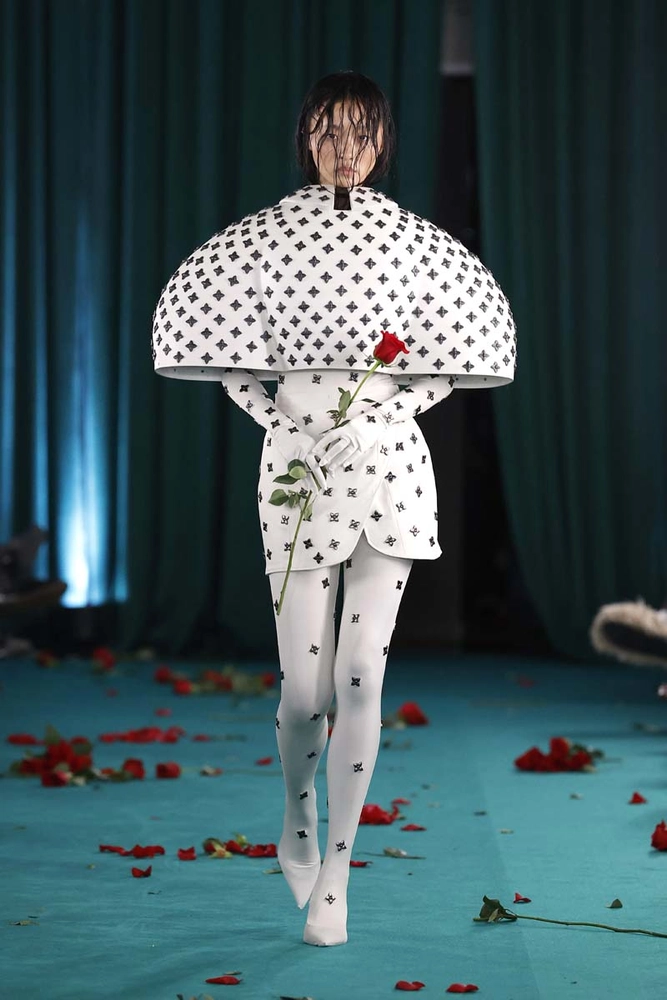
Calafat separates his output into commercial ready-to-wear, atelier work and accessories.
Ready-to-wear carries tailoring, knitwear, shirting, dresses and outerwear. Atelier pieces take on stronger volumes, more hand-finishing and greater technical risk. Accessories extend the visual world into objects that can circulate independently from runway clothing.
Odette Álvarez marks fifteen years with Nimba, a collection whose cloud imagery opens into a distinctly East Asian visual vocabulary. The designer officially locates its starting point in the harmony, proportion and balance of Japanese aesthetics, and that philosophy is visible in the calm geometry of the clothes: straight, planar lines, wrap constructions and broad sleeves that recall the architecture of the kimono, sometimes gathered through wide, obi-like treatments at the waist.
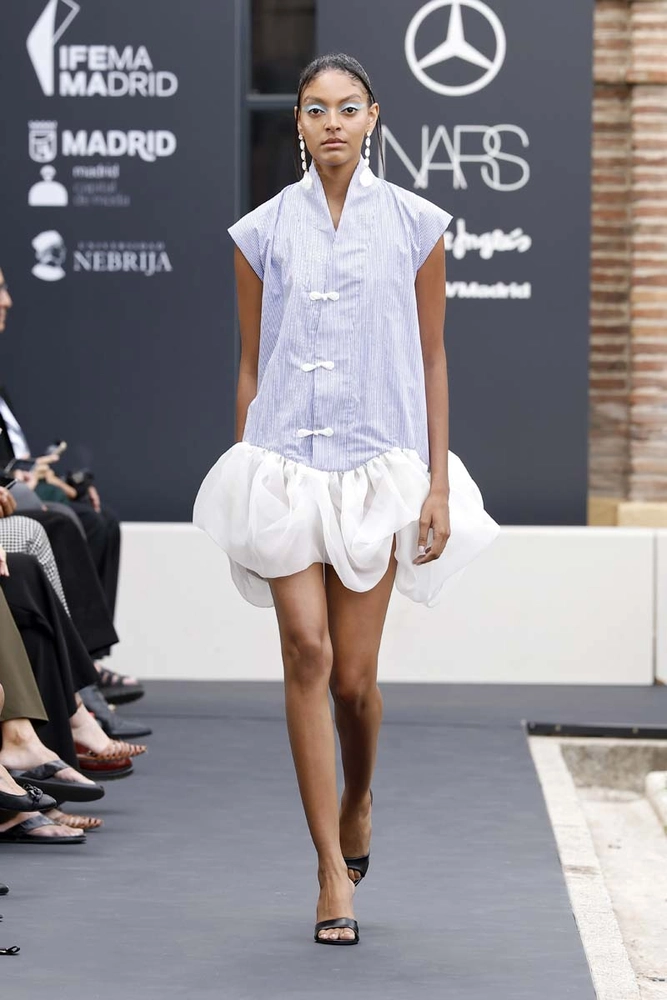
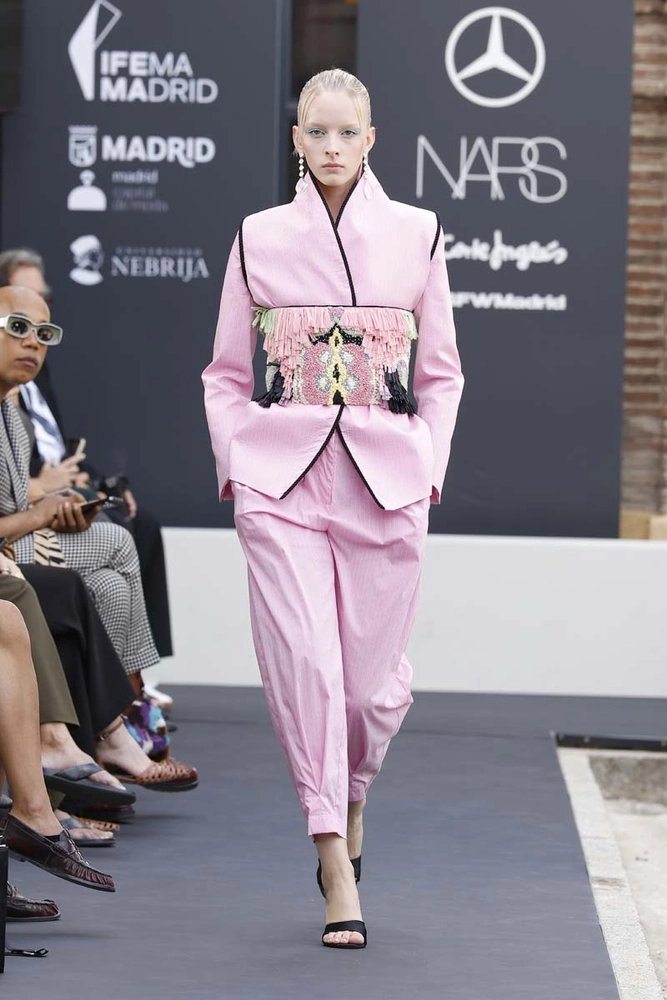
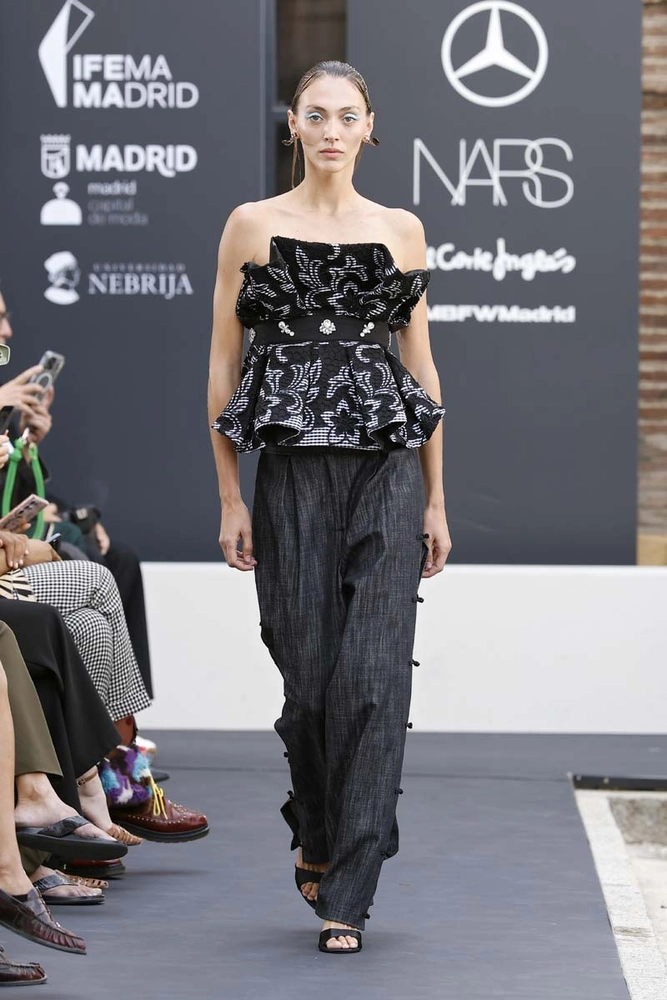
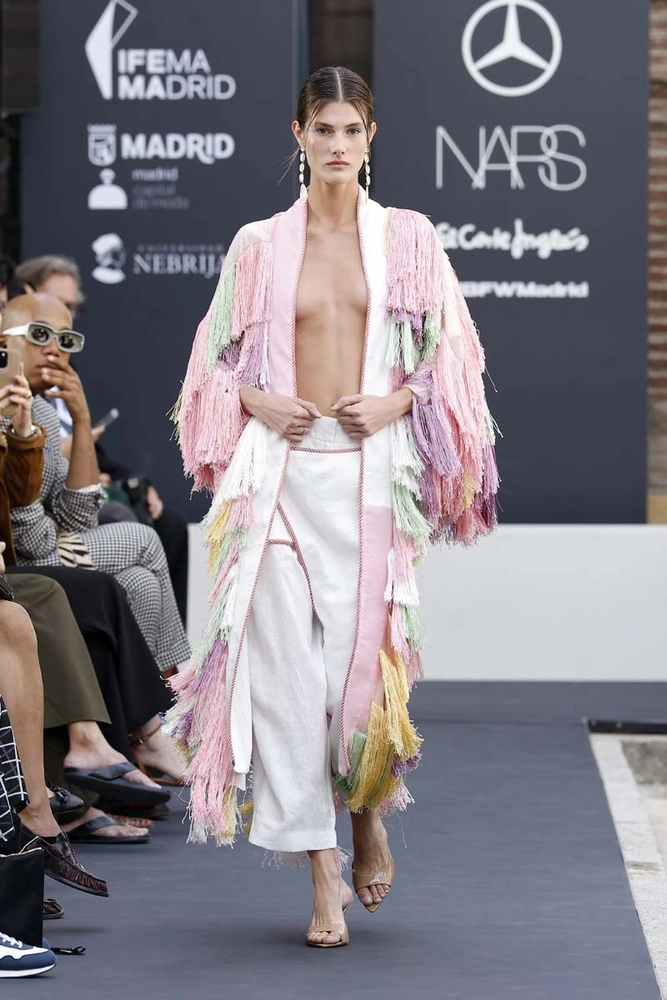
Other details shift the eye toward Chinese dress. Decorative cord closures resemble pankou, the sculptural knotted frog fastenings traditionally associated with the qipao, while several upright necklines recall the liling, or Chinese standing collar commonly known as the Mandarin collar.
These elements sit among cloud blue, indigo, scarlet and soft pastels, with silk, crinkled gauze, linen, poplin and crystal embroidery carrying the collection between restraint and ornament.
Malne’s La Femme looks toward the mythology of the Parisian woman through references including Inès de La Fressange, Loulou de La Falaise, Françoise Hardy, Audrey Tautou and Marion Cotillard.
The references feel familiar, though the production logic underneath them gives the collection its actual value.
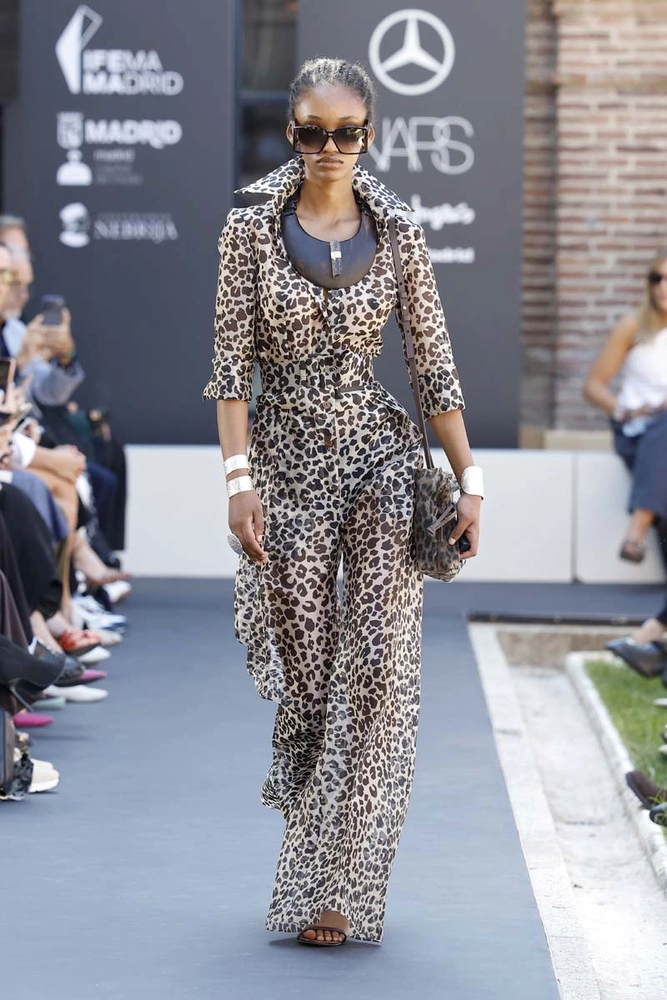
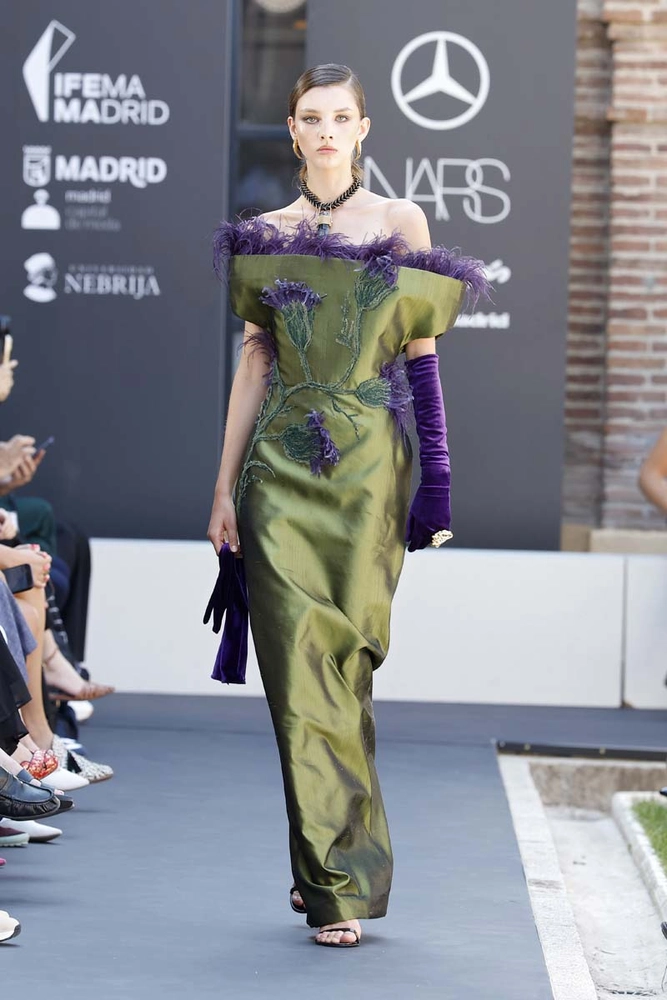
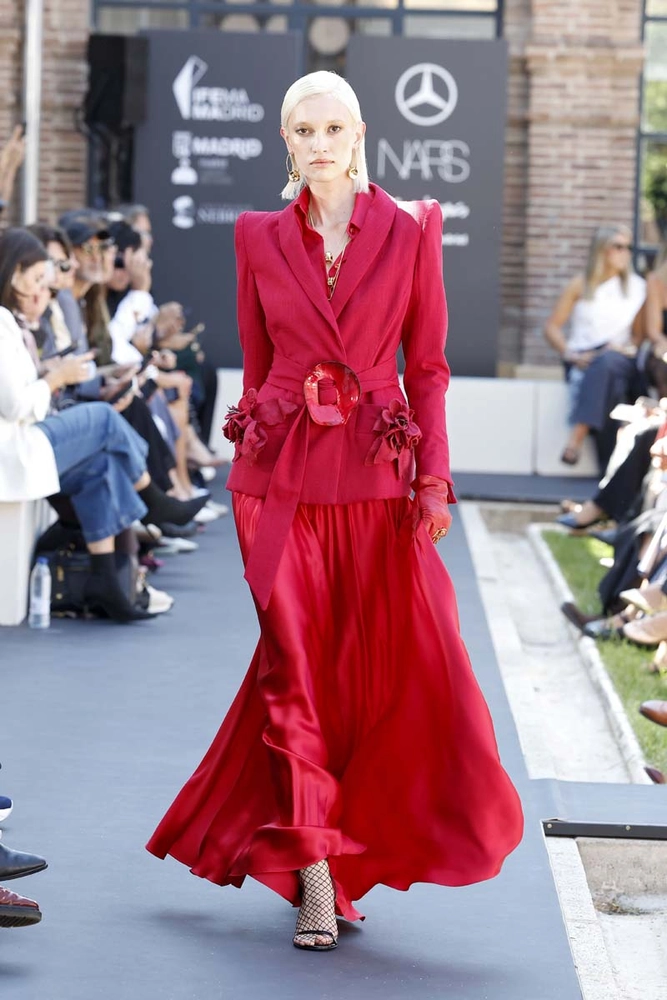
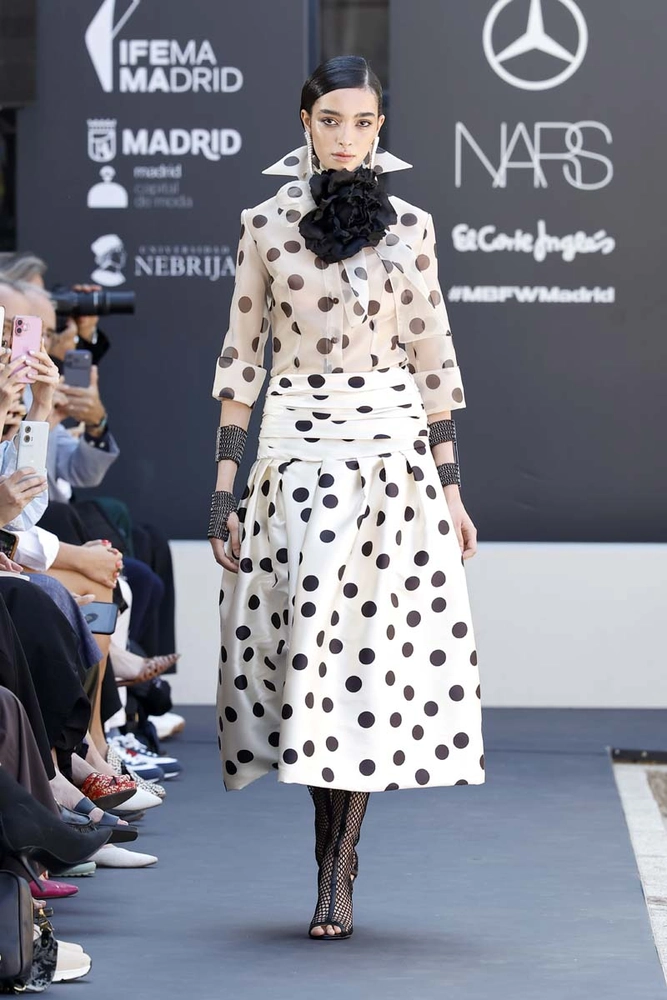
Paloma Álvarez and Juanjo Mánez continue to make limited quantities in their Madrid atelier using couture techniques. Lace, rustic silk, organza, silk crepe, chiffon and mikado carry that labor across silhouettes shaped by hand.
The phrase “slow fashion” has become broad enough to lose precision in many contexts. Malne gives it a physical definition: limited production, controlled quantities, atelier work and garments whose scarcity comes from the time required to make them.
Antonio del Canto’s move from EGO into the main Madrid Fashion Week calendar is one of the clearest career transitions of the season.
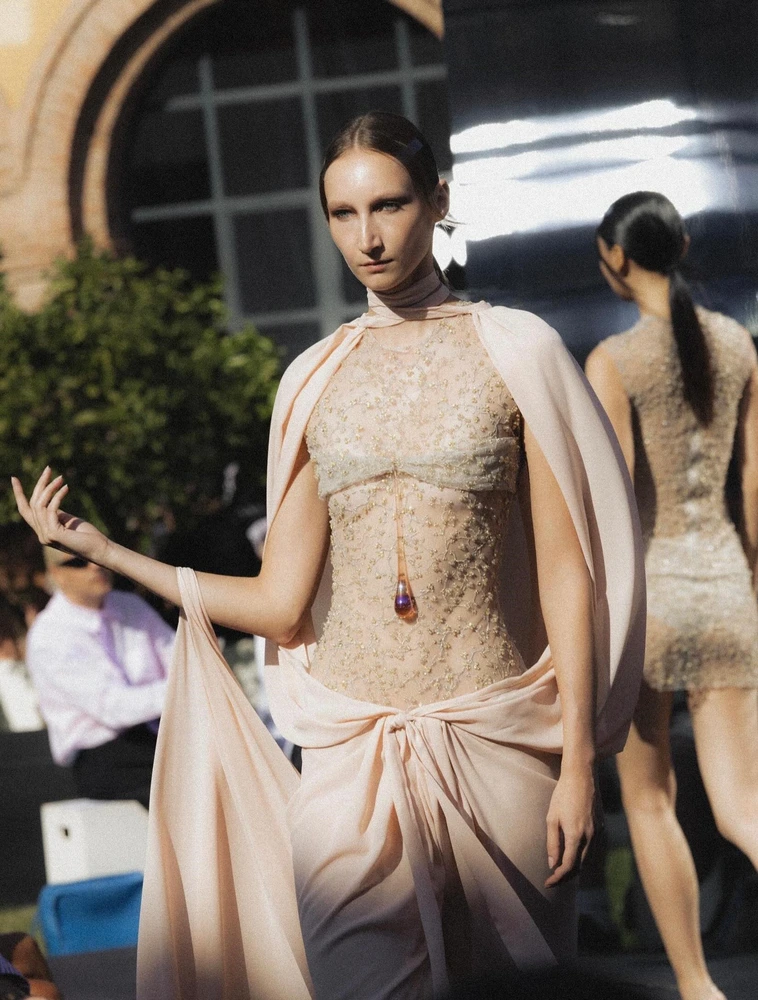
His collection, Dress Up, studies the ritual before public appearance: sitting at a dressing table, fastened corsetry, applying perfume, looking into a mirror and deciding how to enter the world.
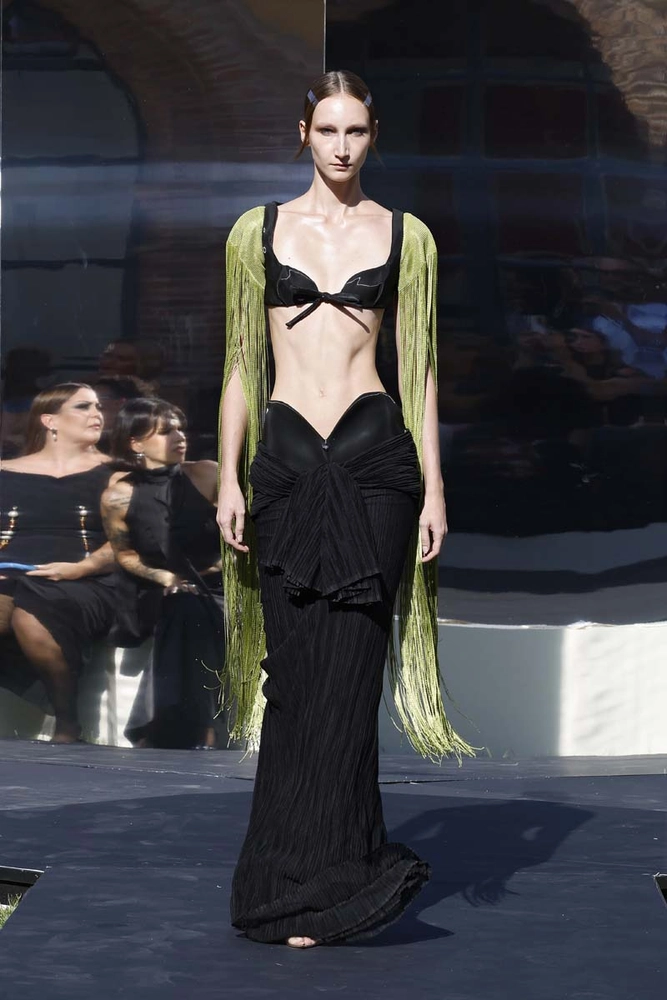
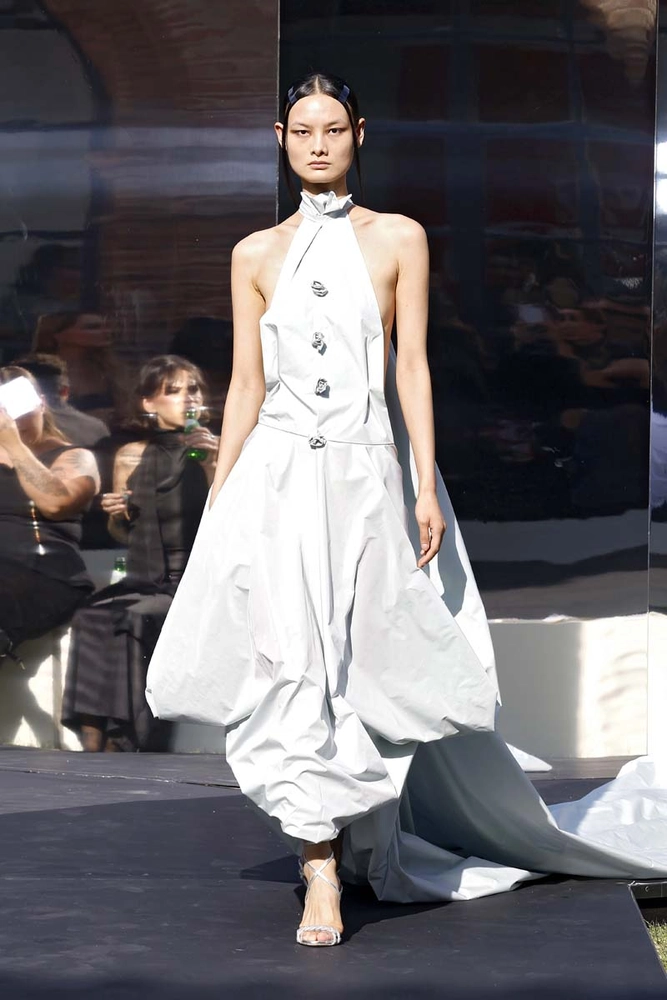
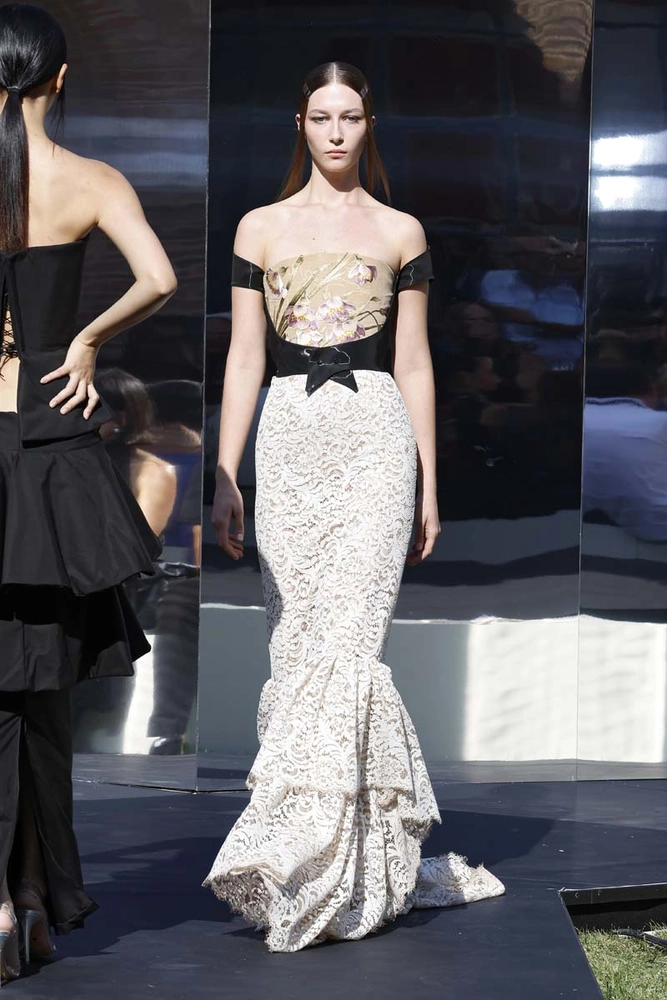
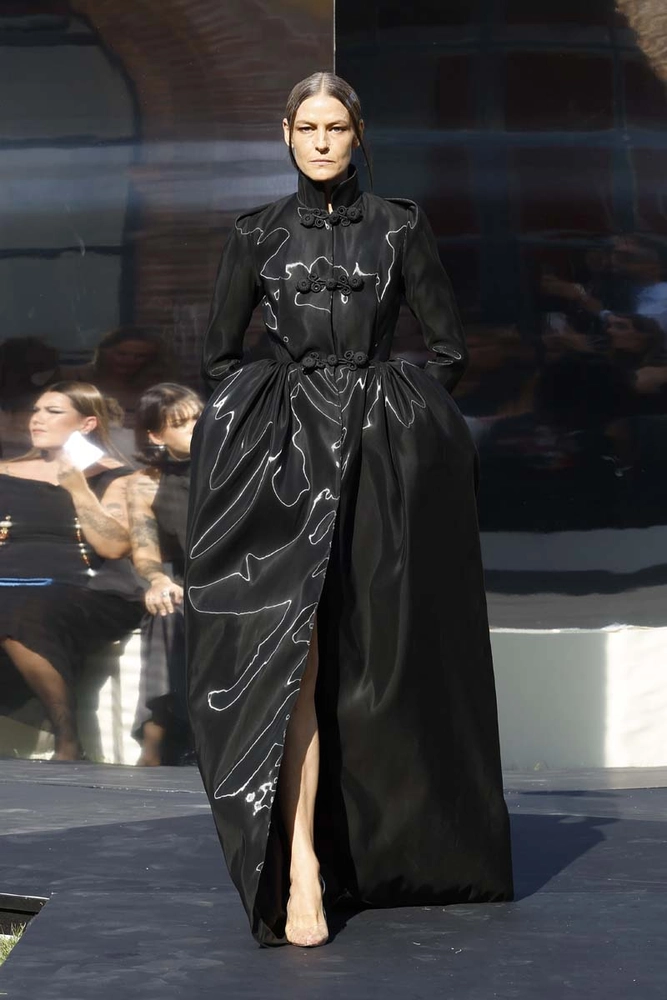
Victorian jewelry elements enter hand embroidery. Flowers are forged from iron. Murano glass hangs from garments like perfume droplets or suspended tears. The details carry the intimacy of objects handled repeatedly over time.
Del Canto’s background makes the work feel especially coherent. He began as a tailoring apprentice in Madrid, later worked in Paris, and now operates through limited made-to-order production and private appointments.
Isabel Sanchis and Paula Maiques take Spring 2027 into one of the most intellectually fertile territories of the week: clothing that once changed women’s physical freedom.
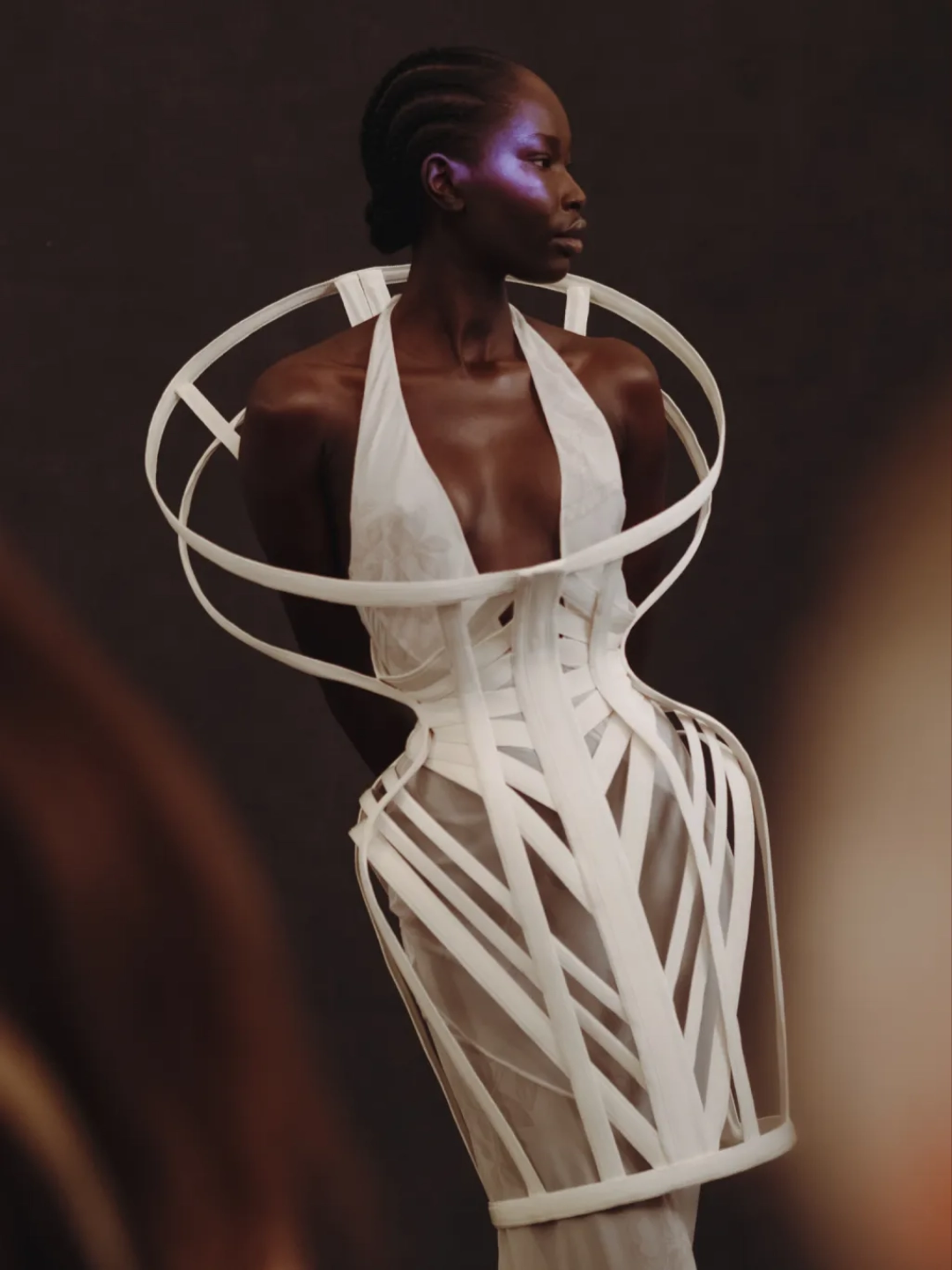
The bloomer becomes a central historical reference, appearing beneath dresses as a symbol of movement and dress reform. The corset then enters a radically different technological space, fragmented through 3D-printed structures that reposition the garment across the body.
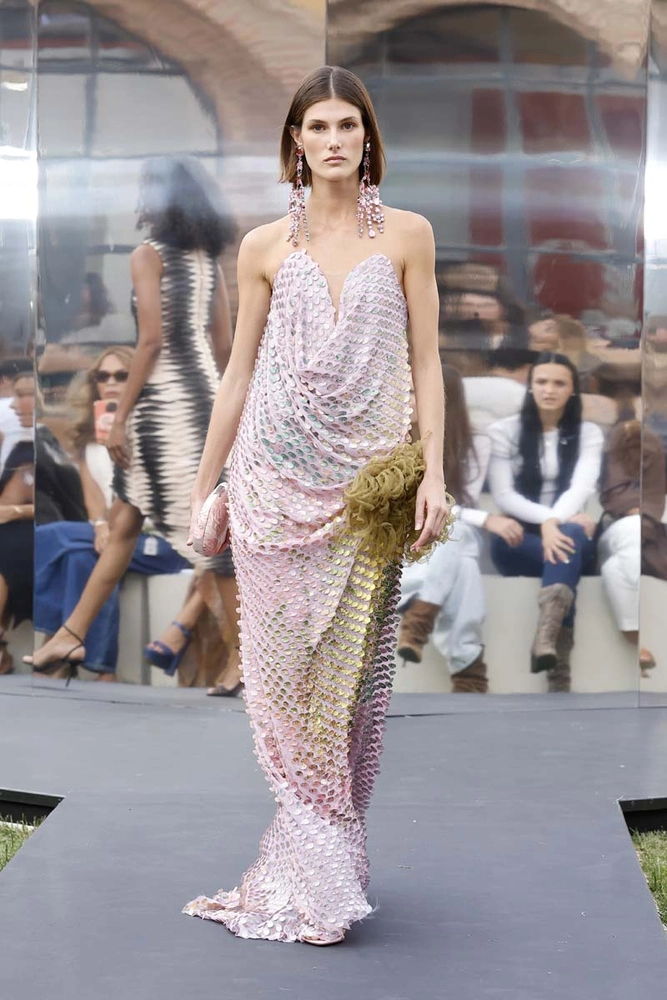
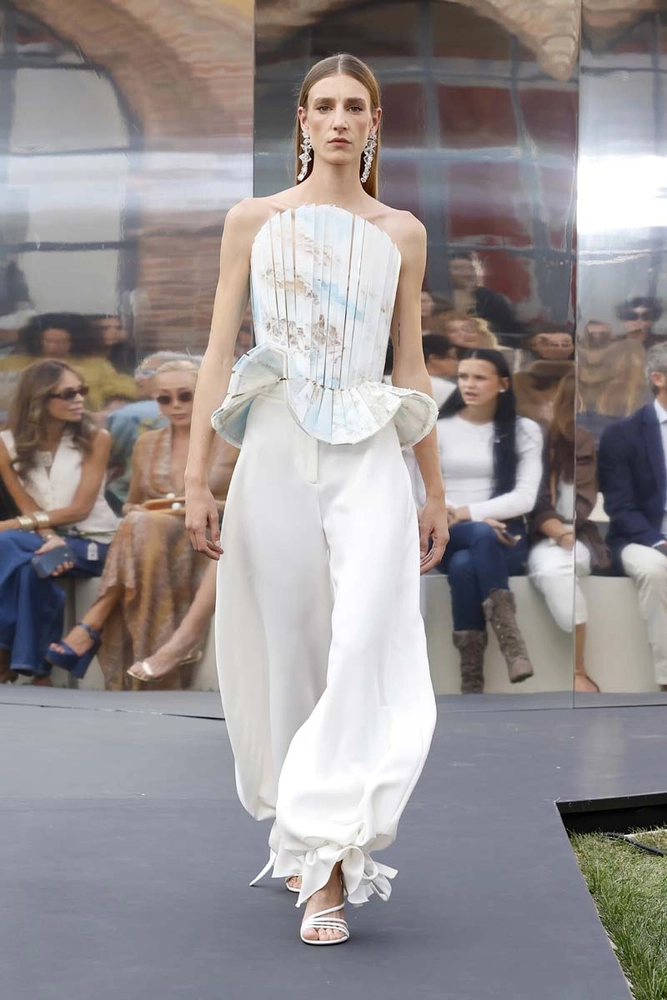
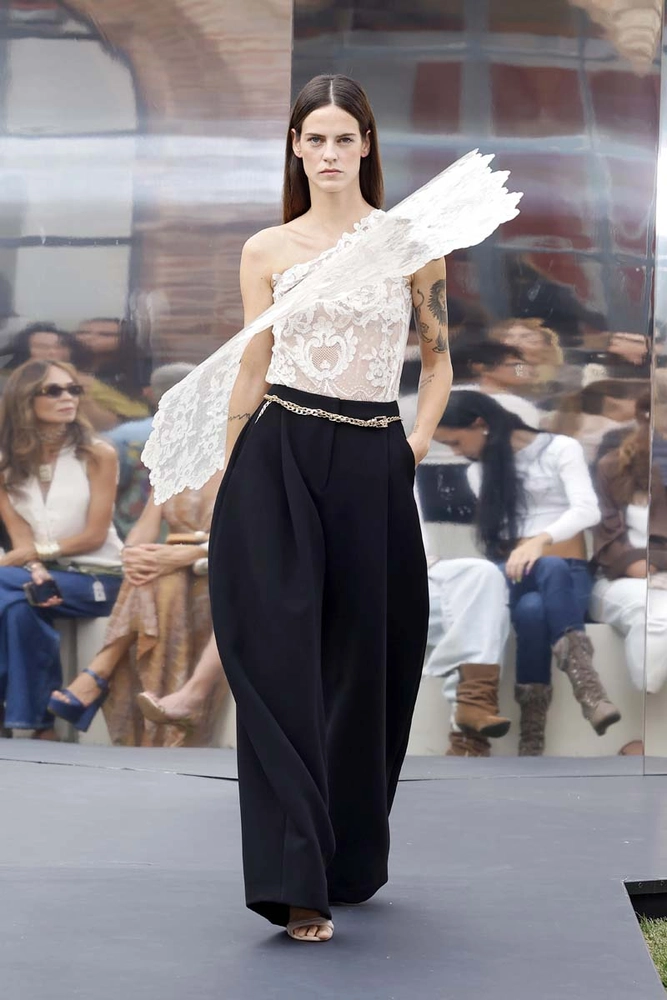
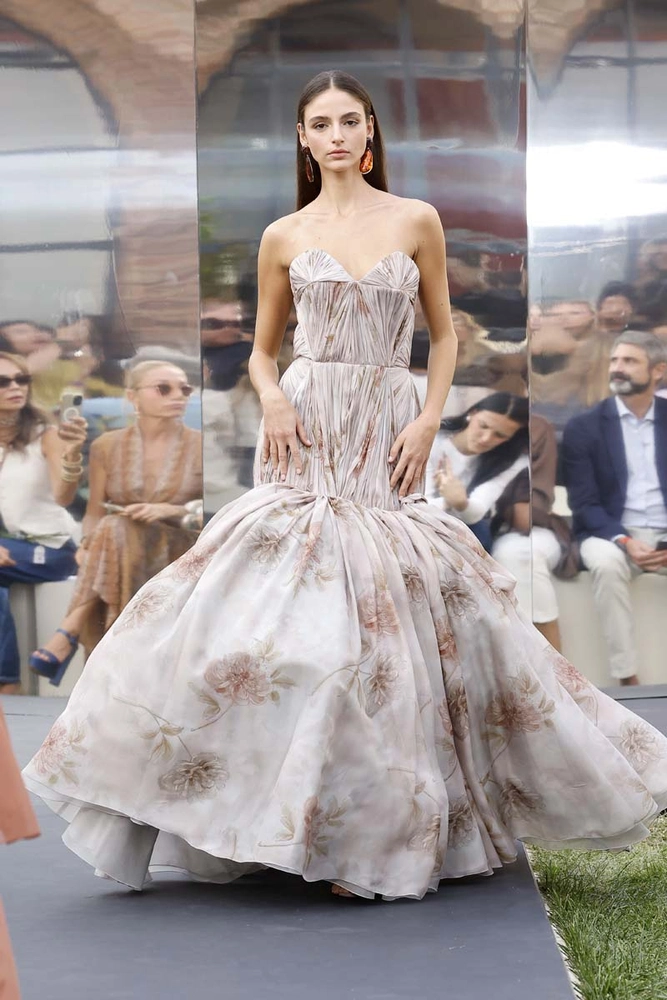
The collection becomes a conversation between two historical objects associated with control, mobility and social change.
Isabel Sanchis already operates internationally across more than 40 countries, with around 50 employees working from its Valencia atelier and production system.
Redondo Brand closed this chapter with the clearest external validation: the Mercedes-Benz Award for Best Collection.
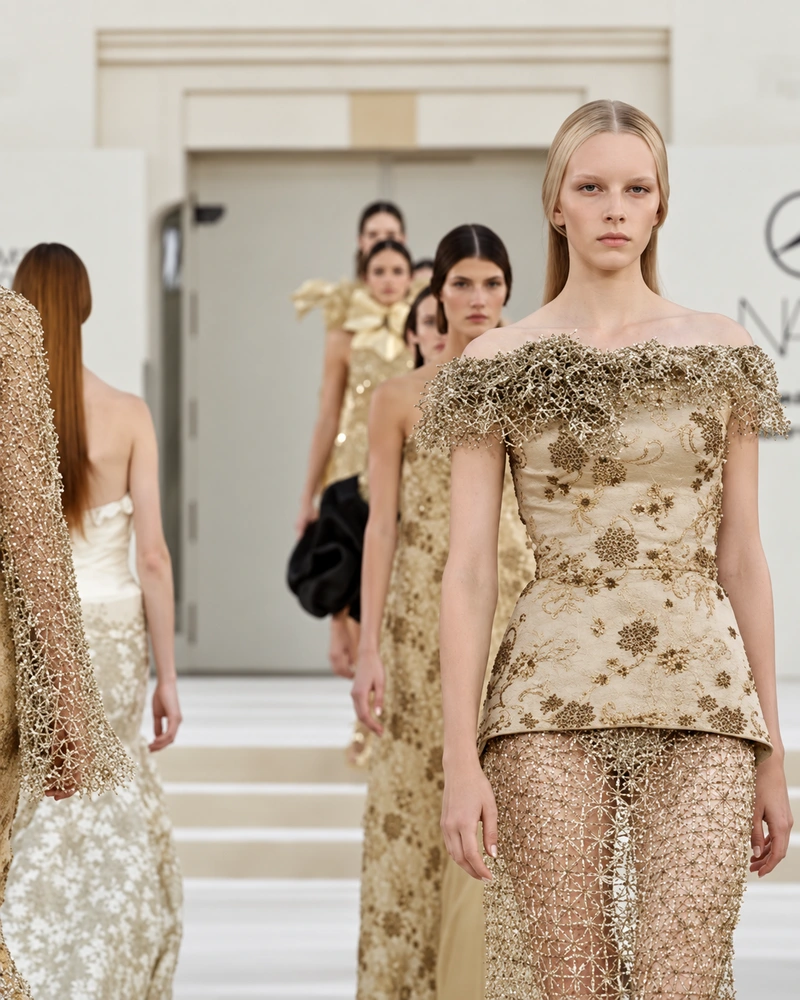
The Spring 2027 collection uses velvet, silk chiffon, organza, sequins, feathers, crystal mesh, pleating and hand embroidery, building a runway language around movement and texture. For the first time in the house’s history, fabrics were also printed directly onto yarn, expanding the technical vocabulary behind the surfaces.
Jorge Redondo founded the brand in 2019, which makes its current structure especially revealing.
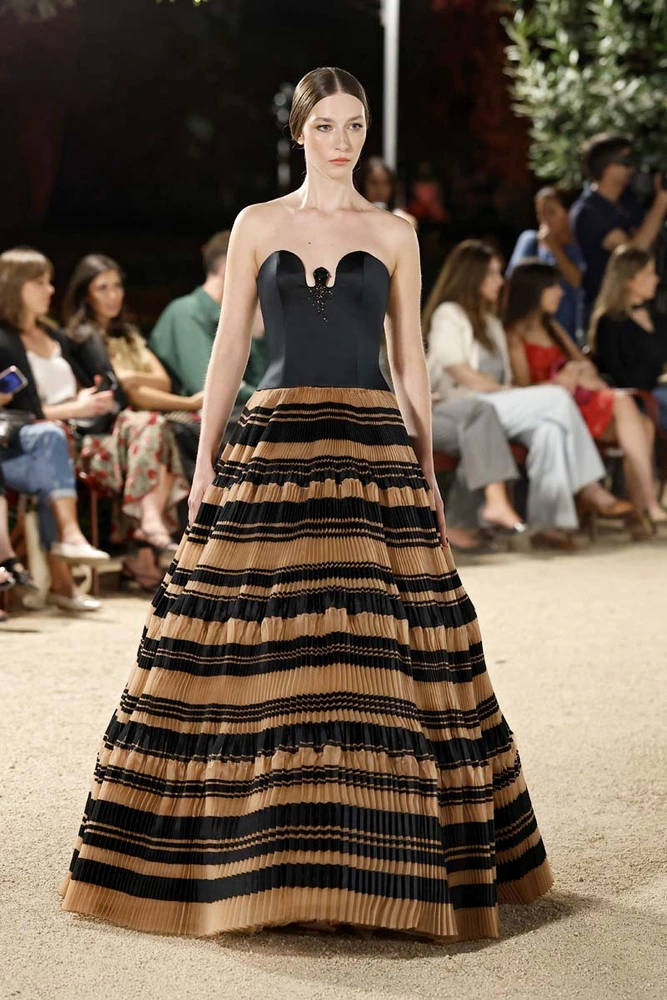
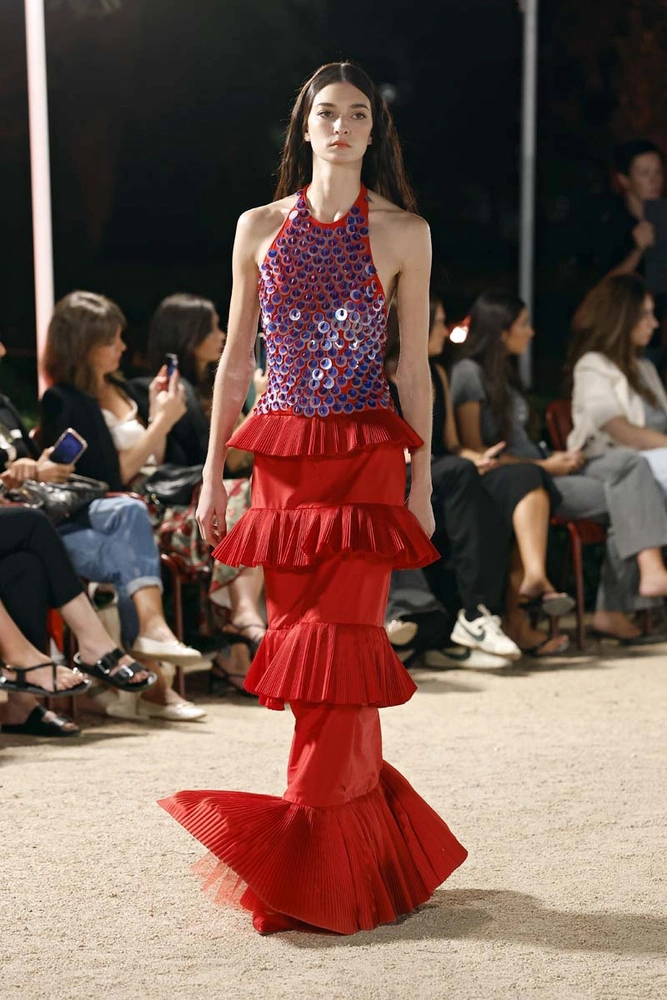
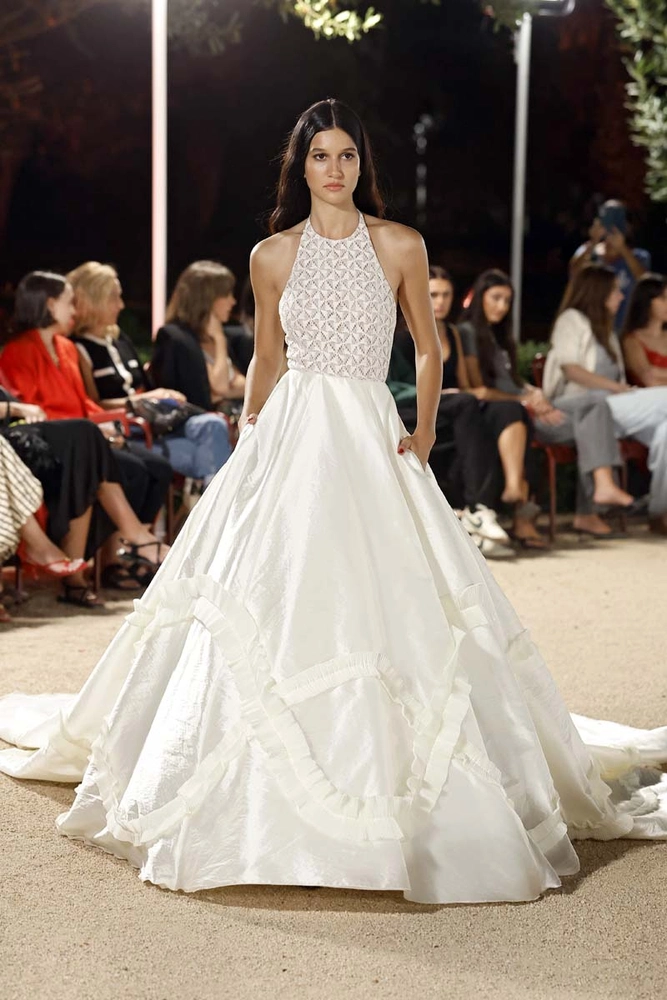
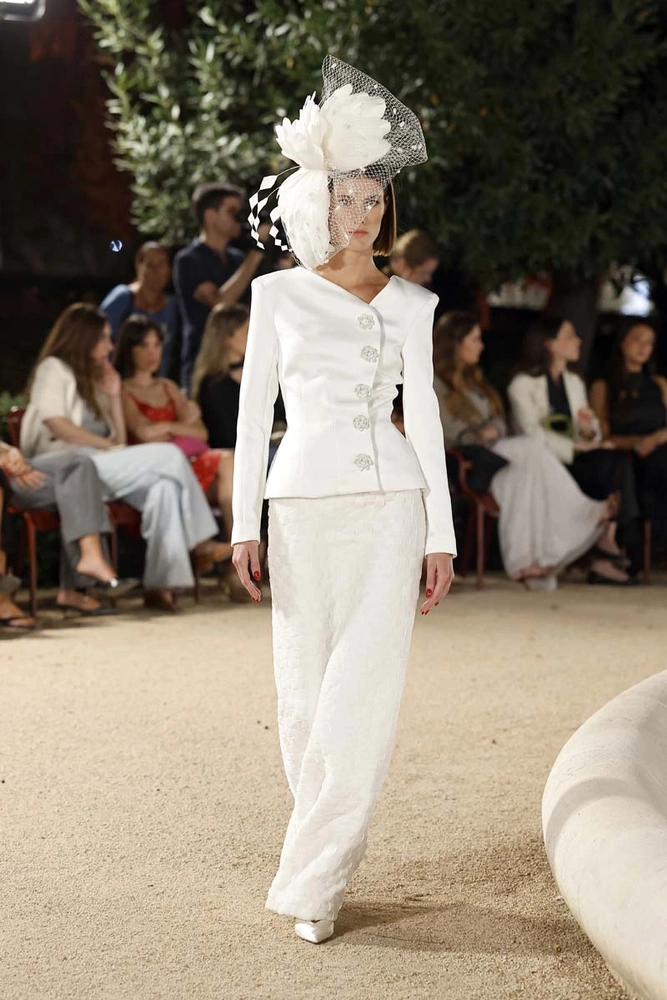
The company already has five retail points in Spain, bespoke work and European distribution. Awards carry greater weight when they land on a business that can convert attention into product. Redondo Brand appears to understand that fashion visibility has a short half-life. Retail, distribution and repeatable product give that visibility somewhere to go.
By the middle of Madrid Fashion Week, the question of Spanish fashion identity becomes inseparable from infrastructure.
The most compelling designers in this section are already thinking in systems.
Nieto is rebuilding international wholesale. Naranjo is creating repeatable codes and category expansion. Calafat separates atelier fantasy from commercial product. Del Canto protects craft through made-to-order production. Isabel Sanchis proves that experimental design can live inside a company distributed across dozens of countries. Redondo Brand places an award-winning runway on top of an existing retail network.
This is where Madrid Fashion Week becomes genuinely interesting. Creative authorship gives a fashion week character. Infrastructure gives that authorship duration. A silhouette can earn a season of attention. A business capable of producing, distributing and repeating the idea gives the designer time to become culturally important. The sharper question for Madrid now is whether its fashion system can help enough of these designers survive long enough for their languages to deepen. That answer will matter far beyond the runway.
Advertisement