MENU
Close





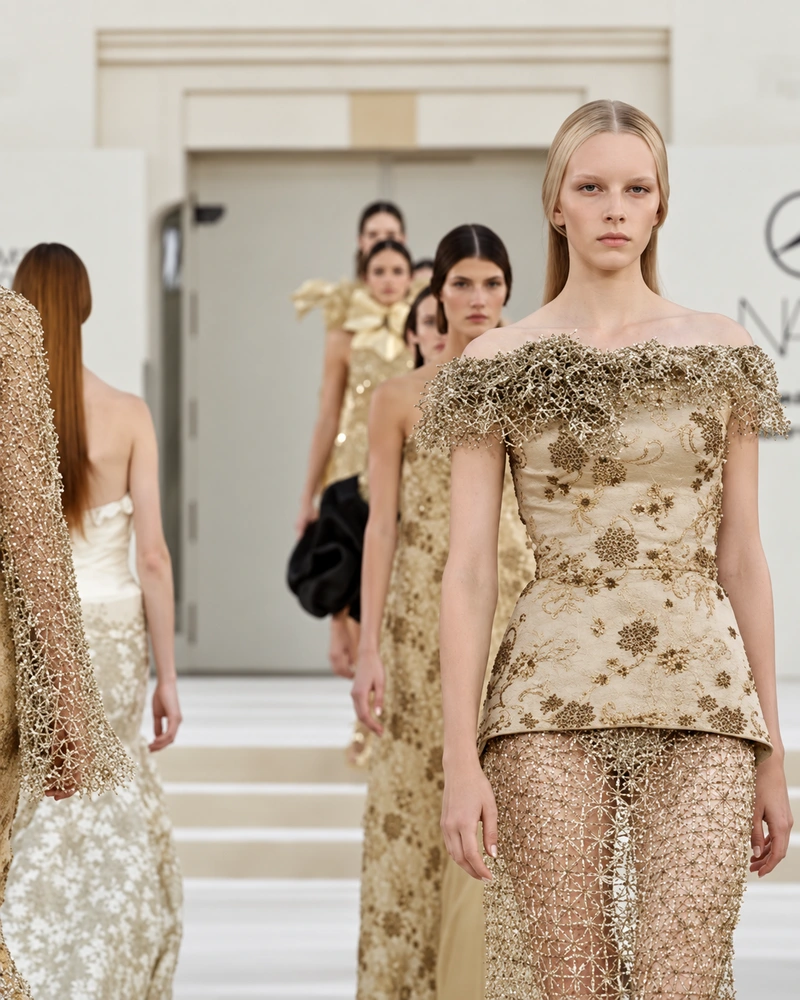
The first chapter of Madrid Fashion Week SS27 delivered ten radically different worlds, all connected by a city newly determined to make fashion part of its streets.
The first chapter of Madrid Fashion Week SS27 delivered ten radically different worlds, all connected by a city newly determined to make fashion part of its streets.
September 21, 2026
Advertisement

Advertisement



The 84th edition of Madrid Fashion Week unfolded across the Spanish capital from September 14 to 19, 2026, with one of the most consequential format changes in its recent history. Mercedes-Benz Fashion Week Madrid moved fully into the city, placing collections inside gardens, palaces, hotels and cultural landmarks and turning Madrid itself into part of the season’s fashion language.
Established Spanish houses shared the week with emerging labels, returning designers and international guests, while the programme strengthened its relationship with Latin America and expanded its buyer network.
Across 31 designer brands, Spring/Summer 2027 became a survey of what Spanish fashion currently values: identity, textile knowledge, local production, theatricality and increasingly global ambition.
The first two days already made that range clear.
Pedro del Hierro opened Madrid Fashion Week inside the Palacio de Cristal de Arganzuela with Hanami, named after the Japanese ritual of gathering beneath cherry blossoms.
Creative directors Nacho Aguayo and Álex Miralles treated the practice as an idea about time. Cherry blossoms remain beautiful because their appearance is fleeting, and the collection translated that awareness into fluidity: draped fabrics, pleats, transparent layers and silhouettes that seemed to shift as they moved.
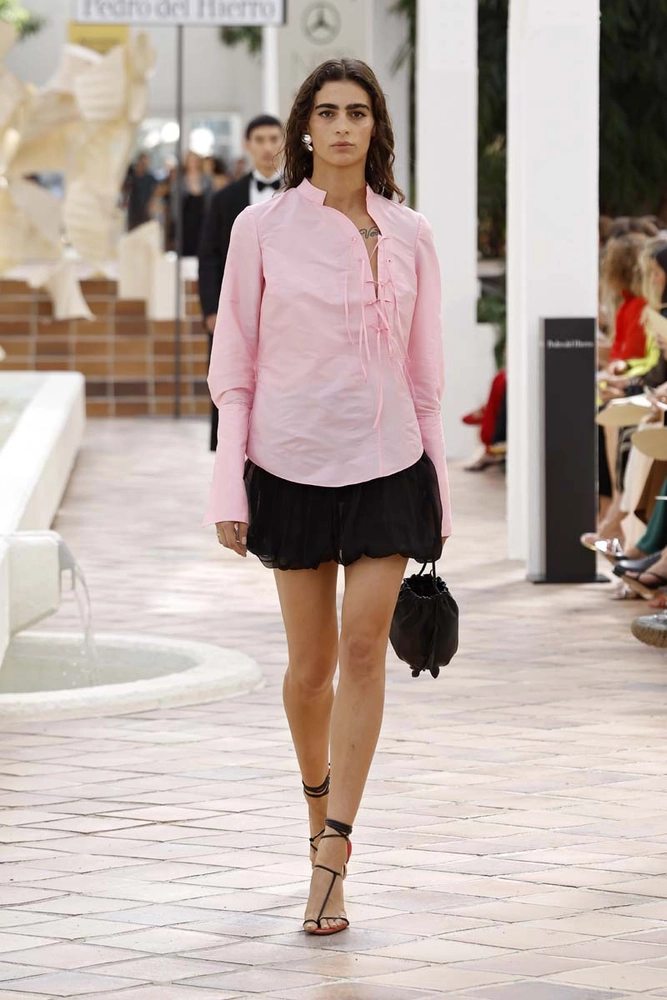
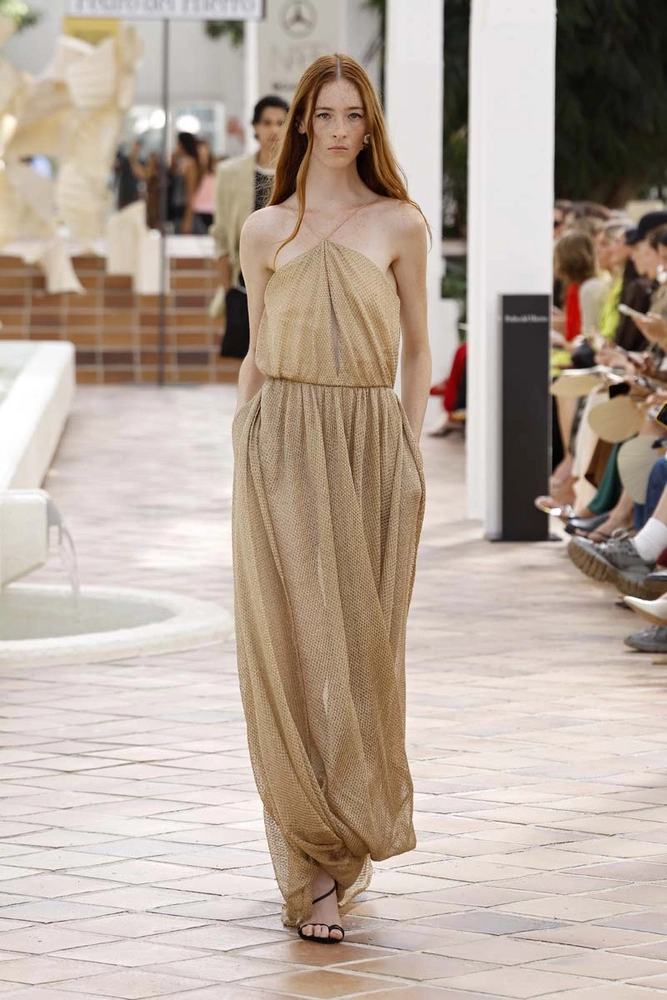
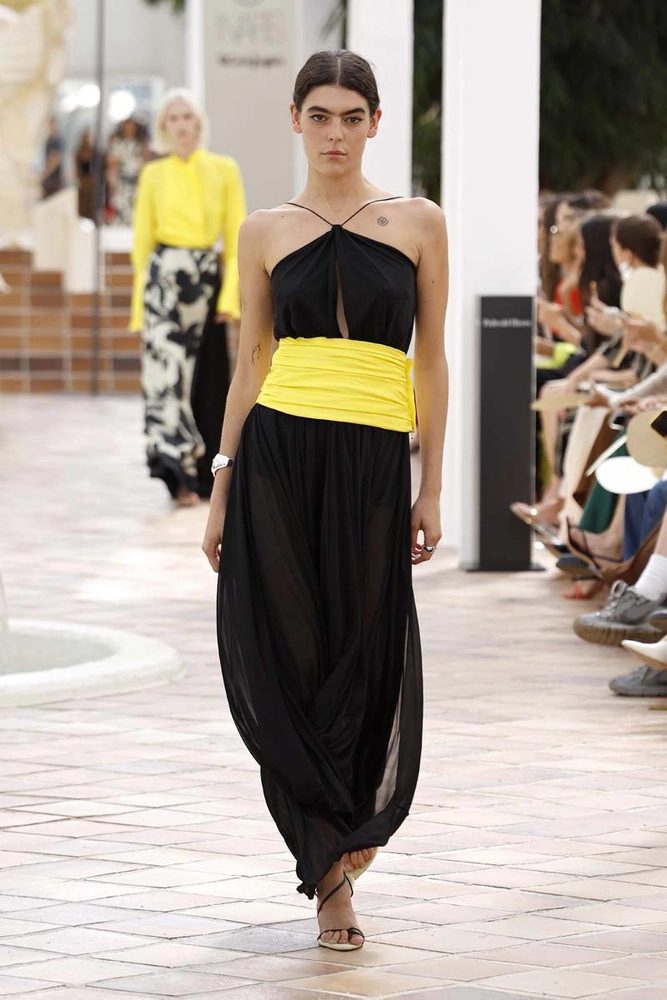
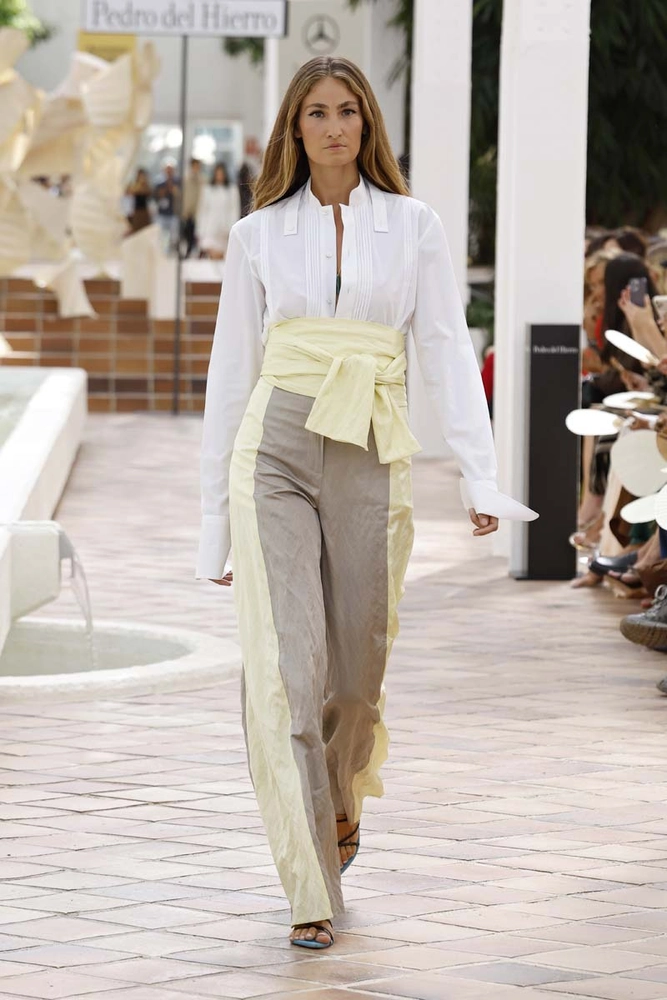
Japanese references entered through Mao collars and sash-like belts, while jacquards added density against lighter surfaces. Shorter proportions interrupted the longer lines, bringing a sharper pace to the romantic idea.
There was also a very contemporary question underneath it. In a life saturated with screens and constant information, Hanami positioned the act of stopping, looking and experiencing something briefly as a luxury of its own.
For a Spanish house founded in 1974, the week began with a surprisingly contemplative gesture.
Simorra followed with FOLD IN, a collection built around folding as both construction and metaphor.
Head of Design Victoria Mitjans placed textile development at the center of the collection. Fabrics were flattened, folded repeatedly in changing directions and engineered into highly dimensional surfaces. Once wrapped around the body, these structures opened and contracted through movement.
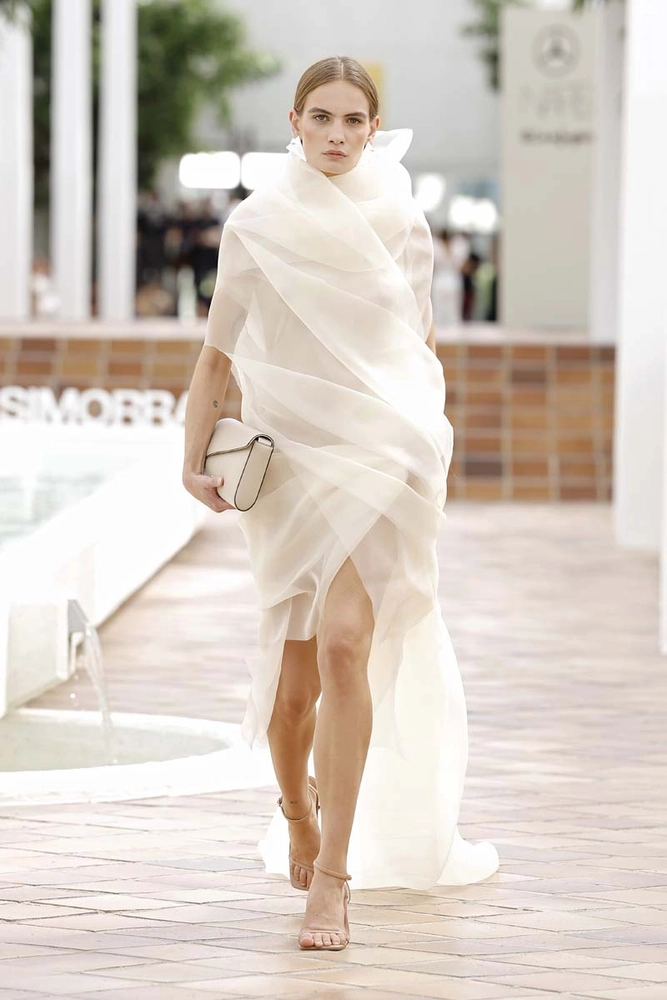
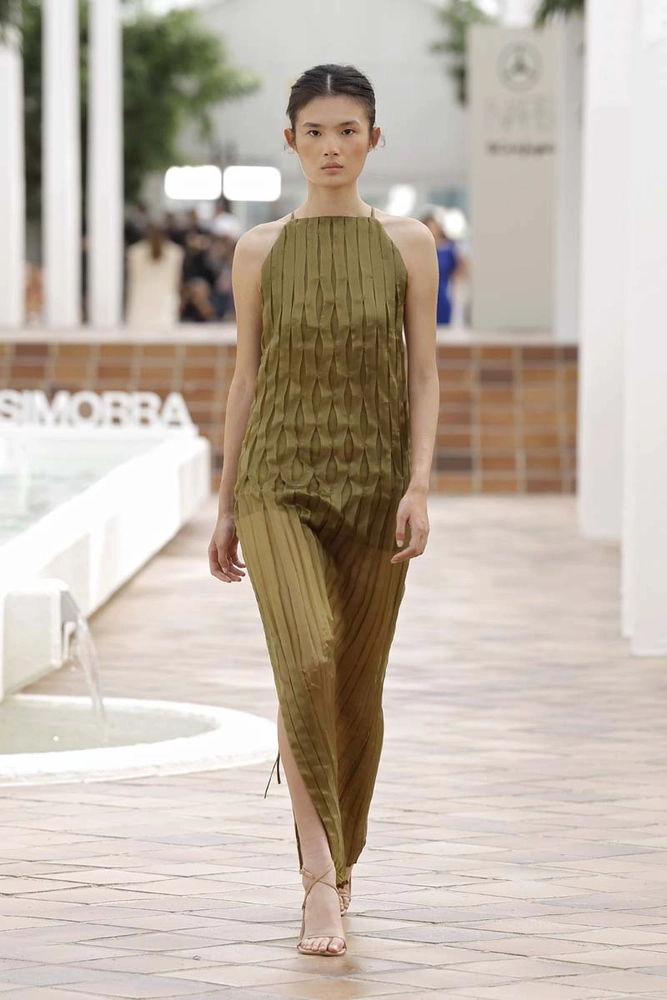
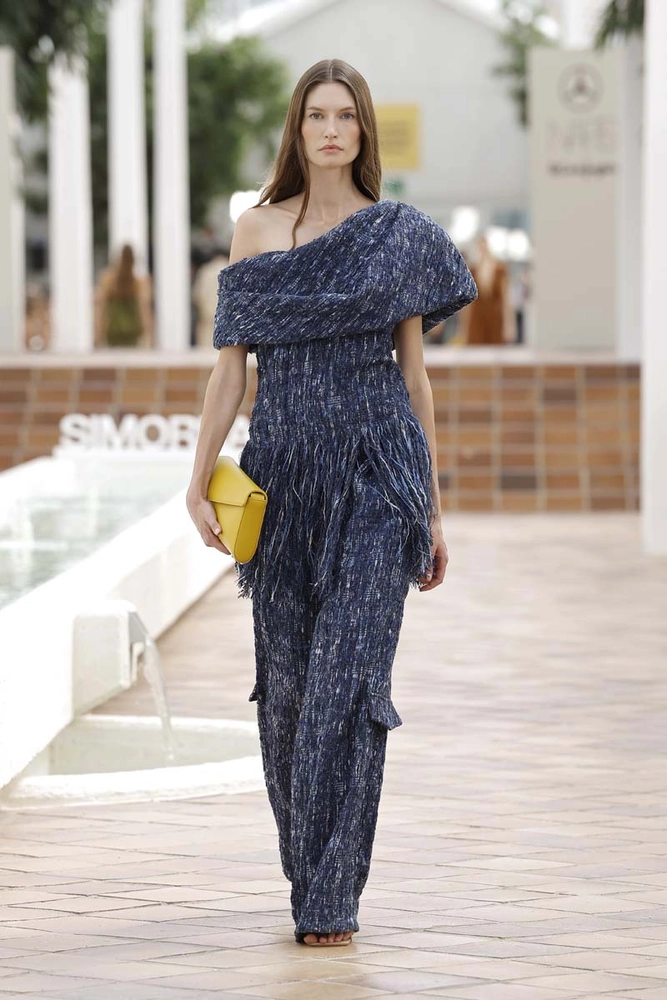
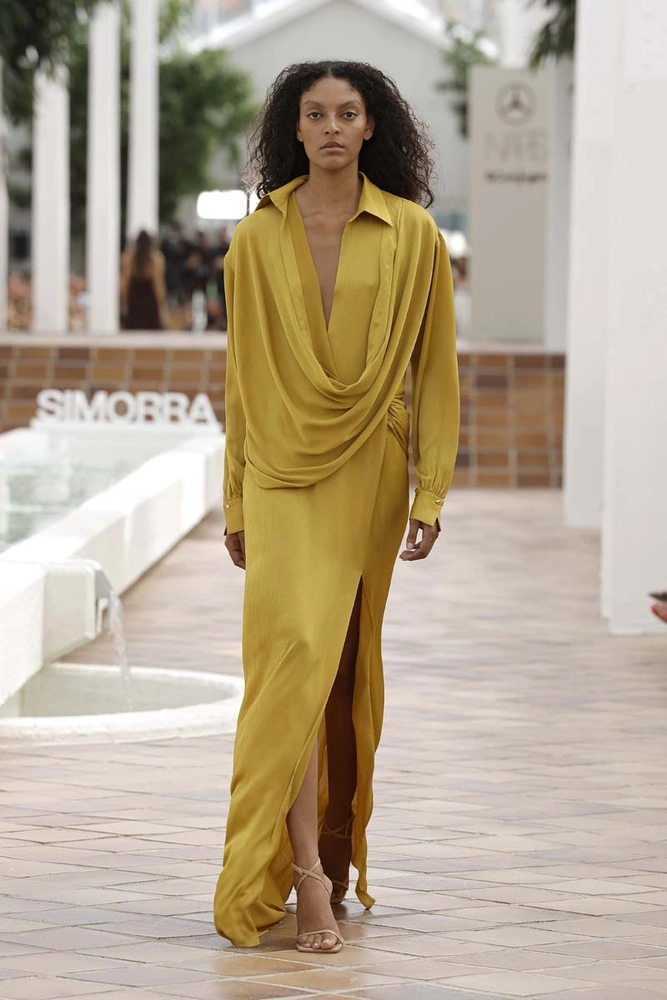
The conceptual language went toward closeness, empathy and physical contact. Simorra imagined clothing as a way of loosening emotional rigidity, giving the fold the quality of an embrace.
Actress Blanca Romero and her daughter Lucía Rivera appeared on the same runway, turning an abstract idea of connection into something immediately human.
At Adolfo Domínguez, Spring 2027 started with a question that sounded closer to physics than fashion: What is color?
Creative director Tiziana Domínguez and her team investigated colorimetry, pigment, natural dyes, light reflection and textile chemistry, working with scientific knowledge to understand how color changes once it enters fabric.
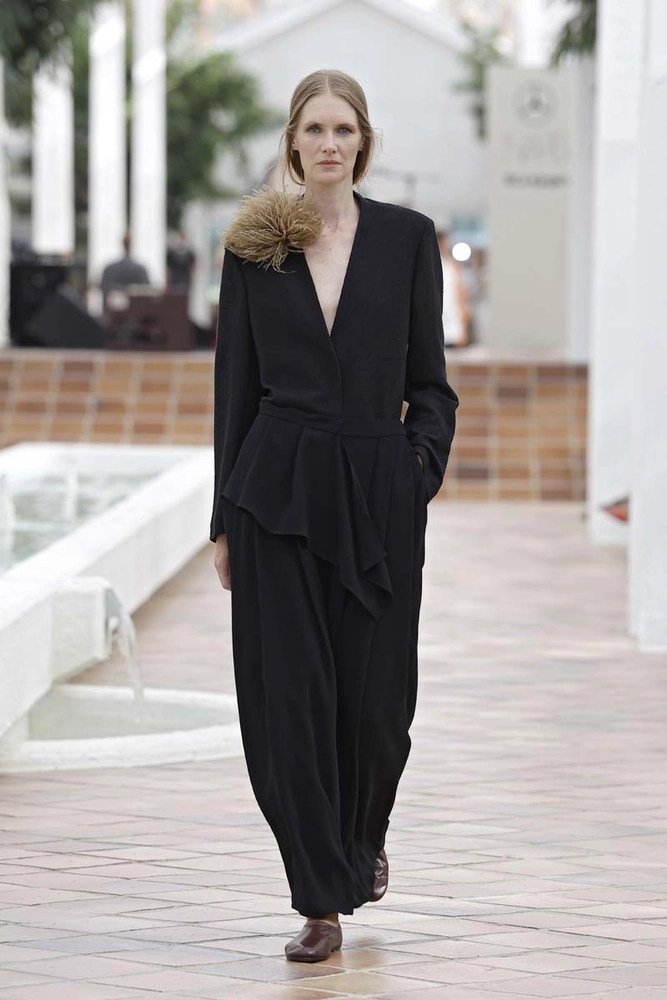
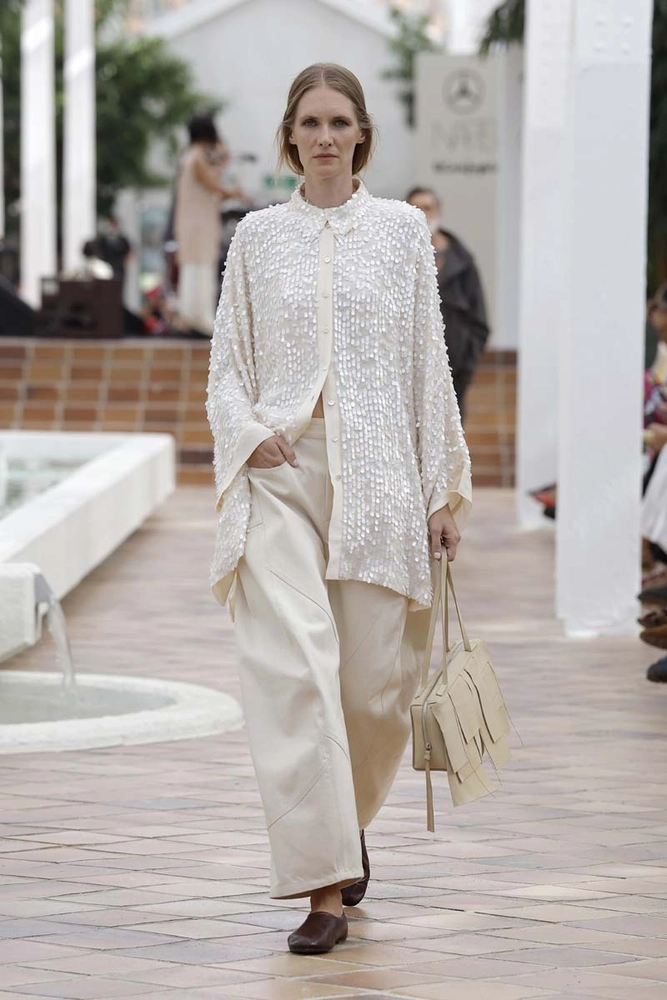
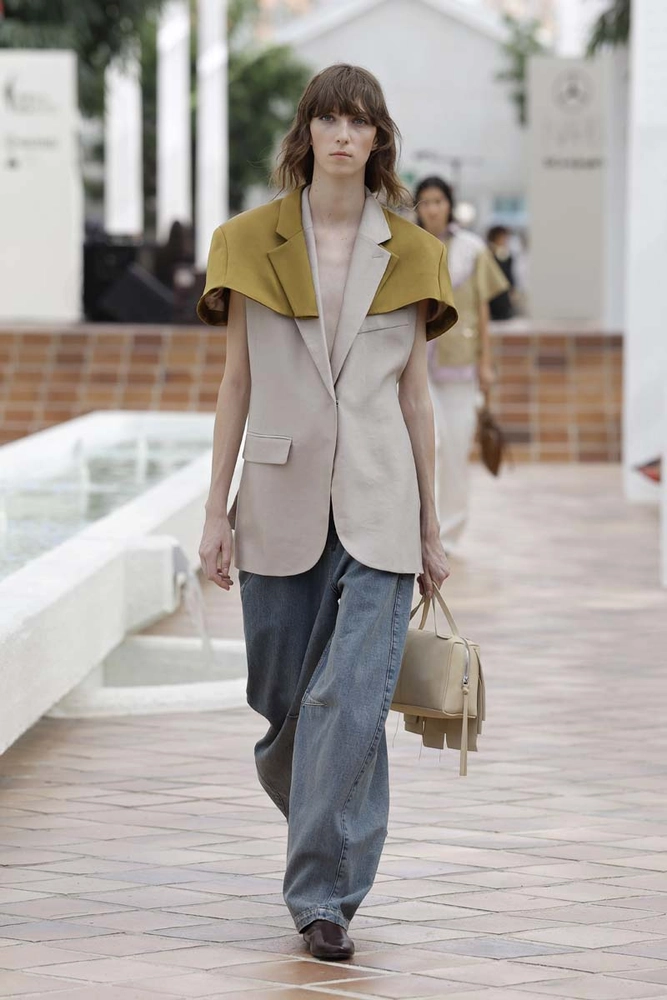
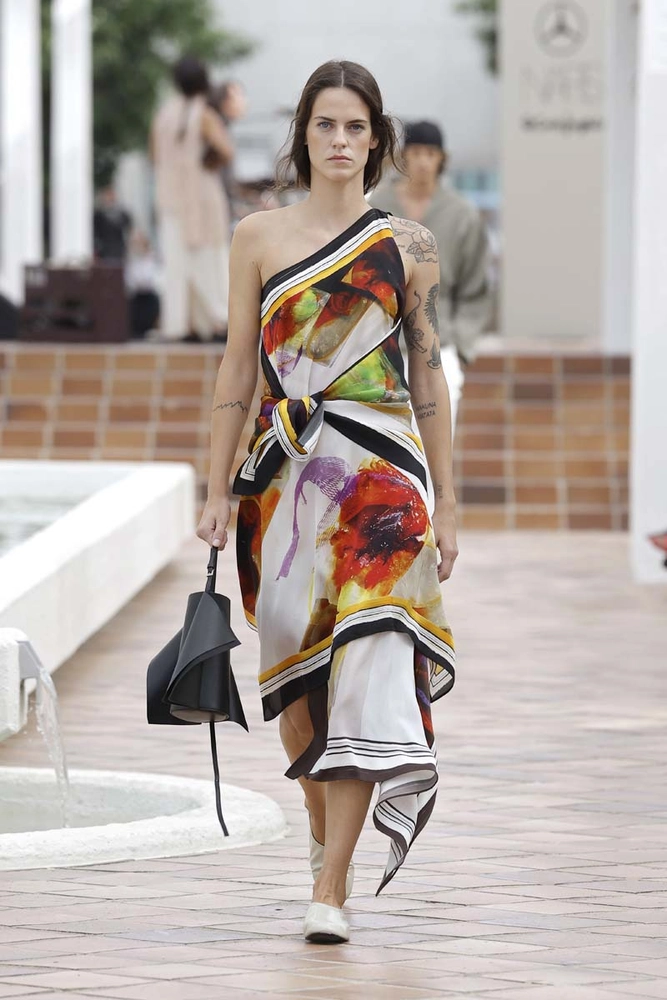
The collection, titled Croma, translated that research through asymmetric draping, pleating and surfaces whose appearance shifted according to the light. Wrinkled denim continued the house’s affection for irregular textures, while one bomber assembled from diagonal strips referenced sunlight breaking through window blinds.
Juan Vidal returned to his ongoing Edén story with El Segundo Edén, taking a romantic universe and sending it toward the street.
The designer revisited his recurring pomegranate motif in a stripped-back, increasingly graphic form. Athletic influences entered through exaggerated proportions and sportswear construction, giving the collection a faster and more urban rhythm.
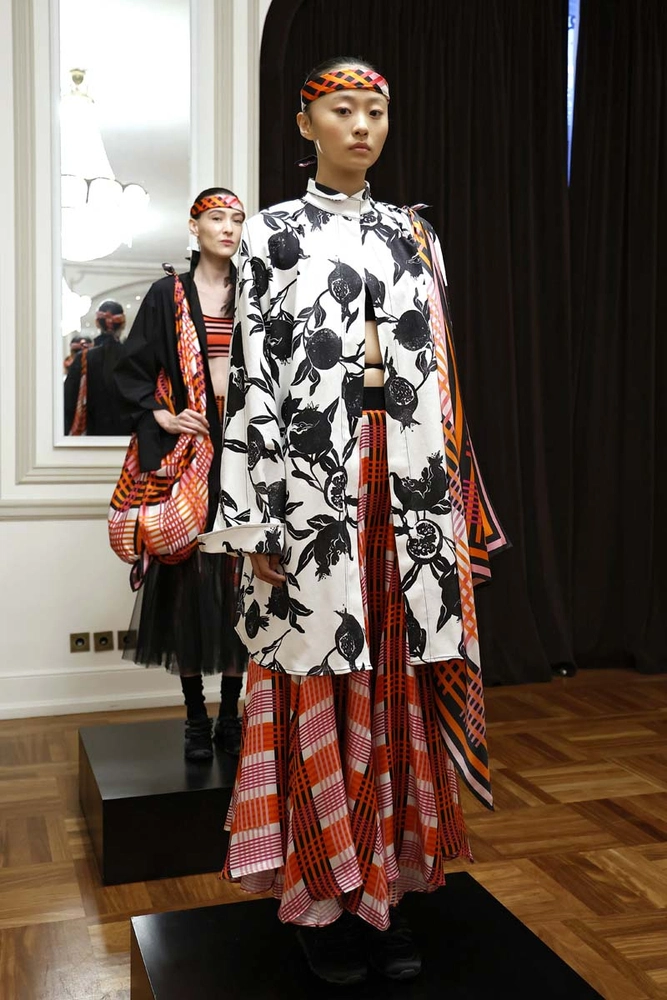
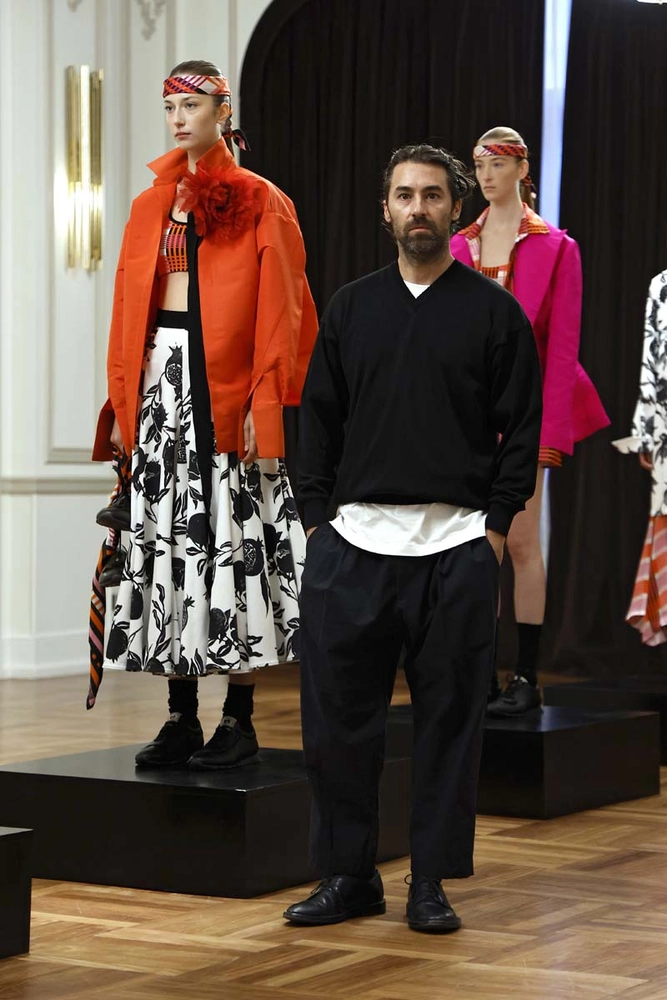
The idea felt like paradise after its pristine first chapter: familiar symbols surviving inside a changed environment.
Collaborations with Spanish labels S’more and Hispanitas extended that experimentation into footwear and styling, helping Vidal push his established femininity through a different category of dress.
Founded by Catalina Álvarez and Mariana Hinestroza, the Colombian label presented Florecer after receiving the MBFWMadrid International Designer Award, giving its craft-rich visual universe a major European platform.
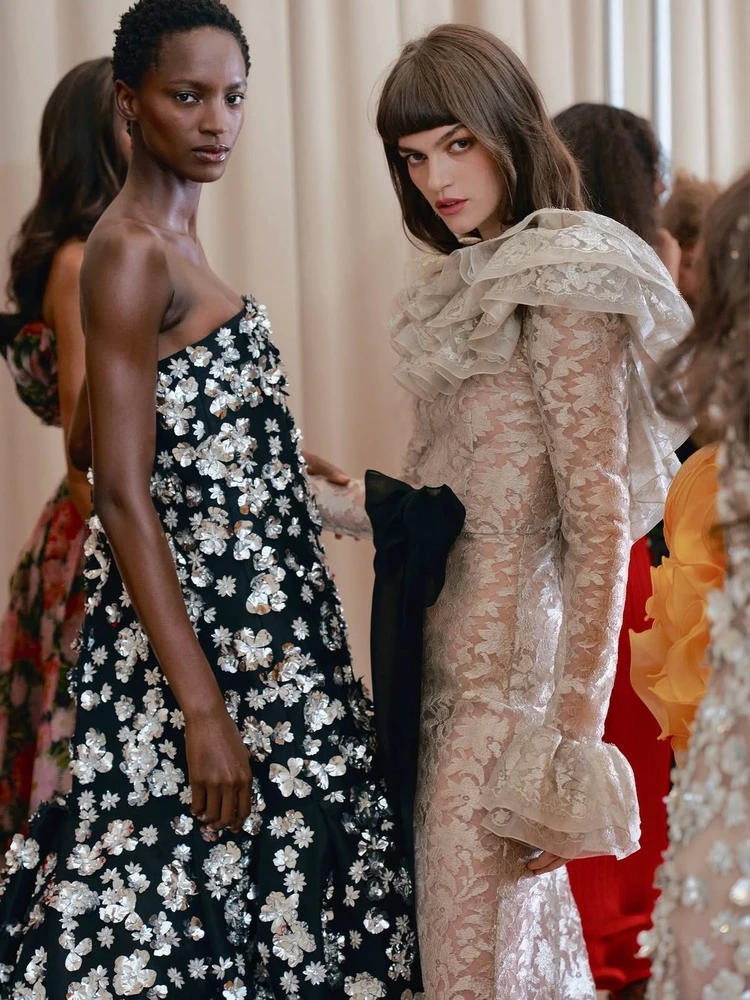
Flowers dominated the collection through watercolor prints, organza petals, embroidery, crochet, beadwork and textural knitwear. Oversized satin bows and expansive tulle volumes pushed botanical references into full spectacle.
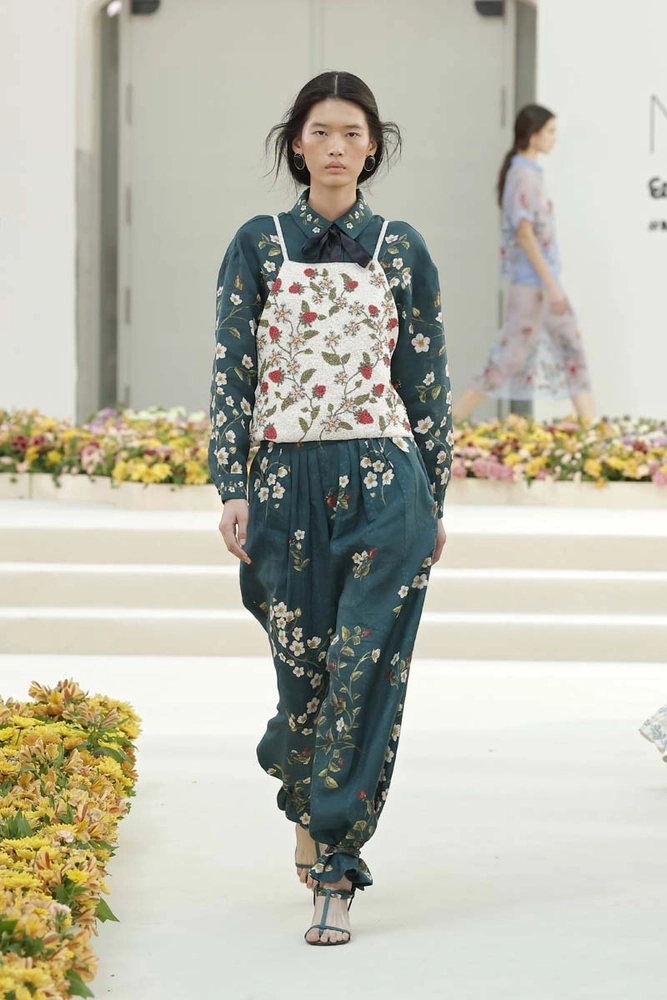
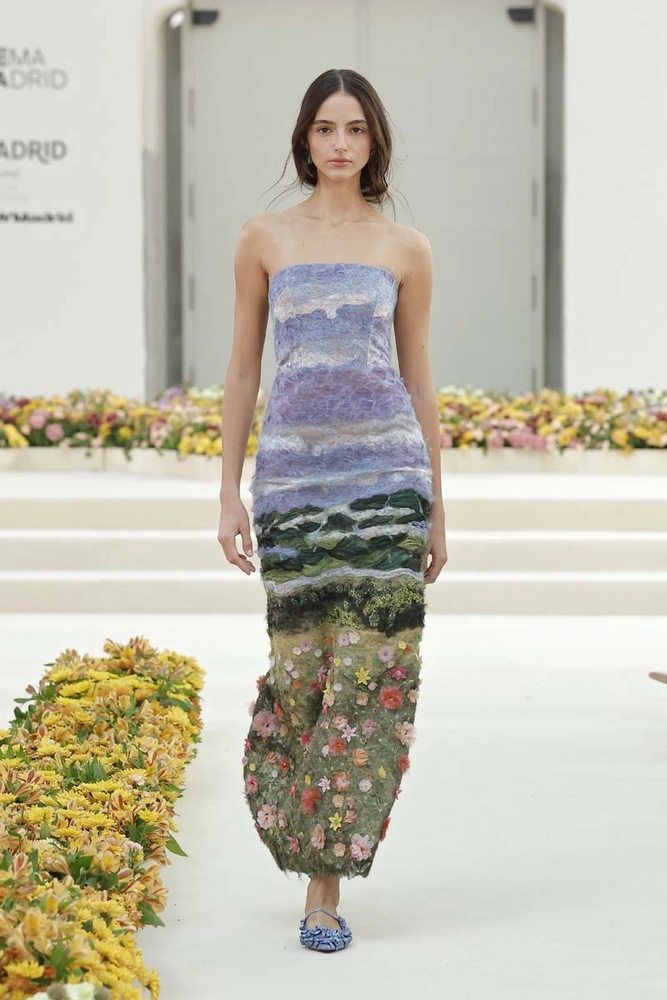
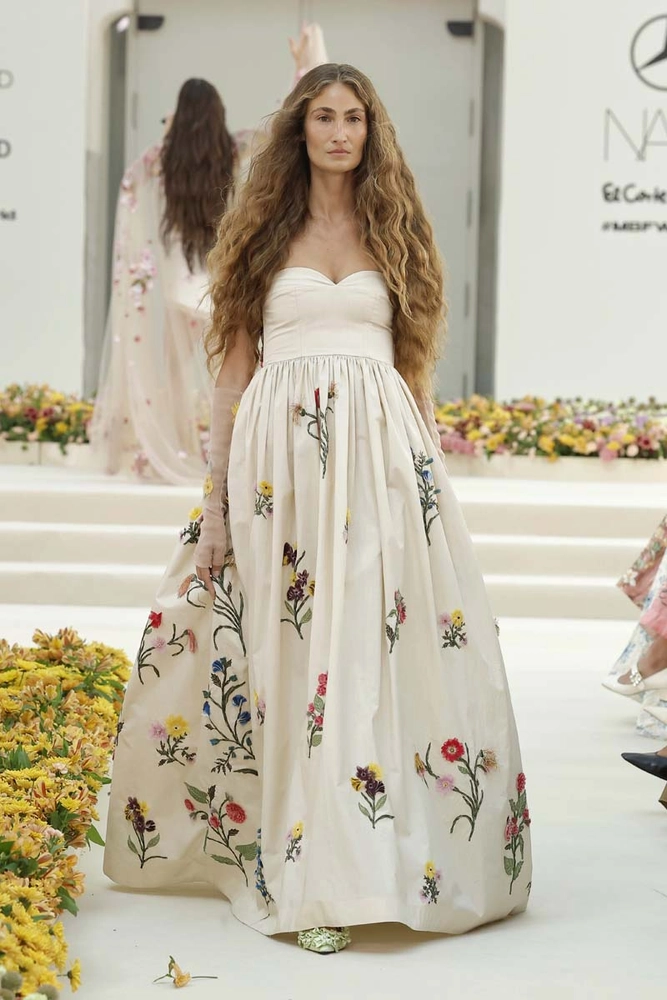
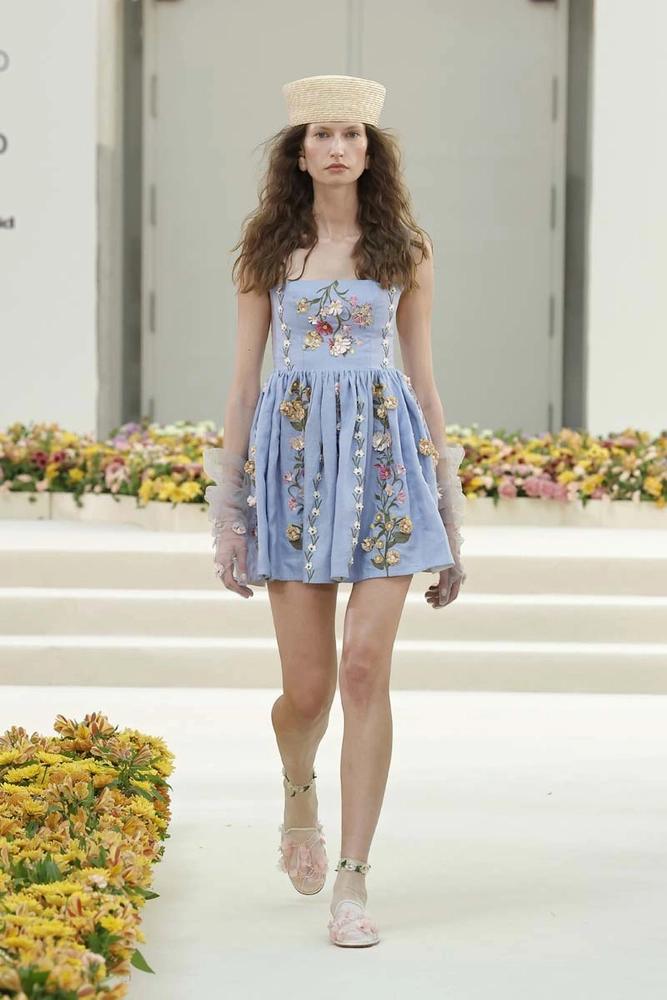
The deeper cultural thread came from Colombia’s silleteros, the flower carriers associated with Medellín’s celebrated Feria de las Flores. Their relationship with flowers as labor, identity and public display gave Florecer a foundation beyond decoration.
Singer Aria Vega performed live during the runway, pushing the show further into performance.
Celia Bernardo arrived on the official Madrid Fashion Week runway after around fifteen years of building Celia B internationally.
The Spanish designer had already travelled far through fashion. Her exuberant pieces have appeared on television series including Emily in Paris and Sex Education, and her career has carried her through different countries and cultures.
Her MBFWMadrid debut, titled Indian Summer, brought those journeys back toward home.
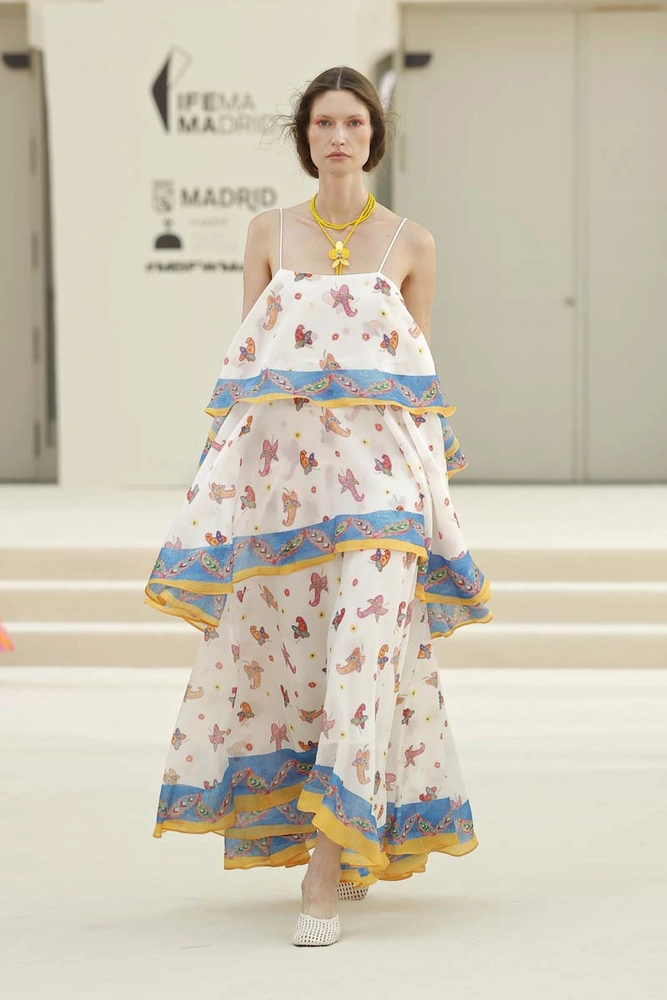
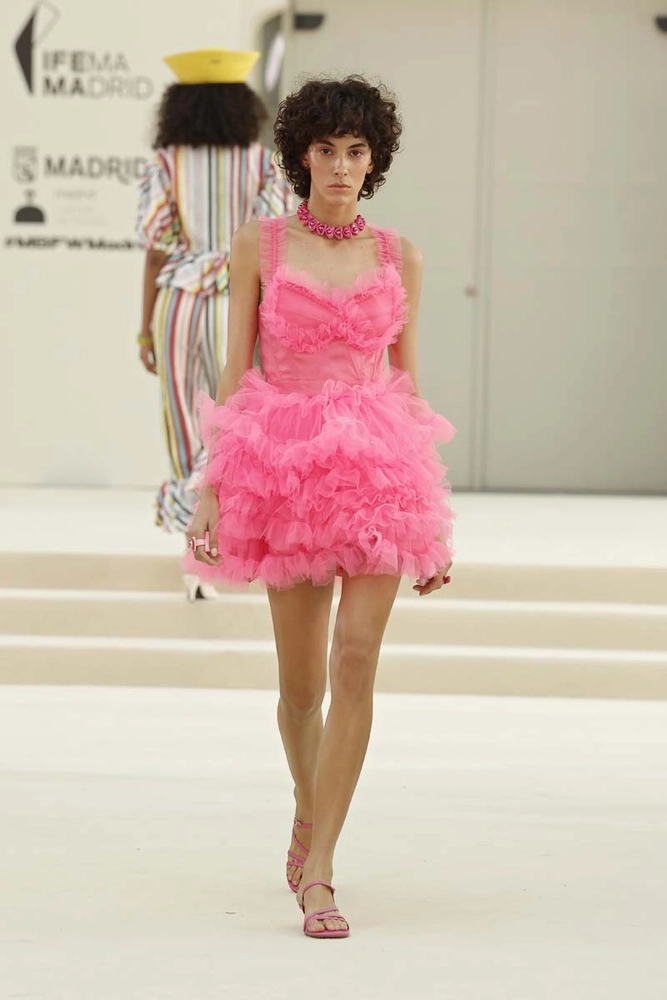
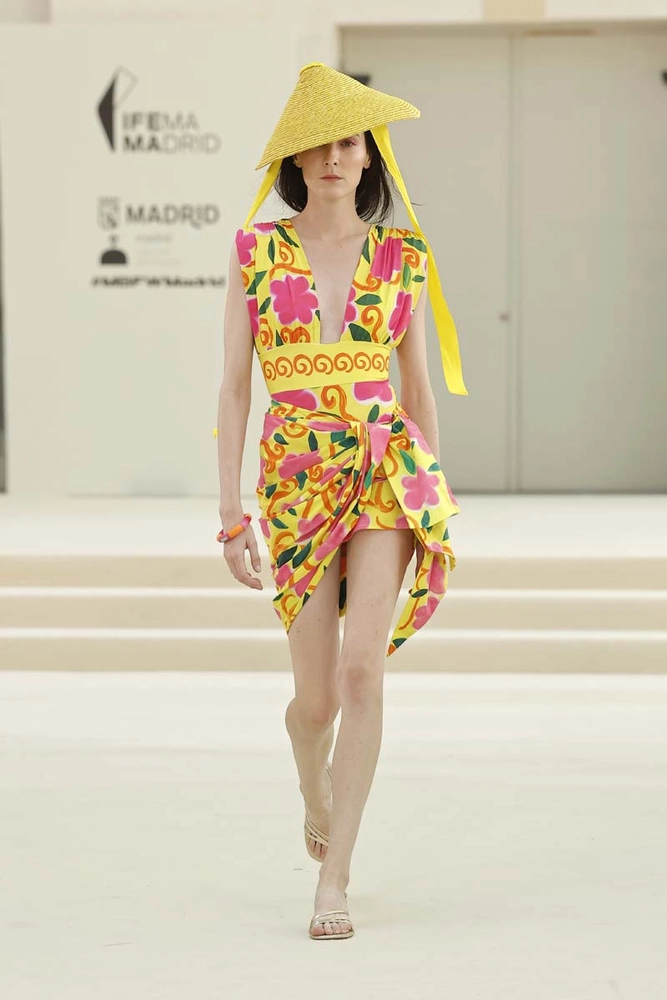
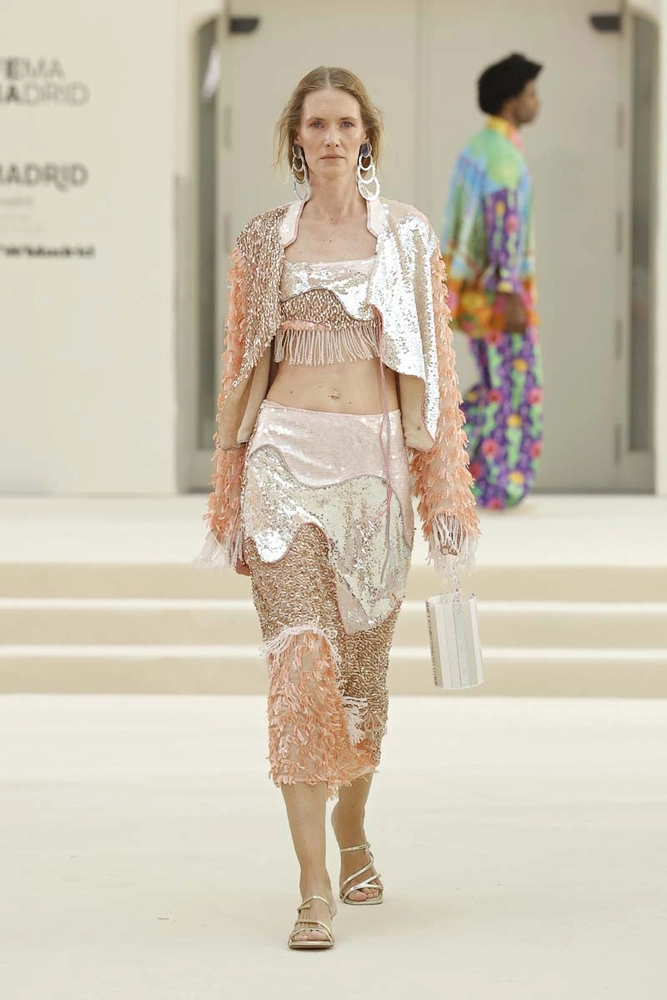
One layer referenced the warm late-season phenomenon known as an Indian summer. Another drew from Asturias’s history of indianos—Spanish emigrants who travelled to the Americas and later returned carrying new visual and cultural influences.
Bernardo’s signature crochet met original prints informed by studies of Indian saree printing, botanical references and multicolored confetti tulle. Detachable XL elements allowed certain pieces to expand dramatically for evening.
Then came the joyous visual disruption that Ágatha Ruiz de la Prada has spent decades perfecting.
Spring 2027 played with scale through enormous T-shirt dresses, inflated forms, oversized petals and intensely saturated color. Hand-dyed linen, cotton and silk organza supplied radically different weights across the collection.
Some flowers stretched into ribbons. Spherical volumes seemed to deflate around the body. Checkerboard elements separated physically from dresses and moved with their own rhythm.
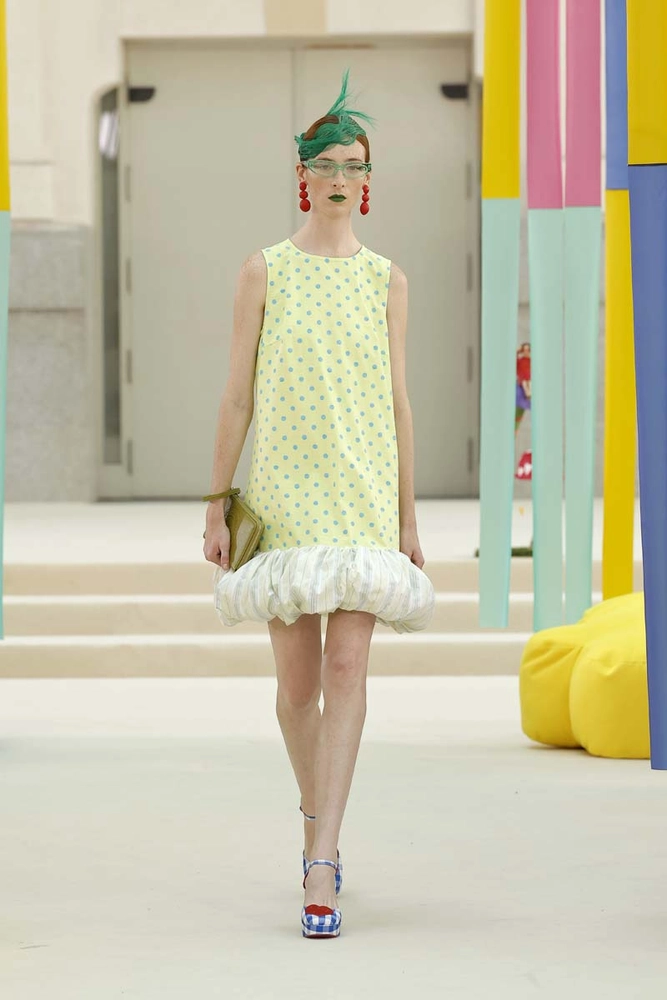
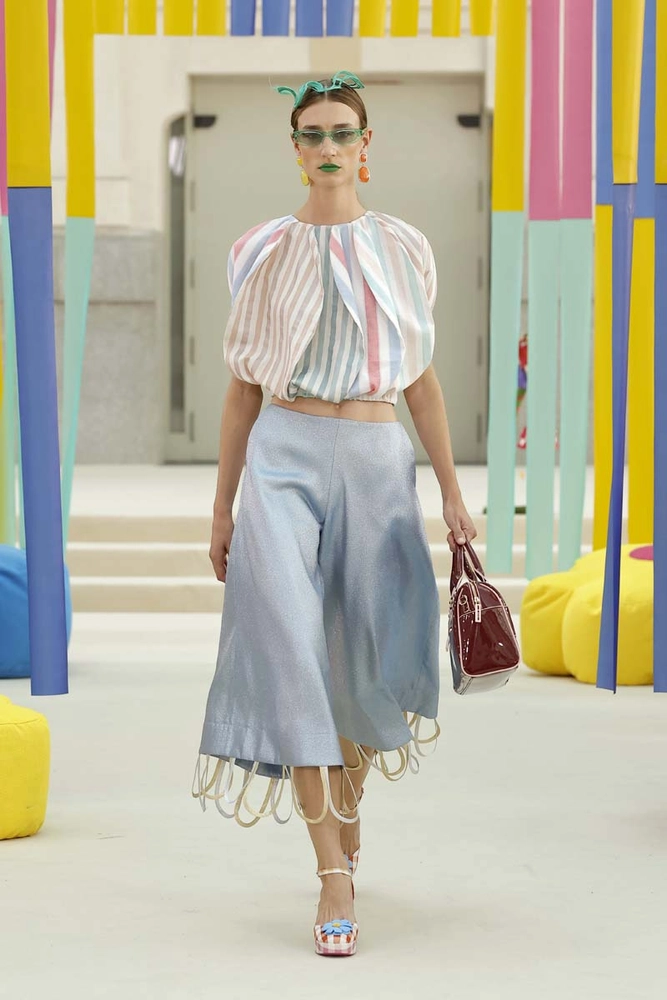
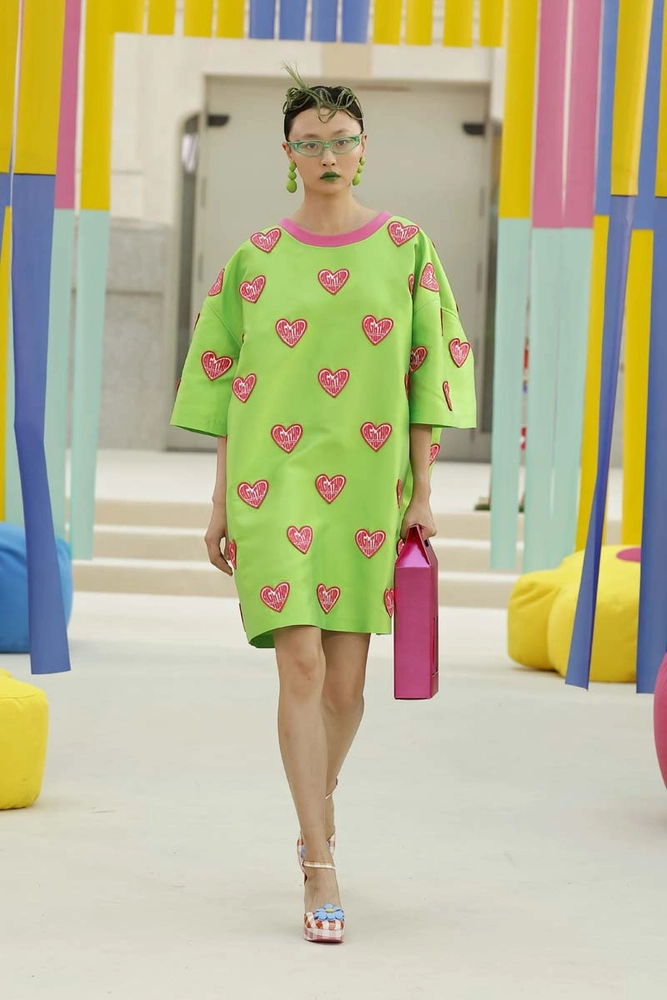
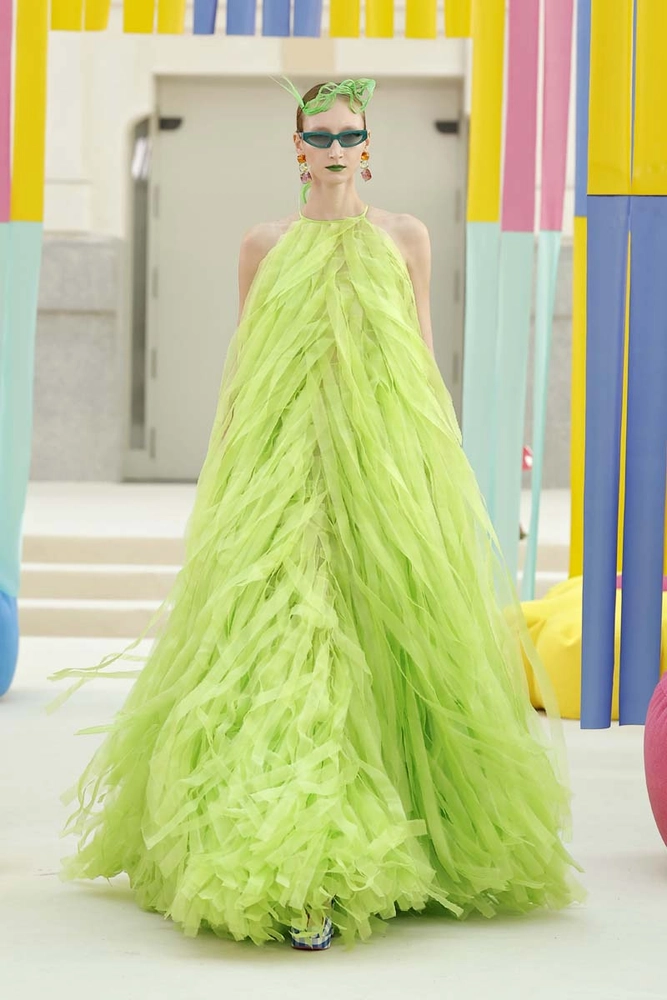
And somewhere within this colorful ecosystem appeared silhouettes combining petals with forms the house itself connected to dinosaurs.
Ágatha’s greatest strength remains the consistency of her universe. Hearts, flowers, checks, dots and brilliant color have become a language recognizable across generations. Spring 2027 kept that language alive by inventing new creatures inside it.
Hannibal Laguna entered Madrid Fashion Week Spring 2027 in an anniversary year.
The house is celebrating four decades of work, and Laguna received the National Designer Award as part of the season’s recognition of his career.
His collection, LUMINHAZ, moved toward illumination. Gemstone embroidery, pearls, metallic filigree and crystal captured light across evening surfaces, building garments that behaved almost like pieces of jewelry in motion.
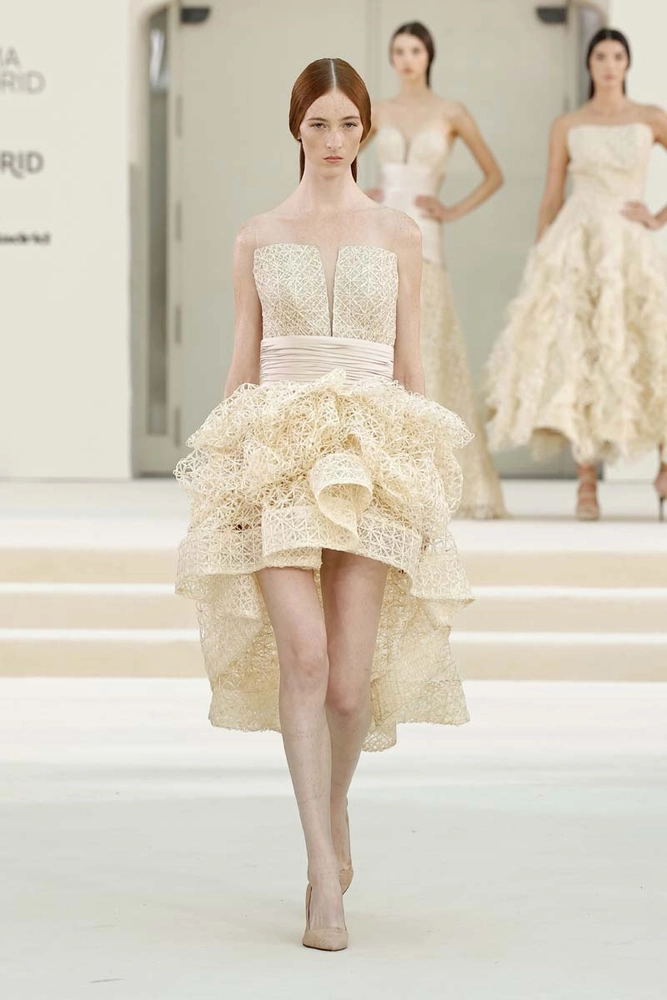
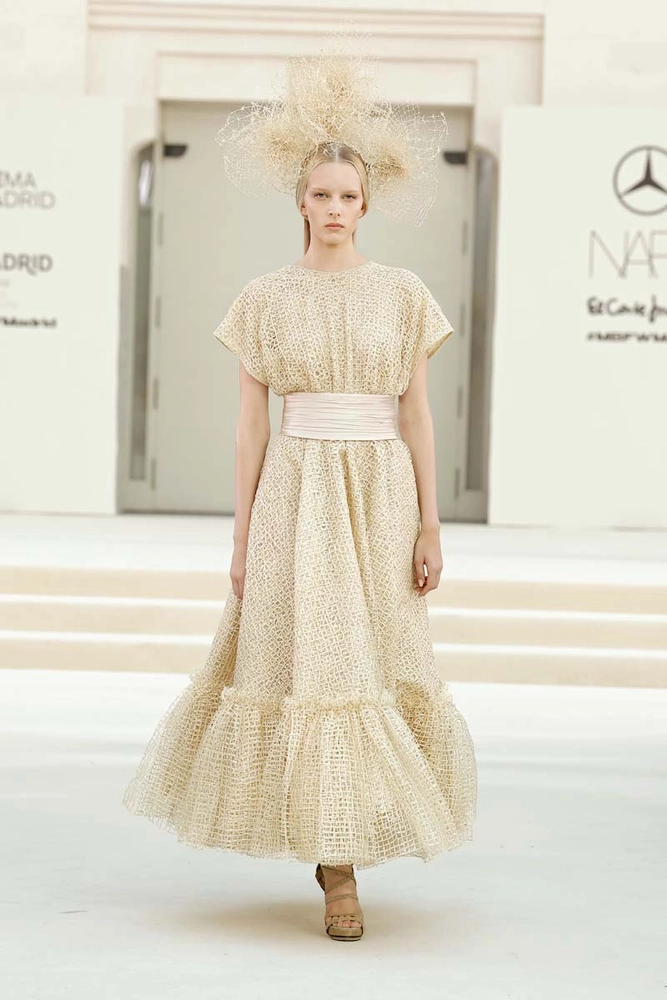
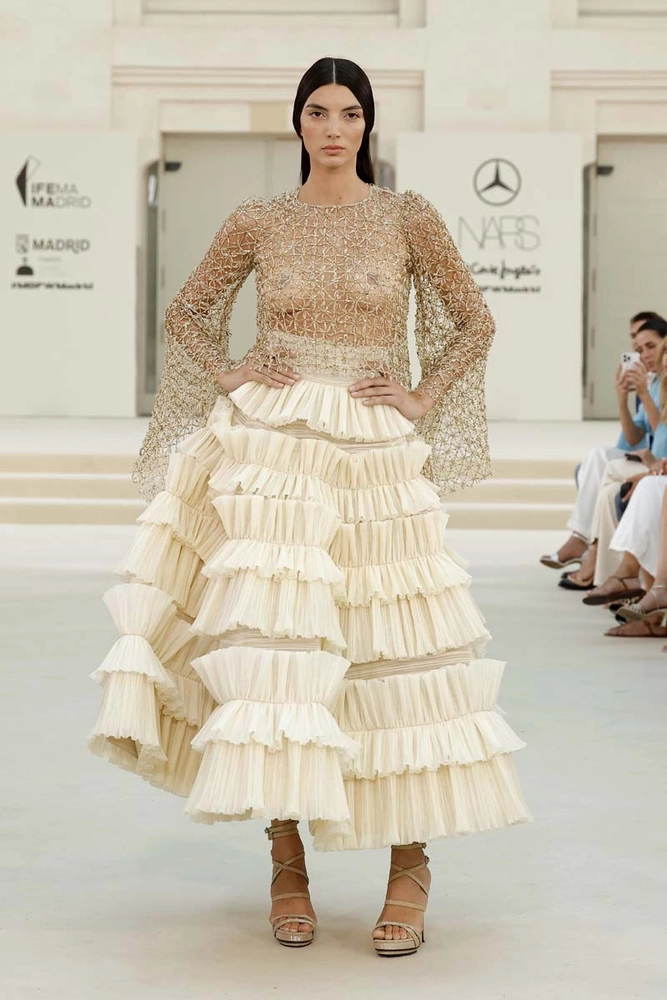
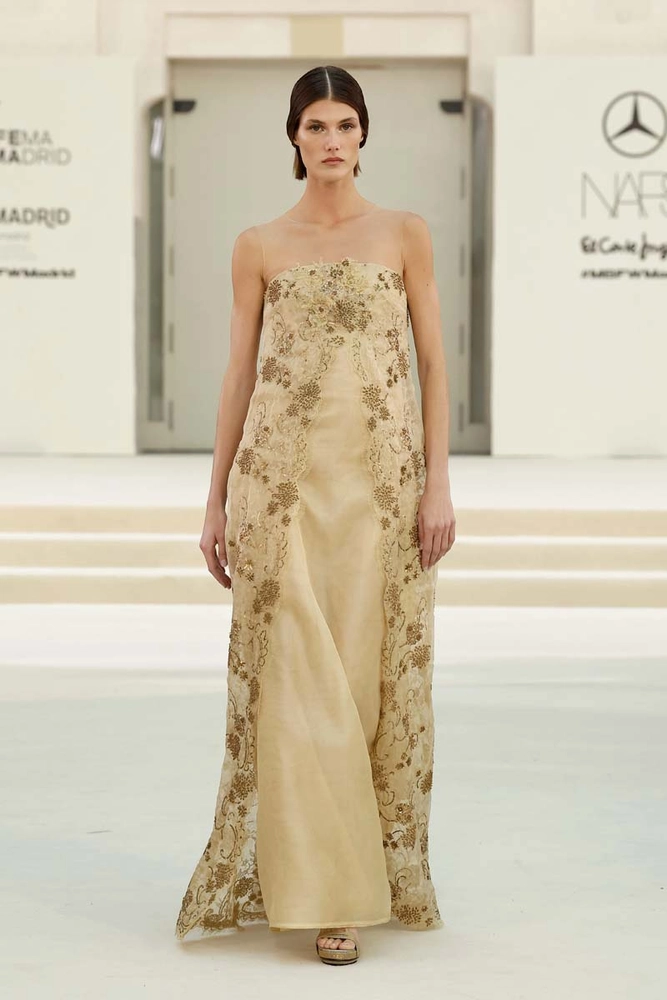
The silhouettes carried the structural vocabulary Laguna has developed through bridal and occasion dressing: corsetry, peplums, sculptural skirts, dome sleeves and dramatic necklines.
Laguna founded his house in 1987 within his family’s textile business. Four decades of knowledge sit behind the apparent fantasy of his runway, the ability to understand where embellishment can sit, how a corset supports weight and how volume remains balanced around the body.
Alex Rivière Studio supplied a visual exhale.
Founded in 2023, the label is still young, yet Spring 2027 carried the confidence of a brand already thinking about longevity. The Core comprised 46 looks designed around the idea of a complete wardrobe that could move between generations.
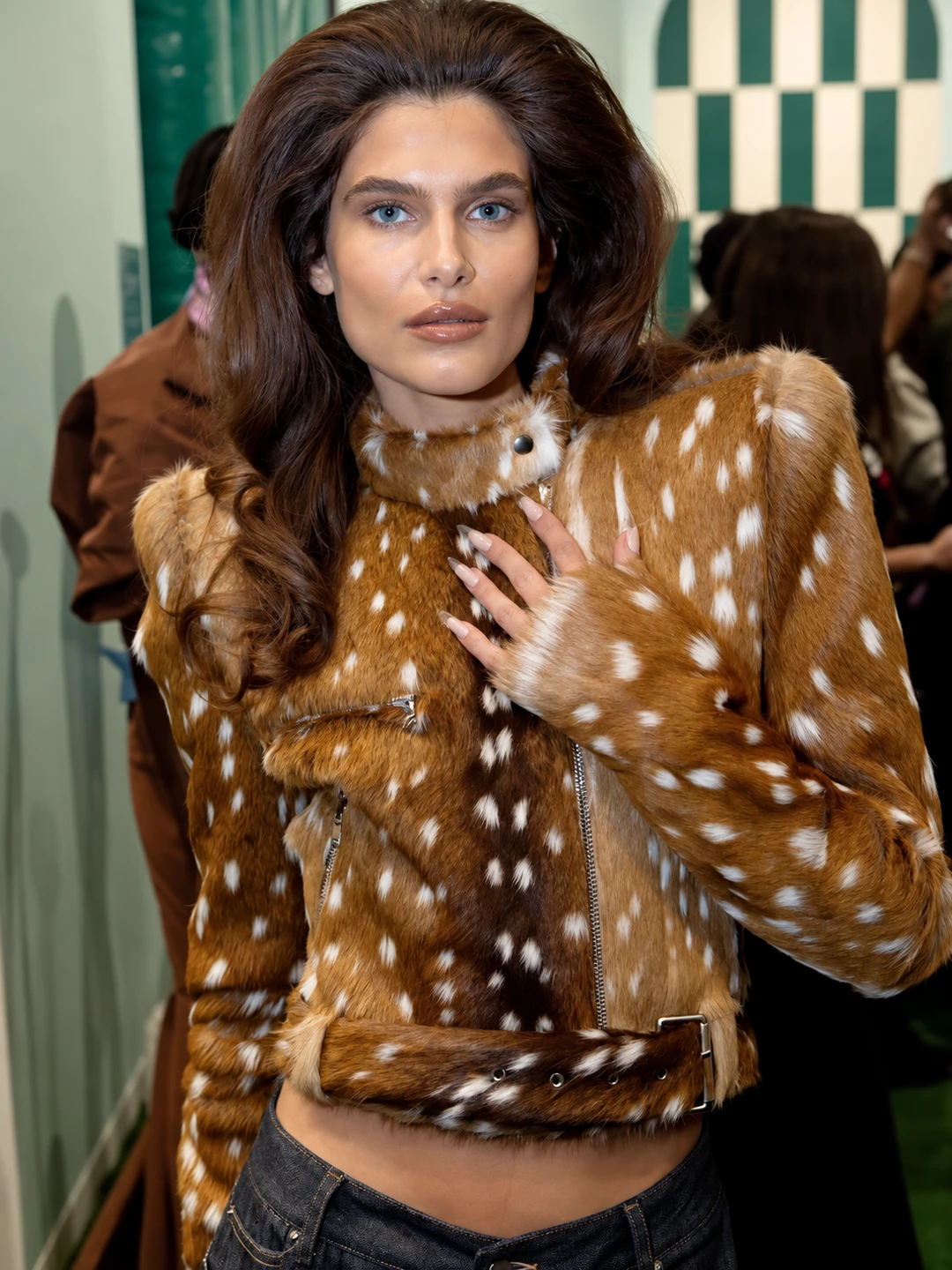
White shirting, black trousers and restrained separates formed the foundation. Animal print entered with surprising ease; Rivière treats it almost as a neutral, allowing it to live alongside the quieter wardrobe staples.
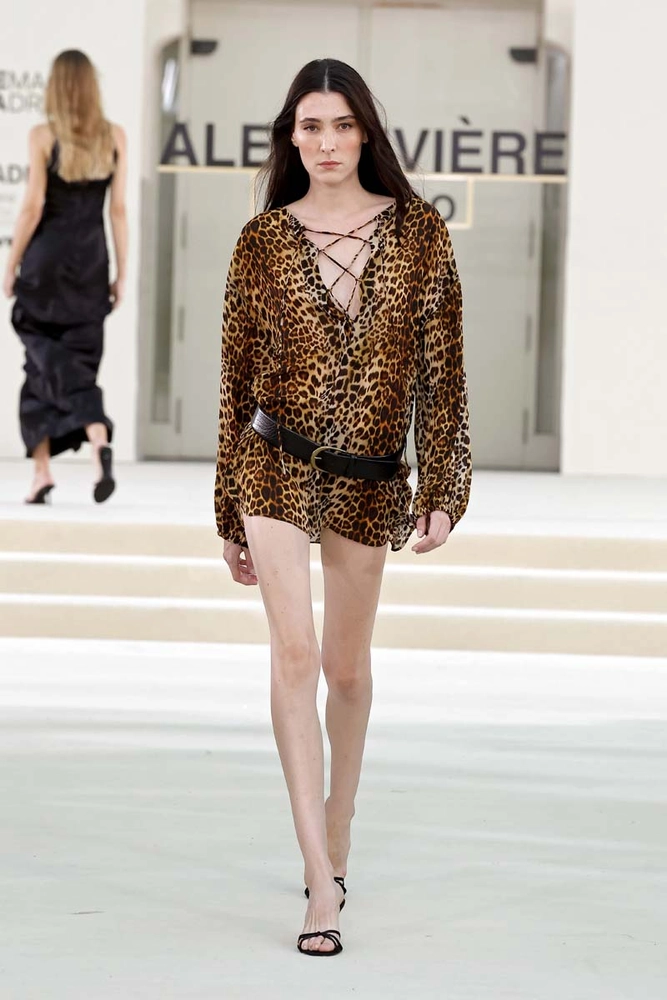
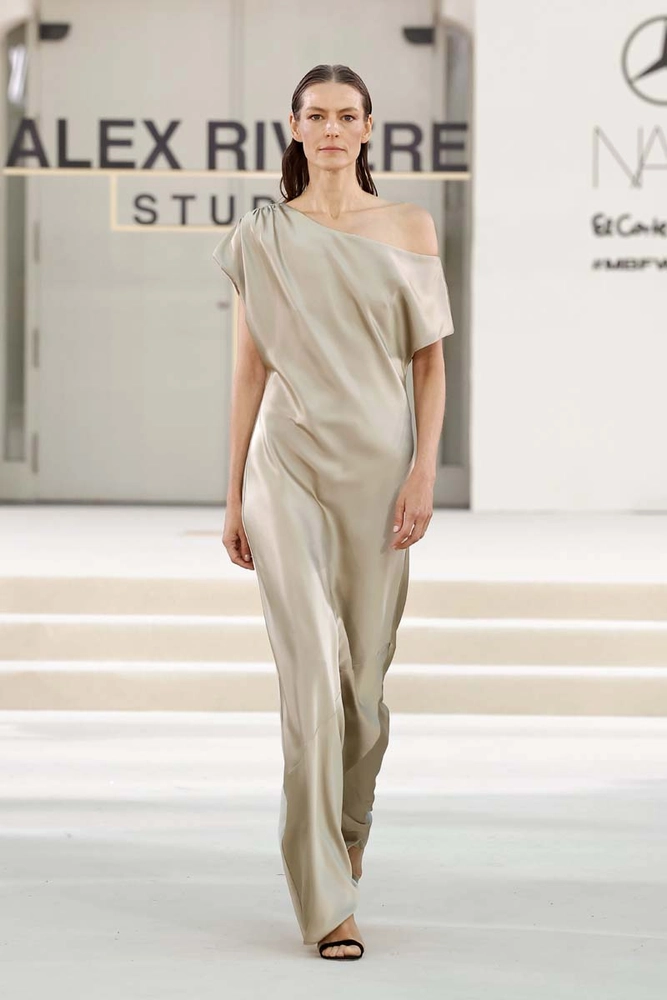
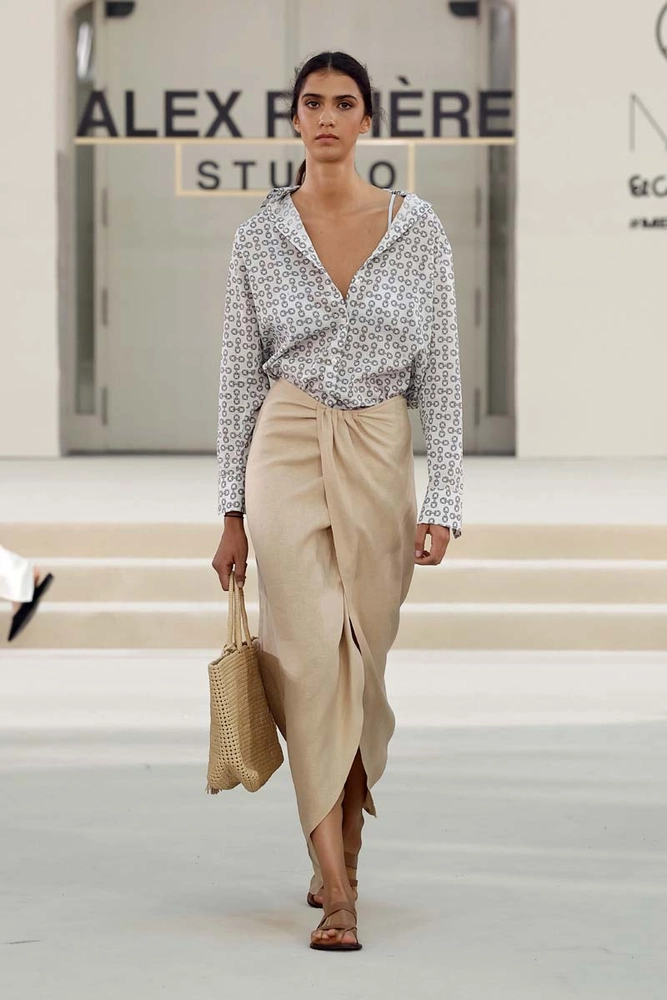
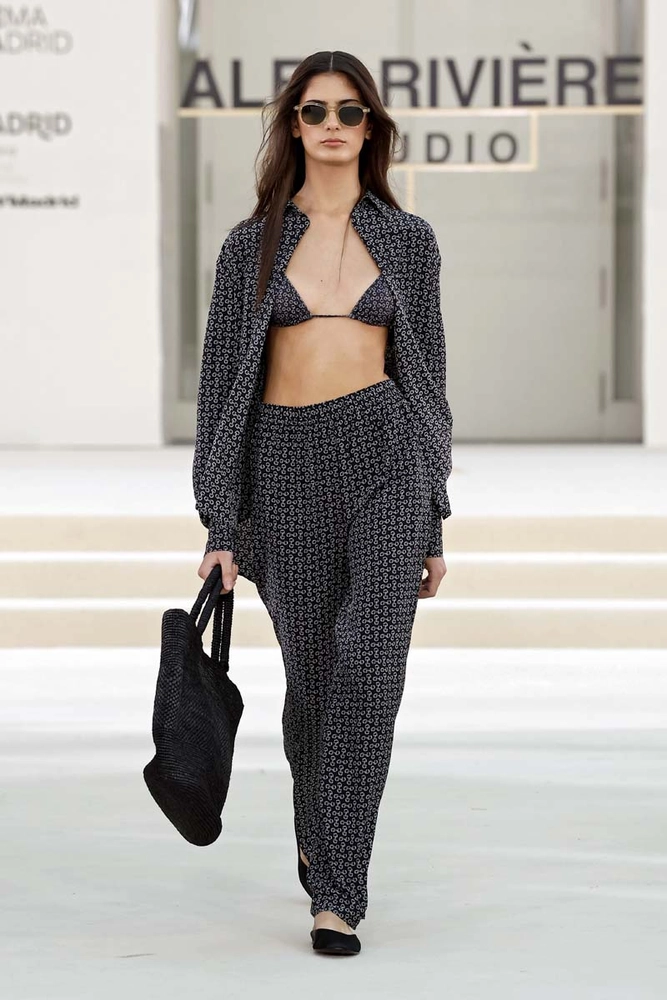
The collection also reflected the brand’s broader evolution. Its earliest identity leaned heavily toward resortwear. The Core expanded that idea into daywear, tailoring and pieces designed for repeated use.
Specialist ateliers in Spain and Portugal contribute to the production, including tailoring work connected to the Costa Brava. More than five textiles from PYRATEX, developed through natural fibers and advanced material processes, entered the collection as well.
The first chapter of Madrid Fashion Week reached its natural crescendo in the Rosaleda del Parque del Oeste.
Alejandro Gómez Palomo gathered more than 300 guests among the roses to celebrate ten years of Palomo with Arcadia. For the anniversary, his brief was wonderfully direct: every look should feel unmistakably Palomo.
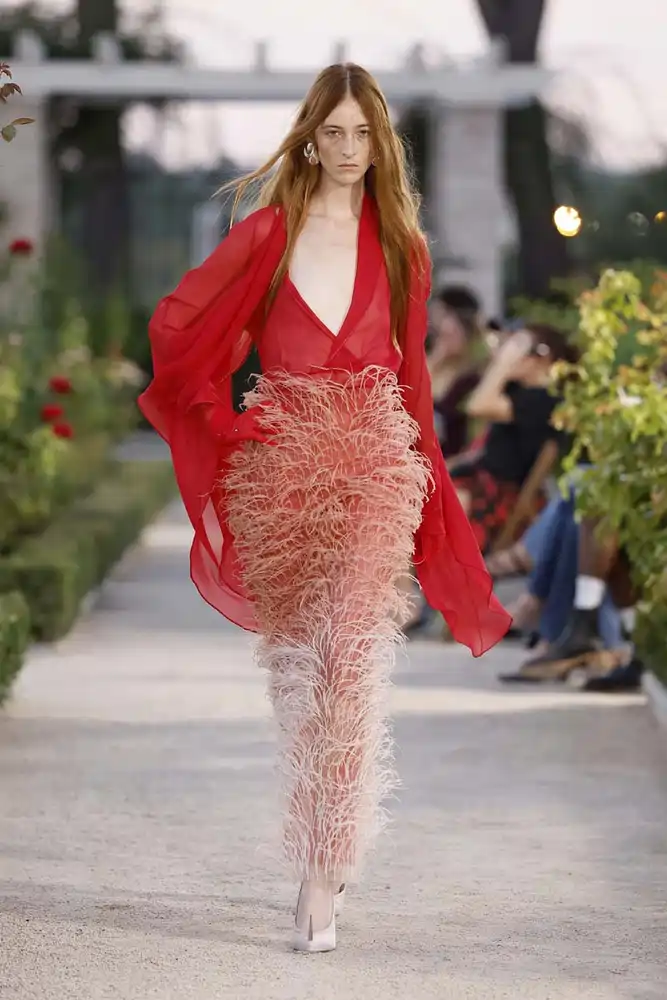
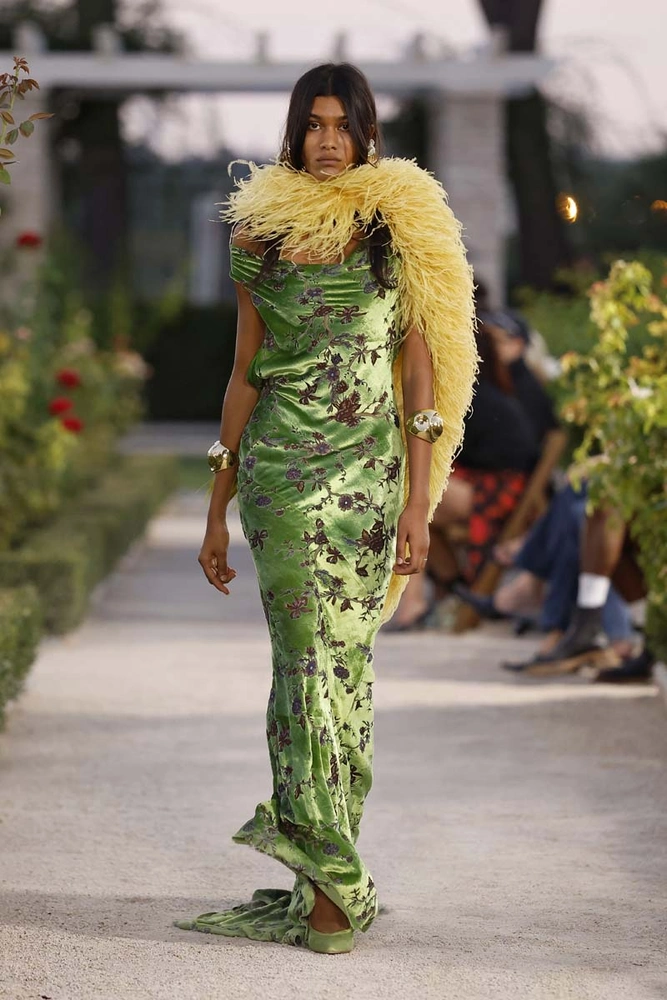
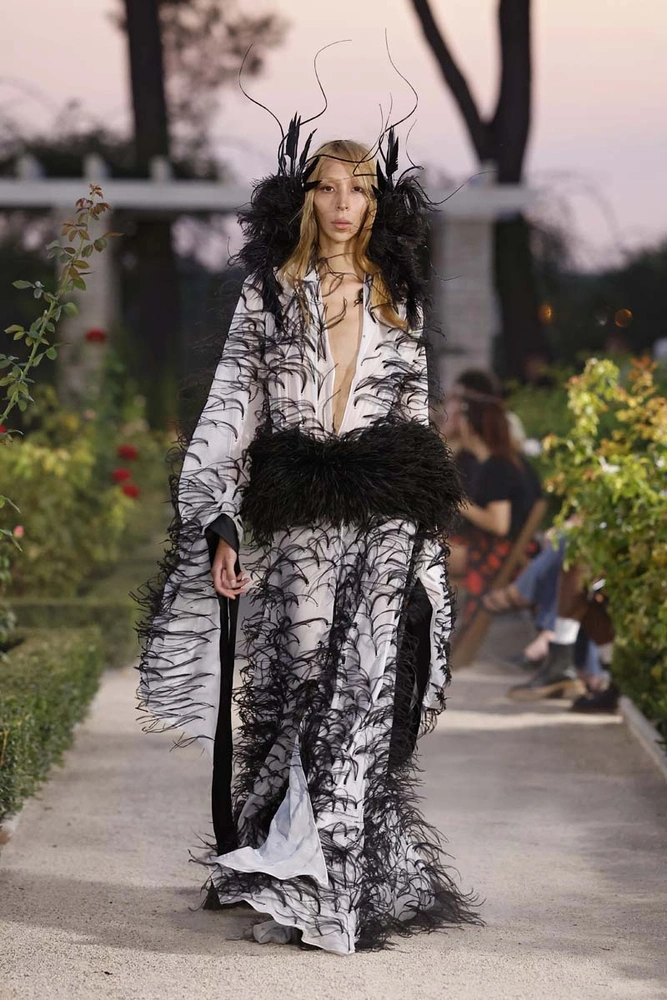
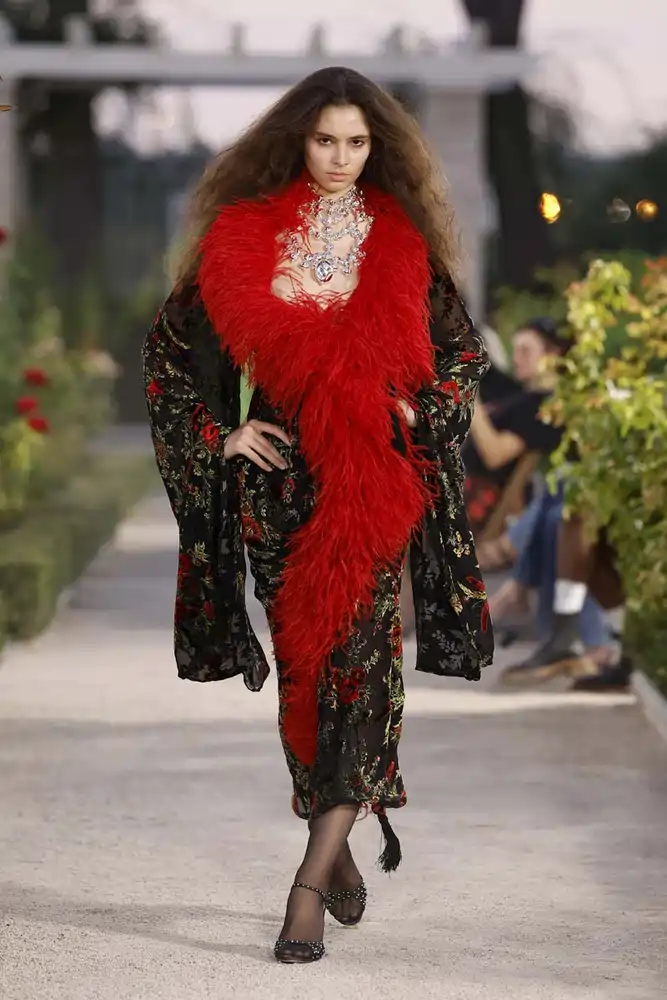
That meant feathers, theatrical tailoring, decadent surfaces, sensual exposure and the fluid approach to gender that helped establish the designer’s international identity. Birds of paradise seemed to hover over the collection, while extravagant evening pieces embraced the kind of visual drama Palomo has always treated with total sincerity.
The designer even offered a fitting rule for birthdays: a good birthday needs a good feather dress. There is something significant about seeing that idea occupy such a prominent place in Madrid a decade into the brand’s life. Palomo entered Spanish fashion as an independent voice with a taste for fantasy, provocation and historical romanticism. Ten years later, those codes have become part of the country’s contemporary fashion vocabulary.
Madrid Fashion Week has already solved one problem: Madrid finally feels present inside its own fashion week. The harder question starts now. A palace can provide grandeur, a greenhouse can provide atmosphere and a rose garden can make Palomo look especially magnificent at sunset. None of those things can manufacture a fashion identity. That still has to come from the clothes.
The first ten collections of Madrid Fashion Week suggest the city should resist searching for a single aesthetic. Its real opportunity lies in authorship strong enough to travel. That is the standard worth pursuing. Madrid does not need to become another fashion capital. It needs designers compelling enough to make the international calendar feel incomplete without Madrid.
Advertisement