MENU
Close





Madrid may speak the same language, but rent, Zara, and European shoppers all have their own accents. For Latin American fashion brands in Europe, a Spanish address sounds glamorous, until the Golden Mile starts charging like a gatekeeper.
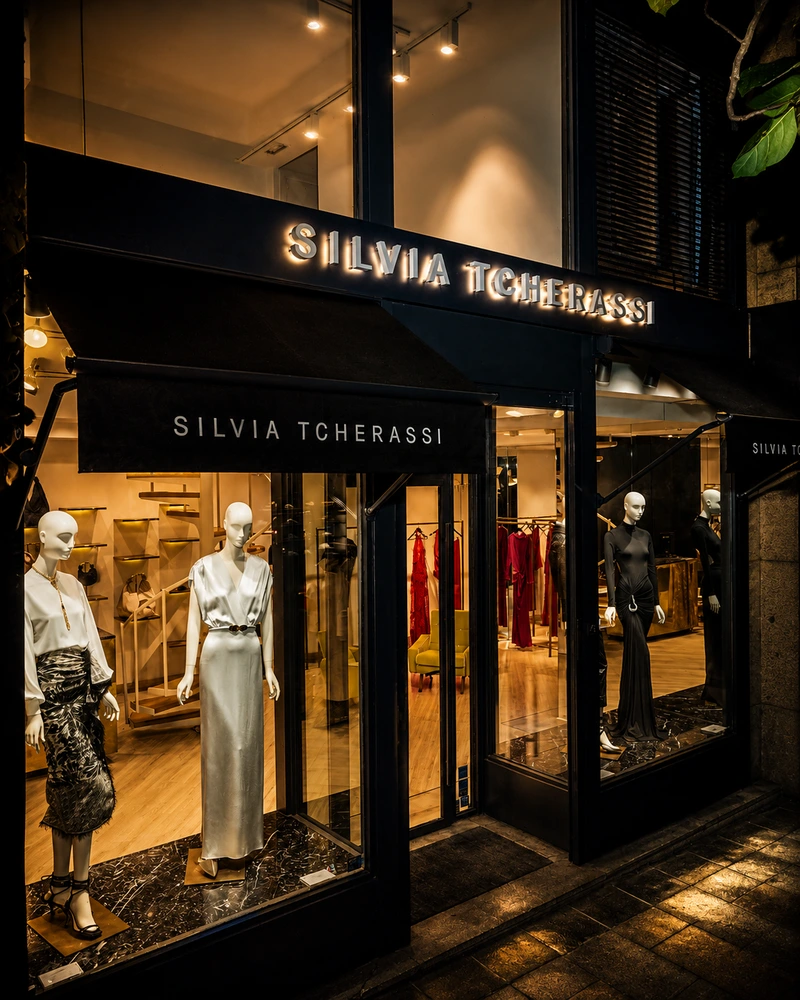
Madrid may speak the same language, but rent, Zara, and European shoppers all have their own accents. For Latin American fashion brands in Europe, a Spanish address sounds glamorous, until the Golden Mile starts charging like a gatekeeper.
June 11, 2026
Advertisement

Advertisement



To walk through the Salamanca district of Madrid is to observe a highly orchestrated theater of European retail power. Along the wide, sun-drenched pavements of Calle Serrano, the undisputed titans of luxury, Prada, Gucci, and Spain’s own crown jewel, Loewe, gaze across at the high-street fortresses of Inditex and Mango. This is not merely a shopping destination; it is an international runway of corporate strategy, a concentrated ecosystem where fashion trends are minted, scaled, and distributed across the globe.
For decades, this glittering landscape has exerted a magnetic pull on Latin American designers and retail executives. The rationale seems entirely intuitive on paper. Spain offers an enchanting trifecta: a shared language, deep-seated cultural affinities, and centuries of intertwined history. For an ambitious brand based in Bogotá, São Paulo, or Buenos Aires, Madrid feels less like an alien territory and more like a sophisticated home away from home. For Latin American fashion brands in Europe, it is viewed as the ultimate psychological and logistical springboard, a place where a brand can establish its European bona fides before conquering Paris, Milan, or London.
Yet, as a wave of Latin American labels has discovered over the last decade, cultural intimacy does not automatically translate into commercial immunity. The transatlantic bridge is easy to cross in spirit, but immensely treacherous to maintain in practice. While a select few high-end designers have turned Madrid into a lucrative European outpost, many of the region’s largest and most successful mass-market empires have found the local competition fierce, the operational costs staggering, and the retail realities fundamentally distinct from those of their domestic markets.


The central question facing the industry today is both simple and profoundly complex: Can Latin American fashion brands in Europe truly crack the European market, or is the continent's fashion establishment structurally designed to resist them?
"The romanticism of an overseas expansion frequently blinds brands to the cold reality of real estate mathematics. A shared tongue cannot pay for a prime lease on Calle Serrano."
The initial foray into Europe for many South American brands is often driven by a sense of historical inevitability. There is a beautifully seductive narrative that because consumers in Madrid and Buenos Aires watch the same films, read the same literature, and share a linguistic lineage, they must also desire the same wardrobe. But this assumption conflates cultural appreciation with consumer behavior.

Consider the steep financial barrier to entry. According to real estate intelligence from Cushman & Wakefield, prime retail space on Madrid’s Calle Serrano commands roughly €3,300 per square meter annually. While this is modest compared to the astronomical €20,000 per square meter required on London’s New Bond Street, it represents a dizzying leap from the premium real estate benchmarks of Latin America. In Mexico City’s exclusive Avenida Presidente Masaryk, prime space hovers around €900 per square meter; in Buenos Aires’ historic Calle Florida, it drops to a fraction of that, around €200 to €250.


When a Latin American brand moves to Europe, it is not merely expanding its footprint; it is fundamentally altering its capital-expenditure profile. The cash reserves required to secure, build out, and staff a single flagship store in Salamanca could easily fund three or four stores in a domestic capital.

Michel Cohen, the chief executive of Uruguay’s Grupo Lolita, a retail powerhouse founded in Punta del Este in 1960, articulates this reality with refreshing candor. Reflecting on a shelved expansion into Spain, he notes that while initial market tests can perform beautifully, sustaining that momentum requires a structural foundation that many brands simply haven't built. The group chose to step back and double down on its highly profitable Latin American footprint across Paraguay, Ecuador, and Panama. It raises an essential critical point: Is it a sign of weakness to retreat from Europe, or is it a sign of supreme strategic maturity to recognize where your capital yields the highest return?
To enter the Spanish clothing market with a mid-market or mass-retail proposition is to march directly into the backyard of the most sophisticated supply chain engine ever created. Inditex (the parent company of Zara, Massimo Dutti, and Bershka), Mango, and Tendam do not just dominate Spanish retail; they dictate its rhythm.
The efficiency of these domestic giants creates an unforgiving environment for any incoming competitor. Their economies of scale mean they can produce high-quality garments, distribute them to stores within days, and price them at levels that are almost impossible for independent international brands to match.
Latin American mass-market brands are typically built on different operational models. At home, they are often vertically integrated champions protected by local import tariffs and supported by a highly loyal domestic consumer base. But when dropped onto the European high street, they are suddenly stripped of these structural advantages. This is where Latin American fashion brands in Europe face their most punishing test: competing against local systems built for speed, scale, and near-instant consumer response.

The experience of Colombia’s Studio F serves as a cautionary tale. A magnificent brand with over 400 stores across eight countries, Studio F is an absolute titan in Latin America. Yet, its highly publicized push into Madrid in 2023, which included a beautiful flagship on the bustling Calle de Goya, was dismantled within two years. The brand shuttered its retail operations in the city, learning the hard way that competing head-to-head on price, speed, and distribution with Europe’s homegrown fast-fashion empires is a monumental challenge.
However, true corporate intelligence lies in adaptation. Rather than abandoning the European dream entirely, Studio F’s parent company, STF Group, went on the offensive by recruiting Eduardo Martín Cardona as corporate vice president. Cardona is an alumnus of the Inditex machine, having previously served as Zara's director for Spain. This appointment signals a fascinating shift in mindset: if you want to beat the European giants, you must first master their internal playbook.
If a Latin American brand must adopt the exact operational mechanics, speed, and aesthetics of a European fast-fashion giant to survive in Europe, does it risk losing the unique cultural identity that made it special in the first place?
Beyond the financial and competitive headwinds lies a more subtle, psychological barrier that catches many equatorial fashion brands entirely off guard: the visceral reality of the European meteorological calendar.
For brands born in countries near the equator, such as Colombia or Venezuela, fashion is structurally non-seasonal. There is no concept of designing a heavy, sub-zero winter coat or navigating the distinct transition from a crisp autumn palette to a bright spring line. Instead, collections are organized around drops, resort wear, or subtle shifts in fabric weight.


When these brands open doors in Madrid or Barcelona, they are suddenly forced to design for a four-season climate. The design duo Ludwing Serrano and Mayra Gómez, founders of the Colombian contemporary label Sixxta, experienced this firsthand when they established their European base and flagship boutique in Barcelona.
Serrano notes that European consumers carry deep, subconscious associations with color and season. A beautifully tailored coat executed in a characteristically vibrant, warm South American colorway is frequently rejected by local shoppers who instantly categorize those specific hues as "purely summer." The brand is forced to learn a completely new aesthetic vocabulary, balancing its intrinsic cultural DNA with the rigid stylistic expectations of the European consumer calendar.

A similar challenge was echoed by Juliana Leyva, the co-founder of the premium Colombian label Padova. Having successfully established a boutique in Madrid’s luxury enclave after building a strong foundation in Cali and Bogotá, she identifies seasonality as the single most complex puzzle to solve.
To survive in Europe, an equatorial brand must essentially run two parallel design houses: one that caters to the permanent summer of its domestic market, and another that can engineered heavy knits, wool outerwear, and moody autumnal tones for the European climate. The operational friction this creates within design teams and manufacturing facilities is immense.
If full-scale ready-to-wear retail expansion is fraught with peril, how are some Latin American brands managing to build highly profitable, sustainable footprints in Europe? The answer lies in a strategy of disciplined specialization, using a highly specific product niche as a commercial Trojan horse.
Market analysis suggests that Latin American fashion brands in Europe achieve the highest traction when they operate within categories where their home countries possess undeniable global authority, manufacturing dominance, or raw material superiority.


Colombia, for example, is globally recognized as an elite hub for the design and production of swimwear, lingerie, and technical shapewear, driven by major regional trade platforms like Colombiamoda. Instead of trying to sell a full lifestyle collection to a cynical European consumer, labels like Touché and Leonisa have focused quietly on wholesale distribution and strategic retail partnerships. Leonisa’s long-standing global shapewear alliance with Victoria’s Secret demonstrates how backend manufacturing prowess can be leveraged into frontend global retail reach without the financial exposure of opening high-street storefronts.
Similarly, the Medellín-based basics and intimate brand Punto Blanco (part of the powerful Grupo Crystal) has executed a masterclass in risk-mitigated European expansion. Recognizing that competing with Zara on dresses is a losing proposition, the brand has focused almost exclusively on its core expertise: underwear, socks, and premium loungewear basics.
By shrinking its retail footprint, focusing on lower-seasonality products, and choosing locations in outlet centers or outside prime high-street zones, Punto Blanco has successfully established a network of 17 points of sale across Spain. It is a quiet, highly profitable strategy that prioritizes the balance sheet over raw prestige.
And, of course, the ultimate historical case study remains Brazil’s Havaianas. The flip-flop giant did not achieve global ubiquity by trying to build a fashion empire; it took a single, utilitarian rubber sandal, infused it with the joyful, sun-drenched mythology of Brazilian beach culture, and standardized it. By avoiding the extreme sizing complexities, high fabric inventories, and seasonal volatility of ready-to-wear fashion, Havaianas built a transatlantic juggernaut that operates on peerless margins.
"True brand power is not defined by the size of your storefront on Calle Serrano, but by the indispensability of your product in the consumer's daily life."
For many Latin American founders, the ultimate marker of global success is a standalone boutique with their name illuminated above the door. It is an understandable emotional aspiration. However, the realities of the post-pandemic European retail market have forced a radical, ego-free reassessment of this model.
The multi-national backpack and luggage brand Totto, born in Colombia, entered the Spanish market in 2009 with massive retail ambitions. By 2017, the company had successfully opened eight corporate brick-and-mortar storefronts alongside premium shop-in-shops inside Spain's legendary department store giant, El Corte Inglés.
However, the toxic combination of soaring high-street rents, rigid European labor laws, and the extreme seasonality of back-to-school shopping windows squeezed the retail stores' profitability. When the pandemic hit, the structural fragility of the brick-and-mortar model became untenable.
The brand did something remarkably brave: it shuttered its entire corporate retail network and pivoted exclusively to an aggressive wholesale and B2B distribution model. Today, Spain is actually one of Totto’s largest and healthiest international markets, but its products are sold through agile partnerships with Springfield, Decathlon, and major European supermarket infrastructure like Carrefour and Alcampo. The brand realized that its core competency was product design and manufacturing, not European real estate management.

This wholesale-first approach is increasingly being adopted as the preferred playbook for the new generation of Latin American talent. Brazilian designer Patricia Bonaldi has meticulously built her brand PatBO’s international presence by utilizing Miami and New York as commercial testing grounds, before dipping her toes into the European market through highly curated pop-ups with ultra-luxury retailers like Harrods in London.
By letting established European department stores absorb the real estate risk, inventory management, and foot-traffic generation, these contemporary labels can test local consumer appetite without jeopardizing their corporate balance sheets.
While Latin American fashion brands in Europe have historically relied purely on creative ingenuity and raw capital to force their way into Europe, a profound geopolitical shift is poised to rewrite the structural economics of transatlantic trade.
The provisional activation of the long-awaited European Union–Mercosur free-trade agreement marks a historic turning point for regional commerce. Under this sweeping pact, the EU will progressively eliminate import duties on 92 percent of goods originating from Mercosur’s foundational members: Brazil, Argentina, Paraguay, and Uruguay.
Historically, European apparel and textile tariffs have sat at an uninviting average of 5 percent, but they can spike to a punitive 12 percent on finished garments and an eye-watering 17 percent on specific footwear categories. For a South American footwear brand or leather goods label, this tariff wall instantly eroded their price competitiveness against domestic European or Asian suppliers.

The European Commission has confirmed that all textile, apparel, and clothing products will undergo a systematic tariff elimination over an eight-year liberalization period, with equal annual reductions commencing from day one. For organizations like Abicalçados, the Brazilian footwear trade association led by executive president Haroldo Ferreira, this policy shift represents an unprecedented opportunity to boost the sector’s global competitiveness.
Beyond the immediate mathematical advantage of tariff elimination, the agreement introduces critical structural efficiencies:
When you couple this historic Mercosur development with the newly signed EU-Mexico trade agreement and existing bilateral pacts with Andean nations like Colombia, Peru, and Chile, the legal architecture connecting Latin American design to European consumers has never been more robust. The economic friction of the Atlantic Ocean is systematically being dismantled by policy.
As the global fashion landscape recalibrates, the romantic notion of "conquering Europe" through sheer force of will or ostentatious flagship stores is dying out. It is being replaced by a highly sophisticated, pragmatic paradigm of international expansion.


The brands that are successfully cementing their presence in the European consciousness are those that understand that retail is not a game of vanity, but a game of disciplined positioning. Silvia Tcherassi’s masterful execution, using an emblematic flagship on Madrid's Calle Serrano as a precise brand-equity anchor, and then expanding methodically into high-net-worth resort destinations like Capri, demonstrates that luxury can travel beautifully if it targets the global nomad rather than the average high-street shopper.
Europe's doors are opening wider than ever before, facilitated by the historic trade agreements of 2026 and an evolving consumer base that is increasingly weary of Eurocentric design homogeneity. The European consumer is hungry for the narrative richness, sustainable sourcing practices, and vibrant design energy that defines contemporary Latin American fashion.


But long-term survival in this cutthroat arena will require Latin American founders to check their egos at the border. It demands a rigorous commitment to operational discipline, an unyielding mastery of seasonal logistics, and the strategic humility to recognize that sometimes, a corner inside a department store or a highly optimized wholesale network is infinitely more powerful than a lonely, expensive sign on the high street. Latin American fashion brands in Europe can absolutely crack the continent, but they will do so through tactical intelligence, not historical sentimentality.
Advertisement