MENU
Close





Inside Maison Messika, diamonds slide through gold cages, curve around the body and enter the wardrobe with the restless energy of fashion instead of the ceremonial distance of a museum object.
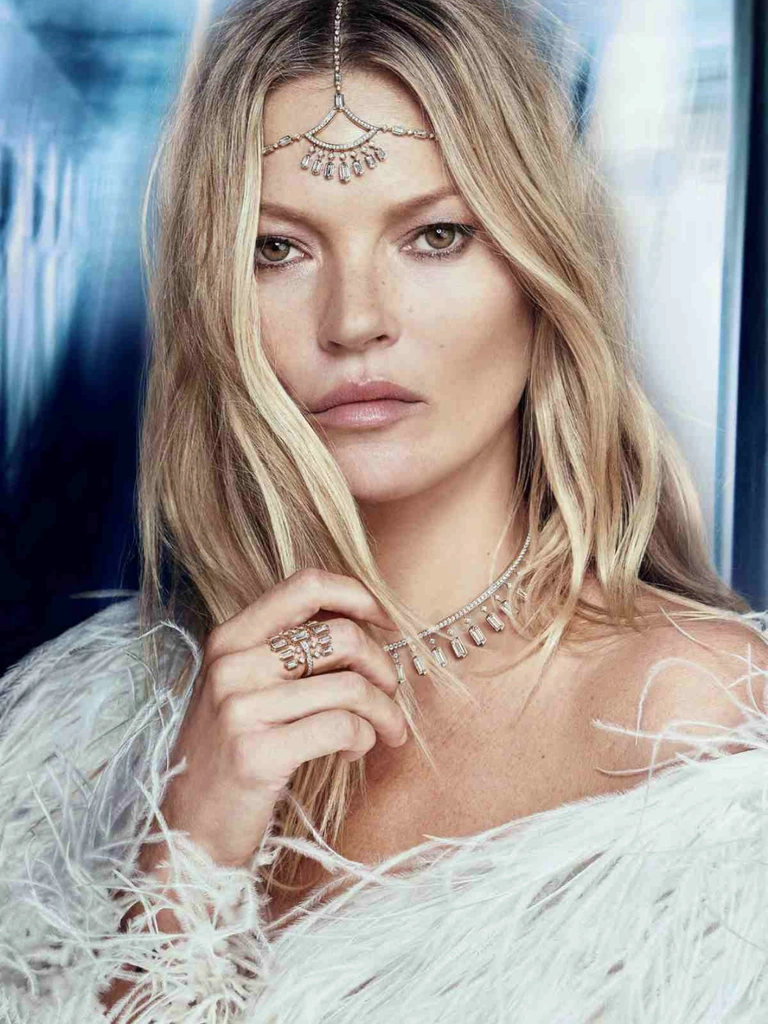


When Valérie Messika founded Maison Messika in Paris in 2005, she entered the jewellery industry with an unusual degree of access. Her father, André Messika, had built an international career in the diamond trade, and she had grown up examining rough stones, polished gems and the minute differences that determine their character and commercial value. The diamond arrived in her life as a material before it became a romantic symbol.
Such proximity could easily have produced another conventional house devoted to exceptional stones, discreet settings and established codes of social prestige. Valérie chose a more contemporary problem. Diamonds possessed extraordinary physical brilliance, yet the jewellery surrounding them often belonged to a formal culture increasingly detached from daily clothing. Necklaces waited for evening gowns, solitaire rings carried predictable meanings, and significant pieces spent much of their existence inside safes.
Messika wanted the diamond to participate in modern life. Her early designs pared back the metal, reduced visual weight and introduced flexibility, asymmetry and movement. The ambition was frequently described as making diamonds more democratic, though the term requires caution. Messika did not make diamonds financially accessible to everyone. It made their styling less ceremonial. A diamond bracelet could enter the same visual world as a leather jacket, white shirt, knitted dress or pair of jeans.
The shift sounds simple because fashion has since absorbed it. In 2005, treating fine jewellery as an everyday styling instrument challenged the older division between precious objects and ordinary wardrobes. Valérie Messika understood that modern luxury clients wanted value and informality at the same time. They still desired diamonds, though they wanted to wear them without appearing trapped inside inherited ideas of femininity. She founded the house at the age of 29 and remains its artistic director.
The decisive breakthrough arrived in 2007 with Move, two years after the creation of the house. Its central structure appears almost elementary: a rounded rectangular or oval gold cage contains diamonds able to slide along an internal channel.
Valérie Messika traced the concept to childhood memories of watching her father roll loose diamonds between his fingers. Move preserves that tactile fascination inside a finished jewel. The gold frame protects the stones while leaving enough freedom for them to travel, flash and make faint contact with one another as the body shifts.
In the classic version, three moving diamonds represent love across the past, present and future. The symbolism gave the collection an emotional foundation, while its visual clarity allowed the design to survive beyond romantic gifting. From a distance, the Move motif resembles a graphic link, a narrow window or a piece of industrial hardware refined in gold. Up close, the diamonds transform that architecture into a small performance.
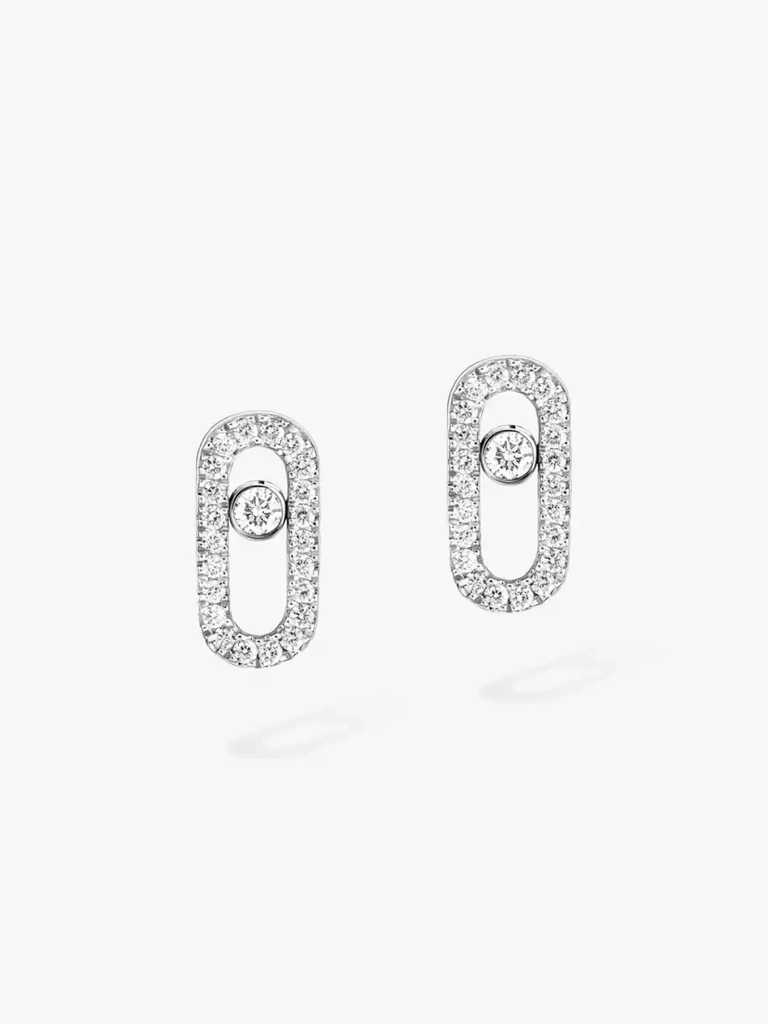
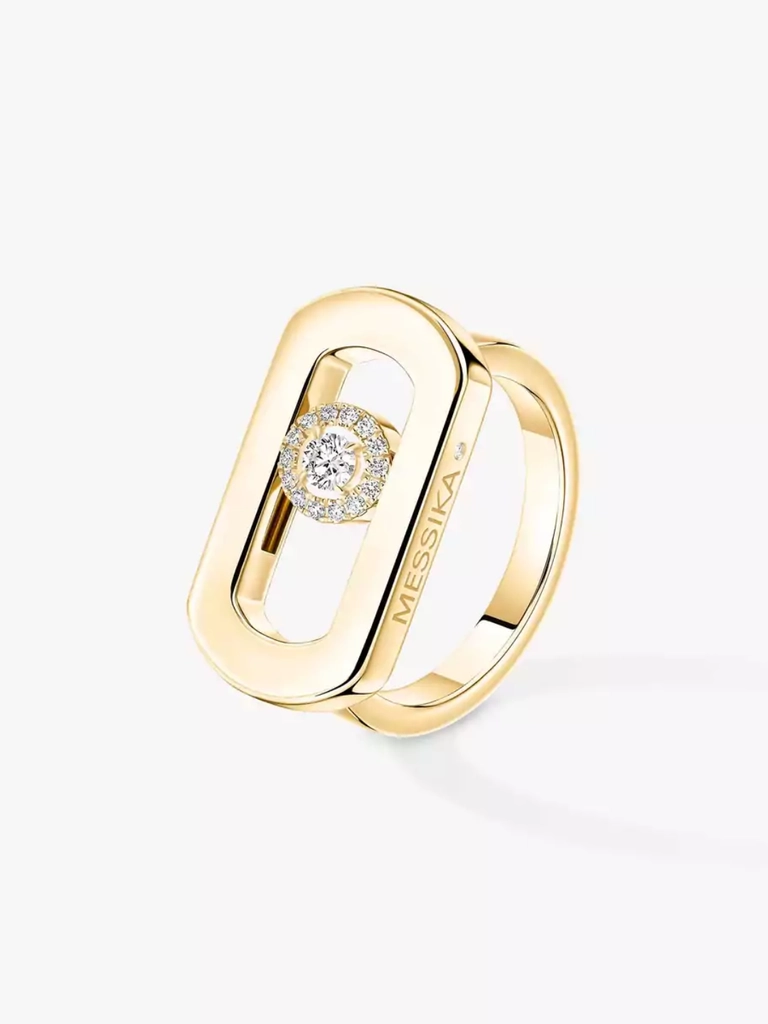
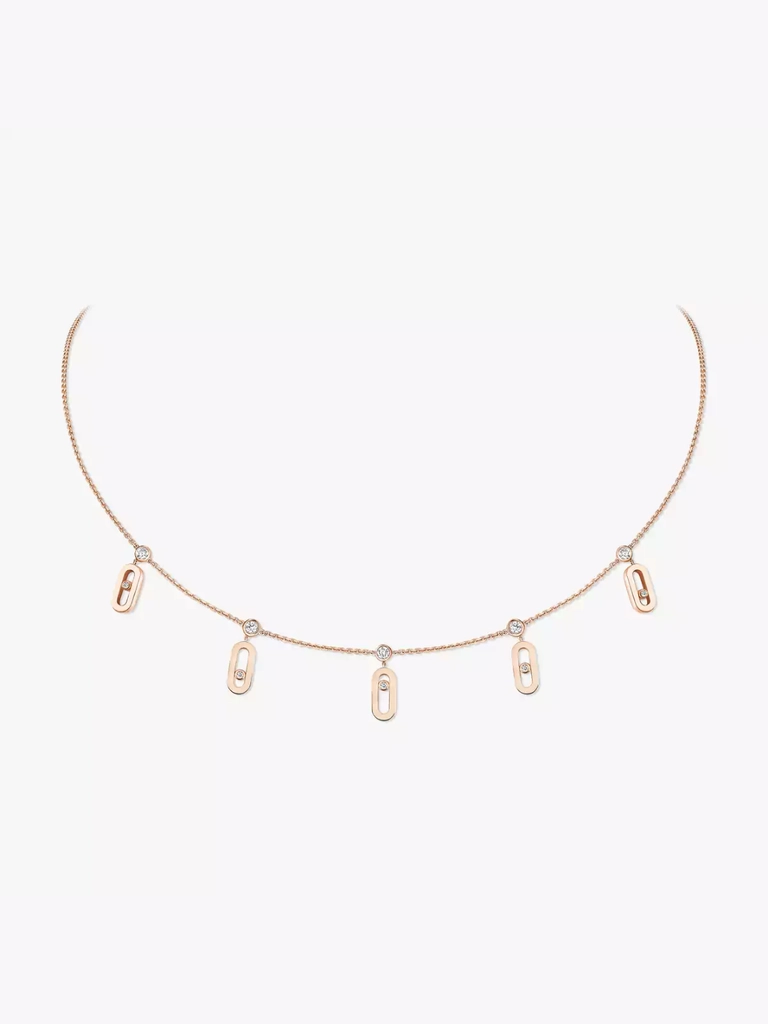
The collection became the house’s most recognisable code because it could be expanded without losing its identity. Move Uno reduced the concept to one mobile diamond for delicate bracelets, rings and pendants. Move Noa wrapped the motif around a polished gold bangle, while So Move enlarged the cage into substantial links capable of supporting high-jewellery necklaces and cuffs.
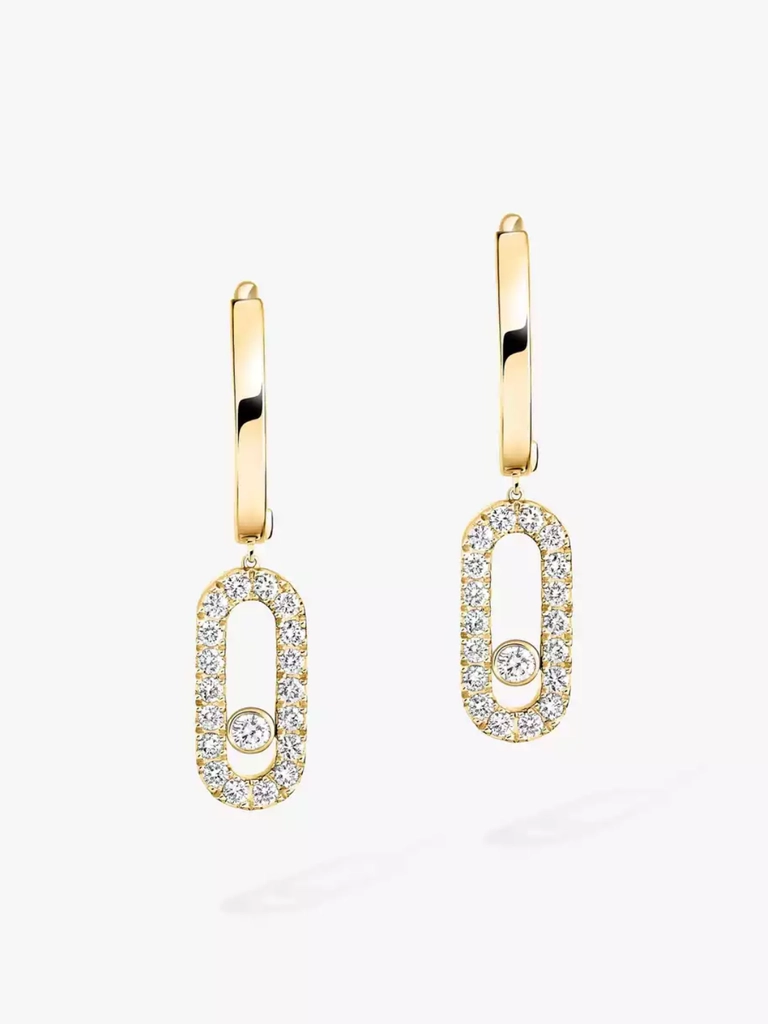
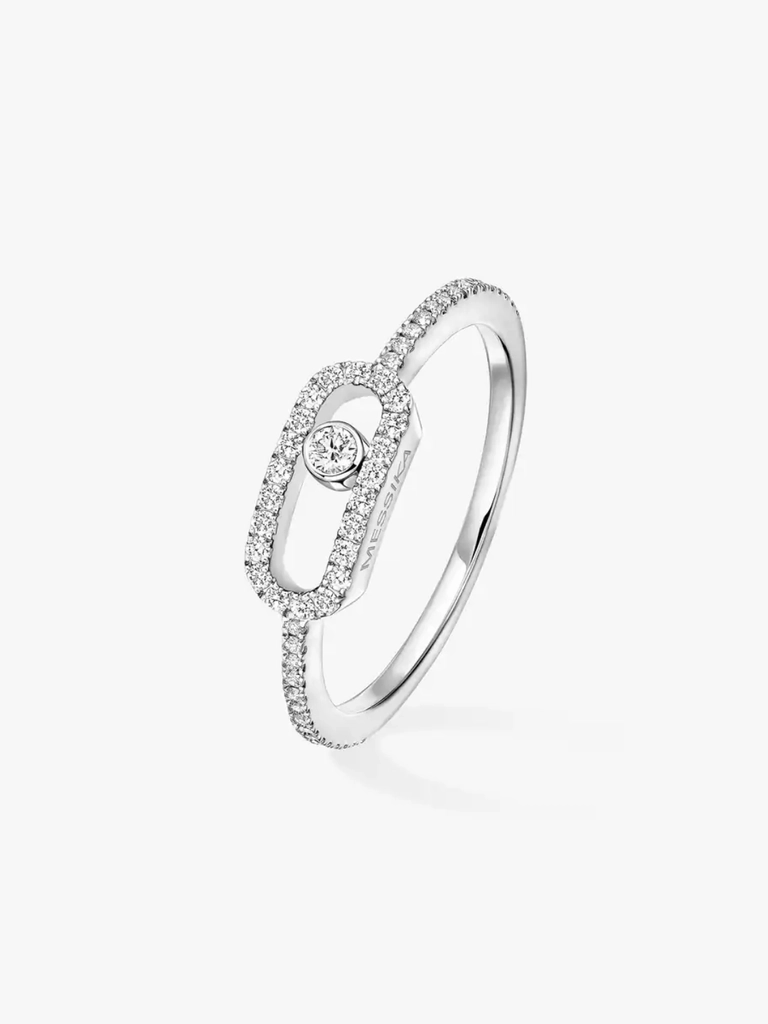
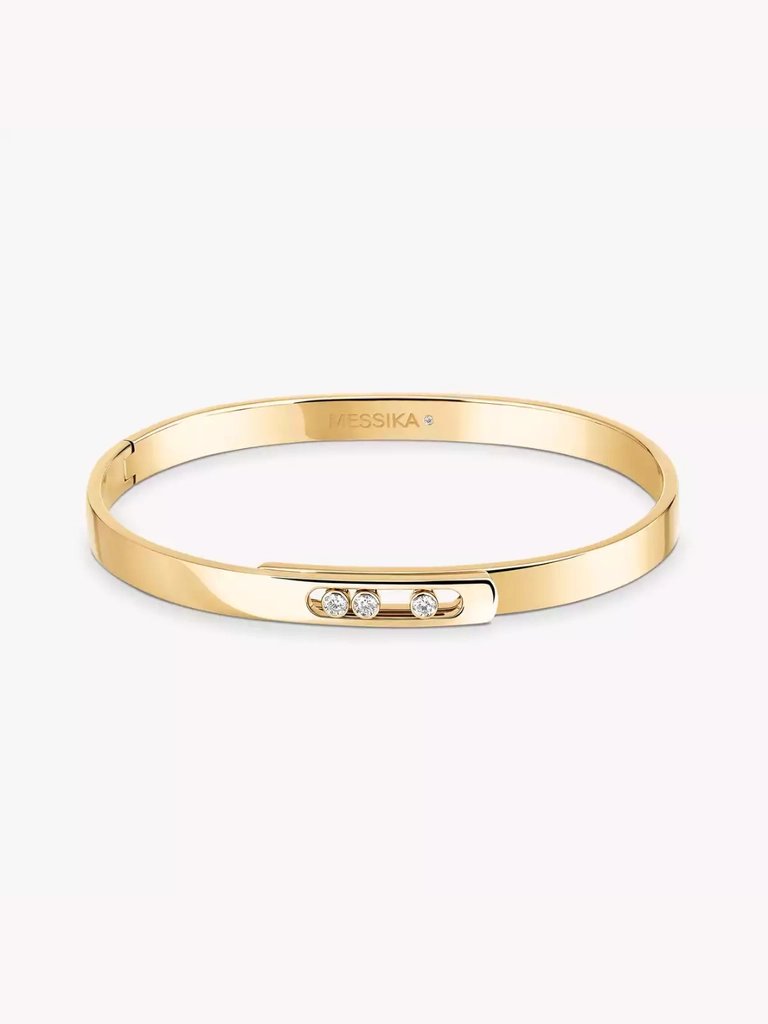
This scalability represents one of Messika’s strongest business decisions. The same idea can appear on a relatively restrained chain bracelet, a men’s titanium pendant or a necklace carrying dozens of carats. Price, scale and audience change, while the movement remains legible. Move performs the work of a logo without becoming a printed emblem.
Messika’s visual lightness depends on structural work. The clearest example is Skinny, developed in 2009. The collection uses an internal arrangement of minute gold springs that allows diamond-set bands to stretch, twist and return to their original shape. Necklaces and bracelets can follow the body closely without the rigid behaviour normally associated with pavé-set gold.
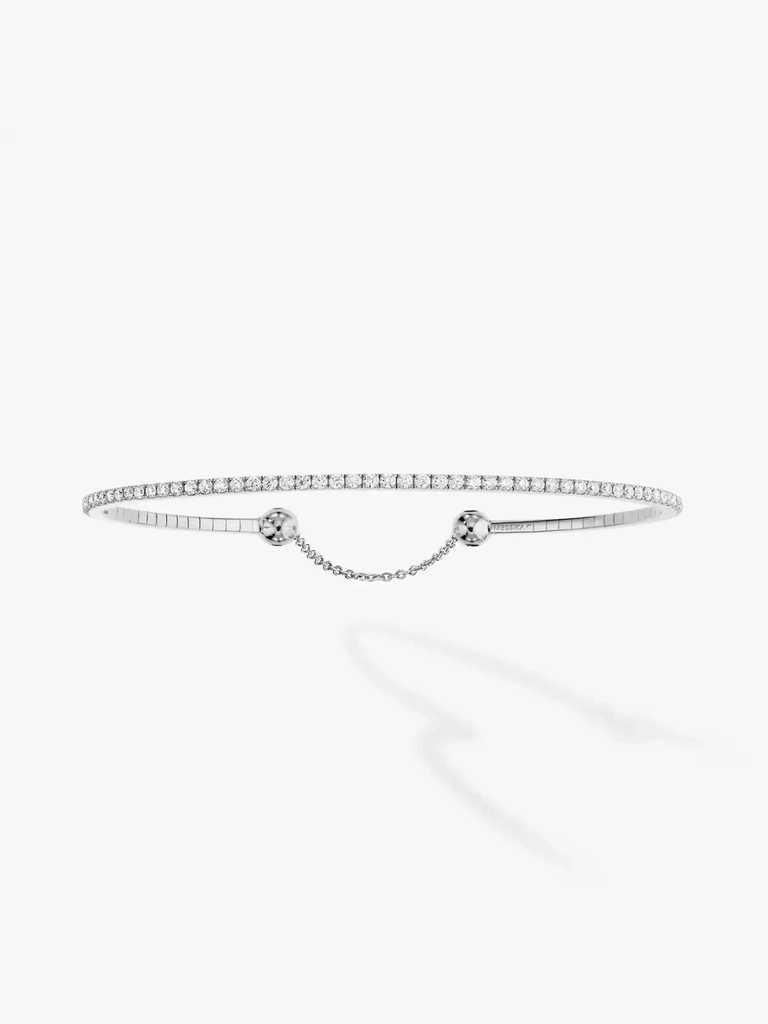
Traditional rivière jewellery arranges diamonds in continuous lines, often creating a beautiful but visibly formal object. Skinny preserves the line of diamonds while allowing the piece to flex like a narrow strip of fabric. Preciousness remains, yet stiffness disappears.
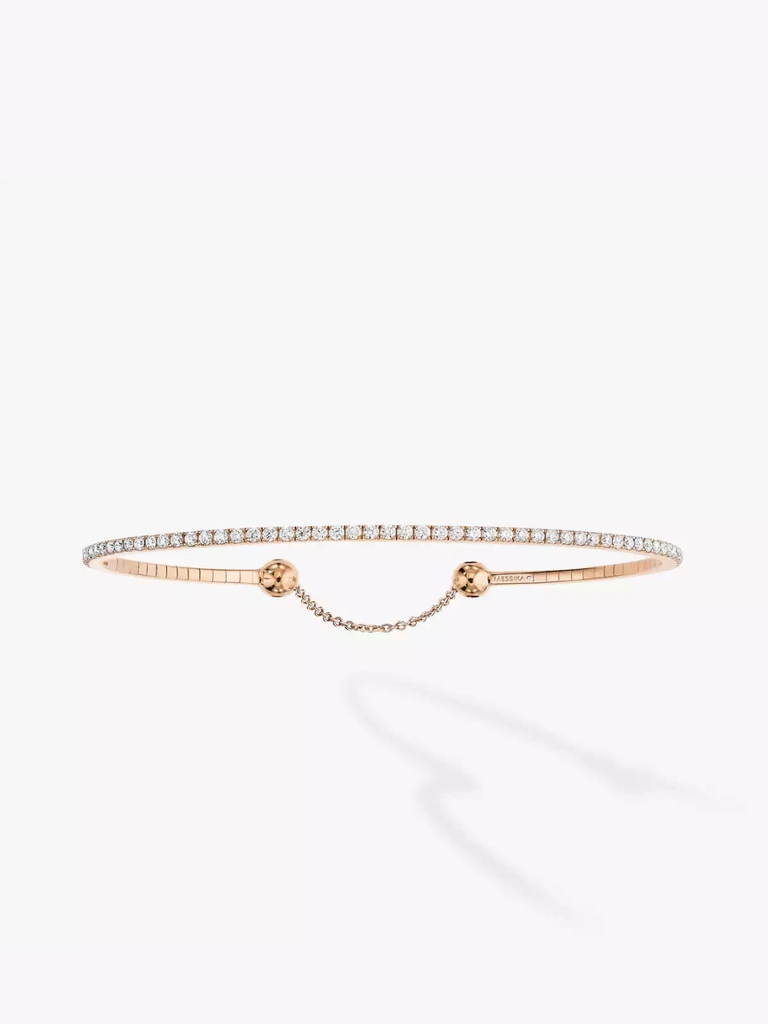
This technical development came after Move, correcting a chronology sometimes repeated in simplified accounts of the house. Move established the brand’s moving-diamond identity in 2007, while Skinny extended its interest in mobility through flexible gold engineering two years later.
Stone setting across the house follows the same pursuit of visual immediacy. Metal is reduced, concealed or incorporated into the drawing of the piece so that diamonds appear to sit directly against the skin. Such minimal settings require strict control. Every reduction in visible structure increases the importance of durability, balance and accurate stone placement.
The illusion of effortlessness is fundamental to Messika. The jewellery must appear spontaneous enough for a T-shirt while surviving the physical demands placed on an object intended for frequent wear. Movement, flexibility and lightness only become luxurious when they remain reliable.
The house opened its first flagship on Rue Saint-Honoré in 2013 and established a Paris high-jewellery workshop in 2015. These milestones gave Messika the physical and technical infrastructure expected from a serious jewellery maison, while its presentation strategy continued moving toward fashion.
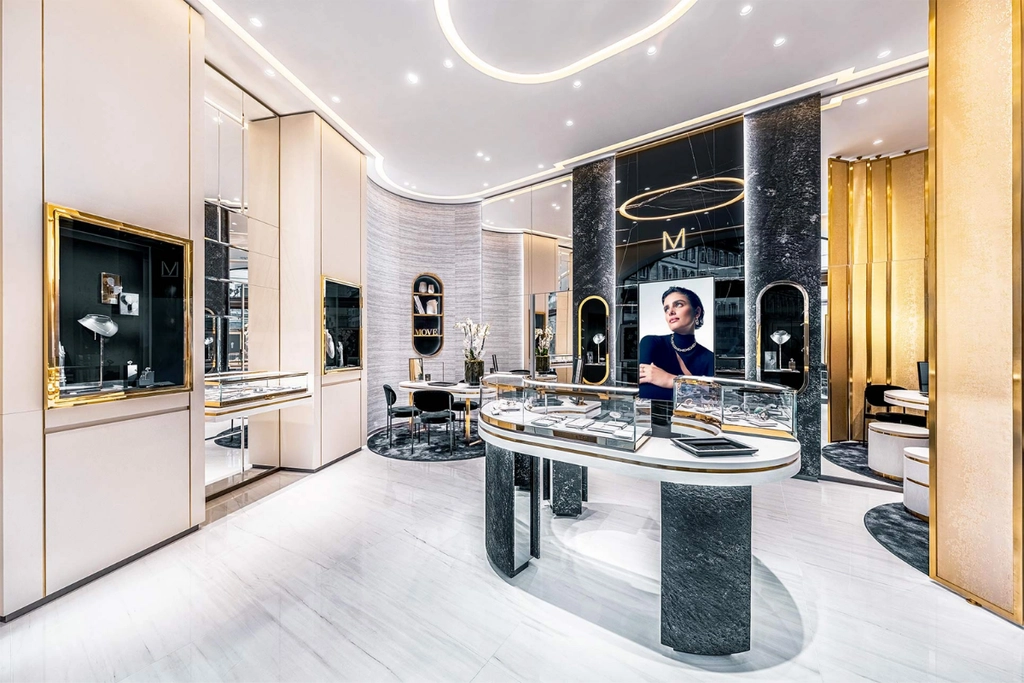
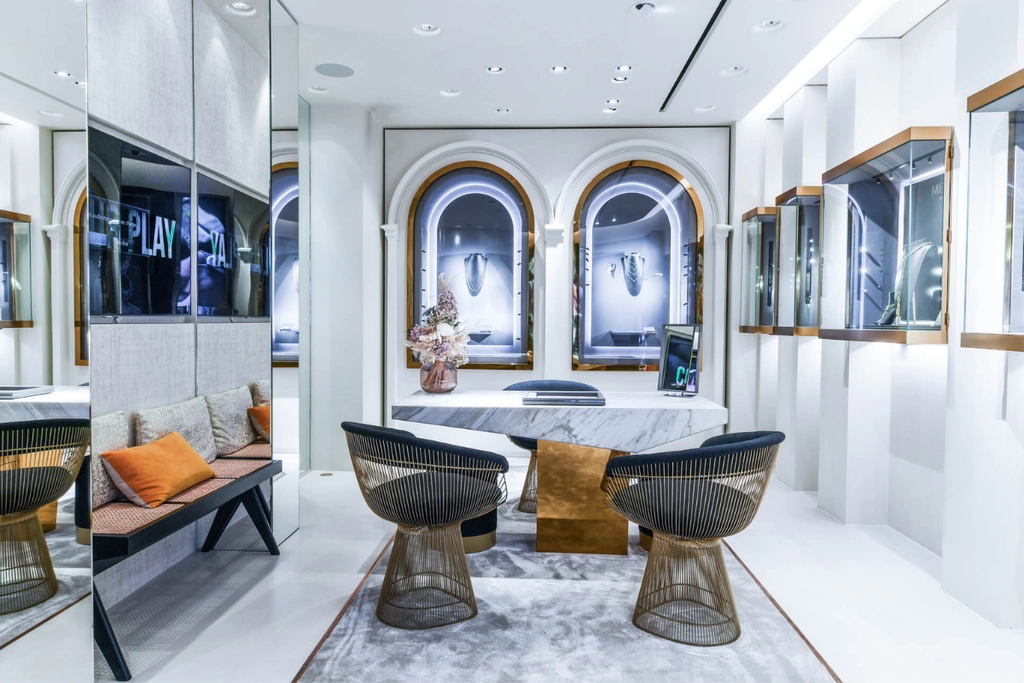
In 2021, Messika staged its first Paris Fashion Week runway show around a high-jewellery collection created with Kate Moss.
The collaboration had begun with a first collection in 2020 and developed into a second chapter containing 36 pieces. Moss entered the project as a design collaborator whose personal jewellery, bohemian references and instinct for casual glamour could extend the brand’s fashion credibility.
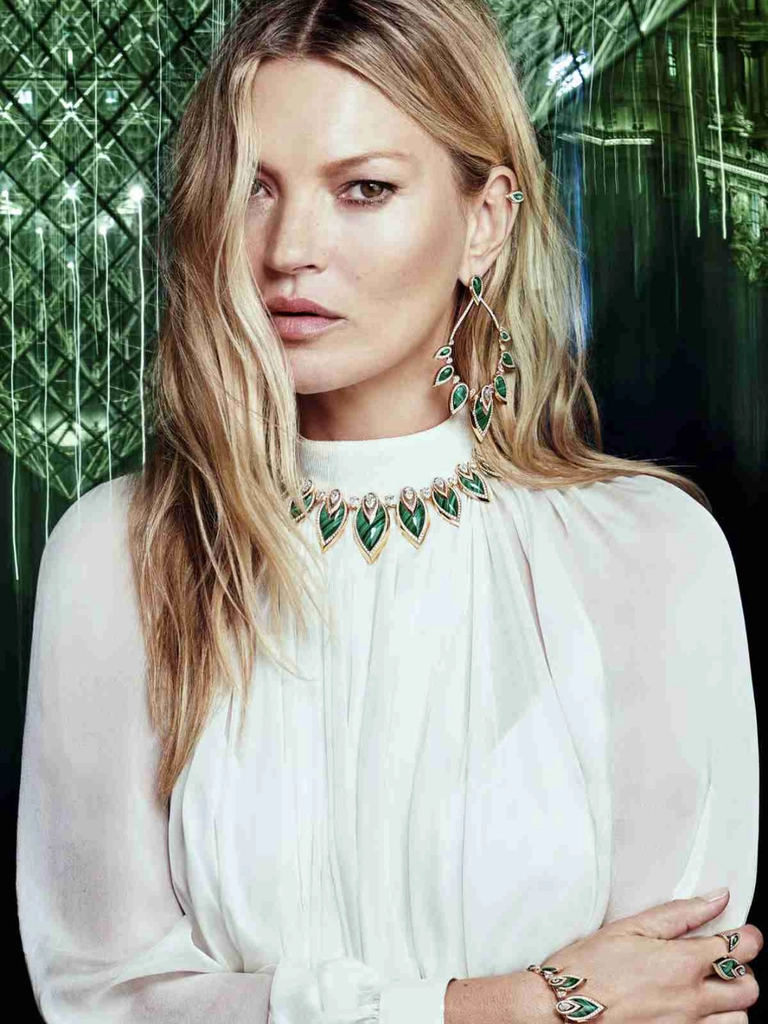
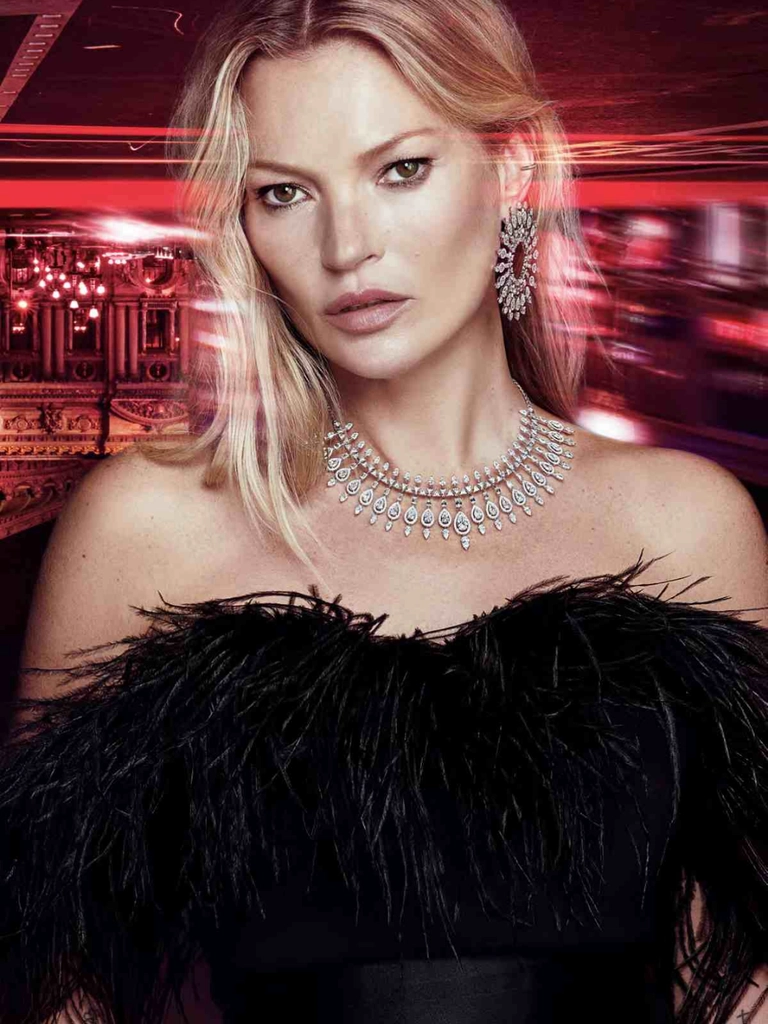
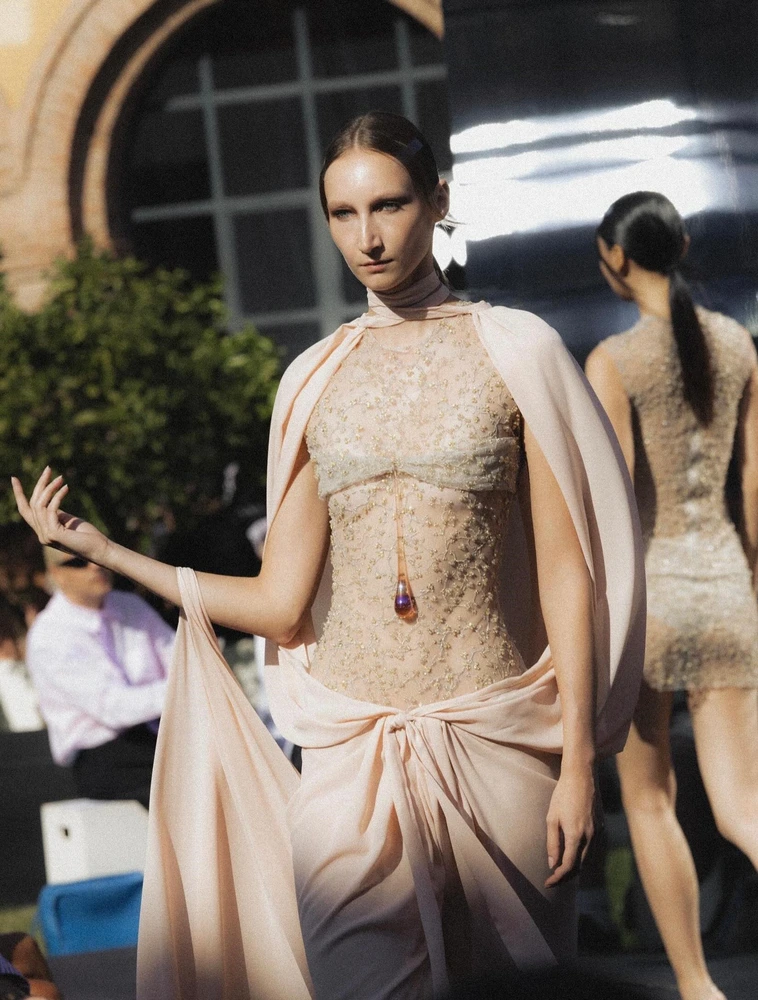
The runway format changed the conditions in which high jewellery was viewed. Traditional presentations often place jewels inside vitrines or private salons, where clients inspect craftsmanship at close range. Messika sent them down a catwalk on moving bodies, styled with clothes, sound, lighting and celebrity. The jewellery became part of a complete silhouette.
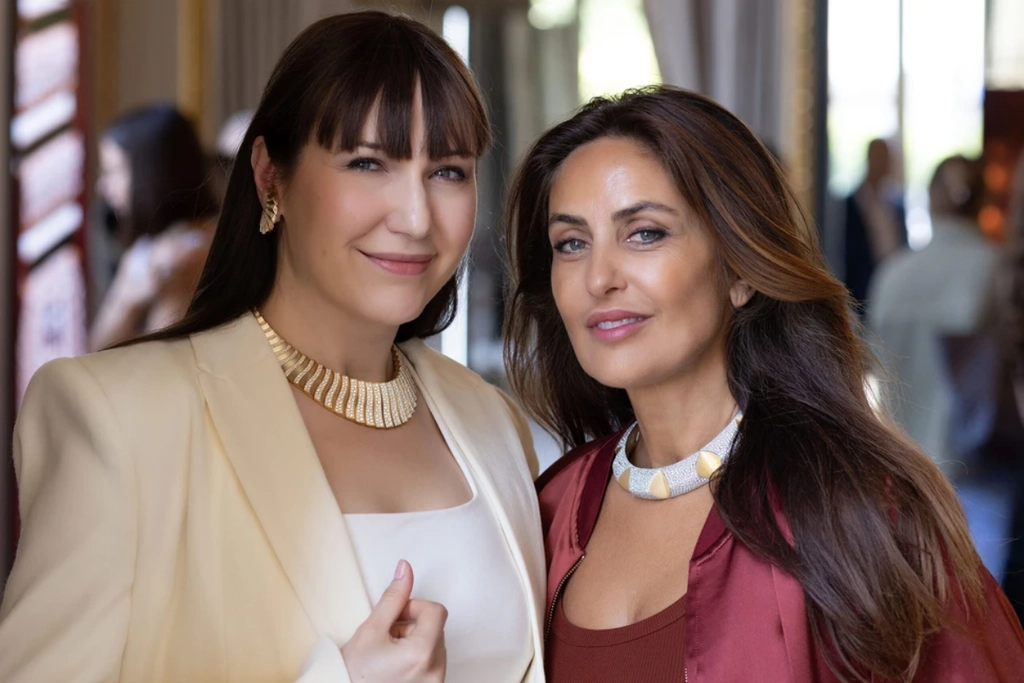
By 2024, the house was presenting lip jewels, nail charms, harnesses and headpieces alongside necklaces and bracelets. Its 2025 show celebrated Messika’s twentieth anniversary at the Musée des Arts Décoratifs during Paris Fashion Week, presenting the Terres d’Instinct high-jewellery collection across 23 sets.
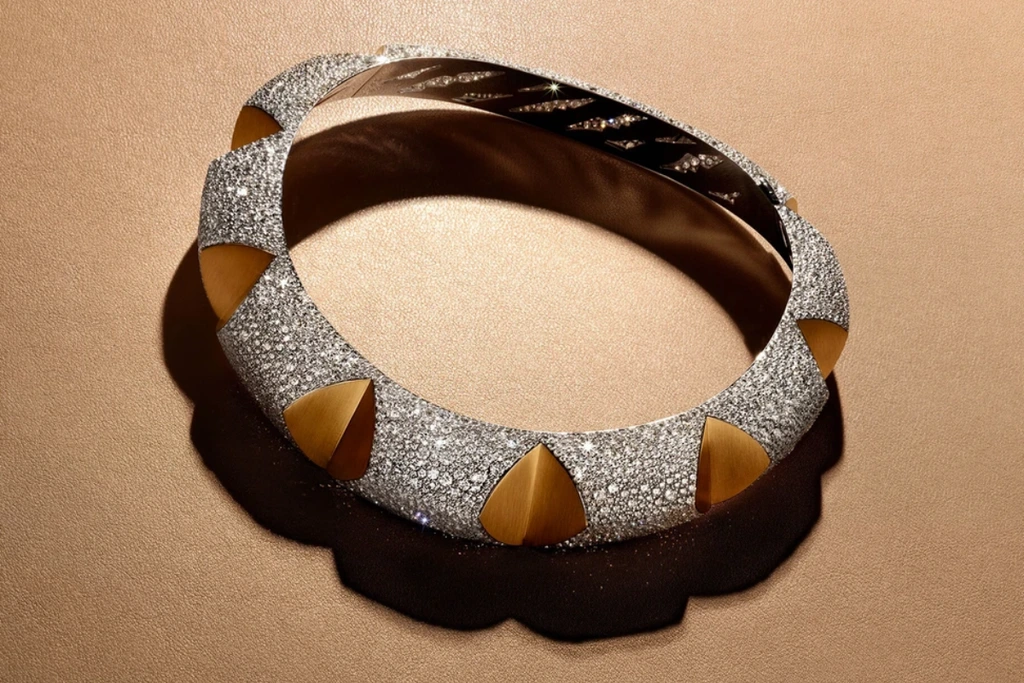
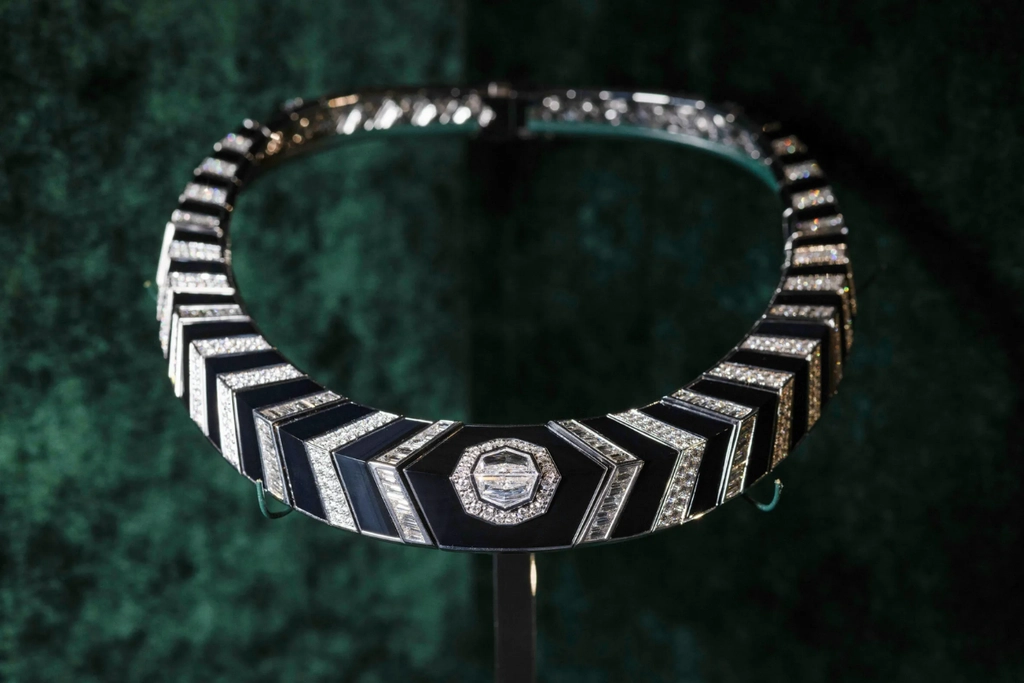
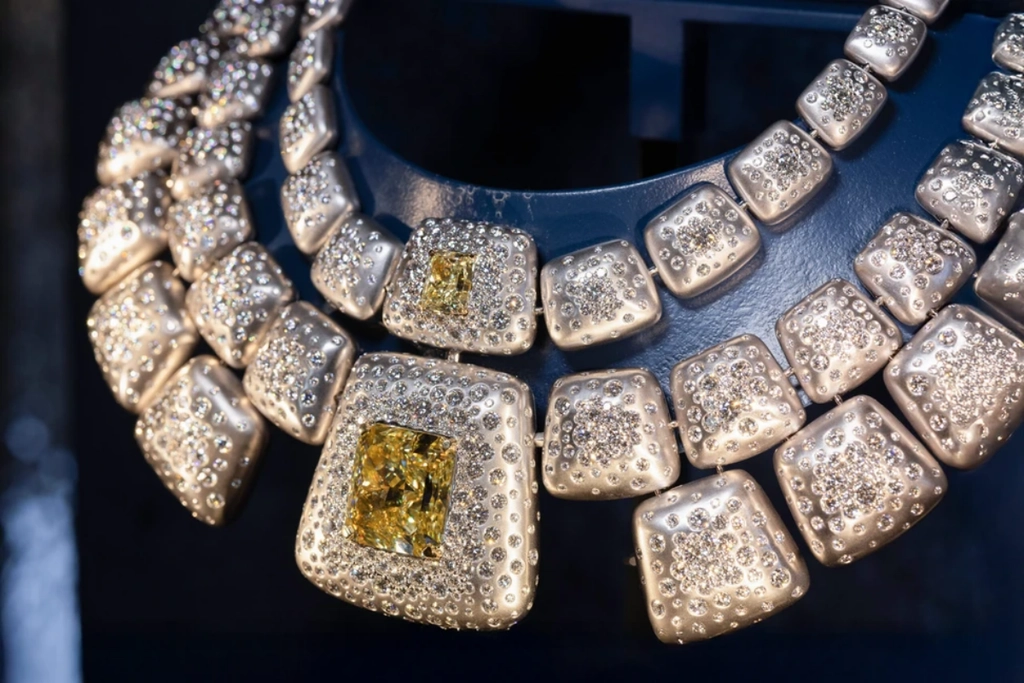
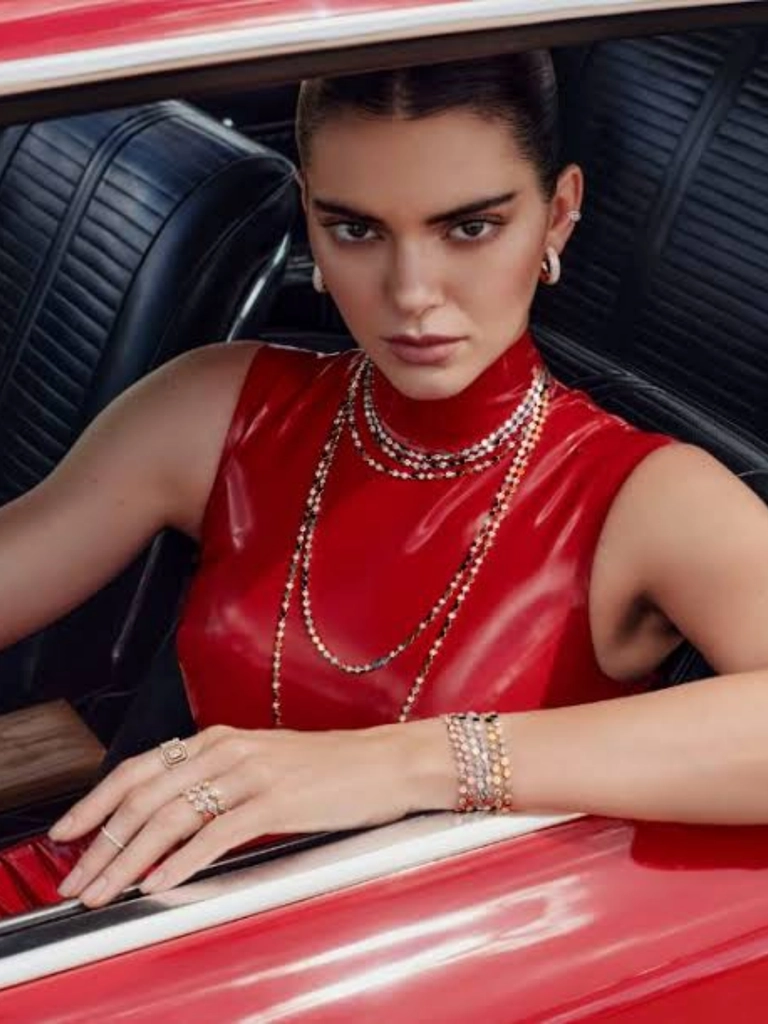
Celebrity placement has strengthened the same proposition. Messika jewellery appears on performers and models whose public images connect glamour with contemporary fashion, including Rihanna, Kendall Jenner, Gigi Hadid and Beyoncé.
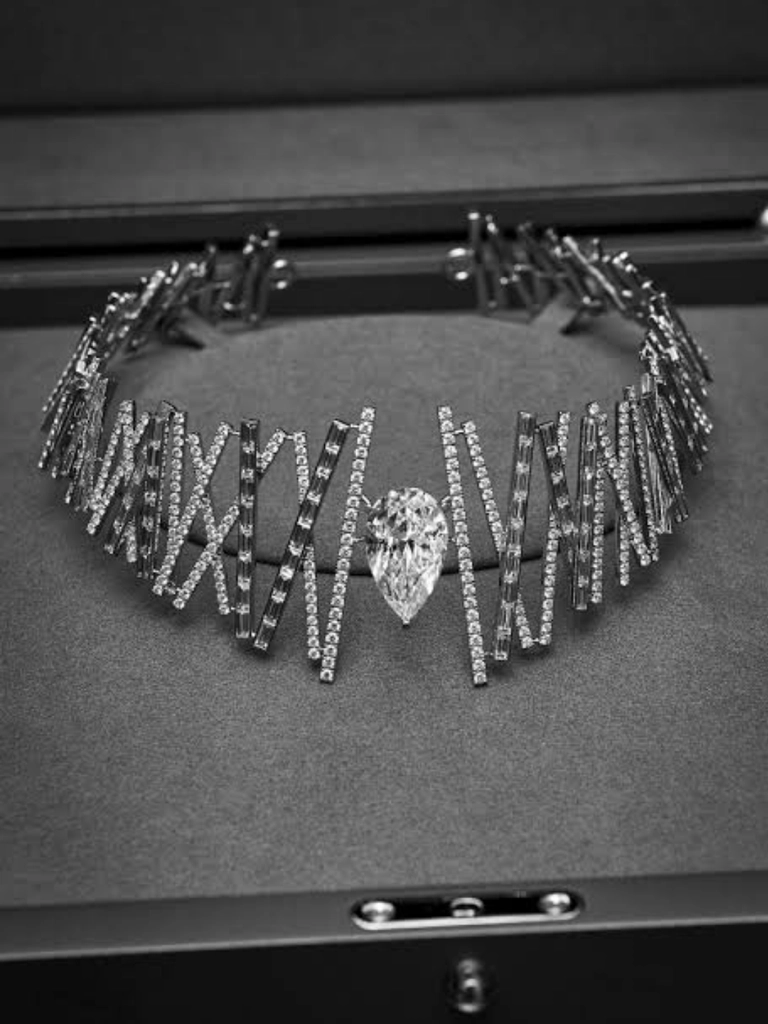
At Super Bowl LIV in Miami in 2020, Beyoncé wore a custom Diamond Equalizer high-jewellery necklace created by Valérie Messika. Its form referenced the moving bars of recording-studio equalisers, translating sound into a diamond structure. She attended the event rather than performing in its halftime show, a distinction often blurred in retellings of the appearance.
Alton Mason later appeared beside Kendall Jenner in the house’s 2023 campaign, extending Messika’s public image beyond jewellery designed exclusively around women. The decision aligned with a wider cultural change in which diamonds increasingly operate as gender-fluid markers of style.
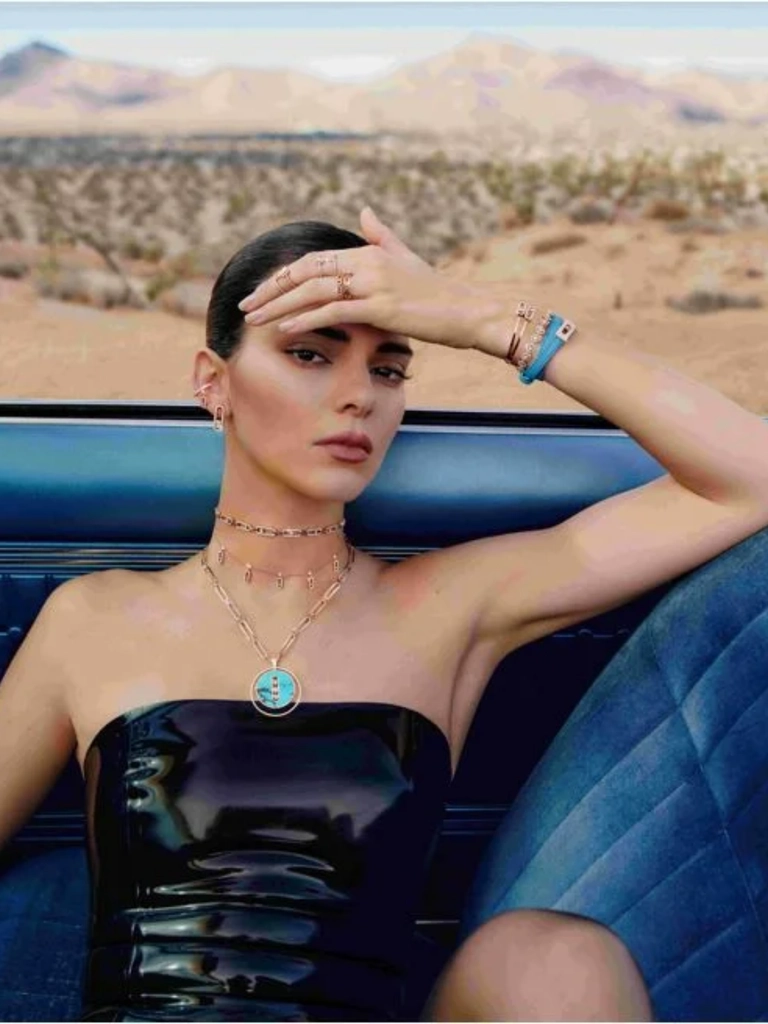
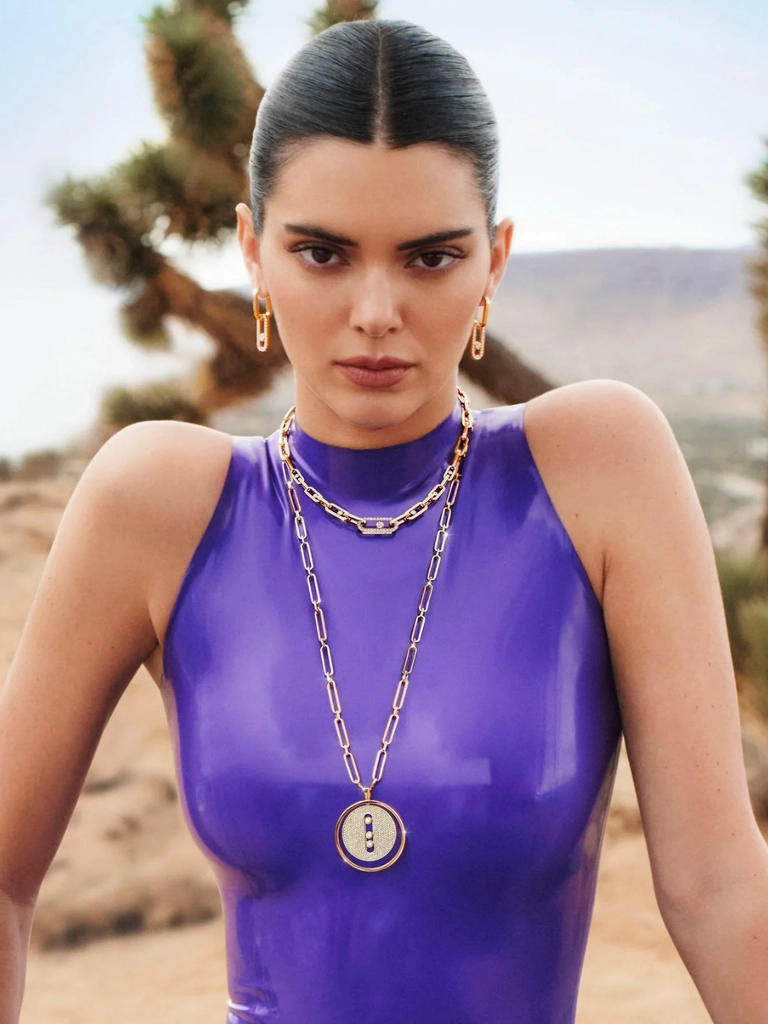
After two decades, Maison Messika has built its influence through a disciplined contradiction. It sells one of luxury’s oldest materials by refusing to make it look burdened by tradition. Diamonds remain rare, expensive and technically demanding, yet their presentation is fast, physical and deliberaty informal. They slide instead of sitting still, stretch instead of resisting and enter fashion before waiting for ceremony.
Messika did not remove the diamond from luxury. It removed the distance that once surrounded it. The stone still carries status, though now it moves with the wrist, follows the body and behaves as though the safe was never its natural home.