MENU
Close





COS AW26 pushed Karin Gustafsson’s minimalism into darker glamour, while a PETA runway protest pushed the collection into a literal New York Fashion Week mess.
COS AW26 pushed Karin Gustafsson’s minimalism into darker glamour, while a PETA runway protest pushed the collection into a literal New York Fashion Week mess.
September 22, 2026
Advertisement

Advertisement



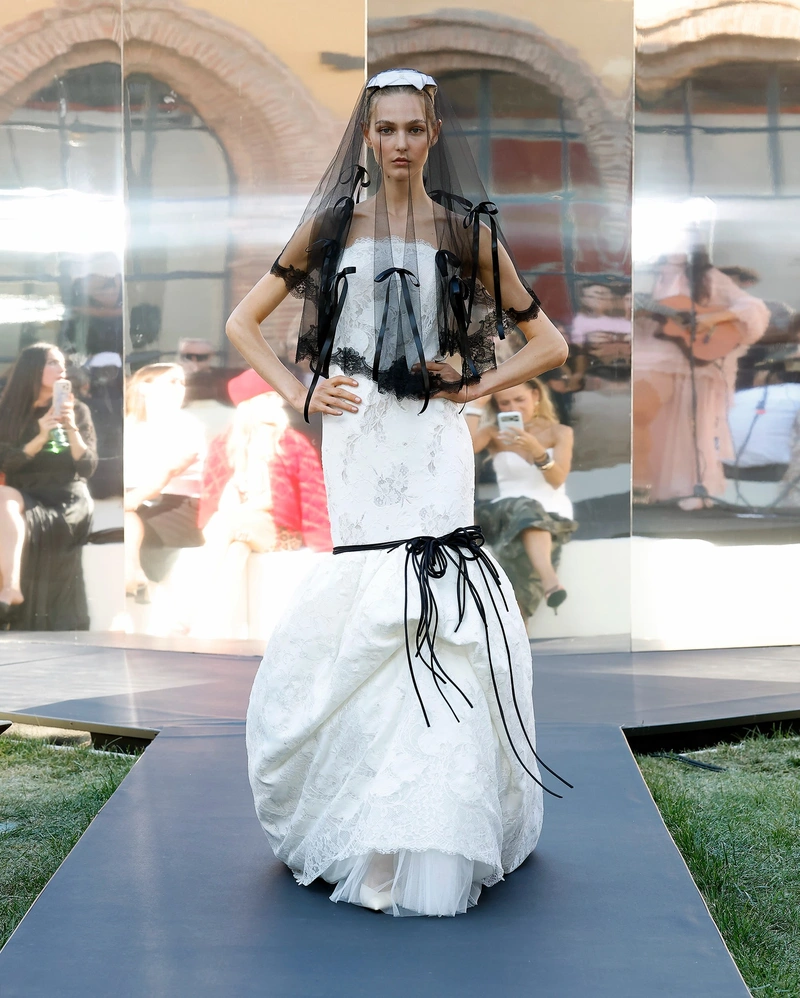
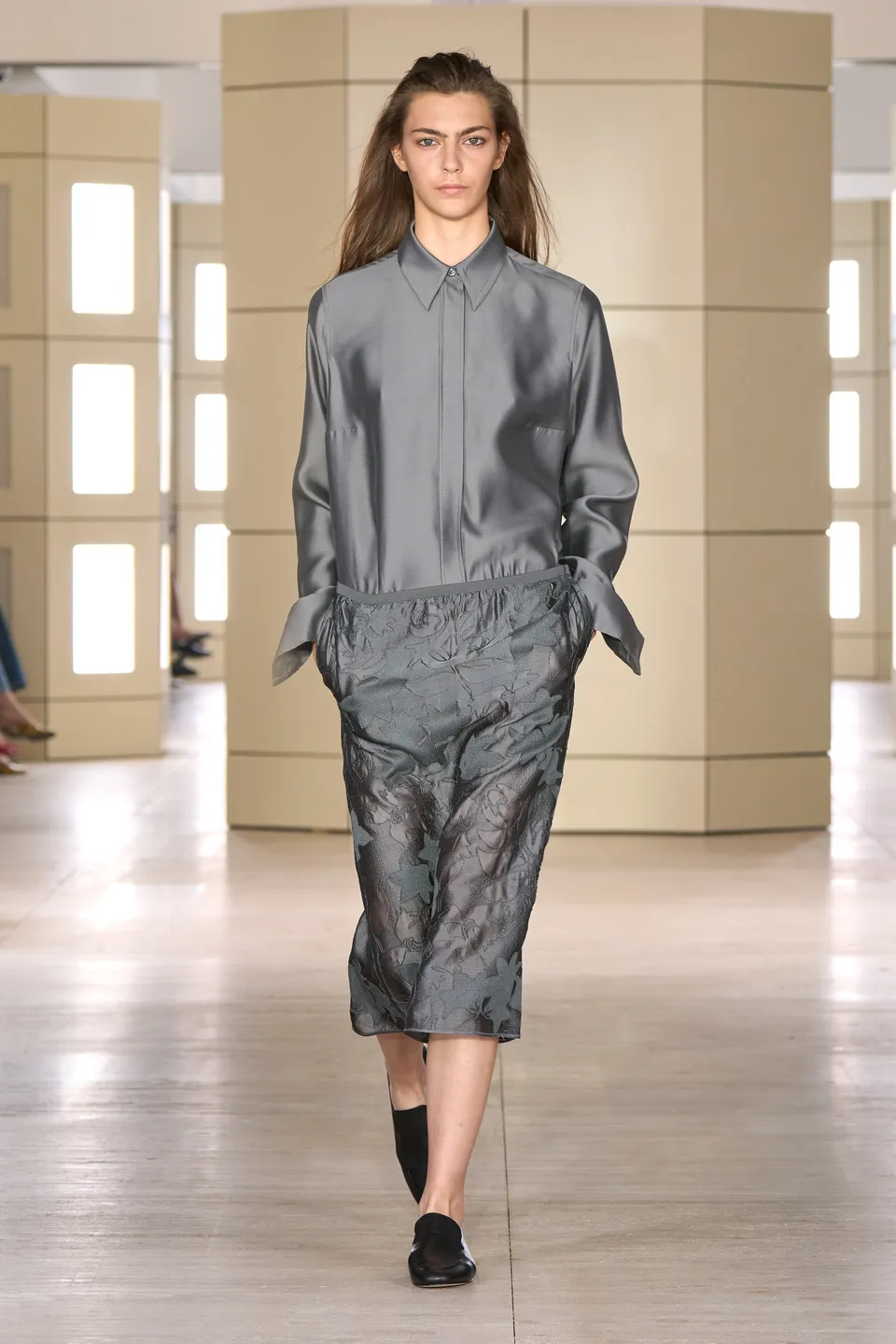
At the WSA Building in Lower Manhattan, COS AW26 unfolded against a setting that already spoke the collection’s language. Office towers surrounded the venue. Corporate Manhattan sat just outside the windows. Inside, Karin Gustafsson sent out 47 looks built around an encounter between business dress and after-hours glamour.
COS officially titled the collection Autumn/Winter 2026, despite presenting it during the Spring/Summer 2027 New York Fashion Week calendar.
The creative premise joined two ideas that appear culturally distant yet share a fascination with dress codes: corporate modernism and 1920s decadence.
The opening looks established the corporate side of the equation immediately.
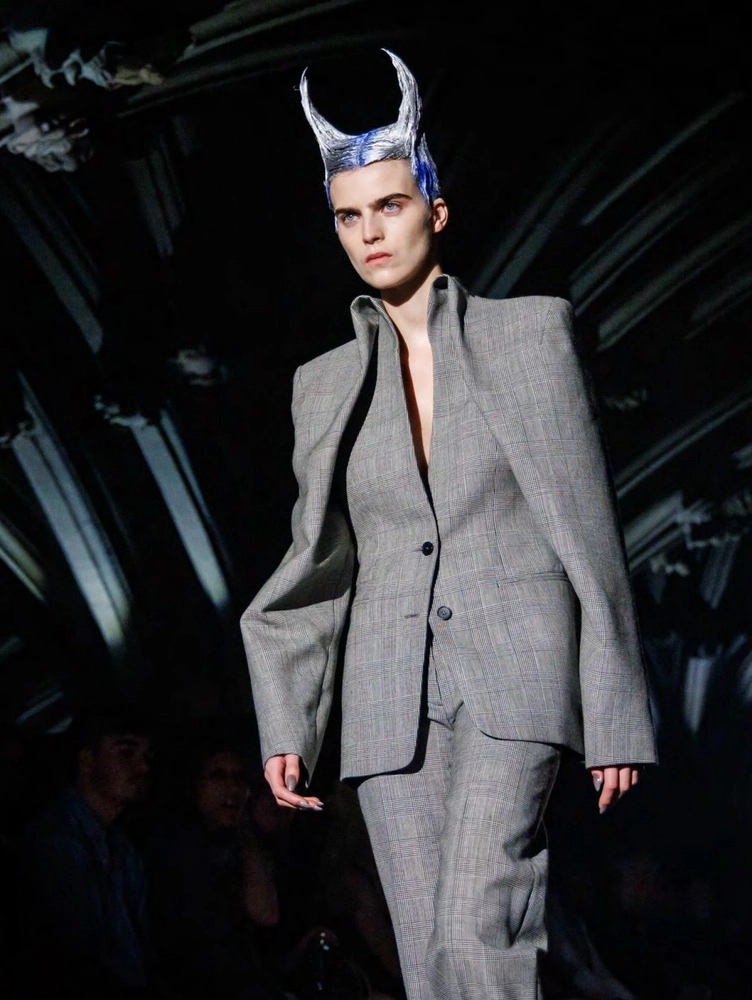
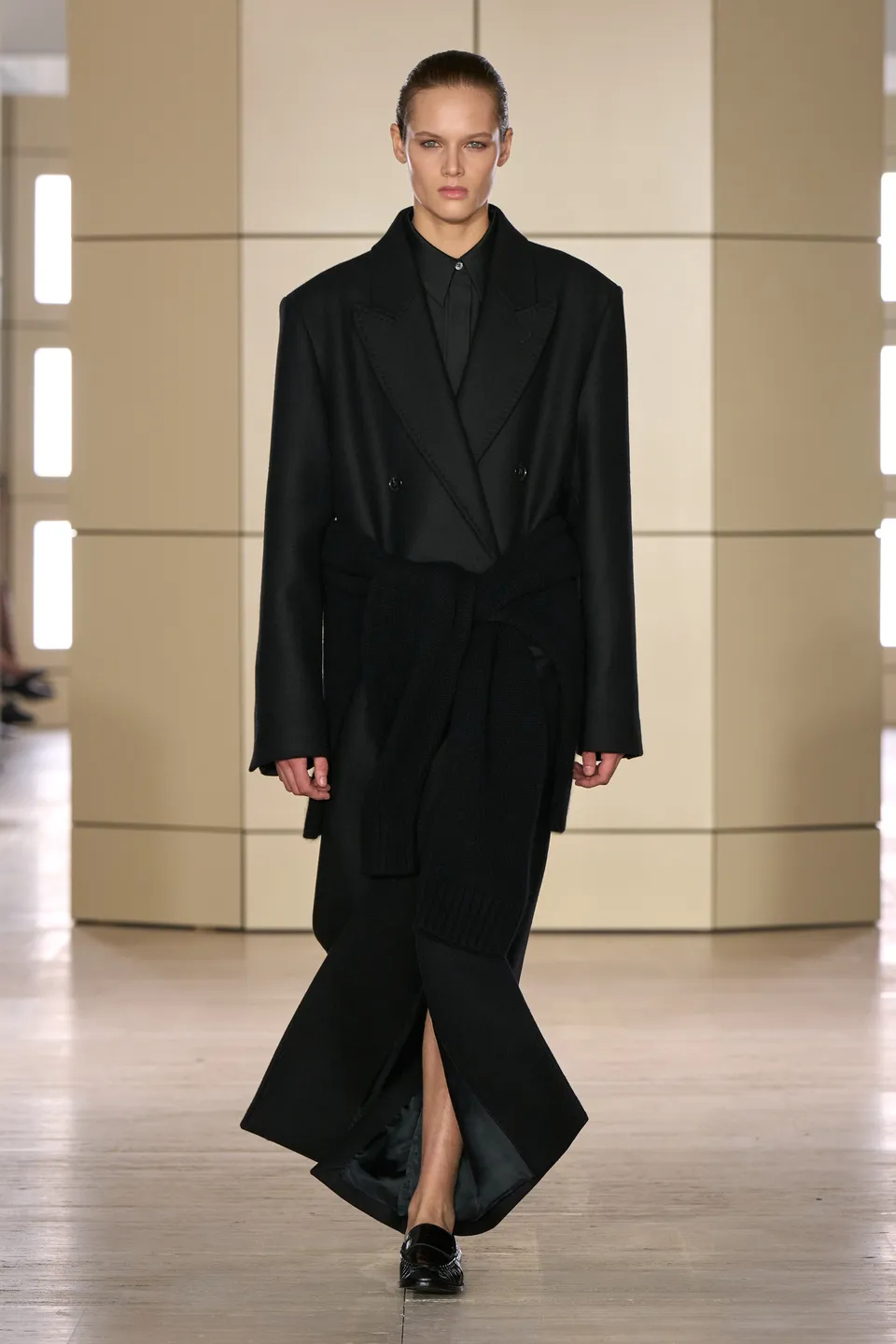
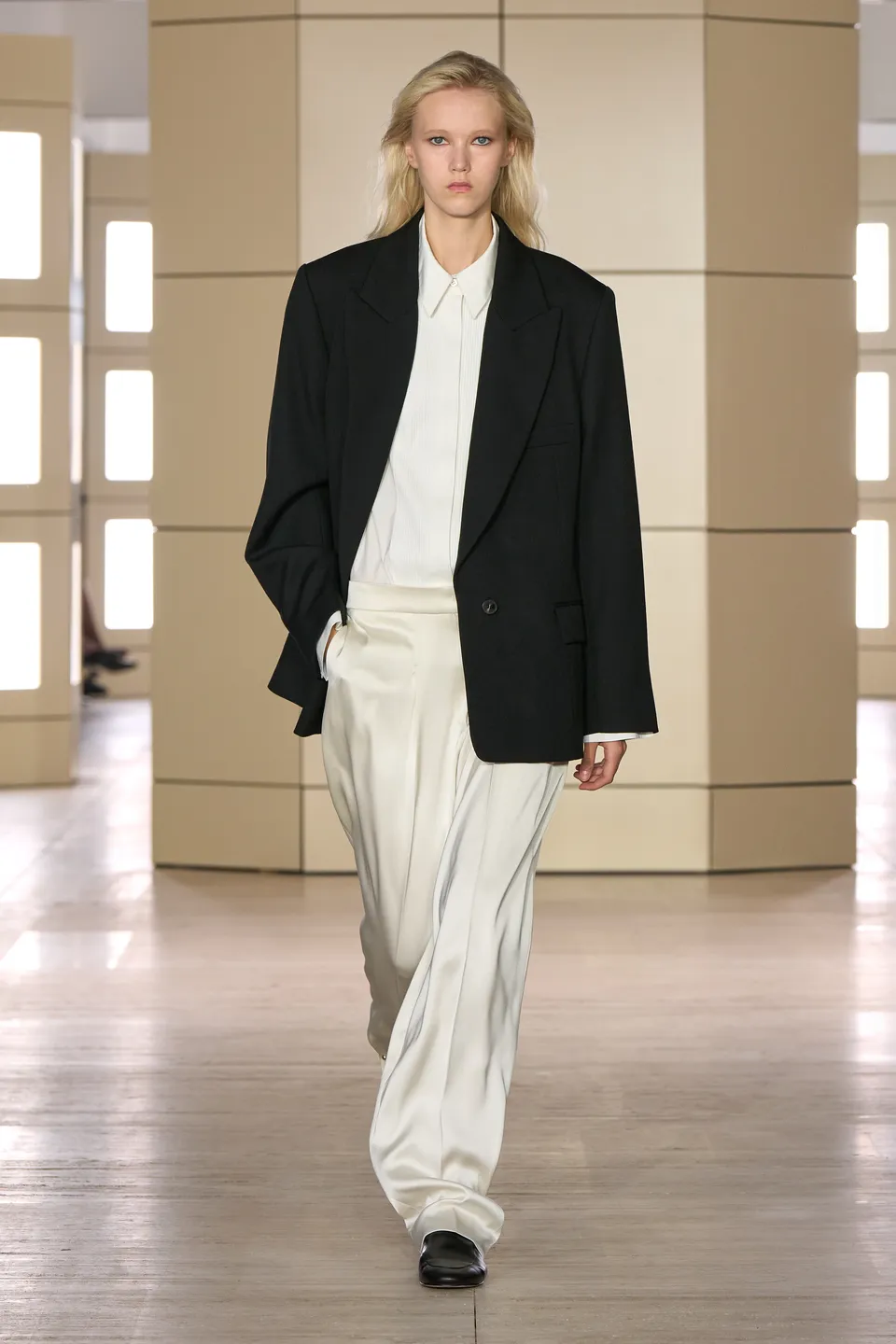
Long coats, sharply controlled tailoring, and restrained neutrals created a wardrobe dedicated to minimalism. Black, charcoal, navy, brown and pale neutrals gave the early sequence a measured authority. Masculine shirting and tuxedo references strengthened that mood.
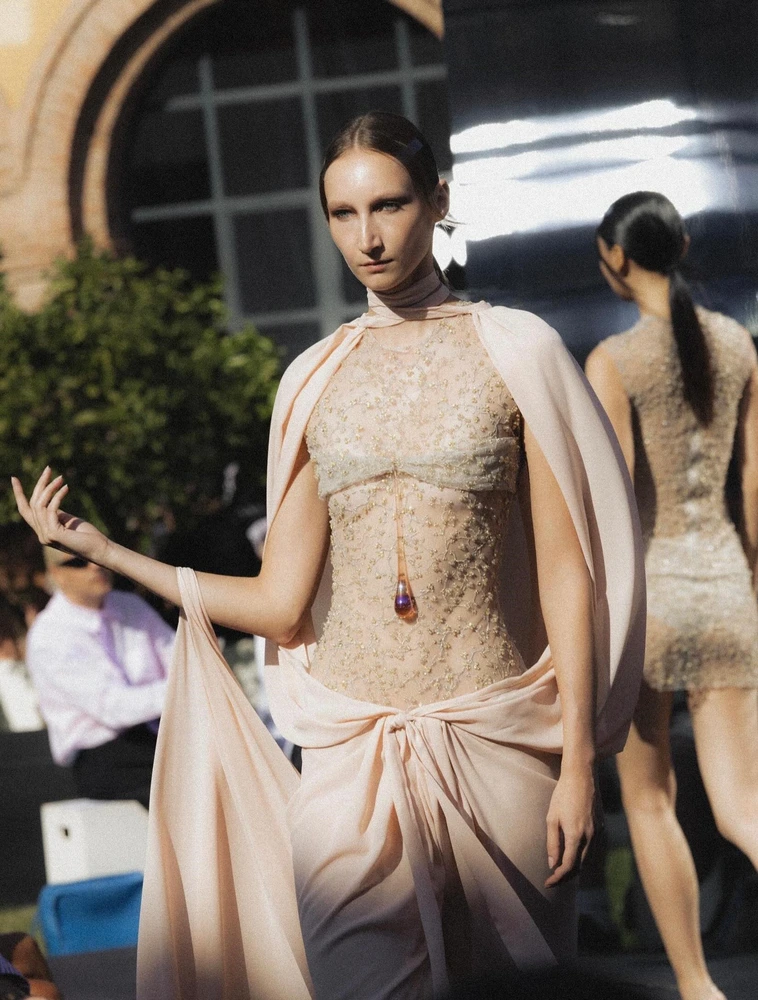
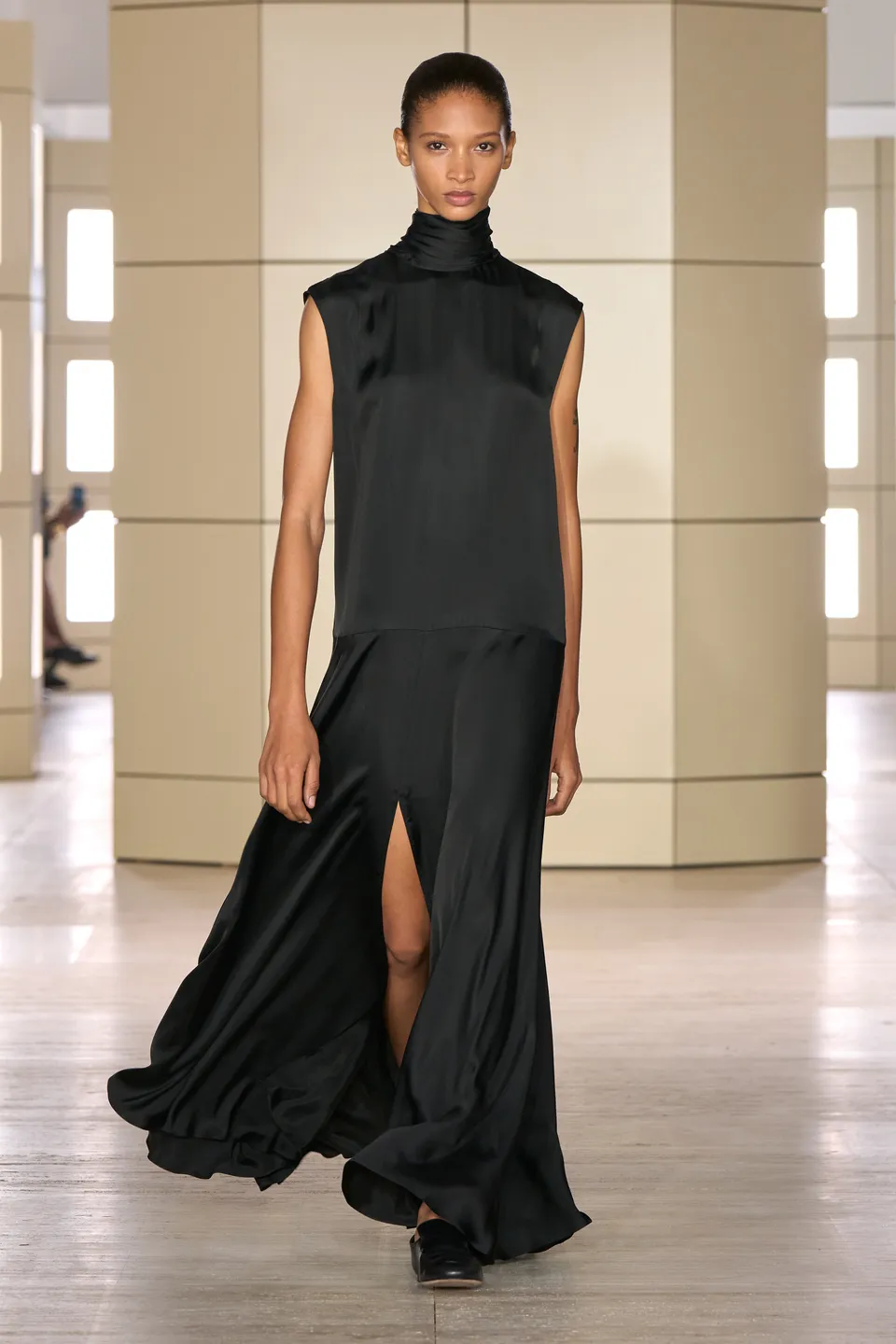
Waistlines travelled downward. Hemlines became irregular. Fabric started moving around the body with greater ease. Evening dresses introduced shine, embroidery, and surface movement into the same wardrobe that had opened with corporate severity.
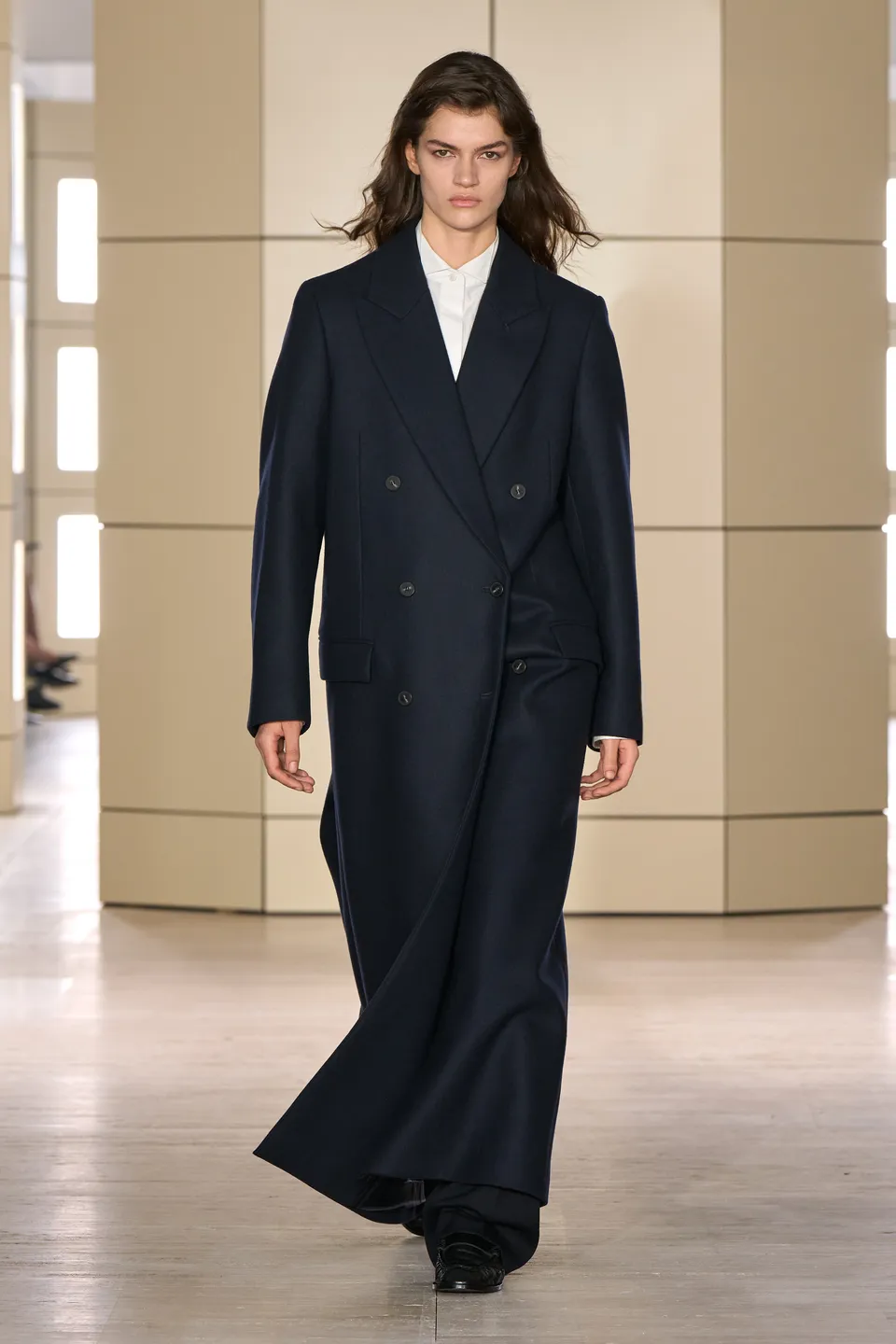
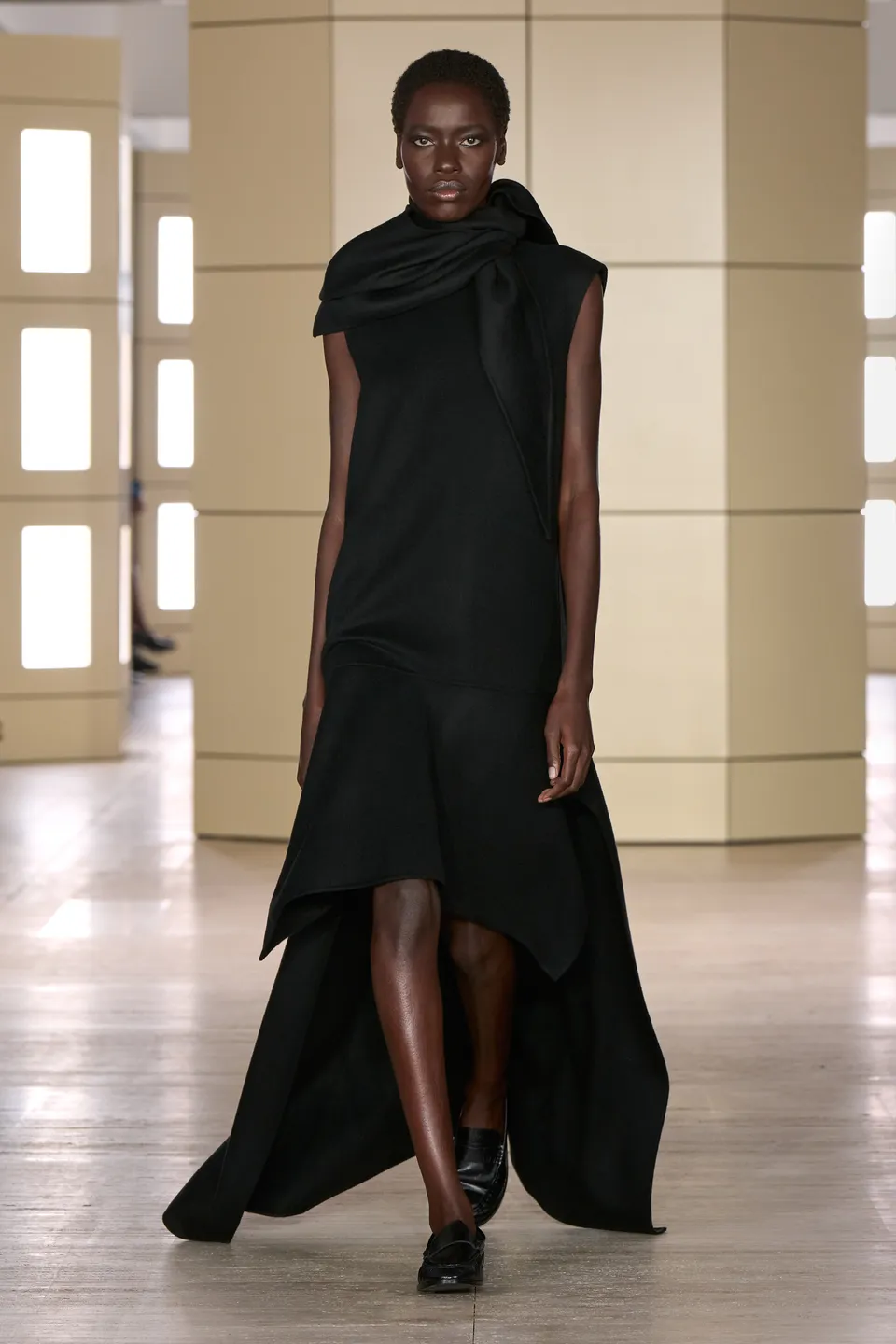
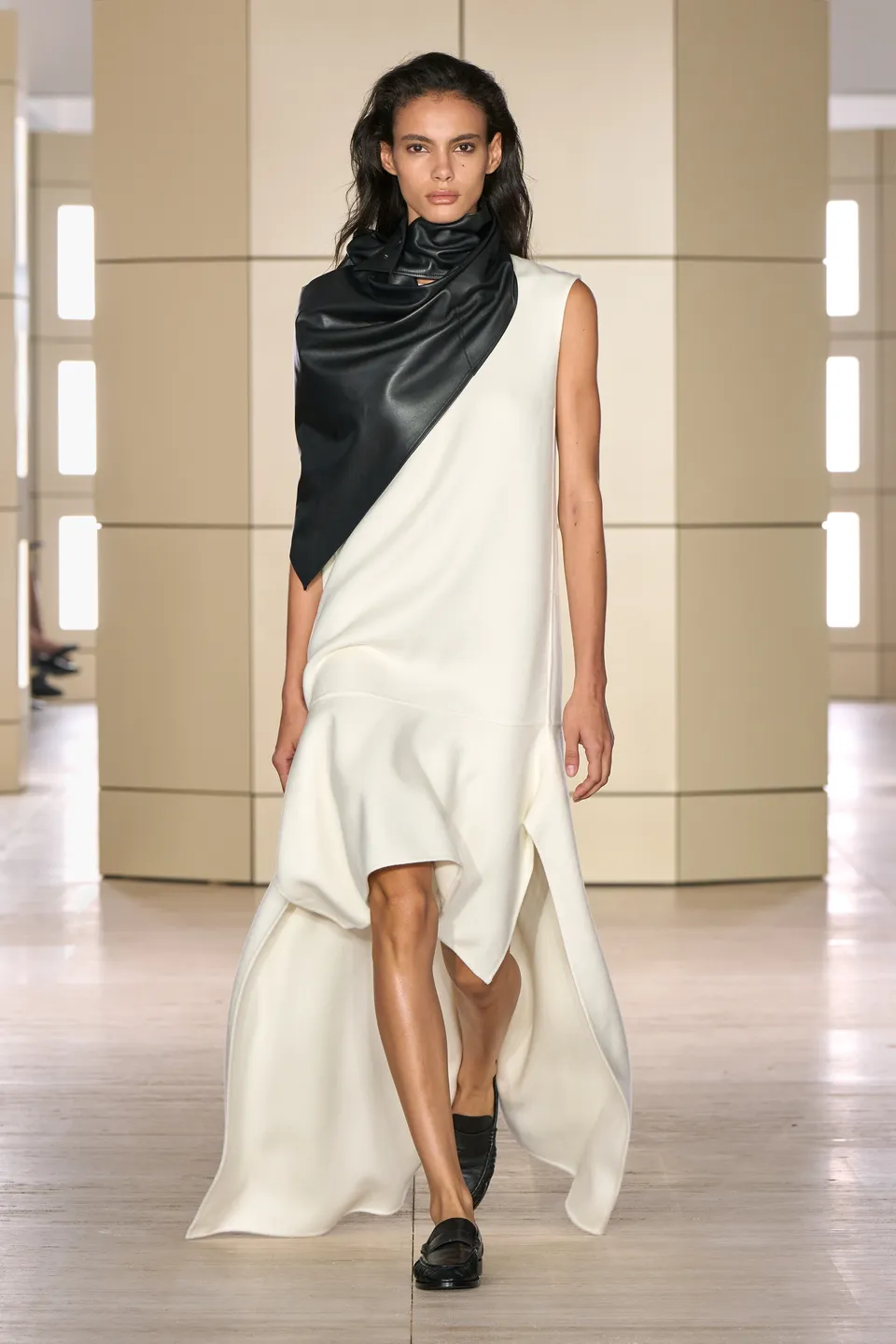
Gustafsson’s interest in the 1920s centres on the decade’s experimentation with proportion and social freedom. That gave COS a practical route into historical reference. A low waist could enter a contemporary dress. A tuxedo shirt could become part of a modern work wardrobe. Fringe could function as movement instead of costume.
COS has built much of its identity around garments people already understand: the white shirt, the tailored trouser, the wool coat, the cashmere knit, the leather jacket, the column dress.
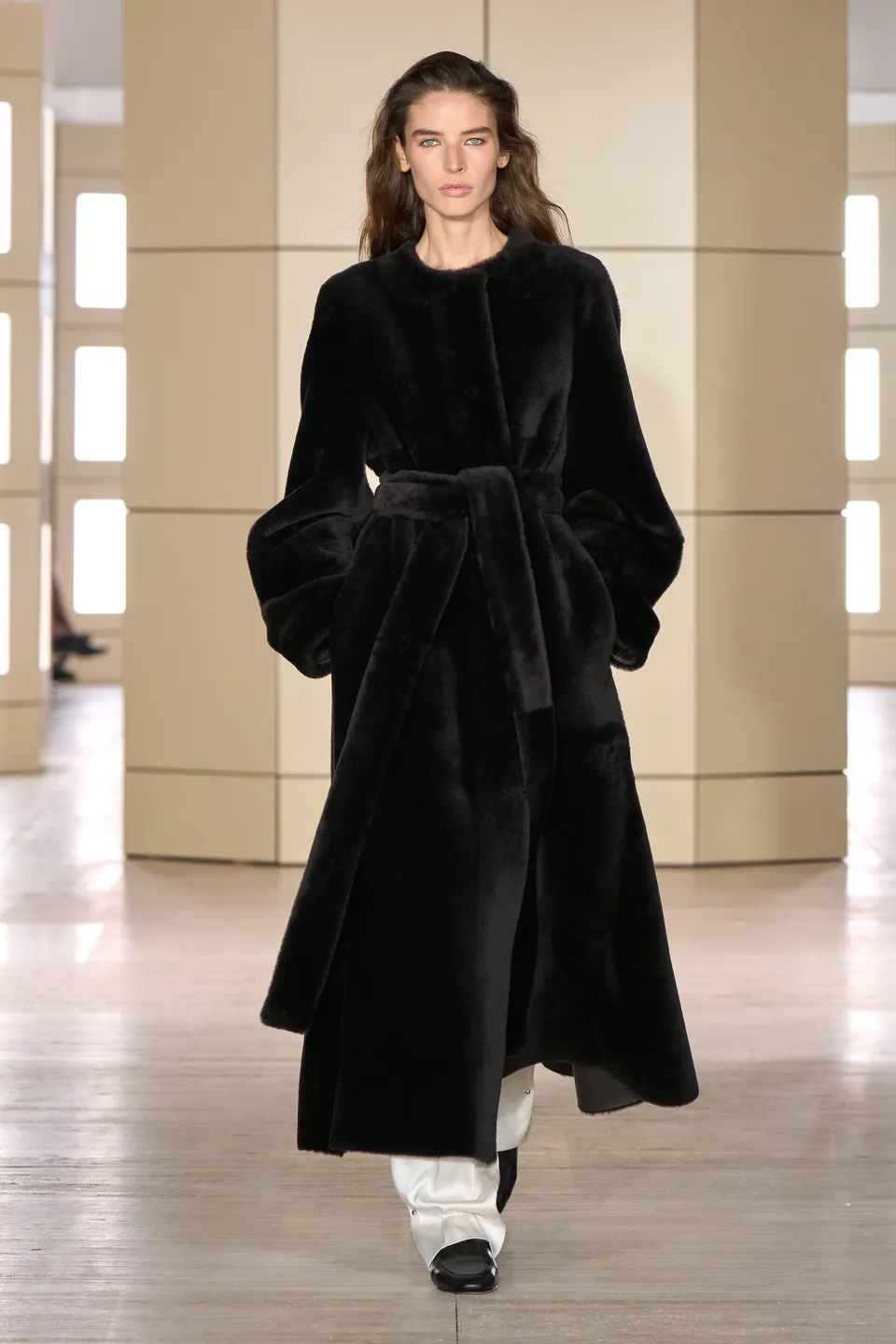
Gustafsson’s work happens inside those categories. For AW26, power shoulders gained structure, coats extended almost to the floor, and wrap silhouettes created broad continuous planes of fabric. Some trousers stayed lean through the leg while others introduced greater volume. Dresses dropped their waistlines and allowed fabric to continue downward in long fluid sections.
That method reveals something important about how COS operates.
The brand’s runway rarely depends on inventing an entirely new wardrobe. It concentrates its experimentation in cut, finish, fabrication, and styling. An existing COS customer can identify the category immediately, while the runway gives that category a new physical presence.
This is also commercially intelligent. COS operates at a scale where runway ideas must eventually survive retail, production, and repetition.
Double-faced cashmere appeared in enveloping wraps and long coats, giving the body a clean vertical line while retaining softness. One of the season’s interesting developments came through a lustrous treatment that gave cashmere an unexpected sheen. The effect brought evening glamour into a material usually associated with quiet warmth.
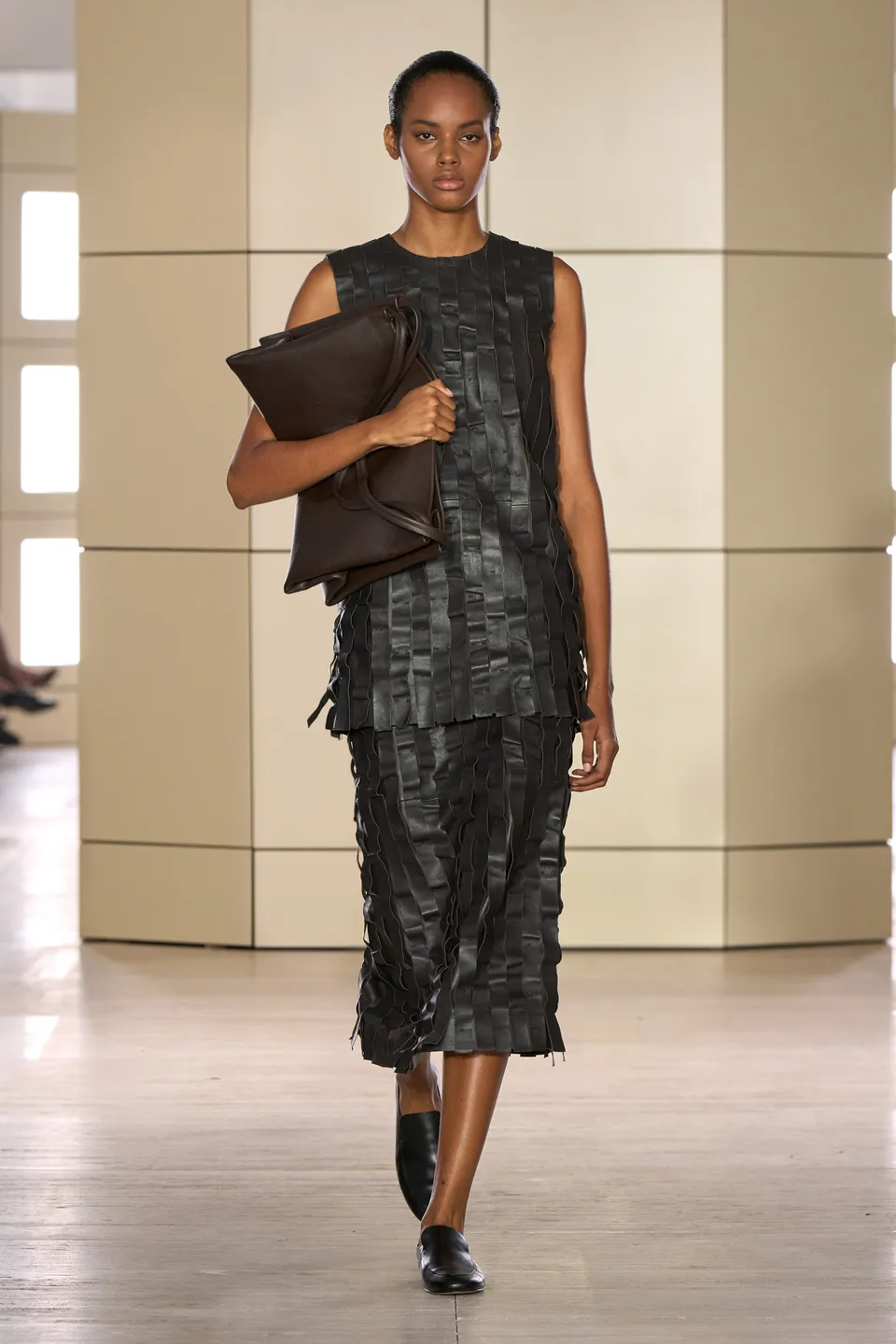
One standout piece used raw-cut strips of leather arranged so that the surface moved as the wearer walked. The technique transformed leather from a smooth structural material into something kinetic. Movement became part of the garment’s construction.
That idea extended across the runway through fringe, laser-cut surfaces, lace and embroidery.
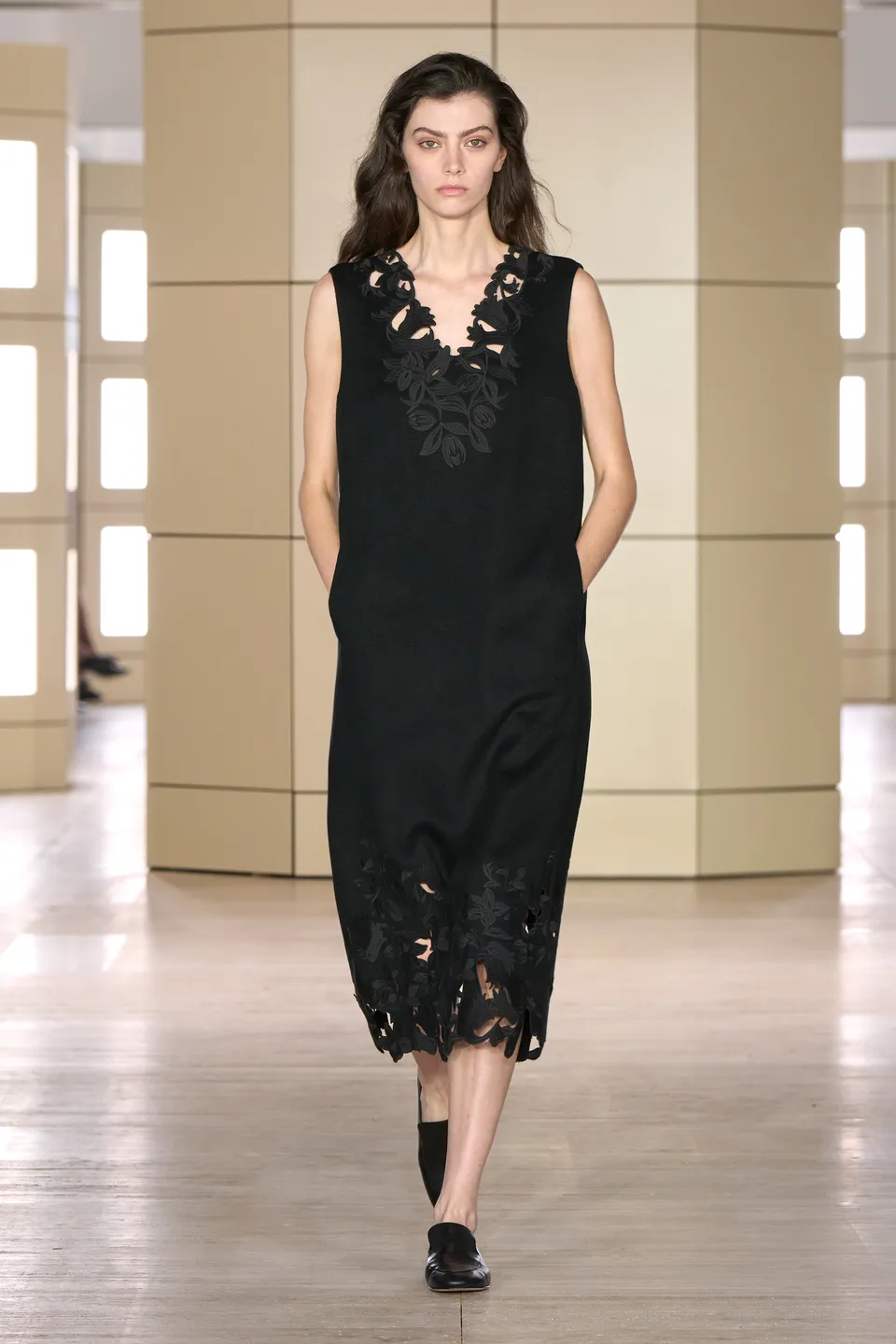
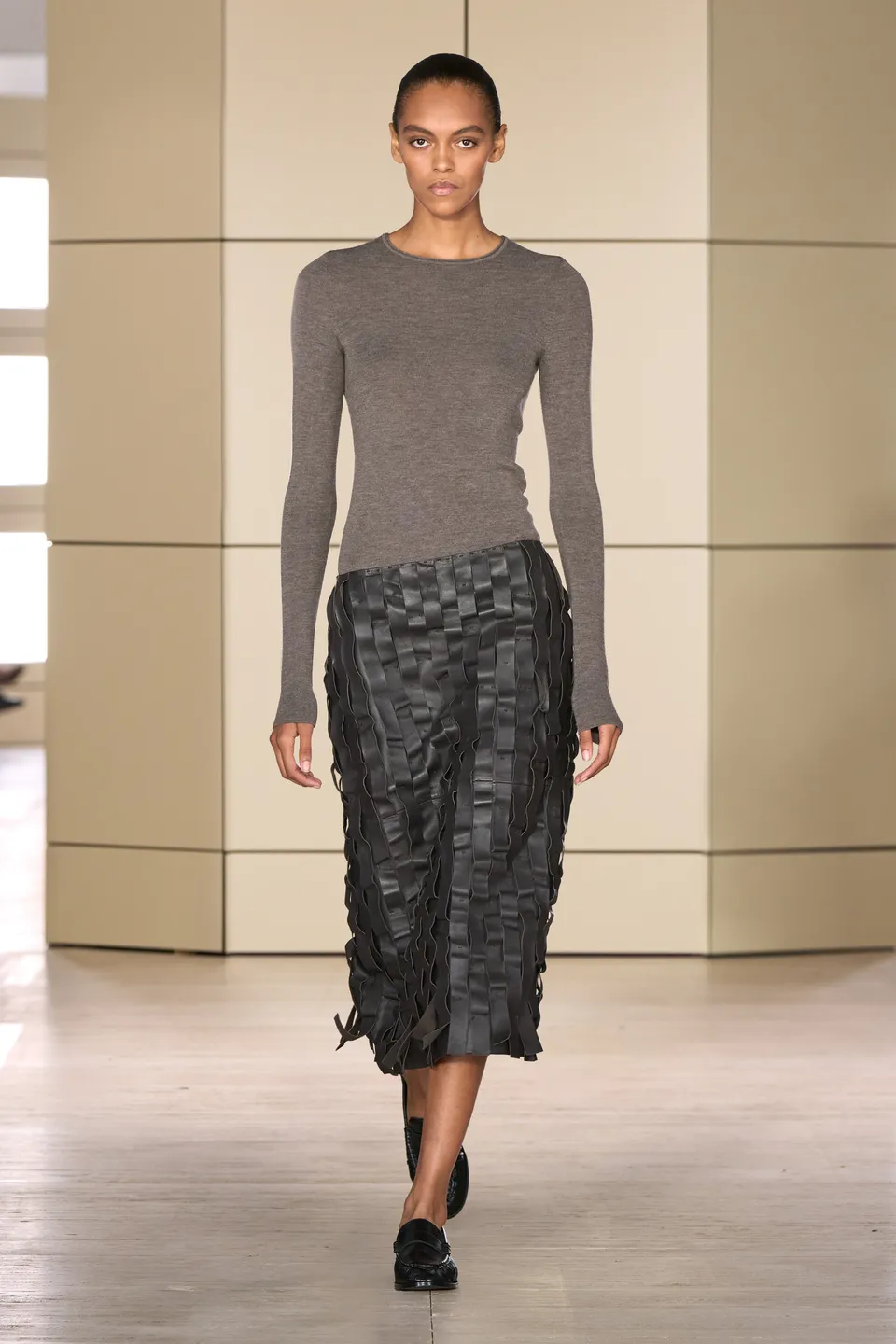
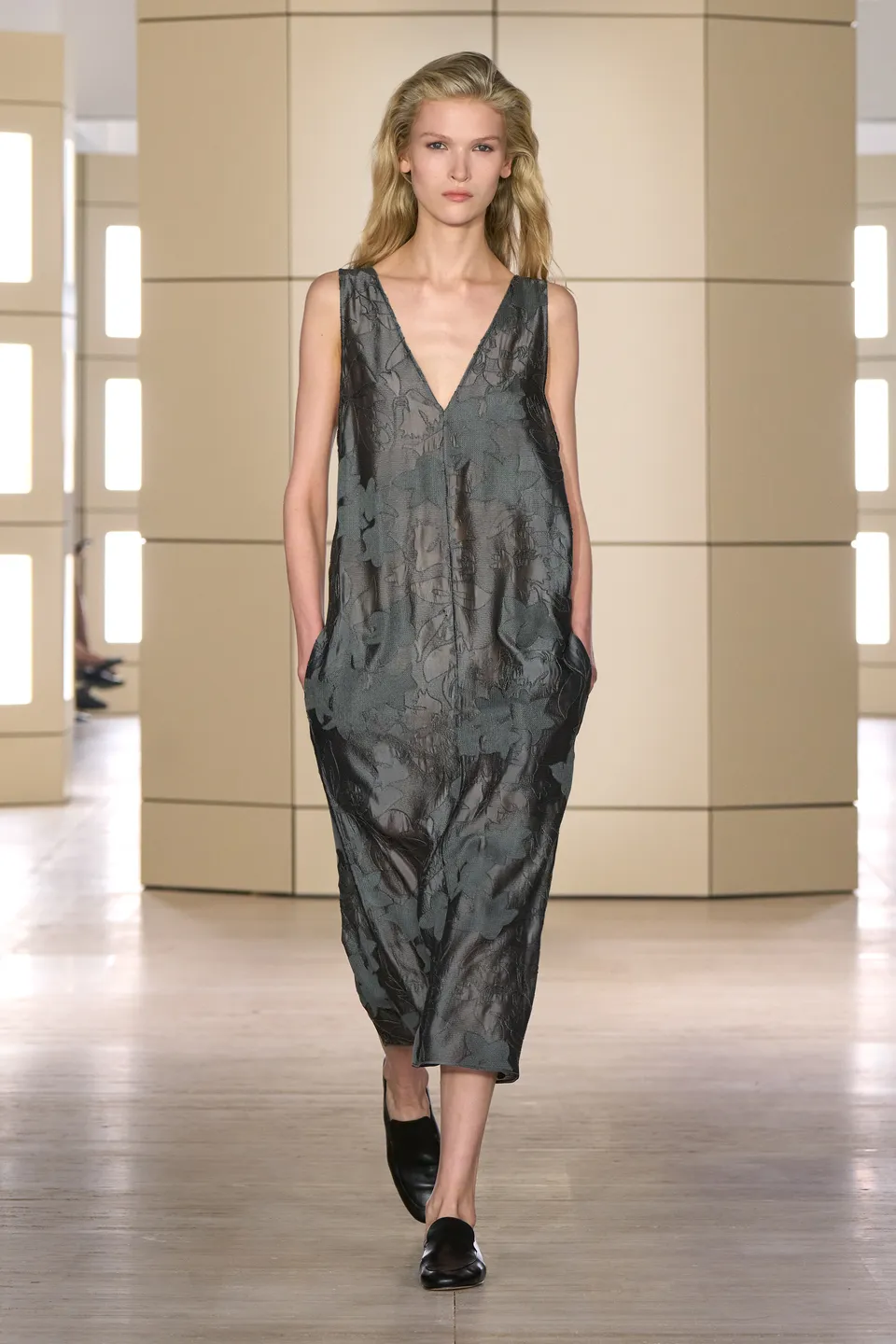
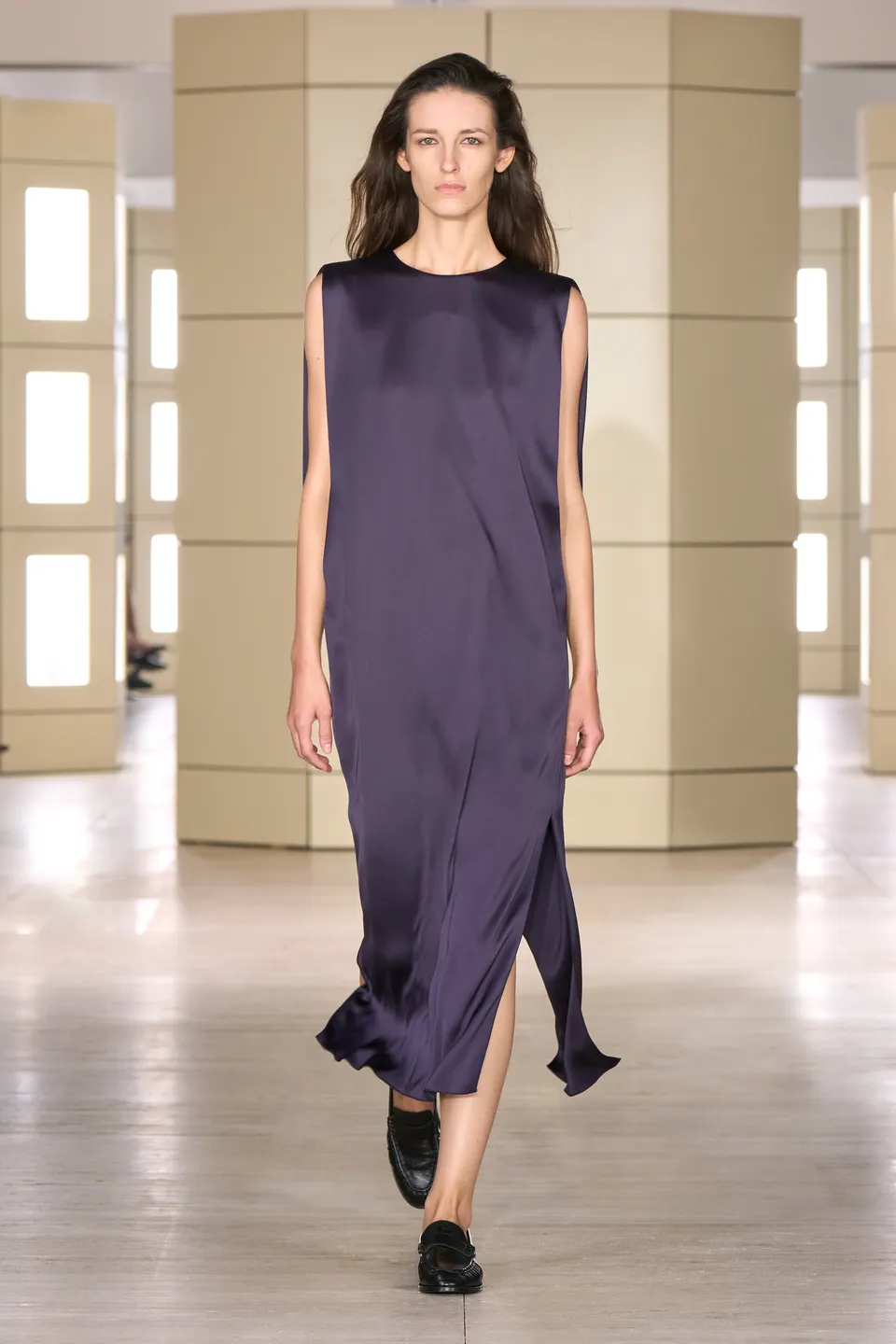
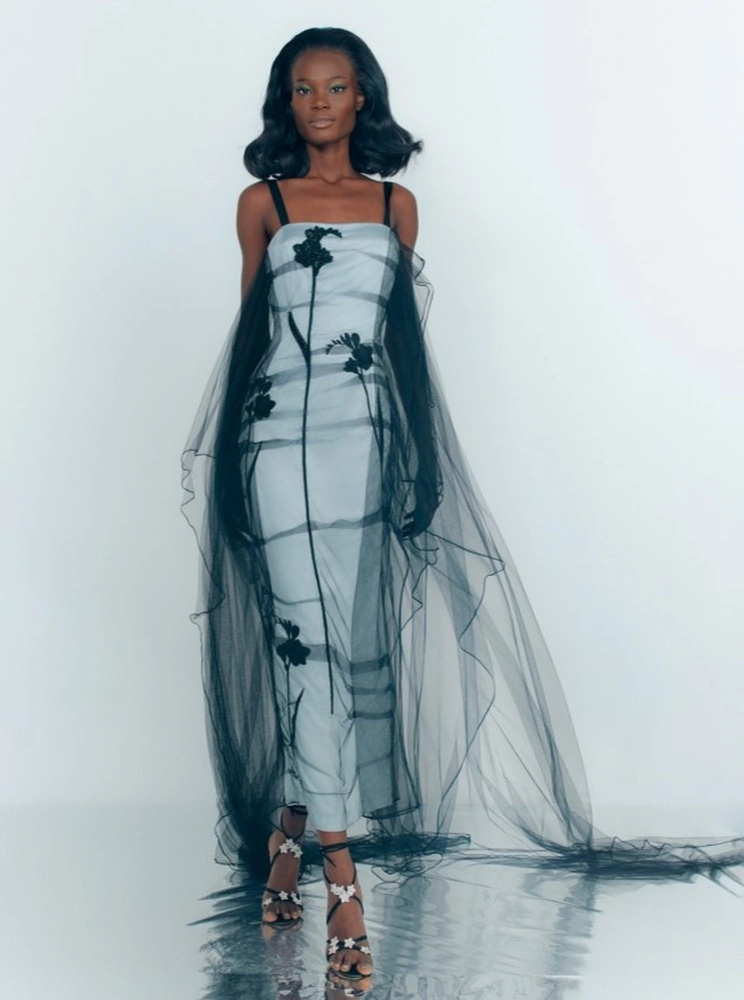
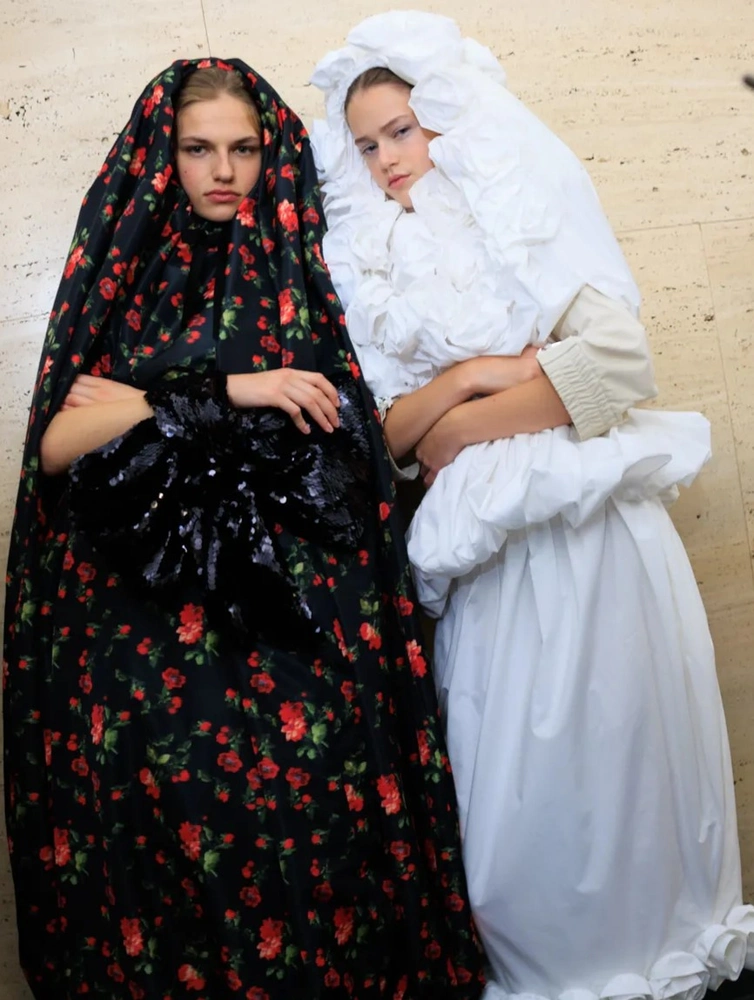
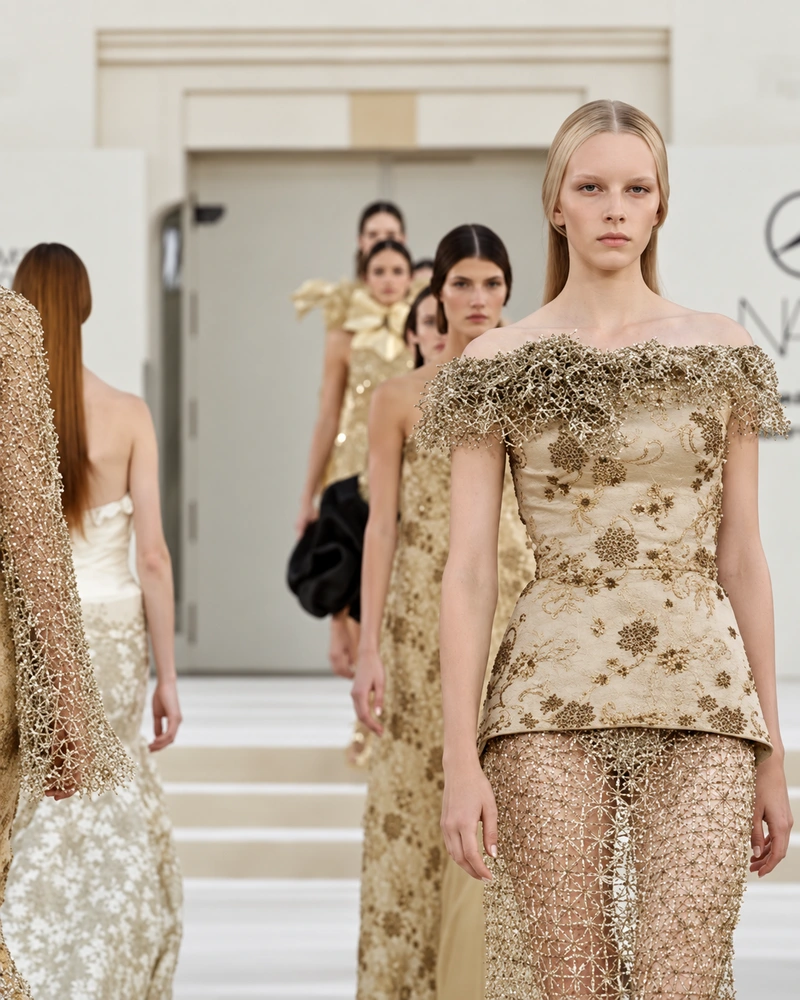
COS developed lace from drawings and mixed textures, introducing a decorative language that felt unusually detailed for a brand frequently associated with clean minimal surfaces. Floral embroideries appeared across dresses and evening pieces, while irregular edges prevented the decoration from settling into sweetness.
An ultra-long cashmere coat delivered the architectural side of COS at full scale. A dropped-waist wool dress used a high-low hemline to create a strong directional line around the legs. The leather-strip look turned technique into motion. Evening dresses with laser-cut and lace effects gave the collection its richest surfaces.
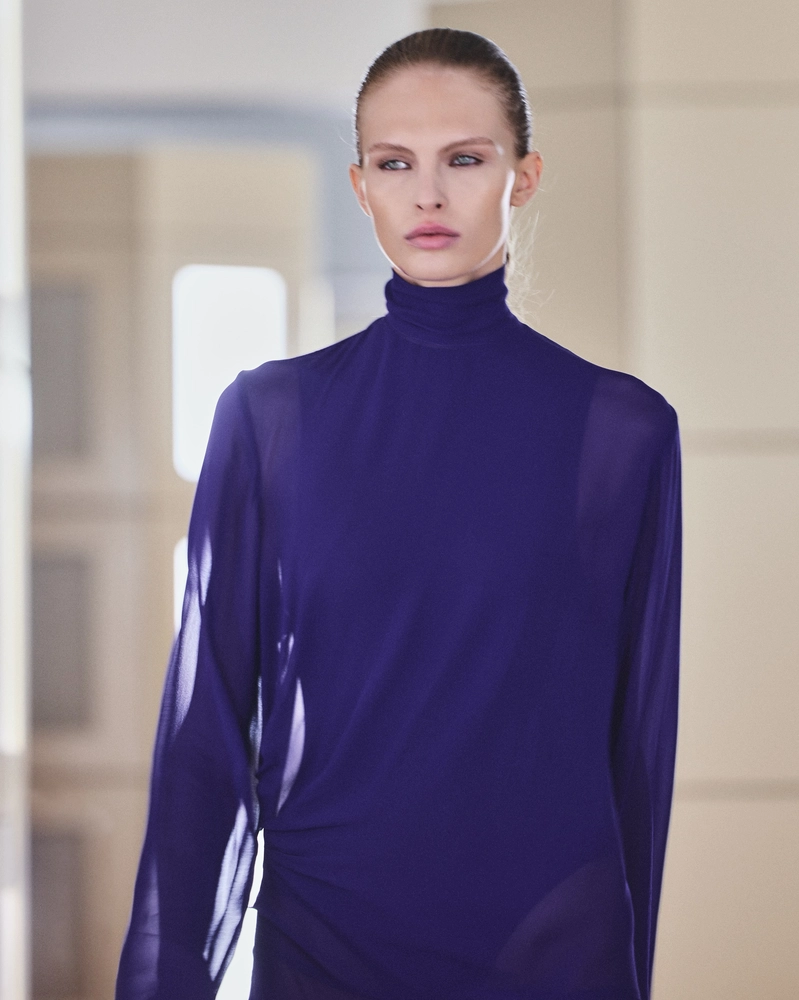
Then deep eggplant purple entered a palette dominated by dark neutrals.
Tailoring appeared with loosened scarves and softer layers. Tuxedo references sat beside sheer evening pieces.
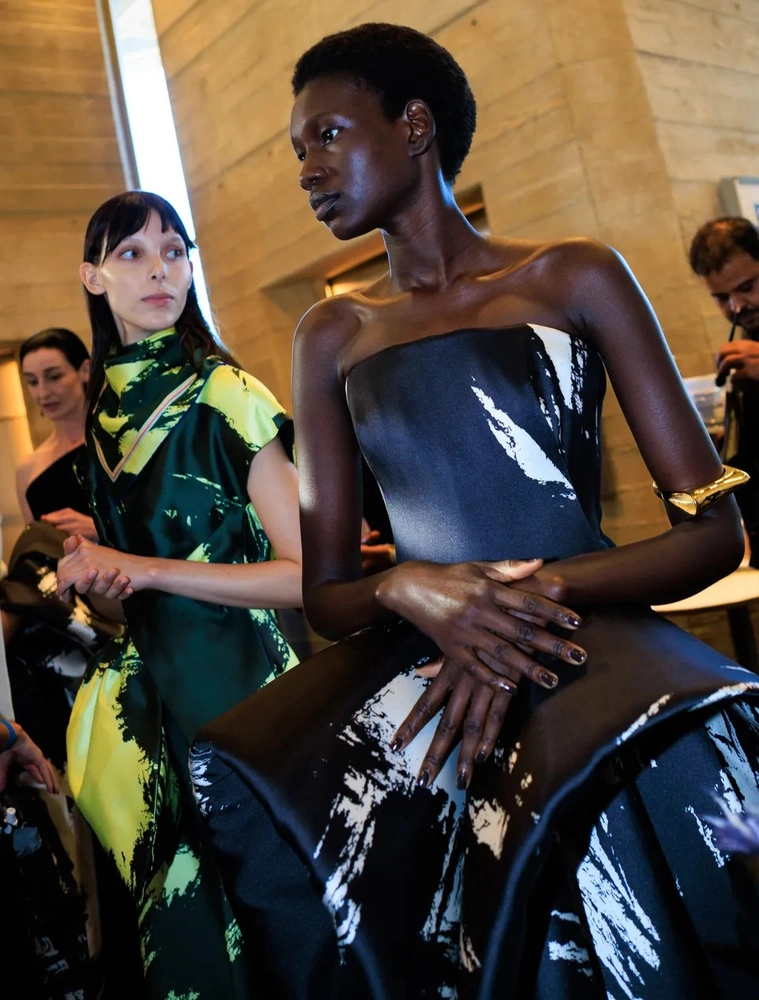
The contrast between matte and lustrous surfaces became especially important.
Wool and herringbone absorbed light. Satin-like fabrics reflected it. Leather introduced a denser shine. That interplay gave a predominantly dark collection visual depth and allowed texture to carry the drama usually produced by colour.
The footwear kept the clothes grounded. Loafers and Derby-style shoes reinforced the masculine side of the wardrobe, while cleaner evening footwear allowed the longer dresses to retain their vertical line.
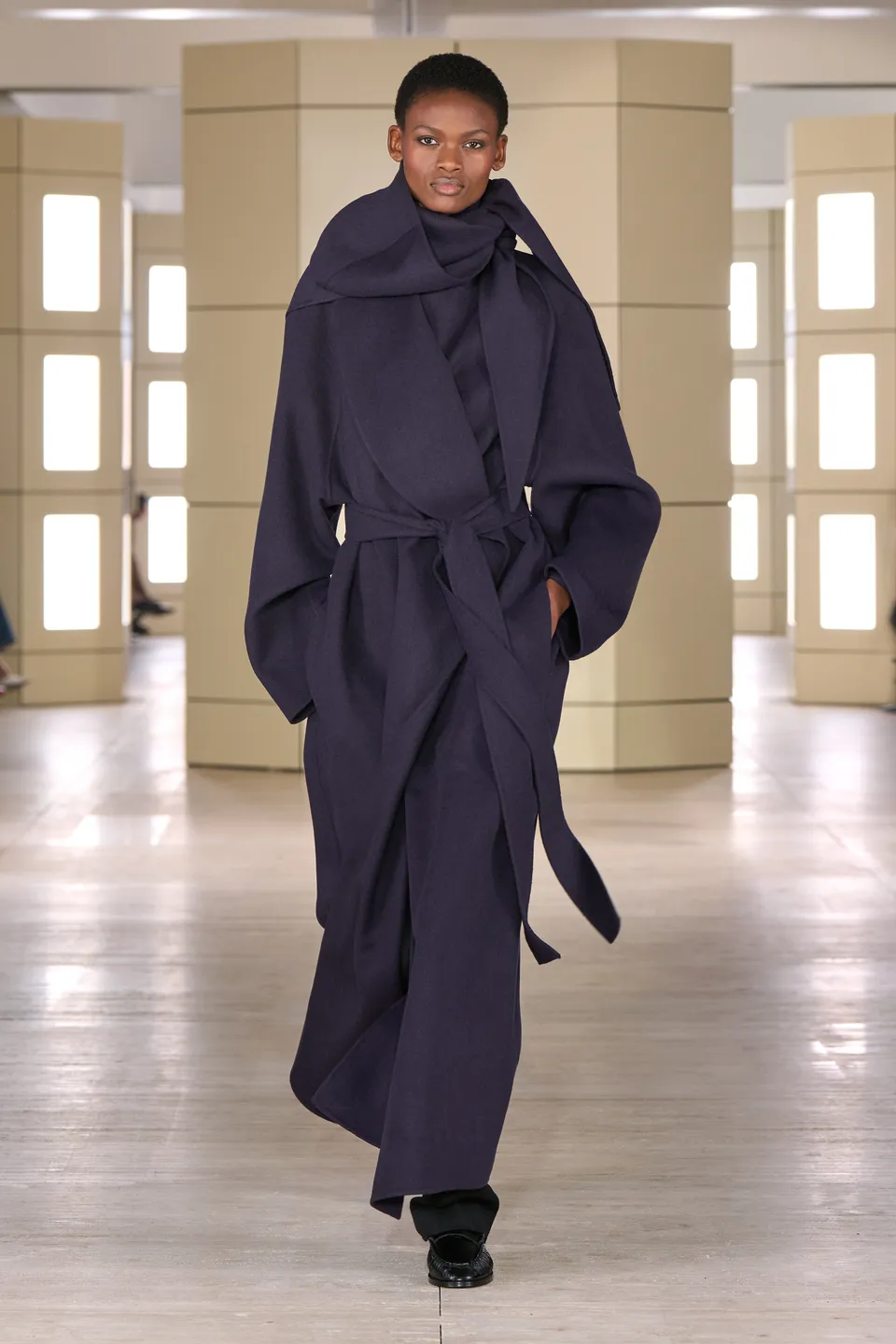
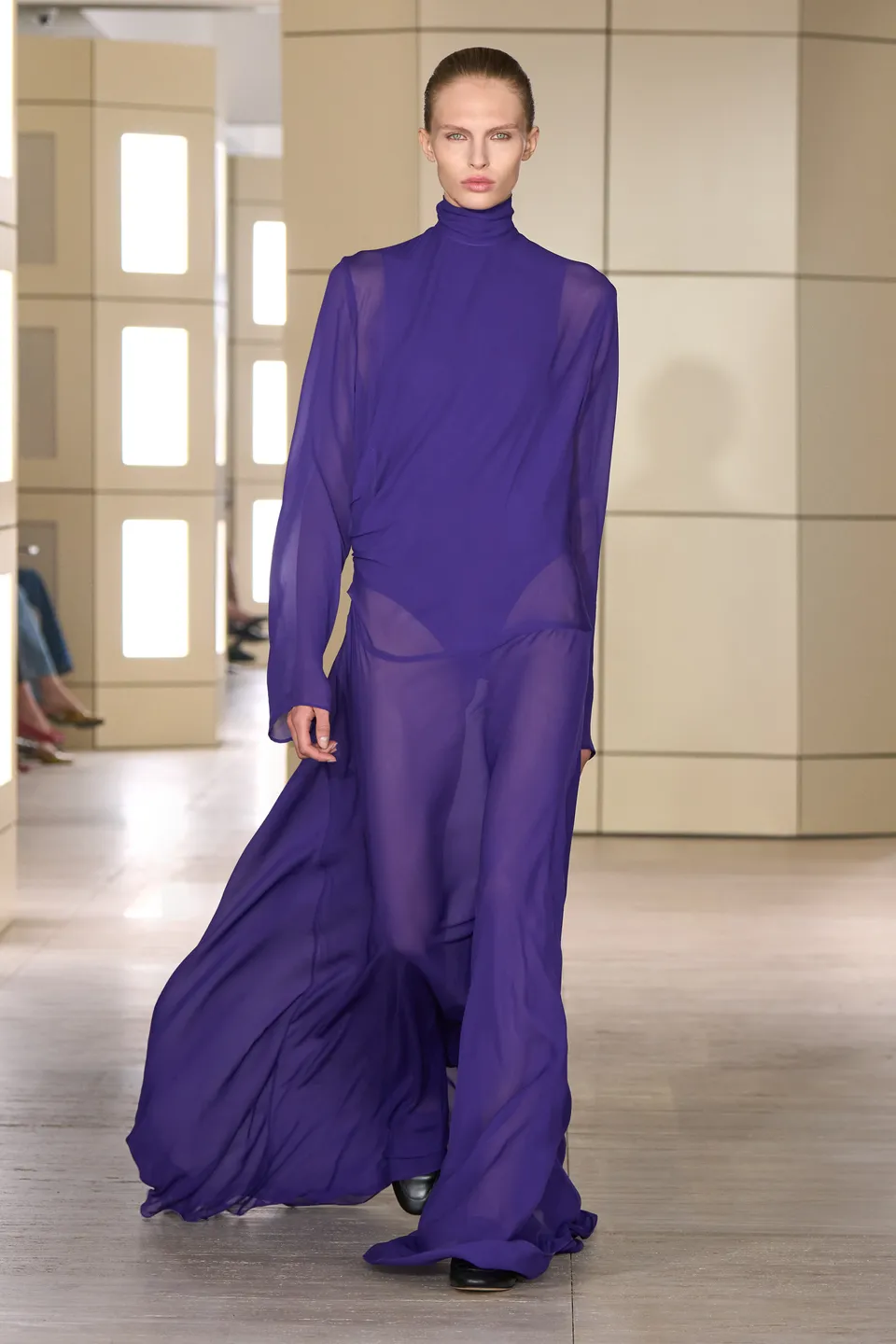
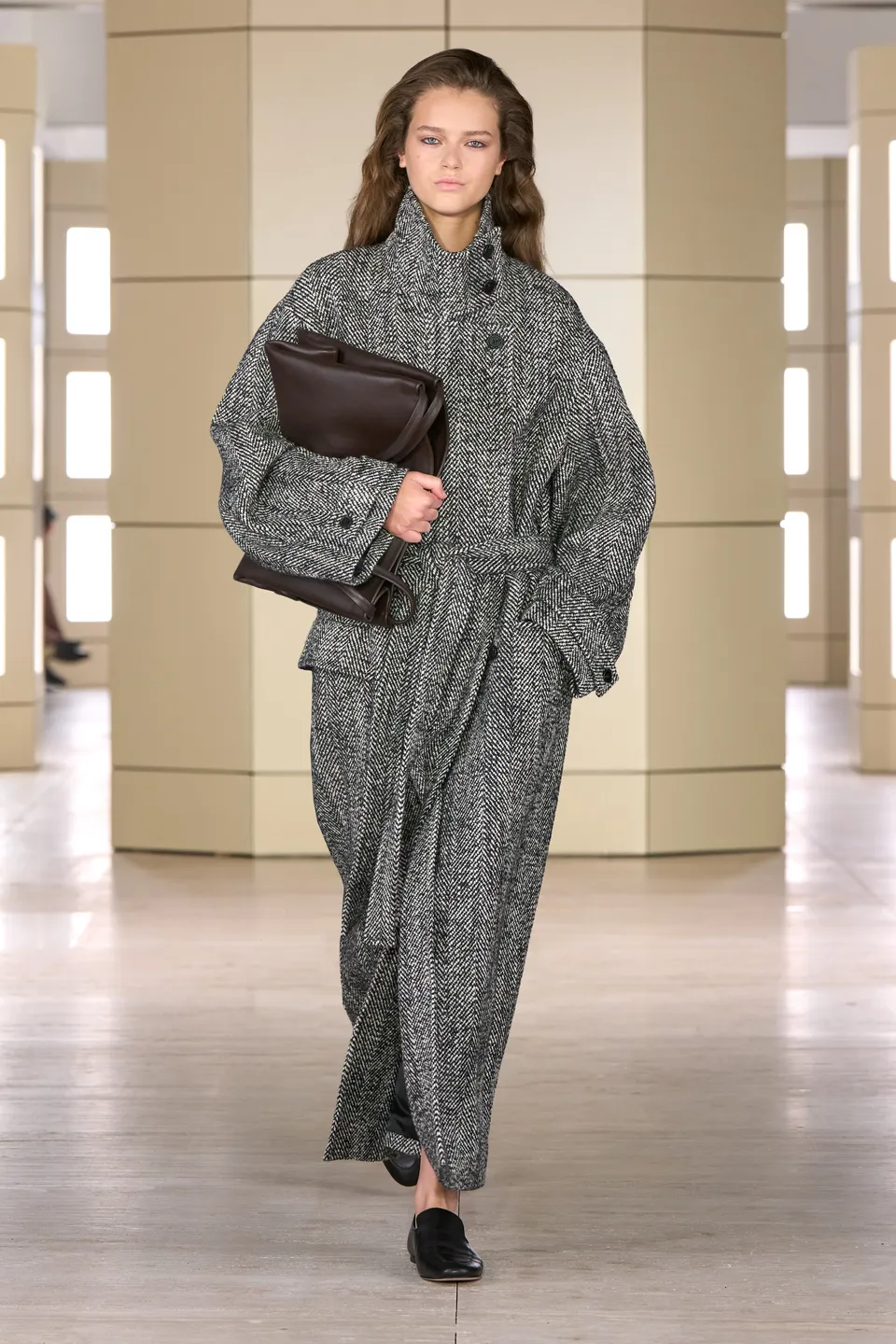
This presentation marked the brand’s fifth consecutive New York Fashion Week runway. The repetition has turned New York into a strategic platform for COS, giving the company the visibility and image-building power associated with runway fashion while maintaining the infrastructure of a global retail business.
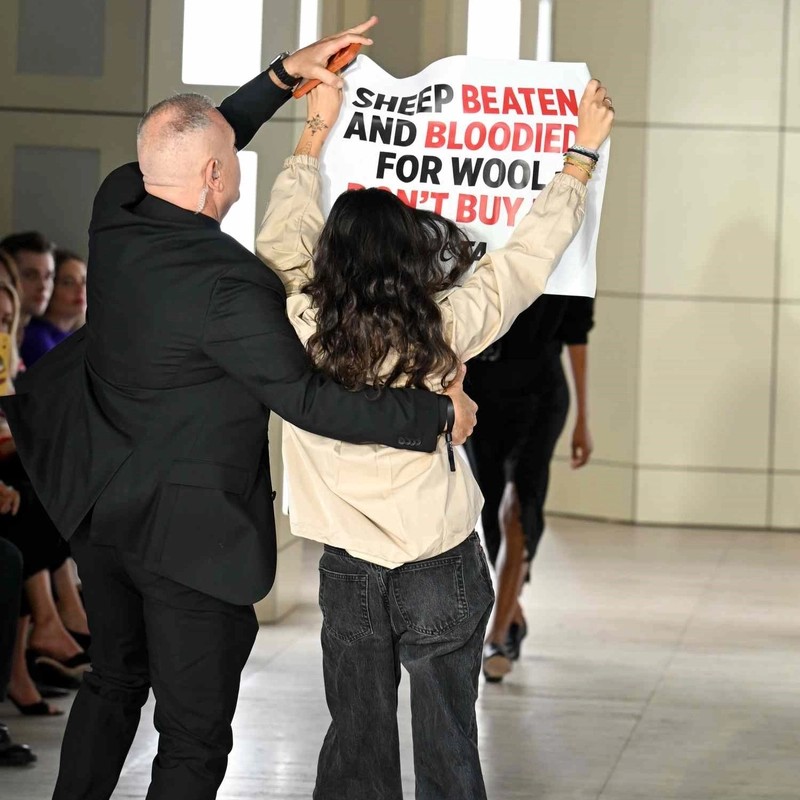
During the September 13 show, PETA activists entered the runway protesting COS and H&M Group’s continued use of wool. Signs addressed the treatment of sheep within the wool industry. The disruption quickly escalated when then-CFDA president and CEO Steven Kolb physically restrained protesters, including an activist who was held on the floor in footage recorded near the runway.
Kolb later acknowledged that he had reacted inappropriately. He took leave from the CFDA and resigned days later after roughly two decades leading the organization.
The physical confrontation became the immediate headline. The material issue behind the protest carries longer consequences for COS.
PETA Asia had previously released footage from a NATIVA-certified wool operation in South Africa showing workers kicking, striking, and dragging sheep and leaving animals injured during shearing. PETA says the operation sold through a broker connected to H&M Group’s wool sourcing network.
Public evidence currently establishes an incomplete chain between that operation and the exact wool used in COS AW26 garments. The footage, therefore, supports scrutiny of the sourcing system, while product-level attribution remains unresolved.
H&M Group has publicly relied on certified sourcing schemes, including Responsible Wool Standard and NATIVA-linked programs, as part of its animal-welfare framework. Certification, therefore, forms part of the trust structure surrounding the material.
When cruelty is documented inside a certified system, certification alone loses persuasive force.
The fashion verdict is straightforward.
COS AW26 is a beautiful collection. Gustafsson handled proportion, texture, and historical reference with confidence, and the strongest pieces pushed the brand into a richer, more tactile visual language. The runway also exposed a gap between sophisticated material presentation and the level of transparency required to support responsible sourcing claims.
Sustainability and CSR, therefore, deserve serious scrutiny around COS and H&M Group’s animal-derived materials. Certification provides one layer of assurance. Traceability, independent verification, enforcement, and public accountability determine whether that assurance carries real weight.
Advertisement