MENU
Close





Metal mesh fabric emerged from the intersection of metallurgy and craftsmanship, eventually finding its place in the language of luxury fashion through a century of remarkable inventions.

Metal mesh fabric emerged from the intersection of metallurgy and craftsmanship, eventually finding its place in the language of luxury fashion through a century of remarkable inventions.
October 9, 2026
Advertisement

Advertisement



Long before metallic dresses swept across fashion runways, skilled metalworkers were already experimenting with ways to make rigid materials bend, fold, and move. Their work would eventually produce intricate handbags, elaborate eveningwear, and some of the most recognizable garments in Italian fashion. The story of metal mesh fabric follows this transformation through the technical inventions and creative ambitions that shaped its remarkable evolution.
The manufacturing process of metal mesh fabric begins with selecting suitable metallic materials and determining the structure required for the finished product. Manufacturers must consider mechanical flexibility, surface appearance, weight, durability, and the intended application.
Metal selection establishes the physical properties of the material. Stainless steel offers mechanical strength and corrosion resistance, while aluminium provides a lightweight option for certain constructions. Copper and brass introduce characteristic warm metallic tones and can be shaped through various industrial processes.

The selected metal is then prepared for its intended construction. For woven mesh, manufacturers produce fine metallic wires through a process known as wire drawing. Metal is pulled through a series of progressively smaller dies, reducing its diameter while achieving controlled dimensions.
Intermediate annealing treatments may be used to restore ductility during production, particularly when the metal undergoes substantial deformation. The finished wires must possess sufficient flexibility to pass through weaving equipment while maintaining the structural integrity required for the final mesh.

In woven metal mesh, these wires are arranged into two perpendicular systems. Longitudinal wires form the warp, while transverse wires form the weft. Specialized machinery interlaces them into a continuous metallic sheet.
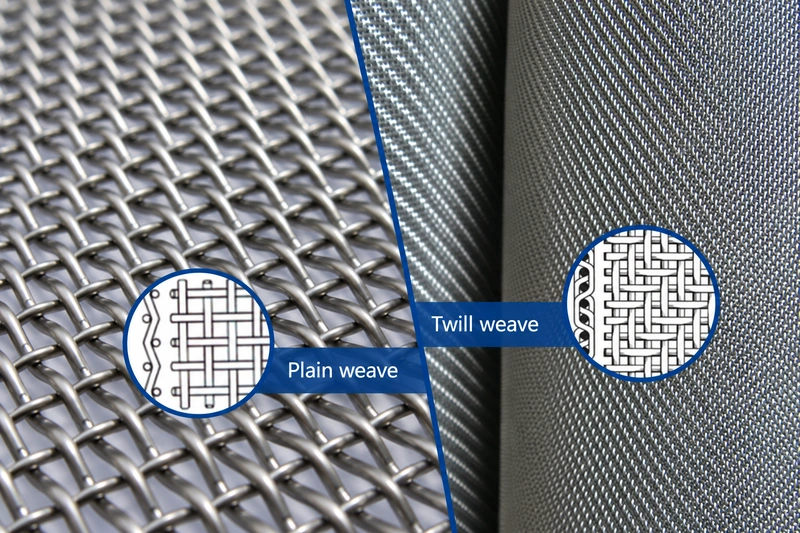
The simplest construction is plain weave, where each wire passes alternately over and under perpendicular wires. Twill weave produces a diagonal arrangement through a different interlacing sequence. Wire diameter, spacing, and weave density influence the finished mesh's aperture size, surface texture, and bending behavior.
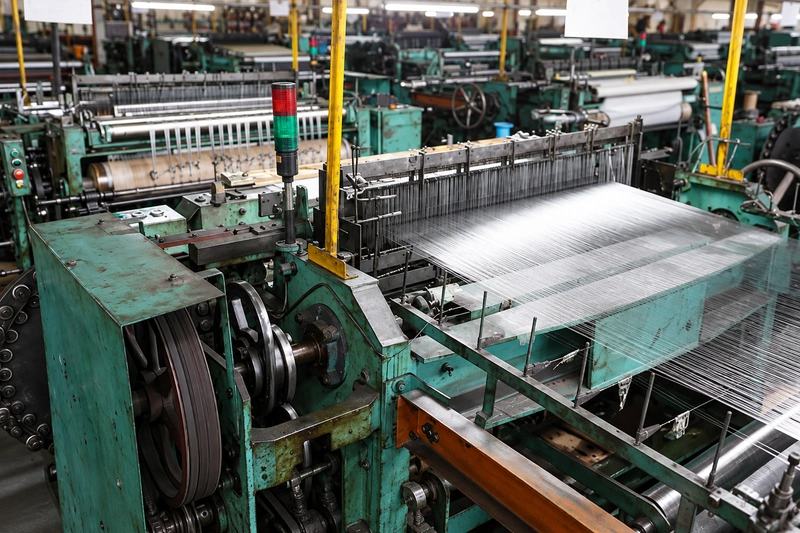
The flexibility of woven metal mesh depends partly on the ability of fine wires to bend. Their diameter and the mechanical properties of the alloy determine how the material responds to deformation. These techniques are widely established in industrial wire-cloth production, with selected fine constructions suitable for creative and fashion applications.
A second manufacturing approach involves the assembly of numerous small metallic components. This technique is especially relevant to the fluid metallic surfaces associated with luxury fashion.
Individual elements can be produced through precision stamping, cutting, and forming processes. Manufacturers control their dimensions and edge quality to maintain consistency across the assembled material. Depending on the design, components are attached to a metallic foundation or connected through specialized mechanisms.
Gianni Versace's Oroton provides a particularly important example of metal mesh fabric. Developed in collaboration with German metalworking specialists, its construction involves small metallic discs secured at four points to a fine underlying metal mesh. The discs form a reflective outer surface, while the foundation allows the material to bend and follow the body's contours.
The relationship between the metallic discs and the supporting structure creates the distinctive fluidity associated with Oroton. Thousands of individual reflective surfaces respond to the movement of the garment, producing an appearance reminiscent of liquid metal.
Once the material is manufactured, garment construction introduces additional technical considerations. Metal mesh sheets must be shaped into panels and connected using methods appropriate to their construction.
Some metallic materials can be joined through specialized mechanical connections, while others require carefully developed attachment methods. Garment designers must accommodate the weight of the material and the stresses concentrated around shoulders, necklines, and closures.
Finishing processes determine the final appearance of metal mesh fabric. Polishing creates reflective surfaces, while brushing produces directional textures. Plating and other surface treatments can introduce gold, silver, and colored metallic finishes. Inspection focuses on attachment security, surface consistency, and the smoothness of edges that may contact the body.
The emergence of metal mesh fabric in modern fashion is closely connected to developments in fine metalworking, specialized manufacturing machinery, and the production of fashionable accessories during the late-Victorian era.
An important milestone occurred in 1876, when William H. Wade, Edward P. Davis, and Louis Heckman established Wade, Davis & Company in Massachusetts. The business originated in jewelry and metalworking before developing into the enterprise eventually known as Whiting & Davis. Charles Whiting joined the company in 1880 and subsequently played a significant role in its development. In 1892, he designed the firm's first metal-mesh handbag, manufactured through labor-intensive hand assembly.
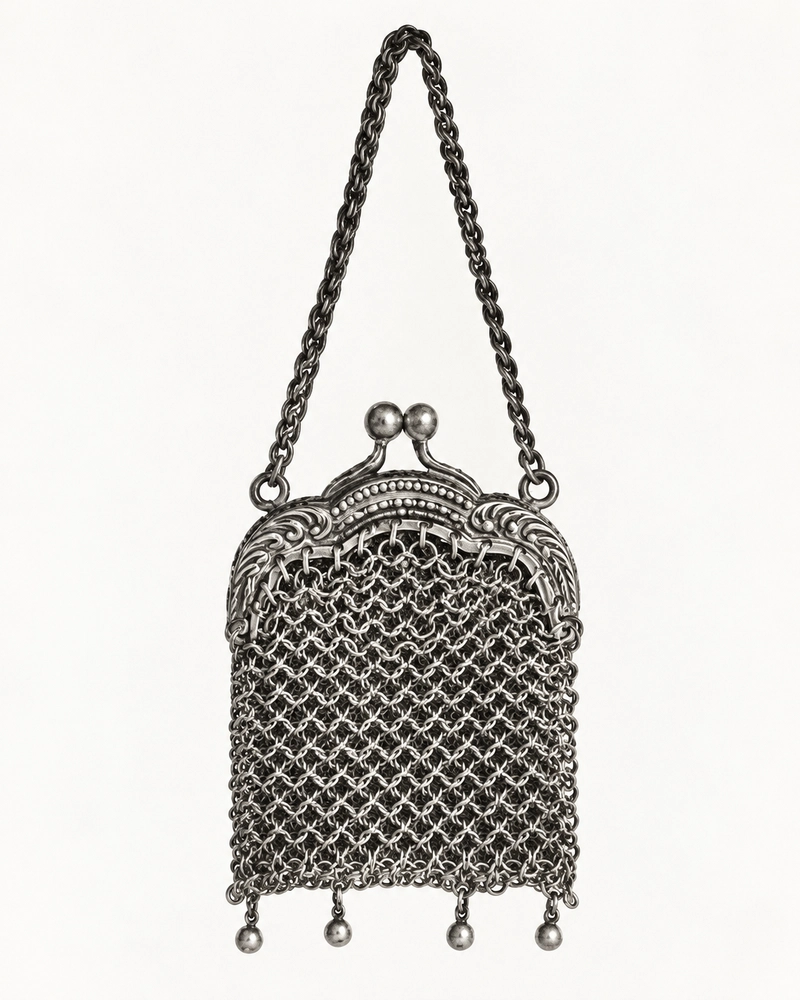
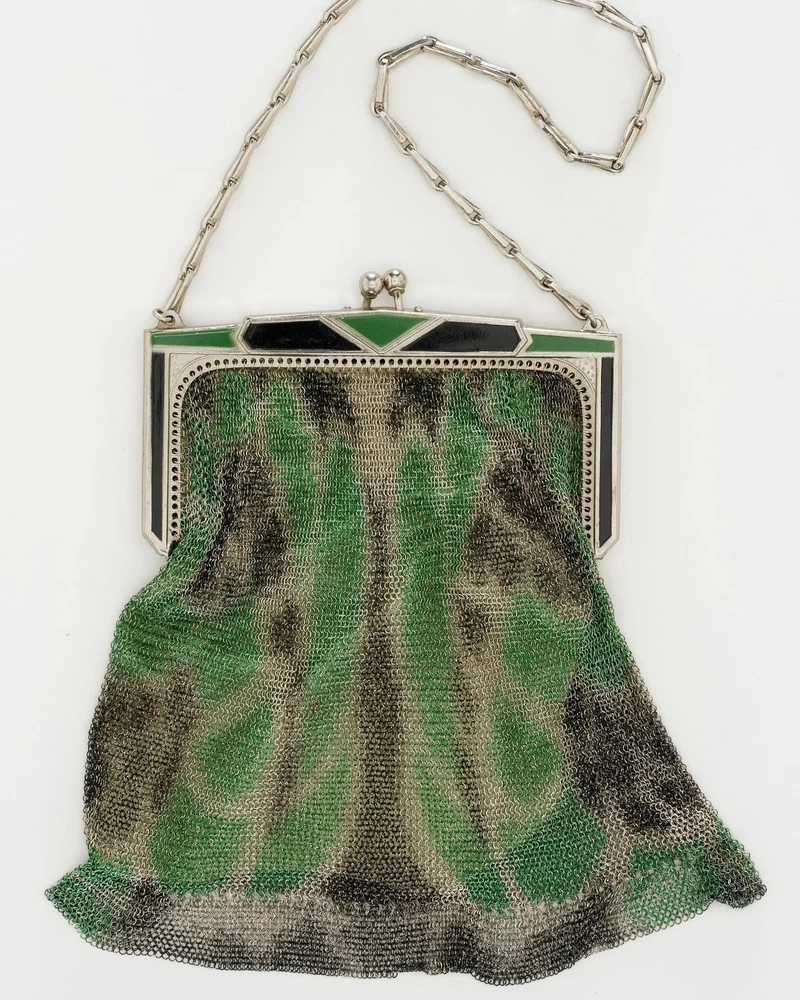
In 1896, Charles Whiting and Edward P. Davis acquired the business and renamed it Whiting & Davis. The company became closely associated with the development and commercialization of fine metal-mesh accessories. A decisive industrial development followed in 1912, when machinery enabled the automatic manufacture of the company's mesh. Mechanization expanded production capacity and supported the growing availability of metallic handbags.
During the 1920s and 1930s, metal-mesh purses became fashionable accessories, particularly within the visual culture associated with Art Deco. Their surfaces accommodated metallic color variations, geometric patterns, and elaborate finishing treatments. The flexibility of fine mesh allowed handbags to hang naturally from metal frames, creating a combination of industrial craftsmanship and fashionable luxury. Colored surfaces and intricate patterns expanded the design possibilities available to manufacturers.

Metal mesh fabric subsequently gained visibility in clothing. In 1952, actress Jane Russell appeared in the film Macao wearing a Whiting & Davis metal-mesh column dress. According to the company's historical account, the garment reportedly weighed approximately 21 pounds, illustrating the significant weight that metallic clothing could carry.
The material gained a distinctive identity in Italian luxury fashion during the following decades.
In 1982, Gianni Versace developed Oroton, a distinctive form of metal mesh fabric, working with German metalworking expertise associated with Friedrich Münch.
Versace pursued a surface capable of expressing the fluidity of classical drapery through metal. The resulting construction allowed small metallic discs to move together as a flexible textile-like sheet, creating softly gathered forms across the body.
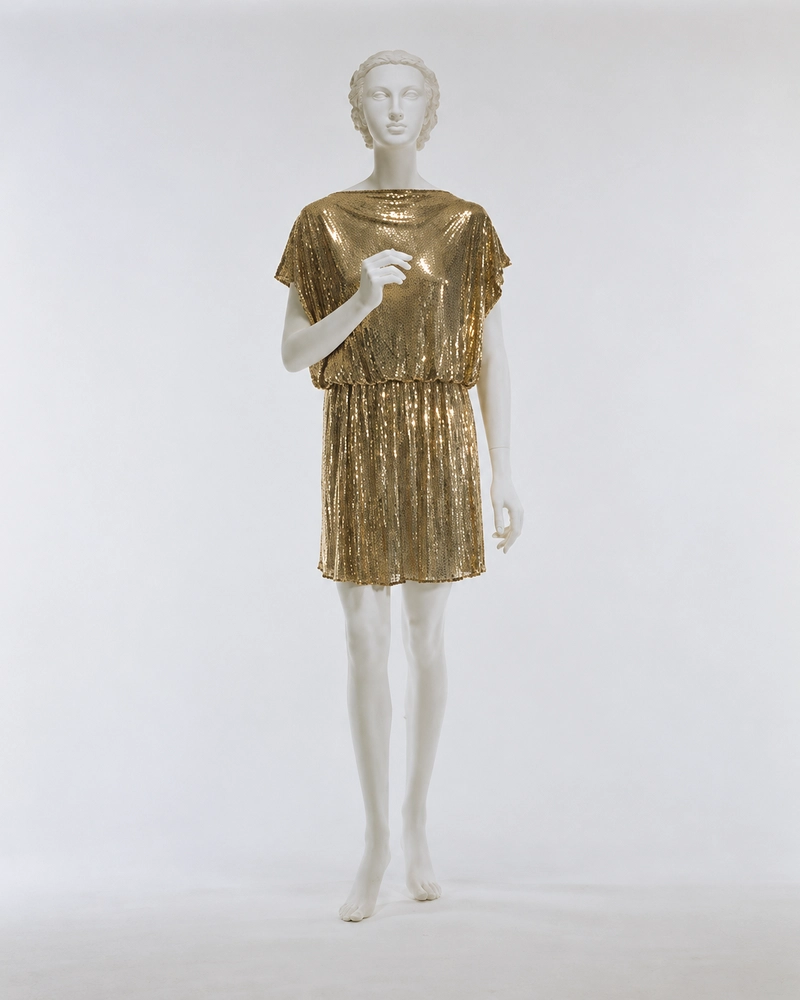
A 1982 evening dress preserved by The Metropolitan Museum of Art demonstrates this approach. Its design draws from classical draped garments, using the weight and flexibility of the metallic material to establish the silhouette. The museum also documents the technical challenges involved in assembling the material into clothing.
In 1984, Versace designed an Oroton dress for Italian singer Patty Pravo to wear at the Sanremo Music Festival. The garment, featuring a kimono-inspired silhouette and distinctive sleeves, is preserved in the Museum of Costume and Fashion at Florence's Palazzo Pitti.

The history of metal mesh fabric offers a fascinating perspective on how industrial craftsmanship can acquire an entirely new cultural identity. Whiting & Davis helped establish its place in fashionable accessories, while Gianni Versace transformed its visual possibilities through Oroton, creating a distinctive relationship between metallic surfaces and classical drapery. Decades after its introduction, the material continues to inspire contemporary fashion, carrying forward a tradition in which engineering and artistic imagination remain closely connected.
Advertisement