Few designers inherit a house famous enough to need no introduction and still find themselves staring at a blank page. That was Marc Jacobs’s peculiar position at Louis Vuitton in 1997: the Monogram already belonged to global culture, yet the wardrobe around it barely existed. Sixteen years later, his farewell show resurrected an entire world from his own past. How did an American designer give a luggage house enough fashion history to eventually quote itself?
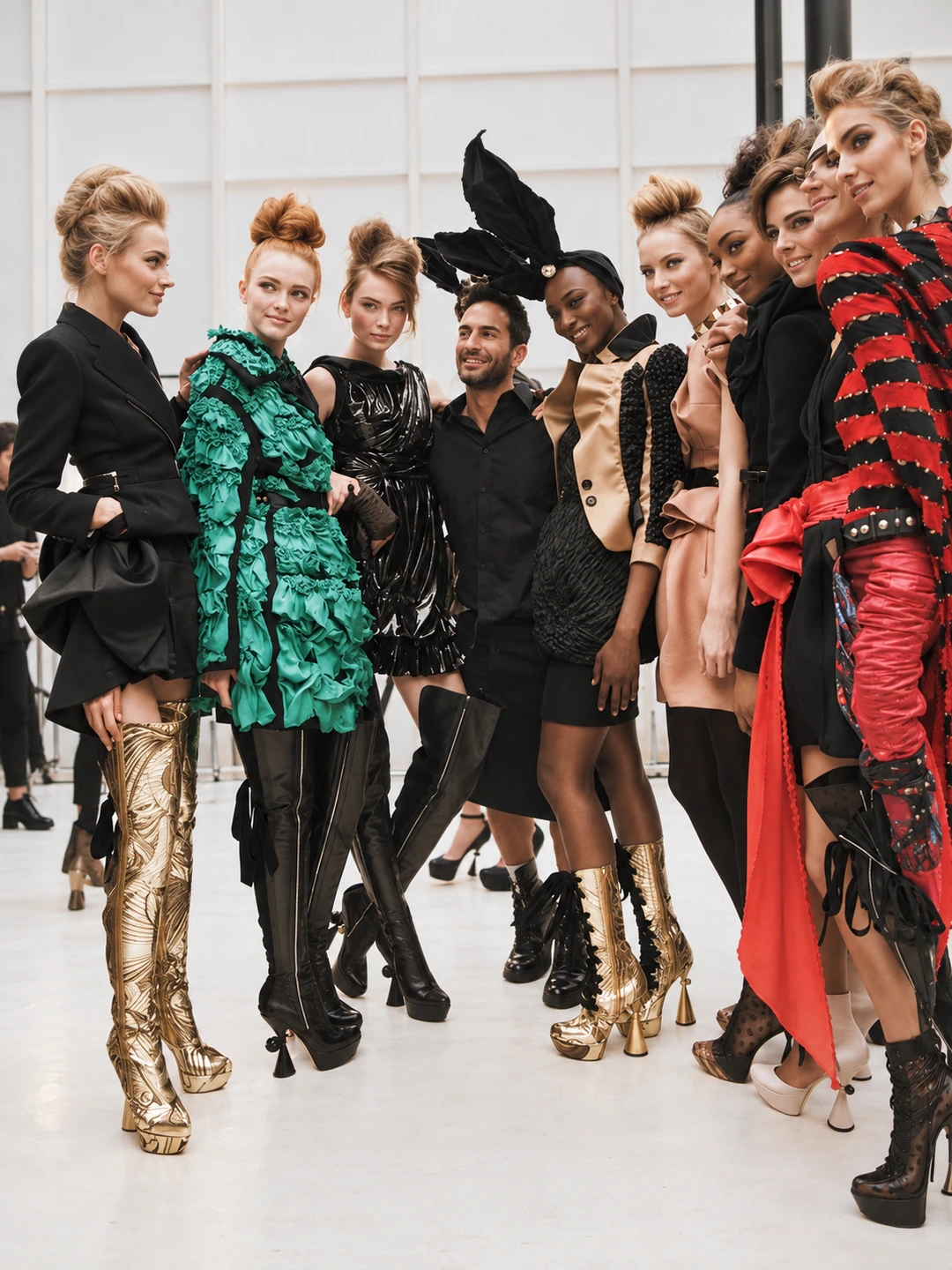
Marc Jacobs and the Reinvention of Louis Vuitton
Few designers inherit a house famous enough to need no introduction and still find themselves staring at a blank page. That was Marc Jacobs’s peculiar position at Louis Vuitton in 1997: the Monogram already belonged to global culture, yet the wardrobe around it barely existed. Sixteen years later, his farewell show resurrected an entire world from his own past. How did an American designer give a luggage house enough fashion history to eventually quote itself?
September 6, 2026
Advertisement

Advertisement



In October 2013, Louis Vuitton’s runway appeared to be haunted by its own recent past. A carousel, escalators, elevators, a fountain and hotel corridors returned from earlier Marc Jacobs shows, stripped of their original colors and rendered almost entirely in black. Before Marc Jacobs confirmed his departure backstage, the set had already begun saying goodbye to him. His sixteen years at Louis Vuitton had accumulated enough images, objects and memories to be reconstructed as a world of its own.
The contrast with 1997 was almost absurd. When Marc Jacobs first arrived at Louis Vuitton, there was no ready-to-wear history waiting for him to reinterpret, no archive of dresses or jackets against which his collections would be measured. There were trunks, leather goods and one of the most recognizable Monograms in luxury. Marc Jacobs was asked to imagine what Louis Vuitton fashion could look like in the first place.
Marc Jacobs at Louis Vuitton Started at Zero
Louis Vuitton appointed Marc Jacobs artistic director of its women’s and men’s collections in 1997 as the house prepared to expand into ready-to-wear and accessories. His appointment came during a remarkable reshuffling of European fashion. John Galliano had moved into Dior, Alexander McQueen was at Givenchy, and legacy houses increasingly looked toward headline-making designers to propel themselves into a new luxury economy. Marc Jacobs entered Paris with a significantly different assignment. Dior and Givenchy offered decades of couture garments to confront. Louis Vuitton had never produced a ready-to-wear collection.
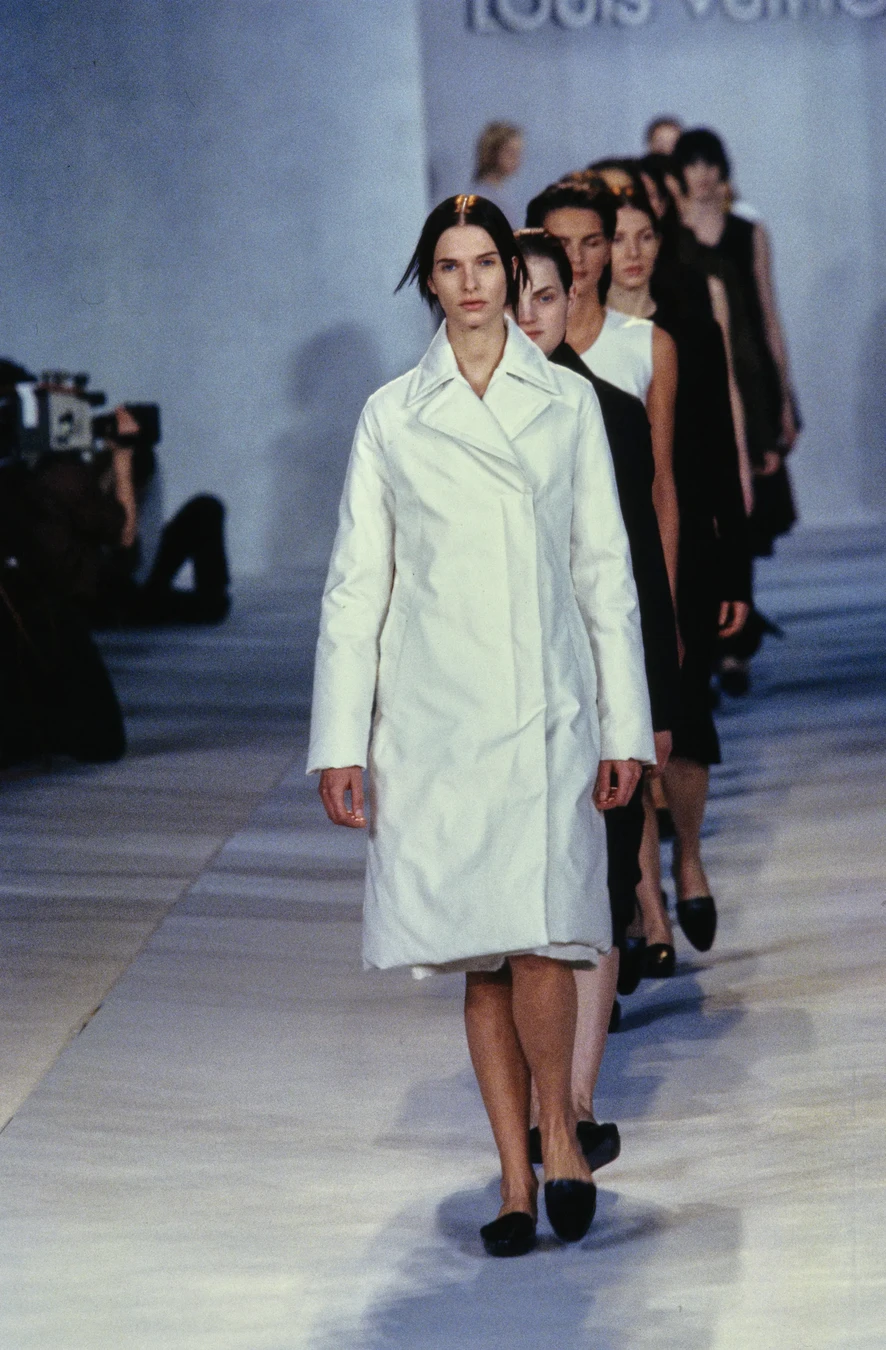
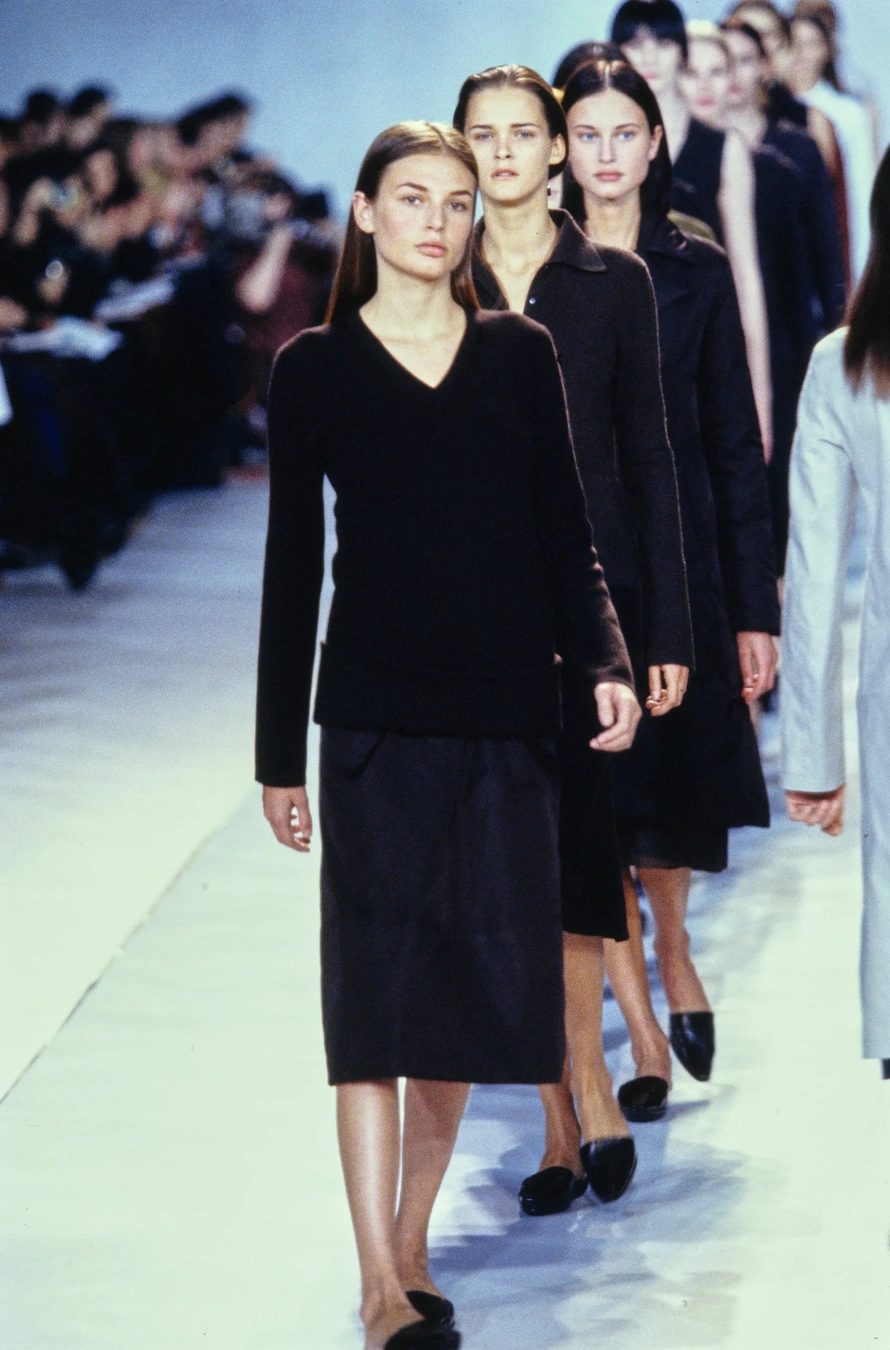
That absence shaped his first show. Presented in March 1998, the debut was sparse, muted and resolutely controlled: clean coats, simple skirts, restrained tailoring and almost no visible branding. More surprising still, a house whose commercial identity revolved around leather goods sent just one bag onto the runway. Marc Jacobs later explained that he wanted to begin at “zero,” drawing from the practical geometry and functional origins of the Vuitton trunk while expressing status with discretion.
The decision says a great deal about how carefully he approached the job. The obvious route would have been to cover a new wardrobe in Monograms and call it Louis Vuitton. He first gave the clothes enough space to establish their own credibility. The luxury came through cashmere, construction and material quality, translating the house’s standards of craftsmanship into clothing before its most recognizable symbol took over the conversation.
This restraint would eventually make the next phase much more disruptive.
When the Monogram Became a Canvas
By 2001, Marc Jacobs was ready to touch the thing that had initially remained almost sacred. For Spring 2001, he invited New York artist and designer Stephen Sprouse to scrawl graffiti across Louis Vuitton bags. Fluorescent lettering was laid over the regulated brown Monogram canvas, forcing two visual languages that seemed to belong to different worlds onto the same object. Two decades later, it called the collaboration one of contemporary fashion’s great logo “hacks.”
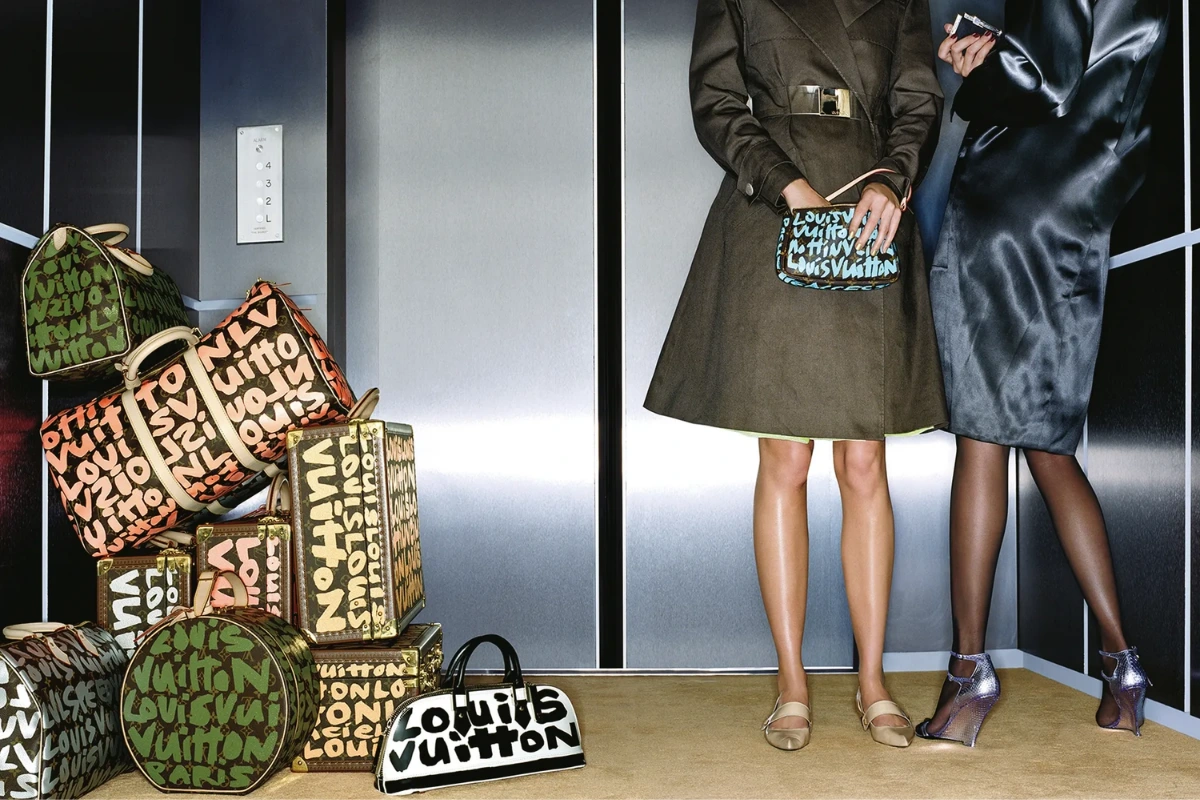
There was an important shift happening underneath the provocation. A luxury logo traditionally worked through consistency. Recognition depended on reproducing the same symbol until it accumulated history, status and trust. Marc Jacobs realized that the power of the Louis Vuitton Monogram was strong enough to survive interference. In fact, altering it could make people look at it again.
Takashi Murakami pushed the experiment further in 2003. The Japanese artist reworked the familiar brown-and-gold Monogram into the now instantly recognizable Monogram Multicolore, spreading the motif across 33 colors and introducing his flowers and cartoon imagery into Vuitton’s universe. The resulting bags became deeply embedded in early-2000s celebrity culture while collapsing several categories at once: luxury objects, fashion accessories, artist collaboration and pop-cultural collectibles.
Richard Prince followed for Spring 2008, bringing spray-painted texts and his practice of appropriation into the bags. Stephen Sprouse, Murakami and Prince differed dramatically as artists, yet Marc Jacobs used each collaboration to test the same proposition. The Monogram could carry another person’s language without losing its own.
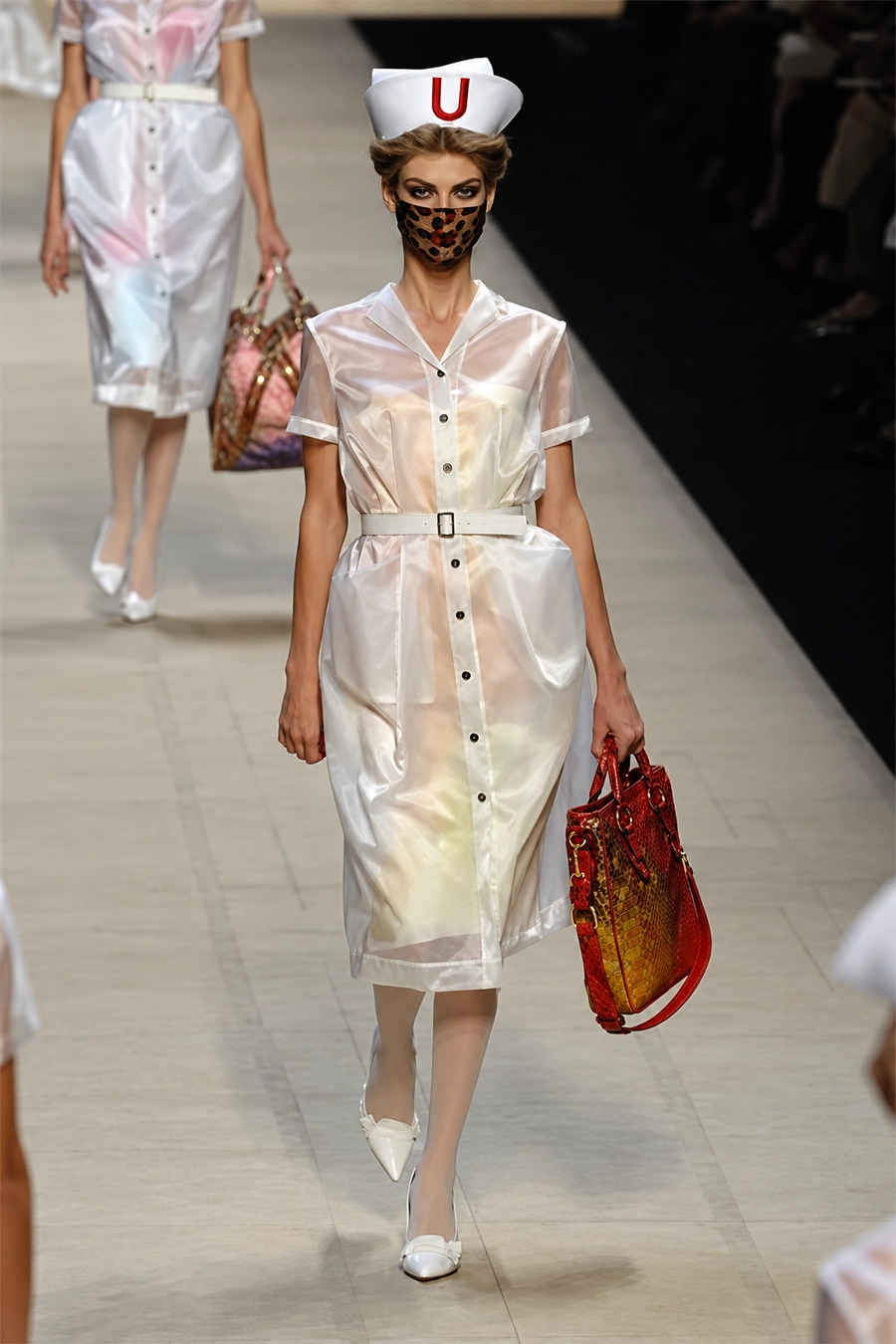
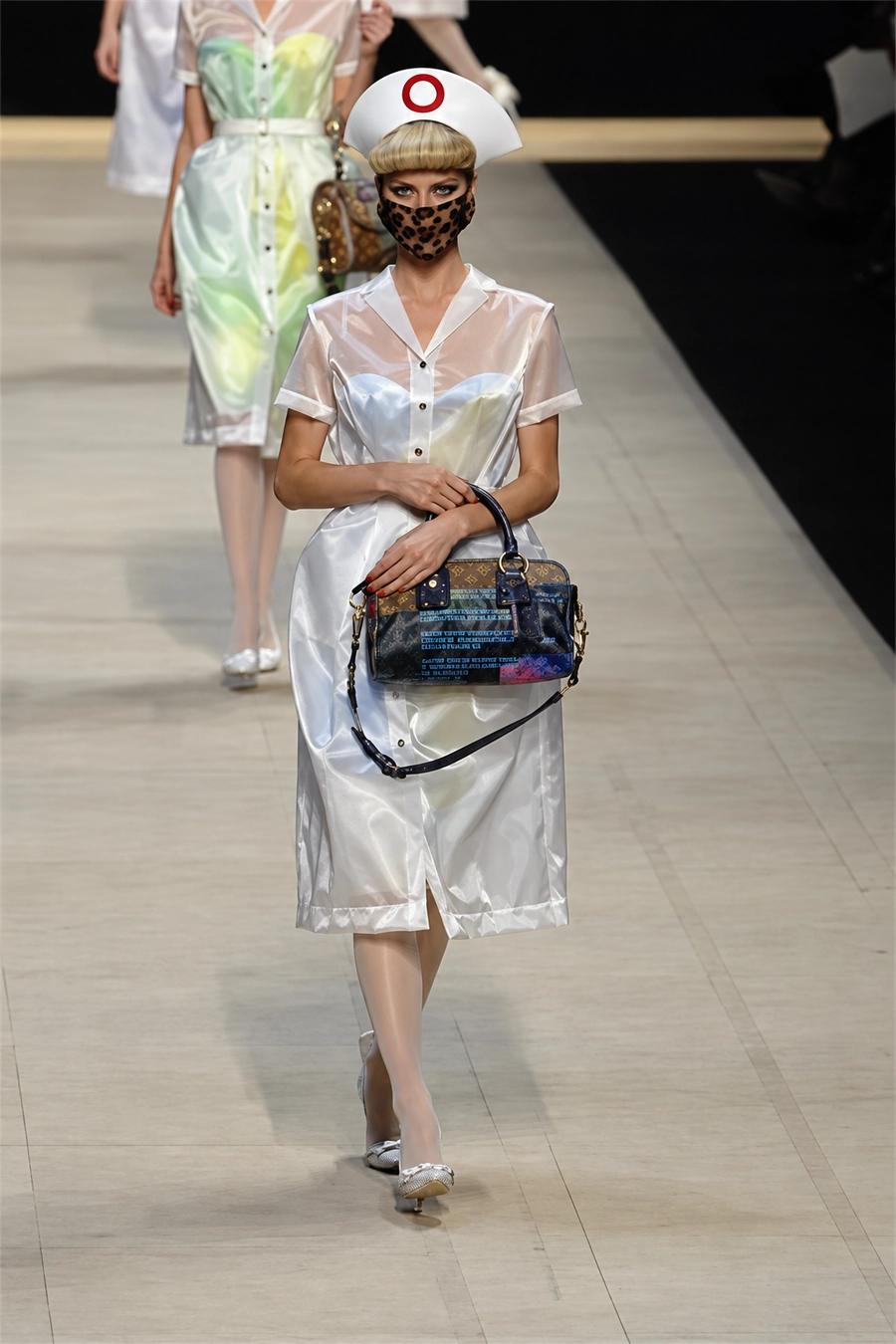
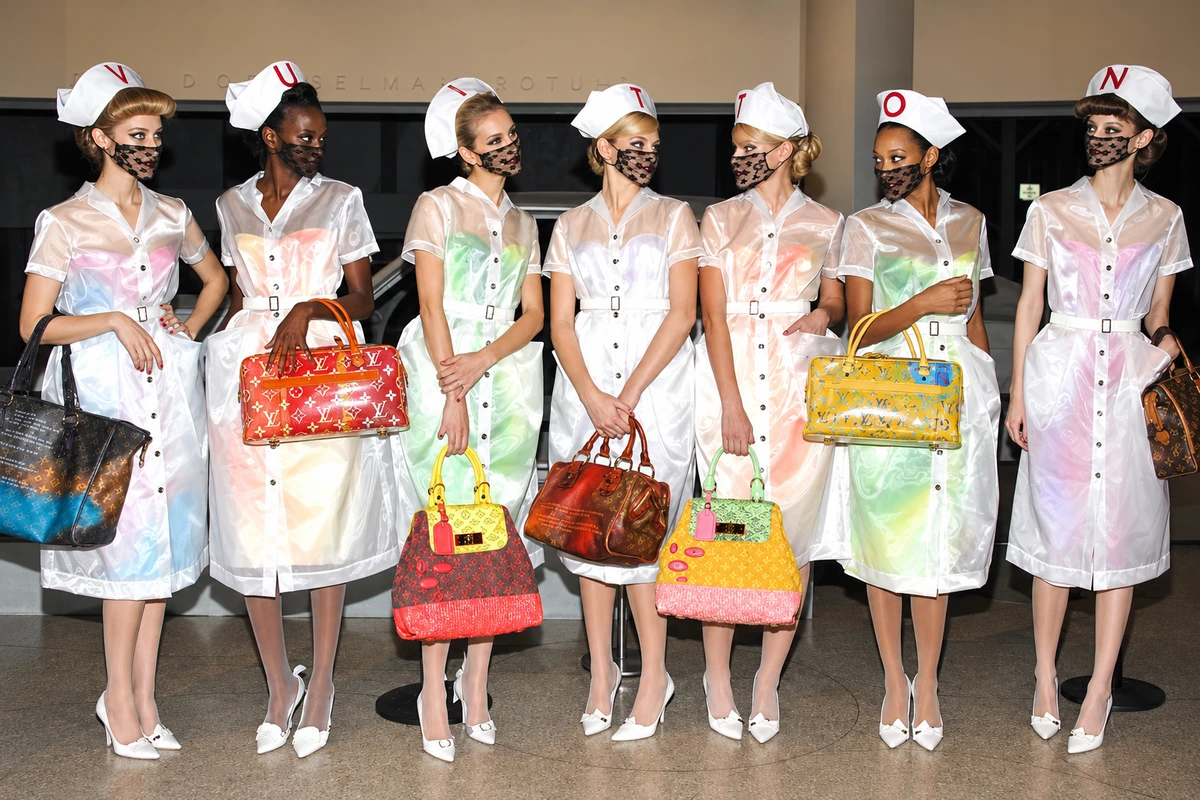
Louis Vuitton had worked with artists long before Marc Jacobs. The house dates its first artistic collaborations to 1910. What changed during his tenure was their position within contemporary luxury culture. Collaboration became highly visible, product-driven and closely tied to seasonal fashion conversation. Louis Vuitton continues to name Sprouse, Murakami and Prince as landmarks in that history, followed later by artists including Yayoi Kusama and Jeff Koons.
Building Fashion Around the Bag
The success of those bags can easily obscure the original reason Marc Jacobs was hired. His deeper assignment involved teaching a luggage house to operate according to fashion’s rhythm.
A trunk derives much of its authority from permanence. It can be repaired, inherited and used for decades. Ready-to-wear depends on constant movement. Twice a year, the designer must produce another convincing answer to what the house should look like now. Marc Jacobs therefore had to create continuity without locking Louis Vuitton into a single uniform.
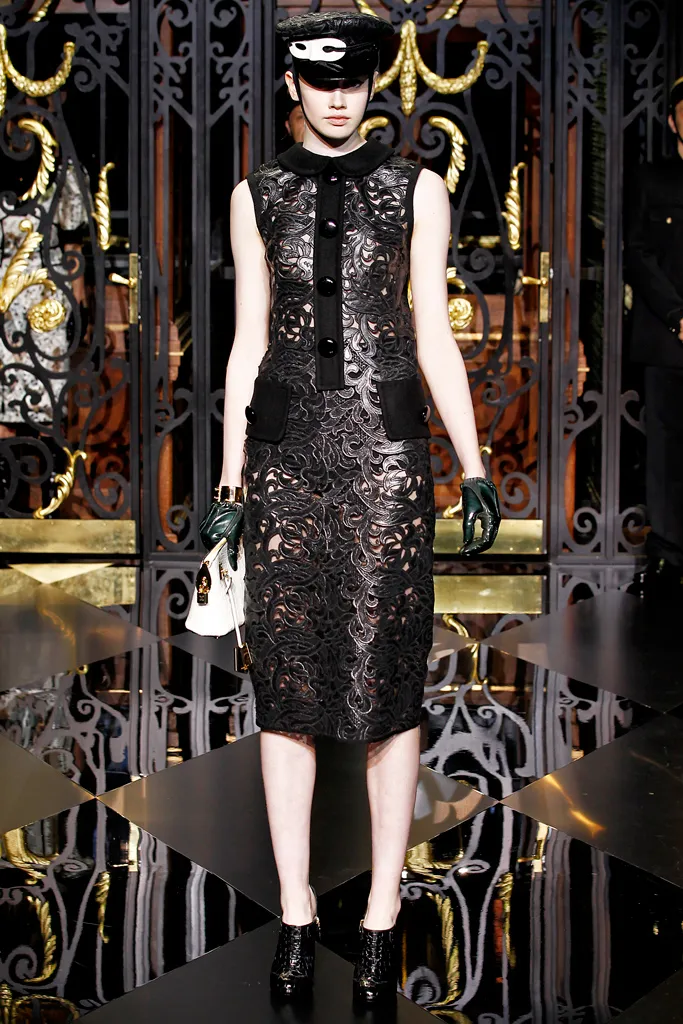
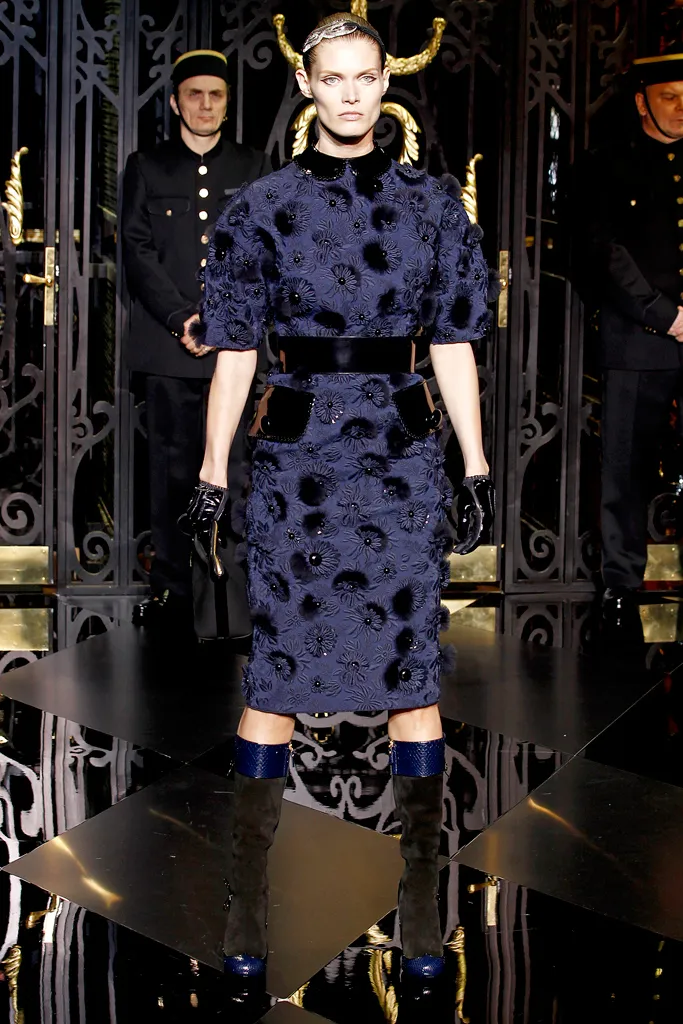
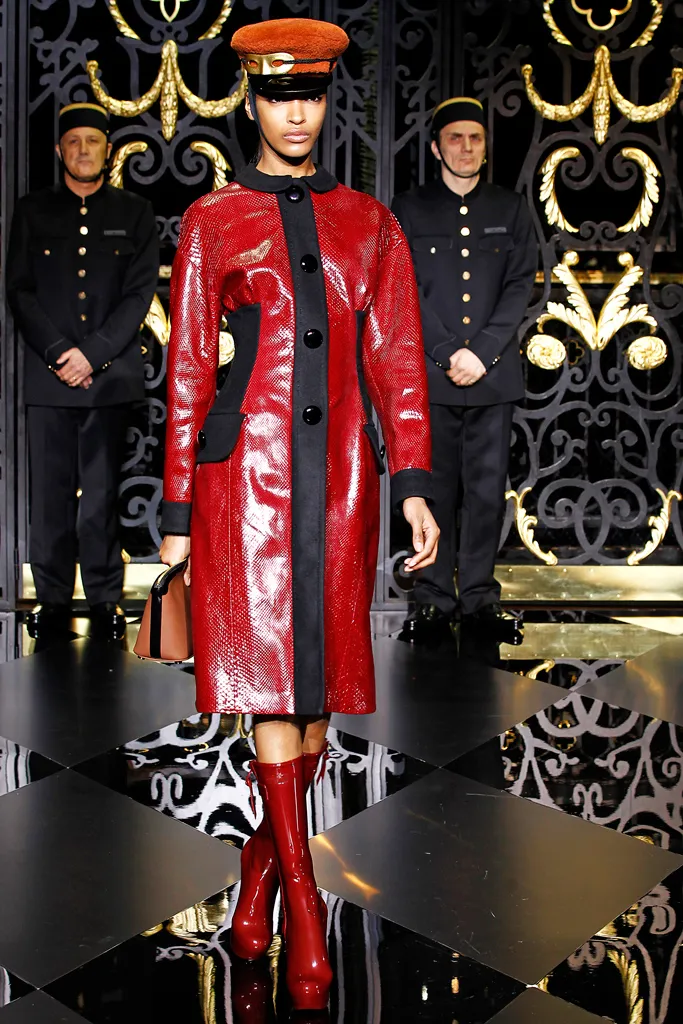
His solution was unusually elastic. Louis Vuitton under Marc Jacobs could move from clean minimalism to sugary femininity, military references, monumental volume, fetishism, or graphic geometry. That mutability was already fundamental to his namesake work, and his hands shaping the Louis Vuitton era has become a way of building fashion around a heritage largely formed through objects.
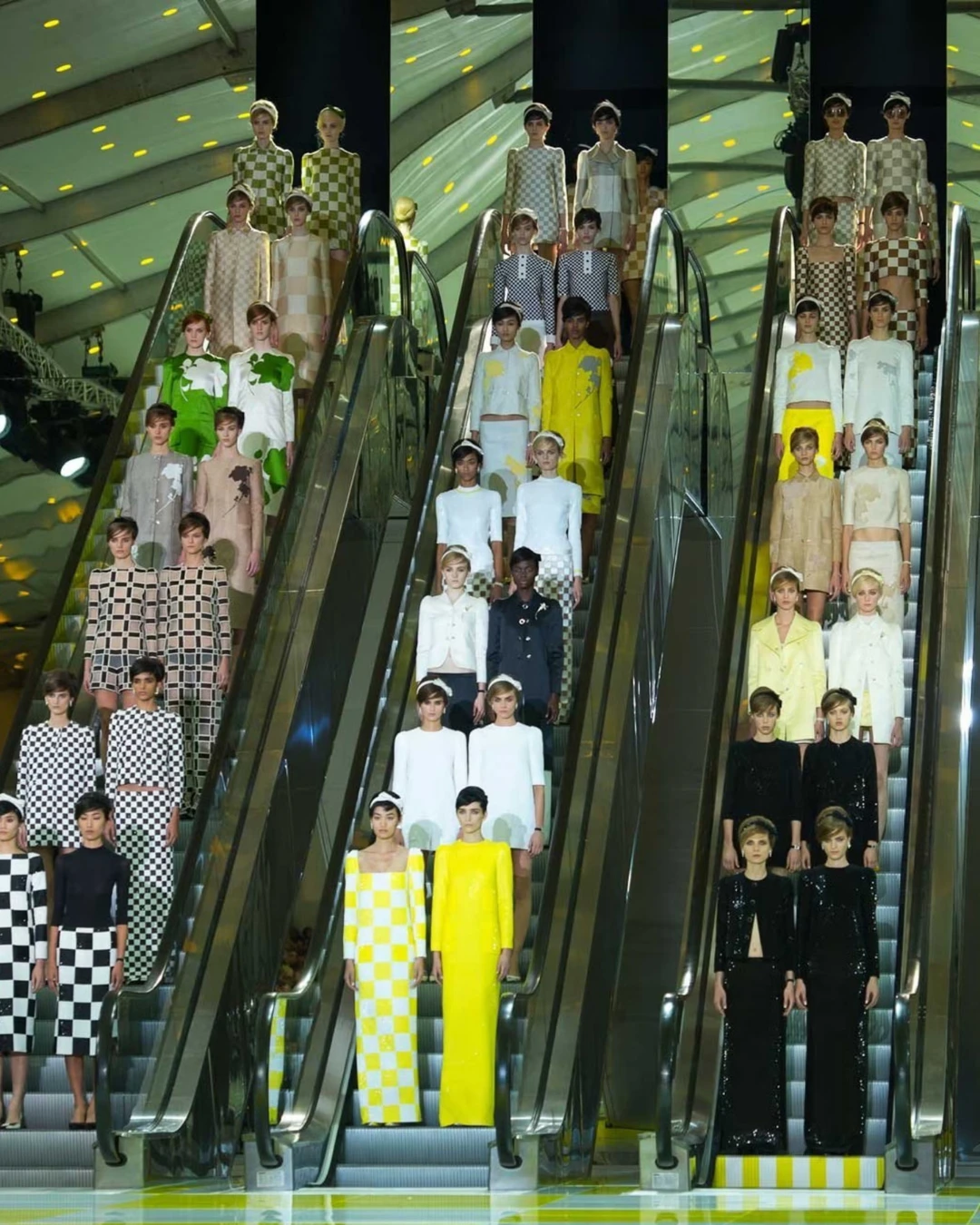
House codes could provide the connective tissue. For Spring 2013, Marc Jacobs took the Damier check, a pattern almost as fundamental to Louis Vuitton as the Monogram, and expanded its grid across clothing, bags and the show environment. Models descended four escalators in pairs as squares repeated across coats, skirts and dresses. What began as a nineteenth-century luggage pattern had become silhouette, print, choreography and architecture.
Heritage could govern the logic of an entire collection. Travel could become a mood. Damier could become geometry. Monogram could become an artist’s surface. The house slowly acquired a visual vocabulary broad enough to change every season while remaining legible.
The Runway Became a Destination
By the final years of his tenure, the quiet room of 1998 had expanded into some of Paris Fashion Week’s most elaborate environments.
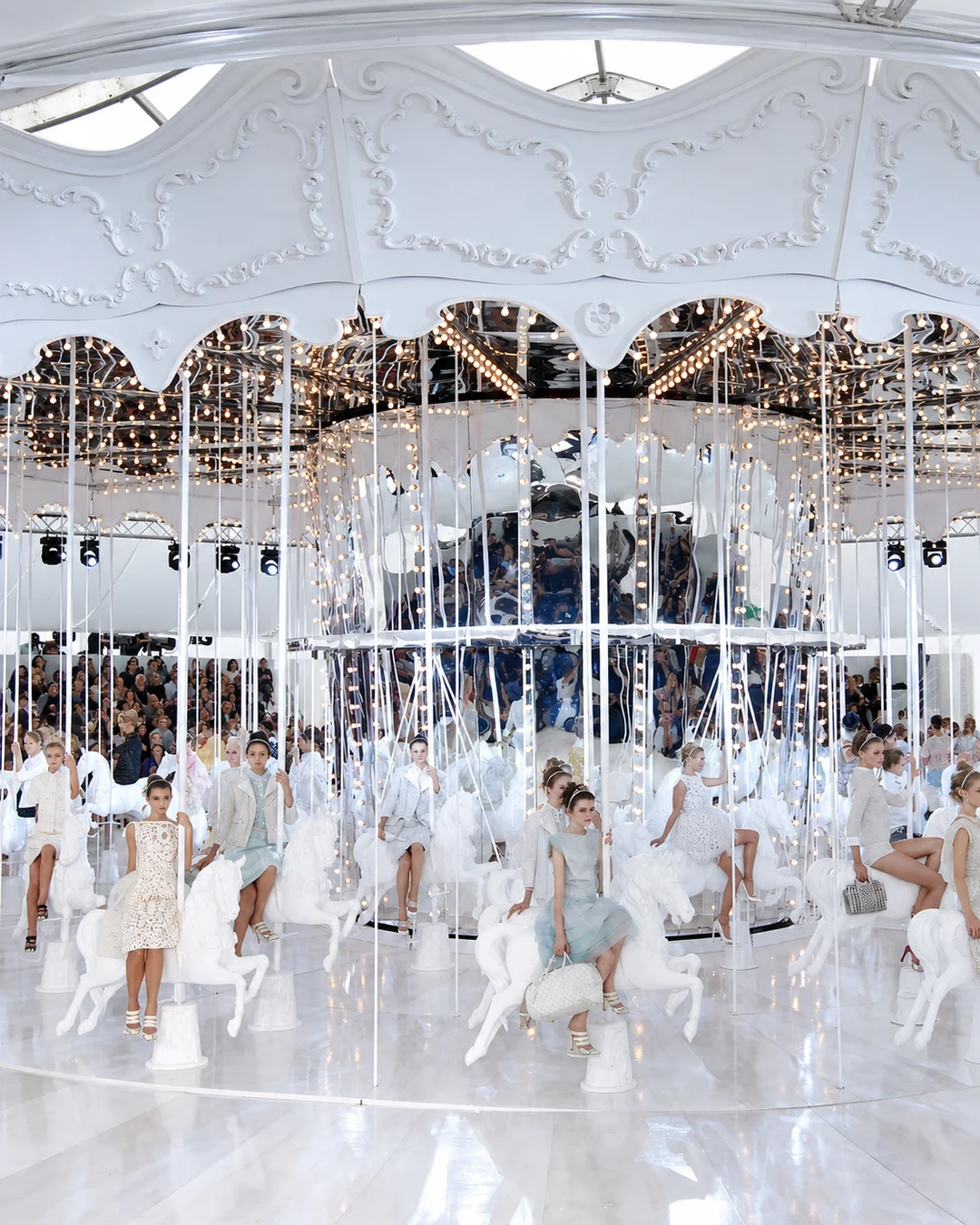
For Spring 2012, models appeared on a full carousel installed in the Cour Carrée of the Louvre. Marc Jacobs had just staged a darker, fetish-inflected season and swung toward pale colors, lace, feathers and fragile surfaces, placing the collection inside a dreamlike amusement park.
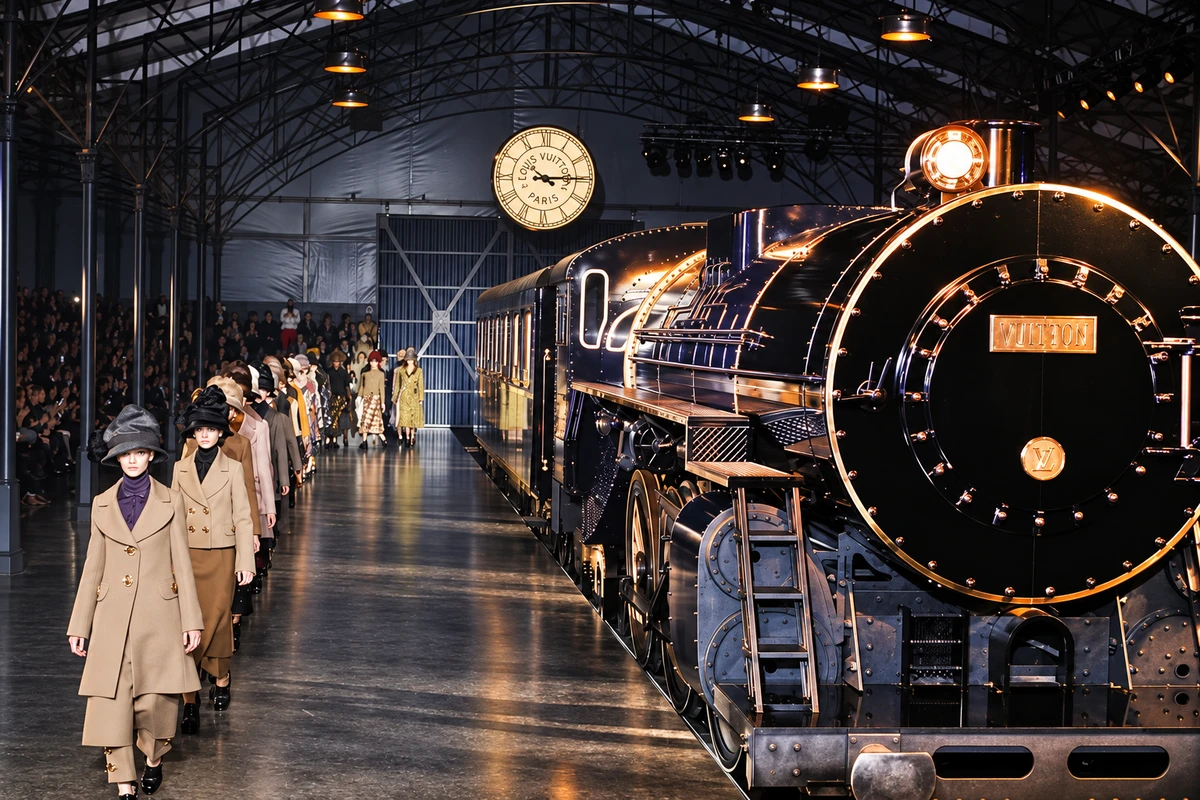
Six months later came the train. A steam locomotive entered the Cour Carrée for Fall 2012, delivering the models one by one. Each was followed by a uniformed porter carrying luggage, sometimes three bags at once. It might have looked like pure theatrical escalation, yet the concept reached directly into the oldest Louis Vuitton mythology. The company had built its name around movement, packing and an age when new forms of transport created new forms of luggage. Jacobs simply enlarged that story until the runway itself became the journey.
Then came the four escalators of Spring 2013 and the fifty numbered hotel rooms of Fall 2013. In the latter, women emerged in slips, coats and lingerie as Marc Jacobs explored the peculiar glamour, anonymity and voyeurism of hotel life. Travel had moved from the railway platform into the private room at the destination.
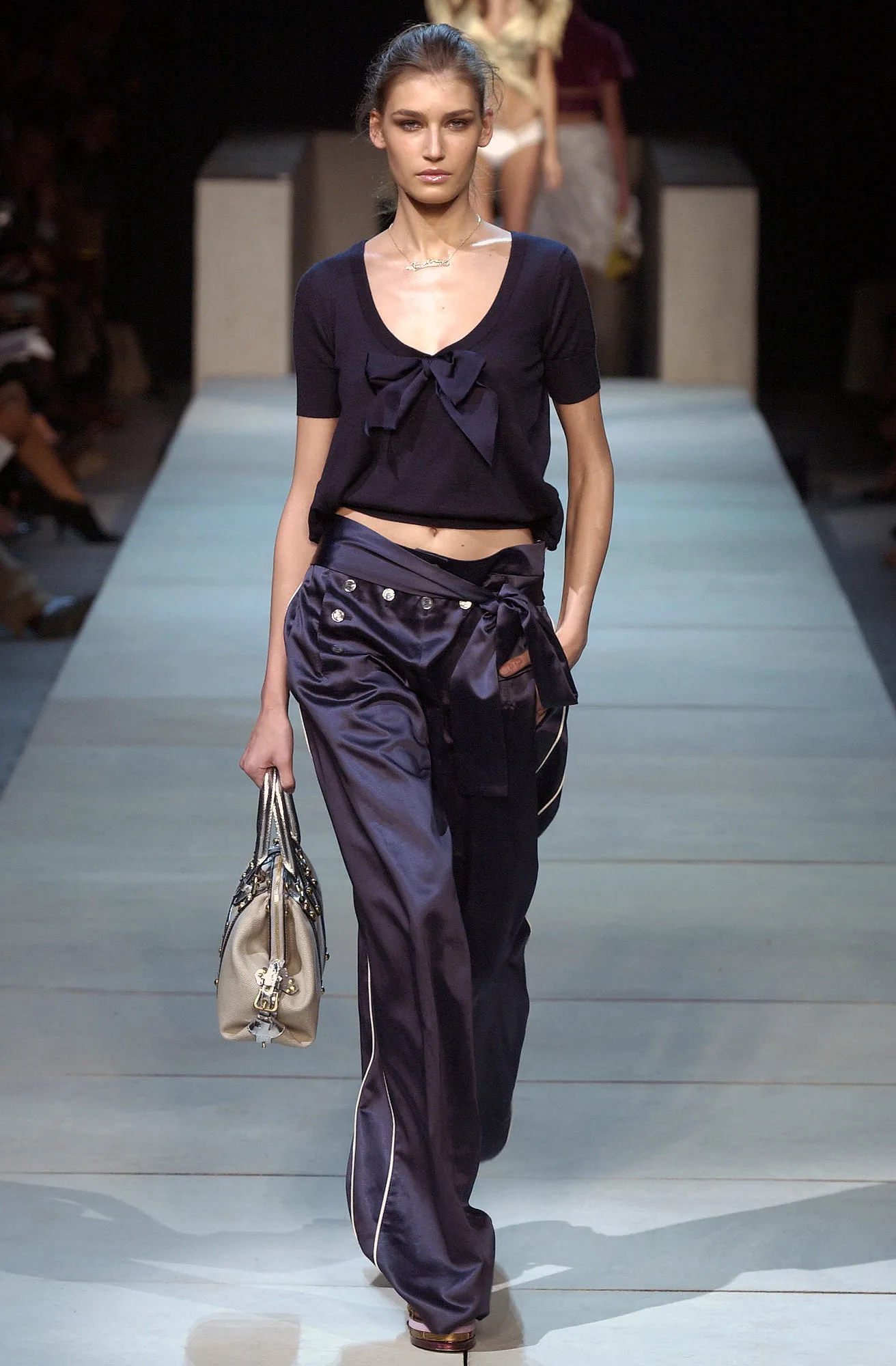
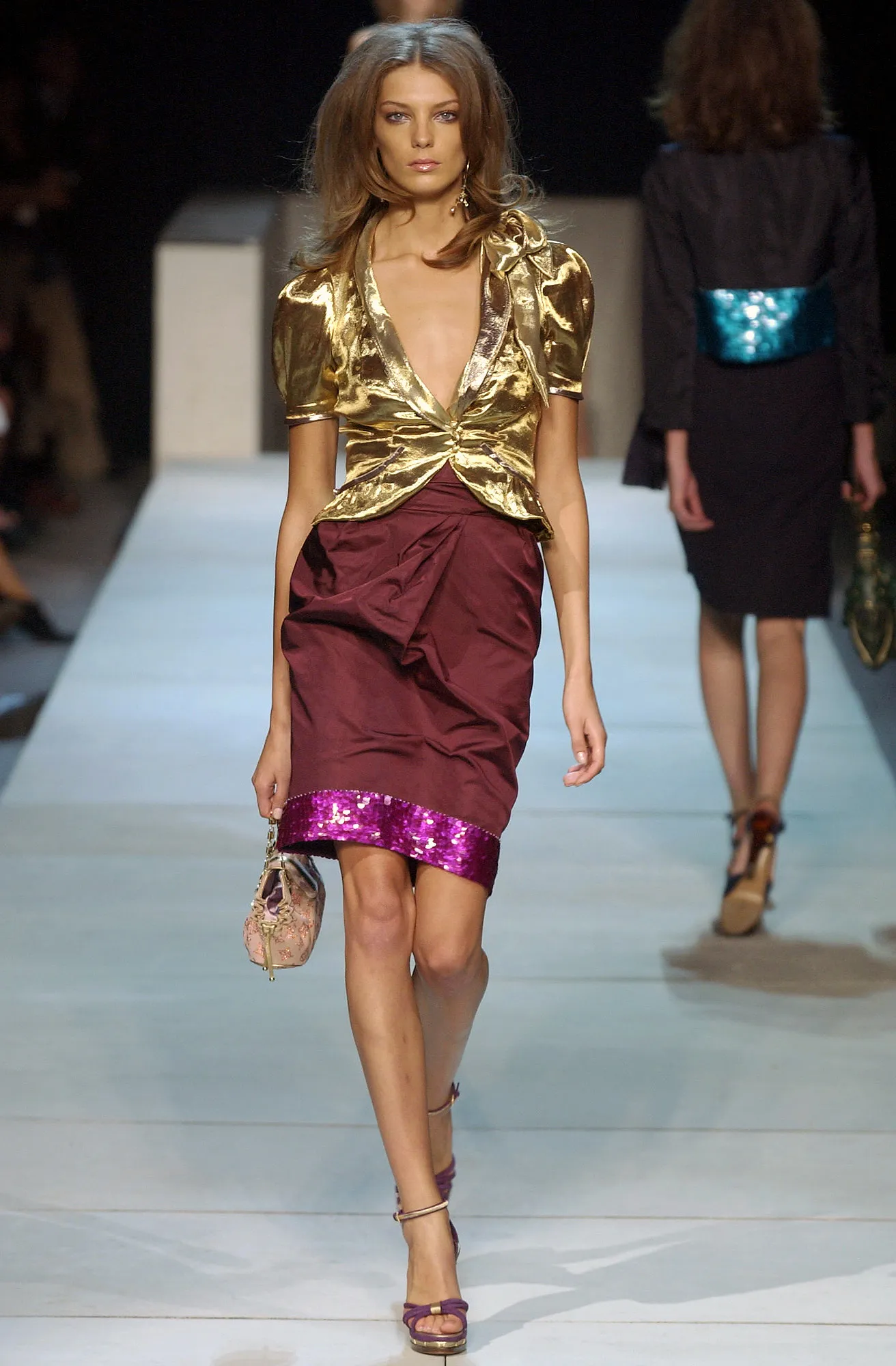
The scale makes an almost perfect measure of how far Louis Vuitton had travelled under him. In 1998, Marc Jacobs sent a single bag down his debut runway. Fourteen years later, he built a train to deliver them.
Yet the sets did more than increase spectacle. Marc Jacobs knows how a fashion show could create a memory around the products shown inside it. The carousel, train and escalators entered Vuitton’s image bank alongside the bags and garments themselves. Fashion, architecture, entertainment and branding were beginning to collapse into the same experience, a model that would become increasingly central to twenty-first-century luxury.
Sixteen Years Later, Everything Turned Black
By Spring 2014, Marc Jacobs had accumulated a visual history rich enough to become the setting for his own farewell. With the pieces all back in black, transforming familiar fragments from earlier shows into a retrospective of his sixteen years at Louis Vuitton.
The elevators returned. So did the escalators, carousel, fountain and hotel corridors. This time they were unified in black, along with a collection filled with feathers, embellishment and elaborate surfaces. Marc Jacobs dedicated the show to women who had influenced him, including Coco Chanel, Rei Kawakubo and Miuccia Prada. Afterward, he and longtime business partner Robert Duffy confirmed that they would leave Louis Vuitton and focus their attention on the Marc Jacobs company.
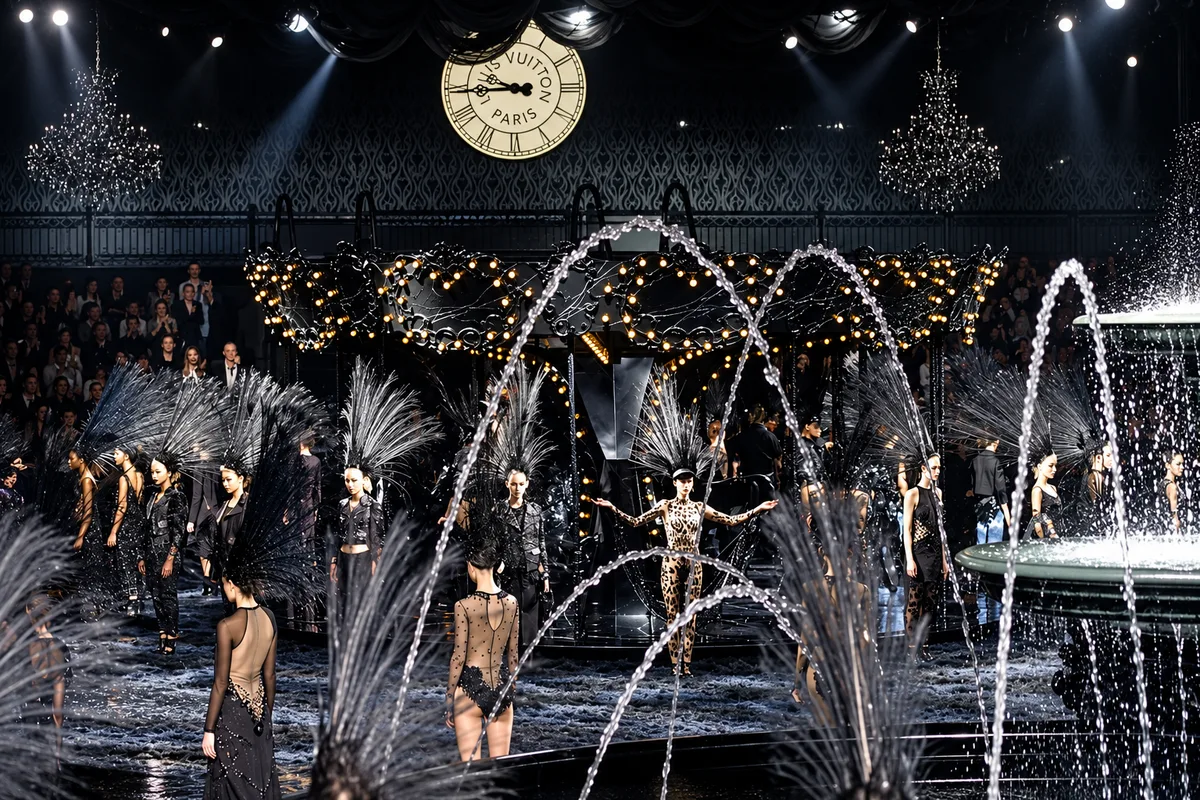
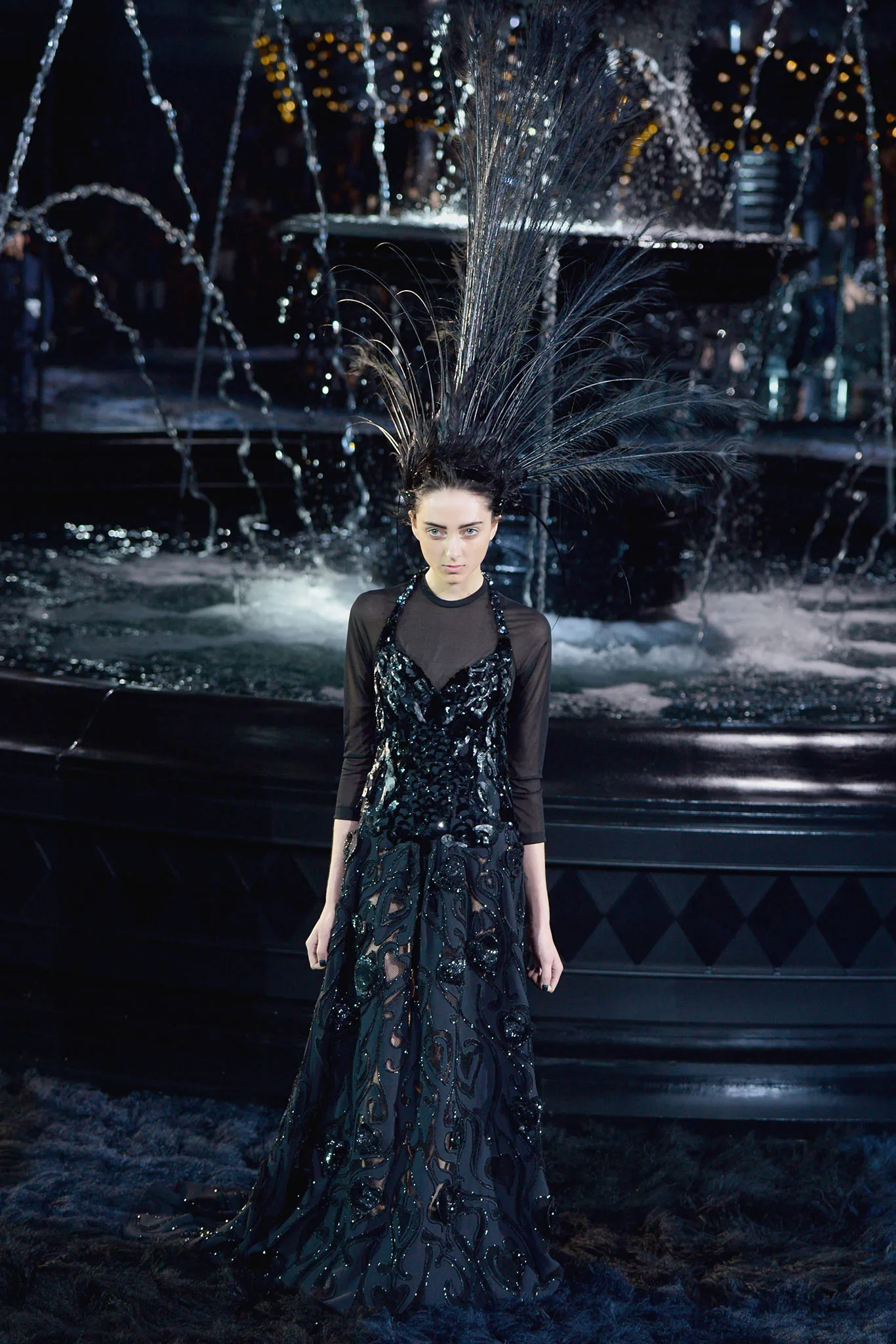
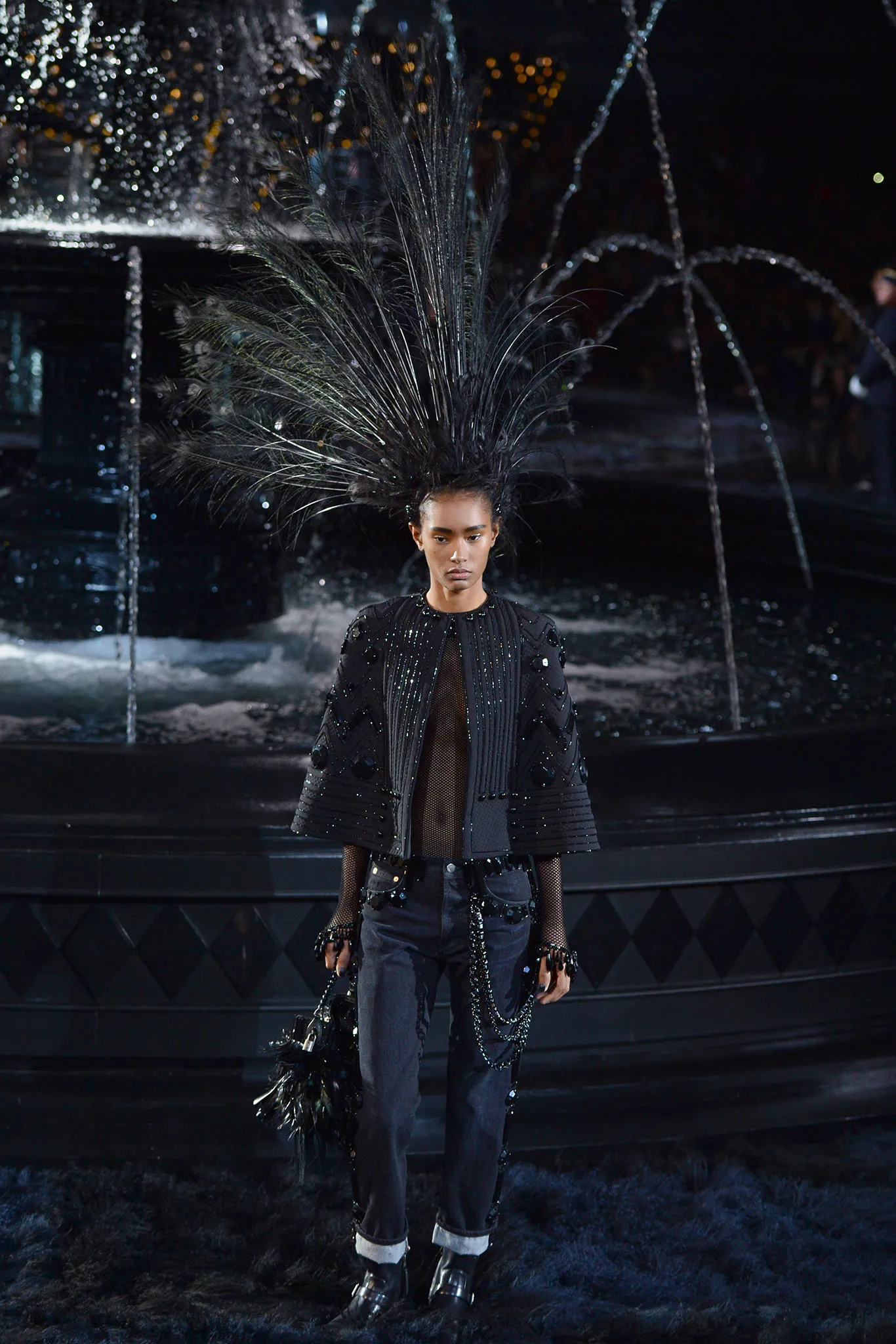
Seen beside his debut, the farewell reveals the actual scale of the work completed between them. Louis Vuitton began Jacobs’s tenure with an extraordinary history of trunks, travel and leather goods. It ended those sixteen years with a ready-to-wear identity, a powerful seasonal runway culture and a contemporary model for allowing art, commerce and heritage to occupy the same object. The house itself credits Marc Jacobs with revitalizing Louis Vuitton through his collections, spectacular shows and collaborations during that period.
Nicolas Ghesquière would arrive afterward and establish a womenswear language unmistakably his own. That possibility is part of Jacobs’s legacy too. Louis Vuitton no longer depended on one fixed aesthetic to prove that it belonged in fashion. The framework was strong enough to accommodate another designer, another vocabulary and another era.
What Marc Jacobs Left at Louis Vuitton
Marc Jacobs’s most consequential legacy may be the amount of creative freedom he left behind. By the end of his tenure, Louis Vuitton no longer needed one permanent silhouette or one narrow definition of taste to remain recognizable. Its identity had become elastic enough to accommodate radically different designers, each capable of pulling the house toward another cultural moment while the name still held together. That elasticity would prove crucial after 2013, when Nicolas Ghesquière arrived with a far more futuristic, architectural vocabulary and still inherited a maison already accustomed to transformation. Marc Jacobs had spent sixteen years making change itself feel native to Louis Vuitton.
His tenure also established a scale of ambition that continued long after his departure. Louis Vuitton emerged from those sixteen years with fashion embedded into its identity, with runway shows capable of becoming cultural events and artistic collaboration functioning as part of the house’s contemporary language. The designers who followed inherited more than an established ready-to-wear division. They inherited a maison that had already learned how far its codes could travel.
Marc Jacobs entered Louis Vuitton to create a wardrobe for a house famous for carrying one. By the time he left in 2013, he had given Louis Vuitton something harder to manufacture than a hit bag or a memorable show: the freedom to keep reinventing itself.
Advertisement