Takashi Murakami turned Superflat into one of contemporary art’s sharpest visual languages, where smiling flowers, mutant mascots, luxury collaborations, and postwar anxiety all live on the same dazzling surface. Beneath the candy colors lies a far more complex story about Japanese art history, consumer culture, and the strange emotional power of pop.
The Dimensions of Takashi Murakami's Superflat
Takashi Murakami turned Superflat into one of contemporary art’s sharpest visual languages, where smiling flowers, mutant mascots, luxury collaborations, and postwar anxiety all live on the same dazzling surface. Beneath the candy colors lies a far more complex story about Japanese art history, consumer culture, and the strange emotional power of pop.
April 12, 2026


Takashi Murakami is often filed under the easy headline of “the Andy Warhol of Japan,” but Murakami has always been far trickier, sharper, and much more culturally loaded than a neat comparison allows. His work is where Edo-period discipline flirts shamelessly with otaku obsession, and where the museum wall suddenly starts speaking fluent consumer desire. To enter Murakami’s universe is to watch high culture and pop culture stop pretending they live in separate neighborhoods.
Part of the delicious irony is that Murakami arrived at this glossy rebellion through one of the most rigorous routes imaginable. He became the first person to earn a Ph.D. in Nihonga, the highly traditional style of Japanese painting, from the Tokyo National University of Fine Arts and Music. He spent eleven years absorbing that ancient medium, then rarely picked up a brush again. Instead, he used that hard-won mastery to explode the whole thing into smiling flowers, mutant mascots, and a theory of culture dressed in candy colors.
That mischievous streak, of course, did not charm everyone at first. Early on, Murakami struck the Japanese art establishment as too commercial, slick too willing to let luxury, merchandise, and fine art mingle in public. Meanwhile, New York and Paris understood the provocation immediately and welcomed him as a prophet of a new visual order. By the time Japan embraced him fully, Murakami had already returned crowned by international acclaim, auction heat, and the kind of market power that tends to make former skeptics suddenly discover excellent taste.
Superflat As a Theory Of Culture
Murakami’s most influential contribution remains Superflat, the concept he introduced around 2000 and has continued to refine ever since. Superflat functions on two levels:
Aesthetically, Superflat refers to the literal flatness of Japanese visual culture — from 18th-century woodblock prints (ukiyo-e) to modern-day 2D anime and manga. Murakami argues that Japanese art lacks the Western obsession with 3D perspective.
And culturally, Superflat critiques the "flattening" of Japanese society after WWII. In Murakami's view, the distinction between "high art" (museum-grade) and "low art" (commercial products) has collapsed in Japan, creating a consumerist culture where a $50,000 painting and a $20 keychain carry similar weight
This theory is the defining factor that puts Takashi Murakami at the center of the globalized art world in the 21st century. He understood early that art would live inside fashion, music, merchandise, digital platforms, and luxury retail as much as inside galleries. Instead of resisting that shift, he made it his central method. Superflat therefore reads as both aesthetic philosophy and cultural weather report. It explains why Murakami can quote Hokusai and still speak fluently in the language of anime, mass production, and luxury spectacle.
Smiling Flowers, Mr. DOB, Kaikai and Kiki
Most artists have a trademark, and so does Takashi Murakami. He built a cast of recurring motifs that behave almost like brand ambassadors for his universe, each one charming on arrival and faintly unsettling on closer inspection. Mr. DOB came first, a mascot-like creature with cartoon DNA and a wonderfully unstable identity, shifting across Murakami’s career from playful emblem to unruly mutant, as if cuteness itself had started to crack under pressure.
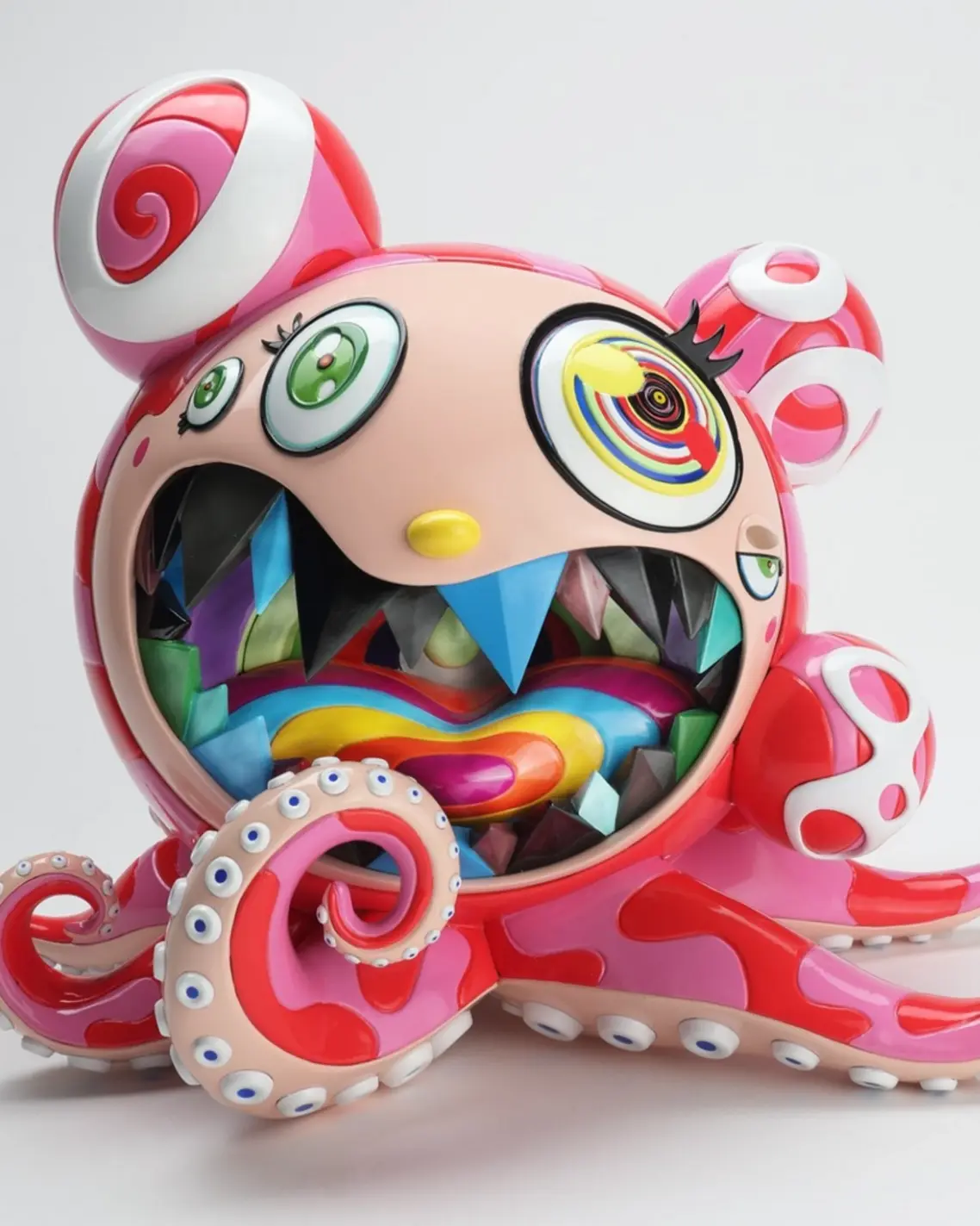
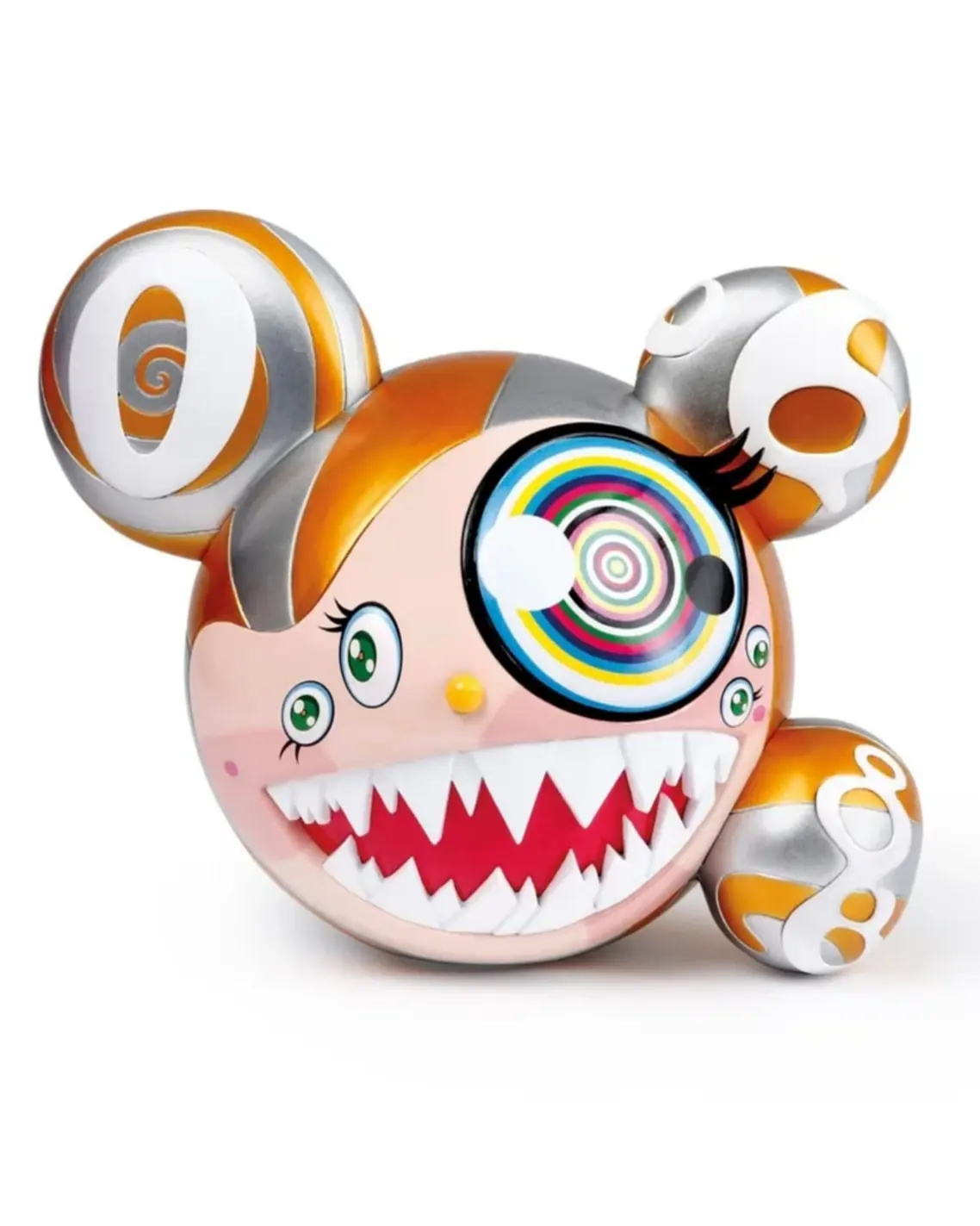
The same delicious tension powers his famous smiling flowers, which look at first like pure joy rendered in candy colors, yet carry something more theatrical and uncanny beneath the gloss, their cheerfulness so polished and repeated it begins to feel like a performance of happiness rather than happiness itself.
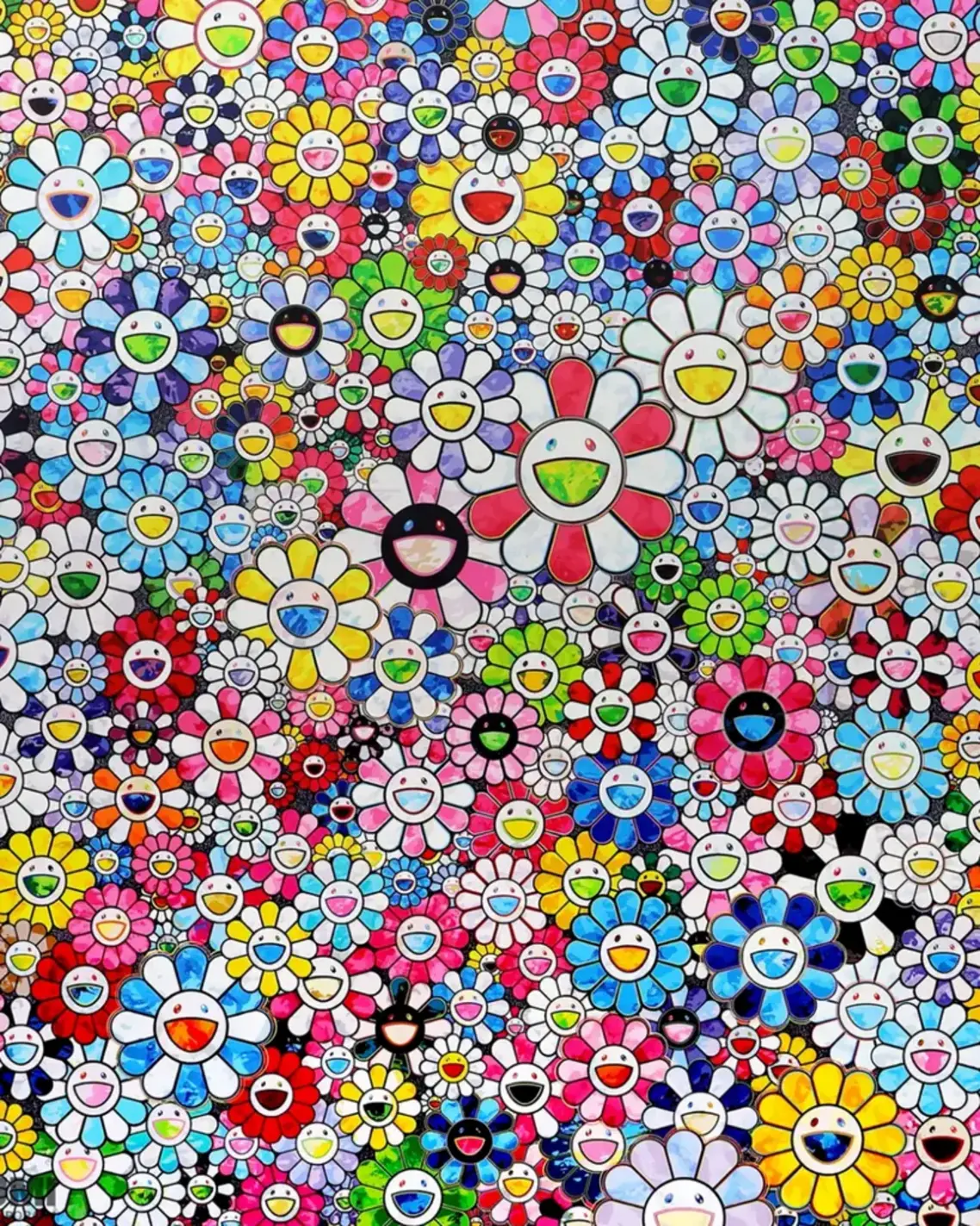
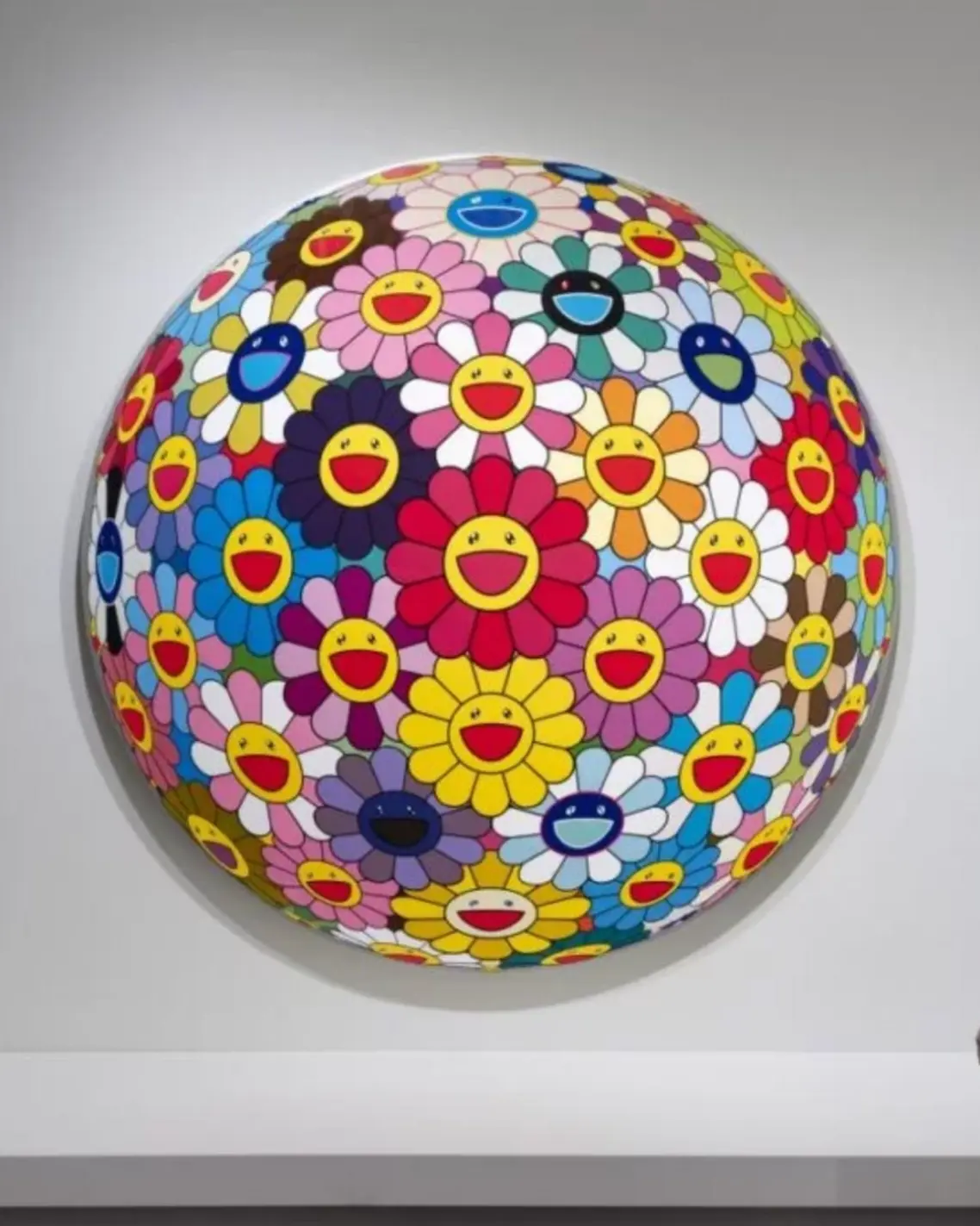
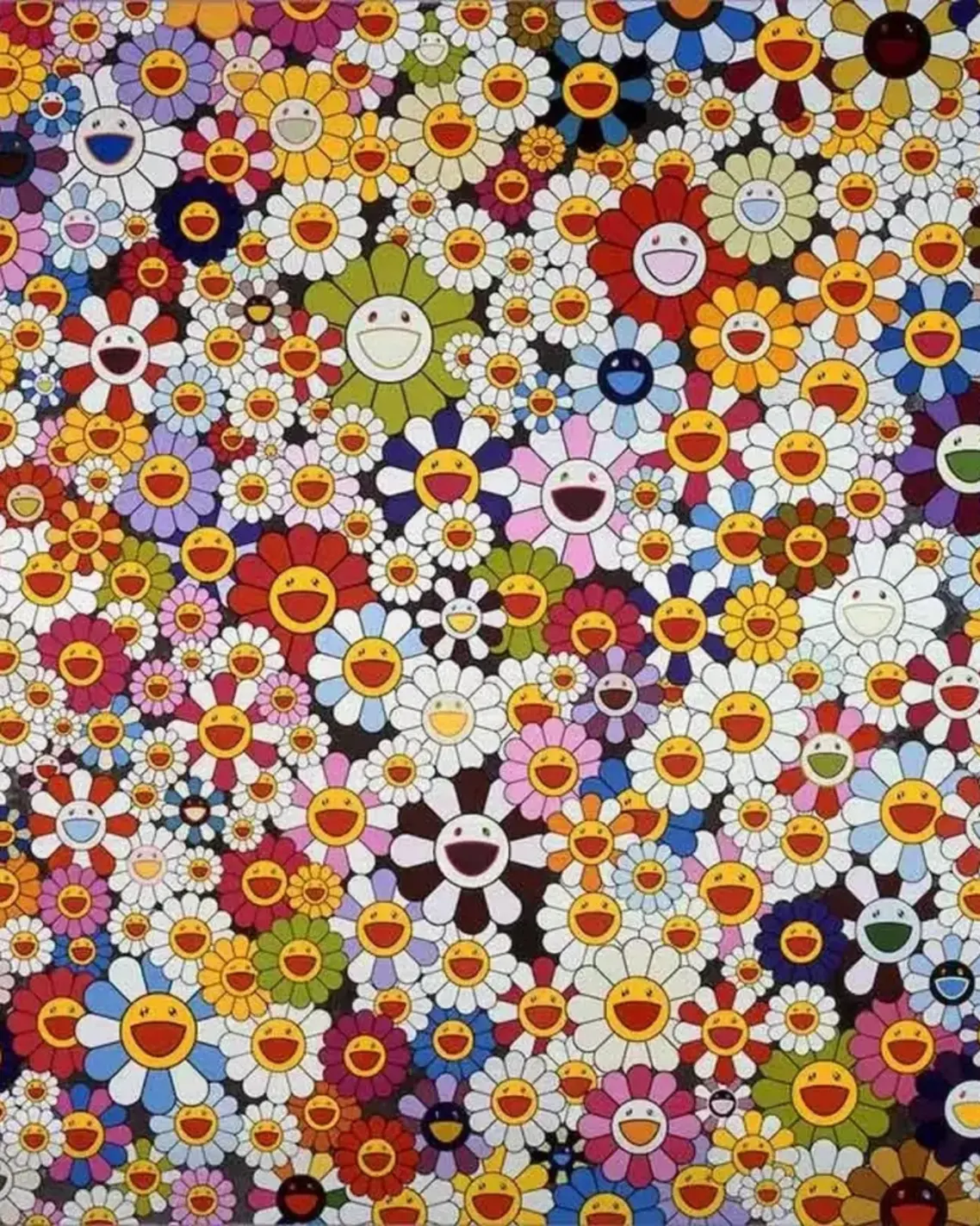
Kaikai and Kiki deepen that game further. Rooted in an older Japanese vocabulary of the strange and the delicate, they reveal one of Murakami’s sharpest instincts: He never uses pop as decoration alone, but loads it with art history, cultural memory, postwar unease, and subcultural charge.
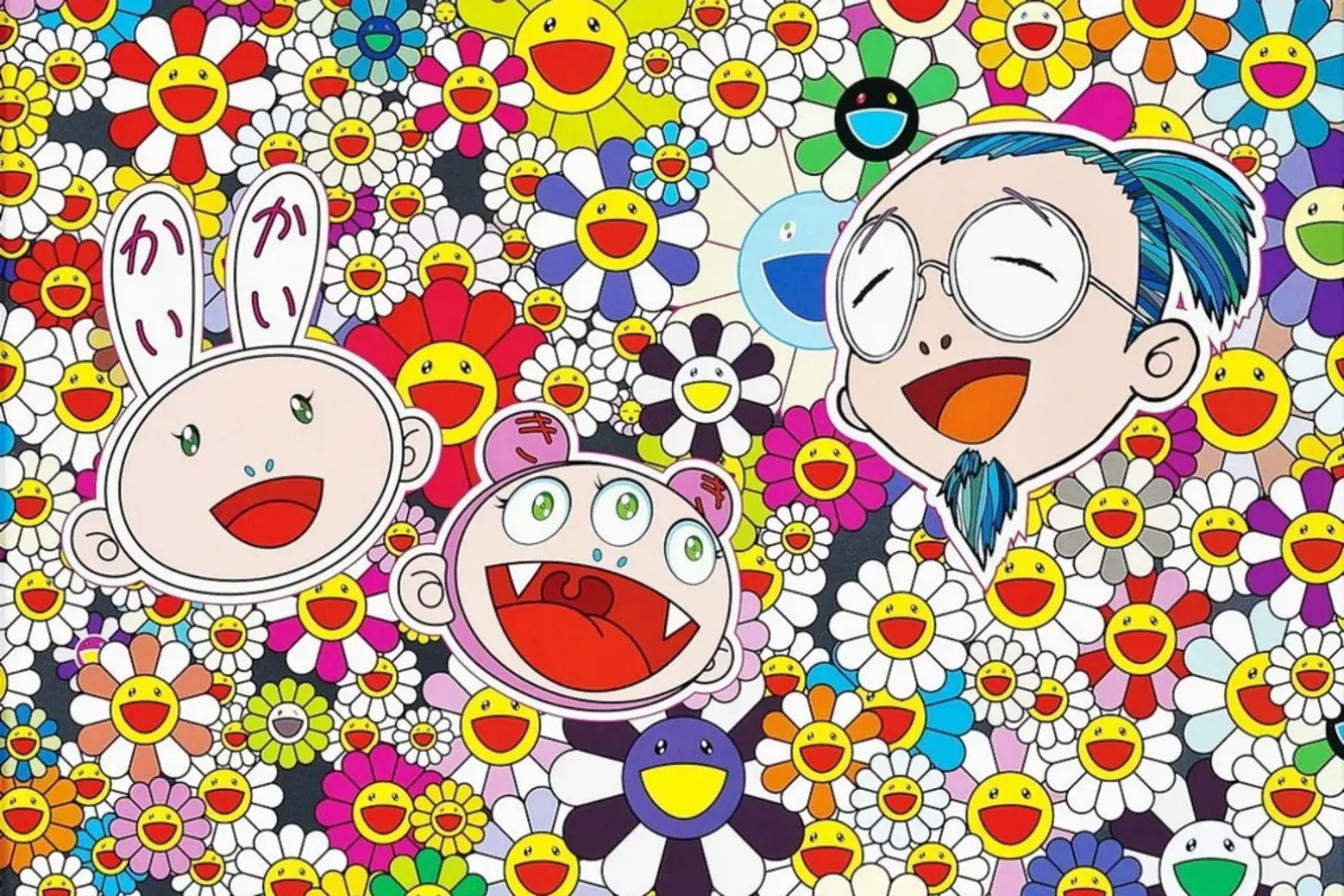
Through Kaikai Kiki, his Saitama-based company, Takashi Murakami operates like a director, conductor, and mogul at once, orchestrating a studio system of more than 100 people that functions with the precision of an animation house. Assistants execute canvases to an almost machine-perfect finish, while Murakami oversees the concept, structure, and visual mathematics behind the image. At the same time, he mentors younger artists such as MADSAKI and Mr., shaping Kaikai Kiki into both a production engine and a cultural succession plan.
Works That Made Takashi Murakami
Takashi Murakami's "Mona Lisa" is 727 from 1996. The work takes the format of a traditional folding screen and inserts Mr. DOB into a stylized wave charged with Japanese art historical memory. That clash is where the painting gets its force. Takashi Murakami places a cartoon figure inside a surface built with extraordinary rigor, layering acrylic again and again, then sanding it down to achieve an aged, almost sacred aura that recalls Nihonga. Here, pop is riding straight through tradition.
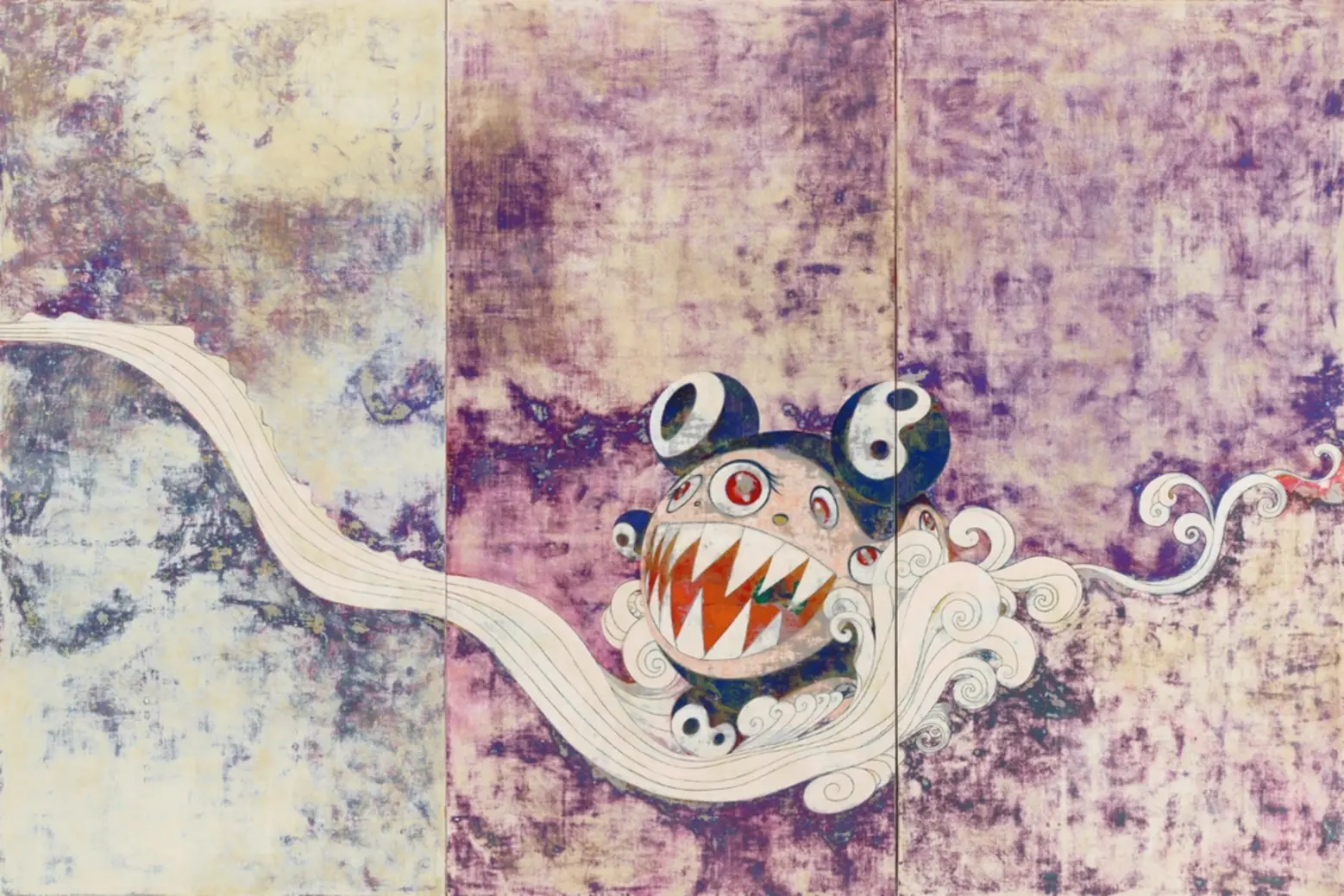
The title sharpens the point: 727 refers to the Boeing planes Murakami saw in postwar Japan, a quiet nod to the American influence that helped reshape the country’s cultural landscape. The result is a playful and technical work that shows Murakami turning Japanese visual heritage and contemporary image culture into the same wave.
A second defining work is My Lonesome Cowboy from 1998, one of Murakami’s most provocative sculptures. This life-sized figure, with its blue hair, anime-derived stylization, and confrontational bodily exaggeration, became a flashpoint for the way Takashi Murakami pushed otaku fantasy into the center of contemporary art. Created as part of his Hiropon cycle, the sculpture explores eroticized excess, obsession, and the psychic loneliness that can hide beneath fantasy culture’s glossy surface.
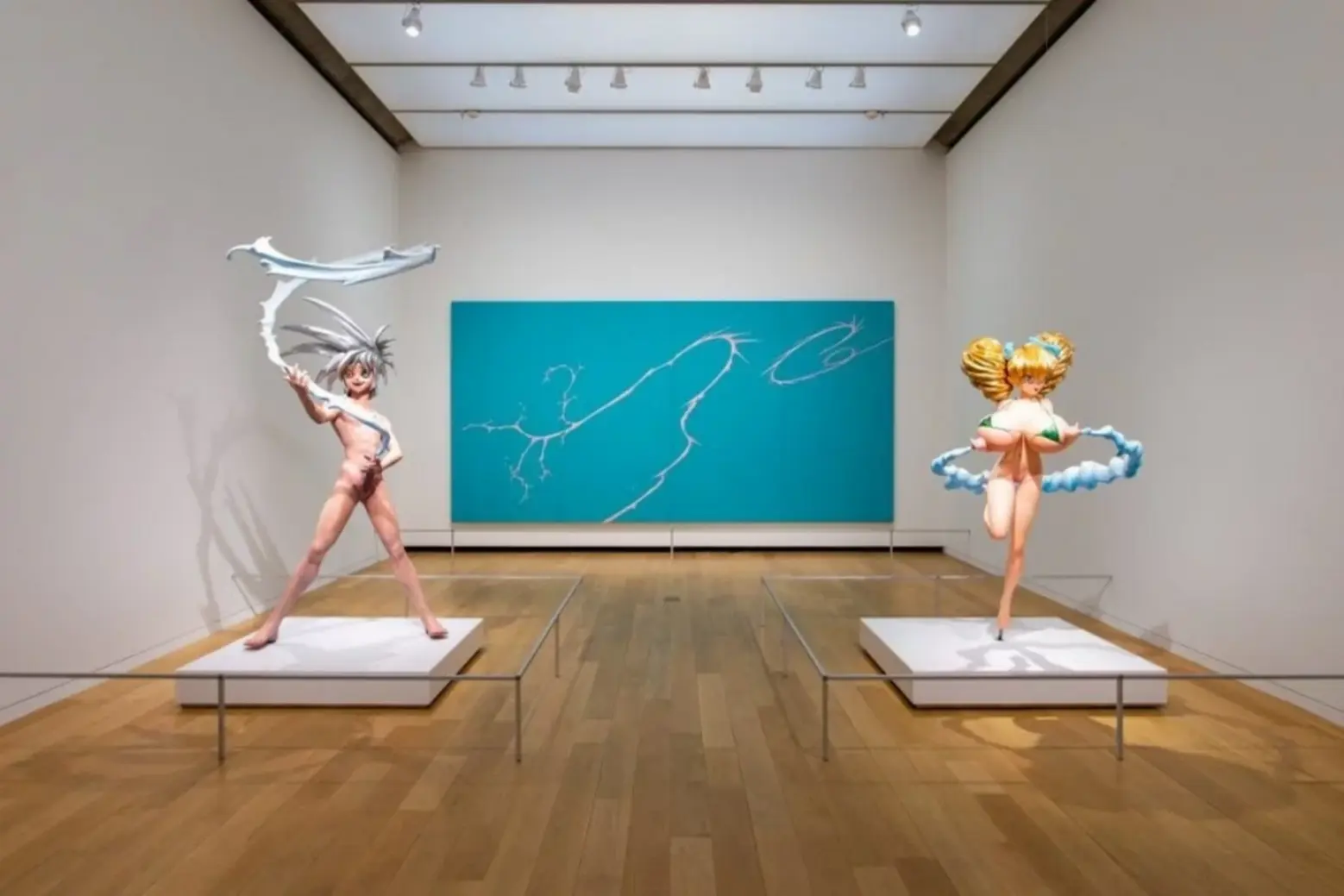
Takashi Murakami refused tasteful restraint here and chose spectacle with a sickly undertow, humor laced with discomfort. That intensity made the work unforgettable, and it remains one of his most expensive pieces at auction, selling for $15.16 million, with similar large-scale sculptures now carrying even higher private-sale prestige.
Then comes Tan Tan Bo Puking from 2002, a huge, chaotic, candy-colored detonation in which Takashi Murakami’s universe seems to rupture from within. The painting takes the familiar logic of cartoons and pushes it into something far more feverish, grotesque, and psychologically loaded: Mr. DOB mutates into a melting monster, spitting out color and dissolving into a frenzy of eyes, teeth, and viscous forms. The surface is bright, almost sugary, yet the emotional register is unmistakably dark.
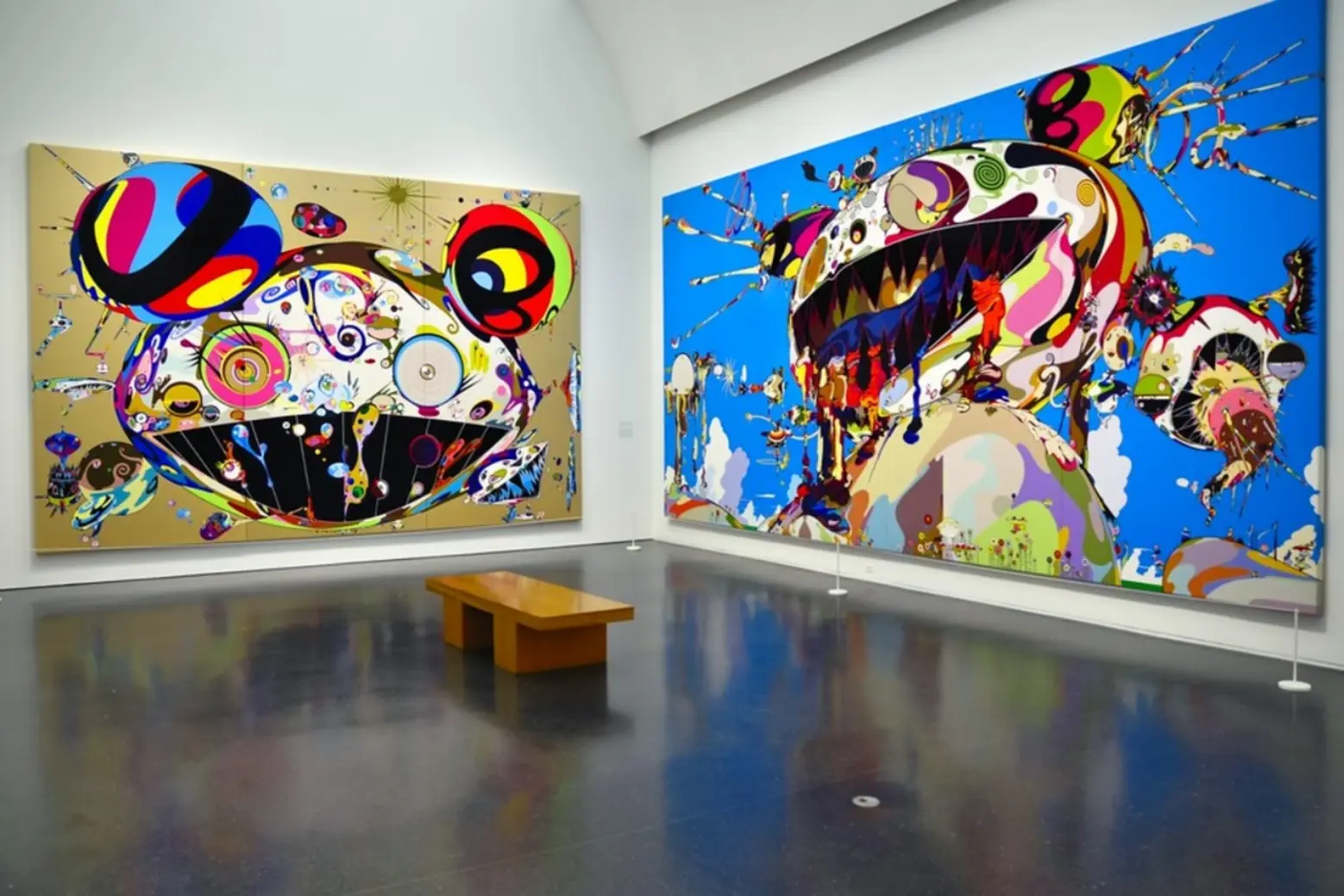
Critics have often read paintings like this through the lens of Japan’s deeper historical anxieties, especially nuclear trauma and postwar psychic disturbance, with the mutated body echoing a long visual history of damage, fear, and transformation. Takashi Murakami filters all of that through his superflat language, turning horror into spectacle and spectacle into critique.
Takashi Murakami in the Present
Takashi Murakami is less like an artist settling into a legacy and more like an artist widening the circuitry of his own universe.
In recent exhibitions, including his 2026 solo show at the Perrotin in Los Angeles, Murakami has entered what feels like a new cognitive phase, turning his attention toward the long visual journey between Japan and the West. By reinterpreting figures such as Katsushika Hokusai and Claude Monet, and reworking paintings like Woman with a Parasol through his slick squeegee surfaces and Superflat cast of characters, he traces how Japanese flatness traveled outward during the 19th-century Japonisme movement and returned transformed into contemporary pop.
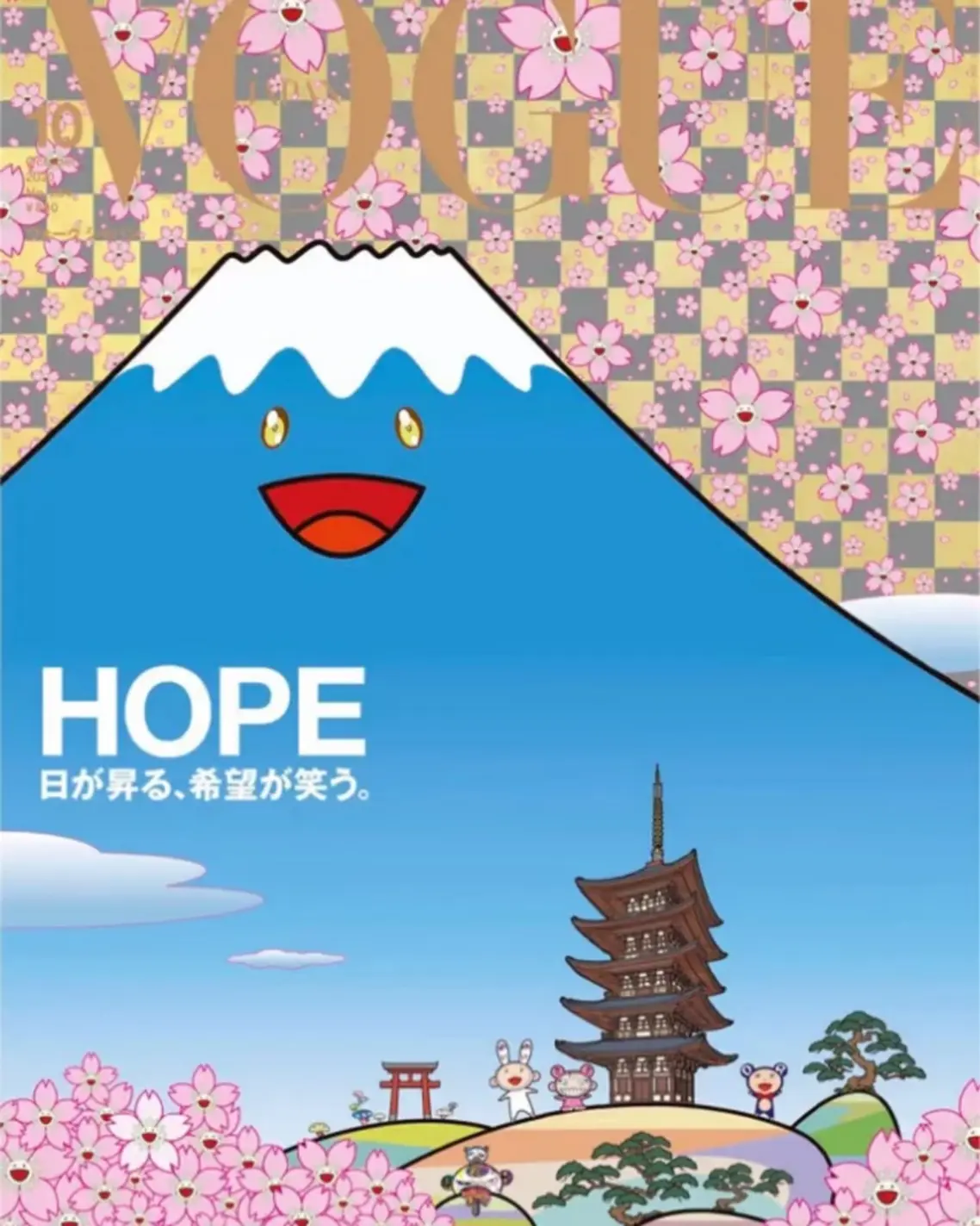
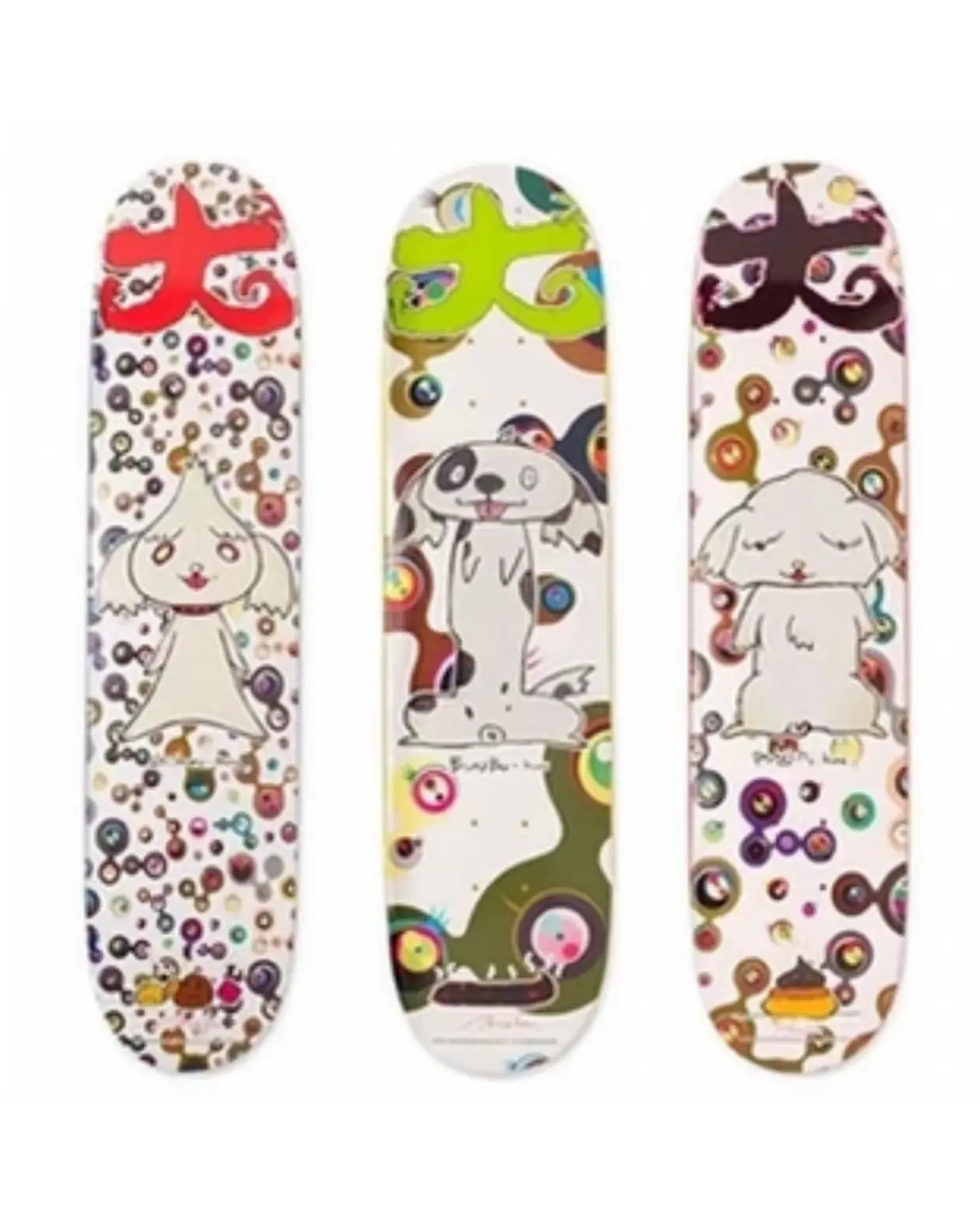
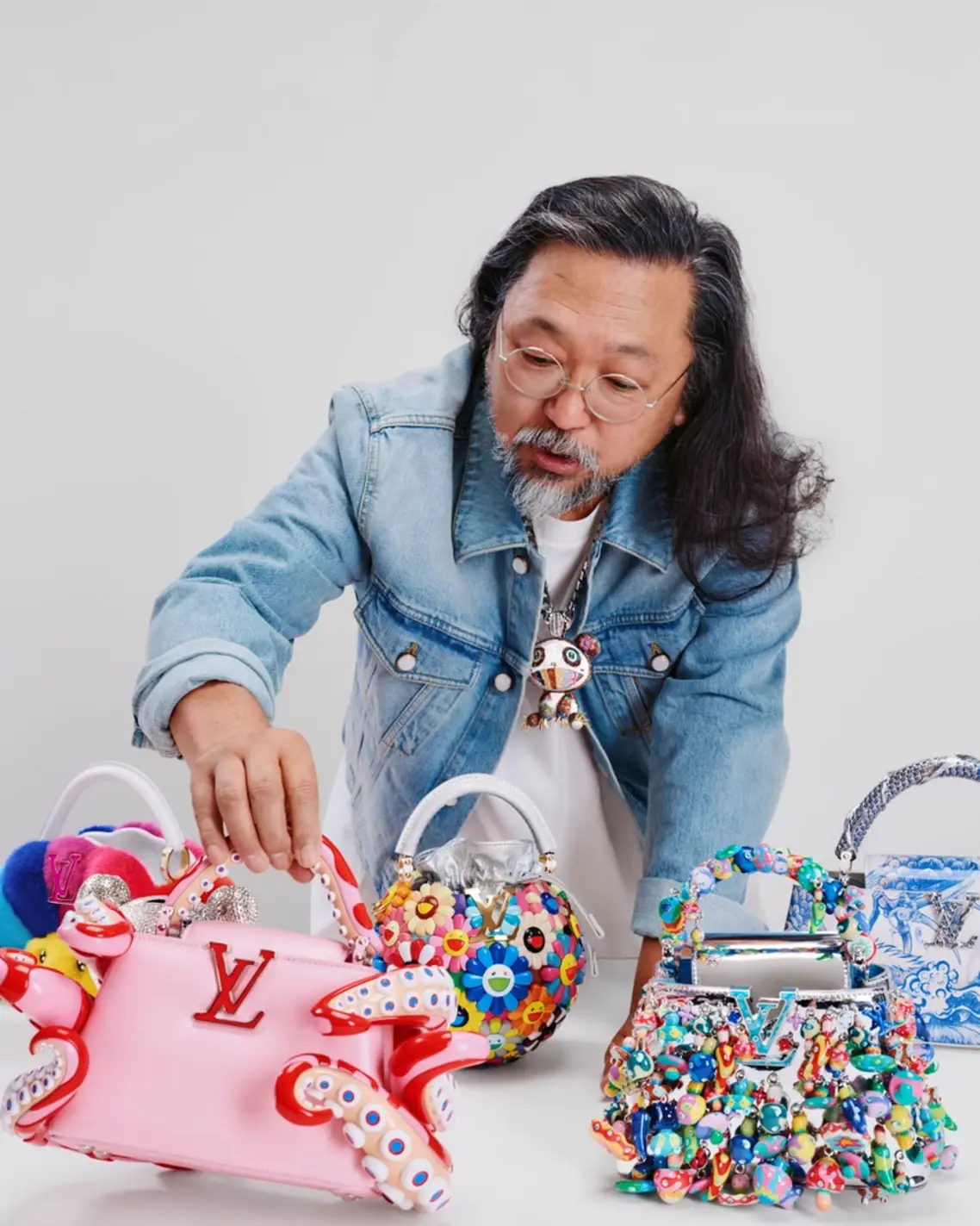
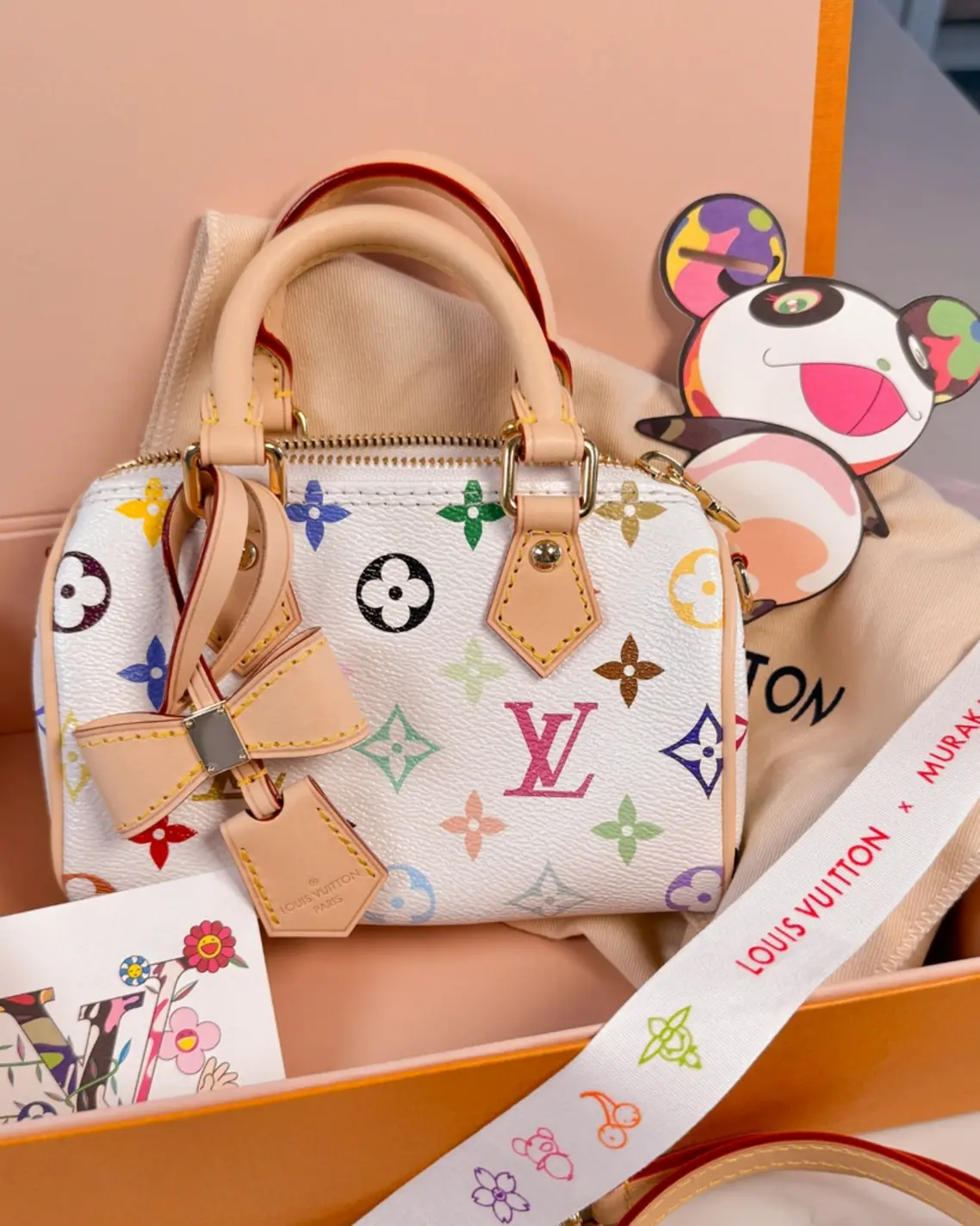
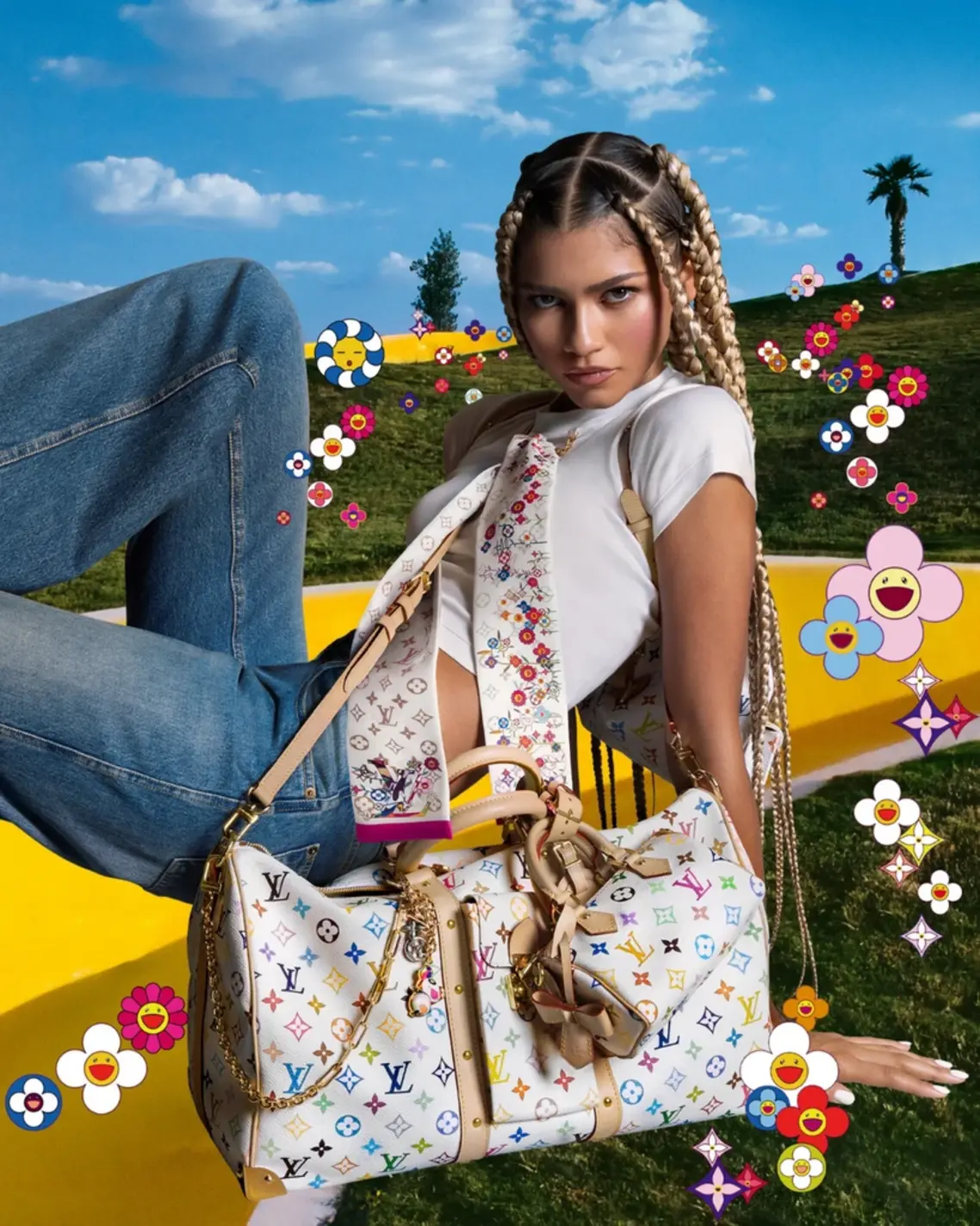
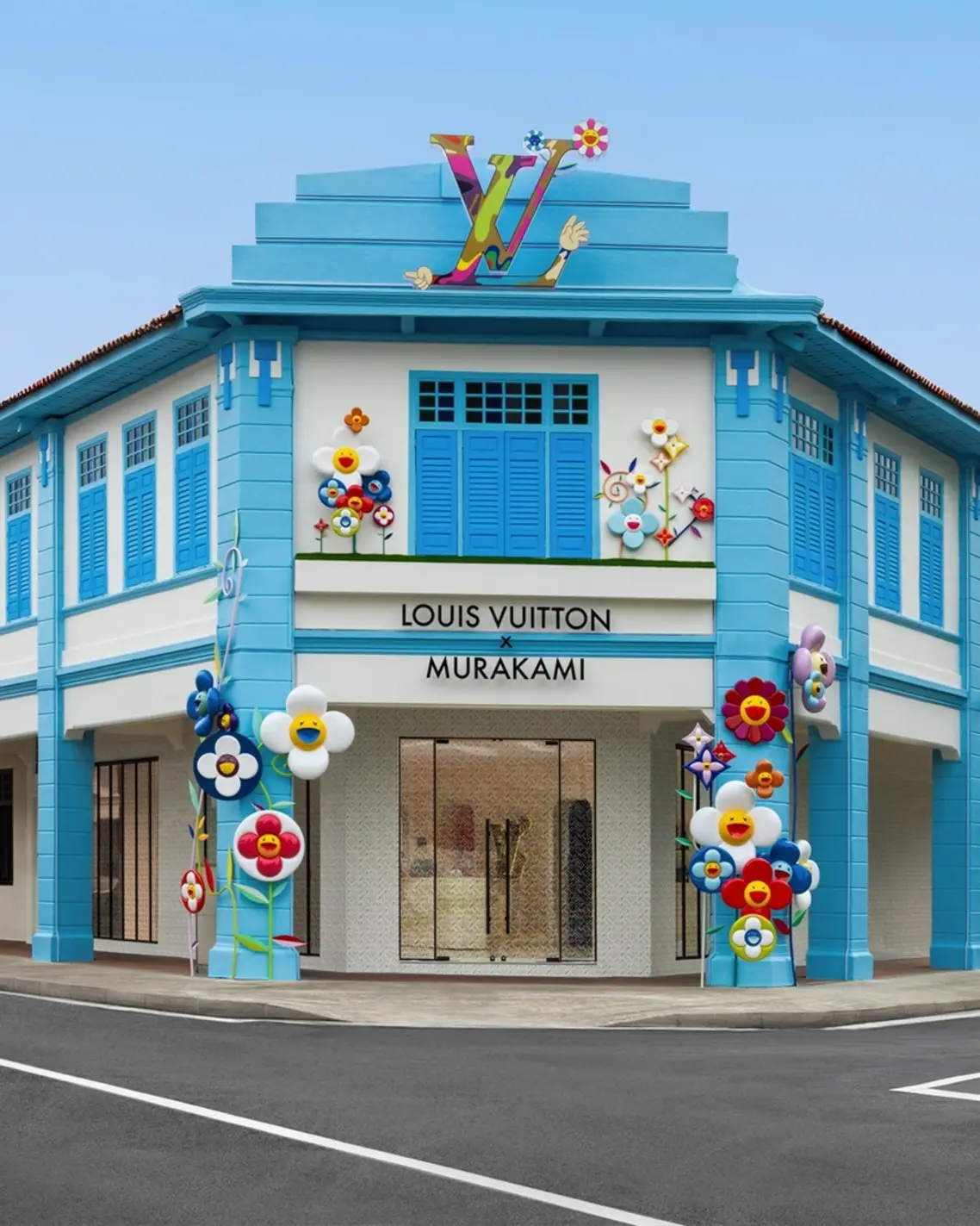
His Louis Vuitton collaboration rewired the visual grammar of luxury, proving that fashion and art could meet through wit, spectacle, and collectability without losing conceptual bite. His work with Kanye West and Kid Cudi placed him deep inside the hip-hop imagination, while Murakami.Flowers carried his smiley iconography into the digital realm, where pixel art, scarcity, and identity became the next stage of his inquiry.
Controversies aside, Takashi Murakami holds a central place in contemporary art because he understood that surface carries serious meaning. Through Superflat, he turned pleasure, anxiety, memory, and consumer culture into one visual language, then expanded it through characters, collaborations, and monumental works that reshaped the look of contemporary art. Few artists have made something this playful feel intellectually alive.