Tokyo Fashion Week SS27 opened with enough ideas to make the first two days feel like a statement of intent.
Tokyo Fashion Week SS27 Starts With Ambition
Tokyo Fashion Week SS27 opened with enough ideas to make the first two days feel like a statement of intent.
September 7, 2026
Advertisement

Advertisement



The Japan Fashion Week Organization brought 16 overseas press, buyers and industry guests to the city, including representatives connected with 10 Corso Como Seoul, Tessabit, Andreas Murkudis, SHOWstudio and other international platforms, while stating an explicit goal of generating articles and increasing actual buying activity.
Across the first two days of Tokyo Fashion Week SS27 , that machinery became visible in several forms. A young Chinese label openly treated Tokyo as a route into the Japanese market, a Taiwanese brand staged its identity inside a century-old mansion while testing collaboration and retail channels, and a veteran Japanese designer turned domestic manufacturing statistics into part of his finale speech.
Day 1 At Tokyo Fashion Week SS27
Seivson
Seivson placed its runway inside Hatoyama Hall, a Western-style residence dating from the Taisho era, and the choice carried real narrative discipline. Designer Tzu Chin Shen called the collection “Keibō,” referring to a woman's private room, then treated the mansion as an extension of the clothes.
Models checked their lipstick, adjusted garments in mirrors, and moved through a setting that made spectators resemble visitors who had wandered into somebody else's intimate space. Lingerie structures moved outward across the body as corsetry, lace, sheer fabrics, pearls and exposed frameworks, turning private dressing into a visible architecture.
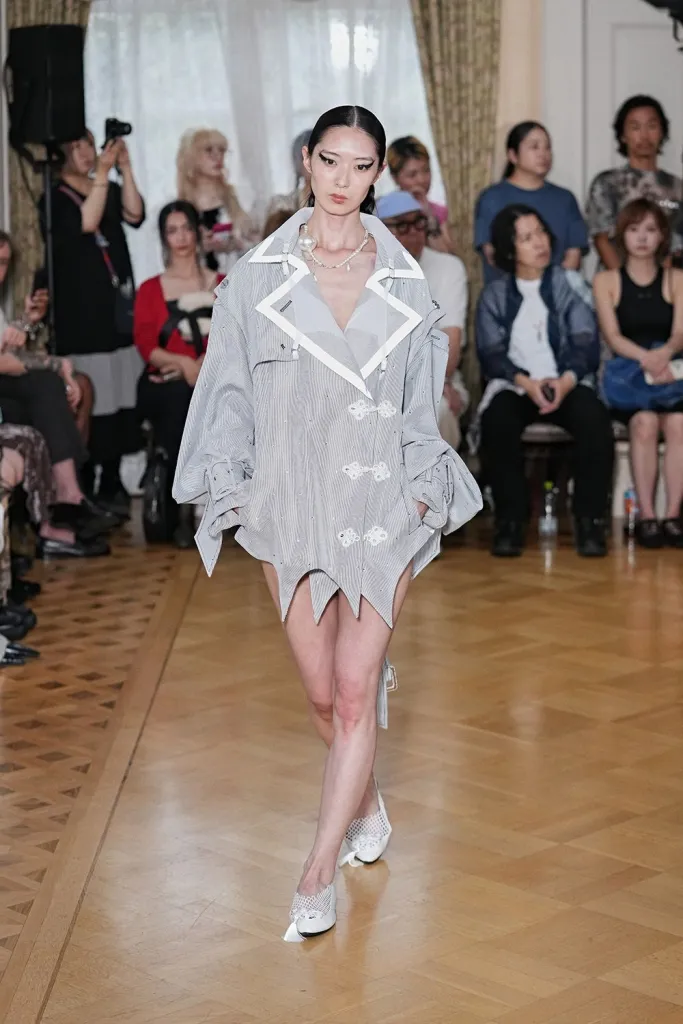
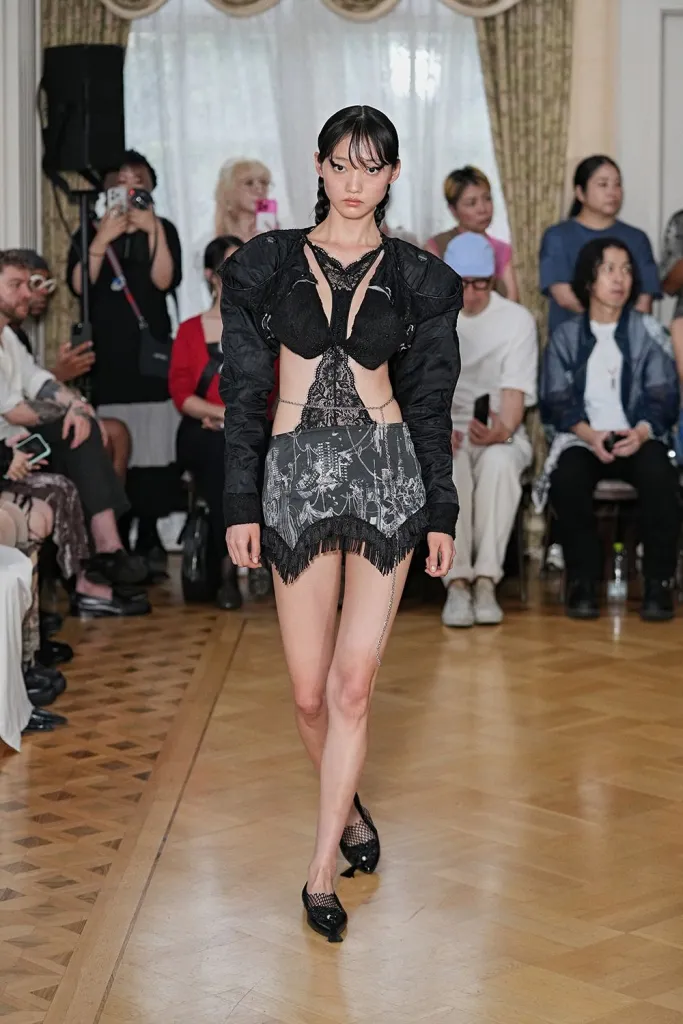
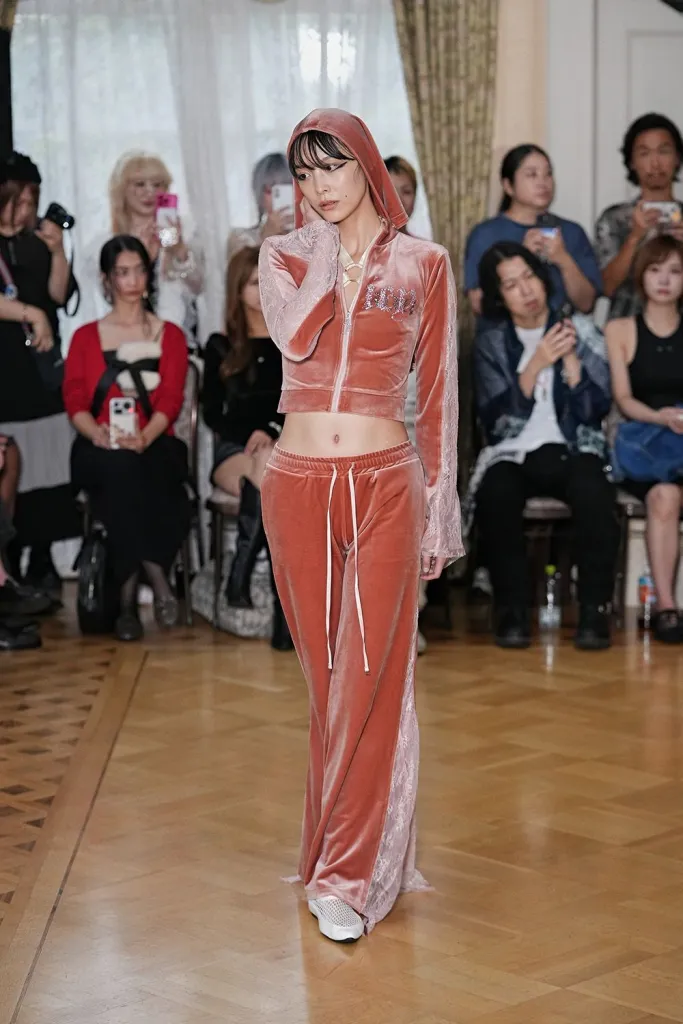
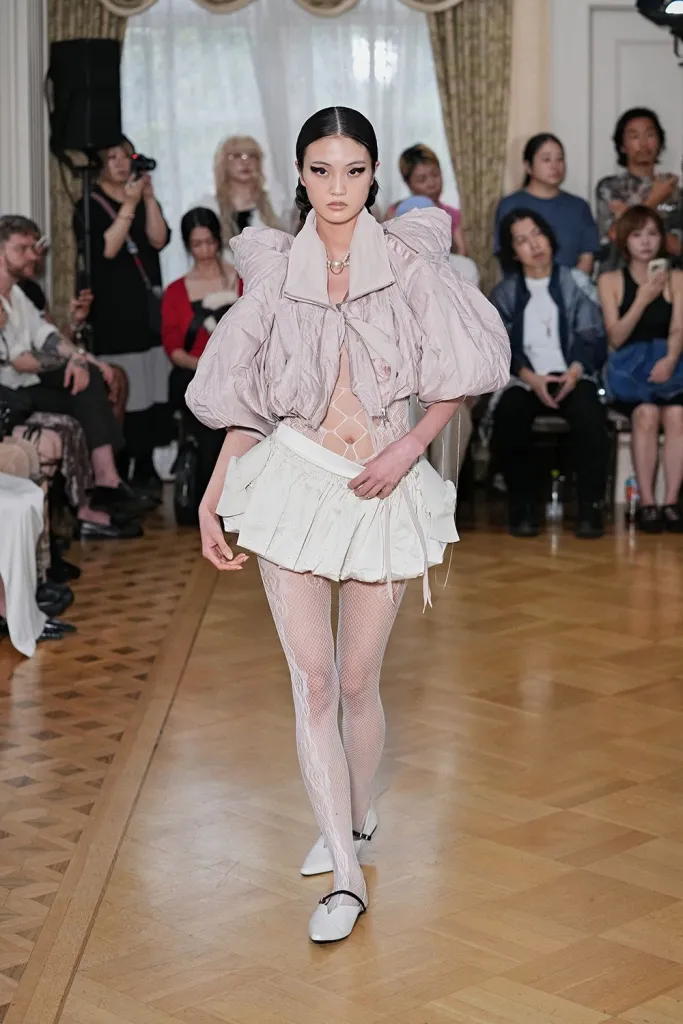
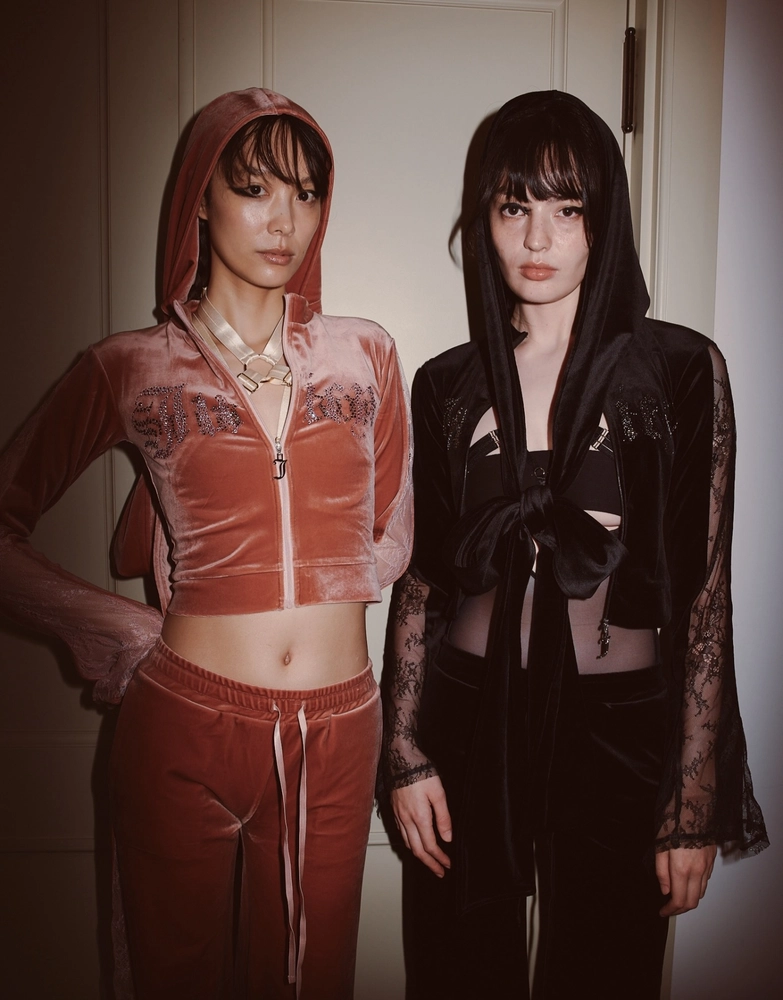
The staging also arrived at an interesting commercial moment for a label founded in Taiwan in 2017 and increasingly active between Taipei and Tokyo. A Juicy Couture collaboration appeared in the collection through a velour two-piece finished with Seivson's lace language, built around the brands' shared interest in velvet.
Meanwhile, Seivson's ZOZOTOWN shop had ended operations on May 20, 2026. These two facts sit together as a useful reminder of how fashion visibility operates: runway recognition, collaboration power, and dependable retail access form separate pieces of the same business.
Seivson has developed a compelling visual identity in Japan; Tokyo Fashion Week SS27 now also functions as a place where that cultural familiarity can keep expanding into durable demand.
WHiTENOOK
WHiTENOOK made the commercial purpose of its runway unusually clear. Designer Elmo Su founded the brand in 2025, showed in Tokyo during March 2026 through the China Fashion Week Recommendation Show, and returned six months later for its first official designer show on the Rakuten schedule. After the SS27 presentation, Su stated that he hoped to expand the business in Japan.
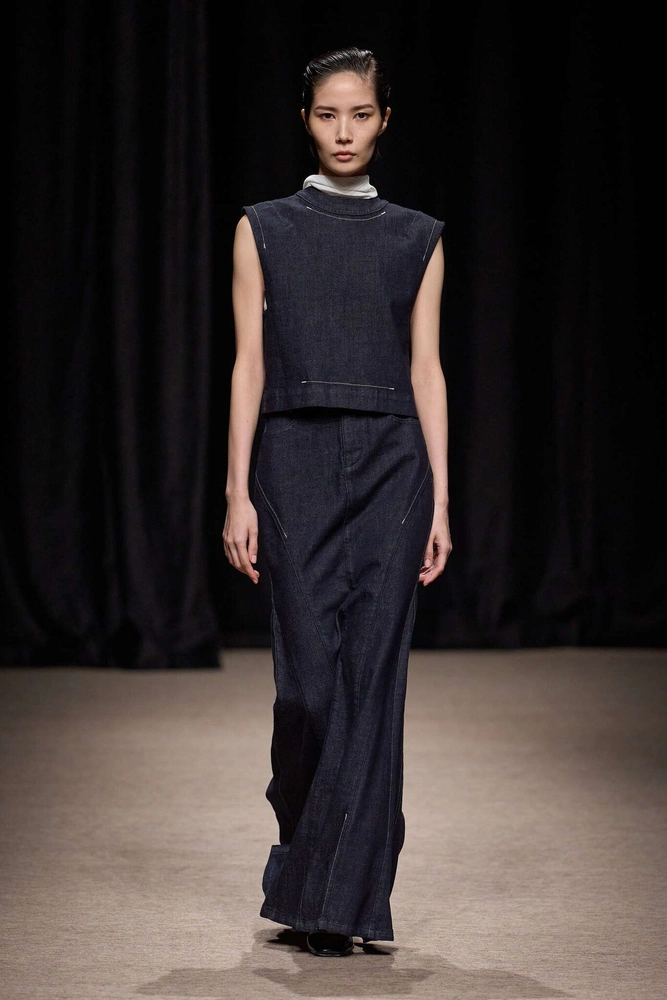
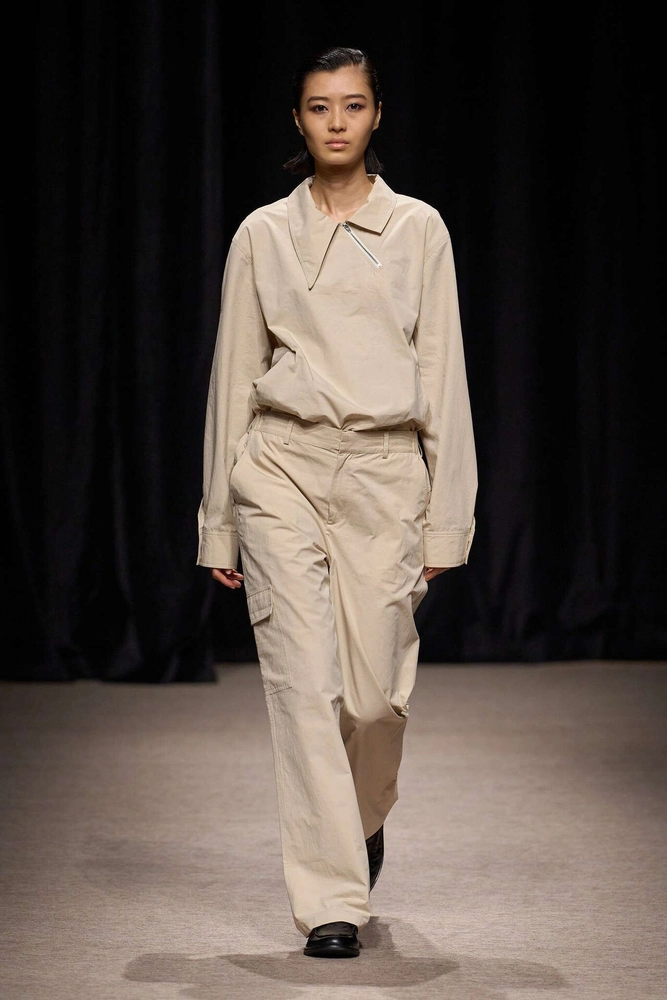


That declaration gave “FUSION,” the collection's theme, a second meaning. Su experimented with denim through clean surfaces, washed gradations, coatings and textile transitions, including passages where denim dissolved visually into organza and appeared underneath black tailoring. The collection kept WHiTENOOK's emphasis on natural materials while pushing denim through enough processes to demonstrate technical range.
For a label in its fourth season, a Tokyo runway becomes an introduction with measurable ambitions attached to it. WHiTENOOK, therefore, offered one of the clearest examples of Tokyo Fashion Week SS27 functioning as market-entry infrastructure.
ENFÖLD
ENFÖLD came to Tokyo from a completely different business position. Founded in 2011 by Mizuki Ueda, the label sits within Baroque Japan Limited, the listed apparel group behind a portfolio of Japanese brands. The runway carried the resources and expectations of an established fashion company while preserving ENFÖLD's highly specific design language.
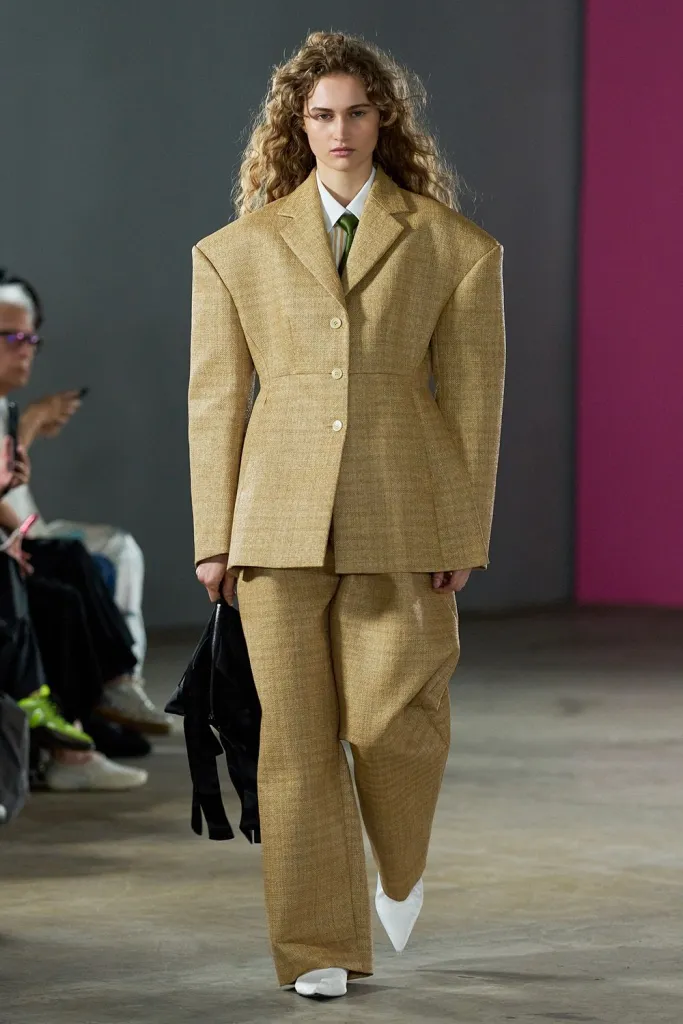

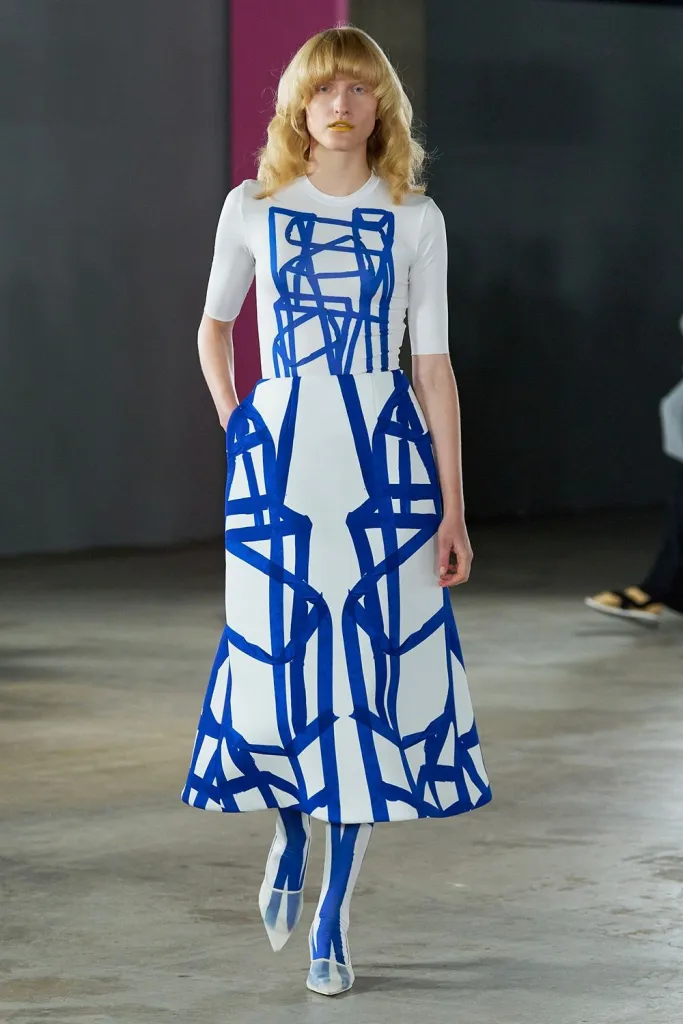
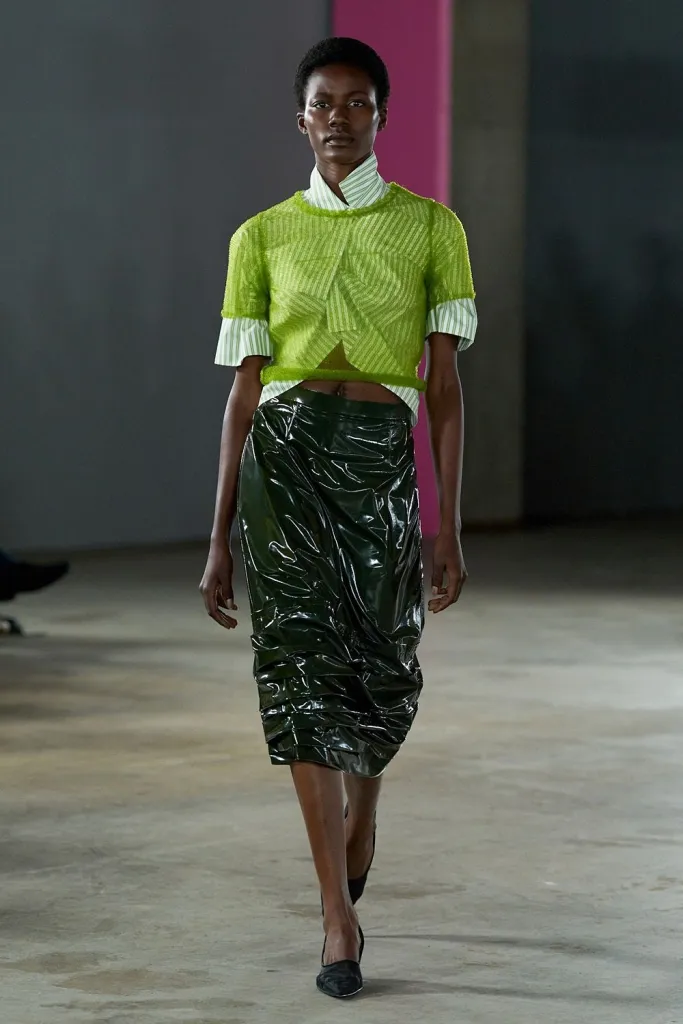
At Terrada Warehouse G1-5F, Ueda built “WRAPPING STRUCTURE” around her fascination with architecture. She divided a building conceptually into internal systems, framework, and exterior skin, then translated those layers through bonded fabric, linen nep, PVC, enamel finishes, power shoulders, box-like skirts and utility pockets.
Luis Barragán informed the vivid pink, yellow, and blue palette, while the warehouse columns themselves were wrapped in colored fabric. Graphic designer Agata Yamaguchi contributed linear graphics, goyemon developed footwear with protruding midsoles, and NARS supported the backstage makeup.
Day 2 At Tokyo Fashion Week SS27
Global Fashion Collective
Global Fashion Collective launched in 2017 as an expansion of Vancouver Fashion Week and currently reports 50 shows, more than 200 designers, over five million impressions and coverage across more than 1,000 media outlets. Its network now extends across Tokyo, New York, London, Milan and Paris, and this season marked its ninth Rakuten Fashion Week Tokyo runway.
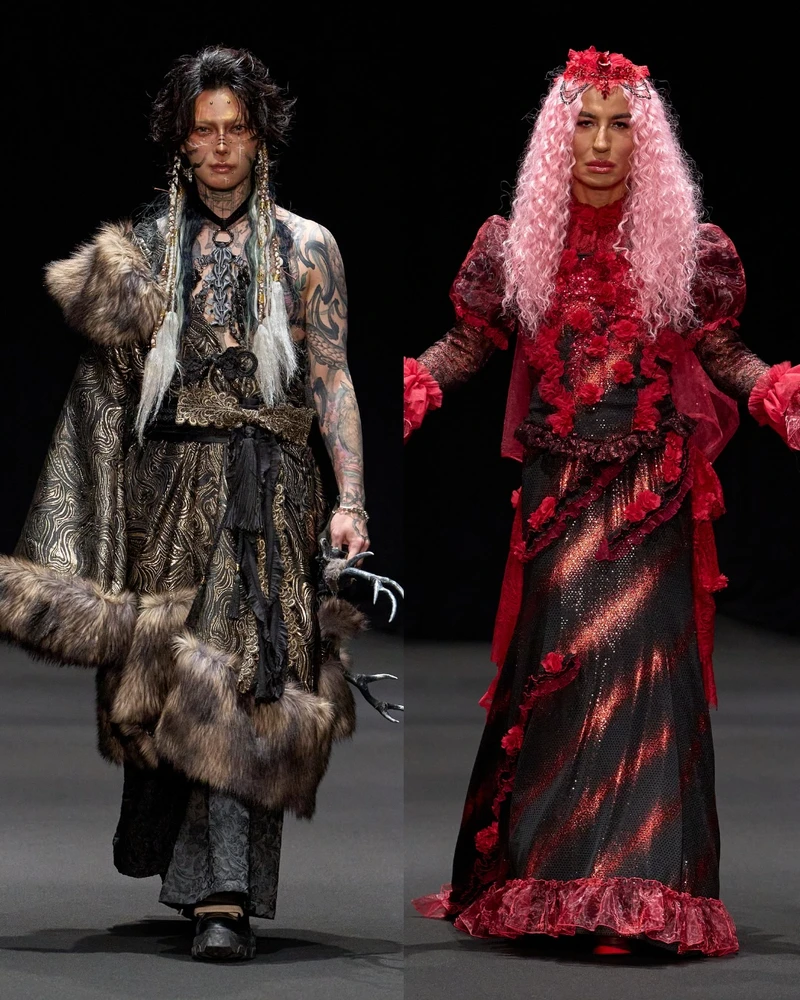
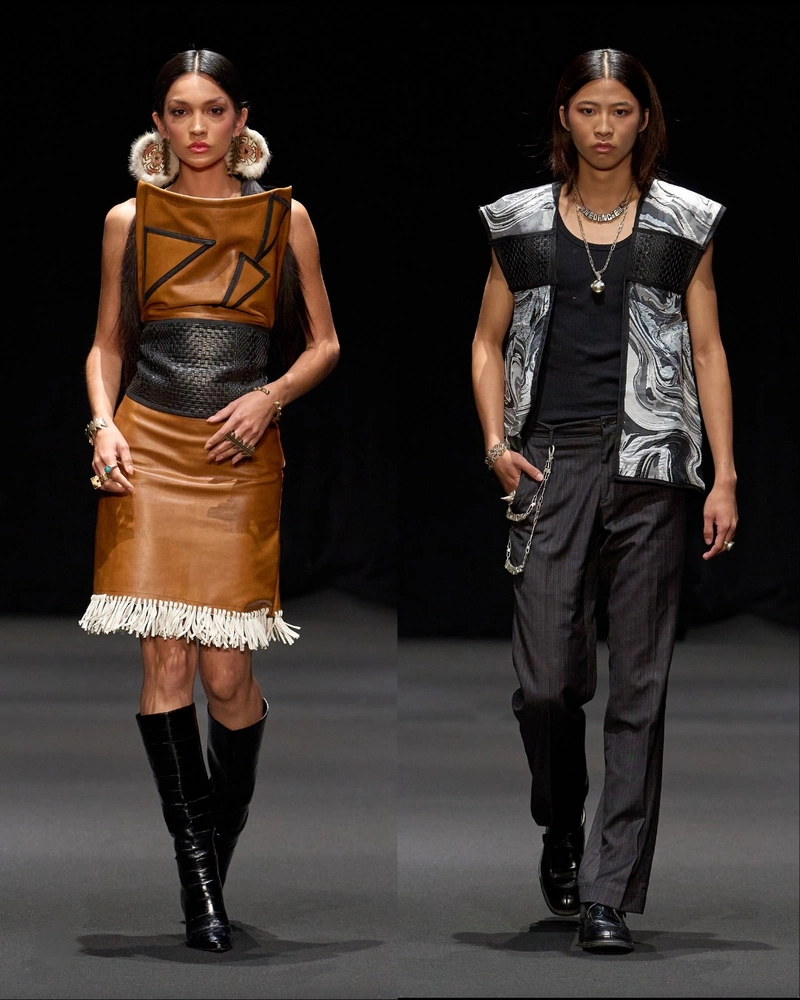

In Shibuya Hikarie Hall B, that infrastructure hosted three labels. SHINO amplified Japanese Visual Kei through jeweled insects and extravagant decorative surfaces; Nar Rew Ekar brought Shoshoni Hostler's connections to Indigenous Californian culture into dresses assembled with shells and rhinestones; Perry Jones presented bespoke tailoring and red-carpet clothing, with red carrying ideas of family and silver representing the moon.
BENCH/ Presents Threads Of Dreams
An hour later, BENCH turned Tokyo into a stage for cultural diplomacy and export ambition. “Threads of Dreams” commemorated 70 years of diplomatic relations between the Philippines and Japan, bringing Rhett Eala, Jaggy Glarino, and Joey Samson to their Japanese runway debuts at Shibuya Hikarie Hall A. The project had already appeared at Bench Fashion Week in Manila and later at the Metropolitan Museum of Manila before reaching Tokyo as a 360-degree runway presentation.
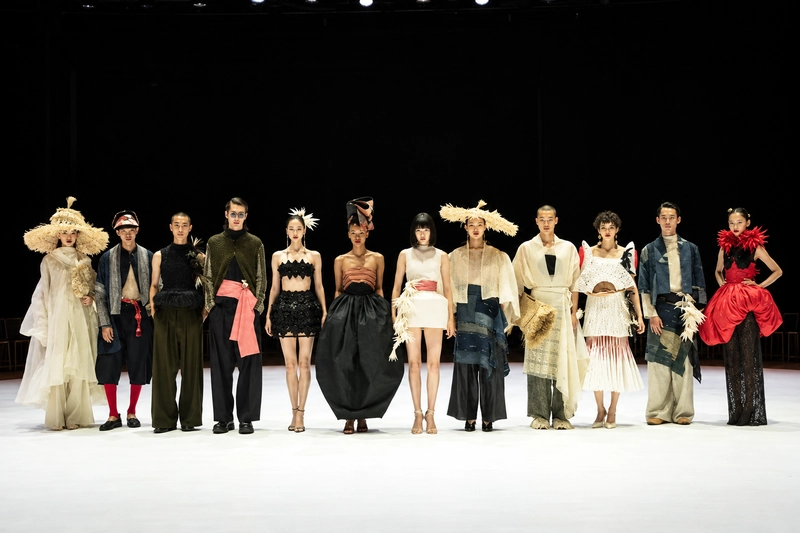
The preparation stretched back to mid-2025, when the designers first received calls about the project. Eala drew on memories of his mother's travels through Japan; Glarino built sculptural forms from Mindanao cultural references; Samson explored Philippine-Japanese connections through tailoring, kimono-linked textiles, obi-like ribbons and ceremonial staging.
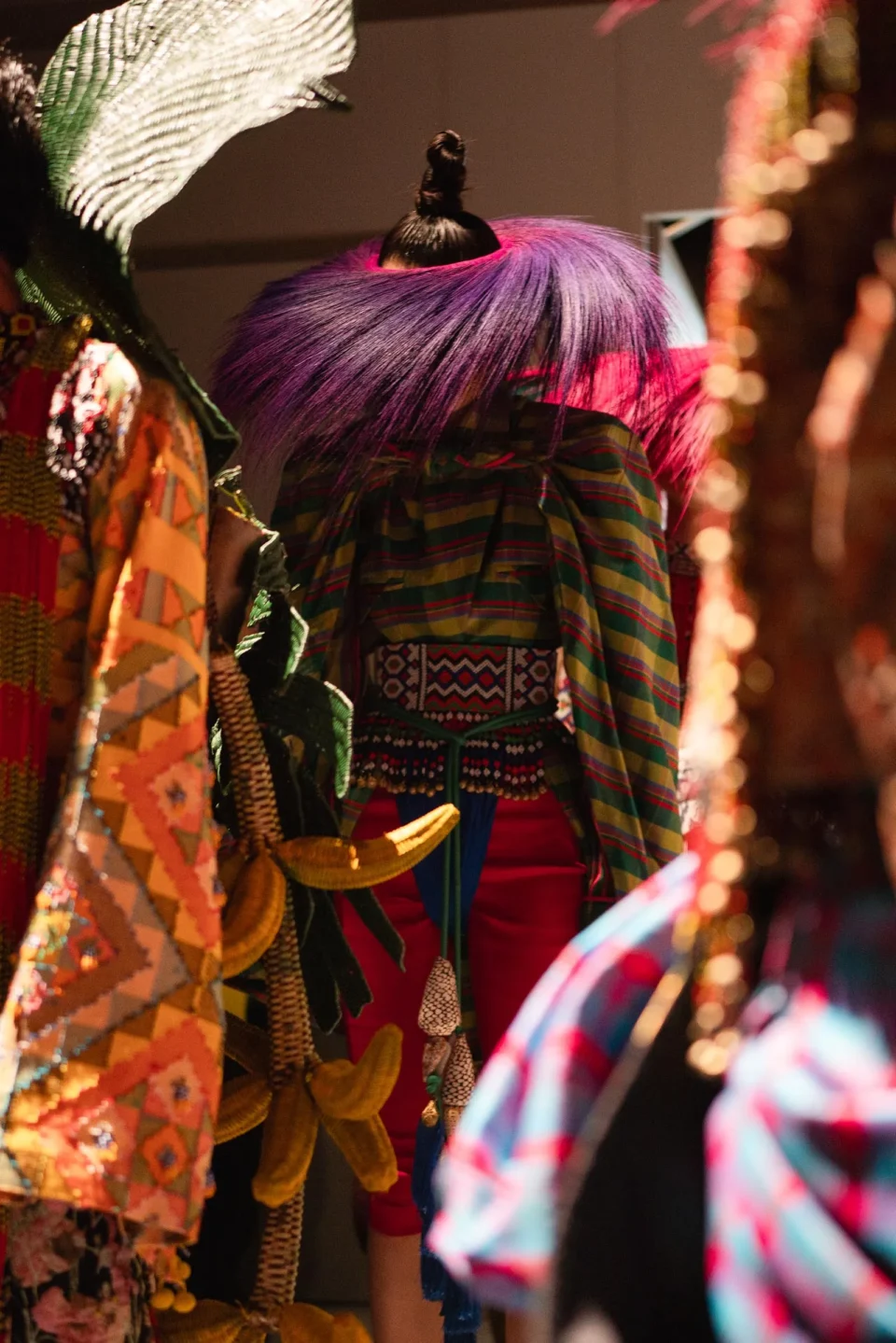

BENCH was founded in 1987, while parent company Suyen Corporation now represents 18 homegrown brands and 42 international labels and has expanded its business into markets including the United States, the Middle East, China, Singapore, and Myanmar. This was a corporate platform using fashion diplomacy to place Filipino designers inside an international buying and media environment, giving cultural exchange a distribution system capable of carrying it farther.
support surface
At Takeshiba Port, Norio Surikabe presented “ordinary shift,” focusing on sax-blue stripes, linen, lace, and the kind of three-dimensional cutting that has defined his work since founding the label in 1999. The collection moved familiar wardrobe elements through subtle structural interventions, with shirting transformed into dresses, zip-up pieces, and sculpted tops.
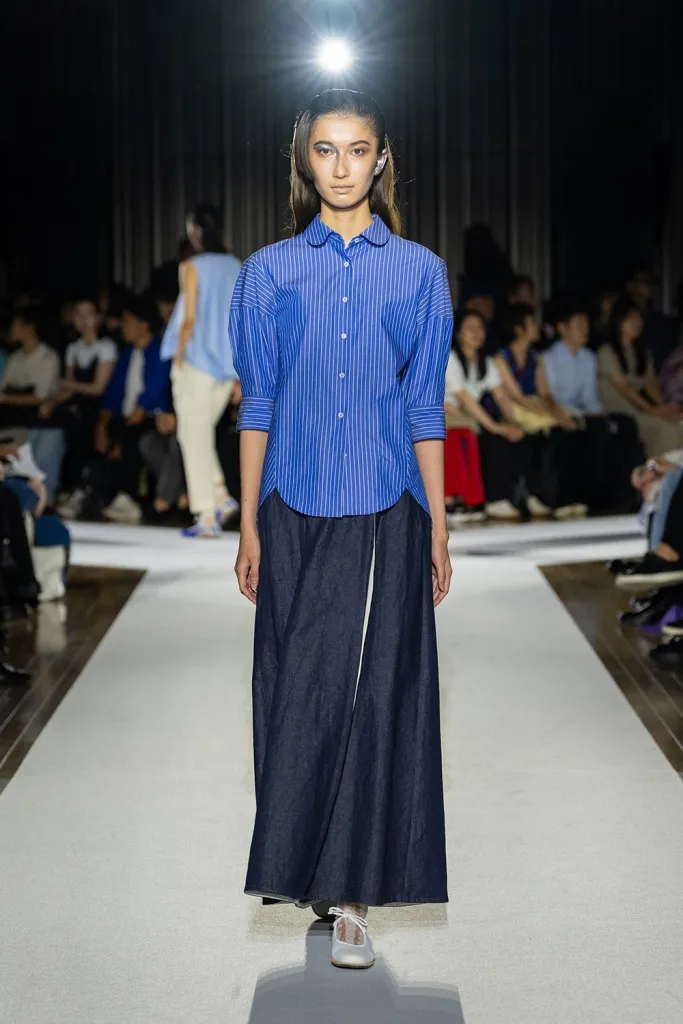
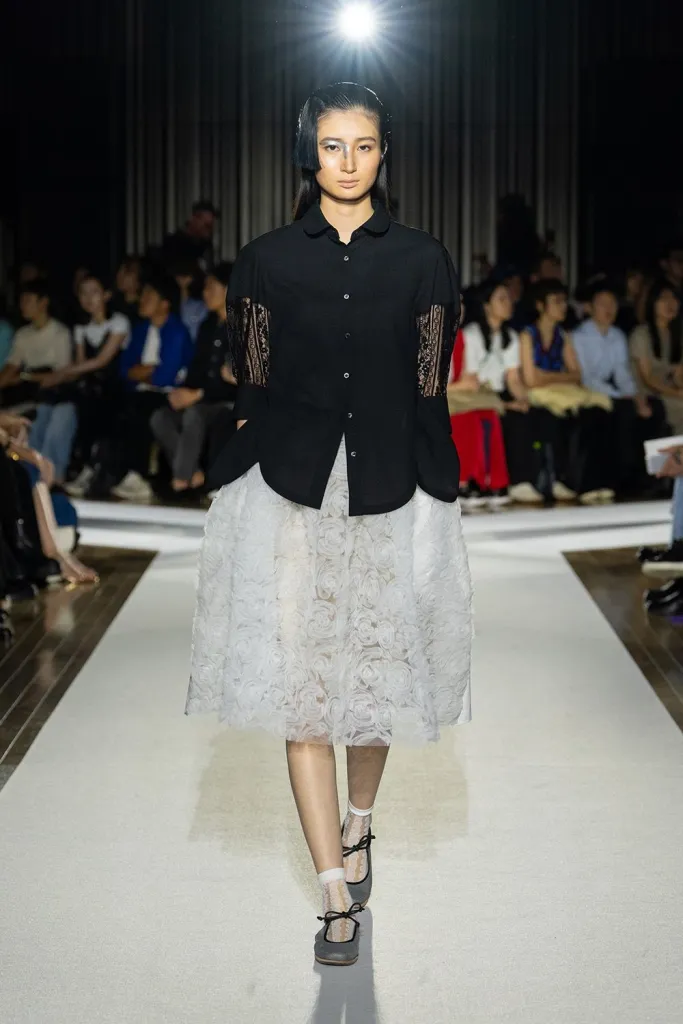
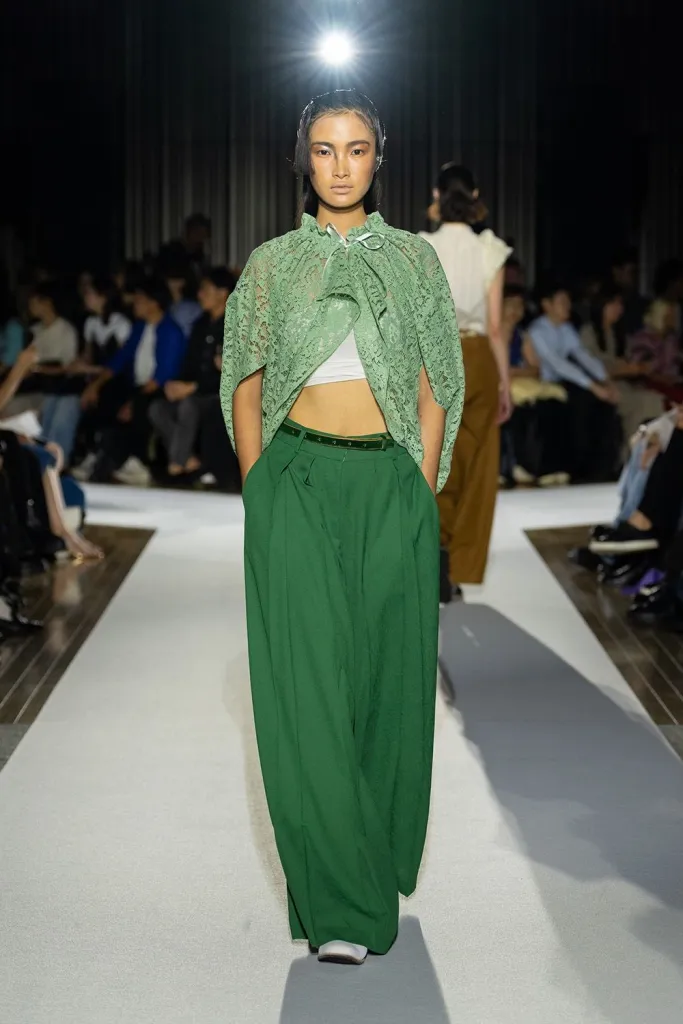
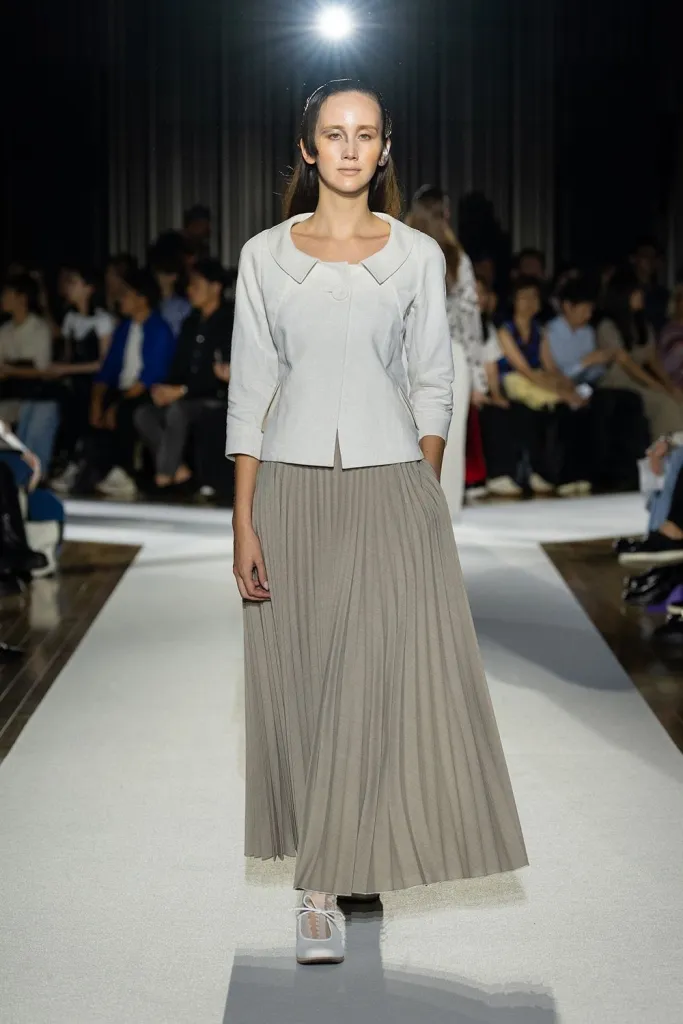
He said the share of clothing manufactured in Japan had fallen from around 50 percent during the 1990s to roughly 2 percent today, while support surface continues to manufacture 99 percent of its clothing in Japan.
support surface scheduled its SS27 showroom from September 4 through September 16, by appointment, turning runway exposure into a buyer-facing sales window within days.
MEGMIURA WARDROBE
MEGMIURA WARDROBE closed the day by shrinking the collection to 10 core looks and expanding them into 30 runway walks. Meg Miura placed each look on three people across different ages, body types, genders and nationalities, demonstrating how dramatically the identity of a garment shifts with its wearer.
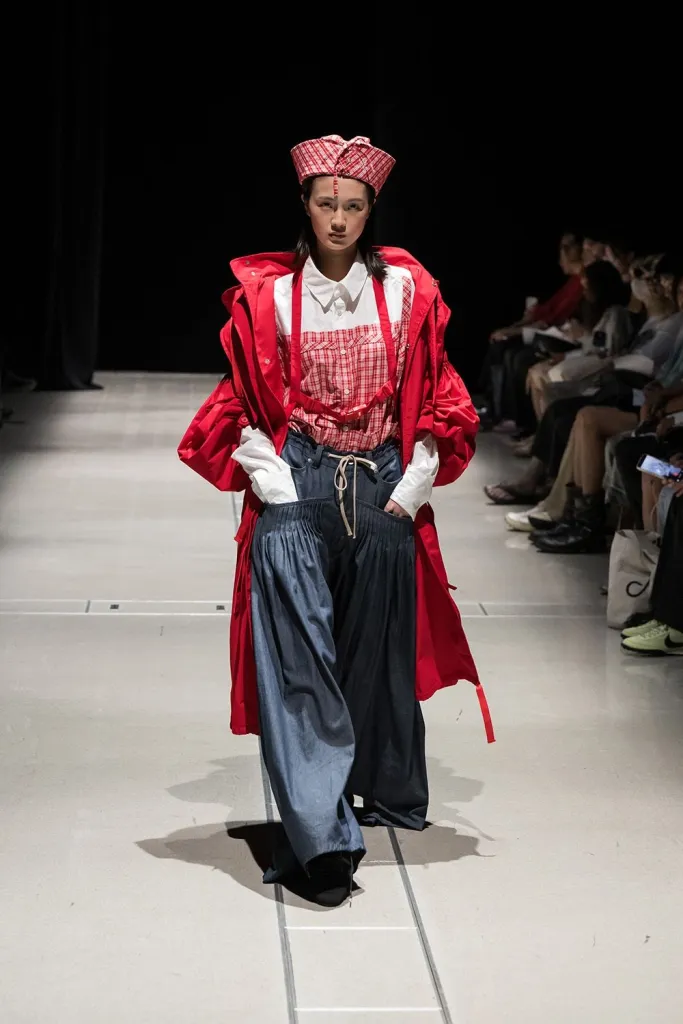
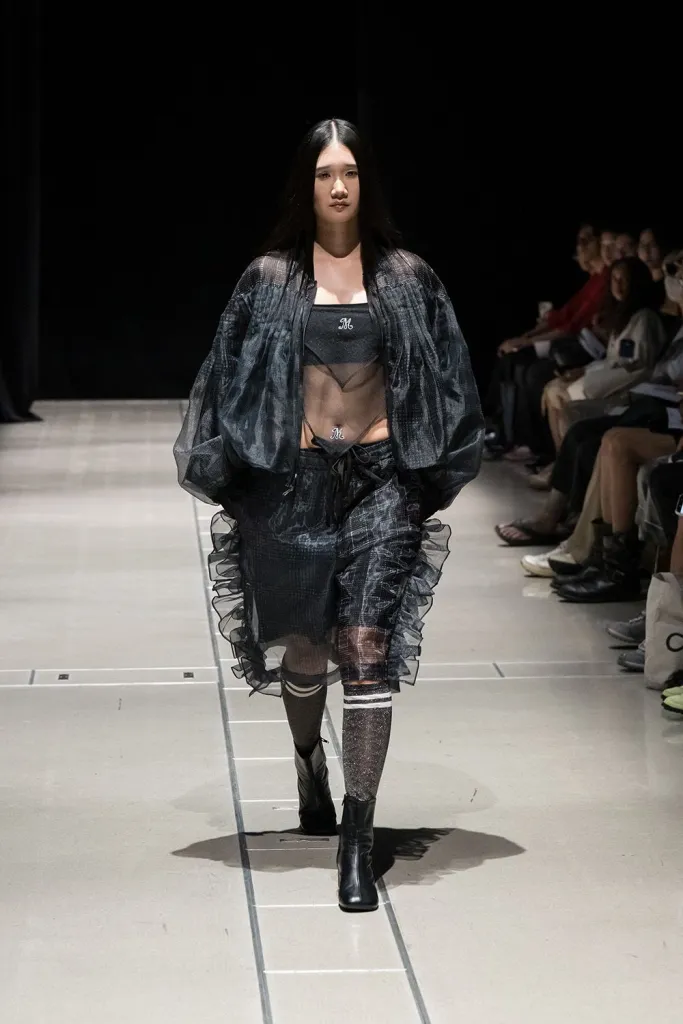
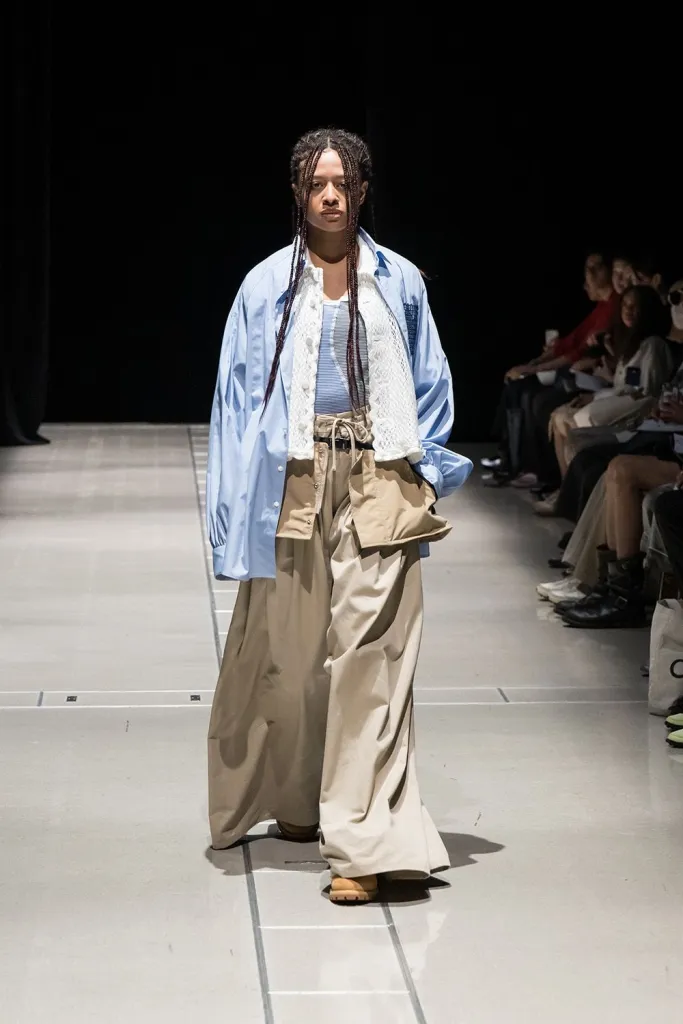

MEGMIURA WARDROBE returned to Rakuten FWT after its last appearance in the 2023 A/W season and after winning the 2023 JFW Digital Fashion Week Grand Prix. “POST NEW WAVE” drew on David Byrne and Talking Heads, folding fisherman uniforms, Basque shirts, sailor references, and handmade knitwear by Yuri Asaka of KNIT CRUSADERS into Miura's coat-driven vocabulary.
For an outerwear specialist, that strategy made the wearer part of the merchandising argument: one coat could occupy several identities, ages, and wardrobes while preserving its construction.
After two days, Tokyo Fashion Week SS27 had already shown how many jobs a runway is now expected to perform. It can introduce a foreign label to Japan, refresh an established brand's cultural image, sell access to the fashion-week circuit, promote national design through corporate infrastructure, defend local manufacturing, and lead directly into showroom appointments.
With four days still ahead, Tokyo Fashion Week SS27 had already made its most persuasive case through the talent on the runway, leaving the pleasure of discovering what came next very much intact.
Advertisement