There is cardbox in the living room. Oh, wait...?! Is that a ceramic cardbox?!
Ceramic Arts As Investment Pieces Of Luxury Home Decor
There is cardbox in the living room. Oh, wait...?! Is that a ceramic cardbox?!
September 7, 2026


Within luxury home decor, the ceramic object has moved far beyond the polished vase placed decoratively on a console. Collectors are increasingly drawn toward pieces that reveal artistic process and recognizable authorship. The appeal comes partly from scarcity, but also from the sense that the object carries evidence of an encounter between the maker, clay and fire.
Jacques Monneraud, Brian Rochefort, Magdalene Odundo and Danny Cremers approach that encounter from radically different directions. One meticulously recreates cardboard. Another builds surfaces that resemble geological eruptions. One turns the vessel into a human presence, while another tries to preserve the spontaneity of drawing within porcelain. Together, their work demonstrates just how expansive contemporary ceramics have become.
Jacques Monneraud Thinks Outside The Box
"Does something become more meaningful because of the effort behind it? I believe it does. In that sense, I see craftsmanship as a glimmer of hope." - Jacques Monneraud on the philosophical question about the relationship between the outcome and the work.
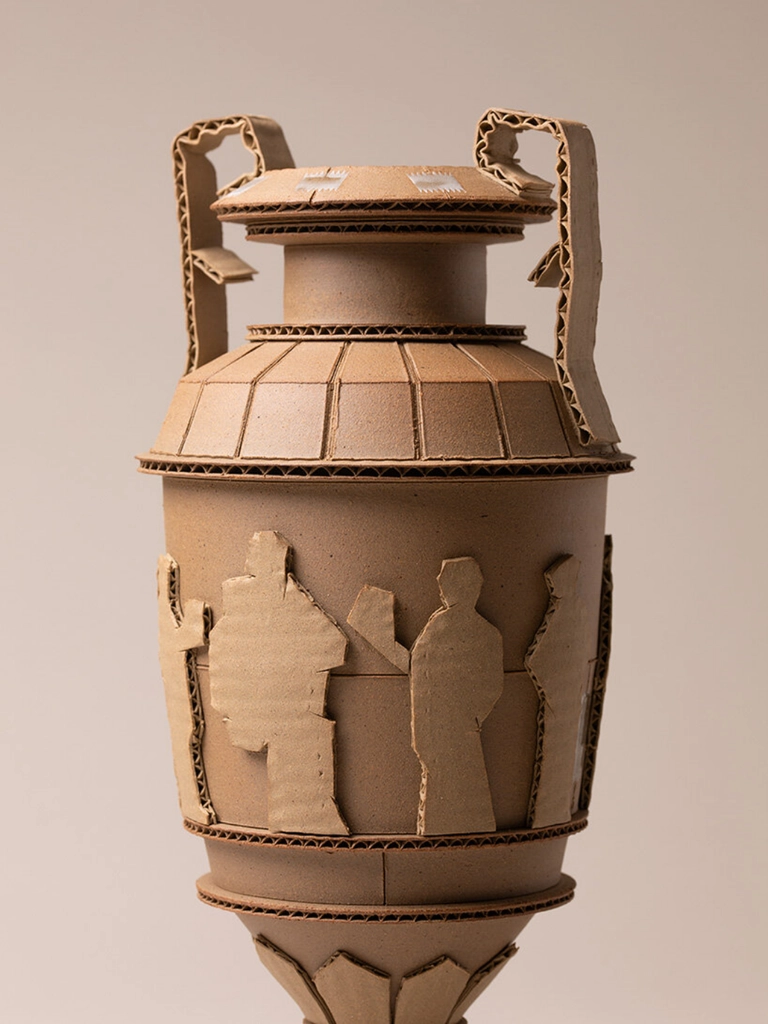
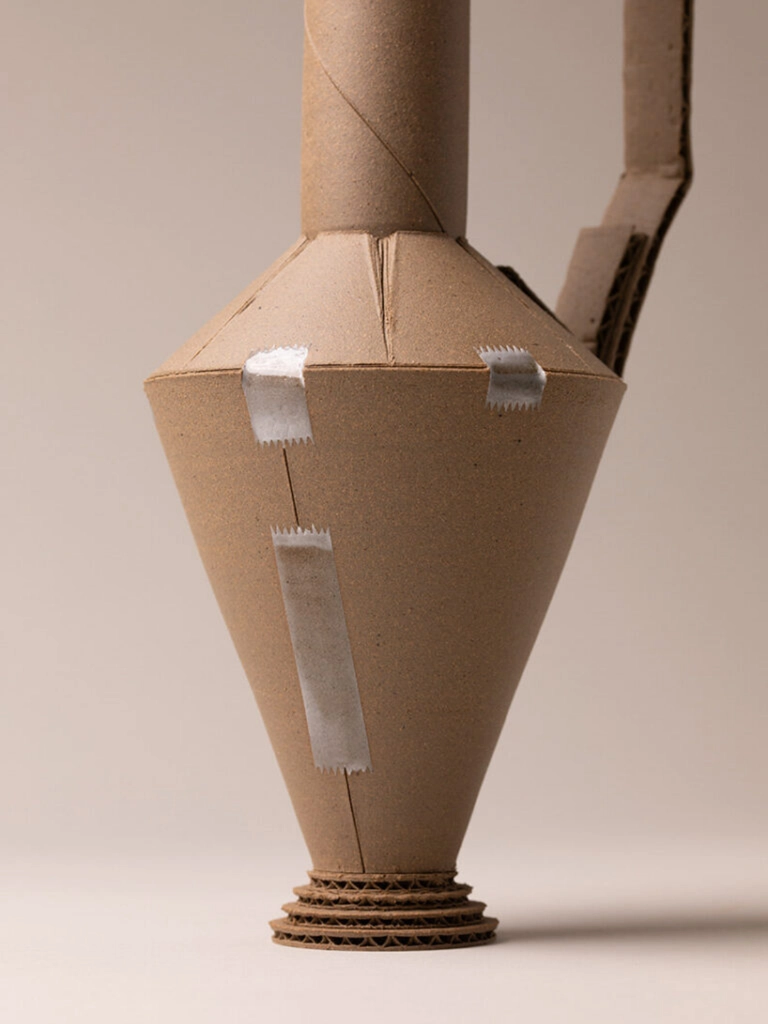
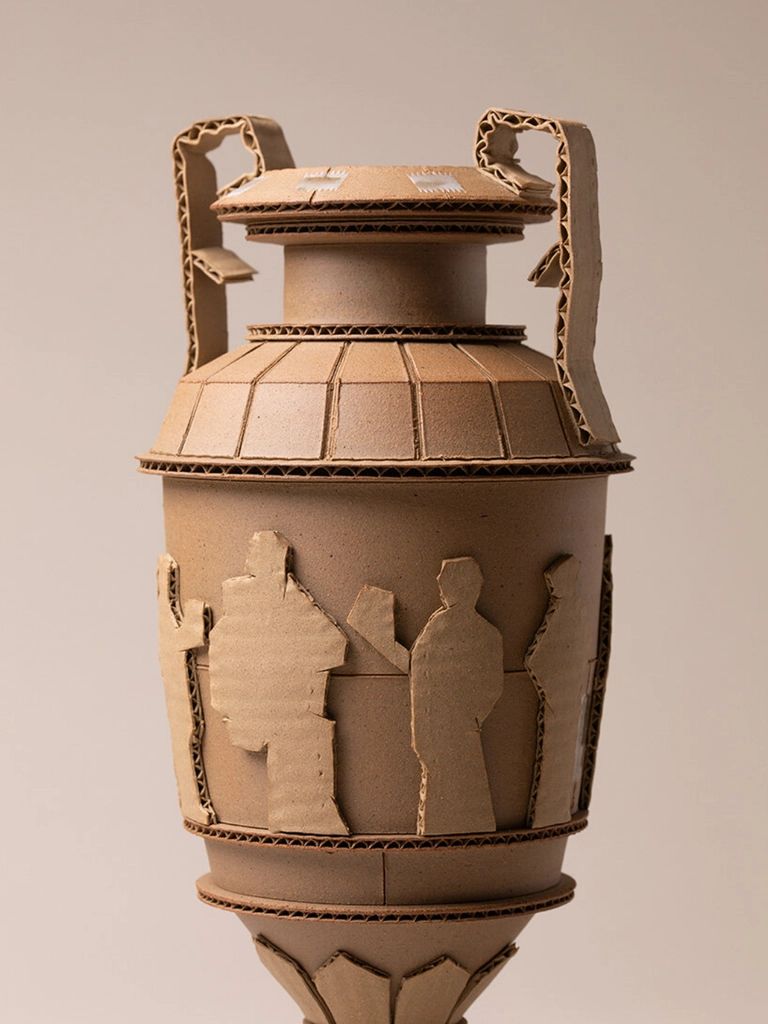
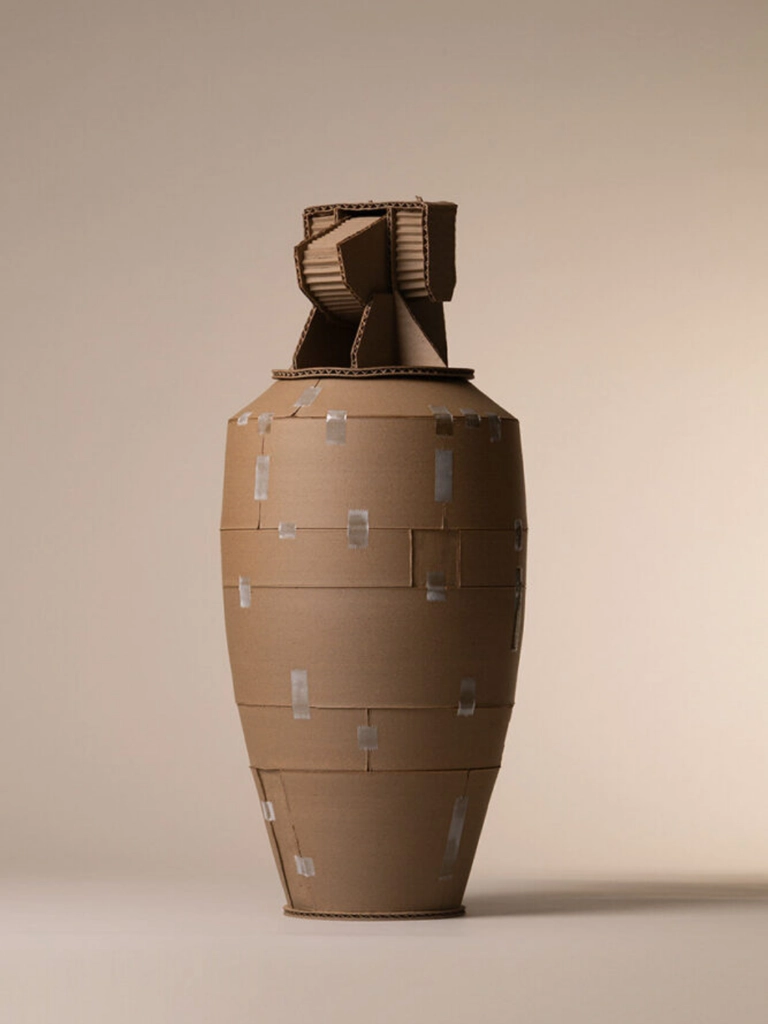
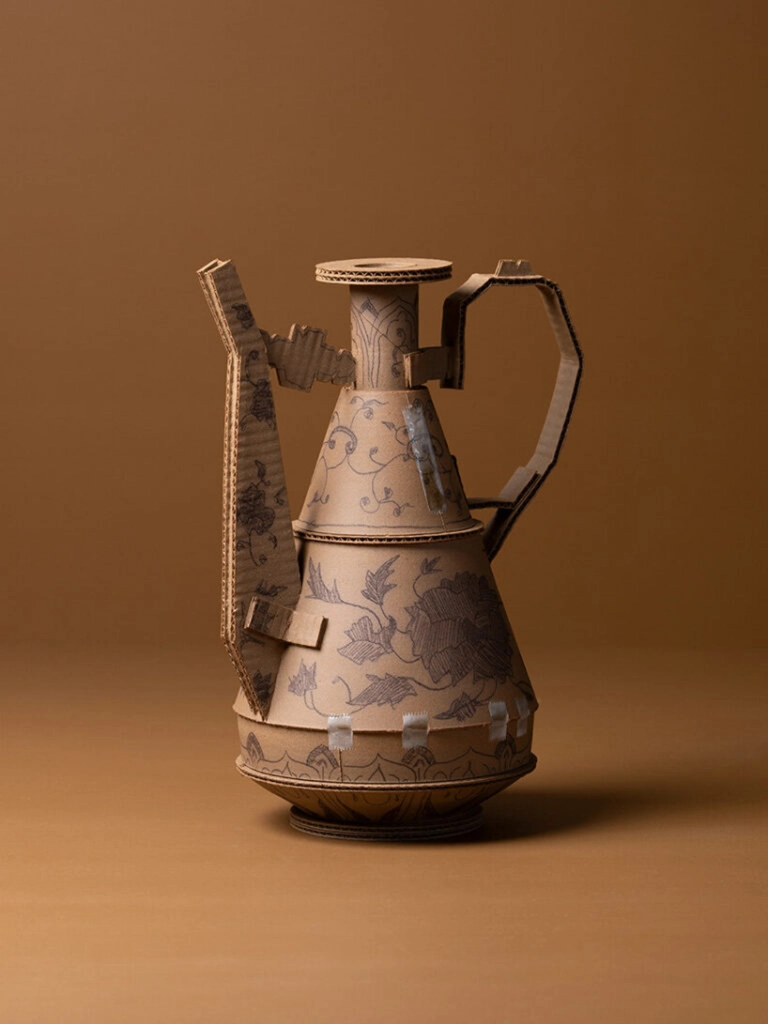
Jacques Monneraud’s Carton series first lands like a visual joke. Boxes appear to have been folded from ordinary corrugated cardboard, complete with crushed edges, creases, torn-looking seams and strips of packing tape. The deception holds until the material reveals itself: every surface is ceramic.
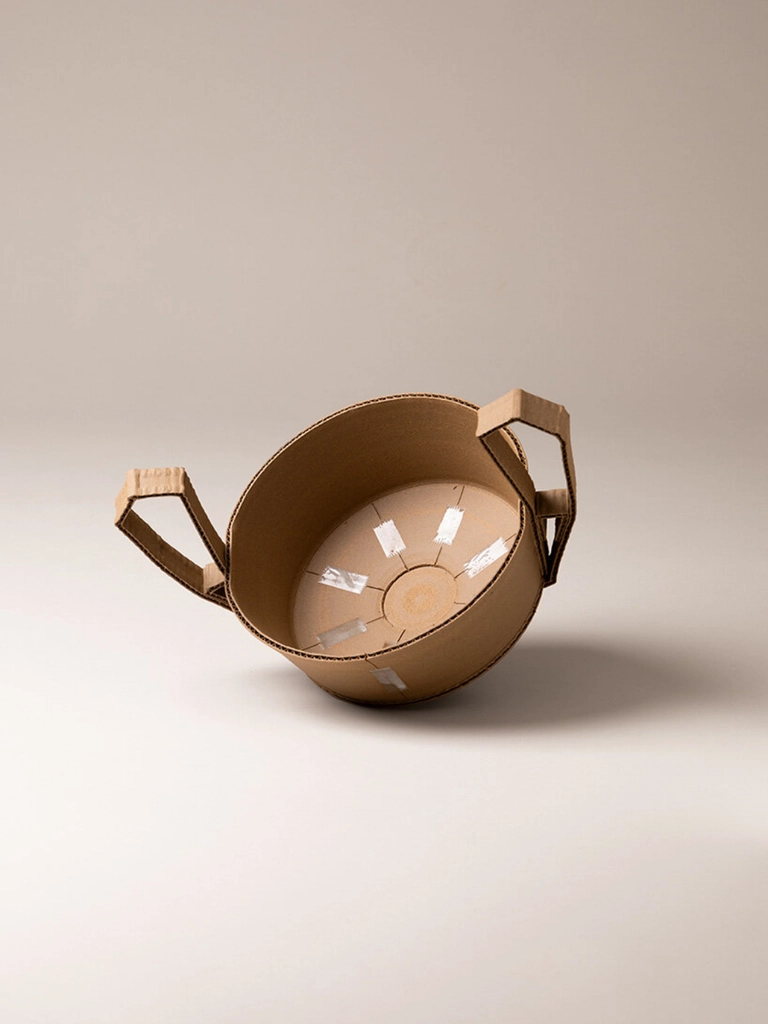
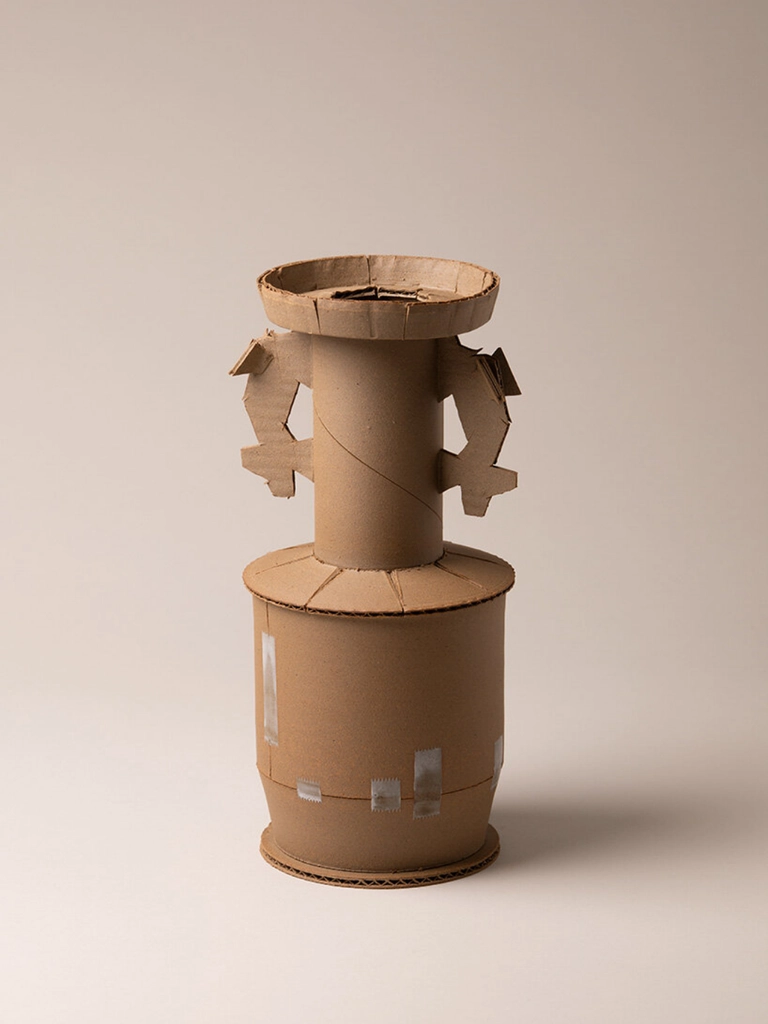

That illusion demands an extraordinary degree of control. Monneraud hand-builds each piece using a combination of three stonewares chosen to reproduce the color, grain and tactile dullness of cardboard. Even the most forgettable detail, the translucent adhesive tape, becomes a technical problem in glaze. Developing the right effect reportedly took around eighteen months of experimentation, turning an object associated with disposability into a demonstration of patience and precision.
The contradiction is central to the work. Monneraud has connected the series to overproduction and the flood of packaging that accompanies contemporary consumption. Cardboard usually exists only briefly, carrying an object from one place to another before being flattened, discarded or recycled. In Carton, that temporary shell becomes the object worth preserving.
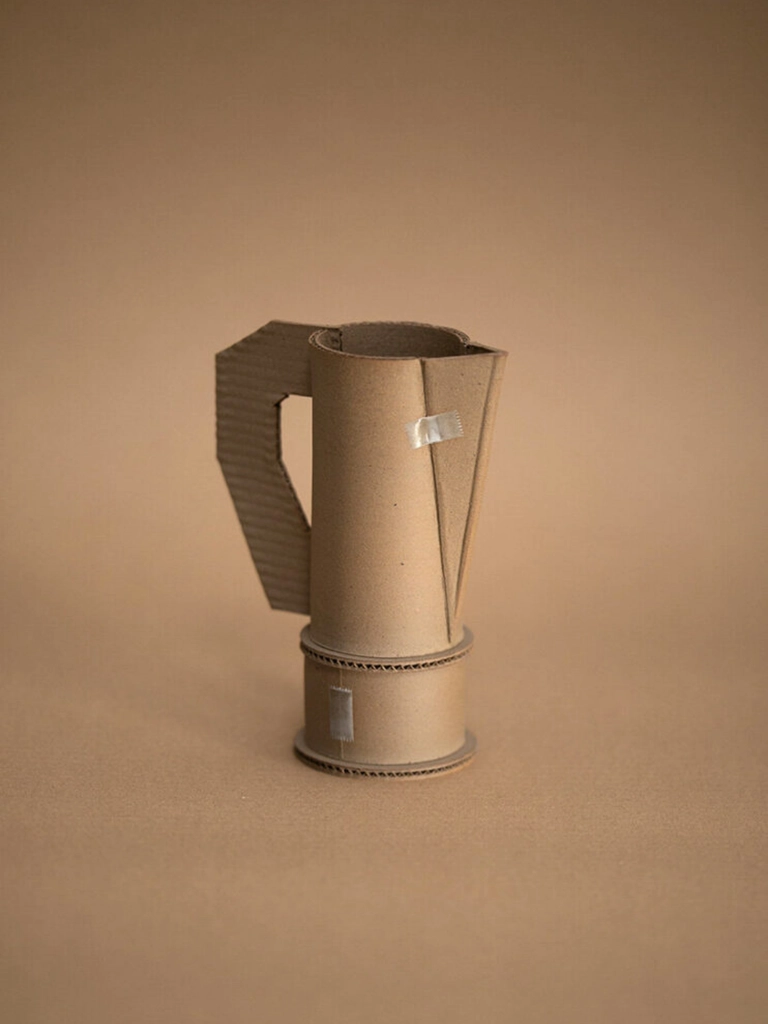
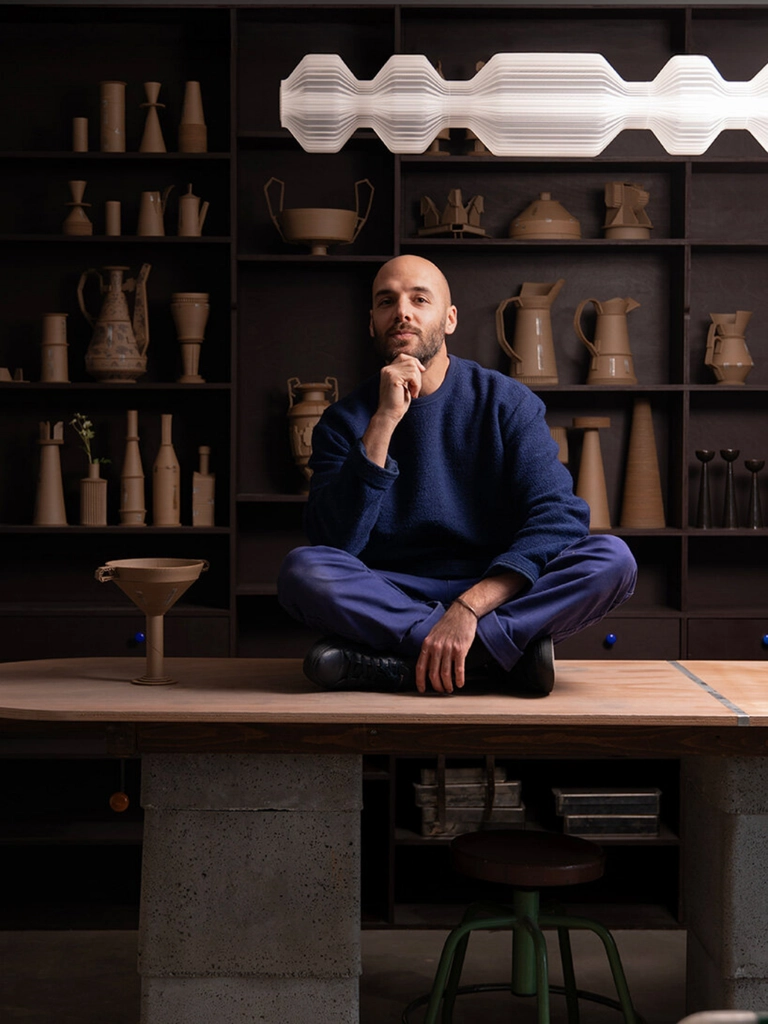
His fascination with permanence also reaches back to his earlier career in advertising. Before ceramic became his full-time practice, Monneraud spent years creating work designed to compete for attention within a culture of speed. He later described his turn toward clay as a search for another relationship with time, one built around making by hand, repetition and durability. Advertising specializes in the momentary. Ceramic can survive for centuries.
The Carton series condenses that entire philosophy into a deceptively familiar object. One of the cheapest and most temporary materials of consumer culture is reconstructed through one of humanity’s oldest and most durable mediums. Packaging becomes sculpture. Waste becomes permanent. The throwaway box becomes something built to stay.
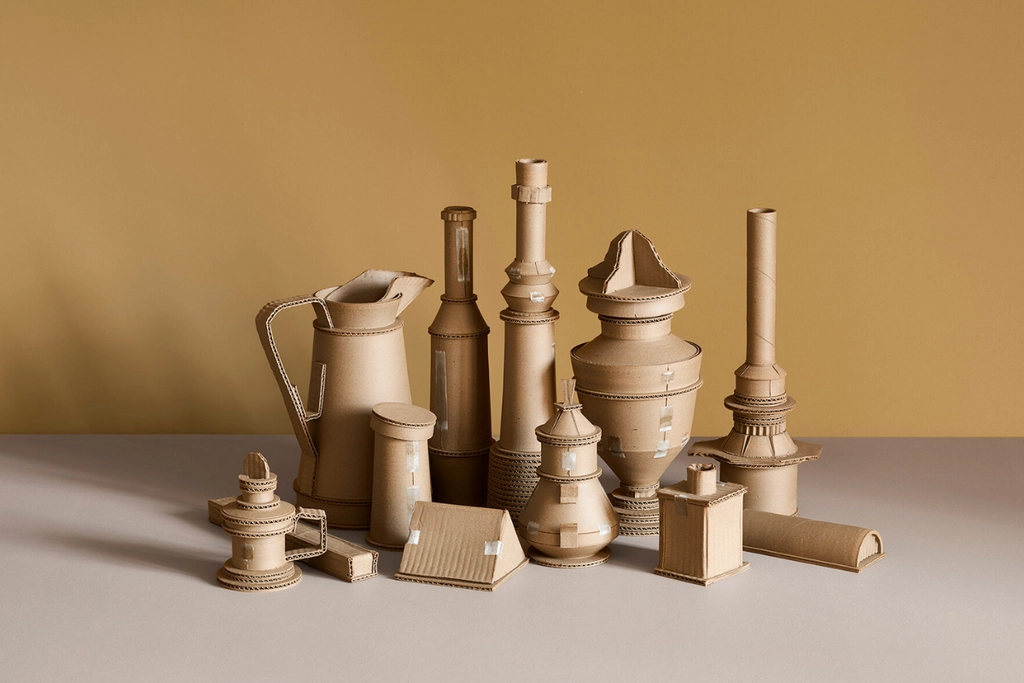
Within luxury home decor, that reversal gives Monneraud’s ceramic work its peculiar power. The object looks humble, even industrial, yet its making belongs to the realm of meticulous craft. What appears disposable turns out to be painstakingly permanent, asking the viewer to reconsider how quickly value can shift once material, time and attention enter the equation.
Brian Rochefort's "Geological" Ceramics
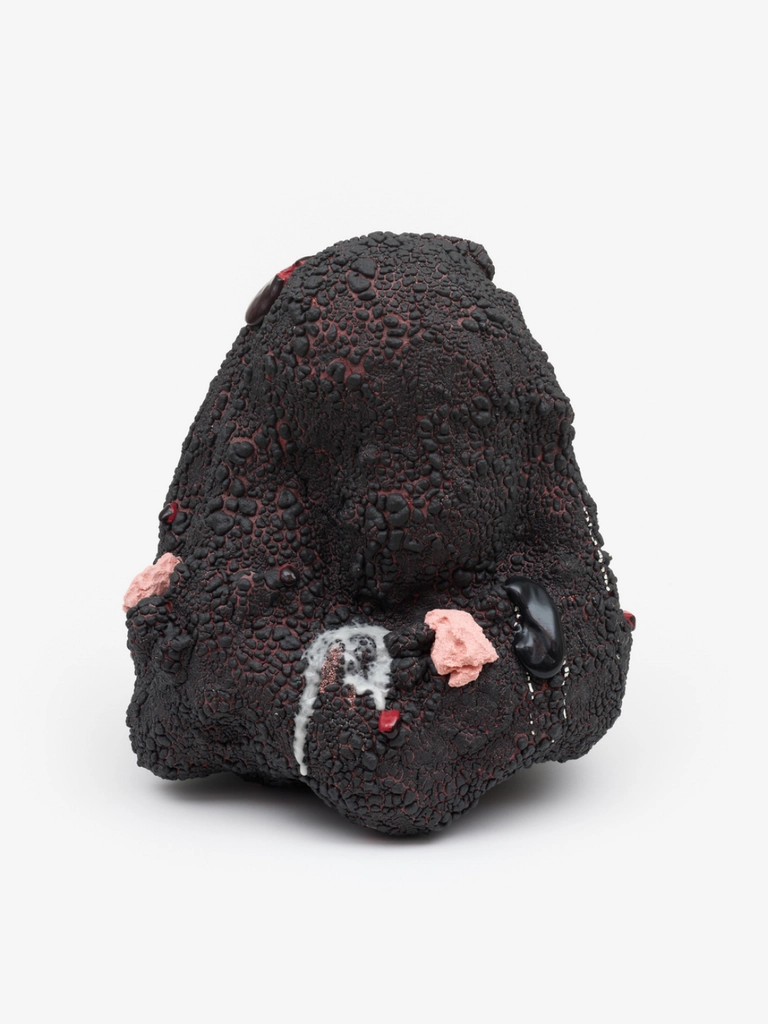
Brian Rochefort’s ceramic sculptures appear caught in the middle of a geological event. Their surfaces swell, crack, drip and blister, gathering the colors and textures of volcanic rock, mineral deposits, coral reefs and subterranean caves. Somewhere beneath this activity, the vessel survives, although its familiar geometry can become almost completely submerged beneath glaze.
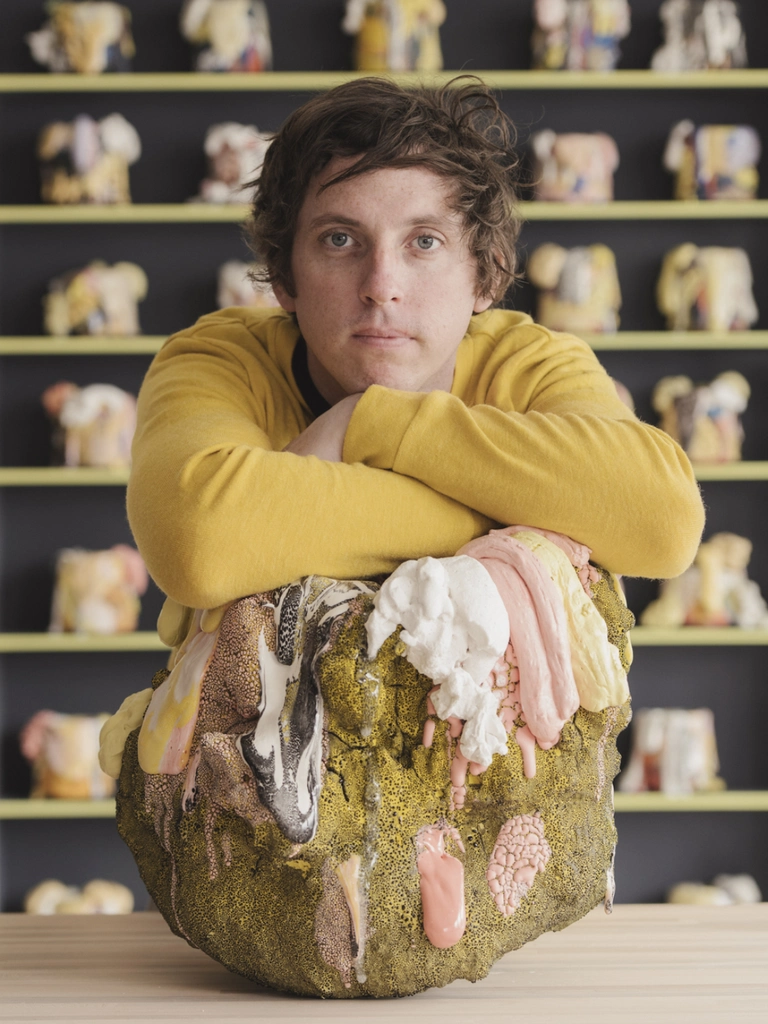
That tension between recognizable form and material excess drives Rochefort’s ceramic practice. He begins with clay structures that serve as foundations for layers of colorants, proprietary glazes and, at times, melted glass. Materials are airbrushed, poured and accumulated before the sculpture returns repeatedly to the kiln. With every firing, the surface changes. Pigments migrate. Glazes collect inside cavities. Glossy streams solidify across ridges. Crater-like openings form where the ceramic appears to have erupted, collapsed and cooled again.
The process requires considerable technical control precisely because Rochefort pushes ceramic chemistry toward instability. Glaze formulation, temperature and firing schedules establish the conditions, while extreme heat determines the final behavior of the materials. One color can bleed through another. A glaze may travel unexpectedly across the surface. Glass can pool into an interior hollow and emerge looking almost liquid.
Creation and destruction become part of the same process.
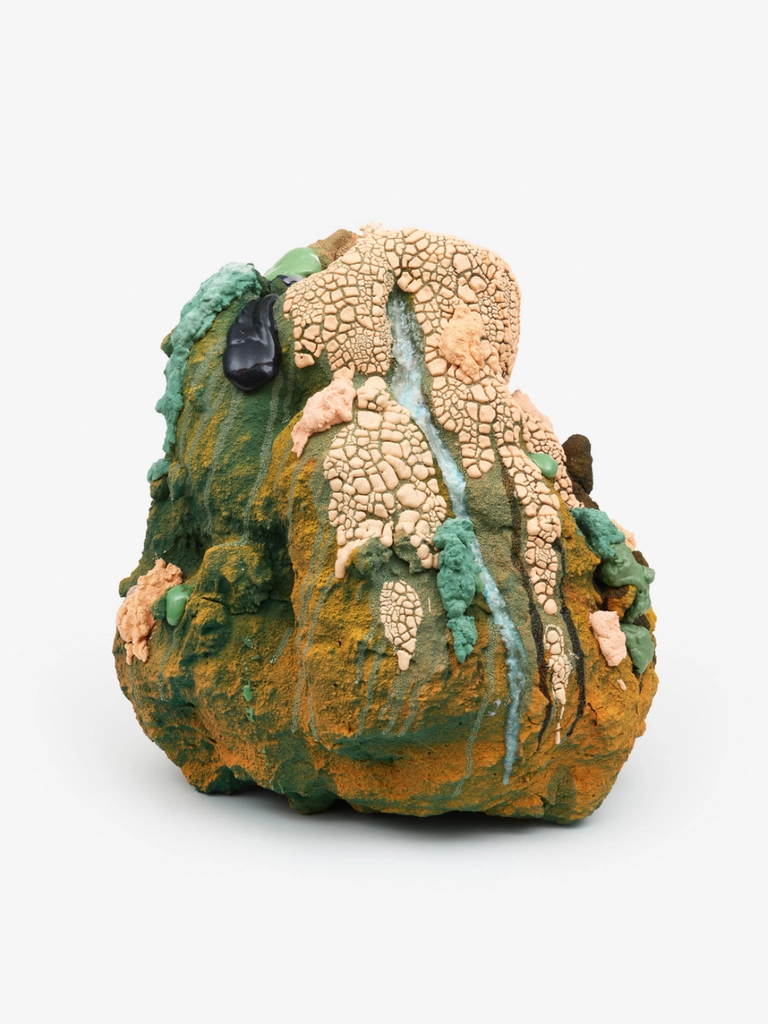
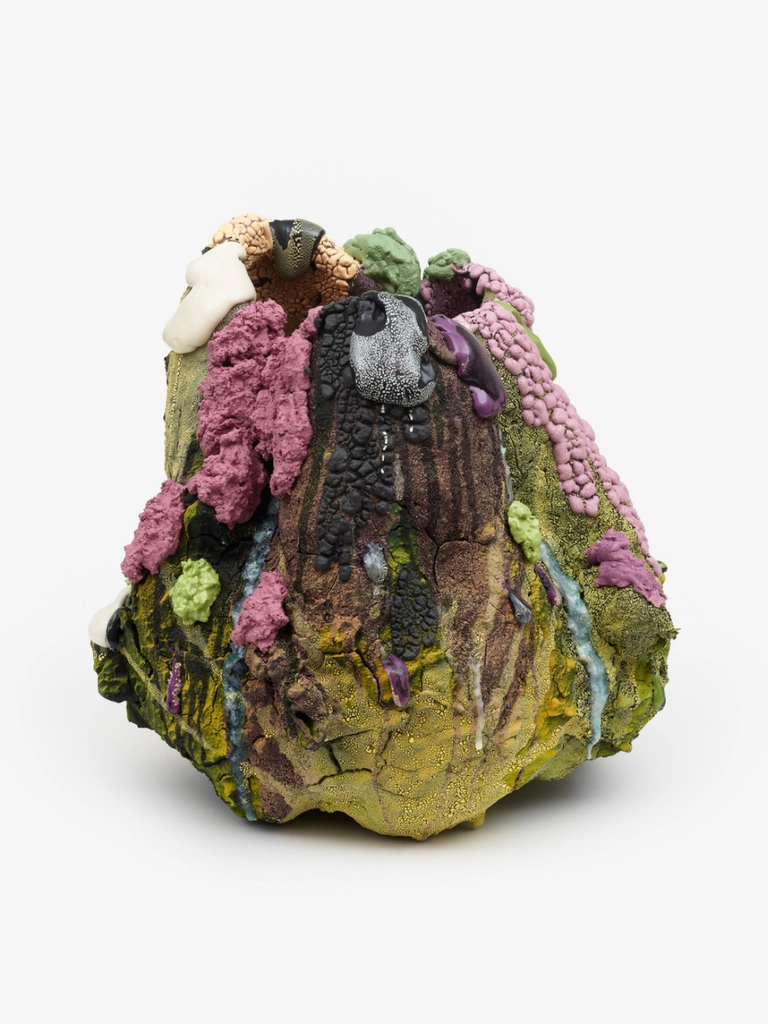
Rochefort’s fascination with these transformations connects closely to the landscapes he has encountered during expeditions through the Amazon Rainforest, the Galápagos Islands, Bolivia and regions of Africa. He collects impressions of places shaped by immense natural forces, from volcanic terrain to marine ecosystems and geological formations.
These landscapes return through ceramic without becoming literal representations. Rochefort works from memory, extracting color, density, texture and atmosphere. A deep cavity can recall the interior of a cave. Pools of glass suggest tidal environments. Thick accumulations of glaze resemble coral growth, mineral deposits or stone formed through centuries of pressure and heat. Each sculpture becomes its own miniature ecosystem.
His artistic references extend equally far. Rochefort has cited influential ceramic artists Ron Nagle, Ken Price and Kathy Butterly alongside figures including Joan Mitchell, Franz West and Albert Oehlen. Painting, sculpture and ceramic history converge within objects that refuse the restraint traditionally associated with the vessel.
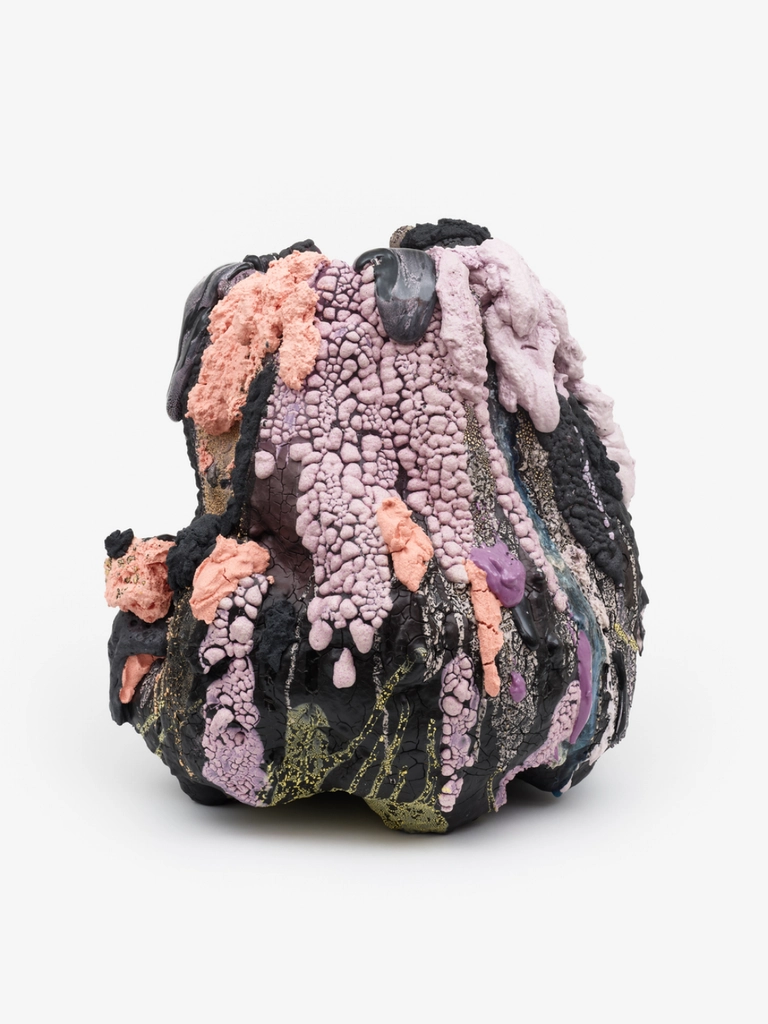
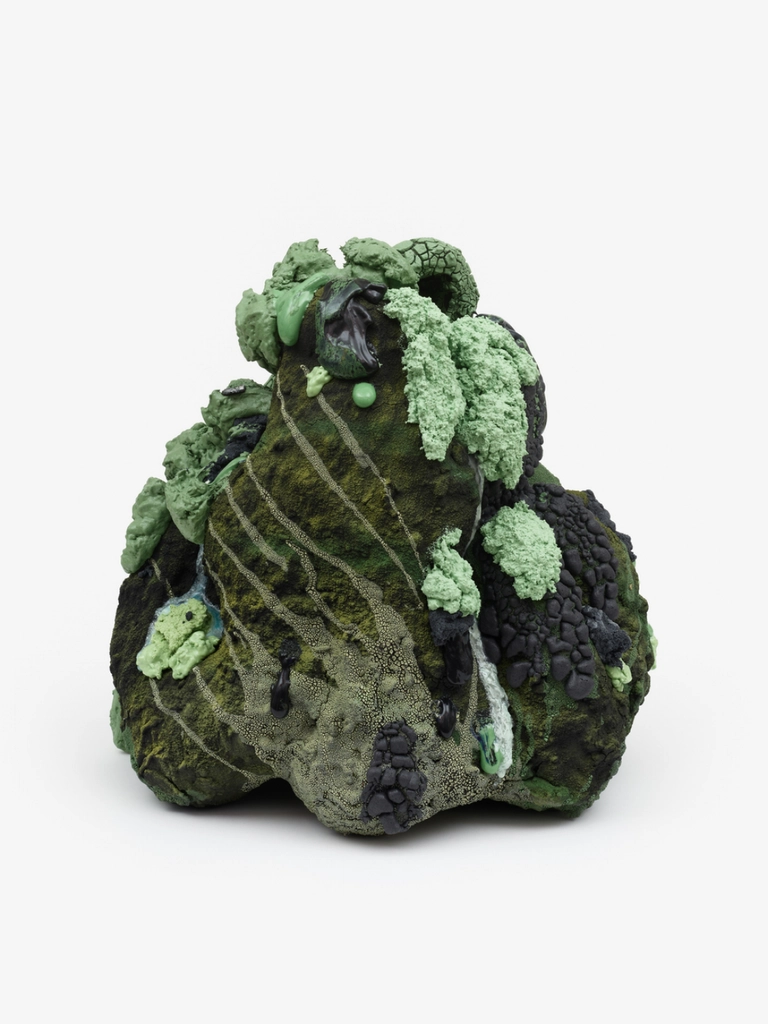
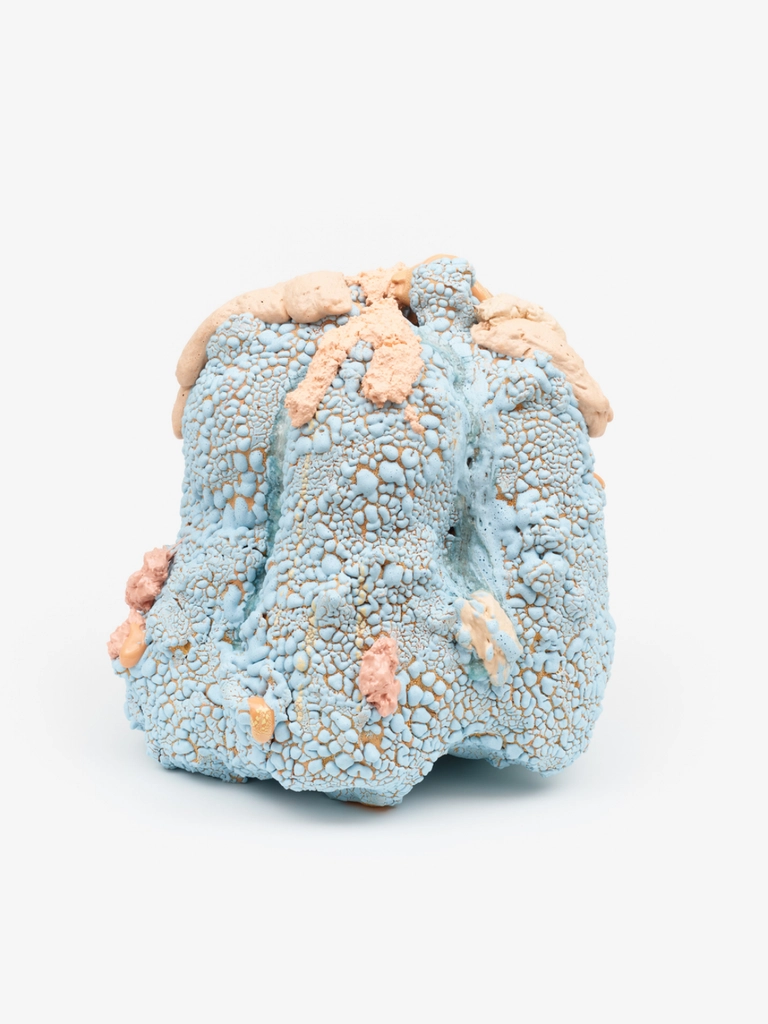
This is where Rochefort’s work becomes particularly compelling within contemporary ceramic art. Technical mastery gives him the freedom to pursue excess. Surface becomes landscape, glaze becomes geological matter, and the vessel develops the visual complexity of something shaped by forces far larger than the artist himself.
Within luxury home decor, a Brian Rochefort ceramic sculpture introduces an almost elemental presence. Against polished stone, refined woods or restrained architectural surfaces, its explosive materiality becomes impossible to ignore. Every crater, drip and chromatic collision invites closer inspection, revealing another layer of clay, chemistry, heat and chance.
The apparent chaos ultimately depends on extraordinary control. Rochefort knows ceramic deeply enough to create the conditions for unpredictability, then allows the kiln to complete the story. The result looks less like an object that has simply been made and more like a fragment of an unknown landscape that somehow found its way indoors.
Magdalene Odundo Embodies The Voluptous
“I just want them to be amazed and astonished that this very simple material, which is so cheap, so easily found, which we all walk on, can be transformed” - Magdalene Odundo, on what she wants people to take away with them when they look at her ceramics.
Magdalene Odundo’s vessels possess an almost bodily authority. A neck rises, a mouth opens, a rounded belly swells outward, while small protrusions can suggest nipples, vertebrae or an umbilicus. For Odundo, the connection is fundamental: the human body is itself a vessel, and ceramic form can carry the same language of posture, tension and presence.
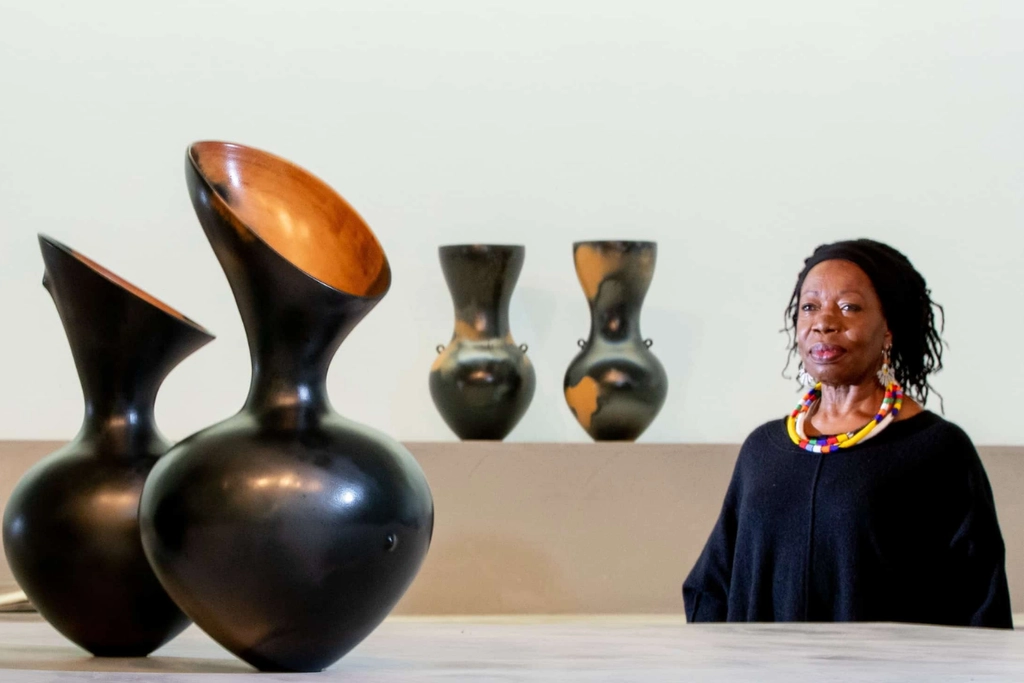
Born in Kenya in 1950 and based in Britain since 1971, Odundo has built a practice that moves across histories, geographies and artistic traditions. Her work has often been discussed through both British studio pottery and African ceramic heritage, yet the vessels resist easy classification. Their references stretch across ancient pottery, sculpture, modernism, fashion, architecture and the human figure, especially the female body.
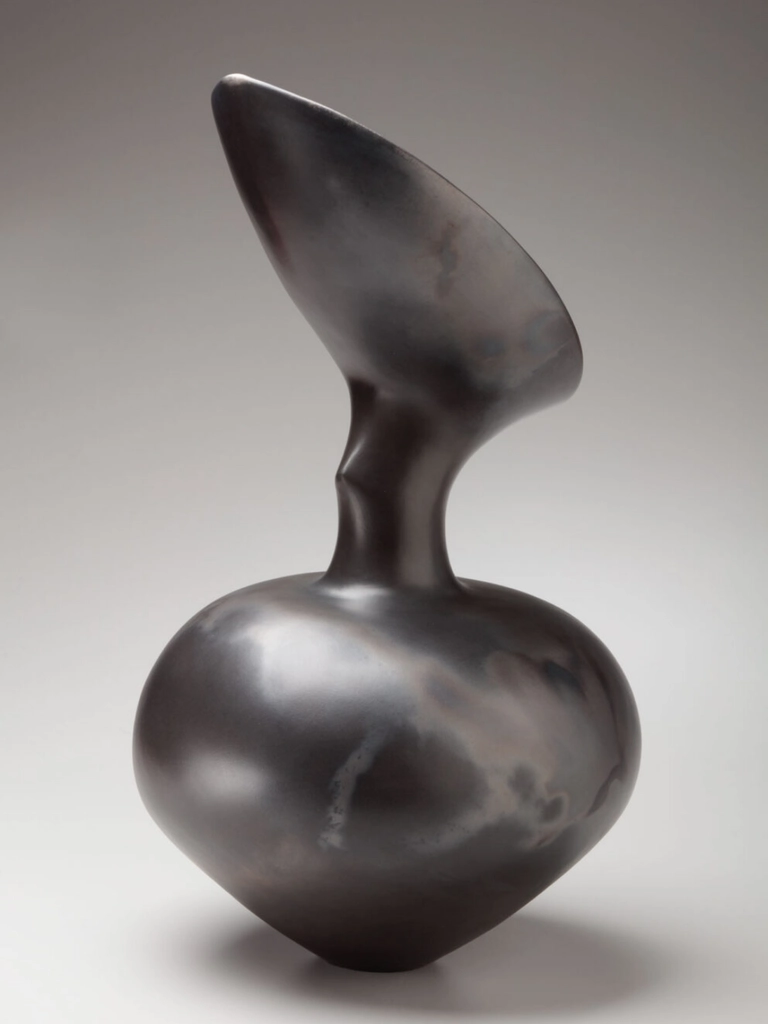
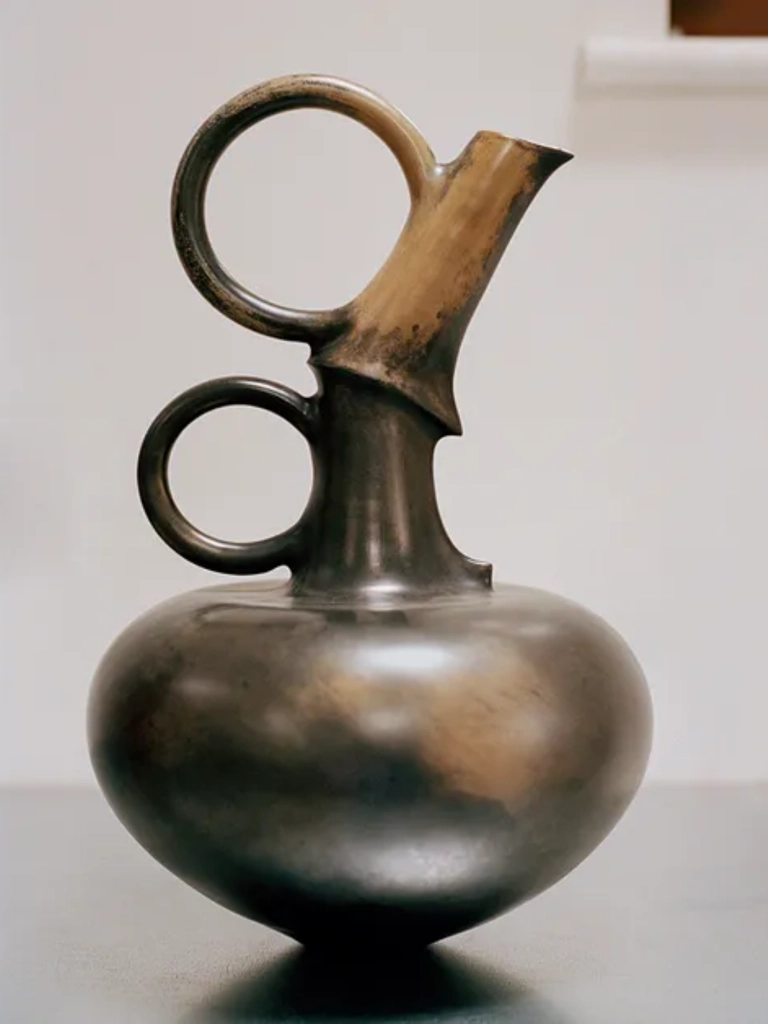
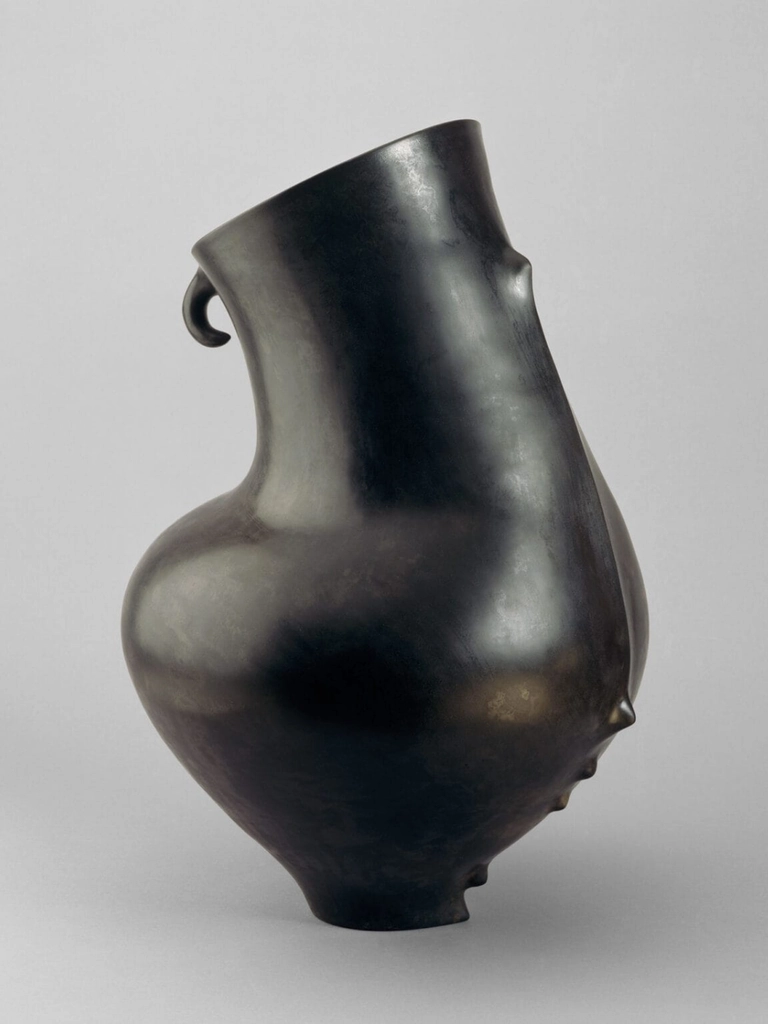
Odundo works from a vast visual memory, extracting essential qualities from forms she has encountered rather than reproducing them literally. Untitled #10 from 1995, for instance, echoes the dramatic backward sweep of hairstyles and headdresses associated with early twentieth-century Mangbetu women in the Democratic Republic of the Congo. Such references enter the ceramic body as rhythm and silhouette, becoming part of a sculptural language entirely her own.
The extraordinary smoothness of Odundo’s surfaces conceals an intensely physical process. After studying pottery traditions in Nigeria, including working with Gbari potters in Abuja, she developed a method based on hand-building and coiling. The celebrated Nigerian potter Ladi Kwali became an important mentor, reinforcing values of patience, discipline and persistence that remain central to Odundo’s practice.
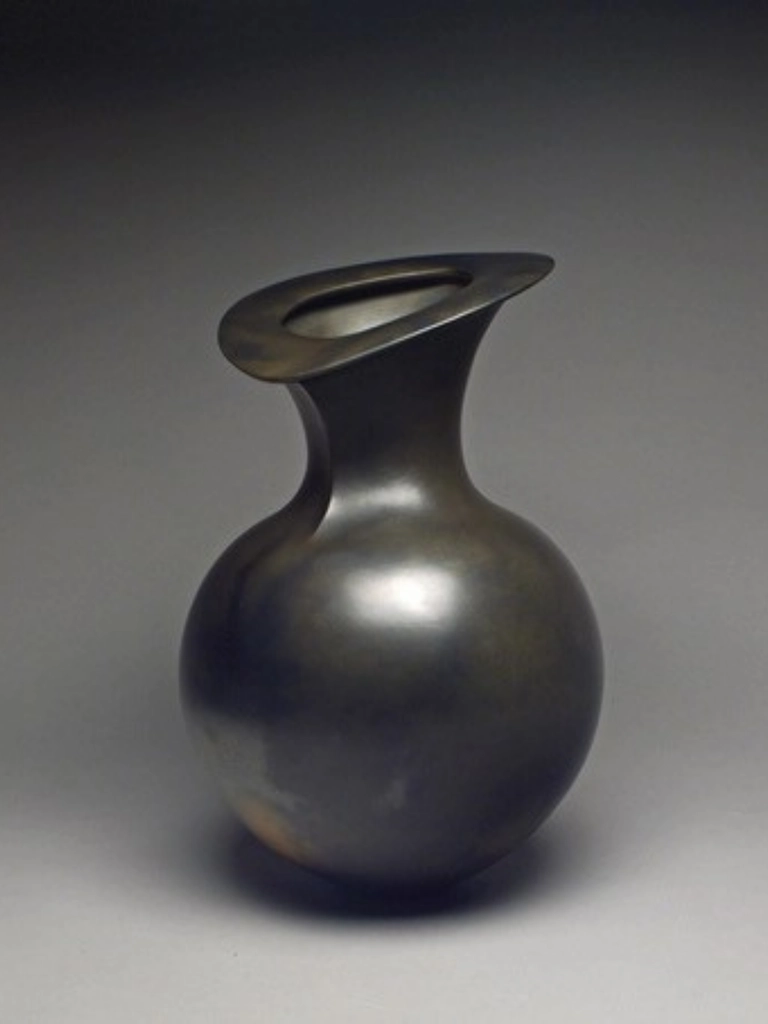
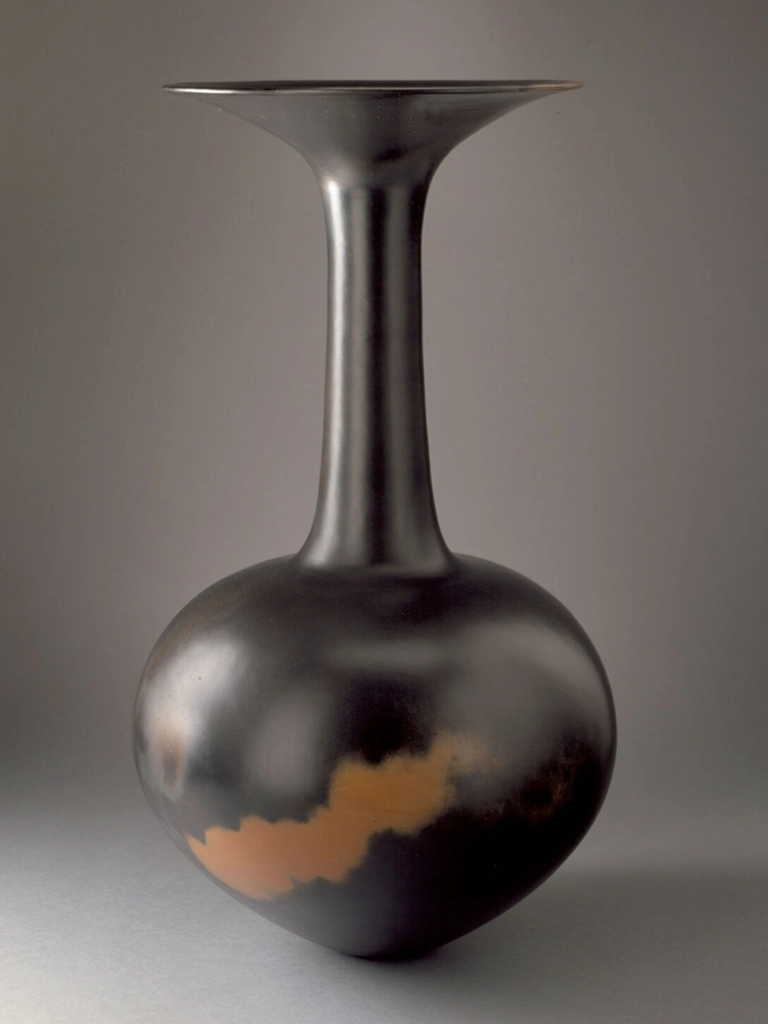

A single vessel can take weeks or months to complete. Clay is gradually coiled upward, shaped, refined and allowed to reach a leather-hard state before undergoing repeated burnishing, slip application and further polishing. The resulting surface can carry the visual richness of leather, polished wood or even skin, achieved through clay and firing rather than decorative glaze.
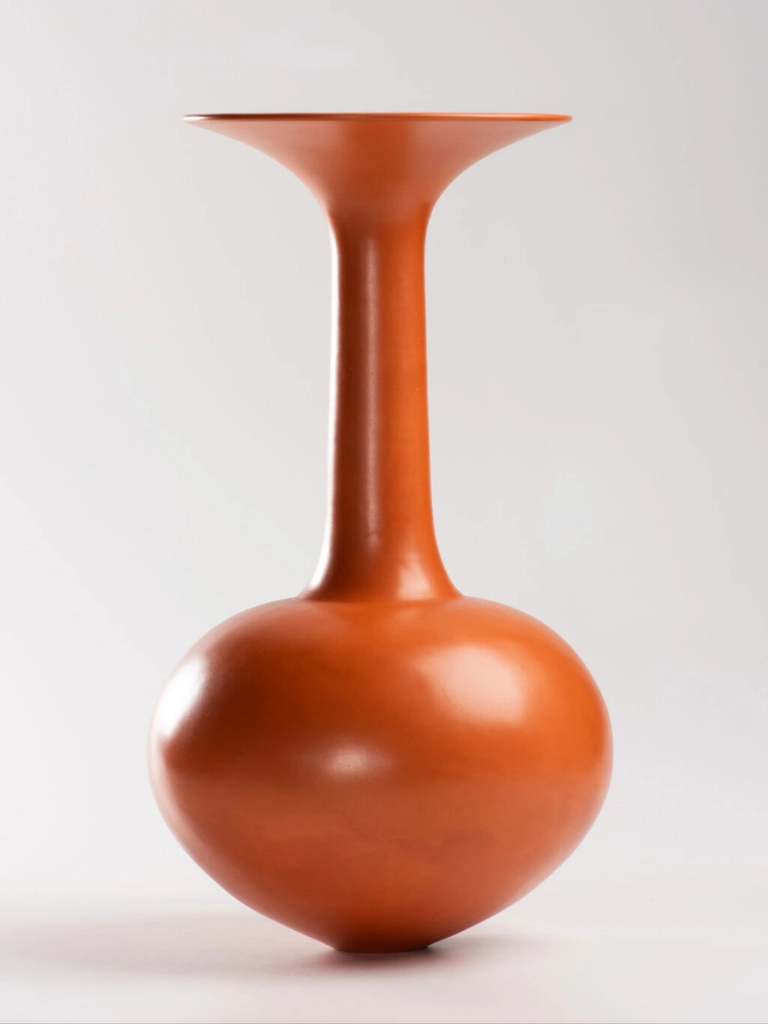
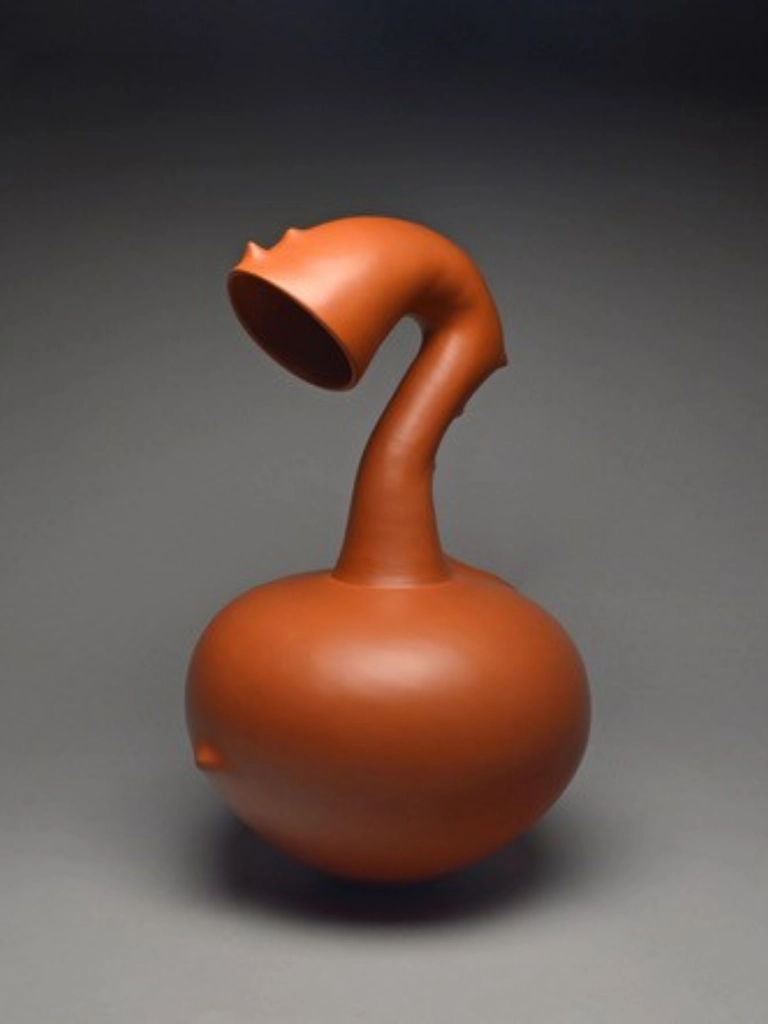
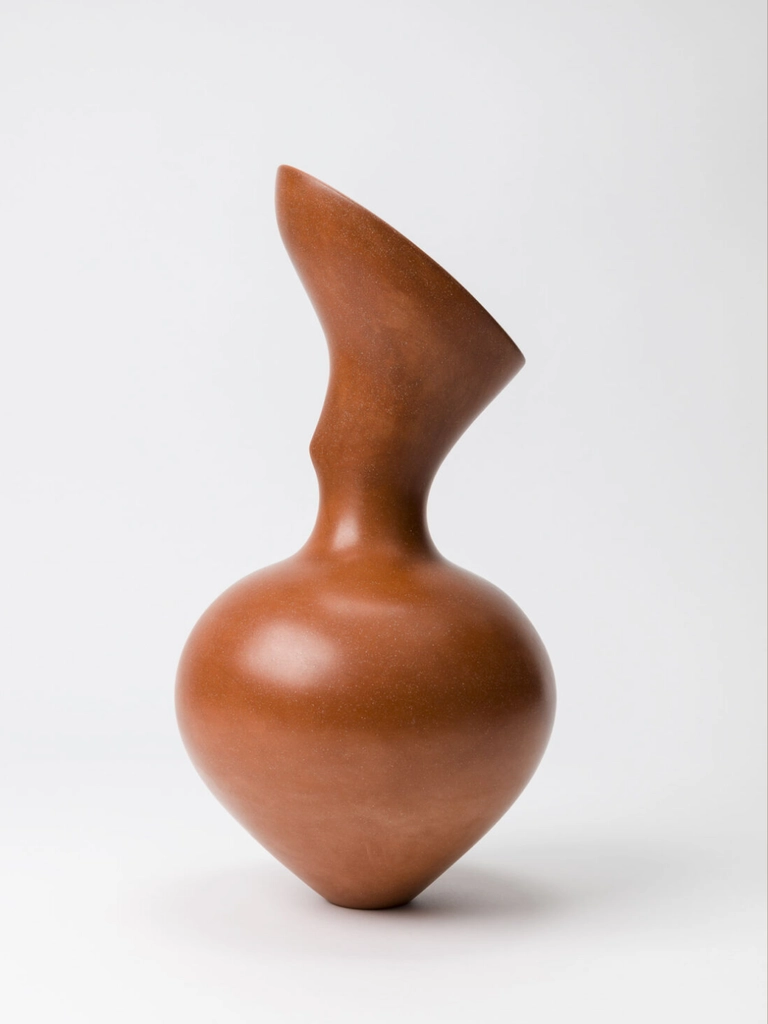
Fire then becomes the final transformation. In an oxidizing atmosphere, her vessels can emerge in luminous red-orange tones that sharpen their curves and silhouettes. Further firing processes may introduce deep black areas and unpredictable markings across the surface. Odundo values these traces because they preserve an element of vitality within an otherwise highly controlled object.
Her ambition is wonderfully simple in language and extraordinarily difficult in practice: the vessel should “dance” while standing still.
Danny Cremers Sketches On Clay
"In drawing, nothing is better than the first attempt." - Picasso
The most exciting, natural and purest form of creation lies in the first brushstrokes, the first sketch, the first attempt. The preparatory sketch carries an energy that finished work can easily smooth away. Danny Cremers preserves that sense of immediacy in porcelain, treating each vessel as a record of first gestures, adjustments and decisions made while the material is still open to change.
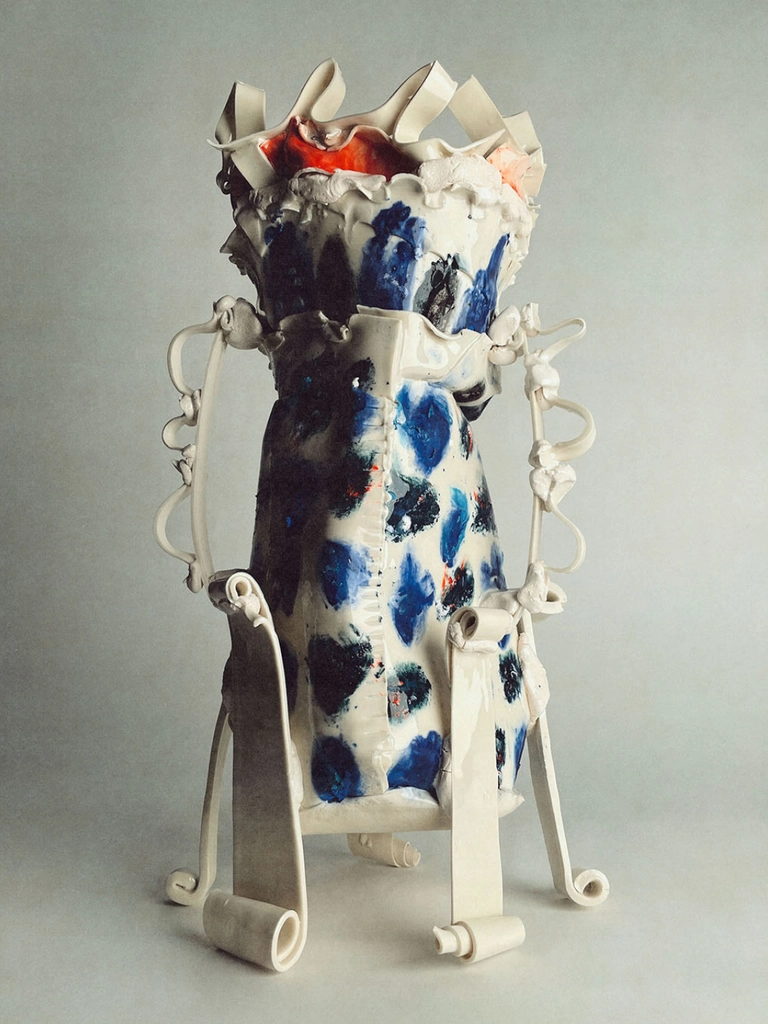
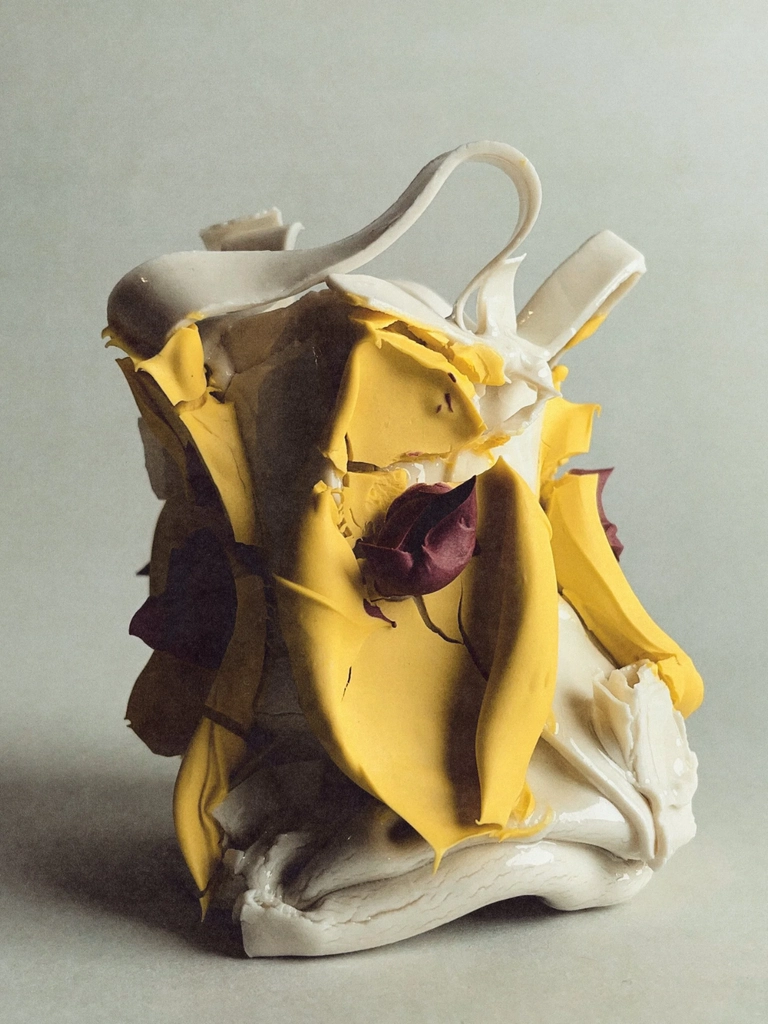
His forms often appear deliberately provisional. Surfaces overlap. Joins remain visible. Shapes tilt slightly out of alignment. An edge may fold, stretch or interrupt itself before reaching perfect symmetry. These small irregularities give the work its tension, allowing the vessel to sit somewhere between classical proportion and spontaneous construction.
Cremers describes his process through the idea of three-dimensional sketching. Working with handbuilt porcelain, he builds, stacks, cuts and reassembles individual parts intuitively, allowing the material itself to influence the direction of the piece. The process remains responsive throughout. A curve may suggest another volume. A seam may become part of the composition. A slight imbalance can introduce the exact energy the work needs.
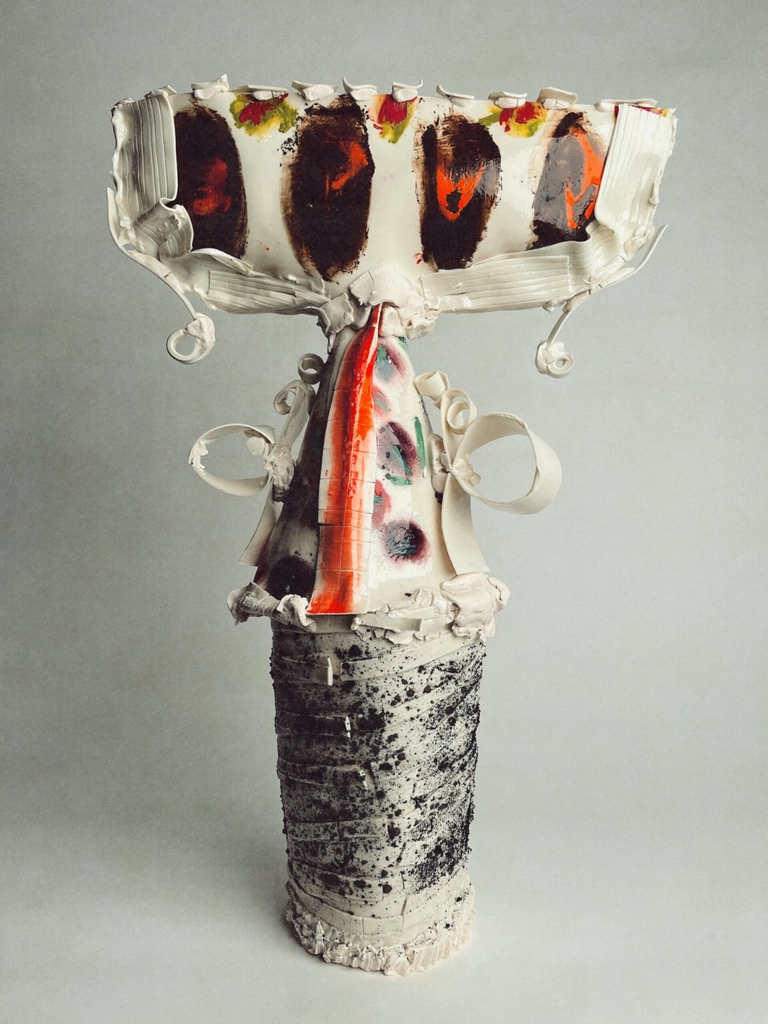
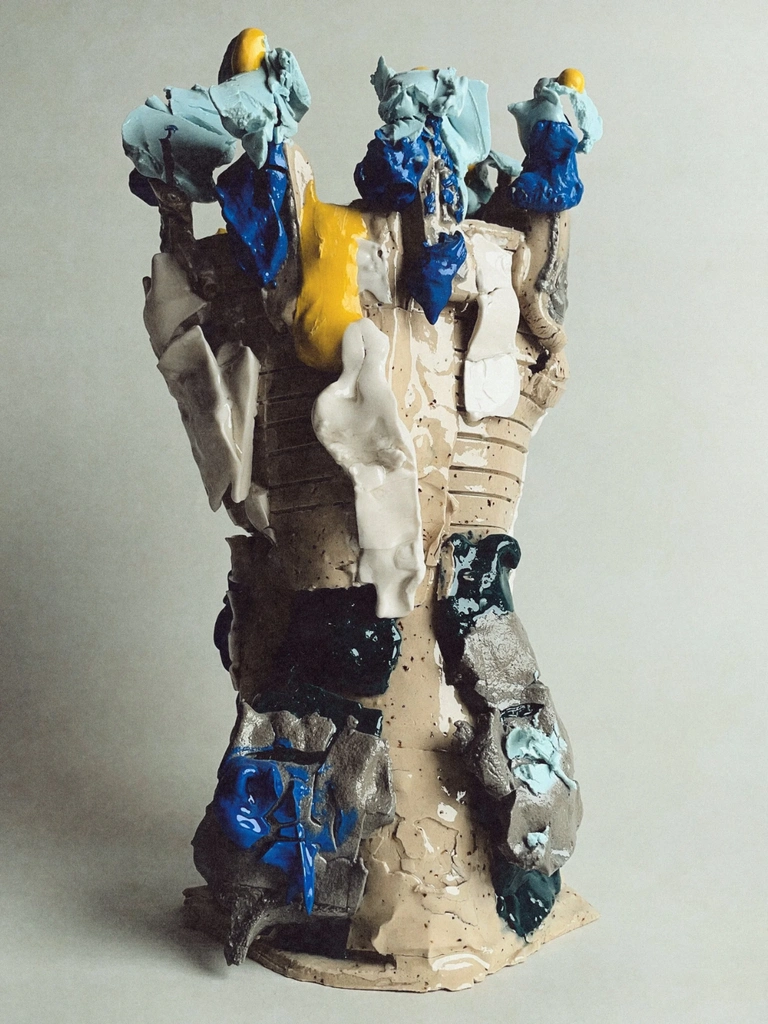
This approach gives each ceramic object the freshness of an early drawing. Cremers is interested in the moment where freedom and control meet, when a form begins to emerge through attentive handling before it becomes over-resolved. Visible imperfections become evidence of thought in motion.
The result is a quiet tension between intention and chance. Classical vessel archetypes remain present, yet they are loosened by asymmetry, layered surfaces and traces of assembly. Cremers suggests structure without dictating it completely, leaving enough openness for the viewer to sense how the object came into being.
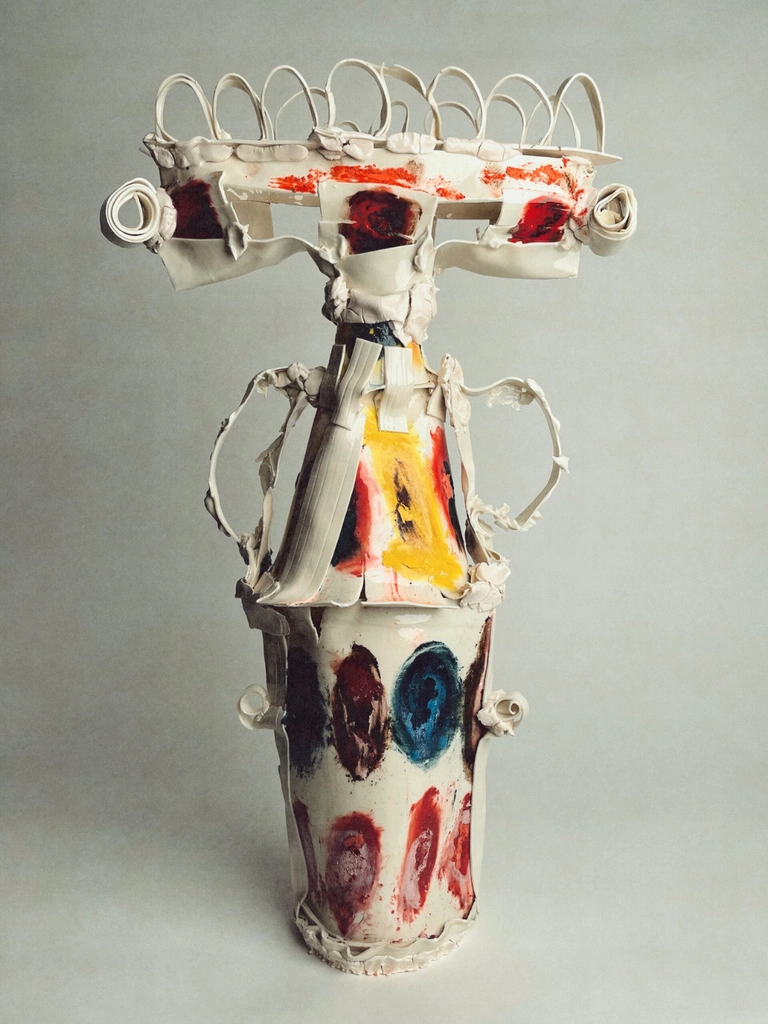
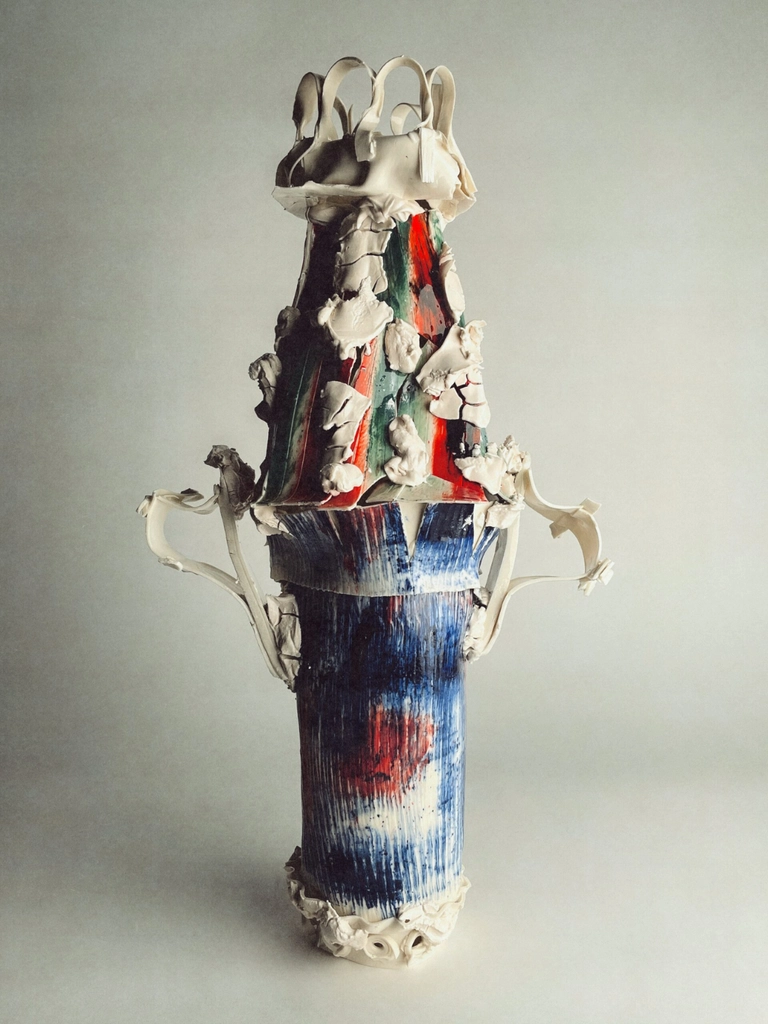
Within luxury home decor, this quality gives his porcelain a distinctive role. Polished stone, lacquer, glass and brushed metal can gain warmth when placed beside a ceramic piece that openly displays the maker’s hand. Cremers’ vessels introduce rhythm, tactility and a degree of visual uncertainty into highly resolved interiors.
Their luxury lies in that sense of presence. Each piece carries the feeling of something still becoming, as though the first sketch somehow survived the entire journey into porcelain.
Investment Ceramic As Your Luxury Home Decor
Jacques Monneraud's ceramic cardboard boxes invite a second glance, turning packaging into permanence and technical mastery into visual humor. Brian Rochefort pushes clay toward geological excess, allowing glaze to erupt into landscapes of craters, pools and mineral color. Magdalene Odundo gives the vessel bodily authority, where a curved neck or swelling belly can occupy a room almost like another figure. Danny Cremers preserves the impulsiveness of drawing, letting porcelain hold gestures that still feel alive and unresolved.
For collectors, this individuality becomes central to the investment value of ceramic art. A recognizable artistic language, rigorous technique, provenance, gallery representation and scarcity can give a ceramic object cultural significance alongside its visual appeal. Its value also lives within the daily intimacy of a home. Paintings remain on walls. Ceramic objects share tables, shelves, passages and changing daylight with us.