MENU
Close





Six animals, six crafts rarely seen in high watchmaking, and only four millimetres of vertical space in which to make them exist. With Métiers d’Art Tribute to the Animal Kingdom, Vacheron Constantin turns featherwork, glass sculpture, origami, gold embroidery, paper sculpture and wood marquetry into an experiment in what handcraft in haute horlogerie can become.
Six animals, six crafts rarely seen in high watchmaking, and only four millimetres of vertical space in which to make them exist. With Métiers d’Art Tribute to the Animal Kingdom, Vacheron Constantin turns featherwork, glass sculpture, origami, gold embroidery, paper sculpture and wood marquetry into an experiment in what handcraft in haute horlogerie can become.
September 21, 2026


Animals have inhabited Vacheron Constantin’s decorative universe for years. The Maison’s The Legend of the Chinese Zodiac, for instance, has interpreted zodiac creatures through hand engraving and enamel, with recent editions using the Calibre 2460 G4 to clear the dial centre for sculptural animal appliqués. The 2025 Year of the Snake combined an engraved gold serpent with opaque miniature enamel, while the series continued through subsequent zodiac years.
Its latest animal project, however, follows an entirely separate proposition.
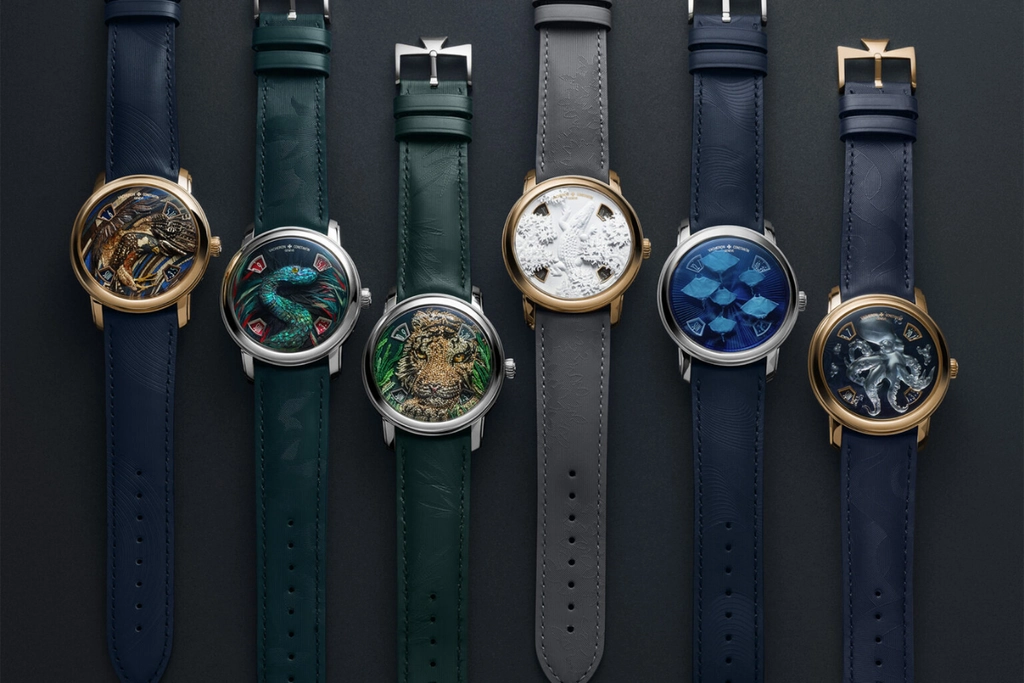
Unveiled in August 2026, Métiers d’Art Tribute to the Animal Kingdom comprises six concept watches created through Vacheron Constantin’s One of Not Many Crafts Programme. Each brings an independent artist from outside conventional horological métiers d’art into high watchmaking and assigns a single challenge: compress a practice usually executed at a larger scale into the microscopic architecture of a functioning mechanical watch.
The six answers are extraordinarily different. A serpent is constructed from feathers. An octopus is sculpted in glass. Manta rays are folded from Japanese paper. A tiger is embroidered with gold. A crocodile is built from cotton paper. A falcon emerges from twelve species of wood.
Together, they propose a compelling definition of handcraft in haute horlogerie. Tradition survives here through adaptation: the hand remains central, while its materials, collaborators and technical problems keep changing.
The most important specification in Tribute to the Animal Kingdom may have little to do with conventional watch performance.
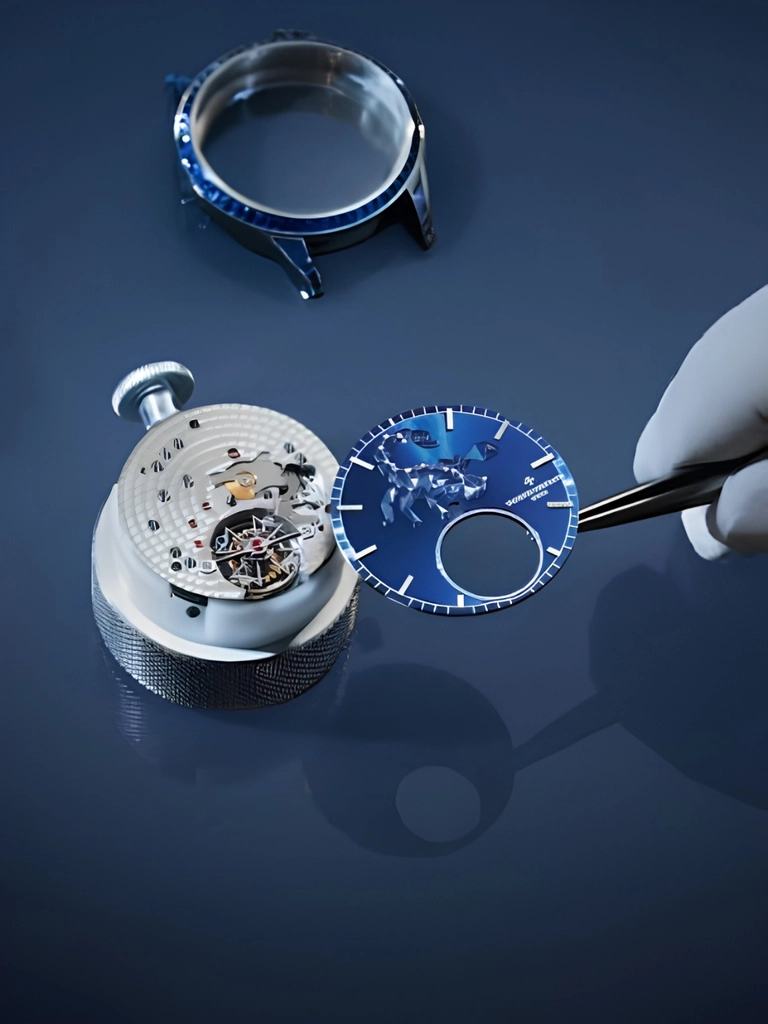
Each creation occupies a 42mm case, yet only approximately four millimetres separate the dial surface from its sapphire crystal. Techniques developed for furniture, sculpture, embroidery and decorative objects therefore had to function inside an extraordinarily shallow space.
Miniaturisation changes more than size.
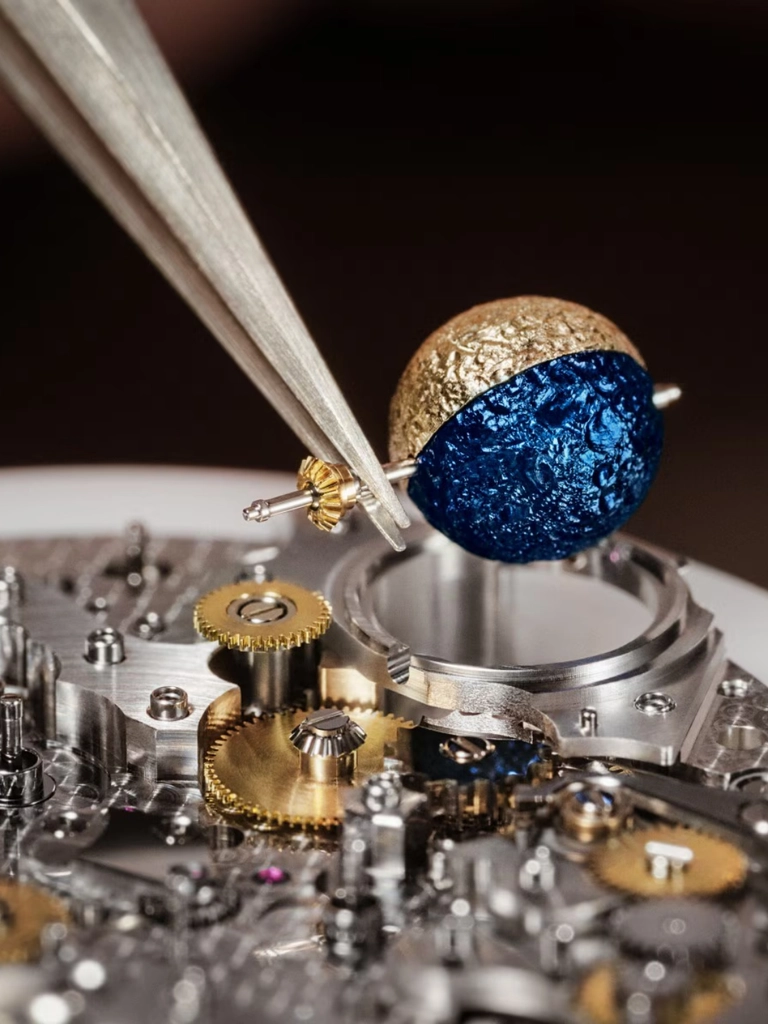
Material thickness becomes an engineering problem. Relief must remain expressive while clearing the sapphire above it. Added structures cannot disrupt the operation of the movement. Paper has to coexist with a mechanical object. Glass needs sufficient dimensional presence without becoming too tall or fragile. Embroidery requires a surface through which it can physically be stitched.
The dial consequently operates as a laboratory, forcing each artist to rethink familiar processes. This is where the project broadens the meaning of handcraft in haute horlogerie. The emphasis shifts from applying an established high watchmaking decoration beautifully toward asking what happens when a completely different craft is subjected to horology’s tolerances.
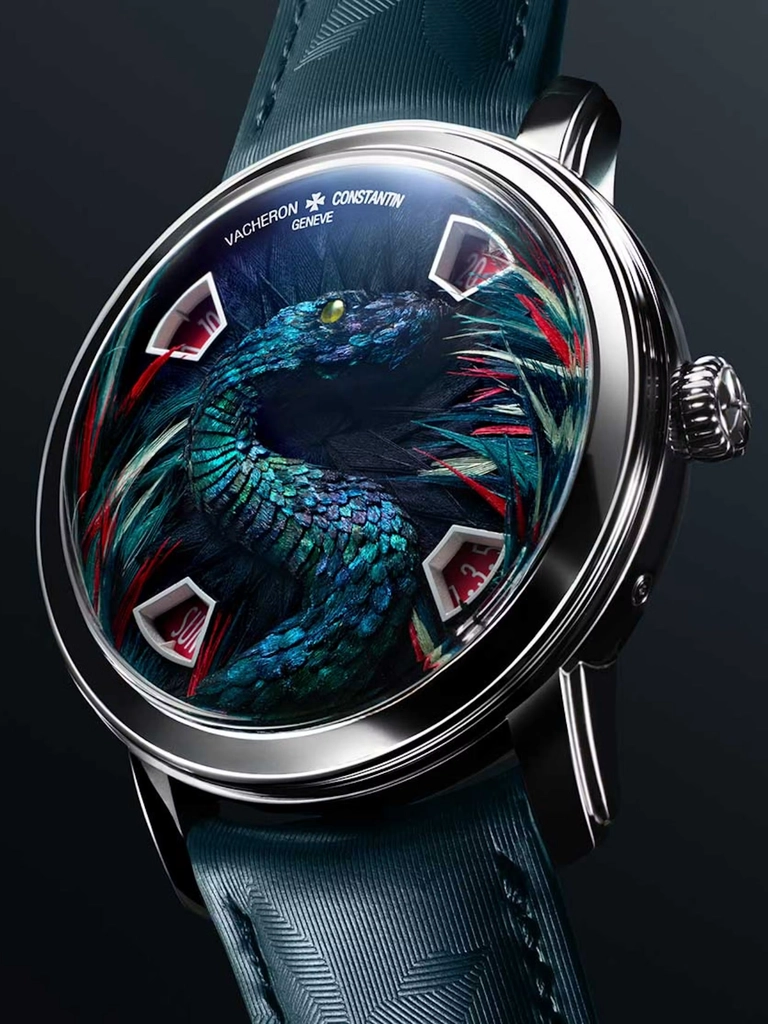
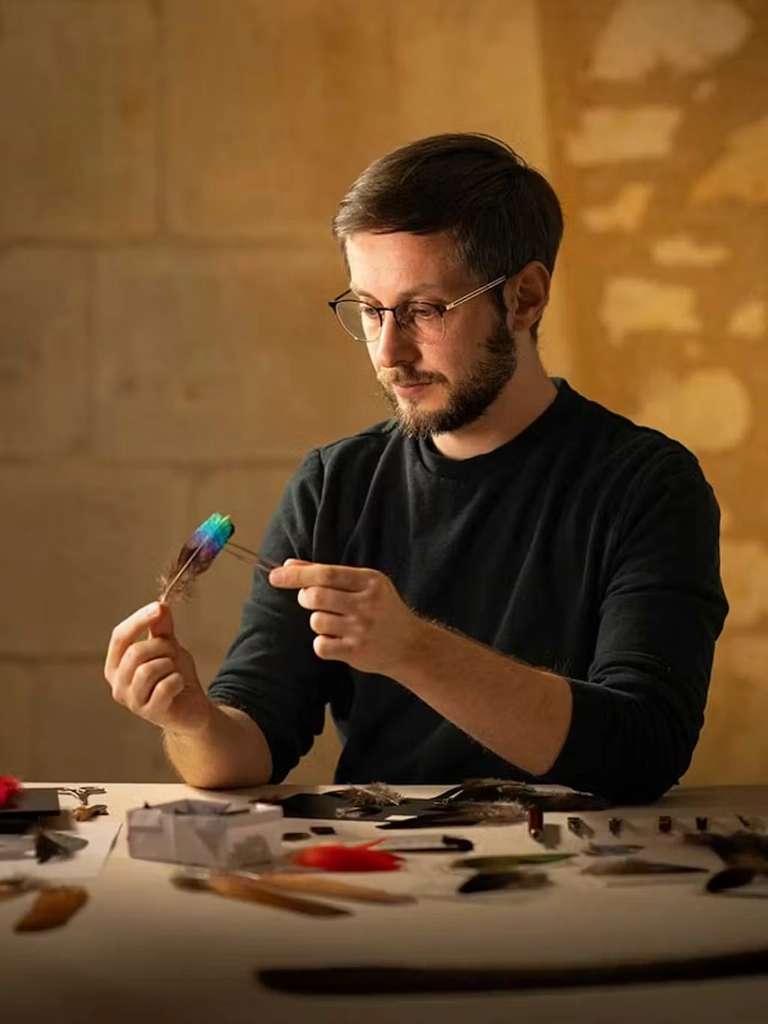
French feather artist Julien Vermeulen created perhaps the most materially unexpected creature of the six: an imaginary serpent covered in natural plumage.
Its body rises only three millimetres above the dial. A specially developed metal structure underneath supports the featherwork and allows the serpent to maintain volume within the available space. More than 200 individual fragments, obtained from seven Lophophore feathers, form its surface, exploiting natural iridescence to give the animal shifting colour and depth as light moves across it.
Development and prototyping took approximately 250 hours. At this scale, plumasserie becomes almost anatomical. Each section must contribute to the curvature of a body while remaining part of a continuous visual skin. Feather, a material usually valued for softness and movement, acquires the precision expected of microscopic construction.
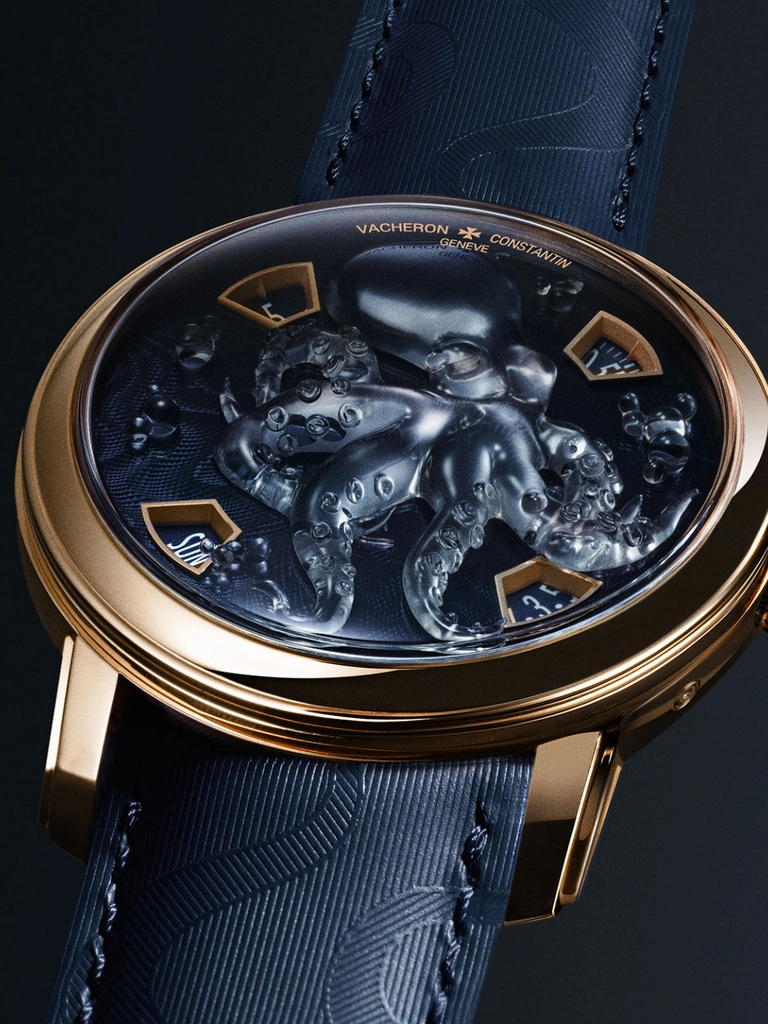
Simone Crestani approached the dial with glass.
His transparent octopus rises approximately 3.5 millimetres from a nocturnal composition, occupying almost the entire vertical allowance available beneath the crystal. Tiny glass rods were melted and manipulated using tungsten tools developed specifically for the project.
The development phase lasted more than a year, while an individual prototype could require at least three days.
The difficulty lies equally in sculpture and integration. Glass needs enough volume for tentacles and body to read three-dimensionally, while every element has to coexist with the tolerances of a wearable mechanical object.
Transparency adds another complication: construction cannot easily hide behind surface decoration. Light passes through the animal, making internal form part of the visual effect.
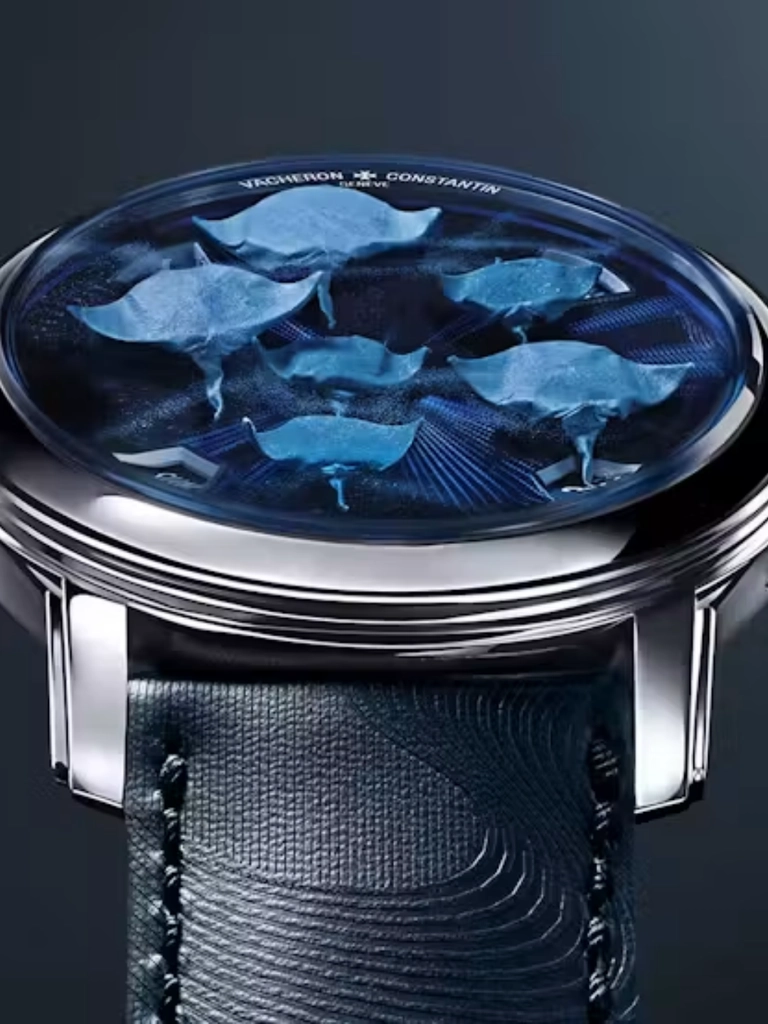
Anya Midori’s Oraygami introduces perhaps the project’s most delicate intervention.
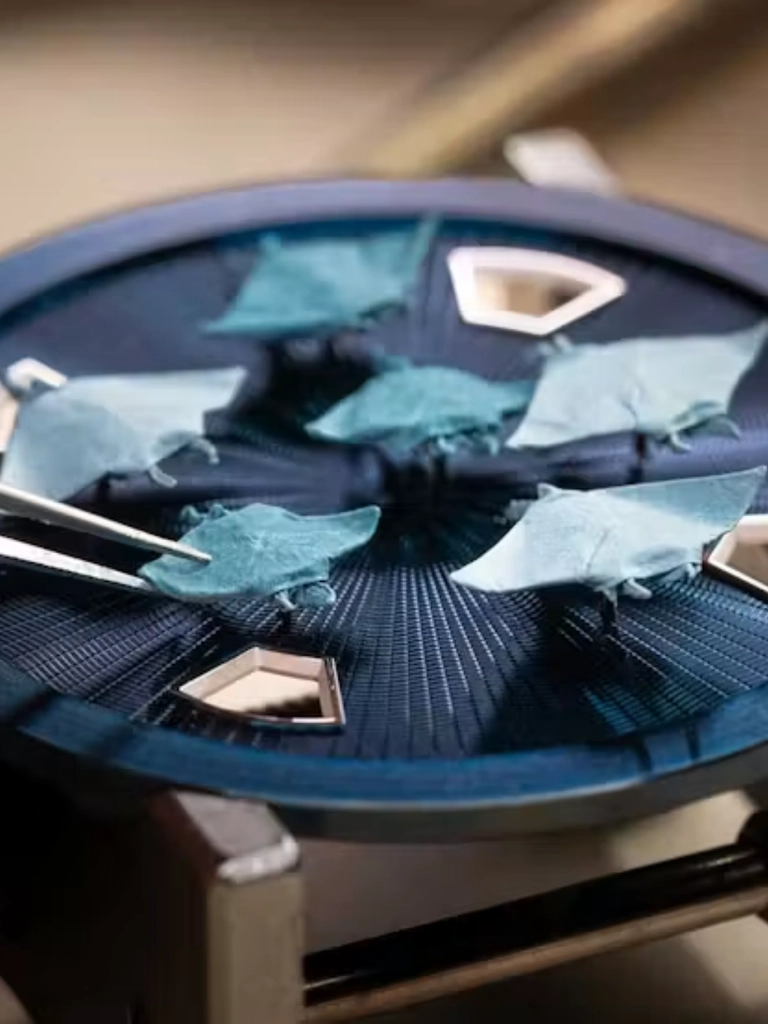
Miniature manta rays measuring roughly 5 to 10 millimetres glide across a dark blue, hand-guilloché background. Each is folded from dyed and hand-coloured Japanese paper and mounted on thin brass supports, producing the impression of rays suspended through water.
The folds were created from paper measuring only 9 to 12 millimetres, using fingers, fingernails and the tip of a toothpick. According to Vacheron Constantin, the artist worked without magnifying glasses. Development stretched beyond two years, and early examples could require up to six hours to fold.
Origami depends upon geometry, but miniaturisation introduces another variable: the paper itself has thickness. A fold that appears negligible on a larger sheet becomes structurally significant when the entire animal measures only a few millimetres.
The manta rays demonstrate how handcraft in haute horlogerie can turn an everyday material into a technical constraint worthy of fine mechanics.
For Laura Baverstock, the problem involved adapting embroidery to an object that traditionally offers no fabric surface to embroider.
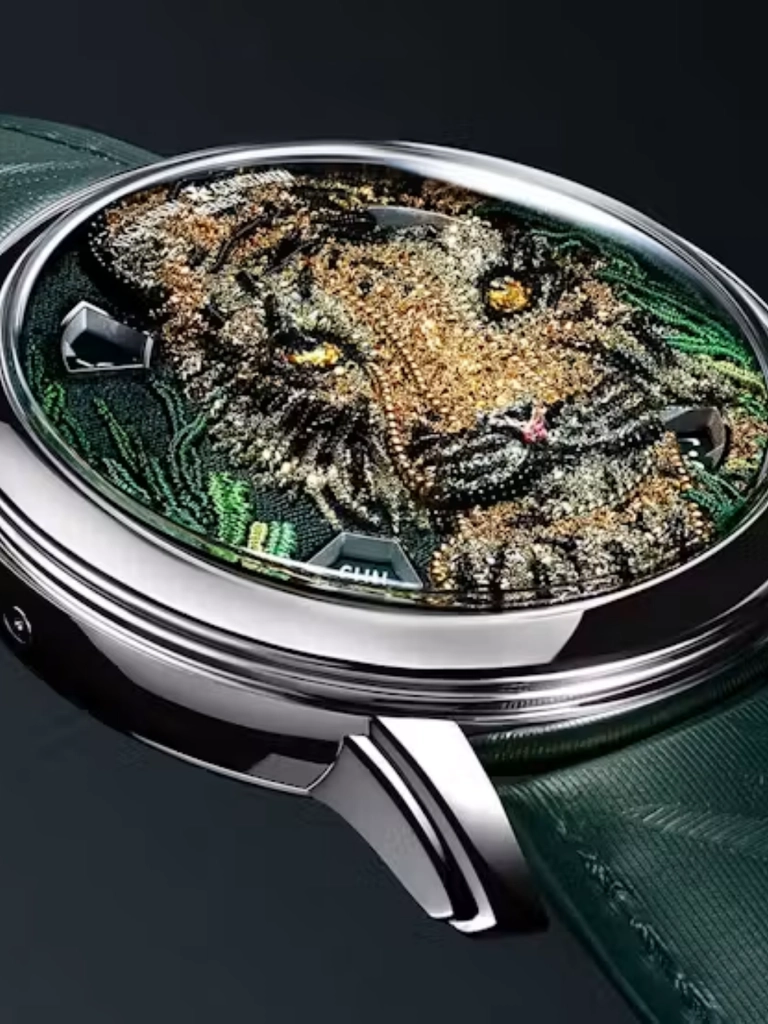
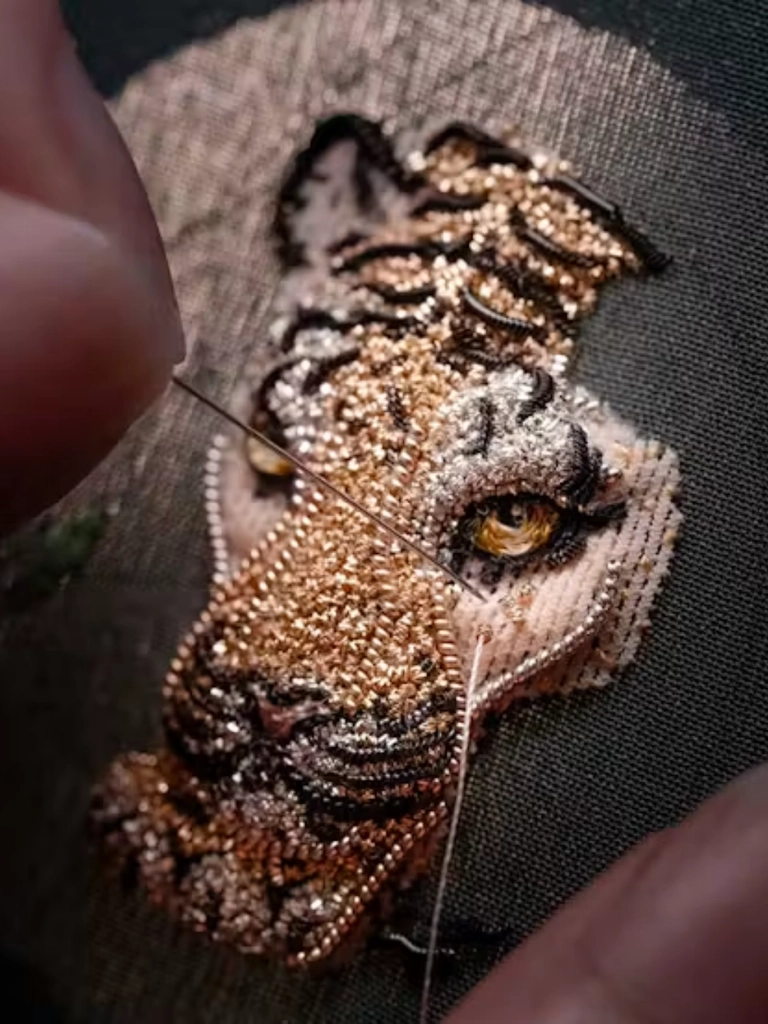
Her tiger prowls through vegetation formed partly from nine-carat yellow and white gold embroidery wires. Ceramic-coated black wire creates the animal’s stripes, while individual fragments of gold wire measuring under one millimetre help construct its body. Even the eyes required ten different shades of silk to establish depth.
The structural breakthrough was a specially developed perforated titanium dial plate. It allows the embroidery to be stitched into the watch architecture while maintaining the functionality required beneath it.
The completed dial demanded around 210 hours of work, encompassing silk preparation, internal padding, wire cutting and shaping, embroidery and final assembly.
Here, the innovation lies in infrastructure as much as decoration. Vacheron Constantin had to make the watch physically receptive to a craft it was never designed to accommodate.
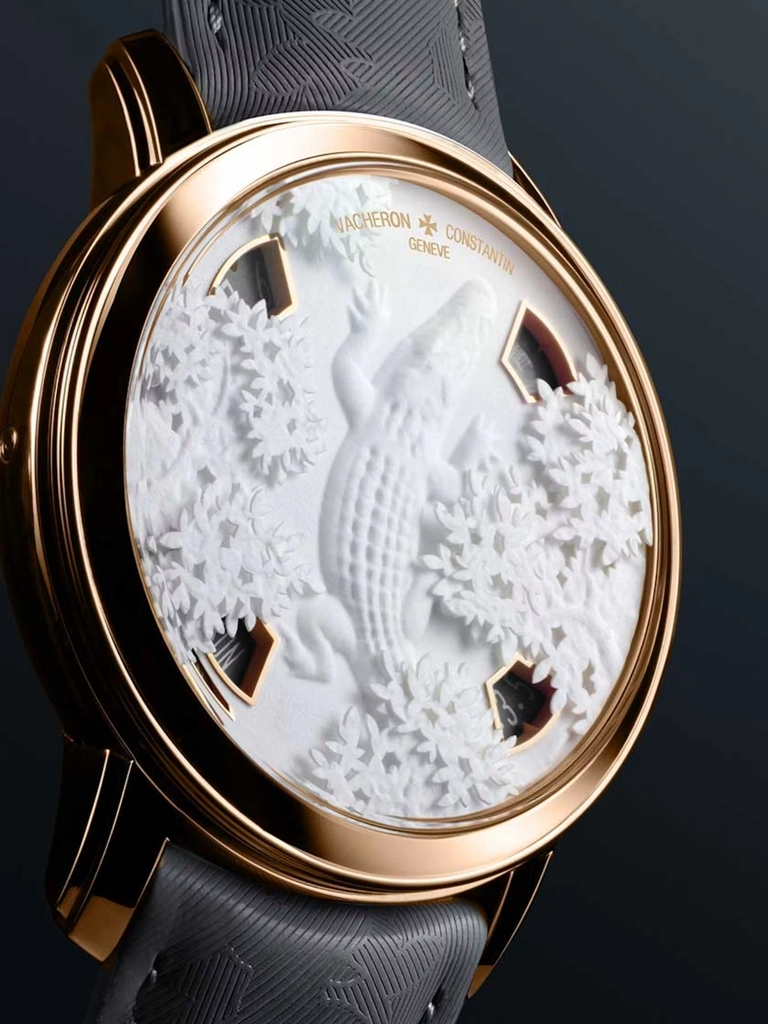
Marianne Guely’s Papercroc places an entirely white crocodile within vegetation sculpted from cotton paper.
Sheets weighing 250 and 300 grams were embossed, laser cut and assembled by hand, with overlapping components creating small variations in shadow and relief. The watch’s four display apertures were incorporated directly into the scenery, allowing the crocodile to occupy the spaces between mechanical information.
Creating its texture required specially engraved brass matrices. These were heated to approximately 60–70°C and pressed against the paper under substantial pressure, forming scales and foliage while maintaining detail at miniature scale.
Months of experimentation and bespoke tools preceded the finished composition.
Paper may appear physically modest beside precious metals and gemstones, yet this watch exposes an important truth about handcraft in haute horlogerie: difficulty can originate from material behaviour itself, independent of monetary value.
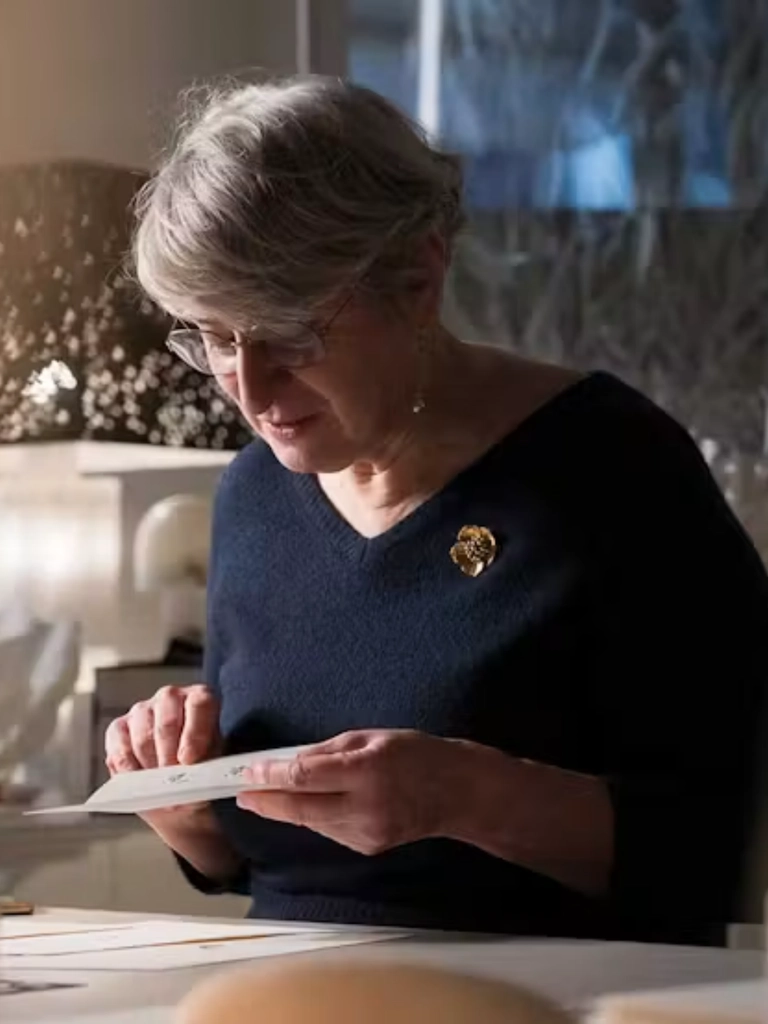
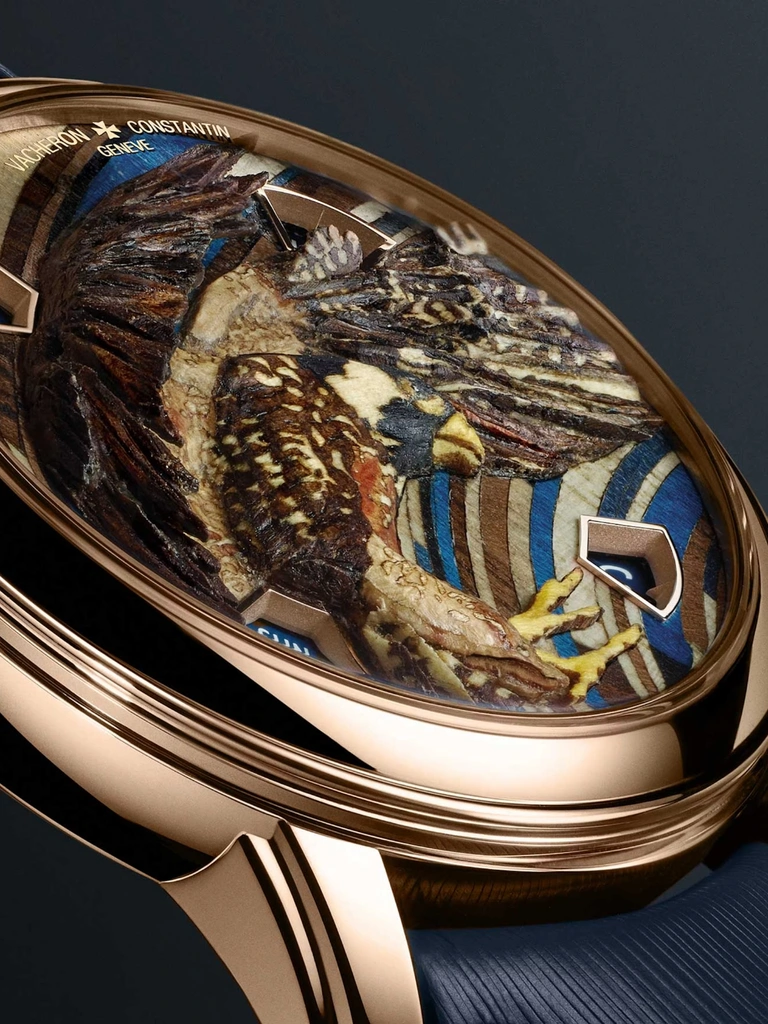
The final animal turns woodworking into micro-engineering.
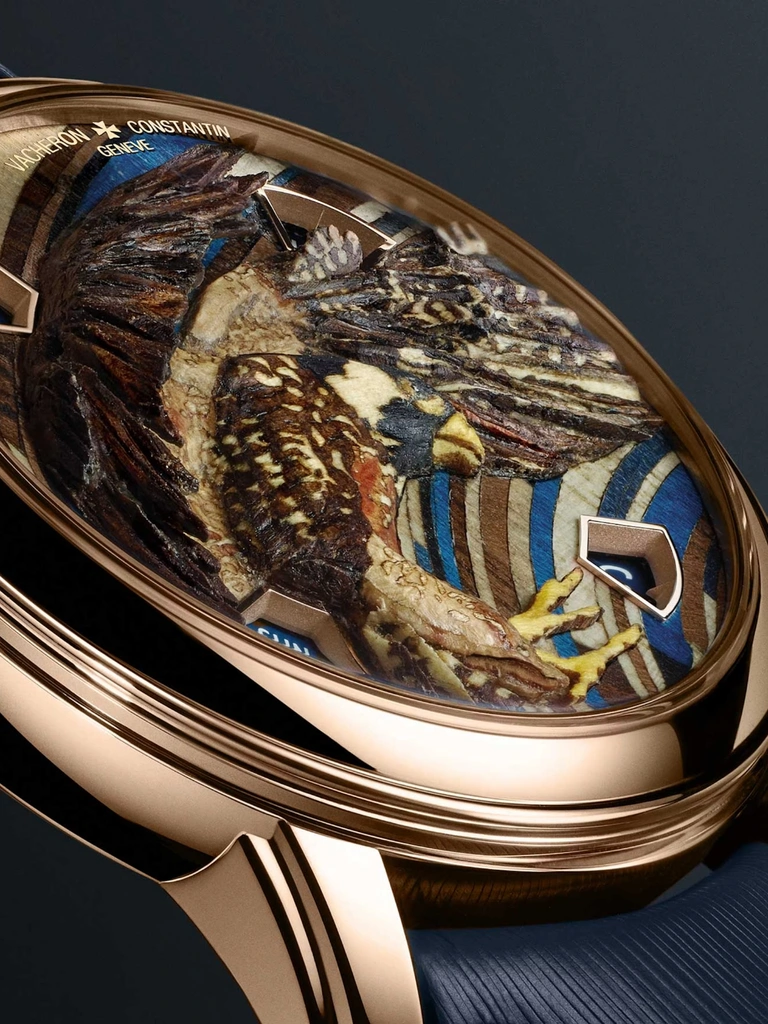
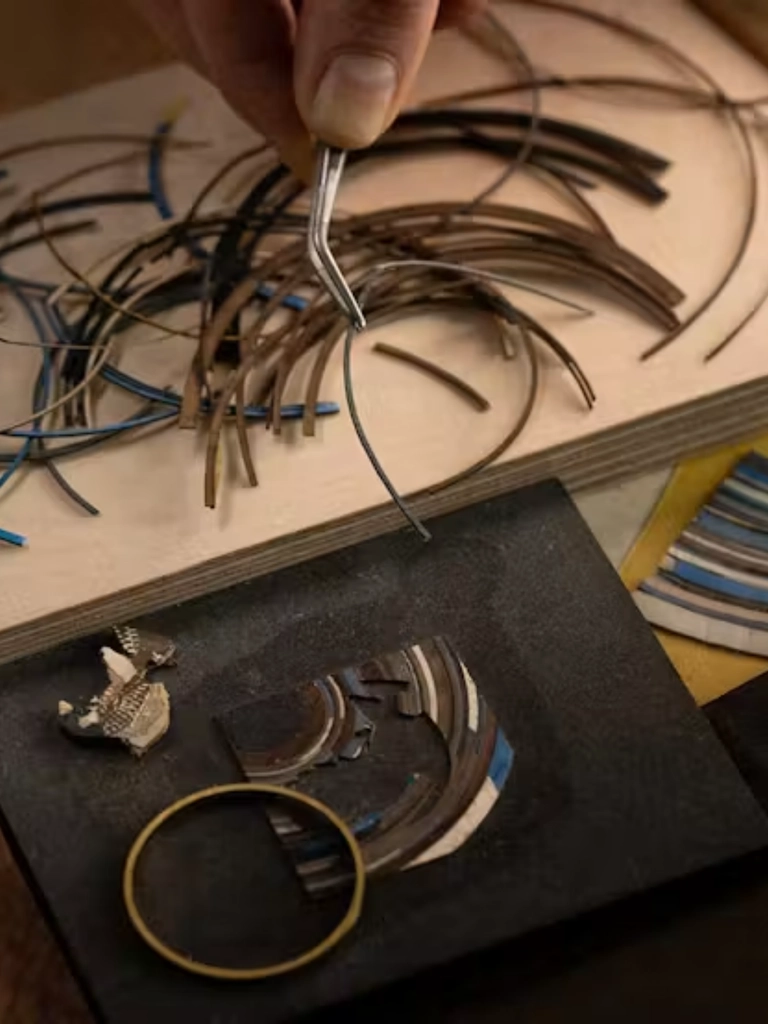
Anna Le Corno’s Woodenwings uses 12 species of wood to construct a three-dimensional falcon. Three forms of marquetry operate simultaneously: circular marquetry creates the background, sculpted layered marquetry forms the body, and a specially developed “feather-by-feather” assembly builds the wing.
Standard woodworking tools became impractical at watch scale. Le Corno worked with micro-tools, including surgical-style scalpels and tiny sanding instruments made specifically for the task, often under binocular magnification.
The familiar craft of marquetry consequently changes character. A technique historically associated with furniture surfaces becomes three-dimensional, anatomical and almost surgical.
Behind these unusual surfaces sits a movement already well suited to Vacheron Constantin’s artistic ambitions.
The six concept watches use the automatic Calibre 2460 G4, measuring 31mm in diameter and 6.05mm thick, with a 4Hz frequency, 27 jewels and approximately 40 hours of power reserve. Hours, minutes, day and date appear through four peripheral apertures instead of conventional central hands.
That layout carries major artistic consequences.
By moving indications toward the edges, Vacheron Constantin leaves the central dial almost uninterrupted. An octopus can float there. A tiger can physically cross it. The crocodile can weave between apertures. Manta rays can circulate through open space.
Mechanical architecture becomes an enabler of craft.
This is a recurring feature of Vacheron Constantin’s Métiers d’Art philosophy: high watchmaking does not simply sit underneath decorative work. Its engineering determines what the artisan can attempt above it.
Vacheron Constantin describes Tribute to the Animal Kingdom as a series of concept watches, and current reporting indicates that the six are not commercially offered as a conventional production collection. Their purpose is therefore particularly interesting: they function as demonstrations of possibility.
The Maison, which identifies itself as the world’s oldest watch Manufacture in continuous operation since 1755, is using that heritage to invite techniques with little established history in Swiss high watchmaking into its workshops.
That decision makes the series more consequential than its animal theme might initially suggest.
A heritage craft remains alive when artisans continue solving unfamiliar problems with it. In Tribute to the Animal Kingdom, featherwork must learn to behave like miniature sculpture; embroidery becomes part of dial engineering; paper acquires architectural relief; woodworking approaches surgery; glass must negotiate microscopic tolerances; and origami enters mechanical space.
Handcraft in haute horlogerie therefore becomes less a fixed catalogue of approved techniques and more an evolving method of making.Within four millimetres of space, Vacheron Constantin has created room for that vocabulary to grow.