MENU
Close





Vacheron Constantin’s Métiers d’Art – Tribute to Great Civilisations transforms four archaeological masterpieces into miniature compositions of luxury craftsmanship as an exercise in cultural translation.
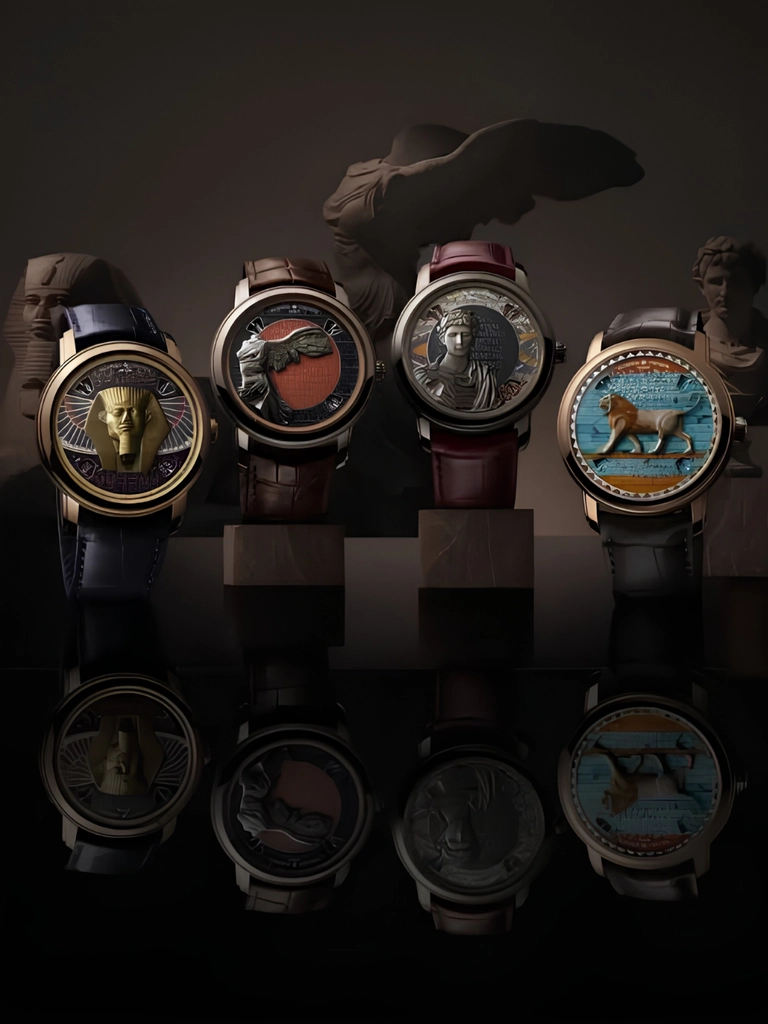
Vacheron Constantin’s Métiers d’Art – Tribute to Great Civilisations transforms four archaeological masterpieces into miniature compositions of luxury craftsmanship as an exercise in cultural translation.
September 29, 2026


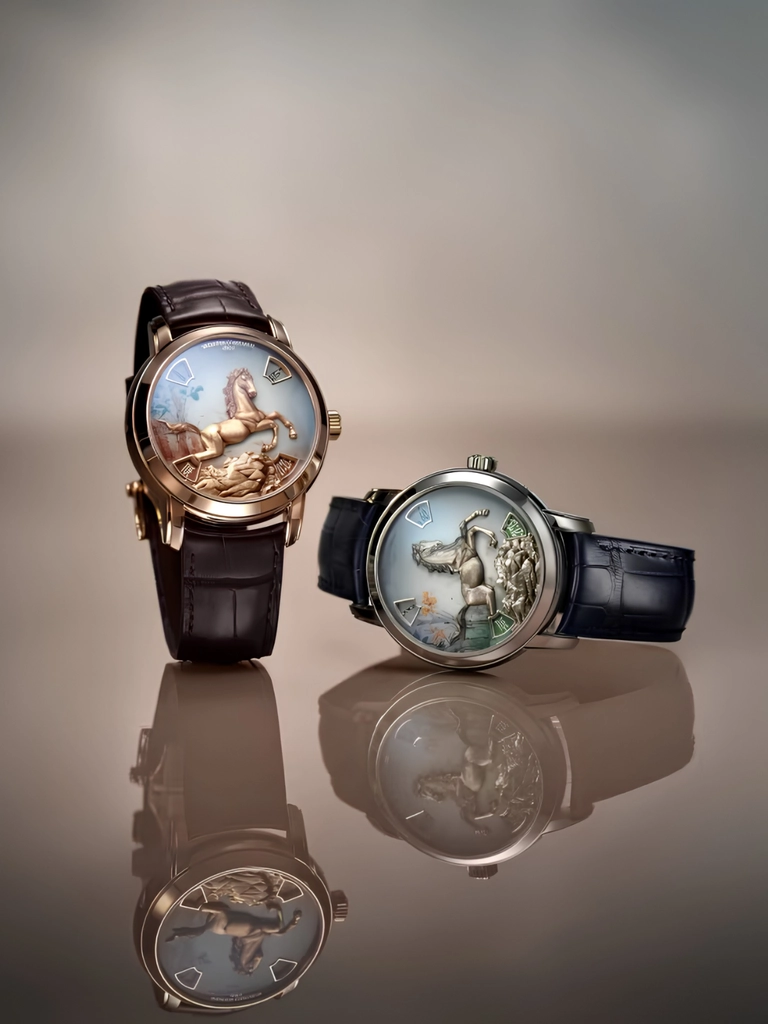
Vacheron Constantin’s Métiers d’Art – Tribute to Great Civilisations operates according to an entirely different scale. Here, civilisations measured in millennia are compressed into 42 millimetres, while sculpture, inscriptions, ceramics and architectural ornament are reconstructed through some of haute horlogerie’s most demanding decorative techniques.
Unveiled in 2022 as part of the partnership between Vacheron Constantin and the Louvre, established in 2019, the collection focuses on four periods of Antiquity: the Persian Empire under Darius I, Pharaonic Egypt, Hellenistic Greece and Imperial Rome. Each civilisation was represented by an artwork preserved in the museum: the Lion de Darius, Grand Sphinx de Tanis, Victoire de Samothrace and Buste d’Auguste. Only five numbered watches were produced for each reference.
The importance of the project lies beyond rarity. It demonstrates a particular conception of luxury craftsmanship, one in which technical virtuosity becomes valuable because it can translate another culture’s material language without flattening it into decoration.
Miniaturising a museum masterpiece creates an immediate problem: literal reproduction is impossible.
The Winged Victory of Samothrace gains much of its power from monumental scale, fragmented anatomy and the sensation of fabric pushed against a body by wind. The Sphinx of Tanis is defined partly by the physical authority of stone. Roman sculpture carries its own relationship between portraiture and political power, while the glazed architecture of ancient Persia communicates through saturated colour, repetition and surface.
A watch dial has none of their original dimensions.
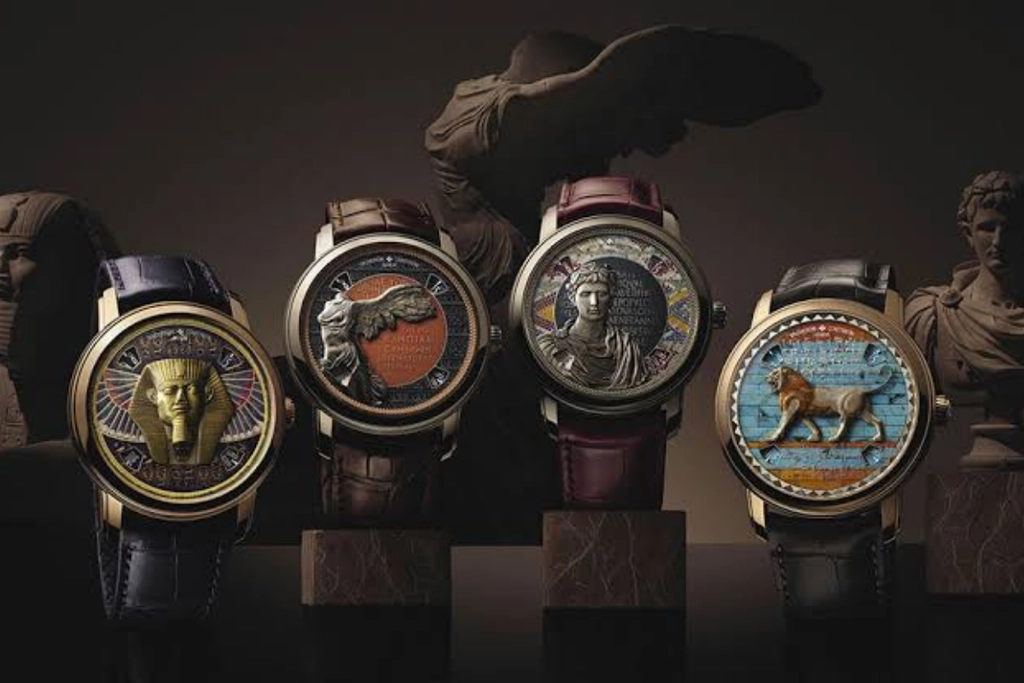
Vacheron Constantin therefore translated material qualities instead of simply shrinking images. Sculpture became hand-engraved gold. Archaeological colour became fired enamel and semi-precious stone. Ancient inscriptions were transferred onto sapphire through metallisation. Architectural borders and ceramics informed the circular friezes that surround each central figure.
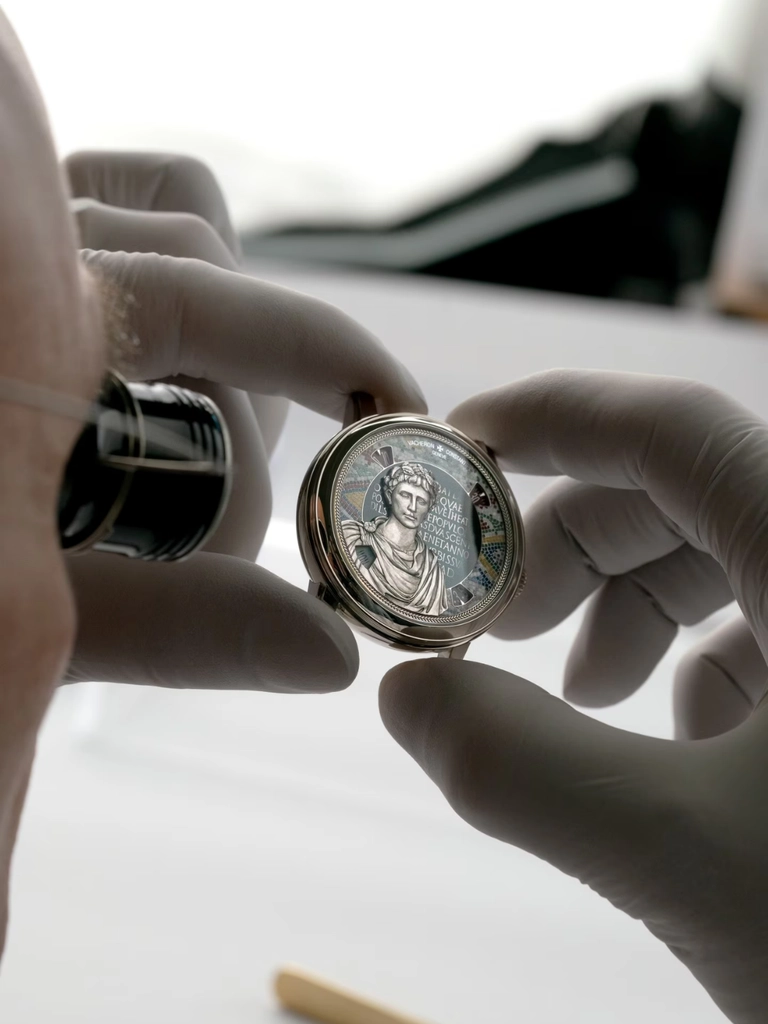
This is where the collection becomes especially relevant to the wider conversation surrounding luxury craftsmanship. Craft is functioning here as interpretation. An engraver has to decide which details survive miniaturisation. An enameller has to convert the visual ageing of an archaeological object into colour, transparency and texture. Stone has to be cut precisely enough to create imagery at wristwatch scale while retaining the irregular characteristics that make natural material visually alive.
The human hand becomes an editor of history.
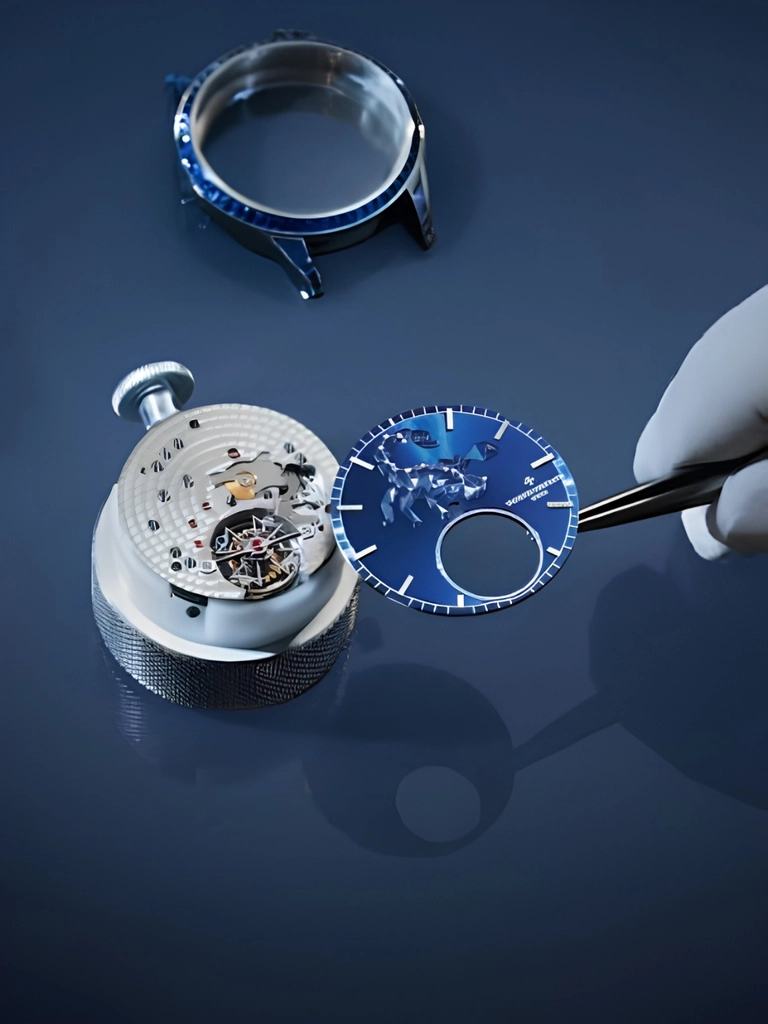
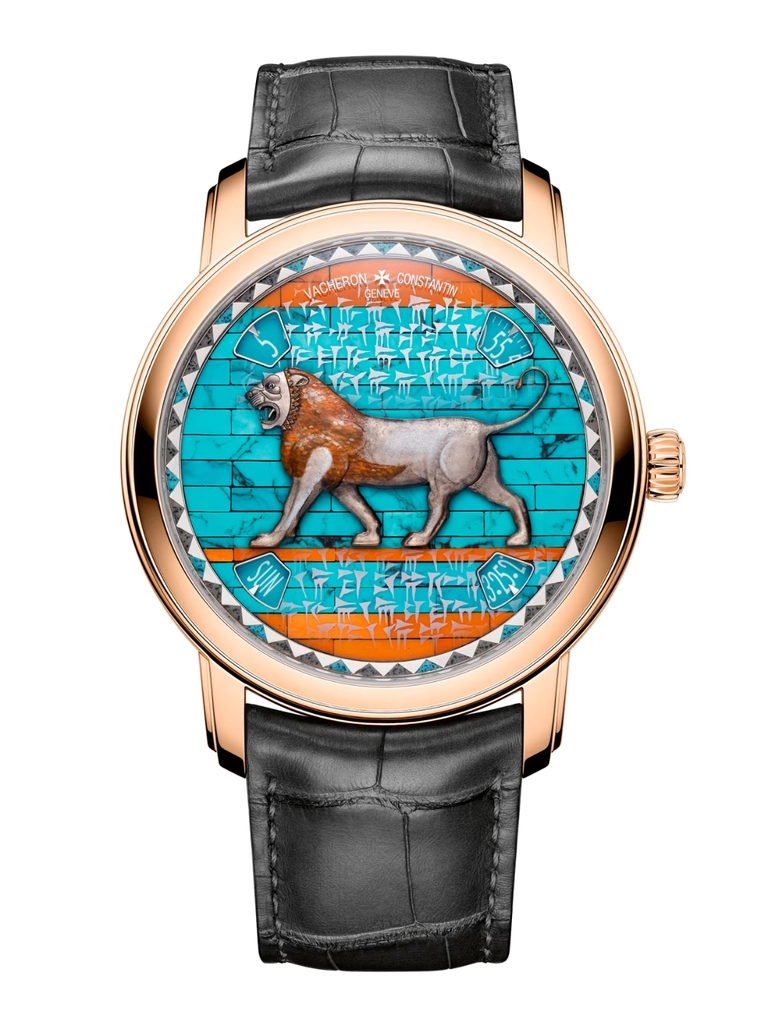
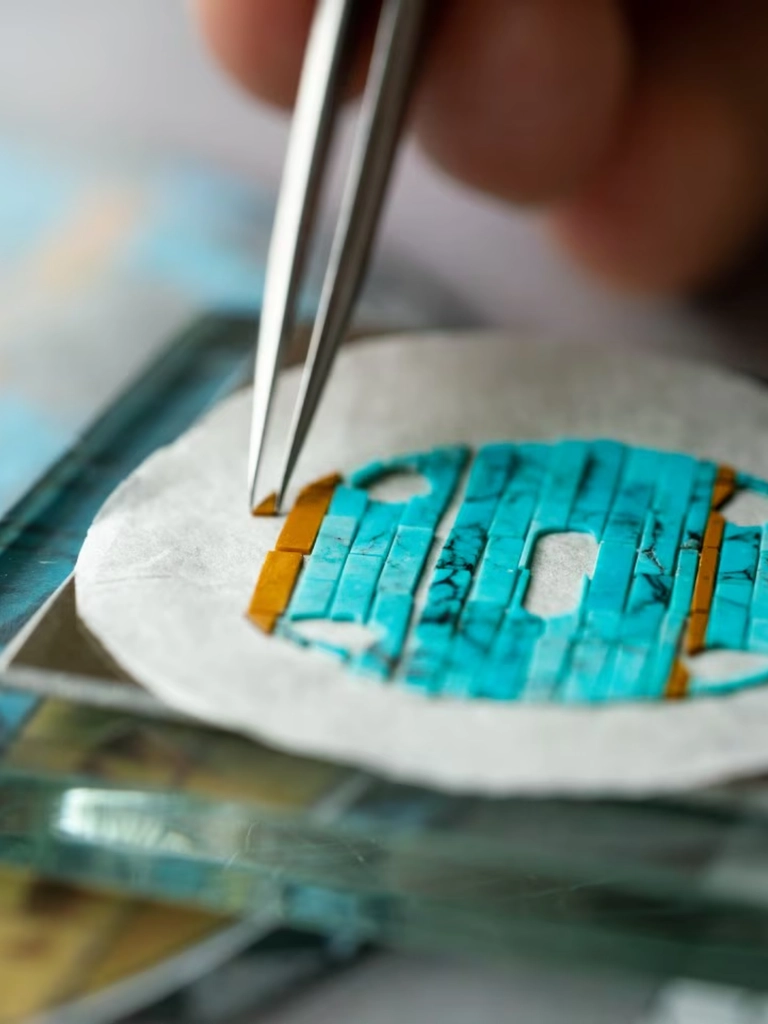
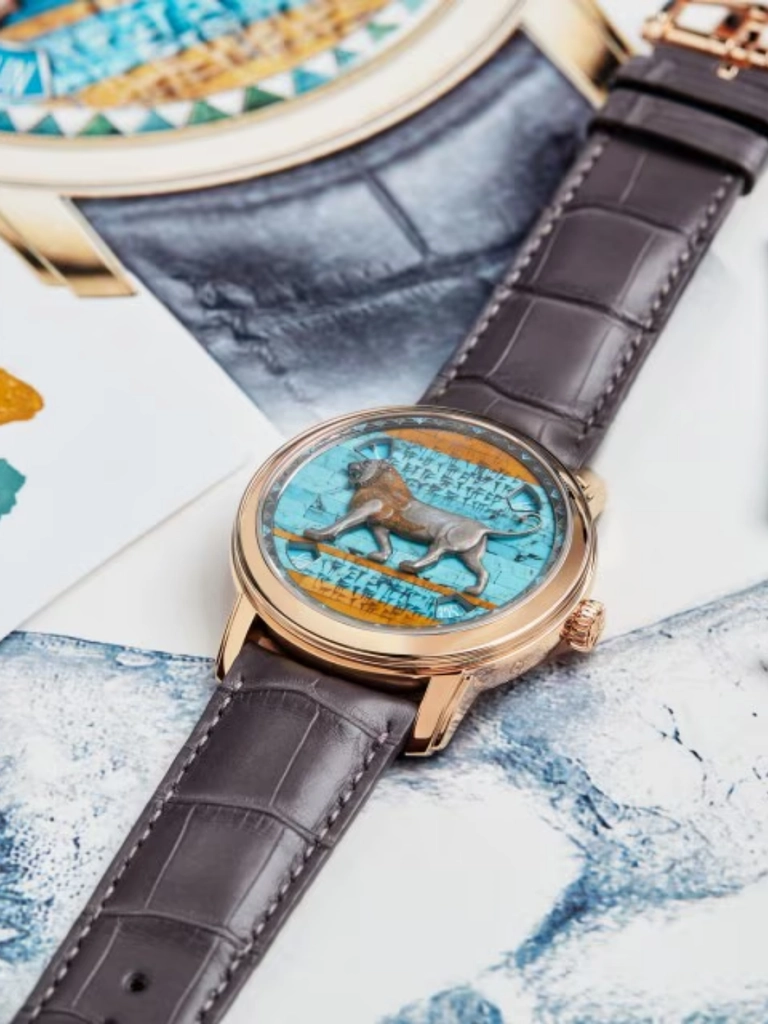
The Lion de Darius takes its principal image from a decorative element associated with the Palace of Darius I at Susa. Vacheron Constantin recreated the lion as a hand-engraved, patinated 18K gold applique, positioning the sculptural animal above a background composed of turquoise and mookaite jasper stone marquetry.
That background is crucial. Stone marquetry requires individually selected fragments to be cut and assembled into an uninterrupted composition, allowing differences in veining and colour to participate in the design. Here, turquoise and earthy jasper evoke the chromatic richness associated with Persian architectural decoration without attempting to imitate ancient glazed bricks through paint alone.
Around the composition, engraved metal and champlevé enamel refer to the celebrated Frieze of Archers from Darius’s palace. Old Persian writing derived from an inscribed tablet appears on the sapphire crystal through metallisation.
The visual information consequently occupies several physical planes: stone at the base, sculpted gold above it, decorative borders around it and language suspended across the transparent crystal. Archaeology is translated into depth.
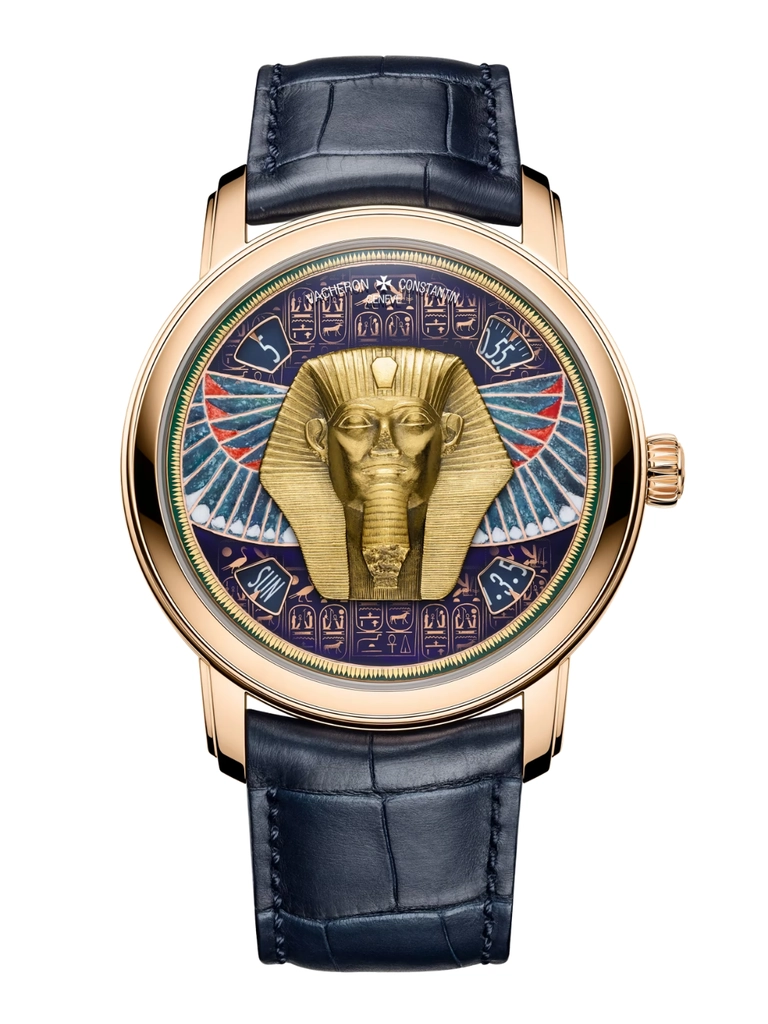
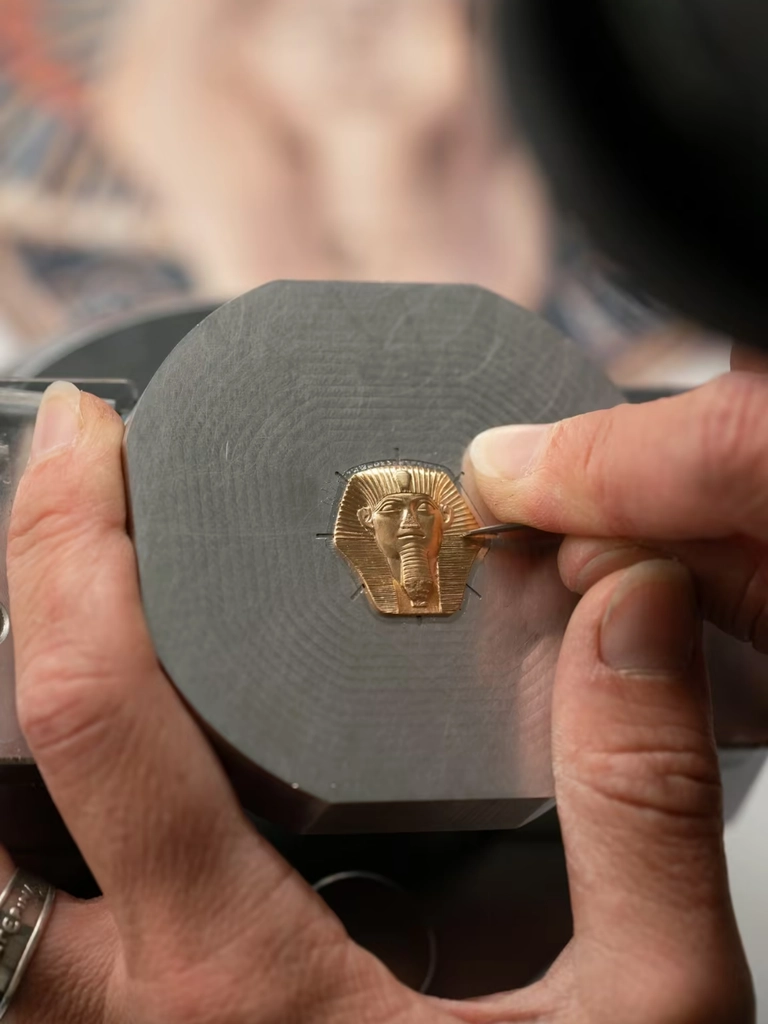
For the Grand Sphinx de Tanis, Vacheron Constantin chose another approach. The monumental granite sculpture preserved at the Louvre becomes a hand-engraved gold applique with a patinated finish, its face, headdress and body rebuilt on a scale small enough to sit beneath a watch crystal.
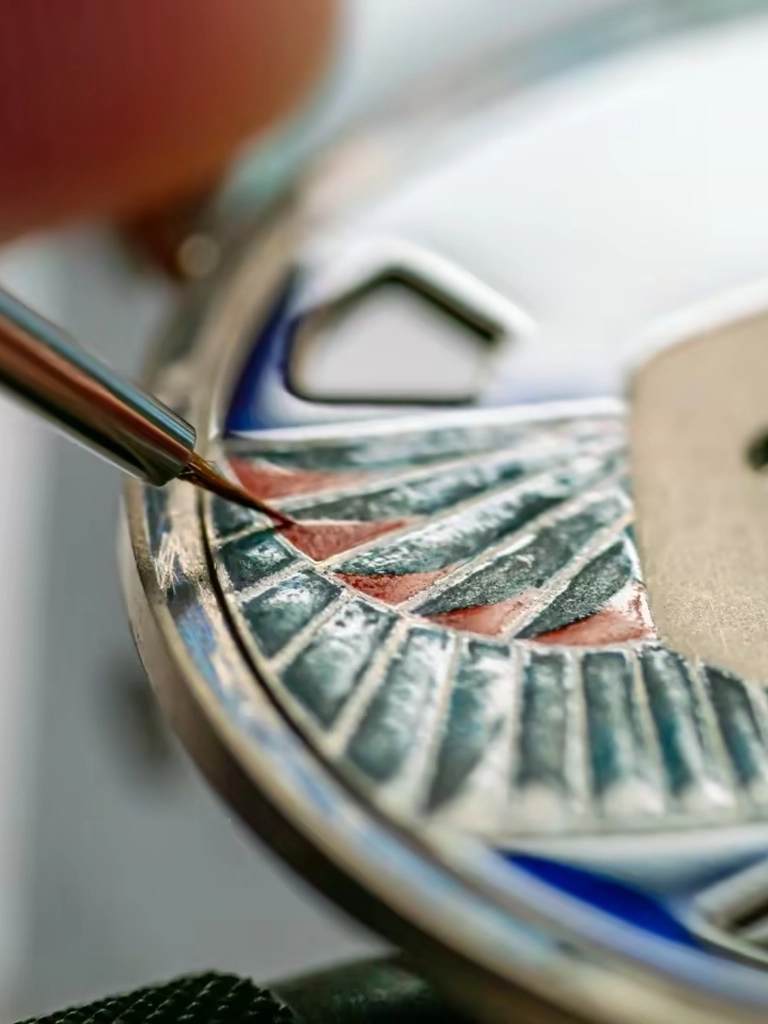
The sphinx is surrounded by falcon wings executed in champlevé enamel. In this technique, recesses are created in a metal surface and filled with enamel before firing, turning colour into part of the material structure itself. An additional champlevé enamel frieze draws on Ancient Egyptian decorative vocabulary, while hieroglyphic inscriptions derived from a cartouche on the Sphinx of Tanis are metallised onto the sapphire crystal.
That final layer changes the reading of the object. The hieroglyphs appear to occupy the space between the viewer and the sculpture, creating the impression of an archaeological document hovering above its subject.
Such techniques illustrate why enamel remains significant within luxury craftsmanship. Its difficulty lies partly in control: colour develops through material composition and firing, and every additional stage introduces risk. Within the Métiers d’Art philosophy, that uncertainty is precisely what separates the surface from an industrially printed representation.
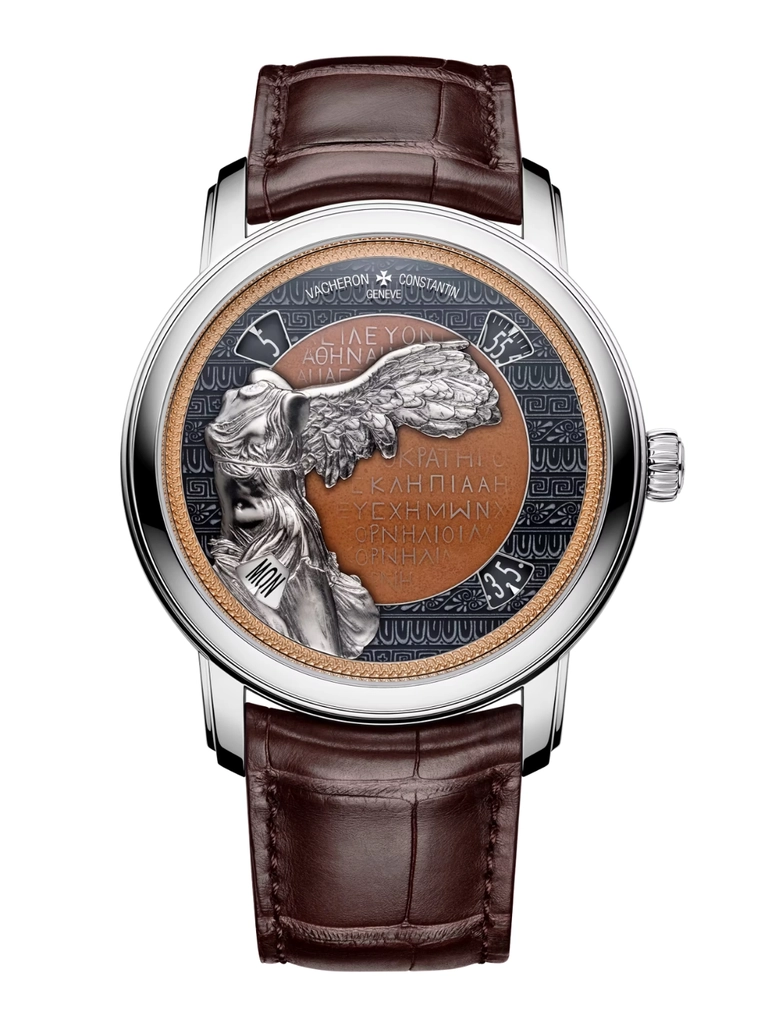
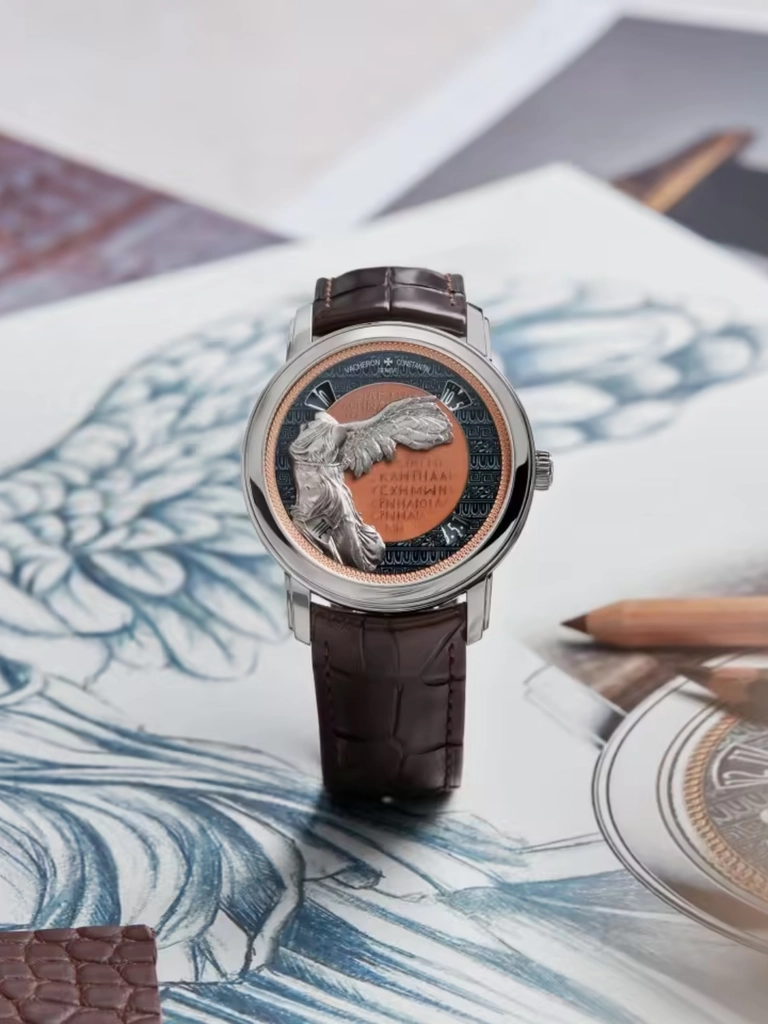
The Victoire de Samothrace presents a different challenge. One of the Louvre’s most recognisable sculptures, the Hellenistic masterpiece derives its extraordinary energy from the treatment of drapery around the goddess’s torso and legs.
Vacheron Constantin recreated the figure as a hand-engraved 18K white-gold applique. Around it, brown enamel and grisaille enamel reinterpret decorative motifs taken from Greek vessels. Grisaille builds modelling through gradations of light over a darker foundation, making it especially suited to a composition concerned with volume and sculptural relief.
Ancient Greek writing taken from a votive stele discovered on Samothrace is metallised onto the sapphire crystal, while the outer gold frieze references the Vase of Pergamon.
The dial consequently does something more sophisticated than place a famous statue at its centre. Sculpture, ceramics, inscriptions and ornamental border systems from Greek material culture are brought together within one circular field. The watch becomes an assembled study of a civilisation’s visual language.
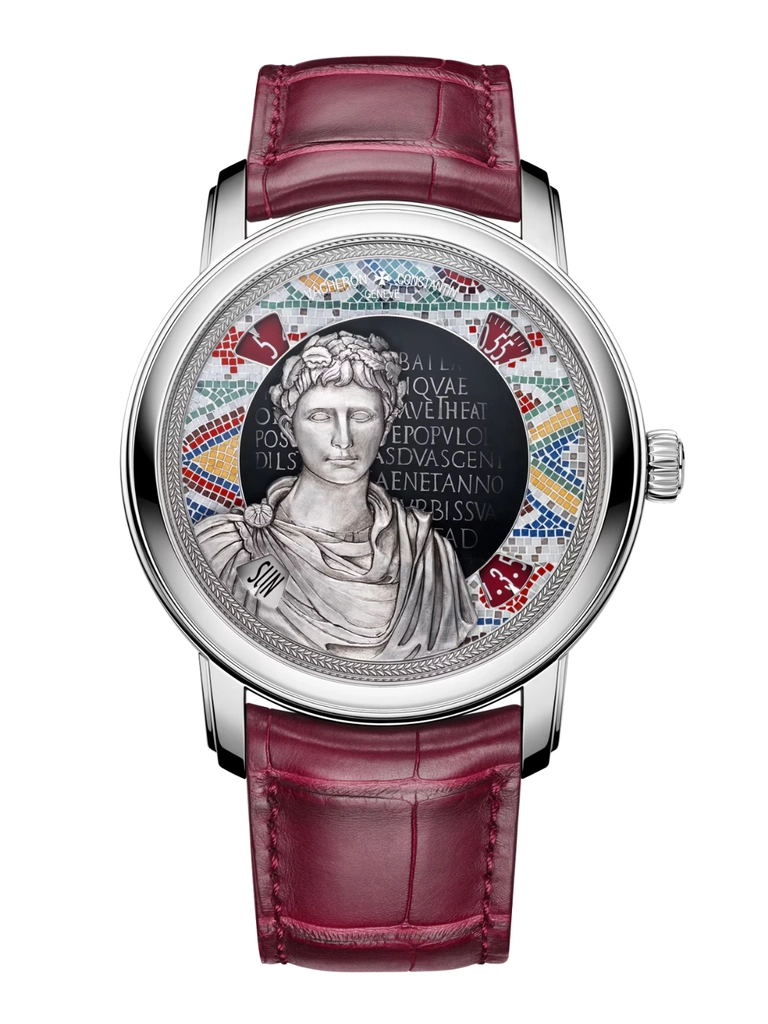
The Buste d’Auguste pushes miniature construction in another direction.
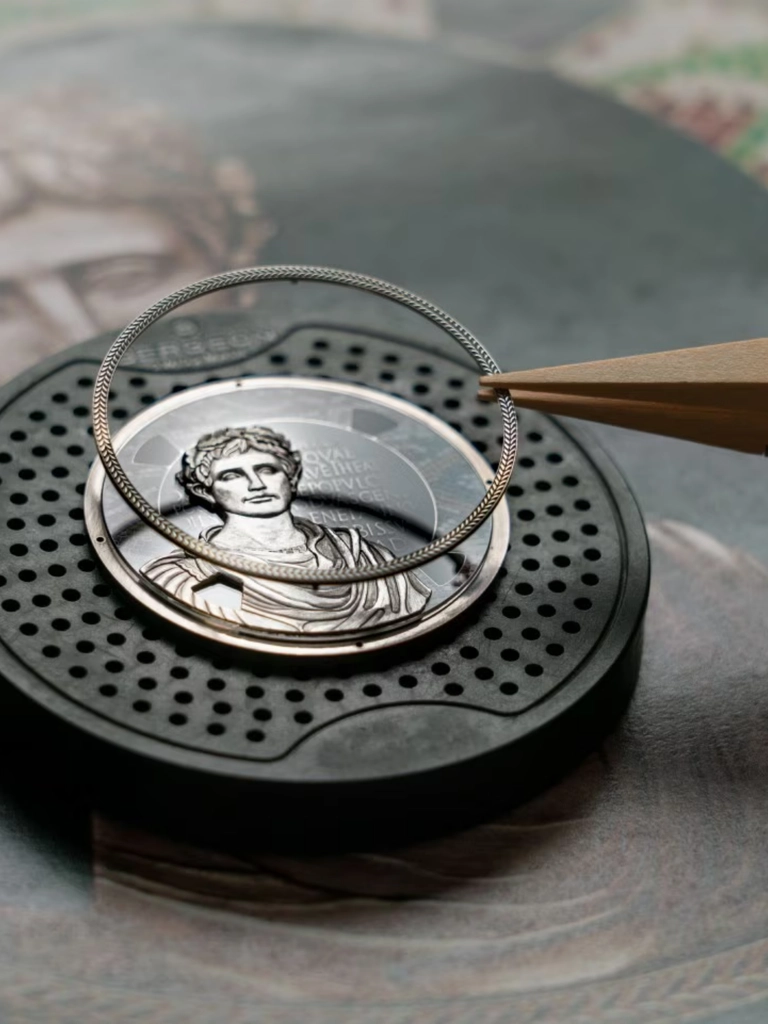
At its centre sits a hand-engraved white-gold representation of Augustus, based on the Louvre bust showing the emperor crowned with an oak wreath. The surrounding blue-green enamel establishes a strong chromatic field, while the periphery incorporates stone micro-mosaic inspired by a fourth-century Roman mosaic discovered at Lod in present-day Israel.
Micro-mosaic is particularly revealing of the collection’s philosophy. Monumental floor decoration, originally experienced architecturally, is reduced into fragments tiny enough to inhabit a wristwatch. Each piece becomes part of a larger image while retaining its material presence.
Latin lettering drawn from a dedication to the Genius of Rusicada is transferred onto the sapphire by metallisation, and the outer hand-engraved gold frieze takes inspiration from another fourth-century mosaic discovered in Sousse, Tunisia.
Roman civilisation is therefore represented through several forms of evidence simultaneously: portrait sculpture, mosaic, epigraphy and decorative geometry.
The most consequential technical decision is almost invisible from the front.
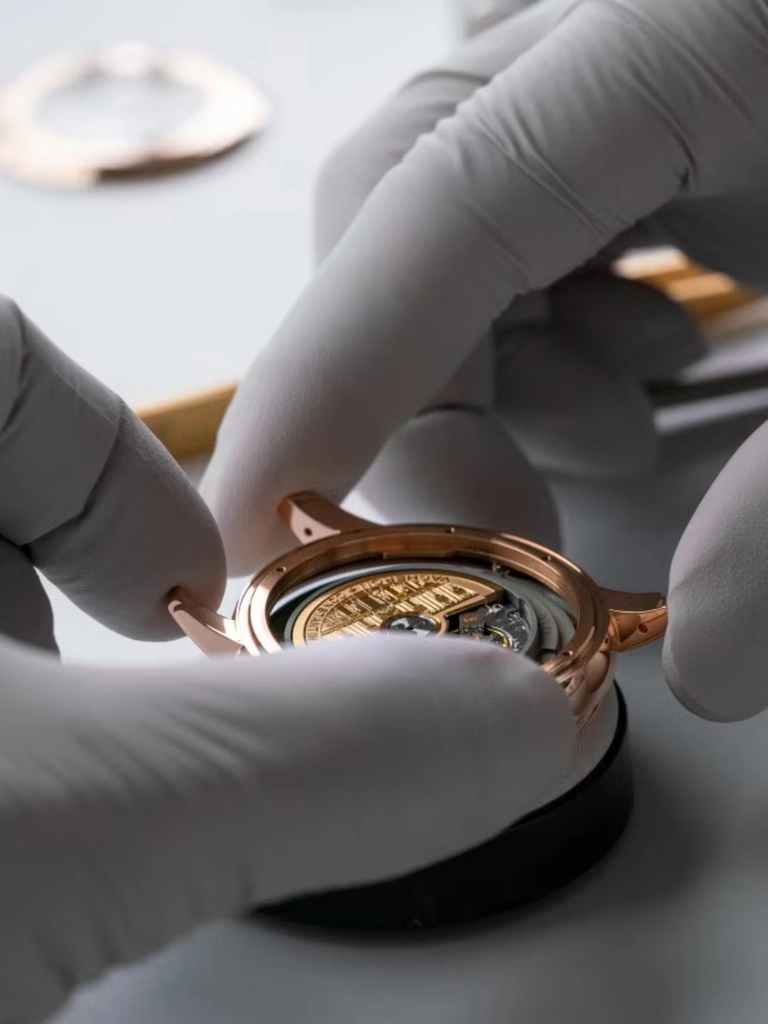
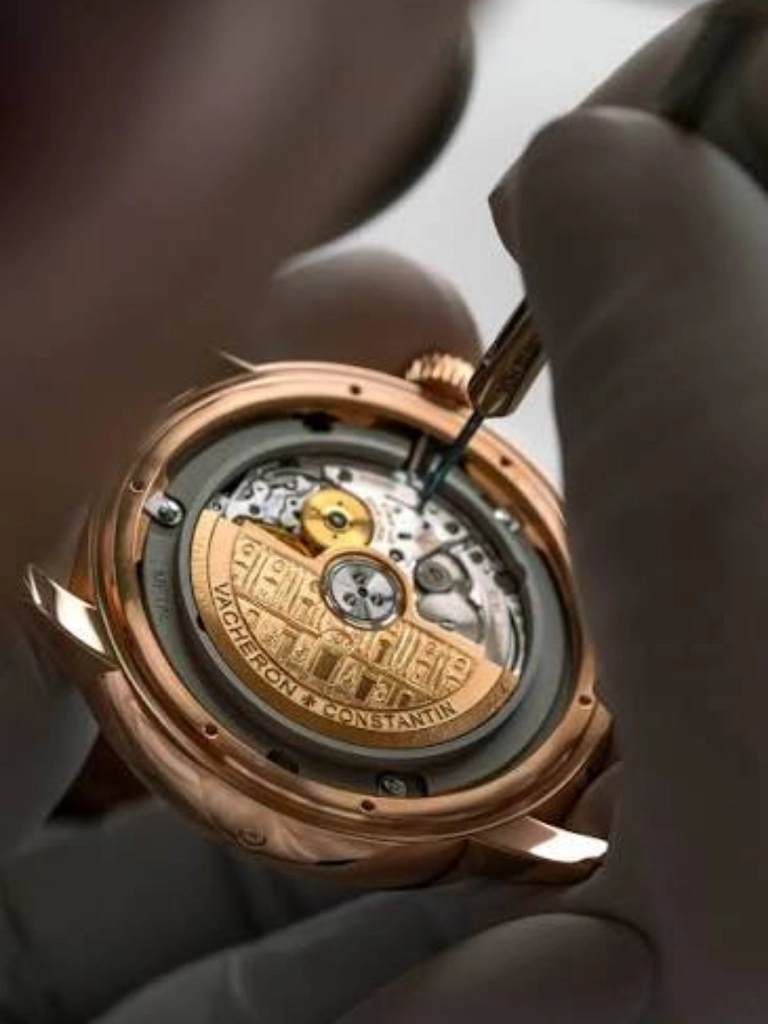
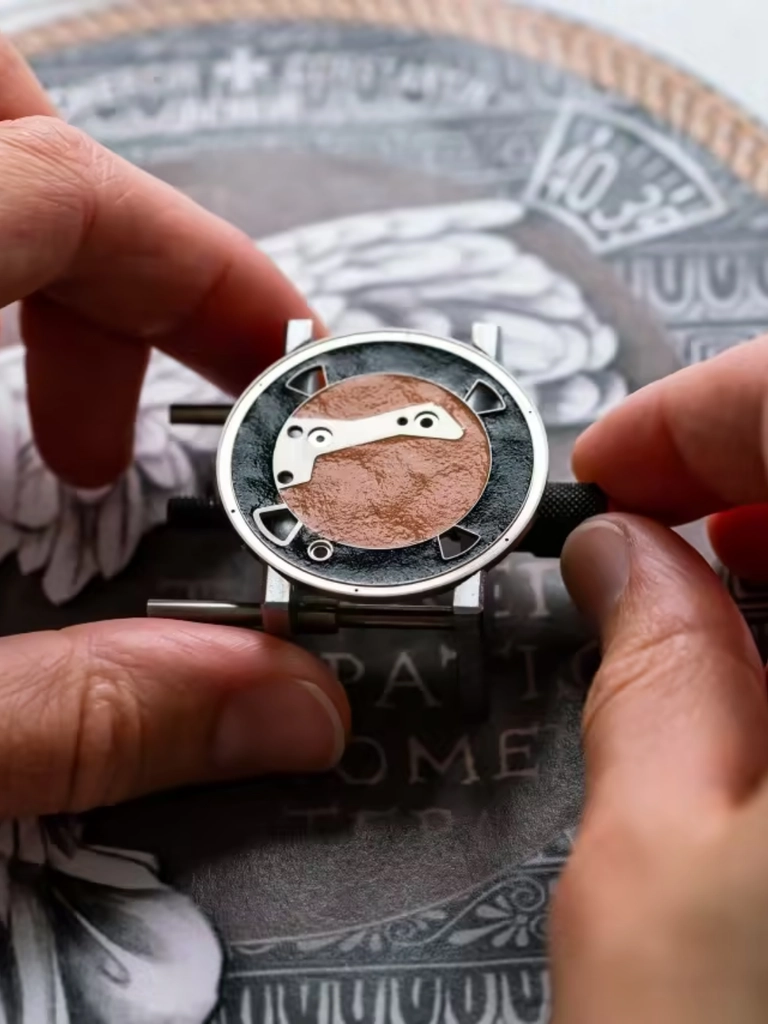
All four watches use Vacheron Constantin’s self-winding Calibre 2460 G4/2, measuring 31 mm across and 6.05 mm thick, operating at 4 Hz with 237 components, 27 jewels and approximately 40 hours of power reserve.
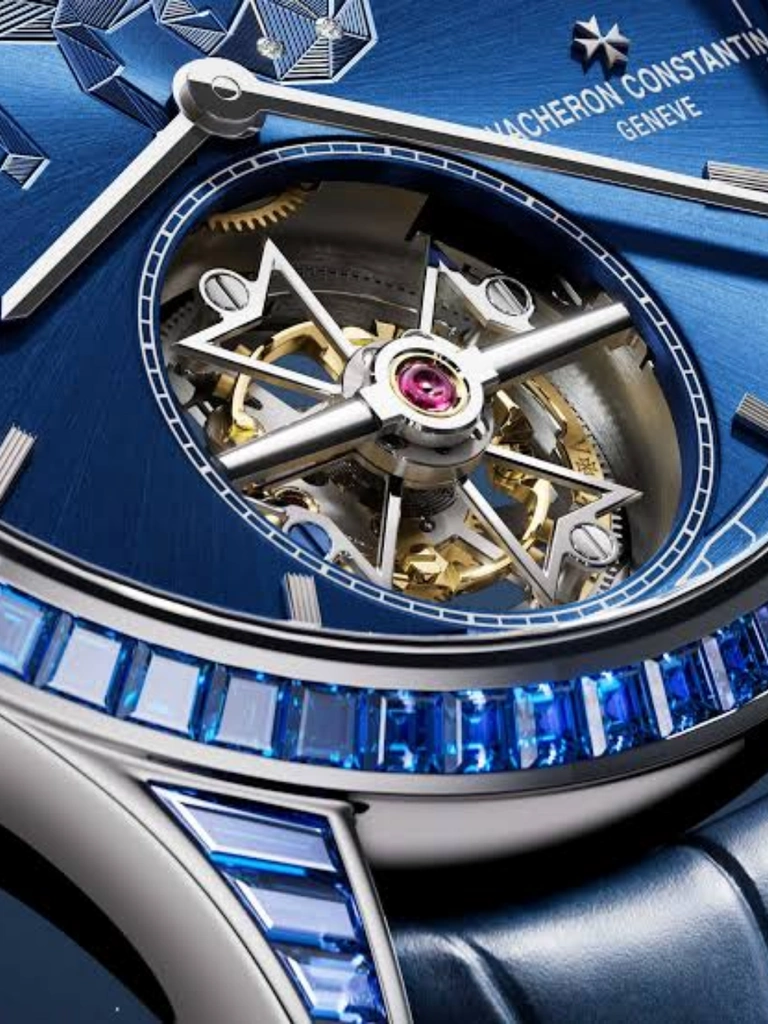
Its architecture eliminates conventional central hands. Hours, minutes, day and date are displayed through four apertures around the dial using rotating discs. By moving timekeeping information toward the edges, the movement releases almost the entire centre for artistic work.
That relationship between mechanics and decoration deserves attention. Métiers d’Art watches sometimes appear to place craftsmanship on top of watchmaking. Here, the watchmaking itself creates the conditions for the craft. Mechanical architecture determines how much uninterrupted surface the engraver, enameller and stone specialist can use.
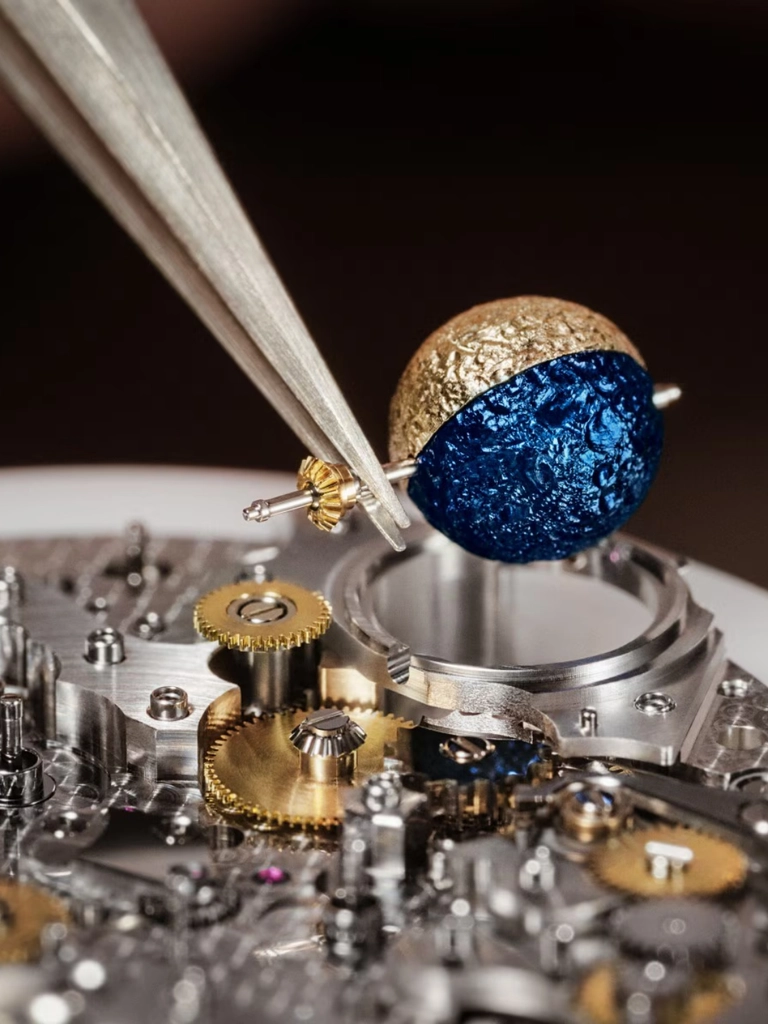
Turn the watch over and the collaboration continues: the automatic movement incorporates a 22K gold oscillating weight depicting the Louvre’s eastern façade, creating a second architectural reference visible through the sapphire caseback.
The watches also carry the Hallmark of Geneva, linking their decorative ambition to one of Geneva watchmaking’s established standards of provenance, craftsmanship and reliability.
The four watches offer a clear answer to a question luxury frequently faces: what does handcraft preserve when digital technology can reproduce almost any image with extraordinary precision? The answer here is material knowledge.
A digital reproduction can record the appearance of turquoise. It cannot reproduce the judgement involved in selecting individual pieces of stone and deciding where their natural veins should sit within a composition. A photograph can capture the Winged Victory’s drapery. It cannot convert that volume into microscopic cuts in gold. Printing can reproduce an Egyptian colour instantaneously; Enamel requires heat, chemistry, layering and a tolerance for variation.
Luxury craftsmanship therefore carries knowledge inside the object itself: knowledge of pressure, temperature, resistance, proportion, material behaviour and the limits of what a hand can control.
Civilisations survive through objects because objects can carry memory. In Métiers d’Art – Tribute to Great Civilisations, the watch becomes another vessel for that memory, and luxury craftsmanship becomes the language through which it is transmitted.