At the halfway mark of Tokyo Fashion Week SS27, the excitement was no longer about who had arrived. The more interesting question was how far these designers could push their ideas once attention was already on them.
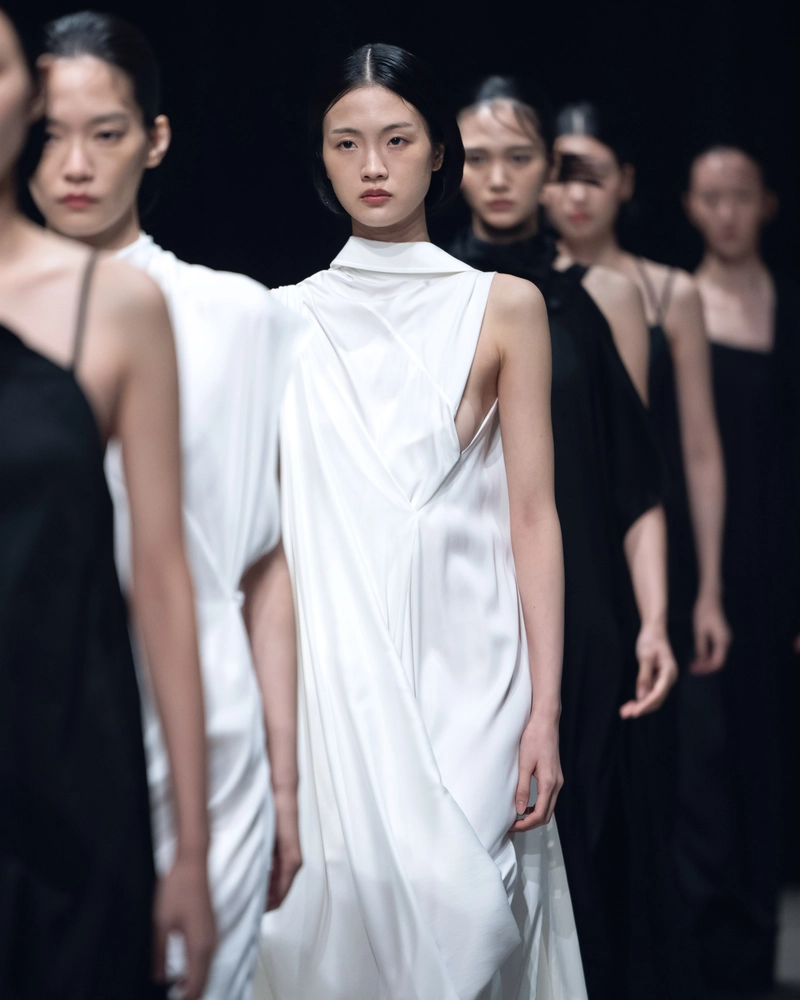
Tokyo Fashion Week SS27 Halfway Through
At the halfway mark of Tokyo Fashion Week SS27, the excitement was no longer about who had arrived. The more interesting question was how far these designers could push their ideas once attention was already on them.
September 8, 2026
Advertisement

Advertisement



The middle days of Tokyo Fashion Week SS27 were filled with designers standing inside the transition. Some were experiencing recognition at remarkable speed; others had spent a decade building enough vocabulary to question what recognition had done to their work. By Day 4, even the runway itself started coming apart, replaced by ateliers, demonstrations and presentations that made the labor behind fashion part of the attraction.
Day 3 At Tokyo Fashion Week SS27
EITARO
Three seasons is an extraordinarily short amount of time in which to develop a recognizable wardrobe, yet guests were already walking into EITARO’s Tokyo Fashion Week SS27 show wearing the label’s oversized trousers.

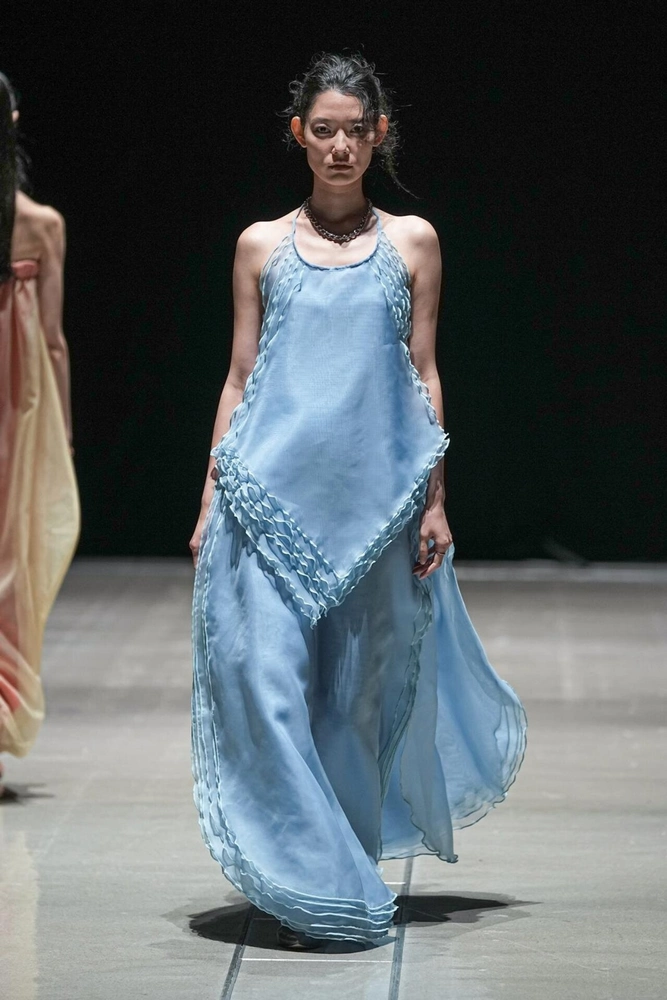
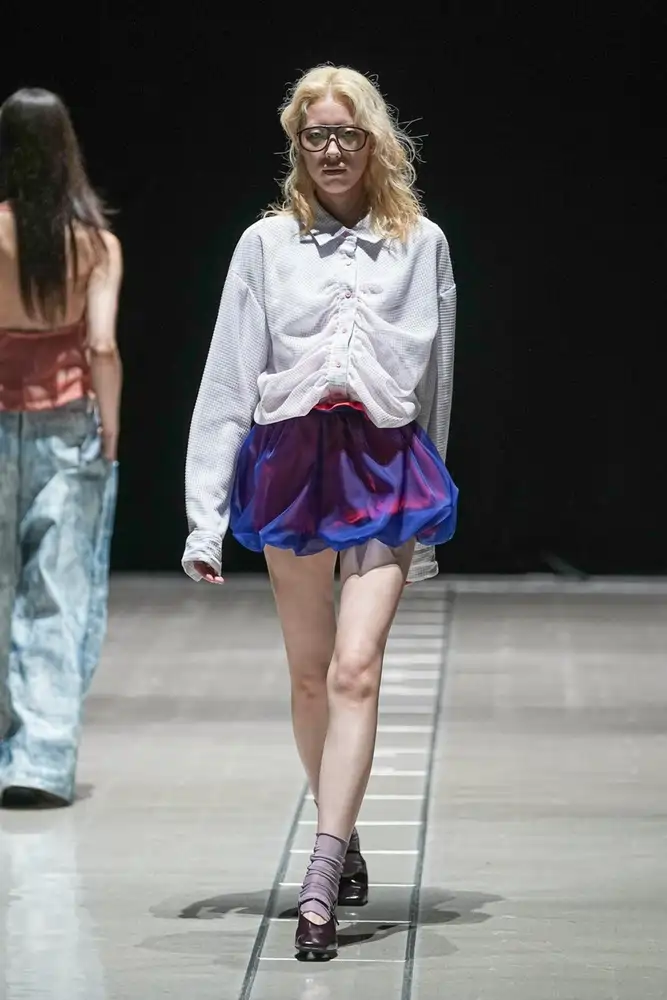
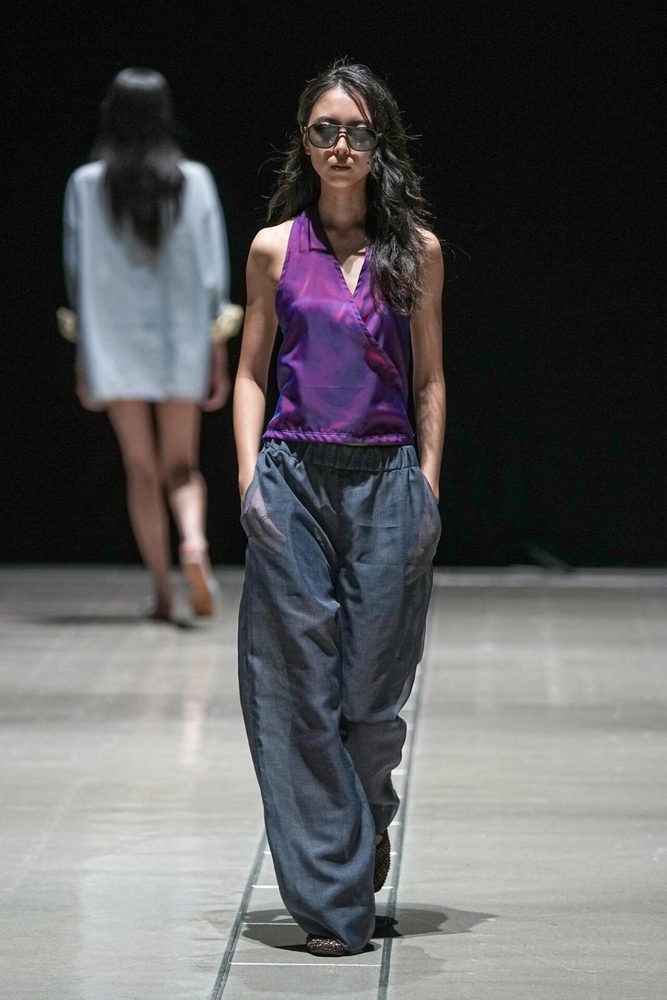
“shedding” continued a transformation story that previously revolved around the chrysalis. Here, Eitarou Kamimura used transparent organza almost like a painter mixing pigment directly on the body: layers of red and yellow produced orange, red and blue formed purple, while denim-like bleaching effects were reconstructed through translucent material. A poetry reading brought another layer of vulnerability into the finale.
Virality gives a young designer an intoxicating shortcut to recognition. It also creates a very specific creative pressure.
KEIKO NISHIYAMA
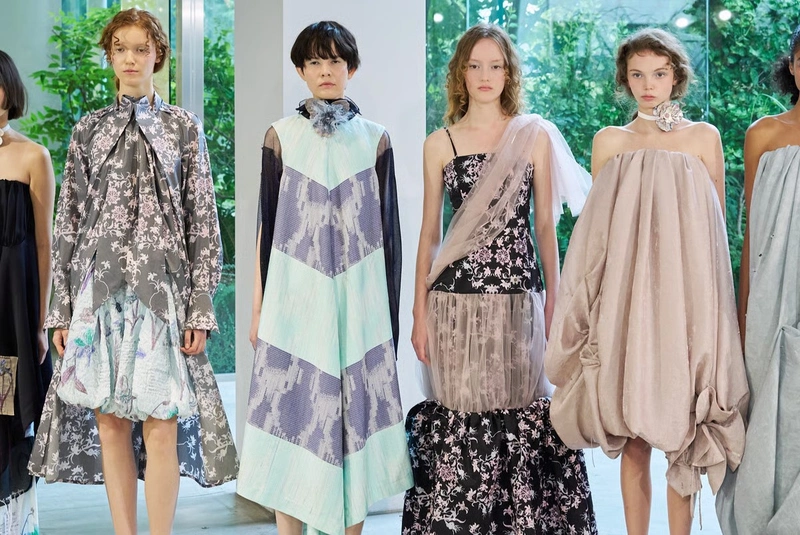
KEIKO NISHIYAMA entered a physical runway for the first time with years of textile thinking already behind it. “Cultivating Wonder” drew from botanical illustrations from the eighteenth and nineteenth centuries and the Edo-period Honzo Zufu, allowing flowers to function as research material, decoration and metaphor at once.
The lily carried particular weight. Japanese species historically travelled abroad and developed into cultivated varieties elsewhere, a migration story that suited Nishiyama’s own practice, where textile knowledge moves between fashion, craft, and interior design.
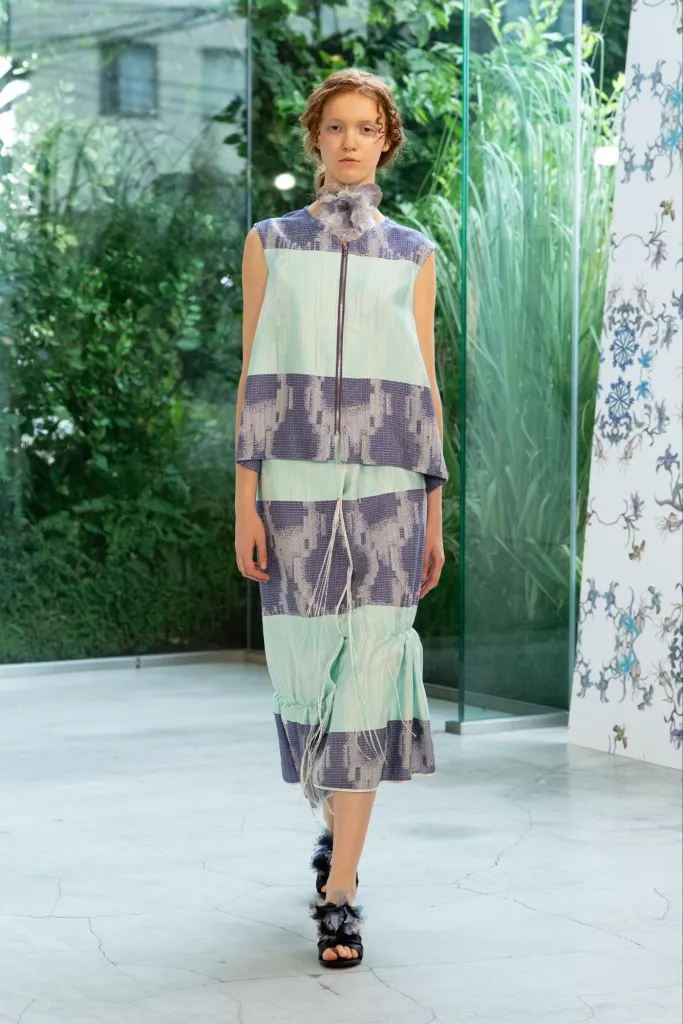
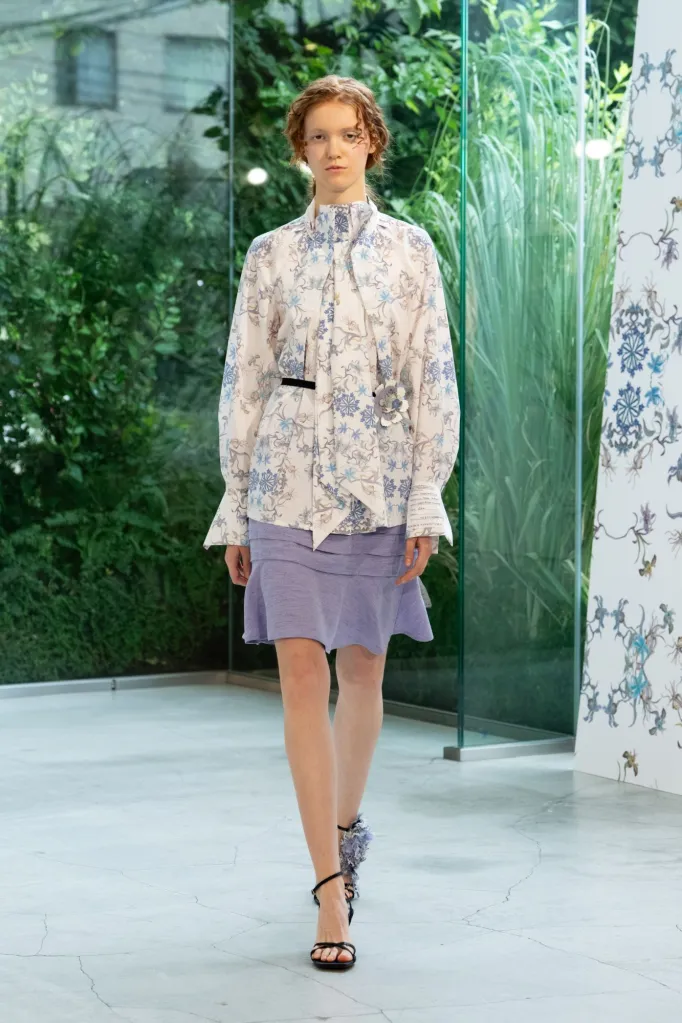

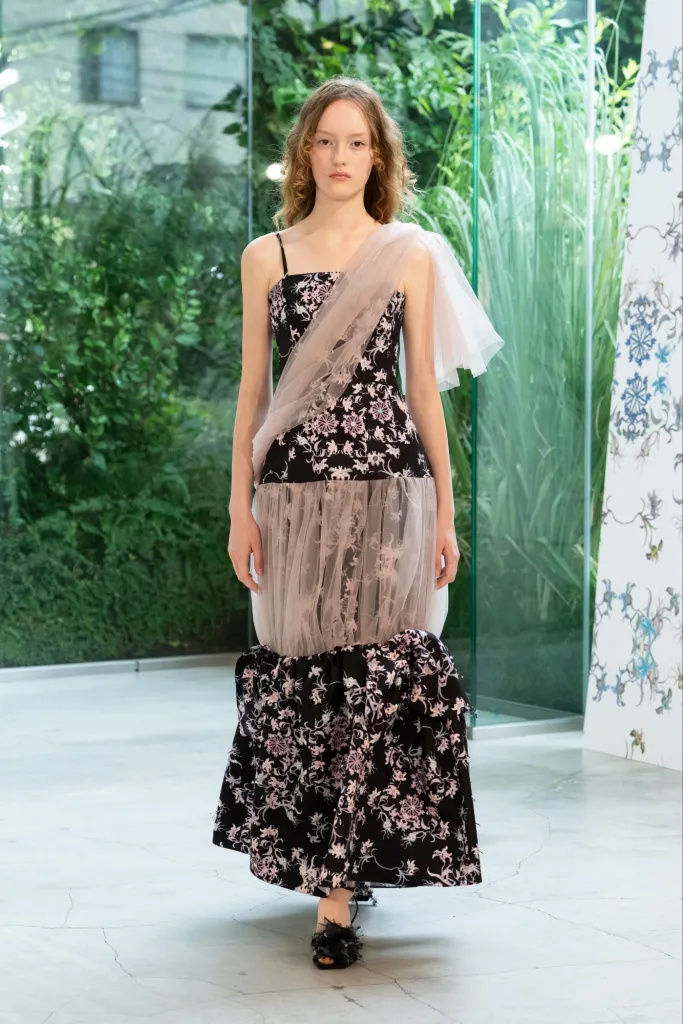
Ribbon-woven fabric produced in Yosano, Kyoto, entered dresses carrying kimono-inflected construction, continuing the label’s work with Japanese production facilities across its recent seasons. Tags resembled scientific specimen records, giving garments the feeling of objects collected, cultivated, and catalogued.
Nishiyama had already taken her visual universe into collaborations with FitFlop, H TOKYO, and ligne roset. The runway gave that universe physical scale. For Tokyo Fashion Week SS27, the value of KEIKO NISHIYAMA lay in watching an established language finally receive a stage large enough to inhabit.
pillings
Ryota Murakami took pillings into the Asahi Shimbun headquarters, choosing a former office space connected conceptually to Koe, the newspaper’s long-running reader-submission column. “Landscapes 2” explored the slight distortions inside familiar Japanese life.
Shirts twisted away from expected shapes, knits appeared frayed or pinched, floral motifs seemed to bleed through their surfaces, and a blue-and-white pattern that resembled tie dye revealed itself as intarsia knitting. The clothes are widening with the business. Linen tailoring, shirting and sporty separates now sit alongside the knitwear that first defined the label.
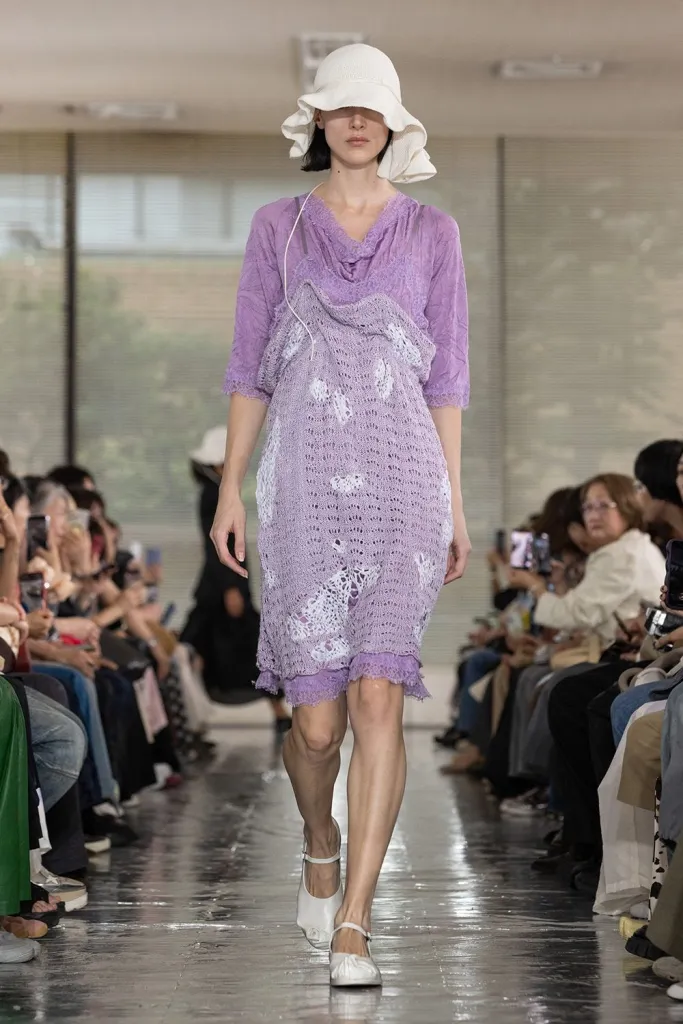
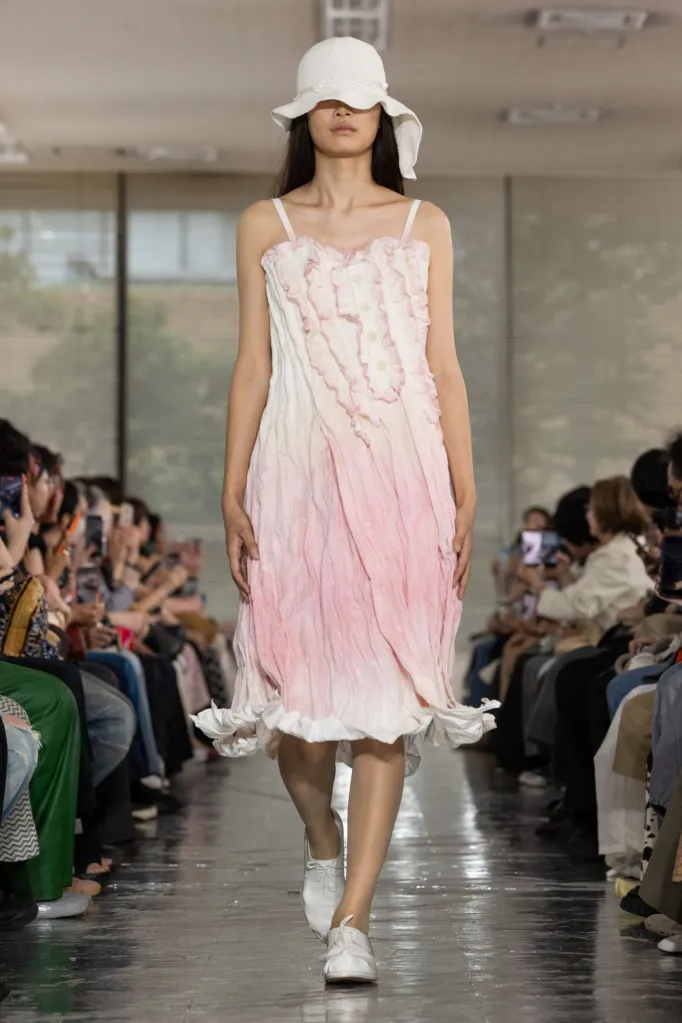

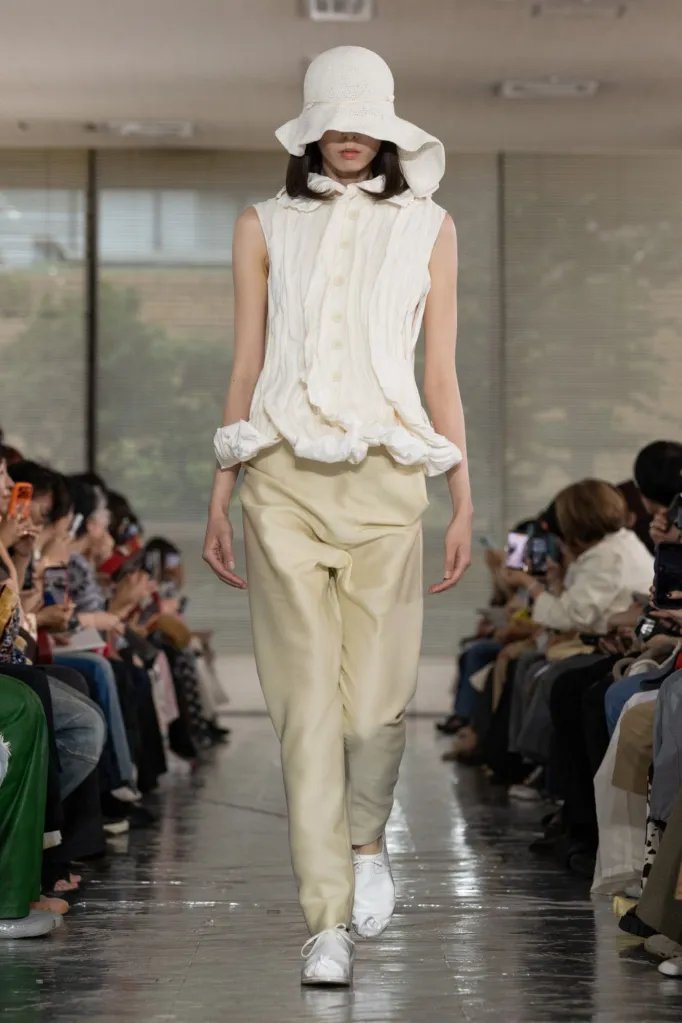
Murakami became an LVMH Prize semi-finalist in 2025. His stockist network subsequently doubled within a season, and by Tokyo Fashion Week SS27, pillings had reached over 25 international accounts, including Dover Street Market in London and New York and Andreas Murkudis in Berlin.
A Paris showroom followed later in September. The Sazaby League had already entered a business-transfer agreement with pillings in 2024, adding established retail infrastructure behind Murakami’s studio.
yushokobayashi
Yusho Kobayashi responded to growing visibility by building an underwater kingdom.
“Mermaid’s Tears” filled the runway with seaweed, ruined palace columns, bubbles and creatures dreaming of life above water. Masaya Okamoto directed the theatrical world, while sequins became scales, a knitted octopus turned into a bag and lace patchwork suggested treasures collected from the seabed. Cotton entered summer knitwear, and three-dimensional cutting expanded the silhouettes.
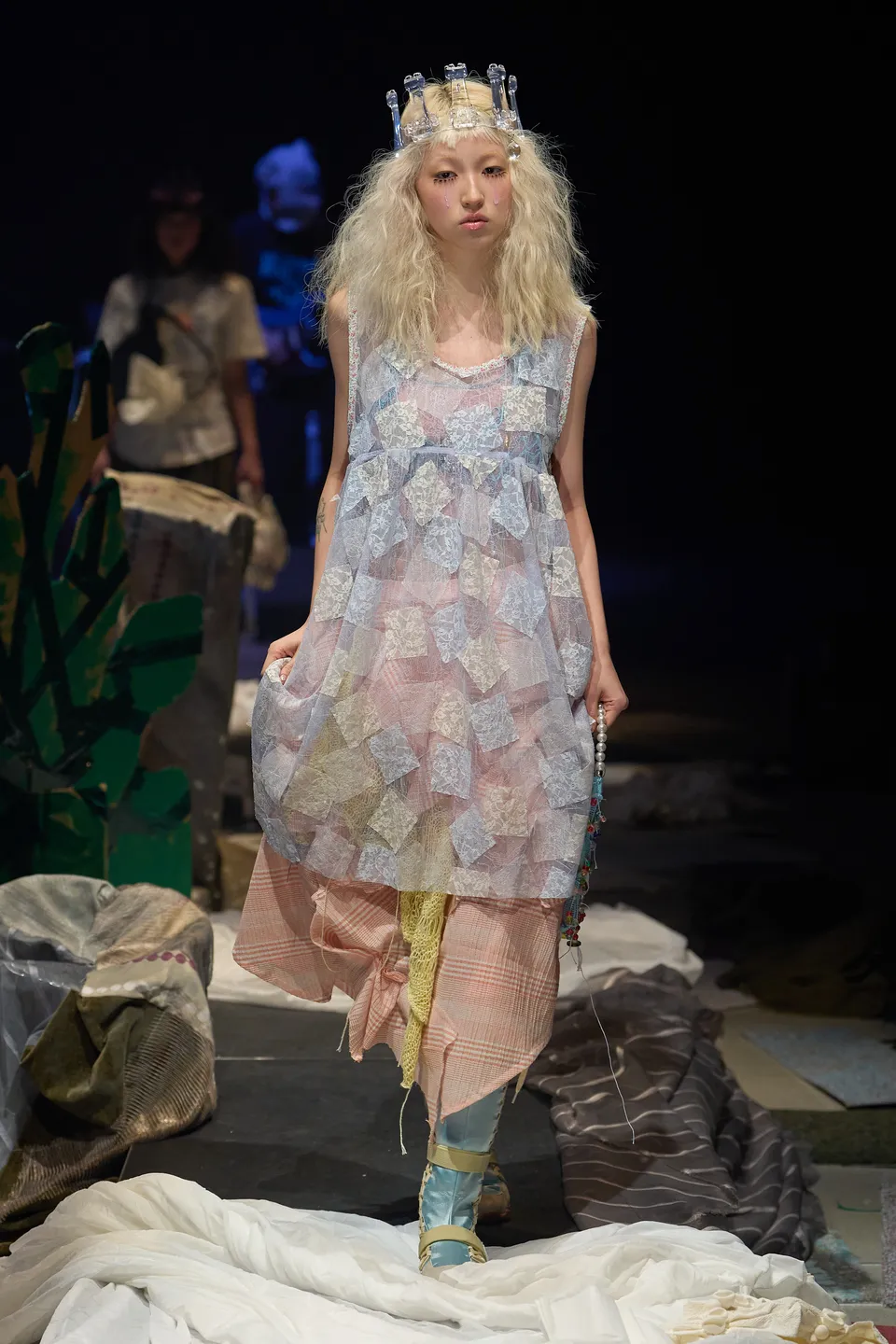
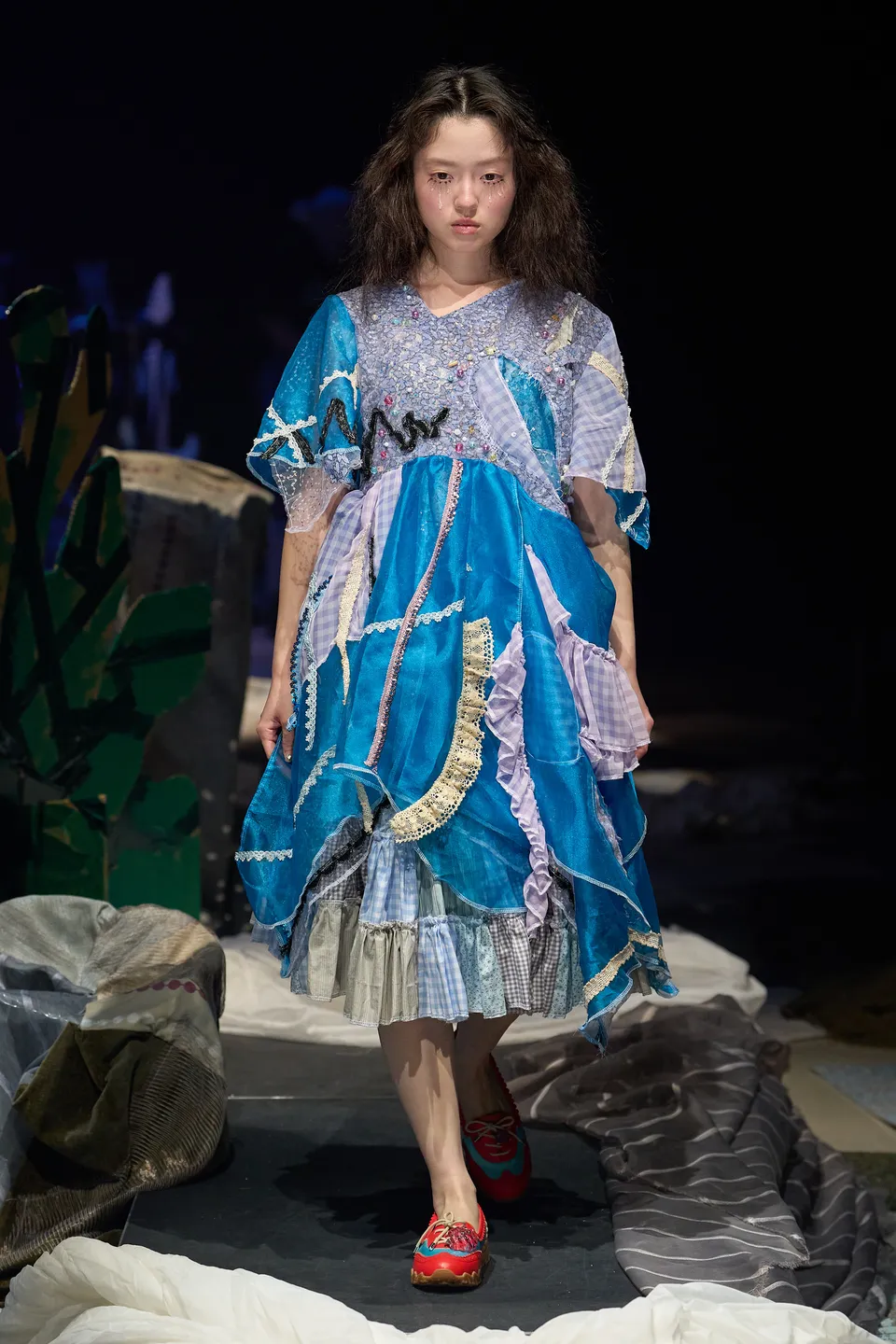
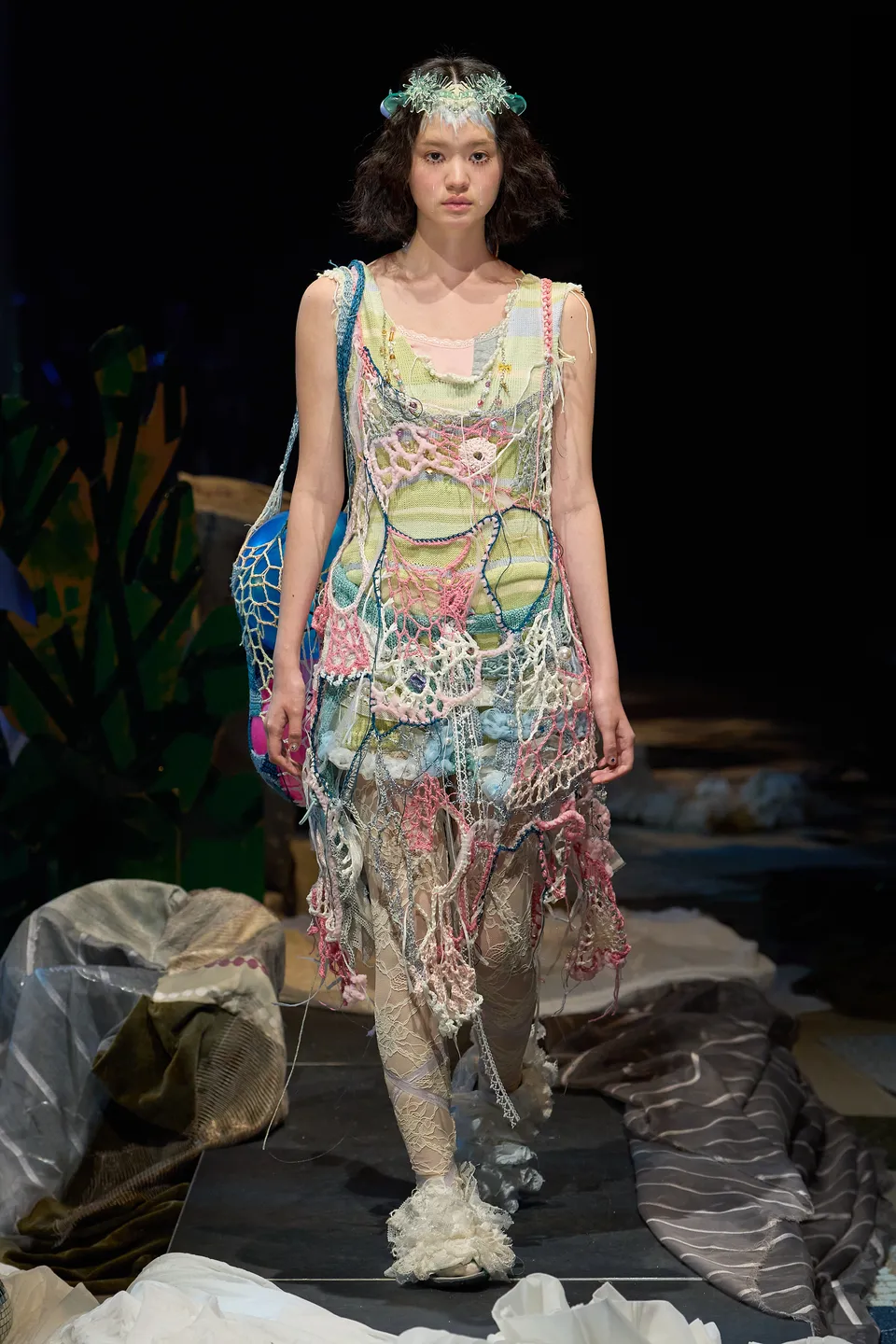
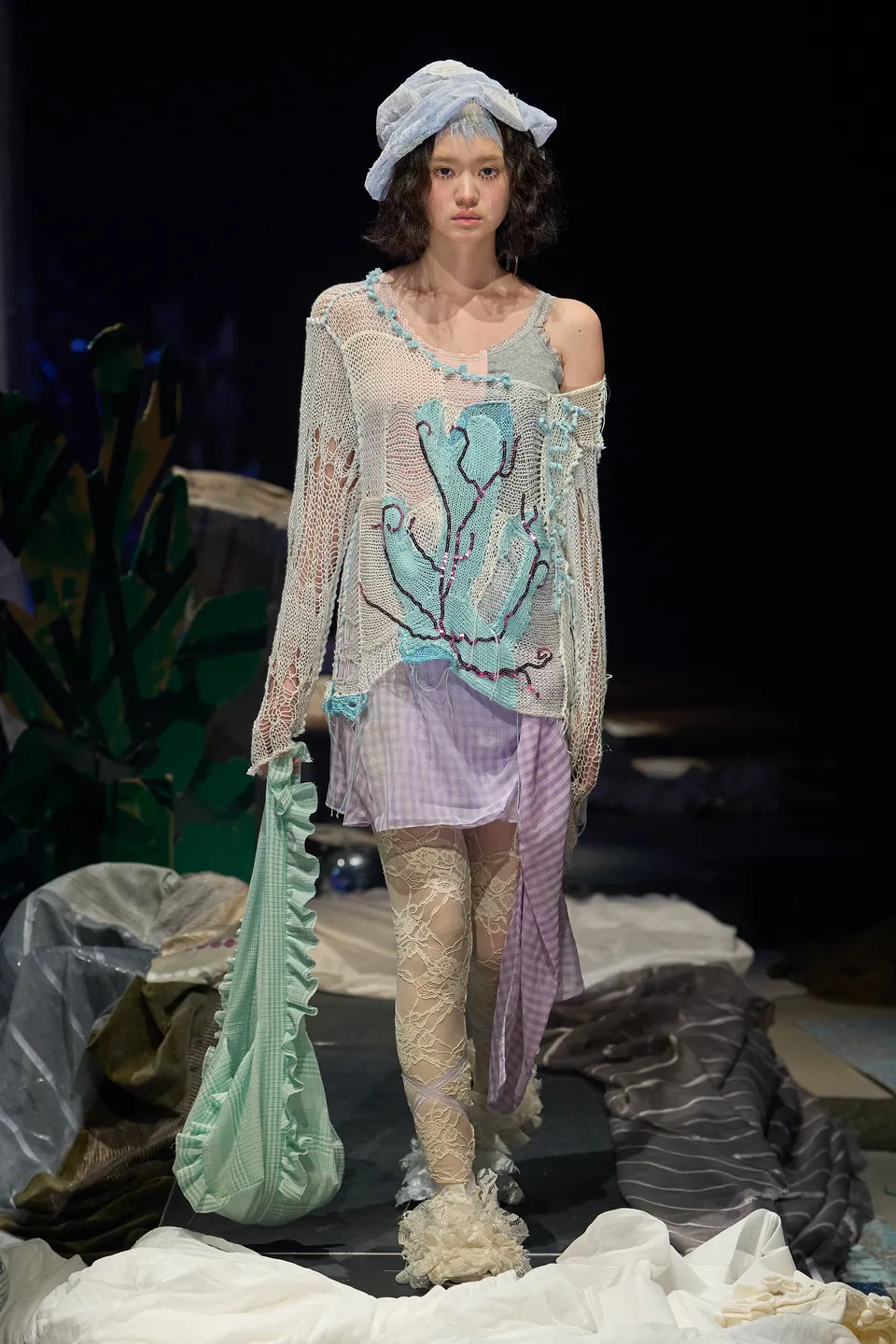
A Tokyo Fashion Award in 2026 brought international business support and participation in a Paris showroom. The brand has since connected with Comme des Garçons and dressed figures including Elle Fanning and ILLIT.
SS27 also marked a structural evolution inside the studio as Tamami Uehara joined a two-designer system, concentrating on knitwear while Kobayashi led woven pieces.
Kobayashi has spoken about once being seen as an “underground” designer, which makes his mermaids almost painfully appropriate. The challenge now lies in protecting the eccentricity that made yushokobayashi desirable as its world becomes increasingly visible.
Day 4 At Tokyo Fashion Week SS27
TAIWAN SELECT
TAIWAN SELECT, organised through the Taiwan Textile Federation, brought S’ranouir and Yentity into the official programme as part of a broader effort to carry Taiwanese design abroad.
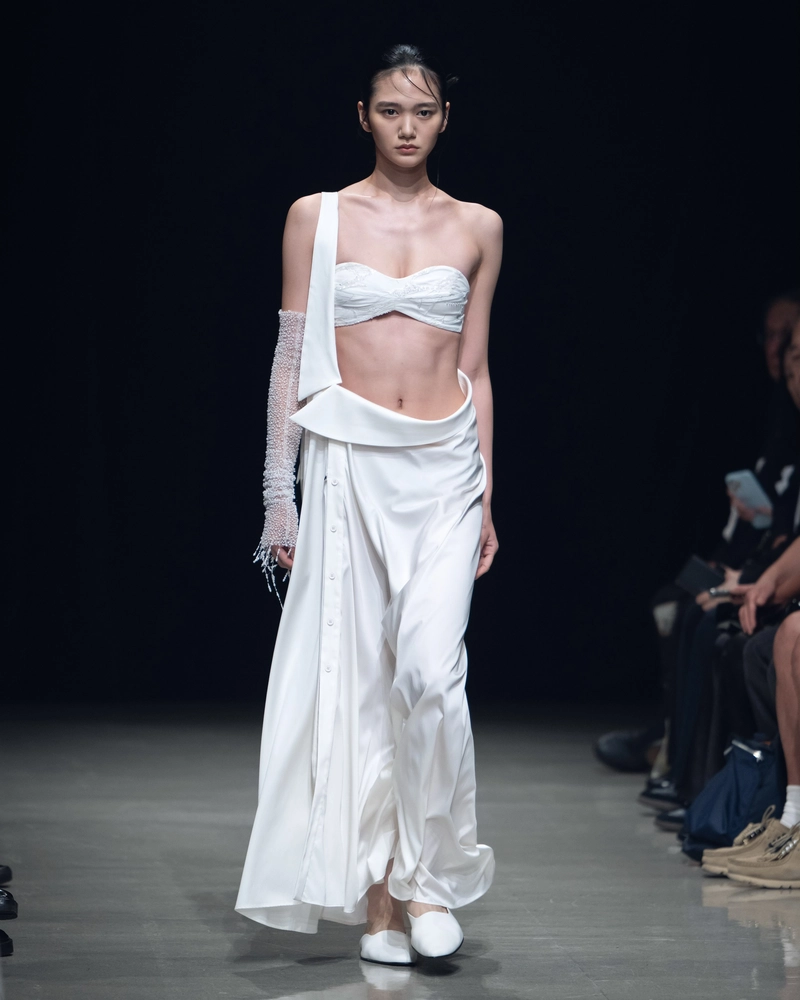

S’ranouir worked through black, white, modular dressing and custom metal components produced by Taiwanese craftspeople. Yentity approached Carl Jung’s Anima and Animus through clothes capable of changing function, including a hood that could become a cape. A print of lemons and a vase came directly from the designer’s photography.
Yentity had already appeared through the same Tokyo programme six months earlier and participates regularly in Taipei Fashion Week.
MIZEN
MIZEN reduced its entire presentation to one measurement: 38 centimetres.
That is approximately the traditional width of kimono cloth, and the brand treated the constraint as the foundation of its design intelligence. A film demonstrated three proprietary approaches. “Slash” cuts the narrow textile diagonally. “Horizon” spreads it across the shoulder. “Sash” crosses the material around the body. From those systems came garments ranging from bralettes to coats.
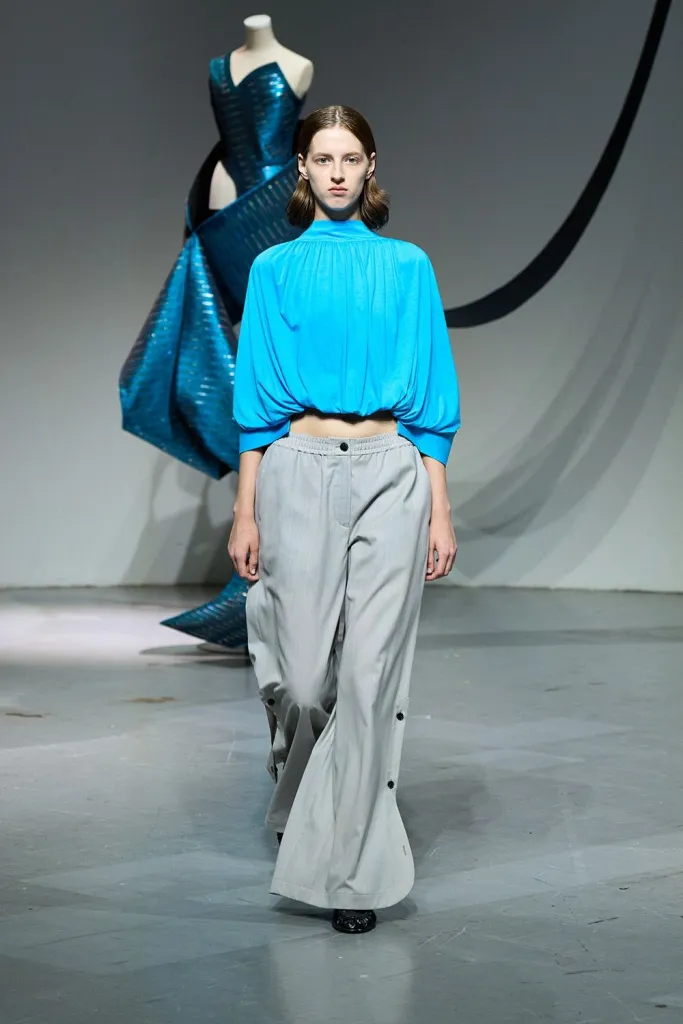
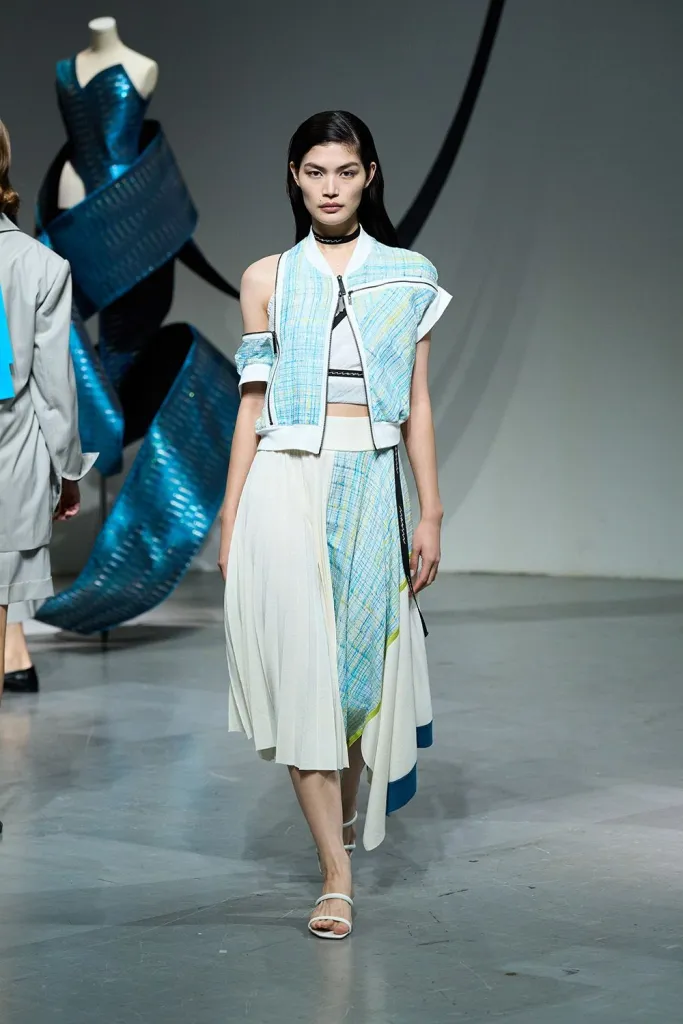

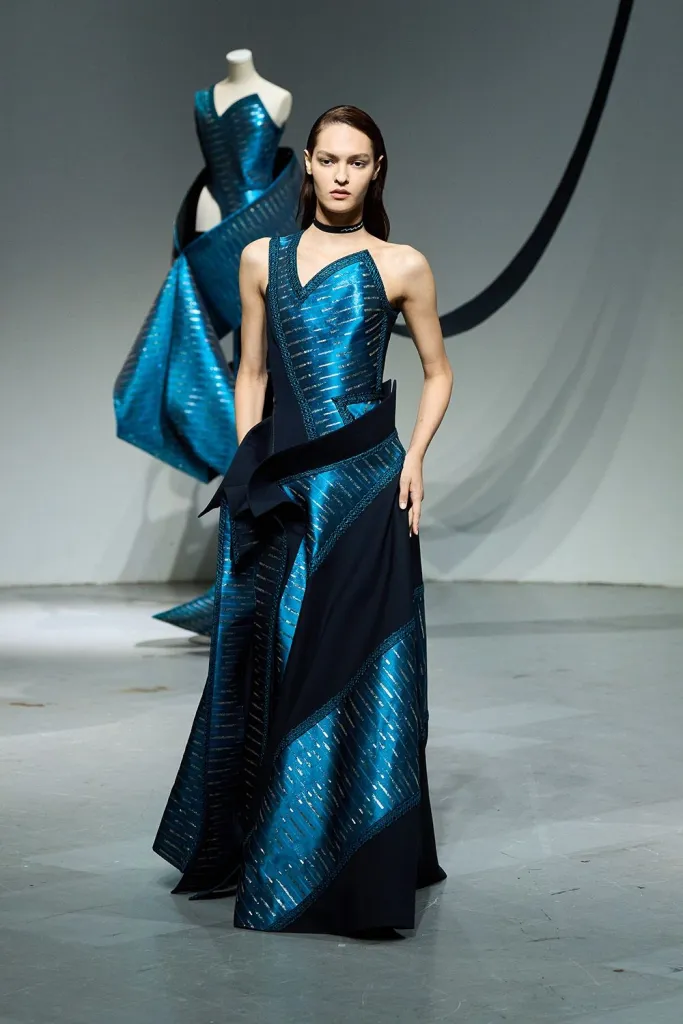
Its Tokyo operation combines atelier, showroom, and retail, allowing customers to encounter fabric development and finished product inside the same environment. The SS27 presentation flowed into an extended order period running through September.
C JEAN
C JEAN pushed that instinct further and made the atelier itself perform.
Inside Shibuya Hikarie, sewing machines operated in view of visitors, mannequins filled the space, hair and makeup unfolded publicly, and a simple toile gradually changed as the team cut into it and added ruffles. “THE ATELIER IS OPEN — BECOMING: BOLÉRO” treated the garment as an event unfolding through hands, material and time.
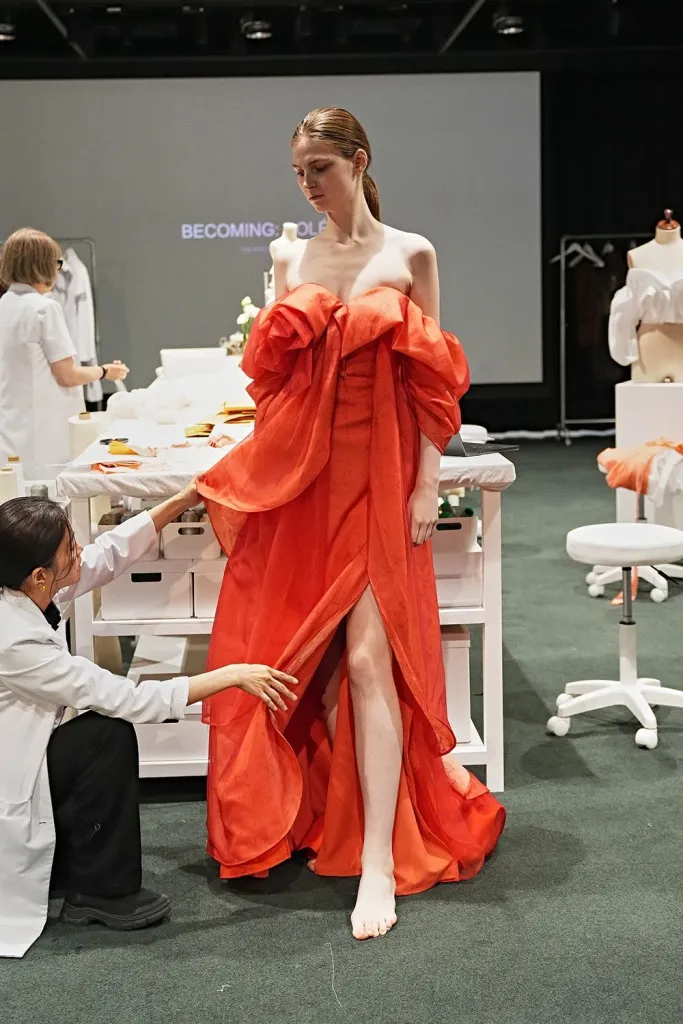

An accompanying installation, “THREE QUIET ROOMS,” extended the process through Taiwanese lacquer craftsmanship and Kyoto rōketsuzome dyeing. One section translated the work of lacquer artist Wang Ching-Shuang through three generations of his family, while another continued C JEAN’s relationship with Japanese dye artisans that had already started in 2025.
Chun-Yuan Jean had opened Taipei Fashion Week AW26 earlier in the year, so Tokyo represented another stage in an expanding regional practice.
CHARINYEH
At 75, Cha-Rin Yeh entered Tokyo as a newcomer with four decades of business behind her. She founded CHARINYEH in 1985 and built the label across Taiwan before staging its first Tokyo runway for Tokyo Fashion Week SS27. “Island Tides” celebrated the seas around Taiwan with octopus-tentacle skirts, coral-like knitwear, marine creatures, rare white dolphins, and diving-fin references. The collection had humor, color, and the wonderful confidence of a designer whose imagination has already survived several cycles of fashion.
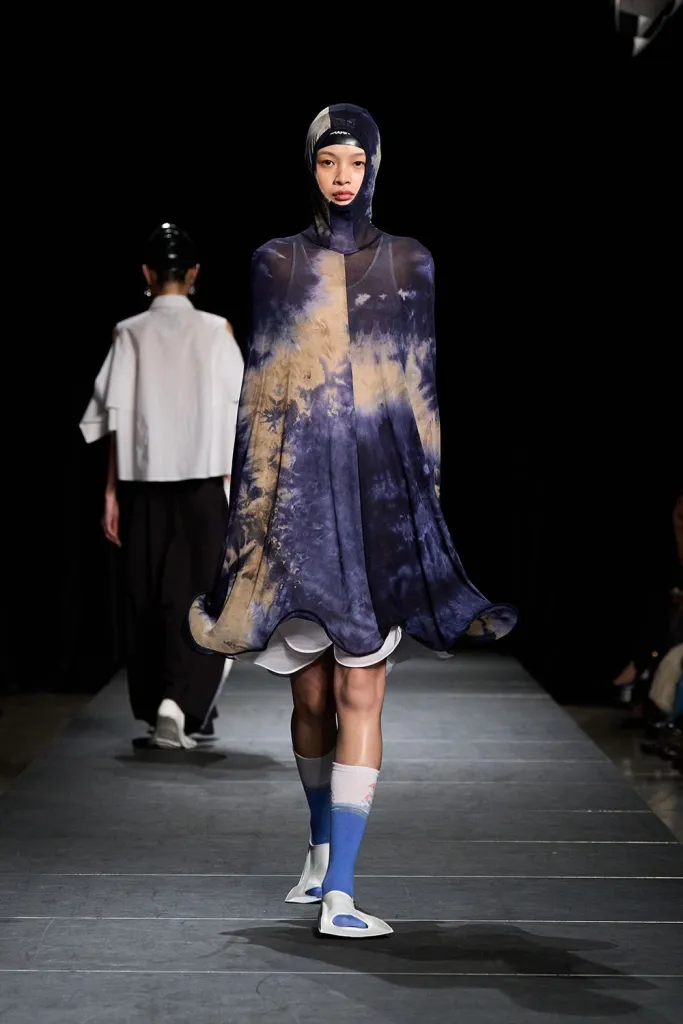
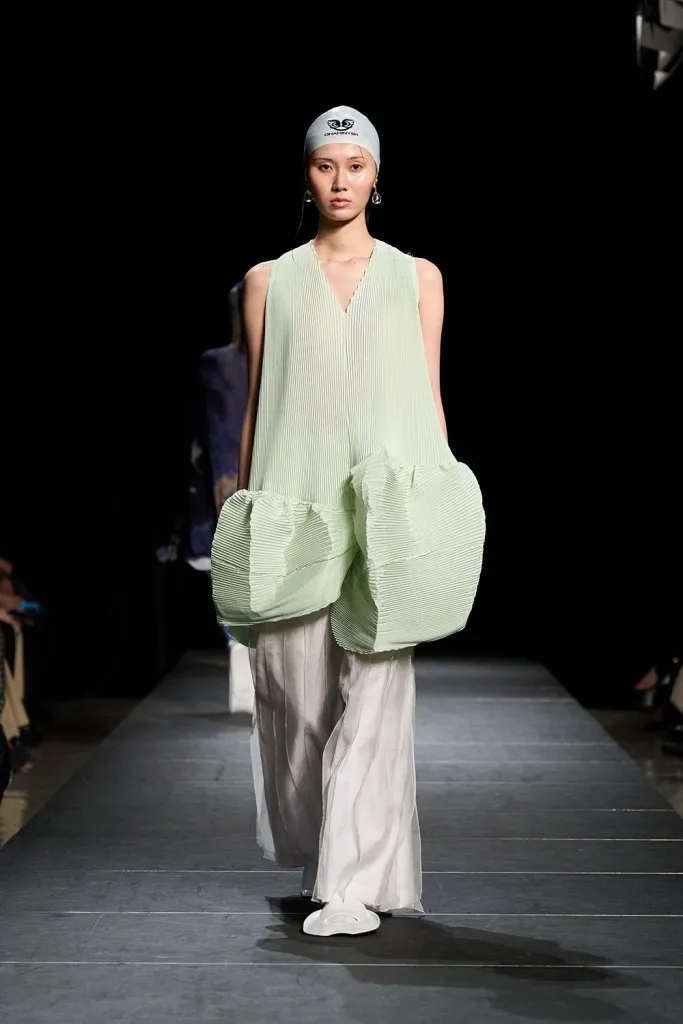

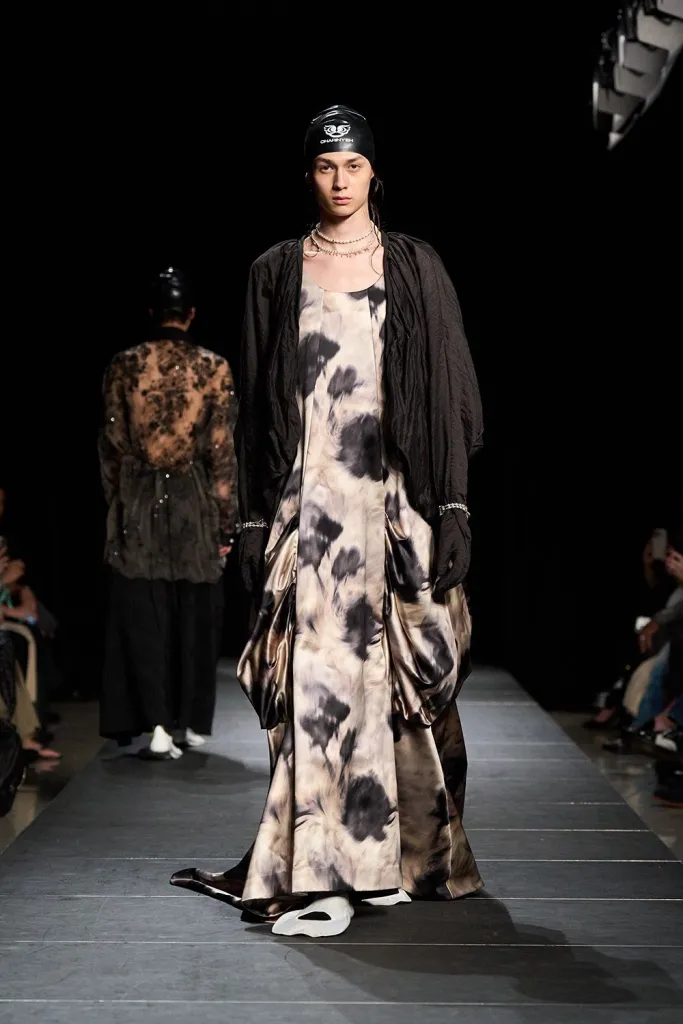
Yeh has said that building CHARINYEH across Taiwan took 40 years. The brand now operates through 23 stores, including its own locations. Japan had already become part of its expansion plan through trade events and TRANOÏ Tokyo.
CHARINYEH offers a new idea of emergence. International expansion can happen after decades of domestic experience, when a designer arrives with history, infrastructure, and customers already behind the name. Tokyo became a first step in a new geography.
SONIA CARRASCO
“ACT II: SOBREMESA” had appeared earlier in Paris, built around the Spanish ritual of lingering at a dining table after a meal. In Tokyo, Sonia Carrasco dispersed seating into intimate clusters and sent models close to the audience, allowing visible padding, exposed seams, basting stitches, asymmetric shirting and knitwear integrated into tailoring to reveal their construction at near distance.


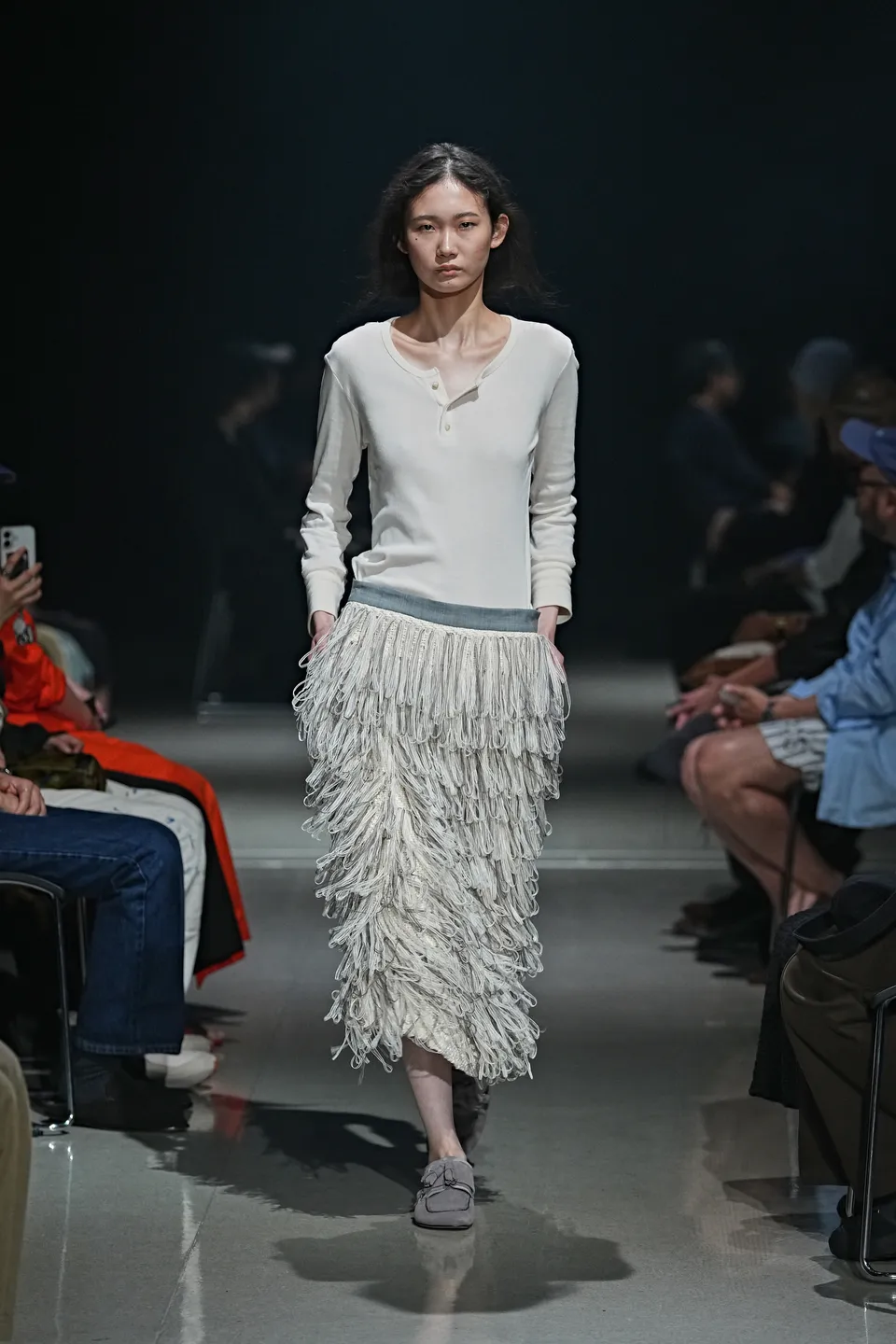
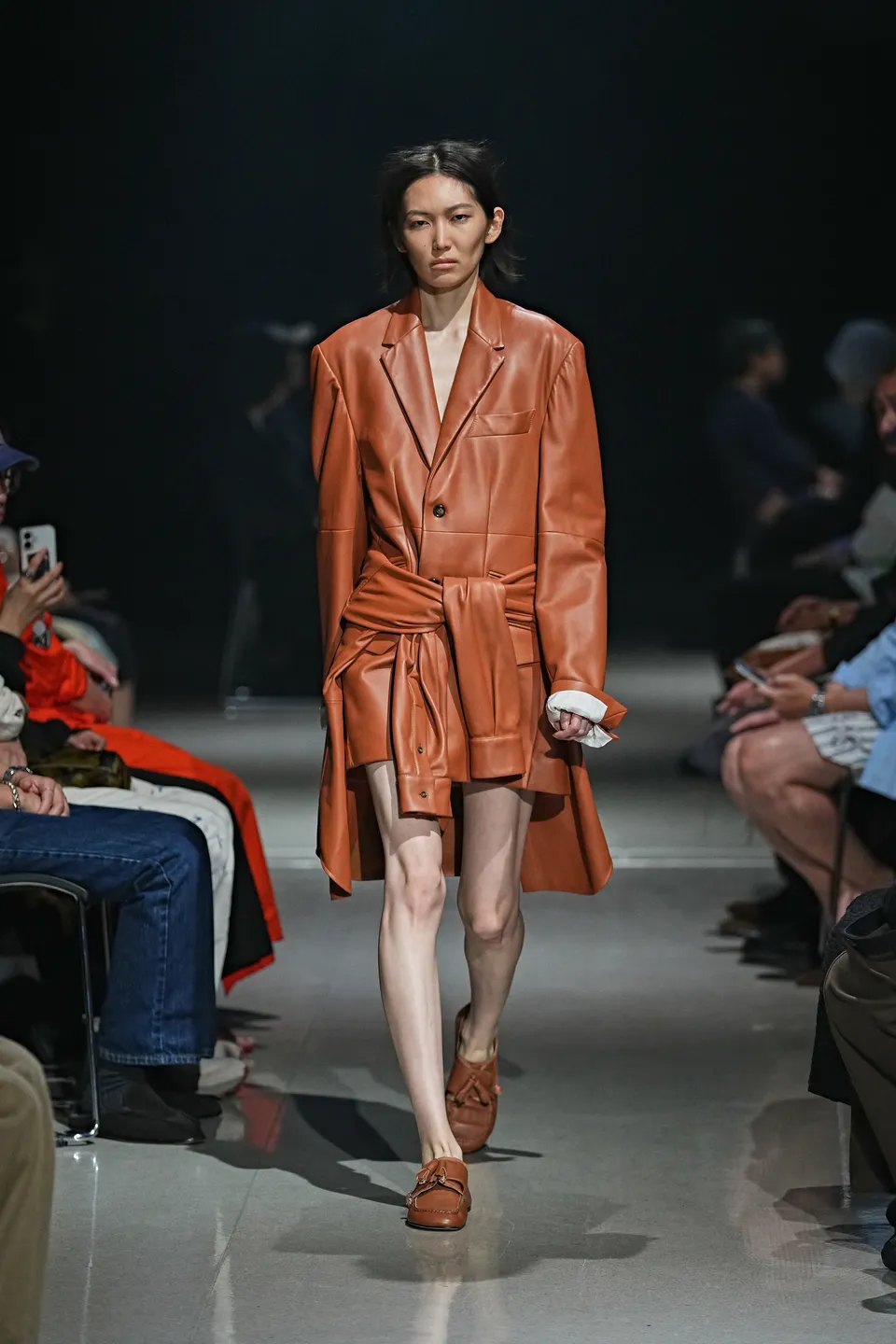
Sonia Carrasco produces primarily in Spain and sources fabric and hardware from Italy. Her professional background includes Zara, Alexander McQueen and Phoebe Philo-era Céline, influences that help explain the discipline underlying her deconstructed tailoring.
The crucial business fact sits in Japan itself. Japanese retailers supported Carrasco early, and the designer says the country currently accounts for most of her business.
Two days of Tokyo Fashion Week SS27 still remain, and brands deserve the final word before any verdict on the season. For now, Tokyo's middle chapter leaves a more exciting question hanging: after seeing how much support already exists around these designers, what will the final shows reveal about the kind of fashion this ecosystem is capable of producing next?
Advertisement