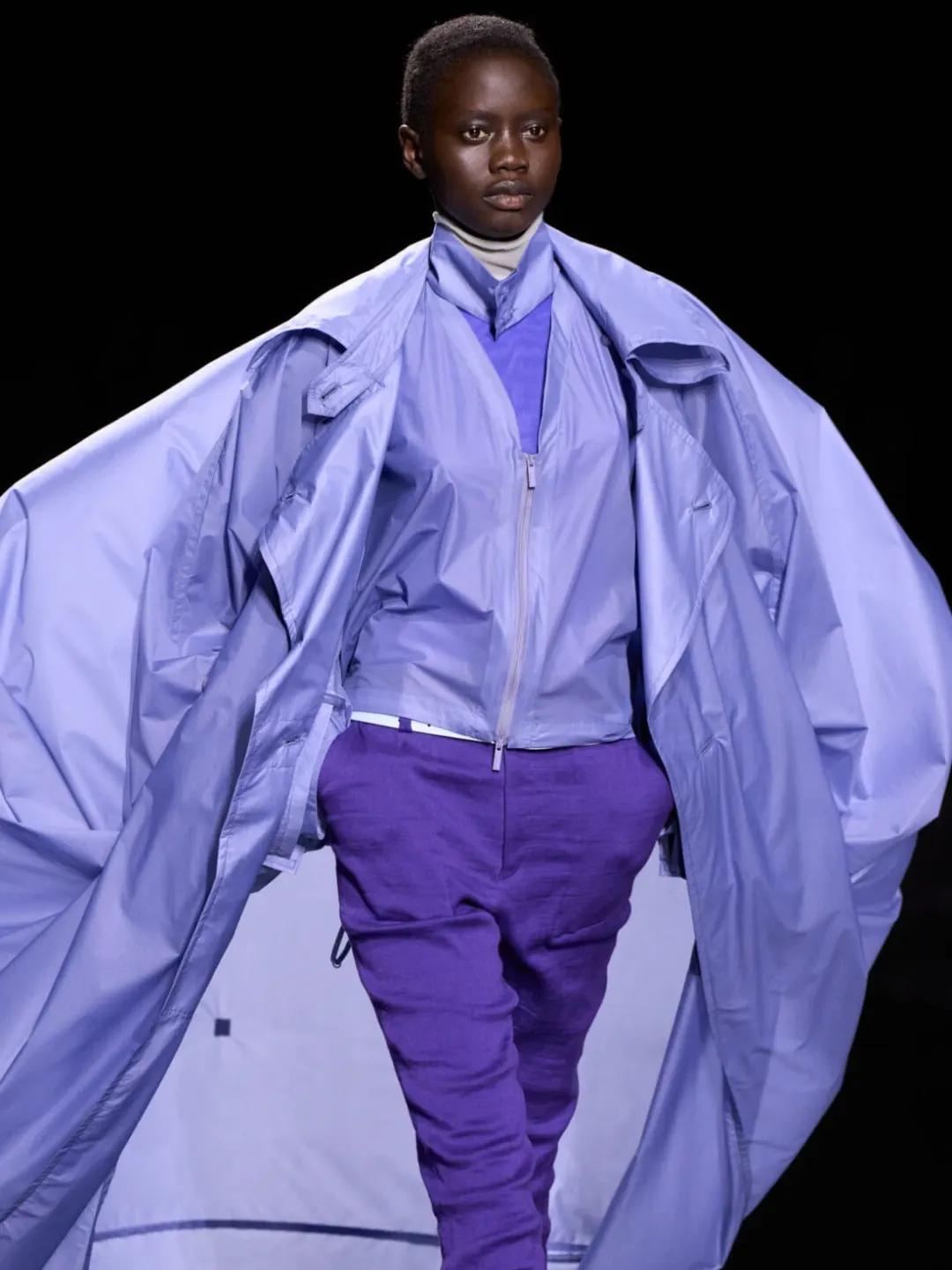
Coach SS27 entered New York Fashion Week like a birthday memory caught at midnight, glamorous, rumpled, and already glowing around the edges.

Coach SS27: 85 Years, One Wild New York Party
Coach SS27 entered New York Fashion Week like a birthday memory caught at midnight, glamorous, rumpled, and already glowing around the edges.
September 10, 2026


Eighty-five years gives a fashion house plenty of material for a birthday speech. Stuart Vevers had another idea. For Coach SS27, the candles came with crooked party hats, wrinkled suits, confetti-covered bags and clothes carrying the delicious evidence of a celebration already in progress. Shown during New York Fashion Week SS27 on September 9, Coach’s 85th-anniversary collection turned heritage into something wonderfully human: touched, folded, remembered, carried and occasionally crushed after a very good night out.
Coach entered fiscal 2027 after its brand revenue reached approximately $6.9 billion in fiscal 2026, up 24% for the year. Handbags helped drive the momentum, while Coach continued building its enormous cultural relationship with young consumers. Eighty-five suddenly looked remarkably lively.
Coach SS27 Started With Memories That Got a Little Blurry
Vevers approached the anniversary through memory, especially the wonderfully unreliable way a memory changes every time somebody revisits it. His inspiration board wandered through remarkably personal territory. There was Meg Ryan wrapped in an enormous khaki coat in the 2000 film Hanging Up, faded floral wallpaper peeling from walls, balloons gathered against ceilings, candles and recollections of his own City Hall wedding.


Even the designer’s wedding suit entered the conversation.
That personal archive explains the peculiar mood running through Coach SS27. Vevers had already described the collection as familiar Coach ideas stretched, turned inside out, pieced together, worn and loved. Eighty-five years of archive suddenly became raw material with fingerprints all over it.
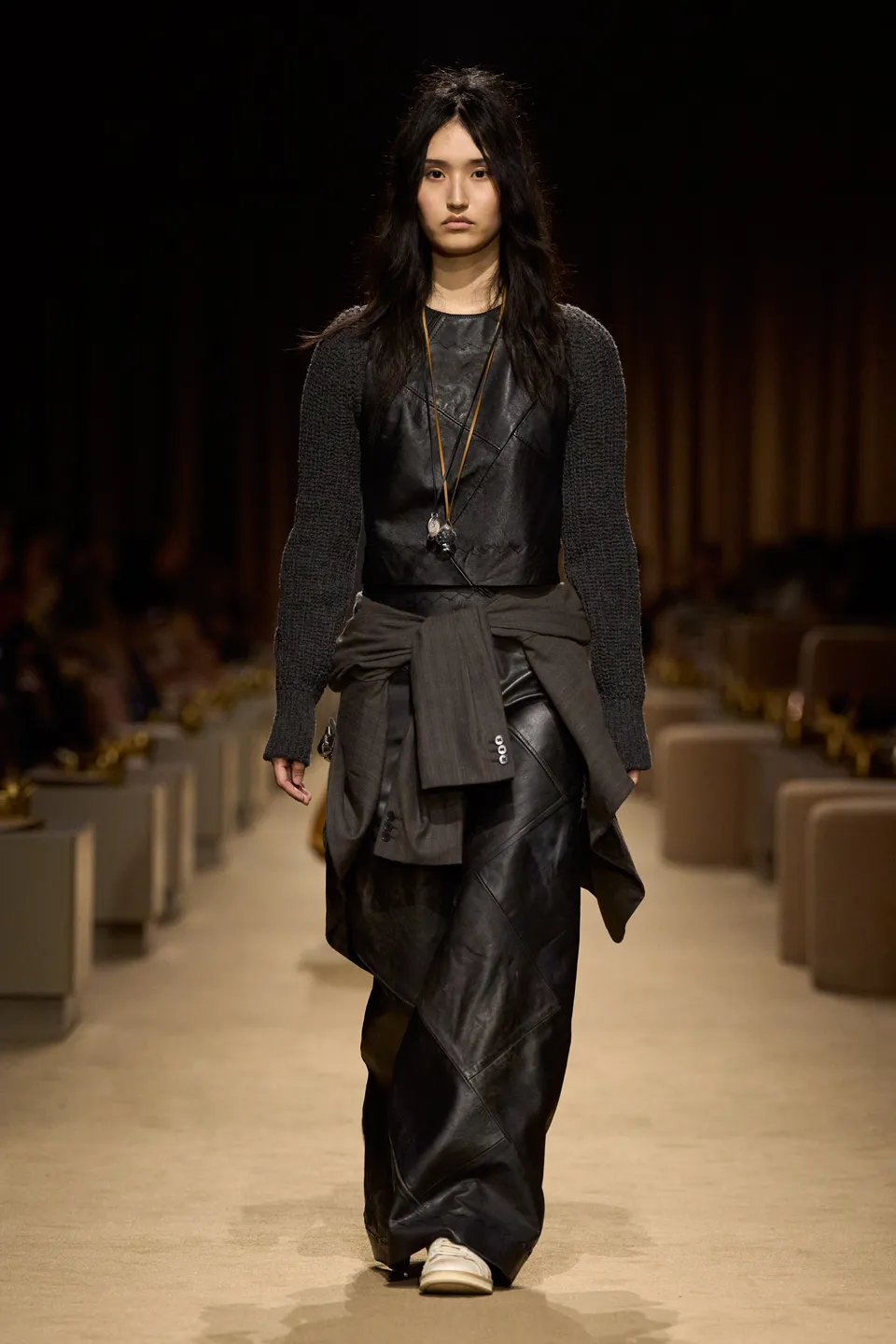
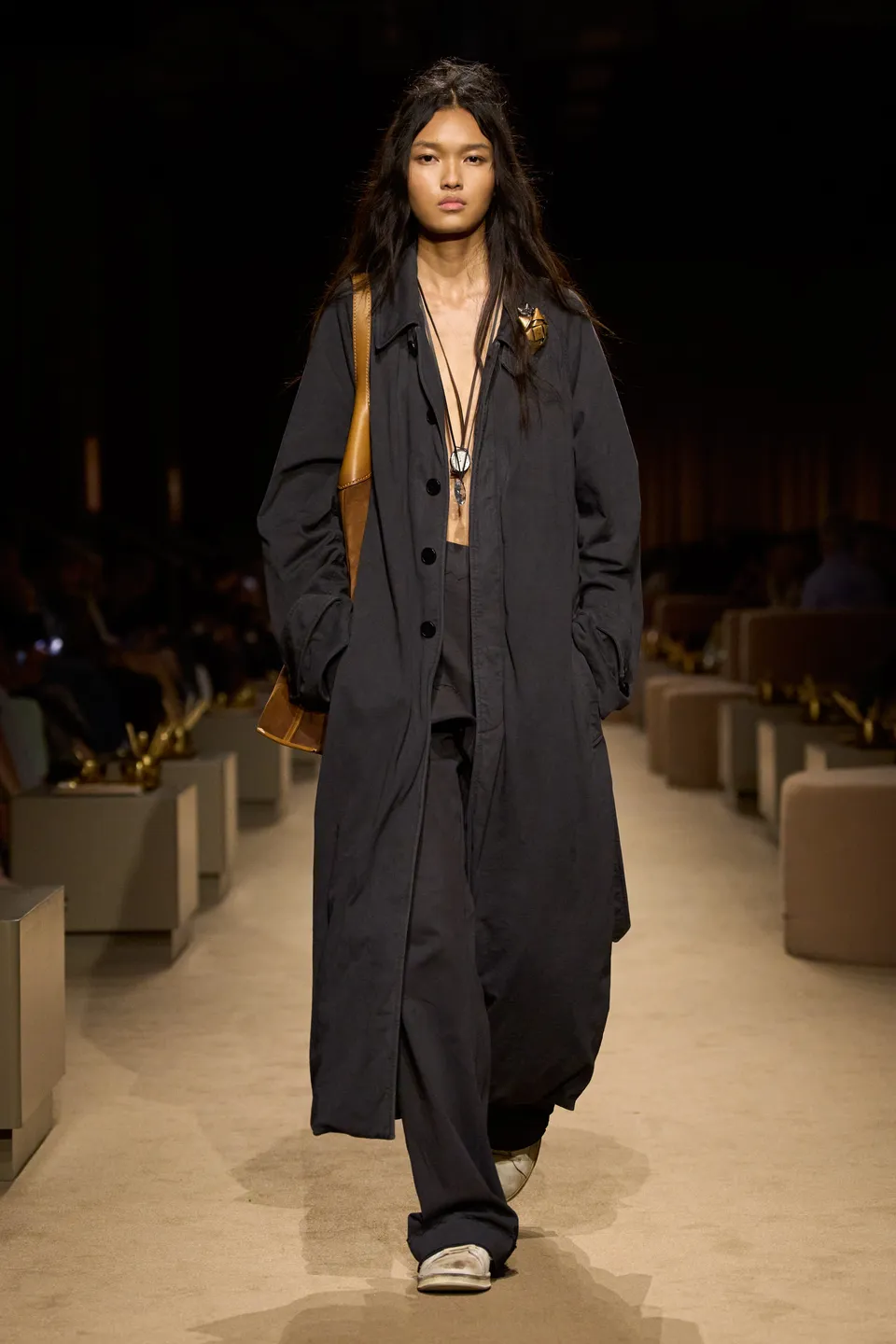
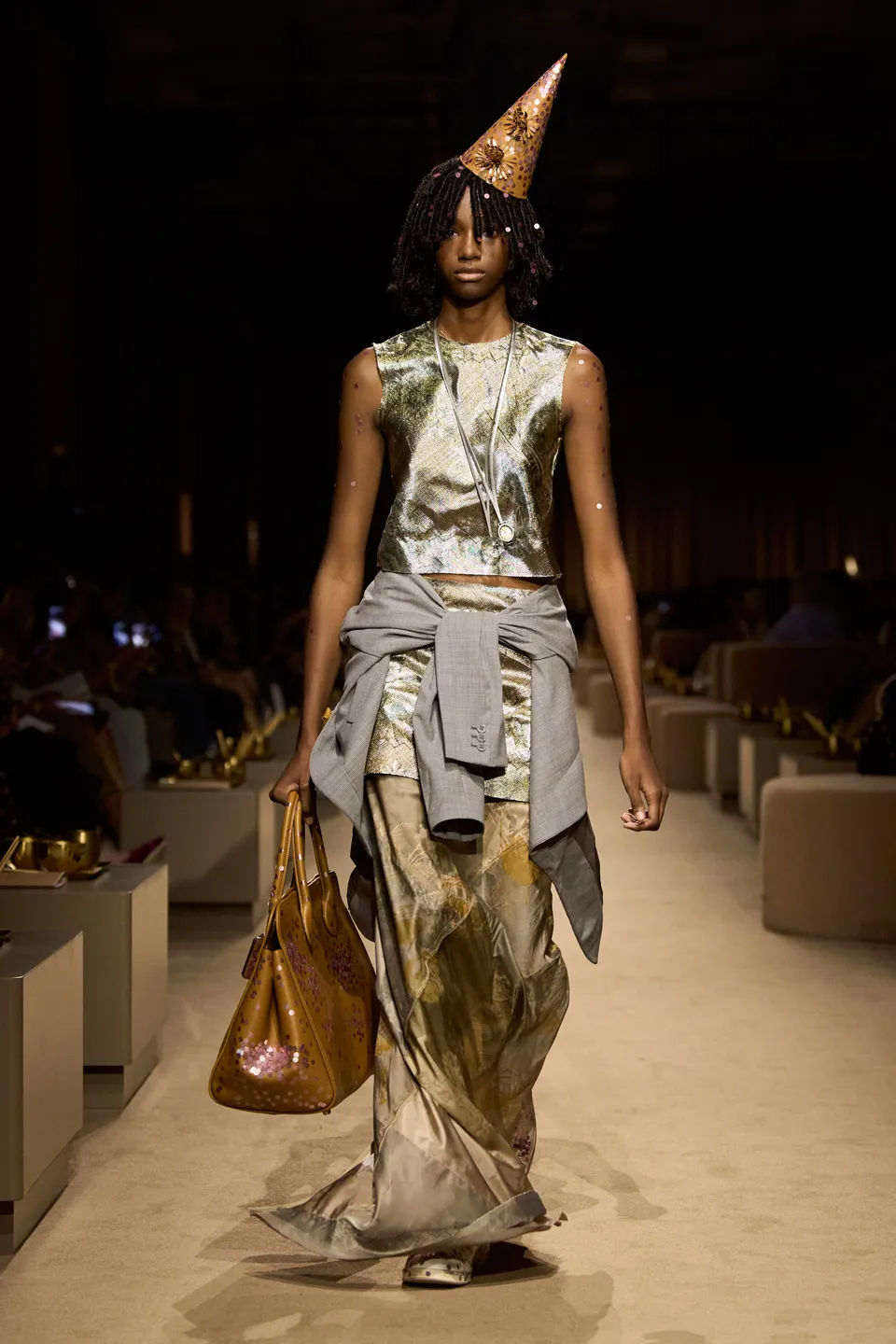
The clothes carried that thinking immediately. Tailoring appeared wrinkled and relaxed, moving through gray, khaki, and washed floral surfaces. Jackets slouched around the body. Trousers hung long and loose. Several suits exposed bare skin underneath, while tiny leather tops and open-weave crochet pieces gave the upper body a deliberately abbreviated scale.
It looked like somebody had dressed beautifully for the party, danced for six hours and decided the creases deserved to stay.


The Clothes Looked Like They Already Had Stories
Vevers has spent several seasons shaping a long, loose Coach silhouette, and Coach SS27 pushed that vocabulary into particularly expressive territory. Long trousers pooled around shoes while cropped tops sliced the torso short. Jackets carried generous proportions. Outerwear stretched toward the floor. Every piece seemed interested in movement after wear.
Then came one of the collection’s smartest tricks: the inside-out trench.
A near floor-length trench exposed construction usually hidden inside the garment, converting lining, seams and internal architecture into visible design. It was an almost absurdly perfect anniversary gesture. Eighty-five years of making things, and suddenly Coach wanted everybody looking inside them.
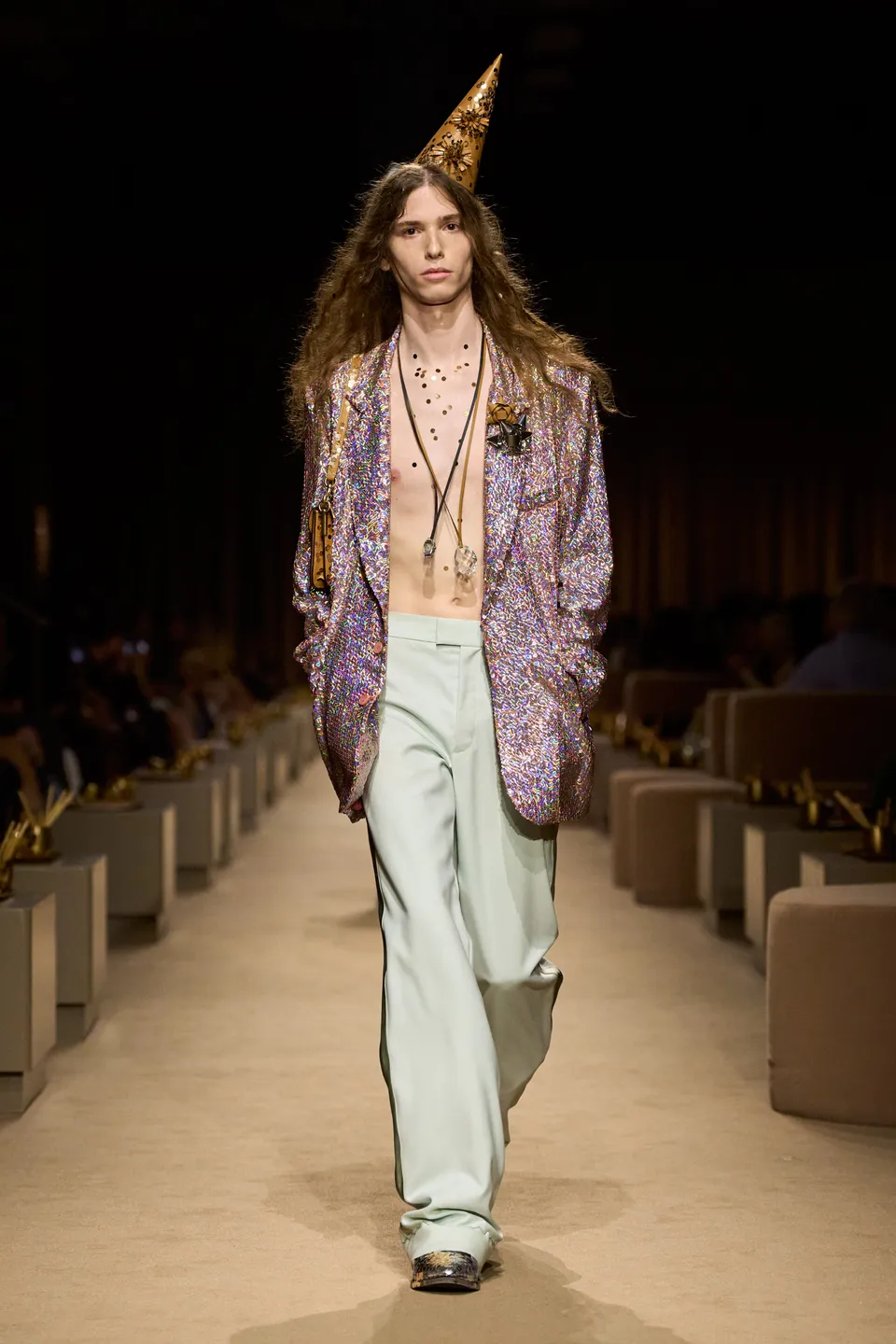
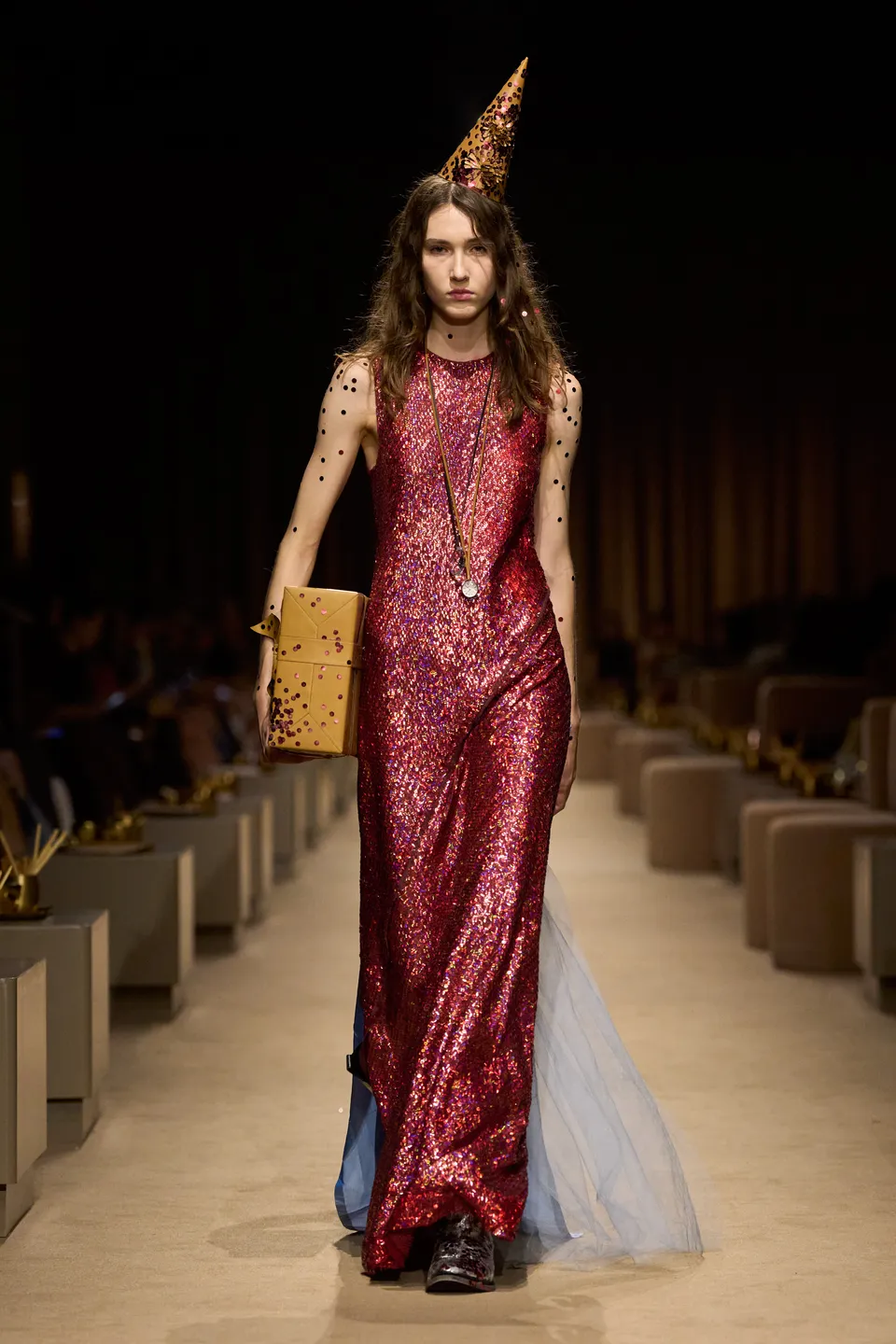
The softer pieces took the same lived-in spirit into romance. Bias-cut dresses skimmed the body, occasionally gaining knitted sleeves. Sheer trousers appeared beneath skirts. Sequins began flashing across dresses and jackets as the collection moved deeper into party territory, accompanied by oversized bows that looked charmingly crushed and slightly exhausted.


Formal bows usually enter a room standing at attention. Here they appeared as though somebody had leaned against them, sat on them, hugged, them and carried on dancing.
The hero pieces consequently came with stories already embedded in their surfaces. The slouching suits established the mood. The inside-out trench translated the collection’s philosophy directly into construction. Sequined pieces with collapsed bows delivered the birthday glamour. Together, they made Coach SS27 feel like clothing photographed at 2 a.m., when impeccable styling has already evolved into personality.
The Bags Joined the Mischief
A Coach anniversary inevitably gives the handbags plenty to talk about, and the accessories team clearly came ready for gossip.
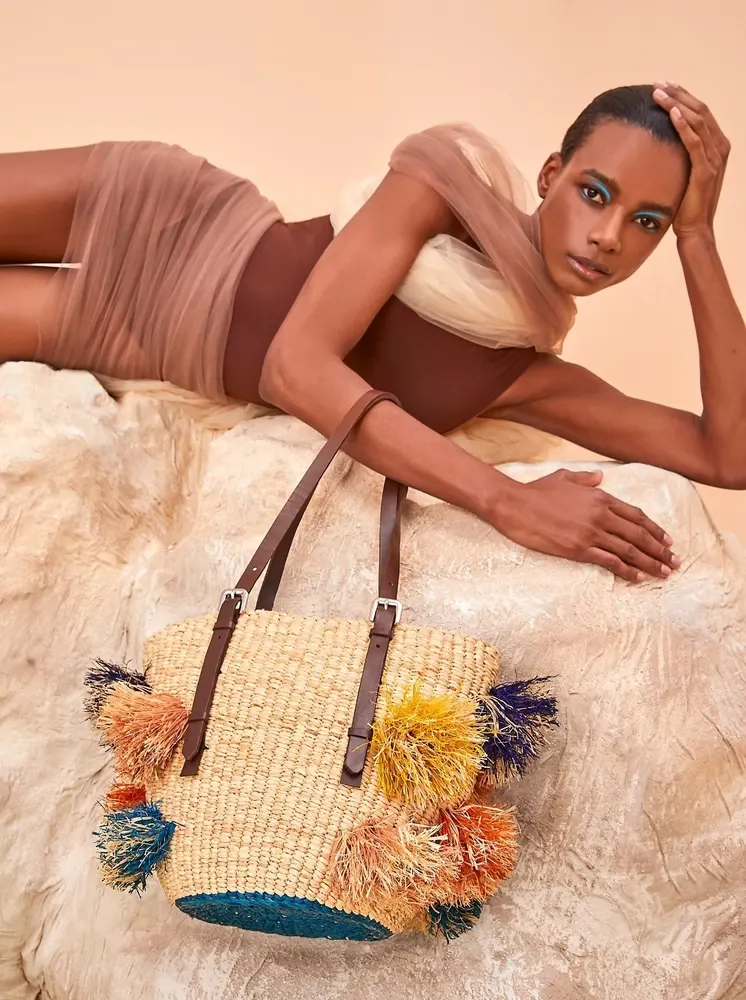
The Brooklyn bag received an inside-out treatment that shifted an interior pocket onto the exterior. The familiar Tabby gained extra compartments and coin-purse-like additions. Confetti appeared across bags, carrying the party imagery directly into Coach’s commercial heart.
Then Vevers reached all the way back to 1970.
The Spring 2027 Turnlock Tote takes its foundation from a silhouette designed by Bonnie Cashin, Coach’s first lead designer, whose tenure helped establish many of the practical, hardware-driven ideas associated with the house. The Turnlock Tote 40 came in boarded calf leather with suede lining, turnlock closures, a detachable strap and enough room for a 15-inch laptop. Archive history suddenly had office hours.
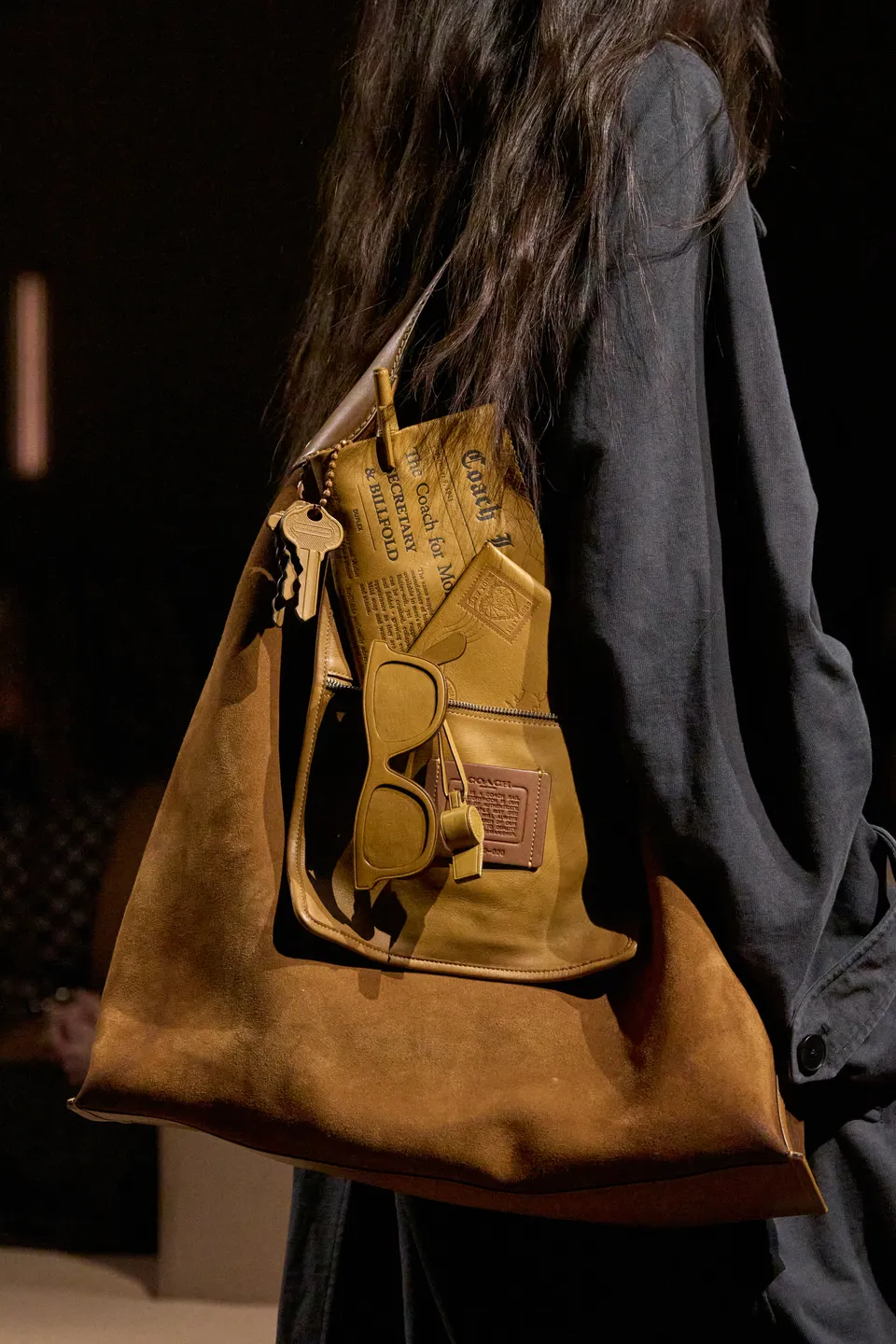
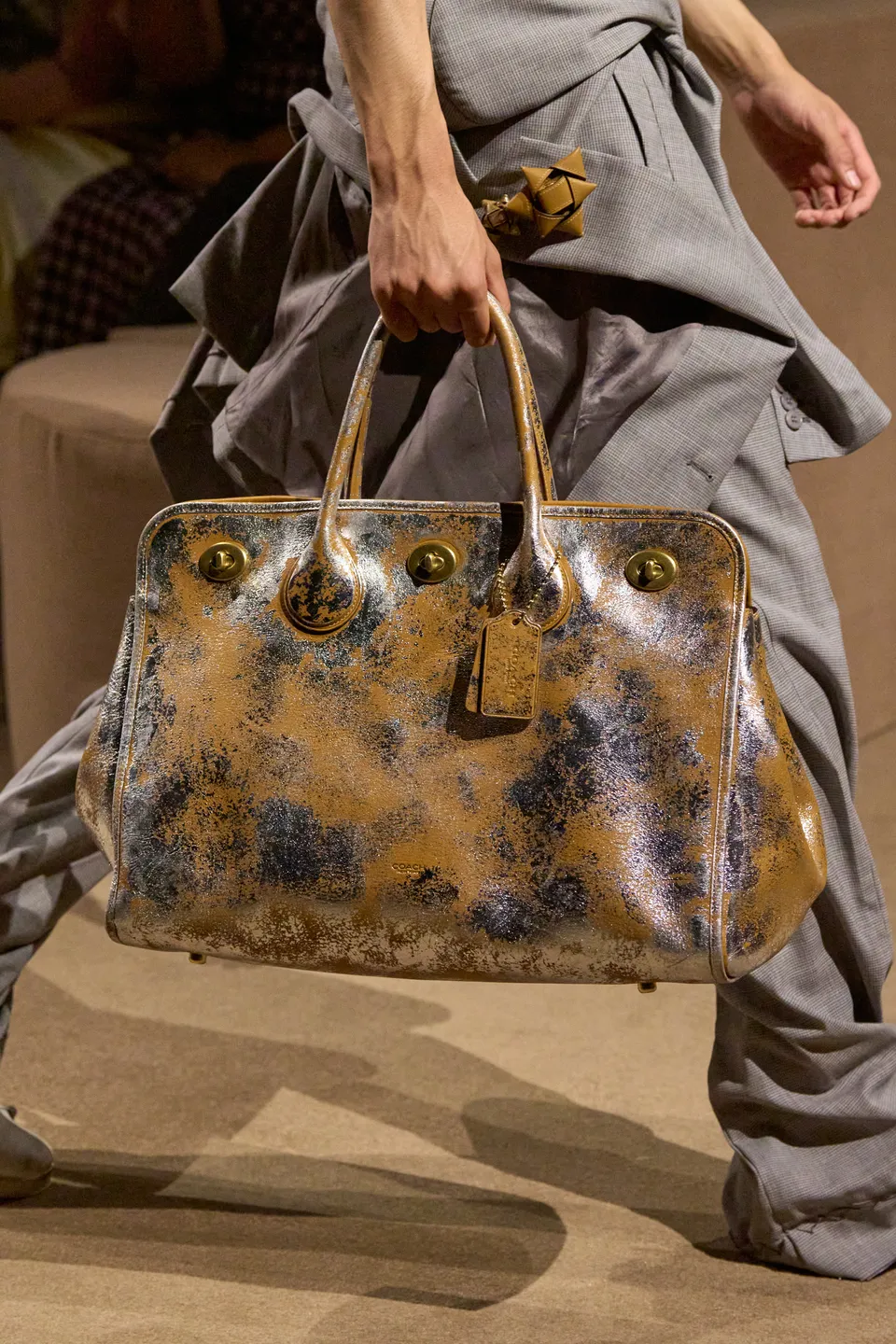
Coach also attached a deliciously specific number to the launch: 1,664 Turnlock Tote 40 bags were made available in the cited release, with the bag going on sale immediately around the Spring 2027 presentation. A smaller Turnlock Tote 22 in glovetanned leather received a release of 508 pieces in one version. Runway fantasy met instant retail gratification before the confetti had settled.
The Cashin connection gives the bag extra weight inside the anniversary story. A 1970 silhouette travelled fifty-six years into 2026, landed on an 85th-birthday runway and entered an immediate limited release. Fashion history suddenly became something a customer could carry out the door.
Then Coach Threw the Birthday Party
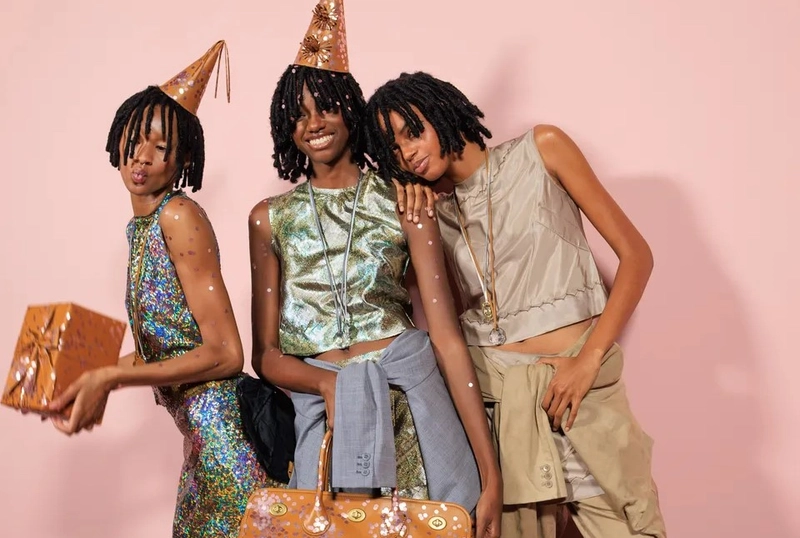
The crooked crowns and party hats scattered throughout the runway had already given away the ending.
As the finale unfolded, curtains opened onto a live youth orchestra from the Bronx. Voguing dancers joined the celebration. “Love Is the Message” filled the space. Confetti burst over the room.
Everything Vevers had been playing with suddenly came together: wedding memories, party debris, New York youth, dressing up, nostalgia and the strange beauty of clothes after people have actually lived inside them. The show moved from crumpled tailoring into floral surfaces, sequins, crowns and finally a full birthday explosion.

The spectacle also gave the anniversary a distinctly New York identity. Coach was founded in Manhattan in 1941, and Vevers has repeatedly treated the city as an emotional ingredient in his work. Here, New York appeared through attitude and community: practical bags, downtown looseness, dancers, young musicians and a party whose glamour had plenty of street-level energy.
Eighty-five candles suddenly felt like an invitation.
Coach SS27 Made 85 Look Extremely Alive
The milestone becomes especially fascinating once the runway meets the balance sheet. Coach entered its anniversary year with $6.9147 billion in fiscal 2026 revenue, alongside double-digit annual growth for the brand. Leather goods remained a major engine, with handbag revenue gains contributing to the year’s performance.
That commercial context gives every archival move in the collection genuine stakes. The Turnlock Tote reaches into Bonnie Cashin’s 1970 Coach. The Brooklyn and Tabby belong firmly to the current cultural conversation. Vevers placed all three inside one anniversary story and allowed decades of design language to mingle naturally.
And perhaps the finest detail of the entire show was its attitude toward age. Eighty-five years came dressed in slouchy trousers, tiny tops and party crowns. Heritage carried confetti in its pockets. A 1970 handbag was ready for a laptop. A wedding suit memory became a runway silhouette.
Coach SS27 celebrated history as something still being worn, scratched, danced in and carried through New York. At 85, Coach blew out the candles with the party very much in progress.